Peter Taunton: The Fitness and Wellness Pioneer | The Authors Unite Show #968
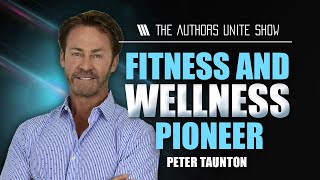
In this hour‑long interview, host Tyler Wagner talks with fitness‑industry pioneer Peter Taunton about his life story, the creation and rapid expansion of the Snap Fitness/Lyft Brands franchise model, and the leadership principles that powered its growth to 6,000 locations in 28 countries. Taunton explains how he turned a modest health‑club concept—small, 24‑hour facilities without costly amenities—into a scalable, cash‑flow‑positive business, emphasizing unit‑level economics, bootstrapping, and rigorous systems. He details the two major equity sales (each ~ $47 million) that funded further expansion while he retained control, and shares his philosophy on exit strategy, risk management, and wealth diversification (real estate, diversified stock portfolio, modest Bitcoin exposure). The conversation shifts to his personal health routine, daily mental discipline, and the mindset framework he outlines in his upcoming book “Impossible Hill,” which teaches visualization, planning, and grit. Taunton also offers candid opinions on COVID‑19 restrictions, government pandemic policies, and U.S. politics, criticizing lockdowns and praising certain aspects of former President Trump’s trade policies. Throughout, he stresses accountability, team‑sport leadership, and the importance of staying active both physically and mentally.
Chapters
All right everyone, welcome back to another episode of the Authors Unite show. Today we have Peter Tauton with us, so welcome to the show, man.
Hey Tyler, how you doing?
Very good, man. It's cool, we're just— we're right across, uh, the MacArthur from each other.
And you know what, I had no idea. So, no figure, right? Had I known we were so close, I just would have, I just would have drove over, no big deal.
Yeah. Well, next time after your book comes out, then we'll do, we'll do another one. And, um, although you can't tell from where I'm at because I'm in the studio all dark, curtained up, but yeah, it's all gray.
You're all, you're, you're in the gray zone right now.
It's sad in Miami today. Um, but yeah, if you can kick us off and tell us a little bit more about you and what you do.
Sure. Well, you know, I think what people find interesting about me and I personally, I don't think I'm that interesting but the narrative of my life is compelling for a lot of people. I grew up and I think it's important to kind of to lay a foundation as to where I came from. I grew up youngest of 7 kids in a small town in the Midwest and I went to school in a 2-room schoolhouse. My dad owned a small grocery store. So, I had a typical life of any kid growing up in the Midwest. I had an opportunity to, I had the opportunity to go to work at a young age. I went to work for my dad at his grocery store at 8 years old. I was selling popcorn in front of his grocery store. And I learned many lessons about business and life at a very young age. When I got into my early 20s, I had an opportunity to to manage a health club and had an opportunity to get equity within that facility if I could turn it around. It was a club that was losing money. Make a long story short, over an 8-year period, I had acquired enough equity in that business to where I owned it and I leveraged that and built 5 or 6 more health clubs over the next 20 years. All right? So, that's my early life up to age 40. And pretty normal life, had some opportunity, I chased down the opportunity. And when I sold all of those clubs when I was 40 years old, I had about $3 million in the bank. At that point, I said, what is my next thing? What is it that I wanna do? And this is an important lesson for a lot of people. They think that, you know, I've done this for so long, it's time for me to try something else. And I thought about what are all those what-ifs? What are the other things that I may wanna try? I kept being pulled back or drawn back to the health and fitness space because that is where my expertise was. Okay? I didn't think I was that passionate about it, but then the more that I thought about it, I found that I really was passionate about it. Well, then I came up with the idea to come up with a concept that was a little bit different than what I had done the previous 20 years. Instead of having these big full-service health clubs with swimming pools and racquetball courts and childcare, I took that model and I condensed it. I said, look, the swimming pools, they're very expensive to build. They get very little activity to speak of. So, that's something I'm gonna eliminate. I eliminated racquetball courts. I eliminated childcare. And the club, instead of it being 40,000 square feet, pretty soon this club was really condensed to, it was just full of a lot of strength, cardio, and selectorized equipment. It was like 3,500 to 5,000 square feet. Open 24 hours a day. And when I brought my club to the market, now keep in mind, when I built my first club, I didn't know I was gonna build this empire. Okay? So, I just said, look, I'm gonna put something together that financially makes sense. I think the unit level economics will work. And so, I felt like I had checked all the boxes in terms of being fiscally responsible and making sure that the product that I brought to the market was relevant with what the consumer was looking for. So, I launched it. I built one club. To my surprise, in 90 days, this club had sold enough memberships to cash flow it for the year. So, I was very pleasantly surprised because instead of spending millions of dollars, I was building these clubs for 1/10th the cost. And I always tell people, it's not what you take in the front door, it's what you take out the back door in terms of profit, right? Who cares what your top line looks like? If your bottom line stinks, who cares, right? So, the unit level economics in these smaller facilities, I was just absolutely killing selling it. Well, then I built another club. My first club was in an urban market. I decided to build a second one in kind of a mid-sized market. It performed the exact same way because the unit level economics fell in place. In a smaller market, the rent is less. So you don't have to sell as many memberships to make it work. In many cases, in those smallest market, you have less opportunity to sell 1,000 memberships because your market segment is smaller, right? But the expenses fall in line. And I did it in 3 different size markets. Well, to make a long story short, after building 3 clubs, they all performed exactly the same. They all were absolutely killing it. That's when I decided to get into franchising. I said, I am going to take my product, I am going to franchise it. And that is one of the things that I am so thankful for is that when I went down the path of business and franchising, I didn't cut corners. I didn't cut corners. I made sure that the legal team that I had hired had dotted their i's and crossed their t's with regards to the legality realities around franchising. Now, fast forward to today, I've been in that business. I started that company 16 years ago. And today, I have about 6,000 locations in 28 countries spread across 3 different brands. So, it's been an unbelievable journey. And I think what people are intrigued about is, I tell people, look, if I can do it, anyone can do it. All right? I didn't come, I'm not a trust fund baby. I'm youngest of 7. I grew up in a little podunk little town in Willmar, Minnesota, right? I mean, and you just have to dream big and you have to have discipline and accountability and hard work. And when you put all those things together, amazing things can happen.
That's an incredible story. Okay. So I'm intrigued on a lot of different points. So first one is when you decided to sell and then the $3 million in your account, was your initial reason for doing that kind of like a retirement thought, or did you know that money you were going to put to use to like do other things with?
Well, I, I had been doing, I'd been in the fitness business at that time when I sold it. I'd been in it for 20 years. Okay? And at the time I was married, my kids were small, and when I had those clubs, I was driving around the state of Minnesota quite a bit. So, it just felt like I was gone a lot. I had 3 small kids and I just said, look, you know what? I knew I was capable of doing something else. I didn't know what. I mean, $3 million, don't get me wrong, that's a lot of money, but that's not retirement, I'm not gonna work anymore money.
Right?
Yeah. So, I knew that I was going to be working and doing something. I just didn't know what. And then, I was drawn back into it. And, you know, the other part that's amazing is, you know, in starting that company. So, just being very diligent and being very intentional with your thought process. And that's a lot of the stuff that I talk about in my book about, you know, visualizing it. Visualize what you want to do. Create a plan, and then execute. I mean those 3 things. Now there's a litany of things that you do under each one of those segments. But that's what the book is about. Because there's so many times that when I'm talking to people, when I do, I do a lot of consulting today. And most of the people that I talk to, they're not mentally prepared to go to battle. And the battle I'm referring to is the battle of winning in business. Okay? The discipline, accountability, and sacrifice that needs to take place in order to win. Unless you're lucky. Okay? Unless you're just lucky. But I always tell people, look, you can't, I don't know if you're a sports guy, but you can't win a season on Hail Marys. Do you know what I mean? You might win a game now and then, but you won't win a season on them. So, you know, hope is not a business plan. Don't swing for the fences. Have good strategic block and tackling in place. And that's what I did when I was growing my company. Within 5 years of taking an idea, me sitting at a table like you and I are talking right now, coming up with an idea, creating a plan around it, and then put the plan into action to get traction. From that point, 5 years later, I had built a $100 million company. Okay? In 5 years, I sold 40% of my company for $47 million. Okay? So that was a a nice number. I still had control of my company. And then over the next 5 years, I grew the company from $100 million to $200 million. And then I sold another chunk for about the same amount of money. All right? So today I sit there, I stepped down as the CEO a couple of years ago. I'm still on the board. I'm still the single largest shareholder of the company, of Lyft Brands. But now I'm focused on other things. I'm focused on my book. I'm focused on consulting, um, and, and philanthropy, things like that.
Gotcha. So this first one, uh, so you sell, you got $3 million, and then the first one that you built, you said that, you know, you were— I think you said pleasantly surprised, but did you kind of know that it was gonna work in a sense because you had done the due diligence, or was it actually like a pretty big surprise?
Well, you know what, Tyler, I mean, of course I had, I had a I had a strong feeling because I didn't, I wasn't, I was beyond just kind of spitballing ideas. You know, it costs a lot of money to build a club. You know, to build one of those clubs, it probably costs $300,000, right? So it's not chump change and you don't just want to throw that around even if you have $3 million in the bank, right? So I thought that it would work. My biggest doubt was I wondered, would people come in? I mean, let's face it. My assumption before I opened my first club is I look, I know that my product is not going to appeal to some people. If you need swimming pools, if you need childcare, if you need racquetball courts, if you need aerobic studios, I'm not your answer. Okay? But I tell people, hey, look, you come into my club, I've got cardio and I've got a lot of variety within my cardio. You could do a different piece of cardio every day of the week if you want to. Okay? So, I've got diversity in my cardio. I've got great free weights. Selection so you can get your pump on. And I have great selectorized equipment as well. So, and we do a lot of group fitness and functional training as well within our facilities. But I mean, at the time, I thought that there was enough meat on the bone. I thought that I would appeal to about 70% of the population. Now, that thought became accurate. That thought became a fact after I had opened my facility. But then, I still didn't feel comfortable with it until I had opened a facility in all 3 markets. To me, I knew I had a tiger by the tail, Tyler, when I had a club in a rural, a small little rural community, 3,500 people. Okay? 3,500 people was my small, was the smallest, was my 3rd club. The 2nd one was about 15,000 people. And then, my 3rd one was an urban market. All 3 of them performed, all 3 of them made money. And at that point, I knew that I had something that was franchisable and it was scalable.
So on the franchise side, because that, that first— and actually, I mean, you doubled again in 5 years, which is also impressive, but I feel like that first jump to the $100 million in the first is even more so. And so like when you got there, like the franchise, I guess, how did you scale so fast? Did you focus on your franchisees, I'm assuming, and that like you trained them and then they were kind of your force?
No, no, I mean, I trained— I know I didn't. I, I mean, selling, selling Just, and here, the other part of it too is, you know, understanding and knowing how to calculate it, how to be really intentional about how you grow your company while still bootstrapping it. Okay? Keep in mind, when I started Snap Fitness, I put about $300,000 of my own money into it. That's all I used to start my company. Okay? So, it wasn't like I had $3 million sitting in the bank that I put in there as seed money and I was just going to kind of figure it out. No. I I, look, I was bootstrapping this thing. Okay? Because look, you know, making money, it's hard to do. Saving money is hard to do, right? So, I don't care how much you have. Don't throw it out the car window. If you're going to do that, give it to charity, right? So, I've always been a good steward of my capital. And so, for me, you know, once I knew that I was getting traction and once I knew that the product was working, then I started really, real calculated growth. I started with pens And then, I started expanding. Pretty soon, I was regional and then, I was within the 5-state area. And then, I mean the reality, Tyler, if you can build a club, you know, 2 hours from where your corporate headquarters are to where you can no longer jump in a car and drive over and fix it, you know, if you're going to open a store in, you know, 1,000 miles away, you got to make sure that your systems and processes are buttoned down because if somebody is having a problem in their store, you don't have the ability to get in your car and drive over across town and fix it. You know what I mean? So, and we just never, I mean, for me, my nature is I'm very buttoned down. Systems, processes, and details. I'm very buttoned down. In fact, validating that, the 4th year that I started the company, in 1 year, I opened 377 new stores in 1 year. I was opening more than 1 store a day.
That's exactly what I thought when you said that number. That's crazy.
More than 1 a day. Right? And here's the beautiful part. You know, I look at myself, you know, my leadership quality is I look at myself as a head coach and it's my job to inspire everyone that is working for me, but then give them enough accountability, give them enough, have enough confidence and respect in their abilities. You have to train them well. Okay? You have to train them. But once I feel like they've been trained, I know that they've got the mindset that they're not quitters, that they're problem solvers. Every, I mean, to me, that's part of great leadership. If you're running a division is you've got to be a problem solver. You got to be able to think on your feet. You don't want to be turning around and pivoting to the owner, in my case, me. You know, those people, they didn't have to turn around and pivot to me every day with 15 questions. If they were material questions, I wanted to hear about them, right? But the little things, I say, look guys, Make the decision, make the call, right? And once they do that a couple of times, then they get a cadence as to what they can do and what they can't do and what they should bring to me and what they shouldn't.
Yeah, that makes sense. I think it's like letting go of micromanaging because when you do that, then they don't have any like independence. They're always going to come to you because that's how you train them to be.
And you know what, Tyler? I say this all the time. Winning in business, it's a team sport. Okay, there's no one person. And if you talk about one guy, I did this, I did that. Look, I may have been the face of my brands, no question about it. When it came to making the final decisions, it was me. But I had the privilege of working with some amazing, very talented people, uh, in the, in the, in the 30 years within the wellness space. Really incredible people.
So what was your, uh, because obviously it's different now, what was your day-to-day like 'Cause you were CEO for a while.
A long time, my whole life.
So, whole life. So, what was that day-to-day like, like with having that many stores and being the actual CEO of it?
Yeah. Well, you know, my typical day when I rolled into the office, it was, you know, I go in and I would get settled. I spend probably, honestly, the first 10 or 15 minutes of the day, I would literally walk around my building with my dog who's never more than 3 feet, 5 feet behind me. But I would walk into each of the departments and say good morning to everyone, right? So, I was present, you know, unless of course I had a meeting or something that I had to be at. But I was very present within my office. I went, I'm in the office every day with the people, with my staff. I had an open-door policy. I said, look, I looked at them as my family. And that's why, you know, I had people that would just walk on fire for me because they knew that I I may have been their boss, but at the end of the day, I respected them. I expected and I respected and appreciated them. And that's an important quality to getting people to go to battle for you. And that's exactly what you need to do. If you've got a growth company, let's face it, the idea of going in and doing one thing every day in a growth company, that's really not heard of. I mean, any growth companies that I've been in, you gotta be, look, there's things coming at you all day long and you're gonna answer 2 or 3 different questions from different segments that still fall within your reign. They're all entirely different. But I mean, you got to be rapid fire. That's why the people were that were department heads within my companies, they were, you know, they're very, they're thought leaders, right? They're thought leaders. They're very passionate and they're very, they're motivating. They can get the people underneath them to be inspired.
Now, how was that the deal made? So, when you sold that chunk of the company, I guess, I guess the question is, how did you look at it? Like, I'm assuming obviously $47 million is great, but like, was it also kind of strategic and like, this person's going to be maybe like helping in the marketing, or this person has this expertise? Like, how did that deal form?
That's a great question, Tyler, and it's none of the above.
Okay, I love this.
Okay, here's the real— and here's— this is a great point for all your listeners. When I'm consulting with entrepreneurs and they're telling me their plan, I listen to it intently, but then I ask them, what's your exit strategy? And a lot of people, they don't think about their exit. So, here's my thought that for me, I said, look, I'm going to grow this thing. Now, when I started the company, I was not thinking about retirement. I was thinking about building a company. I didn't know that I was going to build one of the largest wellness brands in the world. I didn't know that when it started. Let's be fair. Okay? So, my first inclination was, hey, look, I'm gonna drive this thing. I'm gonna work my ass off and I hope I win, right? I'm gonna leave it all on the field. So, that's what I did. But once I had momentum, once I was selling clubs, I mean, when I was at about 100 stores, I'm not kidding you, I had a stack of signed franchise agreements on my desk. No joke. I probably had 20 signed franchise agreements with checks in there. I had close to $500,000 just in checks sitting on my desk that I didn't even have time to go run to the bank. That's how busy I was. Okay? So, at that point, I knew that I've got something here. I've got something here. And so, I spent my money on expansion and human resources. And when I got to a point, when I got to about 600 stores open, that's when I threw a carrot out there. And believe me, I had private equity people calling me every week wanting to give me money. I didn't need money. Okay? I didn't want their money to grow my company. I was sitting on cash. Okay? So I didn't need their money. But then I got to a point, I said, all right, it's time for me to take a bite of the apple. Okay? So that means that that's like an exit. You're going to take a number of bites, a bite of the apple, right? It's kind of street talk, street entrepreneur talk. Anyway, so I took my first bite of the apple and it was, you know, $47 million, which was a good number. Now I knew at that point, and the $47 million, the company that came in, they bought 40% of the company. I still had control of the company. I was still flying the plane. I was still making all the decisions. And they stayed out of my way, which is a good thing. They got a great result. 5 years later, they more than doubled their money. Okay? So, it was a great result for them and it was an excellent result for me. But I always tell people, look, make sure that at some point in time, because you never know how this thing is going to play out, at some point in time that you take a bite of the apple. Don't ride it all the way up to the crescendo and then ride it like a toboggan down the other side. Things happen. I mean, look at COVID. Look at COVID this year. There was a lot of very, very successful businesses out there today or a year ago that are gone. They're decimated.
Okay?
Completely decimated. They're not coming back. All right? So, if you were one of those people, you know, you're like, what just happened? Right? And you feel like the government and everyone is not supporting you. Everybody in their You know, if it's not the mask, it's the freaking lockdowns. It's just all this bullshit that's, I mean, at some point in time, you gotta let people get back to it. You know, and at some point in time, you just gotta say to the people that feel they're at risk, if you're at risk, wear a mask, wear gloves. But you know what? You can't cash flow a restaurant at 50% off. You can't cash flow a plane, an airplane at half capacity. You know, and they did a great job of giving, making, giving everyone, putting the fear of God in everyone. I mean, some people are still completely batshit crazy. They think COVID's a killer. They just, you know, if you just follow the science, it's absolutely ridiculous. And our company and our country is getting freaking dismantled brick by brick. It's a shame. It's a fucking shame.
I completely agree. I'm always hesitant to go there, but if you're down to talk about it, I'm down. I'm an open book.
No, I'm an open book. I get myself in trouble. So I'm sure I'll get an ass-whipping.
But people know I'm a little bit of a cowboy.
And you know, I stick up for the entrepreneur out there because I know how freaking hard it is to start a business. And there are people out there that have bet the family farm on their business. And government with their restrictions and bullshit, everything. I mean think about it. Think about curfews. I didn't have any idea COVID is more dangerous after 10 o'clock at night. Did you have any idea? I mean who would have thought?
I know, it's a very interesting virus.
It's here. And then, but as soon as, but as soon as you sit down at a restaurant, as soon as you sit down, you're fucking safe. You're good, right?
I know, it's not even funny. It's like, but I, it's just how people can drink this Kool-Aid.
I mean, I honestly say, at what point did everybody just cave? At what point, you know, what, at what point did everybody just say, okay, what would you like me to do? We're like a bunch of freaking sheep. And it's, it's got to stop, you know what I mean? It's got to stop.
Yeah, and, and like, I think like what Trump said, and whether you're left, right, it doesn't matter. I agree with this. It's just like the cure can't be worse than the problem, right? And it's just like, it's at a point where you're right, like 50% capacity, the restaurant wasn't built for 50% capacity. No, it doesn't cash flow. Just like a gym, it was built in, in an economical way for a certain amount of people to cash flow. So if you say only 25% can go in Yeah. Well, what are you going to do? Knock down 75% of my building or something?
Yeah. I mean, it's absolutely ridiculous. I mean, I went into a gym before this interview. I went into a gym and literally I got there. I mean, in this particular gym, I'm not going to say their name, but it's the biggest, it's the most, it's the biggest debacle. When you get there, you have to use an app on your phone. So, I'm there now. Okay. I'm standing in front of them and they say, did you reserve a time? I said, no, I didn't. Right? This is, you know, no, I didn't. Do I need to? Yeah. You need to go to the app and you need to reserve a time. So I sit here on my app as I'm sitting at the counter.
Right?
And there's not, there's like 8 people in a 20,000 square foot gym. 8 people. Okay? She makes me go through the app and select a time And then I hit okay. I had 30 minutes. It was 30 minutes because I selected I'm just going to do free weights today. Now, had I selected free weights and cardio, I would have gotten an hour. I mean, like, come on. You can't make it up. She goes, okay, you have to be out of here in 30 minutes. And I'm like, I just started laughing. I go, come on. For real, right? 8, 10 people in here.
And it's also like you said though, it's like if you're uncomfortable and it's actually, so I'll just, it's cool. That's why I love these open conversations when you, cause me and you were going through text when you had asked me like Zoom or office, I actually thought you knew that I was over here, but you were like kind of a little about the COVID thing. So I was like, oh, we'll just do Zoom, dude. But I, I, because that's why I thought you said that. That's so funny. I'm just so sick of like even dealing with it with people. I'm just like, look, You tell me. I'm comfortable. I'm healthy. I'm not worried about it. So, the elevator thing, 2 people only, that's like, I'm in there and if it opens up, I'm like, I'm not saying yes or no. You just do you. Like, it doesn't matter.
When I go down, I have my elevator, I'm at the top floor here. So, it opens up into my pad, right? So, when I'm going down, I mean, I'm on the 41st floor.
Yeah.
And it stops along the way and people, and they see that somebody's in there. I wave them in. Them, their freaking dogs. I don't care. I don't, I honestly, I don't give a shit if I ride that thing down with 10 people.
Me either. Well, this is what, so this is why I changed it. I was doing that. And then what happened, and maybe I shouldn't, but like what happened is I invited this one woman into my building and she got mad at me for inviting her in. She pointed, she's like, the instructions say only 2 people. And there was already, and I was like, all right, I'm just not going to pick a side in these situations. If you're comfortable, great. If not, then you can Because to me, it's funny, I was starting to think like the amount of time that is now wasted for these freaking elevators for people because they keep pressing. There's always more than 2 people. These buildings have a shit ton of people in there.
For real. I mean, my buildings have thousands of people. I mean, where do you— I don't know. I mean, it's something like we're in a fake world, dude.
I really do. I feel like this is, this is a hologram and it's freaking weird, man. We, we got—
you know what, in our country too right now I mean, we are the freaking laughingstock of the world with, you know, here's the deal. I'm a conservative, right? So I voted for Trump, and I don't mind saying this. Yeah, you know what, I voted for him, and I tell, I tell everybody, say, oh, you know, these people that are Trump haters, I said, look, he's not a politician, so he's going to say some crazy shit, right? But his policy is right on point. His policy is on point. Forget about what he says, forget about what he tweets, you know, he's narcissistic Okay, get it. I got it. No big deal. Right? But at the end of the day, his policy is on point. The stock market's never been higher. Unemployment's never been lower. He undid some of the worst freaking trade deals that all the freaking liberals had put together in the last years. He unwound all of them and he was honest with the people. He said, hey, look, it's a shitty deal. We don't do shitty deals. I mean, so he may have not used the best diplomacy He'll say, look, we're not going to honor this contract. It's a shitty deal. And the people, oh, you signed this deal. And he's going to say, fuck you. We're not honoring it. We're going to redo this deal or we're walking. Peace. I love that. I love it. And we needed that because our political system is so freaking corrupt and influenced with freaking lobbyists and all the bullshit that you got to get somebody who's going to be a little bit of a cowboy to get in there and shake it up a little bit. But now, You know, he went the other side. I don't know why in the life of me last week we had, you know, 500 or so conservatives bum rush the White House. You know what I mean? Now, I understand from now some of the data that we see that some of the people that were there were actually Antifa, were actually instigating the fighting and nonsense. But you know what? It was a bad choice because The liberals are just using that as fuel. You know, they forgot about all the Antifa, Black Lives Matter rioting that happened for months. I mean, in Minneapolis alone, hell, with Floyd being murdered, and nobody that looked at that said, oh yeah, that was justified. I mean, he was murdered. Anyone, everybody was appalled by it, and they said justice must be done. But what was equally as disheartening was Literally, I think that first night, 80 businesses in the Minneapolis area were burnt to the ground. Okay? And hundreds were looted and vandalized. I mean, it was a bad, it's a bad deal.
Yeah. Well, it's all the media's angle. So, I am an Alex Jones fan. I don't know if you know.
Yeah, yeah, yeah, yeah.
So, I am a fan of him. A lot of people think he's absolutely nuts, but here's the deal. Whether he's a little crazy or not, he seems to be correct. Pretty damn often, right? It's almost like truth is stranger than fiction. That's the type of stuff that he talks about, in my opinion. Like, you can't, you can't make it up, like, because you would be insane to even think—
yeah, it's so true, right? Yeah.
So I don't know, it seems to me that, like, some people— it was, it was the Antifa, I think, that kind of did that. But, um, yeah, it was definitely a bad move to rush into the cap. I, I am surprised.
It's a bad scene.
I'm surprised that even happened or the police even allowed— not allowed, I shouldn't say. I don't know. Who knows exactly what happened? Yeah.
Yeah. It's a bad, you know, it was a bad afternoon. No question about it. No question about it. But, you know, we gotta get back to some level of normality here. You know what I mean? And at some point in time, you gotta let the country open back up. You have to because you can't— the people can't sit there with their handouts. Anyone in this country, not anyone, but there are so many people that are making $40,000 or less that they are on this government program right now, you know, they had months of getting these checks and it was Shangri-La for them and you're trying to get them to come back to work and they're like, shit, I'm not gonna come back because as long as I'm still getting money, I'm not coming back. So, you've got this whole mindset shift that people think that this is, that as long as the government's got this free money they're handing out, I'm gonna participate in it. Mm-hmm. It's unfortunate.
It is. Cause I don't even know how people live that way personally. Like if you need assistance, like I get it, like there's some cases where, but like to just, just like sit and just accept, like, I don't know, I need to be active. It's not the way my brain works.
No, that's right. I like to go out, right? I like to chase opportunity.
Yeah. Yeah. Like I don't know.
I want to make, you know, you're going to watch things happen or you're going to make things happen. So I'm, I'm in the mindset of thinking about, okay, what's What's my next big deal? What am I doing? Right? I'm always looking for it. It's just like my book, Impossible Hill. It's making the impossible possible. So number one, it talks, it gets you in the right mental mindset and how to prepare yourself to win, number one, so you don't go to a gunfight with a slingshot. But then when you do get to the top of your hill, when you do find your way to win, that immediately you pause, and have a moment of gratitude for what you've just accomplished. So, take the moment. Okay? But then, don't set there. You know, in a realistic timeline, pivot and look for your next hill. Always be leveling up, right? Never sit status quo. And that happens in business all the time. You get people, they come up with a great concept and then, you know, they may rate it up to this great area, but then they quit evolving. They quit evolving. They quit digging in. They quit leaning into to the industry that they're in to make sure that they're constantly staying relevant with their customer base. Happens all the time. And they wake up one day and suddenly their product's obsolete. Why? Because they didn't evolve.
Yeah. No, I agree. And I want to talk to you about mental and then also the health side of things. But before, just before going there, just to close the gap, because I'm just curious what your thoughts are on it. Like, what are you doing now, like with your wealth to kind of protect And I don't even like the word protect really, it's just, but I'm sure, you know, if you've watched Alex Jones and all that stuff, like, what do you think is going to happen with our economy, with the money printing, the dollar? Like, how are you diversifying or staying ahead of it?
Well, number one, I've got very, very little debt, okay? Very little debt, almost nominal, all right? So, because I don't need it. I don't need the debt right now. There's nothing there. I've got enough dry powder on the sidelines. I look for diversity. I've got a fair amount of real estate, that the real estate that is clipping coupons and it gives me a monthly income. I mean, I'm not on anyone's salary right now, but I've got rental properties and whatnot, apartments, and I've got about $40 million in real estate around the country right now. So, that's one segment. And then, I've got a portfolio. Now, my portfolio is ran by a couple of individuals and their job is to they're not paid by the trade. They're paid on performance. Okay? And I tell these guys, look, don't swing for the fences. Okay? I'll take singles and an occasional double all day long. Right? Because that money there, I mean, put it in perspective. You know, for every million dollars I save, I gotta make $2 million. I gotta make $2 million to save $1 million. Okay? Because Uncle Sam's taking half. Right off the top. So you just gotta get your head around that. So for me, if I've got money over here, if I can make, you know, a healthy income on just passive income, I don't ever draw from it. It just sits there and grows because I've got my rental income over here that is supporting my lifestyle, doing what I need to do. So I've got diversity within my stock portfolio. I've got diversity within the rental real estate that I own. And then And then obviously the real estate that I'm living in, my place here in Miami, I've got a beautiful place up in Minnesota. Those are all, these are all bought and paid for. So that's just how I roll, you know?
Gotcha. So real estate and stock pretty much is kind of the—
Yeah. But the stock is very diversified and the real estate's very diversified too. I mean, I've got commercial, commercial condos and apartments. I mean, it's diverse.
Yeah, it's in because I just, I've never been through anything like this. I don't think any of us really have. Well, I mean, 2008, I, I was too young to really like feel the effect, so I don't know what that was really like. But I'm assuming kind of this money printing is going to result in something maybe similar to that. Um, so I don't know, like I, 4 years ago, are you in at all to the cryptocurrencies or not your thing at all, man?
I tell you what, how about that, right?
Yeah, right.
How about Bitcoin? Are you kidding me right now? I mean, for real.
40 piece.
Here's a true story. Here's a true story. My son, who's— I got a son, he's in his mid-20s, hell of a lot smarter than I am. He says, hey, Dad. This is like 3 years ago. He goes, hey, Dad, buy some Bitcoin, cryptocurrency. And I'm like, it's not like he was talking to me in Mandarin. I'm like, crypto? Crypto what? Cryptocurrency. So I look at it and he goes, get, buy Bitcoin. So I did. I put $5 grand in it. Okay? I put $5 grand in it and then I lost my password to my app. Of course I did. Okay? I lost my password. So I never looked at it. Okay? Literally 30 days ago, Max says, he calls me, he goes, hey dad, have you looked at your what your Bitcoin is? I go, no, I haven't. He goes, so then I went through the hassle of trying to get to Bitcoin to get my password reset, which took half a day, by the way.
Oh yeah, I'm sure. Half a freaking day.
Anyway, the thing was at $15 grand. So I had tripled my money and it was in 2 years. I went from $5 to $15. And I'm like, I told my son, I gave him $2 grand. I said, I'm going to give you a commission. Right, I'll give you 20%, right? Because I'm like, whatever. I just looked at it this morning. It's not— now it's— I'm close to like $30 grand. Yeah, last month it's up like 305%.
I mean, we have similar stories with my dad and I, uh, I can't take any credit for it. Yeah, but I didn't know. Now that's, that's why it's the question, because I feel like it's kind of a hedge against if and like if we have like hyperinflation or something crazy like that. So, you know, I'm not saying put— obviously don't put everything in it, but I do think having maybe, I don't know, 5%, 10% of your portfolio in there is not a bad idea because depending on how big your portfolio is, that could be a big, big, big number. Oh yeah, yeah. For you? Yeah, yeah. Well, imagine if you did put that in then. Now, oh boy, that would be crazy.
Believe me. Yeah. Well, I got 100 of those stories, right?
I know, I know. That's the way— that's life. Yeah. So, let's dive into like mental and health. So, I'm curious, what does your— and we'll actually talk about now, like, what is your health like routine like look like? Like, how do you stay, I guess, not just like physical shape but like more to keep things like firing off mentally correctly?
Yeah. Well, you know, for me, it's important that I work out every day, okay? I work out every day. That's how I start my day. But I don't kill myself. I'm in the gym for an hour a day. 30 minutes of that is cardio and then about 20 to 30 minutes of resistance training. And my resistance training feels a little bit like cardio too because I don't lollygag. I go from one machine to the next. I do a full body workout every day. People go, oh, you shouldn't do that. Screw you. I've been doing it for 15 years. You know, I'm probably 8% body fat. I'm really, I'm in great shape. I have no issues with it, right? So that keeps my mental health. All right? The other side of it is, you know, just trying to find balance. So working out helps me blow off steam. Second part is balance within my work life. How am I, what things am I doing that are stimulating to me, that are exciting and where I feel like there's upside? In other words, I'm not just shuffling chairs around. It's actually building something. You know what I mean? Working with people, inspiring people, trying to build something, right? And that's been really tough in the last year with COVID because some of the businesses that were just, you know, ready to start taking off just got absolutely decimated. So, you know, now you're in tough decisions thing and, you know, do we keep feeding this thing? What's it gonna look like coming out the other side? You gotta make some real tough decisions, right? So it's just, you know, that is out of it. So it's, you know, the working out, the business side of it, and then time for me as well, you know, working, You know, if I finding time for my family, time for a significant other, whatever it might be. So, it's balanced.
Yeah, yeah. But still, I, the question I'm curious about, because I feel like most people at your point, they would think like, okay, now I can relax. Now, but like, I don't see myself being that way either as I get older. Like, I just don't, I think I would honestly get bored. Like, my brain needs stimulation and I'm similar to you, run every morning, I actually do kind of kill myself every morning with a run because it like makes the rest of my day so mellow that it just makes everything else easier. If I miss the run, the day's hard. If I get the run, the day's easy.
That's right on.
Yeah.
And I would just tell you with your, with your, your question with regards to, you know, most people in my position would just take it easy. Here's the truth.
They think they would, I think.
Yeah. Here's the reality. You know, when I was younger and trying to, when coming from nothing and when you start to, when you're starting to make money and you're starting to save money, for me, I was always kind of thinking about when is, when does this all come to an end? Because it was too good to be true, right? It was like, I always felt like somebody could come and take it away. You know what I mean? So, that was, you know, I was like that honestly until I had my, the first bite of the apple. But it's life-changing when you have, you know, $47 million land in your checking account, right? Your personal checking account. Yeah. You know, at that point, I mean, at that point I knew it. I could tell you right where I was standing when I got the call. And I knew at that point my life was never going to be the same, right? I knew I was fiscally responsible. I knew I wasn't gonna take and blow it and, you know, be one of those guys that's broke 10 years from now with nothing to show for it. That was not gonna be me. So, I've always been a good steward of it. Have I lost a lot of money over the years? Of course I have, right? But you can't, you know, you win some and you lose some and that is business. So, you can't play it safe. You can't play small ball and just sit there and play defense your whole life. You know what I mean? That's no fun. But also, don't swing for the fences. So, I talk about that all the time with people, especially people that have made some money. They've had some success. They have $10 million in the bank and they're talking about getting into a business and putting, you know, $5 million of it at risk. I tell them, I wouldn't do it. I wouldn't do that. Okay? Because you have to understand, quit looking— every business plan anyone ever shows you, they always go up and to the right. I've never seen a bad spreadsheet. Okay? And, but the reality of it is you have to be able to live with the downside. And 9 out of 10 businesses fail. 9 out of 10. All right? So, I just tell people, look, you know, the stuff that you want to swing for the fences, don't have it be more than 10% of your net worth. More than 10%, that's it. So, if you got $10 million in the bank, take $1 million of it, put it off to the side, and that's your F.U. money. Okay? That's the stuff that you're going to chase these high flyers. Okay? Now, don't take 30% of the remaining and go throw it in Bitcoin because you know what? That shit can go down as fast as it went up. Okay? And now, just so you got to just play diversity, right? And then, you got to make sure that the things that you're putting your money in are giving you something back. Okay? Don't put it in a traditional bank. All right? You give the bank $1 million, they give you like a quarter of a percent. I mean, it's bullshit, right? If even that. So, it's just ridiculous. So, you know, find stuff that is going to give you either a dividend, something that's going to create cash flow coming back to support your lifestyle.
Got it. Yeah, that makes sense. Yeah, I like your approach because you said that many times, don't swing for the fences. So, it seems like you're very like calculated in your approach and it's like long-term wealth and like, yeah, maybe you missed out on some like really big chances, but at the end of the day, you also didn't put yourself in a position where you could have lost it all.
And that— Yeah, but you know what, Tyler, when you have— if you always have dry powder on the sidelines, dry powder is cash, right? If you always have cash on the sidelines that is readily available, when you're in the middle of something and you feel like, hey, this is playing out a lot better than I thought it was going to. Okay? Because if you're the head of the spear, if you're the guy that's driving that business, nobody has a better sense of what the hell is going on than you. Okay? So, if you have dry powder and you feel like that's happening, then there are things that you can do to speed up the trajectory of your growth. Which is exactly what I did. I had dry powder. So, I did things to speed up my trajectory of my growth. Why? Because I knew I had a tiger by the tail and I knew I had an opportunity in front of me that was gonna have a limited time because there was other competition in the space. So, it was a little bit of a land grab. So, I said, look, now's the time to do it. Did I bet the farm? No, I didn't. But I tell you what, I drove that Ferrari to about 80%. I didn't drive it until the engine blew, right? But I was, believe me, I was riding that thing like Seabiscuit using the whip. Had the employees digging in and I was rewarding everyone. Everyone was getting bonuses and whatnot because I needed people to lean in. I needed people to not just row the boat. I said, look, dig deep on the oars. I want you to stand up and pull deep on those oars and give it everything you got. And I was leading the charge, right? So, I led by example and believe me, I mean, I had people that would just walk on fire for me.
So, last question I want to ask you and then I'll let, if there's anything else you want to share, but tell us about the book. Like, what do you, what can readers expect after it comes out and they read it? Like, what's the full book about?
So, the book, I think the book gives perspective.
All right.
And I think that, I think perspective is a great word. Another one of my favorite words is grit. Okay? I think that a lot of people, I don't know anybody yet. I mean, if we lined up 100 people and said, who wants to be rich? I'm pretty sure every hand would go in the air. Right? So, everybody likes the idea of having financial freedom. But they don't have the idea. They don't know how it's done and the discipline and accountability that it takes, the sacrifice that it takes. So, what I do, is I get people in the right mindset. You would not believe, Tyler, the amount of people that I speak with that, I mean, you got to get up every day, look at the mirror, and say, look, you've got this. I mean, you got to believe in yourself first, all right? And there are so many times I'm talking to people, they got so much doubt, and doubt is a dream killer, right? Just like fear is a dream killer. And, you know, you've got to have, you got to believe in yourself, and when you do that, you have confidence. All right? And you need to be confident. You know, you need to go into your business like a matador. Right? And so, getting you in the right mindset. Now, you can have the right mindset and still have a bad business product. Okay? So, but I can tell you this, you can have a great business product with the wrong mindset, you won't win. All right? So, I want to get you, I want to get your head in the right place. Then I want you visualizing, let's visualize what it is that you want to do. And once we decide what that is, then we're going to create a plan on how to get there. With a milestone. Almost think of it like your North Star. You put your stake in the ground and sometimes, think about me as an example. From the day I had my first opportunity in that health club when I was 22 years old, I did that. I was there for 20 years, 20 years before I started Snap Fitness, OK? So, how long is that road? Hey, it could be 20 years, right? You are always moving towards it. So, you set your goal and then you set milestones along the way. So, you set these milestones. Why is that important? Because you can see that short distance and when you are making movements, that is motivating. That is because you are making progress, right? So, it keeps you inspired. It is that, you know, it is maybe moving slower than you expected, but it is moving. So, you know, so you got to be in the right mindset. Visualize what you want to do and then the execution part of it. You got to actually make the movement. You got to put the work in. You got to put the capital at risk. You got to be in. But I tell you what, putting your capital at risk when you're mentally prepared and your plan, your business plan is sound and you've got, you know, the people around you to help drive this business, I mean your chances are greatly enhanced. So the book is about that. It's about you know, how to position yourself in a way in the right mindset. And this, my Hill Taker Method is, it works in everything. I mean, a number of different companies that I'm consulting with right now, that's the plan that I use. I mean, we sit down, we're visualizing it. We make sure that we're in the right place. And there's so many, just visualizing it, it can't be just what you and I think. You got to think, you got to put yourself in the shoes of the customer as well. You got to make sure that what you're visualizing is relevant with what the customer wants today. So, otherwise you're trying to design something in a vacuum, right? And, you know, once again, it's a broad breadth of planning that you do before you actually launch. But when you do all these things right, like I said, the probability of winning are greatly enhanced.
Well, I— when's it coming out? To the book?
It's, well, it's, it's, I'm doing it with Forbes. So, you know, that's the 900-pound gorilla. You never, you never know, right?
Okay.
They're going to tell me. I'm sure as hell not going to tell them. Right. But I think within the next 60 days.
Okay. Fantastic.
Fantastic.
Well, you definitely let us know.
Yeah.
And yeah, if there's anything else you want to share, the floor is yours, but tell people, you know, where they can get the book once it comes out. Website, social media. How could they?
Yeah. Best way, honestly, follow, follow me on social media. Follow me on my Instagram. I make it really easy. So, So, my Instagram is Peter_Taunton, T-A-U-N-T-O-N, and that's where I post everything. A lot of the stuff that I post, almost everything I post is either motivational or business related, talking about mindset, like some of the things we just discussed. And then, my daily stories, that's just me living my life. A lot of people say, look, so what does life look like for you? You know, in jets and yachts and cars and You know, what does that life look like? And what I hope to demonstrate to people is, look, money doesn't make the man, right? So, I'm the same guy. I may drive nice cars and have nice things, but I'm still the guy that hops out of my car in a pair of faded jeans and a bomber jacket. I'm good with it, right? I don't have to prove myself to anyone. You know, I've, it's just, I try to keep it real with everyone that I meet. And that's something that I live by.
Thank you again, man. I appreciate you coming on.
Yeah, no, my pleasure. You take care.
More from Tyler


Catherine Nikkel : THE STORY EVERYONE HAS BUT HASN'T TOLD : The Tyler Wagner Show #1120



Scott Ritzheimer: Bring Predictable Success to your Organization | The Tyler Wagner Show #1115


Fred Moskowitz: A GUIDE TO GETTING STARTED WITH IN MORTGAGE NOTES | The Tyler Wagner Show #1113

Mark Podolsky: From Land Investor to Full Time Success How I Made $90,000 Cash in Real Estate


Mark Podolsky: How to achieve a 300% return on investment my foolproof strategy

Mark Podolsky: How to make passive income selling raw land the irresistible pricing strategy