Peter Vekselman: Real Estate Legend | The Tyler Wagner Show #1073
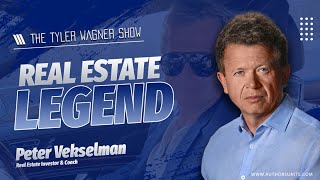
In this episode of The Tyler Wagner Show, host Tyler Wagner interviews veteran real‑estate investor Peter Vekselman. Vekselman explains his unconventional partnership‑based investing model, where he funds entire deals, partners with local operators, and splits profits 50/50 while absorbing all downside risk. He outlines the systematic checks, double‑ and triple‑checking of purchase, rehab, and capital points, and stresses the importance of experience and local “boots‑on‑the‑ground” partners as fail‑safes. Vekselman shares his personal journey: early entrepreneurial attempts, a failed merchant‑services franchise, a disastrous first year in real estate that wiped out half a million dollars, and how those lows forged toughness. He critiques traditional education, emphasizing early skill identification and the need for children to try many activities to discover strengths. Vekselman discusses his parenting philosophy for his five children, balancing college, entrepreneurship, and real‑world experience. The conversation turns to current market timing—high inflation, rising rates, and asset devaluation creating motivated sellers—and why this creates abundant opportunities for his model. He outlines his growth outlook, favoring short‑ to mid‑term goals over distant 20‑year visions, aiming to scale the partnership model nationwide. Finally, he provides contact information (Instagram @petervexelman) for prospective partners.
Chapters
All right, everyone, welcome back to another episode. Today I got Peter Vexelman with us, so welcome to the show, man.
Great to be here. Thanks, Tyler.
Of course, grateful to have you on. Uh, so if you can just kick us off, tell us a little bit more about you and what you do.
Yes sir, yes sir. Uh, I'm a real estate investor, have been for 23 years. Got a very unusual model. I've done thousands of deals You know, I think by most standards, decently successful. Unusual model, all my deals have partners with them. I don't do any real estate deals by myself. I partner with people across the United States and we do deals and split profits on the back end. But I'm an entrepreneur, big picture, only because I wasn't smart enough to even get a job interview after college. So I was forced to become an entrepreneur. And Been through a number of businesses before real estate, you know, was in a merchant services business and a franchising business and a vending business, you name it. And, you know, ultimately settled in the real estate business 23 years ago. Been through the lowest lows, the highest highs. But the best thing I could say is I'm still standing.
Yeah. All right. I have a lot of questions. So first one is because I was doing some research on you on YouTube. Your model is very different from what I have ever heard. So from what I saw on YouTube, at least it was something along the lines of like you, you split the profits and then your client, if you will, they, they put the time in, but you actually fund the entire thing. So there's really no risk to the client unless I was misunderstanding something. So can you elaborate on that a little bit?
Yeah. I mean, literally in my model, uh, you know, if we're partnering, you as the partner get all the upside of the business. Meaning once we sell the deal with our help, our implementation team, our back office team, even my lead gen, as you mentioned, Tyler, my money, my help with construction. Once it sells, we count out the profit. You as a partner get half, I keep half. But you're absolutely right. If something goes wrong, and guess what, after 3,600 deals, things still go wrong. But if something goes wrong, I absorb all the risks. So I literally, literally put people in the position where they have the ability to capitalize on the upside and I eliminate all the downside.
Yeah, man, that's, that's incredible because I— my guess is that a lot of people, their hesitancy with real estate is the downside risk, right? Like, because you've heard the stories, like somebody goes in, they want to flip a house, and then like even right now, right? Because I think with what's going on, some people that have— that bought houses before the market were in thinking they were going to flip it and now they can't sell it or whatever at the price they were hoping because things have gone down or whatever. So either way, you're mitigating that. A question for you, because you've done, I think you said 3,600, what are some of the most common mistakes that you see people make? Because you said even now sometimes the deal goes bad. Like how are you mitigating or how are you making it less likely that a deal goes bad? Like what are some of the fail-safes that you do?
Well, the big one is experience. You know, 3,600 deals teaches you a lot and you do have to have checks and balances. You know, in real estate, one of the things you have to do is you have to check and double-check all the time. And there are points in real estate that every deal has, you know, has the purchase point, which means you got to have the right numbers in line. You have to have the rehab point, which means you have to have the right numbers in line. You have to have enough capital in point. And, you know, and so we check and double-check and we triple-check. But also, Tyler, this is why I partner with local people. To create that boots on the ground synergy. You know, those people that go out there, put the time, put the effort in, and things like that. So we mitigated by really, A, experience, B, boots on the ground, C, a lot of fail-safe mechanisms to check, double-check, and triple-check.
Now you said a lot of highs and lows, so that I think people— stories are what people like the most. So Whatever one you want to start with, but I'd love to hear one of your highest highs and then one of the lowest lows.
Well, the highest highs really have all come in the last several years from a perspective because that's where I really started partnering with people. And you know, when you're able to take a 21-year-old kid who makes $1,500 a month that is a bank teller and do a deal for $40,000, I don't care who you are, what you do, or how many deals you've done, that's a high. Or a single mom with, you know, 6 kids and, you know, split thousands and thousands of dollars. And to this day, all our deals have some kind of a component like that. Or take somebody who starts with you and all of a sudden they get laid off from a job and here it is, they're, you know, the path of what's the path of least resistance? Do I go back in a job or do I go for it in this business? And, you know, within a month and a half, you're making $50,000 with that gentleman. You know, so those are highs on a consistent basis, you know, because we're doing deals with different people and deals with the same people who, you know, keep on wanting to rock it out with us. Um, so really, I think the highest highs are really from closing deals, you know, as, as basic as that may seem and as monotonous as that may seem. I could tell you, um, after doing this 3,600 times, you could say, well, it's the same thing over and over again. But what's different now in the last several years is all of them have a story behind it because there's a partner, there's a real-life person with, you know, with real-life things going on. And, and that's extremely, extremely exciting for us. And but that's how it's along the way, Tyler. I've always had some, some big lows, like when I got started within 6 months, I lost— I did. I got in head over heels, like I got in, I got excited, I got fired up. I listened to some training. And anybody that's ever done any kind of entrepreneurship, especially something like real estate investing, knows that there's, there's a million miles between knowing something and doing something. And I thought after going to a couple of training classes, I thought I knew something. So within the first, gosh, first month and a half, I bought 6 houses. Within 6 months of that, I lost every single one of them, meaning I made a mistake on all of them and lost about half a million dollars, which is about half, which was exactly what I brought into this business. So within 6 months, I wiped myself out. And within 2 months afterwards, I was pretty much, you know, living out of the backseat of a car, you know, to say the least. And but I never blamed the business even at that point. I always knew I was doing something wrong. That's when I started really understanding the concept of success, not just real estate success, but just overall success, how important certain principles are, how important certain things are to people that are successful. And it took me years, by the way, couple of years to get out of that mess. So that first 3 years I worked for nothing. If I would have worked 3 years at a McDonald's, I would've made more money than my first 3 years as a real estate investor. But that's what got me tough. I can't say though, in those 3 years I learned a lot, 'cause when you're failing, you're not really learning. I guess you're learning what not to do, but you're definitely not learning what to do. But what you do become when you're failing is you become tough. And that got me very, very tough. And I could tell you, for somebody who's looking to become an entrepreneur, who's already an entrepreneur, and as they're looking at that skillset, as they're looking at those things, Being tough is one of those things that I don't think too many people talk about, but I think it's an important one to have. You got to get tough, and the only way you get tough is if you get beat up, you know what I mean? That's the only way you get tough. So that's, that's the only thing I attribute those initial losses, those initial disappointments that all of us on the way to success go through and become. But that's, that's what they're for. They're there to get you tough.
Yeah, man, I think I actually talk about this a lot on the show. Is before I, uh, ran— well, it was a franchise thing, but before I ran my own company that I'm currently running now is I ran this painting business in college. It was called Student Painters, and it was like a franchise thing where they gave you all the supplies, they train you, and then you hire like 8 painters. And so you do all the marketing in spring, and then in the summer— yeah, so that whole thing. Either way, it was door-to-door sales, which I know now with you know, um, everything that's going on door to door seems unrealistic, but 10 years ago it wasn't right. So in South Carolina is where I went to college and I probably knocked on, I don't even know, 5,000+ doors. And like, you know, to, to do well, you only need, cause you know, painting a house isn't the cheapest thing. So I think maybe out of 5,000+ doors, maybe we got 50, 50 deals, right? So it's 4,950 nos. Right. And that's the reality of it is like, once I went through that process and I realized like just how that all worked, now as an entrepreneur, every sales call, every call I'm on, if it's no, it means absolutely nothing to me. You know what I mean? Whereas a lot of people, rejection is very hard. When you're an entrepreneur, dude, rejection is literally, that's what it is. It's like, it's over and over. So I don't know, door-to-door sales or, you know, what you went through, it just makes you really tough and it makes you realize like, Dude, sometimes it takes 1,000 nos before you get that one yes, but that one yes could be millions of dollars, right? So it is what it is. Question for you. So before too, you said that you realized that you couldn't work for somebody else, and I think you said something along those lines. Before you started this real estate thing, what were you doing before that wasn't working? What was happening? Did you go to college or what did that look like?
No, actually, I got it out of a totally unrelated— you know, you mentioned something about franchising— uh, unrelated business. I was in a merchant services business, and, and we got in at the right time, uh, in the right place. And, uh, and so we rode— my buddy and I rode out what we call the EBT, when, uh, uh, everybody on food stamps, United States, had to get transferred over to basically credit cards, electronic benefits transfers. And so we got into the credit card business just at the time every merchant in the United States needed a new credit card machine, you know, talk about timing. And so the business just blew up for us. And within a couple years, we had literally franchised to 15 different states, and we were rocking and rolling. But I also learned something about myself at that point. I learned I wasn't a corporate guy, because it got to be so big. We had hundreds of employees, we owned the business, but we weren't in charge of the business, that we had boards, we had officers. And I just learned at that point I'm an entrepreneur. I like to make decisions, you know, I like to be in control and charge as much as possible. So I just got out of that business, and that's how I got into the real estate business.
Got it. And then, assuming not, but just curious, when you were like younger, let's just say like middle school, did you foresee yourself doing what you're doing at all? Or what, what did you— what was your like dream as a child that you wanted to do?
You know, I grew up, I grew up in a family of engineers and PhDs and scientists. So I could honestly tell you, business entrepreneurship was just not the world I grew up in. I grew up among intellectuals. Matter of fact, the funny story is when my parents would go Uh, when my parents would go to, uh, parent-teacher conferences, teachers would be shocked. Like, they'd be shocked that I was their kid, you know what I mean? It's just, uh, so no, I didn't, I didn't grow up in that world. But here's the interesting thought, Tyler, uh, I, uh, uh, even though I did not, uh, grow up in that world, okay, I did not grow up in that world, um, I, I already portray traits and characteristics of that world. Um, what I mean by that, and this is something, you know, people a lot of times say, well, you know, I got kids and, you know, uh, what can I do? How can I help them? I tell them, figure out what their skills and abilities are. So for instance, I did not grow up in the world of entrepreneurship or business. I didn't even know what it was, tell you the truth. I mean, just, you know, just not exposed to it. You know, your parents are worldwide scientists, world-famous scientists, and all this But as I look back at it, when I was 11, I was knocking door to door selling stuff. Uh, and right from the time I was 11 all the way through college, I wouldn't go to parties, I was selling t-shirts, you know. Now, but here, here was the thing that I tell people. No one— like, my parents are amazing, absolutely amazing parents, but because they didn't really kind of grasp this whole concept of, man, this kid's He's got some skill set. Let's point him in that direction. Because no one really pointed me in that direction, I could tell you, I bounced and I bounced around in life. I bounced around until I was in my 30s, till one day it just hit me. I got a skill set. I could sell. I could sell and I could communicate, and I'm pretty darn good with people. And as a result of that, that became my journey to where I am now utilizing the people skill set, the communication skill set, the ability to sell skill set, it manifested itself through the real estate investing business. But had someone at it when I was 11, when I started displaying that, had somebody just kind of pointed me in that direction and said, let's kind of start formulating your life in such a way. And so kind of as a sideline note, for those of us that have kids, You know, that's one thing I try to develop, like, is I see what is their skill set, what are they good at? Because I could tell you, and this isn't me talking, this is most people that, you know, achieve the measure of something in life. If you could figure out how to position yourself in a way where you're winning and succeeding, it sure does make life a lot easier. It doesn't mean it's going to be your ultimate pathway. It doesn't mean it's going to be what you're going to do. But if you can figure out what your talent set is and if you could start positioning your life in such a way that you're utilizing your skill set, your abilities, your talents. I'm telling you, it, it, it's a short— it would have saved me, literally, it would have saved me, let's see how old, 33. Yeah, it would have saved me easily 16 years in, in this life of just bouncing through things. And then one day I just literally realized, like, man, I'm good at this stuff. I could sell, I could talk to people, I could communicate, I can get thoughts across, you know. I could— I can, can, can, can. And that's what led me down the pathway where I am now in my 50s, you know, utilizing, by the way, all of those skill sets, you know, in a particular industry doing particular things and all that. So that's kind of my little sideline tidbit for those that have kids.
Yeah, you know, so this is another thing. I mean, I've done like 2,000 interviews, so if you realize I'm referencing other interviews because I've done so many, so chances are something like this has come up before. So this is something that has actually come up multiple times because I've interviewed multiple college professors, and it's one of the things that I always actually tell them is— and for any teacher that's below college, I would actually argue this is more for people, for teachers that are below, like high school, middle school, even elementary. I think, okay, yes, and for parents, as you said, you need to teach kids 100%. That's not arguable, like obviously. But I do think there should be more observing, right? And there is in school, from my understanding, there is zero observing, none. That's not part of what a teacher is. They're not observing and then saying like, "Hey, this kid loves talking. Like, he's outgoing. He loves people. This kid loves doing math in the corner of the class, doesn't talk to anyone." Right? Everybody's in the same box and everybody needs to get an A in all the classes. But like you said, at 11 years old, there were certain traits that you had that if they shined a spotlight on it, your pathway could have been just quicker and easier where, you know, because for people like me and you, Like, I'm not— because we're similar in that way. I could never be in a cubicle crunching numbers. My major my first year of college was accounting. That's what it was. And I have a podcast now where I talk to people every day, you know? So, but it took me going through that hell to reflect and be like, holy shit, I don't like that. So this is what I— but that was noticeable when I was a young kid. I was friends with everyone. I was just like the guy that connected everybody. So it should have been more obvious. But I just mean, and I, again, my parents just like, "You're amazing teachers, great." But it's just like, that wasn't something that would— nobody was observing, you know? And I think that should be more— if they could observe kids in school and like start— and look, I'm not saying choose somebody's whole life path when they're 10. I'm not saying that. But what I'm saying is like, you can notice things about kids and start to steer them a little bit and be like, "Hey, maybe try this, maybe try—" It would just make their life so much easier.
Well, and I'll tell you, but it's totally opposite actually. You could take what you just said and extend it out. I still remember to this day, um, and gosh, this was what, Luke's 20 years old now, sitting at a principal's office, and, uh, this is my third child in, in rotation, um, and sitting in a principal's office having 4 of his teachers lined up, having the principal. And you know what the— you know, you're saying no observing. You know what their observation was? This kid doesn't conform. This kid plays around with the pen too much. This kid gets up too much. So it's totally opposite. If you think about it, they teach you to just be in the box. This is, you know, when people— you know, that's another big question I always get asked, you know, what's my opinion about education? And I don't want to spend— you know, I think there's a lot of value in education, actually, but I also I'm telling you, it works counterintuitive to where the big plays are in life. Sure, if you just want to be that kind of, that, that, that kind of 9 to 5, and there's nothing wrong with that, but beyond that box, that's the only box there, and that is a box of conformity. That is the box of showing up, uh, on time. That is the box of eating at 11. That is the box of, you know, just total conformity. And you're absolutely right. So as a matter of fact, not only Is what you and I do not done, like figure out the skill set. It's the opposite is done at a young age. It's like we're going to put you in a box. And by the way, young kid, if you're out of the box, we're going to demonstrate to you that's wrong. We're going to punish you. We're going to try to get you on medicine. We're going to try to get your parents in here. We're going to tell them you're disruptive. Well, then who in the world— guess what? If you're an entrepreneur and you don't want to be disruptive, If you're an entrepreneur and you don't want to stay late or come in early, and if you're an entrepreneur and you're afraid, you know, what do they reward? They reward A's. Well, guess what? I never got my— I never succeeded my way to success. God forbid you, you fail in school. What do they tell you? Bad, underperforming, not smart enough, flunk, stay behind. Well, guess what? I, I, I, I got started in real estate 23 years ago and I lost everything. If I would have been in school traditional school to set up failure. Get out of this. This is not your industry. This— you can't succeed. You know what I mean? It's so— you're right, it is. It's, it's— I hate to say it, but to a degree, and it's so true, that growing up a period— if you don't have the parents like you and I didn't have the parents that they were— although they were great, they didn't have that kind of mindset that we have today. And if you don't have that, and if you're thrown into the traditional conveyor belt— by the way, it's only— it's a conveyor belt. It's nothing short of a conveyor belt. Then good luck. Good luck fighting it. And The only reason I was able to fight it, funny enough, is because when I did graduate, I wasn't even smart enough to be accepted by it. Meaning, forget getting a job, I couldn't even get an interview. Like nobody, when I got out of Miami University, nobody even wanted an interview.
So— That's where I live, in Miami.
But here's the crazy thing. Had I gotten good grades, I bet I would have been miserable now. Because forget getting an interview, I would have gotten a pretty darn good job. I would have gotten a decent enough, or at least what I thought was a decent enough salary. And I would have been in that cubicle that you're talking about, that you and I are not meant to be part of, that you and I do not shine in, that you and I do not prosper in. I would have been part of that because there comes a point in life where you just accept it. You just kind of accept that. Yeah. When you and I are young and we're kind of flinging, you know, hoping for the best and we're taking chances. But you know what? I hate to say it. For a lot of people, they get in their 30s, 40s, 50s. They got 2 or 3 kids. They got a husband and a wife. They got a mortgage. They're like, you know what, I'm gonna settle. And, and so this whole way that we bring people up and the way we educate— again, there's value in it, don't misunderstand, I'm not saying throw it away, um, but I do say that there are, for the right people, there are better alternatives. No question about it.
100%, man. And, and I actually thought about this too, and it just highlights more of what you're saying. So I, I mean, I dropped out of college. My realization was— and this is actually Maybe this will blow your mind. Maybe it won't. My major after accounting, I read The 4-Hour Workweek, the book by Tim Ferriss. I don't know if you've heard of it, but pretty famous. And I read that in college. And then I changed my major to entrepreneurship. There was actually a major in college, entrepreneurship. I go to the first class and I'm not even trying to be an asshole. I'm not even trying to like test the teacher. I was just curious, literally curious. I raised my hand first day and I'm like, to the professor, I can't remember his name now, but I asked him, I was just like, I'm just curious, can you tell us like some of the businesses that you ran? Because I assumed, you know, because he's the dude, guy never ran a business. Yeah. And, but he, he somehow got a degree in entrepreneurship. So he was teaching us all entrepreneurship, but had never run a business. And dude, that's, that's when it really hit me too. The two things hit me that I was like, this is crazy. Just overall. And then secondarily, I realized that the degree was not going to get me anything I wanted, right? Because the degree gets you the cubicle. And I was like, okay, so I'm going to work 4 or 5 years for this, spend all this money, my parents' money too, and then it's going to get me something I don't even want? This makes no sense. So, then I dropped out. So, that's one thing. And then secondarily, just to highlight more of what you're saying is what actually happens in school, especially when they're younger, right? Is The things that you excel at, you get an A, and then the teacher's like, cool, doesn't— that's cool, good job. The things that you do not excel at is what they want you to do more of, right? Because they want you to get up to the level that you can pass. So what's actually insane is that they, they actually put a kid's focus on the shit that they're not good at. They're like, you're bad at math, so you should do more of it. Whereas 'But you're really good at what? You're really good at public speaking, so don't do that anymore because you're already good at it.' But so, but that's actually the career path for that person. It's just so bad. Yeah, you got it, you got it. Um, so, okay, so here's a question for you though. Considering you know this, you have 3 kids.
How did you— actually, I got 5. Oh, okay, you have 5. I was just telling you about my third one. Oh, cool, cool.
Okay, gotcha, gotcha. So With the 5 kids, I mean, considering that you understand these things with school and everything and your background, how have you navigated that? Like, how have you— like, they're in public schools, I'm assuming, based on what you said, but like, how are you talking to them about school and college? How are you navigating it is the question.
Well, number one, again, it's like I've said a couple times already, I do not come down on the education side. Yeah, but what I do say is there's options. So here, my philosophy is very fairly simple. And by the way, I'm I'm not talking about like preschool here, kindergarten. I'm not talking about any of that. I'm talking about the higher level stuff. For sure. Um, but here's where I come down on it. I come down in a fairly simple way, conceptually. I mean, in a big picture way. So let's say you have an option, you know, option one, you go work for Dad who's an entrepreneur, who's got a company, who's got employees, who's got, you know, things working, and who's got a, you know, potential legacy coming up. That's option one. And you want to do it. Option 2, you go to college. No-brainer. You go work for Dad or you go work for someone like that to get real-life practical experience. Because as you know, no one ever got to be smart and made a bunch of money. Smart don't equate to money, don't equate to success, don't equate to love of anything. Smart is just smart. Well, whereas world, world experience equates to all of that, equates for more potential financial, it equates to potential love of something, or knowing I don't want to do something. It equates to all of the things that ultimately, you know. So, so from an option perspective, if you have option of world life, real life experience, okay, I'm not talking about like, you know, go to Miami or, or, or, or work at a gas station, okay? I'm talking about just kind of the kind of stuff that you could really feed off and learn from. Nothing wrong with running that gas station or being an assistant manager at gas station when But here's what I don't subscribe to. Okay, I'm not going to college and I ain't doing anything. I'm just going to sit at home and watch TV. No, no, no. So, it's kind of like option 0, do nothing. Just putz around and hopefully one day something happens. Not an option. Option 2, formal education, because formal education, there is some value to it. And option number 3, the top option, is, uh, world life experience. So, so that's kind of how I've tried to guide my kids. And guess what? For instance, my daughter, she just graduated all A's in, in college. Um, my, uh, second son, uh, my, my second child, who's Josh, my oldest son, he's, he's 21 years old and he is rocking it out, um, in the medical field. And not as a doctor, but running a facility, actually, believe it or not. I mean, 21-year-olds don't run medical facilities. So he's kind of my— and he's the closest that I have at this point towards an entrepreneur because, you know, he's being recruited by the whole world. He's an entrepreneur, go-getter. He's an incredible salesperson. And if he was on this call, you'd be like, Josh, man, this is— you're unbelievable. And my youngest one is still bouncing around. He literally is bouncing around. He's not a college dude, but he's also not an entrepreneur. So that tells you the philosophies you and I have don't always work in real life as much as we want them to work in real life. And my two youngest ones are just too young to do, you know, from that perspective. So A, all kids are different. I don't know if you have kids or not, but—
No, not yet. I want kids, not yet though.
I could assure you all kids are different. And B, all you could do is steer them in the right direction. And ultimately, they, they, they, you know, they make up their own mind. And there's my lovely wife. And by the way, the fifth one is still in her stomach. Oh, God. Okay. Yeah, the fifth one is due in a minute. The fifth one is due The fifth one is due in a month about. Our fourth one is only 9 months old. So all you could do is you could— oh, 12 months, I'm sorry. See, you get— when you get 5, you lose track of everybody, which, which you literally do. At least I do. Um, so all you could do is you could set a good example and you could steer them in the right direction. Ultimately, they make up their own mind. But I do believe, I do believe, Tyler, I will tell you, I think most of my kids buy into my philosophy. Meaning, for Emma, it was the right thing to go to college. It's just for her, because she would— she's not an entrepreneur type of a young lady. That is, you know, what I do, what you do, is just— that's not her gig. So she did choose not the path of least resistance, but the path, the, the right path for her. College was the right move. For Josh, who's running a facility, you know, medical facility, a psychiatric facility, That was the right move for him. He's an entrepreneur, and now he's, you know, he and I just talked an hour ago, and he's being recruited by people that want to start a whole psychiatric facility. Kids his age don't get asked to run those facilities, you know. That is an absolute rocking it out and entrepreneurship. He never did a day in college, you know. He did that. But again, you know, so you could say, well, I'm so smart, but my third oldest, he's literally bouncing. So he's— but, but I do, I do believe ultimately he'll, he'll figure it out. And, you know, we're talking maybe, you know, going to the military right now, which would be great thing for him and all that. So, so, yeah, uh, but at least they hear, you know, at least they hear. At least, um, I never heard, I never heard. I, in my world that I grew up in, a world of scientists and PhDs, I literally thought, like, this sounds crazy, but I literally thought there was only one pathway to success, which is, uh, school, good grades, college, good job. Like, to me, it wasn't even— because the world I grew up in, this wasn't even in existence. The guys that owned businesses were different types of people. They were different animals. They were on the right other side of the world from, you know, at least mentally. I just didn't even know about it. I had to learn about it myself, you know. I, I kind of ended up an entrepreneur the, the dirty way, you know. I mean, I did it from the ground, ground, ground up with no kind of, um, education towards it. No no, uh, no shortcuts, because there's a lot of shortcuts to being successful. I was never introduced to any of the shortcuts, you know what I mean? So I did it. I, I didn't— I say I would have shortcutted this whole thing for me by 16 years, but I don't want people to think, wow, are you disappointed? I'm not disappointed, you know. I'm not disappointed at all. I mean, I am today because of all the crap I went through, but I do think it is absolutely possible to, to guide your kids and down a shorter pathway to success, whatever that may be.
Yeah, a lot of times I think what it is— and like you said, nothing's right or wrong, it's whatever is right for that individual. So it's just like, I think a lot of times it's just trying as many things as you can and then becoming aware of what you like and what you don't like and just keep moving towards what you do like, right? So for your one son that's kind of bouncing around, it's just like— and I have no idea the situation, I'm just saying, if it was me, I would be like, hey, Hey, try this, give this 3 months. Okay. Do you like it? Do you not? If you don't, move the other way. If you do, maybe, you know, keep in that. And it's just, I feel like a lot of times people just don't try enough things to even discover what they like. Cause we all have ideas of what we like and don't like, but until you actually do it, you don't really know, you know? So I don't know that, that when I have kids, I feel like that's what I'll try to do as soon when they're young is I'm just going to try to get them involved in as many things as possible. And then start to observe of like what they like, what they don't like, what they're naturally good at, what they're not, and then just try to kind of point them in a direction. But at the end of the day, it's up to them, you know, it's whatever they want to do.
Well, and again, that's the problem with the system we grew up in, because the system doesn't encourage you to try. The system encourages you to succeed. There is no trying. There is one pathway that's called good grades, that's called being— I mean, I don't want to keep on beating up the system, but that's reality, that they don't teach you to try. They don't teach you to It's okay to fail and stuff like that. But anyway, you get my point.
That was good. That was a good rabbit hole we went down. That was fun. So, uh, one of the last questions I actually want to ask you is, uh, so for your real estate company that you're doing, like, what is— I mean, it's incredible already, 3,600 deals, and I love the structure and everything, like, just literally completely removing risk. It's, it's awesome. So what is, like, the long-term vision? Like, I guess you know, not to sound so cliché, but it's like 10, 20 years. Do you have a vision for that company, or are you actually doing something completely different? Uh, what, what does it look like for you?
You know, I don't— and this is again maybe a little bit unusual in me— I don't buy into 20-year visions. I believe into, uh, you know, uh, 5, maybe 10 years. Some direction.
20 years, things are gonna be too different.
Who knows? We might not be doing real estate the way we're even doing it right now. So, but, but so I buy into more short-term because short-term is realistic, accomplishable. And I always say if you take care of short-term, long-term takes care of itself. Yeah, that's a great line, dude.
I like that. Well, thank you.
I appreciate that. But, but, but from the growth vision perspective, whatever you call it, short-term, midterm, or long-term, it's to really to do more and more deals with more and more people. I mean, it is flat-out exciting. I mean, I've been at this thing for 23 years. Thousands of deals completed. And realistically, realistically, I haven't even done a deal myself in 7 years. Now, in that time frame, I've done well over 1,000 deals. Well, because I have a whole, you know, system set up for getting them done. I have a whole team and all this. But I'll tell you something interesting, Tyler, that's been happening here because I'm so fired up about what we do. I'm doing deals again. I'm like getting involved with my partners that, you know, I have a whole team to support the partners. Partners. I have closers, I have contract people, I have rehab people, I have infrastructure people. But I'm so flat-out excited about what we do and how we work with people and do deals. I'm literally like, right now I have— when we're done, I'm calling back like 8 realtors, you know, 3 partners. I'm like, I'm just flat. And I'm also— it's not just from the model perspective, but just from a time perspective. We're in incredible times for real estate investing. This is, you know, fortunes are being made, are about to be made because of what's happening. And it's over— in the 22 years that I've been in this business, this is unbelievable, the excitement that's going on in the industry right now. And so I'm just flat out— so you couple that with the model, you couple that with just the excitement I have over working with people and splitting profits, and you couple that with the incredible timing of the opportunity of the industry, put it all together. I'm flat out on fire.
And I mean, I think I'm somewhat aware of it, but like, what— when you say timing, just so the audience understands, what is so great about this timing for it?
Sure. Well, obviously we know what's going on with the economy, and if you don't, just turn on the TV and just make sure you don't have a gun by your head when you watch it. You know, but a lot of it is true. You know, we're in uncertain times. I mean, that's not BS. You know, the rates are up. Inflation's up, you know, economy's down. You know, 5 of the largest companies in the world announced hiring freezes. Guys like Musk announced, you know, 10% of the middle management to be let go. Um, so we're, we're in a tough time economically. But what does that mean at the real estate industry? That means things are being devalued. Not just real estate. I have friends in a watch business, you know, they were buying watches for a million bucks several months back, they're getting the same watches for $200K now. So things are dropping in price for a lot of reasons. One of the biggest reasons is people need to liquidate. You know, when things get tough, people need to have access to money for living purposes, for survival purposes and all that. Well, guess what they sell? They sell assets that are big. I mean, selling a cell phone ain't going to help any family. So they get rid of like second homes, rental properties. Sometimes people just downsize at the— on the— on a on their first primary residence. And what business are we in? We're a business on buying low, selling high. So what happens now? There's a lot of motivation out there. And so these people just need our help is the bottom line. You know, they need our help to get out of the situations they're in. And a lot of these are real-life situations. You know, people are being laid off, people— there's uncertainty in the market. Some businesses are taking huge hits already. But there's another interest. And so, we're helping those people by buying their assets, which is real estate. But this is something else that's happening that's very— not weird, but I've never really seen this even during the COVID times. There's a lot of people who are not in trouble. Like, they are not in trouble. But because the whole world is telling them it's over, they think they're in trouble. So, there's this new class of motivation that I've never even seen before. For? You know, I mean, there's a traditional motivation where people sell things at a discount. You know, you, you get a divorce, you have a death in a family, you— a sickness. You know, people, you know, liquidate during times like that. Uh, bad economy, liquidate. But now there's this whole crop of people who are not in trouble, but the world's telling them they're in trouble. And because they think they're in trouble, they're dropping prices just to get liquid. And so, and we're in a business of motivation. You know, when you're buying assets, when you're buying real estate, you're looking for motivation because those are the people we're able to help. And so that's what I mean by timing. The timing right now to, to, to for opportunities is immense. Absolutely immense. Absolutely huge. And, you know, we're just excited, excited to be in the business like that where I have, you know, be able to reach through other people across the United States, you know, not just geographically focused, not just market focused, but literally across the United States. So it's interesting and a fun and exciting time to be in this industry.
Yeah, I think they're one of the quotes out there. It's like, luck, uh, favors the prepared, right? So it's like, in a sense, right, I mean, you can't control like the overall economy and stuff, so it's like that part is luck, but you're very prepared to take advantage of this time, right? Um, so, so yeah, either way, man, I want to leave it to you now. If there's anything we did not cover that you want to share, please do. And then also let people know how they can stay in contact with you, like, uh, websites, socials, anything else you want to share.
Well, again, the timing is perfect. And so if anyone wants to level up in life, if anyone wants to retire from what they're doing, and if everybody wants to— anybody wants to do it through real estate investing business, I'm a legitimate source. You know, when I partner with someone, I get fully committed. You know, we teach those people, we spend money right in the cities they live in, generate leads and opportunities for them. My back office handles all the back office stuff. My construction team helps with construction. Our set of realtors help them sell it and we split the profits. And how do they know they could kind of sort of trust somebody they don't know? I do the one thing nobody else will do. I'll give you all the money to do this business with. And so I put my money where my mouth is and then we'll split the profits 50/50. So for someone to get a hold of me, the best way is probably through social media. You know, that way they get to know me, follow me. You can just go to my Instagram, let's say Instagram account, instagram.com/petervexelman. You know, I'm sure you'll see my name up there. So instagram.com/petervexelman, and you'll just, you'll, you'll see who I am, what I do. They're interested in connecting, myself and the team, just hit my bio link, you know, put your information in, we'll touch base, and before you know it, we may be doing deals together. I'd love that.
Love it, man. Thank you again for coming on. I appreciate it. Thanks, Tyler Wagner.
More from Tyler


Catherine Nikkel : THE STORY EVERYONE HAS BUT HASN'T TOLD : The Tyler Wagner Show #1120



Scott Ritzheimer: Bring Predictable Success to your Organization | The Tyler Wagner Show #1115


Fred Moskowitz: A GUIDE TO GETTING STARTED WITH IN MORTGAGE NOTES | The Tyler Wagner Show #1113

Mark Podolsky: From Land Investor to Full Time Success How I Made $90,000 Cash in Real Estate


Mark Podolsky: How to achieve a 300% return on investment my foolproof strategy

Mark Podolsky: How to make passive income selling raw land the irresistible pricing strategy