R. Scott Edwards: Be A Stand Up Comedian | The Tyler Wagner Show #1035
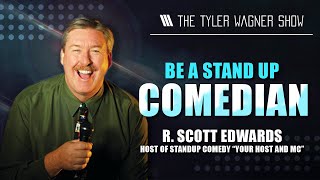
R. Scott Edwards founded Laughs Unlimited, a three-club comedy chain worth millions at its peak, and worked with Jerry Seinfeld, Robin Williams, and Jay Leno. He shares what he learned from his biggest win and his worst failure: a tourist submarine that got clogged with algae. Edwards talks about why stand-up demands relentless writing and the freedom to say things other entertainment can't.
Chapters
All right everyone, welcome back to another episode. Today we have Scott Edwards with us. He is an entrepreneur, podcaster, and all-around stand-up comedy professional. So welcome to the show, man.
Hey, I'm so excited to be here, Tyler. I've been listening to your podcast. You are getting some great people for your listeners to learn from.
I appreciate it, man. Yeah, I do. Uh, as we were talking about prior, I, I love podcasting, so it's easy for me to do. And I'm excited to talk about what you've, uh, been up to because I don't even know where to start. I'm just so excited to have you on because comedy is like— I don't— I haven't dove enough into it, but I have a feeling if I allowed myself, it would be my favorite thing. So—
Well, let me— I'll give the folks a little bit of a background. I'm a serial entrepreneur. I've started over 12 companies. But what Tyler's alluding to is I owned a chain of comedy clubs from 1980 to 2001. And I got a chance to work with the likes of Ray Romano, Jerry Seinfeld, Bob Saget, Jay Leno. You can go on and on and on. I got a chance to work with all the best in the heyday of stand-up. And Tyler being a stand-up comic himself, we have so much to share.
Yeah, all right, yeah, if you say it, then I'll take it. That's the new title. So I've seen Jerry Seinfeld live and he was like flawless. So what was your experience with Jerry Seinfeld?
Well, he started for me before The Seinfeld Chronicles, which was the first year of the TV show that became Seinfeld. He worked for me for the, previous years, uh, as a regular stand-up. He did come out of New York and, um, was just getting his feet wet when he started working for me. Um, already a headliner, but I had what's called an A-room. It's kind of the university before the big PhD that people go on to and having a TV sitcom. And Jerry and I not only worked together on my stages for several years, but he did a nice sold-out 2,000-seat concert for me one year and was just a great guy to work with. The best story about Jerry and what a solid professional he was, he had to cancel a week at my club to go do the pilot for Seinfeld. And what a great guy is, after he did a season, a full season of the show, He came back as a TV star now, made up that week, and for the same money I was paying him the year before.
Oh wow, yeah, that's awesome.
I mean, not a lot of guys, you know, some of these entertainers are prima donnas and, uh, you know, they, they go with— they go for— but he was a straight shooter.
Yeah, so, and actually, I thought it's because of my excitement with the, uh, the comedy, but what Let's start earlier on. So we do have a lot of people that have been on the show, as you know, and that listen to the show for business type of things. So, you know, 12, a dozen companies is pretty insane. So what were you doing before? What was your first company actually? Let's start there. What were you doing before that? Like how did your entrepreneurial path start?
Well, thanks for asking, Tyler. I was the product of a divorced family and was kind of pushed into working at the age of 15. In fact, I was allowed to get my driver's license early because I was helping to support my family financially. And by the age of 17, while just finishing high school, I started my first small construction company. The quick story was I was working as a night janitor at a motel, cleaning floors and bathrooms overnight. And I was hanging out in the bar. And again, I was 17, so I was underage. And I was kind of hiding from the boss and I overheard these two guys talking about making money on the weekends by painting the lines in parking lots. It's called striping. And I go, well, crap, I could do that. So I went and did some research. I went around and talked to the owners of other striping companies, asked them how they got started, how do they charge. And I put together what basically would be called a business plan. But I didn't ever have any money. So I found a friend that had just come into a small amount of money and he used $500. We bought our first paint machine, but we needed to get from job to job. So we brought in another high school buddy that happened to own a van and the three of us formed A&A Restripe. And that was my first company. It was, we striped all the McDonald's and Safeways in Northern California. We did a furniture chain, we did an airport. It was, uh, pretty exciting for 17.
Okay, yeah, that is a lot for only being 17. And then is that when you kind of caught the entrepreneurial bug?
Yeah, I never went to college. I found that when I worked for other people, I got fired a lot.
I can relate to that.
So, um, I really enjoyed working for myself. In that first company, I learned I mean, I have an A personality. So in that company, I was the salesman. And so I had no problem talking to business owners and getting jobs and working, negotiating deals. And with McDonald's, not only did I arrange that we got paid for every line we painted and every repair we did on a parking lot, but I arranged for free food at every McDonald's we worked at. Now I don't think I could handle that at my age, but at 17, man, that was like free food, McDonald's. Yeah. Yeah.
No, absolutely.
I agree.
I would've worked for free food when I was younger.
Yeah. So, you know, that kind of got me towards that, uh, starting a company after a couple years I sold out. And what's a little interesting, Tyler, is that company is still operating today. But with one of my original partners. My second company— and everybody in the audience, don't be too shocked— this is before disco. I was doing portable music entertainment, and we were playing, uh, music off the album Saturday Night Live before the movie came out. Um, and we were playing disco music for weddings, schools, parties, and it was called Sounds Good Music. And again, I didn't have any money, so I got a couple partners and we ran around and did gigs playing music, and I was a professional MC spinning records and did that for a couple years. And that company is still operating today with one of my partners.
Got it. So curious, what, what, what's been the— and you don't have to get into like exact numbers or anything, I'm just curious, like what's been the most successful business venture and then what was the biggest failure?
Well, that's a great question. Of course, the biggest success was with my chain of comedy clubs, Laughs Unlimited. I opened the first one in August of 1980. It was the 12th full-time comedy club in the entire country. This was before the big wave of comedy hit in the '80s, and that was the most successful. I ended up with 3 clubs, 126 employees, and it was worth a couple million dollars at its peak, and that was the most financially successful. The losing side, I've lost money on many ventures, but the one that's the most fun to talk about was I was a stockholder in a company called Snuba, which is basically underwater snorkeling. It's all over the world. And the guys that own that company and brought me into it built a submarine and launched it in Hawaii. I actually helped them launch it. And I said, you know what, this is cool, I want one. So I bought into a submarine We— it was a tourist submarine. We took people out and showed them the ocean and the fish and everything. And I launched mine in Monterey, Tyler, and put a lot of money into it. It was open about a year and a half. But little did I know that in the cold waters of Monterey, algae bloom was a huge problem. And we had to actually pay a scuba diver to be underneath the water with the sub all the time scrubbing the windows. It was a huge financial disaster. I ended up selling the submarine to the Wrigley gum family, and it is still operating out of Catalina Island. But that was my biggest financial loss.
That is awesome. It's the stories. I love the stories. Um, so as far as like celebrities in the comedy arena, any like cool story? Obviously there are, but what's— what stories like come to mind if I just ask you like the, the best stories of working with some of these, uh, people like Jay Leno, Bob Saget, people like that?
Well, I'll, I'll try to spread it out, uh, era-wise because I, I'm not sure— your audience probably has a bigger, uh, range of age, and I'm older, so I'll talk to them first. I got the opportunity to work with some of my dad's favorite comics. I had Soupy Sales at my club and he threw a pie in my face. And the people that know Soupy Sales know what, how cool that is. Pat Paulsen, the guy that was from Laugh-In was a, I'm sorry, Rowan Martin's comedy Laugh-In. Anyway, Pat Paulsen, who always ran for president, we became really good friends. I even spent time at his ranch and I did a press promotion where I had him run for mayor of Sacramento We had them at the Capitol with the press and the limousines. We made up placards that said, "Why not Paulson?" We had security. It was hilarious. And the other one that was really a treat was Graham Chapman, who was one of the Monty Python guys. He worked for me twice. And these were all just amazing people to even get to know and work with. In more modern times, I had a chance to help develop Paula Poundstone. She first came to my club as an opening act out of Boston, and she's the only act I let work multiple weeks so that she could create and build her act. Eventually, Gary Shandling took her under his arm and taught her about writing and material, and she ended up being a huge comedienne and star on TV. Still has a terrific podcast out there. But, uh, as you mentioned, there's been so many. Dana Carvey, uh, was working out of the Bay Area. I was actually sitting in a jacuzzi with him, uh, a few hours after he got the call from Lorne Michaels to come out to New York and do Saturday Night Live. So, uh, that's just a, a chip of the iceberg on some of the great experiences that owning a comedy club led to.
Got it. That's incredible. Okay. And then, um, give me one second here. My— what I wanted to ask you too, because this is one of the questions that's on your sheet, is who do you think's the funniest comic working today?
Well, working today is the big question because I've not been in the business for the last couple decades, other than I still book some fundraisers for charities and MC and produce shows. In that regard. But, um, I do feel that one of the best comics— and I've worked with all of them, I mean, I was so blessed, Robin Williams worked for me twice. I mean, oh, what, you get a chance to work with somebody like Robin and then you say, well, who's the best? Well, you know, obviously he's an icon of stand-up comedy, but I will say that, uh, one of my personal favorites was Larry Miller. Now, your friends and listeners should go out and Google that name, and when you see his picture, you go, oh, that guy, because he's been in over 100 movies and TV shows. He was the suck-up guy in the movie Pretty Woman. But when it came to stand-up comedy, he was the best. He could tell a 20-minute story and have the audience riveted and laughing the whole time and then still punch it off with a huge ending. Uh, his 12 Stages of Drinking is one of the funniest bits anybody has ever heard.
12— is it on YouTube? I'm gonna check that out.
I don't know because he was doing stand-up comedy before the internet, um, and transitioned into acting. And if you Google and see who it is, you'll say, oh yeah, I've seen him in You know, he was on CSI and Monk and, you know, just dozens and dozens of TV shows, but he's done many movies as well. And he really made his money in his career in acting. Stand-up comedy was kind of the vehicle to the acting.
Got it. Okay. And then I have to go back real quick. So what was it like working with Robin Williams? Because that's crazy.
Yeah, Robin was, um, a really interesting guy, and I know that everybody has seen him on stage when he is just crazy manic comedy. And his way of doing stand-up was to throw out 10 things every 60 seconds, knowing that maybe half would hit, right? He didn't care. He just kept going in that machine gun style. And so, you know, until the audience was just laughing so hard that anything he said seemed to work. And on stage he was like that. But what's interesting was that off stage he was a very, uh, kind of quiet, sincere guy. I mean, he loved the industry. He loved hanging out with other comics. Uh, what was nice is that, you know, to me he was a comedy god, and yet in my club where I'm the producer, he had all the respect in the world that, you know, it's, it's my stage and, and you work under my rules. And he was happy to do that because he just loved getting on stage. And what was great about Robin was even after all of his movie success and acting success He still wanted to get on stage. In fact, you asked about people working today. You know, Jerry Seinfeld and Jay Leno got their start at clubs like mine back in the '80s. And what's interesting is they're both, you know, tremendously financially successful. They could never work a day in their life if they didn't want to. And yet both these guys are still out performing each and every week. At clubs and casinos and theaters across the country because they love stand-up comedy and what you get from an audience when it's live.
Yeah, no, 100%. It's definitely— yeah, man, I, I mean, look, I've never done— the most I've ever done is like 5 minutes on stage.
Yeah, but Tyler, you've been on stage. You felt that, uh, endorphins, the excitement, the, the the sharing of, uh, energy from an audience. I mean, there's nothing like it.
There really isn't. I'll tell you, so I did an improv class. What was interesting is I was— I would say I was really good at improv. That comes pretty naturally to me. But the, like, trying to perform jokes and, like, memorize them, that was difficult. So the 5 minutes, I got a couple laughs, but it didn't go that well.
But you know what's interesting is that You know, and I know that people in the audience find this hard to believe, but Robin Williams and Jerry Seinfeld and Jay Leno have all bombed. I mean, that's how you learn. Nobody's funny right out of the gate, and nobody's funny unless you work at it. So if you want to succeed in comedy, you have to write, write, write, and then get on stage as much as you can so that you can take those lumps of coal and grind them down to a diamond. That's a, that's a bit or a joke that you can use for the next 20 years.
Got it. Well, perfect segue. What's, what's the number one mistake beginners make?
Um, well, I think the biggest mistake is the fear of not getting on stage. You know, stage fright is one of the most common, uh, phobias that people have out there. And much like being an entrepreneur where you're talking about starting a business or talking about starting a podcast, you know, you just gotta do it. Well, it's the same with stand-up comedy. You have to get out there, put yourself out at risk. I mean, you're not gonna die literally, you know, you might feel embarrassed or something, or you'll get some boos or somebody heckling you. But the reality is, if you don't even get out and try, it's never going to happen. So to answer your question, it's the people that don't try, that don't get— put themselves a little at risk to learn something, and then understanding that you, you know, one time's not enough. You kind of have to work at it. You have to write, you know, you know what I'm talking about, Tyler Wagner.
Yeah, I mean, the main business I run is, is helping people write and market books. So I think it's— tell me if I'm wrong, but it seems like it'd be similar to like writing a book where people try to like perfect the first draft and they're afraid that their writing's not good and it prevents them from even starting. But, you know, the more you write, the better you're going to get at writing. So similar to comedy, the more you get up on that stage and the more you bomb, the higher chance you have of not bombing, basically.
No, exactly. And I think what you do is fascinating, Tyler, because Authors are a peculiar breed. They have a story, a message they want to share. And as you said, you have some that— and it's just like comedy— that it comes naturally to, and they, they just sit down with pen and paper and boom, there's a book. And there's other people that don't have faith in themselves, they don't have confidence. Uh, Julie Collins, when she was on her— on your show, was saying that in business, one of the secrets is having confidence in yourself. And that's true in being an author or even being a stage comic, any sort of performer. If you don't have faith in yourself, why would an audience?
Yeah, you know what? Oh man, and this is actually helping me reflect. It was probably— I mean, I was pretty timid my first 5 minutes, you know? So it's kind of hard to make people laugh when you are scared of them all.
Well, you know what it is? An audience can sense You know, it's funny, people talk about how animals have that sense, they know if you're afraid or not. And it's the same with an audience. If you act timid or insecure or afraid on stage, an audience will feel that. And you know, that doesn't help you in their position, especially if it's a paid comedy audience. So they're invested in the evening. They have an expectation of a certain amount of professional status. And even if it's not funny, they're going to go out, they want to see somebody go out and try. But here's something that's unique and interesting, Tyler. It's so much easier for musicians because we're all trained as children that when somebody finishes some music, you applaud. Doesn't matter if it sucked or not, They made it an effort, they tried, so you give them that reward. In comedy, it's not like that. You have to earn it.
Yeah, you're right. That is interesting. No, you will get heckled, you will get booed. It's the raw deal, man.
Yeah, but a lot like business— you were talking to Pascal on one of your podcasts, and he was talking about how we need leaders, we need entrepreneurs. And you have to be persistent and persevere through those difficult times. In fact, I think all the last few people you interviewed, Edwin and Drew as well, they talk about the challenges that you face in business. And it's the same on stage. If you're not able to overcome those challenges and persevere, you're not gonna make it.
100%. Yeah, yo, the Pascal, wasn't that an interesting interview? That one?
Yeah, I mean, you— I wasn't kidding, Tyler, you've had some great people on. In fact, I thought it was funny, uh, Edward— Edwin Dearborn, if I get the name right, was talking about when he was a kid he wanted to be an oceanographer. And I go, me too, but I lived in Sacramento, you know, you couldn't get any more landlocked.
Yeah, no, I, I just couldn't believe, uh, Pascal with the, um, the 50-day fast. Do you remember that?
Yeah, but, uh, you know, and I've done a 7-day fast. I don't— I could not go 50.
No freaking way, dude.
I mean, I'm fat, but not that fat.
Oh, I know that, that's what I was thinking. I was like, I could maybe do 50 if I like put on 100, 150 more pounds.
Yeah, well, you're a pretty fit guy. I mean, there's, there's— it's different when you're a little older and a little heavier, you're— all of us are fighting the battle of the bulge. But— and I've done a 7-day fast and found it— I mean, I only did it once, and I felt it was somewhat cleansing to the body. But now I just fast 1 day a week, and it's helped me keep my weight in check. But what he did is beyond imagination.
Yeah, I think you need— I would just say for anybody listening, I think you'd want to have some medical supervision.
Yeah, Tyler, let's put a big asterisk on that. Yeah, don't do this without professional guidance.
50 days, I feel like it's possible you don't make it all 50. Like, like, I don't know, that seems dangerous. Even a week to me, like, I've never done a week. I think the most I've ever done is maybe 3 days. It might not even have been a full 3.
Well, people will tell you it's got some healthy benefits, but you have to— it's like anything in life, you have to moderate what you do. You know, it's like it's okay to drink, but don't drink 10 ounces in an hour. You know, it's okay to work out, but I don't think you need to do it for 4 hours every day. You know, as long as you get some movement and keep your body moving, it As an older gentleman, I'll tell you that if you don't use it, you'll lose it. So it is important to eat right and keep moving. But bringing it back to business and comedy, it is true that there's muscles that your body learns and mental, mental muscles and physical muscles. And getting on stage and trying things, or even as an entrepreneur going out there taking a little bit of a risk and trying things. This is how you learn. This is how you grow.
Yeah, no, I agree. And I, I wanted to ask you, because I think it's a huge thing right now and it's mind-blowing to me that it's even occurring, but, um, did you see, uh, Dave Chappelle's recent special?
Yeah.
Okay. And did he ever go to any of your clubs or any experience?
No, Dave and I didn't get a chance to work together. I'm familiar with his work. He came— became popular and hot a little bit after my time in comedy. But what happened with that whole deal is just— is one of the big concerns I have for stand-up comedy. I mean, for your audience, let me explain something. Stand-up comedy is supposed to be the last bastion of free speech if it's meant in a non-offensive comedic way, you have to take it that way. And if you're going to get upset by something somebody says, that's on you. That's not on the entertainer.
Yeah, no, I couldn't agree more. And I think that it— like you just said, like, that's kind of the last— it's, it's just, it can't, it can't not be that way. Because if it— if we lose that, like, okay, so here's something, and I'm blanking on the guy's name, but he has long red hair and you may have seen him. He does like all these parodies and like funny YouTube videos, but it actually is like, like there's real stuff woven within it. Kind of like Dave Chappelle's last special. Like, if you really listened to it and watched it, it wasn't actually all about the funny. Like, he was trying to kind of drop some wisdom through there. Um, which again, I don't even know— what are your thoughts on that overall? Like, it's kind of—
let me interject and say, Tyler, that stand-up comedy is a form of entertainment, but it has been often used as a way to get a message out. I mean, Carlin, some of the, you know, Lenny Bruce, back in the beginnings of stand-up, Lenny Bruce was trying to break down the laws. There were actual laws at the time that you couldn't say certain words in public, but he was also touching on subjects that were taboo at the time, and he was trying to get people to have open conversations about difficult subjects, and he used comedy to try to knock down those walls. Uh, George Carlin was the same. There's been a number of people that, uh, I mean, even today, Dennis Miller or Bill Maher, they're talking about politics, but still they're using comedy to breach subjects that maybe other people don't want to talk about. And if we lose that and we take it away through this kind of fake woke, everybody's sensitive and we don't want anyone's feelings to ever get hurt crap, um, we're in big trouble as a society.
Yeah, no, I, I couldn't agree more. We can't stand for this.
Well, you know, it will— it'll be interesting to see what happens. I believe that everything is cyclical, and right now the pendulum is way too far on one side. I think it's going to come back. People are already getting fed up with a lot of this stuff. And I think not only America, but just people in general, human beings want to find moderation. You know, it's, it's just as bad to go on stage and be hateful as it is to go on stage and maybe be flippant about something that's serious. You have to find that middle ground. In fact, one of the secrets— and Tyler, as a stand-up comic, you know this— the best way to succeed is you want to relate to the audience. Now, you're not going to be able to relate to 100 or 200 people, uh, individually in an audience, but you want to relate to them as a group or the majority of the audience. And that's what makes a comedy set or a show successful is getting them engaged and being able to laugh at a shared experience. And a simple analogy would be, you know, we've both flown in airplanes, but we have different experiences. So everybody in the audience has flown in an airplane, but they've all had different experiences. When you make fun of your experience, they can relate to it.
Hmm, 100%. Yeah, that— I think with marketing in general, like, that's a big part of it, is just being relatable.
Um, yeah, I mean, I, I loved your interview with Drew because he was talking about guerrilla marketing before it really was even called guerrilla marketing. You know, when you're doing that B2B, um, advertising and you're trying to, um, get other people to pay attention to your company, your product, you have to be able to sell them on the idea of why your product or your business is of value to them, right? So it— if you don't have that relationship, you're, you're not going to connect with them or make the sale.
Yeah, no, no, I, I completely agree.
Um, well, I'm so glad we're in agreement, Tyler.
Yeah, no, hey, we're relating right now.
Yeah, exactly.
Um, so I guess really, uh, well, actually two more questions. So last question about, um, essentially, and I know that you have the book, so we definitely want to mention where people can grab that, but if you were to say like, what is the difference between the comedy business and show business?
That's kind of interesting. I mean, comedy is part of show business, but it is I, in my personal experience, and I've worked with musicians, I've worked with actors, I'm a producer, so I'm not a stand-up comic myself. I'm a producer. I've produced and directed a couple TV series, several concerts, and of course in my clubs, thousands of live stage shows. And as a producer, I would say that what makes stand-up a part of show business But one of the harder parts is that when you are a musician, you learn a song and you go out and you do the same song over and over and over, and the audience is going to applaud whether you do it well or do it crappy. If you're an actor, someone's providing you the lines and the direction so that you act correctly. Stand-up is really one of those few entertainment forms that it's really raw. You know, it's happening at the moment. You have to be in the moment. A great analogy, Tyler, would be you could have a terrific 5-minute set, but how that set should be shared and will be accepted is different on a Wednesday night with 30 people in the audience or Saturday night with 200 people in the audience. And then of course, one of the hardest, Friday night late show with the drunks and stuff, right? So it's a difficult art form because unlike acting and music and several other art forms, even juggling and ventriloquism and magic, those all have something that's pretty set and the audience has a pretty set expectation. Stand-up is one of those things that anything can happen at any time and you have to be ready for it.
Mm-hmm.
So was that a good answer?
I think so. Yeah, I, I was just curious on your take on it. Um, so if you— if there's anything we didn't cover that you want to share, please do. But also, um, because we did touch on some of the topics, but we didn't really touch on like where people can get the book, your website, social medias. So where can people stay in contact as well?
So it's a— it's time for the plug fest.
Oh yeah, plug away, man.
So, um, so first off, I've got a podcast that if you're interested in stand-up comedy, you got to check out. It's called Stand-Up Comedy, Your Host and MC. Every other week I feature live sets taped of people like Saget and Seinfeld and Garry Shandling back in the '80s. I share those experiences, and then I interview professional comics on the opposite week and have some terrific interviews of professionals that are not only interesting and funny, but if you're interested in the industry, you can learn a lot. And then for next season, I'm doing something different. I'm doing comedy roundtables. I just came back from LA where I did 4 of them, where I got a room full of professional entertainers, everyone from the head writer of The Ellen Show to a movie screenwriter to Bruce Baum, who's one of the best prop road comics ever, and, and talk about stand-up comedy and their experiences on stage. But aside from that, I have a terrific website, scottscomedystuff.com, and you can find my online comedy course, my podcast, and I also have some video membership site where you can actually see Dana Carvey and Bob Saget performing from videotape back in the '80s and '90s of my TV shows. But what Tyler's talking about is I— and the reason I'm on this show, and thank you Tyler for this opportunity— I just came out with my third book. It's available on Amazon, uh, today on Kindle, and then the soft copy, soft cover copy will be available as of the 19th of this month. It's called 20 Questions Answered About Being a Stand-Up Comic And what I do is, if you're interested in stand-up comedy as an art form, I really can take you from being an amateur to a pro with this book if you follow its lead.
Perfect, man. Thank you again. I am going to be getting a copy for everybody listening, so I'm excited to read it. And thanks again for coming on the show, man.
Oh no, it's a great pleasure. And I know that we went off on comedy because you're interested in that, but I've been fascinated by the entrepreneurs you've had on your show. And I hope people are listening because there's so much to learn. Stand-up comedy has its challenges, but never more so than being an entrepreneur and having the guts to go out and start a company from scratch. There's so much that needs to be thought out, planned, worked on, and really risked in order to get a company going. I think your podcast is really doing a service and wanted to say thank you for that.
Oh man, dude, I'm gonna clip that and we're gonna use that. I appreciate it, man. Thank you.
More from Tyler


Catherine Nikkel : THE STORY EVERYONE HAS BUT HASN'T TOLD : The Tyler Wagner Show #1120



Scott Ritzheimer: Bring Predictable Success to your Organization | The Tyler Wagner Show #1115


Fred Moskowitz: A GUIDE TO GETTING STARTED WITH IN MORTGAGE NOTES | The Tyler Wagner Show #1113

Mark Podolsky: From Land Investor to Full Time Success How I Made $90,000 Cash in Real Estate


Mark Podolsky: How to achieve a 300% return on investment my foolproof strategy

Mark Podolsky: How to make passive income selling raw land the irresistible pricing strategy