Rob Singleton: Finding Direction, Courage and Meaningful Relationship | The Authors Unite Show #978
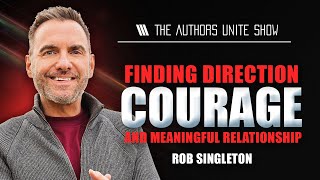
Rob Singleton, pastor of Summit Church in Colorado, discusses his book Overliked, which uses King Saul and King David to show how social media's culture of self-promotion damages mental health. He explains how the pandemic forced his church into video production that grew their online audience from dozens to thousands weekly, and shares practical steps for breaking social media's grip.
Chapters
Alright everyone, welcome back to another episode of the Authors Unite show. Today we have Rob Singleton with us. He is the pastor of Summit Church in Colorado and the author of the forthcoming book Overliked: Finding Direction, Courage, and Meaningful Relationships in a Society Crippled by Social Media. So, welcome to the show, man.
Man, it's great to be here. Thanks for having me, Tyler Wagner.
Of course, grateful to have you on. So, to start out, let's talk about Summit Church. How did that come to be?
You know, my wife and I, we planted 3 churches. We've helped plant 7 more. We planted our church in our living room in North Carolina about 20 years ago, and that grew to several thousand people in different campuses. So I started consulting, and one of the churches I consulted was Summit Church about 15 years into the church in North Carolina. And they— it was actually an accident. I was consulting a church named Grace Community in Arizona. I got the wrong website. I ended up on the phone with these guys at Grace, and I found out that their pastor had gone on a mission trip, was delivering Bibles in India, and fell off a cliff and was killed. And they were just in deep mourning and needed help to see if they could keep going. I went out there and consulted them and told them to relaunch, rename, and that most of the church was grieving. You know, sometimes it's good to celebrate your past and just start anew. And I got home and was doing what we were normally doing, and they called up and said, we love that idea, everything you said, but we can't do it. Can you come do that for us? And we ended up just packing up after 20 years. And my wife is a chiropractor, she sold her practice. We came out here, we relaunched the church, named it Summit. And, um, just nothing that we really planned. It was kind of a crazy journey, but off of tragedy, which is terrible, but God's doing great things through the church now.
And so let's, uh, before we go deeper, uh, let's go back to like all the way to the beginning in a sense. Not all the way to— not when you were born, let's say, but, um, but like where you are now, when you were a kid, did you like see this at all, or do you see any, um, connections as to, as to how this has all kind of come to be?
Oh man, no, I didn't see this one. When I was really young, I was a punk.
Okay, cool. I like that.
I was just, I was a, nobody would have wanted to be around. I was a juvenile delinquent as a kid, but, uh, you know, I grew up at, uh, in a home where my parents were, you know, always at odds. It was kind of a shotgun wedding. They didn't really want to get married. And, uh, my mom found herself in, you know, back in the, back in the '60s, that's just kind of a a no-no, found herself pregnant. She was having twins. They— my grandfather made them get married. Like I said, shotgun wedding. And they, they were kind of at each other's throats a lot. And, um, when I came along about 13 months later, I, I saw this tension in the home and, and I just kind of rebelled all my young years. I was, you know, even— this is funny, but as a 7-year-old, I'm smoking cigarettes, cussing, hanging out. It's just You couldn't— it was like Damien the Omen child. I was turning out to be anything but what I am now as a pastor. But, you know, I heard about Jesus Christ. I heard about how God loved me, and I heard about how he came and died for our sins. And honestly, that made sense even to a little kid. So I gave my heart to Christ, and I knew there was a change in me. Even under 10 years old, right away I was probably, um, going down the wrong path. Definitely going down the wrong path. Did I know I was gonna be in ministry and all that? No. God called me into ministry when I was 16 years old. He made it very, very plain. And, um, you know, the rest, as they say, is history, I guess.
Got it. Well, it seems like you kind of like sped up the, uh, the process in a sense. 7 years old smoking Winstons, and I don't know if they were Winstons. Um, I think they were Marlboros.
Okay.
And then, and then you said at 10 is when you kind of— so 3 years, and then you realize at 10 years old that you were kind of going down a bad path, and then by 16 is kind of when things fully— is that when you kind of dropped? I guess I'm assuming if you were smoking cigarettes at 7, you were doing other things as well, or is that not accurate?
You know, no, God got a hold of me right away when I was doing—
okay.
Those crazy things. Actually, I was doing these— those things with a 9-year-old who actually did get sent away to juvie, uh, because he was just breaking into homes. And, uh, I remember he had shot somebody, uh, in the back with, I think, a teenage girl with his BB gun. And I mean, which in today's standards, that's, that's, that's kind of low on the totem pole. But, uh, even that guy got his life together. But I was hanging out with him and just You know, it sounds crazy. You think, well, how could, how could you know anything about going on the wrong path as a little kid like that? But I did. The tension in the home was so bad. I think kids react. In fact, I think 7-year-olds today know what 12-year-olds knew 30, 40 years ago. And I think 12-year-olds know what 18-year-olds knew, you know, that long ago. So there are things I knew, things I saw that I should have never seen. Um, at that age, you know, my, my— I don't want to get too much into this because I don't want to throw my own mother under the bus, but I haven't seen my dad for 15 years. He hasn't spoken to anybody. But, you know, he would have affairs, she would have affairs, and as a little kid seeing this, you know, just happening in the house, I knew that this isn't right. This is really screwed up. And, and honestly, what Jesus did for a little kid I never forgot. So I never forgot that at 10. I never forgot that at 13, 14. In my middle school and my high school, I was leading people to faith in Jesus Christ. I was running Young Life organizations in my junior, senior year in high school. So no, I didn't go on to do worse things. I went on to be pretty well known as a Christian and a strong Christian in my high school. I mean, I I went to parties. I did everything everybody else did except I wasn't doing the drinking. I wasn't having the sex and doing all that to keep myself, you know, pure for the Lord.
So, God, I guess what, um, what in the teachings, I guess at that age, what allowed you to have that self-control? Because I think a lot of, um, teenagers, you know, that's when they go off. And I'll, and I'll, um, tell a slight, a little bit of my story. I can relate to you. I wasn't 7, I was, um, I was probably 10 when I had my first cigarette, drinking, weed, all that when I was younger. Yeah, yeah, yeah, 10, right? I, dude, I don't know anybody— that's why when you said that, like, everybody I tell this to, they're like, 10? Like, oh my God, I was like 16. And I was just— 7, you got me beat, uh, Pastor Rod. Um, but the thing is, is I'm kind of like grateful for it, and maybe you can relate, because I feel like it got it out of my system, if you will, at a young age. And when I feel like when kids go to college and they haven't experimented, let's say, with any of that, that's when, you know, they go off the rails sometimes. So, oh yeah, I don't know, it's, it's maybe it's better to get it out of the way younger. I don't know what's, if it's better or worse, but now that I'm a little older, I'm 29 now, and it's not, I don't really have those urges anymore because like I feel like I've just been through it already. So I don't know.
I mean, it would be good to get, I mean, listen, at 10 or 7 or 11, you're not likely to get those, those things you really shouldn't be doing out of the way. But if the, if the more mild things can teach you a lesson and shock you, honestly, I think that's good.
I agree with you. Yeah.
Probably avoid other stuff.
So do you think that's what it was, or was there like a passage or something that— I guess, what was the turning point? Like, what really resonated with you to, I guess, kind of give your life to Christ and then follow that path?
You know, there was so much hurt and stuff in my home. I'm gonna tell you a crazy story, and, uh, but it makes it so vivid to me, uh, this lack of love and this yelling and this hatred and this kind of stuff that was going on. In the home was almost— it was tangible. You could kind of feel it. And, you know, people, I think, sometimes get Christianity mixed up with just a religion. Christianity is a religion, you know, Islam's a religion, Buddhism is a religion. But, um, I make it really plain: Jesus didn't come to bring religion, he came to bring relationship. And that means, you know, in fact, Jesus says in the Bible that you have to become like a little child to enter the kingdom of God. Well, I wasn't like a little child. I was a little child. So they have more trust, they have more faith. And so I knew that, that God loved me, and I could feel the presence of the Holy Spirit even as a little kid entering my life. So here's how that was tested right away. I'm hanging out with that 9-year-old named Scott. He's the guy breaking into houses and doing all that. I had this little group of punk kids I lived in Fairfax, Virginia. We'd always meet at the end of the cul-de-sac. Well, when I prayed to receive Christ— and it was my mother who told me about Jesus because in the midst of this there was still a little bit of that in the home, and she could tell I was upset about everything that was going on— she told me about Jesus. It clicked immediately. I prayed to receive Christ. I went down to the cul-de-sac to meet those guys. Now, you know how kids will try to make you— they'll do little poems or they'll do little raps or something to make you say bad words and everything's funny to an 8-year-old, 9-year-old. So there was this little, little deal they had me do, and it was— remember Yankee Doodle Yankee Doodle?
Oh yeah, that cheesy thing.
Well, they said there's a, there's a really cool way to do this. Sing this song and put the letter F in front of every word instead. You can probably see where this is going. So it's funky foodle fit food, right? Well, I'm not going to go any further. But you get to the middle and you drop an F-bomb. That's what happens. And so I get to the middle, and this would not have bothered me one day before that. And I said it, and I could still see this at my age, and I froze. And everybody looked at me and said, "What's wrong with you?" And tears started kind of welling up. What happened that moment was I knew that I had hurt the Lord as a 7-year-old. I ran home, my mom said, what in the world's gotten into you? And I just said, I said a bad word. Listen, she had washed my mouth out with literal bars of soap, put it in my mouth, put water, scrubbed it out, you know, because I had such a foul mouth. And yet this happens, uh, and my mom was just shocked. She goes, why all of a sudden is that bothering you? I was like, Mom, I prayed with you, you know, just a few hours ago. You And I think Jesus doesn't want me talking like that anymore. So as a 7-year-old, I have that vivid memory of, hey, I have a relationship with God now. I haven't joined a church or something. What does that mean to a 7-year-old? I mean, I didn't become Southern Baptist or Catholic or something. I just felt like God was in my life. And honestly, it never left.
Yeah, it was like intuition or something. That's pretty profound for like 7 years old, man. That's awesome. Um, so then I guess I was, I was listening to some of your, uh, your videos before. Um, how has— I'm assuming before like COVID hit, you were doing a lot of in-person stuff, and then from what I could tell, it seems like you've transitioned somewhat into more online. Maybe you were online before as well a lot, I'm not sure. But, um, what, what have you seen be like the biggest transition for you and the church you know, prior and now?
Man, you know, God was good because we sold some property. We weren't online very much. We had maybe 30 people watching, but we sold the property and got some great cameras and just upfitted everything because we felt like, well, eventually we're gonna have to get better at this. You know, I knew how to grow a church. Really, it's God who grows a church, but I knew how to do this. And things were really beginning to click and we were growing. And so, I thought, well, we're gonna have to really transition a lot more seriously online. Got all that equipment in place. I was actually in Africa when COVID hit and our family barely got back. We're getting temperature checks. It's like a sci-fi movie, you know, trying to get back into the country. Got our equipment going and lockdown hit in Colorado. So, we had no choice. But the good thing was our equipment was so good like some of the best churches really in the world, that we went from about 30 people joining us to by the time we got to Easter, we had 3,000 joining us. That was only about a month and a half later. Now our biggest week, I think it was about a month and a half ago, we run rebroadcasts. So we had close to 10,000 people joining us. And what happened was It ended up being a good thing. I mean, COVID grew us. Now people are starting to come back, but our online audience really hasn't dissipated. So, you know, if you maybe have 1,000 meeting in person, now you've got 11,000 meeting each week, and they're people from all over the world. In fact, people from all the countries we visited in Africa and did ministry in Africa, a lot of those have started to join us each week. So not many people could say this, but COVID grew our church. COVID has been a great thing for reaching more people. It hasn't hurt us at all. It's really helped. And we didn't play along with all the— I mean, we didn't stay completely locked down. We got involved in some of that religious freedom and a lot of things that were going on and just saw the church really targeted. So We can get into that if you want to later, but—
No, hey, I'm down. I, uh, anything goes on this show. So, I agree with you. Um, I guess my question, because that's what's interesting, similar actually for my business because we do online book stuff, so it seems like everybody kind of, not everybody, but they were stuck at home and then they were like, hey, I'll write a book, you know, because I'm at home.
So, that's true.
Yeah, what else are you gonna do? Um, So, so it's interesting how that worked out though, is it kind of helped spread the church even further. Obviously, COVID's not a good thing, but it helped in that sense. So how have you seen like some other church— like, I'm assuming maybe you talk with some other churches, like, have you been able to help some other ones? Or like, when you say the freedom thing that you're talking about, kind of just like opening, or like, how do you— what do you mean by that?
I mean, Barna did— George Barna did a research poll on 500 churches after some states were beginning to open up. So yeah, this was about 2 months ago, and out of the 500 churches that had fully opened, they were running an average of 36%. So they weren't coming— even though they were fully open, people still weren't coming back because they were afraid. Uh, he ran another poll here about 2 weeks ago, I think it was, And one-fifth of all evangelical churches are not going to make it. So they're gone. They are wiped off the face of the earth. Either too much debt, um, just not enough people came back, especially a lot of these brand new church plants, you know, that were meeting in schools and stuff. They just couldn't recover. So it's been— we've been able to help churches, but the main thing is, um, be courageous, be brave, and don't just you know, go along with everything because they say to do it. If you're doing safety protocol and all of this stuff, uh, you know, I don't know how this is going to go over, uh, now that everybody's going to see it on the podcast, but I mean, they know here in, uh, in Colorado, we're pretty close to Denver, uh, they're still on lockdown, they're still shutting things down, but we've been wide open for 8 months. And the reason is We're basically defying it. We're going off the, I think it was the New York case that went to the Supreme Court.
Yeah.
Because we saw so much depression and so much suicide and so many worse things beginning to develop than people getting sick, you know, by not taking precautions. So we have masks, we were sitting people apart, and we were doing everything right. And we thought, well, the answer is not simply to go online forever and shut the building down. So we went ahead and did it, and people really supported us. Our church started growing while other churches were shrinking. People started coming to the Summit Church because they said, I'm just tired of it. Everybody's locked down. And, you know, I had people say, I'm tired of pastors just, you know, cowering on this and and going right along. At least you guys are opening up. And I'm not, I'm not trying to say, wow, we were courageous and they were not. Everybody makes their own decisions. But I made mine based on 3 scriptures in the Bible, and I really went to God on this. And, you know, one of those scriptures is in Romans, I think it's 13, where it says to obey the authorities and, uh, and people over you unless they tell you to do something that God's word says don't do. Or not to do something that God's word says do. The other one is Hebrews 10:25 that says don't forsake assembling and gathering together for worship. And then you got Matthew 22, which is the great commandment, says love the Lord your God with all your heart, mind, soul, and strength, and your neighbors yourself. So how do you put all three of those together and make a decision? People will say you're not being very loving to your neighbor if you meet Other people will say, well, you're not obeying authorities if you meet. But then other people will say you're not obeying God who says to meet, uh, in Hebrews 10. We put them all together and we, we figured if it gets to the point where authorities are telling us to do something where all the evidence and everything coming down the pike really doesn't warrant it, then we're going to go with God's word. If we're being— if we're showing safety protocol and doing everything right, then we're going to tell people, listen, we are being loving. We're— it's safer here than it is at Costco, you know, with people crammed together in the line and everything. It's just, you know, some of these things just don't pass the smell test, you know?
100%, dude. I love that. You— oh, I love that, man. I, uh, if you're okay with it, well, I want to clip that part because I think, um, that it's an interesting dilemma, but at the end of the day, I think you should have, you know, I think you should be able to choose personally what you want to do. But it's just interesting to me how like the solution is, you know, everybody separate, you can't go to the gym. It's almost like everything healthy for an individual has been stripped, and that to avoid of like, I don't know, to me it doesn't really all add up, but Either way, I'm glad that you guys decided to at least, you know, follow the protocols but at least push forward. So, now, about your book. So, the title is, is it just Overliked?
Overliked, which is not an official word. I'm hoping to get it in the Urban Dictionary soon.
Nice. Okay. No, I just wanted to make, so, Overliked and then the subtitle is the Finding Direction, Courage, and Meaningful Relationships in a Society Crippled by Social Media.
Cool.
So, what inspired you to write the book?
You know, I did a series on, it was called Beyond the Optics. It was probably 3 years ago on the vast differences between King Saul in the Bible and King David. And the more that I unpacked this 11-week series, I realized that King Saul was a narcissist. I mean, he's like the the 3,000-year-old narcissist. He— all he cared about was what people thought of him. The Bible says the people in Israel wanted a king so bad that God let them have their way. Not that it was right, but sometimes he lets us go down a path that's even going to end bad just so we can see that we're not on the right path. And the Bible says they picked the tallest, most handsome guy in the land as their king. And I thought, how shallow is that? You're going to pick a king and he's basically on the— he can dunk a basketball and he's on the COVID of GQ? That's it? That's your qualification? And then later, after he messes up really bad, God says, now I'm going to show you what a king should be. And scripture says David was a man after God's own heart. So David was— he was a kid. It was when he was still being a shepherd. He was probably 13, 14, 15 years old, and God sent the prophet there to anoint him because he'd already rejected Saul, who was such a narcissist and a people pleaser. And he said, this time I'm going to show you that if somebody has a heart for me, I can do way more through that guy than somebody who worships himself, you know. And so the whole thing, I began to see similarities, and then I began to see You know, holy smokes, we are in a culture right now where through social media, Facebook, Instagram, and all this stuff, we're able to set up our own little kingdoms. We're able to set up our own little fiefdoms and, you know, put a profile picture that's perfect and set up all these optics that present ourselves to the world in a way that we think they'll like. It's not really us. You know, there was this one gal and I won't mention her name, but She was, you know, homecoming queen, really popular in high school. And she got a little bit older, about 15 years down the road. And I noticed she put a picture up that was when she— she's about 35— picture up on Facebook or profile, she's about 21. And I thought, well, I mean, come on, this is 12 years later. Why are you trying to present that? And in conversation with her, I realized she thought 'Well, you know, people always thought that I was pretty and I'm afraid of what they'll think if they see that I'm aging.' And I thought, that's so sad. Don't you want people to know you or do you want them to know a picture from— and we see it all the time in Hollywood. You see people, all the plastic surgery stuff, they start aging out and there's this palpable sense of panic in them as they realize, I'm going to be sidelined because I don't So let me get all this stuff done. And I realized that, you know, we can always learn from God's word. And if you contrast King Saul, the narcissist, with King David, the one who just loved God with all his heart, we can learn how to navigate these waters where honestly, if you pour yourself into social media and keep crafting and curating this image that you think will please people and make them like you, you're gonna lose yourself completely. You're gonna absolutely lose who you are, and this fake person's gonna be, and that's doing damage, and it's doing damage to pastors, it's doing damage to Christians. It's not just, you know, I mean, it's not like it's a Hollywood thing. Because of the wide use of social media, it's an everybody thing. If you look at TikTok, you could see it clearer on TikTok than anything else.
Oh yeah, TikTok. I don't think TikTok is healthy, if I had to guess, because going back to how we kind of started this, that is the only app that I feel that I, I will actually get lost in. Like, I will, I will start scrolling and watching, and then 30 minutes will go by, and I'm like, holy sh— like, I just warped into that world and I didn't even realize it. Um, all the other ones I seem to have a full grasp on, but that one really sucks me in for a long time and I kind of just lose track of it. But that's what's interesting, right? So, I've always, not always, but over the past few years, I've been in online business for about 10 years now. And the word like brand, right? And like an online brand, it's kind of like a love-hate relationship with it because I kind of feel if you are going to have a brand, like, you should be the brand. Like whatever that is, whatever's true to you in the present moment of daily posting, or maybe it's once a week, whatever is true to you. But when a brand is like so set, you know, that it's almost like an act, like that scene, it's an interesting thing where I feel, you know, it's like you be professional in a meeting, but like, what if you're not actually that person? Then it's, it's almost like a I don't know, I feel like we're messing with the laws of the universe or something. I don't know what it is.
I think you're right. And I think, I think it's getting so bad now that at least people are waking up. Yeah. The reason I wrote the book, you asked about this, is because I don't think people know how to break out of it. I think it's, you know, like using The Matrix, it's such a rabbit hole they've gone down.
Yeah.
Now we're getting people that, I'm not I'm not sure which is my persona online and I've kind of lost myself. And so it does give you practical ways to manage it. And, you know, one of the things I want people to know right off the bat is I'm not saying let's go back to Downton Abbey or become a monk and live in a cave or something like that. No, listen, that ship has sailed and technology is actually great. We talked about how we're able to reach people all over the world at the church and and all of that. It's just not healthy, you know, and it really is kind of like the whole Matrix series. It's not healthy to believe you live in a simulated world and what you're carefully crafting is taking over as the real you. Man, people would like the real you. People would like you better if you're being authentic than being plastic. And like, go back to TikTok when you see people Putting together, sometimes people say, here's how I made this video, and you realize they work 5 hours on a 15-second little dance move and stuff. And I kind of look at that and go, could there be a more colossal waste of time? Oh yeah, unbelievable.
I know, it's so— I'm curious, what do you think of this? Um, is one of my friends, he says There's a lot of people that say like, avoid the haters, you know, and one of my friends says, it's like, actually what you should do is like, you know, be your authentic self and, you know, you get a lot of comments out there. Some are gonna be supporting you, some people will show you hate, but you should actually read the hateful comments as long as you can like withstand it because it's almost like, it could be like constructive criticism, right? Like maybe you are actually doing something that is like bothering a lot of people and I'm not saying you should necessarily stop, like maybe it's this group of people for you, for For instance, maybe there's a big group of like atheists and like everything you say to them is just like bad, you know. That doesn't mean you should stop, but like you could read their comments and maybe you would learn like just like their side of point of view. Because I feel like what's happening in the world, right, left, all of it, is we kind of just like make fun of each other and we like write each other off. Whereas what I'm interested in is having like a constructive conversation with both sides, like somebody who has fully given their life to Christ and then somebody who totally rejects it. And I'm curious of both, you know.
So I don't avoid the haters at all. Yeah, yeah, I don't, I don't agree with that. Now listen, I'll avoid the trolls. Totally. Yeah, if people are just obviously, you know, you can pretty much tell they're in their parents' basement wearing their pajamas trolling everybody. And just—
that's like what they do.
That's a waste of time. Yeah, but listen, I've got this channel that I kind of tripped into. I mean, I was writing this book before COVID but one of the things I did get into was a YouTube channel, uh, you know, to just— so much was online, I thought, well, maybe I can get the word out better. And, you know, I have a nickname here, Pastor Rob. They call me P-Ro. It's kind of a J-Lo thing.
So, oh nice, that's cool.
We started this, uh, Ask P-Ro channel. And, uh, you know, I realized I was wading into some waters that could invite a lot of the haters. And, you know, YouTube is— YouTube's gotten pretty strict in banning. If you— I mean, if you breathe or blink in the wrong direction, they're gonna ban a video. And I thought, well, this isn't healthy because people want to talk about things. And honestly, people want to know what Jesus says. They want to know what the Bible says. So I thought Man, I keep getting banned or blocked. And so I started going, listen, why do you care what my opinion is anyway? I'm just a man. So, you know, I studied Hebrew and Greek for years. I went to Dallas Theological Seminary. Let's start, you know, doing videos on what does the Bible say about homosexuality or what does the Bible say about cancel culture and all this stuff. I started doing those and almost immediately they're blowing up You know, at first you're trying to get in there and you're getting a few hundred views, then a few thousand. And when I did about a month ago, uh, this, this two-part series, What Does the Bible Say About Homosexuality, it was a little bit— I was a little bit nervous because I thought, you know, what's YouTube gonna do? But here's the difference. It's not what's my opinion on homosexuality. It's, listen, if you really care Let's open up the book and let's just tell you what's there. Let's take a realistic look at it. And then I said, we'll answer the question, what does the Bible say about it? At the end of the day, you're going to have to answer a second question, which is, do I really care what the Bible says about homosexuality? Because at the end of the day, I ask my listeners, don't try to change the Bible. Don't try to rewrite it and all that. Answer the question. If you don't care and you're angry at God or you're mad that it says that, then just say, I'm not going to follow it. I don't care. I'm going to follow something else. And then we're having a fair conversation. But don't say, you know, back in the ancient Greek, you know, actually this word didn't mean that. And actually God loves everything he says. And the Ten Commandments are actually the ten suggestions. So I said, listen, let's have a fair dialogue. Let's really answer this. So that one was the first one. I think my biggest video had like 3,000 or 4,000 views. That one has almost 14,000 views. I usually get maybe 10 comments. That has about 110 comments. And there were a lot of haters that came on there and started out, uh, you know, kind of like trolls. I'm just going to attack you because you chose to talk about a subject I don't want you to talk about. But I— listen, I'll tell you this too, Tyler. I filmed that whole thing, worked on it for hours, got it all set, our whole film crew edited it, and then I trashed it. And the reason I did that is because I thought, you know what, it's not loving enough, it's too abrasive. I want to redo this. This is a very sensitive subject. I want people to know Jesus loves them, you know, and he's got boundaries out there because he loves us. And, you know, because he's trying to protect us, because God made us and he knows. I mean, the Bible is his owner's manual for living. He knows how best we should live. So let's take a look at some of the things that he says in his word and see why he said it instead of just saying, well, that's bigoted, that's homophobic, that's whatever. And what happened was, I mean, you can go on there and look through the comments, but all of a sudden a beautiful thing happened. This one gal got on there and she said, I'm a I consider myself a Christian lesbian, and I have to say, I mean, with tears in my eyes, you handled this very lovingly. We need more people like you. Uh, I can't believe I'm saying this, but I want to see more of your videos. Now, I haven't changed my mind, but the approach you took— if anybody calls this hateful, they're not listening. And all of a sudden, I just got charged up and thought, we can do this. We can talk about what the Bible says, and it doesn't have to be there's a bullhorn guy in a picketing group over there, and there's a group that yells back over here. We don't have to just have haters yelling at each other. We can really unpack this. And I am concerned about our culture right now. You know, I'm concerned about First Amendment rights. I'm concerned about people that can't even go to universities and give a speech because they'll picket them down before they even arrive. And I thought, this is America, man. We've always been able to talk about things. At the end of the day, you go your way and I go mine. Some minds are changed, some are not. But we didn't just shut people down and yell and say, I don't want to hear what you got to say. I'm not listening. And what has happened to us that, you know, that we've gotten this way? So, you know, here the book is going to come out. And I've honestly— I've had people warn me. They said, that ass Pirro channel, man, what are you going to do? Because the way cancel culture is today, they're going to go right for that channel and say, look, he did videos on this, and start the names. He's homophobic. He's bigoted, whatever. I'll say, you know what? I'll just say, did you watch the video? I mean, because even people who are on the other side of the discussion and don't agree with me Even they've said, no, man, he's loving and he's approaching this thing. You're not. I mean, you can't just fire that gun right out of the gate. I mean, the fact is he's not being hateful and he is taking on the tough questions. I mean, you've heard of Jordan Peterson, right?
Oh, he is like, he's my favorite. Yep.
I mean, I'm kind of taking that approach where I'm saying I'm not going to back down on these subjects. I'm, we're going to talk about them. And if you Try to shout me down or call me something, I'm going to say, prove it. You show me where I'm actually unloving. You show me. I'm not going to apologize if crowds just demand an apology like they do. Honestly, that's a kiss of death when you give in to the mob anyway. I'm saying what God's told me to say. I'm saying what's in the word of God, the Bible, and it's not my opinion. It's just, it's me defending, um, God's word and, and hopefully pushing back on a culture that honestly, if this keeps going, they're going to say let's not even— look, they banned Dr. Seuss. I mean, Dr. Seuss is a whole lot less offensive than some of the things in the Bible. So where are we headed with all this?
I know, I heard about that too. And have you ever, um, Have you seen, uh, Jordan Peterson's biblical series on YouTube, or heard of it?
You know what, he brings in the Bible nowadays. I'm pretty sure he's a Christian. I, you know, he doesn't, doesn't really say he is, but he is fascinated with the Bible. Yeah, I have not seen that, but I will look for it because I love it. He unpacks the Bible. I love it.
Okay, check that out because, um, it's long. Like, it's really long. Obviously the Bible's pretty long, but, um, I don't think he— I don't know if he got all the way through it or not, but either way, it's probably like 45 hours or something of content. Where is that? It's on YouTube on his channel. He actually has a full, like, series. I think it's called The Psychology Behind the Bible or something, but if you look up Jordan Peterson biblical series. So, I actually, this past summer, that was what I decided to do when the lockdown starts. So, I guess it was last.
That's a good call.
Yeah, yeah. While I was doing my workouts and runs, walks in the morning, I would just listen to that. And I think it took me like a couple months, but I got through it all. And I was— the stories. And one of the things that he talks about that I found so interesting was like, he basically kind of summarized it like this for believing in God. He's like, it's not necessarily about— like, I'm trying to word this right because you know how he talks. Uh, it's not doing him any justice how I'm about to say this, but we'll try. So basically it's like Based on his evaluation, it's best for you to at least believe in the possibility of God than to just write it— so live— this is how he says it— live as if God does exist.
Yeah, exactly that.
Yeah, exactly. Even if you, even if like you don't like believe in exactly the way it is, like living as if he does is a better way than not. And that's his, um, you know, he's coming at it from a psychological standpoint, I think.
But you know what that is? Yeah, yeah, that's Romans 1.
Oh really? See, I don't—
that's honestly what he's doing.
Okay, gotcha. That's a passage.
Well, Romans 1 talks about the downfall really of any individual or any culture, and it says that we are without excuse when we say that there is no God, because you look out in creation and everything. And he says, honestly, logically, Paul says to the Romans logically. Anybody can open their eyes and see that there's a whole lot more evidence for God than against it. Now, this is— again, people will say, well, this is hateful towards atheists. Again, I'm telling you what Romans 1 says. Exactly. I agree with it. But this is what, you know, this is kind of how trolls work. They like to attack the word even when you're explaining something else. And so You know, it gets to this point where it says, honestly, it's not the intellectual. Uh, but in the Psalms it says the fool is the one who says in their heart there is no God. So what Jordan Peterson is saying is, honestly, it's, it's a whole lot more foolish to act like there's no God and live that way, because you look out there and you go, I mean, most of the evidence, even if we're living in a computer simulation, seems real.
So yeah, it feels real when you put your hand in the fire, right? Uh, But yeah, no, that's Elon's, uh, Elon says there's a higher chance that we're in a simulation than not. So I, I don't know if we are. I think we're about to go into another one, uh, once VR and everything, so we'll be in a double simulation. Then maybe we'll pop out on the other side. I don't know. Um, but just to, uh, just in ending, if you can, about the book, like if people, uh, get the book, read it, like What can they expect to learn from the book?
I mean, there's a lot of practical things we follow. You know, I start off, you know, building the case and, you know, saying the first disclaimer, which is obviously technology is good. It's a great time to be alive just to leverage it to do good things in the world. So, I'm not raining on that parade, but a lot of us are waking up and we're looking and we're saying, wow, some of the shallow things beginning to happen. And some of the takeover of people's lives and some of the things you read about, like there was an Instagram model who had so much trouble, I don't remember her name, in Australia who actually committed suicide because she just couldn't keep up with the image that she had online and she couldn't find herself anymore. And we're hearing more stories like that. So when I think we see that, we have to wake up and go, listen, there's some bad in this as well. And I think the case I make is that we were not made for self-worship. We were not made— we cannot carry the weight of worship. And the reason is because the only one worthy of worship is God. So when social media sets up these little, you know, Facebook sets up our little worship platform and we start trying to set up ourselves, our looks and our words and our profile in a sense that will draw in likes and appreciation, we're kind of setting up if we're not careful, a little TikTok or Facebook, you know, little shrine to ourselves. And since we are not built for that, we're going to go down a path that's not going to end well. So what over-liked is about— over-liked is just my own made-up word about narcissism. When you're garnering likes and stuff so much that that's what you live for, you can reach a saturation point where you are over-liked And at that point, bad things begin to happen. You lose yourself. You begin to work on this fake persona. So really the second half of the book is following the narcissist King Saul and the man after God's own heart, King David, who wasn't perfect. I mean, he had a time in his life when he did all kinds of bad things. But the difference was he got out of that because he was authentic and real and he knew how to live in that lane. And he worshiped God. He didn't worship himself. But Saul constantly worshiped himself. You know, scripture talks about a song the women in Israel used to sing, and it went like this. Saul had— I don't know the tune— Saul has killed, slain his thousands, but David has slain his ten thousands. Then scripture says that drove Saul crazy. I mean, he got so angry at David. David didn't do anything. But he was more popular than Saul was. So for the rest of Saul's kingdom and reign and life, he went after crafting an image of himself so he could get back to popularity and be more liked. David just worshiped God and lived his life, and he ended up getting more love and respect and everything from the nation. He's the most loved king Israel ever had, and he did this being authentic. Saul lost everything he wanted, popularity, respect, the kingdom, and he lost it by going after it and by making it his god. So Overliked will show you if you've reached that danger level where you're approaching narcissism, and then it gives you very practical steps at the end of every chapter. You know, for instance, I do one thing real quick called 3 decisions you can make right now to break the stranglehold of social media. I mean, if you're about ready to go online, do these 3 things first and it'll break the hold. It's a healthier way to go online. So it has a lot of practical ways to start to turn the corner. And listen, I use Instagram, I use, you know, I've got a fairly good healthy Instagram account and all that. I'm not saying put it away, but I use it to help people, to reach people, to teach people. I'm not trying to build my own little fife them, my own little GQ Instagram account. That ship has sailed. I'm too old, man. I'm not going to be on the COVID of anything.
Let me ask you this. It's kind of a big question, but I, um, based on what you just said, it's, it's interesting. It was kind of something I wanted to ask earlier, and now it's come back around. Is like, when you say like give yourself to Christ, I think people that don't believe they feel maybe that they, like, in a sense, like, how do you live in that way? It's almost like the theory of, like, when you let go, everything comes to you, and when you try to, like, force something, then you, like, uh, break it apart or it doesn't work out. So I guess, how do you, how do you live in that way but then also, um, be productive? Because I just, I'm trying to word it right. Like, I feel like people, when you, when people say something like that, then they feel that they don't have any, um, responsibility in, in the matter. So it's, it's hard for people to live if they don't know how to live in that way. They just give it all to God, you know.
I got you.
I got—
uh, yeah, you know, I think people are getting confused. There used to be a bumper sticker that said, 'Let go, let God.' Um, that's cheesy bumper sticker theology. And he's not saying when you come to Christ and give your heart Let me explain it this way. It's not like you let go and get in the lotus position and just let him do everything through you. You know, he came and he gave his life on the— his sinless life on the cross to pay for our sins. So coming to faith in him is believing and trusting in him, and that's salvation. So there's two S words here, and salvation, the Bible says, is 100% God. There's nothing we can do to save ourselves. We just We just come clean and we say, man, I— God, I can't figure this out. I'm sorry for what I've done wrong. I accept what you purchased on the cross. Save me. And he does, and he gives you the Holy Spirit. Then you move into the second word, which is sanctification, and that's a partnership, and that's a process. And really, I say it this way: for the rest of your life you and God together, he's reshaping you into the image of Jesus Christ, and he's making you more in character like his Son. But you decide how close you want to get to Jesus. I mean, you could say, wow, thanks for the salvation, thanks for the get-out-of-hell-free card, you know, I'll deliver this to Saint Peter at the pearly gates someday, you know, see you in heaven, God. Or you can say, you know, This is the best thing that ever happened to me. I want to learn more about you. I'm going to read your word. I'm going to learn how to pray. I'm going to get closer to God. And that's a partnership where you begin to get stronger. The Holy Spirit, you know, really convicts you, teaches you what's right and wrong. He gives you wisdom. James says, if anybody lacks wisdom, just ask. And God loves to give godly wisdom to people. So you're growing. And you're making that decision, and he's letting you partner with him. And it's a beautiful process. It's not an empty yourself and become a robot and he takes over. And I mean, you know, I think that's as much of a misnomer or a mischaracterization as, you know, hey, I don't want to go to heaven because I'll sit on a cloud like a little sweet cherub and play a harp all day. And if that's heaven, Well, that's nowhere in the Bible. Yeah, I don't know where people got that, but I wouldn't want to go either if that's what it was. But it's not.
Yeah, there's a— I don't think they got it from this, but there's a movie, Little Nicky, uh, with Adam Sandler. I don't know if you ever heard of it.
I've seen a lot of Adam Sandler. I haven't seen that one.
No, no, no, that's, that's not one of his best ones. But that's, uh, that's what they do. They sit up on clouds and play the harp. But either way, thanks for coming on. Um, last thing is, can you tell us, uh, how people can stay in touch?
I, you know, I'm on all the, uh, the different social medias that we just talked about, using them in a healthy way. Uh, it's @rob_singleton is Instagram. That's also Twitter. Uh, you can look up Rob Singleton on YouTube and go to my YouTube channel, and that's There's different channels on there. Uh, we're starting to develop a video series all about the book. There's a channel on there or a playlist about that. There's about 55 videos on Ask Piro, so you can get to know about what we do about almost any subject that culture is dealing with right now— virtue signaling, cancel culture, um, you know, any, almost anything. And we're making 2 videos every week. So I think those are the Those are the main things. I do have a website, RobSingleton.com. That's probably the best one-stop shop for all of it.
Okay, perfect, man. And thanks for the conversation. I appreciate you coming on.
Yeah, you're a good guy, Tyler. Keep it up.
More from Tyler


Catherine Nikkel : THE STORY EVERYONE HAS BUT HASN'T TOLD : The Tyler Wagner Show #1120



Scott Ritzheimer: Bring Predictable Success to your Organization | The Tyler Wagner Show #1115


Fred Moskowitz: A GUIDE TO GETTING STARTED WITH IN MORTGAGE NOTES | The Tyler Wagner Show #1113

Mark Podolsky: From Land Investor to Full Time Success How I Made $90,000 Cash in Real Estate


Mark Podolsky: How to achieve a 300% return on investment my foolproof strategy

Mark Podolsky: How to make passive income selling raw land the irresistible pricing strategy