Sam Primm: Financial Freedom On Real Estate Investing | The Tyler Wagner Show #1012
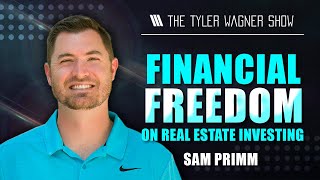
In this episode of The Tyler Wagner Show, host Tyler Wagner interviews real‑estate investor and educator Sam Primm (also known as Sam Faster Freedom). Sam shares his journey from selling construction equipment to becoming a full‑time real‑estate investor with a $21 million portfolio that includes 167 rental units, a 250‑house‑a‑year flipping operation, and storage facilities. He explains how he has built the portfolio entirely with other people’s money (OPM) using the BRRRR method, private lenders, hard‑money lenders, and bank loans, and discusses cash‑out refinances as a tax‑free way to pull equity. Sam outlines his philosophy that “good debt” is essential for wealth creation, contrasting it with the common belief that debt is bad, and compares his approach to figures like Grant Cardone. He advises newcomers to assess their short‑term cash needs and long‑term goals to choose between flipping/wholesaling and rentals, and stresses the importance of credit, relationships, and local banks. Sam describes his education brand, Faster Freedom, which offers free content on TikTok, YouTube, and Instagram, and a paid mentorship called the College of Rental Portfolio (the CORP) that provides tools, calculators, and a community. He talks about scaling the brand, future plans to become a top‑5 real‑estate education platform, and shares a recent costly mistake on a storage‑facility construction project that taught him the importance of proper insurance. The conversation also covers the mechanics of cash‑out refinancing, the role of REITs and syndications for passive investors, and Sam’s vision for financial freedom and generational wealth.
Chapters
All right everyone, welcome back to another episode. Today we have Sam Prim, so welcome to the show, man.
Awesome, I'm excited to be here. Thanks for having me, Tyler Wagner.
Of course, thanks for joining us. Um, if you can start us off, a little bit more about you and what you do.
Yeah. So, um, like I said, my name is Sam. I'm a real estate investor turned kind of educator. So I have a house buying company here in St. Louis, Missouri called Faster House. We're going to flip about 250 houses this year. And then I also have a rental portfolio of single-family and multifamily rental properties. Um, that's 167 right now. And then I have some storage facilities as well. So the fact that I'm pretty active in the investing space, I started to do some social media. About it on TikTok, YouTube, and Instagram. And that kind of formed into this Faster Freedom Education company where I educate people, you know, how to invest like I invest through, you know, multiple different ways of teaching it in multiple different platforms. But so just pretty much, uh, pretty active in real estate and then kind of getting active on social media and education as well.
All right, so this, this is awesome. So I want to definitely want to talk about the real estate, like all the different avenues that people have Um, but, uh, definitely your social media is working because I now remember, I think I was going through one of those like 15-minute TikTok binges where you just, you know, you got 15 minutes in between a call or something. I was just like, you know, mind-numbing. And then I came across you and it was like good content. And then I clicked, went to your Instagram, reached out to you, and now you're on the show. So whoever your content team is, it's working.
Yeah. Content is pretty, pretty much just me. And yeah, that's what we get a lot.
Okay.
TikTok has the biggest reach. Um, and then it kind of, you know, uh, boil, you know, kind of spills over to the other platforms for sure.
So before real estate, what were you doing before then? Or did you just like, your professional career started in real estate?
No. Yeah, no, it didn't at all. I graduated from college in 2011 and what got into, you know, a pretty normal W-2 job. I was, uh, you know, selling, uh, construction equipment. So selling Caterpillar construction equipment there for a few years. And then I started to build a rental portfolio on the side with my business partner Lucas, and that kind of just progressed into getting bigger and bigger and to the point where I felt like it was a good decision for me and him to quit our full-time jobs and go full-time into real estate and just kind of be able to scale more, being able to spend more time on it and make it more than just a side hustle. So that's kind of the path. I went full-time in 2018. So I guess for about, I was doing the job for a couple years. So maybe 3 or 4 years on the side doing real estate and then went full-time in 2018.
Got it. So one of the biggest things you hear out there with real estate is like, sometimes you hear like you should have a lot of money before you get started in it, or you could do it without any money. They call it like OPM, right? Other people's money. So when you got started, obviously you had a job for a little bit. So I'm assuming maybe you had some money saved away, What was your first property? Was it with your own money or did you get a loan or how did that work?
Yeah. So we used other people's money the entire time. So the $21 million in real estate that I own right now has all been with other people's money. So it's nice to have money, like you said. Even if you have money, I always kind of tell people I prefer to use other people's money and leverage just the scalability of it. If you've got millions and millions of dollars that you can put 20% down on a ton of properties, that's awesome. But 99.9% of us don't have that when we get started. So for most people, it's not a necessity using other people's money. Even if you do have money, I still recommend using other people's money to a certain extent. So yeah, my very first property was a rental property I bought with the BRRRR method or the BRRRR strategy, utilizing other people's money. So I used a private lender and a bank to finance that deal. And then it's just kind of been slowly working up and then kind of snowballing when I was able to commit my full time and energy into real estate.
Okay, got it. So how, um, I'm curious. So now you have $21 million total in real estate properties. What does it look like? And I think I saw, actually, I think it was the TikTok I saw that cash flows at like $100K or like profit or something. You're doing like $100K a month around there or something like that.
Yeah, no. Yes. So yeah, it's not profit. Um, so we, we collect about $155,000 in rent every single month. So we got that much coming in every single month, but then obviously we have mortgages because, you know, we, borrow money from banks to buy them. So mortgages, taxes, insurance, maintenance. So we've got a lot of owning expenses. So it really just depends on the month. And we have a team that manages in-house that we pay. So I don't do anything really with that company at this point anymore, besides occasionally buy houses. But again, we have a team that does that as well. So that's kind of a self-sustaining company. So we profit, depends on the month, anywhere from like I would say $15,000 to $30,000 a month from all those rentals, but that's net after everything. And that's after hiring everything out. Like most people will do a lot of the stuff themselves or manage their own properties. So they can profit more, but I choose to hire out and profit less so I can expand as opposed to doing things myself.
[Speaker:ROBERT_LEONARD] Yeah. And I mean, that's pretty much passively. And then also you have the equity in the in the real estate too, right? So it's like it's getting paid off and then like 20 years, 30 years from now, whenever it is, you know, besides the people that lent you the money, they obviously have a cut, but you're going to own a lot of this for like all outright, right?
Yeah. All low with no mortgage on it, which you're still going to have, you know, you're still going to have the owning expenses, but the mortgages, yeah, will be gone. Assuming I don't refinance. We've already done early this year, I did a, you know, $1.4 million refinance. So I pulled out That equity that I created with that property's going up and tends to pay the mortgage down. You talked about that equity that was created. We pulled out almost $1.5 million of it and it's debt because it gets tacked onto the mortgage. So it's tax-free. So I mean, you can pay them down like some people do. You can keep refinancing and pulling money out there. There's so many different options that come along with it because I'm not trying to be debt-free. I'm trying to be financially free. There's homeless people that are debt-free, right? I don't know that debt-free is ever my goal. Financially free and generational wealth is my That's my goal. And I'm okay with that. I like that as long as it's good debt. I embrace that because that's really the only way that normal people like, um, you know, like me and you and 90% of us can actually create wealth. It is by debt unless you're inheriting money. And then that's a different story.
All right. So yeah, this is what I, okay. So, um, being down here in Miami and I'm sure you've heard, you've heard of Grant Cardone before.
Oh yeah.
Okay. So is it, is it a similar, Tight, like what? Because he talks about that a lot too. He's just like, I like good debt. He's like, I love that, you know? So I think it's like a concept that like the average person probably do. And, you know, no offense to anybody out there if they're like really into school and colleges and all, I think they're kind of brainwashed institutions personally. Um, but I think that's kind of part of the reason why it's so hard for people to grasp, you know, like somebody like yourself could be like, look, I got $21 million of real estate. I'm doing $15,000, $20,000 passive a month, and I'm sure you have other things too. And then you say it's good debt and people still just like, I don't want to be in debt.
Like, I don't.
Yeah. So like, how would, how do you like break through the, you know what I mean? The mask or whatever.
Yeah. It's tough. Cause there people are brainwashed in this, not just schools. It's society is brainwashed that, that, you know, debt is bad, but that's, that's the number one factor that separates the wealthy and, you know, the upper class from the middle and lower class is debt. Wealthy people don't pay cash for stuff. They don't. They borrow money to buy assets that produce cash and grow in value. So if you borrow money, go into debt to buy something, and that something produces cash, and use that cash to pay off that debt, it's self-sustaining. So you're not using any of your own money. But then with real estate, it grows in value like, you know, Amazon or Facebook. Those companies don't pay cash for things. They started out with debt, angel investors, or, you know, or borrowing money from banks. Borrowing money is not a bad thing if you're using that money to produce cash and, you know, to buy assets that produce cash. If you're borrowing money to buy something that doesn't produce cash, of course that's stupid. And that's what people try to avoid and that's what you're taught not to do. But how are you expecting to create financial freedom going to work for somebody and putting money aside in IRA or, you know, paying cash for things. It's just not physically possible. The only way to do it is to scale up and borrow money, but borrow money and buy something that produces cash and grows in value. And real estate, in my opinion, is the best thing to do that in. And that's the only way you're going to actually make an impact. If you want to work till you're 65 or 70, God love you. There's nothing wrong with that. You know, you can retire with a 401(k) that's $2.5 million and an IRA that has $500,000 in it and, you know, go on vacation a couple of times a year and, you know, you know, be able to hand a million down to your kids. That's fine. There's nothing wrong with that, but I'm not trying to do that. I'm trying to create like generational impact and wealth. And the only way to do that is to learn how to leverage debt. I have yet to have somebody come up with one way to create wealth and financial freedom. That's not that if they don't already have money, if that makes sense.
Yeah. So then, um, just so people can kind of fully grasp it then, like, and you know, I think some people too, like Grant for, I'll just use it as an example, like, he— I think he likes to work, right? So like, right now he doesn't have to be working, but he's in his 60s and he's still like running huge portfolio. Do you kind of see yourself in a similar position as him, or you would actually like step out way before and not really be working anymore?
Yeah, no, I like to work too. So I think it's kind of one of those things, if I enjoy doing it— I enjoy creating wealth, that's cool. Like, some people enjoy doing car, you know, buying fast cars. Some people, you know, enjoy whatever it is, you know, playing golf every single morning. I like golf too, but people like— my joy is my family and creating wealth. That's like my joy, you know. I feel like most people that, you know, are trying to create like a, you know, actual impact, you know, you don't have time for a ton of fun, family, and work. Fortunately enough for me, my work is my fun and my family. So I do have time for my family and work, and I enjoy it. And I don't know if I'll ever completely step away. I've already, you know, help grow a flipping company that flips 250 houses a year. That's passive for me. I spend an hour a quarter in a quarterly update meeting for that company. That's it. And then my rentals are pretty passive as well. Now I'm looking into bigger projects and this education thing's kind of next on board for me, this Faster Freedom, this brand, this mentorship thing that I'm doing. So I would expect a couple more years of that and then something else. I feel like I'm learning to tackle and grow new business or concepts. Making them great, hiring, giving autonomy to people, hiring amazing people to run them. And, you know, I make less than I get if I ran them, but that frees up my time to either do something else or have time to do what I want when I want. Happens to be what I want right now is to work and grow wealth. So that, that's what I'm doing for the time being.
Got it. So is the natural progression like, um, something along the lines of like flipping houses, then like duplex renting out and stuff like that, and then getting into like the bigger— I guess you could call it like a syndication, right? So like a complex with like 200 doors or 1,000 doors or whatever it is. Is that kind of like if somebody wanted to get started, is that how you would recommend they progress? Or I guess it depends on the type of investor they want to be, right? So that's why I want to dive in. So say if somebody doesn't have money and they want to get started, where would they start?
Yeah. So I think it's kind of two things you need to look at when you're wanting to get started. The two things are your short-term cash position and then your long-term goals. If you need cash to live, then yes, I would suggest flipping or wholesaling real estate and, you know, either using your own money or borrowing money from other people, like a private lender, hard money lender, and flipping or wholesaling. So, you know, if you need cash and don't have it, then that's what you probably got to do. If you have a decent job, which I suggest everybody Starting real estate as a side hustle. I'm not crazy like Grant. I don't tell everybody just jump all in, right? I tell people be a little more strategic about it. But if you have a good job or have a decent amount of cash and your goals are wealth, then I would say rentals right away. You don't have to start out flipping. You don't have to start out wholesaling. You can start out with rentals. My first 6 deals were rentals because I had a good job. I didn't end up using that money, but I had a little bit of money in the bank, not a ton. And I had a good job and a good credit score. So it was pretty easy for me to borrow money from private lenders. Lenders, hard money lenders, and banks, because I had that going for me. Had I not, I would've flipped or wholesaled to build that credit and build that credibility. So yeah, my suggestion is always short-term cash position, and then what your goals are. Some people don't have cash or have cash, but they don't want to own rentals. They don't want that quote unquote headache, which is not. So then they maybe never will get into rental. So it just kind of really depends on those two factors, and then kind of growing into whichever your long-term goals are.
Okay, perfect. So then this leads to the next one. So then the flip side would be— I'm actually reading this one book. I read so many books at one time, so I can't— I think it's called The Passive Investor, and it talks about syndications and stuff. So say if you did have a lot of cash, right, like you have a business or something, you got— it doesn't really matter the amount, but yet you have enough cash where you're comfortable and you want to passively invest in real estate. Do you recommend like the big funds Do you recommend those as well, or is the returns not as good, or like, how does that stuff work?
Yeah, I think that's okay. Like REITs, or even like Cardone Capital, or anything, you know, like, you know, investing in somebody else's who's raising funds to buy real estate, and you can passively get, you know, 12%, 15%, you know, pretty good solid return. So I always think real estate is the best investment tool. I think— I don't really know anybody that can reasonably argue that, you know, 90% of millionaires are created through real estate. I think Carnegie or somebody like that, Rockefeller, I think it was Carnegie said that like 80 years ago and it's still true today. So why not go with the numbers? If you want to become wealthy, 90% of millionaires do it through real estate. So you can do that through those real estate trusts or those syndication funds. I think if that's what you want to do and you have extra money, I think that's fine. Again, getting a 12% return on something, unless you have $20, $30 million, you're not going to create wealth doing that. Still, simply, you have to have ownership to ride the wave of the value going up and the tenant paying the mortgage down and the tax benefits and all that. And that's fine if that's not your goal. I just, I assume people's goal is freedom, like freedom of time, financial freedom, money to do what they want when they want. I just assume that's everybody's goal, but that's sometimes my fault because that's not everybody's goal. But I think if you're not willing to put in the time and effort and learn and spend some energy creating it, then yeah, I think spreading out some diversification of your money into syndication fund and among other things is a good way to make some money, but it's not a way to create wealth. Okay.
Got it. Interesting. So with Faster Freedom, I saw on your website, there's like two different options. Can you tell us a little bit more about that? What is it? You said it's fairly new. So like, what is it going to look like? What's the offering and how does it work?
Yeah, for sure. So, um, I started out with the socials and that's kind of where I always tell people. So check out my TikTok, my YouTube, my Instagram, you know, check them all out. Same, Faster Freedom's the name. Um, and just get a bunch of free information. I know a lot of the educators out there. Um, I'm in a mastermind with a few of them and I've contacted a few of them on Instagram. They've contacted me and they all, most of the people admit I give away more for free than most people on my social. So just start there. Like I'm not trying to, you know, I, I, make decent money in my other companies. I'm not trying to pinch every penny and monetize every single one of my followers. Go enjoy the free stuff. If you like it, you can learn from it. I have people message me almost every single day saying they've watched a YouTube video or saw something that they've taken and then gone out and bought a house or got a lead. Like, you can make money from my free stuff. So that's what you want, great. But there are so many people now that I've got a decent following that reach out that want more. They want hands-on, they want all the tools, they want a step-by-step guide. They want everything that I know, all my calculators and tools and analyzation things that I use in my flipping business and my rental business, they want access to that. So I've created a mentorship for that. And that's what that is, is just exactly that. It's everything that I've learned in growing my rental portfolio. So the mentorship is the College of Rental Portfolio, we call it the CORP. It's everything that I use, have used, and will use to grow a rental portfolio using other people's money. Right now I'm sitting at $21 million. The goal is $100 million by the time I'm 40. Um, so I should be at 25, 26 by the end of the year, and I'll be, I'll be 34. So I got 6 years to do another $75 million. Um, I don't see any reason why that won't happen. So the people that get in the mentorship, it's lifetime access. So they get to learn everything I've done and doing, and then everything I will do. So it's a really cool thing that we just launched not too long ago. Um, we've had some pretty good success in signups and people seem to really, really enjoy, you know, really enjoy it and sink into it because it's, like I said, it's all the tools you'll need, the analyzation, lifetime access, and then a closed Facebook group where we can interact with me and my team and continual long-term education. That's the main offering. We do have a mastermind that we're not really— a weekly mastermind call that we're not really pushing right now because we don't really know what that looks like. But the main thing is just that mentorship of building rentals. I think eventually I'll probably do one for wholesaling and one for flipping, but I want to get this one right and make it blow people away and really get some credibility and create a brand that's known for free information and incredible paid information. And then we'll try to expand from there because the goal is to Faster Freedom to be like the top 5 education brands in the country in 5 years. So like, you know, BiggerPockets, Rich Dad Poor Dad, I guess even Grant, like names like that, have Faster Freedom be synonymous with them. And the only way to make a dent in that huge freaking space, right, is to blow people away with free information and then the things that people do pay for to knock their socks off. So that's kind of our path right now. It's kind of a long answer to answer your question. So sorry about that.
No, no, it's perfect. I love it, man, because there's actually a book, it's called Never Lose a Customer Again. And it's kind of the way that I run my business. And it's interesting, what he, what he argues is a lot of people put a lot of money into marketing. And that's fine. But if you took some of that, in fact, he says a majority of it, and put it into your customer experience, that is actually marketing in itself, right? So What you seem to be more focused on than the marketing is actually creating a course and a content platform, um, that over-delivers so much that like word of mouth eventually is going to take over. And then you could grow because you can't really grow to like Rich Dad Poor Dad size through marketing alone, right? Like his stuff has obviously delivered value. If not, we wouldn't be talking about it. So, um, yeah, I just, I think you're on the right path is all I would say. And I think a lot of people They're so focused on the marketing that they forget the best way to market something is actually overdeliver on an experience. So I think that's key right there.
Um, you nailed it.
So, okay, so that's the strategy. So that's like the 5, 6 year plan, and then the mastermind will probably, you know, you guys will figure that out later. And then on your website here, um, okay, so you even deliver more value, right? So the social media comes in. Now I'm kind of just kind of analyzing, I guess, if you know Russell Brunson, the funnel, if you will. Um, so they come in and then you give them even more value, and then if they want to sign up, um, you know, for the other stuff, then they can. So is this your— a pic on your website? Is this a picture of like your whole team here?
Uh, yeah, probably. So that the website is actually something that we've kind of let go because we're designing a new one. I don't know when this is coming out. I mean, we're like 2 weeks away probably from our, from our new website.
Okay, sorry.
Yeah, everybody visits it, they're gonna see the new one. That website's not— it's pretty outdated, it's pretty elementary, it's pretty rudimentary. It's kind of one of those things where, you know, we're still like growing the brand and haven't really spent a ton of time or money on things like this. But now we have a full website design that we hired out that is super close. The new website is going to be really awesome and really, you know, should be a wow factor and, you know, answer questions simply and easily and, you know, you'd be able to flow through it. But Yeah, we have a, we have a team of 4 that kind of helped me manage everything and run everything. And then, um, got a couple of my business partners, Lucas and Brian. They're running other companies and they help provide input and knowledge as well when need be in certain aspects of the mastermind or in certain videos in the mentorship, or even sometimes on the socials.
Got it. So one, one question I wanted to ask too, um, and I may have missed part of it in the beginning, because I think this holds people up too a lot of times, is How do you get like your first loan or something? Because don't you have to kind of like build trust with the bank? And obviously now you're, now you're at a point where you've had success, so asking someone outside of the bank, um, for money, it's like you can prove that you've delivered returns already. But in the beginning, like, you have no proof. So like, how, how did you do that to start again? And then like, how did you start to branch out? Because I'm assuming you will take money from outside investors as well, like not just banks, right?
Yeah, for sure. So it's a little bit tricky at first, and everybody's story is different. It really always depends on their current job and their current credit score and all that kind of stuff, because banks will look at that. Banks are going to look at the small local banks you go with, not your big banks in America. Those don't want anything to do with this space. So your small local banks, they understand this space and they're going to heavily weight the quality of the deal. Whether you're new or not, they're going to look at the deal. So that's a big part of it. And then if you got to prove your concept a little bit, like you said, you can wholesale and prove that you've made some money or fix and flip. And then you're going to go to a private money lender or a hard money lender at first to get the initial money to purchase and to rehab a property, whether you're going to flip it or keep it as a rental. Private money is relationship-based. It's based on your relationship with somebody, a friend of a friend, your mom's boss, your parents, your neighbor, your grandparents' friend, somebody like that that knows you invest in real estate or want to invest in real estate, has some extra money, and understands that real estate's a great investing tool. They just don't want to physically do the work, kind of like your syndication or your REIT talk we talked about earlier a little bit. But it's just people that are willing to invest in you to invest in real estate. Some of them will want to be part of the deal. Some will just want interest. So just getting your name out, and sometimes it takes 2 or 3 months to find that private lender. Sometimes it takes 2 years, but it's always always something to be out there talking about. Most of my students are a little skeptical when I say that, but then after they've been doing this for 4 or 6 months, people start to reach out to them because they're active on their Facebook, they're active on their Instagram, they're just talking about what they're doing. They're being vulnerable and talking about the deals that they're working through or analyzing or trying to buy. And people will approach you for sure. It just is a matter of time. But in the meantime, you can also find hard money lenders. Hard money lenders are in every decent size city. Their whole purpose of their company is to lend to new investors. They want to grow their business. They want to grow their money that they have lended out on the streets. And they know that they're going to have to deal with new investors. So hard money lenders are a great option for most people. Their rates are usually a little bit higher. They're going to look at a little bit more of the credit score and underwrite you a little bit more as well as the deal. But they're a great option. Most people, that's where they're going to start. And then they've proven that concept with the hard money and then they can move on to private money because that's ideally you're working with a person with your more flexible rates and things as opposed to a hard money lender, which is usually a company. So yeah, I mean, there's multiple different options. There's multiple ways to look at it. No matter what your situation is, there's a way to invest in real estate. I mean, sure, you can wholesale real estate with a 400 credit score and $100 in the bank. Yes, it's going to be tough, but you can do it. So just how creative you want to get and how much time are you willing to put in will dictate which avenue you will be able to go down.
So, so far, I want to see like worst failure and best success in real estate thus far. Assuming, I guess it would have to be like single properties, but do you ever like really mess up on a deal?
Yeah, we have. Fortunately, we haven't messed up a ton, but we definitely messed up on a few different deals. You know, we've over-rehabbed for neighborhoods to try and push markets or push properties, especially a few years ago when the market wasn't as crazy. That wasn't wise. We've lost $20,000, $30,000 on a few different flips. But the biggest one that pops in my head, the biggest mistake we recently made is me actually mainly, kind of our team, but mainly I made it. So we bought a storage facility that was 66 units. We kind of revamped the units, redid the sign, made it nice. And then we actually built 2 additional buildings on it. We'd never done construction before at that scale, nothing crazy, but adding about 100 more units. So we got those bid. Putting together storage facilities is pretty simple. It's almost like Lego stacking. It's a pretty simple process. So we, you know, got the buildings bought online and they delivered them and we, you know, got some bids from contractors. We got insurance on it, you know, builder's risk insurance. We were building those two buildings and they went well. You know, we threw them up pretty quickly. Everything was decent. And there was next to this— next to where we were building was this open field that we bought that we were planning on putting boat and RV storage in, right? Like, you know, like gravel lot with a fence. So That was fine. But during the rehab, we decided to build another building and it was a big building. It's a 255-foot building that we decided to build to do some more storage. And to make a long story short, that building mid-construction blew over. A storm, like tornado almost storm, hit it and twisted up all the steel and all the metal. And I forgot to add it to the builder's risk policy that we initially put on it. So $75 grand in damages that we're going to have to come out of pocket or come out of the deal. Had I put it on the builder's risk insurance, builder's risk would have covered it. But, you know, it was later down the line. It was 4 or 5 months later and we just didn't think of it. So just, just, you know, we always just kind of— we've never done development or construction. We just kind of bought it and we just kind of do things and figure them out as we go. And that was just, you know, not dotting an I and crossing a T and cost us a pretty good chunk of money. $75,000. Unfortunately, I feel like we'll be okay because we got enough equity in the deal because we're building from the ground up. But yeah. That was a mistake for sure.
Oh yeah. Well, it's one of those where I'm sure that'll never get slipped through the cracks again.
It will not. Yeah.
That's a one-time mistake. What about like best flip? Like any crazy flip stories?
Oh yeah. No, we tend to stay away from the big flips with the big higher dollars, you know, $200,000 rehab where there's $400,000 on the spread on it. We stay away from those because they take time, they take energy, they go over budget. And the market can shift a lot in 8 to 10 months. So, you know, most people don't do $400,000 rehabs in 2 months. So we stick like to the $25,000 to $60,000 rehabs. We try to for those like, you know, properties that are, you know, in St. Louis, like $300,000 to $500,000. So, you know, mid-level, nothing high-end properties because just less risk. We get in and out quickly and we can, you know, rehab 60 of them a year. Volume, you know, safety and volume. So we haven't really been crushed too bad. We haven't really had any huge home runs. I'd say the biggest story is just, you know, being able to, you know, build our rental portfolio, you know, up to $21 million and, you know, not use any of our own money, but also have a ton of equity. Like, you know, the kind of two big days are about a year and a half ago, two years ago almost now, pulled out $880,000 of tax-free money in a cash-out refinance. And then about four months ago, pulled out $1.4 million. So pulled up well over $2 million of tax-free money in the past two years. Out of our rental portfolio, and we didn't use any of our own money to build that rental portfolio. So just kind of showing the power of real estate and the power of properly leveraging money. So those were kind of some pretty cool days, I think.
So wait, explain that. So when you say pull out, what does that mean exactly?
Yeah, so the numbers aren't going to be exact, but I'll just try to keep it simple. So let's say I owe I owe $7 million on my rental portfolio and it's worth $10 million. So I have $3 million in equity. But most banks will give you a loan for 80% of the value, hence 20% down for normal properties or even investment properties, having that 20% equity off the bat. So a bank seeing that my properties are worth $10 million says, "We will give you a loan for $8 million on that. We feel secure. We feel that's 20% equity and we're willing to do that." Because the more money banks lend, the more money they make. They just want to be secure in their position. They don't want to take back the property. Fact that I owed $7 million, you know, they said, all right, here's a mortgage for $8 million. You know, they paid off the $7 million and there's that million-dollar delta that I have in there that you just get a cash check, you know, cashier's check for the— for that difference. And, you know, that million bucks in this simple example is, you know, it's tax-free because it's debt. Yes, I do owe that mortgage. Now my mortgage went from $7 million to $8 million, but usually you can get better terms. So our monthly payment goes down. And yes, over time, you know, I pay a little bit more every month in mortgage, but that million dollars that we took in, I can do a lot with that. That's going to make way, way, way like 20, 30 times the return, you know, of that little more that I'm spending in my mortgage every month because that's spread out over 30 years, that extra million. Does that kind of make sense?
It does. And then what happens is, if I'm understanding correctly, then what happens is like by the time, say you did have to, by the time you pay all that back, the equity in that has gone up, right? So it's worth $10 million today, but it'll be worth, I don't know, $13 million in 5 years or 10 years.
[Speaker:ROBERT_LEONARD] Yeah, exactly. Yeah, no, real estate, everyone thinks there's going to be a crash and all this crazy stuff that I don't see happening. Regardless, yes, it's going to soften, but regardless of what happens over time, real estate goes up. I don't think anybody argues that. So yeah, over time, those properties go up in value with just you not really doing anything besides taking care of them, which the rent pays you to take care of them, and then you cash flow and then yes, you pay down that mortgage. So that spread grows and you can grow that into completely paid off and a ton of millions of real estate, or you can do what we have done. I don't know how long we'll do it. And a ton of people do is you just keep re-upping. You just keep pulling out equity and getting tax-free money, tax-free checks every couple of years that are worth a lot. And then, you know, you never pay it off because you don't ever have to pay it off if you don't want to. You can. But if you're getting good cash flow coming in, the property's going up in value, you can just keep adding that debt as long as you're doing it on an asset that you know how to control and can manage and collect money on and pay down that debt. That's a great way to make some money. And some people want that security of paying it off as quickly as possible. And there's nothing wrong with that, but there's just kind of two different ways to look at it. It's just real estate. You have options. That's why it's a beautiful thing.
[Speaker:ROBERT_LEONARD] Yeah. Got it. Well, cool, man. Look, I appreciate you coming on. If there's anything else you want to share that we didn't cover, please do. And then let people know the website, um, social media. Definitely. That's how I found you. Love your content. Um, and yeah, anything else you want to share?
No, I think we covered a lot of it. Appreciate having me on. Just if you guys have any, um, any, you want to know more or contact me, just for sure, fasterfreedom.com. Hopefully about, you know, our new website's out by then. So you can kind of get a little picture of, um, what we do on there and the products that we offer. And if you just kind of want to get a little bit of an intro to what's going on and get a kind of grasp everything I kind of talked about on here, for sure. TikTok, YouTube, and Instagram, all under the username SamFasterFreedom, one word. So check, check me out on there. Enjoy the free stuff. Send me a message on Instagram if you want to chat and then check out the website and hopefully you can learn a lot and implement it. And if you want more, we have options for that as well.
Perfect, man. Thank you again. Awesome.
Thank you.
More from Tyler


Catherine Nikkel : THE STORY EVERYONE HAS BUT HASN'T TOLD : The Tyler Wagner Show #1120



Scott Ritzheimer: Bring Predictable Success to your Organization | The Tyler Wagner Show #1115


Fred Moskowitz: A GUIDE TO GETTING STARTED WITH IN MORTGAGE NOTES | The Tyler Wagner Show #1113

Mark Podolsky: From Land Investor to Full Time Success How I Made $90,000 Cash in Real Estate


Mark Podolsky: How to achieve a 300% return on investment my foolproof strategy

Mark Podolsky: How to make passive income selling raw land the irresistible pricing strategy