Samantha Hart: Bringing Hope to Every Person | The Tyler Wagner Show #1015
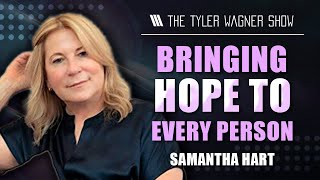
In this interview, host Tyler Wagner talks with Samantha Hart, a veteran of the entertainment and advertising worlds, about her eclectic career—from early work at Geffen Records during the era of Aerosmith, Nirvana and Guns N’ Roses, to film marketing on cult classics like Dazed and Confused—and how those experiences led her to write her memoir Blind Pony: As True a Story as I Can Tell. Hart explains that a childhood journal entry sparked the book, and that the title comes from a literal blind pony given to her by an abusive grandfather, serving as a metaphor for feeling unseen and damaged. She describes her “method marketing” philosophy—immersing herself in a product’s world before crafting copy—and shares vivid anecdotes such as becoming a back‑gammon shark in Los Angeles, running away at 14, surviving abusive family dynamics, hitchhiking across the country, and navigating dangerous encounters (including a roofie‑laden motel episode). Hart reflects on the book’s tone, balancing sadness with hope, and emphasizes self‑belief as a core message. The conversation also covers her recent audiobook narration, promotional channels (website, Instagram, Twitter, Barnes & Noble, Book Soup, Amazon), and her perspective on parenting, substance use, and the changing nature of social habits post‑pandemic. Throughout, Hart’s storytelling is candid, humorous, and reflective, offering insight into a life lived on the edge of creative industries and personal adversity.
Chapters
All right everyone, welcome back to another episode. Today we have Samantha Hart, so welcome to the show.
Thank you, thanks for having me.
Of course, thanks for coming on. Um, so if you can kick us off, tell us a little bit more about you and what you do.
Uh, well, I've spent my career predominantly in the entertainment business and in advertising, and I started out in the record business and went into the film business and then started my own company doing advertising. And I've always been a copywriter, writing ads and things like that, but I never really thought to write a book. And I always consider myself, you know, kind of a wordsmith or whatever, but a book is a whole other— a whole other deal. And, um, and so I, you know, I had thought about, you know, people had told me over the years, you know, you have so many funny stories, you should write a book. And I never really thought about— I never really thought about it much. To be honest. And then I came upon a journal that I had written when I was a child, a 12-year-old. And something about seeing those words, you know, "This is a book about me, nobody special," because I've obviously been obsessed about this book for a while. And when I read those words, I thought, well, gee, I've wanted to— I've thought I had something to say for so many years. Maybe it's time I finally did that. So when the pandemic hit, I really, you know, went inside myself and drew this book out. And so that's what Blind Pony: As True a Story as I Can Tell is about.
Okay, gotcha. So let's— I, well, not all the way from the beginning, but I like to start from as far in the beginning as we can go. So like, can you tell us kind of like the evolution? And I saw in your bio too on Amazon, like, you know, you've been a part of some pretty wild films, like Dazed and Confused. That's one I was, you know, I know that. Um, so yeah, I guess like, how did you get into the industry? And then like, what's the evolution of then getting to the book?
Well, I think, I think that all of us have, uh, I mean, I think I just had a calling to be a creative person. In general. I think I was always drawn to creative things. You know, whether it's the sign I'm born under, or whatever you— whatever reason you want to give to it. I just always had a really strong desire to make things beautiful or to make things better than what they seem to be. And so I think I— basically, I think I'm someone who's always fought against the odds. Because I've had a lot of obstacles put in my way over the years. So I think it was just a combination of wanting to express myself creatively as well as not wanting to accept that maybe I couldn't do something. I would always push myself harder to say, I can do that. So I always found myself in situations where I mean, I've been very lucky in my career, but I've also, you know, I never let anybody stop— nothing, anything stop me. I was never intimidated by anything. I'd always say going into something, I'd, I had a mantra like, what's the worst that could happen? And I've got nothing to lose. So I would put myself in situations where, um, maybe if I wasn't so had so much imagination, maybe I would have been— it would have been self-defeating before I even tried, uh, that type of thing. So, you know, I would go into an interview and I'd be just so positive, the boss would say, well, you don't know anything about, you know, in's or ip or whatever, you know, the inner positives that you make film trailers with or whatever. And I'd say, well, I can read books. So I just kind of always managed to land on my feet somehow. And I think I'm making it sound a little Pollyannish because the industry is tough. And, you know, I'm not gonna lie, you know, putting yourself in that position of going in and getting a job at a major studio or whatever, you know, it's not the easiest thing to do. But I think that believing in yourself, and I think that's something I really try to convey in my book, Yeah, it doesn't really matter where you're from or how you got there. It's where you want to go that matters. It's like, you know, just putting yourself on a trajectory for success or putting yourself on a trajectory to rise above your circumstances is a very powerful way to believe in yourself. So that's kind of what I did.
So how did you— I mean, um, so Dazed and Confused, I'll just— because that's the one that sticks out to me the most. I'm sure there— I know there's like other big ones too, but like, how did you get to like that level? Was it just like consistent hard work? Was it people you met?
Or— well, I started my career, um, I started in photography, design, styling, and then I got into, um, I got exposed to the music business, and I kind of worked my way up in the music industry, and I ended up working for David Geffen at Geffen Records back in the heyday when it was Aerosmith, Nirvana, Guns N' Roses, all the big bands. And the music business was really at an inflection point, just like the film business was when I was in the film business. And so I think that when things are at an inflection point, there are opportunities. And so I kind of got in there and I had a lot of ideas, and David was really intrigued with some of my ideas for packaging CDs. And I came up with a package and he, you know, backed me on it. So, you know, all these things sort of contributed to me having a positive self-image, right? Because when the boss tells you good job, you know, you want— it's like Pablo's dog, you want more of that, you want to be patted on the head more, so you push yourself to come up with more ideas or more creativity or whatever. And so when I felt that I had gone to the level, I didn't want to be stage diving when I was 30 at Geffen Records. So I moved to the, right? So I moved to the movie business and I just thought, well, it's just a bigger canvas than, you know, designing for a CD or whatever. And one of the first projects I had was Dazed and Confused. And my boss was like, oh, this is perfect for you. I mean, I don't know what, you know, a book tells you by its cover, but he assumed from the way I look or the way I acted or whatever that I would be really good at marketing a stoner film. And, you know, from the '70s, right? And In fact, it couldn't be further from the truth of what my high school experience was because I was already living in as an adult. I was a teenage runaway, as I detail in my book. And so, you know, the irony of Dazed and Confused is I did this incredible campaign for it, which I think actually helped launch it as a, as a film that, you know, has longevity. You know, people still are discovering it. It's a cult status kind of film. And I think the campaign really contributed that, even though the director didn't like it. But for me, it was like a catharsis, that film, because it was like the high school experience I never had. You know, so I was going through the experience of having this all-night party with this gang of— this gaggle of teenagers kind of vicariously as my own high school experience, if that makes sense. Yeah, you know, I was, I was 16 when I graduated. I tested out of classes. I graduated early, and it was kind of a bummer, you know, because like I graduated and then what? Nothing. You know, it was like I just had to survive. So it was a lot more fun marketing Days and Confused that way, you know, just kind of being part of the party, so to speak. Um, but yeah, I mean, I just, you know, I just dove in headfirst when I got the job in the film company. And I just, you know, anytime you're marketing something, it doesn't matter if it's laundry soap, a film, or a band, it's all the same thing. It's a product, and you want people— you want to tell them what they should like about it. And why they should like it and why they have to have it in their lives, right? And so it doesn't matter what it is if you, if you really are just, you know, if what, what you do is you chip it all down. This is what I have to sell. How do I do that? So it's part strategy, part creativity, like that for sure.
And then so, um, at least because the industry that I'm in with books We do a lot of like book marketing stuff. And so like advertising copy is a big part of that, like book descriptions, right? So when you, you kind of alluded to it there, but when you are examining a product or service, is, do you have an exact process that you go through to write the copy for it? Or is it kind of different?
I think it's always different. I mean, like right now I've been asked to be on the board of a cannabis company for CBD. And it's kind of the inversion of Dazed and Confused. It's kind of funny you bring that up because this is like, you know, they're just— we, we have this new client and they love all the lines from Dazed and Confused. They love all the color that we put into that campaign, but it doesn't really, you know, it— like, you could maybe say, well, I want her to do it because she worked on Dazed and Confused or whatever. But they don't plumb up. They don't— they're not— they're such different pieces of product, you know. One's a film about, you know, obviously one's a product that helps you get— feel healthier or whatever. So they're totally on opposite ends of the spectrum. But, you know, that's what I mean is you go inside and you sort of follow where the product takes you. You know, you have to do a lot of research, um, no matter what you're sort of marketing. And, you know, just kind of put yourself, you know, in that world. You know, really, I, I like to call myself a method marketer. Yeah, so like you heard of method acting, well, method marketing is kind of just being very submersive into whatever it is. That you're trying to communicate and, you know, kind of living and breathing it for a while until you really have the right beats.
100%. Yeah, just like method acting, which it means basically like if you're gonna play a part, then literally go out and be that.
Yeah.
Um, and I guess— well, no, I don't know if he did that, but you know, like Breaking Bad, that show? Like, I don't— obviously he didn't like live, but I think I forget what it was because I listened to his memoir and I think that's what he said is like he tried meth. Maybe, I don't know. Uh, I don't think so, but I've been doing a lot of CBD gummies. Yeah, he got as close to it as he could. Um, but he, him and his wife, like it, it, he became Walter White basically at home, so it made the home a little bit weird.
Um, I believe it.
Yeah, it's interesting. Um, so let's go— would you say— okay, so you're growing up and then 16 is when you run away?
No, I ran away when I was 14.
Okay. Oh, but you still finished high school. Wow, you're like a— what do you say— like a productive runaway. That's cool.
Productive runaway. I'm in the minority. Yeah, no, I mean, it's like, honestly, Tyler Wagner Wagner, when I read my book back, because I've been doing the audiobook I can't believe some of these things happen. Like, I just don't even know how I got through it all. Like, when I look back on it, um, and it's kind of interesting because when I was writing the book, I didn't really think— like, I didn't really think about it. I was just saying, oh yeah, and then this happened, and then that happened, and then, you know, and I just kind of went through all the beats. And, um, You know, I'll never forget when I had sort of a rough assembly of the book or whatever, and I read it, I was just stunned because what happened to all those funny stories that people said I told over the years? It's actually a very sad book. Um, and I think, I think one of the things I think I was trying to say with the book is, honestly, no matter what your circumstances if you believe in yourself, you can't go wrong. You can't. And so I think that was one of the things that was another reason, like, when I was writing the book, I didn't want to sugarcoat it. I didn't want to make it seem like, you know, I didn't— I wanted to tell, be honest about some of the experiences I had, even when I was the flawed character in the scenario, or it was something I should have known better, perhaps. But I think, you know, just showing my trajectory of growing up sort of, you know, broken home, abused as a child, and just kind of trying to find my way. And with all the mistakes I made, I was, you know, all this— the book basically happens before I turn 20. So there's so much that goes on and so many things I go through. All— travels all around the world, you know, running and bumping elbows with celebrities and debutantes and crazy people and, you know, major executive, whoever, you know. But all this stuff is happening to this person and she doesn't even really realize the relevance of it all. She's just going through life just trying to survive, you know. So it's It's, um, like I said, I think it's, it is a sad book, but I think it is a hopeful book as well.
Got it. So obviously we want to leave a little for the audience so that they get the book, but let's walk through it a little. So ultimately at 14, like what was the main, why did you decide to run away? What was the main reason?
Um, I had a very abusive grandfather. Okay. And he was abusing me from the time I got to the farm when I was about 5 years old, when my parents divorced. My mother took us back to the farm she grew up on. And I had a grandmother and grandfather, and, you know, it seemed great initially, but it wasn't. I have 4 sisters, and I think he chose me because I was at the right place in the lineup that he could manipulate me and get control of me. And he gave me when he decided to give my sisters and I all horses and ponies, he gave me the blind one. And that's where the book title comes from. She was a literal blind pony. She was only blind in one eye, but she spooked at everything. And so this became a metaphor for me about my own life because I felt damaged, you know, I felt marginalized. I felt like I wasn't being seen and heard. So to speak. And my pony, when I got her, she was— she's a black pony, but she was really gray because no one brushed her because she wasn't a beautiful horse, you know. So all the neighborhood kids would come and brush the ponies for free, for free rides, but nobody brushed Princess because, you know, she was like— had this fireball eye or whatever. So, um, I use— I, I use sort of flashbacks to my pony into that time period in the book a lot to sort of underscore again the way I saw the world. Because when you grow up and you run away at age 14, you don't have a lot of life skills. You don't really know, you know, like, do you know what I mean, to express a lot of adult feelings even. And so I think I really tried to have the reader really understand what goes on in the— what would go on in the mind of a child going through these experiences. I've had readers tell me, you know, they get really mad at the character, my character, like really mad at me, like, why is she so stupid? Why is she doing that? Don't go there. Don't go there. Don't do that. And then they realize I was only 16 when that happened, and they go, oh, that's why she did it, you know. Because it's— yeah, because it's, it's, you know, a lot of the things, a lot of the things that shock people in the book are just the time period, you know. Nobody hitchhikes anymore, you know, and I was hitchhiking all over the place, um, and put myself in some very nefarious situations that way. But, you know, it's still scary to hitchhike, you know. So But it's more scary now when you look back, but in, you know, in the time period it was written from, you know, it wasn't as unusual to see a young girl hitchhiking.
Yeah, no, that's so interesting. So have you ever heard of a guy named Gary Vaynerchuk? He lives in New York. He's a big like social media guy. And he tells this story of like his friend, He's friends with the founder of Uber. He got offered right in the beginning when Uber was just starting out, he got offered to put in like $25 grand for a percentage of it. And if he had done it, it would have been worth like $300 million now. So he would have done really well, but he passed, right? 'Cause he said that he never, at that moment in time, he never thought that like parents would like let their kids just go in random strangers' cars. Like, that seemed like so crazy of a concept.
Isn't that funny? Yeah.
Now it's like, I mean, it's the only thing you drive more with Ubers than you do with your parents now.
Yeah. No, it's— and a lot of millennials and younger don't want to drive.
Totally. Yeah. I got— yeah. Oddly enough, like, I got rid of my car. I Uber everywhere in Miami.
Well, I have teenage boys who during the pandemic should have learned to drive. Yeah, and they did. So they didn't learn yet, you know. I took them out in the car a little bit, but so they don't drive. But you know what, they're fine with that. When I was their age, when I was 17, it's like I tried everything to pass my test and I kept failing the driving test. But I mean, I was driving. I, I don't know how I would have survived if I couldn't drive. But they don't care. Kids today, they don't even really want the hassle.
See, okay, so that's interesting. I remember in, in high school I definitely wanted to drive then. Um, maybe though Uber— when I'm 30, so I don't think Uber was really kicking quite yet.
Um, starting maybe, but it was just starting.
But definitely now being in the city and like, you know, we were talking about New York, like something like that, just Ubering or taxiing everywhere, it is so much easier. And honestly, it's cheaper, like, because the parking is more expensive than the fare to get to the place.
Well, and you know, all that Uber stuff in New York is getting, um, it's all sort of coming together, like where now companies are being created that work under the Uber banner. So you might call for an Uber and you're getting, you know, Joe, Joe Schmo's taxi service. And they have their own fleet that operates under Uber. So I mean, all these things are, I mean, that's the one thing you can count on in life is change, right?
Totally. Yep. What's that? It's a quote. The only consistent is change or something like that. Yeah. So what are, um, cause I know as you said earlier, like what are some of the craziest, I know I'm sure there's a lot, but what are some of the craziest stories in the book? That like you'd want to share? I'm curious.
Oh gosh, um, well, I think, I think, um, I'll just say some of the things I get people mention a lot to me. They really love the backgammon scenes.
Okay.
Um, I became a professional, like a kind of a backgammon shark. That's it. When I first moved to Los Angeles I, you know, I came here because someone had, you know, turned me on to someone who was looking for a roommate and he might let me stay there and blah blah blah. And so this particular person, um, you know, I came out to meet him from Arizona. I came to California to meet him and, um, he, you know, the deal was, um Yeah, I could stay there, but like he was a cokehead, and so he would pull out the coke at like on Friday night and we'd start partying until we'd stay up basically the entire weekend. Yeah, like the sun was going down over the Hollywood sign. And, um, and he taught me how to play backgammon, basically. Um, And I found a rule book that he had, and I studied it cover to cover. So by the time I came back from Phoenix to, to live in California, to move into his house, I knew backgammon better than he did. And then I met somebody who got me into a club, and he was really surprised that I knew the game as well as I did, because backgammon was just starting to have a big resurgence in LA at the time. There were private clubs and all this. And there were a lot of high-stakes tournaments. And the thing is, is most people who went to those clubs, they went to be, to be seen, basically, to see and be seen. And like, I was going to make money, you know. And so, I mean, I would have— first I went for fun, but I mean, like, I'd walk in there and it was, it was It was shocking how little so many people knew about the game that they loved and played. And basically, it doesn't seem like backgammon's that hard or whatever, but there are a lot of layers to backgammon if you really get into it that you can learn, tricks that you can learn and things you can do. And so there's a couple of scenes in there with backgammon games, and I think people really like that. They're surprised that like a 16-year-old girl was holding court with men twice her age age and playing this game and winning. So yeah, so there was that. And, and I think, uh, I think the, the stories of some of the relationships and things, you know, that I went through, pretty crazy.
Anyone in particular of the relationships? What was your favorite? Or did you end up with one of them? No, that's your favorite one.
No, I didn't. I did not. Uh, But I— but, um, well, I mean, there's, there's a lot of different relationships in there. I mean, like the book cover. I don't know if you've seen the book cover.
Yeah, yeah, I have, with the girl in the towel.
Yeah, so that is actually a scene from the movie. I mean, not from the movie, from the book. Okay, cover is a scene from the book, and that, that particular thing takes place, uh, I'm here in Los Angeles for 2 weeks, and someone— and I'm kind of spent, and I find myself in a restaurant and meet a guy, and he buys me a drink. Anyway, he slips me a roofie and then proceeds to take me to this dive motel and have his way with me. Oh, when I'm completely out of it. Oh yeah, and I wake up the next morning and he's gone, but so are my shoes, my purse, and my clothes. And so I have to figure out a way to walk back to my friend's house without being seen naked.
Oh, oh my gosh.
So I put a towel around my body and one around my head, turban style. And walked outside like I was going to a pool party. Yeah, just casual, barefoot. And at first I was going from bush to bush and tree to tree, and then I finally gave up on that and said, if the more confident I walk, like I'm just walking down the street to a friend's house for a dip in the pool, you know, if I act more confident, nobody's going to bother me. And, you know, that was, you know, I think like when you're someone— I was a child living in an adult world. I was still 16 at the time. And, and like, what do I do? Call the police? Then I'm a teenage runaway. What are they going to do with me?
Oh yeah, yes, you're in a pickle for sure.
So I had to make stuff up. You know, and that's, that's another thing. I mean, the book, you know, I like— anytime people would think something about me that I liked the impression of, that I became that. So when, so when this wealthy playboy said, I have you, you have a— what's, what's your— where's your accent from? What part of England are you from? Um, like, I just was— I was shocked. Like, well, why does this, you know, this wealthy man about the world think I'm from England? Well, I had a Pittsburgh accent at the time, and I don't know if you're familiar with that, but it's very colloquial.
Yeah.
And there's certain letters that you kind of pronounce a certain way, like O's, and one could arguably say that, you know, maybe there's like a New England sound or British. I mean, it must have been something I said that made it, you know, I said— I just remember saying, 'I don't like to lie,' or something, you know. And I was thinking I was pronouncing my words so carefully that it came out with a bit of a, you know, some kind of affectation. And so he goes like, 'What part of England are you from?' And I'm like, I, I'm just standing there, I don't say anything, and he goes, Newbury Park? And I'm like, yeah, I'm from Newbury Park. I just went with it. And you know, I was British until I went on an interview somewhere and the guy said— I was at a magazine— and he goes, boy, you sure have a French aesthetic for being an Australian. And just like that, I became Australian, you know. I mean, that's funny. I just like, I kind of just, you know, I, I want— I was so eager to kind of wipe the slate clean and become somebody else, but I didn't really know how to affect that or how to do that. I didn't really have those life skills to be able to, you know, reinvent myself. I didn't even know what that meant. So, you know, for a couple of years there, as I was trying to find myself, I was a chameleon. I would just do or be whatever situation called for. So it put me in a lot of really great opportunities, but it also put me in harm's way many times.
Got it. So what, um, what was one of the— so obviously that was like a bad night. Obviously, but what was one of like the craziest parties that maybe, uh, well, I guess it couldn't turn out bad. What was overall, what was one of like the craziest parties from—
Oh, there were so many. I don't even talk about the crazy parties in the book because—
Oh really?
Well, there were just so many. How do you parse out which one was better or worse? I mean, and some of the parties, well, like, I would have had to name names which I didn't want to do in the book. I didn't want it to be a tell-all. I mean, you might recognize some of the characters.
Okay.
You know, but I never— again, I really, I felt stylistically and creatively for this book, I really wanted it to almost feel like you were in the mind's eye of this girl.
Yeah.
You know, I didn't want it to be like my wiser self, you know, talking about it. You know, I really wanted you to be immersed in that world, you know.
Got it, that makes sense. So yeah, I guess, um, a question I wanted to ask you then, but maybe you did this strategically, but what are— because a lot of crazy things are in the book, so like, what did you leave out of the book that was crazy? Like, was there anything?
I'm, I'm, I actually, I will blush if I say, so really, don't make me do that. No, I mean, there are, there were There were— yeah, no, I mean, I have had a very unique life.
Yeah, no, no, it seems like very unique.
I mean, if one of these things happened to somebody, two of these things, but like 10 of these things, you know, it's just too many things.
Yeah, no, for sure.
I'm, I'm, I'm actually, you know, I, I really stand beside like what I left out of the book You know, because I feel like, um, yeah, but you left it out for a reason, right? Like, yeah, I just didn't feel it was really critical to the story.
I got you, I got you. Yeah, as an interviewer, I got— I gotta go for it.
So, you know, I tell people— I, I don't know why I even say this, I don't even know what this means, but I tell people all the time, I kind of feel like Forrest Gump. You know, I'm just sitting on a park bench minding my own business and people come up and talk to me and ask me things and tell me things and I go on these adventures or whatever. It's kind of like that. I feel like, you know, I haven't like, yeah, never set out to do any, like people say, oh, did you come to LA to be an actress? No. Did you come here to be, you know, in the business? No. I like the weather. You know, it's very simple, you know. Um, you know, you know, I was, I was just a kid, you know. I didn't really think very much about things. Like, I wouldn't even know if it was a good party or not, you know what I mean? Yeah. Like, oh, swinging? You swing? Oh, that means you go with your boyfriend and I go with— well, why, why would we do that? Okay. Because it's fun. Okay. It's fun. Okay.
Yeah, sounds good.
You know what I mean? It's like when you're a teenager, you don't really parse out, well, this might not be good. You know, like you don't want to, you know, you just go along, you know? Yeah.
No, that makes sense. There's definitely— I lived in San Diego for 6 years. Um, there's a lot of that stuff there.
So, well, I don't know where all that stuff is anymore. It certainly isn't around me anymore. I don't know. I don't know what, what point I became so boring, but—
well, yeah, I think you— I don't know what it is. Maybe it's boring. I feel like I just turned 30 and I feel like I've gotten more boring. Like, I enjoy like staying in and reading a book. I like going out still, but not as much as I used to.
Well, do you think any of that has to do with the pandemic?
I just think, like, actually, if I were to say what I think it is, is my recovery period is way worse. Meaning, like, when I was younger, I could go out and party the next day, and I would somehow feel magically perfect. And now I have, like, 3 drinks. I wake up, and I'm like, I'm done for the day.
Or how about when you have that first sip of wine or whatever? Ever at a cocktail party, and you're like, you know, oh, this, you know, I won't get sick, like, I won't feel bad, I can have another one or whatever. No, I can't even do that anymore. I can't have two. I mean, I don't—
yeah, like, our bodies and minds, I don't know what it is, they get— they get— they become more like fr— like, we become more intelligent and strong in a sense, but at the same time, our fragility, I think, increases.
Um, well, I don't know if it's— I don't know what it is, but I think, um, you know, I— like, for me, I don't really have a relationship with alcohol that's like, um, good or bad. I mean, I can relate to, you know, being hungover or whatever because I certainly have been, but like, I just don't like it. Like, it's not— I don't really look at it as an age thing as much as it's just kind of wound that clock, you know? It's like kind of just over, you know?
Yeah, yeah, no, I feel you. Like, it's— so yeah, maybe it's not— it's that everybody has a different clock with it, I suppose. Because some people, when I tell like my friends that, they're like, dude, you're only 30. Like, yeah, yeah, yeah. Like, I don't know why, but it's just—
well, I think it's healthy. To not have— not allow something to have, from a younger age, to have power over you. You know, I mean, like, I did almost every drug you could probably name.
Yeah.
But I gave them up by the time I turned 20. So I haven't done any drugs since, you know, and— but I know what they are. And I'm really proud of the fact— this may sound really silly, but I'm proud of the fact I didn't have to go to AA or, you know, rehab or anything like that, you know, that I was able to recover myself by myself, you know, because I don't know, psychologically, like, I definitely want to have a glass of champagne again, you know. I mean, I, I don't want to say like, oh, I don't drink, I'm sober, so that means you can't have champagne, you know, so I just give it up before it's a problem because then I can always have it again because it wasn't a problem for sure.
Well, no, it's— I've spoken to my friends about this because I'm actually similar to you where I feel like I kind of like got it all out of the way at a younger age. So I remember when I went to college, and by the time I got to college, I mean, I still liked to party, but I was just— I was over the trying of the new things. Like, I was just like, I don't know, I just, I had done that when I was younger. So, but I realized there were some people in college that like literally was their first time they ever like partied, like was college. Like, I went to the University of South Carolina, so it was like a lot of the kids, very proper, like Southern. And I was like, it was good that I did it younger because these kids or adult, whatever you want to call them, like they were going wild and it was their first time. It was their first sip of beer.
What are you saying? Should I break my sons in before they go away?
I don't know. I mean, look, sometimes it doesn't work out, so I don't know. But like, it seems like in some cases it's always better if it happens while under your parents' roof than if you do it in college and you're kind of on your own already.
Yeah, well, like my daughter You know, when she was in high school— she's a singer— and so when she was in high school, she was like, she was really bummed out she didn't get invited to a party. And I said, well, why are you— you know, why don't you— you know, what, what's the problem? Why don't you want to go? She got invited, she didn't want to go. And she goes, well, they're all going to be smoking pot. And so I'm like, well, maybe you should. And she goes, well, she goes, well, I, I— she goes, that's not the problem. I would— she goes, I told them I already tried 'And so she was—' So I said, I said, 'Okay.' I said, 'Okay, well, I can fix this.' So I knew that my neighbor was a big pothead, so I went and got a doobie from him. And so I light it up, and so I said, 'You know, you have to try it.' So I don't want my daughter smoking, you know. Yeah, yeah, of course. But I wanted to, like you said, you know, intervene or whatever. So I said, um, I take a toke and I go— and then you hold it in like this— and I go, oh, you don't have to sing tomorrow, do you? And she's like, why? And eyes really big. And I said, because sometimes like marijuana will just make your voice scratchy. Yeah. And then boom, she never smoked again. She had her— yeah, it worked. She had her out, you know, like, because she didn't like it. She, you know, she's She's a nerdy kid that is really talented and can sing, and you know, she didn't want— so yeah, I keep thinking about that with my sons because they're such big nerds. They're going to really wig out in college, I think.
Oh yeah, yeah, who knows? Um, well, yeah, I don't know. I, I— look, I'm not a parent, but I would just say one thing my parents did that seemed to work well is like I always had a lifeline. Like they were always like, I, I, like, I'd rather you be honest than lie and then get yourself in like a bad situation. So that knowing that I was—
yeah, no, my sons, I have that relationship with them. Yeah, I'm very close with them. They're, they're great boys.
Yeah, that's it, they're nerds. Yeah, no, for sure. I just mean because I remember when I was younger there was like I had friends where, like, say we were drinking underage or something, like, they were afraid to call their parents, so then they would get in bad situations. Yeah, it's terrible. Yeah, my parents were just like, we don't care how bad it is, like, you call us and we'll work it out. But like, don't—
well, those are the best kind of parents to have. I think so too.
So, you know, I'm not bragging or anything, but I think we I feel lucky for sure. So yeah, I want to, I want to leave the floor to you if there's anything else you want to share and also let people know like where the book is, if you have a website, socials, all that stuff.
Well, my website is samanthahart.net and I'm on Instagram at @therealsamhart, on Twitter @samanthahart, and Yeah, I'm, I'm releasing an audiobook soon. Um, it's going to be out in October, and so you can buy it on Audible, and you can buy the book in Barnes Noble, Book Soup. I think Book Soup still has, um, some signed copies. Oh, sweet. Here in LA, and, um, Amazon and Bookshop almost anywhere books are sold. Awesome.
I'm excited for the Audible. I feel like with this story, I'm glad you're narrating it. I think that's crucial for this.
Yeah, it's been fun, you know, trying to— well, there's so many voices. I told you I was Australian, I was British, you know. I left out that I used to pretend I was French when I was little. Oh, really? So this is a thing. Well, you know, my mom worked for the airlines. So she used to buy us tickets to go to like Nashville, but just a round trip, almost the way some parents would send their kids to the mall. So I used to get on the plane and take a trip and get off on the plane in the airport. And this was all pre-9/11, of course, but I get off the plane at the airport, maybe have lunch at one of the places. Do a little shopping in the airport sundry stores or whatever, and then get back on the plane and go home. Yeah. And when I did that, those trips, I pretended I was French. Makes sense. I would do the whole plane trip with a French accent, with, you know, broken French, some French, and nobody— thankfully, I never ran into a French person who would have called me Oh yeah, yeah, but you know, I used to just love to be like— I was like 8 years old doing this.
Yeah, yeah, that's fun.
Yeah, it's insane. But anyway, so yeah, I, I have a lot of fun with the accents in the book.
Oh nice, okay. Yeah, see, that's what I mean. I'm really glad that you decided to narrate it.
Thank you. It's hard. I respect narrators.
Yeah, no, no, it is. It's a lot of work, and that's why I think most authors hire a narrator, right, to do it for them.
Yeah, I think with a memoir, I think it's kind of a cop-out if the, if the author doesn't read it. What do you think?
I agree. I mean, it's always better when the author reads it, I think, no matter what, because then the real personality comes out in it. But, um, you know, if it's a business book and it's just like trying to get the point across then, you know.
Yeah, no, agreed, agreed.
But yeah, or no. So, but yeah, thank you again for coming on.
Well, thanks for having me. I really appreciate it.
More from Tyler


Catherine Nikkel : THE STORY EVERYONE HAS BUT HASN'T TOLD : The Tyler Wagner Show #1120



Scott Ritzheimer: Bring Predictable Success to your Organization | The Tyler Wagner Show #1115


Fred Moskowitz: A GUIDE TO GETTING STARTED WITH IN MORTGAGE NOTES | The Tyler Wagner Show #1113

Mark Podolsky: From Land Investor to Full Time Success How I Made $90,000 Cash in Real Estate


Mark Podolsky: How to achieve a 300% return on investment my foolproof strategy

Mark Podolsky: How to make passive income selling raw land the irresistible pricing strategy