Samit Patel: How To Raise 7-Figures On Your Product | The Tyler Wagner Show #1007
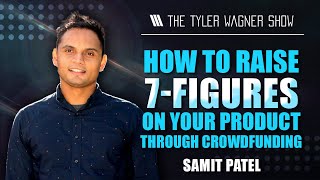
Samit Patel went from teenage nightclub promoter to crowdfunding expert who raised $43 million for clients. His three core pillars: deep industry research, pre-launch community building, and a compelling offer. His modular smartwatch campaign Blox hit $1.6M on Kickstarter using this framework.
Chapters
All right everyone, welcome back to another episode. Today we have Samit Max Patel. He is a product launch and crowdfunding expert. He's helped raise over $43 million and counting. He is also a social media influencer and worldwide speaker. So welcome to the show.
Hey Tyler, great to be here. Thank you for having me on and excited really to get talking.
Yes, man, me too. So really, the first question is, how did you find yourself in this business, like helping people with this? Like what's the origin story?
Yeah, I think, you know, my story is quite long-winded, so I'm going to break it down and shorten it as much as possible for everyone in the audience so they don't just fall asleep. But it was a typical— it wasn't a very typical story because at 18, I started my own first business, which was nightclub promotion. That was really to pay for university. And then when I graduated, when I was 22, we were in the biggest financial crisis ever. So, you know, there was no jobs going, there's nothing really else to do other than run a business, which I thought. And I thought to myself, you know what? I had a very big ego, as you do sometimes when you're young. And if you're making $1,000 a week while you're 18, you'd especially be thinking, OK, the rest of the world is going to be easy to you. So I stepped into the real world thinking, OK, you know what? I was making $1,000. I can literally do this for anywhere and anything. And I naively entered a bunch of different businesses from the travel industry to marketing to even hair and beauty. I was doing hair extensions. I had no clue about women's hair. Right? So I went through a lot of wacky different businesses. Fast forward to 28. I was 28 years old. Really had zero to my account. I had a event that happened which literally turned my whole life upside down. My brother got into a life-threatening accident while he went abroad. He was the golden child of the family. So literally for me, it was a case of I needed to step up because if anything did actually happen to him, you know, who's going to be the breadwinner? So at that point, I decided to give up on becoming an entrepreneur. I gave up on running businesses. And I literally wanted to get involved in startups. I was following startups for a very long time. And I actually ended up seeing this one startup called Blox, which was a modular smartwatch they could put together like Lego. And I was responsible for that launch campaign to the market. And I analyzed why I failed so many times. Was it because I was just a terrible person at business? Was it because I just didn't have what it takes? Or, you know, maybe something wrong with my genes? I analyzed all these things. And I I literally self-reflected. And really, you should self-reflect when you fail at a business, not just combine it all at once. But I took a couple of weeks out and I looked at why I failed these businesses. And it really came down to 3 things. Number 1 was the lack of research, lack of understanding what industry you're entering, the competitors in this industry, how long they've been there, what they're doing, how advanced they are, what type of marketing channels they're going into. And that was very relevant for the travel business that I set up at the very beginning. Travel is a very, very competitive industry. They're very technologically advanced. They're using latest marketing, you know, SEO, PPC, every single keyword, long tail, short tail, that they're going for, right? So Travel industry is so competitive. It's only— the only one industry that's more competitive than travel is the porn industry. So number 1, make sure you're researching what your competitors are, understanding the industry. Number 2 was building up a pre-community before you actually launch any business. So think about this, right? If you're ever thinking about launching a product, Say, for example, you're coming out with a brand new pen or a mug. Even before you decide to leave your job or even before you decide to start this venture up, set up a landing page, start thinking about how you're going to drive traffic to that. If you start doing the SEO, if you start doing the PPC, if you start doing all of these things even before you leave your full-time job or you make it into a full-time hustle, because a lot of people have multiple businesses, right? But what they tend to do is they're like, "All right, I'm gonna start this business now." And they'll go through that whole process and 3 months have passed before they even generate a sale. And the reason why that's really important is because of the pipeline. You need to build up a pipeline and that's really important. And the last thing is your offer, right? You need a really good compelling offer, something that's gonna differentiate you from everyone else out there. And all of these 3 things are literally what led me to raise $1.6 million for that smartwatch campaign. And then from there on, I ended up working on multiple different projects and have ended up raising $43 million.
Yeah, I love everything you just said there. And one of the things that changed my life when I was, when I started my first business, I was 20 and it was just the concept of MVP, right? Minimal viable or minimum viable product. And like essentially I think people fall in the trap of like, trying to do all of the things before actually getting their first customer, right? So they'll like spend all this time building something without even realizing if anybody even wants it. So, you know what I mean? And it's just, I see still to this day, people that I know go and I try to tell them, I'm like, why don't you call these potential, this is the way I'm like, call these potential people that you think would be good customers and just ask them like, hey, would you buy something like this if I built it? And then you'll know. And if it's a yes, then build it. Build it. But don't waste a year of your life. Yeah. But we're just not taught this in school. Like, and I fell into the trap. Luckily, you know, I was pretty young when I figured it out. But either way, I think that's just a huge piece of advice there.
Exactly. That's literally what, you know, I've made it my purpose to literally be educating as many people around this one concept as possible because it will save so much work. It will save so much money and hassle that you'd go through. And trust me, man, You know, I'm sure you've had a similar experience as most entrepreneurs have. From 22 to 28, it was a very unhappy place. You know, it was very stressful having no money and having your friends go out and enjoy their life and be able to meet up every week. And then you've got to make up some lame excuse why you can't be there. So, yeah, you know, and the turning point for me was, you know, seeing all these other entrepreneurs, Gary Vee, all these other big entrepreneurs who were like, you know, just just go for it, you know, go, go do it. It's like, but that's like, you've got to strike a balance, um, that, you know, one of the biggest things I think, like, looking at things in hindsight, if I went into a job and started earning money and then started working on my business as a side hustle, and then once it turned into a real business, that, that would have been perfect, right? Because instead I was doing from 22 to 28 I probably lost out on a huge amount of money. Just, and I was so out of touch with the jobs market. It was very difficult for me to even get a job. That was the biggest challenge as well.
Yeah. No, I'm with you. I realized at like 15, I was unemployable. Every, even like, you know, the easiest of jobs, I just couldn't last, man. I don't know what it, and I actually think going back to what you kind of said in the beginning, it was ego. Like I've always had this thing and now I'm just so far along with my entrepreneurial journey, I don't really think about it anymore. But when I was younger, I think it was ego where like anybody telling me what to do or like basically creating my calendar for me, I just had beef with that person and that person happened to be my boss.
Yeah. But you know, that's the thing, right? Like for some people it's the right play to make. And for me, the best play to make was after I, you know, you get to a point in your life where you're just out of options. You lack the energy. So the best reset is actually to go into a corporate job or do something that's out of the realm. Because as soon as you get into a corporate job, you've got money coming in. Straight away, you're happier because you can pay for food. You can do the nice things. And that's what a lot of entrepreneurs sometimes forget. You know, there's probably a lot of entrepreneurs listening to this right now. Who have been going at their businesses for 3 years, 4 years, and aren't getting to the right level of where they want to get to. You know, and sometimes just resetting yourself, taking a step back and going, you know what, maybe what can I do right now? You know, maybe I can go be a consultant or whatever. And at least that way, they're out that frame of mind. And actually, what happened during this time I was working at this company, my whole innovation in my mind started. Buzzing up again. You know, it was like almost sparks going off because I was introduced to a whole new industry and I was learning about different things. Every single day I was coming up with so many new business ideas. So once you've started that journey of becoming an entrepreneur, you don't lose that. You know, you're going to continue to generate these ideas. And literally every single day I had this book, I was just writing all these ideas down because every single time I saw something, I'd be like, oh, this is cool, this is something that, that is going to probably take off, or this is something that I can maybe create. And that's what got me back on it. Um, and that after all, after the, the success of that project, um, you know, I had a bunch of clients that came to me and said, look, we want to work with you. And instead of turning them all away, I had about 20 people that came to me at once, and I said to them, look, if you want to work with me, pay me $3,000 each and I'll work with you. And that's what ended up creating my agency as well.
I love that, dude. There's so many lessons in there. Like, I think actually, so like Gary Vee is a great example. He's, him and Tim Ferriss are like the two guys that I followed the most that have had the most impact on me. And, you know, with, I think they call it, there's like a term for it now. It's like intrapreneur or something. So like when you work for Gary Vee, and anybody listening, don't quote me on this, but I'm pretty sure that like when you work for him, he's actually okay if you are also like kind of using the people in the company and ideas and stuff to create your own little side hustles, right? And I also, and I think the other key there is like don't jump ship because I think it's a different mindset when you are literally broke. It's hard to sell things because you are, whether you realize it or not, you're coming from a place of desperation.
Exactly.
You know, even if you hate the corporate job but you know you got $5K a month coming in, at least you can have that call, that sales call and know like, hey, if this deal doesn't go through, I'm still going to eat tonight. You know, that's a different energy on the call. So I don't know. I think that's important to realize.
That's really powerful. You know, a lot of people message me and like, oh, I'm really broke right now. What business should I get into? And the worst thing is to get into a business when you've got a broke mindset.
You know?
Like when I was 22, I was trying to do all these different businesses and it was all bootstrapped. And you realize that rather than wasting 3 years bootstrapping every single— so bootstrapping, for those of you that don't know, is, you know, every pound or dollar you make, you put back into the business rather than feeding yourself. And then you're going slowly, slowly. But if you condense that— so that travel business took me 3 years of bootstrapping, right? But I could have condensed that into 3 months. So the money I spent over 3 years was probably about, what, $30,000, $40,000. If I just did that within 3 months, I would have realized straight away whether this product or business was going to be successful or not. And also, you know, the opportunity cost of saving myself 2.5 years before realizing that the business wasn't going anywhere.
Mm-hmm. 100%. So I wanted to— because I feel like people learn the best from stories. So I was on your website and you have a lot of like success stories or projects. I know Bloxxz was one of them to watch. I guess, uh, 3 questions here, right? I— and, and then you can answer in whatever order you want. But like, what would you say is your— the favorite one that you worked on, the most successful, and then one that actually like ended up failing?
Yeah, so I think one of my most favorite one was, um, iArcade, which was an arcade machine. Um, really, really cool project. Um, you know, you, you think it's a, it's a a great project that's going to raise multiple millions straight away. But that's not necessarily the case because it was an arcade machine that enabled you to play licensed old games. So you can get these arcades that have thousands and thousands of games, every retro game under the planet, but that through emulators, right? So this was trying to create a licensed version of that, and it didn't even have all the major games. So when I looked at that strategy, I said, okay, good. Okay, this could potentially be a good product. There's a lot of problems where people will be like, okay, you know, what you're offering is an $800 product that I can probably get made for $200. Or, you know, I can just download an emulator. And who's even interested in all these retro games right now? So the strategy we used for that project was establishing the creator as almost like the spearhead of the campaign. Like he was a very energetic guy. He was very into his retro games. So I literally said to him, look, why don't you every week just go live on Facebook, start playing your games, go through one game, go through another game, start building up the rapport. We will, as an agency, drive traffic to your landing page. We'll get people signed up. But what we want to actually do is we want to nurture these people to love you. We want these people to become fans of your brand so they shout it from the rooftops because that's what's going to be the key to your brand succeeding. And he was doing that for 3 months. 3 months. He was every single week consistent with the video, talking about the games he was playing through, talking about where development's going. That project ended up raising a million, million dollars. Just straight away, like on day one, it did crazy amounts and went on to be a huge success just because everyone was nurtured and because people were aware of him. And the crazy thing was people were asking him to sign their arcade machines. This guy was nobody other than a creator of this business, but people were so excited around him that they were asking him to sign the arcade machines. All of these things. So that was one project I was really excited about just because it was so different. And that same model is what we're applying to all our projects right now, is establishing the actual person as almost like the influencer. Because there's a massive disconnect between brands right now and actual customers. Like if you think about a brand, you're just, you're buying through one click on Amazon, right? You're not really buying because of a brand, you're buying because of price, you're buying because of ratings or reviews. You're not really buying because of, oh, you know, that's Nike or that's Adidas or, you know, and I really love Nike. Unless if you're into trainers and all you collect is Adidas. But for all new products, you're not doing it out of brand loyalty. You're doing it just because of other factors. But the way you can create that connect is if someone feels like, okay, you know what, Tyler knows me. Tyler, you know, Tyler's offering this product and I've been following Tyler's content for a very long time. And I feel like, you know, Tyler listens to me. I can message Tyler and Tyler's going to get back to me. And anytime Tyler now has a product, I'm just going to buy it because I really like Tyler. And that's what's happening a lot with the influencer space. So, you know, people are buying from people, not because it's the cheapest, not because it's the best product. It's just because they're buying from the persona. And that's really key to the future of sales. It's going to be very video orientated. It's going to be people being in front of a camera like we are and selling that product. And that's why all these platforms like TikTok and YouTube and Amazon is coming out with its own video platform to sell products is going to become really big. You know, QVC was the beginning of it. But the end is, you know, us just getting on an app and shooting a video about our product.
Got it. I actually didn't know that about Amazon. And yeah, I agree. I, and I think, you know, a lot of this stuff, I don't know, I didn't come up with that. I think Gary Vee did, but like, he's like, a personal brand's kind of like online real estate, you know? So it's like, and I agree, you know, one thing we do, it's just, it aligns very perfectly with what you're saying is, and again, Gary Vee, he says document the process instead of creating the process. And that was like a big game changer for me. Because we do book launches for people, and exactly like you do with crowdfunding is we'll tell people to like document the process of writing their book and create like a Facebook group and document the whole, the ups and downs of the process of writing, publishing, and then by the time they market it, they have hundreds to thousands of people that have literally like been with them along the whole journey. So when you ask them like, hey, my book came out today, would you mind buying it and leaving a review? You know what I mean? Like, it's almost like they're a part of the book at that point. So, and it's all free. I mean, it takes time, obviously, but it's free. Yeah, exactly.
Yeah, I've seen, I've seen that, but, you know, work really well for books, actually. You know, people put, people post their sort of book covers and say, hey, what book cover? You know, so yeah, that's a really good shot.
Yeah, book cover vote is, is a marketing tactic. It's really, it's just an honesty, like some cases I mean, it could definitely sway, but in some cases the author like already knows the COVID but they're like, hey, let me throw this up. And then it gets tons of engagement. Like it's, it's really, I don't know, people like to give their opinion obviously.
Yeah, exactly. Yeah.
Um, so I just noticed too, because I was looking at these projects now as we've been talking, like, uh, because the arcade one, that's like the first one here. Like it seems is most of the stuff that you're doing this for, is it tech related? Or is that just kind of the ones you're featuring?
It's just the ones that we're featuring. Yeah. Our agency sort of, you know, says or we're niched into the product space. So products is our real bread and butter. And tech products is a huge part of that. But we've worked with non-tech products, you know, like bags and things like that. And that's another really difficult one to market because, you know, bag is just a a bag. So how do you build up the brand and how do you build up some uniqueness to that? And, you know, the market is— there's a lot of bags out there right now. So you've got to get really innovative with these products.
Got it. So what was the— let's go to the failure and then to a success. If you don't want to share the name, but like, and maybe it's obviously not one with your agency, but maybe in the beginning Or maybe all of them succeeded. I could be wrong.
I don't know. No, no. You know, with this, there are projects that can fail. And through, you know, we've been in the business from 2015 and, you know, straight away when we take on a client, we explain to them the risks. Like, yes, you know, we're a great marketing agency, but at the same time, you know, the product has to be great, and there's a lot of other things that are outside of our control. So before we were just doing the community building, we weren't responsible for the live ads, or we weren't responsible for the videos, we weren't responsible for the landing pages, we weren't responsible for a lot of different things. And as we've grown, we've become more responsible for the other things because, you know, you've got lots of different variables, and that's the most difficult thing about the agency we're a part of, because what we're doing is we're taking a product product from the very beginning, a brand new concept or something that doesn't exist. And then we're thinking, okay, what's the messaging going to be? What's the marketing going to be? How can we make this stand out? There's a lot of things that go through because we're dealing with the landing page, we're working on the funnels, we're doing emails, we're doing, working on the video scripts, we're doing all these different types of things, you know. And like, if you just think about all these different elements, like you've got agencies that specialize in each one of these elements, right? Like you've got funnel builders or you've got email marketing companies or you've got Instagram companies or social media companies. We're doing all of this right now. Just because it's, you know, we want to make sure we're controlling things and we're constantly improving. So every single time a project doesn't do well or as well as expected, we're looking at it and going, why isn't this working? So we've actually put in steps from, failures that we've learned of. A couple of the main reasons why products fail—
Oh, here, yeah, this is, this would be good info.
Yeah. Is, you know, obviously the product. Product's number one. If the, if the product isn't good enough, it doesn't have key selling points, number one. Number two, the team behind the product is just not, you know, it's just not there. They're not, they're not taking that owning initiatives. They're not doing things on their own. They're not, you know, they're not doing things outside of what we're doing. They're just giving it to us and going, OK, you know what? I'm going to go back to doing whatever I need to do, rather than being like, OK, look, you know, because they're the people that know about the product the most. We can try and learn about the product as much as we can, but we're not going to have the insight that they have. And that's really key. Early on, there was a project that literally we were like, okay, we're launching on this date. We built up a campaign. We told them, okay, this is what's going to happen. They didn't even turn up for the launch. And they were the ones that had to click the launch button on the project because they had the access. So that was one campaign that—
Oh my God.
Yeah. So we told them, okay, put your funding goal as, you know, $40,000. Um, they ended up putting their funding goal at $150,000. We're like, okay, now, like, I don't know why you did that. Like, it— there was a huge communication mishap with that one. And then, you know, on the launch day, they didn't turn up, and then the project raised $60,000. But because we didn't hit $150,000, we had to cancel it.
So those platforms work, right? Yeah, yeah.
Kickstarter— Kickstarter is all or nothing. So if you raise money, um, and you've set a different goal, then it's not going to work. So that was a project that unfortunately didn't work. But now we've got a whole system in place that helps to try and avoid that. So we run a 1-month validation process where we set everything up, we test out according to the audiences we have. Because since 2015, we've got a huge amount of database of projects that have raised money. So, you know, we use this data to actually see whether these products that are coming to us will work and if they're hitting the same metrics. So key metrics for people in the audiences to think about is the cost per acquisition. If you're getting a $1 to $2 lead, then that's a good, good number, especially if your product is $99, you know. So you're going to get probably likely a 5% conversion rate, if not 10% conversion rate, One of the recent projects we did, which was Everplay, got a massive, it got 10% conversion rate. It did half a million on day one, just because we put it through that process of the video and putting people through the Facebook group and things like that. Another thing we do in the validation process is ask people to place deposits. So, you know, if I'm launching a brand new product, I would tell them on the thank you page, "Thank you for signing up. Why not place a $7 or $1 deposit?" And we were the ones that first did that in 2015. And, you know, someone that signs up is not a good— they may sign up, but they're not going to end up buying. But someone that ends up placing a deposit is more likely to buy. They're more interested in it. And, you know, that's a way to judge the quality of that lead as well.
That's a good idea. So, and Just curious, like, was it the— if they did a deposit, would you then give them like a discount later or something? Was there some incentive there?
So they'd get a further discount. So, for example, if I'm selling a mobile phone, I'll say, you know, it's usually $200, but I'm offering it at $99. Sign up. So the person would sign up first and then on the thank you page, you'll be like, okay, why not lock in another further 10% or 15% off? Um, all you gotta do is place a $1 or $7 deposit.
Yeah, I like that. That's really good stuff. That's the one thing with, uh, like marketing that I've always loved. It's like the creativity around it, it's just limitless. And then, you know, obviously I came across ClickFunnels, probably was around 2014, '15 or something, I can't remember. But, um, you know, it's just interesting like how many different things you can do, upsell, downsell, that thing that you just said. It honestly is like an art. It really is.
Yeah, I think there's a lot of things that you can do and a lot of the industry tends to overkill things as well. That's what we've seen. Like, it's, you know, like right now I'm talking about it in this podcast. Someone will listen to this podcast and think, oh, you know, I'm going to set this up for my own campaign now. But that's— it doesn't work like that because you can add a deposit level to your product, but there's a lot of other variables to consider. Like, you know, are you building a long-term brand? Are you— is your product less than $50? Is your product more than $50? You know, there's lots of different strategies. And I think that's the most difficult thing for people as marketers, especially for my agency. You know, we've got to constantly be updating ourselves on everything, you know, email marketing, Facebook, Instagram, YouTube, all these things constantly change. And it's very difficult to stay on top of every single detail to make sure you're delivering the best strategy because, you know, Facebook could make a change like they've done. And then it takes a while for you to figure out, okay, what is the new strategy I can create around this? And there's always so much going on. So it's very difficult as an agency owner And I think that's why a lot of people out there, you know, they don't fully understand the benefit of an agency. It's like building a house. You're not going to— you could probably look on YouTube on how to build a house, but whether that house is going to be built cost-effectively or it's going to not drop down on your head is another question, right?
Yeah, no, no, I agree. And actually, my story full circle was I attempted to build all these complex funnels And then it got too complex and I just gave up on it. And then I, I built my business just through partnerships, like, uh, and that's a whole nother thing for a different show. But, um, I just simplified everything because I just really— the amount of variables, and I think it's so key that we emphasize that, um, even just with a Facebook ad, the amount of testing, um, you know, if an ad's not working, you know, you want to change like one variable at a time. And most people, what they do is they just trash the ad. Whereas, hey, maybe the image is great but the copy's bad or vice versa. And I don't know, there's just so— there's a limitless amount of tests you can do to really find the right answer there.
But yeah, exactly.
So really, second to last question I want to ask you is more so on like the personal side. Like, do you have any like rituals? And then like, what's that like? Like how many hours a week are you working? What are you doing your free time if you have free time? What's that situation going for it.
Yeah, I think, I think I go through, uh, waves of productivity. You know, some days I'm super productive, other days I'm really tired, or I, you know, I just can't be asked. But I've gotten to that point where I can afford to do that. But at the same time, you know, I'm constantly motivated because I want to make sure I'm leaving a long-lasting legacy of mine as well as impacting other people's lives. So You know, that sort of goal keeps me going. And I want to be the best, you know, at what I'm doing. I think every entrepreneur wants to be someone that's the best at what they're doing and become well known for that. In terms of rituals, things that I've done or I've kept to are cold showers every morning. That seems to really work out. Something that I've recently got into is Tony Robbins' morning ritual. I think that's really powerful. I've tried doing various bits and bobs, you know, where you can do gratitude meditation, but the Tony Robbins one is free on YouTube. It's really powerful because it tells you, you know, okay, what are a couple of things that you're really grateful for? And it makes you think. And then it goes, okay. And then I combined it with one of his mastermind classes that I did through online. And then the one that was really powerful was like, you know, they were playing some music and they were like, okay, act like you've just achieved everything in the world that you wanted to achieve and visualize that and go absolutely nuts. And that is one thing that I combine with that Tony Robbins daily ritual YouTube video. So after I go through that, that video is mostly about gratitude. After that, I'm literally just closing my eyes. I'm playing my favorite song and I'm acting like I have got you know, I've got all these massive awards from ClickFunnels. I'm up on stage doing a TEDx talk. I'm doing, you know, my charity work and the happiness that my family feels at my success, being able to take my family to all these great places and just going absolutely ham, like, you know, just going absolutely nuts where you're dancing and you're singing and your eyes are just closed and you've got that visual. And that's really powerful. I think You know, I've tried lots of different things and these two things are really powerful.
That is awesome, man. And I actually, I went to college in South Carolina. I haven't heard, uh, ham in a while. That's awesome. That was, uh, I, I missed that, man, the sound. Um, so, okay, uh, last question is, um, like, where can people stay in touch with you? So like socials, your website, and anything else that we didn't Oh yeah, and actually right before you say that, because I meant to ask you this and then we started talking about other things, your brother, did he end up being okay?
I'm assuming. Yeah, yeah, he's fine.
Yeah. Okay, good, good. I actually, I literally meant to ask that and then we drifted somewhere else. But so yeah, if there's anything else that we didn't cover that you want to share, please do. And then where can people stay in touch?
Yeah, if anyone wants help launching any of their products or they just want to talk about, feel free to reach out to me. My website is sametpatel.net. My agency website is jupio.com. There's a couple of really good giveaways on both websites. I've got a massive PDF that literally has a bunch of growth hacks that you can do to literally gain business for your company. It's got lots of different things that, you know, tactics that you could literally go through and it will definitely increase business for you. So that's definitely one that's worth checking out. Just go on to jupio.com and it's there on the website as a free giveaway and highly recommend that. And the other thing is just follow me on all the socials. Like I'm putting out daily content on Instagram. I'm on TikTok. I'm on YouTube. I'm on all these things. But if you want to get to know me a bit more, start following me on Instagram. I'm following literally trends that I see, um, ways to make money. I'm posting about cool tools as well, um, and really breaking down complex topics like what are NFTs and how to get involved in them, or, you know, all these other things as well. So yeah, definitely feel free to follow me, and if you've got any issues, just DM me as well. I'm always getting back to my DMs, um, myself.
And, and what is your Instagram handle? I may have missed it.
I am Samit Patel.
Okay, got it. Perfect.
That's basically I am Sam Patel on all socials.
Got it. Okay. Well, thank you, man. That was an awesome interview. I appreciate you coming on.
Yeah, I appreciate it, man. Thanks for having me, Tyler. And thanks. Yeah.
More from Tyler


Catherine Nikkel : THE STORY EVERYONE HAS BUT HASN'T TOLD : The Tyler Wagner Show #1120



Scott Ritzheimer: Bring Predictable Success to your Organization | The Tyler Wagner Show #1115


Fred Moskowitz: A GUIDE TO GETTING STARTED WITH IN MORTGAGE NOTES | The Tyler Wagner Show #1113

Mark Podolsky: From Land Investor to Full Time Success How I Made $90,000 Cash in Real Estate


Mark Podolsky: How to achieve a 300% return on investment my foolproof strategy

Mark Podolsky: How to make passive income selling raw land the irresistible pricing strategy