Sara Quiriconi: Author, Speaker, Coach, And Content Creator (The Business Blast Podcast)
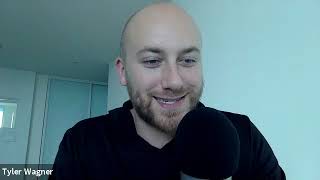
In this Business Blast podcast episode, host Tyler Wagner interviews Sara (Sarah) Quiriconi, a 15‑year Hodgkin’s lymphoma survivor who turned a post‑traumatic rebirth into a career as an author, speaker, coach, and content creator. Sara shares the medical basics of Hodgkin’s lymphoma, recounts how the disease intersected with her struggles with alcohol dependence and an eating disorder, and explains how those challenges sparked her "Live Free" manifesto and the book Living Cancer Free. She emphasizes the power of personal choice, responsibility, and self‑acceptance, urging listeners to recognize that every situation offers at least two options. Sara offers practical advice for aspiring writers—starting with a clear core idea, outlining the ending, and structuring the narrative—drawing on her background in graphic and creative direction. Her business philosophy centers on over‑delivering, never settling, and giving without expectation, echoing lessons from Gary Vaynerchuk. She recommends free work for testimonials to generate word‑of‑mouth referrals, and highlights the importance of authenticity. Sara also discusses the value of embracing one’s “weirdness,” self‑awareness as a path to happiness, and shares favorite books (StoryBrand, The Art of Non‑Conformity, The Subtle Art of Not Giving a Fck) that influence her thinking. The episode concludes with her favorite quote, “Choice will set you free,” and provides listeners with her online handles (@livefreewarrior), website (livefreewarrior.com, livingcancerfreewarrior.com), and where to purchase her book (Amazon, website shop).
Chapters
All right everyone, welcome back to another episode of the Business Blast podcast. I'm your host Tyler Wagner. Today I have Sarah Chiariconi with us. She is an author, speaker, coach, and content creator. So welcome to the show.
Thank you so much, Tyler. What a— that's quite an intro and absolutely perfect.
So yes, we got it, we got the last name. Let's celebrate real quick for that.
We had some jokes before for listeners about the spelling of last names, and it's funny. I mean, not to start it off already, but it's really funny how kids can be when you're younger, because I was making the joke how they called me Macaroni, and it's like, yeah, now I use it as a reference. So it's like, now what?
Yeah, Macaroni. I feel like for elementary, that's like fair, but middle school, high school, you got to start to be a little more clever. So the first one we ask on this show is, what's the best story from your life that has an underlying valuable message? Oh, we go deep.
Yeah, but it's like, it's really, I think life has so many lessons and stories that really can tip and turn, and when you're open to it, can really teach you something. So it's, My wow is in relation to picking one. I'll go for the pivotal part that changed from part 1 in my book to part 2. So between the fall and the rise, it was after going through cancer. So I'm a 15-year cancer survivor of Hodgkin's lymphoma. And after going through cancer, it was this post-traumatic rebirth. What do I do now? I need to fix my shit and, you know, get on with life and do something awesome. And it was this long plateau of still stumbling along the way, which I'm sure we'll get into more detail later about the details of what I've been through and the bumps and rocks. But a part of it really was what I started to— wanting to heal, that desire to want to live better. And I think that was the biggest turning point. After cancer, when I was still struggling with alcohol, when I was still struggling with an eating disorder, and I had this, this wake-up call when I was dating my ex-husband at the time, like, I want to create something better for myself. And I made that mental choice to really dedicate to wanting to do it. So I think that that was the biggest part. It wasn't necessarily the event itself of cancer, of the eating disorder, of the alcohol addiction. It was all of those combined in that long plateau of my life can either continue on like this or we can make a change. We can stop this pattern and I can do something different.
So, so yeah, to dive deeper in some of those things. So like the, the type of cancer, I'm actually not familiar with it. So like what, what are like the, I guess, side effects of that type or what does that type what does the cancer type mean that you mentioned?
I will, so it's Hodgkin's lymphoma. There's two different, well, three. There's leukemia, there's Hodgkin's lymphoma, and non-Hodgkin's lymphoma.
Oh, okay.
And they're all cancers of the blood. So that's probably the easiest way to relate to it is they're all cancers related to the blood. And the lymphatic system is designed to clean any toxins out of your body. When they don't clean them, they get stuck within you. So it was a combination of things that potentially— we all have cancer cells within us, some more by genetics, but as humans, our cells can mutate if they're not properly cared for and if it's really the perfect storm of elements that creates the cancer tumor to begin to grow and metastasize. So the Hodgkin's— I think that answers the first part of what Hodgkin's is. Yeah. And so it was, I was 19. I was 19 years old when I was diagnosed. But what some of the, I will say, you asked what some of the side effects that I started to notice. I had this big lump in my neck that just got bigger and bigger and bigger. It started out as, we called it the bean, and it was like this little, it's a nodule of your lymph nodes. And it was moving and it started to grow and it started as a kind of a joke where we called this little thing in my neck the bean and it grew into a cancer that was almost the size of a golf ball. So it got really big until one day my mom's telling me, you are going to the doctor. I was in the pt section still at the time and she's like, go get this checked out. So that's really the first telltale sign of there's something not right here.
Yeah, got it. Okay, so that being it like a physical like growth thing, that, that kind of was obvious.
That stands out. Yeah.
Okay, gotcha. Um, and then as far as like the like alcoholism and like eating disorders, so you literally, you're going through cancer and at the same time you're going through those two things? Or was that— Yeah.
Alcoholism came— I struggled with alcohol, like having a healthy relationship with alcohol, even in high school. This is one of those do as I say, don't do as I do, to any kids who are listening at home. But it's when I was in high school, I started to experiment and drink. I mean, I think that's what we do as high schoolers. We want to try different things and especially poor push boundaries that we're told, no, you can't do. I'm a person where if you tell me no, it's like, you know, you just reverse psychology me. Yeah, try me, game on. But it was really experimentation in high school with alcohol. But then when I went off to college the first time around, that I got heavily into using almost on a I would say 4 or 5 out of 7 days a week of drinking. At the same time, from 14 on, I began my struggle with food and body image and self-confidence and esteem. So that's where the eating disorder started at a much earlier age, but the alcoholism itself wasn't until I was about 18. And then again, when I was 21, 22, 23.
And you've like gotten through like all of these things at this point.
You want a two thumbs up? And yeah, for me, it's not cutting things out completely, but developing a better relationship with them. And that's a big reason that I'm able to speak about it today, that I'm able to share. I think when we overcome things in ways or develop better relationships with them, that we're able to speak about them because we need peace. So it's— at the time, I was never ready going through it to talk to anybody. Now I want to talk to everybody about it.
For sure. Yeah, and I can relate. I think a lot of people, like you said, can. Like high school, I was definitely drinking way too much. College, same thing. It was probably 4 or 5 times a week because in college the weekend starts on Thursday, you know, and then during the week there's usually like deals to like get you to come on. So it's like Wednesday was like dollar drinks. Because like there's no reason to go out on a Wednesday except for the fact that the drinks are like 90% off.
So it's like, I mean, you're a girl, there's something when you're a girl that they're like, just come, just go.
Oh yeah, yeah, well, yeah, typically they might be free. Oh yeah, I think at some, some bars there was like girls night, um, and like that would actually be like free drinks, um, and there was like the frat parties. So either way, I mean, 4 or 5 nights a week, I'm fairly positive I was drinking that much as well. And for me, what started to happen, it was just like too much of a fog. Like, I eventually, like, I dropped out of school, started a company, and it got to a point for me where I was like, okay, I either have to choose the company or the drinking because I— it's affecting me days after the fact. And that's— so I had a great night, but like the next day was awful. So Just like you, I don't, I haven't like removed it fully, but I have a better relationship with it where it's like I can just have 2 drinks and be okay. Like I don't need 12 or whatever.
And I think that's, yeah, there's a couple of key points that you mentioned in there. One being that alcohol is socially acceptable. Like having an eating disorder is, you know, it's not like, yeah, way to go, throwing up and starving yourself. But it's it's, which I did, and that's why I'm not making light of it at all, but it's not socially acceptable in the way that drinking is encouraged. And I think to some extent, it's also overeating can be socially acceptable. The part that really with alcohol that started to hit me, it was like severe guilt. And it was really the waking up and the need to, there was oftentimes where I would wake up and just keep drinking because it was easier than dealing with the hangover. And it's like the fog that you're saying, for me it was really not remembering certain things. Like, fortunately and thankfully, you know, angels above, but I never got into any serious trouble, predicaments, injuries, nothing. It's a blessing and I'm really thankful for it. But it really became, more of a dependency to cope with the emotions that I was shutting down, which is the same thing that other addictions do, just like an eating disorder. It's swapping one for the other, really.
Totally. Yeah. No, I can relate. So my next one for you is, what is the most valuable piece of information that we should know that's within your expertise or industry?
I mean, for, for a line of encouragement? Is that what you're looking for?
Well, yeah, so I guess even, or you could go to maybe the route of like writing, writing your book. Do you have like any like tips for that? A lot of people want to write books and it's, it's very difficult for a lot of people. So maybe that direction or in like your practice, something in those lines.
I mean, I can answer both. So I think really it's that anybody can choose to make a life for themselves, what they want. They can— there's always two choices in any situation. And I think the— I'm really about empowering people to make those choices, to see that you have options, educate yourself on them, but then make the choice that you're content and you're happy with. And even in the end, if it doesn't turn out the way you wanted, to remove those expectations and still know that you made that choice. So it's really a lot of personal responsibility. And, uh, I know you did an interview with Gary Vee as well, and it's a lot. I was actually just watching a video on him about it. And it's when you are responsible for everything that you take responsibility and you don't blame anybody else for any of your shit, then you empower yourself to really take that freedom. And I'm all about live free, freedom. And freedom is, Comes with a giant responsibility, but it's also what frees us. So the one-liner would be really to know that you always have, in any situation, at least two choices, and you have the power to make that choice. It may not be choices that are ideal, but we have choices always. That's a big part of what the book is. And as far as writing a book, I mean, I come from a design background. So I was a professional graphic designer, art director, and even to this day, I'm still, I'm a creative director. So I'm always directing all of my shoots and all the content creation that I do. And it's really to start with, start with a core, start with an idea and start to create outlines for where you want. You have to know your, your beginning, like where you're starting, but you really need to know more of the ending, where you want to be, where you want to take the reader or what story you want to tell. I think that also applies in life, to make a double application. If you don't know where the heck you want to go in life, the rest of the story and the chapters are gonna be a little— maybe not misguided, but they're not gonna have a clear focus, and you certainly won't get to the ending in the same way that you were hoping for. But to have an idea of what ending and where you want to take the reader, the audience, or your life, then I think that's the most important place to Yeah, no, I agree with that.
And I think what— so Gary, I know exactly what you're talking about. I think what he says, he's like, you know why I'm so happy? It's because I think everything's my fault.
Yes.
And yeah, that's one of the things he says. And I remember like hearing that, that actually was pretty pivotal for me. Like, because when you really boil that down, like everything. And another, like, I think we're both maybe equally Gary Vee fans. So, because I watch him like every day. And it's the other thing is that like giving without expectation. Because I think like, I don't mean to like blame schools and everything, but I think we're kind of brought up in a way of like transactional. So, it's like if I do this amount of work, I deserve this pay or something like that. But in the way of like the entrepreneurial world and the way I've seen Gary just kind of blow up and even with myself, the more that you just like give without any sort of like transactional mindset, it comes back like tenfold. But it just takes time, you know, and I think like if you can kind of remove that transactional mindset and get into the mindset of just like giving, and yet you need to take care of yourself for sure. I'm not saying you don't do that, but if you just keep giving, it is kind of funny, I guess, how it just comes back. It just does. So yeah, just watching Gary with how much he just over-delivers all the time, and it really does, it comes back. So I just kind of follow that model.
It's definitely, and this is where I'll need to send you a copy of the book, but it's, there's the second part of the manifesto and I, in the Live Free Manifesto, when I talk about that and it's act without expectation. So you're just, you're acting and you're not expecting something in return. You're, I'm sharing a post on Instagram and no matter how many likes or comments, I'm sharing it because at least I know it's connecting to one. Reader out there who was asking that question or needed to hear the message. So it's not the expectation of something, but it's acting because of pure will. I mean, it's exactly what you're saying. So it's the same mindset, same everything. Yeah.
And that changes. And what's interesting is that actually changes the literal action that you take, because if you act with an expectation, your actual action will be potentially inauthentic. Like, it won't be actually like— so either way, that's a wrap. Um, so, um, so my next one, and maybe we kind of covered some of it, is what's your best piece of just overall business advice? So not necessarily like industry specific, um, but just business in general. Like, what would you, what would you say?
Uh, without Sounding too cliché, it's really to— I mean, I actually just posted on this. This is where I'll use— I'm using some of the wording. So never settle is one of the manifestos as well. And it's, if you know you can do better, don't cut yourself short. Don't limit yourself. If you really truly believe in what you're doing, your passion, then know whose voice is pushing on top of what your actions are. And it's to always do your best, no matter what, do your absolute best. This will go back into one of the Instagram stories that I posted 2 days ago, and I had a lot of great feedback on it, 'cause it was honest. I said, you know, I'm really, I'm doing this work, I'm doing this video for a client, and I feel like I'm getting underpaid for it, but I'm still, I'm not gonna half-ass it, I'm gonna give it my all, my best, because I truly believe one thing is gonna lead to another, can lead to another. And in design and creative, I mean, there's portfolio pieces, but I always think too, is there's always somebody looking, you know, without us knowing. And even if someone isn't looking, to just do your best for your own peace of mind that you did your all and that's all you can ask for it.
Yeah, your own peace of mind. And I think too, like whenever anybody's getting started with like a new business, like a new entrepreneur, I always like tell them my story of like how I just did it for free at first. Like in exchange for a testimonial. That's all I asked for. So like, I did a book, it did well, and then I started helping other people with it for free. No money exchange. I was just like, just tell me, give me a video testimonial of your experience if it was good. Don't do it if it was bad. And, uh, and then from that though, I did that with like 10, 15 people, and then what starts to happen is referrals. So like, word of— in my opinion, word of mouth marketing is the best marketing. So it's— Facebook ads are great and all these tools are fantastic, but like you're saying, even though you might feel like you're being underpaid, you doing a really good job and like over-delivering for this person could really lead to 3 or 4 more clients a lot easier than Facebook ads and a sales funnel. Like, just do the right thing, do the good work, and it will they'll tell other people. So I don't know, to me that's always been common sense, but, um, for a lot, I think it might not be.
I think we're also supposed to eat our fruits and vegetables, and we don't always eat— we know things that are common sense, it doesn't mean we do them.
True. Um, so, so the next one is, if you could give your younger self one piece of advice, what would that be?
Oh, to learn to love myself, to take it easy on Sarah. I'm really my hardest critic, and it's been something since I was young. My parents always said that to me. They're like, you're doing great, like, really take it easy on yourself. When I did sports, when I did school, it was always this high-achieving, perfectionistic— I mean, all the typical qualities of developing anorexia and an eating disorder was really to take it easier on myself, to be kind to Sarah, to know that it's okay to be weird, to not fit in. And that all kind of falls underneath the same self-confidence, self-esteem umbrella that I really struggled with at a young age. Sarah needed like a little hug in a lot of ways with a little pat on the head. It's okay, you're weird and you're going to be weird for the whole rest of your life. And that's really pretty damn cool. You're gonna excel in life because you're weird.
Yeah, no, I agree. I think when you can like start to embrace it, because that's the hardest part too, is like when you get put into school and like society, when you, when you are weird, um, then it's, it's almost looked down upon. But what's interesting is that it tends to be a trait, and weird may not be like the best word, like I don't know how to word it, but it tends to be a good trait for success though. Like, if you can stand out later in life, um, it tends to work well. Whereas in school, they're like, no, stay in line, like, learn calculus. It's like, I hate calculus. I don't want to learn that.
See, and I loved it. That and physics.
Oh man, no way.
I told you I'm weird. I also don't like chocolate. Weird, I know.
No, but like, no, that's awesome. But see, for somebody like me who just— I, I love human interaction and I hated like calculus. So like, all I'm saying is it wouldn't be best for me to then like listen to that and, and, and like go all in on calculus. Like, I think what's better is double down on your strengths. So if you love calculus, like maybe that would have been a potential great thing for you, you know.
The art thing worked out pretty damn well, the talent. And, uh, but life has been the lessons. But I think the idea of school and how the school system works and learning is a complete conversation for another day that I really can go off on a whole limb for. But I know, I know, that's a whole different topic.
That's a deep rabbit hole. I'm with you.
There's a section of my book called Own Your Weird, and it's a hashtag that I use often, and it's something that I share with a lot of younger kids who are messaging out to me. And I say kids like 16, 17, 18. It's about owning your weird because there is this And that's why I use the word weird, because it's literally in my book. Got it. #OwnYourWeird. And it's learning to be okay with yourself and who you are, and that that's really okay. That's gonna be your strength later on in life. There's a joke, and I'm trying to think of it, and it says, that kid that you're teasing about being the nerd in school, you better shut the F up, 'cause he's gonna be your boss someday.
Yes, I know exactly the quote you're talking about. And it's true. That's like real stuff right there.
He's gonna be giving you a promotion, or your pink slip, so shut up.
So I think you kind of said it, like owning your weird, I think, could be part of this answer. So the next one though is, in your opinion, what's the key to happiness? And I would say owning your weird is part of it, but what—
Certainly, that's part of it, because I think it all ties under self-acceptance, self-awareness. I think self-awareness is the biggest, biggest key to happiness because When you are self-aware of what you like, what you don't like, what your values are, what you can tolerate, what you absolutely cannot tolerate, then you start to filter out decisions that you're making. And you're gonna choose things that bring the happiness factor as a byproduct. So instead of chasing the happiness itself, you're already choosing and doing things that are using, that are creating happiness as a byproduct.
Mm-hmm. Yes, agreed. So you have your own book, but what's the best book that you've read besides your own? And what's the number one thing you learned from it?
Just one? I'm really a book nerd.
I hate reading.
I used to Cliff Notes everything in high school, and now I'm like Amazon Prime, book, new book, new book. The one that I'm reading right now is actually StoryBrand.
Oh yeah.
Yeah, StoryBrand.
Good book.
I love it. I have it up here. I'm looking at my browser because I have the storyboard thing up there, because I'm very visual. I'm reading that right now. Another great book that I was recently reading is The Art of Non-Conformity, and the other one is Unfuck Yourself.
Got it.
That was another— By Mark Mason? Manson? I'm misquoting now, so I'll end it there, but it's an orange book cover.
Oh, The Subtle Art of Not Giving a Fuck, I think?
That one too, yeah.
Okay, gotcha.
That's another good one, yeah.
Yeah, I haven't— Yeah, yeah, if that's fuck in the title, it's good. No, I haven't read that one yet though, but I did, I listened, I'm like an audio person, so I do audiobooks like crazy. And StoryBrand, really good. And cause you're on like their platform, right? Is that what you mean?
Yeah, exactly.
Got it. Yeah. So, so next one is what's your favorite quote and why?
It's, it's kind of my own recently that I've been living. Choice will set you free.
Hmm. Okay. And why? Tell a little more about that.
The power of choice, and it goes back to what I was saying before, earlier, the power of choice can really create a freedom and responsibility, but freedom to create the life that we want. So again, any situation you can choose what your, at least one or two decisions in which direction or path that you want to take. And it's that responsibility that you're making that choice. That will create the freedom. Because many of us are looking to get unstuck or we're looking to get out of a problem or something. We're all working on something at some point, 99% of us. So how do we get from stuck to unstuck? And I am a true believer that it's the power of choice to set you free.
I love it. Well, so thank you for coming on. I really do appreciate it. The last one I got for you, where can our listeners listeners find your book? And then what's like the best place for them to connect with you online?
Perfect. Connect with me @livefreewarrior on Instagram and YouTube where I upload videos weekly. You of course can always check out any previous content that I've posted at livefreewarrior.com. That's where you can also contact me, livefreewarrior@gmail.com. That's a lot of live free warrior. And if you want to grab the book, you can of course grab it from the shop page on my website. Once again, livingcancerfreewarrior.com, or of course on Amazon. Just look up Living Cancer Free ebook and paperback.
Perfect. Thank you again for coming on.
Thank you, Tyler Wagner.
More from Tyler


Catherine Nikkel : THE STORY EVERYONE HAS BUT HASN'T TOLD : The Tyler Wagner Show #1120



Scott Ritzheimer: Bring Predictable Success to your Organization | The Tyler Wagner Show #1115


Fred Moskowitz: A GUIDE TO GETTING STARTED WITH IN MORTGAGE NOTES | The Tyler Wagner Show #1113

Mark Podolsky: From Land Investor to Full Time Success How I Made $90,000 Cash in Real Estate


Mark Podolsky: How to achieve a 300% return on investment my foolproof strategy

Mark Podolsky: How to make passive income selling raw land the irresistible pricing strategy