Scott Hoffman :THE INTERNAL WORKINGS OF AN ORGANIZED CRIME FAMILY | The Tyler Wagner Show # 1112
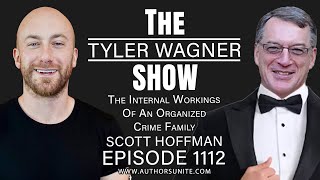
Scott Hoffman, son of a Chicago Outfit member, describes growing up inside organized crime: casino skimming that generated $200 million annually, his father buying Jack Ruby's rifle for $12.99, and witnessing a murder on his ninth birthday. He explains how the mob infiltrated hospitals, strip clubs, and Hollywood, using churches as meeting places and body disposal sites.
Chapters
All right everyone, welcome back to another episode. Today we got Scott Hoffman with us, so welcome to the show, man.
Hey, thank you very much, Tyler. It's nice to speak with you and your listeners.
Of course, thanks for coming on. Um, so just to start us off, if you can, uh, just tell us a little bit more about you and, and what you got going on and, and what we're going to talk about.
Well, I'm I'm from Chicago and I'm living in Chicago, and I've written a book that came out in March of 2013 called Inside, which if you go on Amazon and put in Scott M. Hoffman and the name Inside, it'll come up. And while the book is fictional, it's composites of real people and real events because my father was high-ranking in the Chicago crime family, The Outfit. Okay, he reported to Paul Ricca. He was a consigliere for Sam Giancana. He reported to Tony Accardo. He was a consigliere for Joey Aiuppa. So I have quite extensive knowledge about mob life. And I think your listeners will find it very interesting.
Got it. All right. Well, I have a lot of different questions. So where do we start with this? I guess first question, when did you— like, what was the event that happened when you first like realize that your dad was in the mafia?
Well, the one I would say this was like 1A, and then I'll tell you what 1 was. My father was high-ranking, but he had the plan for Las Vegas, 7 hotels, 7 casinos. And when I was 8 years old, I was going out with my father to Las Vegas 5 times a year. My father's approach with me was, you're going to see everything. In mob life, in the life as it's called, and then you'll make your own decision if that's what you want. I'm not grooming you. I'm not forcing you, but you got to see it. Your eyes got to be open. You got to see everything. But that was not really the first time. A couple of months before that, I was with my father. We were invited to a dinner at a church. I spent a lot of time in church with wise guys. Okay, a lot of time. And there were two guys there. One guy was named Tony and his brother Mikey. And it was a dinner and then they were going to have the raffle and everything. And we're talking with them and the priest comes by and Tony says to the priest, can you please bless my card, the ticket? He said, sure. He took it in his hand and he blessed it. And then we went inside and we had dinner and we were sitting with Tony and Mikey and we're talking. And then after dinner, they started the raffle. They brought in this like machine with ping pong balls with numbers on them. Okay. And then the priest and the assistant priest would stand there. The priest would, or the assistant priest would start cranking up the balls. Okay. And then the priest would put his hand in and look away and says, I got to be honest. I know God is watching. All right. So start off $5, $10, you know, work this way up. The main prize was $50. In those days, that was a lot of money because we're talking maybe 1956, '57. That was a lot of money in those days. So the priest says, we're going to take a little break and we'll be back in a few minutes. They take the machine, they go in the kitchen, and we're talking. And then the priest comes back with the assistant priest. He starts cranking it up and he again turns to the right. This is God. I know you're watching. I will be very good. I don't want to get excommunicated. The parish needs me. Everyone's kind of laughing. There's, you know, a lot of people there from the parish, of course. And then all of a sudden he pulls out— now remember the number 6, okay? He pulls out the ball number 6. And who had the winning ticket? Mikey and Tony. When they showed the priest the ticket, he knew what the winning number was going to be. So I go in the bathroom, okay, it ends, and I'm going to the bathroom and I see Tony and Mikey. They got the $50 and they gave the priest $10 and they said, "Thanks, Father." So I go to the bathroom. They didn't see me. I'm hiding around the wall. Okay, so I go back to my father and he whispers in my ear, "I'll tell you all about this when we get in the car." So we said our goodbyes and left. We get in the car. My father said that was the cold ball trick. Okay. And what the cold ball trick was, once the priest saw the ticket with the winning, with the number 6, he went back and out of that machine, took out number 6 and put it in the freezer. Okay. So then when he took the machine back before the final drawing, he put number 6 back in with all the other balls. Sure, they came out, they brought the machine, they tossed the balls around, they made it look legit. He put his hand in and he's feeling for a cold ball. Once he feels for the cold ball, he pulls it up. It's number 6. Okay, that was the cold ball trick. That was my first experience, really, to say, with mob life. Now, in years, as years went by, I'd see wise guys had wrapped went $1,000, $5,000, $10,000. Okay, and it was always the cold ball trick was used. And the parishioners didn't know, no one knew. So that was really my first experience in my life, seeing how things were controlled, how the outfit can control things, even in a parish, or what was supposed to be a good event. And they're still going out and controlling what's going on. So that was my beginning. And then of course, Las Vegas, that was it. That was where I really saw a lot. Obviously, I saw how things were done and they were not done like the movies, especially Casino.
I was just going to ask about that. So not like that at all?
No, no, there was a little bit, but not really. No, because I was on a podcast movie channel and the first thing guy talking to me, it's about Casino. I said, no, you got to understand. I said to the guy, this is how things ran. Now, mobsters could not get a license in Nevada. Okay, that was impossible. So you were going to have to have regular business people get the license. So my father, when I go with my father to Las Vegas, he'd be talking to business people about getting a license because it takes about a year to get a license. Okay. And he would tell them, look, you guys are good in your business, you're successful. But you got to hire hotel people. Do you understand? You got to hire hotel people because we don't want any problems. You guys know your business. You don't know the hotel business. So you hire them from Hilton, wherever you got to hire them. That's who you bring in to run the hotel. We're going to do the consulting work in the casino, he would tell. So then one guy says, well, what do we get out of it? My father said, we're going to take a 10% skim. Okay. And you'll get 90% each day, and we're going to run it from there. And one of your hotel guys, whoever your manager is, is going to talk with our casino guy just to stay in contact. And if there's any problems— we don't want any problems. We want everyone to get a good feeling so they're going to go back to their hometowns and say, this Las Vegas, you guys got to go, you got to see this. In other words, let the word of mouth carry you. And that's how my father was. He would always say, You bring in the best to make you the best because you don't know everything. You don't want to be a jack of all trades and master of none. Now, as far as the— at their height, at their height, they were bringing in $200 million a year. I'll talk about some of the other businesses if you're interested. Las Vegas was $100 million of that $200 million. Now, in every mob family, whether it's Philadelphia, New York, Cleveland, you name it. There's always a mob rule that cops and kids are off limits, not women. Cops are off limits. So I never should have seen anything at all. Murders, beatings, okay, that I'll talk about a few minutes. I never should have seen anything. But because that $100 million was bringing in 50%, those rules didn't apply to me. Okay, so now The issue really becomes with me is I have to assimilate with the kids back at school, my classmates. I'm running really two educations, okay? I'm learning about gambling, loan sharking, extortion, money laundering, labor racketeering, adult pornography, child pornography. I never got along with those guys, okay? Because pornography, adult makes a decision, they're an adult. These They have no say about this, what's going to happen to them with pictures. Okay. I learned about every possible scam that is possible. Real estate, finance, everything. My father said, "On the scams, you're going to learn from the best." My father worked several jobs. Always he worked straight, legit jobs because he would always say, "I have to show earned income, so I need a W-2." I'm not going to take a mobbed-up job, a job that, you know, is just a no-show job, which a lot of guys did. He said, because you got to always remember, the IRS Criminal Division in mob cases, that's one of the first things they're looking at is your income. But if you're showing them a W-2, they can't say you're falsifying income, you're showing dirty money. None of that is going to work. OK, so yeah, you know, he would always have great jobs. So like they say, as things started to develop, my areas of knowledge with those things, the guy who taught me— my father worked at a company, an optical company, and he was very good. The owner of the company wanted to send him to optometry school, which was only 2 years in those days. But one of the friends who my father got to meet of the optical owner was a guy named Joseph Yellow Kid Weil. Okay, and he was one of the all-time great con men in his career. In those days, he can make $10 million out of people. And if you're very familiar with the 1966 movie The Sting with Robert Redford and Paul Newman, was based on his exploits. He always wanted to take me out because we go— he'd go to small towns. He wanted to do the sick kid routine. I'd be in a wheelchair all covered up, you know, and he'd try and scam money saying, you got to help my son, you see, he's in a wheelchair, he needs money. But he'd always tell me this: the easiest people to con, the easiest, are lawyers and bankers because they have larceny in their heart. He says, an honest guy will walk away from me. Someone who has larceny in their heart, yeah, you're going to be this fucker. I'm going to take— because they want to be taken. So everything was fast. And when I was 9 years old, I saw my first murder, okay? And, uh, that was rough. It was on my birthday, and I never got birthdays, okay? I never got to ride a bike. I never had a kid's life. Everything was revolved around mob seeing stuff. Because again, my father wanted me to see everything. Okay. And it was on my 9th birthday. I come home from grammar school, which is a block away from the apartment. We always lived in apartments, one-bedroom apartments. And a driver for Sam Giancana, Chuckie English, is sitting in the living room. And my father says, "Oh, Sam's got a birthday present for you and Chuckie's going to take you." Well, I'm kind of excited because I never had any birthday parties, gifts, nothing. Okay, I'm growing up fast. I got a fast life, very fast. We're driving, we go pick up Sam and Gina in Oak Park, Illinois, which is a nearby suburb, and we keep going to Cicero, Illinois. Now, in those days, the banks, there was no branch banking, so they closed at 4 o'clock, but the help had to stay till 5. And get near the bank, near the— in the bank parking lot, rev the engine up, and he pulls out a.22 caliber gun from the glove compartment that Chuckie English brought, and he puts the silencer on it. Now, that was my first experience with a silencer. Now, silencer is not really quiet, okay? It's not like a movie is going to make it like you don't hear any sound. So by revving up the engine, you cut out the sound of the silencer. Okay, the reason Sam Giancana is going there— the banker starts coming out. This is how wild it can get in mob life. The banker gave Sam Giancana bad financial advice, okay? Wasn't anything mob, really mob related, but he gave him bad advice. Well, Sam Giancana, you didn't give bad advice at all. If you didn't know anything, you didn't say anything to one. So he gets out of the car, Chuck English revs up the engine, and he puts 3 in the hat. And 3 in the hat meant 3 shots in the back of the head. Okay. And, you know, it's kind of funny because I had to learn mob speak, yet I had to forget mob speak when I was in grammar school with kids. And it was hard. I mean, one of the things in mob speak is talk about giving his receipt. Well, giving his receipt is the same thing as telling him to be killed, to whack him. Same thing. So if you're ever in the store, Tyler, and the clerk says, "Mr. Wagner, would you like your receipt?" Make sure your sneakers are tight and you run out that door because you don't want to get your receipt because that means you're going to be killed. You know, like you say, it was very difficult. So anyways, after the shooting, they're taking me home. And they're driving and we get to the apartment and Sam Giancarna says, here's the silencer, you get rid of it. Now I'm 9 years old, okay? I have a 9-year-old brain and I'm thinking, what am I going to do with this? And Chuck English says to him, says, Sammy, you sure you want to do it? And he says, yeah, he's got to learn. He's got to see it. Okay. So I come upstairs and the Chicago Daily News, we had the newspaper. I wrapped everything up and I wait till the next morning because next morning is a school day. I go out about maybe 4:30 in the morning to a company that had a dumpster maybe 3 blocks away. I throw the gun in the dumpster. It's all wrapped up in the newspaper. I mean, the silencer, because he kept the gun. He just gave me the silencer. So I come back home and I open the door and I was a responsible kid. So I wore a key around my neck. My father said, you lose the key, you won't get another one until you're 47. Okay, so I opened the door and he's standing there, okay, about 5 in the morning, and he says, how did you like your birthday present? And I said to him, I said, you knew. Yeah, I knew, but what did I tell you? You're going to see all aspects of mob life, okay? That's why we go over everything. My father was like a sports coach, a manager. Everything we went over and over and over again. So I would react automatically. It wasn't anything that we didn't go over. So after I'm ready to go to school, and that was when they sold newspapers, you know, in a stand. And I go and I see in the Chicago Sun-Times there's a picture from the shooting. I mean, the guy's laying there. And what Sam Giancana did after he shot the guy, he took the guy's hat off and he put it on his chest. And that's what the front page is showing, you know, picture and saying, uh, being a banker can be dangerous. Yeah, it can be dangerous when you're dealing with outfit guys. Okay, so from that was my first experience with, you know, violence. But then from that point on, I'm going out with juice collectors, and I'm going juice collectors with, you know, gambling money, uh, loan sharking money, and street enforcement collected the street tax on businesses. For example, the book starts out, Insight starts out, we're going to a strip club and my father's telling me all about what we'll see and everything. And we go in the back door. It was because there was a 10% street tax on strip clubs. OK. And after that, we go to a b-girl place, a bar girl place. And what that place was, all bars, mobbed up bars, it was a 3% street tax. What that was, a woman would come and sit next to a guy. And the 50-cent beer became a $2.50 beer. Mixed drink became a $1 drink, became a $5 drink or $6 drink. And the woman would start talking to him and everything. And Big Ralph, the bartender, would come over and say, Jeanette, what do you want? Oh, give me a beer. But she never got a beer. What she got in those days, they had near beer. It looked like a beer. It tasted like a beer, but it had no alcohol content. In it at all. Okay, so the guy, the, this guy who come in talking to her, she's, she's going to get drunk and he's going to take her out, and he makes a couple of jokes and she rubs his arm, and it's all build up the tab. Oh, you want, you want another beer? You want another mixed drink? To build up the tab. And then at the end of the evening, wow, he thinks he's got something going. He thinks he's got action going with her. And big, big, uh, Walter comes over, the bouncer, and says, "Sir, you go home now." And he says, "I got to go home?" He said, "Sir, do you want to walk out or be carried out? You tell me." He says, "I'm going home." And he said, "Well, but Walter says, Jeanette, you had a good night." She says, "Yeah, I had a good night." That was a B-girl. That was all the same night. My father explained all this to me, what I was, what it was about. So yeah, like I say, a lot of action. We had 5 doctors on the payroll. Okay. What they did— wow. They were writing prescriptions for amphetamines, maybe 150, 200 tablets, because the amphetamines were being sold 5 times the regular price on the street. The doctors were getting 20%. Okay.
Yeah.
We had 2 doctors who were writing prescriptions for Paragoric. Now, Paragoric was a liquid drug that came out in the 1920s and was used up until about the 1970s. What paregoric was, if a person had extreme diarrhea, paregoric would be used because— and this is why these guys on the street were buying it and drinking it down. There was a little bit of opium in there, and that little bit of opium would stop the diarrhea issue. But guys, they didn't have diarrhea. They wanted the bottles to be drinking. So there were two doctors and they got 10%. And the bottles would be about, you know, about 5 times the actual cost. So when people tell me they're, you know, like their husband's a doctor or something, I'm thinking, yeah, right, okay, yeah, yeah, he's a doctor. We had 3 doctors from a hospital, Highland Park, which is a suburb, and they used to mob prostitution downtown. That was big business, okay? And they would always tell us, they'd always say to their wife, I'm going to the hospital. This would be on Saturday morning. I'm going to the hospital. To visit some patients. Yeah, they were visiting people, but it wasn't patients, okay? They were coming downtown. Now they give the girls free physicals when they need it and everything. They would come downtown. The downtown mob business was bringing in at least a million a month. We had all these various hotels, and that's where I met Marilyn Monroe, in the Blackstone Hotel.
Oh, wow.
Yeah, and the Blackstone was just on Saturday night. Was mob prostitution. I'm sure the current owners of the Blackstone Hotel would be very surprised to know their place was not a legit, clean place. But Marilyn Monroe, rather than have her go to a Hilton, uh, she was in town, she was doing publicity for her last movie, okay, Misfits. And Clark Gable was supposed to do publicity also, but he died of a heart attack shortly after the filming. So the New York premiere was in February of 1961, and she's coming to Chicago. And Sam Giancana says to my father, he says, how would Scott like to meet Marilyn Monroe? And my father says, I'm sure any guy would like to meet Marilyn Monroe. And I met Marilyn Monroe there in the Blackstone, and we talked for maybe about an hour and a half. She had a very, very difficult life, extremely difficult. Um, yeah, her mother was a diagnosed schizophrenic who was in and out of an asylum. When she got pregnant, the doctor notified DCFS in California because she's from Los Angeles. And then after she was born, DCFS asked the doctor, can we take her? Is she healthy? And he said, yes, you can take her. She was put in a foster home right at birth, and she was in 12 consecutive foster homes, and then followed by 3, uh, orphanages that she was in. But the name on the— her name on her birth certificate, her real name is Norma Jean. It's Norma Martinson. That was her mother's boyfriend, so they just used that name. She told me that she— and when she told me this, her head kind of bowed down, and she said that she found her biological father. He was living in Rhode Island, you know, with the help of a private And she goes to see her biological father. And biological— and she says, I'm your daughter Norma Jean, because you know me as Marilyn Monroe. And he says to her, I'm married, I have my own family, call my lawyer. And he walks away from her and he leaves. And I can see the look on her face, you know, how it's really disturbing her. You could see it. And from that point on, I realized why she was going after pop guys. Joe DiMaggio's, John Kennedy. See, I know how everything started between the Kennedys and the outfit, how it began and how it ended. Okay, I know all about that end.
Yeah, can you share that? That is one of the talking points because that I wanted to ask you about is the JFK, um, uh, assassination, because, you know, there's a lot of, you know, conspiracy theories out there and, you know, maybe, maybe you can, uh Maybe you have information.
I'm curious. Well, I'll tell you this, um, obviously the ballistic reports, all the documents have been closed, okay? No one can get them. Donald Trump was going to reopen it, never did, so they're all closed. But at the time, and I heard this from an FBI agent later on, the FBI issued a report shortly after the shooting You know, once they caught Oswald, maybe a couple days, 2 or 3 days later, saying they had all the bullets, they all matched the same rifle from Jack Ruby. Now, Jack Ruby grew up in the neighborhood with my father. My father got him his first job. It was a strip club on South State Street near downtown that was run by Tony Accardo. Okay, so my father knew him, and, and this is where I knew the Irishman Frank Sheeran, okay, and he, one of the things, and he was an embellisher, okay, he didn't kill Jimmy Hoffa, that's a whole nother story, but he told me, he says, I got, I got Ruby the Rifle, I got Ruby the Rifle, and I said to him, I said, well, what was Jack Ruby's real name? He said, well, it was Jack Ruby, his real name was Jacob Leon Rubenstein, okay, and he had called my father And he asked my father, I need a rifle. So my father didn't ask him why he needed the rifle. He said, I need one with a scope. So my father went downtown to Klein's Sporting Goods Store and bought the rifle for $12.99 and had it delivered, had it sent. He paid cash, had it sent to Jack Ruby. Now the FBI or GIs, you know, all government agencies like, you know, law enforcement, you refer to as the G. The G was able to track down that the gun was bought at Klein's Sporting Goods Store, but they could never— they didn't know who because they found the receipt and said cash. And it was— they have Jack Ruby's address to be mailed to, and they never— they never knew who bought the gun, what happened. Now, my father didn't know the gun was going to be used in the assassination by Oswald. Okay, he didn't know that because Ruby didn't really say anything. But yeah, so there's a lot, there's a lot there that I know about this situation. And as far as the conspiracy, like I always say, where are the second bullets, the third bullets? Where are they? Because if the FBI is saying they got all the bullets, they all matched the gun, where is it? They didn't have the if they had other bullets, they would have to say, well, it doesn't match the rifle, because no one knew what was going to happen. It wasn't like this was a conspiracy where the CIA was talking to Jack Ruby, and, you know, and Jack Ruby was the type of guy, what was on his lung was on his tongue, so he wasn't going to really be the type of guy that you wanted a running operation with, okay? That wasn't— he wasn't that type of a guy.
So two things I'm curious about too is, and I probably should ask this earlier on, but it just kind of came to me. What's the story behind how your dad got involved? Was it your grandfather?
No. What really happened was this. My father was originally born in Milwaukee, Wisconsin. When he was 2 years old and his brother was 6 months old, his father died. And his mother was a seamstress, had relatives in Chicago on the West Side on Taylor Street, which is a predominantly Italian neighborhood, and some Jewish people lived there also. And he owned a 3-story, which is known as a 3-flat building in Chicago. It's referred to as a 3-flat. And of course, in those days, even when I was a little boy, if you lived on the 3rd floor, you'd get a break on the rent because these were high floors. You know, a lot of people didn't want to live up that high. So what had happened was they moved there and my father was, was a very good student, was on the swim team for the Jewish Community Center known as the JPI. And he had to cross Taylor Street to get there. And one day Sam Giancana and his 42s were there. Now, the 42s was Sam Giancana's teenage gang. And I think they'd hang out at a cafe on Taylor Street. That was known as the 42nd Street Café. But I think that was based on 42nd Street and Broadway. OK, but they'd all hang out there. And so they're all standing around and Sam Jean kind of says to my father, it'll be 3 pennies. It's going to be 3 pennies to cross the street, which, you know, was a lot of money, of course, in those days, even pennies. My father said, I'm not giving you 3 pennies. Says, yes, you are. He says, you're not going to cross the street. And Sam Jean kind of takes out this small little pocket knife, one of these real, real small, and sticks it in my father's hand. Okay, so my father leaves, comes home, goes home, I guess he rubbing alcohol, take it out. Okay, next day, same thing. My father's going for swimming practice for the swim team, and Sam Jean kind of says, I told you it's going to cost you 2 or 3 cents. My father said, well, here's my 2 or 3 cents, and he punched him and knocked him down. And so right away, the 42s are enclosing. And a lot of those guys in later years didn't like my father. Always told me when I was 8, 9, 10 years old, we're going to kill your father. We're going to kill your kike father, your Jew bastard father. That's what they would tell me. And you can imagine how you would feel if someone at 8, 9, 10 years old is going to kill your father. It was all jealousy because of Las Vegas. So Sam Giancana gets up and he tells the guys, wait a minute, wait a minute. Says to my father, why do you want to go across the street? My father says, well, there's the JPI, Jewish Community Center, and I'm on the swim team. And Sam Giancana says, can you teach me how to swim? My father says, yes, but your name is going to be Sam Rosenberg. He says, okay, my name is going to be Sam Rosenberg. So my father started giving him swim lessons. And from there, he started talking, and I would ask my father in later life, I'd say, were you able to teach him to swim? He said the only thing I could do is teach him to float on his back. He was too tense in the water. He said, I really think he wanted to kill the water. But honestly, if he would have had a.22, he probably would have shot the pool up. So he said no. And from that point on, they became close. Now, my father in his senior year worked in the cafeteria to get a free lunch. My grandmother remarried a man. He was in the cap union. He had 5 kids. His wife had died. And his kids came first. He was also an alcoholic. His kids came first. In other words, when dinner came, they had to be fed first. He would tell my grandmother— his name, her name was Sarah— your, your two boys are going to wait. It's going to be my kids. And when he'd come home drunk, he'd slap my father in the face. And then once my father was 14, he punched him, knocked him down on the couch, and that ended that. Okay. And he was— but he was very mean to my father. Didn't like him at all. And so anyways, the assistant principal said, what are you going to do after you graduate high school? He said, kind of look your record up and you're a good student. My father really wanted to be a surgeon. That's what he really wanted to be. And the assistant principal says, well, let me see what I can do. Maybe I can find something. And he had a friend who was in the admissions office at the University of Chicago. And assistant principal told him the problems that my father had. His father died when he was 2 and his brother, who was 6 months old, lost a father. This is a stepfather. They don't like him. I guess the director, the guy who worked on missions, felt sorry and offered my father a scholarship to the University of Chicago. He would have been a pre-med major. So my father was very excited. He goes home, tells my grandmother. And she says, that's wonderful. You have to go to work. OK, so that ended the scholarship. Right. That ended that. So, of course, my father had to go to work to see Sam Giancana. And Sam Giancana says, can you drive a truck, a beer truck? My father, I don't know how he knew it, but he says, yes, I can do it. He says, OK, if you can drive a beer truck, I'm going to ride shotgun with a shotgun We're going to make the beer runs for Al Capone. Okay. And my father would always refer to him as Big Al. And he was— Sam Giancana was a protégé of Paul Rico. Paul Rico was very smart. He was a bodyguard to Al Capone, and he got Al Capone's ear. And Capone liked him. But he was a very smart guy, very quiet guy. And when my father was a manager for him, he would always tell my father, make it go away, make it go away. He didn't want some, make it go away. Whether you kill the guy, make it go away, whatever it was, make it go away. So my father started driving with Sam Giancana and making the runs up to Milwaukee. And, you know, and a couple of times the guys tried to hijack the truck and Sam Giancana would roll down the window and point that 12-gauge shotgun out the window. The guys would take off. So Paul, Sam Giancana told Paul Ricca, He said, Dave Hoffman's a smart guy. You really should use him in the operation more. So my father was very young and Paul Rico talked to my father and he was impressed with him. And he said, I'm going to make you a manager. He was in his early 20s. You're going to have to manage the Black Hands. Everyone was scared of the Black Hands. Okay. Black Hands were extortionists. They were all over the city. And if you didn't give money, they put a black hand picture on your building. And that was like telling you, we're coming after you. What they would normally do is they break windows, they set your place on fire. And if you still didn't give them any money, they went after you or your kids or your wife. Okay. And as far as they were all Sicilians who came to America, as far as they were concerned, my father played cards with them, so they trusted him. But as far as they were concerned, they would accept somebody from northern Italy, but only as a soldier in a street crew. They could never have a leadership position. In other words, as far as the Sicilians were concerned, they ran everything and they would never accept anybody who is not at least Italian, at least northern Italian. Okay. They didn't believe in that. So my father had played cards with them. They trusted him. And when he first met with them and they're like in their late 30s, early 40s, my father is 22, 23. Maybe 24 at best. And say to them, what's your beef? What's, what's bothering you guys? Because they know them from playing cards. And in mob life, you have to understand, they don't pay you like the 1st and the 16th. There's not a payroll time. And that's where a lot of guys get jammed up because they're doing side jobs because they don't know when they're going to get paid. And that's what they basically complain. We don't know when we're going to get paid. So my father You guys can hustle on the street. You bring in money. I'll talk with Paul Rico and see if we can get you paid on a regular schedule every Friday. So sure enough, they're on the street. They're hustling. They're really hustling. Their bodies are flying all over the place. Buildings are being burnt down. So my father— and they're bringing in a lot of money, maybe double, triple what they normally were bringing. And my father goes to see Paul Rico. And he says to Paul Rieck, he says, Paul, look, we can control the Black Hands if we pay them every Friday. If we don't pay them every Friday, it's going to be open season and you might be next. So Paul Rieck said, okay, what's the tribute to me? And tribute is how much you have to kick up. They said, and my father said, we'll do 15%. I'll tell him 15%. He said, okay, go ahead. So they got, they accepted the tribute. That they were going to have to kick up 15%, and every Friday they got paid. Okay, but when Boniaccardo took over in 1943 to run the operation after the Hollywood case, he was telling my father, what are we going to do with the Black Hands? What are we going to do with the Black Hands? You see, because I know a lot of things that are not mob related, and one of the things I know is in 1932, when Franklin Delano Roosevelt was running for president, he was speaking in Miami. Chicago Mayor Anton Cermak there on the dais, it was outdoor, okay. Cermak was shot. The story always goes that he took a bullet for FDR. That's not true. That's not true. It was the Black Hands who went after him. The reason the Black Hands went after him He said, I'm going to clean up the mob in Chicago, meaning gambling, loan sharking, prostitution, and the Black Hands were not going to tolerate it. So when Tony Accardo took over, he says, what do we do with the Black Hands? What do we do with the Black Hands? And Tony Accardo had been brought in. He was a driver and bodyguard. He had been brought in by Paul Ricca, and he had to take over because, like I say, Paul Ricca got convicted in the Hollywood case. And what the Hollywood case was From the start of the 1930s, when unions were formed in Hollywood— this was after Roosevelt came in and allowed unions— the outfit got control of the Hollywood unions. Okay, they would be pressuring Jack Warner of Warner Brothers for money and everything. And that's how when I met Marilyn Monroe, and she had been in 1959 with, uh, Jack Lemmon and Tony Curtis called Some Like It Hot. Okay. And Jack Lemmon really wanted Shirley MacLaine to get that role. And he thought, well, he had all the juice because he won an Academy Award for best supporting actor in Mr. Roberts. It was 1954. And Billy Wilder was the director. And Jack Lemmon had worked summers with Shirley MacLaine, and they made a good team. They made a movie in 1961 The Apartment, really good funny movie. Willy Wilder was okay, and he knew who Shirley MacLaine was. Well, someone was an investor, big investor, who was close to Sam Giancana. And Sam Giancana had Sidney Korshak, who was vile with the unions, talked about this. Call him up and say, you're going to give Marilyn Monroe a screen test. Make it look legit. So called, and Marilyn Monroe's agent was called. He thought all legit, told Marilyn they want to give you a screen test and see if you'll be— hire you for something like it happened. And that's what she's telling me when we're talking, but I'm not saying anything because I don't rat anybody out. I say, oh, that was a great movie, you were great in it and everything. Okay, I guess I don't rat anybody out. And she, at that point, she took off for She came in as a girl. She was wearing blonde, blonde hair, you know, dyed. And I said, well, you know, when my father opened up the Riviera in Starlight, he'd always tell the girls who were going around with drinks, do a Marilyn. And she said, what do you mean, do a Marilyn? He said, dye your hair blonde because that catches a man's eye. Blonde walks into a room, that catches a man's eye. And he told the girls, the drink girls, if you do that, you'll double and triple your tips. And some of the girls quadrupled their tips because guys like blondes. That catches their eye. I'm not saying they don't like brunettes, redheads. When a blonde walks in the room— and Marilyn Monroe says, you know, after I made the movie Gentlemen Prefer Blondes, I got a lot of publicity. So your father wasn't all that wrong. I said, yeah. And we talked more because my grandfather was a portrait photographer, and Hugh Hefner used my grandfather to shoot Marilyn Monroe for the 1953 first edition of Playboy magazine. You look online, it's got a, you know, the magazine's on there showing it digital. But you will see the reason my father, my grandfather was used, because in those days they didn't have airbrushes. So he put in the skin tones on the negatives. OK, so when the pictures would be printed, the skin tones on your face, your hands all look natural. Everything natural. But Marilyn Monroe is the type who she didn't show up on time. He called for a 7:30 shoot. She didn't come till like 12 o'clock. He says, look, I got a, I got a husband and future husband and wife. They want wedding pictures. Get out of here. She says, what do you mean, get up, get out of here? So he threw her out of the studio. That afternoon, Hugh Hefner's coming to see him and says, look, I need you, I need you because you have this talent. He says, then have her come on time, okay? Because I have people who have appointments and I'm not going to short them their time for her. So next morning, 7:30 in the morning, like he wanted her, she was there 7:30 in the morning. When I said my grandfather, she says, your grandfather was good, but he was tough. So then we're talking and she says to me, I gotta ask you, how old are you? I said, I'm 12 and a half years old, you know, because at that age, always the half, 10 and a half. She said, no, you're not 12 and a half, you're 12 and a half going on 40. You lived a thousand lives already. And I said, maybe a thousand one. And then we parted ways and I said, well, I hope things work out with you, Joe DiMaggio, because that was the second time. That was the second time because she had divorced Arthur Miller, who was not my playwright, but he wrote the screen production for the movie The Misfits. They had gotten divorced in Juárez in January. So we had a good time. And I think that was why— a whole other story when Sam Giancana gave the order on Marilyn Monroe. Okay. Father sat on it. And from the beginning, my father says, when the order is given, you never ever sit on it. You do it, you carry it out, otherwise you're going to be the next order. I think that was— that's a whole nother story.
So how, I guess, and actually, if you're down, maybe we can do a part 2 sometime. I feel like I could talk to you for hours. But that's what everyone says. My 2 last questions for you. One is, So your, your dad never got in trouble with the law at all? Like, how was he able to navigate that?
Because he— my father, my father would— whenever they'd have meetings in the restaurants, my father wouldn't really talk. He said, we'll talk later, because he always believed that there was a bug under the table. Okay, that the GIA put a bug.
Yeah, we would survive.
So what he would do is he would use churches. Okay. He would use churches, Catholic churches, and he would meet with guys in a Catholic church. He would use the phones from the Catholic church because my father would use payphones in those days. You could, you know, he'd tell somebody where to meet him and that would be at a payphone. And he'd give the priest like a $5 donation. Or if the priest was a drinker, give him Jack Daniels, Johnny Walker Red, you know, some, some liquor that he drank. And there were also, we had 4, at least 4 churches I can remember, might be 5, that in the basement, okay, in the basement was a long freezer, okay, maybe 6 feet, maybe a little longer, not in width, not height. And what that would be used for when guys were killed, the guys would take the body in a body bag, take it to the church, put it downstairs in the freezer, and the next morning come and get the body and take it out. Okay. And the big thing with, of course, with why the guys were so hip with all this is absolution was a big thing in the Catholic faith. It's a big thing. And guys always wanted absolution. In other words, I'll kill 20 guys, but the priest will have the oils and give me absolution, which a priest could do, and absolve me of everything, and I'll go to heaven. I won't go to hell. So yeah, that's how he stayed out. Okay.
And what was like your— and I'm assuming you didn't end up getting like fully involved in that, but like what was your ultimate— did you go back and forth in deciding if you wanted to be involved or how did that pan out?
Well, you know, it was very hard because I remember I'm seeing everything. I'm seeing all this money coming in. I'm seeing money coming in from other sources. We don't have time to talk about the other sources I mentioned. Doctors, but other, other things, you know, vending machines, pinball machines, companies that had city and state contracts, Alfred was getting 10%. So in my senior year, and I'll try and talk fast. I know you don't have a lot of time, but in my senior year, I said to my mother, you know, I'm going to go to Wright Junior College, okay? Because I wasn't someone who could learn a trade or that I wasn't handy. I said, I know I need an education to get ahead. I'm gonna— I'm not interested in going into the life, but I don't know how Dad's gonna take it. Okay, so she says, just tell him, just tell him. So late that afternoon before dinner, I said, Dad, I want to talk to you. And when it was just me and him, he'd always call me Scotto. When I'd be with, say, you and other people, I was Scott, but just me and him was Scotto. He said, okay, Scotto, what do you want to tell me? I said, Dad, look, I'm not going to be a participant in the light. I'm just going to be an observer. Okay. And when people say, what's the difference? I said, well, the difference was I wasn't going to be doing things that the G could arrest me and I get indicted for before a grand jury. Okay. An observer, you see, but there's no evidence. You still have to have evidence to prove a case in court. You know, the court of public opinion, that's their opinion. But that doesn't mean you get convicted in court on someone's opinion. So if you're not doing anything, okay. So anyway, so I tell him, I said, Dad, I'm going to go to junior college because I'm not really sure what I wanted to do. And rather than try and go into college and waste money, I'll go there and, you know, take some courses. Let's see what I feel comfortable with and keep going. He says, listen, Scotto, the worst thing a parent can do is make a kid, force a kid into something the kid don't want to do, because 30 years later you're going to come back and say, Dad, you forced me into it. You forced me into it. If you want to go to college, you don't want any part of the life, I'm 150% behind you because it's your decision. You're driving the person. He called it the personal bus of life. You're driving your own personal bus of life and whatever street you take it down, north, south, east, or west, you're doing it. You can't say anyone forced you. You can't blame anybody. You can't be a crybaby. You're doing it. If you want to go to college, I'm supporting you. And that's how he was. And it was tough because when I graduated grammar school, he wasn't— I had no one there. When I graduated high school, I had no one there. I went to Long Island University. I got a scholarship, academic scholarship, but I had to come up with room and board. And that's where I would work, mob social clubs, what I knew— Colombo, Lucchese, Bonanno. And Lucchese is where I met the real Goodfellas, okay? I met them. I knew all of them. I knew the real Sopranos, knew Philly. In 1998, in 1998, I'm at a party in California, West Hollywood, and 3 guys come, and one of them is— and they're all friends— one of them is Ray Liotta, okay, who played Henry Hill. And I said, I wait till, you know, he's going out for a smoke, and he had a gold compartment, uh, and he had a lighter, but he went outside. He was a heavy smoker. I was sorry to hear when he died, but I don't know if he slowed up in those days. He was a heavy smoker. So I said, Mr. Leone, I really love your work that you do. He said, oh, thank you very much. I got to ask you something. What do you think of Henry? He said, Henry who? Well, didn't you play this guy in this movie? What was it? Goodfellas? Is this Henry Hill? And he says, yeah. He said, I was scared all the time. And I'm thinking, Ray Liotta's playing all these tough guys. And he says, well, how do you know Henry Hill? I said, oh, just in passing. I'm not going to tell him that I worked at his restaurant called The Suite, and that's how I met him, Jimmy Burke, the real Paul Vario. Yeah, I'm not telling that. So, you know, I just said, well, he— I don't, I don't know if he's that bad, but I don't know him as well as you knew him because, you know, you worked on the set and he was there and You took a publicity photo and you're smiling. Yeah, but he said, I was still scared. And to me, Henry Hill, I will tell you, he grew up across the street from Paul Vario. He was one of these guys like a young kid who grows across, up across the street from a drug dealer and sees the nice car, the girls, the jewelry, the clothes. That was Henry Hill. He was a mob groupie, and that's how it all really, how it started. And Henry Hill told me that.
So crazy.
And his wife was having an affair with Paul Vario, okay? He was having an affair. So I asked her, I said one time, what was it about Henry that, you know, you went with? Because I, like I said, I thought he was a torpy guy. He says he wasn't one of these schmucks who took me to a mall and got— I got Chinese food in the mall. Because in the life, everything is done first class. First class. If you wanted to go see a Rolling Stones concert, yeah, you'd be sitting in row 3 and you go behind the scenes. You'd be talking to Mick Jagger, taking pictures with them. Yeah, it would all be set up for you. Everything was first class.
Got it. Yeah, I think, um, if you're down, I— yeah, I'd like to do a part 2 with you probably and do maybe more about the, the lifestyle and stuff. That would be—
we'd have more time. Yeah.
Um, But yeah, I guess last thing, um, you know, let people know— loved having you on, man, this was incredible. Uh, let, let people know about the book again, if you have a website, social, like where can people stay in contact and stuff.
Well, it's, it's the book, you know, like I say, the book. I, I have the email, but you know, if they want to contact me, I can give you my email address, that's no problem. But first let me tell you where the book is because I know you, you know, you got a time frame you're working with and I don't want you to get a receipt. So, you know, that's not going to happen. Now, if you go to Amazon, put in Amazon, put in my name, Scott, S-C-O-T-T, middle initial M. You have to put the middle initial M because there's other Scott Hoffmans who are writers, and last name Hoffman, H-O-F-F-M-A-N, and the title of the book, Inside. And you will see the book there. It can be bought as a paperback. I've had some people buy it as Kindle. They do sell it as Kindle because some people like to read it on a train or, you know, if they're someplace where they just want to read something and don't want the paperback— most people buy it as the paperback. Yeah, that's how they can get it.
Perfect, man. Well, thank you again for coming on. I really appreciate it.
And thank you and your listeners for the time. And then I'm sorry it was short, but as all hosts have told me, we could talk to you for days. I said maybe years. Oh my God, they would all say to me The best thing with you is just let you go, let you talk, because they always tell me the same thing. I got 20 questions, I ask you 2, but this was very interesting. They could never get through. I'm sure you had a lot more questions, but you see, once I get rolling, once I start talking, you—
yeah, you answered basically all of them. So all the ones I was going to ask, you already had answers.
I'm glad that way. That's— I didn't want you to be disappointed. I hope you weren't.
More from Tyler


Catherine Nikkel : THE STORY EVERYONE HAS BUT HASN'T TOLD : The Tyler Wagner Show #1120



Scott Ritzheimer: Bring Predictable Success to your Organization | The Tyler Wagner Show #1115


Fred Moskowitz: A GUIDE TO GETTING STARTED WITH IN MORTGAGE NOTES | The Tyler Wagner Show #1113

Mark Podolsky: From Land Investor to Full Time Success How I Made $90,000 Cash in Real Estate


Mark Podolsky: How to achieve a 300% return on investment my foolproof strategy

Mark Podolsky: How to make passive income selling raw land the irresistible pricing strategy