Sheree Trask: Surviving Silence | The Tyler Wagner Show #1066
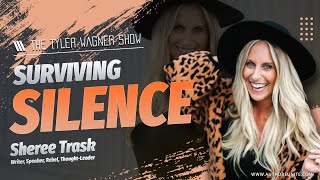
Cherie Trask, author and book coach, survived rape at 19 and three and a half years of silence before speaking out. Her memoir Surviving Silence uses questions survivors ask themselves and includes journal prompts to help others heal from sexual assault.
Chapters
All right everyone, welcome back to another episode. Today I have Cherie Trask with us. She is an author, book writing coach, and ghostwriter supporting changemakers with writing their stories with courage to make a bigger impact and become a leader in their field. So welcome to the show.
Thank you.
Of course, grateful to have you here. Uh, for people that don't know, I think— well yeah, how would they know? I I think you're awesome. I think you're one of the best ghostwriters out there. So for anybody that is listening, if you are looking to have somebody help you write a book, Cherie is incredible at it. But for this podcast, we're probably gonna be more talking about her latest book. Before we get there, how I like to start these interviews, Cherie, is when you were younger, did you foresee yourself where you are now and like doing ghostwriting and stuff or being in like a creative writing career? Or did you have a completely different vision for your future when you were younger?
I love that question. And funny enough, no, this is not the path at all that I thought I would be down. I really think it's one of those things that you kind of go through life, things happen and it chooses you. And that's exactly what happened to me for this.
Yeah, that's so— that's kind of how it was for me. So wait, when you say chooses you, how did you get into like ghostwriting and stuff in the writing career?
Yeah, so, you know, we can go into all of this, whatever you want to get into at some point. But my book is a memoir, and it talks about my experience being raped when I was 19. And when that happened, it was that moment that was so pivotal for me that I knew I was supposed to be doing something to help other people use their voices to say the thing that they were afraid to say, to break the stigma of things people didn't want to talk about. And I didn't know how that was going to happen at the time. I was in college. For visual communications for TV and film, which I graduated with a degree in. But I just knew in my entire body there was something more to it when it came to storytelling. And it just kind of— things unraveled and snowballed as they do. And, um, yeah, somebody had met me. I had a background also in, uh, holistic health and nutrition. I had gone back to school for that. And somebody found me at the gym and they were like, hey, I know that you have a background in autoimmune disease. Do you want to ghostwrite a book for me on autoimmune disease? And I was at the time writing for a health fitness magazine and being an entrepreneur, I was like, oh yeah, totally, I'll totally write your book. Had no idea what I was doing at all. So I handed him the book 4 days later and he was like, how the hell did you write a book in 4 days? And I was like, I'm gonna be honest with you, it might be total shit, but you should read it. And if you like it, we can have a conversation. And he loved it. And that started everything when it came to me writing books with and for really incredible humans.
So, um, and I know it's in your book, and, and, you know, if, if there's any, uh, part of it that you don't want to go into, you know, obviously let us know. Um, but it seems like, especially what you just said, like, that the rape was a very foundational or pivotal, uh, thing in your life. Like, maybe, like, obviously terrible, uh, but in some sense it kind of springboard you into like taking shit very seriously and like, yo, I have to help others that have been through this. So question, I guess, and obviously not asking for like the details, but like what actually like, like what actually like happened? Were you like, was it just like, were you like outside at a bar? Like, or like how did this happen?
Yeah. So I had for months and months and months, I was working at a salon through college and for months this guy kept coming in and asking me out and I kept saying no, like You know how you, you just know intuitively I'm not supposed to do the thing. And me being a rebel as I was, there was a part of me that was like, curious, maybe if I say yes, he'll stop asking me and then this can just be over. So finally, I said yes. And he had asked me to go to a movie. And he's like, just meet at my house, which I would never do. I don't know why I said yes to that. He said, just meet me at my house and we can drive together. So I get to his house. And I knock on the door. And he says, why don't you come in, grab a jacket, because I hadn't brought one and it was, you know, not, not normal for San Diego weather, but it was raining that night. And I walked into his house and I heard him calling in the back of the house for me. And I was like, oh no, no, no, just grab me a jacket, whatever you want. It doesn't matter. Let's just go. And he's like, no, no, no, come back here. I want you to pick one out. And I was like, I don't understand why this is such a big fucking deal. And I was getting annoyed. So I walked back there and he grabbed me, threw me on the bed, did the thing. And, um, this, when he was done, he stood up and he kind of gave me the smirk. He's like, I told you you'd like. And he walked out. And it was in that moment that I was like, what the fuck just happened? And, you know, my shirt was ripped down the middle. My pants were around my ankles. I fell to the floor and I crawled into the bathroom and I was just sobbing, looking at myself in the mirror going, who is this 19-year-old girl? This is not the same person that walked in this door. And it happened so quickly that, like, I fought. But also there was a piece of me that blacked out. And so I remember certain aspects of it, like I remember his aftershave. I remember the scrap of his face. I remember certain things. But when I looked in the mirror, I didn't recognize myself. I was so confused as to what had happened. How did this happen? So I got up and I just walked out of the house. I didn't say anything to him. I got in my car and I was praying, like, please help me forgive him. Please help me forgive him. What am I supposed to do with this? There has to be a reason because I was raised that way. I was raised that things happen for a reason. And, you know, with a single mom and a grandmother who was very much into like Buddhist beliefs and everything, it's, you know, be good to people, essentially. So, um, yeah, I, I didn't leave my, my parking spot until I had forgiven him. And the real work began at that point because it was then me forgiving myself because I stayed silent for 3 and a half years. And it was only Gosh, my timeline's a little bit off for this probably right now because it's been 22 years, but it was like 3 weeks later. I got really sick while I was at work. Long story short, I went to the ER and found out I was pregnant. So that rape resulted in ectopic pregnancy, meaning it was in my fallopian tubes. I had to go through 4 months of chemo injections to be able to allow it to pass safely. And all of this was done while I stayed silent. I didn't say anything for 3 and a half years.
Wow. Okay, so is that guy in prison?
I never, I never said anything.
Oh, you never said anything? Anything? Oh, okay. I, I didn't realize. So, but how, or what was, uh, and then obviously I want to move on to like you, but I'm just like, what, so when you did say something though, did he get in any trouble or you decided not to like take it legal?
No, so there's, there's the statute of limitation, of course, and then there's also the aspect of like I didn't have any way to prove it, right? Like there was literally no proof at that point. The first The first person I told was actually on a date, and I didn't even mean to say it. I don't know what happened. I think it was the universe just saying, like, you can't hold this any longer. And it was 3 and a half years later. We were having a glass of wine, and I don't remember at all the context of the conversation. I just remember it falling out of my mouth, and I was like, holy shit, I can't take that back. And that's what kind of started the trajectory of me speaking out loud about it. I started speaking in women's groups. I started telling everybody not just about my experience, but like spreading awareness to help break the stigma of talking about sexual assault and trauma in general, because it's something that I believe needs to be, needs to be talked about. And it doesn't mean it needs to be talked about in a way that, you know, we, we go on podcasts or we go on social media or whatever. But in order for us to heal, we need to allow ourselves to express the fullness that is us, our full, full, full truth, and be able to release that so that we can make room for more of the good that wants to show up. And so often as survivors, we hold ourselves ourselves hostage within our stories instead of just saying, you know what, this shit happened and it sucked. And guess what? I'm still fucking here. And not enough times do we give ourselves credit for the resilience that it took to be able to get on the other side. Even if we're not quote unquote healed, I think healing is continuous. I don't think it ever stops. It's really just a matter of how deep do you want to go to get to the place that you want to be, to feel safe and good in your body and live the life that you want to live.
So that was actually going to be my next question there. And I know it's, you know, it's like in the subtitle of your book, but I was just curious on more detail of like, do you feel that like, because, and maybe it's kind of with any issue, a lot of people like bottle it up and then it just like kind of stays in them. And actually, I think it's actually been proven that you can actually like get like, like physical, like real diseases by like bottling up emotion because it like, it has to get out somehow. So sometimes it like Sometimes it's like a stomach ulcer or it's like a cancer. Like it's all these different things. So regardless though, you think that that was the core way that you were able to get through this is just by— and it doesn't have to be podcast, but I mean, just speaking out loud in general about it, like that's the core way you were able to, you know, at least help yourself to get through it.
It was definitely a big piece of it. And, you know, to what you said about it manifesting in physical symptoms, that's what happened to me. I spent the next 9 years, so 9 years of my 20s while everyone was out having a good time and doing the thing and whatever, I was still going to school. I graduated on the Dean's List. I was doing all of the things, but I was so sick. I was hospitalized for most of my 20s with everything that you can imagine. Doctors were so confused why any of that was happening to a healthy person, a healthy young person. And still to this day, I notice when I'm going through stressful situations that if I don't allow myself to express however I need to express to feel, I guess, clear within my body, ultimately for me, it manifests physically every single time. So that's a huge, huge portion of it. So I noticed that by speaking about it, I was like, oh my gosh, okay, I, I don't have to feel like I'm bad or wrong or broken or damaged. Like, Statistically, I'm, I'm like 1 of 3, right? Like 1 of 6, 1 of 3, depends what statistics you're reading. But like, this happens all the time and people don't talk about it or they blow it off and they're like, oh, well, I shouldn't have worn that. Oh, I was drunk. Oh, none of those things were true for me. I was wearing jeans and a long sleeve shirt and I had no alcohol. But that happens a lot too. And that doesn't make it your fault because it happened. Like, no means no means no. And we have to— whether you're a male or a female, because You know, it happens to both, even though, again, people don't want to talk about it. We have to come to a place where we can normalize the conversation in a way that allows us the space to really truly be ourselves in our whole self. And we don't do that.
Yeah, I think especially when it comes to this topic, It's very, very difficult, you know. And obviously, I think it's for somebody like yourself that's been through it, that's like even, you know, another level of difficulty. But I think even just like people that even haven't experienced it, it's just, it's such like, um, like subjects, like it's such a touchy subject that people are like afraid to talk about it. But that's kind of the problem, is that, yeah, the only way to solve it in quotes is to talk more about it openly and not be afraid to talk about it because it is an issue and it does happen to both sexes. Uh, probably obviously I think it happens more to girls, but it does happen to guys too. Um, and yeah, you can't just like— what are you gonna do, like not ever talk about this ever? Like, that's not gonna help anything. So I think, um, I'm curious what type of, uh, through all of your time like talking about it with the women's groups and, you know, speaking about in podcasts and, you know, obviously now the book is somewhat like centered around that. Like in the past of your talks, like what's been the reaction thus far? Has there been like a pattern or is it just very like random in different settings? Are people receiving it well, I guess is the question.
Yes. So it's crazy and not crazy. Every time that I've spoken, whether it be a group of 10 people or 150 people on a stage or whatever it is, right? Like Every single time, without fail, people come up to me afterwards and they're either crying, telling me, oh my gosh, I resonated so much with this. Or there's people that are like, this happened to my best friend, or this happened to my daughter. I don't know how to talk to them about it, which that's part of my book. I address not just the survivor, but the loved ones too. Like, how do you talk to us? How do you talk to a survivor? How do you open the dialogue? How do you be supportive without being like overwhelming and overbearing for the survivor, especially if they haven't talked about it yet. So yeah, I mean, I was in London in, uh, I guess 2018, and I was a headline speaker at a women's event. 150 women were there. And afterwards, no joke, I had a line of people coming up to me wanting to talk about their own experience with sexual assault. There were more than one people that said, I've never shared this with anybody and you're the first person I'm telling. So yeah, it helps to speak, right? Like, because it normalizes it, and it creates relatability. Because even though we know logically that it happens all the time, to be able to be witnessed by somebody who has had that experience is a completely different level of transparency and connectedness.
Yeah, I love that you said it's interesting. Because I know, you know, we both share San Diego. I don't live there anymore, but I used to. And I remember when I was younger, I was like 20 years old and I was in San Diego and I was just starting my career and I was super nervous just talking to all these people because all these people are super successful. And again, I was just young, just starting things. And I remember I was in this conversation with this guy, I think his name was Raj. He like, I think he like owns like DMV.com or something, like just super successful guy who lives in San Diego. And we had this, we had a conversation in quotes. And what I mean by that is it was basically him talking and me just listening. And it was for like hours, and I probably said like 5 words in the entire thing. And at the end, what he said, he's like, dude, he's like, you know, I know you're kind of nervous and you're just like meeting people, but just know that you were just as much a part of that conversation as I was because you were holding space for me to talk. So I think the reason I bring that up is by you speaking out loud about this, it is also putting you in a position that people feel comfortable talking to you about it, and you get to hold space for them, which is super important. Like, conversation isn't just about the words, it's also about the receiver being silent in a sense, and actually allowing the other individual to be seen, which is basically what you're saying. And I think a lot— I think that's such an important thing that a lot of people probably in their whole lifetime never really realized, because they just think conversating is just talking back and forth. But no, the receiver is just as important as the talker.
Yeah, absolutely.
Now with, with your book, what, what are— tell us a little bit more about like some of the highlights like in your memoir. So obviously that's like a foundational point. But what are some of the other highlights, I guess, or stories that I think people— stories are kind of the key to everything. So are there a couple stories you want to share from there?
Well, I mean, one thing that I will say that I think is important to highlight is that the difference between this book and most of the other books I've read, not to say that it's not out there, I just haven't seen it, is every chapter is— it revolves around a question that we ask ourselves as survivors. So like chapter 1 is titled "Why Me?" Chapter 2, "What Was Harming Them?" And it goes on and on and on and on until we get to the end. And the last chapter is titled "What Was It For?" These are all questions that through our healing journey, we ask ourselves. And so often the— it feels like, feels uncomfortable. It feels confusing. All of the emotions come up and we often kind of push those questions aside and just think, I'll just move on and get over it. But the thing is, when it comes to rape in particular, which I can speak directly to, we don't get over rape. You learn to move forward with it. And until you've allowed yourself to embrace that piece of you, it is really difficult to show up fully aligned and true in your day-to-day life. So some of the things I talk about within the book, you know, I, I have journal prompts at the end, which people can go and do on their own. Um, but asking a lot of questions to get the reader thinking about their own experience. And, and it doesn't have to be rape. This could be trauma. Of any kind to start thinking about their experience and what exactly it is that they're still attached to. Because at any point we have the option to rewrite our stories. However, it can be really challenging to do that if we don't know where to start. So my hope is that this book will be kind of a guidepost for people to say, okay, I'm scared as hell to do this work. I might not feel ready to do this work, but I'm willing to give it a try. And they'll pick this up and feel safe in what it's sharing because I, I really didn't want to go, like, I don't say any statistics in the book. I don't go into any of that because my goal is to give hope to the reader to know that healing is possible for all of us, period, end of story. Um, so yeah, there's, there's just a lot of things in here that again, get the reader thinking, also helpful for the loved ones, which I think is really important, especially now 20 It's 22 years behind me when my book comes out October 15th, and that will be my 22nd anniversary of the assault. And it took me a really long time to allow myself to ask myself these hard questions. And I wish I would have known it sooner. And I wish I would have known how to talk, how to kind of guide other people, how to talk to me about it earlier so I could have gotten on the other side of it sooner. So Yeah, I just hope that this does that. And, you know, it's— I share multiple experiences that I've had with trauma. And, and really, trauma has been part of my life my entire life, starting while I was in my mom's womb. I had an abusive father that I never met. So story goes all the way back to all of these different things that you think, oh, this is just my life. But when you put it into perspective, and the person that you show up today as, there's a reason that you are the way you are— good, bad, indifferent, doesn't matter, right? So it's getting to the root of of who you are and understanding that there's always room for us to be better. And again, like, this book addresses the ways in which we can go down the path, which can look different for everybody. But this is the path that I chose to take, and I know that it works because it's worked for me. It's worked for clients that I've had in the past. But yeah, I hope that answers your question. It just— there's a lot here.
Yeah, I think what I'd be curious to see is what I would hope that this book does is that I could see this being something like with social media that people read it, they have trauma, and then after reading it, they go through the exercises and then maybe they start to share it on social media and it kind of becomes like a movement. I could totally see that happening.
That would be incredible. I mean, one of the other things that I talk about in here, which is again, like something to break the stigma of talking I'm talking about, right? Is I talk about sex, I talk about self-pleasure, I talk about how to have sex after you've been assaulted. And like, again, people don't talk about these things because it's uncomfortable and it's, it's, it's important, yet we don't do it. So again, like, this is just one of those things that exactly what you said. I hope that people share it. I hope that it resonates. I hope that it helps even just one person. It, like, my heart would be so happy.
Yeah, and let's actually— I mean, anything goes on this podcast, so I'm curious. Let's talk about that topic a little bit. Yeah, because like, I think, um, well, for you, I mean, what was it? Did it change like sexuality for you for a while, or is it still even different because of that? And if so, in like what ways?
Yeah, so for me, no. Um, however, a lot of the survivors that I've talked to, they either— they go one of two ways. They either become incredibly promiscuous and kind of black out and give their body away to whomever will take it just to feel some sort of connection. Other people say, I can't imagine having sex ever again. And they wait a really long time. I don't recall the first time that I was intimate after that happened. I, I couldn't tell you that, but I will say that I turned inward first as a way to reconnect to myself and understand my body and what I needed, because there, there were certain things that happened in the experience that I didn't realize I'd stored in my body as, you know, held memories and traumas. And so it wasn't until I was intimate with somebody else, and they had done something that my assailant had done, that I like went into freakout mode, like, oh my god, you can't do that. You can't do that. You can't do that. And so I had to learn for me through experience, what that would look like. So In the book, I give a series of questions to consider regarding intimacy, which again, like, doesn't always mean sex, but to be intimate with a partner, you— most people, I, I don't want to say everybody, but most people want to feel a sense of safety and connection before, you know, taking off their clothes and having like this incredibly vulnerable intimate experience. And so with that said, like, how do you do that when you've had that stripped from you, quite literally taken from you, and then be able to say like, I am safe in my body. So I went a few years ago, I did a whole somatic trauma therapy training and talking about like how to reconnect to the body. And the thing is, is like once you— once you allow yourself to have the awareness to tap into the places within you that are feeling stuck or feeling uneasy or whatever that feeling is, and are able to connect to those places in the body, you can then say, okay, when this happens, this is where I'm feeling it. Where is that feeling coming from? And start to get curious. A lot of people judge those things and again, push it aside and they're like, ooh, I just don't wanna talk about that. I don't wanna feel it. So I'm just not gonna do it again. Instead, what if we decided like, okay, I didn't really like that. Is it that I don't like it or is it bringing up a memory? Is it making me feel a certain way? So I talk about that and, you know, I go into questions, I go into some things that, people can start to ask themselves, talking about self-pleasure and allowing yourself the space to be like, okay, I'm going to take some time to myself and I'm going to, I'm going to touch my body. I'm going to have sensations. I'm going to allow myself to enjoy pleasure because that's one thing that I see a lot too, is it's not even just sex. You start noticing that a lot of people that have been assaulted don't allow themselves to have pleasure in anything. So it can turn into an eating disorder. You can no longer enjoy that piece of cake because, you know, it makes you feel bad. It has nothing to do with weight. It has to do with pleasure. So when we really dissect the meaning behind why we do the things we do as an, as a survivor specifically, it's very curious the things that come up that you think are not related.
Yeah, that's, um, really interesting. And I could see how it would be very difficult after something like that to kind of get back into your— and I know, you know, for you it was— it wasn't so much, but I just mean, I could see— and I've actually heard that with, uh, the one side where you said they get more promiscuous. That was actually— I didn't quite get it, but now after hearing you say that, that does make sense. But it's not because they're necessarily wanting to, it's because they are just seeking for that connection so much, and they are kind of probably doing it in an incorrect way. Yeah, but it's almost like anything to feel again, because I've also heard that it's like a numbness.
Yes.
Yeah. And even like you said, like kind of blackout, because— which I think is typical with trauma, because it's like, it's like the body's way of like helping you to not have to re— like PTSD or something, to not have to keep reliving that. Um, there's just a lot of different things there. Um, for you, what was it like— like, uh, I'm curious on this, like, with you writing the book, um, because it is traumatic, like, what was it like, like, this journey of writing this book? Were there some days where you had, like, breakdowns and stuff, or, like, what was it like?
Yeah, because, because I was going not only into the rape, which I talked about so much that I, I think honestly I became a little desensitized to it, I was trying to allow myself to open up to the place of really being in the position again, in a way that still felt safe. Plus, I was going back to experiences that I'd had in the past that were so deeply uncomfortable that I was like, oh, I've already healed all of that. I've gone to therapy, I've done all these things. And I realized that there were still pieces that I was very much holding on to unconsciously, that I needed to be able to tap into. And I still am. I mean, in full transparency, I'm still tapping into those places. So yeah, there were days that were really hard. There were other days that I would just sit with my fingers on the keyboard crying and find myself laughing at some points and at some points being like, holy fuck, this is my life. These are things that I experience. How am I here right now? So yeah, I mean, everyone's experience is going to be so different. And with my authors all the time, I actually laugh. I call it the chapter 3 freakout. It's usually by chapter 3, I get a call from them and they'll say, I cannot do this. I'm not the person to write this book. Nobody's going to read this. Why am I even doing this? It doesn't matter.
Matter.
And every time I'm like, okay, let's, let's talk you through this. So it happens with everybody I've ever worked with, hands down, 100% of the time. So I think for me, like, I've been doing this work for 11 years now. And I think when I, you know, started writing my book, I was like, oh, chapter 3 freakout, so I could laugh about it, right? And I coached myself through just like I would coach a client through. And I made it happen. And at the end of it, I was like, oh my God, I did Oh my God, I did it. What if I said the wrong thing? Asking myself all the questions. But afterwards, I just, I had to take a deep breath and go, you know what? I didn't do this for myself, even though it did help me in many ways on the next layer of healing. I did this because I know that this will help somebody, and that is why I do what I do every single day in the profession that I'm in. And to me, that's enough.
Yeah, no, it's interesting. I was talking to somebody earlier today, you know, very different, um, topics, but, uh, just helping him with like growing his business. And it's just kind of, uh, somebody who I just do like free consulting calls and I just really enjoy talking to the guy. And today he just like really said, he's like, dude, like, I know like how valuable your time is. And like, and he just like really said it in like one of the most nicest ways that he just appreciated how much I've I've like provided him with just consulting him and helping him grow his business. And regardless, my point of saying that is I think you get to a point with certain things where you like— money is great, but it's like more seeking like that feeling. Because even though I am giving to him, I am also receiving because of the thing that he said. So with you, even though like you're giving so much and you're being so vulnerable with this, you are receiving too because you're seeing the impact that it's having on others. And that itself is, is receiving in a sense. So it's kind of cool. Everything comes full circle.
Totally.
Now, just to touch a little bit on the ghostwriting side of things. So when you— so this book's coming out. And so this interview will be a few days after the book releases. But right now during the recording, it's October 12. So it's like 3 days prior. What, what are your plans with continuing with this book? So I know you're having like a big book launch and stuff like that, but what's your plans to keep the momentum going? Do you have any like marketing plans that you're doing?
You know, for me, it's, it's interesting because I don't do things the way anybody else does them. I realize, like most people have like the system and structure, and I do to a degree, right? But I'm also— I don't know if you're familiar with Human Design, but I'm a projector. And for a long time I was like, I don't want to be a projector. I want to be a manifesting generator. I want to be able to like turn the wheels and hustle and do all these things. But it, it totally like kills me. I can't. It hurts every part of my soul. So I learned a long time ago that I just need to feel into what actually feels true for me. And for me, that means doing what I'm already doing, being present on social media, you know, saying yes to the things that are important to me. I just finished up with a coach for TEDx, so I'm getting ready to apply to stages for TEDx. Hopefully that will happen in 2023, fingers crossed. And keep spreading the message. You know, I am really selective on the people that I work with when it comes to my private one-on-one clients and my ghostwriting clients. And I'm very clear that I only want to be kind of the, the guide for people that are sharing courageous stories. Not to say that all stories aren't important in some capacity. I believe they are. But for me, I know that my work is in the courageous storytelling and telling the things that people don't want to talk about and breaking stigmas. And so my hope is that I will get to continue to work with these kinds of people in a bigger capacity. And I, you know, I would love to see my business grow. I would love to have a team. I've, I've been essentially a one-person show for my entire career until this year. I have a couple people, but I, I would just really love to see it grow and be able to spread the message of hope and healing and, and all that stuff.
Yeah, no, I'm sure it will. And, you know, if I can ever— and I'm sure I will— I'll be able to help and support you in that. Um, what, uh, what I want to do now is I kind of want to leave the floor to you. Is there anything that, like, from the book or from what you do that we didn't cover that you want to cover? Please do. And then also like, where can people get in touch if they do want to write a book with you, or they want to get this new book that you have, social medias, websites, all that stuff?
Yeah, totally. So, you know, I just want to reiterate that healing is possible for anybody, no matter where you're at. Even if right now you feel like you're at the rock bottom, and there is absolutely no hope for you, I promise you there is. There are plenty of people that I've spoken to that they don't have a support system, and it breaks breaks my heart. But I will say that if you, if you can be brave enough, and I know you can be, if you can be brave enough to get out there and just keep looking, you will find your people. And there are people that want to see you win no matter what you've been through. So find those people, let go of the rest, make room for the people that really want to help you succeed and grow and, and live life to the fullest, because there really is so much opportunity and so much possibility to be had in this world, and it's really up to us to make that happen. So regardless of what you've been through, know that you too can heal, and there's no right way to do it. It's gonna be your way, whatever works for you. Let it take as long as it needs to take. As I said, I'm 22 years in and I'm still finding layers that I'm like, man, I thought I already already dealt with that. So give yourself some grace, give yourself compassion, act as though, you know, you are your best friend. And so act as though you are talking to your best friend. If they came to you and said, you know, this happened, and I'm feeling this way, what would you say to them? And allow yourself the space to feel. And I know feeling can be really scary. I hear that all the time, like, oh, I don't even want to open that can of worms because I don't know what's going to come up. Give yourself the space to allow whatever comes up come up without guilt or shame or blame or any of the things, because you're not broken, you're not damaged, you're not wrong, you're not bad. You are a human having a human experience, and your journey for some reason included something terrible that you didn't want to face at the time or you don't want to face right now, and that's okay. So if, if anything, just please, please, please continue to have hope. There is healing available. And then as far as how to reach me, my website is just my first and last name dot com. So Cherie trask.com. And I am on social media on Instagram and Facebook, both at Cherie Trask. And that's probably actually the best way to get a, get a hold of me.
That's perfect. Thank you for two things. One, for just coming on the show. But secondly, for really, I think the best word is either courage, bravery, both. Just like I do think, even though maybe it's easy for you now to do, it definitely wasn't always. You know, you spent years in silence. And like, don't forget that, you know, it was difficult at once, and for a lot of others it is difficult. So I think you're doing something super important right now. So either way, I appreciate— and you know, just as a friend, I think you're awesome. So, oh, thank you, likewise, for everything. And, um, yeah, we'll have you on again soon, and good luck with the book launch. I'm excited to see it.
Thanks so much.
More from Tyler


Catherine Nikkel : THE STORY EVERYONE HAS BUT HASN'T TOLD : The Tyler Wagner Show #1120



Scott Ritzheimer: Bring Predictable Success to your Organization | The Tyler Wagner Show #1115


Fred Moskowitz: A GUIDE TO GETTING STARTED WITH IN MORTGAGE NOTES | The Tyler Wagner Show #1113

Mark Podolsky: From Land Investor to Full Time Success How I Made $90,000 Cash in Real Estate


Mark Podolsky: How to achieve a 300% return on investment my foolproof strategy

Mark Podolsky: How to make passive income selling raw land the irresistible pricing strategy