Stan Slap: CEO of Slap Company | The Authors Unite Show #938
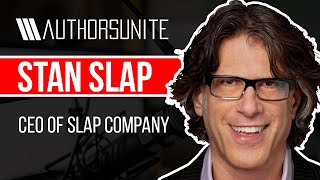
In this episode of The Authors Unite Show, host Tyler Wagner interviews Stan Slap, a New York Times bestselling author and CEO of Slap Company, a global consulting firm that focuses on the cultural dynamics of businesses. Slap explains how the company evolved from a general‑purpose consulting outfit to a specialist in "culture analytics," defining three critical cultures—manager, employee, and customer—that act as powerful, self‑protective assets within any organization. He describes Slap Company’s proprietary cultural‑analytic tool, which predicts whether a company’s strategic goals will be embraced, and illustrates its impact with a confidential case involving an $18 billion Asian firm facing competitive pressure from Amazon and Walmart. The conversation moves to the firm’s mission to "make the business case for humanity," its process for reviving a company’s original purpose through the "Back to the Garage" exercise, and the broader belief that treating people as humans first yields sustainable business results. Slap also shares his personal experience as an author: securing a three‑book Penguin deal, the importance of daily writing, building a multidisciplinary research team, crafting unconventional book proposals, and handling promotion and marketing. Throughout, he emphasizes empathy, safety, and meaning as the core of effective culture and leadership.
Chapters
Alright everyone, welcome back to another episode of the Authors Unite show. Today I have Stan Slap with us. He is a New York Times bestselling author and the CEO of the international consulting company called By a Remarkable Coincidence Slap. He is a renowned thought leader on business culture. So welcome to the show, man.
Thanks. Happy to be here.
Grateful to have you on. So yeah, first thing when you hopped on, we should just point this out. And for the people on audio only, you can't see this obviously, but Stan has an incredible book selection. So for the video, it's— how many books do you think that is?
Oh, there's— this is— I'm Calling in from our home library. There's over 5,000 books in here.
That's what I'm talking about.
Ridiculous. Only written 2 of them. So yeah.
No, that's awesome. And you said you think like you've read a majority of them? Or?
Yeah, I don't know.
Half, 3/4.
Yeah. Cool. So let's start kind of from the beginning here. So before you got into, I'll just call it, and you remember from our phone conversation a few weeks ago, maybe, is this cold culture stuff that you do. That's how it works.
Yeah.
So before all that, like, what were you, what were you doing before you started consulting companies in culture?
I was running.
Running?
Running them.
Yes.
Oh, running. Okay. Gotcha. Gotcha.
And I was just running.
Just running. I was like, dude, that's—
Yeah, I was just running for years. I don't know.
I run every morning, but I do other things too. This is gonna be a good one. Okay. So you're— and what, you noticed some like inconsistencies in the ones that you were— or you learned a lot from them?
Yeah, yeah, that too.
And we didn't start as a culture consulting company. We started just as a bunch of consulting sluts, you know, we would do anything anybody wanted, anytime, for any amount of money. People would say, So is this what you do? Yes, that's exactly what we do.
Really?
We have to wear that outfit? We'll wear the outfit. Okay, but it evolved from there. I wanted us to be a great company and want to make sure whatever we sold wasn't sold by anybody else. And so we focused on culture. That's where the humans gather in business, and we want to make the business case for humanity. So there was a lot of intention, but Not when we started. I just wanted to do my own thing and build a company.
I think that's how it starts with most people. I never heard a term that way, but I like that term consulting slot.
It's hard to unlearn once you—
Yeah, yeah, now that I know that.
You're welcome for that image.
But it's true, 'cause in the beginning it's kind of like you're starting your own thing and like you will almost accept any offer to work with because you're just, you know, you're starting with nothing basically anyway.
Right.
I mean, it's all good experience if you pay attention to it.
Yeah.
Tells you what you want to do and what you don't want to do.
Absolutely. So, so then from there you started the Slap Company. And so tell— you define it because it'll be better than I can define it. Like, what does Slap Company do in a simplistic way?
I guess in a simplistic way, we maximize the the commitment of the 3 groups that decide the success of your company, which is your manager culture, your employee culture, and your customer culture. We're not talking about a bunch of managers, employees, and customers. We're talking about when those groups form relationships with your company and become cultures and gain massive amounts of power and also are remarkably resistant to standard methods of corporate influence. So that's what we know. We know how these cultures really work and how to get them to really work for you. But I got to say, man, I just got to say that, again, the reason that we do this, and we work in 44 countries, we've had billions of dollars of measurable impact for our clients. But the reason that we do this is when we can reposition these 3 cultures back to a company as newly precious workable assets, we cause a company to protect them, same as a company will protect any asset, especially if they can squeeze it in some new way. And you can't protect these 3 assets without protecting the humanity that they represent and without discovering or rediscovering your own where it's been lost in the labyrinth of your job description. So we're in business to make the business case for humanity. We've already, I mean, we've already lost humanity in politics, some would argue religion's leaking a little bit. There's one other large construct beyond family and community of humanity, and that's business. If we lose humanity in business too, we're doomed. If we save it company by company, then we've saved ourselves. So that's what we're fighting for.
Gotcha. Okay. Now, I guess, first best way to fully understand like the process of how you would help a company do this And maybe you can't point to one in particular. I know you worked with some huge companies, you know, that you put on your website here. Like, can you speak on one to start of like a story of like, you know, you went into the company, it's, you know, obviously any of these ones on the website I'm sure were profitable, you know, but then the culture though, that for Humanity, that's where you guys stepped in to really help that grow.
Yeah.
Yeah, I mean, I can talk all day about examples, but we're NDA'd on a lot of this stuff, so I can't mention company names as much as I'd like.
But so very quickly, to answer your question, we do 3 things. That's your assurance we do them well, 'cause we only do 3 things. We solve the one problem within each of these cultures that has the biggest imprint. Impact on any company, but that even the biggest, smartest companies are chronically unable to resolve. And I mean, they're just kind of numb to the cost of not resolving them already. And so in a manager culture, the biggest issue to any company is the emotional detachment of its managers. I mean, the company can get financial, intellectual, and physical commitment and jam that together, and it looks like emotional commitment, but true emotional commitment would translate into companies taking on, managers taking on company success like a personal crusade. And we know how to secure that. In an employee culture, the biggest issue in any company is, if it's not betting its life, it's betting its success on the ability to constantly roll out new strategies, whether they're internal transformation and readiness or go-to-market strategies. And a successful strategy isn't planned well, it's implemented well. And that requires securing the ferocious support of your employee culture. If your culture wants it to happen, it'll happen. If your culture doesn't want it to happen, good luck with that. So how do you do that? How do you penetrate, penetrate that protective, self-protective, closed society that's got a, that's a culture and really trigger that evangelism? And then the, the, in a customer culture, the biggest issue to any company is how do we transfer sustainability of our company to our customers? I mean, how do we get our customers to advertise and sell for us? How do we get our customers to protect us if we stumble or get attacked? And a company that can do that is a brand. That's the true definition of a brand. Brand's not a verb, it's a tribute. It's got to be given to you. And so we're able to do that as well. So that's all we do. And yeah, do you still want a couple of examples? I'll give you a couple of examples.
Um, yeah, yeah, if you want. Well, yeah, I mean, the last one that you said too, I mean, because that's really powerful. I mean, they're all powerful, but The one where you get your customers to basically advertise for you, do you have, I guess it's custom per company, but do you have like a process for that?
[Speaker] Oh yeah, no, everything is polished and proven. That's the advantage of only doing a few things. [Speaker] Yeah, I love it. [Speaker] You pour all that creativity and all that learning into polishing and proving and polishing and proving. So yeah, yeah, there's a very clear process. And you can't sell it outside if you can't sell it inside. So even if it's a strategy to get you brand status and transfer that sustainability, we run twin tracks and we still get the internal culture to do that. So very quickly, where we start with an internal culture, always, if at least if we have a choice to do that, always is you got to get a culture to talk to you, Anne, because what you want your culture to do and how you want it to do it and why you want it done, none of that will ever be as important as why not. Given the corporate logic and urgency of any strategic or performance goal, why would your culture not give its full commitment?
And if your culture is not giving its full commitment, it believes it's not safe and sane to do it, and a culture exists to protect itself, and it believes it's— it's got empirical data to prove that to itself. So to just continue to hammer on the what, how, and why isn't going to get you anywhere. So how do you penetrate this closed society? Again, that's a culture, because a culture is not going to reveal its true perceptions and motivations that can make it vulnerable. How do you get the culture to really talk to you like it really talks to itself? How do you get it to reveal the source of its hesitation to fully commit? Where that happened, what it considers the iconic proof points since, so you can accurately recalibrate it. So we have the only true cultural analytic in the world. This is not, and this is our clients saying this, we've seen every solution in the world, it's not an HR engagement survey, it's not HR porn like that. It is a true cultural analytic that will, is like a bulletproof statistical prediction machine that will tell you flat out, are you going to make any of these goals or not? And then what do you do about it? So as a quick example of that, there's one company that shall remain nameless, which is about the largest in its field at $18 billion. And it operates— an Asian company— operates in 3-year plans. It prides itself on that discipline. Locks in on a plan. Could take a year to come up with a plan, but locks in on that plan. Will not let temptation or stress cause it to swerve from that plan. So probably in the 100-year-plus history of the company, this 3-year plan when we met them was the most critical because Amazon.com was coming after them. And some of their biggest clients, the big global, the Walmarts, were saying, you know, we could do what you do. We don't need to pay you as an intermediary. So if they couldn't reposition their value and relevance dramatically, they were going, under the wheel. I mean, you may be $18 billion a year in revenue, but if you're in a poker game with Amazon and Walmart, that might be a teeny little stack of chips. So they spend 9 months coming up with this plan, and right before they activate it for the first time in 100 years, because they found out about us, they decide to find out whether their culture is actually going to back the plan and make it happen. And we were able to prove again, with bulletproof statistical accuracy, from the executive team who came up with the plan all the way to the entry-level employees, emphatically, nope, not a chance. Even the executive team said, nah, we're not gonna do it.
What are you, nuts?
We're not doing this. We couldn't get out of our own way if we wanted to do it. So they would have launched off on this thing. Amazon and Walmart would have played rope-a-dope with them, and they would have stuck to the discipline. And never had a second chance to recover. So we were able to stop that and course correct.
So, um, first one, do you think— because it seems to me like you're— and I don't know if I'm using the right terminology, but mission, right? So can you say one more time, for humanity, like what's the mission statement for your company?
It's the— well, we don't have a mission statement.
Okay.
A little trite for us, but okay. The purpose everybody knows is to make the business case for humanity.
Gotcha.
And so, yeah, I mean, when you think about, I mean, we work, everybody works, or you're affected by people who work. If the decisions are made by not even immoral, amoral companies who believe that profit is justification for everything, growth is justification for everything, a lot of people are going to get hurt. And we're not saying that profit isn't important. We'll make the business case. We'll get you the measurable impact. We understand business has to serve a lot of stakeholders, and we respect that. But as we do it, we're going to show you that the groups that are going to decide that for you are groups of humans. They represent humanity. And if you treat them with that kind of respect, then they will protect the business. And, and, and so I suppose after working with us, if you, if as a company you don't really even care more about people than you used to, but you treat them like you do, I'd say we'd still consider that a win. So that's kind of, you know, but we are willing to get the bit. We're definitely all about, we're impact psychotics. We, there's 4 words that are precious to us. And then what happened? You met us, we agreed to do this work, and then what happened? And we have to be able to show that before and after So we work all over the world. We work in 12 countries in Africa. We've got just a stunning team out there. We work all over the world, and to an extent, these cultural issues within a company are the same the world over, even given the respect for the political and socioeconomic distinctions. So, yeah, that's what we do. Wherever we can do that, we're up for doing it.
So it seems to me like the purpose of the company, like, it's, it's very powerful. So everybody that works for Slap Company, like, there's like kind of this like driving compass. Do you think every— is that like an ever-evolving purpose? Like, do you think that purpose might change, or is that like forever?
Okay, it could change if suddenly there's no longer a need for that.
Yeah, yeah, true. Which is doubtful.
Yeah, not anytime soon. So no, that's, we consider that a sustainable purpose. And it's beautiful to watch. It's beautiful to watch when, you know, kind of our mantra is nobody should be diminished by business, working in it or buying from it. Because if that happens to you in business, it doesn't stay there. It jumps the fence and follows you home. These same people are, partners and parents and neighbors and voters. The toxic impact of a diminished, uncertain, insecure population is incalculable.
So wherever we can score the win, we're going to score the win.
Gotcha. And so for other companies, do you think like coming up with this purpose is one of the first things, or does it happen after you, I guess, kind of mess around a little bit and then you kind of figure it out after a couple years?
Yeah, I mean, we actually have a process for that. If you look at the companies that naturally become brands, they get like launched out into the world with that kind of rare brand credibility. Those companies are created by a deranged radical or a group of deranged radicals who have a hardcore point of view about what's right with the world that must be protected and wrong with the world that must be corrected, and they bring that to the business at genesis when the value prop is first being conceived. Because they bring it everywhere they go, they bring it to the supermarket, they're just people who have a hyper-awareness of these things. And so even in its earliest incarnation, the business is conceived of at least in part as a delivery vehicle to build a better world. I mean, even if you're just selling office furniture, not that there's anything wrong with that, you got people making it and selling it, you got people buying it, let's saddle up together and ride. And so in the early days, this passion incubates this little vulnerable company because it leverages key resources in, in, in 3 critical ways. If you're driven by this kind of passion, well, then the best and brightest find a way to work for you, even if you can't afford to pay them market rates. They want to be part of a right and righteous cause. And you solve problems competitors 100 times better resource can't solve because of your maniacal focus of why you're in business. And maybe the most important thing, at least one of them, is is that customers will trust you can do what you say you can do, even though you can't prove you can do it yet, 'cause they're so taken by your faith and resolve to do it or die trying, you're a safer bet than a larger complacent alternative. So that's what works to help incubate a company as it gets injected in the slipstream of bigger established companies. Then the company begins to grow, and that's where unnoticed all this begins to die because the fire-eyed passion team doesn't make an elegant transition usually to the new company. Now the company's all about growth and big is better and it doesn't want to look at its own history because that's funky and small. And now people are being attracted for notches on the resume and money plays. And now the company needs investment to keep pace with growth and investors make no connection between passion and profit. So the company stops being a brand and starts being a company on artificial life support. It has to bribe and broadcast to get people to pay attention to it. When we meet big companies for this work, that passion, if it ever existed at all, is a vaguely inherited intellectual concept. And so we have this process called "Back to the Garage," where we actually take an executive team back to those roots as if they were starting the company today. And from there, we can get that legitimate, you know, below the neck, below the belt, real passion. And we embed that into the work we do, so the executive team naturally protects that because they're protecting what's most important to them.
Gotcha.
Yeah.
So, question for— it could be any size company, but it seems to me that to have a good company culture, you need to create some sort of like comfortability with your employees. And when I say comfortability, what I mean is like them being comfortable to share their opinions openly within the organization. And I feel like that's the balance that a lot of, as companies get bigger, that they struggle with. Because, you know, as you get bigger, you kind of have to have more, I suppose, like structure and guidelines for things to work. But if it gets too rigid, then there's like no room for error. And if there's no error, then there's no growth. So how do you find that like kind of balance beam, if that makes sense?
Yeah, I, I, um, although to use that metaphor, if it were a trapeze act, there'd be a lot of casualties.
That's true.
Uh, so, uh, we do it again. I mean, we do it by opening this up. One of the things we do is if you ask a manager, what do you manage? Ask a manager in any kind of— so what do you manage? They'll tell you they manage a P&L or some revenue responsibility, or maybe a business process or function, or in a big company, maybe even a geography. If you just stare at them long enough where they go, "Oh my God, it's a trick question. What else?" Eventually they're going to say, "People?" "Yes, it's people. Yes, I was going to say people. That's right. I manage people." Well, Good for you, but you can be waiting a lot longer for them to tell you they manage a culture. And again, a culture is not a bunch of employees, it's the self-protective organism that's created when employees form a real dependent relationship with a company. And unless every manager in the enterprise, executive to entry level, knows how to take a handoff from the top and drive it through their own cultures, then any grand plan is DOA, or diluted beyond recognition. So one of the ways you you blow those pipes open and keep them open is you transfer this competency to every manager in, in the enterprise, which is— it's still the greatest missing competency amongst even the otherwise smartest management teams. What's the culture? How's the culture work? Why is the culture important? And, um, and how do you sell it if you wanted to buy something? And when you start to open that stuff up, there's all kinds of wonderful things you can do to really get a culture to feel safer in its contribution and its communication. Culture is not anti-management, it's not anti-business, not anti-strategy. It's most definitely anti-unsafe. And anything it considers unsafe, it's going to stay away from because it exists to protect itself. But there are ways of doing this to open this up, and that's a lot of the work we do to open those pipes and keep them open.
Gotcha. So I want to— and, uh, if you don't want to answer this or go down this path, we don't have to, but I just thought of it, so I'm curious.
No way. Absolutely no way.
We'll see where this goes. Um, so because you brought up politics earlier, so I'm just curious, like, and I can't remember exactly what you said, but with politics just in general, like, do you see a solution to create some more like of a culture between the people, or Is this just— it's gone, like it's just done?
I think whenever the first true purpose of your leadership is not to serve your true constituency, then your leadership is fundamentally corrupt, and that would have to change.
You know, you see it a little bit on the local level, perhaps, you know, I guess some might argue one way or the other on the national level, but We've been invited to participate in that many times. And we just, we just, you know, we'd rather, we'd rather make our case where we can make the case.
Yeah.
You know, so let's, let's make it where we can actually create some impact. I think it's, it's, it's such a self-serving, corrupted system. And I don't say that with glee. I want it to work. I want it to work in every country we do business in. And it would be better for all of us if it did, but it's become something different than what it should be in many cases, not all cases, but in many cases. And so we're trying to get ahead of that damage by focusing where we focus.
Gotcha. So let's talk about the— so you said 2 books. I thought, don't you have more than 2 books?
I have a 3-book deal with Penguin. And if they are listening to this, And I believe they have listening devices everywhere. If they are listening to this, the third book is somewhere between almost finished and not started yet. But I would have finished it if I didn't have to be on this podcast.
Blame me.
It was that close, Dan. And now I've just lost the zone, and it could be a year.
So, because a lot of our listeners, they are like aspiring authors and some are already authors really trying to grow their business with their book. So, first, can you speak on just the process of writing a book? Like, what that was like for you and how you—
Insane, man. It's just insane. Well, when I first got my book deal and the first thing I did was, I looked for every interview I could find with very productive authors or great authors going all the way back in history and to see if there was any through lines that would be, okay, here's a guide from people who really do this well. And the one thing that was a through line in every interview I read was you gotta write every day, no matter what you do, write every day. And Write at a time that works for you. It could be from 2 to 5 in the morning. It could be in the afternoon. Write where it works for you, you know, this just, and then write a while and stop. And your head will work out the math for what you got to solve the next day. Well, I'm running a company. We're a global company and I have a lot of great people in my company. They're all great. And I'm not the only one who travels, but I've been traveling 300,000 miles a year. And so, and I don't work well to write on planes. So I would write a few days and then I'd travel 3 weeks, I'd come back, it would take me 2 days to get in the zone, and then I'd write a day, then I'd take off. So I guess my first piece of advice is, if you possibly can, find the rhythm that works for you and write every day. And I think that to stay in the zone, assuming you're writing to persuade somebody, not just to inform them, if you're really going to write a persuasive book about whatever your topic is, you got to stay in the zone. You got to have your personality connected to your image of somebody listening to this. And so, yeah, that would be number one, stay in the zone. It's an insane process, man. It's just, it's just really, People ask me all the time, so how do I write a book? And then maybe you don't need to, just try therapy first. You know, it's like, really, there are a lot of people that are well adjusted and they don't need to do this.
Yeah, yeah.
Um, because there's, there's no correlation between hours input and pages output. It just doesn't work that way. Um, and so, and it's like, I know this is kind of trite, but it's like, how do you carve an elephant out of a block of marble? You start with a block of marble and chip away everything that doesn't look like an elephant. And that is a long-ass process, and it's a very lonely job. I had my first book, I had a 23-person research team on it. I've got plenty of support, project support and stuff in my own company that would gladly be willing to help me on this, and it's still lonely nights sweating the rhythm and that this paragraph and this sentence and this word and this vowel you know, if you care about what you're writing. So be prepared for that too. You gotta love that. You gotta, you gotta get this visceral thrill of a well-placed word that you go, yes, that everybody else would go, you seriously need medication. It's gotta, it's gotta work for you, huh? So it's too hard to do well if it doesn't work for you.
So, 23. What's that like to have a 23-person research team? I can't— like, is it all— were they all in like a Slack group? And then you could just be like—
No, no, there were— so, in my second book, we got a PhD in anthropology out of the Oxford Department of Anthropology. And In the first book, I had behaviorists, neurobiologists, Pulitzer-winning investigative journalists. And then I use a lot of song excerpts and stuff to highlight each new chapter. And we, you know, that's a whole process to get approvals for that. We had a team on that. It was just nuts. The second book wasn't, the research team wasn't quite as big as the first book. But yeah, I mean, you gotta have, if you can fund it, you have to have parallel tracks running in the right order. The first book, I did a bunch of research before I really got into the book and found that's not even what I wanted to research. So, but there's a time when you're gonna be heads into the book and you want stuff handed off to you. So if you can do it, great. If you can't, you just have to manage that yourself. Yeah.
And then if you— so two more things on the book stuff that if you can speak to them. One, so you got a three-book deal with Penguin. Like, was there a process to that? Or like, how did that come to be? Because a lot of people still do want traditional deals, even though, you know, self-publishing has definitely grown a lot, but Yeah, what are your thoughts?
Yeah, well, the first thing is you can't go directly to a publisher. You have to acquire an agent first, and then the agent will negotiate the commercial side of this. And so I have Margaret McBride as my agent, and don't send her a manuscript and expect an immediate return. I think she has that on her website. So when can I expect a response? I have never opened, if that works for you. They get a lot of, they get a lot of, but you know, it's get, take an unsolicited manuscript. But I, I, I, I, the one of the strangest things anybody's ever said about me, which I just love, but I don't understand what it means. I just love the images. Stan Slap is Stephen Covey meets Nine Inch Nails. Now I don't know what that means, but the book proposal that we sent to Margaret was in this huge custom box with 9-inch nails pounded into it. And it was this whole, and so it got her attention. Not that the, it's the substance that got her attention. And so she's one of the most successful agents around. And she took this book in for us. And she, you know, she's been responsible for a lot of the best business sellers. So when she said, so-and-so had his time, so-and-so had his time, so-and-so had his time. This is Stan Slap's time, I'm telling you. And then they manage that process and you come in on that credibility. So the first thing you have to do is find an agent. And I mean, you can look through books, pretty much every book author will thank their agent at some point in the book. So it's not that hard to, well, who is an agent? Go find books that you admire. And go look in the acknowledgement section and find the agent. And so I would say start there, and then they'll take it into the publisher, and then you go through these presentations with the publisher. And then we did an additional book proposal that weighed over 20 pounds. It was this whole deluxe thing. Just, I believe that, yeah, there is Over-exaggeration is an understatement. So I think that we were trying to make the case this was really something different. You got to show some writing, you got to show an organizing framework, and you have to attend to the commercial side too. You have to show how you're going to help sell this, what your conduits for selling are, what your promotional intention is and your abilities. Because ultimately, even though publishers are in business because they love writing. They love books. They love authors. They have stakeholders. They have shareholders in some of the big companies. They have numbers they have to hit, and they're not going to promote your book for you. In some cases they will. That's not totally true. In some cases they will, but the onus of public promotion is going to be on you, and they need to know that. What are you going to do? So an organizing framework, enough writing where they really see you know how to write, And then, a real understanding of how you're going to support the book are all critical.
Got it. So then, yeah, that leads into my next one. So like, you know, you did hit two of the most coveted lists, Wall Street and New York Times. So like, what was kind of the— I mean, I'm sure you guys had a marketing plan. Like, what was that like? Like, just massive amounts of interviews or what did you do?
Yeah, it's that stuff. I mean, there are companies that handle book PR. We found a lot of them are, you know, I wasn't that wild about a number of them. Some of them are very good. We did, so, you know, if you can find a great one, that's great. We did our own stuff. Yeah, of course. But I also, I had a company. And so we had our clients and all their managers and, So, we sold en masse to them and then, I also had a keynote speaking business as part of what I do. And so, we had those audiences. So—
Got it.
We ganged up on all that stuff. Yeah.
That makes sense.
Yeah.
Okay. So really, I mean, if there's anything I didn't ask, I kind of want to leave the floor to you like, anything else on the culture that you would like to share? And then, you know, website and where people like, I think you just had Under the Hood, your latest book, right?
Yeah, yeah, under the hood.
Yeah. So yeah, where people can, you know, stay up to date with what you got going on.
Yeah, sure. The website is slapcompany.com. And certainly, you're certainly welcome there. And I usually don't hand this out, but my direct email is stan@slapcompany.com. If you if you want to get a hold of me, if I can give you any advice, I'm happy to do that. And, you know, I mean, I would just say that in terms of culture, again, a culture's profound search for safety and meaning in an uncertain world is a reminder that we all live in that same world. We're all searching for the same thing. So, you know, If you're a manager listening to this, executive to entry-level, treating your culture with empathy and grace is not simply a job performance tactic. It's a mirror that reflects your own true humanity. If I had one recommendation to give to any manager at any level in any company, in any country, could only tell them one thing, it would be, be human first. A manager second. And although I, I gotta tell you, there's a quote I just discovered by this writer Terry Pratchett, who I'm also very taken with this, and that is, "Bring a man fire and he's warm for a day. Set a man on fire and he's warm for the rest of his life." I like that one too. So, um, I passed both those on to you. And also my latest white paper, um, which we're thinking about turning into a book, is called Tough Times, Tougher Teams. It's the exact fog cutter through this uncertainty, how to do it. That's available. It's, you know, free, and just get on our website and you'll see where to download it and hope it helps you. And my books, you know, they're a hell of a pithy read, if I do say so myself.
So that's perfect, man. Thank you again for coming on the show.
My pleasure, man. I wish you all the best and Writers are more important than ever. There's a lot of ways to get your information. Getting in a way that triggers you to think and feel for yourself are more important now than they ever were. So there's so much social, so many social justice issues and decisions to be made about right or wrong. You know, this is life during wartime. You're going to be asked for a long time, what did you do during the war when everything around you and inside you was tested? So if you can dig deep inside yourself and present that book and it makes a case for your business technical expertise, but also makes a larger social justice case or just reminds people, don't lose your mind, don't lose your heart here, steady on, get woke, stay woke. If you can integrate that message at all, man, that is noble work.
More from Tyler


Catherine Nikkel : THE STORY EVERYONE HAS BUT HASN'T TOLD : The Tyler Wagner Show #1120



Scott Ritzheimer: Bring Predictable Success to your Organization | The Tyler Wagner Show #1115


Fred Moskowitz: A GUIDE TO GETTING STARTED WITH IN MORTGAGE NOTES | The Tyler Wagner Show #1113

Mark Podolsky: From Land Investor to Full Time Success How I Made $90,000 Cash in Real Estate


Mark Podolsky: How to achieve a 300% return on investment my foolproof strategy

Mark Podolsky: How to make passive income selling raw land the irresistible pricing strategy