Stephen McGarvey: Inside the Mind of Your Customer | The Tyler Wagner Show #1056
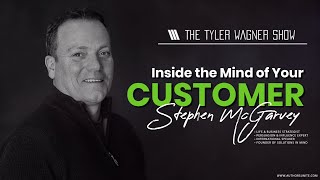
In this episode of The Tyler Wagner Show, host Tyler Wagner interviews Stephen McGarvey, bestselling author of Ignite a Shift and founder of Solutions in Mind, a consultancy focused on ethical persuasion and influence. The conversation begins with a discussion of the “dirty” perception of sales tactics and moves toward the importance of using influence with integrity—treating persuasion as a service to meet genuine client needs rather than a manipulative trick. McGarvey outlines the core framework of his book—Engaging Minds, Guiding Emotions, Driving Behavior—and explains how it can be applied both to self‑change and to influencing others. He introduces practical tools such as mapping a person’s current versus desired state, understanding how anxiety is a future‑oriented emotion, and establishing rapport as the foundation of any ethical influence effort. The interview also covers personal background, including the complementary husband‑wife partnership with his wife Natalie, their behavioral‑assessment styles, and their journey from a clinical practice to a 20‑year consulting business. McGarvey shares anecdotes from extensive travel, highlighting cultural reciprocity (e.g., the monkey‑photo incident) and the ethical considerations of giving money abroad. The discussion turns to publishing, describing how the book became a Wall Street Journal and USA Today bestseller, the role of strategic marketing, affiliate links on their website, and the credibility boost that bestseller status provides. They also touch on learning methods—photo/quantum reading versus deep, note‑taking reading—and the value of mind‑mapping for both writing and personal insight. Throughout, both speakers emphasize the importance of aligning values, beliefs, and emotions to drive desired behavior, and they hint at future episodes and additional resources such as a free ebook.
Chapters
Alright everyone, welcome back to another episode. Today we have Stephen McGarvey with us, and he is a number one Wall Street Journal and USA Today bestselling author of Ignite a Shift. And Stephen is also the founder of Solutions in Mind, which is a company specializing in persuasion and influencing with integrity. So welcome to the show, man.
Thanks, Tyler. Thanks for having me. Looking forward to this.
Yeah, I'm pumped to have you on. I think, uh, what you specialize in, I think a lot of people are interested in. It's, it's interesting. I had a conversation on the podcast a few weeks ago, and what it kind of was about, at least part of it, was this question of like, when I first started out running my business, I read all these sales books, right? And there was something about sales that always felt like a little dirty to me. And I think a lot of people can relate to that because it's like Hey, use this trick, use it. And it's like psychological, um, tricks. There's one actually recently that I learned from a YouTube video. I won't mention the name, but it's basically one where like if you confess to something, if you say a confession statement and then your second statement, the people will always believe the second things. Meaning like, say if you're Burger King, you want to sell more burgers. When somebody comes in, you can be like, hey, look, our fries are not the best, right? There's other places around here that have very good fries, but The thing that's non-negotiable is we have the best burgers and people will believe the second because the first was like a confession and you use that to like sell things. And it, you know, so either way it feels, I think what I'm trying to get at here is I think it's hard for people once they learn these tricks is how do you use them with integrity? So I guess overall, tell us a little bit more about that and how you started to even get into this space.
So Tyler, I feel great too. They told me I was learning disabled, as I mentioned in the book at the beginning, in the opening. And that's almost like what you're talking about, a confession statement. It's like upfront, it helps you build that credibility and that integrity with the audience because you're being real, you're being transparent. It's like, I'm not good at this and I am good at this. Or, you know, we suck at the fries, but we make a mean burger or shake, whatever it is, right? So I think for me, and I totally agree with you, I think sales has that kind of like snake oil salesmen, used car salesmen. You know, sales has that sort of negative persona. And I think the main reason is there are a lot of people that influence and sell without integrity. And I think if we look at the root of selling, it's really serving. It's more than, you know, do I have something of value that I can talk you into? It's do you have a need that what I'm offering is actually a good solution. And if I go about it that way and I want to serve my client base, it's like what you do. You do what you do exceptionally well. And, you know, we got referred to you and that's part of the success of the book. I mean, the book's well written, but I wouldn't have had a clue how to put the marketing campaign in place to do what you helped us do. So I think I never felt like you sold us anything. I felt like you served our need. And I set out with a vision of, hey, we've come this far, let's knock this out of the park. Like, the reviews were so good on the book, but we needed to find somebody who knew how to service that need, if that makes any sense. And if I, quite honestly, if I had gotten any hint that you were kind of talking us in or trying to sell us something that we didn't need, we wouldn't be having this conversation and I wouldn't have invested in the campaign. So I think if we, you know, with integrity, that's why I add that in there, if we really seek to understand people's needs, their values, what's relevant to them and why. And we have something that we can offer, like yourself and like us, that we know is a solution, is being able to serve and fulfill that need in the most meaningful way. Then, I feel really, really good about doing what we do. And you can feel great about doing what you do. I think it's the people that are out there selling, for example, I'll just use the cars, although there's a lot of good used car salesmen, I'm sure. It's, you know, they know something's wrong with the car, they know it's had problems, and they put lipstick on the pig and they try to, you know, con it off on somebody. I think that's where sales gets its negative kind of undertone. And it's like everything else in life, you know, specializing in persuasion, influence. I always tell people it's like a hammer. It's less about the skill set because the skill set is incredibly powerful. It's the individual who wields the skills. And there are people out there in any field of life between lawyers, accountants, people that do something similar to what you do or what I do that don't do it with integrity, that they do it with their own self-interest in mind and they don't really care about serving the other person's needs. And I think really that's where the disconnect is. I mean, every con artist on the planet is masterful at the skills that we teach and masterful at building rapport and getting you to trust them. And then it's just a big con, right? Whereas if they truly use their skills for the greater good of mankind, and I say mankind, I mean people in general, I think we'd be better off.
No, agreed. And it's interesting, I had a flashback as you were talking to that other conversation, and that is what I actually ended up concluding is literally what you just said is after reading all the sales books that I read, and I went down like the rabbit hole, man, like, and just psychology books, just everything, you know, YouTube, like probably thousands of videos, just all these tactics, right? It's all— and then I finally came to the conclusion where I was just like, you know what, we have a good product and service. And what I do now, and I think it was probably the same when me and you engaged, is I get on the phone and I first always ask like, hey, tell me more about you and your book and what are you trying to accomplish? As soon as I hear whatever that is, if we are able to deliver on whatever you're trying to accomplish, then I'm like, okay, cool. Well, based on what you told me, I think that this like offer is a good idea. Whereas, and I think probably in our conversation we went over this, when somebody, um, uh, when I get on the phone with somebody and they're like, hey, like we want to get rich off book royalties. And like, I right away, I'm like, look, I even say it for like the Wall Street thing. Like, I'll just be like, look, you're going to pay this much, you're going to make this much back. Makes no sense.
Yeah.
But if you have a business on the back end, you're going to leverage the accolade and you're you're gonna like really use it, then it makes sense and we can look at this in an actual ROI type of fashion. Um, so, you know, and, and I just think anybody that would try to sell to someone in that fashion that is just focused on getting rich on book royalties, I mean, it's just so rare. It can happen and I've seen it happen, but it's rare, man. Like, I'm just being honest. So Either way, I just think like kind of what you concluded to yourself is just like, just fill a need, but be like real about it. Like really ask like, who are you? What do you want? And then if you can give them what they want, then sell it to them. If you can't, don't try to sell it.
And for me, to your point, Tyler, for me, the book was not about making money. We've run a very successful business for 20 years. The book was something I never intended to write. Then we wrote it, we were going to self-publish it. Then we got picked up by a publisher, and then I'm like, well, if we've come this far, we might as well knock it out of the park and get the, you know, the number one Wall Street Journal bestseller if possible and hopefully hit a couple lists, which we managed to do. And, you know, I owe you a big kudos for that because you, you, you know, told us what you're gonna deliver, you delivered on it, you didn't overpromise. I had no expectations because like us, you're expensive. So I didn't look at that and not think twice. I gotta say. So if somebody's just thinking they're gonna get rich off the book, Forget it. And, you know, seeing that Wall Street Journal number one bestseller on there and USA Today is going to mean they close another deal worth $100 grand or they get a couple more speaking engagements. Then for me, it's a no-brainer because I think that just lends that credibility. In fact, we just— we've got an e-learning companion guide that goes chapter by chapter with this. That'll be done by the end of the year. We've already sold 150 licensing seats to that, to one of our US clients for next year. So to me, the bigger picture is that, that this puts you on the— it's an expensive calling card, an expensive business card. Um, and, and you delivered on everything you said you were going to.
No, thank you, man. I, I appreciate that. And that's awesome to hear with the, with the E-class, dude. That is sick. Um, so I wanted to— let's dive a little bit more into the like content stuff of the book, but just before we do that, can you give us a little background like on you? Um, And I think— and your wife, you both are— you're in the same practice together, right?
Yeah. So Natalie and I are a husband and wife team. Our behavioral styles, if you've ever done DISC or Insights or any of those behavioral assessments, we're the opposite. We're like— she manages details and process. I manage strategy and bigger picture. And together we complement each other and provide even more value to our client base. So we've worked together. Natalie's background is in clinical developmental psychology. She worked for a private practice psychologist. And, you know, got paid for 40 hours and put in 80 hours. And it used to drive me crazy because I'd say, you might as well be flipping burgers at McDonald's for the amount that you're getting paid if you cost average it for the hours you're putting in. So, you know, we went through some family loss. Natalie's mom passed away. We said, just quit your job, go spend time with your mom. You'll never get that time back and then come back and then work with us. And I built the business up enough that it justified having her join me full-time. And the rest is kind of history. But like I I said, I felt great too. They told me I was learning disabled. And I still can't spell to save my life. I spell everything phonetically. You can't even spell phonetics phonetically. So I always encourage people that, you know, have teenagers or young people that are kind of attempting to find their way in life and they're worried sick about them. I would say just support them in doing what they love to do and what they do best and they'll find their way. And that kind of led to, you know, the business that we're in is a passion of mine. I love helping people understand how we as human beings filter and process information, how it gets coded in our nervous system, how we run our own mental and physical programs, how— I mean, the whole book, the tagline is Engaging Minds, Guiding Emotions, Driving Behavior, how our thinking impacts our emotions, which drives our behavior. And so, it really got driven by a passion of mine. And from a kid who hated reading, especially out loud, you can see the library behind me that wraps the whole way around this room. It's like library man cave, and it's like my sanctuary where I come and study. And when, you know, even writing my book, I had like piles this high of books all around me, you know, just pumping stuff into my head to reference and to share stories and to, quite frankly, in some ways model the style of book that I really enjoyed, that had not just academic stuff in it, but that had stories that brought the the academia to life. And so we've had really good feedback on it.
Yeah, I was actually— the first thing when we both hopped on the Zoom, that was the first thing that caught my eye is like your library back there. And then it's like all wood like that. And even the chair or seat, like everything about that room to me just— I feel like very productive, like you get a lot done. I would love to be in that room. It's awesome.
Well, you never know, someday you might, uh, might visit Toronto and come for a visit and we'll, uh, hang out for a bit. January, we're going to be, uh, we've locked in. So January, we're going to be actually staying at the Four Seasons in, uh, in your area. So if you're in town, we'll definitely have to get together.
Oh yeah, well, yeah, if I'm in town, we'll be very— and I think I will be because I think we were talking about this— we'll be very close to each other, I'll put it that way. For those that don't know, I live near or in the Four Seasons. So that's incredible, man. And that's perfect time of year to come here too, which you probably already know that, but it's, uh, like January, February, it's normally like 65, 70 breezy.
It's just amazing. We're just there for a few nights and then we're heading on a cruise around South America for 3 months. So it'll be a nice way to get away from winter for us and to enjoy some time in a warmer climate.
That's amazing. And actually I just don't want to forget because I'm curious about that. If you have info on that cruise, uh, send it to me because like just to hit all these South American spots and what is that kind of what it is like 3 months?
Yeah, it leaves from Miami, goes through the Panama Canal, and goes all the way around South America back to Miami again. And we've actually booked a 3— I think it's 2 nights, 3-day excursion to Machu Picchu. So I'm really looking forward to that as well, dude.
That's all right.
Yeah, you got to remember you're, you're early 30s, I'm mid-50s, so you're, you're doing exceptionally well for age. And when you get to be my age, you'll probably be way further ahead than we are.
So I don't know, but I would go that, like, because I've been wanting to go to South America. So just when you said that to me, I'm just like, oh wow, I can knock out all these spots in one go. Um, so I don't know, that seems very like a cool gig, just 3 months straight off every South America spot. Yeah. So, and just last question before we get into the details of the book, is what were you like when you were younger? I always like to ask this question because I'm always curious of like what somebody thought they were going to do and be and then what they actually ended up becoming. So when you were younger, whether it's, you know, kid or even high school, college, like, are you doing anything of what you had thought you were going to do?
Not at all. When I was a kid, my grandfather used to take me to a couple of friends of his that had farms. And being somebody who was, you know, born and brought up in the city, getting on a farm and being around animals, I thought I wanted to be a farmer. So when I was as a kid, I kind of had fantasies of being a farmer and working the land and living on a farm. And I just loved the animals and being in that environment. It was just different. And so, yeah, no, nothing at all like that.
You know what's interesting is like sometimes it, not as much now, but it was more in the beginning of my business when things just, you know, in the beginning of any business, it's not easy, let's say. Like, you know, you have some months that are really good, some months that aren't, but then I've been running this now, I think it's like 11, 12 years, so it's a little more consistent at this point. Regardless, I still do have fleeting thoughts of like, what about this, like the real simple life, you know? Like, I have it pretty good, but like, what about the simple, simple life? So I guess we'll never know.
But you know what, I think that through when we have our crunch times and we're flying around like crazy people and the pressure's on and You're at the front of the room all the time. I sometimes, Natalie and I say, you know what, we should just scale down, cash out some assets, simplify, buy a catamaran and sail the Caribbean. And she always says, you'd get tired of it. And I always say, I just want the opportunity to get tired of it. I love that.
Yeah, I think, well, if you want it, I'm sure, you know, you'll get it.
I think one thing, Tyler, that COVID getting through the last 2.5, 3 years has taught me, I don't I don't think I'm cut out for retirement as in sitting doing nothing. I love what I do too much and I love learning. I love having conversations like successful young people like yourself and in some cases encouraging them and mentoring them to some extent. And so I think I'll keep doing what I do. I may just, as we are doing, carve out more time for travel and enjoy life as part of the process even more as we age and mature. So I think that's part of that.
Kind of like mini retirements. It's like, yeah, from The 4-Hour Workweek. That was one of the things from that book that I remember that really stuck with me is because I've always thought, even when I was younger, I was like, so wait, I'm going to do all this work. And then once I'm like 60, 70, 80, or whatever, I'll retire. And then I'm just gonna like do nothing. Or so like, I just, I need something. So I think the mini retirement, like the 3, so you go away for 3 months, maybe you work a little bit, while you're on the cruise. I don't know, maybe you don't. But regardless, it's just 3 months and then you can come back to your normal. It's not a 100% like, we're going on a cruise for the rest of our lives until we're done.
Yeah. Well, in fact, Tyler, when we were gone, we were on the 2020 World Cruise for 5 months on Seabourn. And we made it around Africa. We did some safaris. And I did podcasting as part of that World Cruise. So I interviewed some really interesting people on the ship. I met the royal artist for the royal family in Britain, Mr. Stone, and just fascinating people to just share stories with and hear about their lives and what makes them so interesting. So even though we were gone for 5 months, we got kicked off halfway through. And the last chapter of the book, because my accountant says I don't have time for vacation, just research. The last chapter of the book is really summarizing what we learned as we researched beliefs and values around the world. It's just a great environment to to be in and to do research for the book as well.
Yeah, travel is one of the most— I don't even know, like, I just think back when I did that trip all over Europe and Africa, like, that taught me more than I'd be able to describe in words. Especially I remember the Africa part, like, just the culture shock of it all. Like, we did like Atlas Mountains, Sahara Desert, um, we stayed in a tent in the Sahara Desert for like 3 or 4 nights. It was like a 2-week whole thing. And dude, I just remember in Marrakesh too, there was like, it's like snakes or like cobras, just like, like, dude, it was nuts. I mean, it was from what I'm used to, I should say. It was nuts. But like, it really centers you when you actually get out of your hometown and you realize like, whoa, this isn't like— Miami's not the only— like, every place you live in has its own sort of bubble.
Yeah.
So like, if you, if you live in Miami, you never leave Miami. I mean, you have no clue what the world is. I mean, this is not reality in most places, like, or anywhere really. It's just different.
So, and I, I agree with what you, what you said with regards to Africa. It, it was one of the first times in my life we were in Senegal, which is sort of Midwest Africa. And we went on a, on a trip today to, on a trip that day to see the, the fish market. And we had a SWAT escort, which I'm assuming was just a precautionary thing. But you get there and, and I'm I'm telling you, man, it's the first time in my life I felt like a total minority. Felt safe enough, or the illusion of safety to some extent, because it was just culture shock exactly like you said. It was like, you know, taking me and dropping me someplace so unfamiliar, such different beliefs and values and culture. And I think every young person, you know, should have that opportunity, or maybe not should have, but would benefit from that opportunity of exploring and seeing the world. Because I think kids these days are just spoiled. It's like they don't have the latest iPhone or whatever the other version of that is, they're whining and complaining and everything's just taken for granted. Whereas I think in these cultures, when you see— the thing that struck me, and I don't know about you with Africa, the thing that struck me most rewarding was the poverty and the happiness in unison. It was like I'd never seen such poverty. Actually, I shouldn't say that. I have in places like Cambodia and Vietnam and different But I would group it amongst the most poverty that I've seen and amongst the happiest people that I've seen in my life.
Yeah, I agree. And that's actually what makes me think of that simple life thing again, because like, I remember thinking that too when I was there. It was just like you— I didn't feel— even the people that were like the first thing when we got in, this guy, and this apparently is a common thing, at least in Marrakesh. Is they'll like throw— they'll have like a little baby monkey and they'll actually like throw the monkey to you, right? And your natural reaction is to catch it. So you like catch the monkey and then it goes on your like shoulder, and then they take a picture of you with the monkey, and then they're like, 50 dirham, or like 100 dirham. I think is what— this is like 10 years ago, so I don't remember. But yeah, I— even they didn't— I wouldn't say I felt a depressed feeling. Like, I felt like there was a hustle there Yeah, it wasn't like, I don't know, it wasn't like the depression that we hear about in the US or something.
Like, I don't know, it's interesting you mentioned, or we were starting off talking about that whole selling being serving a need. Um, they've learned to survive by essentially manipulating tourism because in, in some cases the throwing the monkey at you puts you in a situation where you've received something that you now feel obligated to give some, something back because of it. And they take the picture, right? So it's almost like leveraging the law of reciprocity. You've got something of value, you know, because, you know, a city folk or from Toronto, Canada, Miami, it's not like you've got monkeys at every street corner that you can pick up and hold. So it's a unique experience that, that they, that they basically captivate you with that experience and a picture. And then what do you do? Like, you feel obligated to give them something in return, and they're not shy to ask for it because they've essentially manipulated the dynamic, I know, I'm glad you said it because, yeah, so I ended up paying them multiple times because they do it.
I will say this, a lot of them did do it though in a kind of scary way. Like, if you kind of feel— and I never was like hit or anything, so nothing ever happened— but they do kind of put you, they put you in what you said. But then the additional thing is they kind of look at you, if you, if you say no, like, oh, I didn't even want the picture, they'll kind of keep getting closer and closer and like kind of pressuring And then you're kind of like, "All right, here's 50 dirham." And then literally you walk like 10 blocks, another monkey out and like, boom! And so, but in those situations, what are you going to do? Have a fight with a random person in a country where you can't even speak the same language? You just pay them.
Well, and I have to say, I enjoy to some extent negotiating. And when we go to some of these countries, I'll negotiate just because some of them are really good at it. So it sharpens my skills more than anything. And then I'll pay them more than they were asking in the first place because they work so hard. And what, you know, what $100 or $10 or whatever the number you pick represents to you or to me, it just has exponential impact in some of these countries. So, or I'll, you know, buy something from one person, give it to somebody else, or like just figure out a way how to leave something there more than just the dollars, but leave something that's going to actually benefit them.
Yeah, man. And that, I mean, I could talk about those travels because like, oh my God, I remember in the Sahara Desert, like, from the views, uh, because, or on the Atlas Mountains, you can just see so much when you're driving up through there. And like, we, we would go through villages and stuff. Like, I just, it was like, these were like mud, some of them were like mud houses and stuff. So it's just like, like you're saying, like, even just like $10 US could be like food for like a month for them, you know, like just one thing I learned, like a lot of the tour guides don't want you giving them money because then they learn to beg.
So we've learned, like we support, for example, Cambodia, we support an organization called Ratnak International there. And so they help prevent child exploitation and trafficking. And, you know, they teach skills that reintegrate kids into society and give them skills that they can actually work in and learn. So we found You know, we made the mistake of doing the money in the early days, and then we got educated enough to realize that that's in a lot of cases perpetuating the problem because they look at us and they think that the money is the answer to a lifestyle, that it's just very contrasting to the country they live in. So we found that it's better to use and leverage our resources in a cause that's already there, that's doing something bigger for the culture in a more culturally relevant way than just the money dynamic.
I agree. And I do, I remember that now. It's, I'm just having so many flashbacks because I remember I had cash and I was handing it out. And then what happens though is they, they'll start to crowd around. Yeah.
Yeah. Guatemala, it was like we had them chasing us down. And that was in the early days of our travel to countries like that where you feel so bad. It's like you buy this or you buy that and you feel like it's a fair exchange. You're, you know, you're getting a nice colorful, uh, whatever, poncho or towel or something. But as soon as you start that, it's, it's like there's a lineup of people following you no matter where you're going down.
So we did talk about, you know, the one thing with the monkey, but let's talk a little just in the last part of the interview, because I think this is something, right? Like I had said, I think every— anybody in sales or any business owner, entrepreneur, this, like what you wrote about and what you're an expert in is what they would want to know. So, I mean, the topic couldn't be more relevant. Let's look at like persuasion and influence as a whole, and then like dive down in more detail in some of the parts of your book, but like If I were to— and I know this is a huge question, but I'm just curious how you'd answer— is like, if I were to just straight up be like, how do you persuade and influence someone? How would you answer that?
I would say that the number one thing is you start by establishing a foundation of rapport. And whether you're doing it for the person's best interest or whether you're a con man, you start with a foundation of rapport. And they do. And so I think I think the number one thing we encourage people to do is understand how to establish rapport and give the other person the experience of being understood, that you're genuinely curious and interested in them and what's relevant and important to them and why it's important to them. And I think if you start off with that as a foundation, you're putting yourself into a good position to find out what their needs are and then serve them more effectively, assuming that what you're offering is something that's gonna fulfill their needs.
Got it. So start with rapport and then is there like other— because I know how big of a question that is— is there like other, like, if there was a next step, obviously there is, like, what would be, say, from like start to finish of, um, and let's assume that, you know, you have good intentions, you have a good product and service, what would be like, is— do you have like a formula from—
yeah, yeah. So in the, in the early chapters of the book, we actually discuss this, whether you're wanting to influence yourself, because I think what people fail to recognize is the same principles of influence when you want to influence someone else, hold true to influencing oneself. So, if I'm stuck in a rut or stuck in a pattern or if I have a limiting belief that's preventing me from accomplishing a certain, whether it's a 6, 7, 8-figure annual income, whatever the number happens to be. For me, I remember one of my first goals was by 40 to buy my first Mercedes and to buy my first Rolex and to have my mortgage paid off. And so, you hit those targets. So, I think I think one of the things we map out in the book is whether it's something for yourself or influencing someone else, understand how influence occurs. So, one of the first things we do in an early chapter is we get people to understand that our thinking influences our emotion, which drives our behavior. And we get them to map this out in what we refer to as current state and desired state. So, how am I currently thinking? What are my current beliefs, limiting or empowering? What do I currently value and why? What emotions does that trigger? Confidence? Worry, fear, anxiety, curiosity. And then what am I doing or not doing? And so we can actually map out a strategy at the beginning of the book. And then each chapter gives the people, the readers, tools that they can go and apply to that strategy to actually accomplish something with each chapter that they read as they move through the book. And so then the desire— so I'll give you a perfect example. You know, people have gone through almost 3 years now of ups and downs and anxiety and all kinds of different stuff with this COVID. You know, control, loss of control, all kinds of craziness. And one of the things that we found was I did private practice for 20+ years coaching people and getting referrals from doctors, psychologists, etc. And one of the things that I kept getting referrals for was anxiety. And I thought, what's common with all these people that are coming to me with anxiety? What are they actually doing? How are they thinking? How are they running their brain? So, I came up with a definition that's in the book. I'm going to share it with you. And you can test this. Your listeners can actually test this, test it in any area of your life regardless of your age. Anxiety is an emotion of the future that you can only experience in the now by imagining something that hasn't happened yet turning out in a way that you don't want it to. So people that have anxiety in planes, they imagine turbulence means the plane's going to crash. They imagine, what if I die? And then they feel anxiety, they feel stress, they feel tension. And then they get into a pattern of thinking that way, which then manifests itself and creates creates these neural pathways. So anytime I look at a plane, see a plane, get on a plane, it fires off the mental patterns which triggers the anxiety. And in an extreme case, you can, you know, end up with a phobia, um, which quite frankly is easy to install as they are to cure. Um, but in, in general, people imagine things like COVID. What if I can't travel again? What if I get COVID and I end up in the hospital? What if my parents die? What if, what if, what if? And we run our brains and we imagine things that haven't happened turning out in a way that we don't want it to, and then we feel negative emotions in the context of that. And then, and then it prevents us from doing certain behaviors, or it keeps us stuck in ruts of certain behaviors.
So you— it's like a good exercise, and it's interesting because it's like similar to like a book or like an artist's kind of way of thinking, is like, first thing is like, hey, let's actually brain dump or mind map, either one, same thing, is like, what is actually going on up here? Yeah, because most people keep it up here, and that's like why writing and stuff is so important. Like, you can't, you can't unless you like put it all— it's, I tell people that all the time with a book. Like, when you have a book, to me, the first thing you should do is turn off all technology, like lock your door put a big map or whatever, or yeah, just piece of paper on the wall, and then just do a thing of like, what are all the chapters, or like, what are all the topics that you want to cover? Yeah, like 100 topics, right? And they're all in bubbles. And then as you look at it, then you can start to be like, okay, these 3 topics could all form together under one chapter.
Yeah.
Or then you're like, hey, these I don't— this doesn't need to be in the book. And then you end up with like 20 chapters, let's say.
Yeah.
And the same thing with your thoughts, like what are your limiting beliefs? What are some things that maybe you're overly optimistic about that maybe you should not have anxiety, but more think a little bit more about and like get them all out of your head? What are your beliefs? I don't think most people know what their beliefs are.
You know what they don't. And when I was doing professional coaching, one of the first things I get them to do is map out their beliefs, map out what's of relevance to them and why their values start to put— give me your top 10 values. Most people can't answer that question. You ask your audience, what are your top 10 values and why are those things important to you? That's like a challenge for most people to think that through because I always say most people don't think about their own thinking. Yeah. People don't think about their own thinking. They just kind of— it just runs on autopilot. And then, they feel emotions and states and they go, they made me nervous, they made me anxious, they upset me. Nobody does any of that stuff to us. We do it to ourselves based on how we process and interpret and the meaning we attach to things. And so, I think the gift of reading a book like this is it's going to improve people's understanding of how their own brain works and how they can get better results in life and how they're preventing themselves from moving forward and shifting some of the things they want to shift. Hence, the name of the book, Ignite a Shift: Engaging Minds, Guiding Emotions, Driving Behavior, because we all want to shift something. And this just maps out a process by which you can take your time and you can apply it. Yourself, your others, your kids, and just set out to create that shift on a daily basis and that improvement. You mentioned something, mind mapping. I've got probably 5 books in my library. I could point to the shelf they're on right now on mind mapping because I think the more we learn about learning, the more we learn about how our brain organizes information, the more capable we are of recognizing our own barriers and working through them.
Yeah, that's so interesting because, yeah, it just reminds me of this one thing that I went through, which for some reason, I'm not gonna lie, I didn't fully grasp it. But I do know people that are very good at it. It's called like quantum reading, and it's, it's a way to like speed read basically. And I took a course on it, and I found— I just personally found it to be just confusing. But regardless, I've seen people literally with books that they, they'll literally— they can scan a page in like seconds. Turn and they ask, they actually grasp probably like 70% of the book and they're reading it in like, you know, 1/100th of the time it takes a normal person. So, it's that idea of like we're all so caught up in our day-to-day and like learning where we've never stopped and be like, wait, is there a better way to learn? You know?
It's funny you called it quantum reading. What did you call it? So, I took a course similar when I was probably 5 years younger than you are called photo reading. Taught you to look through the center of the book and look beyond the book so that you were seeing the whole pages as a photograph. And that's what's called photo reading. So instead of reading each word, they taught you to scan and dip and then photo read. So you captured the information like a photograph in your mind and trusted your unconscious mind to process that information. So I never really learned to do it all that effectively. But it did give me a better understanding of some shortcuts for reading. But quite frankly, I enjoy reading. I enjoy thinking through the information. I enjoy making connections and, you know, thinking about how it applies to different things in different ways. So I'm more of a slow reader, and I like to take the time and absorb it unless I'm just scanning something just for the sake of, you know, I've got to get briefed on a document or somebody wants me to look at a book and pull through some ideas because they rolled it out before bringing us in. Then I'll scan it and see if it's something that interests me.
But Yeah, I think it's the same thing because now what you said, that's pretty much what it—
did you do the finger thing where you go like this with your fingers and you get that little, that little hot dog finger in the middle?
Yes, we did. And, and so I think— and then also it's, um, basically the idea too was that you, uh, like half of the words— or I forget the percentage, but a lot of the words are like the words like the— and yeah, and you don't need to read those actual words to understand what's going on. So when you take that picture, apparently what it's— and this is why there's two things. One, you take the picture and then, you know, you can see those bigger words and you can have an idea.
Yeah.
Like, I would argue, unless you have a legitimate, like, photographic memory, and not just that, but like one that you could actually remember like 500 pages, you know, or whatever, it's very rare. Like, that's why I just don't think it fully worked. But I do think that, yes, if you did that Like, I could probably capture 5-10% of a book doing it that way. Um, but the, the other thing is, it's probably similar to you, like, the books that I'm reading— and I would argue, just like, I don't think this method can work with the type of books that we are probably talking about, meaning like, I'm reading like Nietzsche, Carl Jung, like Jordan Peterson. Like, dude, if you're, if you're doing, um, like, uh, photo reading or, or quantum reading with Nietzsche That ain't gonna work then.
Well, I guess I like to think it through, make the connections. I make notes in the margin. It's funny because when I was, you know, a bit younger than you and starting down this road, I used to think because they'd written a book means they have all the answers and the book must be right. And the older I got, the more mature I got, the more books I read, as you can see around me, the more I'd make notes because I'd realize that some of these people that write these books books are wrong in so many different ways. Like when I gained expertise at what I do and you'd see like a chapter where somebody dabbles in, you know, whatever, it's something that we do and you're like, they've got it so far wrong. But years ago I thought they were right because you just assume they've written a book, they're an authority on it, which is also why I think what you do is so cool. And I think your price point weeds out a certain amount of people that are just wanting to get rich off a book. You're going to attract a more serious, I would imagine, I don't know your business, but I would imagine, like somebody like me, it didn't take me long to make a decision in going with you. And I think anybody in my situation who's a little bit older, they've been wise with their money, they've got successful businesses, if they want to write a book and capture their learnings, their life story, and share that with a younger generation, I think going to somebody like you is the best thing that they can do because you can teach them that process. Like, you don't know what you don't know. And going to somebody like you who specializes in that process, I think one of the best things that we've, you know, got introduced to was you, quite frankly, because you took us through a process that I had no idea about because I always wondered how in the world does a book become a bestseller before it's even in the bookstore? Didn't make sense to me. But then when you mapped out your process and shared some of your strategy with me, I'm like, oh, that's brilliant. Like, it's so like you've taken it and you put it into a system and a process that is really, you're just really good at what you do. So, for somebody like me, I think anybody listening that's a business owner that's thinking of writing a book, they're crazy to put off calling you any longer and just get on the phone. And if they're lucky, they'll get your time and they'll get a slot in your schedule because it's well worth the time.
No, man, that means a lot to me and I appreciate it. And I think when you say, that's actually, it's funny because when I talk to friends about I think you're right on that. It would be the only, like, variable would be if somebody, like, won the lottery. And what I'm getting at here is it's like our price point is, like, at a point where I don't think there's ever been someone that has, like, given me their last amount of money. Like, it's just, it doesn't really make sense.
It's not like, I don't know, they got wealthy parents that are funding their book or something along that line.
It could be, right? But so, but my theory is it's like if somebody can afford what we do, they've at least made they, they have to at least have a 6-figure business, at least, right? So then to my mind, I'm like, okay, if they have at least 6-figure business, they must be at least pretty good at what they're doing. Like, you can't— like, the whole idea of the con man, I always think to myself— and look, I, I guess this statement has been proven wrong in history. There's some con men that have made billions of dollars and they get caught. Absolutely, it can happen. But I just— I would argue that probably most con men get caught way before that. So it's just, it's kind of like, if you're an expert, you can afford what we do, then the content in that book is most likely like pretty— is at least pretty good, right? Um, and that makes me feel a little bit more just comfortable pushing it, right? Because that's what I found too, just like yourself, is especially in today's world, even more so than before, you know, it's, it's so much easier now, the access to get like to put a book on Amazon, you don't even need a publisher anymore. Like, you don't need a publisher. So it's like, okay, that's good, but it's also bad in the sense that there is literally no filter. So you can't take— and, you know, that's why I think it's funny too, you were talking on influence. That's what— that's like my life story. When I was 19, I wrote my first book. It became a bestseller. And I'm just like this kid. I felt like a kid. And people were only seeing the bestselling author. Yeah, the view was like, yo, this— he's 19, like he's made it, like he's— and in reality, dude, like at first at least, I was still scrambling to pay a $400 a month rent, you know what I mean? Like I didn't have shit figured out, um, I don't know. So, but the fact that I was a bestseller got me in the door, right? And like, uh, so I don't know, it just— for good, for better or for worse, it it makes the view of you once you're a bestseller, I just feel like people don't question you anymore. They're just like—
It's interesting because so many of our clients that have worked with us for 20 years, and like you, we charge a premium. We're not right for everybody. You know, we, you know, do a good job, do what we do extremely well. And I say that humbly, just like you do. And we tell clients we're not right for everybody. And you know, the ones that we are right for, we're right for because we teach them a lot. We benefit their brand, their positioning, the way they communicate, etc., etc. So it's one of those things that I think if you're an avid, what's the word I'm looking for? An avid? No, that's not the right word.
Oh, avid.
That's the word. Sorry. Yeah. If you're an avid reader, there's my dyslexia kicking in. If you're an avid reader, I think you can absorb information, you can learn. Like there's so many experts out there that you can learn from. And you mentioned some of them that you're in the middle of reading. Like, read— there's tons of psychology books. There's, you know, there's tons of marketing books. And then you can say, well, how does the psychology connect with the marketing, connect with the branding? And then you figure out something that nobody else has put together. And now you're offering something to a client that's of greater value because they'd have to go and read 50 books to figure out what you've absorbed, assimilated, and figured out how to connect. So it's like connecting the dots sometimes, right?
Yes. And that's the thing, man. It's sometimes I think it's like the more data points you have, the better it is in a sense, meaning like with the, with the, if somebody were to say like, hey, you've, I've done like 2,000 interviews and like, you know, with Authors Unite now we've had like 3,000 or so clients, right? So it's like a lot of people that I've at least either talked to personally or have like, or like I'm aware of, right? Like I've been connected with. So that many data points. So when somebody asks me, what have you learned from your podcast? It's hard for me to answer. Like there's not just like a thing. But what it has done is like the main thing I think has just made me super resourceful, right? Like for you with the book stuff, right? Like, you know, you could come to me, ask me anything about the book publishing world, and I either know it or I could point you to someone who knows Yeah, like it would be really strange if I didn't at least know someone who knew the answer, and it's because I have so many data points in the publishing industry. So I don't— just like you, if you, you can connect these dots, you read branding, marketing, psychology, and then you end up connecting this thing that nobody else connected, and it ends up becoming this whole other thing all in itself. It's, it's interesting.
Yeah, well, it's interesting because we, we have tomorrow, we have a meeting with a new PR company, and David, who knows you and speaks very highly of you. And it's such a small world. So talk about those data points. You know, you didn't push him, but we, you know, he proactively reached out. So I guess he got a hold of bestseller lists or something.
Yeah, yeah.
Proactively reached out to us. Yeah. And, you know, he was tenacious. I appreciated his tenacity and his, you know, grit in reaching out and keeping reaching out until I thought, you know what, this guy, I'm going to give him a shot because because if he does what he's doing to me, if he does that in the context of his PR campaign, he's got to be good at what he does, right? So it's kind of like, like you said, connecting those dots. And, and then he wanted to know what I did, and, and, you know, congratulations on the bestseller. He goes, how did you hit the list? And, and I said, uh, uh, Authors Unite Tyler. He goes, oh yeah, I know Tyler, I've worked with Tyler before. So it's like a small world, right? Like you said, it's like connecting those Yeah, dude, that's so awesome.
Yeah, I know, he's amazing, so you'll be happy with him for sure.
Yeah.
Um, so, so yeah, what I want to do, uh, now I just want to make sure if there's anything we didn't cover, feel free to share it, and then let people know like where can they get the book, your website, uh, all that stuff, social medias.
Yeah, the website. So we, we've actually— it doesn't cost them anything more, it's the same price as getting it anywhere else, but we've actually through this work with you, and actually you got me thinking about process and systems, because when you describe what you do, I thought, I haven't leveraged this because I'm not a techie guy. I'm not a— but I thought I've heard of these affiliate programs. So basically we've created affiliate links now on our website and we're testing them out. So somebody orders a book through our website, they pay the same as they would anywhere else. But we now have an affiliate link where depending on where they order it, we get like a small percentage back. But it all adds up. If 1,000 people order the book or whatever, 5,000 people or the book, So we're testing it. So I would encourage them to go to the website and check us out at the website. It's solutionsinmind.com. So I'll fire you off. I think you've got it anyway.
Yeah, yeah, I have it.
Solutionsinmind.com. And yeah, there's, there's one in Europe that's a.ca or something, but ours is the.com. It's the original one that's been around for 20+ years. And on there, just under product or book, there's Ignite a Shift and they'll see the logos for all the bookstores. That it's available in Barnes Noble, Chapters, Indigo, and they can order on there and help us test out this affiliate program that we've put in place. And as I said, it costs them exactly the same as if they walked into a bookstore or ordered it online themselves. So yeah, and let us know what you think about it because once you get into it, we've had really, really good feedback. You'll see some of that on the website as well. And our goal in really working with you and getting it out there as much as possible is so people can actually basically have the tools to understand more about their thinking and how to get better results in life and to be able to share that with others. And, uh, so that's really our goal. So it's a pleasure talking to you. I was really looking forward to this, and when you said, oh, we'll just have a conversation about business and life, I thought, hey, you're easy enough to talk to. As long as it's in my wheelhouse of expertise, I'm happy to have the conversation.
No, man, 100%. I was too. And I think, uh, I think that there's definitely room for a part 2, part 3 at some point.
So I'm more than happy anytime to, uh, carry on conversation. And I'll tell you what, Tyler, if you think your listeners would be interested, I'm happy to send you a link so that you can offer a free ebook to your customer base or to your listeners. So, I'll fire you off a link to that. And that way, if they just want an ebook, they can get a free ebook. If they want the actual book, which I'm a book guy myself, so even if it's a really good book, I'll have an ebook as well. But I always have a book that I can highlight, make notes in, and really absorb that learning. But I'm more than happy to fire you off a link for, uh, for a complimentary ebook.
Awesome, man. Thank you again for coming on, man. I really enjoyed it.
My pleasure, and I look forward to continuing our conversations over time and to hopefully, uh, hooking up and meeting in, in, uh, in January, and we can get a meal together and, and get caught up in person.
More from Tyler


Catherine Nikkel : THE STORY EVERYONE HAS BUT HASN'T TOLD : The Tyler Wagner Show #1120



Scott Ritzheimer: Bring Predictable Success to your Organization | The Tyler Wagner Show #1115


Fred Moskowitz: A GUIDE TO GETTING STARTED WITH IN MORTGAGE NOTES | The Tyler Wagner Show #1113

Mark Podolsky: From Land Investor to Full Time Success How I Made $90,000 Cash in Real Estate


Mark Podolsky: How to achieve a 300% return on investment my foolproof strategy

Mark Podolsky: How to make passive income selling raw land the irresistible pricing strategy