The Remote Job Coach | The Authors Unite Show - @JordanCarroll
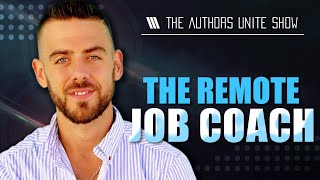
Jordan Scarrell, a remote-job coach, left IBM to build a location-independent career and now helps others do the same. He relies on the 75-Hard program, journaling, and core values like growth and honesty to stay grounded while traveling between Medellín and Playa del Carmen.
Chapters
All right everyone, welcome back to another episode of the Authors Unite show. Uh, today I have Jordan Carroll with us and he is the remote job coach where he helps high performers find freedom and flexibility through remote employment. So welcome to the show, man.
Hey, thanks for having me, Tyler. Appreciate it.
Of course, grateful to have you on. So I always like to kind of start here like Obviously, when you were younger, you probably didn't think that you'd be doing this. So you did. So like, when you were younger, did you always think you'd be an entrepreneur? And then like, what kind of path did you take that potentially didn't work out that then led you to this remote job coach type of thing? Sure.
Well, first and foremost, no, I did not think I was going to be an entrepreneur. I thought I looked at adults and kind of how they had their life figured out. And when I was growing up, it seemed like a lot of the people around me that I knew were, you know, part of large organizations and they were focused on moving up the corporate ladder. So as I went through high school and set my sights on university and what I was going to do after university, it was, was corporate all the way. And I remember my first job at IBM, I was like, you know, I want to be a vice president of sales or something, you know, I didn't I don't have any perspective. And then once you're actually doing something, then you realize, oh wow, like there's an actual feedback loop that I can work with here. This is telling me what I like, what I don't like. And I realized I didn't, for one, I didn't really like the corporate culture, but for two, I didn't really like going into an office. And what was fortunate for me was that about 9 months into my first job at IBM, I negotiated my role to be remote. So I started getting a taste of of remote work on a very consistent basis. And then I kind of realized, well, I don't think I've ever gone back. So that paved the way for what, where I'm at now. And then you're seeing, you know, the acceleration of remote work because of COVID because of everything that's going on with technology, with the increase of people that are going onto the internet, with Gen Z coming into the marketplace, like all this stuff is progressing the need for remote work. Beyond just the work side of it, but also the personal side of it. So that's, that's kind of a very high-level version of, of how I got into it.
Yeah, no, I can relate to you. I think we kind of probably— well, we were in the same fraternity, so just funny thing. But yeah, what we like in school, I actually dropped out 2 years in because it just clicked for me. I was like, I saw the path where I was headed and I was like, I don't even want to be there. So I was like, why am I doing this? And then, um, I read The 4-Hour Workweek, dropped out, and he talks a lot about remote work in there.
Yep.
And, um, new rich, man.
The new rich.
Yeah, seriously. It's— and I think it's almost like the— I think that's actually what it's called, the entrepreneur's dilemma. I think if I remember correctly, is we want freedom, right? And that's the reason why people like you and I will, you know, leave school or leave the corporation and we'll create our own thing. But then what we end up creating inevitably is like a job for ourselves. And the only, the only way to get out of that is to actually let go and, you know, give up that control. And I think that's— it was really hard for me for a long time. So is that kind of what you do, is you help fill those parts that the founder is like continuously working on but they don't need to be necessarily?
That's a good question. Um, I want to go back to one thing you said too about future pacing, because I think one valuable thing that can come out of both of our experience of looking into the future and saying, hey, is this the route that's going to get me to where I want to go? And if you're, if you're seeing that future very clearly and it's like burning inside of you, like bad, like I don't like this, it's a pretty good sign to step away. So I'm glad that you did that for yourself in, in school, even though it's probably not something a lot of people would have told you to do. And then same for me along my path. It was like, you know, leaving corporate, leaving my girlfriend, like traveling the world, like all these decisions down the line. I think they let you also make better decisions for yourself and then gain more self-awareness. And then where I'm at now, I'm actually really focused on the job seeker side. So what I noticed in the marketplace, not only with people that are looking for regular jobs, people that especially are looking for remote jobs don't have many resources out there to tell them about how to find those. I do work with— I do find companies and work with companies and talk to companies that have remote roles and I assist them when I can. And I have some services for them, but my focus is much more on the education of people looking for remote positions. And this is something that we didn't learn in school, right? We didn't learn how to do a job search. We didn't learn how to network. We didn't learn about finance. Like there's a lot of things in school that they don't teach you, right? So everything you need.
Yeah.
Pretty much, you know, the things that you need, but yeah, I can, like do some basic trigonometry. So isn't that great? Yeah, I know how to divide. I know how to divide. Actually, if you've tried to force me to do some long tail division, I would probably fuck it up, to be honest.
Yeah.
But I saw that gap of knowledge, right? Because I've been working remote for over 6 years. And then as I talked to people, I started getting the same questions. And I think that's when you end up making a business. It's like, Enough people ask you the same questions or bring up the same thing with you and you realize you have a domain expertise. Now it's like, oh, well, I got these 4 remote positions without having to like really formally apply. Like, should I start teaching people how to do this since everyone's asking me? And then that was, that was kind of the validation for me.
Yeah. Look, dude, literally we have very similar life. That's funny. I literally, with publishing and marketing, that's exactly what happened. Wrote a book, did well.
And how'd you do that?
Yeah, exactly. And then, yeah, it's like, it's kind of like you— I just kept taking action towards things because when I dropped out, I had no clue. Like, I really did. I just read This 4-Hour Workweek, and when I tell people, he does give you like ways of doing things, but it was more like confidence. Like, when I dropped out, I just felt like I could figure it out, but I had no clue what I was doing. Like, none.
Yeah.
And, um, but either way, that's, you know, you just keep progressing and then eventually, like you said, it, um, you get asked by like 100 people, how did you write the book? How did you market the book?
And you just get— you also get tired of answering.
Yeah, yeah.
You're like, I could probably package this so that I just send them a link.
Yeah.
And then now, you know, they've, they figured it out. So you find those ways to productize your knowledge and it's powerful too. Yeah, that's, that's how you become, uh, you know, someone who has that expertise.
Yeah, no, definitely. I just think it's an important message too, is I feel like a lot of people that don't feel yet fulfilled by their work, they— it's like you've— I'm curious, this is a good conversation. So it's like, do you— don't like— it's like a combination of finding your passion and creating it at the same time. It's kind of like an intersection. Yeah. It's not like I just sat around and just like found it, you know, like that's not what happened. But I also don't believe I literally only created it. It was like something that was naturally in me that I had to bring out by trying things. And like you said, things I like and don't like, for instance, you know, like accounting, absolutely hate accounting.
Nope.
No, I'm a people person. So it's like, yeah, you try to get me to sit in a room by myself all day and not interact, like won't go too well. So is that— that's kind of how it was for you? You just kept kind of trying things and noticing or becoming aware of what you enjoy?
Yeah, a few different thoughts on that because I think it is, it is a good route to go into this conversation because I kind of view life first and foremost— I don't know if you remember taking tests in grade school, but, uh, they often said process of elimination. Is the way to, to, uh, to do well on a test. You basically eliminate the things that you know are not the right experience or the thing for you, uh, the answer, right? So what I do is apply that to life. It's like, okay, well, I need to do a bunch of shit in life because if I just sit in this bubble where everything that is a reference to me is just my thoughts, I'll never truly know what those feedback loops will be when I take action. So as you mentioned, you only find your passion when you take action and it can be directed action even in the wrong place. Right. But it's, it's going in the wrong direction that tells you you're going in the wrong direction. It's not thinking about that direction. And so I always think about the ikigai concept, if you're familiar, where it's a Japanese, um, it's like a big diagram. It's a Venn diagram. So in the circles, You have different things that talk about the reason for being, which is the Japanese term ikigai. And it's, it's like, you know, basically where can the world benefit from your help? What do you like doing? Uh, what you could get paid for. Uh, and I think there's like one more. And then in the intersection of all these circles in the very middle is like your ikigai. It's like the thing that you're meant to do and the thing that will bring you fulfillment. So there's also another, really interesting reference to this conversation. That is Cal Newport, who's an author. Oh yeah, you might know Digital Minimalism, Deep Work. He's got a lot of—
yeah, Deep Work. Okay.
Yeah, yeah. And he's got a TED Talk too. And his TED Talk was, I believe, Stop Chasing Your Passion.
Okay.
And I think the— that might have been not the exact term for it, but the idea is that we get, we get so caught up in like having to chase something that's our passion and make it like how we're going to make money and how we're going to do everything. But we truly have to, uh, like find it through the action that we do. And that kind of chase your passion and make it the moneymaker just doesn't seem like to me, is a good idea. Like, I think you should just be trying things out and you're gonna figure out along the path, like, what is actually in that ikigai zone for you. So that's kind of how I see it.
I like that. That's all— I've never heard of that. That's awesome. I feel like— have you ever heard of Alan Watts?
Yeah, yeah, yeah. Okay, I'm a big guy, so he's good.
I've got to figure it out. Um, so I want to— because I was looking at your website and most— I think this is so important, and I actually, I got put on to this by a friend books, a book that I published. It's called Culture Matters. And what he does is he basically helps corporations— he does— it's more than this, but from what I can understand, like create core values, you know, so that they can grow and that everybody's in alignment. So I noticed on your website you have 5— yeah, 5 core values. So my first question on that is, what— why did you decide to create core values? That's the first question.
Yeah. Well, I just, I think when it comes to an about, like, let's just use it for the practical term of it being on my about page. I think when I thought of like what I was going to put about me, I was like, well, I'm always changing. Like there's things about me that are always changing, like what I'm doing in the present moment, projects I'm interested in. And like, I feel like the whole about section, like, tell me about you is such a hard question. Tell you about— you want me to tell you about when I was a kid? You want me to tell you about, you know, when I started my business? You want me to tell you about what's going on exactly right now? Like, what I'm planning on doing in the future? My goals? There's so many ways that you can identify with about, and a lot of times we default to what we do for work. And I think that that's a little bit unhealthy because then we draw this attachment to what, whatever it is that we're working on as who we are. So let's just say that this business that I'm running now, this coaching business ended up failing. Um, doesn't appear that it's going to happen. Like, it feels like it's going the opposite way, which is great, but let's just say that I failed at it and I had put all of my identity and my about into who I am as a coach, like what I'm doing as a coach. Well, then if I fail, then I fail as a person. So when I think about an about and who I am, I think of values. I think of any good company that has any, any like good culture, like you mentioned, they have values that they're trying to uphold. And that's really the North Star is that the how in my life, like the things that I do are less important than, you know, the why, which is all aligned to those values, which are growth, honesty, Connection, action, and authenticity. So all those things kind of speak to— if I'm not in alignment with one of those with my action, then I'm like, okay, why am I doing this, basically?
Got it, that makes complete sense. So now, how did you discover that these were your 5?
Um, yeah, I think initially there was like some exercise I did about it. I couldn't tell you where.
Okay.
Or when, or when exactly, but These ones really resonated with me because I found that in some, in some way, pretty much every single one of these values had made its way into any decision that I'd made that I was like proud of. I was like, okay, well, if this thing— and it seems to kind of like go across a span of different Um, like I didn't want all the values to be very similar. I wanted to have some that were a little bit different than the other. Like I wanted them to all stand alone and be different enough. So I thought of like kind of all the things in my life that are important, which is like people, right? So connecting with people is really important. My personal growth is really important. Like making sure that I'm living transparently and I'm honest with people is super important. The fact that we talked about always taking action rather than just thinking is really important. And then doing so out of a place where I feel like I'm aligned to, um, to all those things. So I could— yeah, I wish I could give you like an exercise, like go do it like this way, but, uh, I might have just even searched like, you know, values exercise online.
Yeah, no, I'm just curious just because it's like not very common, and I feel like this whole talk kind of on culture is like— and maybe it's just that I've been introduced to it recently, so I'm sure it's been around even longer than I've been alive, but it just seems to be coming out more and more And I very rarely see on like a company's website or a personal brand website, whatever it is, I very rarely see that. So when I do, I'm always just curious like how you even got to that point.
Yeah.
Which is an awesome point to be at, in my opinion.
What do you think? What do you think yours would be?
Honestly, dude, it's kind of weirding me out. Mine are very similar to yours again. Yeah, I actually have, and unfortunately it broke, but I had a bracelet. My number one, no lie, is growth. And yeah, I had a health coach years back and it was like one of those bracelets engraved the word. And the reason is I've just found like, obviously I love books. I mean, the name of the show is The Authors Unite Show. Yeah, like I'm just always audiobook any little spare minutes. I'm always trying to expand my mind every morning.
I'm totally—
so growth to me is like, I just I've even noticed, like, if I go like 3 days without feeling like I've grown as a person, I will actually start to get anxiety. Maybe that's a psychological issue I should figure out, but like, that's just all I know. Like, so I— staying in the same place, in my opinion, is equivalent to going backwards. So totally, I'm just— I don't know, that's the one that it's not one way or the other.
It is— they are mutually exclusive. You're either Yeah, growing or you're dying.
Yeah, exactly. And then the way the connection one really vibed with me too, just because I see the whole world kind of through relationships. I remember when I was younger, I always said this when I dropped out and I wasn't sure like how things were gonna go. I was just like, even if I'm broke, I have a lot of friends. Yeah, so like, I got a lot of couches, man. Like, I'll be all right.
Same, same.
So that kind of Eased that fake fear that I think we create. And just like you said, dropping out of school, we, to me at that time, it was one of the biggest decisions of my life because everybody was telling me not to do it. But now thinking back, it was like, what was I so afraid of? Like the worst thing that could happen is I end up at my parents'. I don't know, hanging like that. Exactly.
That's the Tim Ferriss, uh, fear setting.
Yeah, yeah, exactly.
So figuring out like what is that worst case going to be, and it's usually not as bad as we like make it out to be. It really isn't.
Not, not even close. No, I agree. So I wanted to ask you this too. I have a, I have a friend, she actually, because I'm curious if you tell your clients, uh, ever to do this, uh, she does freelance writing on Fiverr and she actually like crushes it, like multiple figures just from like writing blogs and stuff, which to me is just mind-blowing. Like, I, I don't think I could ever write enough blogs to earn that much from just writing. I don't enjoy writing that much, but either way, um, do you ever have— recommend your clients go on those like Upwork and those type of sites? Totally.
Um, I think the short answer is, is yes. And for— and there's specific reasons why you might want to freelance instead of try to find, you know, a full-time position. Yeah. One of those may be that you are transitioning from one role to a different, completely different technical expertise. So I have some people that go from, you know, having one discipline to doing the other, and in between, as they're, as they're building their skill set, it helps them to have freelance gigs where they can get experience, right? Because that, that experience is going to help them substantiate to a company that they can actually do the job. Otherwise, if they just do that hard transition without having any experience in between, it can be a lot more difficult, especially if you don't have those relationships, right? Yeah. At the companies. So I do recommend that sometimes. And I work with some people who are more interested in freelancing than, you know, they want to have just different projects. They have a huge need for variety in what they do. I have a feeling that you probably have a similar need in life. And I don't know if you're familiar with Tony Robbins' 6 human needs. Yep. Yeah. But yeah, so I think, you know, growth is, is one of those big ones for him, right? And that's like what he talks about. So that's, that's mine as well. That's why it's number 1. But for a lot of these people, you know, they have this huge sense of variety, like they want to have different projects, they want to work with different people, and that's totally fine. So I see many different reasons why people would want to do freelance. And then there's maybe someone like her who just can create her own business and just crush it freelancing and doesn't, doesn't need to ever get hired.
Yeah, no, definitely. And I don't— I just don't want to forget, it's kind of depressing, but I, I just think it's important to share that what you brought up actually, psychologically speaking, of not tying yourself to your job is like very important. And like Gary Vaynerchuk has talked about this, and I just recently saw a video You might know what I'm talking about. I don't know the exact story, but some kid like lost like $700 grand in a—
yeah, you saw it, dude. And it was a glitch, and it was like a glitch.
Yeah, yeah, it was some crazy stuff. And like, I don't know, like those are the things that can happen, I think, when you are like— when you believe yourself is that. And it's like, so I don't know, I think that's like really important.
Yeah, well, he— in context-wise, I think he was day trading Oh yeah, on some platform, on Robinhood or something, and yeah, it glitched, and then it showed in his account that he was negative $730,000. Yeah, his account, and he was like in high school or super young, you know. Yeah, killed himself. Yeah, it was pretty crazy just to find out like, oh, that was actually a glitch, it wasn't even real. Yeah, like That to me, like, I sent just chills down my spine, man.
Yeah, no, it was absolutely nuts. Um, so either— I just wanted to make sure that I— because I thought about it, then I brought it back. Um, so one of the things— so your obsessions, I want to talk about this because I'm very into habits. So what are your, like, habits and, like, morning routine like?
Yeah, uh, so I got a whiteboard. I got a whiteboard back there, actually. I could bring that over if you want.
Yeah, yeah, this is raw, man.
This is the real shit. So I'm actually doing the 75 Hard program right now. Are you familiar with that?
Uh-uh.
So there's a guy named Andy Frisella. Okay. He's a pretty famous entrepreneur. He's the CEO of First Form, like supplement company. And he had a really popular podcast called the Motherfucking CEO Podcast. The MFCEO podcast. And he just, he changed the name of it. I forget what it's called now, but he has this program called 75 Hard. Then it's essentially a program that for 75 straight days, you drink a gallon of water, you work out twice a day, at least 45 minutes each workout. One of the workouts has to be outdoors. You stick to a diet with no cheat meals. You don't drink any alcohol. You read 10 pages of a nonfiction or entrepreneurship book. Audiobooks don't count. And is there anything else? That's, that's it. But it's a lot for 75 straight days. So I actually tried to do this program like 10 times last year. And if you fuck up any part of it, uh, and you have to take a picture every day, a progress picture every day. And if you mess up any part of it, you have to start over. So I ended up starting it over like 10 times last year. And then I gave up because I was traveling so much at the time. And then I restarted at the beginning of this year as I've been living in Mexico. Um, I knew I was going to be here planted for a while. So I did it and I completed it for the first time. And then I have another buddy who wants to do it and he lives here and he asked me, you know, hey, do you want to do it with me? And I was like, yeah, let's do it again because quarantine had, uh, allowed me to pack on a few pounds. So I was like ready to kind of get back out of that, but So like I keep this board here and then every day I just kind of check off all the things as I'm going throughout my day. So I'm on day number 15 right now. And so when I wake up, I have my water, I make my bed, I set my alarms for the day. So like if I have meetings, I set alarms for 10 minutes before the meetings so that if I'm ever in, you know, deep work or something, I— that's my reminder. And I get my workouts in, meditate, read, journal, do some deep work. And make sure that I drink all my water. And then as I'm going throughout the day, I'm checking these things off as they're happening.
Gotcha. So as far as like, so no cheat meals, like your health and fitness, you're working out, do you do cardio and weights or what type of workouts are you doing?
Yeah, I do. Uh, so what I, it's just before this whole quarantine thing happened, I was playing basketball probably 3, 4 times a week because there's a court like right there and I was on a, I was on a team. So I was the only gringo on the team. Yeah, kind of hard to understand too, because I speak like conversational Spanish, but yeah, out on the court it's all slang and, you know, the guys talk really fast. So that was super fun, but they closed down the courts, so I haven't had that. But I found a private boxing gym, so I'm doing that 3 times a week, and then I mostly do Either cardio, running, and I have like kettlebell here. I have weights up at the— on the rooftop. So I'll do one of those depending on the day.
Gotcha, dude. Basketball and boxing, that's probably the best. I mean, cardio and basketball is crazy when you're actually like playing against. And then boxing, dude, people— most people probably never tried it, but I did it for 6 months actually. And yeah, your arm— like, to keep your arms this high for over an hour is one of the most crazy. Yeah, it's really kind of like it's hell, but it gets you real ripped, that's for sure.
It's that nice balance between, you know, very cardiovascular, heavy cardio work, but also working all of your muscle groups. Because when you're boxing, your footwork, your movement is all driven through your legs and your hips, so you're moving a lot of that. But then your arms as you're throwing punches, you know, you're working your shoulders, your rotations, your movements. And as long as you can, you know, you obviously want to have some kind of technical ability too so you don't get hurt. But yeah, it's fun too. I have a lot of fun hitting the bags. Yeah.
No, I enjoy it as well. And I can totally relate. I actually, I spend my summers in Pennsylvania, but I live in Miami. And I can't tell you how many times I've been called gringo in Miami.
A lot of times. Really? That's funny. Yeah. They call you gringo in Miami? That's crazy.
Yeah, I don't even know. What does it just mean? White?
It's a white American.
Yeah, yeah.
It makes sense, but I actually only thought that they called you that outside of America.
Oh, no, no. Well, the thing about Miami— have you been to Miami?
I've been once.
Once?
Yeah, and then I got a sense of how rich the Latin culture is there, so I could understand.
That's the thing is it is almost like upward of Miami, like Fort Lauderdale and up is different, but like actual Miami and South Beach, that's more— there's more foreign speakers than like English speakers.
Yeah, I was talking in Spanish because when I went there, I met up with my buddy and he's— his name's Eduardo, and we went out and I was just talking in Spanish with him the whole time. And I thought I was cool because I— so I basically, I was coming back from like a year-long trip of being in Colombia and Chile and Mexico and all this stuff. And I was like, my Spanish was pretty good, so I was talking Spanish with him. I thought I was cool. And then I looked around and everybody's talking Spanish, and I was like, damn, like, I thought I was gonna be like cool, but no, no, no, I'm just like normal because everybody speaks Spanish here.
Um, so yeah, there's, uh, I want to talk about a couple more things. So Uh, next is so travel. So I, I love to travel, but what I have found, I'm not too good at working while I travel. So first, before we get into that, like, where are your favorite spots that you've been to?
Uh, yeah, Medellín, Colombia is probably up there at the top.
Really?
What is your— um, let's see, I have a girlfriend now, but, uh the, um, what's the right way to put this?
Oh, this is a good show, man.
It was a good time, and there was like this really cool outdoor gym that had a basketball court, full gym too, like outdoor free gym, which was like full weights, bars, like everything. Yeah, just like they are all on chains, which was really interesting. Um, but you're just also in like the jungle, like there's just trees everywhere and it's beautiful. And Colombia is just a gorgeous country and people are really nice.
Yeah.
Uh, they, they've also got a really good infrastructure for, for nomads, really good nomadic community. Playa del Carmen, Mexico, where I'm at now, uh, has to be up there too. And I moved here pretty much for my, you know, my girlfriend and also because of how great of a city it is and the accessibility. It's about an hour south of Cancún. So those would probably be two of my favorites. I'm a big Latin American fan. I'm a big fan of being in countries that speak Spanish. You know, I enjoy Asia, but the time zone is really tough to deal with, especially if you're dealing with clients and people that are in the US time zone. So that was, that's kind of not a no-go for me, but I'd rather go for vacation rather than to go work. And then Europe is, is the one thing about Europe is that it's, it's also expensive. So you're not, you don't feel like you're really saving money by going to most places in Europe. And then in addition to that, a lot of people smoke. Like, it's, I don't really have anything personally wrong with people like smokers, but if I'm running, if I'm walking down the street and I just am like bombarded with smoke everywhere, it's just, and you go to a you go to a bar or, uh, you know, some sort of club or something, people are smoking inside. It just, uh, it's just not, not really what I prefer.
No, that makes sense. So, but in, uh, Medellín, and I think I'm pronouncing that right, Medellín.
Yeah. Medellín.
Medellín. And where you're at now, your money goes like kind of a lot further than—
Oh yeah.
Yeah.
Yeah. Yeah. So much, so much further. I mean, Yeah. Compared to the US, it's like night and day. I mean, wow.
Okay. That's like every year, like rent, food, like the whole—
yep. Yeah. Everything down the spectrum. You know, you could go to a taco place here and get 5 tacos for like a dollar or something. You know, I don't, yeah, I'm not, I don't do that as much. I actually, I order like a meal prep guy. So he comes and delivers my food every day and it's healthy meals, good portions. And I pay like, 20, 30 bucks a week or something.
Oh my God.
And it's, uh, it's a meal a day. Like I said, lunch for every day. So, you know, it's like 5 bucks a meal or something, 4 bucks a meal, super affordable. And no, um, yeah, I mean, you could find cheaper than that too.
Okay. Yeah. I just heard, cause like Miami's not the cheapest place to live. So like friends have told me that I have other friends that have been to Medellín and they're like, yo, it's kind of like, I don't know, it's different than Miami, but they're like, it's kind of like a better Miami, even though it's not right on the water, obviously it's different environment, but kind of similar Latin vibe or whatever, I suppose.
Yeah, Colombian vibes, man. You're in Colombia, right? Yeah, you're there. It's literally that. Yeah, it's great.
So cool. So then is that why, like, if it's similar to me, like, you decided to kind of stay? I don't know how long your lease is or if you bought the place, but like, you're gonna stay there for a while? Because when you— I would travel, I did like all over Europe, Africa, and stuff, and it was for 6 months, and it was like every week I was somewhere new, and I, I just couldn't get anything done, dude. Yeah, yeah, the Wi-Fi would be shitty. Like, so, and I was just like, I can't, I can't run a business like this. I just can't.
Yeah. So I did that. I did that for almost 2 years. So I was traveling through, I did, you know, places in Europe. I did Africa as well. I did South Africa. And then I did a lot of these Latin American countries and I was fortunate enough to do it within different programs too. So like quite a few times I did it with groups, especially at the beginning I was with a group called Remote Year. And I ended up—
I have a friend that works for them.
Yeah, yeah, I worked for them too. So who's your friend?
Will Ferguson.
Yeah, yeah, I know Will. Uh, he was my hometown.
I grew up with him.
Yeah, so he was part of our, our management.
Oh, I got you, dude. That's sick.
Yep. Yeah, so we, um, so when we were in a group like that, they set up everything. So we had co-working spaces, you know, we had events. We had, you know, everybody was working on stuff. So you had that motivation to also keep working. And I didn't have necessarily have that problem at the beginning, but then I started doing my own travel too. And I knew that every time that I would go somewhere, I'd have like a checklist of like, you know, live near walking distance to a grocery store, to a coworking space, make sure that Airbnb has good Wi-Fi, like all these things I would kind of check the list off. So I was, I was good. But then where you're— where I completely relate to you on this is just the fact that if you're— if your energy and attention is on that all the time, like making sure that your plans are set and like you're doing this and doing that, you're not focusing as much on the business. And that's what I realized. And the truth is, is whether you could— like, commitment is really what it's all about. And you may think that if you're traveling like that You are kind of avoiding committing to anything because you could always just pick up and move, but you're committing to not committing.
Yeah.
And that's a form of commitment, right? So like you're, you're making small micro-commitments to not building your business every day or to not doing this every day. So when I realized that, and then I also met this girl that I met here, I realized I wanted to commit to something. I was like, I need to, I'm going to take the next step in this business. And that decision is what allowed me to double and triple my business of like within the first like 3 months that I actually moved here, which was crazy. Right.
So no, that's awesome. I can, you know, Miami was the commitment that I made and it's, I think it's habits too, because I just find like, yeah, I get like Miami's my type of environment. So when I'm there, I just, I got a routine. And then when I travel, whether it's the jet lag, whatever it is, I'm just always not— that's really what it is. I'm not as honest with myself because when I'm set in stone, dude, if I say I'm gonna run tomorrow, I'm gonna run tomorrow. Like, it's just, it's easy. But when I, when I'm traveling, I'm like, oh, I just got here, I want to see the place.
Not that that's bad, it's good to adventure, but yeah, then I wanted to do that pre-commitment.
Yeah, yeah, I give myself slack when I travel.
So because it's way easier to, man. I had a— I had a— that very post, I had an Instagram and Facebook post on that exact topic because I think what happened to me was, and this is again, this is back to like identity, I began living through the identity of what other people saw me as, which was a world traveler, like always on the go, like People would say, oh, you're so lucky you get to go see all these places, so cool, like send me more pictures, blah blah blah. And then it gets to your head where you're like, you're living through what you think you should be to other people. And I had to like be super honest with myself of like, do I actually enjoy having to pick up and move every month? Like, am I still enjoying this? And there was this point where I had to ask myself, What is this all for? Like, what am I still getting out of this by moving again? I'm not building a community. I don't have anybody that I'm with consistently. You know, I don't, I'm not building the business where I know it can be. My potential is not met. I'm making excuses, all those things. So I totally vibe with that.
And dude, and your number one thing is growth. So that, yeah, I'm sure that was like, that was not in alignment. You were like trying to, you know, but I get it. Cause I, followed Will Ferguson and I would see all his pictures and I would be like, dude, that looks amazing.
Yeah.
Um, so what, one of the last things I want to talk about is writing, cause it's another one of your obsessions. Obviously this is the Authors Unite show. So a lot of writers listen to this. Um, do you, what type of writing, like do you journal in the morning or what type of stuff do you do?
Yeah. So yeah, I've got a journal that I, I get through every, every day. Um, So I used to really like the Five Minute Journal and the Productivity Planner. It's really expensive to get them down here. It's like $50 for each one.
Oh, really?
Yeah, because to get them shipped to Mexico is like a whole different thing. So I got the High Performance Planner, which I'm using right now, which it's okay. But I think when I go back to the States in August, I'm going back for a family visit. I might have those shipped there and ready so that I don't have to do that again. But I also write articles, write a lot of articles. I've been a contributor. I contribute to Forbes, contribute to— I've contributed to Thrive Global. I've got my own blog. I've got two blogs. I've got a blog for remote job stuff. I've got a blog for personal stuff. So actually I wrote a blog today about habits. So Yeah, I'm kind of always trying to just put my ideas and things out there. I actually was wanting to write a book this year. It ended up taking a backseat, as it does for many people who want to write a book. But what I had realized was that I actually was thinking it was going to be a priority, but when it came down to it and I asked myself truthfully, I was like, it's not a priority right now. No. Uh, that's in writing a book, like that's something you have to be honest with yourself about as well.
Yeah, that's a commitment. It's a big deal.
Yeah.
No, that's awesome, man. Um, so look, it was great chatting with you. I mean, I want to kind of leave it to you if there's anything else that you want to share. Uh, you know, floor is yours and then, you know, website, anything else where people can stay in touch with you.
Yeah, I mean, I think I really liked the part that we talked to about, you know, commitment and how both of us have seemed to find situations that allow us to grow in a way that's useful to us now. And one of the biggest things people can do to, to help themselves, and this is something that both of us sound like we went through, is just be honest with yourself, right? If, if there's something in your life that is tugging at you or is telling you that whatever you're doing is not right, or you know the path. Like, I think we all kind of know, like deep down when we're searching for all these answers, these, to these convoluted questions, a lot of the times we know, we like intuitively know, but we give ourselves these smoke screens and justifications, excuses. But I think the more honest you can be with yourself, the more you can allow yourself to grow.
Yeah, completely agree. Thanks again, man. Oh, is there a website or anything?
Yeah. So yeah, The Remote Job Coach is probably the better one to go to. TheRemoteJobCoach.com. But you can also go to JordanScarrell.com. It's two Rs, two Ls.
Perfect. Thanks again, man.
Yeah. Thanks, Tyler. Appreciate it, man.
More from Tyler


Catherine Nikkel : THE STORY EVERYONE HAS BUT HASN'T TOLD : The Tyler Wagner Show #1120



Scott Ritzheimer: Bring Predictable Success to your Organization | The Tyler Wagner Show #1115


Fred Moskowitz: A GUIDE TO GETTING STARTED WITH IN MORTGAGE NOTES | The Tyler Wagner Show #1113

Mark Podolsky: From Land Investor to Full Time Success How I Made $90,000 Cash in Real Estate


Mark Podolsky: How to achieve a 300% return on investment my foolproof strategy

Mark Podolsky: How to make passive income selling raw land the irresistible pricing strategy