Timothy Denevi: Freak Kingdom | The Tyler Wagner Show #1063
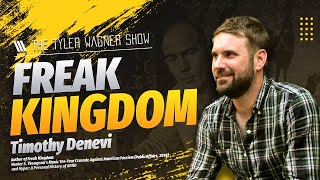
Timothy Denevi, author of Freak Kingdom about Hunter S. Thompson and A Personal History of ADHD, discusses his childhood on Ritalin, Adderall, and Vyvanse, and how he built a writing practice around nocturnal schedules and citation-heavy drafting. He explains what agents and sample chapters actually do when pitching to publishers like Simon & Schuster.
Chapters
All right everyone, welcome back to another episode. Today we have Timothy Denevy with us, so welcome to the show, man.
Thanks for having me on.
Of course, grateful to have you here. Um, so yeah, if you can just start us off a little bit about, uh, you and what you do.
Yeah, I'm a, uh, I'm a writer and a professor, um, of creative writing, and my first book was a memoir and cultural history of ADHD. So it was about what it was like to be medicated in the 1980s, along with millions of other American children and my experiences with psychotropic drugs, especially, you know, that kind of complication where, you know, either there's something wrong with you is how you feel as a kid that not even a drug can reach it to fix it, or that if it does make things better, then was it you who made things better? And what agency do you have? And then it's a cultural history too of how we came to medicate children. And my second book was a work of narrative nonfiction about the countercultural writer Hunter S. Thompson and his kind of manic crusade, as my editor subtitled it, against Richard Nixon and American fascism. And so kind of reclaiming him from the more cartoonish figure he's become in the years that have passed since and positing him in what I attempted as a novelistic way, even though it's all nonfiction, it's all true, as a serious journalist and a serious activist who dealt with many of the issues we're seeing in full bloom today in America. And then right now I'm working on a book that started out as nonfiction. I'm not sure what it'll be about the last week in Bobby Kennedy's life when he was in California on the campaign trail there right before he was murdered. Or up to when I was murdered.
Yeah, man. Okay, so, um, yeah, now I'm glad that, um, you're coming on the show. So, uh, just to give you a little background, so I run this company called Authors Unite, and we help, uh, like, we actually write books for people and then help them market them. And so either way, it's really cool that you're just like in this space. So I have a lot of questions for you, and I think our audience is gonna like your perspective a lot. Um, so first thing before we kind of get into the more professional side, is when you were like younger, did you, is this at all where you like, did you know you were like interested in writing and stuff and like the like creativity side of things? Or did you see yourself like doing something completely different when you got older?
You know, I always loved storytelling. It was something that was a talent within my family. My father was a AAA baseball player, a pro baseball player. So I grew up when he was playing like a lot of rec baseball. Adult baseball, I'm in the dugouts with him, or going to a tournament with him, and the storytelling on display there was always so captivating to me. And I always did love to read. I was pretty hyperactive, but I could immerse myself in the world of the book and transport myself there. And I think growing up I enjoyed writing, but it wasn't really until high school when I started to take some creative writing classes. I went to a Jesuit high school in California, Bellarmine College Prep. They had great— I took a Faulkner, a William Faulkner class there that I just loved. I took a science fiction class there. And I think that's when I wanted to be a writer. So when I went to my undergraduate at Northwestern, I took fantastic creative writing classes there. And I was really lucky to have amazing people to work with, like Richard Powers, who's this fantastic fiction writer, poets like Reginald Gibbons. And so I began to see that maybe this is something, you know, with a lot of hard work and dedication I could, I could do.
How did they— and you probably taken some from the classes you were in for your own class now that you teach, but like, how, how did they make it like fun? Because what's interesting is I remember when I was younger, I kind of fell into this business and like writing my first book. When I was— I was 19 when I did, but it was very not in a way of me thinking it would be fun. And I remember being younger, I didn't like reading, I didn't like writing, but as I got older, I found an appreciation for it. So either way, the question is, when you are teaching, like, how do you, like, perk kids' interests in writing or, like, make it a fun topic?
Oh, that's a good question. I think it really starts with stories that you love, you know, stories that just move you, whether nonfiction or fiction, that kind of changed your perspective on the world. And when I was younger, we— and as you know from an English class, we'd look at that in a more literary way about the themes, you know, the characterization. But I really love creative writing classes because they weren't judging how good the story was or even focus too much on its themes. The creative writing classes that I had were focused on how to create a story like that. What decisions did the writer make to allow you to do the work to feel that way? So I always say a workshop class, you know, when we're looking at each other's writing, it's not about whether— if you imagine it as with the metaphor of like a table, it's not whether or not you aesthetically enjoy the table, it's how was it built? How did you put those legs together? What wood was used? You know, like what— how did you bevel it in a certain way? And I found that fascinating to think of all the decisions that within stories I loved, the writers were making. I remember a class about the Hemingway short story Indian Camp, which is a harrowing, very brief narrative from In Our Time. And we spent a lot of class just talking about the other moments the story could have started. You know, it could have started before the doctor and his son made the trip, could have started later, could have started all these different places, but by choosing to start at this one moment, Hemingway really immerses us and still gives us enough information and context to move forward and engage it. And those kinds of conversations I just really enjoyed, you know, and I think it starts with stories that you love, you know, like books that you love. And when I was younger, maybe that was more Tolkien, you know, or something else like that. And as I got older, it was Faulkner and Hemingway and Alice Munro and James Baldwin, and just reading something that has you step back and you no longer see the world in the same way, you no longer feel the same way. And that's what I believe a liberal arts education, for all the hits it takes nowadays, is meant to do. It's meant to expand your perspective so that you see the world from other people's perspectives, which is what books allow.
Yeah, so from a different angle that you actually just highlighted something for me that I didn't really realize is that it was— it wasn't until I had read a book that like changed my life that I then realized that I liked to read. Because when I was younger, all the books that I— I, for me personally, that I was given to read, they weren't my cup of tea per se. But then I read this business book, The 4-Hour Workweek by Tim Ferriss. I'm sure you've heard of it. And it just— it changed my entire perspective of life. Like, the way I viewed everything was different after reading that book. And either way, it encouraged me to write one, it encouraged me to read more. So it's always just like that one right story or one right book or, you know, creative writing class can alter your perspective on the whole art form, as you know, as a whole. So that's Yeah, interesting. Um, so now going back to when you were a kid, because, uh, with the ADHD, I'm curious, and I'm sure, um, that book did, uh, very well because it's still to this day, I think, uh, very, uh, common. But first thing off the bat, it is, do you like— were you diagnosed correctly? And like, what are your thoughts just overall on kids being prescribed to like Adderall and stuff like that?
You know, I think it's really complicated. Um, I think in some cases it makes it— it makes a difference. I think from the research I've done, from my own personal experience, from my experience as a father, it is a whole industry that's geared often towards answering the question in the positive because that's how the industry connects. I think there's very good doctors out there that give honest reads and honest looks, but if the parents want to medicate a child it's hard for the doctors to really push back and push back. I think 5% of children, you know, struggle with attention. It's different in boys than in girls. In boys, you see a lot more overactivity. But the thing that in girls, it's not as physical. But what I found from my own experience is that ADHD is not what we think. It's not as external. It's more of a tunneling effect. It's more of like everything becomes a rabbit hole. And so I'd write in the book how I wouldn't even realize I was like walking across the room or standing up when, you know, in kindergarten all my classmates were sitting down because I would really tunnel into those things in those moments, in those instances. And it was almost as if I came back in my body when I realized people were disturbed by my overactivity, you know, or my physical activity. And so my mom, we She didn't want to, but it was complicated. A doctor, a general practitioner, I think, or a pediatrician prescribed me Ritalin, and I had a really terrible reaction to it when I was 6 years old. Just really, really awful agitation when it would wear off. And so eventually we did cognitive behavior therapy and had a really good psychologist that we worked with for much of my childhood. And my parents weren't wealthy, at all, but they were part of a community in the Bay Area that was kind of ahead of the curve in treatment because of Stanford University. And eventually, you know, there's the primary symptoms of ADHD, overactivity and attention, restlessness, but then there's the secondary symptoms which come from all the conflict that your behavior causes. So if you have the right environment, if you can pay to be in like a 5-person class at school with a teacher that's really cool about it, then you don't get those secondary symptoms and you may not need to address those primary or symptoms as much, and they lessen over time. So it's an age-level disorder. For a 7-year-old, it's as if with ADHD you have a 5-year-old or 4-year-old's ability to control your overactivity or just your hyperactivity. But if you're 30 and yet a 27-year-old developmental level, that's not as big a deal. And so it exists in adulthood and there's restlessness and attention, but it's really pronounced in childhood. So I ended up taking later in high school antidepressants as a way to treat it too, which was, I think, effective but complicated. And so the book's a lot about that also. And I think that there's brilliant doctors out there and there's so much information. It's been studied for so long on the topic that if you can get the right approach, if you can get multiple perspectives, and if you have the patience and time, you can find ways to deal with the secondary symptoms ADHD causes, you know, with the conflict, with the difficulty in school. But sometimes things can get rushed or things can get overlooked. And then, you know, kids can be medicated or not medicated when they should be. But I think one thing I've really come away with, both as someone who grew up with it, someone who wrote about it, and it was like I had to do a master's thesis, you know, reading everything about it. And then as a parent, I really come away with the fact that Medication is a stopgap or a last resort in kids, and many kids are too young. It's something that until a certain age shouldn't be considered. Then as kids get older, 11, 12, 13, it's something that can really help. In my adulthood, I take time-release Adderall now, which I find very helpful, and my partner, She does too. She takes Vyvanse, you know, and it works really well for her. She grew up with ADHD also, but in a more— not with the overactivity, you know, that presented in me. So I'm still, you know, I still find things like playing tennis. I mean, I played baseball, you know, working out to be not just physically beneficial, but mentally beneficial. I feel much less restless. I feel much calmer in my own body when I am active like that. And I think that's why not just myself, like I gravitated towards sports as a kid, but it's why like my father was a baseball player. You know, my uncle was a pro tennis player and my grandfather was a pro baseball player. You know, I think it, the way ADHD runs in the family, the dealing with it via sports seemed to run in my family also.
Yeah, very interesting. So I wonder, uh, okay, so when I was younger, I was prescribed it, uh, as well. And I was, um, it was like the orange, uh, one.
It's—
I think I was prescribed like way too much, and I didn't last too long on it. Like, for me, uh, maybe it was, uh, similar to your Ritalin, um, reaction. Or regardless, it basically— to me, it was just like too powerful. And it, it actually like very much like change my personality. It certainly helped me like focus, like, like reading a textbook, I could do that on it. But then when it would come to like communicating with people, like it made me very like self-conscious and shy and like almost like I was like too alert or something. It was like too much for me. But I think the extended release or something, that might have been the answer. And I don't know if like I don't know now, what was that, like 15 years ago or something? They may not even had it like that then, I don't know. Um, so that's just— so that's it. But what is, um, and from your research, maybe you know the answer to this, what's the difference between, um, Adderall and Ritalin? Or are they literally like—
no, they're different. Um, they, they have a different chemical structure. Um, Adderall's with semicamphetamine, it's cut differently with salt. Um, Adderall used to be Adderall was called Obetrol. It was like a terrible diet drug that I think sketchy doctors prescribed housewives. Andy Warhol used to take it as a speed in the '60s, and it was re-marketed in 1995 as Adderall. And Ritalin is older. Ritalin was created, I think, in the '30s or '40s by, I think, an Italian chemist who would give it to his wife because she liked it when she played tennis. And he called it Ritalin. Her name was I forget her name, but he named it after her, Rita. And so Rita Lena is what he called it. But I find that I get startled more. I've tried in adulthood taking Ritalin and I get startled. What Adderall does for me is it kind of clears out the noise between the object of my gaze and myself. And so maybe in an athletic situation, like I play in this great DC Wood baseball adult league out here, 18 and over. And I, you know, like when I would miss a ground ball at shortstop or something, that's all I could think about as a child, you know, later, you know, and I would almost see myself missing the next ground ball hit to me, you know, as it's coming, I would imagine missing it. And I don't know, for good or for bad, it makes that thing closer. It makes that thing more immediate. So I'm not thinking about, am I gonna miss this ground ball or not? I'm just watching the ground ball bounce toward me. And so for research, reading psychology articles from 1905, that's not my field of inquiry. I'd rather read a narrative. I'm able to research a lot more on it because I don't get as agitated or just restless having to sit there and sift through something that is really tedious. I can stay focused and it's not as painful, I guess. I don't know if that's the right word, but it's not as difficult for me because I think it clears out that interference for me there too. Like in traffic, driving, I would get really frustrated driving. It helps with that also. But it's not a— it will not— it can't make you write a book. It doesn't. It's a performance sustainer, not a performance enhancer, if that makes sense. You can continue to do something longer. I can continue to read that article a bit longer and get the information I need instead of having to take breaks because I'm getting so frustrated. But that's not going to make— it doesn't it doesn't make me suddenly write an essay I never would've written or write a short story I never would've written, you know, or come up with a phrasing or characterization I never would've had. And so it's very complicated. And I think all these drugs are so complicated 'cause they get at that, the most complicated thing about the brain is that it may be too complicated to understand its own complicated nature. And there's that, you know, boundary between, our environment and how our environment influences us and what our biology is, you know, and who we are no matter what. And these psychotropic drugs just get right at that kind of liminal space. And, you know, it's hard to know sometimes, especially with the brain, which unlike our other organs, the brain changes shape based on what it perceives. You know, it's like my hand doesn't change shape, you know, because like a car went by 30 feet away, but like the brain will change when you perceive a terrible traumatic thing, a car accident. The brain will change, it's plasticity. And so I still even, I wrote this book in 20, I published it in 2014. I worked on it when I got my MFA at the University of Iowa, a writer's workshop there in nonfiction. And then I finished it when I moved out here in 2011, '12. And I still do, I have a student writing about anxiety right now. And I was talking to her yesterday. She's an excellent writer. We were talking about that boundary between the environment and your biology, you know, and what is an environmental factor, you know, that leads to behavior in a certain way, and what is innate within us, and how does that change over time too.
Yeah, that's, um, a lot of what you said there, I was thinking back, I could relate to it. Yeah, it's like, and I, I noticed too with Adderall, when I would take it, I could like go longer, like you were saying, like I could read longer, write longer. But I think I was like, for lack of a better term, like speeding so much that like I would realize I'd like read back on papers that I would write and I would actually like miss words because my mind was going so much faster than I guess my hand or my typing was or whatever. So like just like little words like the word the or like, and even with like texting and stuff, I would like notice that whatever I thought I had typed, there was like out of every 20 words there was like 2 that were missing. So either way, I just— and I'm— for me personally too, I'm very sensitive to like caffeine or anything like that, so it kind of adds up that.
Yeah.
And maybe, maybe the dose was just too high. So maybe just a little—
I'm sure it was. That happened to me. The dose was way too high. And people are different. Um, yeah, everybody's not— you can give everybody the same dose and each person will have a different reaction. Like, they really will. Um, Yeah, we have different— that's why dosing is so important. So important that I think when it comes to children, if you have to move to that step of medication, you know, with a teenager or with an older adolescent, like, to always start at the lowest dose to where it's not even working and build up from there. Never start where the dose may be too high. But, you know, doctors are busy. You see a general practitioner maybe, or a pediatrician that just sees a lot of kids, you know, and they can I think you can fail to get individualized care, and individualized care is the most important thing. And that's what my mom really struggled to find and was able to find. I'm very lucky. She would work so hard at it, you know, over time. But once it's a cookie-cutter approach, then I think a lot of kids get, um, you know, left out, and a lot of kids do get— maybe do get over— overmedicated with the dose that they're taking, and it's dangerous.
Yeah, no, no, for sure. And now I'm just remembering now, I think, I think my first, it was 40 milligrams a day, so 20 in the morning. Yeah, and that is a lot. Um, but like your body, I also remember though, after I got off of it, like your body starts to kind of adapt to it after a while. So you kind of need like, either way, I had stopped for a while, and then when I was in college, I had tried to do it again because the just the topic I was majoring in. I didn't like any of it, so it was the only way I could like push through my textbooks. And I think I remember like 60 to 80 milligrams for like exams and stuff. But again, because your body would adapt, whereas if you hadn't taken Adderall for like years, and then if you took 60 milligrams in a day, you'd be up for like 3 days straight.
Like, yeah. So I went back on it. Yeah, I went back on it when I was 30. I was at the Iowa Writers Workshop, and I was pissed that I have ADHD, I'm writing about ADHD, and all these writers are just taking it as a performance sustainer. But I was initially prescribed Vyvanse, which Vyvanse is fascinating. It is racemic amphetamine, but your body breaks it down and it releases it slowly by the way your stomach breaks it down. And so it's like a time release mechanism built in. But they gave me a bigger dose and I was up for 30, I was up all night. I couldn't sleep, you know, and I was like, oh, and it wouldn't stop. I'm like, I want to go to sleep so bad. It was, you know, it's just like dosaging like that, you know, even as an adult. Um, yeah, you know, it's always— and it, you know, the book about Hunter Thompson, he took something called Dexedrine, which is similar to Adderall. Yeah, it's just cut differently with salt. Um, it's a little harsher in my opinion, but, um, he, um, you know, he really used that to produce, but he was a terrible alcoholic, so he'd use it to recover, he'd use it to stay up all night. He really was using up whatever reserves he had and he kind of began to burn out. And so he switched to cocaine, which is a much more rollercoaster-like up and down. And that really, he never was able to work. He wrote some wonderful pieces, but he was never able to work in the same way that he had before that. I think it was, you know, I talked to his son a lot, like his son wrote a great book on growing up with Hunter Thompson. The alcoholism just destroyed his body and his mind.
You talk with his son a lot?
Yeah, Juan lives in— Juan Thompson lives in Louisville. I got— this has been a tough pandemic, but he's just this careful and thoughtful guy, and he wrote a really great book called Stories I Tell Myself. And so I like, you know, like, I like talking with Juan about, like, decisions Juan made too as a memoirist. Like, there were parts of that book that if his father were still alive, he just couldn't include. Thompson had drank so much that by the end of his life, he destroyed all the nerve linings, I think, in parts of his body, and he had to wear adult diapers because he was incontinent from alcohol, basically. And Juan Thompson gave a talk at George Mason. We had him come out to do a presentation, and he talked about how he could never have included that if his dad was still alive, but he needed to include that. That was a key component to the harm that his father's lifestyle brought on both his father Thompson and also on the people around him. Um, that was, you know, with memoir it's tough, um, when those decisions come up of what to include and what not, um, for sure, people that are in your life.
Yeah, so that was going to be the next stop because I know, and, and as maybe surprising as it would be for somebody like you and me, I— not everybody I think knows of like they probably heard the name Hunter S. Thompson, but they don't really know the significance of it. So can you, just as a foundational point, can you explain like who he was? And then I want to talk to you more about like the research you've done, because I know he was a very interesting individual for sure.
Yeah. I find him fascinating. Thompson was born in 1937 in Louisville, and he was a journalist. And so Throughout the '50s and '60s, early '60s, he was a straight journalist in the parlance of our time. He did reporting trips to South America, he reported from the West, but he really chafed at the structure and plainness of mainstream journalism at that time. And he was part of a movement that included Joan Didion and Tom Wolfe, the New Journalists, who began to reinvent the way you could tell true stories formally, creatively. And so the stories were still true, but they borrowed devices from fiction or they had more collage-based aspects. They were more literary. And he wrote about politics and he wrote about sport, and he came up with something called gonzo journalism, which was a participatory style of journalism that was more subjective and foregrounded subjectivity and claimed that objectivity isn't really something that's possible, that just simply by the way you arrange facts, you're making an argument on what happened, you know, you're giving a perspective on what happened. So he said, I might as well just put my perspective right there. And he would be part of the story he was trying to get. He was often, he was very good at dramatizing how hard it was to get the story he was trying to report on. And that became part of the tension of his piece. And so he wrote about the Hells Angels motorcycle gang. He went and embedded with them in the middle of the '60s. And then he transitioned from that to writing about national politics. And so in 1972, he followed George McGovern and eventually Richard Nixon on the presidential campaign trail. And as one of the press aides for McGovern said when the book came out, Thompson's writing was probably the truest or the most true and least factual of anything written about the written about the campaign. And at that time, he also wrote a novelistic kind of stream-of-consciousness novel. He wrote a stream-of-consciousness novel called Fear and Loathing in Las Vegas, where he and the civil rights attorney Oscar Zeta Acosta, who's referred to as Dr. Gonzo in it, went to Las Vegas for this kind of drug-filled weekend and reflect on the death of the '60s. And the impetus behind this was He was reporting in Los Angeles in 1970, 1971 on the murder of Ruben Salazar, this fantastic, really talented journalist who had his head blown off by the police during a riot in East Los Angeles. And he's trying to figure out if the police killed him purposefully or if they just, in their act of, you know, in the police riot that they instigated, He just was in the way. And Oscar Zeta Acosta, his friend, was one of the main sources, but Acosta was part of a revolutionary group, the Brown Berets, members of whom didn't trust Thompson in their midst. And so they left Los Angeles that weekend and they went to Las Vegas so they could talk about what might have really happened. And that became the basis of Fear and Loathing in Las Vegas, which is a more surreal kind of impressionistic take and narrative.
Yeah, that movie, um, is wild.
If anybody, uh, watching or listening has seen that movie, uh, John Gilliam, he's just— he's a fantastic director. It's— the music's great in it, and Johnny Depp, I mean, and he said Del Toro is fantastic in it.
Yeah, it's, it's a, uh— I think— oh my God, it's been a while since I watched it, but I think I've seen that movie like almost 10 times or something. I love that movie. Um, so what is, um, because I, I haven't done— like, I knew about Fear and Loathing in Las Vegas and stuff like that, but for Hunter S. Thompson, do you know, like, what led to what, uh, him, like, drinking? Like, was it just so he could work more, or like to put up with the, I guess, plainness of, of everyday life? Or like, what was it that led to that lifestyle?
No, I think the Dexedrine was initially so that he could report longer, he could write longer. I don't talk about it in the book, but personally, I do think Thompson had pretty serious ADHD. You know, like, I, you know, something I didn't know him. I, you know, he passed away in 2005. He killed himself. His body was, and his mind were breaking. But I think that certain things were very hard for him. He loved deadlines because they created stakes to get something done, you know, and he loved to read it. He loved to write too. But I think, you know, that 1950s, '60s crowd, his Louisville upbringing, he was pretty— it was a pretty boozy world. And in his 20s, he could kind of sustain it and even into his mid-30s. But the Dexedrine helped him. While drinking, and he would kind of drink all day at this. He would never get blacked out or too out of control, but he portrayed himself as that, but he really didn't. He did eventually become a really just dependent alcoholic, like dependent on alcohol. And so he would— the speed would— the dextrodrine would make, you know, the task in front of him closer, and then the alcohol might make it more elastic, is something that he talked about and Joan Didion's talked about. When she's taking Dexedrine too. And so, you know, I think at first it was part of his lifestyle, you know, it was just kind of a boozy world as a reporter, and then eventually it became or blossomed or, you know, became full-blown addiction. And then, you know, he writes in his letters a lot about, in the 1970s, how it's no longer working the same way it did, you know, he's no longer able to recover or to sustain himself, so that's the switch to cocaine you end up seeing. And It doesn't work. And that's right when Nixon departs and leaves the White House too. And Nixon was kind of his agonist, like his antagonist, his main motivator, 'cause he was so outraged at Richard Nixon. Richard Nixon, it's hard to imagine, but basically pretended to be a Biden-like statesman when in fact, as Thompson saw, there was something deeply devious, seditious, terrible within him. And Thompson wanted to expose it. And he would write about how Nixon would turn into a werewolf and run around Washington, D.C. as a kind of fantastic passages. And he was outraged that Americans knew Nixon was lying and they didn't seem to care, or they allowed that facade And even though they had to understand that this was a man capable of what he was eventually caught doing, which is breaking the law to try to defeat his political opponents, cheating and using the powers of the presidency in a corrupt manner. And, you know, he has a great line when Nixon— he has a great obituary. For Richard Nixon, Thompson does, he's like, let it be known, like, I kicked him long before he was down. You know, like, that he always, you know, it's really, it's the one thing he was ever, you know, he's a really good writer at showing the him on the scene, you know, the him that's doing the reporting, being wrong about things, you know, and being confused and bewildered. Like, the character he creates of himself is great at that. But he really was right about Nixon. From the start. He was right about— he was very good at putting pressure on American corruption and how the American system and its power can be overtaken by those of us with the worst impulses because it is an open system. So he was worried. He thought Mayor Daley was a monster. And he was there in 1968 when, at the Democratic Convention, the Chicago police just attacked peaceful protesters and just bludgeoned them. And he thought that LBJ, Lyndon Johnson was corrupt and had lied to the nation about the Vietnam War. And he was outraged at that hypocrisy. Yeah.
I wanted to ask you too, because obviously what I think I saw— how many books in total have you written? 3 or just 2?
I've written 2. I've written Hyper and then A Personal History of ADHD. I've written Freak Kingdom, Hunter Thompson's manic 10-year crusade against American fascism.
Got it, got it. So what, um, like— and the reason I ask is a lot of our listeners, they are— they're either already authors, which maybe this wouldn't be so helpful for them, but for the ones that are aspiring authors, do you have some sort of like process to write these books? Because I saw too, like, your Hyperbook, it's, you know, it's almost like 300 pages, so it's not, you know, it's not a like short in any way. So do you have some sort of process that you do or routine to finish these books?
Yeah, you know, I like a deadline. That helped. That's not something we always have, you know. I like to read before I start to write. It's been really hard with the pandemic. I work at coffee shops usually, and I'll read and then I'll write down some sentences of what I read just to kind of get get in shape and get going. And then I'll do, you know, a few-hour bursts and take a break and start again. For the Thompson book, I was on such a steadily approaching deadline, and in the Thompson book, every detail that I used— like if I said the bay smells like machine oil, you know, like I had to have a citation for that. And so the amount of research I'd have to do and then writing was very intense. And so I ended up staying. I went to a more nocturnal schedule for a few months for that, which isn't healthy and I don't recommend it, but it helped me because all those emails, all those news alerts suddenly weren't coming in anymore. There was such a quietude to the world around me that I could then, you know, and in that I could focus better on doing the research I needed to do, then putting the research into the prose I wanted. It to inhabit. You know, and so I, you know, now it's— I've really struggled with the pandemic with writing. I kind of relied for a while on deadlines again, like I was at January, I was at the storming of the Capitol on January 6th as a, you know, reporting on it. And I write like more impressionistic essays. And, you know, I go to the Conservative Political Action Conference, and I'll write about that. And those have deadlines, you know, those have set, you know, the deadlines make me get them done. But for the books, you have to have rhythm. For the books, it's repetition. You know, for the books, it is the daily grind so that the pages slowly accrue. And I've been able to get back into coffee shops like this summer, and that's really helped me. But besides that, I probably had the toughest time writing in my— in my life during the pandemic. And so I'm finding it hard to create those rhythms again, like I think any writer does. And you just gotta find the spot that works for you. I know a lot of writers that working in their home is exactly where they wanna be. You know, when I'm not doing a ton of research or I have books, I'll turn off my internet, you know? And I used to go, when I lived in an apartment building a few years ago, I would go and I would put my phone and my iPad down in my car in the basement, you know? I really wanted to check my email or if I really wanted to send a text, I'd have to go all the way down. And on my computer, I would turn off— I'd have a program that cut the internet. And so, I couldn't use it even if I turned my computer off and on for 3 hours. I mean, that's an extreme step to take, but that kind of thing really helps me. I think reading calms my thought process. I don't think humans are meant to be writing an email to somebody, taking notes on what they need to do, checking their finances, responding to a text, all at the same time. Now, how do you go from that to writing about, like I'm trying to do now, 1968, you know, and living in a different world and a different perspective? I really struggle with it. And so I find that reading for 45 minutes or half hour before I start to write is almost like how exercise can calm my body. That kind of helps calm and calm my brain.
Yeah, no, they make— and look, I think for some people listening, maybe it's, it's like, oh yeah, you just turn off your phone and like, it makes sense. But like, these are actually profound things because in today's world with just how much stuff is going— like, my phone actually is always on do not disturb 24/7. And like, I have a few contacts like mom, brother, girlfriend that are like emergency so they can get through. But other than that, and it's not that I don't like, I'm respectful. It's not like I just don't respond to people forever, but I just pick like windows. And that's one of the things I learned from The 4-Hour Workweek is like batching. So like for when I'm doing like sales calls, let's say I only do calls for sales on Wednesdays. Like that's, and then all the other 6 days are like podcasts or like creative days. And just like you, like my phone, I don't, go down and put it in the car, but I like the idea. But I just, you know, in the other room on do not disturb, and then you can actually get into flow. And I think as a writer, that is one of the biggest things is that some days you just don't get there, right? So when you do, you don't want anything to mess that up. And any little thing that takes you out of the flow state, whatever you want to call it, it sucks, man. So it's like the door's locked, like I don't want any chance of any interruption. Uh, so it makes a lot of sense.
Um, good point.
And then I also, before I let you go, I wanted to ask you this, is, um, I think I saw at least for Hyper you had— did you have traditional publishing house for that?
Yeah, for both of them. I, um, Hyper, it was Simon Schuster. Um, and for, um, Thompson book, it was HBG, Hachette. Okay, it was Public Affairs, which is part of HBG.
Do you have any like, um, tips? Because there's a lot of people that want to go the traditional route, but obviously it's a lot harder. You know, you could self-publish now, anybody can self-publish. But any tips on getting a traditional publisher?
Yeah, I mean, I think the best place to start is, um, and in my field, and I think for a lot of authors is an agent that you trust. And a good way to get an agent, I was told when I was in grad school and I tell my students, is find the books you love, you know, find 5 or 6 that are similar to the book you want to write or similar to the book that you're writing. Go to the acknowledgments, you know, see who their agents are, you know, see who worked with them on that book. Get those names from the back, you know, and then write those agents and write them you know, one paragraph about what your book's about. And, you know, it doesn't have to be— let the book itself shine through. You don't have to say it's different, it's never been done. You can show that in the paragraph that you send them. And an agent, you know, I've had the same agent. I was lucky enough at Iowa to get my agent, and she was an editor. She was— Michael Ondaatje's editor, a great literary writer. She was Don DeLillo's editor, and she became an agent. So she was really good on my first book of editing it line by line with me. That's something that editors used to do more often, but that an agent can do now to help you sell it. And so for both those books, I was able to sell them with samples. You know, like one had a first chapter, the Thompson had a first chapter, the Piper had a first 100 pages, and then a proposal. Your agent will work with you on a proposal, and that's helpful, and that's got its ups and down benefits. Sometimes you need to finish the book before you can sell it, especially if it's more literary. And that's a different set of motivations. Like the Bobby Kennedy book I'm working on right now, I think I'm going to need to finish before trying to sell. And so it's— but it's, you know, you realize at a certain level too, just like it's like with form, you choose the form because that's the only way you can express the emotion that's driving the story or the argument or the essay. The book itself is the expression of what compelled you to create it and to spend the time to do it, and its reception and its publication are necessary and important, but that's secondary to the act of doing it. And I have to remind myself too that it's the act of creating the book that is the most essential thing. And that can be hard. You can create a book, no one may read it. It can be the book you had to write to be able to write the next book that many people might read. You know, you may write it in a way that only a few people will read and they'll engage it in the way you hoped, and it will be more successful in that manner than something that might have been received in a more widespread fashion. And it's, you know, it's about that dedication, like what you said about, you know, getting in the flow, like I just have to tell myself like those 2 hours are the point. I can stay at my computer and I can come up with 3 sentences or nothing. If I spend the 2 hours without interrupting myself, without like taking a nap, unloading the dishwasher, doing something else, if I spend those 2 hours, then that is the success. That is I've produced something in spending that time, not in the secondary aspect, which is the pages or the words that you get.
Yeah, I agree. Just like committing the time. And actually, as you were talking, I was thinking too that like, uh, are you familiar with Jordan Peterson?
A little bit.
So either to see his career just like blow up from 12 Rules for Life, but his first book is actually called Maps of Meaning, and it did like— and I guess it did okay, let's just say. But it really was his second book that really succeeded, and then everything else started to fall into place. So I just kind of highlighting what you said there, that like maybe your first book, it was only to be written necessarily so that your second or third book could really be the one that impacts a lot of people or whatever the reason you're writing it. So, and there's no, you know, Jordan Peterson is one of the most famous people now, and like his first book was not like a huge success. So it's just good for writers to know that, like, I think it's such a long-term game. And if you're in it for, like, a get-rich-quick thing, this is not the career for you. But it can happen, right? And, like, it's— and if it does, amazing. But, like, it's just, you know, it takes time, a lot of effort, and, like, you could spend years writing a book that nobody reads. Like, it's possible. So, um, But yeah, man, so I want to thank you for coming on, and I want to leave the floor to you to like, uh, if there's anything we didn't cover that you want to share, please do. And then like websites, social medias, books— where can people stay in contact with you?
Great. Well, thank you so much for having me. Um, I find social media terrifying. I'm on Twitter, uh, @TimDinetti. Um, and I, um, my books are available, uh, you know, through wherever books are sold, I guess, Amazon. Also the audiobook for "Free Kingdom," I found to be great. It was like a Mark Boyette, a Broadway actor did it, and I listened, I'm like, that's how I should be reading it. I'm like, he just did a great job. I was really kind of blown away. So you can pick that up too. And my essays, I'll write for places like Salon, Literary Hub, you know, on politics. A lot of the different protests and mob violence that's gone on in D.C. in the past 3 or 4 years, I've tried to report on, you know, but in a more subjective and impressionistic way.
That's awesome, man. Thank you again for coming on. I appreciate it.
Thank you for having me. This has been great.
More from Tyler


Catherine Nikkel : THE STORY EVERYONE HAS BUT HASN'T TOLD : The Tyler Wagner Show #1120



Scott Ritzheimer: Bring Predictable Success to your Organization | The Tyler Wagner Show #1115


Fred Moskowitz: A GUIDE TO GETTING STARTED WITH IN MORTGAGE NOTES | The Tyler Wagner Show #1113

Mark Podolsky: From Land Investor to Full Time Success How I Made $90,000 Cash in Real Estate


Mark Podolsky: How to achieve a 300% return on investment my foolproof strategy

Mark Podolsky: How to make passive income selling raw land the irresistible pricing strategy