Timothy Timberlake: Having Faith and Strong Foundation | The Authors Unite Show #984
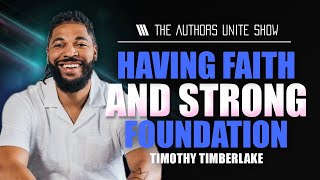
In this episode of the Authors Unite Show, host Tyler Wagner interviews Timothy Timberlake, pastor of Celebration Church and author of The Power of 1440. Timberlake recounts his upbringing in a multi‑site church founded by his parents in Creedmoor, North Carolina, and the pivotal moment when his father was diagnosed with terminal throat cancer. The experience reshaped his view of God, leading him to abandon other life plans (basketball, media) and answer a perceived divine call to ministry. He describes how obedience, peace, and clarity guided his transition from college to pastoring the family church. Timberlake emphasizes the often‑overlooked concept of “stewarding pain,” arguing that pain can be a teacher if embraced. He shares his passion for speaking, noting that connecting Scripture to personal suffering creates transformational moments for listeners. The conversation then shifts to his book, The Power of 1440, which was conceived during the early days of the COVID‑19 pandemic. Timberlake argues that society treats time as an endless resource, but each day contains exactly 1,440 minutes; how we steward those minutes determines our future. He critiques the habit of living in past regrets or future hopes, urging present‑moment awareness. The pandemic, he says, forced a focus on what truly matters, turning distractions into perceived opportunities. He stresses gratitude, using what we have wisely, and the importance of perspective. Finally, Timberlake explains that the book’s goal is not time‑management per se, but to make readers hyper‑aware of how they steward time, encouraging intentional living. He closes with contact information (thepowerof1440.com, Instagram @TimTimberlake, Twitter @TimTimberlake, Facebook page).
Chapters
All right everyone, welcome back to another episode of the Authors Unite show. Today we got Tim Timberlake. He's the author of The Power of 1440: Making the Most of Every Minute in a Day. So welcome to the show, man.
Man, it's an honor and a privilege, Tyler. Thank you for having me on, man.
Of course, dude. Thank you. Same to you. Thanks for coming on the show. Um, so to start off, I, I kind of— I like to start the show off in this way, not from like when you were born, unless you want to go there, but like when you were younger, did you see your life like where you are today? Did you see this at all, or is it completely different?
Completely different. I, I had really no desire to do what I'm doing right now. And quite honestly, the only reason I am doing what I'm doing right now is because I felt a godly conviction to do so. And so for those that are listening that may not be familiar with me, I pastor a church called Celebration Church, which is a multicampus, multisite church that is serving people in a few different cities and in a few different nations. And so God has been super, super good in that we get an opportunity to reach thousands of people throughout the week through the various platforms and locations that I have an opportunity to lead and steward, but this was never my dream. This was never my desire. I saw my parents do this. I saw my parents lead. They started a church in the early '70s in Creedmoor, North Carolina, and the church had about 9 people in it. And my father began to do something that wasn't too common at the time, and that was really teaching leadership and really applying some life principles and applications in a church setting. And when he began to do that, our church began to grow exponentially. And so we went from 9 people to a couple of hundred people within a matter of months, and from a couple of hundred people to about 1,000 within a year, and then 2,000 the next year. And then every single year it just kept growing substantially for a number of years. It ended up growing to being, if not the largest, one of the largest churches in North Carolina in the late '90s, early 2000s. And in 1997, my dad was diagnosed with stage 4 terminal throat cancer and was given 3 weeks to live. And he also had the option of having an experimental surgery that would remove the tumor from his throat. And so the procedure had only been done a handful of times, and so it was really no guarantee that it would be successful. And as a matter of fact, they told him there was a 70% chance that he could die on the surgeon's table because of how invasive— invasive the surgery was. And so essentially what they would do is they cut him behind the ear They opened up his neck, they made an incision that went all the way to the back of his left ear, and really leaned his head back to remove the tumor from his throat. And so when they did that, they removed the tumor the size of a chipmunk, but they also had to remove a quarter of his tongue. So he was no longer able to eat, drink, or swallow through his mouth. He was fed through a G-tube for the remainder of his life. And he lived and fought for his life for the next 5 years. And on my 18th birthday, he sat me down and he had a conversation with me. And the conversation was really him just kind of telling me some of the things that he believed I would step into for the rest of my life, some of the things that he had been praying for, some of the things that he and my mom had been believing for. And after about 5 hours, he went upstairs to his room. And 2:00 AM that next morning, my mom knocks on the door. She says, "Hey, I need you to come help me get your dad out of bed. He's not responding." And so I go into his room and I pull him out of bed and he's already dead. And I'm just like, "Man, what the heck?" You know? And so I started to try to recall some of the things that he was telling me in the conversation because I wasn't really paying attention. I wasn't really intentionally listening. It was my 18th birthday. I'm thinking about going out with my friends. I'm thinking about partying. I'm thinking about all types of stuff that, you know, I had the opportunity to do. and it wasn't really leaning into that moment. And so I go off to college, Hampton University, and I really start to feel like, man, there's something more that I feel I need to be doing. I didn't know what it was. And I really started to get annoyed with college and understanding, man, maybe this isn't the track for me. Maybe there's something else. And so just kinda was confused for a while, and then I really felt like God wanted me to help people. And so I transferred from Hampton University to a Bible college in Detroit and graduated from there and moved back to North Carolina and started to pastor the church that my parents started. And that was 17 years ago. And so we've, we've seen thousands of people connect to hope. We've seen thousands of people's lives transformed and changed for the better. And I call myself very fortunate and blessed to be able to walk with people from all aspects of life and add value where I can. And so I'm a firm believer that at the end of our life, we're known for one of two things, and that's the problems that we solve or the problems that we create. And my purpose is just to help people solve problems. So that's the snapshot of what I do.
Wow, that's incredible, man. So a bunch of questions come up just because I'm curious, because I actually went to school in South Carolina. I was Gamecock. So where did you say in North Carolina it was?
So it's in Creedmoor, which is right outside of Raleigh-Durham, North Carolina.
Oh yeah, I know Raleigh-Durham.
Okay. Yeah, so I'm a Tar Heel man through and through. That's awesome.
Okay. I'm familiar. Um, so a question that came up in my mind. So you said you went to Tampa University?
Hampton University in Hampton, Virginia. Yeah.
Okay, gotcha. So you were in Hampton University and then, um, you said like kind of God was telling you that you should become a pastor or like be involved in the church. But like, during— was there kind of like a time where like God was talking to you, but you were, I guess, resisting that? And like, what was that like? Like, what was your other option, I guess?
Yeah, I had a few different, um, options or life tracks that I could have taken at the time. I was pretty good at basketball, and so I thought to myself, you know, I'll go overseas and play professionally. And, you know, try to make a career out of that. If that didn't pan out, then I was in school for mass media, and I liked the production side of media, and so I would pursue that if basketball didn't work out. But, you know, serving people, ministry, wasn't on my radar at all. And, you know, the difference between me really following this call of God and running from the other things that God had really kind of instructed me to do, is it was undeniable. I couldn't avoid it. I couldn't shake it. It was a burning iron in my heart that would not let me rest until I obeyed. And one of the things that I'm a firm believer, of is our future and our destiny moves towards us at the speed of our obedience. And so a lot of times we're waiting and we're waiting and we're waiting on what the next step is when we just have to take a step in the right direction. And when we take that step, we might not get clarity, but we definitely will have peace. And when we follow the peace and when we follow in the direction of that peace, then more clarity, more direction comes. And so I didn't have all the answers. I didn't have all of, you know, the directions and the clarity, but what I did have was a word from God and an undeniable impression on my heart and an undeniable, you know, just assurance that this is what he wanted me to do. And when I stepped into that, then he began to make things clear to me, he began to lay things out for me, step by step. And, you know, I'm not sure what our listeners may believe. And, you know, to this point, that may not even matter. But I'm a firm believer that when we do what it is that we can do, then life has a tendency to fall in place. And so I did what I knew was the right thing to do, and God began to align and order things in my path. And so, you know, as I mentioned, because of that, we've been able to see thousands of people connect with hope and life transformation and change.
Yeah, you know, I've actually— I've gone through a lot of your Instagrams. I've seen you on stage and stuff, and it's powerful, man. Um, I wanted to ask too— well, there's two questions. So first one is, when you were younger, you know, obviously your, your parents were involved, um, with the church, obviously. Did you always believe in God, or did— was there some resistance there when you were younger?
Definitely resistance, especially when my father got sick. And so my, my perspective, my perspective of God, I mean, at 12 years old, you really don't have the knowledge or the understanding to have a strong foundation in faith or belief, you know, unless you're just super mature as a 12-year-old. I was not. And so my faith was built off of the backs of my parents. Yeah, so when my father got sick, my perspective of God was, if this is the way he treats his servant, like, I don't stand a chance. So I might as well kind of do whatever the heck I want to do and live how I want to live, because eventually this is going to be the outcome for me as well. And just not having a healthy perspective of God and God's desire for us, and really just kind of pursued the opposite of what I had saw my parents model for so many years. And it wasn't until I had that radical moment with God that it really just kind of opened my eyes and changed my perspective. That really brought me to the place of knowing, okay, what happened to my father was not the heart of God. But what God can do is utilize the things that we see as pain, utilize the things that we see as discomfort, utilize the things that we see as uncommon to push us closer to Him. And so one of the things that, you know, we don't hear a lot about is how to steward pain. We hear a lot about how to have better relationships, how to steward money, how to steward time, but we don't hear a lot about how to steward pain. And pain can be one of the greatest teachers in our life if we allow it to. And I'm a firm believer and try to practice that no pain is going to enter my life without it profiting me some way, somehow. And so in this season of great pain, I just started to assess and do personal inventory on my life and see, okay, how can this moment, how can this season push me to become better and utilize everything that I could so that I would not remain the same and kind of go in the direction that I felt God was calling me into.
Got it. Yeah, I think that actually goes along because, uh, before we hopped on, I read the bottom of, uh, or part of your— yeah, win some, learn some, but never lose. Yeah, right. So that kind of goes along with that. Um, I wanted to ask, I'm always curious about just like the most profound experiences people have had. So from seeing you on stage like you're very confident and like it's definitely like, um, I guess emotional is the right word in some cases. Like you can really feel the energy like coming through. So is there a moment when you spoke on stage at a church that like, or maybe it's a few moments that like really stick out to you? Like it was like you felt it, the whole audience, and it just like, like God was kind of just like pouring through?
Yeah, I think there, there those moments that kind of mark you, that you connect with. And so, you know, whenever I'm communicating, I always try to connect people to Scripture. And the best way to do that is through the pain that we all experience in humanity. And for me and what I believe, that is why we need a Savior. And so whenever I'm communicating from that lens, from that perspective, it is always either emotional or motivational for me, because I know that if I can connect what I've been through, what the Scripture is telling us, to the life and to the heart of people, they will experience change and transformation. There's no greater reward for me than seeing people connect to hope in Jesus and have their life transformed and changed because of it. And so that in and of itself is a constant reminder for me every time I step on stage that what I do is not only helping people, but it's helping people change from the inside out.
Yeah, I think it's a big— it's like a big shift for people when they like really find meaning in their work. And that's what I feel when I talk to you is like, you know, obviously I'm sure other good things come of it, but like the main focus is like helping people and there's like a deep meaning in the work. So it's almost like— it's almost like the outcome in a sense doesn't actually matter because the intention is so pure. And, and, and it's almost like if people just show up with you, then like, you know, I don't want to say not always good things will happen, but I have a feeling like good things will, will come of it most of the time. Let's say. Yeah. Because, you know, because it's like, it's pure, right? And I think it's interesting, right? So I'll give an example with these interviews. I was talking to one of my friends and like, I love podcasting. But for the longest time, I always looked at it as something fun, but I didn't like see the actual— I didn't recognize the impact that the potential impact that it could have. And then once I actually started to realize like, you know, somebody listens to this conversation and if they take action on it, it could actually change their entire life, which then could change the people around them's life. And then that can ripple out to other— so it's like this one interview, although it's just, you know, it's just like, you know, 30, 40 minutes in time because it's recorded and other people will listen. It is actually— so, so I'm just saying like that added more meaning to my life. So it wasn't just like, oh, I like talking to people and asking them questions. It's like, no, this interview could change, you know, not to sound crazy, but it could change the world in a sense of like one by one, people listening to.
Absolutely. And that, you know, I think we think a lot of times that what we do is minuscule in terms of the big picture, but the only way that the world has changed is one person at a time. And so what you do, um, it's contagious, right? And so with every interview, there's someone that hears it and they, they share it with someone else. Because as humans, we talk about what impacts us. And so when that is shared, it creates a desire in the person to learn and to lean into the podcast that you provide. And so for the person, though, that told them about it, what it has done is it has created a memory for them. And memories for us are the only things that live beyond us. And so, like my grandfather, I have memories of stories my grandfather told me. He's no longer here. I have memories that my father told me. He's no longer here. And so what moments like this does, it creates memories for us. When we share those memories, we share them to people, and those memories go well beyond our reach. They go well beyond our life. And so that's why moments are so monumental. To the landscape of culture. And so culture is defined by the conversations of leadership. And so when we have moments like this where we can talk about life, or we can talk about what's happening, and we can talk about literary stuff, or, or, you know, whatever's going on in culture, what, what is happening is the people that are listening are having their mind shaped and pointed in a direction to create a memory that will last with them will be on their life.
Okay, that just added more meaning to it, so I appreciate that. That's awesome. Um, so I want to, um, talk about the book. So The Power of 1440, uh, start from the beginning. Like, when did it first occur to you to like write a book? And then, um, how did you like come up with this, this idea for it?
Yeah, and so this is for me the second book that I've written, but this particular theme came to me really right before COVID kind of went crazy, and I kind of saw how society and culture had taken time for granted and really kind of got into the routine of just looking at everything as normal or ordinary. And so when we look at the word ordinary, Webster's Dictionary defines ordinary as nothing unique, nothing different. But it's the exact opposite of what we experience every single day, because this day is different from yesterday and tomorrow will be different from today. And so there is no day that is ordinary because there is no day that is exactly the same. And so when I was taking a look at that and really seeing the landscape of culture and society and seeing how we looked at our day, we typically look at our day from the standpoint of 24 hours, which in our minds, from a scientific standpoint, from a historical context, is an endless amount of time that we have every single day. But when you boil it down to its true essence, when you boil it down to the minutes, we have 1,440 minutes in every single day. And the way that we steward those minutes determine the future that we experience. And I looked at what was going on in 2020 and really the end of 2019 and just saw we spent a lot of our time in the regrets of yesterday or in the hopes of tomorrow, not really leaning into the present moment here and now. And so when you think about yesterday, you're thinking about yesterday right now. And when you think about tomorrow, you're thinking about tomorrow right now. So why not be present in this moment that we have right now? And so this book is really a journey of making the reader hyper-aware of the time that we have to steward. And sometimes when we are around something so long, it becomes mundane to us, and it takes us being reminded of what it is that we are actually doing to bring us that sense of awareness to steward that moment well. Mm-hmm.
I got it. Yeah. I— it's interesting, like, you know, with everything that happened, I feel like 2020, a lot of people, you know, they went into it, and they were going to be— just because of 2020, what it is, right, like clear vision. So they go into the year, and they're like, this is going to be my year. And then, you know, like, I forget when it was, I guess it was like 3 months into the year is when everything just kind of like hit the fan. And what was interesting for me, um, is it kind of just put things in perspective, you know, like I was like, okay, like I'm healthy, business is good. Luckily my business was good. I know a lot of businesses did get hurt, but, um, and like, it just, I kind of did shift, like, and I think if there was any positive to it, for people is I think it just like put the importance of things in perspective because everybody was so caught up like you're saying in the past and the future and the day-to-day is for me it was that the first thing I thought was like I'm healthy, my parents are healthy, my brother's healthy. As long as that's good, like I'm good for right now and then I just kept moving, you know. So yeah, it's interesting, you know, obviously I think it'd be better if it didn't I don't wish it. I'm not glad it happened, but there was some pros, I suppose.
For sure. I think 2020 did exactly what people said that it would do. It gave us clarity and it gave us— it should have refocused us. And so one of the things that I am a firm believer of, if we lose focus, distractions begin to look like opportunities. And for so long, we looked at all of these different distractions as opportunities. And what 2020 did was it condensed all the things that we saw as opportunities and said, OK, these are the things that are important. These are the things that are not. How can we focus on what really matters? And it brought us back to a place of slowing down. It brought us back to a place of recognizing what is valuable and what is not. And let's focus on those things and everything else, let it fall by the wayside. And I think the people that really grabbed ahold of that and really kind of shifted into that mentality, even though it was painful, even though it was uncertain, even though we're still walking out seasons of unknown, I think it made us stronger. As people because it developed something in us where we saw, yeah, we can make it, uh, with what we have.
No, definitely. And I think too, like, it's— I love what you just said there where distractions look like opportunities. That's huge because I feel, um, just coming from like a business perspective, a lot of people, it's like First, you start off and you're like, I don't know what I wanna do. Then I feel like your mind gets opened up and then all you do is see opportunities everywhere and it's kinda like you're chasing everything. And then, and I'll just speak for myself, that's kinda how it was. And then once I narrowed it down to the important things, then I let go of like trying to chase everything. You know, so I, and I think that's, I don't know if it's like that for everybody, but that's how it was like for me. So if anything, it kind of like solidified that for me. I was already kind of there, but then when it happened, it got even more narrow. I was like, yo, like, who are my family? Who are my, like, my people, my circle of people? And like, let's just make sure everybody's healthy and like, let's do this together, you know?
Absolutely. I think one of the things that we saw happen and are watching happen is the understanding that we don't need more stuff. But what we do need is to utilize the things that we have better. And so, you know, I'm a huge believer in I'm not blessed and not benefited by what I receive, I am blessed and benefited by what I retain. And so when we are consuming all these different things, it leaves more room for error, it leaves more room for loss, it leaves more room for us to lose things through our grip. But when we focus on the things that we can focus on and we utilize the things that we already have to advance advance our life, it makes us more grateful. It brings us to a place of thankfulness, uh, where we really have to look at how blessed and fortunate we really are in comparison to the life that we see other people living, even in our hardship. And, you know, some of the things that we complain about, those very exact things are some of the same things that people are praying for. And so I think perspective is so key in walking out this life.
100%. And actually the 1440, I think is so huge, man, because it's weird. It seems 1440, even though it's a bigger number than 24, it seems like less time to me because I know, well, I know how quick a minute goes. Like we've already, we've been on here for 30 minutes. I feel like I just sat down. I start talking Spanish. Yeah, like even the sun has changed already since we began because I'm lighting up. But like, I just think that really puts it in perspective of like 1,440 minutes per day. Like that's like, that's what you have. And that's kind of, I feel like in life, a lot of things are like a paradox because it's like life is long, but life is also very short in comparison to the whole scheme of things. Yeah. So I guess, you know, one of the last questions I want to ask you is like, so somebody reads this book, what, what, what can they expect like fully to like to get out of the read?
Yeah, so the, the idea of the book isn't to help people schedule their life, but it's to make people aware of the life that they already are living. And so like I said, if it does nothing else but make people hyper-aware, that's my desire. That's my prayer. It's almost like, you know, when you're in a kitchen or a restaurant and you're around food long enough, your senses become dull to what it is you're smelling until somebody says, hey, that smells good, and it sparks something in your mind to remind you that you're actually smelling food. Or when you're in a place or a lounge or you're in the lobby of a hotel and you stay there long enough and there's music playing in the background, it kind of gets washed out through the various things you have racing through your mind or the conversation you may be having with the person in front of you until somebody asks you or remind you, what is that song? That's playing right now. And then it makes you hyper-aware of what is going on around you. And so my hope for this book is it makes us hyper-aware of how we steward time. And so when we go through bookstores, there are tons of books on time management, tons of books on how to manage time. But I ask the question, how can we manage what we cannot control? We can't tell time to stop. We can't tell time to go. We can't pause time. We can't speed it up. And so if it's hard for us to manage it, what can we do? And that is steward time. And so that's what this book is. It's a manual. It's a journey to help us become hyper-aware of how to steward the time that we have left.
Hmm. I love that, man. Well, I want to leave the floor to you. If there's anything that we didn't cover that you want to share, please do. And then let people know where, where can they get the book, your socials, website, where can people stay in contact with you?
Yeah, I mean, I would just conclude this conversation by, uh, thank you, man, for having me on. And, and I'm honored to spend some moments with you in unpacking this conversation with the listeners. And, uh, for more information, they can go to thepowerof1440.com, or if you're on Instagram, uh, you can look me up. It's T Timberlake. On Twitter, it's @TimTimberlake. On Facebook, it's Tim Timberlake Page. And I would be honored to connect with you on any one of those platforms. And I just encourage you to lean into what it is that Tyler Wagner is doing and the various platforms that he has, because the impact that he's making is bigger than what we presently know. I think it'll have ripple effects for generations to come. So thank you, man, for having me on the podcast.
Thank you, brother. I appreciate that. Thanks for coming on the show.
Absolutely.
More from Tyler


Catherine Nikkel : THE STORY EVERYONE HAS BUT HASN'T TOLD : The Tyler Wagner Show #1120



Scott Ritzheimer: Bring Predictable Success to your Organization | The Tyler Wagner Show #1115


Fred Moskowitz: A GUIDE TO GETTING STARTED WITH IN MORTGAGE NOTES | The Tyler Wagner Show #1113

Mark Podolsky: From Land Investor to Full Time Success How I Made $90,000 Cash in Real Estate


Mark Podolsky: How to achieve a 300% return on investment my foolproof strategy

Mark Podolsky: How to make passive income selling raw land the irresistible pricing strategy