Vera Anderson: Sustaining A Holistic Lifestyle | The Tyler Wagner Show #1040
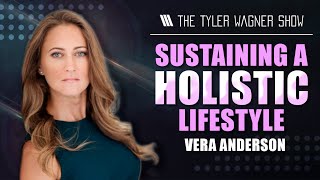
In this episode of The Tyler Wagner Show, host Tyler Wagner interviews Vera Anderson, a business mindset and legacy coach who works with elite fund managers, CEOs, and executives. Vera shares her personal and professional journey—from growing up in Russia, immigrating to the United States, and building a career in recruiting, private‑equity, and M&A, to experiencing a market‑crash‑induced business loss and the suicide of her long‑time partner. Those traumatic events prompted a pivot to mindset and legacy coaching. Vera explains why mindset is the root of sustainable, holistic living for high‑performers, emphasizing health, relationships, and purpose beyond financial success. She discusses the challenges entrepreneurs face when exiting a company, the importance of pre‑exit mindset work, delegation, and succession planning, and how lingering ego and bottlenecks can stall growth. Through client case studies—"Jim," a successful founder stuck in toxic assets and habits, and "Pat," an early retiree grappling with loneliness and lack of purpose—Vera illustrates her 5‑step coaching framework, guided visualizations, and practical tools such as schedule control, health integration, and letting go of toxic relationships. The conversation also touches on the psychological impact of extreme work‑intensity, the need for structured delegation, and the emotional vacuum that can follow a massive exit. Vera concludes by sharing her contact information (LinkedIn and globalelementsconsulting.com) and inviting listeners to schedule a consultation, noting that she works with a limited number of clients and can refer others when appropriate.
Chapters
¡Hola! All right everyone, welcome back to another episode. Today we have a good friend of mine, Vera Anderson. So welcome to the show.
Thank you, Tyler Wagner Wagner.
Of course. Grateful to have you on. If you can just start us off a little bit more about you and what you have going on.
For sure. So I'm a business mindset and legacy coach, and I work with international business elite fund managers, CEOs, and executives on helping them fine-tune their mindset and create a sustainable but also legacy-focused lifestyle.
Got it.
Yeah.
And they, I would say they need that help. I think that's good.
We all do. Yes.
Oh yeah, we all do for sure. So, um, let's dive a little bit into the origin. So how did you like get into this or like, I guess, discover, discover that you wanted to do this?
That was a, a rough personal journey. Um, I grew up in Russia. My grandfather was a diplomat, and I got to experience international cultures growing up. Then my family immigrated to the US, and my world changed. My experience of everyday life has completely shifted, and I had to adjust and adapt. And I've gone through a series of pivotal points in my life and my career. My initial launch was in a recruiting space, and then I went into private equity where we were acquiring businesses for our own portfolio. So I was on the M&A side doing a lot of the transactional coordination between the attorneys and all the different parties involved to make sure that the, the deals that we get are the actual deals that we want. And we eventually acquired a business that had multinational assets. And one of the companies we acquired was based in London. So I transitioned from being on the deal side to being on the operational side. And that has taught me a lot because we had operations in US, in UK, in Japan, and in Sweden. So at any point during the day, within the 24 hours, somebody might have had a question for me. Or we were also doing another acquisition, lining up another acquisition in Australia. So as you can imagine, my workdays expanded way beyond 9 to 5. And in addition to that, I also served on the boards of the holding company, which was based in Chicago. I served on the boards of our joint venture partnerships in Mexico and India. And I had to travel between different divisions. So I was working 90-hour work weeks. My body had no idea what time zone I was on most of the time, and it was just high pressure, high stress. Then the market crashed and we ended up losing the entire business. And I was at a point where I had so much equity I could have retired in 18 months if everything would have worked out the way we were planning with an IPO. So clearly that didn't go. The equity evaporated. All that hard work and blood, sweat, and tears evaporated. And then within about 6 months of that happening, my business partner of 8 years committed suicide. So that was my— I call it lovingly my midlife crisis in the tender age of 32. And from that point, I had to rebuild. And I knew that I still wanted to succeed, but I had to do it differently. I could not sustain that same level of intensity and actually complete disregard for my health. So that took me on a different journey where I joined a couple of startup businesses, raised capital for those companies. And then I got to the next stage where I kind of had a pausing point. And I said, okay, what am I going to do when I grow up? What is it that drives me? What is it that I love? What is it that I'm passionate about? And I knew I love the business. I love the big picture. I love creating that big strategy and, and having that clarity and gaining that clarity. So I thought strategic planning would be the path. But then I also realized that having had all of those experience at the leadership level, if you're running around putting out fires and if you have any kind of resistance to the plan that is being proposed, no matter how ideal the strategy is, you're just not going to execute it. You're not even going to touch it. So you might end up paying McKinseys of the world millions of dollars for a strategic plan. But then it becomes a doorstop if you're not actually executing on it. So it all went back to the mindset. And that's what I really love, is that everything that happens and everything that does not happen in our lives all happens in our minds first.
Mm. Wow. Sorry, go ahead if there was more.
That's kind of the point at which I said, OK, I'm picking the coaching route. I'm gonna go into the mindset work. And as much as I did it for my clients, I did it for myself. Because I wanted to figure me out. And I wanted to figure out how do I eliminate my own blocks and limitations? And how do I create a life and a lifestyle and a business that feeds me not only financially, but really nourishes my soul and my being? So I can be happy, so I can feel alive every every day, love getting up in the morning. You know, it's why, why else would you want to live, right? It's not just that struggle after struggle. It's let's enjoy life. And how do I get myself to that point and help others get there as well?
Got it. So I have a few, uh, different questions. So when I feel like that happens a lot to like really successful people, like there's just like this one like big explosive moments, and then they take some time away, and then they really start to build something that they want for the long term. Um, so that's just an observation. But as far as, you know, your partner commits suicide, was that because of what happened with— or that's the core reason? And then as far as you were concerned, how did you— like, what measures did you take to get through it? Like, because I'm sure I don't know if you thought of suicide or not, but like, did you— were you like— how did you deal with it, I guess, is the question, because that's true.
Yeah, no, it was, it was a scary time. Uh, it was really scary time for me. The way that it translated into was a deep sense of depression, which I didn't realize. It was never diagnosed. Um, and the example I'll give you is my husband would ask me 'What would you like for lunch?' And I would just start crying. And not like little crying, like sobbing, because I was so frustrated that I didn't know what to eat. Whereas weeks ago, I was moving millions of dollars around the world. And it's just that sense of complete loss of power and complete loss of self-identity. And being so attached to what you do that once that's gone, you don't know who you are.
Yeah.
Okay.
Yeah. Now I'm curious, like, thinking back, um, was there any way that you guys could have avoided what happened, or was it kind of due to the crash and really there was just no way of you knowing that that was you know, gonna happen, basically?
You know, hindsight 20/20, we were highly leveraged because we were on acquisition path. So we were in a process of acquiring a number of businesses. But that said, we were in the manufacturing space, and they have fairly small margins to begin with. And when the market crashed, PepsiCo Companies was one of the biggest clients that we had. And they went from doing 20 million sterling with our UK division alone, down to 8. And there's just nowhere else that you can make up that kind of gap.
Yeah.
Oh, it was partially how we were positioned financially, but it was also the industry that we were in.
Got it. Okay. That's wild. I don't know. Cause we've, I mean, we've only had maybe like 10 or so conversations, but I didn't know like this, this story. So, um, this is, this is for everybody listening. This is new to me too. So, um, when, so it seems to me, and this is kind of what you help people with, I feel is that balance here. I'm going to try to get these thoughts out. So balance is really important when it comes to like entrepreneurs that are successful, a trend that I tend to see. I'll speak for myself in some senses. I'm very extreme with everything. So it's like, like you were saying, work 12 hours a day or don't work at all. Like, that's just— so how— I know you have some examples, but how have you helped people? For somebody who exits a company or is like that, how do they transition into a balanced life, right? Because like you were saying, you go from working that much, say you exit a company for $20 million, $30 million or something. And then you don't really have to do, you know, anything. So I guess, what is that mindset or how do you help someone transition?
I'm sure it's different for everybody, but, um, well, I'll just give you a quick example of the entrepreneurship and then I'll jump into the exit because they're slightly different animals. But when you go into a business for yourself, What is the first thing that you think about? Why would you wanna be your own boss?
For me, to do what I wanna do. When I think back, yeah, that was, I was like, I don't want anybody telling me what to do. So that's what, yeah.
Yep, so nobody's telling you what to do. A lot of people go into entrepreneurship thinking, I'll have more control over my time, I'll be able to spend more time with my family, I'll be able to earn more. What happens is once you jump in on that other side is you have a lot less stability because you don't have that guaranteed paycheck coming in. You have a lot more stress, which translates into you working more hours because you want to make it, which means you don't spend any time with your family, you don't spend any time with your spouse, you don't spend any time on yourself. You're just so dedicated to the business that it takes all of your energy. And some people are just not cut out for that. Some people need the sense of stability, some people thrive in a stable and calm environment. Not everybody needs to have that type of a roller coaster of a ride in their life. And that's okay. So it's just first recognizing what is your risk tolerance. Because business is very risky, and a lot of things within your control and outside of your control can happen at any point. And so it's just being prepared for that and knowing yourself well enough to say, that is my path, or no, maybe I'll be better off to have a stable job and maybe have some hobbies or side hustle that I will enjoy to balance out that sense of fulfillment with sense of financial stability and sense of I'm working hard, but I'm also playing hard. So I'll just throw that out for the entrepreneurs in the world, or those thinking about getting into a business for themselves. But as far as people who have created a business, they've built it out over however many decades, or even, you know, maybe 5 to 7 years. Most of the time, it's people who've been building their businesses for a couple of decades, and they're, they're saying, okay, I'm at a point where I want to put in the succession plan, I want to create an exit plan, and I'm going to sell the business. Or they're exiting the business, so they're selling it and they're going into either retirement or they're going into a pause where they then rediscover what is it that they want to do next. So again, there's two sides of it. While you're in the process of running your business, even if you're positioning it for exit, this is where the mindset work is most important. Because if you don't have a balanced— and I don't want to say balanced, I use the word sustainable and holistic lifestyle. It's a lifestyle where you're taking care of your health, where you're taking care of things that are important to you, where you're taking care of your primary relationships in a way that they deserve. And you're not neglecting people and family members. You have the appropriate support structure in your business life and your personal life so you can accomplish all of these goals. That's the sustainable holistic lifestyle I talk about. That's what I try to help people balance. It goes back to the question of who controls your time? You do. How does you control your time? Through your schedule. If you have 12 to 18-hour days scheduled into your calendar, who controls that? Who did that? You did. Then when you say, I don't have time for my health, I don't have time to work out, I don't have time to meditate, to really fine-tune my instrument for the battle, then what are you saying? Those things are not important to you, right? So there is a way of going through this whole work and life experience in a much smoother way than what we're used to doing.
Got it. So yeah, I love— I know, I'd love to hear some of the examples. And what— I'm going to butcher this quote, but there's some quote out there. I think Tim Ferriss is who I heard it from first. But the There's some quote that's like, if you don't have 20 minutes a day to meditate, then you should meditate for 8 hours a day or something like that. I always, I don't know, I love that. I think it's funny and very accurate probably. So yeah, I guess what is that path in general? That's a big question, but maybe some examples of your clients, you might not be able to like name names and stuff, but—
Sure. We'll give them made-up names to protect their identities.
Okay.
So one of the clients that came to me, let's call him Jim. Jim was a super successful entrepreneur, relatively young, was doing really, really well. He's created a business and an infrastructure where the business literally ran on its own. He had the right team in place. He was very systems-oriented. So everything was very— everything was running perfectly. So in principle, he had the time, he only needed an hour or two a day for work, the rest of it was, you know, to his leisure. He, he came to me because he was he wasn't happy. It's like, I have everything, I should be happy, but I'm feeling miserable. And I've been in this state for several years. And so he got to a point where he realized that he wasn't getting out of it on his own. And we had a conversation, we connected and started working together. And one of the pieces of the process that I do with my clients is I put them through this 5-step process. Where we lay out everything that's going on with their business and life. And what we realized in his case is that he had this motto of, I must work hard to be successful, which he inherited from his father, which was drilled into him. And so because he was so organized and smart and systematized, he didn't need to work hard to be successful. And so there was a conflict, right? There was a mismatch of what he believed and what was happening in his life. So to make up for this working hard and not working hard, he invested in a lot of toxic assets and toxic relationships. And they were draining resources from him, they were draining his energy. And it was almost at a subconscious level. He was frustrated with them, but he didn't realize why and why he was still in them. And he was very committed to keeping them. But once we went through this process of identifying everything and realizing that these were the, the toxic things that were draining him of time and energy, we had to do some work around him letting them go. He was very insistent on keeping them. So we had to work through the mindset about around letting go of those things. And once he did, his whole calendar freed up. He had more resources, he had more time. He wasn't as frustrated, he wasn't as drained. So then we started rebuilding his life, right? We've reintroduced exercise. He hasn't worked out in 5 years prior to that. Got him working with a trainer, got him eating right, got him on a sleeping pattern because he was not sleeping at all. And we filled in the calendar, we filled in that vacuum with things that made him more engaged. So he used to be a trader in, in Asia before he moved to the US. And he loved doing research. So for 4 hours every day, we created a block of time for him to do his research. And he could research AI, he could research technology, he could research something within or outside of the industry that he was in. And that made him very excited. We got his health in the right position. So he was sleeping better, he was feeling better, he was more engaged with things that he loved. And his life completely transformed.
Got it. So what, um, if you're able to share, uh, so the relationships, um, uh, assuming, I guess could be friends or, or girls, or, uh, so Jim, so it was a guy, um, and then as far as you said toxic assets, like what was he like, or I'm kidding. Yeah. What do you mean by, by that?
The toxic assets is he was investing in businesses that were not profitable and, um, that were not going to be profitable, but he kept propping them up.
Interesting. So maybe because of the hard work thing, like, so he was like, interesting. That is weird. Not weird. It's actually not weird. And like, it's just weird how we humans work, like, you know, like to fulfill the nest— the necessity of hard work. You know, he couldn't just accept that he had built something that was working, so he had to keep creating new hurdles for himself.
Interesting. Yeah, and that also included the toxic, toxic relationships and partnerships. So outside of his core business, most of the people he was working with and interacting with had very different agendas and had very different moral structure than he did. And so there was a constant sense of conflict. And he felt like he was obligated to continue those relationships, when in reality, there was nothing there keeping him. So again, it's that subconscious mind dictating what you're, what you're doing in real life. Wow.
Okay, that's so interesting. And I feel like way more common than most would think. Um, because there is that weird— especially with everything, and I'm like a huge Gary Vee fan and stuff, right? But that's just who comes to mind, of like, you know, work hard, work hard. But in reality, like, sometimes it's almost like— I've even come to realize with my business, like, sometimes less is more, right? And, you know, you could look at your business and be like— it's like the 80/20 principle. Right? And you can realize, like for mine, I'd realized that there were certain partners of ours that were producing the most income for the business. So instead of trying to like go out and do all this advertising, and I was like, well, what if I just build relationships with similar people as this or companies? And if I only worked with like 100 of them, you know, what a dream scenario. You know, I don't know, but it's, if you never dissect what's going on, then you would never become aware of that. So Interesting.
Exactly.
Okay. So then, do you have a couple more? I like these stories. These are fun.
Well, as a— and what I've noticed, and this is a fairly general occurrence, especially with business owners and founders, is that if you don't start delegating, and if you don't start bringing in people that you can trust who are smarter than you, which I know is an ego challenge as well, into your business, eventually you become the bottleneck. And the reason why your business can't grow is because if you expect everything to flow through you and you have a time capacity issue, your business is never going to outgrow you. It's never going to expand, and it's never going to reach its full potential. So as you create this baby, you have to realize the baby's going to grow up, and the, the baby's going to become an adult with its own ambitions, its own life goals. And if you don't let that progression happen, then you're either going to kill the business or you will get pushed out, or you will get acquired, but you're never going to let it expand to its full potential. So it's just kind of having that understanding, which is really, really hard because you pick every single person on the team. They become your family. So thinking of leaving that, leaving the responsibility of being at the helm and making all the decisions and being responsible for everything, right? That's the, that's the martyr and the honor is that you— the, the buck stops with me, right? That's the motto. No matter what happens, no matter who does what wrong, I as the CEO, as the owner of the business, will take full responsibility.
100%.
And once you no longer have that responsibility, Who are you and who do you become? Right. So I work with a lot of, a lot of CEOs on— and this is the pre-exit portion of the program— of letting go and the mindset behind letting the people they're bringing in to be their successors to actually take on the reins. And to watch them make mistakes, because we all make mistakes, without taking the reins back.
Yeah, that's tough. Yeah, it's very necessary though.
I was actually advising a business on the board of advisors, and this was about 5 years ago, and the CEO had a 5-year plan. He started his succession plan a couple of years prior to my joining the board, And it was a 1-year engagement. So he already had a person that he wanted to succeed him in place. He had him at a president level, so gave him enough authority. But every decision still filtered through the founding CEO. And I've checked in on them after New Year's. He's still the CEO. So 5 years later, he's still the CEO, and he's not exiting. So what is happening with the person who is second in command, who was promised to become the owner or the business leader? After a couple of years, they're just going to get disengaged. And now they were— they will either leave or they will give up. So in either case, it's not a good situation. And if you want to have another company buy the business, another entity come in and buy the business. It has to be standalone. And you have to be at chairman of the board level where you can still oversee the big picture and guide the direction. But you cannot be involved in day-to-day operations because then you're not going to get the multiples for your business that you want. So you have to let go in order to allow the business to survive and thrive without you. But it is very, very hard to do on the human individual level. And that's what I, that's what I help people do, to let go with more ease.
Yeah, it's definitely like getting out of your own way. And also, one of the things that stopped me from doing that a lot of times is in the upfront, there is some extra work, right? Like training the person who's going to fulfill And I put that off for years because I just kept like— I was working those long days for so long, and I was just— the thought of like putting in more hours in the upfront, even though it would free me up down the road, it was just like— I was just like, oh my God, I don't feel like dealing with trying to train someone on this. Like, it's just, you know, it would take so long to train and all. And then I finally just was like, you know, you got to accept Some mistakes will happen on the upfront. You maybe lose some money because if a big mistake happens or whatever, but in the long run, you know, it'll be better for the business and for you. Um, so it's just kind of accepting that short-term, um, you know, mistakes and stuff and a little bit of extra work to create the training materials for the person. Um, so, so yeah, I guess if you want to share another story, I'd love to hear it. And then If there's anything else you want to share, I'll kind of leave it, leave it to you. But, and then also, again, make sure people know how to stay in touch with you too.
Absolutely. So one of my latest clients has successfully exited a business. And they've been in this business. Let's call them Pat.
Okay.
Pat's been in the business for over a decade. And had a very significant exit. He was very close with the team. He mentored a lot of the, the leaders within his organization, was very involved and hands-on. So it was, it was basically his work family. He had a marriage that disintegrated, and so he was working 12 to 16-hour workdays because that was his coping mechanism. That was his way of escaping, you know, painful relationships or lack thereof, and just really dedicating himself to building the business, which he did really well. Um, fast forward to the exit, he's no longer engaged with the company. He's completely done, got all the money, got a beautiful condo, has 2 very good kids who are older that are engaged in his life. And from external, you think that he's in a great position. But when we started working together, he said, I had no time to think about anything. I had literally no time while I was running the business. And now that I am retired, I have nothing but time, and there are a lot of minutes in the day. So you kind of go through this completely out of control on one side and then completely out of control on the other side. So from one extreme to the other, and unless you create this sustainable legacy-focused lifestyle while you're doing the business, your transition feels like you're just jumped off a cliff and you're in a free fall. Until you start grasping at some things to figure out what is it that you're going to do next. So it can be pretty dramatic. And I think a lot of, a lot of people, CEOs, executives, you know, don't think about what's going to happen after I'm done. They think, oh, I'm just going to be on vacation, permanent vacation, it's going to be great. But it's not. There's a lot of emotional stuff that starts catching up to you. Unless you process it prior to the exit. So now you have nothing but time, and you have all these emotions, and you look back at your life, and you no longer have the work family, which were people who were in your daily life. So you're feeling alone. And especially if you retire early. I met a gentleman in El Salvador. I was there for New Year's. This year, and he retired in his early 50s. A successful architect out of California got himself burnt out, said, "I'm done." Had some friends in El Salvador, they showed him around, he loved the area, moved there, living the life of his dreams on the golf course, playing golf, surfing, the works. He says, "This is the loneliest I've ever been." He said, I feel completely alone. And he was lucky enough to meet another expat, a female expat, and tonight they started dating and they're traveling together. But prior to them connecting, he felt like he has all the money, he has all the time, he's in a beautiful place surrounded by a lot of great people, but emotionally, he was very isolated.
So did that— the girl he meet, did it kind of fulfill the loneliness, or—
it gave him an outlet?
An outlet?
It gave him an outlet.
Got it. Yeah, it's interesting. Yeah, that's, uh, at some point when I start this thing up again, we'll have to go a little bit, uh, longer because I— a lot of these stories you're saying, I, I can relate. And so either way, I'll leave a cliffhanger there for people.
So let me wrap up the Pat story real quick. Basically, at the moment where I found Pat, he was still kind of holding on to the past and his recently exited company and the family. He was in a very uncomfortable place in the present. And he was projecting that into the future thinking, oh my God, how am I going to do this? For the next 20 to 30 years. So that looked very unappealing. And the work that I'm doing with Pat is I use guided visualizations as a tool, which basically allows your mind's eye to see the optimal outcome or the goal that you want to achieve. And then if you can see it in your mind's eye, then you can bring it into reality. That's how the conscious subconscious the basics of the mind and the mindset work. So I create this step-by-step process, which is really easy to guide them. But ultimately what happens is you're able to— and Pat's been able to— let go of the past relationships and let go of the negative emotions that he was still holding on to from the past and from the prior work, to gain peace with where he was now, and let go of the fear of the future. And so now, when he's looking in towards his retirement in the next couple of decades, it's now a place where he feels like he can be and he would enjoy, rather than a place that he was afraid of going into.
Yeah, that makes sense. And your cliff analogy, I think, is exactly, exactly accurate. And that's why it's got to start pre-exit, right?
Because—
and the thoughts thing, I mean, it is wild. Just that I can relate to the most, of like when you work so much you don't even have time to think, right? Especially if you're, uh, if your role in the work is continuously connecting with people, like doing sales or calls and stuff. So it's like always interacting, always stimulation. And then once your calendar goes white and you sit back and you relax, like, yeah, the first week or two feels like vacation and it's great. But literally after like 2 weeks, you're like, okay, there's a lot. I'm like, I didn't even know I had these thoughts. Like, what's going on? Like, and really, yeah, it's in— I don't know, I almost feel like a lot of people, whether it's that huge of a transition or not, but I think most people avoid that type of, uh, how should I say, isolation to think, right? So they'll, they'll get the job, they have the extracurricular activities, they have a wife, they have kids. Like, it, it actually, I don't think ever happens to most people. I could be wrong on that, but you know, if you follow the traditional path, you know, think of a time where a normal person would have like months on end by themselves to just think. Like, most people I don't think have that. So yeah, yeah, and when you do, it's kind of— it's interesting. Some, some of it's cool, but other parts of it are— I don't know, you need help to manage it or something, like, or something. So interesting, for sure.
I mean, your— everything you've been running away from, all the emotions that you've been trying to pretend did not exist, all the relationships that, you know, we didn't have a successful outcome, and we want to pretend like they don't exist. I did that for probably 8 years with my business partner. I blocked, blocked out, I did not process what has happened to him and, and the impact it had on me, I would just hide from it. And then at one point, all of those emotions came up. I've— I worked with somebody to help me bring them up. But if I would have had that come up when I have nothing but time and space and it's later in life, that would have been a very difficult and hard experience. But again, it's not something that you need to do alone. In fact, it's better if you don't, because our minds have a way of painting the worst possible case scenario picture for us. And that's never true. That's rarely true. I'll give it that, right? It was Hemingway who said that I had a lot of tragedies in my life, and most of them never happened. So it's good to have somebody guiding you as you're going through this process of restructuring, reframing, processing, especially your emotions, especially what happened. Because, A, you need the support, you need the reassurance that you're on the right path. And you do have blind spots. We all do. So it's very easy to get lost in our own stories, which are all made up anyways, right? Our mind makes things up and then we say, oh yeah, that's, that's what is going to happen, or that's what happened to me. And reality is what has transpired versus what we remember is two completely different things.
Definitely. Yeah, that stuff's really interesting. Like our memory, I think it was Jordan Peterson I was listening to, and he spoke of something of like what we remember as the past is like very off. Like a lot of times, like people will sit and like reminisce about the past of like, oh, it used to be this amazing, like it used to be And it's, you know, there was always issues no matter where you were at. So that, that's interesting. And then on the future of the thinking, you know, yes, bad things can happen, like terrible things. They happen all the time. But normally, you know, something— my example of that is dropping out of college. I remember the thoughts I was having when I was like 19 years old. Like, it was almost— it was like equivalent to death. Like, it was like, if I drop out and I don't make it, than that to me, the shame that I would have from my mom, dad, community I grew up in. Like, it was like such a huge decision. And now when I think back on it, I'm like, luckily it worked out. But I like think back, I'm like, was it really that crazy of a decision? Like, what was the worst that could have happened?
Like, best decision ever, right?
Yeah, it was an amazing— and look, I could have failed and ended up going back to school. But even if that did occur, You know, what's the problem with that? Like, right now, I want to back in school, like, whatever.
That's what we have to all remember, that life is a game, and to stop taking it so serious and actually play the game, right? Because there's no point of playing it safe all the time. There is no point of holding back and saying, oh, that's irresponsible. It's like, well, you only have so many days. You might as well go for it, enjoy them, take a risk and see what happens. Because worst case scenario, what is the worst case scenario, right? Your mind will tell you you'll die, but in reality, it's probably not going to be that dramatic.
Yeah, that's what I was like, more home-cooked meals with mom and dad. That's chill. Whatever. Sleeping on the couch. So, so yeah, I want to, I want to leave it to you. Really enjoyed this. Um, where can people find you? Anything else you want to share? Um, yeah, I'll leave it to you.
Absolutely. Uh, I am on LinkedIn and you can find me under Vera Anderson, uh, Legacy Coach. And, uh, I also have a website, globalelementsconsulting.com. And on Both of those, you can find a link to schedule a 30-minute consultation with me if you're going through a shift in your career or a change with your business and need some guidance and support. I'm always happy to talk. I don't work with a lot of people. I have a process that I take them through in order to determine whether we would be the right fit or not. So if we are, that's great, and we can structure the whole engagement together. If we're not the right fit, I'm happy to refer and introduce you to other people who can support you. But, um, I feel like with everything that has happened with the whole mass retirement, mass exit, mass resignation that we are experiencing, uh, all the pressures and kind of realizations that people have gone through in the last couple of years, There's a lot of people who need support, and I just want to say, you know, reach out to people. Find somebody that you can trust, somebody who can be honest and unbiased and be supportive of you and really be your champion, because you don't have to go through life alone. No matter how successful you are, you're still a human being, and you deserve You deserve respect, but you also deserve support, and you deserve to be understood. At the end of the day, that's what, that's, that's what we all want. And we all want to live a better life and be able to positively impact the world versus deal and grapple with our own insecurities and fears. So yeah.
For anybody listening, is, you know, I've done that call and I've taken, uh, you guys' calls. It's very useful for me. So if anybody is interested in connecting with people or potentially working with you, definitely take their, uh, on-call. Extremely useful. So thanks again for coming on.
Absolutely.
More from Tyler


Catherine Nikkel : THE STORY EVERYONE HAS BUT HASN'T TOLD : The Tyler Wagner Show #1120



Scott Ritzheimer: Bring Predictable Success to your Organization | The Tyler Wagner Show #1115


Fred Moskowitz: A GUIDE TO GETTING STARTED WITH IN MORTGAGE NOTES | The Tyler Wagner Show #1113

Mark Podolsky: From Land Investor to Full Time Success How I Made $90,000 Cash in Real Estate


Mark Podolsky: How to achieve a 300% return on investment my foolproof strategy

Mark Podolsky: How to make passive income selling raw land the irresistible pricing strategy