Whistleblower and Patient Advocacy | The Authors Unite Show - Bruce Boise
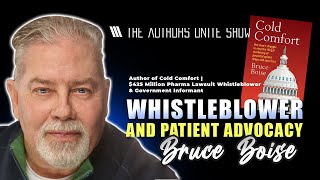
In this episode of the Authors Unite Show, host Tyler Wagner interviews Bruce Boise, a former hospital representative and area manager for Cephalon who spent 24 years in big‑pharma. Boise recounts how the company began promoting the fentanyl lollipop Actiq off‑label, a practice that is illegal because it encourages prescribing a Schedule II drug outside FDA‑approved indications. After witnessing the dangerous promotion, Boise became a federal whistleblower. He describes how an FBI agent contacted him, how he supplied documents, and how he wore a wire at a national conference, leading to a $425 million settlement (civil and criminal) against Cephalon. He explains the legal framework of the False Claims Act (Lincoln’s Law) and Qui Tam, and how he found a lawyer to file the case. A second case arose when Cephalon promoted another fentanyl product, again off‑label, resulting in a similar legal battle. Boise discusses the financial outcomes, the limited impact on the company’s operations, and the broader implications for opioid over‑prescribing. He now works with advocacy groups PROP (Physicians for Responsible Opioid Prescribing) and Fed Up to push for legislative reform. The conversation shifts to the creation of his memoir, Cold Comfort, detailing the challenges of turning extensive personal journals into a book, hiring a ghostwriter, multiple rewrites, editing, and a PR launch. Throughout, Boise emphasizes perseverance, the importance of accurate storytelling for whistleblowers, and encourages listeners to pursue advocacy or authorship with integrity.
Chapters
All right everyone, welcome back to another episode of the Authors Unite show. Today I have Bruce Boyes with us. He has authored his new book Cold Comfort. Bruce has spent 24 years as a hospital rep and area manager in big pharma. Bruce has been a whistleblower in 2 federal cases over the last 17 years, and his latest book Cold Comfort explains that journey. So welcome to the show.
Thanks for having me, Tyler Wagner.
Of course, grateful to have you here. So I always like to start off the interviews like this. So when you were younger, you— there's no way when you're younger you could have imagined yourself writing this book, but did you think you would be in medicine or in like hospital help like that?
Actually, you know, you're funny you mentioned it. That's, that's a question no one's asked about. Did you think you're going to write a book? I got in trouble in 5th grade Yeah, writing a book during class.
Oh really?
And I got thrown out of the class.
Okay, it took a second.
My dad had to come down and talk to the teacher saying, you know, he's not paying attention at all because he's writing this book. Okay, so evidently it must have been some premonition that I was going to write this book, right?
Yeah, I'd say so. That's— and why'd you get in trouble for that? I feel like that should be praised.
I don't know, probably lack of attention and then my stubbornness afterwards that caused my dad a lot of grief.
So yeah, um, so, so that, so that happens to the book. But as far as, uh, or I guess maybe explain just because I'm not exactly— what's a hospital rep and area manager in big pharma? What exactly does that entail?
A hospital rep would be someone that would go into like a teacher teaching institution that would be a Trauma One institution, that there'd be a lot of academia there where they would be doing studies for NIH and FDA and all that. And that's sort of a— but, you know, the hospital rep is sort of like a liaison for a pharmaceutical company. So when they go to bring a new drug out into a new therapeutic area. That hospital rep would try to influence those doctors, and maybe there are, there are some, um, studies going on in the institution that they would help facilitate for the company. So there's a lot of those kind of things, not necessarily in this— it's sort of in a sales position, but it's sort of a different sales position, right? And, and then, um, area manager is a district manager. I had 12 reports. It was the Great Lakes area for Cephalon.
Gotcha. Okay. And you did that for 24 years. And obviously, so I want to hear about these two federal cases. What happened with the two federal cases?
So what occurred was that during my pharmaceutical career, I had one job was with Carter Valls. The other job I had was Cephalon. And so I only had 2 companies I worked for in 24 years. The, the Cephalon job went great. The first couple years I was a hospital rep, then I got promoted to an area manager's job, won President's Club with them. I was doing really well, and they started to sell off-label. And so for your audience, a doctor can prescribe off-label And that would mean that it's outside of indication, FDA-approved indication.
Yeah.
And so the, the physician can write a prescription for a patient that's not doing very well in a medical condition and can be off-label to try to help that patient. A pharmaceutical company cannot promote off-label, and so that's illegal. And so the company started to promote off-label. And so when they started to promote off-label, I just wasn't going to have anything to do with that because one of the drugs that we had at the time was Actiq, and Actiq is a fentanyl. It was a— it was lollipop. It was the fentanyl lollipop. And it's a Schedule II drug, and it's 100 times more potent than morphine. And so you start to go off-label with that, and you start giving it to patients that you have no business trying to market to, you're gonna get in a lot of trouble real quick.
Yeah. And that's— they were starting to do that?
Yes.
Oh my gosh, dude. That's so crazy. Couldn't that kill them?
People? And it did.
Yeah, yeah. Fentanyl is like— fentanyl to me is so— I've heard about it. It's so unfathomable that it could be that much stronger than something that is already apparently so strong, you know?
Right.
Like, why is it even necessary? Right, right.
The lethal dose, I think, is around 2 milligrams. And 2 milligrams, that's my pen. So the tip of the pen is like 2 milligrams.
Oh my gosh.
Yeah, it's a very powerful drug.
Yeah, if you were just walking, not that this would happen, but if you were just walking outside and somebody had a bunch on a thing and threw it up in the air, if those little particles hit you in the nose, like, you could be done.
Well, you know, today, in today's society, you know, a lot of drug traffickers are moving fentanyl in little bags, and it's white powder and all that. Well, the cops had to start wearing masks. This is before Corona-19, right? Cops had to start wearing masks because the criminals would try to get away and throw a bag at the cop, and, you know, it'd splatter all over the cop, and then the cop would inhale it once, and then boom, they would overdose.
Yeah, that's so crazy. So now, to whistle-blow on, like, what was that like? So I'm sure, like, you noticed this happening, you go home, maybe talk to your wife, and like, right, I don't know. So like, tell us the details of how that all panned out.
So, so what happened was that this is around 2000, and in 2000, um, I had a rep that complained to a director that he wasn't making enough money and my leadership skills were crap. And part of it was because I wasn't selling or wasn't getting the reps to sell off-label. And another area manager was selling one of the drugs off-label and they were getting huge bonuses. And so, you know, it makes sense, right? And I thought it was like another area manager that was just rogue. Right, and doing his thing, and he'd get caught and get fired. And so I then sort of fought within the company to say, because I love my job, I didn't want to leave. I love my job and I love the company I was with. And then I found out that it went all the way up. It was not just the area manager, it was everybody, you know. And so, you know, you go to say something and then they say, well, I don't think we're doing that, which You know, obviously they are. And at that point, I just decided, okay, I'm going to get my resume because President's Club winner, I'd done really well, I was making good money, and I just decided I was just going to get another job. And I was on vacation, a nurse called, and she said— friend of mine called and she said, hey, you know, I saw this in Wall Street Journal and the CEO is acting like these off-label scripts are coming out of nowhere and you know that you're promoting it. And yeah, would you do something? And I said, I sort of blew her off. I said, oh yeah, sure, whatever, you know. And little did I know her sister was FBI. So yeah, the FBI agent got a hold of OCI, which is Office of Criminal Investigation, and those are the federal agents that investigate for the FDA. And so those folks got a hold of me and sat me down and talked to me, and I produced documents and They really liked them. And then they said, they asked me to wear a wire before a national meeting. And so I wore a wire for a national meeting. And that's when the company got busted by the FDA. And that was the first case. I worked almost 2 years with the feds and this as an undercover informant. So I had no idea what a whistleblower was. I was just, I was thinking, well, first, if I can't stop, if I can't get my job back, I'll leave. But I certainly am not going to allow it to go on. You know, it's one of those things where you just pick up the cards and say, hey, look, who's going to protect some of these people of what's happening? You know, no one really knows. And so if somebody overdosed, the family members would never know that this was going on. And so I said, okay, I'll wear the wire. And after I wore the wire and worked with the feds for a couple of years, The one agent, and this agent, Greg, he actually came to me and he said, "You really need to get a lawyer and protect your rights." Now Greg is the one that spoke and interviewed with 60 Minutes last month.
Oh, okay. Gotcha.
So it's on my website, but he's the one that they interviewed in 60 Minutes. It was my case and they interviewed him. So then I got ahold of Peter Chatfield and That's when I started to be a whistleblower. So it's sort of a journey, even, you know, I didn't even know what that's about. Like if somebody came to you and say, okay, how are you going to be a whistleblower? You don't know, do you?
Yeah, yeah, right.
It's not written down. There's no book that says, you know, you know, like this.
Yeah, yeah, perfect time, perfect timing.
Uh, just, you know, lack of shame. Promotion. But, you know, it's one of those things where, you know, you really don't know. And I tried, you know, when the agent said, hey, look, you know, you get a lawyer and protect yourself. I had no idea what kind of lawyer, right? And so under the whistleblower, or to be a whistleblower, it's under the False Claims Act. And under the False Claims Act, that's actually Lincoln's Law. It was called Lincoln's Law. And that was created by Lincoln in 1867. And so what that was about was fraud in the military because there would be munitions that were, you know, bullets and stuff and guns and they didn't work. And so soldiers were being killed. And so that's where the False Claims Act or Lincoln's Law started. And under that, it's called Qui Tam Law. And so you have to look for a lawyer that does Qui Tam work, right? Yeah, pretty much. I had no idea. And my son was the one that turned around and said, Dad, it's— False Claims Act is Qui Tam law. It's Q-U-I and then T-A-M. And he goes, that's Latin. It's who brings. And so the whole sentence says, who brings to the king, right, is the phraseology that goes on. So I typed in Key Tam Law and that's where I found my lawyer.
Okay, got it. That's so interesting. And then what was it like, like with the, like when you were getting wired up and stuff? Like, I, I just bet the experience was just so crazy, especially for multiple years. Like, I don't know, were the feds nice or what were they like?
Uh, they're cowboys. Okay, they're total cowboys. You know, they had their Berettas or Glocks or whatever in their big, you know, they got the big You know, great big gold shields, you know.
Yeah.
So, and pretty much badasses, right? So, but they were really good. They were really good guys. And we really worked well together. And so in the meeting, you asked about how you wire up. So in the meeting, what, you know, I'm on the same floor as they are. So, It was supposed to be a booked conference, no rooms available. And they got a room.
Oh, wow.
And I asked Greg, I said, Greg, how'd you get a room? There were no rooms available. He goes, we're federal agents. All we do is show our badge and we get a room.
Yeah. Okay.
So, and they, so I was in one wing of the first, that one, the fifth floor, and they were on the other wing of the fifth floor. So before breakfast, I had to go to their room knock, and I would go in, and they would put the mic in the clavicle area here and run the wire down underneath your armpit and then down in your pocket. And then the battery would be down in your pocket. And so that's how it was done. And under federal law, you have to wind up signing in So I had a number and the case had a number. And so then you signed out and did the same thing.
Gotcha. Now in that meeting, were you like really nervous? Like what if they saw the wire or something like that?
I was really, really nervous. You talk about your, you know, the commercial, the old commercial about the antiperspirant that really is working overtime. It worked really hard all week.
Okay, I bet, man, that's so intense. And I guess, um, and then I, I want to hear the other one too, but for this one, did like, what were the ramifications? I guess like obviously you did the right thing. That's obvious. But like that company, I guess, went out of business, I would assume.
No.
Oh, they didn't? They just got sued or something?
Uh, it was a fine and it was $425 million fine. So $375 $375 million was the civil side, $50 million was the criminal side. And so the Justice Department, when they intervene in a false claims case, they wind up— a lot of times they have a criminal side and a penalty, and they have a civil penalty. And so, you know, they had both with the first case, and both those then, you know, They reduced it for the company because the company complained that they didn't have the money. And so, and they did, but you know, government does that. So they actually settled for $425 million.
Wow. And then you got 10% of that, right? I'm assuming. No.
That's the other, that's sort of, you know, I was making around $340,000 a year.
Yeah, that's the living.
Yeah, that's 20 years ago.
Yeah.
So if you add it up, I probably got, probably got 6 net net out of the total settlement. And, you know, that, that's, that's good, but it wouldn't have covered my cost if I'd have stayed in pharma and worked all those years.
Oh yeah, that's true. Good point. Yeah, when you add that up, yeah, that's So maybe you can't say the company name, but they're still in business though, right?
What happened was, okay, and how we got to a second case.
Okay, yeah.
Is that the company kept doing what they were doing. And so they promoted another fentanyl product and did a switch campaign from one to the other. And just kept on going. And the government decided, we're not going to have that. Would you enter into another— would you and your lawyer enter into another case? And so that's how it started. That's how the second start started was because it was fentanyl again and they were promoting it again off-label.
Wow. That's so— so I guess to them they're making enough money with this that a potential another fine of $425 million, like they were willing to risk it.
It was just a part of doing business.
That's so crazy. They must be doing billions a year, I would imagine.
I think the total profitability for that period of time for both cases was like $30 million that they made. So they, you know, they paid a half, let's say a half a billion in total, which I don't think was even close, but that's, let's say, so they made out really well in that sense, right?
Yeah. Yeah. I'd say so. Those numbers are, they're high up there. So what's your, besides the case, what's your overall take on just the industry and opioids? Are they overprescribed or should they be rid of them altogether? Because like some people, I guess, need them, right? Just from pain, like hospital patients and stuff.
Like, I think they're overprescribed. I think I am. I'm actually working now with PROP and Fed Up. And PROP is Physicians for Responsible Opioid Prescribing, and Fed Up is their advocacy arm that is trying to change legislation. And so I probably will do a speaking engagement, I hope so, with Fed Up at the end of this month. And so part of that is to try to change the legislation involved to hopefully reduce the amount of products like fentanyl that's being prescribed because it's just, you're correct in that, is that it's a really powerful drug. There's a lot of other products out there And hopefully, you know, when fentanyl was really prescribed, it was for, you know, my aunt, my aunt was 85 and she had throat cancer and she was terminally ill. She had 3 weeks to live and she was taking fentanyl. Well, you don't have issues of tolerance, obviously you don't have issues of addiction and, you know, so you don't have those problems. And that's where the indication of those products have been. In that setting. And so there's a place for it. It's just a restricted protocol, right?
Yeah, pretty restricted place. No, but that makes sense. I mean, with 3 weeks to live, you're in a lot of pain. I don't— I would imagine it's probably better just to feel whatever that drug feels like than the opposition. So that makes sense to me in that case. Gotcha. Now, with the book, how did you— tell me about the process of writing the book because a lot of our listeners are aspiring.
Oh my gosh.
Yeah, what was that?
Tyler dragged me through shards of glass. I mean, you know, anybody that says, oh, I think I'm going to write a book, you're crazy.
Yeah.
I mean, um, First of all, I'm not, you know, my lead counsel said to me years and years ago, almost a decade ago, Bruce, your story's great, you should write a book. Well, when you're having several federal cases, you can't write a book. Some of the cases are sealed. And so, you know, legally prevents you from writing the book, right? So once the, I think it was 2017, the second case settled. And so once that occurred, then the process for me to write a book started. So it's been a couple years for me to write, write a book. And, and, and I, and I got a hold of a publishing company and, and a company that helped, you know, newbies like myself to figure out the industry and what to do. And I noticed that you could do a self-published book, um, and you could do it really cheaply, but it wouldn't reach the goals I wanted. Like, you know, I hired a ghostwriter and I hired an editor and I hired a PR firm to launch the book. And I did those things because I think, first of all, the story's good and it talks about the opioid crisis and that's helpful. It may be helpful for people that are thinking about being a whistleblower, what to look out for. But it also helps with patient advocacy. Like what I was talking about, Prop and Fed Up and some other, Shatterproof, and there's other agencies that can be helpful in the opioid crisis. Like, you really need to approach it in a multi-organizational way as far as helping people that are addicted, helping family members that have lost loved ones. There's, there's all kinds of areas that they need a lot of help in. So I figured it'd be a good way to not just launch the book, but sort of do that kind of advocacy group.
Got it. Yeah, that makes sense. And so for the 3 years— all right, I wait. Yeah. Oh, it just came out. Okay. Um, July 28th, so like 5 days ago. Uh, so took 3 years. What were like— did you do it in like sprints, or was it like every morning you'd write for an hour?
Like, how did you get writing done, or you had a good Tyler Wagner, it's like sticking needles in you. I'm with you.
I agree. I like marketing books. I don't like writing them personally.
You know, and what happened was that, you know, I had journals. And so I journaled the entire 14 years of both cases. And so I had over 2,000 pages. And so I had a tremendous amount of great material to be able to write a book. One of the biggest problems I had was The opposite of what a lot of writers have is that they don't have the material, right? I had too much material. So I could probably have 2 books out of what I've got. And then it was tough for the ghostwriter, and I would fly to New York all the time with him and sit down and, you know, just verbally go through the process. And it's complicated. I mean, in the sense that it's pharmaceuticals. Pharmacology, and it's also law. And so there's a lot in the book that needed to be written. And then once Tim wrote it, he did a pretty good job, but it wasn't to my liking. And so I rewrote it. Really? And I would go through chapter by chapter and try to figure out, well, it's— this is out of sequence, you know, and it didn't happen that way. And here's the reasons why, because only I knew. And I was worried that if somebody in pharmaceutical would pick it up, they would go, oh, he doesn't know what he's talking about. So it bothered me that it wasn't done the way it really is done. And so I rewrote it. And then once I rewrote it, I wasn't satisfied with it then. And so then I hired an editor.
Yeah, this is what—
And then we redid it again. How's that?
That's awesome. I'm so glad that you're saying this though, because it, it really, um, it just shows though that you were not going to settle. And that's why I always tell people, because there's this thing about just becoming an author, right? Because it like, it's good for your brand, which I'm, I'm fine with that. I'm good. But it doesn't mean that you should like half-ass a book, you know? Like you should still put out the best possible book. And like, you definitely were not going to settle, like not even with yourself. You were like rewrite, rewrite. And I need an editor. So that's all.
And Tyler, I had this idea that, first of all, it's a really good story. Well, the other is that I got all this possibility of great work I could do with launching the book and being an advocate. And I didn't want to half-ass it, right? I didn't want to do it that way. And a lot of people said, oh, you could just do— you could do it this way and only spend this much money. And I didn't want to do it that way. I wanted to, I wanted to have a really good book and, and I wanted to carry the message and I wanted to reach as many people as possible.
So I'm curious about like what you, what you think it will be like in the future, like with pharmaceuticals. Like I feel like nowadays there's so many medicines like coming out, like just all So, do you think like life expectancy is going to go to like 150 at some point? Like, what are your thoughts on all that stuff?
Well, actually, that wouldn't be a bad idea for me. I could get another book in. It probably would take that long for me to do a book.
You could get a lot more. Yeah.
You know, I think there's several, you know, I talk about it in the book about You know, we need to look at the FDA, you know, and here's the reason why. In the two cases, you know, Actiq, the fentanyl lollipop, was in a false claims case that I started, right? And it was settled. But the FDA allowed the Fentora product, which was their other fentanyl product, to be released and to be sold. And so wasn't there any alarms going off in the FDA? Wasn't there any flags going off in the FDA? Why are you letting a company that's already violated the law agree to market another drug that's twice the potency of the other one? So the bioavailability of the second one was twice what the first one was, and they immediately got in trouble with overdoses with migraine patients. And so we need to look at the FDA and what are we doing with the FDA. Citizens need to be aware of that. The other is that I think pharmaceuticals, you need to have some common sense. I mean, do we really need to overprescribe opioids and take a look at that? That's what you mentioned earlier in the interview. I think we need to take a look at that. Now, as far as me living to 150, I don't think they have a drug for that.
Soon, hopefully.
And listen, Tyler, I may get to a point where I'm going, "I'm ready to go now." Yeah, yeah.
That's what I've always thought. I'm like, if they do come out with it, what's the age of like, you've just already done everything 10 times? You know, is it like 200, 300? And then you're like, "All right, I'm ready to actually see what's—" What's past this? I don't know what it is. I'm curious enough to find out now. Right.
Well, my uncle, he's 99. He was a Lieutenant Colonel in the Air Force. So he flew B-26s in Europe during World War II. Wow. Okay. He's still alive. He's an engineer. He's still alive and kicking, working on some car. Okay. So if you could be that way and still be independent and— Yeah. Be that age, that's really cool. But agreed, you know, I don't want to have Alzheimer's and not know where I'm at, you know what I mean? Agreed.
No, no, I, I completely agree. So with, um, I guess kind of my last question because I want to make sure we're not missing anything here, like, sure, I want to kind of leave it. Is there anything else that you want to share in regards to the book or like how we could like, I guess, help the audience? Because, you know, before we hopped on, I told you, uh, A short, very thing about somebody in my life. And I do feel like these— there's something different about like the opioid than other drugs. I feel like, like opioids, from the experience that I've seen with others in my life, they're, they're like a different type of addiction, you know what I mean? Like, obviously there's a lot of alcoholism in the world, um, and there's other drugs, but I feel like those are more easily defeated. Like opioids actually, I feel like it takes the person over. Like they have no control. So I don't know, I'm just curious if there's anything else you want to share.
I'm open ears. Well, first of all, as far as the opioid crisis and what goes on, you're correct in assuming that they're very powerful. Opioid analogs are all really very powerful. And they can be really dangerous. And so a better protocol for them would help society in general. Yeah. As far as, you know, drug dealers getting fentanyl in, which is cheaper than heroin almost, into the, in our society, that's a tougher call, right? That, that, that, that there's all kinds of different organizations that need help society in, in that. Um, and aside from the opioid crisis, your listeners, you don't, don't give up no matter what your endeavor in life. Don't give up, follow your passions and don't give up. And, and I think if you look at my story and you look at what has gone on in my life, you'll see that. You'll see a positive attitude, not giving up, and following your passions. And I think if you do that, I think that's a good lesson for everybody. Yeah, no, I agree.
And, um, yeah, oh yeah, and last, we got to tell people what's the website, where to get the book.
Uh, you can get the book, you can order it, and Amazon sold out and we had to restock, so that's good. Um, It's BruceBoice.com. And when you go to that website, you'll also have the different shows I've been on. You'll have the CBS shows, you'll have the 60 Minutes shows, the segment on there where Greg is talking about the case and all that. And also, John Oliver talked about the cases as well. So there's a lot of great information about that.
Wow, John Oliver, that's a big hit right there. That's awesome. Well, yeah, thank you again really very much. Appreciate you. It was a pleasure.
Thank you, Tyler Wagner.
More from Tyler


Catherine Nikkel : THE STORY EVERYONE HAS BUT HASN'T TOLD : The Tyler Wagner Show #1120



Scott Ritzheimer: Bring Predictable Success to your Organization | The Tyler Wagner Show #1115


Fred Moskowitz: A GUIDE TO GETTING STARTED WITH IN MORTGAGE NOTES | The Tyler Wagner Show #1113

Mark Podolsky: From Land Investor to Full Time Success How I Made $90,000 Cash in Real Estate


Mark Podolsky: How to achieve a 300% return on investment my foolproof strategy

Mark Podolsky: How to make passive income selling raw land the irresistible pricing strategy