Zach Bitter: The 100 -Mile Run | The Tyler Wagner Show #1051
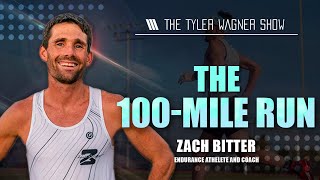
Zach Bitter runs 100 miles a week in training and holds the 100-mile world record. He explains ultra-marathon pacing, the mental game of staying focused for 24+ hours, and why Nike's super-shoes might give runners an unfair edge like equipment doping in cycling.
Chapters
All right everyone, welcome back to another episode. Today we have Zach Bitter with us, so welcome to the show, man.
Yeah, thanks for having me.
Of course, grateful to have you on. Uh, if you can just start us off a little bit more about you and what you do.
Yeah, so I'm an ultra marathon runner, coach and podcast host these days. I, uh, got into running at an early age and sort of gradually got interested and more interested in it through high school and college. Then after college, started gravitating towards the aspects of running I like the most, and that happened to be running far. So I guess it just wasn't, wasn't long before I got introduced to ultramarathon running. And I was living in Wisconsin at the time, so, uh, when I saw there was actually an ultramarathon race in Wisconsin, I was kind of shocked. I was like, I thought all those were just out kind of in California and had no idea there was actually any races in Wisconsin. So I jumped in my first one in 2010, uh, got really hooked after that and started running pretty consistently, training for ultramarathons at the— by the end of 2011. And, uh, I was a teacher at the time, so I was definitely kind of carving out my path in that career and just had some opportunities with running as I kind of had some race results and things, uh, kind of pop up in that world and decided to kind of try to pivot towards a career there. So now I'm, you know, doing the training and racing stuff, but also kind of supplementing that with, uh, coaching and podcasting and anything I can do that kind of keeps me curious and interested in, in, in stuff.
So I feel you. No, that's awesome. So what was, um, like before, or when did you— you said you were younger— when did you find out that you like liked running, or what was it before that kind of led you to— maybe, maybe it was like an outlet or something like What, what was the trigger for it?
Yeah, you know, I was always into sports when I was young. I mean, my parents were great about just kind of not forcing me into any one sport, but saying like, you should probably be doing something. So I just tried 'em all basically from, you know, basketball, football, baseball, soccer, the whole, the whole deal. And it really wasn't until 5th ed class, we did the presidential physical fitness and you know, one of the components to that challenge was the 1-mile run where I realized there was actually a difference between sprinting and distance running. I just assumed like if you were fast, you were fast, and if you were slow, you were slow, and it really didn't matter about the distance. So when I found myself in a position where I was like, just real— that's probably the first time I got really curious about, about it in general, where I was like, well, why is this, this kid faster than me if we do 100-meter dash by a good margin, but we do the mile run, like he's nowhere to be seen behind me. And that was kind of an interesting thing for, for me at that time that there was that kind of difference with what I thought was like the same, same discipline essentially. So then when like track and field day would come around, I would kind of gravitate towards longer events because of that. And that led to cross country in high school. And that experience was just so much fun for me. The high school cross country, just like kind of the team atmosphere with that. was pretty unique compared to some of the team sports I'd done in the past. So that drove me towards running, I think, a little bit more in college. I didn't know if I was gonna run in college at first, but, when I decided where I wanted to go, I met with a cross-country track coach and he kind of laid out the stuff that they had going on and it kind of triggered in me this like desire to kind of learn more about why I was doing what I was doing with running and kind of really get into the details with it versus just kind of doing what the coach said and assuming like, you know, that was what was gonna work. And I spent 2 years doing indoor and outdoor track and field in college and 3 years doing cross country. And that's where I think I really decided like, this activity is the way I kind of wanna challenge my body physically post-collegiate career. And at the time I was just, I was certain it was just gonna be a hobby that I would do. I had no aspirations or indication that I would be capable of being a professional athlete within running. So it It wasn't until I found ultra-marathoning that, uh, I kind of realized I could kind of carve out a space in that world and run some fast races and kind of build a business around it.
Yeah, man. It's so wild. So how many, I don't know if it's a day-by-day thing, uh, or I'm sure like when you're training for something, it's obviously different, but like, do you have like an average of how many hours you're running a day? Like right now? And again, I'm sure like if you're training for something, it obviously varies, but like what's a typical day? That look like?
Yeah, so I would kind of divide it up. This is the interesting part about it, cuz it's such a polarizing lifestyle where, you know, most folks, I think they, they have their, their kind of routine or their environment where they're gonna work out like a certain amount of time and like one day to the next isn't too drastically different. Whereas when you get into ultra marathon or even endurance in general, you have like off-season where you're kind of scaling back, letting everything kind of catch up. And during that timeframe, You know, I might be doing little to no running, or when I do go running, it's like super casual, no expectations, no pace, like anything like that. Just out there enjoying it. As soon as I'm not having fun, I stop. Then there's kind of like the early stages of training where I'm kind of, kind of reestablishing the foundation, kind of confirming where my fitness is at, where I need to kind of go next. And I'll kind of like inch that up to, or I'll start out usually around about 10 hours a week. Of training between strength and running, and that'll kind of creep up closer to 20 hours over the course of, you know, a training plan per week for, for training volume for the most part on average. In terms of like numbers, you know, most years when I'm healthy, which have been most years thankfully, like I'm usually averaging somewhere between 5,000 and 5,500 miles per year. So, you know, that's a good average of around 100 miles per week. So even with off-seasons and lower training plan or training phases, it does still stay pretty high volume overall on average. Um, yeah, and I think that's just what's worked for me. I tend to respond well to volume and I have to be a little more careful with speed work and intensity stuff. That's what historically has led to injuries for me for the most part. Uh, so yeah, so I can kind of lean into the high volume stuff if I want to and kind of leverage that, which, which plays well, I think, when you're racing 100 miles at a time.
No, for sure, man. So, all right, a few different questions came up as you were talking. So, uh, first one, just, uh, not to get all like woo-woo, I guess you could say, or whatever you want to call it, but like when you're doing these like 100-mile things, like, are you like— what's going on in your head? Like, is it— obviously you have to train and it is a physical battle, but how— if you were to separate like physical from mental battle What does that look like? And then also, I'm sure, like, just for me, from doing like 5, 6 miles a day, and it's like a walk-run, it's not straight running, but I'll typically do 5, 6 miles a day. Like, I have so many kind of like realizations. Like, for example, like a day before, I could have like a problem that I can't figure out how to solve, and then I'll go on that walk-run and then it like solves itself kind of. So I'm just curious overall, just you know, when you're doing something so long, like 100 miles, have you had kind of— I don't want to say spiritual, but it could be spiritual experiences. And then how much of it is mental, physical? Kind of a big question, but I'm just curious, like, what is it like, kind of like awakening for you in a sense? Like, what is it like? I've never done that long of an excursion, I guess.
Yeah, yeah, no, you're, you're, you're, you're hinting along the right lines, I think, in terms of kind of like what is unique about maybe ultra running versus other sports or even endurance running. And there's definitely a huge mental component in all of that. But with ultra running, I think the real unique thing is your race pace intensity is a fairly large margin lower than what you could tolerate for a typical endurance event or even in training. It tends to skew closer to kind of the low end of the spectrum from intensity. And you know, if you're doing like a 5K or a 10K or something like that, you're gonna skew closer to the high end of that, like kind of endurance spectrum of intensity. So you have this like situation where you, you're moving relatively slow. So when you are slowing down or things aren't going great, there's some physical components to that. Like you could be underprepared, you could have gone out too fast or early and be paying for it, or screwed up your nutrition or hydration. Your body's rebelling cuz it doesn't have the resources on board to kind of maintain that pace you were doing before. But if you've checked all those boxes and you find yourself like deep into an ultra marathon, the, the mental side of it is the entirety at that point. It's like you have to stay focused and want to kind of keep pushing when the boredom, the monotony, the discomfort, the, you know, the, the questions of like, why am I out here doing this? Are more frequent than they were early on. You know, all that stuff. So the way I describe it is like, you know, it's kind of, you're almost in a little bit of a battle with yourself where you're having this conversation in your head where early on you're like, this is great, this is awesome. I'm prepared. I'm ready to go. Any seed of doubt that pops up, super easy to kind of just swat down and kind of carry on and you never think about it again. You get a little further, then those things are popping up a lot more frequently. So you have to just be a little more aware of like how your brain is sort of trying to play a trick on you to get you to slow down. Uh, so what I find is you can kind of leverage that once you kind of know it. So kind of getting your first, um, your first ultramarathon, or a lot of people target 100 milers in North America. So that tends to be kind of the one where people relate to a lot when they've kind of done it for a while, is, you know, you've done one of those, now you kind of have this idea of just like, okay, here's where the hard spots are, these are where the demons come out and all that stuff. And Then you can kind of start building around that where start using like visualization stuff and mental tricks during your training to kind of help you prepare for that. So a lot of times what I'll do is when I'm kind of peaking for a race, I'll get to a phase of training near the end where I'm working mostly on things that are very specific to the intensity and the structure of the race itself. So I'm just really fine-tuning what I'll be doing on race day. And with that comes like these opportunities to, to log a bunch of miles and then go for like a long run on the weekend with, uh, relatively tired legs. You know, your mind is probably tired too, cuz you've been kind of pinging that same intensity, that same activity quite a bit that week. So you're kind of trying to put yourself in this position that you would be, say like 70 miles into a 100 mile without actually doing it in training. And that's where I like to really like just visualize and pretend if like, say I'm doing a long run that's around 30 miles, uh, what is it like if I was like starting at 70? So that entire run I'm thinking like, All right, we're at 70 miles into this 100-mile. It's time to kind of like visualize what it's gonna be like to get to 75, to get to 80, to get to 85, and just do like dress rehearsals within your head with like what you're gonna do when you decide, hey, maybe I should do, uh, you know, maybe 25 miles would be enough today, or, you know, maybe I should slow down here, or, you know, anything that could potentially become a problem in the, on the race day. Try to kind of like address that in your mind in training in a way that you'll have that close proximity on race day to draw from that. So you're not trying to pull from the previous time you did it because, you know, 100 miles is 100 miles. You're just only gonna do so many of them in your career, much less in a year. So if you're leaning on your prior experience with the race, you're drawing from something pretty far away. And I find like that can be valuable, but if you can on top of that, have that kind of dress rehearsal, mental practice and training in a way that's gonna be beneficial for you, then that's where you kind of are really able to kind of recognize those spots where your mind kind of says, hey, slow down here, you've been going too fast. Or, you know, if like this is the limit. And, and the interesting thing is you do enough of 'em and you find yourself in these positions where historically you'd hit a spot where you're like, okay, this is where I've maxed out and I just need to maintain. I need to kind of, survive, quote unquote, and you break through that for whatever reason, you go past what you were capable of before, and then you finish and you have this scenario of just like, like celebration essentially, because like, wow, I just pushed past what I did before. I ran my fastest race. This is great. But then you also have to kind of come to the conclusion of, you know, I pushed through this point in the past that I wasn't able to. So those other times before were possibly opportunities to do that that I either missed or didn't capitalize on. And I have to be mindful that there could be another level yet beyond that that I can kind of do again. And, and keep that in your mind so you're not limiting yourself in those final stages of 100-mile, which is the time when a lot of people are, I think, kind of putting the governor on themselves as what they're capable of doing.
Yeah, that makes sense. It's so— it is like the mind, I feel we can do so much more than what our mind thinks we can do, right? Like, and you like continue to learn how much more that actually is, like, the more you do things like this. So, um, for the ultra marathon, it does— and I actually don't know, so is ultra marathon literally equivalent to 100 mile? Like, that's what that— is that what that is?
Or it's like super vast. So like, you have basically anything beyond a marathon, and a lot of folks that kind of get into ultra running, they'll look at the 50K, which is like 31 and a quarter miles, as like kind of the entry to ultra marathon. And then from there, it's like limitless. You have like, you have like 6-day events, 10-day events where you're seeing how far you can get, uh, in a time frame. You have projects that are like, they call them FKTs oftentimes, or fastest known times, where it's like a specific route. And some of those routes are so long, like the Appalachian Trail or the Pacific Crest Trail or the Transcontinental Run, where they're, they're, you know, north of 2,000 miles, and you're kind of just seeing how fast you can accomplish that route. So really, that the distance range as well as the terrain, you can have everything from like, you know, literally a, a track, a 400-meter track, which I've done a bunch of, uh, maybe not a bunch, but a bunch relative to most ultra runners maybe on, on a track. And then things up in the mountains where you're like up above 10,000 feet for good chunks of the race. So you really have this, like, it's really a bunch of sports kind of compressed into this one umbrella that we call ultra marathon, but Um, since it's a relatively small sport, you can't really fracture it into those disciplines in a, in a clean enough way. So we kind of just group them all together and call them ultra marathon.
No, that makes sense. So, but then, so when it comes to something that long, like obviously, and I'm not saying it, I feel like I'm sounding like an idiot in some sense, but I just mean like you obviously are sleeping, right? Like, like if you're talking about a 7-day event, like, yeah, trying to like, so. This isn't just like a, a one, like, splurge race. Like, and what the reason I'm bringing it up is I feel like the preparation is different then, right? Because you're thinking about if it, if it's like a— I mean, even a 50K, that, that's got to take what, at least 2 days, right? Or could you do that in a day?
Yeah, it just depends on the course. So like, you'll have like, you'll like— the world record for the 50K is like, I think, 2 hours and like 40-some minutes or something like that. So like you're only looking at like a little bit past a marathon at that point. You're like just around 6 miles past the marathon or 5, little 5 miles past the marathon. So, uh, um, those ones are a little quicker. The 6-day ones, the 7, like 10-day events, uh, even, even when you get past like 48 hours, you oftentimes have a lot of, uh, A lot of people planning strategically to sleep because it's not necessarily gonna be more conducive for performance to try to stay up the entire time.
Yeah. Like you're like eating at that point.
Yeah. Well, literally, and then it gets interesting when you look at just the different approaches, cuz there are people who either have a really hard time falling asleep during events like that, or just from a strategy standpoint are convinced that it's gonna be better to minimize sleep. There was like a race that kind of stands out in my mind always when this question comes up where they're doing a 6-day event. At this event called Across the Years where they start kind of the end of December and they finished during January, hence Across the Years. And there was a couple guys kind of dueling it out and one of 'em did like the 6-day and slept maybe like 8 hours total. And the guy who won actually slept something like, I think 20, I think it was like upper 20s, like maybe even, maybe I could be wrong about this, but he slept a lot more than the other guy. It's like 3 times as much or something like that. And he ran further because when he was out there running, He was moving faster, probably because he rested strategically at the right times. The other guy was like so determined to stay out there. Like he had a plan ahead of time, like only let me sleep this time. If I try to come off the course at any time, push me back on. And he was like, I remember following this race and like they're on day 5 and they're like, this guy's name is Giannis Kouros. He's had a bunch of like records at timed events and, and they're like, Giannis is running into trees and fences because he's like out there hallucinating and refusing to go to sleep. So you can become your own worst enemy. Me in some cases with that stuff.
That's awesome though. That makes the race a little more fun. You can't get bored if you're—
yeah, if you're running into fences, you can't— it's nothing boring about that, dude.
That reminds me of, uh, one night when I was younger. I was, uh, it was probably middle school or high school. I drank a lot and it was like pitch dark, right? And, um, it was that we were at a party underage, right? And like the cops came, so we all dispersed, we all run, right? And I ran literally full speed right into a fence because I couldn't see it because it was pitch black. My memory of it, I'm not sure if it happened exactly like this, but my memory is I remember hitting it and it felt, I mean, like a brick wall almost, but then it like slung me back like a rubber band and I just laid there and cried for like an hour. And then somehow, I don't remember, but somehow like a friend found me and then I made it. But regardless, so, um, it's not fun running into fences and trees at all.
No, not at all. I'm sure there's probably a few college kids out there who have accidentally ran an ultramarathon after some like drunken stupor of a, of an evening and didn't even realize they did it and woke up the next day just thinking they, they drank too much and are hungover, but really they're sore from running 40 miles overnight.
Oh, why actually that is, um, because this is— so I live in Miami and literally my view is like, so I'm looking at like the beach here and then Key Biscayne's right here. And the reason I'm bringing it up is because I've had friends— there's a festival that goes on in Key Biscayne, like a music festival, and the bridge, it's like, it's like a few miles, like it's kind of far to get from where I'm looking at where festival was to all the way back to Miami. Like, it's far. And so, but what happened is there was— it's a one— it's a bridge, so there's only one road, and you can only pick up so many people in so much time. So eventually people give up on Ubers and taxis because it's just forever. So they literally will leave at like 1 AM and they make it back at like 10 AM to their place. And I'm like, dude, I mean, I'm sure you feel like shit from whatever you did at the festival, but like, on top of that, you literally walked, ran, 9 hours. So, and it's like a known thing that this specific festival, it's in Virginia Key in Miami, regardless, it's just funny. So I think you're correct on that. I think that has actually happened for sure.
Yeah. Well, in Miami, you're probably thankful that's overnight versus during the day from a heat standpoint.
Oh, you wouldn't make it, dude, in the day. Oh my God. And especially now, like in August, like I have like a rule in Miami in August, like I will not go out after 10:00 AM and I will not go out before like 7:00 PM because it is just, you can't, like, I walk down the road, I'm just like, I'm wet. Like, it's disgusting. So I do love living here though. Don't get me wrong. It's just summer is a little too much. Um, so I'm curious. So to go back to the spiritual side real quick, have you had any like crazy, like thought, not just thoughts, but I mean like, uh, realizations while you've been on these long excursions that have like kind of been like, maybe life-changing is too big of a word, but has— have you just noticed it's kind of been like therapeutic in a sense, in a way?
Yeah, for sure. I think— I mean, you get a little bit of that often. I mean, it's like kind of— they'll like loosely define it as like a runner's high, where you just like, you have a good workout, or for whatever reason, like you resonated with what you were doing out there, and you just connect with yourself or whatever it is, and you finish and you're just like, you're on cloud nine relative to whatever else you would have done. Uh, and, and then I mean, that gets like, there's no end to that in terms of kind of how it can kind of develop with, with racing and just like the whole thing versus any one given workout. So I think like you'll, you'll have these situations. I think only one that sticks out for me is like, yeah, I got into ultra running in the early 2000, like early 2010s, and then got into kind of some more runnable courses around 2013. And did a race called the Desert Solstice Track Invitational in December 2013. That was kind of the race that sort of put me in a position where like I had like drawn some attention for the result. I broke an American record and a world record at that event, and that was kind of like the first time in the sport I was like, okay, now I have something to really kind of build off of that, that I can look at and, and analyze in a way that think I can really be confident about like where the trajectory is here. And then it was just like, I was pretty close, relatively speaking, to the world record for 100 miles after that. So I kind of had this like loose goal of, okay, I wanna try to like break that 100-mile world record, but also just begin this journey that I would kind of learn along the way of just, I'm really interested in kind of finding out like how fast I can run 100 miles in a really controlled environment. And like, I wanna walk away kind of knowing like I, I had like this opportunity to really kind of test where I was at. And I know like this is how fast I could do 100 miles when, when things go well. So I, and it took me like just under 6 years, but I ended up at the time breaking the world record for 100 miles, taking almost 10 minutes off of the previous one. And I remember thinking after that was kind of in that spot where it's just like, okay, this is why I'm doing this. This is like a challenge that I gave myself. And it's like no one really cares. I mean, the people following care, I guess, to a degree, but like really at the end of the day, like, I like setting a goal that, that like you accomplish and are proud of, I think is just, you know, that should be what you do with everything you're really like driving a lot of time and energy into is having something kind of specific like that that you can work toward. And then when you accomplish it, it's just like, okay, where does this, where does this place me in terms of like what I think I'm capable of in other areas of life? And how do I use that specific experience to kind of learn where there's other places, like where there's other places where I gave up too early, or I needed to be more patient, or I needed to reassess what I was doing and kind of change course a little bit in order to maximize my potential. And I think just the experiences that you learn between You know, making that decision to go for that goal and the time it takes, in this case it was almost 6 years. There's so many lessons in there that translate to other areas of the life that I think like, that's the real kind of like definer of it all. Where I was like, what are you doing with this outside of the act of actually doing it? Where's the benefit here outside of the race result, um, that you're gonna tease out along the way and pull from and use in other areas of life? And I think that's probably where. I've found the most benefit or the most connection to the sport from.
Gotcha, that makes sense. So more like the, you know, the journey, kind of like the thing with journey over the destination, right?
Sure. Yeah.
And that is totally— I think anybody who reaches a goal that they set for themselves, I think, I would hope they come to that realization, because any mountaintop you reach, you always realize, like, you look back on it, you're like, wow, I almost thought— not that it's not amazing, like, dude, breaking that record is absolutely— that's like mind-boggling. But I'm just saying, like, for you, once you broke it, I'm sure you were like, okay, that was an amazing 6 years, I did it. But it's kind of like, okay, now what? You know what I mean?
Like, now what am I gonna do? Yeah, the funny thing about that is like, I told myself, like, if I finish a race like that, I'm just like, there's no way I'm going faster, or there's no way I'm putting myself through what it's gonna take to go faster, that would be when I would decide to like refocus on something else, whether it be like, I'm gonna focus on a different type of ultra marathon, uh, versus like these controlled flat 100 milers. But after that one, I did feel like, okay, I feel like there's some things I could do to make, to, to get a little bit, a little bit quicker. We've had some technology breakthroughs, uh, that kind of happen alongside that, that, that are just make running a little more efficient with like super shoes and things like that. And I didn't race in super shoes that day. So like there's, there's good data to suggest that if I have a similar day with just that different shoe on, I can run faster. Yeah. So there's, I think there's, you know, for, for me, I think like there's still that challenge out there of like, I could go a little bit faster, so I may as well try to do it. And, you know, the, the nice thing though is I do feel like I ran close enough to what I'm capable of that if, you know, if I fail at that, like going faster than I did that day, I'm not gonna be like super disappointed. I'll just be like, well, I guess that was where it was, you know, versus going away with it thinking like, you know what, I had these opportunities to do better and I just didn't capitalize on 'em, which is, you don't wanna put yourself in that situation necessarily.
No, no. So I do, you're in a great place then. I, I totally get what you mean. So, and I just, I'd never heard of 'em and it just as a runner, I'm curious, like what are the super shoes? I don't, I don't even know what that is.
Yeah. So the funny thing is like historically you'd get these shoes that were called like racing flats and a lot of folks would, try to at least get their lower leg strong enough so that on race day they'd run a little bit of a lower profile shoe. 'Cause that was gonna, that, that tended to be the type of product that was gonna produce the most efficiency or the fastest pace. Because you have like something with a little less cushion is gonna be more responsive, which you're gonna lose less energy into the shoe. You know, your form is likely gonna be a little more clean in a shoe that's kind of putting you in a position where you can't step in an awkward position. So that was kind of the, the history of running was like low profile shoes on race day. In ultra running, it got a little different. You're out there for a long time, so there's still a lot of like max cushion shoes and moderate cushion shoes for that particular distance. But, um, there was kind of a, like a little more of an understanding that that was kind of a trade-off to add more cushion to your shoe. Uh, sometime in around like early 2016, late 2015, Nike developed this, like this technology, this foam essentially where when you step down into it, it's lighter than the normal midsole foam on a shoe, but it also has a much better response. So you have this efficiency of, I think the, the initial studies were like anywhere between 2 to 8% improvement in efficiency depending on your gait and everything and, and the terrain and just like kind of your, your, your running style. So that was kind of the advent of like, okay, now people on race day are gonna have these like super maxed out cushion shoes with as much of that foam as they can get away with. Over the years they started regulating it to some degree where they don't let you build 'em up past like 40 millimeters. So you can't go up there with like a 60 millimeter stack height shoe and have like this super efficient, essentially springboard that you're launching yourself off of. Yeah. Yeah. So it's kind of like if you, do you remember like when cycling switched over from, it switched over like carbon, carbon fiber bike frames. Now the, the, the tool they were using to get from A to B on those bike courses just got way better. So like all the records get broken just because of this technology improvement. It's kind of similar to that. Or in swimming, they had like the speed suits for a while where they were breaking a bunch of records because these speed suits made them like a little more buoyant, which helped them with efficiency in the pool. Uh, swimming actually went the opposite direction of cycling and running, and they just banned the speed suits. They said no, we're not going to do that. Whereas cycling and running have, uh, not without its controversy, but like embraced it to a degree where they're like they're gonna let it kind of let it play out. So the hard part early on was like, you know, Nike has this product and, you know, so all their athletes can use it and, you know, what do you do with that? Because now you have like any Nike sponsored athlete essentially has a performance advantage based on their equipment. Since then, 'cause this was like late 2015, early 2016, since then a lot of other brands have kind of come out with their own version of the super shoe. So now we have this debate about like, all right, let's do tests and find out which brand does a better job, which one actually has the better return rate or who's ahead of who. And so there's like this extra little component kind of built into the whole, the whole process now above and beyond what it would've been when I started running. So that's kind of been maybe one of the more, I guess, event-changing like inventions during my, my career as a runner.
Yeah. Where do you, um, that's so interesting because like, I mean, where do you see that? I guess how much more evolved could it— I mean, obviously, I guess you can always tweak the shoe, right? They can always make it a little better, but like, how, how, I guess, how, what, what's the right measurement of like how far can you go with it? Like, obviously, um, and actually, before I even get into that, is, is the same with cycling? And I'm just thinking Lance Armstrong, so just excuse it, but this is what I'm thinking about. It's like, is the same kind of scenario with running, with the Lance Armstrong stuff, with bicycling? Like, do they find that a lot with runners where they're like, I don't know, souping up and like, is it tested as, as well as cycling is? Is it similar to that?
Yeah. So you can kind of put it in two categories. There's like, there's just like doping in the sense of like using, you know, products, ingesting products or like doing like, like blood transfusions and things like that. Yeah. To improve your, your potential. Like then there's like equip, they call it equipment doping where it's like you can, like you can have this piece of equipment that is like appreciably better than what everyone else is using and therefore you have this like this, this, this advantage that in some cases matches what you would get from using a performance enhancing drug. So like, it's sort of the same conversation but with a little bit of a different spin on it. Because for one, when you, when you get into the world of like doping with like steroids and HGH and blood doping and things like that, there's like, there's a physical ramification of that in some cases, especially if you're not doing it like under supervision where if you just kind of like open that up and say, all right, it's a free-for-all, you can use whatever you want. You're gonna have people doing stupid stuff where, and probably people dying and like ruining their lives and stuff. And then you have this situation where you have this like kind of moral dilemma where if you're like a runner or a cyclist and you don't want to use that product 'cause you fear for the long-term ramifications of it, or just like you're just saying, hey, this isn't, this isn't sport any longer when we're souping people up artificially and you don't want to do it. Now you're kind of outta luck. You're, and so it sort of becomes a kind of a race to the bottom of who's willing to like, you know, enhance their body enough with long-term consequences be damned, is gonna be the winner because they're willing to kind of like jeopardize that where other people aren't. So that's, that's where I think like the, the doping from like, like substances is a little different. Whereas mechanical doping, like, you know, it's like everyone can kind of get a better bike, right? Most people can wear a better shoe and it's not gonna like impact them outside of the event itself. So as long as everyone access to it, it's a little cleaner of a conversation, I guess. It's still a complicated question in terms of access to it because like I said, like some products are going to be superior than others and there hasn't been a— it hasn't been a level playing field yet. And we're going on, you know, 6, 7 years so far. So like there is this kind of gray area right now. I think eventually it'll catch up where every product or every brand kind of has a product that is more or less equivalent. And we can get on to the next controversy. But, uh, um, in terms of running, to kind of answer your question, I mean, there's definitely like, like cycling was pretty bad where like you had a situation where if you were, say, a pro cyclist in, in North America and you decided, I'm ready to take the next step, I'm gonna go over to Europe and race, from what I, from what I heard, like, it's like you went over there and, uh, you get on a team and then the team was like, here's the protocol and the protocols against the rules. And if you said, hey, that's against the rules, they'd be like, well, everyone's doing it, so do it or head on home. So there was kind of this weird situation where the culture was very accepting of the cheating, whereas in running, I think the culture's been a little more resistant to that. There's been a lot of doping in like Olympic distance track and field. That culture's been a little more mixed. I wouldn't say it was anywhere near as bad as cycling in most cases. But ultra running, I think there's definitely issues with it, but it's not— the culture has been to date like super self-policing, super like, let's not go that route. We saw how that went with cycling. We saw how that went with baseball. You know, we saw how that's gone with Olympic track and field and things like that. We don't want that in our, our community. So there's been a little bit more of a, I think, a cultural difference. Um, but you know, it's also, you know, that cultural difference came in a time when there was very little to no money in the sport. So the sport's grown a lot since then. So now you have the situation where I think anytime there's money on the line, anytime there's notoriety or fame on the line, you're gonna have some people who are like, hey, here's a shortcut, I'm gonna try to take it. So we've seen people test positive. Uh, the testing's not anywhere near where it needs to be, I think, for a sport that is growing like ultra running. And I think it'll probably catch up to a degree once it does get There, it's always kind of a catch-up game with a lot of that stuff where first the sport grows, then doping control catches up in a lot of cases. So we're kind of in a weird transition, I guess, right now with ultra running where it's grown so much in the last decade. We're at that point now where I think good, strong, consistent out-of-competition doping control testing is probably necessary in a lot of cases to just kind of make sure people are following the rules more or less.
Yeah, no, so it's interesting. You actually changed my mind on something, and now I'm realizing how crazy this thought is, but I just want to present it. We all thought sometimes— I, I, I actually was at a point with things. So first, and I'm not trying to cause controversy or anything, like, I don't— I do not agree with like the transsexual man goes into a female and a female— that to me seems just, just crazy. And I don't think that's worth debating. I think that's just doesn't make sense to me. But as far as like using, um, enhancing drugs and stuff, to me, I had kind of come to a conclusion where I was like, okay, I feel like it's kind of hard to tell all the time. Like, yes, you can run blood tests, but you know, look, some people naturally have— I mean, some people naturally have like 800 testosterone and some people's testosterone is like not— is like 200 or something, right? And they're both guys. And both of them were born potentially with the same potential, but, you know, whatever, some— somehow this guy got to 800, this guy's at 200. So the guy at 800, even though they're both natural, the guy at 800 has an advantage naturally. So my conclusion to that was like, okay, well, I guess you just allow everyone to do as much as they're willing to do. And— but I mean, this would create, as you said, it's a race to the bottom. And I hadn't thought about that because think about like football, right? If you allowed football, like everybody to take as much testosterone as they wanted. Like, it would be insane. Like, I mean, it would be hell of a thing to watch. Like, don't get me wrong, that'd be kind of fun to watch, but like, but not healthy. And I hadn't thought about that, that it would literally become almost— the competition would be less about the literal thing and more about who is willing to sacrifice more years of their life to like win in the short term. And that's nothing. Who wants to compete in that? So either way, you changed my mind. You didn't know I thought that, but, uh, interesting. It's, yeah, it's not a good way. That's not a good— so it has to, but it's still kind of great. Like, how do you monitor it well enough? I guess that's why I went to the other end, you see? I was just like, how would you— I know you can test blood work, but still there's disadvantages regardless, you know what I mean?
Yeah, I mean, it is hard because like it's not something I think that'll ever be be perfect. You're never going to catch everybody, and there's always going to be innovations that stay just far enough ahead of the control that you get away with it for a while. And I mean, there's some movement with that, has like where they have these like biological passports now where you have the— so like they can kind of go back, and a bunch of people got busted for this actually not too long ago where they started kind of saving samples. So like when the testing efficiency improved, they could go back and retest and say, see if there was anything, anything shady going on. And then, you know, so people did get like, you know, medals taken away because they tested positive technically like 12 years ago at the Olympics before the testing was good enough to catch whatever it was that they were doing. And then it got good enough and they reassessed. That's a lot, a lot of that. If you, if you followed any of the, like the Russian doping scandals for the Olympics where they were basically barred from competition for a while. I think a lot of that was unearthed with that sort of setup where you had this situation where they had all these like banked blood draws essentially that were clean at the time when the testing was a little more archaic. And then it got good enough where they went back with, oh yeah, it turns out this person was, was totally gaming the system.
Yeah. Yeah.
So it's, it's, it's pretty wild, but yeah, so I, I get the whole argument of, let's just say no rules here because there's no way we're going to be able to police it appropriately enough. But yeah, then who knows what happens when you open that can of worms. And actually, the group that I worry about the most with that is less the professionals because you get NFL football players, Major League Baseball players, or any of these pro sports athletes in the big hitter sports. There's so much money and so much resources to medical staff and things like that. They could probably do a lot of performance enhancing stuff that would actually make them healthier and make it through that like kind of violent physical career they have.
Yeah.
Without, without necessarily long-term ramifications. But then you have this situation where you don't just end up in the NFL. First you're good at Pee Wee football, then you're good at like middle school football, then you're good at high school football, then college football, and then you're in the NFL. So I think where it gets like scary is you let that can of worms open. Now you got high school kids getting a head start because they know they're going to have to eventually. And that's where I think a lot of the damage gets done physically and long-term with when you get people who don't know what they're doing, starting to throw things up against the wall, not, not doing it right and, and finding themselves in trouble versus, you know, doing it safely, I guess.
No, man, that's probably the best point you could ever make in that. I, I didn't even think about that and that's actually, that's exactly what would happen because it would almost be like this thought of like, it's inevitable anyway, so I might as well just start now to try to get ahead of the competition. And that would keep, like you said, like to the bottom. Like, so then you'd literally potentially— not— you would literally have some like middle school people like buying these because why not? Because it's okay, let me try to get ahead of the high school. And it's— that's— yeah, it would be crazy. Um, So yeah, I agree. Um, what, uh, one of the last things I want to ask you is like, where are you, what's kind of next things for you? And then after that, like, where could people stay in contact and social medias, websites, stuff like that?
Yeah, so I'm actually just kind of building back up. I, uh, I had a bit of an injury hiccup this year, so I had to take like 4 weeks off, and I've been running now for about 3, so I'm kind of trending back up. Uh, But with it, I'm gonna try to, I'm gonna be a little more conservative with like the longer stuff for a bit and get a real healthy dose of some speed work and do some shorter racing, I think in the next few months before picking another ultra marathon. But I'll probably jump in one at the latest in kind of early 2023, after I kind of get a good foundation back in place and some good speed work in and things like that. Then yeah, where they can find me, like my website is zachbitter.com. That's kind of where I have link everything from my podcast. Social media channels, coaching services, and things like that are all kind of in that central hub at ZachBitter.com. For social media, I'm most active on Instagram, which is just @ZachBitter, and then Twitter to some degree, @zbitter.
Perfect, man. Thank you again for coming on. This was like, like I said, you actually flipped some of my, like, pretty—
I had—
I was pretty clear on things, and I'm on the other side now. So this was a cool interview.
So yeah, we'll just wait. Your next guest will pull you right back to the other.
I'll always be in the best. Thank you again. I really appreciate that.
Yeah, no, my pleasure. Thanks for having me on.
More from Tyler


Catherine Nikkel : THE STORY EVERYONE HAS BUT HASN'T TOLD : The Tyler Wagner Show #1120



Scott Ritzheimer: Bring Predictable Success to your Organization | The Tyler Wagner Show #1115


Fred Moskowitz: A GUIDE TO GETTING STARTED WITH IN MORTGAGE NOTES | The Tyler Wagner Show #1113

Mark Podolsky: From Land Investor to Full Time Success How I Made $90,000 Cash in Real Estate


Mark Podolsky: How to achieve a 300% return on investment my foolproof strategy

Mark Podolsky: How to make passive income selling raw land the irresistible pricing strategy