Zoltan Istvan: Transhumanism & Artificial Intelligence | The Tyler Wagner Show #1071
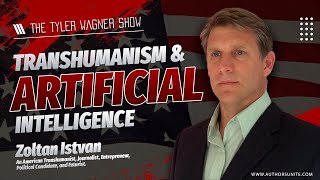
Zoltán István, a transhumanist author and former presidential candidate, explains the merging of humans with technology through robotic eyes, neural implants, and mind-uploading. He founded the U.S. Transhumanist Party and argues that AI like ChatGPT is already halving article-writing time, while the FDA lags behind other countries on stem-cell therapies.
Chapters
All right everyone, welcome back to another episode. Today I have Zoltán István with us, so welcome to the show, man.
Hey, thanks for having me.
Of course, grateful to have you here. Uh, if you can just start us off a little bit more about you and what you do.
Sure, uh, my name is Zoltán István. Most people know me as, uh, kind of one of the world's more visible transhumanists, uh, somebody who wants to use science and technology to upgrade the human being. However, um, it's through a lot of my writing that I've become sort of a public figure in that sphere. I wrote The Transhumanist Wager, which was a novel. Its 10-year anniversary is coming up this year, and it was a top 5 Amazon book. And I've written a whole bunch of other things. I started my career as a journalist at National Geographic. I now write occasionally for the New York Times opinion section, and I'm working on a ton of other things and essays and stuff. And I guess finally, I'm a, um, a student, a graduate student at the University of Oxford right now. And actually, I should just say, most people know me because I ran political campaigns for various science, uh, kind of parties, uh, to push for science in American politics.
Okay, yeah, I was actually going to say, I was waiting for you to say something on that because I was doing some research on you as well and I saw something in the political realm. So we'll get to that then for sure. Um, for people that don't know, because I was actually looking more into this too, like the term, term transhumanist, how would you like define that exactly, I guess?
Sure. Well, in Latin, it just means beyond human. But really, when you talk about like merging ourselves with artificial intelligence, a big hot button topic in the media right now, or when you talk about like a soldier who's had his arm blown off and then they put on a robotic arm and they tie it to his neural system so that person can now play the piano or can pick up a beer, that's transhumanism. When you're talking about people getting out of wheelchairs in exoskeleton suits, that's transhumanism. People that are born deaf It's transhumanists that created the technology of the cochlear implants that now has essentially made deafness not something that everybody— if you want it, you can still be deaf, of course, but if you have access to the technology, you can now hear pretty well. So transhumanism has done all these interesting things to make technology a part of the human experience, and including going beyond it. I mean, some of the robotic eyes are working on now are far better than the human eye, can see germs in the air. You can see COVID in the air, for example, things like that. I mean, so they're going way beyond what we would call human being and now into transhuman kind of beings.
Yeah, actually, one of the most like famous YouTubers, MrBeast, I don't know if you ever heard of him, but he just put out a video where he like cured like 1,000 people's blindness. And apparently it's just like a 10-minute like surgery. And for almost anybody who's blind, obviously you have to have the money to pay for the surgery, but Um, it's curable, like, pretty much. So just like death, I guess.
Yeah, no, I mean, honestly, blindness, deafness, and a whole bunch of other diseases that we considered, like, um, even paralysis in a wheelchair, they are going the way of the dinosaurs. They're simply, uh, although we're bringing back dinosaurs too. That's like sort of another transhuman idea, Jurassic Park stuff. But, um, the reality is that, you know, it would be very surprising if in 10 years' time there would be any blind people on planet Earth, because they can either regenerate the eyeball itself through stem cell technologies or genetic editing and CRISPR, whatnot, or they'll be replacing robotic eyes that actually tie directly into your neural system. And what's really interesting is the people that have gotten their eyes fixed biologically will probably in 10 years' time then replace those fixed eyes with, uh, maybe 20 years' time, uh, with robotic eyes that can actually see quite a bit better and then do things like download, have this podcast, for example, this interview, right directly through our eyes instead of through wires.
Yeah. Okay. So, wow, dude, this is actually potentially going to be one of my favorite interviews, I think, because there's like, I have like 30 questions in my head. So, first thing is I just want to say, that's one thing with podcasting I've always thought was really cool and something just as soon as I did my first episode, I realized I was like, this is something I'll probably do for the rest of my life. And what will be really cool is, so I'm 31 now, when I'm like 80, let's say I'm still interviewing people, what will that experience be like? Right? Like it's not going to be a computer 50 years from now. Right? Like it's going to be like your eyes, like you'll just like tap and then me and you'll just like connect. We'll feel like we're in the same room even though we're not.
I would be surprised if even in 15 years you're still using a phone or any kind of device with wires to do this because already Microsoft is working on some incredible augmented reality. So the augmented reality of something in your room, it kind of beams down like these different wavelengths or whatever things so you can see your— it's like a phone in your hand, but it's not physical, but but it's still the same things you can touch. And so you can do it. And this is stuff they're already working on now. But that's be, you know, so that's like what will probably happen the next 10, 15 years. But then you get 20, 30, 40 years, like talk about when you're 80, and almost certainly you would either be wearing a headset or probably just have an implant of some sort, or maybe just something tied attached to your skull like they already have, uh, biohackers use. And, and that would just connect to your brainwaves. So we would do this through that way, and we'd have— why, we'd all be Wi-Fi. I mean, they're already working on putting Google Maps, for example, into people's heads. So if there's no reason that it needs to be outside of our bodies, um, to— because it's just going to be cheaper and more functional to have this stuff internally. You can't lose your phone, you can't, uh, you know, it can't be stolen and stuff like that. So I think everything's moving in, in the Steve Jobs kind of way to less wires. Uh, everything's just sort of invisible, either embedded in you or outside your surrounding environment, but it's beaming into you, and that way, um, you're not actually carrying any actual physical devices.
Yeah, no, I, I agree. And I, I just don't want to forget to ask this, but then I, I want to go in a different direction. But for, um, the stem cells, I— so I'm actually down in South America, in Colombia right now, and apparently one of my friends that lives down here, he says he knows a stem cell doctor. And in Miami, I do a lot of like IVs, peptides, and stuff like that. So do you— what do you know? Like, would you recommend stem cells for anyone? Or like, what, what's the best use cases? Or what do you know about it, I guess? Sure.
Well, it's perfect time because I literally just finished an essay on stem cells for International Living magazine, which is a travel magazine. So, you know, Florida, first off, is like ground zero for stem cell treatments, where you can walk in and like, if you have a hurt knee, like arthritis in the knee, they will inject you. The bigger question though is, you know, and this is interesting too, because when my first daughter was born, we took stem cells out of my wife's umbilical cord and put them and froze them. So we actually have my first daughter's stem cells frozen. That way, if she ever gets leukemia or anything else, we can get her exact stem cells, replicate them in the laboratory, and then put it in her, which helps to heal body. I'm a big believer in stem cells. The problem is they've got a little bit of a bad reputation because so— it's a very unregulated industry, and a lot of people are creating these clinics where you like walk in and walk out, and you're not really sure if you're getting the proper stem cells, if there are even, even stem cells. Maybe they're just blood transfusions. But in general, there's no question that the, the— it's a transformative type of medicine. And I think in the future, when you talk about heart attacks, like the leading killer in the world, you're going to have a lot of stem cell injections into repair damaged hearts, as well as things that'll make us stronger. Why not have the stem cells of Olympians put into our own bodies who are not Olympians? Why? I want to run marathons too. Yeah, this is the promise, and I think it's great. It's just, um, right now it's an industry finding itself for sure.
And, and okay, so yeah, you definitely know a lot about it. I'm just curious on, for some reason, and obviously I'm misinformed, is there something with stem cells that's not legal in the U.S., or they don't allow you to do something with them that's legal in other countries, or am I—
well, I, I'm not 100% sure on the logistics on, on everything, but in many cases you are able to take your, your stem cells without any kind of bureaucracy involved or even regulatory environment regulations from the government and inject them back into yourselves. When they become, uh, I think challenging is when you have to use a normal doctor who might have a medical license, and then he— this is the most ironic thing— he may not have the ability to apply them to you because he hasn't been qualify for, whereas you might be able to get somebody who has no medical license to give them to you. And that's one of the reasons why a lot of people will leave the country, because they don't want some random person on the street to give you stem cells. They'll leave the country, go to South America or Poland— East Europe is huge in it— and they'll go off and do stem cell procedures using their own stem cells that a doctor can then put in inside you. So right now, a lot of medical professionals can't take your own stem cells and try to heal you. Because the FDA has not approved it. However, a lot of other governments around the world have. And one of the reasons— I just— let me just be— I don't want to be the conspiracy theorist, but one of the reasons the FDA has not approved a lot of stem cell therapies is because we're talking about a transformative kind of medicine here that can literally end disease. Now think about America's pharmaceutical industry, one of the largest in the world, at 20— you know, 20% of American healthcare is is our medical budget. And so, you know, of our GDP. So if stem cells actually do show their promise as much as possible, you might be ending most disease. And that's why the FDA has been very slow to move on stem cells, because you are disrupting an entire industry. And why Eastern European countries and South American countries have moved much quicker, because they don't have that regulatory environment and they just want to make some money. But I think it's a big threat to pharmaceutical companies because it is so effective.
Yeah, no, that makes complete sense. And this is what's— and I don't know if you get into— well, no, obviously you do, politics. So, here's the thing is like, and I've been discussing this with actually a lot of people lately is obviously, and I guess I shouldn't say, but it seems to me capitalism is the best form of government, I guess you could say, that we currently have figured out so far, better than communism, right? We can agree on that. But I still think like what you just said there, that is a fault in capitalism. And we have yet to discover something that I think has the— I don't know if it's a balance between two, but more rather just something different because the issue is, like you're saying, we have the ability to fix all these things, but due to companies' ability to profit, it's being like slowed down, right? And that is a fault in capitalism in a sense.
Yeah, yeah. No, and it's interesting because I have always been a capitalist until recently. Where I'm starting to change my tune a little for exactly this kind of reason. The big conundrum in the world right now is artificial intelligence. All of a sudden you have this ChatGPT and AIs that can write books and things like that and maybe become smarter than us one day. Well, I'm glad that capitalism brought us this, all this technology. Lives are better, lives are longer, all these things. But if it brings me a Terminator, I'm not happy about capitalism. So there's like a point when capitalism works until it gets to the very top, and then you might have to have a much more kind of like, I don't know exactly what it would be, but I would say something like community-based or at least a democracy-based type of decision-making. Because when it comes to things like AI and maybe something becoming 10 times smarter than me in the next 10 years, that's just a little too scary. I don't want to leave that up into the hands of big tech or just into the hands of this kind of unknown capitalistic monster. I mean, capitalism is great. It's made the world prosper, but there might be limits to it in the final frontier.
Yeah, I agree. And I think one of the biggest scares with AI too is— and it's basically what you said, but just adding on top of it is like people's jobs. Like, I know in my industry, right? Because we do books and market books. I think the marketing won't be really affected, but the writing, like ghostwriters, they were doing great. And then AI comes in and it's like, now a person has a decision to make. Do I pay a ghostwriter like $50K to— it could be multiple six figures to write a book for me, or do I just have this AI do it and edit it and it costs me like $100? I find it crazy. So I think a lot of people, I don't know, anybody listening, I would just say you definitely want to at least look into it and make sure you're kind of planning because it is going to affect most people's jobs in some fashion in time, I think.
Oh yeah, no, I have, I mean, I first, for example, just going back to the stem cell article, you know, it usually takes me to write 1,800-2,000 words about 12 to 14 hours. But because a lot of it, the article is actually objective, not my opinion. I mean, I told the story of you know, freezing my children, my daughter's stem cells, whatnot. But some of it was just subjective. So I used ChatGPT, and honestly, it took a 12-hour article to 6 hours. And my wife, when she reread it, she said, wow, I can tell when the robot's writing because it's more eloquent than you, and it doesn't make grammar errors, and there's no typos. And I, you know, that's how profound this thing already is. And I, you know, I tell your audience that if you are writers, you need to try to work out a system that utilizes, you know, makes you more productive without actually losing income. And you also should probably— if you have books in you, now is the best time to put them out because we just don't know what the environment is going to be like in 5 years moving forward. They say the next ChatGPT coming out is going to be 100 times more powerful.
Wow.
I mean, the one already is incredible. So, you know, I don't— I don't know what the future holds, but it's a little scary this time.
Yeah, I agree. And it's like it's using it to your benefit in a sense. So I guess the counter to what I said is, okay, well, if you are a ghostwriter now, you could write more books. Right. But still the consumer then decides if either way, I think you still need, as you said, it cut the time in half, but you still had to go over it, right? Like you couldn't just like press a button and it's done. Or is it literally like that?
Honestly, it's literally like that. The editing process is about 5 or 10% of the time involved. So if you would say write a 3-paragraph, you know, 3 paragraphs on stem cell technology in Miami, it will do it in such a way that it's perfect and eloquent in, in about 15 seconds. And I made really very few edits to anything. I just made it kind of form with my own writing above it and beyond it, so there were, there were transitions. But I actually almost edited almost nothing that it did, because when you ask it to do factual things, it's just incredibly good. It's just simply better than I can do. And I, you know, I wear— like I said, I do some writing for the New York Times, and I'm worried for a lot of the journalists because a lot of the writing there is quite objective, just factual-based. And if you have a machine can then do it very quick. And now they're talking about sending out drones to look, observe different events. So now you have this thing that can write on demand incredibly quick, and then you have drones that can actually take the image. So the drone can then send out the kind of imagery that— so you don't even need journalists anymore. I've been a journalist for 25 years. So all of a sudden you go to a war zone and you have a drone flying around saying, oh, look, that person was shot or this person was shot and in this jungle, and the ChatGPT can produce an article on demand within minutes. This is like a very different way of looking at the media environment.
Yeah, it's so— wow, I gotta mess around with that more. Uh, my brother's been messing around with it a little bit, but, uh, it's definitely something that's, that's interesting. Um, so one thing I wanted to ask you too, because I, I am really into health, so like, what are your— okay, so let's start here and then we'll dial it in. So like living forever, obviously not your whole body could do that, but with transhumanism and like technology and everything, do you think there is a way that we could like keep our mind, if you will, or our thoughts, memories, mentality, and then have a fully like, uh, technology body and live on? Is that possible?
Yes, yes, absolutely. Well, to begin with, I think most transhumanists want to be able to reverse aging, and they are already having an enormous amount of success. In fact, last 15, 20 years we've had success reversing aging in different types of rodents. It's been, again, the FDA that is causing some of the roadblocks here. Because again, if you can stop aging, you stop like 70, 80% of the diseases. That doesn't help the economy of the world, which is very much based on healthcare, at least 20, 30% of it. But so we transhumans want to first off be able to keep you your younger— you know, I mean, I would probably want to be 35. That was the point, strongest point in my age. I'm almost 50 now, so I certainly like to go back. But I got to be honest, though, and this is what a lot of my work at Oxford has been about, is while biology is wonderful and being healthy is wonderful, it doesn't offer the kind of experience that leaving biology behind will. When we're talking about the robotic arms, you're already talking about like a microscope. So, you know, you get your arm blown off in Afghanistan, they put on a robotic arm. The robotic arm can now warm your coffee because it has a heater built into your fingertips. The robotic arm can detect methane or carbon monoxide in the air. So if you have a family, you always know, and it'll wake you up in the middle of night, that your baby's about to suffocate or something like that. The robotic arm has, has strength already if it's tied to exo and endoskeleton pieces inside you that can lift more than your arm can lift, and soon probably 5 or 10 times. So there are reasons that we wouldn't actually become cyborgs, because our human bodies will just never ever match what the robotic bodies can do, especially not 10, 20, 50 years in the future. And so when you talk about going to space, when you talk about surfing 100-foot waves or bigger waves, when you talk about, talk about diving to the bottom of the ocean, there are reasons we would want to already be, you know, pure machine. Uh, maybe our brain's not, but, um, it's because it's going to be more functional for us. We can do more crazy wild things.
Okay, got it. No, that's really— I hadn't thought of it. I was just thinking about it like when, you know, literally you're like 80, 90 and you just literally I can't lift shit anymore. And it's like, okay, this would be good. Okay. So I totally get what you're saying though. It'd be like, there's reasons to actually do it sooner. So what are, I mean, from some people that, and I'm blanking on his name right now, but he talks a lot about, I think he takes this thing, resveratrol and NMN or something like that. And in Miami I do NAD IVs as either way. I'm just curious, like how long, and I know it's always progressing, but like, do you think actually living forever? Could ever be? As like, obviously things would change in the body, but as you knowing that you're you, could that—
Yeah. So I mean, I, I used to be more optimistic about it. So 10, 15 years ago when I was running my political campaigns, at least the, the, the more popular ones, I actually thought we would, but within 10 years' time from now, be at a point when we start reversing aging based on the experiments. But it does seem like we have slowed down a little. And that's real sad because you have to realize about 140,000 people around the world die every day. So if you can stop death, you can really do the most great humanitarian cause kind of ever. You can keep people alive. The problem though has been, you know, also regulatory things from the government stopping us, but also lack of funding. Not— there's a lot of religious people out there that have no interest in living— I don't know if forever is the right word— but living 1,000 years because they feel like they want to get to their maker. And of course, those people are often in charge of government, so they're often in charge of the budgets. But recently, because a whole bunch of billionaires have signed up. Jeff Bezos, uh, Mark Zuckerberg, uh, and you know, whether you like these guys or not, it's not the question, but they are now dedicating billions of dollars to ending disease and to reversing aging. Jeff Bezos just signed a $3 billion company that's directly for literally overcoming death. And so the more of these billionaires that do this, the less we need government funding. So I think it could be having— you're younger than me, it's a good chance you're gonna do it. It's a good chance for my daughters But I'm turning 50 and I no longer— my father died at 75. I'm no longer sure if I actually have 25 years to make it. And it's also like you have to be careful even if you do get the technology. If you're an 80-year-old, it may be very hard to bring you back from 80. It might be easier to bring you back from 60 to 35 than it is from 80 to 35.
Got it. So, okay, so, well, maybe taking longer than we had hoped, but as far as it eventually happening? That's kind of inevitable, you would say?
100% inevitable. You have to see the human body like you would a car. You can remake it, you can redo anything with it through CRISPR technologies, stem cells, through just, uh, you know, uploading. And I think a big part is going to be our ability, like what Elon Musk is working on with Neuralink, connecting our brain into machines. Once we learn how to do these technologies in a very efficient way, there'll be very little reason to remain biological. And that's when I think our lives will start extending. There are, you know, different ways out there right now. For example, there are people that are trying to take microscopic images of your brain down to the subatomic matter and then recreate that on a computer using different types of algorithms and software. And they're not having success yet, but there is a chance that one day they'll be able to create a version of you that acts just like you. Maybe it's not you, but, um, for all practical purposes on this podcast, it might not seem any different at all. And so people are literally working hundreds of millions of dollars into these technologies right now.
That's incredible. Yeah, I mean, see, I, I really enjoy the podcast, so I would do, I would do this anyway. But other parts of the business I run, I would maybe have my other self do that.
No, that's actually pretty sick.
Um, now what are like— and, uh, I'm gonna try to word this question right— like, are there people that are like against— and not, I'm not talking about the people that obviously, um, are like the pharmaceutical companies for profit, but just like, I guess, uh, internally or morally, ethically, are there some people against transhumanism? And if so, like, what are their reasons why?
Well, I think to begin with, quite a few people that are normal and good people are becoming against transhumanism because they realize it's going to be replacing too many jobs, like the ChatGPT. So someone who might actually support transhumanism normally now has made a stand against it, and that's a brand new kind wave of people against transhumanism that we've ever seen. Uh, historically though, it's always been people from like the alt-right that are really like very religious, um, and they, they just don't want to see anything change. They just want everything to be the same. And those people have always been against, uh, uh, like for example, um, Steve Bannon, uh, bashed me for a few minutes earlier, late last year, because I had written some articles. And he said, oh, this is terrible, this is exactly what's wrong with the world. And, and I think very religious religious people or people that take that conservative picture. And when I say conservative, I don't mean normal conservatives. I mean like this is ultra-alt-right, you know, conservative. They really want to keep human beings human and make sure that we die and meet Jesus or meet their maker in the future, whereas most— so they're very much against it. And I gotta say that then there's, there's this other group that is— I kind of feel sympathetic with— the environmentalists. They're saying, look, um, we We are to some extent destroying the planet. I, you know, my work in National Geographic 20, 30 years ago was a lot about that. Um, and it's because a lot of progress in science and technology.
The—
what I try to always answer though is, despite environmentalists having a strong point, um, there's a good possibility in the future that transhuman technology will also be able to fix a lot of the things we did through nanotechnology or through different types of ways where we're like in a drought, we could seed the clouds. I mean, they're doing this kind of stuff in Dubai to make rain come. So there are different ways that I think transhuman humanists who are mostly environmental will also hopefully help towards climate change and things like that. It just isn't so much today. I think it's like 10, 15 years in the future where we'll have that ability to fix the planet.
Yeah, yeah, I, I was cool when you just said it because I literally, I think it was like yesterday I heard a, or saw a clip, and it was saying how in Dubai they like force it or make it rain once a week or something like that. So that was interesting. I didn't even know, I didn't know about that.
It's, well, we need it really badly. Not this winter in California, but we've needed the last 2 years because we have such a fire hazard and Imagine if you can create a storm right when the fire breaks out. You don't even need the fire department anymore, you just need the storm. So there's a brand new way of even looking at firefighting technology that's happening, you know, kind of in the transhumanism realm, because that's how one way you'd fight fires. You wouldn't, uh, you know, stop fires, you would just rain them out.
Yeah, dude, that would be wild. So wait, that— so it's already possible you could do it, it's just maybe the cost is, is higher to do it that way right now?
This, this technology is, is very early, so you're able to cloud you're able to seed clouds to make it come, make it rain, increase the rainfall. But we're not good enough where you can take a no cloud, you need some type of cloud to make it. So that's what they're working on right now is actually forming clouds. They already know how to seed the clouds, so they need to form the clouds, then seed the clouds, then make it rain. So that's what the new technology is really about. But so now they're not just making the rain, they're now making the clouds. And you know, I mean, this, this goes on to some of the other methods that they want to do. You know, one of the re— I don't know if you've noticed this, but the world may seem like a little bit colder this year and probably will be for the next 2 or 3 years. And one of the reasons the scientists say is, because this has happened historically, is because there was a big giant explosion in Tonga which released all this stuff into the air. It's like Krakatoa or the other big, uh, volcanoes that erupt in the Caribbean. Every time a huge volcano erupts somewhere around the world, it tends to create a layer of dust that the sun actually basically can't get through as quickly as it normally does. So even a tiny little bit of layer will lower the temperature of the world by about 1 degree overall for a year or two until that dust dissipates. So now they're trying to mimic this system because temperatures are rising. So they would be putting these things, particles, into the air. I, I'm not saying I support this technology yet because it's unproven, but I'm saying this is what they're working on, to put this, this stuff in the air to cool down the planet in case it really is warming. And so this is kind of weird. Again, transhumanist technology technology at the forefront of changing civilization, but it's based on a historical precedence. And you're actually viewing that. We've had one of the colder winters in California right now. People are saying a lot of it has to do with the explosion last year in Tonga. You can't see the dust in the air, but believe me, there's a tiny little layer that was more than the years before because this giant explosion happened in the South Pacific.
Wow. Okay. No, I didn't know about that. So I want to ask you something, and if you want to skip it, we can. It's just as you were talking about that, I'm just curious. Is, and I haven't done the research on, I've just literally heard like both sides of it, like from watching Rogan and all these different podcasts and stuff. There are some people that say global warming is complete bullshit, right? And then there are other people that are like, yo, we gotta fricking fix this now or run for cover. We got 10 years and maybe it's a happy medium, but like, what do you have a take on that? Like what is, or do you know the truth of it? Or maybe I'm just kidding.
Well, yeah, I mean, I can tell you the truth for sure just cuz I'm at the University of Oxford where like the best research is being done. There's no question that the planet is warming, but it's warming at such a slow level that the naysayers who are saying that the oceans are going to rise by feet in 10, 20 years— like when Al Gore went on in this documentary and said that the world will end by 2012, he was clearly off by hundreds and hundreds of percent. There's no question though, if you look at before and after photos of California, for example, of satellite imagery, it is drier. It's getting hotter, there's no question. That said, we have a record snowpack this year and there is a tendency to get a little bit warmer and probably in 30 or 40 years, this will be very significant in food supply and things like that. The question though is in 30 or 40 years, will we have the technology to reinvent food supply and things like that? And almost certainly we will. So while I believe in global warming and I believe that the climate is changing and it's probably caused by humans, It's almost certainly caused by humans. I don't see it as such a desperate thing as the media makes it out to be. I think we have enough time to figure out how to use technology to solve it. And there are some instances where we just have to, you know, maybe change our technology. It actually makes perfect sense to use solar power and wind power and things like that. Why would we want to use fossil fuels and dig apart the planet if we don't have to? We have something free anyway. So I support all these changes, but the naysayers think the world is ending tomorrow. And I've been surfing for 40 years, and the water temperature where I surf has not changed. You know, maybe it fluctuates here and there, and the waves haven't changed, the, the surface of the field is the same. So I mean, I use that as kind of my basis. Yes, there might be— it might be warming a little bit, but it's slow enough where it's not going to end the world tomorrow. It's just something we better think about, you know, here in the next 30 to 50 years for sure.
Dude, that was— thank you for that. That actually is like probably— we're definitely going to clip that. That was an amazing answer because I think it just adds clarity And I mean, I guess for anybody listening, apologies for my ignorance. I just, I literally haven't taken the time to really look into it. And just from like afar, from watching interviews and hearing all these different clips and stuff, it literally does feel like you're the first person I've really heard just give kind of like a neutral answer of like, yes, it's real, but it's not this crazy, you know, because so many people are either, this is a lie, they're using it for profit. And like all the politicians are saying global warming, and then they're going and buying a house in Miami. It's all BS. And then the— so either way, that was very well put and it makes sense to me. So, another question I wanted to ask, I think we've touched on some of this stuff already, obviously, but as far as health and technology goes, what stuff are you using to help your health and productivity with technology? And then what are some projects that you're looking forward to on health and technology as well? And I know we've touched on some, I'm just curious of more that, you know.
Sure. So the, the one thing in my biography I didn't say is that I own a number of wineries and vineyards around the world. One in Argentina, I'm actually in the Napa Valley winery right now, which is under construction that I have. And then we have a vineyard and winery in Bordeaux, France as well. And so I'm trying to be the very first person to mix nootropics into my wine so that you actually become smarter water when you drink. Oh, well, I mean, but we have— it's been hard to do so and maintain taste levels. And our— my business is kind of early in the process, and honestly, it's, it's very hard to make money in, in any kind of alcohol. You really need volume, and I don't have volume. I might have little vineyards, you know. We have a capacity— is our capacity about 50,000 bottles? So it's not huge, and you really need millions to be able to make a profit. But we are having fun, and trying to create what we consider the first transhuman wine. So nootropics is something that I do take. But regarding just like trying to live longer, I think the biggest thing I do is just try to stay fit, eat a lot of good foods, organic stuff. I mean, I'm not a big fan of a lot of chemicals being put into stuff, but I'm not, you know, I eat a little bit of meat, but not too much. I try to focus on just good foods, but I'm not against anything. But I do think if you look at industrial farming, you see how many chemicals go in, it's probably best to try to avoid those things. Like, for my kids, it's organics only, just because we don't really know what's going into it. So for staying healthy, for me, it's really just simply being natural. Uh, I, I'm not taking any of the big drugs yet, uh, that are coming out in the transhumanism market. I do believe in them. I think they're great. They're just quite expensive, and, um, and they're still a little bit untested in my opinion. I'd like to see more people trying for a few more years before I jump on board. I'm also quite healthy at 50. If I was, if I was getting really old, I think I'd start taking this stuff religiously. But right now, most stuff I do is fine, especially with my transhuman wine mixed with nootropics.
What if you don't mind sharing? And obviously if you want to keep it, you can. But like what? Because there's a lot of different nootropics. Like which ones do you—
Yeah, you know, I can't actually share that because it is a little bit proprietary. We are working with people that, you know, like we haven't patented yet, but we're— our agreements are that. So sorry, but there are a ton of nootropics. And I can tell you that the people do have PhDs out of Berkeley that I'm working with. They're very interesting characters, lots of tattoos and earrings and crazy people that are wanting to do crazy things with the world. So they're fun people, and we're all working together to try to make a wine that will be drinkable and also maybe, uh, maybe increase our IQ level somehow. Nice.
Okay, well, yeah, and let me know. I mean, if it, uh, yeah, come out with something else, I'd be, uh, very interested personally.
So, uh, of course, of course, send you a bottle.
Yeah, all right, done deal, because I like to drink and I like to work, so I think that's good.
Perfect.
Um, and then on the technology side, was there— are there any new things that you're aware of that like are being built that you're looking forward to?
Um, so I think, you know, for me, the, the most important probably thing that's coming out is probably going to be robotic eyes. And I think why robotic eyes are important is because the robotic eyes now— there's about 6 universities and a number of companies working on them. They combine a whole bunch of technologies into one. And the reason that's important is that— and what's most important about the robotic eyes is that they become so good that unless you're looking within maybe a few inches away, you can't tell it's a robotic eye anymore. It looks like the real deal. And since we have two eyes, I think people are going to feel comfortable to replace it. Now, we were talking about installing a phone inside, uh, streaming your social media inside, being able to have— like I mentioned earlier, for raising kids, these things will be able to spot snakes, poisonous snakes, and identify them immediately, even in the night, because they won't sleep. So there's a whole range of reasons you might actually have a robotic eye. And I know the FDA has already approved some of them for, for people that are mostly blind. But I'm not interested in the blindness issue. I'm interested in actually the, the different types of technology. It's almost like having a microscope there where you can see all these different things. It'll start relaying things. It's like Google Eye, but all these other things you can do— scan the internet. So, uh, watch TV and Netflix or directly through it. So that's the big technology that I am, um, really looking forward to right now in terms of what's the very first thing I hope to do in the next 5 to 7 years. Yeah, replace one of my eyeballs. And because I have two, I can say, okay, you know, if something goes wrong, it's not the end of the world. I got another one.
Yeah, okay, that makes a lot of sense. And yeah, I guess, uh, just— yeah, it still works. That's fine, that could work. Uh, but it's, it's a little different, but it could totally work. And so, one last thing I did want to touch on with you is, tell me again, what were you involved in with politics again? Sure.
Well, I wrote my novel, The Transhumanist Wager, just so your audience knows. And that book did really well, about a guy who wants to live forever and he'll go to any extreme to do so. But it kind of launched me as a public figure in the transhumanism space. And I realized that while we had a ton of academics and researchers in the transhuman movement, we had no politics. Things. So I formed the Transhumanist Party, which became America's first political party that was entirely based on science. We— our entire method of coming to ideas and coming to, uh, political, I guess, mores was using the scientific method and reason and logic. And so we ran, uh, you know, I was nominated to be the presidential, uh, candidate in 2016. And, you know, we just thought, oh, we're gonna go have fun and, uh, you know, run against, uh, everyone else. There's thousands of candidates always running when for president. And lo and behold, we became, I think, the 5th and 6th or 6th trafficked, uh, presidential candidate that actually finished the election. And my campaign there took 2 years. The New York Times was embedded with us, um, uh, Der Spiegel internationally. There's people were embedded with us. We had a ton of people from England, Vox, Wired. I mean, you name it, people were coming onto our campaign bus and being with us as we journeyed around the country saying, look, we should be talking about artificial intelligence, we should be talking about genetic editing, we should be talking about using stem cells to to end disease. And none of the big presidential candidates at the time, Trump and Hillary Clinton, want to have any of these conversations because these are weird topics. They don't gain voters, they actually gain controversy. But we went around the country speaking about it and we were surprised by how well our campaign did in the media. And while we didn't do very well in voting because it's so expensive to actually get on ballots, most ballots we weren't on, we did very good in terms of traffic. And then after that, I ran for governor of California and one more short run for the US presidency. But the 3 campaigns actually all were kind of national events, at least in the United States, that drew national coverage. And so as a result, I was able to grow the idea that science should be a part of politics in the United States. And national media was willing to cover that angle, even if it really didn't make a difference in the voting.
Yeah, no, that's incredible. And I agree. Now that I think about it, I don't think I've ever heard Trump, Hillary, or any of the— really any politician talk about this.
It's sad. It's very sad. And yet, what's bigger than AI right now? You know, I mean, this is a— this is not only a national security issue, this is also an issue for jobs, millions and millions of jobs. And yet, if they— they don't want to touch it, because the moment they touch it, it becomes divisive and controversial. And that's not the way to gain votes. They want to talk about the same old subject things, taxes and immigration, whatever that they've always talked about, that really don't make it— that their policies don't really change anymore. So it's— and yet the world is changing, as we can see it, because of science and technology. And yet I feel like our politicians are decades behind sometimes.
Would you ever run again?
Yes. So actually, one of the reasons I decided to do a graduate degree at the University of Oxford was because I knew it would help me to get a better resume. I think when I was running, some people were complaining that I didn't have a graduate degree, and that I need a little bit more, you know, real-world experience in order to do that. So forming a couple of my wine businesses and kind of consolidating them under under one umbrella of ZyVentures and the things that I'm working on, as well as getting this graduate degree, which I'm almost finished with now, will hopefully put me in a good position maybe for 2028 to make a much better run, and hopefully one that I can be competitive on. Um, well, I've been competitive in terms of media coverage. I've never been competitive in terms of votes, and that's where I'd have to improve.
Well, I will have you on the show again, so you let me know.
Thank you.
It's awesome, man. I guess, um, Second to last question I'll ask you here is, because a lot of our audience does stem, or at least the foundation of the podcast audience is from my business Authors Unite, where we help authors. There's a lot of people that are curious of the topic of authorship. So my question to you is just like overall, what was the experience like for you, like writing, publishing, marketing the book? And do you have just any insight for the audience on it?
Well, I think most writers should try as well to be journalists. And the reason that they wanna be journalists is because a huge part of writing a successful book is getting it reviewed successfully. And if you know journalists and you have friends that you can put a little bit of pressure on and say, hey, do you mind reviewing this book? And that could be the difference between a book making it or not making it. So I think one reason to be in journalism is not necessarily to practice your writing, it's to develop your contacts. So that's just a secret of the trade that has worked for me. Um, and I, I think, you know, the other one I'm going to say is not necessarily negative, but it's just you— everybody needs to try the ChatGPT and realize that the world is changing in the world of writing. And they need to— if they have books in them, now is a great time to get it out, because I think legacy books will probably do well, but there might be an overwhelming abundance of books that comes out because of AI can write. For example, I was talking with a friend the other day and he said, why don't we go to Wikipedia and have ChatGPT write a biography on every single person, and we'll see, and we'll just publish them all online and see if we make any money that way. And I thought, wow, that's a great business model. But this is the danger, because ChatGPT can do something like that very quickly. It might— well, it might need editing, um, you know, having 5,000 books of famous people that don't have biographies could be a really interesting business model. So the point of the story is, but that could never have happened before because you needed someone to write it and you had to pay them the $30,000 or $40,000 to write it. And now you can do it for free. This— all these things are changing. The one thing I do want to say, the biggest positive thing, is that my novel The Transcendent Wager, while we had a lot of interest in movie rights, we've never sold the movie rights. Then just like ChatGPT, probably in the next 5 years there's going to be a, an AI that can create movies on demand, really good ones. And I'm sure that I'm— before I die, I will see a fully formed version of my novel The Transcendent Tyler Wagner on the big screen. And maybe nobody else will watch it, but at least I will be able to watch it and know that I can now watch my— the story that I wrote in my head and watch it on TV. And that's what's going to be wonderful too. So there are a lot of novels that never got made into movies. They're all going to be made into movies now because people are going to have the technology. You're going to say like, use myself as the main character, or use my, my girlfriend or boyfriend as the main character, and AI will be able to do that so good. Or you can, of course, you know, buy the rights to Tom Cruise if you can afford that stuff. But the point is, movies, just like ChatGPT, will be able to write so successfully, make movies so successfully on demand, that you'll be able to turn entire novels that you always wanted to— that you read— and you'll be able to turn into TV. In fact, they'll probably be able to do it like you'll say, oh, wouldn't this be fun? Instead of reading this book, I just want to see the, the, you know, the, the, the movie version. And it'll probably be able to do that within, you know, That's what's gonna happen, you know, cuz I mean, right now I can write a book in 1 minute. And so that's what's gonna happen, I think in the future, maybe 5, 10, 15 years out. So I'm happy because the stories that I have, including some of the short stories that I've written, will now be made into something that I can watch late at night when I'm drinking my transhuman wine.
Yeah, dude, that's amazing. Well, yeah, I wanna say thank you for coming on. I knew I was gonna enjoy this. Last thing to you is just like, if there's anything we didn't cover that you'd like to share, please do. And then let people know, like, website, the book, and where people can buy the book and stay in contact with you and stuff.
Sure. Well, one last thing is I did have the luck of a feature documentary was made on my presidential campaign in 2016 and is really quite interesting. It's called Immortality or Bust. You can watch it on Amazon Prime or anywhere, pretty much. It's a sad story because my father dies at the same time during the presidential campaign that I'm going around promoting science and longevity. But if you have an hour and a half, it's a very fascinating documentary to get to know the transhumanism movement. I drive around in a crazy bus. We have all these fun characters on board, weird transhumanists. And, uh, and the documentary did really well, won a couple awards and things like that. It's called Immortality or Bust. And unfortunately, you can only watch it in America right now because we're, uh, we're, um, uh, uh, sorry, I lost you a bit there, but, uh, okay, good. But the point is that, um, it's a wonderful movie if you get a chance to see it. Wonderful documentary.
Okay, perfect. And then, uh, just one last time, what was the title of the book?
The title of the book is Immortal— is The Transhumanist Wager, but the, uh, the documentary is Immortality or Bust.
Okay, sounds great, man. And dude, thank you again for coming on. Like I said, really enjoyed it. I'm sure the audience is gonna love it. So thanks, man.
Hey, my pleasure. And anytime you want to have me on again, if I'm running a campaign, I would, uh, love it. Uh, right now it's like I don't have that. Sometimes I'm doing these crazy campaigns where they're so fun and interesting, I get to meet everyone, but my life's a little bit less interesting. But yeah, sometime in the future, if we ever— especially ever have a campaign bus, please come on it.
Done deal, man. Thank you again.
All right, thanks so much, Tyler Wagner.
More from Tyler


Catherine Nikkel : THE STORY EVERYONE HAS BUT HASN'T TOLD : The Tyler Wagner Show #1120



Scott Ritzheimer: Bring Predictable Success to your Organization | The Tyler Wagner Show #1115


Fred Moskowitz: A GUIDE TO GETTING STARTED WITH IN MORTGAGE NOTES | The Tyler Wagner Show #1113

Mark Podolsky: From Land Investor to Full Time Success How I Made $90,000 Cash in Real Estate


Mark Podolsky: How to achieve a 300% return on investment my foolproof strategy

Mark Podolsky: How to make passive income selling raw land the irresistible pricing strategy