009: A Broken Body is Not a Broken Person with Janine Shepherd
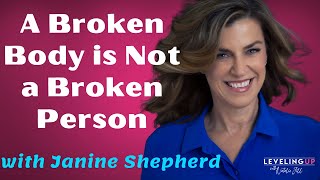
This is a YouTube video titled "009: A Broken Body is Not a Broken Person with Janine Shepherd" created on January 8, 2019. It features a conversational podcast-style interview hosted by Natalie Jill, a fat loss expert turned high performance coach, with Janine Shepherd, a former elite athlete and motivational speaker who overcame paralysis from a severe accident. The discussion covers Janine's journey of recovery, forgiveness, resilience, and how she transformed her life and mindset after her injury. The content is motivational and focuses on themes of overcoming adversity, radical forgiveness, and personal growth.
Hi, I'm Natalie Jill, fat loss expert turned high performance coach. When odds are stacked against us, how.
Do we shift and create everything from nothing? How do we level up?
We aren't feeling it yet or we've.
Had a big setback. On this podcast I'll be talking to some of the most inspiring and courageous men and women on this planet who at their worst learned how to achieve success greater than they ever dreamed possible. Leveling up and creating everything from nothing. Janine shepherd was an elite athlete known as Janine the Machine. Was on a bike ride with her teammates while training for the Olympics. The tragedy struck. She was hit by a truck head on. Janine woke up 10 days later in the ICU with her neck, her back broken in multiple places, collapsed bones and ribs and paralyzed from the waist down. She spent six months in the spinal ward trying to wrap her mind around what had happened to her. Her body, that body that had defined her, was no longer Janine the Machine. With all consuming pain, no movement from the waist down, a catheter bottle that would become part of her, Janine recalls feeling like she was in another world. She was in a life that was meant for someone else. Anyone but her. That truck driver that ran her down that day, he was charged with negligent driving and received just an $80 fine. Janine shares with me that she had a revelation. When you are at rock bottom, it doesn't show you who you are. It shows you exactly what you are not. Janine tried to grasp her new life. She recalls looking up at the sky and seeing an airplane fly overhead. She decided right then and there that if I can't walk, then I'll learn to fly. Instead of blaming that truck driver who hit her, she swallowed a hard pillow to swallow. She decided to accept that on some level she she needed this experience. She asked herself, what is the gift in this? Janine decided to fly now as a walking paraplegic. Yep, she taught herself to walk despite no feeling from the waist down. And now an acrobatic pilot, she's gone on to be a best selling author and highly sought after speaker. Her TED talk alone has been seen by millions across the globe. Janine continually levels up. Join us today as Janine shares exactly how she's been able to create everything from nothing.
Today I've got Janine shepherd, former elite athlete, also a best selling author speaker. Her TED talk has been seen by millions across the world.
She is a walking paraplegic.
I couldn't believe it when she told me this, but I witnessed it for my own eyes. You're gonna love her story. Thank you so much, Jeanine, for being here today with me.
Oh, it's just an absolute thrill and it's so great to catch up with you again after we met in Sydney, Australia.
Yes, yes, yes. So you really caught my attention when I met you. And actually I saw you because you were walking up the stairs and you said you made a comment about places not being equipped to help people with a handicap. That's what you said to me. And I looked at you because I didn't even see your handicap on the outside initially. So we started talk and I learned that you were a former elite athlete. In fact, you were getting ready for the Olympics years ago when you had this, this accident. Can you share what you told me about that accident, how that even happened?
Yeah, well, I was, you know, I've been an athlete my entire life and for as long as I can remember, I, I started with track and field, you know, winning national titles in Australia. And I eventually sort of found myself from triathlons into cross country skiing. And you know, I had the perfect build, had, you know, physiologically it was just like I'd found the sport that was, that I was born to do. And I was training for the 88 Winter Olympics in Calgary. I had actually been invited to train with the Canadian ski team in the lead up to the Olympics, which was, you know, incredible compliment because they were one of the best teams in the world. And when I was on a training bike ride with my fellow teammates, I was hit by a speeding truck, suffered extensive and life threatening injuries. And it's, you know, I could say that that moment changed my life forever.
So you were, so you're training, you're an elite athlete, you're training, you're getting ready and a truck out of nowhere. Were you with a group, what happened?
Yeah, I was with all of my teammates from the Australian ski team and also a group of, you know, in off season we would, we would train on bikes. So we were on a training bike ride from Sydney up to the Blue Mountains, which was, you know, around about a six hour bike ride. And then I was run over by a speeding truck. But of course I have no memory of this at all. I suffered such extensive and life threatening injuries. I actually tell people that I didn't have a near death experience. I actually had a death experience where I left my body. And my first memory was probably around 10 days after the accident.
So you just remember you're riding your bike, you don't remember the truck, you don't remember any of that? No. No impact? Nothing?
No, nothing at all. I'd left my body. And I've written about this extensively, and it's all from people that were there, the people that were driving past and saw it happen, the ambulance drivers, the people that were on the ride with me. So I've managed to piece together those sort of. It's a very surreal experience because I've pieced together what other people saw and then my own experience of what I went through as well. Yeah.
So in your experience, what you. What you do remember, what you recall, other than the piecing together? You said you left your body, so did you remember seeing anything when this happened?
What was.
Or do you remember looking like? I've heard people say they looked down, they saw a light. Like what.
What was happening? You know, it's something that I don't normally talk about, and I've written about it just briefly in my newest book, and I guess it just took me a long time to try to understand it because after my accident, I, you know, I. It was such a different experience to what I read from other people's NDEs. And so I sort of put my hands on every book I could and tried to make sense of it, and it still didn't make any sense. So it was a very much an experience where I was in and out of my body. You know, I remember it was just pure awareness. And I can tell you that I wasn't alone. I had spirit guiding me through this experience. And it was my choice. It was absolutely my choice whether I came back to my body or not. Which was really interesting because for a long time, you know, I was really angry about coming back to my body because as someone who had been an elite athlete, I came back to a body that was broken and living with a disability for the rest of my life. But, you know, it's taken me all this time to realize, you know, why I did that. And, you know, that's one of the things we can talk about. But it was really, really. You know, if there was one thing that was going to wake me up to my purpose in life, it was to lose the thing that I thought defined me, which was my body.
Yeah, let's. I want to talk about that because that's. That's powerful. I mean, as an elite athlete, I would imagine that was everything. That was. That was your success. That's what you are known for. This is. This was your pride and joy. This was your investment. This was everything.
So, yeah, it was how I. It was how I, you know, navigated my way through the world. You know, people saw me as this really, you know, power. You know, my body was my power. That's what I thought, and that's how I presented myself to the world. You know, people knew that it was Janine. You know, I was the athlete and, and my body was everything. It's how I defined myself.
Yeah. And I would imagine, I mean, and obviously a very different circumstance, but there's many people that can understand what you're talking about. There's people that they built their brand on, their looks. Are they on also being an athlete or. So if your body is everything, what does that do to you when you're not in a body that's working the way you knew it to work?
Oh, it was devastating. So I broke the list of injuries. Apart from all the breaks and everything else and the blood loss, that was the biggest concern in the beginning was the blood loss. I'd lost around five liters of blood, which is all someone my size would actually have my blood pressure. When the helicopter arrived at the hospital in Sydney, my blood pressure was 40 over nothing. So, you know, they. They just said, she's not going to make it. In fact, I found out recently that the first hospital that I arrived at was a small country hospital. And the doctor there said, you know, let's just leave her here. She's not going to make it. So it was. It was the intervention of the paramedic who picked me up that actually saved my life. And so firstly, it was, you know, let's control the blood loss. And then, of course, after that, you know, they found out that I'd broken my neck and my back in six places. You know, five ribs, my arm, collarbone, head injuries, internal injuries, you know, the list went on. So, you know, that was the biggest concern. I had no idea. You know, my first memory was sort of waking up after 10 days, and it was just a nightmare.
So you wake up, you're in a hospital, you're trying to figure out what's happened to you. Are you in pain? Where. How are you feeling right now?
Well, I just remember trying to rip something off my face, which was the oxygen mask, and I had tubes down my throat and things like that. It was just the pain was all consuming. So the truck had hit me. I was up off the seat of my bike, going up a hill when I was hit. And so my whole torso was just black, like bruised black. It had ripped out some of the muscle out of my buttocks. You know, on top of everything else, and, you know, my whole scalp was lifted back and off my skull and, you know, broken arm and broken neck and back. And so the pain. I was lying on this really thin, hard bed, and the pain was just all consuming, and there was just no escaping it. I say it doesn't matter how much pain relief they gave me. It was just. It was just always all consuming. You know, did you.
Did you want to die at that.
Point, or were you thinking, well, once I woke up in my body, I remember being really confused. Like, why am I back? I didn't want to come back to this body. And that took me a long time. You know, I just was so confused, like, why am I back here? And so I spent almost six months in the spinal ward and got out in a wheelchair. And I think I just refused to believe what everyone was saying. You know, firstly, I had no movement from the waist down, so I was paralyzed from the waist down, you know, attached to a catheter bottle. And I just, you know, even though they were saying, you know, this is the prognosis, and, you know, we don't think you're going to walk again and you'll have to use a catheter for the rest of your life. I mean, I was like, I was in this other, no, this can't be true. This was the sort of thing that happens to someone else, really. Wasn't till I got home from hospital, I had to learn how to use a catheter. I didn't even know what that was. And, you know, I just remember being at home and then it sort of hit me and. And that was my rock bottom. And I remember I was covered in a plaster body cast. My whole body. I remember at that point I thought, no, I don't want. I'm not doing this. I'm not doing this. And I remember pulling myself off my bed onto my floor, and I remember just sobbing and crying out and saying, you know, God, you know, you just show me a way through this or show me a way out of this. And I think I knew that was this moment of surrender, because that's all I could do. There was. I couldn't. I just felt, I can't do this. And I. And I sort of let go. And I think I. What I let go of was who I thought I was.
So, yeah, I want to explain that more to me because there's so much going on at this point. I mean, not only are you in pain, you're being told this devastating news that you are paralyzed, you can't walk, you've got a catheter. You're trying to accept all this information, but everything you knew in your world, being an elite athlete, getting ready before the Olympic, all this stuff you knew is now ripped away from you. So how do you even dive into that mindset of, like, I need to let go, I need to get. How does. How's that even possible? How did you not just hide under a sheet? I want to understand that, because that's powerful.
Yeah, I really did, you know, and I just. I guess I kept thinking, okay, there was. It was almost as I had two parts, you know, there was the one part that was the, you know, in the body that defined myself as my body. The athlete, the Janine, the machine, which was my nickname. Then there was another part of me. I always think this is, you know, my sort of higher spiritual self that was saying, you know, you. You came back to this body. This is actually what it's all about. You're going to find out now who you really are. And what I found out, that when you're at rock bottom, it doesn't just show you who you are, it shows you who you're not. And there was some sort of, like, spark in me that was still alive, you know, this. Who I really was, the essence of who I was. And I didn't need my body to find out. And I realized that the only way that I was going to find out why I came back and to make sense of this accident was to let go of who I thought I was, to let go of the Olympics, to let go of all of those things. And, you know, what I had to do actually, also was to let go of the life I had, which included a lot of my friends. You know, I couldn't. They're actually always still my dearest friends. But I had to break away from that because it was so painful being around them.
Painful? Why? Because they knew who you used to be? Because they were hoping that would come back. What was the pain in that?
The pain was that I couldn't do what they did anymore. You know, I couldn't be around all these, you know, really elite athletes that were training and doing the thing. It was too painful. I had to break that tie, and I had to make and create a new life. And, you know, that the magic in this was that when I let go and surrendered, it was almost like I had a clean slate. You know, it was like, okay, I'm starting all over again. So, universe, show me, what am I going to do with my life. You know, I was in a wheelchair, plaster car. You know, I had plaster cast on my body attached to a catheter bottle. I had no feeling from the waist down. When I left hospital, I'd had this little bit of movement in one of my big toes, and I got so excited, you know, wait, great, I'm going to the Olympics. That, of course, you know, was. It was. It was just so much worse than I ever could have imagined. But in the letting go, my eyes were open to these possibilities. And that's when my life changed. You know, I was sitting outside my plaster cast and wheelchair, and, you know, I remember just thinking, what. What can I do with my life? And I looked up and this airplane flew over, and it was the most bizarre thing. It was the most remarkable thing. Never wanted to fly in my life. And I thought, that's it. If I can't walk, then I'm going to learn to fly. And that moment changed my life.
Wow. I just got chills hearing that. That's. That's really amazing right there. I want to back up for one minute because there's something you haven't mentioned through this, and I'm curious about that. You've never blamed. You never mentioned, I'm angry at the truck driver. This happened. You weren't mad at yourself for being in the spot. You're not mad at him for hitting you? Did that take work, or did you just never blame?
Oh, no, that took work. There was a. There was anger there. I had some great people guiding me through some, you know, some exercises to get through that. Like, I had a great social worker in hospital that had me. She suggested to write a letter to the man that hit me because he. He didn't come to see me. He didn't apologize. And I felt this incredible sense of guilt that I'm putting my family, my parents through this. So I did actually write him a letter. And I had no address. I posted it, but it was. I did that for me. And I did let go because I realized that forgiveness was one of the great lessons of all of this. You know, to be able to say, if I can't let go and forgive him, then I'm the one that's suffering.
Does he know what he did?
Oh, absolutely. Yeah. He was charged with negligent driving, and he got an $80 fine.
$80?
Yeah. I know people find that incredible.
Wow, $80?
Yeah, that's it. $80. And, you know, I really had to let go of that. And as I said, I did it for myself, I didn't forgive for him. I did it for me, because I couldn't hold on to that. And, you know, there's a. There's a great sort of Buddhist expression that says, you know, blaming others is like drinking poison and expecting the other person to die.
Yeah.
And it was exactly like that. I said, no, I want my life back. And I let go. And I've had many experiences in my life subsequently where I've had to practice forgiveness in a very profound way.
And would you say that forgiveness is truly for you, not for them?
Absolutely. And now I've developed a different level of forgiveness, even deeper again, which is a radical forgiveness. And there's a man in Colorado that actually teaches it, Colin Tippett, actually. And I found this book, and I read it, and it really resonated with me, which is when you can get to the point where you say, at some level, this really radical. Because a lot of people find that they can't get to this point. It's taken me a long time, but at some level, I needed to have this experience. That's when you get to radical forgiveness, and that's when you go, okay. And, you know, you don't have to believe it. You just have to be willing to try it. And it really is life changing.
Jeanine, I think that's. That's really fabulous because, you know, the commonality, this. This podcast is leveling up, creating everything from nothing. And the commonality, although I've interviewed people, whether it's creating tremendous financial success or overcoming things with their body, whatever it is, the commonality is that switch of things happening. Instead of viewing things as happening to you, happening for you, and as painful and as hard as that is for people. I've noticed that theme, and you just really spoke into that, that when you can turn and view something as happening for you, it can shift your whole perspective and energy around.
Absolutely does. Because, you know, you just. You have to just be willing to try it. You know, at some level, say, okay, there has to be a gift in this. I always say that. Every experience, I always say, wtgit, what's the gift in this? And, you know, a lot of people think of forgiveness, they sort of go, okay, I'm gonna forgive that person. But they really don't. They really sort of have this, you know, I'm, you know, whatever. I'm, you know, at this. Sort of looking down at this person saying, okay, I forgive you. But radical forgiveness is seeing yourself as equals to everybody and saying, at some level, at a spiritual Level, you know, we have conspired to make this event unfold for the higher good of all of us, and that's when it becomes radical. And I think it's a really powerful tool.
Do you think having that experience where you left your body and you had the guides helped you feel connected to the greater.
Oh, absolutely. I mean, those beings that were with me then, still with me through all of the experiences, I mean, I've had, you know, that's what my latest book, Defined is about. Not just the accident, but subsequent experiences I've had in my life that, you know, have also been really seminal. Moments of change and moving on and learning and growing. And, you know, those. Those guides were with me then, and they're with me now. They're with all of us.
So you really chose not to accept defeat, and you chose to fly, and. And you've done that, evidently, with your. With your books, with speaking with the TED Talk, so. But you've also mastered it with your body, which is incredible. How did you get to that? I mean, you're walking.
I am walking, and I walk with a very significant limp, although I'm really good at hiding it. So when I came out of hospital, you know, firstly, I was an elite athlete, so my. I was studying to be an exercise physiologist. So I have a degree in sports science, and I had a really good understanding of my body. So I came home and I did my rehab myself. And at that time, the word neuroplasticity didn't exist, or I'd never heard of it anyway. We thought that the mind was set. We thought the body was set. And what we now know is that it's not. In fact, now, the protocol for spinal cord injury is very different. They know that if they can get someone moving, even passively moving their muscles, they can get a higher level of recovery. So what I've been able to do, firstly with spinal cord injury, usually the spine isn't completely severed. There's usually some sort of connection that's still there. So if you can innovate and get those muscles working, you can reconnect, you know, neural pathways. And I have been able to do that. So there's certain muscles that I have that have taken over from the ones that I don't have, and somehow, magically, I'm able to walk.
Now, you believed you could do this, so you studied and worked at it. Did others believe that you could do this? And how did you battle the ones that didn't believe that that would be possible?
I didn't listen. You know, I'm very stubborn, always have been. But I really blocked that out because I just, you know, I took it on my own. I was in that really in between world that there just wasn't the support that they have. Now. There's a lot of great programs for spinal cord injury that really get people up and up and walking or up and moving, even passively getting them up with, you know, ropes and all sorts of contraptions and getting their body moving. And people are getting much more return of function than anybody ever thought. And I always say that spinal cord injury. I'm an ambassador for Spinal Cure Australia and an ambassador for Red Bull Wings for Life. And everyone's working really hard around the world to find a cure for this. And it's not a matter of if, it's a matter of when. There's great progress in spinal cord injury right now around the world.
So when somebody would just say to you, it's not going to happen, you chose not to listen. What happens now? Do you. And it's. You probably have the opposite. You probably have people looking at you saying, well, it must not have been that bad, or you maybe get the opposite now because they can't believe that you're walking and you're. And you're doing this. Does that come up? And what do you say to that?
Well, as I said, I don't listen to people. So I am. I have all the injuries that, you know, technically I am a paraplegic. So I have no feeling in my body from the waist down. I still have to use a catheter. I have bladder and bowel dysfunction. I have, you know, all of the chronic pain problems that go with that. And so I've had T12, L1, L2. So in my accident, L1 was completely crushed. I had what's called a comminuted fracture, didn't exist anymore. So they took out a few of my broken ribs and they fused my back together. And so now I'm having, you know, a lot of chronic pain problems that are involved with spinal cord injury. And in fact, if people go on, I made a recent post on Instagram because we had spinal cord injury day a few days ago worldwide to raise awareness for spinal cord injury. And you'll see that walking is only a very small part of a spinal cord injury. There's loss of bladder and bowel control, loss of feeling, chronic pain, mental health issues, sexual function. There's just so. There's just so many more layers to it.
That's a really good point because I think people on the out, they just see on the outside the walking, but they don't know all of these personal things and these, these struggles within that you, you're constantly coming up against. I call them self imposed stops in your head. Like your head saying, this is not good, this is not okay. And you've really been a master at blocking out why that's a bad thing and looking for the good in it. I think that's made a big difference for you.
Oh, it has. And it's taken me a long, it took me a long time to actually be able to say, yeah, I'm a woman with a disability and you know, I sort of struggle with that a little bit because I don't like to focus on those issues that I have. But at the same time I think there's, you know, really something to offer people. I've just started, you know, blogging and writing and posting about chronic pain and so many people are reaching out to me, wanting to know how I deal with that because pain is something that I deal with on a day, daily basis. And I think, you know, there's value in being able to help others who are going through similar situations.
Yeah. How do you deal with chronic pain?
Well, it's a multidisciplinary approach and you know, as well as, you know, trying to be active and I can't, you know, I don't, I have no calf muscles anymore, so. And my feet are really wasted, so I can't physically run at all. And walking is very difficult and I've had to start using a walking stick at times, but I try to move and stretch. That's really important as much as I can. I meditate, I do body scan meditations which are really specifically designed for pain. I swim, which is something that's a really great exercise, but I also use other approaches. I just recently returned from Australia where I have got a medical team around me and a specialist pain doctor. I've had injections into my back of cortisone and I've just started a different pain medication which is specifically for neuropathic pain. So when someone has damaged nerves, so it's to increase the serotonin and noradrenaline around the side of the pain and I do acupuncture and I've just started eft tapping. So yeah.
What I hear from you too is you really are an athlete because you've got that, you've got that true athlete mentality, like you're treating what happened to you or what happened for you like an Olympic sport. I mean, you really are. Because if you think at how an Olympic athlete trains all the things that they put into that, you've really just redirected that into your body and to healing and to forgiveness and to creating amazing things. And it's as you said, flying. I mean you've just taken on that athlete mentality. You still are that athlete.
Yeah, I'm still Janine the machine, which to me shows that, you know, I was never my body, you know, it's. We have this spark in us and I, you know, I always say to people what I have done, everybody can do. We all have that in us. If you find the passion and if you can connect to what you really love in life, then, then you'll find that drive, you'll find that defiant human spirit, which is, you know, why I named my book Defiant? You know, it's, it's, it's something, you know, Vic, I'm a great fan of the work of Viktor Frankl and he talks about the defiant human spirit as being that spiritual quality that we have that allows us to overcome suffering.
How do you. Do you have days that you have.
Self doubt and feel down now?
Yes, there are days when I suffer chronic pain and even during those days I always say sometimes I'll let myself have one of those days when I go, you know what, I'm just going to just take a day off. I'm going to have a day where I just have a bubble bath or I meditate and I don't really do much in particular and we really need that. The days of self compassion. Self compassion is so incredibly important.
So you let yourself feel it. So you're not always happy and bubbly and I forgive and this is amazing. When you have those days, you let yourself feel it.
Oh gosh, we've got to have those days. We all have those days. Particularly with a disability, you know, when you're having pain days, I mean, it's incredibly challenging, you know, days when you just feel like you want to give up. And I think for, you know, I always look back, I use modeling, you know, I know that I've been there before and I always remind myself I've been there before. And so I'm so familiar with feeling like that that I know that, you know, I have sort of rituals that I do when I do have those days. You know, I call them the pity party days, you know, when you allow yourself to do that. So I know there are things that I love doing. You know, I love to Have a massage, for example, because the touch of someone else, particularly when half of my body is numb anyway, I love to have that touch from another human being. I love to have a bubble bath. I love to read, I love to be in nature. So I just, I say it's, that's my day, you know, I'm having that self compassion day. And for anyone listening, a simple thing you can do when you're having a moment of, you know, this is too much overwhelming, is to put your hand on your heart and it releases oxytocin. It's actually crazy. It works, right? Or just hug yourself if you're not in public and you can do it.
You'Re not worried or in person and in public if you don't care.
Yeah. Or hug that special person you've got. You know, there's something about touch that's amazing. And you know, as a mother yourself, you know, being, holding a baby, breastfeeding, all of those things release all those really great feel good chemicals. So, you know, you just have a list of the things. You know, it's great to write a list. These are the things when I'm feeling down, these are the things I'm going to do to support myself.
Yeah, now you've really flown. You've gone to a whole other level. I mean, your books, your speaking, where.
Did that drive come from?
You know the funny thing, when I wrote my first book in Australia, I was writing it for myself. You know, I thought, I need to write this. And of course it just sort of, it was just channeled. I wrote it, it was incredible. In Australia, it was, you know, just, it just took off. Literally. Funnily enough, you know, 60 Minutes did a story. It was made into a movie. It was, you know, it was just incredible. It changed my life. And then suddenly people said, you know, can you come and share your story? And then the sort of speaking circuit took off and, and I realized that the gift in that was that every time I got up and shared my story, somebody, you know, all these people started sharing their stories with me and writing to me and, and I replied to every single person that wrote to me, and I still do today, because I thought, if they're going to write to me, I'm going to, you know, I need to honor that and respond. And then I realized, wow, I'm not the only one in it, you know, that's, that's hurting. And it took me out of this small story into this greater human story and I realized we're all in this together. And that became a really essential part of my healing.
So Janine, I'm hearing you say that you. I mean, it's really connection, it's sharing. You being vulnerable. Sharing and being open and listening to others share that their vulnerable story.
Absolutely. And I, you know, I've, I've been just blessed with being able to connect with so many people, you know, not. And as I said, even today it's like daily I get messages from people who have heard my TED Talk or read my books and they share their story with me and it's just, it's such a beautiful thing and it keeps my heart open and it's just such a gift.
What would you tell somebody now in their own personal struggle? I mean, they're injured, they're. I mean, maybe it's not a physical thing. I mean, they've lost a business, they've had a tragedy, something where they feel that their world is over as they've known it. What would you tell them to bounce back?
Well, firstly importantly, you're not alone. You know, I understand that and I think there's. The depth in my story has come not just from my accident losing my body, but also, you know, I had three children and a great marriage. And then my marriage broke down and my, my husband at the time suffered a mental illness which made it, you know, impossible to continue in our marriage. So then I was a single mom.
Was this during the injury or is this.
Yeah, after I ended up, we met and we married and everyone in Australia was following my story. Oh, it's, you know, happy ending. And I thought that too. And of course then my world was turned upside down again and you know, we broke up and I was a single mum for 10 years, you know, with a disability and traveling and speaking and. And then I ended up suffering from the global financial crisis and I ended up losing my house. And that's what really brought me to America. And so I think there are those three sort of major events in my life that have been my rock bottoms. And you know, somehow I've sort of surfaced even stronger than I was before. And I realized that my story, you know, I've been through those to help other people. And so I, Firstly, I would say that whatever anyone is going through, you're not alone. Someone has been through exactly the same and they have survived. And you know, there's always someone you can look to that will give you some perspective. And for me, you know, I was paralyzed in the hospital and it was the girl next to me in the bed who was a Complete quadriplegic. And she was such an inspiration to me. Her name was Maria and she could only move her head. She always smiled. She always wanted to know about me. And I thought, wow, what a gift. So, you know, there's always someone that's worse off. There's always someone that's been through it and there's always help there. And I think that's important. And secondly, I would say that, you know, if you can look at every challenge as being there for you, what's the gift in this? And if you search, you'll find it. You will find it. And I would always say lastly too, that in the end it's all a story. So if it's a story, why not create one that's going to uplift and inspire you?
What do you mean? In the end? It's always a story.
Everything we're doing, it's just part of a story. You know, I think that at the end of our lives, we're going to look back at all of the people, even the ones that we feel have wronged us, and we're going to be able to say, you know, thank you for playing that part in this great play. You did a really good job because you taught me how to forgive. We're all just players in this, in our life story. It's such a short time we're here. You know, savor everything, learn from everything. It's all here for us. And so make it a story that's going to uplift and inspire.
Wow. And you've really, really done that. I do have another question for you because I'm curious about this. How do you feel about support groups and commit? Like with the way you're talking, it sounds to me like you truly up level and look to level up. You don't. It sounds like you don't want people in your realm that's gonna stop you or tell you woe is me or this. This stinks. It looks like you. Am I right about that? That you constantly look for either people in a similar situation that got out of it or improved, but you still have that athlete mentality of I want to uplevel and keep going.
Yeah, absolutely. I'm still driven. I think the difference is, you know, I was talking to someone about this the other day actually thinking about that. I'm really driven, but less attached. So, you know, I know things don't always work out the way you want them to and so I still, I'm still very goal driven, but I'm really attached to my Values so that when things don't work out the way I want them, I can still say, okay, but I'm still the person that, you know, I want to be in life. I'm still the person that values, you know, X, Y and Z. And I'm living those values. And that to me is more important than, you know, really being attached to the outcome because we can't control everything. And that's been a great lesson for me too, is that, you know, we don't have as much control as we think we have. Yeah.
The commonalities I'm hearing from you, which I've heard over and over again from successful athletes, successful business people, people that have reached, you know, just this, an incredible amount of greatness is, and you really, you're aligned with all of these, is that you've been very clear on your vision and what you want, but not attached to the how or how it shows up. You're very grateful for everything, whether that's, you're grateful for things that have happened to you. You're looking at them at as they've happened for you and really looking at being able to fly and teach others now and the good in it all. And you're also really good at leveling up and really looking for other role models, examples. You're looking for the people that tell you it can be done. You're looking for those examples and not staying down in the woe is me, the excuses, the bad. Because you could have easily stayed there.
Yeah, absolutely. I think all of those things, I mean, gratitude has been a great practice to me and I think also being able to say, okay, you know, what am I, what am I getting? What are my strengths and how can I serve and you know, giving back and to me that's just, you know, that's such an important part of our well being. And I think if you look at anyone in life, you know, anyone that's really successful, they're thinking about how can I be more, you know, how can I be of service to humanity in a broader way? And I think that's been, you know, made an enormous difference to me in my recovery.
Janine, you are absolutely incredible. I've just really enjoyed talking to you. I loved meeting with you in Australia and I love this chat with you right now. Where can people learn more? Where can they find you? Obviously I'm going to tell them to find that TED talk and listen to that for sure. Where can they find you?
Well, they can find me on social, everywhere, like on Facebook. Janine shepherd, motivational speaker. I've got my page and I've also got a they can get a free tool there which I call the Question Method and it's something they can download, which is a series of questions that help people reframe challenges that they're having in life. And it's a really powerful tool. So that's a Question method. They can find me on Instagram at Janine shepherd and Twitter Eneen Shepherd. So yeah, you know, I really love connecting with people and I'm really excited to chat with you today too. Thank you so much Natalie for having me on.
You're amazing. Thank you.
Janine.
Thank you so much.
Thanks for leveling up with us today. Please share this episode if you found.
It helpful so others can join in.
And don't forget to hit that subscribe so you don't miss out on future shows. And if you would leave me a five star review. I appreciate those so much. I read all of them and it's how I know that I'm giving you.
Information that you find valuable and come interact with me over on Instagram at Natalie Jill Fit.
I read all the direct messages and comments over there. Make it a great day. Creating everything from nothing.










