012: From Failure to Becoming a Leader of Success with Kerwin Rae
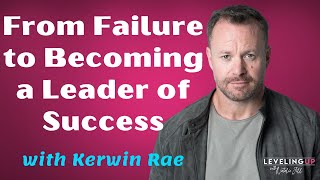
Kerwin Rae, an Australian business strategist, talks about overcoming academic struggles, severe injuries, addiction, and a stroke to build a successful coaching career. He discusses how resilience and understanding the link between psychology and physiology shaped his path to high performance.
Foreign.
Hi, I'm Natalie Jill. Fat loss expert turned high performance coach. When odds are stacked against us, how do we shift and create everything from nothing? How do we level up? We aren't feeling it yet or we've had a big setback. On this podcast, I'll be talking to some of the most inspiring and courageous men and women on this planet who at their worst, learned how to achieve success greater than they ever dreamed possible. Leveling up and creating everything from nothing. As a student who nearly failed out of school many times, Curran Ray had formed a belief as a child that he was, in his words, stupid. And those poor grades he got over and over again, well, they validated that to him early on. And then with near six death experiences, including a near fatal stroke and another serious accident that doctors said would leave him physically disabled, Kerwin Ray was definitely not set up for success in life. But through his inspiring comebacks and he has proven time and time again that nothing is impossible and that you can always level up and create everything from nothing, no matter what life hands you. He is a true example of fear transcending into peace and ultimately, purpose. Today, Curran Ray is Australia's leading business strategist and human performance specialist. And he's helped over 100,000 businesses in 154 different industries through 11 countries worldwide. I can't wait for you to meet my good friend and ultimate success story, Kerwin Ray. I've got Kerwin Ray here today. I'm so excited because you're a new friend, but somebody that I've. I can't even believe I didn't know you in my life before because you're such an inspiration. You are the master of enrollment. Your personality is incredible. It's. You've got this contagious energy about you. Thank you so much for letting me interview you, Natalie.
Honestly, it's so nice to be here. And what a compliment coming from you. Yeah, like, I feel like we've developed a special friendship really quickly.
So, Kerwin, you're just this tremendous success. I mean, people see how powerful you are, how successful you are, but I know it wasn't always that way.
No.
And I'd love to know how that even happened. Like, what were you before the success that you are?
I guess it depends. How far back do you want to go? And I mean that because, like, you know, if we go depending on how far back, because I didn't. I failed every subject from year one all the way through to year 12. You know, I was diagnosed with dyslexia and ADHD. At the age of seven, I was told I was learning disabled and I just didn't learn properly. And I was, you know, the very first school that I went to was actually like a cross school where it had intellectually and mentally disabled children with normal children. And I was in that environment. And not that I was classified in that way, but that's just kind of the upbringing that I had. And I actually never read a book until the age of 23, cover to cover, as I had this internal belief system that was given to me at a young age from someone who suggested that I was stupid. And I kind of hung onto that.
Yeah.
And yeah, it became a big part of my identity.
So failing in school and not reading a book and all that, what were your parents saying to me? What were teachers?
Oh, look, school for me was a constant disappointment for everyone else. I love the social aspects of school, but I just knew it was almost every time I got a report card and I'd go home, it was almost like they were expecting something other than what they knew was gonna happen because I knew every time I got a report card I knew exactly what it was gonna say, but it was almost like a surprise to everyone else. No matter how many times I failed, it was still a surprise to, you know, to my mum, to my dad. And it was. And although they had separated and it was more mainly from my mum, you know, it was almost that they were encouraging me to do something that innately I just did not know how to do. For me, I didn't know how to learn, I didn't know how to. At that point in my life, I didn't know how to learn, I didn't know how to study. But what I didn't realize, I just wasn't interested. Like I had no interest in school whatsoever. I was very interested in the socialization aspect, but I had no interest. I thought I was going to be, you know, by the time I was 15, I actually thought I was going to be a professional athlete, you know, because that's where I excelled. You know, I was really strong on attack and field, I was really good at sport. And then at the age of 15, you know, I had my first near death experience where I actually, I got drunk for the first time. My mum was actually overseas and I was hanging out with some friends. And yeah, I had a stubby of west coast kula, which is like an alcoholic lolly drink that we have in Australia. And it was in my hand as I was running down a hill and I stepped in the drain. I fell forward and it broke and I cut all my nerves, all my tendons. My main artery nearly bled to death on the side of the road. I don't know if you've seen the scars. They're quite significant. 30 and a half hours of microsurgery, two blood transfusions later. I was told by the doctor the very next day, my mum was actually overseas at the time and said, hey, kid, I hate to be the one to tell this to you, but you're going to end up with a hand that looks something like a claw. Without physical rehab, you will have claw. He goes, but look, don't worry, you will be. You will be permanently disabled. But don't worry, you'll be eligible for disability pension.
Whoa.
Now, at this point in my life, like, I'm 15 and this is the point in my life where I'm coming into my own. I knew I wasn't going to be an academic, but I thought, okay, maybe I'm going to be some kind of a professional sports person. And then I have this accident and I'm told that I'm going to be physically disabled for the rest of my life. And it was, yeah, it was quite a big pill to swallow.
So how did you get outside of these beliefs that you were forming? Because people were telling you, you're not a good student, you're not paying attention now you've got this dis. Clearly you're not living in that right now. How did you shift out of that?
Look, I honestly believe it was the adversity that created the psychology. But I. I just, like, for example, with the. With the injury, like, when they told me that I was going to be disabled, like, I decided when the doctor was telling me that that wasn't going to be the case, like, I literally made a very conscious decision. As the doctor was giving me the prognosis, I was like, no way I'm getting my hand back. And I even remember when I was in rehabilitation, in a rehabilitation unit because I had to take nine months off school and I was in a rehab unit five days a week. And where I lived was in a rural area. So it was like three hours on a bus, an hour and a half in. Hour and a half back. And even in the rehab unit, I'd be sitting there, like, just. Just touching your fingers. Like, we take that for granted. And it took me four months just to be able to touch my fingers. And I'd sit there, like, with my hand in front of me, like, just seeing my fingers coming together. And I'd be shaking. I'd have tears streaming down my face. And I'd have my rehab, my. My physio. Physiotherapist, saying to me, just let go, Kerwin. It's not coming back. And there was just this fire. Like, this fireman was like, you know what? It's just gonna happen. And so for me, you know, I think overcoming such adversity at such a very early age, because 12 months later, I literally had almost full use of my handbag. And so that for me, started to make me question a lot of other things. But it wasn't until the age of 23 that I really started to question my own intelligence. I questioned my physical limitations, but it wasn't until the age of about 23 where I started to question my mental limitations. And I remember reading a book, and all it took was a book. It was called the Magic of Thinking Big by Dr. David Schwartz. And I read that book, but it was the very first time I'd read something that I was really interested in. That was my introduction to psychotic. It was my introduction to personal development. I was like, wow. These concepts to me at the time were quite groundbreaking. And I remember finishing the book and thinking, wow. Oh, my God. I finished a book. But then I was sitting and reciting in my head everything I'd just read. And for me, that was profound because I'd never like. To me, I'd read something and I'd have to read the same line five times because I just couldn't.
Oh, I can still relate to that.
Yeah. You know what I'm talking about. Right? And so when I was able to recall, I literally. I remember I was actually. I was managing a chain of fitness equipment stores at the time where we sold fitness equipment. I was sitting in the. In the storeroom out the back. I finished the book. I had the book in my hand, and I started to remember everything was in there. And I actually remember myself saying to myself, maybe I'm not stupid after all. Oh, yeah.
Yeah.
At that point, I was like, oh. And then I went out and I bought, you know, unlimited. I bought it at an auction. Unlimited power. And, you know, since then, I think I've read, I don't know, somewhere 900 to, you know, plus books, you know, since the age of 20.
900 books.
But that's 20 years. That's the last 20 years. I probably read about 900 books.
But all of that theme in mindset.
And in my, like, I love my. My library. I feel more intelligent just walking in There. And I've probably got 2,000 books in that library. If I read everything, I'd be a genius. But for me, yeah, it started off around personal development, and then it really quickly moved into psychology, and then actually quite deeply to psychology. I had a real fascination with different modalities of psychology. And then when I discovered nlp, I discovered NLP before it was kind of cool. This is going back 20 years ago. So I literally, 20 years ago, I went around and. And shopped and ordered and scavenged and found every book that John Grinder and Richard Bandler had written. Like, I'm talking pure nlp. I'm not talking about what we have today, which is in many cases very different from the purity of what it was distilled at this time of creation. And I got right into Grinder's work. And then from there, it just so happened that I started getting into quantum mechanics and particle physics. Well, that actually probably more happened after my stroke. Because I had a stroke at the age of 34.
I'd always be, wait, back up stroke. Where did this come from?
Oh, you didn't know? No.
Okay.
So at the age of 34, I've had like seven near death experiences. And the last one that I actually. The first one was my wrist when I fell on a broken bottle, but the last one that I actually had was when I was 34. This is actually a really interesting story. I'll give you the short version just based on the time that we have. But I had. I got invited to a discourse from the Oneness Academy. You've probably heard of the Oneness Academy, that's in India. They brought out a dasa, which is the Indian equivalent of a monk. This young guy who'd basically been born into the monastery, grew up in the monastery. And he did this three hour discourse. And in this discourse, he said to everyone, I want to give everyone a blessing. He said, but before I do, I want to tell you what this blessing is. You Westerners like to call it a Oneness blessing. Based on the data that we've actually received from the FMRIs, that when we put someone in an FMRI, which is a functional magnetic resonating system which scans the brain and we give these blessings, we notice that something really interesting happens in the brain, the parietal lobe, which is responsible for many things, but one of the things it's responsible for is spatial awareness. It makes you feel like you're separate from the rest of the world. That part actually starts to slow down and the prefrontal Cortex, where we believe conscious emanates, has to become more active. And so what we've discovered is people actually start to feel more connected because that part of the brain that makes them feel separate actually starts to slow down, and their consciousness, which is where we feel connected, starts to become more active. And he said, this is a part of the brain that's responsible for war. And I remember thinking, at the time I challenged him, I was like, hang on a second. I've studied neurology, neurobiology, neurochemistry, neuroanatomy. There's no part of the brain responsible for war. It's psychology, it's belief systems, it's. And he said, well, no, because when you have separateness and then you overlay psychology, you overlay belief systems, you overlay extreme perspectives that are on opposite ends of the polarity. And you put those together, you get conflict, and at a global level, you get war. And I was like, wow, that's profound. And so then he goes, all right, I want to give everyone this blessing. And he puts his hands together and he puts over the crown of the person sitting two down from me. And the music comes on. He starts chanting. And I'm looking, he says, everyone close your eyes. But I'm like a fucking four year old. So I'm peeking out the corner of my eye watching what he does, but then it gets to me. And then all of a sudden, I hear his voice start to shudder as he's doing the chants. And I remember looking at him and thinking, that didn't happen with anyone else. And then I blissed out. And then I literally opened my eyes, and maybe 20 seconds later, he's like three or four people down. Fast forward to 3:58. Until the next day, I'm standing in my kitchen, I'm talking to my personal assistant, and all of a sudden I start losing function in my body.
Oh, my God.
My left arm starts to curl. I start to drool, like, literally like a fountain coming out of my mout onto my chest.
Must have been horrified.
Okay, I'm a strange unit. I started to laugh because I couldn't work out what was going on, because I'm looking at myself, like, starting to, you know, contortion. I'm drooling at myself and I'm like literally laughing going, what the fuck's going on? I'm drooling on myself. This is some sick party trick. But then, you know the short version? I end up in hospital a few hours later, and I'd suffered a significant stroke almost 2 centimeter, 2 and a half centimeter stroke in my brain. But what was most fascinating is when the doctor came to me, he goes, oh, you've had a stroke. And I was like, okay, so what part of the brain have. I had a stroke? He goes, you've had a stroke in your parietal lobe.
Whoa.
Yeah. So the parietal lobe is obviously the part of the brain that we had referred to in the blessing. So mine didn't. You know, I joke about it. I said, mine didn't slow down. Mine fucking cut out altogether. But what was interesting is when I had the stroke, I literally, you know, people talk about an nde I had, I think, something. I didn't see the light. I didn't see God, I didn't talk to God. But I remember I was put in this place where everything I thought about made sense. And I started thinking about the most complicated things in life. And there were these scientific explanations that were just downloaded into my brain. And I just started to understand how the universe works.
But this, okay, no, this happened without a substance or with a substance.
No substance. I'm having a stroke. So I'm lying on the floor of my kitchen. I've blacked out. The first thing I do when I black out is I. I say, because my PA is there and I can hear, I can't see shit. But I say to her, all I hear is these voices. I'm like, can you hear the voices? And she's freaking out. I'm calling an ambulance and I'm like, don't call the ambulance. Listen to the voices. Because I thought. And at first I thought I'd tune into the mobile phone network.
Yeah.
Because I could hear all these voices. And then I heard this dominant female voice and I couldn't hear what she was saying. But the next thing I know, I go to this very quiet, very dark space, and all of a sudden, everything I think about is this coming to me, making sense, the whole world, the meaning of life. Like, everything I thought of was just like, here's the answer. And I was like, oh, my God.
Whoa.
And I had this. Maybe it felt like a 30 second frenzy, but I was out for 18 minutes.
This is like you hear a similar story from people that go to a shaman or, you know, like Ayahuasca.
Yeah, exactly.
But you had this on your own with this story.
Well, it cost me 2 1/2 cm in my brain to have it.
Okay, so we're not. We're not advertising.
Well, for me, I would do it again in a Heartbeat. But then, you know, after having everything, I thought about just being given to me and, like, these downloads, downloads, downloads. I remember going to this space where this energy just basically gave me the choice, you can stay or you can go. And, you know, I was in a great place in my life at the time. I had already had a relative level of success, and I had money and income. I had great relationships. I'm thinking myself, man, I've lived like five lifetimes. If I was to go right now, there's no shame. You've lived a good life. So I remember surrendering, and I went, you know what? If I have to go, I'm ready to go. And then as soon as I went, I'm ready to go. Eyes open. And I sat up, right, And I was like, oh, fuck. That's a. Whoa. It's an interesting party trick.
This the point where kind of your business. Is this when your business transitioned, or is this when you got ideas for where you are now?
Well, this is where it's really interesting because six months prior, I'd only restarted my business because I. Going back, I think it was like three or four years ago. I'd launched this business, built it right up, you know, we'd made an incredible amount of money. And then I basically sold out to my business partner, took two years off and spent all my liquid. I got to the point where I'd spent all my liquid and all I had was assets. And if I had to keep living, I was going to go, well, I have to start liquidating my assets. What do I want to do? And up until this point, I'd done lots of different things, built lots of businesses, sold businesses, and I'd had a great time, but I'd never really like. I'd always make money. But then as soon as I started making money, I started thinking about, okay, so what's next? What am I going to do next? I was never fully enrolled in.
Constantly chasing.
Yeah, but searching. And to me, it was almost like I had this issue around commitment, and I wasn't fully committed to the business. And so I was always looking for the exit. I was always looking for the exit strategy. And, you know, after two years of this happening, after two years of me, you know, having fun and partying and basically living my life, because I'd never done that up until that part of my life, you know, at 33, you know, I'd never taken. I never went to parties in school because I was always training. I never took a year off after school because I was straight into work and, you know, so for me, that was the first time I actually took some time off and had some fun. But then I was like, right, if I'm going to do something again, I want to do something that I love. Like, do something I'm really passionate about. I said, okay, what do I love to do? I was sitting on the beach, Bungan beach in Sydney, on the north shore. And I was like, what do I love to do? And I was like, I love to teach. What do you love to teach? I love to teach business and performance. I was like, well, why don't we do that again? I said, well, I had done that in other aspects of what I'd done before because I'd been introduced to the personal development world and some very big speakers. But I'd seen behind the scenes and I'd seen some stuff that didn't sit well. Like I'd seen some of these big worlds, global name speakers on stage were one thing, but offstage they were slightly different. And when I saw that, I was like, fuck, I don't want to do this.
What is that, by the way? Because I've seen that too.
Look, I think that's, you know, it's the facade. It's like putting on that exterior that think, you know, I've got to make sure my garden and the exterior of my house looks good. But you never invite anyone over because you're embarrassed of what's inside. And but for me, I just created associated. If you want to be a speaker, you're one thing here, but you're something different. Then I was like, I didn't want to do that. But then in this moment I was like, okay, if I'm going to do this and be, you know, get involved as a, and become more of a having a teaching focus, then I have to be, I have to be congruent. I am not going to get on stage unless I am completely congruent and doing everything. And so I made a deal with myself in that moment that the only condition of me pursuing my dream to teach and to share and to help people was I could only share things that I'd done and I could only share things that I was doing myself. And I wasn't going to share things that were, you know, that wasn't real for me. And so fast forward six months. You know, I'd done, you know, at this point, when we launched a business, I think at this point we'd done like 400,000 in six months. We'd made a lot of money very Quickly. And then this happened. But what was interesting is from there, as I started to. Whenever I run an event, I'd always spend the first 20 minutes just sharing whatever came to me. I'd always leave it vacant to go, okay, allow the room to direct me the energy, direct me. And you know, I'm your tool, I'm your scalpel. Allow, allow you to come through me and just share what I meant to. And I'd always just talk about whatever was relevant at that time to the audience. But all of a sudden, after the stroke, when I started to do that, I still remember my first event after having the stroke. It was six weeks after the stroke. The doctors had told me that I wouldn't be working for at least 18 months because I, within three hours of the stroke, I lost the ability to communicate properly. So I couldn't talk properly. And I had a 15 second memory. And, you know, the only good thing a 15 second memory is good for is hiding her Easter eggs. And, you know, I wasn't an Easter bunny. So at that time I was like, I remember six weeks later, I'm about to get on stage, I can't even remember what's in the presentation. I was like, okay, just be guided by the slides. And I stood up on stage and I was like, okay, just let go. And I let go and I started sharing this information. And as I was sharing it, I remember thinking to myself, where the fuck did this come from? And then over the course of the next 912 months, I started to journal all this information and that became the foundation for my performance. Content, like the content that you saw around integrating not just the psychology and the physiology, integrating psychology, physiology and quantum mechanics and particle physics, but it was integrated in a way that actually made real practical sense. And that what I realized in hindsight, it actually took about two or three years before I made the connection, is they were the downloads that were actually given to me.
Wow.
In the moment when I had the stroke. And then I inadvertently started putting them to work and inadvertently. And by the way, we do it constantly. Like, what I learned was nothing that no one isn't doing, we're doing it constantly. But it gave me a level of consciousness around the application of how a psychology affects a physiology and a biochemistry and how those things affect the quantum world and how the quantum world then impacts the Newtonian world. And you know what? They can. And we literally are the bridge. And so for me, it just brought it to the surface.
So. And if I, I, if I see it correctly, what I've seen with you. My experience is that you're not even leading with the amount of money you're gonna make. You really, this is like your passion.
This is what I'm here to do. Yeah.
And the money follows.
And you know, it's interesting because, you know, predominantly I work in the business space, but the reason I have the success that I do is because I understand performance, I understand human psychology, I understand how to get people to do the things that they want to do. And so for me, you know, with all of my clients, we say we do not focus on the money because what we know, and this isn't just, this isn't my research, but what I know from behavioral research is when you get people to focus on money, they're eight times more likely to engage in deceit, deception and fraud related behavior. They're six times more likely to experience stress related illness and disease. And we've all seen this in ourselves, We've seen this in not only individuals that we know. We've seen this in cultures and in industries where businesses become so focused on money that they will destroy the environment, they'll destroy people's lives. And so for me, we have zero focus on money. We do focus on financial reporting, financial management, but it's never about how to make money. It's always about how do you deliver value at the highest level and how do you put a commercial framework around that that enables you to be paid fair value for the value that you provide others in a way and run that in a way that provides not only income but a level of profitability that you can then use to reinvest into the growth and the expansion of what it is you do, but also to reinvest into the growth and expansion of your own life.
Yeah. So, okay, so a couple questions here. So if somebody's listening to this and they think, okay, that's easy for you to say. You're successful, you don't have to focus on the money. And they're stuck on the money, what would you say to them?
Look, I, and I, I get it because we've all been there. Like my life hasn't. My life is far from sunshine. Sunshine, roses and buttercups. Like I've lost everything three times as an entrepreneur. So I know what it's like to be hitting the reset button and starting from zero. And I know what it's like to not know where the next meal is going to come or how you're going to pay your rent. I know what it's like to be hungry for two days, I know what it's like. And so for me, when you give this advice to someone who's in that situation, it's almost bittersweet because I know how hard it is not to focus on the money when there's everything else. But. But one of the things you've got to understand is when you have nothing, you have nothing to lose.
Yes.
And that is a powerful place because one of the things that limits people's potentials when it comes to expression is fear. And oftentimes people aren't afraid of what they're going to get, they're afraid of what they're going to lose. They're afraid of the mistakes that they're going to make. And when you have nothing, you literally are the blankest of blank canvas that you can be. And you can literally just paint anything you want. And the cool thing is if you lose it all again, well, then you can just start again. I still remember the first time I. I've never been bankrupt, touch wood, but I nearly went bankrupt once. And I remember this is going back in my mid-20s. I sat down with the bankruptcy lawyer and I was like, okay, run me through. And this is in Australia, so I'm not sure what the bankruptcy laws are here. I was like, okay, because I had like a million dollar tax debt, $1.1 million tax. What's the process of me going bankrupt? And he started going through and he started telling me, well, you know, as long as you don't have too much equity in your car, you can keep it. As long as you don't have too much equity in your house, you can keep it. You know, you'll get. All your credit card debts will be wiped, all your other personal debts, all your debts will be wiped out, et cetera, et cetera, et cetera. You'll be discharged within three years, sooner if you can pay out your credit. And I remember getting to the end of the conversation, I was like, so what's the bad. What's the bad stuff? He goes, well, the stigma, the stigma of being bankrupt. And I was like, well, fuck. I actually, I'm at the point of my life where I actually don't fucking care what people think.
Yeah.
And what was interesting is up until that meeting, I was shitting myself about the prospect of going bankrupt because I didn't know. I was afraid of what I didn't know. After that meeting, when I realized that there was nothing to lose, man, I turned it around so fast that literally within two weeks I realized bankruptcy wasn't even, it wasn't even something that needed to be entertained because I literally went, right, what do I need to do? I'm not afraid anymore. Because if that's my worst case scenario, fuck, there's nothing to be afraid of.
Yeah.
And I think sometimes, you know, we put so much emphasis on what we can lose that we prevent us actually going out and creating because of that fear of what we're losing of what we actually have.
So you, you truly get half have represented creating everything from nothing several times. And, and I want to know why that works for you. Like, how does that work for you? Because so many people get paralyzed by that failure. Like they have this bad thing happen, they're facing that bankruptcy and then they're stuck and they're done and they don't try again.
Yeah.
What is it that has driven you to keep going? Is it that knowledge of researching what does it mean to be bankrupt? Like, how do you create?
That's a great question. And look, it's going to sound really cliche, but for me, you know, I, I, I'm very, I feel very grateful that, that in my mid-20s, it was just before this happened, that I actually discovered what it was I was here to do. And so for me, I believe once you know why you're here, why you want to do what you do, as long as you have a reason to do something, something's got to come first. And if the fear comes first, you won't move. But if the reason to overcome or the reason to do what it is that you want to do is of top of mind, if it's conscious enough and if you focus on it enough, then ultimately that will be the thing that drives you. What we focus, what we pay attention to, expand. And if we pay attention to our fears, they expand and they become all consuming. They consume us and they paralyze us, as you said. But when you focus on the reason that you want to do things, when you focus on the benefits of that, that in itself creates almost like this charge, it creates this energy, it creates this vacuum that drives people because it starts to expand. And so for me, like when you're in that space where you've, you know, you don't have everything, and you can say, well, it's easy for you to say, you know, my question to you is, well, what are you focusing on? Are you focusing on everything? Everything that you don't have, which as a result will produce a state of lack, which in itself is a vibration, it's a frequency which will attract More of that or are you focusing on what it is that you were here to give and you're focusing on this desire to add and to give and to deliver value? And I don't care if you're a baker. And the way that you give value is by seeing smiles on kids faces. Because your cupcakes are the best cupcakes in the world. When they eat them, it lights people up. But when you focus on it is what you're here to give and you focus on that value, you that when you focus on giving, that's abundance. And when you focus on that and when you have that energy and that vibration that in itself attracts, you know, what, what abundance is, which is more energy, more support and more of the resources are required for you to go out and do what is you need to do.
So do you tell me you're human and that you have some moments of, that you have some moments of like, But I can't focus on abundance, right? Have you ever had those moments like a day, a week, whatever?
Dude. I'm an addict. So I became addicted to drugs when, you know, in, when I was 19. And so, you know, that has been a theme that has played out throughout my life that I've had to, look, I've had to deal with that, you know, at the same time. And so for me, you know, it all comes down to how we look at the situation that we're in. And we either look at the situation and we make a determination that it's either good or bad. Like, so when I discovered, like, it took me probably 10 years before I was willing to even admit that I was an addict. I was just someone that had compulsion issues as far as I was concerned. But once I resign myself to surrendering, okay, well, maybe my neurology is different to everybody else's or most other people. And maybe that in itself is a condition that is going to affect me potentially for the rest of my life. But what's the benefit of this? How is this serving me? What skills, knowledge and experience is this giving me that I wouldn't have as a result if I didn't have this condition? And what I started to realize was whether. Whether your partner has just left you or you've just admitted that you've got an addiction, there's always a benefit for me. One of the things I realized the benefit of addiction is resourcefulness. Because when you are addicted to a substance, you will do whatever you can within your moral compass that will allow you to get whatever substance that you want in order to get those needs met. When I first got into business, when I started really stretching my legs as an entrepreneur, one of the things that I discovered is, is business is all about resourcefulness. It's never a question of resources, okay. It's always a question of your ability to be resourceful in those moments to get the things that you want. You know, for example, when I go over to my friends, this is when I was 19, and this isn't going to paint the nicest picture, but when I was going, when I was hanging out with my friends when I was 19, I'd go over to one of my friends place and say, okay, so who's got some gear? And everyone's like, oh, everybody's out. I was like, everybody's out. Have you rung everybody? Well, we've rung, you know, we've made four. I was like, dude, get out of my way. And I'd literally. And like. And I'll be completely upfront, like, I've never, I've never stolen, I've never deceived, I've never. I was never that bad of an addict, but I was the kind of addict that if I wanted to get high, I'd make a thousand phone calls, I'd drive to 52 people's different houses, and then ultimately I'd rock back at my friend's place. I was committed to the addiction. I'd rock back at my friend's place six hours later, you know, with, with a bag of gear and they go, where did that come? I was like, I ain't a quitter, fellas. And that's not necessarily, you know, and I'm not trying to prize addiction, I'm not trying to prize my desire to get high at that age. But what I did is I took that resourcefulness into business. Because when I got into business, I was, you know, surrounded. Also I saw other people who are like me. Oh, I can't do this. Oh, I can't get it. Oh, there's not enough clients. And I was like, well, hang on, have you really tried everything? Well, I've rung 20 people. Ring fucking 60 people. And so for me, I took that resourcefulness into business, which made me pursue things with a level of belief that just. I just know that if I just keep going, I'm always going to get exactly what I want, want. But I am human. You know, I have, you know, I have experienced loss. You know, I. And those things do affect me. I have been diagnosed as ptsd. And so, you know, I do have episodes from time to time where my own psychology feels like it's a little bit shaky and my own biology and physiology behaves in a way that, you know, it's doing things that it's not being told to do. So I know what it's like to deal with tough stuff as well.
Do you ever wake up in the morning and just go, I just don't feel like it today?
Yeah. Yes.
And what do you do?
As long as the schedule, if the schedule allows it, I do nothing. I'll cancel my day and I'll just, you know, I'll kick about and hang out with my son, let him have the day off or do whatever I feel compelled to do. But nine out of ten times when I wake up and I go, I don't feel like it, I just do it anyway.
Just do it anyway.
Absolutely.
You find that your body, your mind follows when you just start doing it anyway.
I've just got so many references now for being able to do things regardless of the situation and circumstances. You know, I've delivered three days events while being violently ill. I've been able to deliver three day events whilst in the midst of, you know, this is going back last year as an example. I only discovered last year that I had ptsd. I just thought I had underlying anxiety that I was still learning how to deal with. And you know, I had an event at last year whereby I had an episode happened two days before an event and I had an episode where my heart basically didn't fall below 100, 110 beats a minute for about four and a half, almost five days. And I did delivered an entire three day event whilst in that space and through that entire time. Again, to me, I never think we should pursue things with just dogged persistence because that ultimately can lead to all forms of distress, stress, disease and breakdown and burnout in the body. And I've burned out five times. But over the last 20 odd years, I've developed a set of skills that enable me to tune my psychology, that enable me to regulate my physiology and regulate my body. So I know like in those moments I've got tools, okay? I know how to regulate, like if I. Even if my heart rate is at 100, 120 beats per minute, okay, and I am feeling stress and anxiety, I've got a set of tools that I can focus on psychologically that will calm my mind.
Please share.
Oh, absolutely. And I've got a set of tools that I use physiologically that enable the body to regulate itself and calm down.
Yeah. My husband's looking at us like, please tell her what that is.
Well, you know, I've got this interest in performance, and to me, one of the things that prevents performance in most cases is it's either the mind or the body. Either the body won't allow it or the mind won't allow it. And so for me, when it comes to the mind getting in the way, oftentimes it's the psychology and how it's wired. When it comes to the body and the body getting in the way, it often comes down to energy management. But most importantly, it comes down to stress, anxiety and fear management. And if we can't regulate fear, if we can't regulate stress, if we can't regulate anxiety, then we'll be paralyzed by. And one of the things that I learned, we'll start with the body is when you know how to breathe properly. And there's a number of people out there. The greatest example right now is a guy called Wim Hof. He's become very popular. And what we've learned, not only through Wim, but through this, has been around for centuries. It's only really making its way to the top of mind mainstream, thanks to people like Wim, is through breath. We actually have the ability to reset the autonomic nervous system. And the autonomic nervous system is triggered when we experience some form of stress whereby our fight or flight is activated. We have this visceral sac in our torso that gets constricted. It squeezes the blood out of all the major organs into our extremities so that we can move really quickly or fight really fast. And it prevents the heart from functioning properly. It offends all the major organs from functioning properly. And what that stress creates is a disease in the body. And so what we've learned is through the process of breath, whether it be autonomic breathing, deep breathing, it actually has the ability to override the psychology and actually reset the biology so that the autonomic nervous system can be relieved and released and so that the body can actually find a sense of calm. And we can do this through breath, but we can also do this through exposure. NASA discovered with their astronauts that if they didn't, that when they put them into situations like the space station, if they hadn't conditioned them to be able to experience confined spaces for extended periods of time, then they would literally go nuts. And so what, what I've learned through studying astronauts, through working with special forces, I've been very lucky. I've worked with European special forces. I've worked with the Navy seals, and I've had the ability to look at what do these guys do that in most cases they do unconsciously that enable them to regulate stress and overwhelm at a level that enables them to maintain high levels of composure. In situations where we're talking, in some situations where there's bull bullets passing, like, literally cracking inches past people's heads, there's mortars going off, you know, the question really begs to ask, how does a Special Forces operative maintain incredible levels of composure when there's death and destruction around them?
Yeah.
You know, when there's literally, you know, bombs going off and bullets going.
Like real issues. Not just like our.
Not. Oh, fuck, I've got a tax bill.
Yeah, exactly.
Oh, damn it. My wife is, you know, she's upset at me again.
Or my hair doesn't look right today.
And what's Special Forces do is they gradually expose the candidates and the recruits to little bits of stress. Little bits of stress. Little bits of stress. And then they allow them to go back and calm down and regulate. Then they bring them back into the training ground, they expose them to more stress, more stress, and then more complex processes. Because we're only born with two fears. We're born with the fear of falling and the fear of loud noises. They're the only fears that we have. Every other fear we have borrowed as a result of an experience or an association or a suggestion that someone else has given us. When you start to realize that. And again, one of the things I love about Special Forces is they play with loud noises. And so when you can put yourself in a situation where you've got loud percussion noises that are going off and you're exposing yourself to that for extended periods of time before learning how to take a step back and regulate. When you do that consistently over a period of time, it gets to the point where you can drop a Special Forces operative into any stress situation, even if there's not bullets going off and they can just maintain their composure. And so, for me, it's like, how do we expose ourselves to the right stimulus with the right level of consciousness? Because we're not doing it destructively, we're doing it consciously. So for me, stress is not the enemy. Stress is the answer, but it's learning how to expose ourselves to stress. It's like going to the gym. You can't go to the gym and expect to be able to squat 200 kilos on your first run, but you also can't expect to go to the gym and be able to even squat the bar for an extended period of time without getting a little bit sore and a little bit uncomfortable. Uncomfortable. But what we know is the more we go back and the more we keep squatting, the stronger we get and the less soreness we seem to be feeling in our body, because our body becomes more conditioned. Fear and exposure to fear and stress and exposure to stress work exactly the same way. At first, it's going to feel overwhelming, and you will only be able to be exposed to a little bit of stress, and it becomes completely overwhelming, and you have to move yourself away. But then if you consciously go away from that stressful stimulus and you calm down and you regulate and you get back to a reset and autonomy within your autonomic nervous system, and then you go back consciously with the goal to expose yourself to a little bit more, then you'll be able to expose to a little bit. Now you won't be able to just be exposed to 10 minutes of stress. Now you might be able to be exposed to 11 minutes of stress before it becomes so overwhelming. Then you consciously recognize I'm at overwhelm. You step back, okay? You reset, and then you come in. And now it's 12. This is how Tiger woods became the greatest golfer in the history of golfing until he had his down downfall. Because, Earl, a lot of people don't realize this. Earl woods was actually a Green Beret. Like, he was a special forces operative. And when Tiger woods was 15, at this point, he'd been playing with kids that were, you know, five, six, seven years older than. And he goes to his dad, because when Tiger woods was 15, they were still all. There were still all black golf courses. And he was competing on, sorry, not all black, all white golf courses where blacks weren't allowed to play. And so when he was, you know, 13, 14, 15, he was playing on court against people who are much older than him. And he was the only black person in the vicinity. And so he used to get an enormous amount of, you know, what we call in Australia sledging. You know, it's that psychological talk that happens, we know, with sportsmen that they use to try and undermine people's psychology to put their physical performance off. And so he goes to his dad after, you know, copying years of racial abuse and psychological abuse. Dad, I want to be mentally strong. How do I become mentally strong? And. And Earl turns to him. I remember the 60 Minutes interview. I was interviewing them both separately. And Earl says to him, are you sure you really want to know? And Tiger's like, yeah, I really want to know. He goes, well, your fucking training starts today, son. And he flashes to Tiger. He's like, well, I thought I'd been training my whole life, but apparently I hadn't. And then at that point, Earl takes him out onto a practice round, and he starts taunting Tiger. So he's playing hole one, he's taunting Tiger, sledging him, saying horrible things, throwing golf balls at his head, rattling keys. He'd get a. A piece of bamboo with a plastic bag on there. He'd rattle it to the point where, you know, three, four holes in, Tiger would start to crack.
Yeah.
And then Earl would stop, and they'd play the rest of the round with no other stress, no other intervention, no other nothing. Just play the round now, Tiger just play the round. And, you know, by age, you know, I can't remember when he started, let's call it. I think it was 15. You know, it might have been three or four holes before he started to feel overwhelmed. You know, by the time. Actually, I think it was when he was 13, but I think it was by the time he was 18, he could play three rounds of golf, and there was nothing that Earl could do to him that would put him off his game, because he had built up this level of tolerance to golf balls being thrown, his heads, keys being thrown at him. Like so much distraction, abstraction, abuse, to the point where nothing phased him. And then he could go out on the golf course, and it was just Tiger and the course. And I think that's the challenge that we have, is we see stress, we see fear as the enemy. It's not the enemy, it's the cure.
But when it's super productive, how you're describing it, and you're right, a lot of people in entrepreneur mode, they have that first bump and they're done.
Yeah, I'm out.
It's not comfortable. So I'm out.
I'm out. Yeah. Whereas for me, the pathway isn't around. The pathway is through, but it's knowing how to. And again, it's that conscious awareness of when is enough, to when is enough enough and when is too much going, you know, when there's too much too far. Because the thing with conditioning is, the reason that most people fail at conditioning is because they lack self awareness in the conditioning process. Process. They don't know what their own personal limitations are. They just go, well, I just got to push through, because I saw a video on YouTube that told me, push through no matter what. But if you push through beyond your own, you know, your own Psychological limits for too long, you literally start to physically, mentally break down. Whereas to me, it's like if you try and if you've never squatted 200 kilos before, you're a fucking idiot. If you go into the gym and you Try to squat 200 kilos, you are going to hurt yourself. You need to build up over time. And to me, conditioning, stress conditioning. Stress regulation is like a muscle. You can't expect to drop someone into a war zone on their first day and expect them to be able to regulate and be composed. There is in some cases, six months to years of combat training, depending at the level that you're going in at, that is required to condition someone to be able to function and experience a high level of composure. Because what we need composure for is because when most people experience stress, one of the first things that happens our body relates to releases cortisol. And our body releases cortisol has a numerous. There's so many biological consequences, it's not funny. But the most important ones are it destroys testosterone, it destroys estrogen, and symptoms of those is weight gain. It destroys intelligence because it actually disrupts the gut's ability to process and synthesize proteins. And so as a result, it affects the brain's ability to function. And we lose somewhere between 40 to 50% of our IQ within seven minutes of a stressful event. So when you're stressed, and this is why, for me, stress conditioning is such an important part of performance. And what it is that I do, working with individuals and business owners, step one, you are going to be experiencing stress every fucking day. So you need to learn how to deal with it. And so for me, it's not about trying to avoid the stress. It's about learning how to work with it in a healthy way so that you can actually get through it and get to the other side and be composed. Because if you experience stress and you lose half of your iq, you still have to make decisions.
Yeah. And I'm just realizing now, those are probably really big bad decisions.
And we start making bad decisions because we've only got half of our iq, and as a result, that creates more what?
Stress?
More stress. And it becomes this fucking symbiotic relationship where it's stress, bad decision, stress, bad decision, and it becomes our life.
Yes.
Whereas for me, it's like, okay, how do we put a pause? Let's pause. Let's introduce some concepts around stress regulation. Let's learn to train the body to deal with stress in healthy and functional ways. Because stress resilience Is actually creates a healthier human beings and, you know, kids ability to deal with stress the same. The more resilient kids are, the more able they are to deal with stress, the more resilient humans are. This is a healthy function. And so for me, it's. How do we learn how to deal with stress in such a way where you could be in the middle of your business imploding, but you're the clearest motherfucker in the room? You literally. Because for me, one of the things I observe is when shit's falling down, everyone's getting crazy. The more chaotic things get, the clearer I get.
Yeah. Where a lot of people in that leadership role just get more chaotic. Exactly. And that just trickles down.
Exactly. And there's got to be that level of awareness. Whoa. I'm aware that my physiology is behaving to a stress response. I'm aware that I'm breathing faster right now. I'm aware my heart is starting. I'm aware I'm feeling anxiety because most people are so conditioned to be in that state that they don't know anything different. And so they just live in a state of constant stress and poor decision making capabilities. But for me, it's like, okay, first of all, we've got to find the baseline. Because if there was like, if we looked at like, say, what were the steps in? Like, Because I've looked at what, what professional athletes do, I look at what special forces do. And I'll be honest with you, and I mean no disrespect to professional athletes or professional operatives. Specialist operatives. Most of these guys, they're conditioned through process. They don't necessarily always understand the psychological principles that are sitting behind them. Does this make sense? And so for me, it's got to become conscious. So first things first, like when I would deal with anyone, how do I learn how to regulate stress? Well, first of all, step one is A1 awareness. You've got to know what your baseline is to know what being not stressed feels like. Yeah, you got to know what not stressed feels like. Because otherwise, if you're working your baseline of where you are right now, your baseline might be right now, constantly stressed, living in a state of constant stress. So step one is awareness. Be aware of what your baseline is, but also be aware of what your triggers are. Because if you know what your triggers are, then you can pre prepare. Okay, I'm going into a situation, it's going to be successful. I need to be even more aware and I need to go in there even more present. Because I know that I'm going to be potentially coming out with a deficit. So rather than going in there just hoping it's going to work out, let's get really present before we go in. Let's get really centered, really neutral, really coherent before we go in. And that's going to give us the greatest potential and possibility to be able to deal and regulate in those moments. So we need to be aware of what stress doesn't feel like. We need to be a stress of what our triggers are, but then we need to be conscious of when we are stressed. Stress. Because stress is for some people, like alcohol. They don't know when they're drunk. You're too drunk. No, I'm not. You know what I mean? Perfect example. Noah Matthias and I were walking through Vancouver last year. We're doing a quantum walk. And I was walking around just aimlessly wherever I was drawn. And I was walking past this nightclub was just opening up, and there was a big bouncer and a little bouncer out the front. And as we're walking past these two bouncers, the little bouncer turns the big bounce. And he was like, he was like, he was gesturing and he was like kind of talking really passionately. And then I didn't hear what he said, then all I heard was the big bounce, the little bounce. He goes, dude, you're just too emotional. And the little bouncer turns back and goes, I'm not emotional, man. And to me, that's a great example of most people don't know when they're stressed because they're just in the moment in that way, but not in a conscious way. They're in the moment because they're just there and they're like, hang on, are you stressed? No, I'm not stressed. I just need to get this sense of, no, no, dude, you're actually fucking stressed. So step one is that level of awareness. Step two is, okay, let's breathe. Like, let's do. The smartest thing we can do in that moment is breathe nice and deep. Let's breathe in for six or in for eight. Hold for six, hold for eight. Breathe out for six, breathe out for eight. And if you do that repetitiously, all of a sudden, literally your body starts to rebalance itself. And the beautiful thing is, not only does your autonomic nervous system start to reset, your heart rate variability start starts to open up. So your heart actually starts to function at a much higher level. And we create what's called heart brain coherency. And there's this Great form of science that's come about in the last 30 odd years or 20 years, called neurocardiology, which tells us that the more calm that a body is, the greater the heart rate variability that a human has, the greater the connection that the heart actually has to the brain. And what we now know is the heart sends 16 times more information to the brain and the brain sends to the heart. The heart has 100,000 times the electrical charge of any other organ in the body. It's got 40,000 neurons. It's a storage system. It stores information. It's also constantly sending information to the environment every time that it beats. It's also receiving information from the environment every time that it opens. When we talk about intuition, what we're now discovering is the heart plays a really important role when it comes to intuitive nature and instincts. The more coherent we become, the more able we are to actually tune into our instincts and be. Be able to tune into information that isn't available to everybody else. And we've all had that situation before where someone's walked in the room and we thought to ourselves, oh, there's something about this person I don't like. And then they open their mouth and go, fuck, I knew it. But we don't call those people psychic. We just say, oh, that was just a coincidence. But what we've all got to understand is we all have this. Mother Nature gave us this as a survival tool to be able to help us find food and avoid danger early in our evolution. But as our lives have become more busy, we've lost the desire and the need to use it, and so our intuitive muscles have become weaker. But what we don't understand is when we're stressed, stress literally debilitates our ability to become instinctive. And to me, that's like an unfair advantage. So we need to learn how to, you know, not only reset the body to be able to think clear, but we want to learn to reset the body so that we have our full capabilities and our full awareness available to us.
So something's clicking for me right now, and I'm thinking of other people I've interviewed and some things you've said about lots of failures. And now talking about stress, do you think there's a correlation? Like, could you look back on your failures and you said you've had many of them. Can you look back on your failures and see that you were super stressed in that?
Oh, my God, absolutely. Because I'm, you know, I think the reason that I've acquired the knowledge that I have is because once upon a time, I felt like a very broken human being. You know, I suffered from severe and debilitating anxiety. You know, I had a really poor psychology. I, you know, and so for me, I couldn't go into any situation without experiencing high levels of stress. Stress, high levels of anxiety. Like literally to the point where shaking, sweaty, sweaty palms. That was just my life. And so for me, yeah, I've had to learn how to use it in those situations in order to just learn how to function as a normal human being. But then I've gone that extra mile and, well, how do I actually tap into this so that I can not just function, but how do I. How do I function at superhuman levels?
Yeah. And I'm just thinking about somebody listening to, like, somebody listening might say, well, gosh, I'm in the might business is going downhill right now, or my life's falling apart. And they're probably stressed and seeing this and they're thinking, but I'm so stressed, I can't see past it. And what you're saying is, step one, just recognize it and breathe.
Step one, recognize it. Step two is breathe. Step three is we gotta. We gotta manage the meaning. Because oftentimes we're stressed because of a stimulus. Something's come in, something's happened, and we've interpreted it, you know, and every situation is neutral until we allocate a meaning. And once our psychology adds a meaning to it, all of a sudden it'll come, connect it to a series of neurons that will then backfill an entire reference, go, this is bad. This is really bad. This is so, so, so bad. Whereas for me, one of the things that I like to do is I like to keep things neutral so I can manage the meaning, which ultimately determine how my psychology will respond to that situation. So when something happens in that situation, okay, I'm stressed, I'm aware that I'm stressed, right? Start to breathe. I breathe, I start to reset the autonomic nervous system. But if I don't change the meaning of what. What's happening in that moment, the stress is just going to come back, back. So what I do is I very consciously start asking three questions. What is the benefit of this? How is this serving me? And what skills, knowledge and experience am I gaining as a result of this that I didn't have yesterday that will make me better, fitter, faster, stronger, more intelligent, more empowered than I was yesterday? And that's not just a fucking panacea. That's like, you got to do it, you can't just ask the questions and hope for the answers. You've literally got to search your mind and get those answers. Because what we're trying to do here, here is we're trying to balance out the meat. Because right now you're thinking it's all bad. And we live in a world that is based on duality. You know, every. Every atom in our body is made up of equal and opposite parts, of charge, of negative and both positive. And that flows all the way up and out into our experience. Every experience is governed by equal and opposite experience perspectives that are both positive and negative. And what we choose to interpret in that moment will be what we. What determines the experience. Because we've all had a stressful event where by two years later, we've reflected on that stressful event. And over time we've gone, you know what? Now that I think about it, if it wasn't for that stressful event, this, this, and this wouldn't happen. You know what? That wasn't actually bad after all. That was actually a gift. And my thing is, don't wait fucking two years. Do it in 10 seconds. Like, literally force your psychologist out answering those questions. Because what the goal is for me is, the goal is for me is to actually put the body into a state of gratitude. Because if we can put the body into a state of gratitude, stress has a biological and a biochemical effect. Gratitude has a biological and biochemical effect as well. When we experience gratitude, our body starts to naturally release what's called dhea, which is a hormone that starts to deplete after the age of 25 in men and women. And DHEA is almost think of it as if it's like the antidote to cortisol. As DHEA rises, cortisol starts to drop. Dhea, it increases your metabolism, so it burns fat. Cortisol makes you fat. DHEA actually helps with the development of neurons and is neuroprotective. It makes you start. Cortisol makes you stupid. Dhea, it actually fights cancer. Cortisol creates cancer. So when we start to experience natural states of gratitude and when you can sit there and go, okay, here's the benefit. This is the skills, knowledge, and experience. And this is how. How it's making me better. You can literally, very consciously, without a lot of actual work, go, fuck. This is actually a really good thing. This is actually really good. Oh, my God, this is good. Thank you for this. And then all of a sudden, the body starts to. And now we're experiencing high levels of composure. That's Step four, step five is you got to move. So movement. We want to get our body moving because when we start moving our body, it starts increasing the production of endorphins and dopamines and we naturally start to feel better. Better. And so for me, yeah, step one, you've got to be aware. Step two, you've got to breathe. Step three, you've got to determine what it means consciously. Not just allow the allocation of meaning to be given to you by your previous experiences or the experiences, those around you. Step four, we've got to really produce a genuine state of gratitude, not a, oh, thank you, thank you, thank you, but I'm fucking saying it, you know, I'm stressed as hell. We want to be legitimately grateful. And then step five is we want to move. Now, there's an additional step in there for those people who have an open mind when it comes to understanding the law of thermodynamics and understanding that every manifestation that we create is nothing more than the collapse of accumulation of energy that's available around us as a result of continuous intention being put out there. Because when our body experiences stress, we produce a lot of energy. When we experience any emotion, our body produces a lot of energy. That energy is being emitted from the body and it becomes bioavailable. It's now in the environment. And when you concentrate that energy with focus into a particular area, we create things. Napoleon Hill talked about sex, transmutation, whereby he said, any man or woman. I summarize this by saying, any man or woman that has the ability to focus sexual energy onto things other than the act itself can create wealth beyond their wildest dreams and access the realms of genius. Now, tantric yogi has been talking about this for centuries, about superhuman consciousness and super powered and abilities to manifest things by taking sexual energy and channeling it through the body and visualizing things in order to create. But what we've got to understand is we are a thermodynamic instrument. We're constantly producing energy and we're transmitting that energy into the environment. And we literally have a say as to where that energy goes based on the thoughts that we direct that energy towards. And people often call it intention. And intention is whereby there is literally a physical process whereby as our body releases energy, it increases the surface tension of the environment that we're in. And when you consider how energy behaves, energy only exists really fundamentally in two forms. It either exists as a wave function or exists as a localized particle. And what determines whether it exists as a wave Function, or a localized particle is an observation or a form of measurement. And when someone looks at that, that wave function, or someone observes where that piece of material was, that wave function builds up to a level of surface tension where it collapses. And through a process called decoherence, it becomes localized. So we literally have the power, as energy is leaving our body, to direct it towards creating form. If we intentionally think about the things that we're wanting to create as we regulate the energy as it's leaving our body, to me it's like it's the ultimate unfair advantage because you literally say, because we've got to understand we are constantly in communication with their environment. And if you, if you go deeper into quantum mechanics and particle physics, we are our environment. There is no separation. We just have this. You know, our visual senses actually can't see the things and the threads that are connecting us. Our visual senses make us appear like we're actually quite separate. We can feel energetically connected. We can feel it, but we can't actually see it. Okay, but once we start to understand there is no separation between us, you know, everything that we want is us. It's just, it's just manifesting in a form. And that energy is actually coming in most cases from us. Feng shui have been using this for thousands of years. It's an environmental science where they basically position certain things and objects in the room based on geography and what's it called, the poles, to increase the flow of energy into particular areas, to amplify health, to amplify wealth, to amplify relationships. Because every living thing, it reaches the point where it starts to decay. And as it decays, you know that giant 800 year old tree that is now dust, that energy that was holding it together, that hasn't just gone. It was Einstein who said energy is not created nor is it destroyed. It's just constantly changing form. As things break down in our environment, they produce bioavailable energy. As we produce energy, we release bioavailable energy. We are surrounded. Quantum physicists call it we are surrounded. We live in a sea of potential where we are surrounded by energy that is just looking for an intent. It's looking for an intent consistently over time that increases the probability of a form taking place. And if we consciously choose the intents that we want to create, and we do that with consistency, intention, by the act of intention we're creating, we're increasing the surface tension around us to increase the probability of a collapse taking place. And form coming into reality, which is appearing like Something that we hopefully want, but it works both ways.
I could listen to you all day. This is like, we're almost out of time. I'm an hour in, and I'm like, I want more. I want more. I want more. I do have a final question, but. Because I could ask a million more, but this is the one I've got to know. So somebody's at rock bottom right now. Yes, totally rock bottom. Whether that's their business has failed.
Yes.
Relationships falling apart.
Yes.
They've had something physical happen. Whatever it is, rock bottom. They're in the woe is me. I don't want to. What three pieces of advice would you give them to start shifting out of that?
Look, I'd give them. I'll give one piece of advice that is broken down into four components, which is. Well, it's actually five.
I love that. Give me three. I'll give you one that's broken down into five. Okay, we'll go with that.
We'll go with that. You know, step one would be. Is to me, consciousness is the antidote for. Consciousness is the foundation for any antidote. Like, if you want to Any. If you want to create any change in any part of your life, step one is you've got to become aware of what it is, where you're at and what it is that you want. So, you know, if someone's at rock bottom, first of all, become a big Start becoming conscious, but become conscious of. The most important thing you can become conscious of is your psychology. And to me, a psychology is made up of four ingredients. It's made up of a set of stories. You know, when you look at how psychology is created from childhood all the way through to where we live as a. Either as an adult or as an adolescent or as a child, as it develops, it starts as a series of suggestions. And that's how we've transferred knowledge for centuries, is through the practice of telling stories. And those stories get picked up by the individual, and they get put on neurological loops. So we get told. So, for example, I was told a story when I was young. Kerwin, you're just stupid. You can't do that because you're stupid. Kerwin, don't even think about doing that because you're stupid. And so I attached. I created a loop in my head, a story in my head that I'm stupid. And so over the course of 23 years of my life, that loop kept on getting fired. I'm stupid. I'm stupid. I'm stupid. And so that story, step one, Is, you know, is stories. The whole foundation of our psychology is rooted in the stories that we tell ourselves. The stories that we tell ourselves are stories that were given to us either through our parents or through authorities or throughout the observations that we made of the world that was showing up around us. And those stories create the second element of our psychology, which is our belief system. The stories in themselves are coding for the, it's coding for the operating system. Think of stories as coding. Whatever you tell the system to do, it will do. Whatever you tell it to do consistently over time, it will do. That then produces the second layer of our psychology, which is our belief system. And our belief systems determine what we see. It's our filtering mechanism. And so, you know, if you're in the lowest part of your life right now. So for me, when I was told that I was stupid, I believed that I was stupid. And so as a result, I felt it when I could. Someone said to me, oh, you're a smart little boy. My brain didn't hear it.
Yeah.
But anytime I saw any, anything that reinforced the story that I was stupid, my brain was tuned in acutely to filter that information, to go see, told you.
Yeah, it's a pattern that you kept reinforcing.
Exactly. And so for me, it's really becoming very conscious of the stories that we tell ourselves. Step one, because regardless of what your beliefs are, if you try and do belief re patternings, your beliefs will not repattern themselves unless the story changes. So step one, we've got to be become aware of that story. Step two, we become conscious of the fact that those stories will determine what we see. And step three, those filters, those beliefs will determine what's important to us. And once you understand your psychology is made up of stories, which is coding beliefs, which is filters, and values, which are motives, then you start to get an understanding of why we do what it is that we do. Because our stories are the things that we tell ourselves, the beliefs are the things that we see, and our values are the reasons why we do what it is that we do do.
So to summarize that they would, you would advise that they go and really.
Dig deep into that and write down 10 statements. I call it the Ten Commandments, where you go, okay, if these statements came true, then as a consequence of these statements, I would be do or have the life of this, of this coming into fruition.
So like, if they say I'm so, so I'm clear. So if they thought I'm stupid, you would say I'm smart. Which kind of the opposite end, if that came, I would be doing half like that.
So say, for example, you're an entrepreneur, okay? And you're at rock bottom. And the reason you're at rock bottom is because you haven't been able to make any money in your business whatsoever because you suck as a salesperson. So one of your commandments might be, I am a master of influence and persuasion.
Got it?
People will pray any price, travel any distance, do whatever it takes to sit with me and be with me and be one of my.
Clearly this was your line because that is so who you are. You have it written on your wallet.
I have to show you some of my.
You just described you like that's people.
Pay any price, travel any distance, do whatever it takes to spend time with me. Yeah, as an example. And you come up with 10 of those and you recite them when you first wake up. You recite them before you go to bed. You drive in your car. Because like what I'm telling you right now, this is what I actually did after one of my failures when I was like less than zero and I used to drive around in my car like going through my ten commandments. I was would scream my ten commandments out with such vigor and such energy that people would literally drive beside me and think that I was fucking road raging and they wouldn't want to make eye contact with me. But I was just so. You know, we talk affirmations and an affirmation is when we say something over and over and over. And you know, Tony Robbins talks about an incantation which is where you take energy or emotion and you add it to an affirmation. And to me, the more energy we put into a statement that we make in our brain, the more likely it is to hold. And so for me, come up with a 10. You know, don't worry about the beliefs, don't worry about the motives. Come up with 10 statements and literally start re fucking programming yourself. You are a biological computer. The whole computer science industry for the last 80 years has been trying to replicate this incredible supercomputer we have in our head. And what we know about computers is when you program them, they it increases the probability radically that they'll behave in a very predictable way. True, we are biologically. We are a biological computer. And we behave right now as a result of all of the programming that we have had input into our system. The reality is most of us have had it done unconsciously by third party programmers. It's time to take control of the Keyboard. Okay. Or take control of Alexa now because now it's not a keyboard anymore, it's Alexa. And literally start very deliberately and consciously choosing what are the programs that I'm going to insert into my computer that as a natural consequence of that function.
Will produce what you've just completely mastered. Explaining the affirmations in a non cheesy way. By the way, that was awesome. That was perfect. Kerwin, this is amazing. If people want more, where do you recommend they go? Where? I mean, I went to, I went to his Nail it and Scale it event. Phenomenal. Phenomenal. I highly recommend that. Where do people start with you?
Look, you can start the website kerwinray.com we've got a huge channel on Facebook. We've got a huge channel on YouTube, huge channel on Instagram. Twitter. We're not big on Twitter, but we're still on there. And also LinkedIn.
And you have a podcast now.
We now have a podcast which you are one of the stars of the show Unstoppable with Kerwin Ray. And yeah, and we also, look, we don't have a lot of products to sell. That's probably one of the biggest complaints that we get from people all over the world is they want more stuff to buy. But we do have a program called Nail it and Scale it which is Go to it.
It was phenomenal. We went all the way to Australia for this program. It was hands down the best program I've attended.
Wow. Thank you so much.
Really powerful. No matter what level somebody's at.
I really feel, and look, I sound biased saying it, but I. But I absolutely agree. It's grounded in very practical knowledge and information that will take care of the performance aspects of business and then give you the practical nature of processes within business to do in order to be successful.
So maybe you'll do one of Those.
In the U.S. look, it's possible. It's possible. It's probable. It's very probable.
Thank you for being here.
Thank you so much, Natalie Jilf, for having me.
Thanks for leveling up with us today. Please share this episode if you found it helpful so others can join in. And don't forget to hit that subscribe so you don't miss out on future shows. And if you would leave me a five star review, I appreciate those so much. I read all of them and it's how I know that I'm giving you information that you find valuable and come interact with me over on Instagram at Natalie Jill Fit. I read all the direct messages and comments over there. Make it a great day. Creating everything from nothing.










