014: From Bullied to Fighting For the Forgotten with Justin Wren
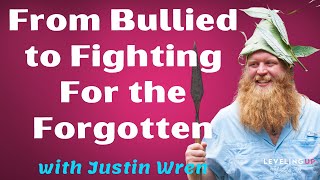
This is a YouTube video titled "014: From Bullied to Fighting For the Forgotten with Justin Wren" featuring an in-depth English podcast interview recorded in early 2019. Natalie Jill, a fat loss expert turned high performance coach, hosts the conversation with Justin Wren, a former bullied youth turned professional MMA fighter and humanitarian. The discussion covers Justin's traumatic childhood experiences with bullying, his rise in wrestling and MMA, struggles with addiction and depression, and his transformative journey toward healing and purpose. Justin shares his work with the Mbuti Pygmies in Congo through his nonprofit Fight for the Forgotten, focusing on community empowerment and bullying prevention. The interview also addresses the impact of bullying and suicide statistics, offering insights and advice for parents and communities.
Hi, I'm Natalie Jill, fat loss expert turned high performance coach. When odds are stacked against us, how do we shift and create everything from nothing? How do we level up when we aren't feeling it yet or we've had a big setback? On this podcast, I'll be talking to some of the most inspiring and courageous men and women on this planet who at their worst, learned how to achieve success greater than they ever dreamed possible. Leveling up and creating everything from nothing. Justin Ren felt worthless as he was bullied constantly by mean kids up until eighth grade. He believed that he was fat, weak and ugly, and his speech impediment certainly didn't help convince him otherwise. It all changed one night though. After running away from a party where he was being bullied, he got home, took all the allowance money he had been saving up, and he purchased every single VHS tape he could get his hands on that featured and highlighted UFC fighters. The men on those tapes, they were powerful, strong and confident. Everything that Justin felt he wasn't, but that he wanted to be. Fast forward a few years and Justin turned his pain into purpose and began a successful wrestling and MMA career. The world was introduced to Justin Ren in the Spike TV reality show all about the UFC called the Ultimate Fighter and he went on to become a dominating force in the heavyweight division with a winning record of 15, 2. But deep down, Justin was still hurting inside from all those years of being bullied and childhood emotional trauma. Attempting to mask that pain with opiates and sleep, Justin slid into numbness and darkness. He even went as far as to completely missing his best friend's wedding. And then he even attempted suicide at his lowest point. Down but never out discover how Justin healed himself, found his true purpose and freed over 1500 enslaved people in a foreign country in the process. From weak bullied kid to 6 foot 3 inch, 265 pound fighter that's now not just known for that size, but for the size of his heart. Meet Justin and discover how he leveled up and continues to create everything from nothing. I am here today with Justin Ren, AKA as he calls himself, especially on Instagram, the Big Pygmy. Thanks Justin for being here. I can't wait to talk to you.
Hey, thank you so much. I'm excited to talk with you.
Okay, so first I've got to know what. What is the big? Where did that even come from?
Well, that's my nickname. I fight professionally. Professional mixed martial artist. I started fighting when I was 19 and if you look at me, you know that my nickname Used to be the Viking, but now it's the big Pygmy. And I went and I lived with the Mbuti pygmies. They're a hunter gatherer tribe. I lived with them in the Congo deep in the Eastern Congo rainforest, the Ituri rainforest. And you know, they gave me a name there. And my name there was Feosa. And you have to say it like that or it doesn't translate.
And so I'm really glad that's not what it says on your Instagram because that would have been a botched beginning right there.
Yep. So Faosa means the man who loves us. And that's the one that I treasure. But them and their neighbors also call me Mobutamong Boat. And so Mobutimong Bo translated means the big pygmy. And so that's my nickname there. The average height for the pygmies is only 4 foot 7.
You are quite bigger than.
Yeah, 6 foot 3, 265. So a little bit bigger than they are.
Yeah. So okay, so fighting. You're big and powerful. You're a fighter. People know to back up when they see you. But that confidence that goes with that, I'm assuming that wasn't always there. That wasn't always who you were. I'd love to know who you were before.
Yeah. Actually I found martial arts because I grew up getting actually very heavily bullied at 13 years old. I sat at the lunch table by myself from third grade until eighth grade and had to be transferred out of two different schools. I had no self confidence, self worth value in fact. Yeah, we get pelted in the back of the head with chocolate milk, spit wads or food or. Or fist a lot of times. And didn't know how to stand up for myself and was just a target. I grew up with a speech impediment. I had a stutter and I couldn't say fish, for example. It'd be fush no matter how hard I tried and would just get teased a lot and would remember being. We have, I grew up in Texas. We have goofy, I don't know, high school traditions there. Middle school tradition or just football's big, football's king in Texas. And we have this tradition and if you don't know about it, I forget where you're located. But probably not Texas. And we have this thing called mums High school chrysanthemums. We would get that for our date for the homecoming game. And I remember being in middle school, getting my middle school date. I spent my whole allowance On a mum. And so it's a fake flower, big flake flower with these streamers. Now they're so crazy. If, if you're listening to this, you got to go google Texas homecoming mums.
Okay?
Now they look like parade floats. Oh my gosh, it is crazy. Like girls have to have neck strap or back straps and things that hang around their neck just so they could walk in there and literally have teddy bears on it or their school mascot and bells and whistles, everything. And so I spent my whole allowance trying to get this girl, you know, to impress her. And I remember going to the homecoming game and the streamer on it said Justin and Jessica on it. And we were at the game, everything's going fine. And halftime comes and my notorious middle school bully, also named Justin, walks up the stands, puts his arm out. She puts her arm around his. He grabs a streamer that says Justin and Jessica. The whole school's watching, looking back at us. And he goes, you didn't think she'd really come here with you, do you? And she walks off with him. And they all laugh. And the next year, I remember going back to school and my middle school crush invited me to her birthday party. And I don't know, just to highlight two instances, two stories of me getting bullied was my middle school crush. She crushed me on her birthday, invited me to her birthday party. It was supposed to be a costume contest. It wasn't. I went all out, you know, dressed up, went to the party as a Transformer. She loved transformers, she loved Dr. Pepper. And I made myself a Dr. Pepper transformer out of everything with duct tape. And wow. Went there and her grandmother opened the door, she said it was going to be awesome. Walked to the back. Her grandmother didn't know, Mimi didn't know that I was being like a lamb. Led to the slaughter and opened the back door, hit with a couple of flashes of light. And Michelle said, I can't believe you thought you were good enough to come to my party. The guy next to her, Tyler, said, you're worthless. And the guy next to her, Justin, who same kid as the year before, said, you should just kill yourself, Justin.
Wow.
At A young age, 13 years old, was clinically diagnosed with depression. Right after that, dealt with suicidal ideation. It was just brutal. Growing up, I didn't have self confidence, self worth. I didn't have martial arts in my life or athletics or anything.
I have so many questions for, you know, I have 11, I have an 11 year old daughter. And as you're telling me this I mean, it just breaks my heart, like, trying to imagine what that would feel like for a kid to be going through this. Like, what were you, what did you start believing about yourself with all of this? And did you find that, like, these events, did you start to sort of expect them? Or like, what did you start believing about yourself? And then I. And I'm curious, how did you share with your family and how did they respond to this?
Yeah. So after. Well, I mean, being young and in your formative years, you believe the things people say about you? I think most, most struggle with that, or at least I did. And I put too much value into what other people said about me. And it was never positive. It was always. I mean, not never. My parents spoke life into me and positivity and I was lucky, fortunate, blessed to have good parents in my life and. But at school they didn't know what was going on really. And that party that happened, I remember I ran away from that party. That was my first time running away and ran away from the party. Went to a Dairy Queen and went to the back. I remember ripping off the cardboard boxes off of me and throwing it in the dumpster and sitting by the dumpster in this fence, just kind of sobbing, weeping. And one of the employees came out and was like, oh, honey, what's going on? Whenever they were throwing away trash and it had already gotten dark, I'd been back there. I don't know if it was probably a couple hours or an hour or so. And they walked me inside. This was before cell phones. I'm calling my mom and she's not answering. She's running errands. And then was just going to pick me up from the party. She had to go all the way home to voicemails of me crying, asking where she was, and then telling her I met Dairy Queen. I think it was either closing or closed by the time my mom came. Got me at like 10 o' clock at night before she found me. And so, yeah, I did open up. My mom knew that's whenever they decided they were going to take me out of that school. Because the next three days I skipped school, pretended to be sick. My parents knew I wasn't sick, but they also knew pictures are being passed around school. They went to the school, tried to talk with the vice principal and principal, and it was just kind of. They were given kind of a roundabout answer. Kids will be kids and he'll learn from this, will grow from it. We'll talk to the kids. But not much was going to be Done. And what I know now is I have a nonprofit, it's called Fight for the Forgotten. And we do work with the Mibuti Pygmies in Congo, and we also do work here stateside with bullying prevention. And I know that there's 160,000 kids every day that skip school, because how many kids? 160,000.
Wow.
Skip school because of relentless bullying still today. Today, that's 3 million school days lost every month.
Wow.
Because of bullying. I'm actually at my office and been reading through some stuff from the CDC about the relationship between. It's called the relationship between bullying and suicide and what we know and what it means for schools. I've been reading through that today and there's some crazy statistics. I found some. And this is. I live in Oklahoma City, and just in Oklahoma, there was a statewide survey and it was 15% of students are seriously considering suicide. And this is the Oklahoma Youth Risk behavior survey. And 7.4% of students grade 9 through 12 admitted that they have attempted suicide. That statistic actually kind of translates over nationwide. It might be off by a percent or two, but seven out of a hundred kids are dealing with suicide attempts.
So when you were going through, when you were going through this, and I mean, clearly you're depressed from that, which I can't imagine a kid not being depressed from that. And did you know that they were bullying you or did you take it as like there's these things wrong with me? Like, what, what belief did you have about yourself?
I. Those two extreme instances, I knew that they were bullying me, but on the day to day basis, on a daily basis, I'd feel like there was something wrong with me because sat at the lunch table by myself, no one wanted to be around me. If I came over, they'd move. And I don't know, I remember, I remember a kid pretending to throw us a harpoon at me because it was a size of a whale and, you know, all sorts of just hurtful things. And so I would say that on a day to day basis, I struggled with thinking, there's something wrong with me and I'm different.
So something had to have shifted. Was it a person? Was it a mindset? Like, what changed that turns you from. Like, because you could have gone a lot of different directions. I mean, one, you could have ended up being a successful suicide because of this, which would have been horrible. You could have, you could have ended up being just somebody that really never picked up from that spot in life, you know, just became that person you were Believing about yourself, you know, or you could have done what you did, but not everyone does what you do. Like, how did you get to that? Was that a person, a mentor, what happened?
Yeah, I would say that I was blessed with a great mother and she really stepped in and intervened and started getting me involved in athletics. And she was a two time state champion in tennis. She was also a two time national champion in barrel racing. And from that she. It was about three weeks later, three weeks to four weeks. It was shortly after that incident at the party and I was walking around in a, at a flea market and I went to a used VHS tape store and I remember stumbling upon UFC 2 through 10. So the first one was missing, but I looked at the, the front of the VHS tape and I just thought, I remember thinking, these guys don't get bullied. And then whenever I turned it over, it was like boxing versus sumo and wrestling versus jiu jitsu and things I'd never even hear. But I just, I think I was drawn to it and I spent my allowance on it. And I was supposed to be buying a BB gun and instead I bought UFC 2 through 10 and I had to hide it. I had pretty conservative parents and they probably didn't want me watching Fist fighting at 13 years old, but I just fell in love with the chess match.
So what. But what was it about these, these UFC fighters was, it was the power about them. What was. Because you didn't, I'm assuming, know really anything about that before you picked up these VHS US tapes?
Like what? Yeah, I knew nothing about it, but I just, I don't know why I was so drawn to it, except for I was being so bullied and these guys were so opposite of who I was. I saw myself as, as weak and fat and ugly and stupid and all these things. And I looked at these guys and I'm like, wow, they're strong, they are powerful, but they're athletic and they're, they're. And there's something about it that I just bought it, binge watched it. When my dad found the tapes underneath my bed, he thought he was going to find a of porn. But it was just fighting. And then from there I found a wrestling coach. And that wrestling coach became a mentor. And then he passed me on to some other coaches because he was like, look, you got talent and you love the sport. And it was shortly thereafter I wrestled under two Olympic gold medalists in high school. And so having high caliber coaching of guys that have been the absolute, absolute best in the world, that Were both, I think they had five or six NCAA titles among them, and in two gold medals and a silver medal in the Olympics. And so they started coaching me, told me to write down my dreams, my goals. They said, write down state champion. And by the time you're a senior, this was when I was 15. They're like, by the time you're 17, we'll make you a state champion. I committed to it and instead of becoming one time state champ, I became a ten time state champion. There's three styles of wrestling. So in high school I was a 10 time state champion, a five time all American, and then they made me a two time national champion and I just committed to the coaching. They said, visualize where you want to be. Write down your goals, put them somewhere you can see them. And so I wrote down national champion and I put that above my bed. And I remember I'd go to sleep dreaming about it, wake up thinking about it. And actually when it comes to visualization, they said put pictures of your favorite wrestling moves and put them somewhere you can see them. And they're telling the team this, but they seem to spend some special attention with me as well. I think it was just I wanted to be coachable and I listened. And so they, you know, it's natural for a coach, I think, to want to get into coaching to make people better and to give your passion. And when you see someone moldable, someone that's listening, you know, they, they gave me some, some extra oomph behind everything. And I put my favorite wrestling move on the left, a picture of it beside the words national champion above my bed. It was a picture of that. And then my second favorite was to the right. And I would think about that. And literally my first national championship I won was with the move on the left. And the second national championship I won was with move on the right. And so they taught me the power of visualization. Seeing it in your mind, working towards it, being hungry and disciplined.
Now do you, I mean, I'm assuming part of your big driving core motivator was that you didn't want to be bullied anymore too. Were you, was there part of this that wanted to prove to others that they cannot do, they can't hurt me?
I would say some of that was there. Yeah, I had a little bit of a chip on my shoulder when I go into the matches and I don't know, my dad always teased me that it was like the water boy and seeing the faces of the other people on my opponent's face or Head. And so I would go in there and I would use some of that as motivation. But I think, honestly, I just fell in love with the sport and that this can change my life. And if I could. If I could transform myself into one of those UFC fighters that I saw when I was 13 years old, that I'd be, I don't know, different. I would be complete opposite of who I was as that kid. And so started to pursue that, became a national champion in wrestling. I went to the Olympic training center, lived there, won national championship in Greco Roman wrestling, was recruited to a couple of other big schools. I was On a reality TV show at 21 years old, the Ultimate Fighter. Started fighting professionally at 19 years old. I'm 31 now, and was undefeated for a bit and got on a reality TV show called Ultimate Fighter. And there, you know, that childhood dream at 13 years old became a reality. I would say that I was kind of young and dumb and didn't deal with a lot of that pain from the past.
Sure.
And because of that, you know, the parties, win or lose, you have a reason to. If you win, you get to celebrate all the hard work and sacrifice. If you lose, you want to numb yourself and forget about the six months you trained for that fight. And so I became, at 23 years old, I had wrestled in Moscow. I kickboxed in Amsterdam. I'd been the main event at the Hard Rock Casino in Las Vegas. And I was the youngest guy at the highest level of the sport at that time. And everything on the outside looked great. But I started to hide a drug addiction, became hooked on opiates. I had broke and dislocated my elbow, tore the ulnar collateral ligament. They told me there was only a 30% chance I'd ever compete again. They were just trying to save my arm, not really even trying to get me back into the sport. And so that was a tough pill to swallow. And then it became easy to start swallowing some of these other pills.
You know, clearly, you turned your pain into purpose initially. You know, you went from bullying to the wrestling. And as you said, you never dealt with the feelings. Do you think the opiates, your first experience with that, obviously, like, now you're getting to numb things. Is that what. Is that where the addiction came from, do you think? Because it's like a taste like. And I've heard this over and over again from people like you, whether it's a drug, alcohol, whatever. It's like that first taste of numbing starts to feel like the answer.
Yeah. So I Was in a weird place in life or a position. I had to petition or was it petition or lobby or with the insurance company to get the surgery. They were trying to send me to an ankle and knee doctor to do my elbow surgery. He had done a few elbow surgeries and so he had to come with me to. It's not a petition, but to a. Anyways, he had to come with me the first time I showed up. The second time he wrote a letter. And then the third time he actually showed up with me to say, look, this kid is a world class athlete. He needs to have a sports surgeon do his elbow surgery. That only makes sense. And so in that four months, all I could do was I had a completely severed ulnar collateral ligament. It was dislocated. It was also broken. And so in that waiting, all they gave me was oxy. And I think the average person, it only takes like nine days to be hooked, to be addicted.
Yeah. And I've heard that even just like taking one pill a day or half a pill a day can Is enough to make somebody addicted.
Absolutely. So I became chemically dependent in a way where if I started to try to stop the food on. The food on my fork would literally shake off. I would. It would feel like I would sweat through my bed at night or I was going to shake it off of the bed frame.
Did you know at this time that there was. This was a problem or were you what was going through your head on that?
Well, I knew it was a problem because it was making me feel crazy. I mean, just my body reaction whenever I'd stopped taking it. But then I needed it because I was waiting for the surgery. And then once I was done with the surgery, that's when they gave me the bad news. Like, hey, this was a long time. We're really not sure how this is going to take. It wasn't an experimental surgery, but they had to do something rare to me where I didn't have. So they did a Tommy John surgery. They needed to take out a tendon out of my wrist and put it in my elbow. Well, I was one of a few people that was missing the tendon in my wrist. And so they needed to take it from a cadaver. Well, then I'm a big guy. You need to find another big cadaver. And instead of doing that, they decided to take a. They were going to take a ligament out of the elbow of someone and put it in my elbow. But instead they decided to take the tendon out of my hamstring and Put it in my elbow. And so anyways, they were like, we hope this takes. And hearing that news and being in the mind frame of a drug addict, you know, I just went to a really negative space and you know, I thought my career was over. And from there I just numb myself. And I definitely needed it for the pain, especially after surgery, but I wanted it because my, of how it numbed me.
Can you talk into the numbing a little bit? Because for somebody listening that maybe doesn't even know they have a drug problem or they are, they don't know enough about drug. Like what talk about numbing, like what that feels like, what that does and how that, why that, why that tends to happen with people that are suppressing feelings.
Yeah, well, I, how would I even say that? It was sedating, it was self medicating and I had a bunch of blind spots in my life. I think we all need balance. We need to be operating well with our body, with our family, our, our business and our being kind of our, our spirituality if, if people believe in that and we need to have this balance of. You can't just be singularly focused. And that's all I was, I was only one thing I'm good at. I'm going to stick to this. And then whenever that looked like it was falling apart, my identity was, was being stripped away from me. And it took me back to that childhood, that inner child of being 13 years old and being bullied and being in a negative place. And I even attempted suicide at 23 years old.
Wow.
But with the pills, just taking everything that I could. I had three different doctors in three different states giving me 30, 60 and 90 pills at a time. Oh, and I went to, I lived in Colorado, I wrestled in Iowa, my home was in Texas. So I would just do the rounds.
And you're an athlete, so they didn't question you.
Yeah, they didn't question me. You have the injury, you need it, here you go. And it got to the point so bad where there was six years of my life that are pretty blurry. And for an eight week long binge, I went on several of those. But remember one time specifically I went on an eight week binge and my best friend left me a voicemail. I probably had 60 voicemails that I had missed. And one of them, specifically, the most recent one, I looked at my phone, my gut dropped and, and I listened to it and it was my best friend on the line saying, I can't believe he missed my wedding. Oh, I can't believe My best man didn't show up.
Wow.
So that was rock bottom for me. And, yeah, I decided I needed to get help. I needed to open up. I needed to share my struggle with some people and my close friends and family, and they rallied around me. For me, it was also my relationship with God personally. And I just say God loved the hell out of me and has continued to bless the mess out of me in a way that gave me a second chance at life. Yeah, more than a second chance, but so.
So how did you. So you hit this rock bottom. You clearly know you have a problem. How did. How did you get off the drugs? And how did you deal with this past emotional trauma so you could. You could be whole today? Like, what were those steps?
Well, for. For me, it was a retreat. I went on it and thought it was kind of a first step into going into rehab. I felt a little tricked. It was actually like a Christian men's retreat. And for me, religion wasn't the answer. And so I was like. I told him the first day I was there, look, sit around a fire, holding hands, singing Kumbaya. Do anything for me.
Who tricked you to this? Who sent you? Who put you there?
It was my family and a family friend.
Got it.
And it actually ended up being the most transformative moment of my life that week. And just remembered. I don't know, I felt like I found myself there in that I can live a life of purpose and passion and that my life does have value and it isn't dependent on being a pro athlete and that there's been a lot of people in my life that given me themselves and the best of themselves, and I haven't given the world the best of myself.
What is it about that retreat that was able to get that out of you? Because like you said, you go. You go to this, and you're thinking, what is this? I've been tricked. How did it go from that? Like, what. What happened there? Was it connecting with people or. Like, what was the.
Yeah, I was connecting with a lot of good people that didn't care, that didn't judge me away, but they loved me in. They. They knew I had a drug problem. In fact, I was basically. I think out of 34 men, it was me and one other guy that was going through this drug addiction. And everyone else there went to go connect with God. And that sounded weird to me. It sounded fake to me. But for me, it. I don't know. I would just say I experienced the real deal, that there is something greater than ourselves. And for me, it came through a relationship with God.
It sounds too like that might have been actually your first experience where there was no agenda. So, like, you know, you talked about as a kid, you know, people weren't accepting you, so. And then you had your family that did accept you, but they had to. They were your family. Right. And then you have the wrestling coaches in that world, and, yeah, they had an agenda. So it sounds like that retreat might have been the first time where you were just seen for you.
Yeah, I would say you, You've. You've just nailed something there where it was a no strings attached kind of love where these men rallied around me, saying, justin, your. Your life is worth living. This was shortly after a suicide attempt. So once I woke back up from that, I just remember thinking, how in the world am I still here? I shouldn't be. And, I mean, I took. I took 40 or so oxy.
Wow.
I should not be around. It was. It was probably in the 30s, but still, I. I took those pills to end it and to wake up. I just remember having the sense of, okay, I'm here, I shouldn't be. This is my second shot.
Like, you literally just went to sleep and woke up. Yeah, you're awake, you're thinking, I. How is this happening?
Yeah, I think I Woke up probably 14 to 15 hours after. But, yeah, it blew me away that I was taking breath, I was breathing again. And then I went on this retreat and experienced this kind of nose strings attached kind of love that I say, love the hell out of me. And. And then I went on this journey of, okay, someone told me a quote there, and it was, look, no act of kindness, no matter how small, ever goes wasted. And I think they were quoting Aristotle or someone like that or Socrates or someone. And I went on this journey where I was like, you know what? Like, fighting isn't my life anymore. I still fight now professionally, but I took a five year break. I thought it was going to be a year break, but I started volunteering at the local children's hospital, then a youth group, then At Risk youth group, then the Denver Rescue Mission. I just started volunteering anywhere I could. Kind of had my head on a swivel saying, how can I make a difference? How can my life make this world a better place?
Wow. I mean, it went from just protecting yourself, improving yourself, to just using that pain and what you'd been through to really make a difference. And that's incredible.
Well, thank you. I would say that there was a lot of hard stuff along the way. But yeah, I was motivated. I had someone ask me, is this man named Roger Almond? And he is, I think he turns 80 this month, but a lot of years of wisdom. And he just said, Justin, what do you want to be? You want to be successful or do you want to be significant? He said, now you can be one of you can be both, but at the same. But what would you rather be? Would you rather be successful or would you rather be significant? And I just remember thinking that over, chewing it over and being like, well, if I truly want to be successful and I'll be a man of significance, and I think it's Ben Franklin or someone that said, try rather not to be a man of success, but rather a man of value. How am I going to bring value to this world? And for me it was, I want to make this world a better place. And I, I ended up starting a non profit called Fight for the Forgotten and took me to the Congo. I lived with what anthropologists call the most oppressed people group in the world, the Mobuti Pygmies. At this time, they were literally being, and this is verified by the United nations and all sorts of people, but they're literally being hunted, killed, cooked, eaten.
Now, today, now this happens.
Rebel groups will drink from their skulls before going into battle. They'll consume their flesh, saying that it makes them invincible in war. And so there's 38 different warring rebel groups in the Congo. And the Congo should be the richest country on planet Earth. It's got more natural resources than any other. Any of their neighbors don't even come close. And they have more gold, diamonds, oil, coltan, coltans, and all our smartphones, cobalt, iron, tin. I mean, just everything you can think of is in the Congo. And yet they're the poorest on the Human Development Index. So they have the least amount of schools, roads, hospitals, and then their GDP or whatever you call it, they make about an average of a dollar to $1.25 a day is the average income of the people there. There's 74 million people. Only 1% have access to clean water. When looking at the water crisis, I mean, it takes the lives of 3.4 million people a year. Women are spending up to six hours a day to collect water. Women and children.
Wow.
And, and I remember being slapped upside the head with the water crisis. When I went there and I stayed for a month and three days before I came home, I was holding a little boy named Andy Bow, or I was in the back of his head under his mother's hand. And I was holding his hand, and she was holding his other hand. And she had already lost her husband, already lost her son due to dirty water. And. And he took his last breath. The blood came out of his ears and onto our hands. And he was one and a half years old. His name was Andy Bo. I had no idea that 1800 children a day die under the age of five years old just because of dirty water. It was like, it was wild, it was crazy. And it changed me. It broke my heart. It forever gripped my heart for these people, for this people group. They adopted me in like one of their own. My wife has been there and met them. And I spent a year and a half living with them. About a year at one time, in about six months, other trips, going back and forth. And what we did was we worked with the locals to empower them to what we believe. Fight for the forgotten. We believe opportunity is greater than charity. And so how do we equip the locals with the tools that they need? How do we educate them with the knowledge that they're, that they're yearning for? How do we empower them to make the difference that they want to make in their own community? And so we came in and we helped the pygmies get back land. And we did this as a community to where I think a lot of good hearted, well intentioned people that do charity would say that. I don't know, it's more of a show up, blow up and blow out techniques where you show up with all the answers, you blow up with the solution, and you get your pictures and you take off, you announce yourself with a parade, you throw a party, you get pictures and you leave and you never come back. And there's no real relationship, therefore a lot of times there's not real long lasting transformation, at least whenever it comes to community development. And so we wanted to, to make sure that it was long lasting change. And so the pygmies was, was land. And so we lobbied on their behalf and we were able to get back on the local, state and national level. We're able to get them back 3,000 acres of land.
That's amazing.
Yeah. And that's their land. They own it. It's in the name of their people group. It's the strongest thing in Congo courts. And it's the first time in Congo history that the Mbuti pygmies have land ownership. They were able to teach a local team of nationals that, hey, here's how you drill water wells. And I was able to help them drill the first 13 water wells, but that team has now drilled 77 water wells. So they've taken it on as their own mission. They want to make the difference in their own community.
So, Justin, earlier on this interview, you know, I said, what did you make up about yourself as a kid when you were being bullied? And I wrote these words down that you said, you said, I felt, I believed I was weak, I was fat, I was ugly. Listening to the stuff that you've done and what the changes you've made for people, like the passion and the purpose behind it, I mean, clearly you're not weak, fat, or ugly. I mean, that is incredibly powerful. I mean, more so than those VHS tapes that your image of wrestling initially. I mean, the changes you've made and impacted are completely the opposite of how you felt of yourself as a kid.
Well, thank you. That's humbling to hear. I'm excited to live and to have life and have breath in my lungs and a beating heart in my chest. And I'm grateful every day. But I would be taking too much credit if I didn't say a Swahili proverb that I learned in the Congo. And they modeled it out in front of me, and it's been a team effort. And what I mean by that is they shared something really powerful with me. And it says, if you want to go fast, go alone. But if you want to go far, go together. So if you want to go fast, go alone. If you want to go far, go together. And so I learned a lot about community, and I learned a lot about relationship from living with the pygmies and how they value each other, that it's not a lot of surface level stuff. They go beneath the topsoil, they dig deep in relationship with each other. And so through that, I would say I've experienced a tremendous amount of healing from my childhood, and I do feel like a different person.
Yeah.
And it's been really cool to see all the good stuff that's happening. October is National Bullying Prevention Month, and so we're excited. We're launching a nationwide bullying prevention campaign, and we're really excited about it, and we're piloting it this year. This is our first go at it, but we're excited. We're getting in 100 martial arts academies. We're doing a fundraising. A nationwide fundraising tournament, crowdfunding tour tournament online. And so martial arts academies are going to have the opportunity to set a goal or martial artists. It can be individuals as well that set a goal of raising $4,200. What that's going to do is it's going to transform a community with clean water, but it's also going community in need in Congo or Uganda, Rwanda or Tanzania, the places that we work in drill wells. And it's going to equip their own martial arts academy with a bullying prevention curriculum. So it might seem like I'm bouncing all over the place, but I think it all comes down to pygmies being bullied, the water crisis, being the biggest bully on earth being the number one reason for death in the developing world, and then bullying here stateside. I mean, it's nuts that 7 out of 100 kids here in my state of Oklahoma have attempted suicide. Grades nine through 12. That is way, way too many.
Yes, way too many.
So we're equipping them with a curriculum. We're calling it Heroes in Waiting. And we're saying, hey, you know, each one of us can be a hero in waiting. You know, we are all ordinary people, but we're able to do extraordinary things. And so to look for that opportunity. And kind of what the curriculum kind of paints a picture of is there's three paths in life. You can take the path of being the perpetrator of evil or wrongdoing. You can be the bully, or you can take the path which is probably most often taken, which is the path of indifference in action or turning a blind eye or thinking you're an innocent bystander. But when it comes to bullying specifically, if you see it, you're involved. You didn't choose it, but you're actually involved. And if you're laughing or chuckling or snickering, that's being an encourager. But if you think you're an innocent bystander, in actuality, you're being a silent supporter. And so we need to encourage the third path, the path probably least often taken. But it's the path of action. It's the path of standing up and doing the right thing and standing up and speaking out. And what we want to encourage kids with here stateside is that there's an amazing statistic, and it's whenever someone stands up and says something, it can be something as easy as, hey, that's not kind, or, hey, that's not right, or if you see someone being excluded, you include them in your group or you include them just by your side. But if someone says one thing 87% of the time, it shuts the bullying down in five seconds or less.
Wow. And it lets the person being bullied feel valued. I would imagine, like, even just at that party, if someone had stood up, like, it might have changed that whole outcome, like, of what you believed about yourself. Because I would imagine those. Those thoughts when no one's standing up, is that you feel invisible.
Yeah. Yeah. Invisible. Or. Or the only thing people see is what's wrong with me? And so trying to figure out what. What is so wrong with me, you.
Know, what is the right thing for an adult to do right now? They hear, they feel their kid being bullied, or they. They witness bullying, or they. Their kids accused of bullying. What. What advice would you give? What would you tell that adult now?
Yeah, I think it's a hard question, But I think 1. Encouraging kindness, empathy, compassion, but in a way that. That. That can be received, that can be cool. That can. That can. That they can see, like, is the right thing to do. But I would also say this is what I would say to a parent that knows their kid is being bullied. And I've got this thing in front of me, the cdc, the interaction between the relationship between bullying and suicide. The people that are actually at the highest risk of suicide are what they call victim bullies. And so they've been a victim of bullying, and then they lash out by being a bully. So they're at the highest risk of suicide. And so what's that?
No, I had not heard of that term. That's interesting. Yeah.
Yeah, I haven't either until I started digging into some of this research. But I would say that parents need to know that you're a safe space, and your kid needs to know that and that they need to have someone's ear. How do you give a voice to the voiceless? First, you start with you. You give them your ear, and. And you let them know that they're being heard. And I can't tell you how many stories I've heard, because I've been able to share my story in 100 or more schools now. And there's been so many parents that have reached out saying, this is the first time my child's opened up to me. And it's like, the kids need to know. I'm so fortunate. I would not be around today If I was 13 years old and I didn't have a mom that listened. I remember thinking of killing myself. I remember grabbing a belt and thinking about hanging it. Hanging myself. I remember putting it around my neck and thinking about it and having ideations. Do I do it in the closet? Do I do it over here? Where do I do this? And if I didn't have a mom. I just remember thinking, what would this do to my mom? You know, what would this do to my mom? And as that 13 year old kid, you know, 10 years later, I tried it again. That thought wasn't strong enough and thank God I'm still around. But I would just say that parents really need to be involved. And so if it's putting down the cell phone at dinner, if it's turning off the TV and having a conversation, if it's going outside and playing catch or going on a walk, or if your kid's artistic, you know, go in there and see how, how they're painting or drawing or sketching out what it is. And I think a lot of times one of the parents that came to me was said that they noticed their kid was very talented in art and drawing. But a lot of the images started getting darker and darker and darker. If you're not involved in your kids lives, you can't really see some of that stuff that's happening and step up to the plate and intervene with your child. And if no one's standing up from at school, you can be the one to stand up from home and go get involved at school. Let them know that hey, this is happening.
I have a final question that I ask everybody and I'm curious your take coming from a very different perspective about how you grew up. If you were to give somebody in a rock bottom spot right now, maybe they are being bullied or they've lost everything, whatever it is, that's their rock bottom spot. Like you mentioned your rock bottom spot. And knowing what you know now and what you'd want somebody to believe and know, what would you. If you were to give them like three pieces of advice on how they can sort of level up and get out of that rock bottom spot and start to create something amazing from nothing, what three pieces of advice would you give them?
That's a great question. While you're saying that, a couple of things really stuck out in my mind and I hope they come out okay. But it's Live to love would be the first one. Live to love. Second one would be fight for people.
Fight. Oh, fight. Not fight for the number of people, but fight for people. Got it.
Yeah. Four people.
F O R. Yes.
Fight four people and then you're enough would be the third one.
To know you're enough to know you're enough. I love that.
And so I, I think the first one Live to love. I think a lot of people try to, to love to live first. And I want to love my life and I want to have these things and I want to have these cars and I want to have this success. I want to do this. But I think if we change it and we live to love first, it's only natural that will love to live, will love the life that we live. Whenever we're loving others, whenever we're reaching out and helping, when we're giving back, we're making a difference in people's lives. I think that fulfills us. And when we help others, that actually in turn helps ourselves. And so those would be the things. Live to love, fight for people and just know that you're enough.
Those are great. Justin, where can people, I want to know where they can find you. But even more so, how can people help support the causes that you're so involved in?
If I could tell anyone to go anywhere, it'd be fight for the forgotten.org all spelled out. It's a long web address, but it's Fight for the forgotten. When I met the Pygmies the first time, they said everyone else calls us the force people. We call ourselves the forgotten. And if I, if I look back at my life, I'm sitting at the lunch table by myself. I felt forgotten. And so fight for the forgotten.org we our mission statements to defeat hate with love.
I love that.
And yeah, so that would be where I would direct people and then from there you can find my Instagram or Twitter and it's at bigpickme.
Got it. Thank you so much. Justin.
Hey, thank you. This has been awesome conversation.
Thanks for leveling up with us today. Please share this episode if you found it helpful so others can join in. And don't forget to hit that subscribe so you don't miss out on future shows. And if you would leave me a five star review, I appreciate those so much. I read all of them and it's how I know that I'm giving you information that you find valuable. And come interact with me over on Instagram @nataliejill fit. I read all the direct messages and comments over there. Make it a great day. Creating everything from nothing.
Sa.










