027: From Addict to World Changer with Anna David
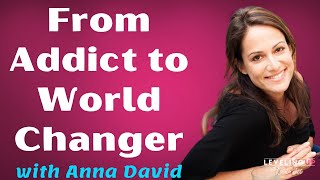
This is a YouTube video titled "027: From Addict to World Changer with Anna David" featuring an in-depth English podcast interview recorded in December 2018. Natalie Jill, a fat loss expert turned high performance coach, hosts the conversation with Anna David, a New York Times bestselling author and recovering addict. They discuss Anna's personal journey from addiction and trauma through recovery, her experiences with rehab and therapy, and her current work helping others share their stories and write books. The content is a candid, inspirational dialogue focused on addiction, recovery, and personal transformation.
Hi, I'm Natalie Jill, fat loss expert turned high performance coach. When odds are stacked against us, how do we shift and create everything from nothing? How do we level up when we aren't feeling it yet or we've had a big setback. On this podcast, I'll be talking to some of the most inspiring and courageous men and women on this planet who at their worst learned how to achieve success greater than they ever dreamed possible. Leveling up and creating everything from nothing. Once a serious addict, Anna David wanted to die. She was isolated, hated herself and turned to drugs like cocaine to numb the pain of childhood trauma. Starting alcohol at just the young age of 12, her life spiraled into a lonely life of addiction as she tried to desperately mask her pain. Now, after a life altering event forced her to face the true music of her addiction and choices, she finally decided to enter recovery. 18 years sober now, Anna David is now a New York Times and number one Amazon best selling author of two novels and five non fiction books about addiction, recovery and relationship. Join us today as Anna David shares all and shows us how she continually levels up, creating everything from nothing. Today I've got my friend, Anna David. I'm so excited to be interviewing you, Anna. Anna and I met at a dinner party and we just had like this nonstop chitter chatter. We have so much to talk about and I didn't even realize her powerful story until later and I thought I've got to get you on my podcast. So thank you so much for being here, Anna.
Thank you so much for having me. I mean, truly, when you bond over wanting chocolate cake, where do you go from there?
And we had lots of chocolate cake that night. That was great. So first of all, Ana is a bestselling author. She's a New York Times bestselling author who also helps other authors create amazing books. And she is uber successful. I mean, you could google her, you could see her. She's got like this big following. Everyone knows who she is, she's super successful. But I know that it was not always like that for you. In fact, she's 17 years ago. Today you are very 18. Yep, a very different place. And it's a story I'm not used to hearing with somebody like you. So I want to dive in. Like, let's take us back. What was going on in your life around that time?
Well, I actually I went to rehab May 2nd of 2000. And after years of just like, frankly, like doing cocaine alone in my apartment, the end of the 90s, that's what I was doing. My life was so small and so dark and I didn't understand that there was any other way to live really. I had a lot of trauma that I didn't know I had. And so I looked like this completely normal. I was just this like, fun, normal girl. I went to a good college and I just loved cooking. And then when everyone else kind of calmed down and like got serious and started to get into serious relationships and serious careers, I just kind of upped my game until there was no one left to do it with. And so I was just doing it alone.
So it's funny to hear you say that. Like, I just love, like you say it like, I love chocolate or I love, you know. Oh, I loved it. You just love it. Like, what? How did you even get into that? I know this is something that started in high school. Did it start? How did it start? And how did you stay so attached to it?
It did start in high school. I tried it in high school and it just was euphoria. And I mean, this is the thing about drugs. I mean, this is my belief about alcohol. I use the word alcoholic and addict interchangeably. To me, it's all the same thing. And I believe that alcoholism isn't about how much you drink or how much DUIs you have or overdoses you have. It's about a way of thinking. And this way of thinking is like, I'm not much, but I'm all I think about. And it's like this kind of crippling sel obsession mixed with self hatred. And you need an escape. And so like you find it and drink. You don't know this at the time. You know, I first drank when I was 12 and I didn't go like, oh, I have such relief from my brain. I just was like, wow, this is so much fun.
And then you said you started drinking at age 12, you had your first drink.
Yeah. Does that sound early to you?
Well, I have an 11 year old daughter, so I'm trying to envision this. So I know where were your parents and what was their attitude about this?
Okay, here's the thing too. So I'm in recovery. So to me, I hear people say they start drinking at 10. And that doesn't even freak me out. I'm just like, yeah, okay. I was in eighth grade and my friend Maria and I took the. Took her parents her mom's vodka bottle and filled it with water and drank the vodka in it. And again, like, this didn't seem weird there. I just feel like. And I don't Want to freak out any parents, but it's just like, there are kids that are doing that stuff, and there are kids who are not. And I was one of the kids who was.
Now, what did you know about alcohol at the time when you were trying this? Like, did your parents ever talk about it? Where did you first learn about it? And what was, like, what were their. Was their stance on it? Were they completely in the dark about this?
They were really in the dark. Now I know a lot more, which is that, like, my mom's parents were actually alcoholics, but it was. Nobody said that. It's like I figured it out. It's like my grandfather died of kidney and liver disease before I was born. And then, like, all the pictures of him, he's drinking. I'm like, oh, okay. And my dad is an alcoholic. But nobody said that or knew that. You know, I grew up in the 70s, and it was in Marin county, where, you know, it was like, kind of where all the hippies. I got rich and, like, went to Marin, booked a lot of pot. So nothing about it seemed unusual, honestly. And nobody talked about it. I did get in trouble. Like, you know, I got in trouble for drinking, but, like, minor trouble. My. My mom was worried about me. She read my diary. I don't recommend that as a parent.
Did she send you off to boarding school when she read it or what? Did she. Did she talk to you about this?
She did. Okay. So, yeah, parents, if you're gonna read your kid's diary, don't do this. I'm Jewish, so all she did was, like, make me feel horribly guilty. She's like, I read your diary, and it said this, this, and this. I had tried cocaine, and I was drinking and I kissed a boy. And she was like, asking me all about that, and then we didn't really do anything about it. I just felt horribly guilty and vowed never to write about that stuff again.
So, wait, so your mom converse you with it? She sees this, but she doesn't say there's anything wrong with this? She doesn't say, we need to make a change. She just talks to you about it?
Yeah. I don't think she knew what to do. And I now receive emails from hundreds of parents all the time who don't know what to do. And it's a horrible thing because it's not like you can say, well, your kid will never end up like this if you let them drink as much as they want, or they'll never end up like this if you say they can't drink. Like, there are no rules. The best way to prevent your kid from ever developing a problem with alcohol is try to have them not have trauma. You know, talk to them, love them. You know, I think that addiction is a reaction to, you know, a sort of whole.
Yeah, so let's talk about that.
Yeah.
When you say trauma, I get that. And I'm assuming this is where your path led, is that, like, you realize quickly that alcohol or whatever drug was going to numb whatever pain you were feeling because of trauma.
Yeah.
What was the trauma? What was happening and was something you were hiding inside of you?
Well, it's. It's very subtle. And, you know, my dad, who I don't have a relationship with now, is like a very, very sick dude. He's like, he's an alcoholic, sex addict, gambling addict, sociopath. And so he did all sorts of stuff that was really abusive. He was really emotionally abusive and never physically abusive, but inappropriate in every way. And I really grew up, you know, there was stuff like, like, if I cried, my family all laughed at me. And every time I cried and like, at the time, again, it didn't seem that awful. I didn't know any difference, but, like, what that really did to me.
Yeah. And that's really crazy that you said that. I don't. I've shared before that my dad used to hold a mirror up to me when I was crying and make fun of me for crying, so.
Oh, my God, you're kidding me.
And I. But I. But I did not develop an addiction problem. So it's interesting that's. And I'd love to know more about. In fact, I know now that that was not normal, but I thought that, you know, you're just not supposed to cry, which made an adult that didn't have a lot of emotions. So. So your dad's doing this stuff to. Your family's doing that. How did you escape before the alcohol? And did you ever talk to anyone about this trauma that you were facing with your parents, with your dad?
A little bit. I actually got into therapy when I was 16 and. And talked about it a little bit and. And I was really, like, hyper aware that my dad was, like, really sick and not okay. Like, I remember being five and being like, I wish my parents would get divorced. Yeah. And then they had like, a really terrible marriage that just lasted and. And it was like, you know how. I mean, this is like a thing in therapy. It's like the. The quote unquote sick family member is like the identified patient. Like, I was the quote, crazy one. But really, I was the voice of sanity. I was like, dad's insane.
You should get.
You know, and it was always like, oh, Anna, she's so. She's so crazy. And it's like, no, I was actually the sane one. And there was a lot of, like, gaslighting of sort of I'm reacting to things that are happening, and I'm being told I'm crazy, which I think is. Is a serious woman thing. Like, I don't know about you, but has that happened to you in your.
Career when, you know, it's just in general? I noticed, especially with moms, a lot of times if they are in an abusive relationship with a spouse, and they'll. They'll try to almost downplay it, like, it's not really happening as it is. So the person that's experiencing it and doing the right things to talk about it is feeling like maybe they're crazy. You know, maybe they're the one.
Yeah. And it's. It's funny, though, because I just had a thing yesterday where, like, a friend of mine, like, it was basically a man who I've been friends with who asked me to do this work thing, who. Who. I didn't do anything wrong. And he acted like he had made a mistake and acted like I had made the mistake. And I couldn't figure out why I was so upset. And then I realized it's because it's happened to me, and I don't cry. Poor woman. Ever. But the one thing that has happened to me in my career over and over again is, like, working with. Who call you crazy because, like, you're saying you're right. Because it's like the mirror being held up when you're crying. You're like, well, I'm just having a totally normal reaction to what's happening, and I'm not crazy.
Wow. Okay, so you're in therapy, but you're. You're clearly using alcohol as a teenager to mute the pain so you don't have to deal with this.
Yes.
So how does that escalate past the alcohol? Because I get it. High school kids trying it, whatever. How did that get to hard drugs?
You know, it really never seemed like that big a deal for whatever reason, when I was like, when someone else, like, sees cocaine and they're like, oh, God, I know that's a serious thing. I didn't have that. I was like, okay. And I tried it in high school, I tried it in college. I loved it. And then I graduated from college, I moved to New York, and Then San Francisco and then la. And in LA it just like, I basically was like, oh, I know what I need now that I live in la. I need my own coke dealer. And this seemed normal. And so then I did, I got, I got three coke dealers and that was what I did.
I wouldn't even. I'm listening you, you talk about it like it's so normal, which I love, but like I wouldn't have a clue how to find a coke dealer. So it's. To you it seems so normal. But like to a lot of people listening, I'm sure they're like, what? What are you talking about?
I know. I mean the thing is, it's like I have this, you know, I did a storytelling show and I like have a joke in it that's like, if you're a mother of four in Ames, Iowa, finding your own coke dealer might be hard, but like if you're a 26 year old in Los Angeles who's been like running around the Hollywood party scene, it takes one phone call. Wow, you're like, okay, that's who I. Okay, I beat this guy. Okay? That's what I do. That's it. And that's what I did. And then my life just got so, so, so small.
So explain that. So coke is a very different drug than alcohol. So this is definitely like more of.
A hard, A hard drug.
Is that also muting your pain or what was that doing for you? And I want to know what was it doing for you and how are you affording it and what was happening to the rest of your life while you were doing this?
Okay, all great questions. So. So it did. Numb is a weird word because. And this is something. Okay, I don't mean to like not answer question because this is actually such a good question. It relates so much to it being my anniversary today. One of the greatest gifts for me in recovery is that no part of me believes that using cocaine would ease my pain at all. And so I never go like, oh my God, I'm in agony, I should go use, I should go drink. Because I know what that felt like at the end. At the beginning it was just euphoria. It was just like an escape from my emotions. And this is what I believe drugs and alcohol always do. If you're an alcoholic, which is like, they give you that relief from that brain that's so self obsessed and then they turn on you and all those like self hating thoughts just get exacerbated and it's like suddenly just worse than ever. And then you don't know what to.
Do because, like, every time you do it, it's doing this, taking you through this cycle.
Yep. Yep. Towards the end. Yes. I'd say the last year. And so then what I would do is I would say, well, okay, this is a problem. I can't do this anymore. And so I would throw it away. And then I learned I would pull cocaine out of the trash. So then I said, okay, I'm going to throw it in the dumpster. And then I learned, oh, my God, I will go to the dumpster and dig it out. And then I said, kind of like.
Me with peanut butter. Yes, but it's not as detrimental.
Did you know that I am looking right now at, like, a Jif thing that I needle pointed? I am so into peanut butter that I needle pointed a picture of a Jif bottle.
Oh, my gosh.
So, yeah. And so I just thought I couldn't live without it. I'd heard about recovery and AA and rehab, and it sound freaking awful, and I wanted nothing to do with it. And then when I was at the point where I was like, well, it's that or killing myself, I guess I'm willing to try it. And I went to rehab.
So when you say you were, like, digging it out of the dumpster, and was it like, what was that like? Were you hiding this from people? Or did you have people that knew you were doing this? And did you feel like it was a dirty secret that you had?
There really wasn't anyone around. Like, I can't even articulate how isolated I was, because it's not. I do remember I would do it on, like, a Friday night, and I would make a bunch of phone calls and go like, oh, my God, they know I'm high. Oh, my God. I'm sure she knows I'm high. And I mean, how unfun is that? Like, you do a bunch of drugs to sit by yourself, to call people to be paranoid that they think you're high because you are. There was no one to even lie to. I was just alone.
And what were you doing for work? And how were you affording this habit?
I had a job. I was doing coverage on screenplays. So it's like this, you know, production company would give you a script and say, read this and give us basically a report on whether or not we should buy it. So I was doing that. And, I mean, I had different jobs over the years. I had worked at People magazine. I was doing some journalism, and then I had some, like, money. I was like, My grandmother had given me a stock, and I was living off of that. I wasn't living well. And my coke deal, you know, I didn't have the best coke in the world, so it was like $60 a gram. Like, I could afford it, but my life was so, so, so small. And, you know, we have this idea in recovery which is like, you start, quote, hanging out with like, quote, lower companions, you know, the people that will use with you. I use drugs with you. And it was like my lower companions said to me, like, we don't really want you around anymore. Like, these people, I found these people that were like 15 years younger than me. They were like sex workers and all gay. And they, they were just like, you know, Anna, no. And so I was just alone.
You mean you were looking for people to connect with over this, and you're saying they rejected you too?
Well, I think that what happens is you start off just because I've seen this now over and over again, I started off like normal at parties, and then you sort of find the people at parties who are the real serious users and addicts. And then you guys stop going to parties and you start just going to each other's houses kind of doing this. And then I remember a night being at my friend's house and we're all sitting around doing coke, and I just thought, God, these people are annoying. Oh, my God. And then I thought, well, I just bought some coke. I could go home and do it by myself. Well, that would be weird. Who would do cocaine by themselves? And then from that, I went home and did it by myself. I never did it with people again.
Wow.
Because you just kind of. It's such a sort of self absorbed, masturbatory drama where you just don't even.
So what was happening to your life? You're getting isolated. You're. You're not having friends. Where's your family in this role? And are your jobs seeing that there's something going on?
Yes. My family has never been, you know, super aware. You know, my. My parents got divorced. My mom fell, like, madly in love. She. I had this amazing stepdad. He unfortunately died. He was much older than her. They were so happy for like 18 years. So my mom was, like, very much in that relationship. They all live in the Bay Area. I was in la. And, you know, I think that people knew something was wrong, but I was also, you know, people talk about how they were like, you had so much potential. Nobody thought I had potential. Nobody ever thought I was smart till I got sober. I was just this cute party girl. And so it wasn't like, oh, she's not living up to family expectations. I just wasn't. No one ever expected much from me. And I had a really bad temper in addition to all these other things. So I was really good at having terrible blowouts with friends. And so it's so strange to me now because I'm such a, like, people person. I'm so not an isolator, but I was just alone.
So how did you go from that, from being alone and being okay with your. The drug addiction? Addiction. It sounds like you were just sort of content with it. What made you want to stop and how did you change?
Well, content with it, I was suicidal. So, I mean, I was. I actively wanted to die. So I. It wasn't that I was okay with it. It was that I didn't think I could stop. Like.
So was the cocaine making you not kill yourself? What was happening there was the conversation in your brain.
But the conversation in my brain is like, I didn't really have the courage to. I never had a plan to kill myself. I always thought, well, God, it would be great if I could just, like, not wake up, because I was at this point of, like, I can't live with cocaine, and I can't live without it. It's my best friend. It's making me miserable, but it's my best friend. And so I'm not going to go buy razors. I don't mean to get so graphic, because the truth is, I never had a plan. I just wanted the pain to end.
So when you would get. I'm just. I'm trying to follow this here, too. When you would get high, because for a lot of people listening, including me, we don't. We don't understand what this is like. And when you say it was you were hating how you were feeling, is it like you'd get this instant high that was amazing, and then it would crash to this horrible feeling, like, what was happening that you would. Because I would imagine if it's hating it so much, why people keep doing it.
Natalie, that is such a good question that no one has ever asked me. Okay, here's the thing. The first. When you first start doing drugs, it feels so good. And it's like, I don't know if you've ever had that thing. I don't know. Let's call it the first bite of chocolate cake you ever had. You're like, oh, my God. I just want to get back to how that felt.
Okay?
You can never get back there. But you never give up trying, so that's what it is. It never worked the last year. It was always terrible, but it's like I had this delusion that this time it's going to be different. Okay. If I just do one more line, I'm going to feel good again. Oh, you know, it's the next one and it was a lie. Oh, wow.
But it's pretty powerful, so it really overtakes you like that. We feel like you have to keep doing it. Wow.
Yeah.
Okay, so how did. So you wanted to die.
You hate.
You're not liking it. You're realizing you're never getting back to that first. Did somebody intervene? How did you end up in rehab?
I ended up in rehab because I. Well, here's what happened. And this is interesting because I used to just sort of edit this out of my story because I was so ashamed of it. But I'm working on releasing my shame. I got pregnant and I thought. I realized I got pregnant because I cared so little about my life and my body and what happened to me that I had, like, not been practicing safe sexual.
Right.
And I got pregnant and I went in to have an abortion and I put my arms down because they take blood. And I had this thought that was, thank God I don't have track marks, was the thought I had. And then I thought, well, that's a crazy thought. I have never shot drugs in my life. And I feel like the God, the universe, the world was giving me this look at where my life was going. And three days later, I called my mom and I said, mom, I'm a cocaine addict and I just had an abortion like all every mother, you know, dreams of pregnant with her precious child. And I was in rehab. Three days later, I picked a place in la. I did outpatient. I was actually working at the time, which is insane. And I don't know why. You know, I don't really know what happened that morning when I called her. When I quote serenity, it's like you.
Had a glimpse of reality. Check that day. Someone was looking out for you or something that you saw that. Fine. Interesting.
Yeah.
Wow. So, okay, so the rehab journey, what was that like? And. And how. What is that like now? I mean, my Gosh, you said 18 years out. Do you have temptations still? How does that.
Oh, God, no. I loved rehab. Rehab is so my first book. Party Girl is basically my story. And, like, the rehab part is the most fun.
Why did you love it?
Because here's the thing, it was nothing Like I expected it to be. You know, I had my whole using in partying. I thought, well, you know, if you're sober, that's the end of fun, you know, you'll never. I thought, well, I guess you could, like, go to a play. Like, it didn't occur to me what you would ever do for fun. Because my definition of fun since the age of 12 had revolved around drinking and doing drugs. And I suddenly, and I had, like I said, been so isolated. So I'm suddenly surrounded by people. And, you know, I got sober in la, where recovery is a really big thing and everyone is so pre fun and smart and sometimes famous. And it was just. I was suddenly in this group of people that were talking about problems I didn't know I had. Like, I thought my problem was like, drugs and cocaine. My problem is the way I think. And suddenly I'm surrounded in these meetings where people are talking about that and they're saying I'm the piece of crap in the center of the universe, and they're saying all these things that, like, I relate to and they are my friends. And, you know, I had not really thought about any sort of a spiritual experience in a long time. And, you know, I do 12 step and it, you know, that's. That's a part of it. And I was basically, you know, I tried quitting cocaine and drinking over and over and over again and it never worked. I tried hiding my drugs at friends houses, I tried going on trips, I tried all of this stuff. It never worked. And then I go into this rehab and this program and they say, okay, here's what you're gonna do. You're gonna start praying. You're gonna start going to these meetings. You're not gonna drink between the meetings. And I did that and my desire to drink went away and it's never come back.
So it sounds like, I mean, from what I'm hearing, and I don't know because I've not been to a recovery and I'm not that familiar with addiction, but it sounds like you were forced to have accountability and connection. And now you were almost filling this void of, you know, you were getting to be heard now, and you're realizing that you're not alone with the pain. So it gave you another crutch. Is that correct? Versus turning to a drug.
God, that's really well said. That kind of gave me the chills because again, no one's ever said that, but yes, yes, because I didn't know I was missing connection, you know, and. Exactly. And Also, I do think about this too because, you know, God bless my mother and you know, my parents totally did the best they could, but like, success and all of that only came to me once. I had the sort of love of that 12 step group and I got to sort of be reparented.
Yeah. So did you ever go back and heal the trauma that caused you to look for this out to begin with? And how did you do that?
Yeah, well, I'm kind of in the midst of it. You know, like I said, I've been in therapy since I was 16 and therapy is amazing. I decided to do EMDR. Did we talk about this?
I've done EMDR. I love it. Yeah.
Yes. So I went. I had tried it in my early 20s and I didn't really quote, unquote work. They had such a different understanding of emdr. Like I thought it was to hypnotize me to figure out. Out if I had repressed memories. And. And so in May, I went through a breakup that just like really rocked me. And I had been knowing I was going to. I needed to do EMDR and not doing it. And so I thought, I'm just going to do this. And so I did it starting in May. And I went twice a week for about three months. And now I go once a week. I'm so. I'm actively doing it and love it.
Wow. Yeah. For people that don't know emdr, it's a type of therapy that uses an eye movement to take you back to trauma and the. Basically the belief that you formed and reconstruct that story. Correct. Is that what they're doing with you? Like, so you basically attach a new meaning to it.
Yep.
And it shifts your response, that pattern to it. It's actually fascinating type of therapy. And it's frequently done with post traumatic stress disorder.
Yeah, they don't. Did you do one that with eye movement?
Because mine is one with eye movement. What was yours?
It's. It's you. They put these little like sort of balls in your hand and therapist just starts it and it stimulates the right, then the left, and the right, then the left. And it's stimulating the different sides of your brain.
Got it. Yeah. So I guess there's different ways I did it with an eye where you're looking with your eye.
Yeah.
Interesting. Okay, so. Okay, so. Wow.
This is.
I mean, I've never actually gotten into the root of addiction like this, so this is really fascinating to me. So you said you don't have temptation anymore for this? Never. It doesn't come up at all. Or I want to.
I don't want to jinx myself, really. No. I have had, you know, it's been 18 years. So what happened is I went to rehab May 2nd of 2000, and I didn't really believe that alcoholism and addiction were the same thing. I just thought, well, I'm a cocaine addict and I like pills, but drinking, whatever. And then on November 18th of 2000, I went out to have a glass of wine because I thought, like, I can drink. And then I ended up taking four and a half hits of ecstasy and drinking two bottles of wine.
Wow.
And going, okay, I get it. If I drink, I might do drugs. And then it was like maybe a year later that I go, oh, my God. I've always been an alcoholic. I just kind of. My vision of the world was so small and I was so surrounded by other people who drank alcoholically that I just didn't understand that. So I have had times where drinking has looked good, but it's been. The two times I really remember were trips. One when I was in Indonesia and one when I was in New Zealand, where I was surrounded by people who didn't. Who drank, who didn't have alcoholics problems. And they made it all look so good. And it was like I was lonely and isolated. But besides that. No, I don't. It just never comes up.
Yeah. So for now, do you just completely avoid all alcohol, all drugs, all everything? Like. Like View? If you hurt yourself and you need a pain medication, would you say no to that?
Great question again. I've had to take pain pills twice in the last 18 years. And. And I loved opiates. Like, I thought they were super, super fun. I had to take. I had sciatica, maybe six, and I had to take morphine. And I will tell you, and my friend called it a freelapse. We're like, okay, you have to take it. I hated it so much. It made me nauseous. It made me. And then I had to take. I had prk. It's like a form of Lasik, like two years ago. And the pain was so bad, I had to take Vicodin, and I hated it again.
So these doctors, did they know you, a recovering addict, that they're still prescribing you these things?
Yes.
Interesting.
The back thing was a nightmare because I went in and said, I'm an addict. I tell everybody. I'm like, don't give me anything. And then what happened was the pain got so, so, so bad. And it was a six Month ordeal. And I said, will you give me pain? And I guess he thought I was like, the addict. Anyway, I ended up having to go to a pain management clinic, which is like, where drug addicts scamming doctors go. It was so disgusting and awful. And so I know that they're trying to stop people from, you know, taking advantage of doctors and getting opiates, and it's a huge crisis. But I was someone who I was, like, balled up in pain. Like, please give me painkillers. And they wouldn't. Yeah, I mean, my relationship with it is different now. My brain chemistry has changed, and it's. What once felt like such a relief now just feels awful.
Wow. So there is a happy ending to all of this.
So there's. So you end up.
Was your book based on this? Your first book, the Party? Okay, tell us about that.
So, okay, so when I got sober, the minute I got sober, my life got instantly better. And I got hired at Premier magazine, which was my favorite magazine at the time. It's now long gone. And they hired me to write a column called Party Girl, where I would go to premieres and Oscars and interview celebrities and write about it. And so I thought it was so ironic that here I was sober and I'd been this party girl my whole life, and suddenly I've got this, like, column called Party Girl. And so I ended up writing a book about a novel about a girl who's this crazy party girl in la. And then she gets this job writing this column and she has to create a Persona based on who she used to be. And so, yeah, that was my first book and it's been optioned four times, but it just got re optioned by somebody that I met at Craig and Sarah's, which is where you and I met. How about that?
So Party Girl. We got to all check out that book.
Oh, oh, oh. And guess what? I just released the audio version.
Nice.
Yes. And so if people go get it on Audible, if you can get it for free, if you're not an Audible.
Member, good to know. We're put a link in here to make sure everybody can find that.
Awesome.
So how did you go from writing this book and obviously going through this huge story in your life, which is incredible journey that you've been on, and then recovering and then so many years. How did you go from being an author to now helping others with their books and their stories?
Well, so all through the 2000s, I published books. I was working with HarperCollins. I published six books. And. And I was doing a lot of on air tv. I sort of randomly fell into this thing and I was like going on the Today show and the Talk and all of this stuff. And then I realized basically that. That publishing that, that it was great to have a book, but it wasn't a great. It wasn't going to be the career for the rest of my life.
And I decided, not a big money maker for those wondering.
Big moneymaker. And I tell every single student, I'm just like, please, you can make money from having been an author, but you will not make money as an author. You will not.
Some will, but it's not. It's like saying you're going to become a famous actress.
Yes, yes. And even the ones who are making tons of money aren't making a fraction of like, what. Yeah, exactly. So. So I basically decided that I just got really fired up about being an entrepreneur. And I realized that I found marketing creative as writing because I became a writer because I'm fascinated by words and I'm fascinated by psychology, and that's what marketing is. And so I discovered this world of online courses and I discovered self publishing and I discovered all of these things. And I realized that everybody I met wanted to write a book. Everybody. Yeah. And that there were all sorts of ways I could help them. I could help the people, you know, because it's sort of divided into the people who are writers who were like me, who grew up. You know, I submitted my first story when I was 10 years old to a children's magazine. And so I have a coaching program for them, those people who want to write their book proposals themselves and sell them. And then there's a whole bunch of other people that are sort of thought leaders and entrepreneurs and they can do anything under the sun. And they want a book, but they don't want to write the book. And so I've basically developed a platform where I can help both groups. And some of the books we publish ourselves. We put out a book called Aiming How a Prominent Sports Agent Hit Bottom at the by Darren Prince, and it has a forward by Magic Johnson and it's like hitting all the. It's like an international bestseller. And he's been everywhere. So the people who come to me are a lot of people telling their recovery stories. Because when I first was looking for rehab, there was nothing out there. Now there's thousands of sober bloggers, there's all these recovery books. And so. And so I do help people who have other. I mean, my whole company is called Light Hustler. Because it's share your dark to find your light. And I am committed to helping people who've been through anything, which is to say anybody? Yeah, because we've all been through something sort of share about. About their journey from dark to light.
Well, because you've certainly loved that. Okay, I've got a bunch of questions for you. So like, for one, if somebody's listening right now and they are listening and they're like, you know what, maybe I actually do have an addiction problem. Because I think there's some people that don't really fully get that. They do. And then they hear your story and they're like, okay, that's me. Right? Help me help them right now. Like, what would you advise to them knowing where you were before you checked into rehab, before you decided to make that? What would you tell them? The one that's having those thoughts of, wow, I don't want to be here. I don't care if I don't wake up and where you were.
I would say recovery is absolutely nothing like you think it is. And the acronym for fear is false evidence appearing real. And I am a huge 12 step person. It saved my life. So, you know, and I get emails every day from people sort of asking me this question. And I say, I say find a meeting near you. Google Alcoholics Anonymous or whatever it is in your town. Go. If you hate the meeting, go to another one, just try a different one. And it's not for everyone. And I completely understand that. And there are all sorts of other ways now to get sober. I always just tell people, you can email me annaaannadavid.com wow, that's really great of you.
Yeah.
Oh, yeah, yeah. I mean, and I've definitely, I've helped get people into rehab, you know, because I've been around this world for so long that, you know, there are a lot of disreputable rehabs and then there are a few good guys and you got to avoid the bad people. But it also. Not everybody needs rehab. Some people really do. I needed it because I was not willing to go to AA. They have like a joke about that. It's a $25,000 big book. Because they really most re. Rehab's just going to take you to AA meetings and the big book is our book there. And I wasn't willing to go. So it was like rehab tricked me into going to AA and I discovered I loved aa.
So they basically use the AA way to help throughout whatever rehab you're doing.
It's changed a lot because so many people hate aa. And I understand. Here's the other thing is people will go to a meeting. They'll meet someone awful, some militant person who says, like, you got to do this and you got to do that. And then they walk away and they go, well, AA sucks. And it's not like if I get on a bus and someone yells at me, I go, well, all buses suck. But people seem to do that about aa. They think one experience at one meeting sort of represents what the entirety of the thing is like. But there are a lot of people, and I completely get it, who just don't like the word God. And God is a huge part of the literature in. So there are tests online. Johns Hopkins has a 20 questions quiz that, you know, to sort of go, like, do I have a problem? You can just Google Johns Hopkins, 20.
Questions, I would guess. I'm not. I'm certainly not an expert on this, but I would guess if you're wondering if you have a problem, you probably do.
Exactly. I believe, you know, they sort of say nobody ends up in a meeting by accident. But, you know, there's also all kinds of stories. I know people who, you know, kind of can drink now. People I got sober with, who can drink now. I don't want to drink. You know, it's like, I could go, Well, I have 18 years. Like, I was just a crazy kid. Why don't I try drinking? I don't want to. It doesn't appeal to me at all. Yeah, I mean, if you're wondering if you have a problem, it's almost like what I tell people. If you're wondering if you should write a book, you should. Because people who shouldn't don't wonder that.
Wow. Okay, a few more questions for you, Anna. So one, how do you spend your time now? Because you grew up with this trauma that you. You've dealt with through therapy, you're not an addict anymore. And you said you spent years, you know, alone in your apartment with the drugs and stuff. How do you spend your time now to keep you occupied? So that's not a temptation.
Well, I truly do believe. It's not like, I don't mean to be creepy or whatever. God removes the desire. The desire's gone to drink or use. But I still do have a very active, quote, alcoholic mind. So I. I mean, I love my work. I love writing. I love helping people. I love coming up with, like, new business things. And remember how you were telling me about, like, my sales funnels? Like, I love all of that. And I have an amazing group of friends. Sober people, not sober people. I've had the same friends for, like 20 years in LA. And, like, I just really have a very, very easy life. I just sort of have lucked into a situation, I would say. I've had some terrible times. I've worked for some of the most abusive people possible. I edited a website called the Fix, which was like the first addiction and recovery website. And I worked for a guy who was drunk every day who would, like, email me. Hate that, you know, And I worked for a magazine a couple years ago where I was taking orders from somebody who was in prison. So I paid my dues, and now I get to sort of work for myself and make up my own, you know, my own job every day.
Okay, final question for you. If you were to give somebody three pieces of advice, they're rock bottom right now, whether it's addiction or something else, because clearly you have been there. You've been in that rock bottom. You've been in that addiction by yourself, and you shifted. And I know you mentioned get yourself into a rehab or an AA meeting. Other than that, if there's three things that they could do right now, today, to start turning things around, what would you suggest?
Tell the truth to somebody in your life.
Oh, I like that.
You know, we're as sick as our secrets. So whatever is bringing you the most shame can bring you the most relief by sharing it a thousand percent. Understand that things aren't what you think they are. You know, we're all writing our own movies here, and so just be willing to accept the fact that you don't actually know what's going on. So I think the first is share your shame. The second is be open to, you know, to a new way of thinking. And the third is take action. You know, they say, like, depression hates a moving target. Don't sit there and wallow in it. Do something. Maybe that's going on a walk, maybe that's going to a meeting, maybe that's going to a spinning class. I don't know what the, you know, you've got the energy for, but move.
I love it. And where can people find you? Tell us where they get your book. I'm going to put links for your book. But can they buy at any bookstore if they.
Yeah, I mean, I would love for people to go get the audio version of Party Girl. Since that's been 11 years, I've wanted this to come out. And it's like such an amazing thing that it's just come out so you can get that on audible. And then also if people want to know if they should be sharing their story, I have a quiz for them. So you can just go to lighthustler.com quiz so it's L I G H T H U S t l e r.com quiz. Take the quiz and it basically says like it determines are you ready to be sharing your story? Should you be writing a book? Should you be doing all of this? So that's the best way to reach me and anybody who is struggling with addiction. Absolutely. Email me annaannadavid.com I answer all all of those emails.
Thank you Anna. This was amazing.
Oh my God. Thank you Natalie so so much.
Thanks for leveling up with us today. Please share this episode if you found it helpful so others can join in. And don't forget to hit that subscribe so you don't miss out on future shows. And if you would leave me a five star review. I appreciate those so much. I read all of them and it's how I know that I'm giving you information that you find valuable. And come interact with me over on Instagram @nataliejofit. I read all the direct messages and comments over there. Make it a great day. Creating everything from nothing.










