039: The Mindset of an Entrepreneur with James Wedmore
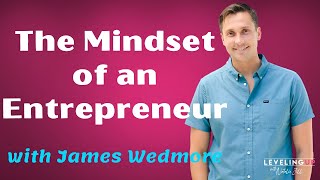
This is a YouTube video titled "039: The Mindset of an Entrepreneur with James Wedmore" published in January 2019. It features a conversational interview between Natalie Jill, a fat loss expert turned high performance coach, and James Wedmore, an entrepreneur and online business coach. The discussion centers on James Wedmore's entrepreneurial journey, mindset shifts, overcoming setbacks, and the importance of service and letting go in business growth. Natalie Jill hosts and actively participates in the dialogue, exploring themes of resilience, identity, and personal development in entrepreneurship.
Hi, I'm Natalie. Jill, Fat loss expert turned high performance coach. When odds are stacked against us, how do we shift and create everything from nothing? How do we level up when we aren't feeling it yet or we've had a big setback? On this podcast, I'll be talking to some of the most inspiring and courageous men and women on this planet who at their worst, learned how to achieve success greater than they ever dreamed possible. Leveling up and creating everything from nothing. Everything that James Wedmore does in his business, from making videos to coaching, he describes as fun. He says that anything that isn't fun, he just stops it, drops it, or delegates it. He leads with play. And more and more of his lifestyle is about fun in and out of his business. And he strives to walk that talk every single day. And for 10 years, James Wedmore has taught entrepreneurs and online business owners how to leverage the power of online video and YouTube marketing to reach more people, share their message message and convert more customers. And he does it while having fun. In 2016, James made a massive shift to focus on a big gap missing in the marketplace. The mindset needed for entrepreneurship. He launched a totally woo Woo podcast at the time Mind you'd Business podcast and his signature program, Business by Design. Today he helps coaches, experts, content creators and authors not only to craft better marketing messages, but also how to ditch the hustle mentality and create success from the the inside out. Join in today and learn exactly how James Wedmore levels up and has created everything from nothing time and time again. James is amazing at leveling up. I have watched his career go from six figures to seven figures to almost eight figures in this last year, even now. Incredible. And I have been dying to talk to him to understand exactly what he's had to let go of, how he's had to change his thoughts, take different actions so he can continually level up. James, thank you so much for being here today.
Yes, thank you so much for having me. I'm excited to be here.
Yes. So, James, we talk a lot on this podcast to people about how they had a shift and create everything from nothing. And what's so interesting about you is I've watched you shift and change so many different times. Reinventing yourself, recreating, thinking bigger. Take us back. Like, how did this all start? Start? Like, what was your first entrepreneur venture and what was the mindset it took? And then how did you keep going from there?
Yeah. And if we went back, I'd be taking you back 11 years.
Okay.
And to about this time November December of what would that be? 2007.
Okay.
Right. So, yeah, yeah. So. And if I went back in time to that guy and said, hey, kid, here's all the things you ended up doing, that kid would not believe any of it. No way. Don't believe it. Not possible. I'm a little excited, but at the end of the day, be like, not me. Because I remember back at that time was when I got the first. Got bitten really, with like the. There was the entrepreneurial bug and then there was like the online entrepreneurial bug. And I remember going to one of my first events and I took my dad with me because I was too nervous, too shy, too awkward, too introverted to go alone. And we sat in one of the back rows and we watched somebody speak. And I'll never forget, my dad nudged me, like, kind of did the elbow. He goes, he points up and he goes, one day, that'll be you. And I remember how it was just, you know, speaking to, like, one day that'll be you speaking on stage, kid. And I remember, like, it sent me into a panic attack. It's. It gave me so much anxiety. And it's very interesting today to have an audience and a following and. And hear people say things like, well, that's easy for you to say, James. That's, well, you're this. And it's so funny because you just kind of chuckle. Because most people, and I would say most, like 99.999% when they're comparing themselves to others, they're only using what they see today for that comparison. Not the 11 years of the failures, the fears, the worries, the doubts, the low self esteem. All the stuff that I had.
Yeah.
That I was bringing into, hey, I want to be an entrepreneur and I want to start a business. And that's the story behind the story. So the real simple version is that I was very stubborn in that I never wanted to get a job. And so I graduated college with a degree that my parents spent all this money on and very grateful for them. And then I tell them, like, I don't want a job. I don't want. I want to do my own thing. I didn't know what to do. So I at least became a bartender, which doesn't make a lot of sense other than it accomplished two things for me. Number one, as an introvert and being very awkward, very uncomfortable, like, around people. I saw the bartender as the person that just could just got to stand there and everyone would come to him or come to her. And I was like, well, that solves that problem. And if I get better at it, I'll make more money because I'll get more tips. And that was my first, like, brain shift of, like, I never wanted to be limited. I think that's something that all entrepreneurs agree with, is that we never want to be, like, limited in our potential. We're willing to take a hit now financially. Like, in other words, we're willing to work for free for a year if it means exponential possibility in the future. Right. Versus, like, hey, could I just give you a salary? But it could. And this is just what you do for the rest of your life. But it's fixed. No, I'd rather just be an entrepreneur. So I started there and I hated that as well. So I started a mobile bartending business where I just started taking my shakers and bottle openers to private parties and weddings and started, you know, just getting people drunk at their party and was getting paid for it. And it was all of a sudden making more. And I was learning how to market and build a business, even though it was just one to one.
So you really didn't have this, like, long term vision. You just knew how you wanted to feel and what you wanted to be, like, doing with your day, basically. Like, I want to make more money. I don't want to work for somebody, and I want people to come to me. That was like, as long as your vision went. Is that correct?
That is absolutely correct. And I cannot stress how important what you're asking is, because I was actually in a breakdown, like, really beating myself up. Like, what is wrong with me? I don't know what I want to do with my life. I don't have it all figured out. I don't have the plan. And I think that's where I see a lot of people. As they say, I don't know what to do, what's my purpose, what's my passion? And they need the whole plan before they can get started on it. And it doesn't. Life doesn't work that way. You just need that next step. And I know it becomes kind of cliche. A journey of a thousand steps, be thousand miles, begins with a single step. But I think some of those most cliche, overused Instagram quotes have the most truth to them. There's a reason why you hear it over and over and over again. The question is, are you gonna listen to it and operate from that way, or is it just something you're gonna double tap and keep scrolling?
Yeah.
And so I at least knew it was like it's almost like if you're lost in the middle of the desert and you want to get home, the first step is really to orientate yourself into the general direction. You know, you look at the sun or the North Star and you go, at least I'm just going to head west or I'm going to head north. And that's what I at least told myself I was going to start doing. I didn't want a job, so at least I'm going to do something where I don't have a boss. I don't not told what to do. And to skip all the other stuff of building up a bartending business. And I was actually really successful and had a lot of fun with it, but I knew, I knew. And where you. That knowing is never in your head, it's in your heart. And even for a dude to say that maybe some of the guys are going to, you know, like, oh, roll their eyes and oh, gosh, you know. But like everything that has worked out for me in my life was because there was a knowing that came from a feeling and not from a thought.
Yeah, but it sounds like it's a knowing or like a general knowing, not like all the steps are not revealing themselves.
Don't have all the house. It's a nudge in the right direction. No, no, no, no. Head, head west, Head southwest. Okay. And so I knew I'm not going to be doing this thing forever. This isn't my life now as I carry a bar and a shaker to people's houses on a Friday night and pour some rum and Cokes. And so I said, what is the next step? And the short version was, is that I said, I'm going to teach people how to bartend. And In November of 2007, I registered the domain Bartend for profit. And I made a game for myself. And the game was because I was just, I was just doing the bartending and I was, it was making me enough money to pay my bills and stuff. And I said the game is, is to make more money or replace the revenue, the income of the service work that takes my one to one time through having and facilitating an online bartending course where I can teach people all over the world how to do it. And that was the beginning, the beginning of the end really, where like I was just hooked. Like I wanted to learn everything, anything about traffic, about copywriting, about building an audience, about selling online products. And that was where it started. And I made my very first sale on April 18, 2008. It is a day I will never forget. And anybody who's ever that first sale, it's life changing because it's the proof. It's the proof that all the work and the progress was worth it. And let's just keep going. And that's all I needed.
What's so crazy too is you just said 2008. That was like in our massive economic downturn too. So, like, that didn't even affect you.
Yeah, no, because that was the thing was like, hey, you need a job right now. I'm going to show you how to become a bartender so you can make more money.
Amazing.
Learning how to become a bartender. Yeah.
And I'm also hearing, like, from you that basically you really kind of had gratitude and did your best work in wherever position you are. So, like, what I mean is, you knew that your end all be all was not being a bartender initially, but like, you put everything into it, which allowed you to create and teach from that space versus I think a lot of people, they're so focused on what they think they should be doing in 10 years or whatever that they're not actually being present and doing a good job with where they are right now.
That's huge. Gratitude is a really big thing for me, and I haven't deepened that practice back then as I have as much today. But today I teach and preach about the idea of just appreciate everything and expect nothing. And I think one of the best ways we can approach our life and approach our business, because one of the problems here is the more of the entrepreneurial DNA that you have, chances are the more of a visionary you are. Everything that's good also has a shadow side to it. So being a great big visionary means that your focus and your eye is on the future. It's on what you're creating. You have a vision for the future of this podcast. And what the shadow side can very easily pop up into your existence is that when you keep focusing on what you want, it starts to create a contrast of where you are and what you have right now. And we start to interpret that as wrong or bad or broken. And that can be very detrimental because you take that with you wherever you go. And then there's. You fall into that trap of, it's never enough and I'm still not happy and I'm still not grateful. And then there's never, like, satisfaction. And so, you know, I've learned this much more today in hindsight. But a big lesson for me back then, if you want to talk about shifts, was patience, was trust. To realize, whoa, whoa, whoa, whoa, whoa. In order to get what I want, in order to get where I want to go, there's something here in what I'm doing now that I need to learn. It's almost like for me, playing a video game where I've got to learn the lesson. I've got to level up here, I've got to master this level, and then I can graduate to the next one. Just like school.
Yeah.
Lesson I'm here to learn today in this, as a bartender, what was I here to learn? I was just here to learn bartending. Okay, great. Then as a mobile bartender, I was there to learn some of the basics of marketing, Then to take it online. There was so much I learned that I'm using today in my business that I learned 10 years ago. And we're so busy going, it's not working. It's not where I want to be. It's not happening fast. I'm going to say, whoa, what seeds are you planting today that in six years from now, if you stay committed and you stay on this path, are going to be growing into fricking redwood oak trees?
Yeah.
You're tearing them out in two days because it's not there already.
You know what else I'm hearing from you, which is actually, I don't even know if you realize this. I don't believe you just chase the money in these things. I mean, you really looked at. You were in the moment, doing what you're doing, and then you would solve the next problem. So, like, you're bartending, and yes, it makes more money to go mobile, but you're also realizing there's a problem. People have parties, they need a good bartender. So, like, you're solving that and then it's okay. You economics is changing. The market's changing. Like, people need a job. I can teach them. So you really were coming from a place of service.
Also, I'm so glad you said that because I cannot stress enough to anyone listening. And this is, again, I've been doing this a long time and teaching a lot of people, chasing the money, fastest way to keep you broke.
Yeah. That's so good. I'm so glad you said that.
As entrepreneurs, we are in no matter what it is that we're doing, as an entrepreneur, we are in the business of solving problems.
Yeah.
That's where our focus is. So a lot of people say they start a business for the wrong reason. They start a business and we all do it. But like that, if you start a business for this reason, just Already assume that that business is going to be a failure. It's just like, why do you want to start a business? Because I want to start a business. Not enough. It's not good because I don't want it. I don't want to work for anybody. And that's where I was coming from originally.
Yes.
And that's where I saw a lot of struggle in the beginning. And. And that's chasing the money is saying, oh, I want all this stuff for myself. And that's great. But people aren't just going to give it to you because you're asking for it.
Yes.
Instead, when you're looking to solve the problems that are needed to be solved, you're going to be far more effective. And I think I'm here today, still relevant. Where we both have, you know, been in this industry a long time, you see people that come and go and, and disappear is because it's never been about the money. The money is the byproduct of service, and the service is solving the problems that the marketplace needs.
So good. So good. Okay, so now bartending world, you're making money online before everybody else is making money online. Like you really, you're at the cusp of it in 2008 when you start doing this teaching, how does that go to YouTube? And I mean, you just kept evolving. Like, what was next?
I know, I. Well then it was the same thing again. So I call this whole thing that we're going through the leapfrog effect. You want to get to the end of the movie without.
Yeah, yeah.
That's the journey. Like if it cost half a million dollars to go back in time and just watch myself again just for the nostalgic. It's. You know what I mean? Like, yeah, I would do it because in hindsight I'm like, that was the good old days where I was like, I was living in my parents basement. Yeah. I was like drinking Red Bull all day and 14 hours a day. But I was like hustling and figuring it out and like, that was the good old days. And it's so easy for us to just again beat ourselves up and be impatient and angry and frustrated. And I'll tell you this from my philosophy and how I operate. Putting yourself into a negative state. Anger, frustration, fear, worry, anxiety is the biggest culprit. It's the biggest factor that's preventing what you want.
Yeah.
It's pushing away what you want. And it's going to slow down the process. When you fall in love with the process, this is part of the journey. If you didn't want, if you don't want this, then don't do something for yourself. Just go get a job. And I say that with full respect. And there's nothing wrong with a job, but signing up to be an entrepreneur, and I don't know how many of your listeners actually are, but to sign up for something like that, but to not sign up with what comes with it, which is like the uncertainty and creating in the unknown, that's not being an entrepreneur.
Yeah. And then how do you. And I don't want to skip ahead too much, but like, how do you let go of one thing and be okay with it? So like, what I mean is, like, you put your heart and soul into creating a business that like with the. I'll take it even back to the bartending, like you're gonna now create a program to teach people how to do it, but then you move on to another step, another stage. Like, you just let that one go. And is that a struggle? The past?
Like, no. No, it wasn't for me. Why it is a struggle for people is because people attach their brand and their niche and what they're doing to their identity. And so they say, I am this thing, okay? And then as soon as it's attached to your identity, you're in trouble.
So you can't attach it to your.
Identity because you can't be anything else. And you're not doing it consciously, you're doing it subconsciously. So the more people would go, oh, you're the bartending guy. Oh, the bartending guy. And then I go, yes, I'm the bartending guy. And then all of a sudden I say I'm something I can't, you know, because in my mind I've reinforced this idea. And so even then as the teaching bartending, I guess, like there was just such a long term strategy that I knew that as well was not where I wanted to go. I didn't know where I wanted to go, but I knew that wasn't the final destination. I knew that was another leapfrog step in my journey. And so I wasn't really attached to people needing to see me as a bartender. So that's why I see a lot of people when they're either pivoting or changing from this. Why? It's a struggle. A lot of it is much more internal, which is I've been known for this. People see me as this person. I get significance for being this. And I'm afraid what happens to me, what it means about me If I no longer have that attached to who I am.
Yeah. Oh, I. So many people go through that.
Yeah. Yeah. And so anyways, the short version to take you through it is. Is I was going to conferences and events, and I have a film background, so I love film is my favorite thing. I'm just. I love making videos. I love it. I do it still today in my business. And I saw someone sitting at a conference, and this. This was such a profound yet simple moment. And we've all had moments like this. I believe if we're teaching or helping or influencing in some capacity. And there's this woman just struggling verbally. Like, it was so loud. Like, grunts and moans and, you know, audible. And I'm like, what's going on? She's like, I'm trying to get a video uploaded to YouTube and I can't figure it out, and I need to do this by lunch. And I'm just like, move over. I got this. And then just like, you know, my hands are whizzing across her keyboard, right. Touching this and adding this. Done. And her eyes were, like, white as saucers, and her mouth just drops open. And I was like. I was surprised. I was like, what? What? What was that valuable? Like, what did that help? And she's like, that was incredible. Oh, my goodness. Thank you. This is exactly what I needed. This was so helpful. And I did the thing that I think smart entrepreneurs do. They. They ask great questions. And the question, is it. Was it really that valuable? Is this something you would have paid for? Are you kidding? Yes. And that's where this, like, pops up ahead above my head. And I said, well, I can. Then I can teach this to other people. And that's where the idea for me creating a program called Video Traffic Academy back in 2011 was born. I launched that with a mutual friend of ours, I believe, you know, Lewis House. And we launched that together. We did over $400,000 in sales in less than 30 days.
I was one of those sales. I wasn't the first. I. That's literally how I grew my YouTube. I didn't know anything about YouTube, and I got your program.
Yeah. So I had been using it with myself and teaching some other people and clients and stuff. And Lewis and I partnered and created 400,000, and for a 97 product in 30 days, it's gone on to do millions of dollars. And it put me on the map.
As the YouTube guy.
The YouTube guy, yeah.
Bartender to YouTube.
Yeah. I'm gonna deepen the answer to the question of how do you let go? Because I don't really frame myself or position myself as a YouTube guy anymore. Might then go, well, how did you let go of that? And I'm gonna give you the answer in a nutshell.
Okay.
There's the surface level of the problem I was solving for people like you who would have bought, which is I'm going to help you get more views on your videos on YouTube. That's the surface level.
Yeah.
Behind all of that, what I was really doing, and I really want people to get this, what I was really doing was I was helping empower entrepreneurs to be seen and to be heard. And so because that was much more about what I was discovering, my purpose and like, why am I doing this? Why am I showing someone how to do this? And I was asking myself those questions because, look, a version of the story which, unless you want to go down this, that I don't tell too often, is after I made that $400,000, I. I fell into a deep, dark depression.
Oh, why? Because. Related to that, do you think?
Yeah, related to that. Because everything I had wanted that, you know, that kind of impatient frustration. Why isn't working? Let's work faster, work harder. Everything I had wanted for years now, from 2007, 2008, 9, 10, 11. So four years of wanting this to all pay off. And it did within 30 days. I got everything I wanted in less than 30 days and it came flooding in. And everything subconsciously that I thought was going to change didn't.
Wow, that is powerful right there. I hope everybody's listening to that because this is a very false thing that people have.
Yeah. Oh, very real. Absolutely. Most people are living their life conditionally. Conditional living is when I have the time, when I have, when I have the resources, when I have the following, when I have the, when I lose.
The weight, when I look like that.
Then I can do the things that I need to do and then I'll be happy, then I'll be successful, then I'll be fulfilled, then I'll be enough, then I'll, then I'll be worthy, then I'll be deserving. And that is the most back ass words approach to our lives. This is why people stay stuck. Because if you continue to act and operate from your current circumstances, which your current circumstances are the result of your past thinking and past actions. If you operate today from your current circumstances, which are created from your past, you repeat your circumstances, which means your past is creating your future, which means your future stays the same as your past, which means you Stay stuck. This is why New Year's resolutions don't last. This is why people say, I want to change, I want to do different. And they stay stuck no matter what they do, because they're acting, thinking, behaving the same way that they've been acting, and yet the same. So I, living up to that point, was telling myself that this will finally make me enough. This will finally make me successful. This will tell me I finally made it. And it didn't. Wow.
That's a hard pill to swallow, though.
Because it's, like, very scary to me. It was very scary because then what's the point of going on? What's the point of continuing down this path if it's still not enough now? And that's where the depression came in. It was just complete, utter lack of motivation. I went from the most hardest working person that you'll ever meet to not wanting to get off the couch and just, like, smoking pot and drinking and playing video games all day as you're.
Making all this money.
Well, it had been made, and now the launch is over and I'm just sitting. What's the point? To keep going.
Yep.
And here's what changed everything. I wish I could say it was overnight. It was more like a little chisel here and a little chisel there, and it just deepened over time. But we put the program out, and I did not expect any of this to happen. But people like you would write in and say, oh, my goodness, I just got 20,000 views on a video and hired me, or, oh, my goodness, I just doubled my business, or, oh, my goodness, this worked. And despite how upset and depressed I felt, there was something else I was feeling. And it was a feeling I'd never really felt before. It felt really good. And it was a feeling of impact. It was a feeling of, like, ultimately, what I labeled as I matter, I'm making a difference. It was a feeling of fulfillment. And I was like, what is this? And I'll tell you right now, for anyone that's like, I don't know if it's anyone. I can only speak to myself. But a lot of people I attract, I tell it to them. And I'm sure you can speak to this as well. But it is the secret. It is the secret weapon. It is your rocket fuel. When you are driven and fueled by the impact, the feedback, the testimonial of the work you can do for people, when you drop down and operate purely from a place of service, you can become more unstoppable than anyone. And that's what it took time to really realize that and deepen and master that. But that's where it all led to. And so over time, it got to a place with the video stuff where I was like, I can help people more than just getting their videos on YouTube. This can go deeper. I can make a bigger impact life. And so there was no problem whatsoever letting go of an identity of, you're the YouTube guy. Because then in my mind, it was so small compared to the work I really wanted to do.
That makes a lot of sense. I totally get everything you're saying, but it's also. My question, too, is like, but then at this point, it's almost like free money. So, like, you could evergreen it and just have ads or whatever. Like, you like, fully. Like, maybe you don't put your. Your energy into it, but, like, do you literally, like, stop promoting it? Do you sell it? Like, I think people do get stuck on that. Me included. Like, wow, I put so much into creating this. I can't just let it die.
Yeah. Well, so again, this is a great, like, little trick that I always use.
Okay.
Mentioned it earlier, but it's. It's. I always create a game and for myself. And so if you were in that, you know, you're kind of in a little conflict. I don't know. I don't have a better word for it, but you're kind of like, okay, I have this vision in this idea for something else that I want to do. And then. And that's usually a feeling, right? So if you remember, it's like, follow that feeling. Because that, like, your heart knows. And this is guy. So it's always cheesy when I say it, but it's like, it's so true that, like, listen to that. And then it's your head that goes. But you spent all this time on that.
Yes. Yes.
Yeah. So here's where I play mediator to my heart and my mind.
Okay.
Cause I want them to both get along. So I say, okay. So you did put a lot of time into this. I agree. You know, that's. That's a fact. We can't argue that you did. And so then I start to go into things like, well, how much revenue or customers or sales would we need to get in order to, like, really feel like we got the work out of it? And maybe then. And then whatever that is, which. There's no right or wrong answer. It's just for you. I say, okay, so the game is. Let's say. I say, well, I'd like to make, you know, I'd like to get a thousand customers into this program. And I try that on, I say, okay, so I will focus my efforts to get a thousand people into this. And once I get a thousand people, then I'm going to spend my time here.
Okay.
You know, a lot of them both happy.
You kind of let both.
Exactly. Because, you know, you hear people talk about I'm a multi passionate entrepreneur. I feel like I'm going to sound like a jerk at times. But here's one of those times that to me can be very easy way of basically saying I'm a non committal entrepreneur.
Oh. And it also confuses the heck out of customers. I will say that.
Well, it confuses the heck out of customers. But it's. Isn't that just a euphemism for I'm not committed to one thing?
Yeah, yeah.
I. Because I found myself.
You're stabbing me right now, by the way, James. This is my forever dilemma.
So I'm feeling it.
I'm feeling it. I need it, though.
Well, and, and I'll, I'll clean it back up in a second. But I like, you know, we want to people sitting a little bit of that, like, shock.
Yeah.
Moment. You know, look, there was a time in my life where I had seven different bridges that I was building at once. There was seven different projects. And there's this concept out there, you guys can go Google it, called context switching. And it's the idea that the more projects you have, obviously your time is spread thinner. So if you have two projects and eight hours in a day, most people go, oh, I can spend four hours on one project and four hours on the other. And it's like, actually, that's not true. This has been absolutely proven and tested that there is like a minimum of 10% per project that gets lost to this concept of context switching, which is the time it takes your mind and your brain to get out of focus, out of flow, and then back into it. And all this time that's wasted by working on multiple things. And so for me, what this comes down to is like we can call ourselves whatever we want to call ourselves, multi, passionate, whatever, but is that hurting you or helping you? And that's what this is about. It's not about right, wrong, good or bad. It's what's effective and what's working. And we always want to check in with the vision. When I talk to entrepreneurs, no one ever talks about their vision. It's something really too sexy to spend time on. But it is absolutely critically one of the most important things. Because then the vision becomes the litmus test for all the decisions that you make. Where are you going? That's the destination. We don't want to work to the vision. We want to work from the vision. We want to make decisions from the vision, not from where we are now. And if you don't have a vision, it's going to be very easy to get scattered, distracted and multi passionate.
So good. So good. I hear everything you're saying. I needed that message too. I. You know, it's funny, I always joke when someone says, what do you do? When I'm at a party or wherever, I always say it depends on the day. So that was just a better way.
Of maybe whatever I want.
Multitasking it.
Yeah, yeah. And I get that. Look, most people don't even understand what we do, so I don't even bother answering that to what I call normal people that you say.
You say, well, what year are you asking about what year exactly? Yeah. Okay, that's. This is awesome, though. You're really on point. So. Okay, so one more question about that before I go to the next level that you leveled up again. How so then when you make that decision and do you literally just let it die? Like if you had built. Like, did you start. Stop. You just stopped everything with it or did you sell it or do you just, like, you just ignore it? Whatever happens with it, happens with it.
I did. Yeah. I did all those things.
Okay.
I had a. I had an arm of the business that was doing over a million dollars a year.
Okay.
With a business partner. And it was so not lighting me up at all that I handed it to the business partner. I said, I don't want anything for it because I don't even want to take the time to go through a way of selling my share or whatever. I just want to be relieved of it. Where I operate from. Because again, I'm not chasing the money. Yes, I'm chasing. Which is what we're all chasing, actually. People. People are chasing the money. And then you think you're chasing the money. And what you're really chasing is the feeling behind the money.
Yes.
Money will bring you. And so again, what a gift for me to go through a depression like that. I call it James's great Depression. It was the great Depression. And we learned from our mistakes, history, not to repeat our past. And I learned that the money isn't going to give me what I truly want.
Totally.
What a gift. That's a lesson that money can't buy. And so today I chase the feeling. And the feeling I'm chasing is to change someone's life. I am out every day looking, seeking, hunting. How can I change someone's life? When I get on this podcast, it's can I just help one person, even just one degree, change, change thinking. And that's how I know how to change is. And we can get into this if we really want to talk about up leveling is if you were to say, well, James, how are you changing people's lives? The first thing I say is I'm actually not. Because that's the most beautiful thing about changing a life is only you can change your life.
Yeah.
So I can't actually change your life. Really consider how hard it is for us to change. Come on. How. How possible is it to change somebody else's life right. When we can change ourselves, we going back to our same habits and patterns and behaviors. But what you can do, which will allow for an individual to have their own life be radically transformed and shifted, is to be able to change the way they think, the way their perspective and their beliefs about their. Their world can have a drastic. And I can give examples of this as many as you'd like, but can have a profound and lasting impact on their quality of life. And so this is the interesting thing with like content and information and even like a podcast, right. Is. And I have a podcast with over 200 episodes is we're constantly giving more and more information and content. But if you're not where you want to be today, do you really think it's because you have a lack of information? Like the information you need doesn't somehow. And there's no strategy for getting it. You really think that's what it. What's going on? No. Here's what it is. There is three things. There's where you are point A, there's where you want to be, point B. And then there's what's getting in the way. And what's getting in the way is what I would simply label as resistance. And resistance is a thought or belief or a perspective that counters the outcome. We hear it all the time. Just. Just go on Facebook and watch all the buts people put after their goals. I want to be successful, but I'm afraid of failure. I want to build a following, but I don't want the rejection. And we're full of it. We're full of all this resistance, and we're the only ones getting in our own way. And a lot of it comes down to our thinking and our believing about the outcome. That's why I said earlier, you don't want to create to the vision. You want to create from the vision. There is the version of you that already has all the things that you want, that, that thinks, acts and believes very, very differently than the version of you right now. Which is why that version has all the stuff you want and you don't. And so until we change our thinking and until we change our perspectives, nothing's really going to change. And at the end of the day, 11 years of leveling up, that's what I had to continue to do. And this is the piece I really want people to get. Really, really want people to get is most people think leveling up means I need to enhance me somehow. And that is a very dangerous strategy because for most people it presupposes that there's something wrong with you now, that you're not adequate enough, you're inadequate, that you're not enough as it is right now, that you're not worthy enough, deserving enough. And so what we do, and this is what I spent the first four years of my life doing, which, which wasn't. Or my entrepreneurial life, not my actual life, but my entrepreneurial life was. How do I prove? How many of you are trying to prove something? To who? Who are we trying to prove?
Right. Who is this person?
Yes, to my sister in law, you know, we're trying to enhance ourselves. And that is the broken backwards strategy. It's conditional living. Once I have all these things, then I'll be enough. It's backwards. What it really is, what I really discovered and what it's continually doing, what I'm continually doing today and which allows us to continue growing is the exact opposite. Leveling up is about letting go. It's all completely about letting go. Instead of spending your years trying to figure out strategies of how to be worthy of success, anybody listening to this episode and my voice right now could choose in this moment to let go of the belief that you are not worthy of success right now and your life could radically transform.
So good. This is really, really good. Yeah, it's not. It's because everyone's always looking for like, what do I need to add, what do I need to purchase, what do I need to like, like who do I need to prove? And you're right, it's letting go of those beliefs. It's like it's even letting go of those businesses that, like you said, like letting go of the YouTube or the bartending or Just letting it go.
Yeah. Yeah. Well, and, and, and another reason why it's so hard for people to let things go is, is because it's serving them in some way, you know, gives them some sort of certainty. And if anyone here who is an entrepreneur, it's, it's interesting because there's a lot of people that talk about the fear of the unknown, a fear of making mistake. They don't take action because they're afraid they're going to make a mistake or I don't know what the next step is. That's the game you signed up for.
Yeah.
There is a direct proportion in the success of the entrepreneur and their ability, their threshold to live, play and operate in the world of the unknown. No one knows how this is going to go. We don't know how this, what's going to happen with this episode. We don't know what's going to happen with our business next month. And I'm talking about both Natalie, Jill and myself. If we launch something, promote something post, we have no idea how it's going to go. Over time we get a little bit more totally of how it will go. But none of us know. We, none of us know the difference between the successful entrepreneurs is they don't let that stop them. They say, well, only one way to find out. And they do it are waiting for all the answers before they get started. That's backwards.
Yes. That's so good. That's so good. Okay, so, so much, so much good information in here. What did you personally have to. You mentioned a lot of things, like you have to change, you know, your thoughts, to change your actions, to change a lot of things like, and your beliefs. What did you have to change personally to go from like the six figure level to the million. So now like, you know, you're going even higher. Like what are some things you personally have changed?
Yeah. So I'll give you some numbers here and I'll tell you exactly what happened. I went in one year, I did, I think I did it. I had about $250,000 a year. Year.
Okay.
And I went to one point. Wait, what was it? It was about 400. 400. Okay. Sorry. A couple years ago, this is like 2014. So I had about four. And again, by the way, guys, I talk about numbers because numbers are the, the byproduct and they're the scorecard for business and they, they're, they're the, you know, the, the aftermath and very good indicators of where you are in the business. Not because, oh, that's my bank account and I fill my pockets with it. I am chasing money. But because it really shows where somebody is at. It's not about that. It's really about saying, giving some context of where I was. Okay. $400,000 a year business. And it had been growing about 10 to 20% year after year. Very linear small thinking growth. That year I took it to 1.2 which is just about 3x the business. And I'll tell you in a moment the one thing that happened that changed everything. One.
Okay.
Wasn't. Oh, oh, tell us the secret strategy. What's the. What's the way to. And that's what everyone's seeking for. Seeking and looking for. And it had nothing to do with some secret strategy. But I'll tell you in a minute. Then the next big leap year, quantum leap in growth has actually been this year which is really exciting because it's end of the year right now and I get to reflect on it myself. And we went from 3 million to just over 8. These are huge.
Jump. Yes.
Huge fricking jobs. Okay.
Jump. Yeah.
So this was about 2000. Let's just call it 2014. I don't know, whatever. The year doesn't really matter. But it was a couple years ago. 400k to 1.2 first year. 7 figure business and tripled revenue. One thing happened. I discovered how much my marketing and how I was showing up was still stifled and limited by a huge massive concern and fear of what other people thought of me. My strategy in my business up until that year was how do I get everyone to like me? And the funny thing is when you're really good at that, you can get far. I'm good at getting people to like me. If I want you to like me, I'll probably be successful. Now I'm not trying to say in conceited way but okay, if I need to get you a gift or you know. Right. But that. But at what cost? Right.
Yeah.
What cost of my happiness. Okay. And of the growth of the business when I'm operating from. It's not really a need to be like. But it's a fear of what would it mean about me?
Yeah.
Not liked.
Interesting. So you really a people pleaser thing. Did you now did somebody point this out to you? How did you figure that out? And then what did you have to do to change that? Because that's a very real thing that I think a lot of people struggle with.
I. Yeah. I didn't have anyone pointed out to me. I wish I did. I Would have probably realized it sooner. I don't know how it happened. But that's the beautiful thing about being an entrepreneur is like, this is the ultimate playground for personal growth. And I was doing goal setting and I was looking at what I wanted to go, and I was really disappointed that I was growing so slowly, yet I was doing everything right. And that might be a common thing that your listeners are saying is like, I'm doing all the right things. This isn't about doing, folks. This is about being. And I wasn't being the person that had the million dollar business. I was being in fear. I was being afraid of what other people thought of me. And I really had to start to take a hard look. Now that's a big thing too, is like, you guys can all be your own teacher, you can be your own coach if you just get present to what's going on in your head, right? And I started to notice it. And the funny thing that I came to that shifted everything is I started to ask myself, well, what am I really afraid of?
I love that.
And I was afraid of people not liking me. And then I said, well, what would it mean if someone didn't like me? And that whatever that answer was, you know, which comes back to the worthiness and the enough stuff is what really scares us. You know, people say they're afraid of judgment, and I'm gonna, I'm gonna actually challenge that. You're not, you're not at all afraid of judgment. You're afraid of what that might mean about you. If someone says you don't know what you're talking about, what does that mean about you? That you're not cut out for this good enough. That you'll never be successful. We're afraid that other people are going to validate and affirm our deepest, darkest.
Fears about ourselves, which is very common too, with entrepreneurs like that imposter syndrome.
Oh, yeah. Oh, totally. Yeah. So it goes, you know, it goes deep because entrepreneurs are a weird breed anyways, you know, so, you know, there's a lot of stuff there. And so what flipped it for me was I started to laugh, realizing, wait a second, I can't be the only one that feels this way. I can't be the only one on the planet that thinks this way. I know other entrepreneurs do. So wait a second, does that mean I'm afraid of a bunch of people that are also afraid? I'm afraid of being judged and whether or not someone else will like me. And I'm afraid of a bunch of people that are just as afraid as I am. What? And I'm willing to not grow my business because I'm concerned about what someone who's just as afraid as me is about what they think of me. And I'm gonna let that be more important than where I want to go. And what ultimately came back to is, is this really a matter of being liked by everybody or is this a matter of helping the people that I need to help and helping the people I'm here to help. So what's more important? Stay small, not rock the boat. And only put out the people pleasing comments and offers and copy that makes everyone agree. Which just keeps you in vanilla. It keeps you in the noise. Or be willing to have the courage to step out by standing up for what I believe in despite whatever anyone thinks and serve the people I'm here to serve. I'm not here to serve everyone. Neither are you. Neither is anybody listening. But there are people that I do need to reach and I'm willing to let everyone else judge me. Call me an idiot, call me stupid, call me whatever they want to call me. Because if it's truly more important for me to serve, then I'm going to focus on that and not waste any of my time worrying about me. Because if you're here to serve, then serving is selfless. And if you're concerned about what people think about you, you're being selfish.
Yeah, that's so this is really good. I hope everybody's really hearing this because I think this is in the gap. And not only that, when people have ideas and they want to start or they want to go to the next level, it's this interesting how they'll start polling people like should I do this, should I do that, Should I? You know, they start really asking for other people's opinions too and then they're getting more of that and then they're wondering what's holding them back. But what you said is so on point.
Yeah.
It's letting that go and knowing that you are serving and focusing on that.
Yes. So to get from 400k to a seven figure business to triple revenue and one year and then double that the next year, what I needed to let go of was the need to be liked, was the need to be cool and be the guy. Everyone was on the same page. Oh, James is nice, a great guy. I had to drop that knee. And when I did that, it was like the floodgates opened. Why? Because I wasn't holding back in my marketing, in my messaging, how many times and you just notice this. When you're about to post something on Instagram, does your thumb hesitate? Do you hold. Wait a second. Let me read that again. Do you almost put it through their filter? I'm like, are they going to disagree with this? And you're asking those questions, what if they disagree? Right. And then. Okay, let me tone this down a little. No, f that. Crank it up more.
You know what's funny, too, is people are actually looking for definitive authority. Right. They're not looking for wishy washy. That's not certainty. So by taking a stand on something, you're actually going to attract the right people anyway.
Yes. And you know why they're going to follow you. And this is. This is a totally different conversation, but it's so great. The reason they're going to follow you when you say that thing, Natalie, that rocks the boat and challenges people, polarizes your community. The people are going to follow you because they say, I admire your courage. I admire your conviction and your ability to speak your mind and speak your truth, despite what people might say. And that's why I follow you.
Yeah.
People aren't going to follow you because you act out of fear and scarcity and doubt and worry. They'll follow you because you're being a leader. And that's what being a leader is. And that's a funny thing, which I said is a different conversation. But so many people come to me in marketing and say, how do I build my list? How do I build my following? I want to build a following. I can't build my audience. I can't build my following. I say, well, it might help to start by being a leader. If you want a following, you got to lead.
Yeah. And I think a lot of people do start, and then they get that one negative comment and they. They haven't decided what you figured out. So they are letting that dictate so good. I remember in my early days, like, starting obviously, in fitness, but when I. I would be arguing with people online about, like, somebody say, your. Your abs are airbrushed, and I'd be like, wasting my time. Somebody who has, like, a plant as their profile picture, like, fight online. Like, how many hours did I spend, like, fighting with a hater? Like, it's ridiculous.
Oh, my God.
So I totally hear what you're saying. And never in the history of haters have they ever changed their mind and said, you're right.
So here's something. A little tip or trick for both you and any of your listeners is you can engage with your Haters. And it's not a waste of time if it's not affecting your emotional state. Because something to consider is that your audience isn't just watching what you post, but they're watching how you respond and deal with the haters.
Totally.
And so when you do take the time to engage the way that you want your followers to really admire, then you're gonna just strengthen and deepen that relationship with your followers. So if someone says your abs are. Are airbrushed and you just say something back that's like, truly you that doesn't get you triggered. It isn't like, no, they're not. You know, your existing followers be like, whoa, calm down. Like, yeah, now. But if, you know, if you just made a joke about it or you said something that was like, well, you know, everyone's entitled to their opinion, so thanks for watching. You know, your audience sees that.
Totally.
And that's the opportunity that we have as well, to really, you know, strengthen our relationship with our audience.
Yes.
Okay. You want me to go into really quickly what. What I had to let go of?
Yeah.
Okay. So last year, and this one actually did come down to a coach that called me out on it, and this was really good. We wrapped up the year at about 3 million. Very proud of that. Biggest revenue number to date. And I was asked, what are my goals for the next year? And my response was, you know what? Just the same works for me. I'll just do 3 million again, because I'm really happy with that. And he pushed me, and that's what a good coach should do, is like, the whole point of working with any type of coach or mentor or group coaching or anything is to be surrounded in an environment that pushes you beyond what you currently think is possible for yourself. And I'm so grateful that this person pushed me, because what I discovered very quickly is that there was something there for me as to why I didn't want to grow more, why didn't want to keep growing. Because when you're working from impact and service, what you realize is that the money is one of the biggest indicators of the impact. The transformation is in the transaction. So the more transactions, the more transformations you're creating for people. And so I knew that reaching more people means more revenue, but it means more impact. And I was stopping myself. I was saying, I don't want to grow more. And what I found out was I began to attach stories and beliefs to what it would take to grow more. So what most people don't look at is what is the Story you are telling yourself that it's going to take you to get the outcome, the growth, the revenue that you want. It was at that point in time had become too much that I was not willing to do. And if what, what you're telling yourself it's going to take is not something you're willing to do, you won't do it.
That's right.
Stay stuck. And so what I began to tell myself was, and what I told this mentor of mine was, well, I just don't want to work more next year. I don't want more stress. I like my life being light and easy and plenty of time off. And he said the same thing to me that I said earlier in this episode for those that were paying attention. He said, james, that is you creating your future dictated by your current circumstances. And if you do that, you repeat your circumstances, you stay stuck. What we need to do instead is create from possibility, not from circumstances. And so what I had been saying was making more money means more time, more stress, and more work. And the smart entrepreneur says, what does it look like to make more money without more work, without more time and without more stress? And that's exactly what we did this year. I let go of the story and belief of attaching work and effort to revenue, which is what most people are still holding on to. The only way to make more money is to work harder, longer or faster, to sacrifice more. And I want to tell everybody, you can have it all if you ask better questions. And there are so many ways that that came about this year, but that was still holding me back. That had been, here's 10 years in business, guys. And that belief was still just holding me back. As soon as I realized, oh, I can grow, we can grow without it having to say or be anything about my time, effort or energy in the business. Yeah, why we catapulted and how that manifested physically is we've hired more people on the team, so they're doing the work for us. And again, people say, oh, well, I'm just starting out, you know, that's another. We can talk about that wherever you are, you know. But I hired coaches, so now I have an entire team of coaches that facilitate content and training for me. So it doesn't have to be all me.
Yeah, so good. Yeah.
Automation in place. We have more systems in place, more structure in place. We have smarter offers, we raise the price on things. So we did all the things in the question, living in the question of the vision, which is, how can we hit this number without it Taking more work without it, taking more time without more energy. And I sat with the question. Most people are not willing to stay, sit with the question, and live in the question. They need an answer, and if I don't have an answer, then it means I can't do it. And they pinch themselves off from possibility. But I sat with the question. I asked better question, and the answers came. And that's where we're operating from today.
So ask better questions.
Always ask better questions. That's the thing. Most people are just not asking good questions. It was. It was. Richard Bandler said, the quality of our lives is determined by the quality of questions we ask. Why isn't it working? What's wrong with me? How come it's not getting there faster? Are the worst type of questions asking to get clear on what you want and to just say, how can I get this thing in the easiest way possible with it being fun, with it being light, with it being easy, effortless. Now we're asking better questions. What is the most effective way that I could accomplish this goal without doing what I think it's going to take? We make up our minds about how we think the world is or how we think that money is going to need to come, and we have this small little radar screen of possibility. We need to expand that. We need to say anything is possible 100% of the time. If you're willing to ask the questions, ask the right questions and live in the question and live in the possibility of anything is possible.
Oh, my gosh, James, I could talk to you all day. I have, like a million more questions, but I'm not going to keep you all day. So I do have one final question that I've got to know. And I asked this to everybody. So if somebody's listening right now and they're in their own personal rock bottom, maybe they're in that depression you were in when you said you had made the money and you just weren't happy. Or maybe they're just. They can't even figure out how to make their money right now. Whatever it is, they're rock bottom. If you were to tell them three pieces of advice. You gave so many good tips on this, but three, like, top pieces of advice on what they can start doing to level up and create everything of nothing, what would you suggest?
Oh, love it. Okay. And I'm just gonna. Whatever comes up is what's gonna come up.
All right.
And I learned this a long time ago when you. When you use the word like you're in a Depression. People sit there and they say, I'm depressed, Right? Okay, if we're being very technical and very accurate here, the first piece of advice I would say is you're actually. You are not depressed. You are just thinking depressing thoughts. And you can, at any moment, including this one right now, you can choose to think a new thought. You are not actually depressed.
So stop saying I am.
Yes.
Have a different thought about it.
Stop starting to attach the identity to your identity of who you are as a human being. All you are as a human being is infinite potential that you can direct that potential to anything you want. And so if you want to direct it toward being depressed, you get what you. What you say you are. So, you know, if you think you are, then you are. So we can soften that by saying you are not. You are just continuing to think a depressing thought. And that depressing thought will then dictate how you feel. And you totally used to change your thinking at any moment. So that's the first one. The second one is because then you'd start to go, well, then what should I go? Do my thinking. Change my thinking. And here's exactly the first place. When I was very frustrated and things were not going my way, and I was at one of my rock bottoms, here's exactly what I did. And so this might help people, it may not, but it helped. And that is the ultimate thing, is to find the thought that does help you. I went outside, I was so angry. I was so frustrated, I just punched my keyboard. I was so angry. My life was not working. My business was not working. And I was gonna scream up at the stars, okay. And then I was like, okay, I'm probably gonna wake the neighbors and they're gonna call the cops. And I had this thought pop into my mind. And the thought was, I'm so grateful for this thought. It says, at least one day you can tell this story. And that was enough of a thought to get me to realize that what I'm going through isn't permanent. And that's the advice I have for people, is that really good you're going through is not permanent, that this is part of your story. And the best stories are the juiciest ones, the ones with the most conflict. The bigger the bottom, the bigger the story, right? And maybe that's just where you are in your journey. The question then becomes, and this is the part three. Can you accept that? Can you be okay with that? Can you be okay with where you're at? Choose to accept it. Choose that Even if your external world and your circumstances aren't ideal, can you then choose to master your internal state, how you choose to think and feel about yourself? Because if you don't begin thinking and feeling and dreaming and operating from a better future from your vision, then that you're going to stay at that rock bottom.
So good.
So those are my three things.
James. These are awesome. Where can people find more? I want to hear about your podcast. Where do you spend most of your time on social media if you do? And where do you want them going?
That is so nice of you. I spend most of my time on our podcast and on the Instagrams.
Okay. The name of your podcast.
The name of the podcast is the mind your business podcast.
Mind your business. Awesome.
It's all about the stuff we've been talking about today. You know, the entrepreneurial game, the mental emotional game of being an entrepreneur and why it's so important that we've just got that locked down.
Yeah.
Most people say, you know, more and more people are becoming. There's some Forbes stat. Who knows if it's true. 540,000 new entrepreneurs entering the marketplace every single month.
It's a lot.
Yeah. We have no training for being an entrepreneur. For these mental, emotional toughness, the resiliency of what it takes to be an entrepreneur. We've been trained our entire lives how to be a really good, hardworking employee.
And how many did you say there are? There are.
The Forbes stat was 540, 000amonth.
Oh, and they're all in California probably.
Right? Yeah.
That's funny. Thank you so much James. This is awesome.
Thank you.
Thanks for leveling up with us today. Please share this episode if you found it helpful so others can join in. And don't forget to hit that subscribe so you don't miss out on future shows. And if you would leave the ME a five star review. I appreciate those so much. I read all of them and it's how I know that I'm giving you information that you find valuable. And come interact with me over on Instagram at Natalie Jill Fit. I read all the direct messages and comments over there. Make it a great day. Creating everything from nothing.










