044: Dealing with Relational PTSD with Jackson MacKenzie
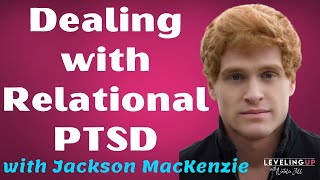
Jackson MacKenzie discusses relational PTSD, the lasting trauma from toxic relationships with narcissists and psychopaths. He explains how emotional abuse rewires survivors' nervous systems and shares concrete healing strategies for recovery.
Hi, I'm Natalie Jill, fat loss expert turned high performance coach. When odds are stacked against us, how do we shift and create everything from nothing? How do we level up when we aren't feeling it yet or we've had a big setback? On this podcast, I'll be talking to some of the most inspiring and courageous men and women on this planet who at their worst, learned how to achieve success greater than they ever dreamed possible. Leveling up and creating everything from nothing. Jackson Mackenzie threw a lifeline to millions of people who found themselves drowning in toxic relationships with his first book, Psychopath Free. Now. Through his personal, close work with thousands of survivors of toxic relationships, as well as his own personal experiences, Jackson discovered that there is something that most survivors have in common. A relational PTSD that can last for years after the end of a relationship. Today, Jackson joins us on Leveling up and shares how you can heal and create everything from nothing. Thank you, Jackson, for being here.
Thank you so much for having me, Natalie.
So, Jackson, before we even jump in, because you're this successful author, you've got this second book out that. So excited for that to hit stores, but I know that there's a reason that you got into this, you know. What, what is that? Tell us why this topic is so important to you.
Yeah, sure. So I actually, I'm a gay man, and I had to actually just come out to my. In my young twenties and shortly thereafter entered my first relationship. So there was a lot going on all at once. And unfortunately, the relationship, my first relationship, ended up being an extremely confusing and difficult time. And it wasn't until after the entire relationship was over that I even knew that relationships like this occurred. It was sort of. I think a lot of listeners will probably resonate with that sort of fairytale beginning of, like, the flattery and compliments and very quick movement. And that's kind of the idolization period. And, you know, once hooked, then things become a lot more negative, critical, controlling, jealous and manipulative. And a lot of the common behaviors that people see, things like gaslighting, which make you sort of doubt your version of reality. You have someone telling you that what you think isn't real.
I just got chilled because I'm like, I'm listening to you, and this is a new topic to me, but I'm having flashbacks to a boyfriend I had for years.
Oh, my gosh, there's a place for that.
I didn't even know. Yeah, no, this is interesting. I'm now I'm really excited to dig in more so okay, so that's actually a common thing that this happens, that those personality traits.
Yeah, absolutely. And I work specifically with survivors of cluster B relationships, so that includes, like, sociopaths, narcissists, and psychopaths. Borderline. And so those combined make up a pretty sizable chunk of the population. And considering that they tend to move around partners very, very quickly, the odds are that you or someone you know has encountered a relationship like that. Wow.
Okay, so let's start with, first of all, what's the definition? Or in your. How do you define, like, a narcissist or a psychopath? Like a psychopath seems so extreme to me. And then narcissists, we use that term so lightly. Like, how do define those?
So there's definitely clinical definitions. And I want to be really clear that I am not a clinical psychologist. Typically, what I do when I'm working with survivors of this kind of abuse is look at the behaviors that the person is exhibiting. And so if you look at the diagnostic criteria for any. Any of these, that person really needs to go see a therapist in order to be diagnosed with anything. The problem being that most people with these disorders wouldn't go to therapy. But there's a lot of charisma, charm, manipulation, and a big one that we see very, very commonly is a complete lack of remorse for their behavior. So doing things that you or I would be horrified by and not really thinking twice about it.
Can you give me an example of that? Like, give me an example of something they would do that we would be horrified.
Oh, sure. So the most common thing and one of the main reasons people find us is the infidelity. So you look at normal relationships, and infidelity does happen. Typically, you'll see it cause a lot of problems. One partner who's doing that may feel tremendously guilty or ashamed. With a sociopath or a narcissist, the infidelity is pretty much guaranteed. And the difference being that as they're doing it, they'll actually wave that person in your face. And if you suspect that something might be going on with that person, they'll call you crazy and tell you that there's something wrong with you and all the while continuing that extramarital relationship.
Wow, that sounds. So, yeah, I get what you're saying now that it just sounds crazy to us. Like, so what is that? That they want to wave the person in front of us is a game to them. Like, I can get away with it.
Yeah. The biggest part of it is it's all. It's a game. And it's about winning that game. Narcissists especially are heavily driven by a need to get a lot of attention and adoration. So it doesn't have to be positive attention. If they can get someone fighting over them or crying for them, any kind of drama like that is considered a plus.
Wow. First of all, I'm having a lot of light bulb moments to friends relationships, and then my own that I'm bringing back from years ago. As you're saying this stuff, what is that about them that, like why. Why do they become that? Is that something that they've experienced in childhood that causes that? Do you know anything about what causes a person to be like that?
I can share my own theories, a lot of which are in the new book. They weren't in Psychopath Free, but again, not a clinical background. I think you'll find from all walks of life. Some people were perfectly good parents and will have a child who displays these behaviors once they grow up. And it's very confusing because they feel that they did everything correctly. Then you'll also see it as a result of. A lot of times they're described as attachment disorders. So the person who maybe was supposed to give them care or give them love either ignored them or rejected them, neglected them. And we try to be careful because people with these disorders do tend to use sympathy to suck back in people who maybe finally had enough and walked away. And then they'll tell you all about their sad childhood and you're hooked again and the same things keep happening. But certainly I think it would make sense that in order to shut down the remorse and shame parts of the brain, something not so good has happened.
Okay. And now I can speak firsthand to what you said about the manipulation and how you'll start to feel that it's in your head. Like. Like if they're doing it to us and we're questioning the behavior and we confront them with it, they then convince us that we're in the wrong and we start self doubting ourselves.
Exactly. Yep. And as soon as that self doubt kicks in, it almost becomes the. The victim doing the abuse for everyone. They're the ones taking care of blaming themselves or guilting or self doubting. And the perpetrator in that situation can kind of just sit back and enjoy the show.
And then I'm imagining the perpetrator, the person that is this personality in the relationship will try to isolate the victim, the person that's getting hurt from others so they don't help. See that?
Exactly. If you can take away Their support network, friends, family, and isolate them. Then they feel even more alone and more crazy that what they're going through isn't real.
Now the person that's that is this. It's the narcissist, let's say. Do they realize that this is bad behavior or do they really think that they're not doing anything wrong?
So that's a great question. I think a lot of people talk about these disorders sort of on a spectrum. So at some points I think it can be almost like oblivious. This person is just obsessed with getting their needs met. They're obsessed with getting attention. And so they're just kind of doing that with everyone as, you know, the, the accidental byproduct. And then there are. I think especially this is where the term psychopath starts to come more into play, that intentional manipulation. And some survivors will almost describe this sense of like, enjoyment that they seem to see in their partner in watching them flail and, and be confused and be hurt. That like self awareness is really where it becomes kind of dangerous because you have someone intentionally toying with you.
Gosh, this is pretty heavy. And I'm realizing how many people. That's so crazy that there's so many people that would fall into that.
Yeah, absolutely. It's definitely a little bit eye opening.
Yeah. So what? So first of all, if somebody's listening to this and they think, my gosh, my boyfriend or my, you know, spouse, this is that profile, this is them. And wow, I've been convinced it's in my head. What's the first thing you would say to them? What do they do?
I think that big aha, light bulb moment is a huge first step. And I think everyone who's been through this would describe that as the exact same thing, that that's what jump started their entire recovery. So I think the first thing is to really reach out, find support, whether that be online. I can't recommend like a professional enough. It's such a, such a great experience if you have those resources. But certainly there are so many communities online now who offers this type of support. There are articles, and I think the more someone reads and absorbs this information, the more they'll start to understand what's going on and hopefully start to come up with some sort of exit strategy. I rarely recommend some sort of reconciliation because personality disorders tend to be pretty ingrained. And while someone may claim to be changing, I would imagine it would take years of really intensive therapy to do that.
And it sounds like this is really a struggle with people that you Might, if you are thinking this is going on, probably is going on. Because as you said, one of the symptoms of the victim is they're gonna. They're gonna think it's in their head.
Exactly.
But you wouldn't be thinking any of these thoughts at all if they weren't doing this to you.
Exactly. And that's the main thing. I mean, unless you're dealing with, you know, perhaps some issues of your own. I mean, there certainly are people who may see abuse or danger everywhere from their own past traumas, and that's certainly something worth exploring in therapy. But if you've otherwise lived a pretty healthy and happy life and you suddenly find yourself full of doubt and anxiety and unhappiness, I definitely recommend looking at the common denominator there.
Wow. And now you mentioned the person, the perpetrator, that is the psychopath or the narcissist, that they don't typically want to go to therapy. Is it because they just don't recognize they have a problem for the most part, or they don't believe in therapy what's going on with them?
Yeah, it's that they don't think they have a problem and they usually tend to think they're superior to everyone. So it's hard to convince someone like that that they should get help.
Wow. Now, okay, now you mentioned what. How you define sort of a narcissist. How would you define a psychopath? What. What is that? Because that sounds like such a heavy word, I think, of somebody that's like murdering people. What is that?
Yeah, it definitely does. Add in that that heavy implication. I think that that is something that we tend to see in pop culture and TV is psychopaths being serial killers and things like that. But really where I would put that line is any sort of enjoyment or compulsion to harm other people. And I think where that's really been lost in terms of pop culture and TV is that that can happen emotionally and that the emotional wounds that we can cause other people can leave behind really long lasting imprints and scars.
Yeah. Wow, this is pretty. Now, when you said cluster B, what did that mean? Does that just mean these things?
Yeah. So in the dsm, which is like the mental health disorders defined by the psychological association, the cluster B disorders are what pretty much comprise the personality disorders that we're talking about today.
I see. Okay, got it. Okay. So I would say the first thing is that you probably should not tell the person, hey, you're a narcissist or a psychopath, because that doesn't help.
It so, yeah, it doesn't usually do anything.
Yeah, yeah. And recognize that you. That it is not in your head if you're even having these thoughts. So that's part of the game of them making you think it's in your head.
Exactly. And I mean, even bringing up those phrases, it's something I really recommend keeping in private, keeping with trusted loved ones. Because the fact is, once one of these people senses that you're on to them, they will do everything they can to sort of assassinate your reputation so that you look like the crazy person. So if you're. While they're doing that, running around and saying, hey, this guy is a narcissist or sociopath, you sort of just fit their profile that they're already building for you, that you're like a bitter, deranged ex. I really recommend that healing process being kind of a private thing.
Wow, this is really eye opening to me right now, Jackson. I'm like having a lot of light bulb moments right here. So, yeah, this is really good. So, okay, before I get into the actual victim going through this and what they heal, I'm curious, the person that is a psychopath narcissist, can they be healed if they were willing to go get therapy?
So it's a huge source of contention, this topic. I used to be under the firm belief that. No, 100% not. And the more I started, I guess, working on my own healing process, the more I sort of took on the mentality that I think anyone can change what's going on inside, even really complex and confusing traumas. But again, I think that it takes a tremendous amount of dedication and desire to do this and sort of like, you know, an alcoholic will keep doing the same thing over and over again until they've hit rock bottom and they're the ones that decide they need to change. I would never recommend that someone try to change their partner or convince them to change, because I just. I don't think that that would change. Make a difference.
Got it. Okay. So really the only choice is to get your own help and figure out next strategy. And it sounds like if you don't, it does continue to get worse.
Absolutely. As soon as it's sensed that you can be walked all over or manipulated, it does get worse. And then on the opposite side, if you start to build up your own boundaries and self respect, the odds are that the relationship is going to implode anyways, because the relationship won't work if you're not kind of compliant with what they want.
Wow, this is okay. So now let's say you're in this, you're in this situation. You're, you're having Ahmad saying, oh my gosh, my significant other. This is what's happening. I get it. What do we do? What do they do first? You said they go to a person to get talked, to get help. Then how do they begin to heal and recover from this?
Yeah, I think one of the biggest things, and you know, no contact is not always an option, especially if, if you have kids with this person, you may have to see or hear from them every once in a while. But if you can, certainly removing all forms of contact is a really important way to jump start. I understand. Just saying break up and don't talk anymore is really hard. If you're in love with someone, but especially in these relationships, it's really important for your own recovery because they are going to try to mess with that. They don't want you moving on, they don't want you forgetting about them. And so you have to sort of take that into your own hands. But then, you know, from a self standpoint, that doesn't really have anything to do with the other person. I think that's really where tools like mindfulness and self talk really make a big difference. It's sort of about understanding what's going on inside. Especially if you've dealt with gaslighting, where all of that self doubt is coming from. Because if you have, you really learn almost as a coping mechanism to doubt yourself all the time, to blame yourself, to be overly responsible for everything, to feel a lot of guilt where you probably don't need to feel guilt. And if we don't resolve those things, there's a good chance that we then go on to repeat the same types of relationships. Because you've sort of almost been primed by that person.
Yeah, that makes a lot of sense. Makes a lot of sense. And then you mentioned that even after getting out of the relationships, and I read this when I was reading, looking through your new book, that there's a, this lingers for a while even after getting out of it. There's a lot of post stress that happens with that.
Yeah, absolutely. There's kind of a newer area of psychology called complex ptsd. I definitely recommend looking that up for sort of more of a detailed definition. But it's sort of like an emotional type of ptsd. It can also be caused by life events like standard PTSD that you've heard of like with war criminal or sorry, war victims and things that have happened to them that have really traumatized them. Similarly, when our emotions are constantly feeling like they're under danger or completely unpredictable, like, if you, you know, if you go from this consistent form of love and intensity towards something that is really harmful and frightening, it's very confusing. There are parts of our bodies that are actually trying to protect us, and they pop up to keep that protection in place. But the problem is that that protection can end up causing us a lot more harm than good down the road.
Now, do you find that this personality profile exists more in men than females?
That's a good question. I think typically we do see that sociopaths and narcissists are more strongly correlated with men. And, you know, stereotypically, we see borderline being more commonly associated with women. I think there are definitely statistics on it that show that there are any gender on either side can have those disorders. I think one of the most popular books about this topic written by a sociopath was written by a woman. So certainly can impact.
So wait, a sociopath actually wrote a book about this behavior?
Yes. Interesting call. I forget the name of it. I can send it to you after the interview.
But that's interesting that they. So they did realize it and write about it.
Yeah.
So some realize. Yeah. Wow. So when you were going through your own relationship and this was happening, how long did it take you to figure out that's what's going on, and how did that turn into your calling and your passion of writing about this and starting your community?
So after that relationship had ended, I was to be. I was pretty messed up for a while. I had, at that time, dropped out of school for the semester. I had a job lined up for the school's end that I actually pulled out of because my ability to deal with things and process information and function like I normally had been a very functional person. I did well in school, I did well with my jobs. And all of that, for the first time in my life, had just disappeared. And it was like a struggle to, like, get out of bed. And I had come across while I was just. I think I was researching. It was something about, like, the relationship ending really fast and then being in a new relationship with someone that they told you that that wasn't a thing and that you were crazy. And something along those lines with those keywords, brought up a community or a blog for people going through those types of relationships. I think it was called lovefraud.com and so I posted my story, and I was just like. I was reading other articles. I was like, oh, my God, like, this is exactly what happened. And I hadn't even thought about the love bombing phase and the idolization, but the more people I spoke with, the more it started to finally click. I felt more able to, like, go about my life and start to feel better and get back to normal. And I really wanted to be able to give back to that.
Yeah.
That community that. It helped me so much. And I have a technical background, so I thought, like, hey, we only should. We were working with some friends who actually were the co founders of the website and we all thought it'd be really cool if we had a forum where people could go and post their stories, get help, have, you know, have some fun chats too, because, like, the topic of psychopaths isn't super happy. So. Yeah. And that's really where that idea was born. And those people who helped to build that website were just amazing. I mean, they were still friends to this day, so it's been great.
Wow. I have a question about the idolization part because I sort of skipped over that at the beginning and I think that is a telltale sign of that fast whirlwind idolization. You think that they're the, you know, the cat's meow. What is that about? Is that like, sort of their way to like, catch you at the beginning? Like, what. Why does that trait come out so heavy at the beginning?
Yeah. So, I mean, you'll look at any relationship that usually starts, you know, a little bit more exciting and the honeymoon phase, and that's totally normal with sociopaths and narcissists. That is like amped up a thousand times. So they sort of. It's almost like they latch on to you. They're like, fascinated by everything about you. They're listening to everything you say and like repeating that they have the same hopes, the same dreams, the same insecurities. You'll even notice they're kind of mimicking your vocal inflections and sense of humor and all of that stuff. It's actually a little creepy, but in doing so, you suddenly feel like, oh my gosh, I found like my soulmate. And they use that word all the time as we're soulmates, we were meant to be. Kind of give you that feeling that this was destiny.
Yeah.
And they Want to talk 24 7, text, be together all the time, post about each other, that kind of level of infatuation.
Wow. Yeah. And then just so many little light bulb. I know people listening are relating to this and coming up with either they're in a relationship now or they've experienced one and didn't know, but. And then the other thing that really stood out for me is when they're constantly talking about that their exes and whoever else is the issue. So, yeah, Worries about their ex being crazy and so everybody else was crazy but them.
Yeah, 100%. As you're getting to know them, their crazy ex has hurt them, and, you know, they're afraid of them, and you're so great and you would never do that, and they're so glad they found you. It's sort of like it starts to sound like a broken record after a while and. And that's why, you know, things. Things do move so fast. And a lot of the people who end up in these start finding that their exes hate them for no reason. They hate the new partner for no reason, and come to find out after the fact it's because everyone's being told lies about each other. Oftentimes they'll go back to exes like the ex that they told you was crazy. Suddenly they'll start, like, Facebooking with each other, texting, especially things in public. And you'll sit there being like, I thought you said this person was crazy and abusive or whatever. And they'll say, no, I didn't, and we're best friends, and you need to understand that things like that.
As you're talking, I'm also recalling, I think that maybe this is wrong, but that I can think of several people that have had several relationships like this. Is there a pattern connected to that? Like, do they seek a specific profile?
So I think, you know, there's a definite possibility that when it just happens once, that it's a fluke, maybe even twice. I think if people start to notice patterns, that these keep happening, I would definitely recommend chatting with a professional, especially someone experienced in looking into your childhood, what makes you who you are. You tend to find. I personally looked at my own issues in terms of. There's some aspects of, like, codependency, which is sort of. If you look at two people most likely to end up in a relationship, a codependent and a narcissist make a lot of sense because codependence basically have learned throughout their life to sacrifice their own needs in order to make others happy. They're constantly scanning for potential conflict or problems or anger and doing everything they can to proactively avoid it. And when something does bad, does happen, they feel a tremendous amount of anxiety and guilt and fear. And so that sort of fits in perfectly with a narcissist who is obsessed with getting their own needs met and could sort of care less about someone else's needs. Yeah.
Oh, lots of. Lots of light bulb moments right here. This is really cool. Now, if you have a parent that's a narcissist, are you more likely to end up dating one?
I think it's. It's really possible. And for the main reason being that if you have a parent who is taking up a lot of space or prone to like out outbursts for no reason or drinking problems or a big one, is just being like really controlling and having these super rigid rules that you don't realize that most people may not actually have that in their family, you are kind of primed to just always do what other people want in order to avoid discomfort. And because of that, a childhood like that could definitely, with a narcissist could definitely lead to those behaviors.
Interesting. Lots of big moments here. Jackson, this is super helpful. Tell us about your group, your community, and then also about your new book, Whole Again.
Sure. So the website we called psychopathfree.com, one of our fellow administrators in the UK came up with that, and we just thought it was very catchy. And so that was the website we registered. And I built a forum using software that I had used in the past and along with the articles, and it started growing so unexpectedly quickly. And that's when we really realized this was such a common problem that I started realizing I was saying a lot of the same things to a lot of people and repeating. And so I thought, you know, I should really put this in an easily digestible book. And at the time it was just a PDF. I didn't want to charge people for that. And so I had put together that book and added the PDF to our website and also put it on Amazon for anyone to find. And then that book started selling and. And that was bringing a lot more people to the website. So it's sort of from all angles getting really, really busy to the point where we were getting like a thousand posts a day. It was actually really hard to keep up with. And this next book called Whole Again that is coming out in January is something that I only just started last year. And it was a project that I just got so excited about because my own personal feelings that I was experiencing in some healing techniques I was doing and also working with others who were starting to feel the same thing and eventually feeling that permanently. And so I just was like, oh my gosh, I have to get this out to the world. I was so excited to share that because I don't just want people to feel like they've survived a toxic relationship. I want people to be able to feel that kind of light, freedom and happiness in their mind and body that just makes life awesome. So that's what Hooligan is about.
And whole again really applies. It sounds like it applies to any toxic relationship, not just psychopath. You could have somebody that's a drug addiction. It sounds like if you're getting out of that.
Oh absolutely. And even outside of relationships, people who just notice patterns of that don't make them happy. That could be things like perfectionism or avoidance, anything like that.
Well, this is amazing. Thanks for the work that you do and I love that you turned your own personal pain into purpose. I think it's incredible and it just shows that you've really taken something that could have destroyed you and really created something from nothing and leveled up. So this has been amazing. Jackson. Thank you.
Thank you so much. Natalie. It was great talking with you.
Thanks for leveling up with us today. Please share this episode if you found it helpful. Cool. So others can join in. And don't forget to hit that subscribe so you don't miss out on future shows. And if you would leave me a five star review. I appreciate those so much. I read all of them and it's how I know that I'm giving you information that you find valuable. And come interact with me over on Instagram at Natalie Jill Fit. I read all the direct messages and comments over there. Make it a great day. Creating everything from nothing.










