045: Growth Mindset and Deciding Your Purpose with Tom Bilyeu
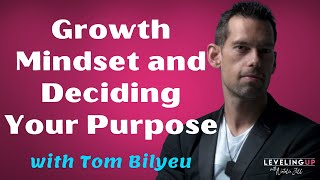
Tom Bilyeu, co-founder of Quest Nutrition and Impact Theory, talks about moving from a fixed mindset to a growth mindset, how he overcame failures, and what drove him to build successful businesses. He shares his personal journey of struggling with motivation and finding purpose.
Hi, I'm Natalie Jill, fat loss expert turned high performance coach. When odds are stacked against us, how do we shift and create everything from nothing? How do we level up when we aren't feeling it yet or we've had a big setback? On this podcast, I'll be talking to some of the most inspiring and courageous men and women on this planet who at their worst, learned how to achieve success greater than they ever dreamed possible. Leveling up and Creating Everything from Nothing. Tom Bayou is the co founder of Quest Nutrition, a unicorn startup valued at over $1 billion. He is also the co founder and host of the wildly popular Impact Theory. What you don't know about Tom yet is that he was once really stuck in fixed mindsets. He described his past days as laying in bed, wasting time and being lazy. He recalls and shares a time when even getting up to make his wife a sandwich felt like too much work. It was him studying the growth, mindset and brain plasticity and getting obsessed with studying, reading and learning that shifted him into a whole new place. Tom learned to level up and has since created Everything from Nothing. Today, Tom regularly inspires audiences of entrepreneurs, change makers and thought leaders at prestigious conferences and seminars around the world. Join in today and learn how Tom continually levels up and creates everything from Nothing. So Tom, I know that people see you online and they see what you've done with Quest and what you've done with Impact Theory and they think you're just this incredible success. And you are. But I also know that that's not who you were before. And I'd love to know. I'd love for you to share who you were before all of that.
Yeah, I love that. I think that's a great place to start for two reasons. One, I have come about as far from my starting mentality as you can come. And two, it's important for people to understand that it really doesn't matter who you are today. The real question everybody has to ask themselves is who they want to become and the price they're willing to pay to get there. So my thing was where I started. My parents raised me to be a good employee. I kept my head down, I did as little work as possible, and I avoided punishment at all costs. I did not have any entrepreneurial instincts whatsoever. I certainly had a desire to be successful. That is the one thing I will say from the time I was a little kid, I had ambition. But what I discovered in what I'll call probably the darkest period of my life, at the beginning of the relationship with the Woman who is now my wife was. I didn't have the drive. And so I would lay in bed for three, four hours every morning trying to work up the enthusiasm to actually get out of bed.
Wow.
Finally get me out. Was the shame around your fiance at the time is about to come home, she's the only one working. You're not working, and you have one obligation every day, which is to make her lunch when she comes home at lunchtime. If you don't get out of bed now, then you're not going to have it made when she comes home. And that was like, even I had my limits. I couldn't bear that. And so that was ultimately the thing that would get me out of bed every day. But it just seemed so crazy. And I remember that period just being absolutely horrified that, you know, I had this period in my life where I didn't have a job and I wasted it just laying in bed watching music videos. And I just thought, wow, this is so crazy. And the shame around that, of being less than what I promised her I would be when I proposed was what really began my development of drive, of really getting some discipline.
You know, it's so interesting because, like, when you were in that spot, when you were just not wanting to get out of bed, you were listening, watching videos, like you said, and you knew that you just had to get up and do this sandwich. What were you telling yourself? Did you feel like a failure? Did you feel. Did you know this was wrong? What was going through your head at that time?
Yeah, unfortunately, I knew very much that or I felt like a failure for sure. So when I went to film school, I had this really weird emotional roller coaster that planted the seeds for what would ultimately force me to develop a growth mindset or really give in to depression. And that was. I went to film school. Everyone told me I'd never get into film school. And this is making a very long story short, but I managed to get into film school. Statistically speaking. They were like, look, you have higher odds of getting into Harvard Law than you have getting into USC film school. So, like, you've already been accepted, dude, we see this all the time. You are not going to get in. So when I got in, because I took out one of the. Or I joined for lunch, I should say one of the teachers on the admissions committee, he told me what to do, which was get good grades, and I buckled down, and for two years, I just got extraordinary grades. At the time, I probably had a 4.0 or like a 395 or something crazy. Got into film school, and so I felt like, yo, I've made it. I told everybody I was gonna do it. I did it. And when I was in film school, I was doing very well in the beginning and was definitely somebody to watch. And I was one of only four people selected to do a senior thesis film. And so it was, like, a really big deal. I thought, this is it, man. This is what I was meant to do. I was born with talent, and here I am making the most of that talent and crushing it. And that is, unfortunately, how I thought of it. I thought that I was born naturally gifted as a filmmaker, and so I was just living in accordance with that. And that's the thing with a fixed mindset. It doesn't always lead to people being depressed or anything like that. Like, you can get a long way thinking that you're naturally talented at something. And so it had taken me that far. And the bad news was. Or really what ended up being the best news ever. I failed in the most dramatic, spectacular fashion on my senior thesis. And it was horrifically embarrassing and was just a crash and burn of, like, epic proportions. People were making. We didn't have the word meme back then, but people were essentially making memes out of the footage from my film to make fun of it. It was crazy.
Why was it such an epic failure? Did you not put effort into it because you thought you had this natural talent or what was going on?
That was absolutely part of it. So I didn't do the right things preparing for it. But more importantly, the realization finally sank in that I was not talented. Wow. And when I say that people think that I'm being humble and I'm not. And this is the cornerstone of my mindset today, the very cornerstone of how I've become successful is that I finally accepted the fact that I was not talented. And so if I wanted to get good, it was going to be a process, and I was going to have to put in a whole lot of work. And so at this time where I'm newly engaged to Lisa and I'm feeling that shame, I realize I'm in this dark place because I don't believe in myself. I don't believe in my talents anymore. And I, you know, I'm literally afraid that my hopes and dreams have been flushed. And that was literally from the time I failed at my senior thesis, probably till about three or four years later, I was in that really dark place of, like, whoa, like, am I any good at this? Am I ever going to be able to get out of it. And of course it's not binary. So it's like in this period I'm sort of like beginning to learn about the brain. And I'm reading a lot about brain plasticity because I could feel myself sliding towards depression. I didn't want to end up there. And out of desperation, I started trying to learn about the brain to figure out is the brain really plastic or not? Like, can I get good at something that I'm not naturally talented at or not? And that became this obsessive notion in my mind. And so in this period, and of course when this is all happening, I don't have clarity on it. I am fumbling in the dark, but I'm beginning to wonder, like, how much of my problem is that I'm laying in bed, right? And so do I. Like, not even do I. How can I begin to structure my life so that I can stop wasting time? Because I made big promises to Lisa. I'd made big promises to her dad because he did not want me to marry her. And so I was telling everybody, look, I'm going to be successful. I know it. And that was my ambition talking. But the lack of drive was leaving me in bed four hours a day. And so I'm like, there is a massive disconnect here.
What's interesting is, you know, so many times I talked to somebody that's overcome hardship and made something and they almost had the opposite of you. Like, were they. They never believed they were creative or good enough and then they finally figured it out. You're almost, it's almost like the opposite. Like you thought you had it all together. You thought you were super creative, you were amazing at this. And then you had a failure. So it's like, it's almost a different story. And then you had to rebuild and change and break through that limiting belief.
No question. Yeah. And that was, I think Carol Dweck talks about something similar in her book, which she calls the false growth mindset. So when you think you've got something figured out and you think that it's working for you, and you think that you're open minded, and then you realize that you're really not. And that's why I say that the cornerstone of my story, the cornerstone of my belief system and everything that's allowed me to be successful was this moment where I finally stopped running from the fact that I wasn't talented. And I turned to face that and I said, okay, cool, let's embrace as of right now, today, I'm not A talented filmmaker. And my story failed because not just that I didn't do the work, but that I didn't know what kind of work to do. I hadn't looked at where I'm actually bad. Because until you can face where you're actually bad, you're never going to know what you need to practice in order to get better.
Well, it sounds like you had to believe that you actually were bad first because you had to have an ego conversation. Cause your ego thought you were great and talented.
Yeah. But it went something like this. So my ego thinks that I'm good and talented. Boom. I hit this reality and I realized very quickly, oh shit, I'm actually not. And so that really hits me hard, like a ton of bricks when I do my senior thesis. And then it became this question of, okay, well, if you're not talented, at first it was, that's a death sentence, dude. Everything in your life and when you're 20, 21, you still feel like you're old. I was like, this is it. I am who I've been building to be. I'm an adult now. I went to college, I've graduated. So like my life is set in stone. That's how I saw it at the time. And so to have the realization that I wasn't talented, I could not allow myself to look at that. And so it was like, fuck, what do I do? I'm not talented, but I have to turn away from that. I need to put myself into situations where I shine because I don't think I can improve. So I start putting myself into smaller and smaller situations. And probably for the first two years after I graduated, it was, I was teaching, but only in the summers. And then during the rest of the year I was doing like selling door to door insurance. I was selling video games retail. This is all with a degree, by the way.
Yeah.
And it was because I didn't want to face that I wasn't smart enough. And so the reality was, by the way, I wasn't smart enough. But I didn't think that I could learn. I didn't think that I could develop my way out of that. And so that period of shame where I'm staying in bed for three, four hours a day after having made all these big promises to my wife that were, you know, fiance at the time, what I had to figure out then was, okay, can you learn things that are new? And if you can, what does that process look like?
So how. So you're in, you're laying in bed, you're Knowing this stuff about you and you're, I would imagine you're feeling lazy, failure, all that stuff, and you're wanting to get that motivation and that drive. How did this hit you? Like, how did you then all of a sudden say, okay, was it something you read? Was it something you watched? Did somebody say something to you? What helped you shift to being open minded to that?
It was really a thousand little things. And maybe the problem just with my story, but there's no sort of one simple clean moment. It was a lot of things stacking. But the first thing that stacked was I began to read about brain plasticity. And at the time, this is the late 90s, at the time it was hotly debated and people were saying, some were like, absolutely, of course you can learn new things. It's crazy that the adage is you can't teach an old dog new tricks, you absolutely can. Another people were saying you're out of your mind. Like the number of synapses and things that you have is, that's at birth. And you go through this learning process till the time you're about 13 and then after that it's about synaptic progress, pruning, and you're actually getting rid of connections. You're certainly not adding new ones. So I was like, okay, so if there's no consensus here in the science, I'm going to choose to believe that brain plasticity is real. And that was like the just a decision that I won't even take credit for. But I made that decision that I was going to decide to believe that brain plasticity was real. It was more empowering. And so I was like, yep, cool, I'm going to believe that. And then operating on that procedure married with the fact that after I got married I went back to teaching and I was teaching full time and I started realizing, wait a second, I can help the students make their films better. So if I can help them make their films better, why can't I help myself get better at film? And so you couple this whole notion of brain plasticity with that and unfortunately the term growth mindset didn't exist back then. So, you know, none of this was self evident or easy to access the way that it is today. But I begin to cobble together things that we would now consider a growth mindset. And so I start forcing myself to look at where I'm bad, to really just stare at it and say, okay.
It sounds like you also just made a hard decision. Like you said, you could have chosen either way, you could have Said I get to decide not to believe it's possible or I'm going to decide to believe it's possible. You just chose. You decided, and then you found evidence to support that.
Yeah. And one of the most controversial things that I talk about is when it comes to yourself, your ability to determine the truth is so faulty that I don't even prioritize the truth in terms of assessing my own skills, my own abilities, because I know that I'm something like five times more likely to believe something negative about myself than I am to believe something positive. Okay? So if I know that I have this negativity bias and we all seem to have it, then I'm not going to prioritize assessing the truth. I'm going to prioritize assessing what's more empowering. And look, I check it against real world to see if I'm actually able to move towards my goals or not. But ultimately, things that move me towards my goals became my obsession.
Now, how did you even figure out your goals? Because you were operating from a place of you didn't really know what you wanted to do when you were learning.
This isn't true of me. And the one thing I will say is from the time I was 12, I knew what I wanted, okay, Know how to get there. So I wanted, and this is important for people to understand. The thing that you want is simply something you decide. This is what kills most people. They're standing in a room. That room has a thousand doors that lead to different opportunities. Your job is to close 999 of those doors. That's what people can't do. And so my thing was my dad made an offhanded comment when I was 12 years old and wanting to please him, wanting to have direction, whatever it was, I was like, whoa, that sounds cool. And he said, I think you're better behind the camera than you are in front of the camera. Because me and my friends used to mess around with a video camera. Remember, this is back in like the early 90s, so it's not like today where YouTube was a thing and all that. It was actually pretty easy to have access to a camera back then. And at the time, I thought I wanted to be in front of the camera. And my dad made that comment, and I thought, whoa, like, that actually is kind of cool. So I started focusing entirely being behind the camera, doing my thing. And so that became my obsession. I knew that I wanted to get rich as a filmmaker. That was like my obsession. I just didn't know how to get There.
Got it. But you were clear on that vision.
Yes.
So what was next? You started reading, you started learning. What was the next step?
I start reading obsessively, and this is when I'm teaching. So I'm really realizing, all right, there's a lot of power in breaking a skill down into its constituent parts and then practicing. And it was so clear that, oh, that's what the students need to do. Because I didn't have any emotional baggage when assessing what they needed to do. And I had all kinds of emotional baggage around my level of intelligence, things that made me insecure around my own. So I just started saying, what would I tell myself if I were the teacher and I were just divorced from this? And that began to make things really clear about what I needed to get good at. And by that point, I stopped being afraid to look nakedly at what I was doing wrong and what I was bad at. And to be able to say, well, I'm just not good at that because I discovered the word yet, so I'm not good at that yet. And so that notion of you can do anything you set your mind to, but setting your mind to something is actually a lot harder than it sounds because of the inhuman level of consistency that it takes to actually make those improvements. And so I had to divorce myself from expecting immediate gratification, thinking that, oh, I'm going to be Spielberg in an afternoon. It doesn't work like that. That's a lifetime of dedication. That's the 10,000 hours. And that's just like baseline mastery. Like, if you really want to be world class at something, it's 20, 30,000 hours. And so that's where the whole notion of, you better love this comes in. Because putting that kind of hours into something means you're going to have to fight through a lot, an entire avalanche of boredom. And if you don't believe in what you're chasing enough, then you're never going to stick through it. To get through all that boredom, to persevere through all the difficulty, the loneliness, the, you know, everything that comes with the pursuit of greatness. But if you do have something that you believe in, like that you're willing to put in those hours, then you can do something pretty extraordinary.
Gosh, so many great things you've just said. And a couple of things that just really landed for me was about the thousand doors. That. And that is so true with people. There's a thousand doors open, and people get distracted. They don't know what they want. And what you said was so fascinating about. It's about closing 999 of them and staying super focused on that one. I hope people really heard that because that's. Do you remind, have to remind yourself of that even now?
No, that is something that at this point I have baked into my nervous system at like a limbic emotional level. But that's the thing that I find is the greatest problem of anybody at the beginning that's trying to do something extraordinary. And the beginning doesn't, you know, age agnostic, you could be young and at the beginning of your journey or old, that doesn't matter. But people really have a hard time shutting out opportunity. And so getting yourself to the point where you can look at three or four opportunities and you're equally excited about all of them and just say, I value decisiveness. And this is my, an obsession that I have. I'm actually working on a book about this, about being able to build into your life the things that you value and let that guide your life. Now people think that what is valuable simply is or is not valuable, but that's not true. We all decide what we're going to value and then we pour energy into making that manifest in ourselves. It just usually happens so early and as a reflection of your family and friends that you don't realize that they were decisions that you made all along the way. And normally they're decisions of, oh, I want to impress my family, oh, I want to fit in with my peer group. And that becomes your value system. And people don't realize just how malleable that is. But if you can decide that you're going to value decisiveness, then all of a sudden when you find yourself stuck between two things and it happens a thousand times a day, you find yourself hemming and hawing, where do I want to eat lunch, man? In that moment, getting the best lunch isn't the thing you value. The thing you value is making a decision and sticking with it. Stuff like that. Suddenly you can become decisive.
That's really, really good. And then I also, I love that you said that you would tell yourself, if it wasn't me, if I was teaching this to somebody, how would I approach this? Because that's amazing too, because so many people do get stuck in their own head with their own self imposed stops and reasons why they can't. But when you're, like you said, when you're focused on somebody else, if it was somebody else, what would I tell them? You look at it from a very different perspective.
Yeah, People have to find a way to get out from underneath the insecurities. Because once you have that dispassionate clarity that you can give to somebody else about yourself, then all of a sudden the direction to move in becomes a whole lot clearer.
So what happened then? So you move into film, you're coaching yourself, really learning, reading, knowing you can teach yourself. You start seeing some success. How does that go into. How does Quest come about?
Yeah, so it is a very fascinating story, and the irony being that it was building towards film. So my thing was at that time, so this is what, 2002, 2003. My stated mission in life was to get rich so that I could make films.
Okay.
So I am teaching at the time. I'm starting businesses on the side. My wife and I started a photography business. But like I said, I didn't have any instincts as an entrepreneur, so I'm not finding any success whatsoever. No idea what I'm doing. And in that, though, the one thing that I had been focusing on since I was, I don't know, probably 14 or 15, was speaking. So I did speech and debate in high school. I wanted to be a standup comic when I was in high school. So I spent just an inordinate amount of time sharpening my speaking skills. So this happens to be something that I'm good at. So now the. The film school that I'm teaching at has me speaking a lot and ends up that these two entrepreneurs see me speak and they're like, whoa. Like, this guy is pretty sharp. They were starting a new technology company. So they approached me and they said, hey, look, we want you to come be a copywriter, but don't think of yourself as a copywriter, because you can have any job that you want in this company. You just have to be the right person for that job, meaning you go and earn those skills and everything to actually be good at that. And that was the first time that somebody had given me an opportunity to really grow and climb based on my abilities. So I thought, whoa, this is amazing. And the explanation that they said to me was, look, man, you're coming to the world with your hand out. If you want to control the art of your films, you've got to control the resources. And so come with us and get rich. And I was like, yes, like, this sounds amazing. And the timeline of all of this gets somewhat convoluted. But to make it really easy to understand, I had also written a screenplay which had been produced and it was turned into a film. And I was absolutely mortified with how it came Out. And so I was really distraught that taking the normal path of writing a script or directing something that that was going to be creatively just devastating for me. So when they made that pitch, I was like, man, this makes all the sense in the world to me. So I go hard down that path. I'm now a copywriter. I'm not in film in any way, shape or form. I'm just going ham trying to grow this company so that we can sell it. And we thought that it would take 18 months. 18 months ends up becoming 15 years ultimately. But about the 8 and a half year mark I was like, guys, I can't do this anymore. I'm just chasing money. He doesn't fulfill me. I am living the cliche of money can't buy happiness. By that point I had worked my way to being an owner in that company. So just like they said that I could grow my way in the company and even become an owner one day, just through blood, sweat and tears, I went from being the world's most ridiculously under qualified employee to rising to the level of an owner. And so again I went in and I said, guys, here's your equity back. I'm not going to cross the finish line. I don't think I should get anything for this. But I just, I can't keep doing something on a day to day basis, you know, for now rapidly approaching a decade that I don't love. Like, this is crazy.
Like you literally were doing it just to get paid and it was not doing anything else for you.
I was doing it to get rich because I thought that, hey, if we can sell this company and you know, I can be a millionaire, then I can go make films the way that I want to make and control the art. And so seemed like the surest path to the success that I wanted in my life. But I hadn't thought about the old adage, which of course everybody tells you, which is you better pursue something that you're passionate about. And the long and short of why that matters is energy. And you're not going to have the enthusiasm that you need to fight through all the boredom that I was talking about earlier that true mastery is going to demand of you if you don't believe in the thing that you're chasing. And all I was chasing was wealth. It was like there was no sense of meaning or purpose behind it. So that became my obsession. I needed to do something that made me feel alive. I needed to, I was going to go back to writing because at least the storytelling element of it I was so passionate about and it filled me with energy. So. And when I went into quit, they said, look, we could do this without you, but we don't want to, so what would we need to do in order to continue working together? And so I said, look, we'd have to sell this company because I just can't do something on a day to day basis that I'm not passionate about. And security software I'm just not passionate about. And it needs to be something that is built around community because I'm so desperate to connect with people and it's got to be. At the time the words I used were it's got to be something where my real personality can shine through. Now we would say, of course I need to be authentic. I was like, we need to build community. I need to be authentic. And it's got to be something that I'm really passionate about. And so for three very different reasons, we decided to start a nutrition company which of course ends up becoming Quest. And for me it was all about my mom and my sister. They were morbidly obese my entire life. I knew that I was going to lose them much too young. And so we wanted to create a company where people could choose food based on taste and it happened to be good for them.
Okay, so wait, hold on one thing because I want to make sure I'm connected here on this. So you, they don't want you to leave, they want to say you part of it. You tell them what it is that you would need to stay successful and they decide with you to start a nutrition company. But what happened with the software company? Were they holding hold you on while you're doing this or.
Yeah. So we ended up selling that company.
Got it. So you sold it and then they wanted it, but they wanted to continue working with you. I got it. Okay.
Yeah. So what we did was it, we set at first it was all right, let's take six months and see if we can actually get the company to a point where we can sell it immediately as we'd always planned. I said, okay fine, I'll hang on that long. So at the six month mark, we hadn't hit the metrics, so we said, cool, we'll sell it in sort of an as is state and we will begin building another company. So what's that other going to be? That ends up being Quest. I was the first one to leave and go to Quest full time. I was there full time anyway for about a year before they were able to finally extract Themselves out of the technology company and join me. And then we just started building Quest.
And this is very different because you have a purpose and a passion around it. Because your mom and your sister.
Correct. And so at this point, I'm like. And I also want to bring in the storytelling. So it was like this perfect storm of I wanted to get back to storytelling. I wanted to build community, do something that I'm passionate around. All right. At the very beginning of what we now call social media. So it was like just this perfect moment of being ahead of the curve. Because now everybody knows, man, your company better have a mission. It better be aimed at doing something awesome for people. You better be focused on building community. And we just happen to be doing that because of this emotional crisis. We happened to be doing that about two years before that big shift happened. So we were just early adopters.
Yeah. So what made Quest blow up and take off to what it became? Because it's unbelievable, the success behind it.
Now, first of all, it was just a great product that actually worked. And then second, it was, like I said, we were early adopters of social media. We built a studio inside of our company where we were creating all of our own ads, all of our own social marketing material, like, everything. And it was just ahead of its time because you had this weird confluence of the three partners who were just, for a weird host of reasons that I walked you through, at least from my perspective, happened to, right at the right moment, make the exact right product marketed in exactly the right way.
Yes. And though it sounds like you had all this experience and learning of what it takes to break through barriers of why it wouldn't too. So it was.
Careful to remind people, it's like, look, we made a proclamation. We were no longer going to prioritize profits. We were going to make a product that added value to people. That was, like, far and away the thing that we cared about. But say that because we were very business savvy by that point. I had been in business for almost a decade. They had been in business for more than two decades. So it was like we had a lot of business acumen coming into it. And that, like, the other part of my story is I did not have any instincts in the beginning, but you can train your instincts. So over that, you know, intervening decade, I'd gotten good at business. So it wasn't easy. But you can learn if you immerse yourself and really think of it as practice, so that you're actively trying to.
Learn things, which is really incredible because people Some people would look at Quests like it was this overnight success, but it wasn't. There's this whole side behind it that went into this becoming a success like it did.
Yeah, it was. We used to joke it was an overnight success 12 years in the making.
Yeah. Now I over you, I heard you speaking at an event and you were talking about which I thought was fascinating as a leader that you're not, you don't expect people to do anything that you wouldn't do. And you shared about even cleaning toilets and doing whatever. Can you speak a little bit into that and why that makes you such a solid leader?
Yeah, I think that leading from the front is the only way. It's certainly the only way for me to feel good about leading. And you've got to show people through your actions, not just your words, that you'd never ask them to do something you wouldn't do for yourself. And I think as a leader, if you're not out working everybody and quite frankly that you're not the right person to lead, then you've got a real problem. And so there just happened to be. Well, first at Quest, I always took the hardest job that way when we were manufacturing physically. And I wanted people to see that I'm going to rock the hardest job and I'm going to do it in a way that's uplifting everybody else and getting them excited. I'm not going to whine and bitch about it. I'm going to get to work and I'm going to amp everybody. I'm going to be positive energy. I'm going to spread the enthusiasm. It's absolutely contagious. And then there happened to be a day where one of the toilets got backed up. It was overflowing and there was literal human feces on the floor. And the janitor was going to clean it up. And I said, I want you to stop. I'm going to clean that up and I'm going to do it because I want you guys to see that A, I'm not above anything and B, that I will never ask you to do something that I wouldn't do. And you see me do it from like the hard perspective.
Wow.
I want to show you from the like just its gross perspective. And in that moment it was like I thought, okay, this is such a. One, a powerful reminder to myself that I'm not above anything. And then two, I want everybody to see that like at the end of the day, either you're leading from the front or you're not. And so that's something that really paid dividends just because, man, people can get stoked on a leader that's, you know, not asking them to take bullets, that is, you know, out there, out front. And that way, as the company did grow and change, I couldn't be on the production floor every day. It just didn't make sense anymore in terms of, you know, my skill set and what I could do to move the company forward. But then when I was in an office and while other people were out making bars, like I wasn't conflicted on the inside and people, at least the people that had worked side by side with me, they knew that I was willing to roll up my sleeves when that was the place where I could contribute the best.
So amazing. And I think so many leaders that are struggling are not doing that. And I hope they're hearing this because that's such a, that's. There's this tendency to lead from the back and that you've got to not do any of it yourself. You have to just motivate and inspire. But you're motivating, inspiring and empowering by doing it from the front.
No question. And if people don't know who David Goggins is, they should definitely check him out.
Incredible to follow.
Yeah, he's just unbelievable. And when I was researching for the episode that I did with him, he really, really changed me on a deep and fundamental level. And one of his take home messages is, do something every day that sucks. And that's really been powerful. And it could be something dead simple like a cold shower, working out, like whatever the thing is that you don't enjoy doing, go do that thing as a reminder every day that you can do the hard things as a way to callous your mind, to use his words, I think that that's really, really important. And so as you're doing these hard things to show your team your willingness to lead from the front, it's also doing something for you. It's reminding you the power of just getting in and doing hard things. Like there's just something about the human experience where there is, for your own mind, there is no substitute for doing difficult things in terms of how that's going to make you feel about yourself. And I wish, I wish that this wasn't necessary because doing hard things is not fun. But when you do the hard things, you earn credibility with yourself and go ahead.
No, I want to ask a question about that because a lot of people that are stuck in leadership or they're wondering why they're Stuck maybe. They talk a lot about delegating. Can you share, just in your perspective, a difference between delegating and doing? Because you're still doing a lot of things, but how do you decide what's worth delegating and you not doing versus what you're doing, you know, you should do?
This is where the people who will really accomplish what they want to accomplish and those who won't are going to get separated. There's so much nuance here. So two things have to be true. One, you're going to have to get really good at delegating. But two, part of getting really good at delegating is knowing when to keep a really brutally hard task for yourself, to remind the team, hey, I'm not above this, and when to delegate it. So I'll give you an example. Because we sell comics here at Impact Theory, that means that we often have boxes of comics showing up at the house. So when the boxes of comics show up, then, hey, if I'm here, then I'm going to be the one to grab the comics, to move as fast as possible, to, like, one, have a cheery attitude about it, and two, to carry more boxes than anyone else, to do it with more enthusiasm than anyone else, to show people that, yes, I'm the CEO and yes, I could tell other people, hey, you need to do this, but I know how gross that is from their perspective. If they see that I'm like, ha, ha, ha, like, you guys have to do it. Even if I don't, like, do the sinister laugh. It's like they see he, oh, poof, he's always gone when, like, heavy shit has to be moved or whatever, man, those are the times where it doesn't take up a lot of time. You go and you do your thing. Now, if those same boxes happen to show up and I need to prep for an episode, then I'll go. I'm not going to go help with the boxes because the thing that I can do to help move this company forward that is more important is to prep for this episode. Now the question becomes, there's always going to be something that you could justify that would be more important for sure. And so you've got to get good at knowing, hey, when do I go move the boxes? Even though I could be doing this thing over here, and when do I do this thing over here, knowing that I'm leaving other people to move the boxes? And that, man, there's no way to give somebody a blanket rule for that. You just got to read people. You've got to know to your own self, like, am I really putting in the work here, or am I avoiding this because I just didn't want to do it? And, like, really pay attention to when you start to get that uneasy feeling of, like, you know, I don't think that I've gone out and really done something. Brad, for the team to show them to take some work off their plate and to then in those moments to go do that and to do something, that would. That would be a very meaningful gift to them where they don't have to do something or their burden is lightened because you joined in. And doing things like that is just really critical. I'll give another example. So we have to. With our comics, when we have a big Comic con coming up, we've got to basically build the bags and boards. It doesn't matter what it is. Just know that it's boring and it takes time. So when the team was doing that, it's like they were all trying to protect me and they were trying to keep me out of it. I was like, whoa, whoa, whoa. Like, this is exactly where I want you guys to see, like, one, I'm going to do this, and two, I want to try and make this as fun for everybody as humanly possible so that me being here isn't like a drain. Nobody's bummed out. Like, you guys are super stoked because I'm here and I'm getting everybody excited and getting everybody to the point where they can actually have fun and enjoy this. So it's looking for those moments, but not getting yourself to a position where it's like, you're always doing stuff like that and you're not moving the business forward. And that's the other side of it. To be a leader, you've got to be right more than you're wrong. There's just no two ways about it. Or maybe that's quite the right way to say it. You've got to be moving the company forward despite all the times that you're wrong. That's probably a better way to say it. And if you're not actually moving the company forward, you're going to hemorrhage people.
Yeah. So that's key right there. Because some people do just stay so stuck in the doing that they're not thinking about how to move it forward. That is task driven all day. Yeah, this is good. This is really powerful. Okay, so talk to us about impact theory. How did that. Where did that come from? How does that fit in? Obviously, that's film and your most of your passion. But can you talk about how you wove that in and what your focus is with that now?
Absolutely. So everybody has to really decide what it is that they are meant to do with their life. Now I say decide on purpose. And going back to what I was saying earlier, like that is so critical that there isn't something hiding inside of you, some deep passion or reason for existing that you haven't discovered. Okay, this is not an archaeological dig inside of your own emotions. This is about deciding here are things that I have real interest around that I'm going to make the purpose of my life and I'm going to make it the purpose of my life by deciding it is that purpose. So the one thing you have to discover is what do you actually have interest in now? It's not going to be some grand thing. It's going to be, hey, this is an area of interest for me now, given my history. Obviously I have an interest in film. That was something that got planted very early in my life. And then the other is I've worked in the inner cities a lot. And in working in the inner cities, starting out as an unofficial big brother, that wasn't the title, but that was the function. I worked with one kid who grew up in South Central Los Angeles in one of the worst neighborhoods in the country. And his life was just negatively impacted massively by where he happened to be born. And I ended up big brothering for him for eight and a half years. And it was very transformative for me. But I was too young and had a fixed mindset and I wasn't able to really do anything other than show him that somebody loved him him. And that was rad. And I'm super glad I did it. But I have deep regrets over not being able to really change the course of his life. But so anyway, that plan succeed me, right that Whoa. This kid was so rad. He was so cool. But because of where he grew up, he just had a mindset that was not going to help him. And that mindset ended up bleeding him. And unfortunately he. This is to short. To make this story short is very difficult. But he was being abused by his adoptive mother. He got taken out of the home. I became his guardian, I helped him into foster care and then they moved him so far away and I was broke the time that it was like two hours away and I couldn't afford the gas to drive anyway. So I end up losing contact with him. But from what I can tell, from what I can Find online, it's, you know, he wasn't able to escape the misfortunes of people that grow up in the inner city. And then flash forward 15 years later, and I have 3,000 employees. About a thousand of them grew up hard. Like the kid's name was Rashaun, like Rashaun did. And I'm like, okay, I have a much better mindset now. I've had to develop it. So I know how to teach it. And so how do I teach this mindset? And so that becomes my obsession. And I start realizing by playing this game I call no bullshit. What would it take? So no bullshit. What would it take to give people an empowering mindset even if they were antagonistic to change? Because so many people are antagonistic to change now you well know, I'll put it at definitely less than 5%. Only pegged it about 2%. 2% of the world. You can just tell them, here's the change that you need to make, and they go and make that change and their life is forever better. And it's amazing to meet those people. And those are all the people that are following your podcast right now. Now, the other 98% of the world, they are antagonistic to change actively, or they don't even realize that. They just are antagonistic to change. So I wanted to know, how do I impact those 98%? Because it won't be satisfying to me just because I'm obsessed with scale. It won't be satisfying to me if I'm only ever able to help the 2%. So I started really thinking, how do humans assimilate truly disruptive information? And the answer from neuroscience, from anecdotal evidence, from just living a life, the answer is narrative. Now, that narrative can come in the form of religion. That narrative can come in the form of movies. And it just made sense to me that with my passion for storytelling in the traditional narrative sense, that we could really build a studio that would only make one kind of movie and the kind of movie that we want to make. And by movie, I'm just shorthanding, could be books, comic books, movies, TV shows, anything that have narrative at its core that we could tell one kind of story from a thousand different angles and help people develop an empowering mindset. And ultimately my mission in life is to pull people out of the Matrix by giving them an empowering mindset. It is a multi generational mission. It will not happen in one 20 year span. It's going to be that people are raised on our stories and then they Pass that on to their kids, and that's when we'll really start to see the impact. But looking at whether or not this is possible, it's pretty easy to look at Disney, and Disney told one kind of story, very disciplined about that, and in only telling one kind of story, they were able to create the most magical place on earth. So my question is, with the same kind of discipline, could I create the most empowering place on earth? And I don't mean that as a, you know, a theme park. I just mean, can we mean something to people? Can we. Can impact theory stand for empowerment? And embedded in the stories that we tell, can it really empower somebody so that if Rashaun had been watching our TV shows and our movies and reading our comic books and doing all of the things he was going to do anyway, this is my big thing, leverage behavior rather than try to change it. So I know people are going to Netflix and chill. I know they're going to binge watch. So if I know they're already going to do that, can I incept them with a. With a very entertaining, empowering message? And my whole thesis, the reason it's called impact theory is my theory on how to impact people, is that through storytelling, we can shape their belief system. And once I shape your belief system, now I'm at the operating system level of your mind, and from there, everything else will grow.
And that's exactly what you're doing. That's incredible. Well, Tom, this has been super motivational, very eye opening. You said so many things that I have not heard other guests say really has me thinking. So this is incredible. I do a final question for you. If somebody's listening right now and they are at their own personal rock bottom, so maybe they lost their business, or maybe they're where you were in film school when you, you know, you had that epic failure you talked about. Or they're just. They're completely broke. Whatever it is, they're in their own personal rock bottom. If you were to give them some advice, maybe like three pieces of advice to start shifting themselves out of it, what would that be?
To remind them or to convince them that even if the following statement is not true, which, by the way, it probably, okay, it's not true, to put it at the center of your belief system, you can do anything you set your mind to without limitation. Now, the reason I say that's not true is because we all know there are limits. Here's the problem. You put your limits so far away from the reality that to believe in limits. To focus on the limits is not going to serve you. If you ever one day really, truly find yourself at the limit of human ability, great. But as of right now, I will say we have not found the limit of human ability. So there is a massive chasm between where you are and who you could become. My question is, what's the price you're willing to pay to become that person? So ask yourself very simply, this idealized version of myself, what would they do in this situation? And then do that. And it is often going to be hard, it is often going to be difficult, but the rewards will be absurdly tremendous. And if people focus on. So I wrote down the 25 things you need to believe in order to truly empower your mindset. People can download that for free@impacttheory.com it is the 20 things that I had to do to my own mind to go from laying in bed unable to get out of bed to building a billion dollar business. So I'm telling you, the change is there for people to make, but they've got to do that. So that's really the first one is getting that belief system. And then number two, you've got to develop the drive. Drive is everything. So you can have grand ambition. But if you don't have the drive to see it through, then we've got a real problem. And so developing that discipline really comes from habits, routines, values, identity. I mean, we could do a whole show on identity alone, but know that that's where those things stem from. I talked earlier about how you can decide what your values are and then really begin going down that path. And then number three, love yourself. Like a big problem that people have is that they spend so much time beating themselves up that they don't realize they're holding themselves back. They're demoralizing themselves. They're putting themselves in a position where they don't want to get up and act. So you've got to find ways to be stoked on yourself, to be proud of things that have happened and do things like ask yourself the worst thing that's ever happened to you. How is it actually the best thing that's ever happened to you? Because if you flip your mind and you look for that, you're going to find something amazing that came out of that. And if you start focusing on that amazing thing, even if it's that, you know, I was abused as a child, but I'm going to break the cycle of abuse. And that's this amazing gift that I give to people. Anyone that comes in contact with me is not going to have that in the future. That's fucking beautiful. And it's horrifying what you had to go through, no question. But if you flip it and you see now how you can turn that into something beautiful for other people, that can give you the mission, the meaning, the purpose in your life. That's going to give you the energy that you need to fight through. So that's huge. And then also, and here's a hard one, knowing that I'm the guy that just told you to love yourself. You need to spend 20% of your time, only 20, looking at where you're inadequate and really facing that, really understanding that you have to make change in those areas to become the person that you want to become. And so all of this ultimately is driven by clarity. And that's really the bedrock of everything. You have to know what you want, you have to know who you want to become. But once you identify that, remember you're just going to decide because there isn't anything hiding within you, that when you finally look inside, you can be like, oh my God, that was the thing I was meant to do all along. It doesn't happen like that. You decide and then you begin building towards that. But once you have that clarity, then you know which of the 999 doors to shut. And once people do that and they blaze through that door, then they can really start making progress in your. In their lives. And just remember, if you go through the door and you hate it, you can always turn around and open another.
So good. This was incredible. Tom, where. So where can people download that list? You said impact theory.com, they can download that list.
Yes, absolutely.
And then where else can they find you? Where are you? Where are you most active on social? Where do you want them following you?
You can follow me pretty much anywhere at ombilyou. I wish my name was spelled easier, but it is. Bravo. I L Y E U. I'm super active on Instagram. I put out the most content on YouTube, which is probably the best place to follow for the content. And then Instagram, if you want to actually connect with me personally, that's the best place.
Amazing. Thank you so much.
Thanks for having me on.
Thanks for leveling up with us today. Please share this episode if you found it helpful so others can join in. And don't forget to hit that subscribe so you don't miss out on future shows. And if you would leave me a five star review, you. I appreciate those so much. I read all of them and it's how I know that I'm giving you information that you find valuable. And come interact with me over on Instagram at Natalie Jill Fit. I read all the direct messages and comments over there. Make it a great day. Creating everything from nothing.










