047: You Are Who You've Been Looking For with Adam Roa
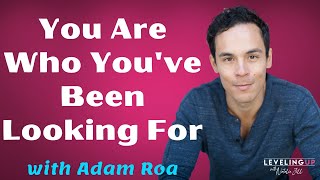
This is a YouTube video titled "047: You Are Who You've Been Looking For with Adam Roa" featuring an in-depth English podcast-style interview recorded in February 2019. Natalie Jill, a fat loss expert turned high performance coach, hosts the conversation with Adam Roa, a transformational artist and spoken word poet. They discuss Adam's viral poem, his personal journey through trauma, addiction, self-love, creativity, meditation, and the use of plant medicines for healing and spiritual growth. The interview explores themes of emotional expression, overcoming adversity, and finding meaning and balance in life.
Hi, I'm Natalie. Jill, fat loss expert turned high performance coach. When odds are stacked against us, how do we shift and create everything from nothing? How do we level up when we aren't feeling it yet or we've had a big setback? On this podcast, I'll be talking to some of the most inspiring and courageous men and women on this planet who at their worst, learned how to achieve success greater than they ever dreamed possible. Leveling up and creating everything from nothing. Adam Roa's viral video, you are who you've been looking for received an astonishing 24 million views in the first 24 hours that it was posted. It now has an incredible 126 million views now. This was never in his wildest dreams of possibility when he shared his art and spoken word. Adam, a seeker by nature, has been on an incredible life journey. From sexual abuse at the age of just five to to homecoming king to seeking in a dangerous form of speedballing at one time where he would use heroin and cocaine to numb and avoid, Adam has since transformed and created work that inspires many. Today, Adam Roa is a transformational artist who is committed to using creative energy to catalyze change on the planet. Join in today and learn exactly how Adam continually levels up and creates everything from nothing. Today on leveling Up, I've got Adam Roa. Adam, I'm so excited to talk to you today. I first learned about you seeing your viral video, which I've just recently learned that it has 26 million views here. So I'm dying to talk to you today. Thank you so much for joining us on leveling up.
Oh, thanks for having me. Yeah, it's 126 million views. It's pretty wild.
126. 126 million views. That's. Now, tell us, did you ever expect that to happen? Like, where did that even come from?
Yeah, I mean, it was. The whole thing is kind of a ridiculous synchronicity and manifestation of being trying to figure out a video to create and put out in the world and not having really an idea and then going to a Kyle Cease event and being pulled on stage to deliver this poem. And they had eight different cameras recording it and they sent the file to me, edited perfectly, and I put it out on the Internet and someone shared that video and that got 3 million views, just some random person sharing it. And Goalcast saw that video and contacted me out of the blue and said, could we create our own version of that using your poem? And I said, yeah. And then a month later, they posted it to their channels and then emailed me to let me know that it was the best performing video they'd ever put out. In terms of the speed of the response. It's been shared over 2 million times.
It's just unbelievably amazing. And you had no idea creating this? I mean, you had no idea that's what it was going to turn into, creating this poem and being recorded?
Yeah. I mean, I perform spoken word poetry all around the world and tour my own show, but I'd never anticipated a response like that to one of my pieces, especially one that I didn't create. I have a background in filmmaking and content creation. And yet someone else made this video and someone else shared this video. It's not even on my page. And here it goes as being. I spoke to this because it was funny to notice that in essentially a week, more people around the world had heard my voice and my poetry than my entire life combined. So it was a pretty wild switch.
Okay, so I want to back up a minute. I want to talk about, first of all, what is spoken word poetry? Not everybody listening knows what that is. Can you share what that means?
Yeah. To me, spoken word poetry simply means poetry that's been written with the intention of being shared verbally. And there's a difference to the type of poetry that you read silently to yourself. And there's a difference to the type of poetry that is performed. There's a cadence to it, and then the performer themselves brings their own unique essence to how they want to deliver it. And no poem will be delivered the same by any two people. And there's that performer aspect that is so alive in me that I love about poetry now.
It almost feels, when I listen to some of your spoken word poetry, it almost feels therapeutic, like you're almost being therapeutic sharing what's coming up for you or what you're experiencing. Do you find that that's what it is for you?
100%. I believe that for me, one of my gifts on this planet is to be able to take these esoteric, personal development, high level concepts and translate them into art that is easily digestible and understood by people. And so for me, having spent so many years as a personal development coach and motivational speaker, I started to recognize that there are plenty of people who can do that. There are plenty of people who can stand on stage and deliver valuable, inspiring messages. But there's a gift that I have to translate that into art. And that's where I started to just take, you know, the the poem that went viral is all about self love. Right. And that is such a powerful topic that throughout all time, it seems as if human beings have struggled to really embrace themselves fully. And how do we turn that into art pieces rather than lectures?
Yeah. Now for the inspiration for that, though. Did you yourself struggle with self love?
I still struggle with self love. I think that the journey is a spirit spiral. It's an upward spiral. And I'm currently in full transparency. I'm in one of those stages where I go, huh? I've hit one of those valleys instead of the mountaintops. I'm in one of those valleys of, okay. How do I transition into loving myself again? How do I transition into feeling excitement for life again and joy in every moment and finding my way through that? And I think that ebb and flow, that roller coaster ride of the human experience is why I feel so passionate about creating the art. Because I know that that connects all of us. I know that even for you, you have some of those days. Right. So that's the human experience that we're in.
We all do. And I noticed that it seems. I mean, maybe this is my own belief, but I noticed that people that are very creative, artificial, they tend to experience that more. And I'm wondering what your take is on that. Is it because they. I mean, what is it about when I interview an artist or I talk to people that are creative, they tend to express that they have these ups and downs all the time.
Yeah. I think that as an artist, what my role is, is to feel, feel as deeply as I possibly can. And that means both directions. So when I talk to people about this, the learning to feel. Because when I grew up, I grew up, my father's from the Philippines and I had that very traditional, stoic Asian male role model growing up, there's no emotion shown. There's no I love you, there's no hugs.
You had the culture of that. That's true. Wow. Yeah.
And so basically I created a story that it wasn't safe to show emotion in my house. It wasn't safe to feel. And so I shut down. And so in many ways I've had to learn from a logical perspective. That's where the acting. I moved out to LA to pursue acting and I actually learned to feel again as exercises as an actor. And that opened up my emotional bandwidth. And so now I have this understanding that feeling is actually just. It's just a well of feeling and we assign value to it. So when people say, I want to feel good, good is just the value you assign to a feeling. Right. And when we start to assign those values, that's where we get into this spectrum of good and bad. When in reality, it's all just this giant ocean of feeling. And through that experience, when we deepen our well of emotion, when we deepen that, when we widen that ocean, we're going to feel more in all ways. We're going to feel that sadness even more, we're going to feel that excitement even more and that joy even more. And I think artists are constantly diving into emotion to help convey that emotion, that lens for how we see the world to people. And so we dive deep into those emotional experiences, which creates bigger and bigger ocean of feeling.
I love how you just explained that to me. And I just had so many light bulb moments. I also grew up in a household where my dad, it was bad to show emotions. He didn't do hugs. No, I love you. So I get exactly what you're saying there. And I never looked at it the way that you said or even like, thought about, wow, do you take acting classes to learn to feel? That's pretty amazing perspective. That you even knew to do that. That you even knew to do that.
I don't know that it was conscious for that reason. I was acting as a little kid, and then I was a really late bloomer. I didn't hit puberty until way past my friends. And so I told myself, I'll never be an actor because I'm not attractive enough and I'm not tall like everyone else.
Because you have to be tall to be an actor.
Yeah. I honestly, when I entered high school. Right. So high school is what, three? 13, 13, 14. I weighed 73 pounds. I was five feet tall. 73 pounds as a freshman in high school. And so when all my other friends were being viewed by women as being sexy or desirable or someone they would want to date, I was still just the boy when my friends were becoming men in that way. And so for me, the actors were all these. The leading man type. And that wasn't me. That wasn't the. That was the story I was telling myself. It wasn't until my junior year of high school going and then senior year of high school, that I grew like 10 inches in those in that year and a half. And so that story that I created of not being attractive enough to be that lean man, I turned my back to the creative part of me and went and focused more on the business side of life and said, well, I'm just gonna. I'm gonna earn A lot of money, and I'm gonna be successful, and I'm gonna have the career and the 2.5 kids and the beautiful wife and the white picket fence, and I'm gonna do all that, which is also a huge part of having, you know, that immigrant mentality from my father of coming over here, creating that American dream. And it wasn't until I had this experience of the. Of achieving my mountaintop, which was as kind of that scrawny little kid in freshman year. My mountaintop for high school was to be the homecoming king, right? Like, be the most popular kid in school.
And I think that's the ultimate American standard. Like, be the.
Totally.
Yeah.
Yeah. Not only do the girls love you, but all the girls moms love you. Right? Like your varsity blues. And I won homecoming king my senior year. I woke up the next morning and I said to myself, wow, here I am. I have a scholarship to college. I've done that. I've become. I've won the popularity contest. I'm president of all this club and student council and all this stuff. I've done everything that they've told me to do. And here I went, homecoming king. And the next morning, and I wake up and I say, what now? I don't feel any different. I still feel angry. I still feel confused. I still feel insecure. But now I don't actually have a mountaintop that I'm looking at. So luckily. And this is where that nature nurture. I don't know what. I'm just truly grateful that I had this mindset, which was, what if I follow what everyone is telling me to do moving forward from here, and I wind up 40 years old, having gotten the career and the wife and everything, and I have this exact feeling of emptiness.
Wow, what a great insight that you had then about that.
Yeah, I have no idea. And again, I don't know if that's nature, nurture, divine intervention, but that was my thought process. And so I started to question, well, what actually makes me happy? What is. What is the point of all this? And I started reading some personal development books. So I was 18 and started reading personal development books. And then had the amazing opportunity while I was in college to work at an ad agency, which is what I thought I wanted to do, and realized that I didn't like that. I did not like that. And I started searching what was the one thing that I could think of in my life that used to really make me happy? And it was when I was acting, when I was in plays, in school, and those Sorts of things. So I started taking acting classes, classes in college again and working with a private acting coach and decided to move out to Los Angeles and pursue that career. And that was the first statement to the world and to the universe. I am going to follow my heart. This is now how I am going to live my life.
Now, you talked earlier about your dad and the culture he had and what he has built. How was he feeling? Was he in the picture at this point and was he supportive of that or was he creating tension around that?
I honestly, even when I started to do some stuff on television or whatever, I always had this thought that my dad would be more proud of me if I had gone and become a doctor or a lawyer or something like that. I think that especially when I was first pursuing acting, the perception I had was that it wasn't viewed as a real. Like it wasn't a real career. It wasn't a real thing. And I think that there was a big part of that too, when I got into coaching and speaking. And I think there is. That this isn't really a career. You can't really do that. And it wasn't until I had the tangible material success that so many people associate as success. Okay, Once I had those things, that's when I think my father started to go, oh, wow, maybe there is something here. When I had the house by the ocean and those sorts of things, that was the shift where I could see it shift in him.
But you had to prove that first. You had to show that.
Yeah, and that's always been a struggle for me personally is even in my message as I deliver it to people on podcasts like this or in my YouTube show, the art of Choosing Love, or my podcast. I don't know how much to talk about the material success because I don't think it's really that important as from a meta level. And at the same time, I know how much of a bridge it can be for people because I believe that you can have millions of dollars, you can have amazing sex and beautiful relationships, and you can have so much fun and creativity. You can have all of that stuff and do all of it from a space of consciousness and creating positive impact and leaving this world a better place than how we found it. I think all of those, none of those are mutually exclusive. One of the biggest issues we face on this planet right now is how many people believe that they are mutually exclusive, believe that in order to get ahead in life, someone has to lose. It's a zero sum game. So someone's got to be. Someone has to have less for someone else to have more. And these ideas, we get to let go of them and also stop vilifying the idea that, oh, I want a nice car and a nice home. That makes me greedy or selfish or not spiritual. Like, we get to let go of that and just start doing the life we want to be living and do it in conscious ways.
I love that. Yeah, really, really insightful right there. Now, I know from talking to you, before we started recording, we touched a little bit on. There was a point, and I'm curious how this came about and then how you got out of it that you got heavy into. What did you call it? Speedballing.
Yes. Speedballing is a term for when you do cocaine and heroin at the same time.
Okay, so how did this insightful kid that, you know, gets homecoming hang, you know, you figure out, okay, I. That's not what I want. I want more. There's more. I'm so. And then you figured out you're creative, you're artistic, all that. How. Where did that go? Or how did that fall into place? How did you find that? How did it escalate? And then how did you get out of that?
Well, it escalated, I guess, for me. I was at that space where I was debating moving out to Los Angeles to pursue acting, and I was unhappy doing what I was doing in Arizona, which is where I was at the time. And I have always been a seeker. I've always been someone who is searching for meaning and searching for the point of all of it. And I dive deep into all different types of subjects. There's so many subjects, from the esoteric to the scientific to quantum physics to, like, I love learning and I love seeking. And the drug use for me was just a. Another way of seeking. It was. When I look back on it now, I can tell you very clearly that I wasn't happy. And I was wanting to kind of skip ahead in time. And that's one of the things about heroin is so much of it is being able to just check out.
I always wonder when I talk to people about this. Like, I always wonder how you even just stumble upon that. Like, I've never in my life encountered heroin. So, like, how does that. Even you could be seeking, but how do you even learn about it? Or how does that even fall into your lap? Or how does that. How do you get tempted to go there? Is it a friend?
Yeah, I had a friend who had started doing it, and he. One day we were talking, and I was just Telling him how kind of. I don't remember even the conversation, but he said that he had started like he did it and if I wanted to try it. And I said sure.
So nothing answered your brain? Nothing entered your mind. Like, this isn't good, I shouldn't be doing this. Or it just. I was like, okay, he's doing it. I'll try. I'm really genuinely curious.
One of the really interesting things about me is I have a pretty extensive past of drug use. Not from being addicted to anything necessarily, but trying a lot of different things. Like literally going down to Mexico when I was 18 and going to the pharmacias and buying different types of anti anxiety pills and painkillers and things. And just. And interesting. And so I had that kind of just experimental psycho, not like explorer. Yeah, in that way. And so I also, and this is something that is important to me to speak to, is that I don't believe that anything inherently is bad or evil. Right. Speaking even to the emotions, how we assign value. I believe there's. When you look at like the cocaine, right. Cocaine, the way it's made and everything, there's so many things about it that is incredibly toxic for the system and gonna have a good impact on your body. And coming from the coca leaves where the indigenous people put that in their lip and chew on it for as an energizing plant throughout their day. Similar to what you would use for like matcha or the way we use coffee.
Sure.
Like we have. I don't think anything is inherently bad or wrong. I think that there. I honestly believe that there's probably really responsible ways that heroin could be used and produced and educated about. I don't think like, oh, heroin in and of itself is an evil thing that needs to be eliminated. Right. So that was a huge part of it. And then I also look at now in my current, current life and how certain plant medicines still play a role in my life. Ayahuasca or a boga or psilocybin mushrooms and the ceremonies that I go into yearly a few times a year, especially when I don't know what else to do. When I feel lost, I turn to the plant allies and plant medicines as ways to reconnect to spirit and source in that. And so I don't know if I answered your question.
Yeah, no, you did. In some ways, yes, I'm following you. I'm curious where the line gets drawn or where do you decide that this is not. You said there's not everything. Nothing's inherently good or bad. But where do you decide? Okay, this is a problem. Like, clearly at some point, you realize doing heroin and cocaine together is probably not a good idea. So, like, at what point are you, like, okay, this is a problem. I need to shift out of this? Or, like, where do you draw that line?
I woke up one morning and I had a. I was a bartender at a restaurant, and I woke up one morning after doing heroin and cocaine the night before. And we had a meeting, and I drove myself to the meeting, and the sun was so bright, my eyes hurt. I wore sunglasses inside, and my body was in so much pain, I couldn't figure it out. My bones ached. Like that flu feeling when your bones are all achy. My whole body hurt. And I was like, what is going on? I was so miserable. And then I realized I was having withdrawal symptoms, and I never touched it again.
Really? So it was a black and white decision that this is now.
It was a black and white decision of I'm having withdrawal symptoms. And honestly, my sovereignty. I won't give that away to some. Some chemical. And I'm. I'm. I. My willpower in general, I recognize as being slightly abnormal. When I put my mind to something, I just do it. And it's not the same for everyone. So. So there are definitely people who get addicted chemically to that and can't. And can't seem to get themselves to make that decision to stop, especially something.
As hard as heroin. I mean, I've heard that people will do that, and they're. It's. They're addicted from day one.
Yeah. It's an incredibly addictive substance. And what's interesting to even look at, though, is we can look at heroin and place those kinds of judgments and value assignments to it. And I look around at sugar, I look at refined sugar, and it's more addictive than heroin, and it's readily available everywhere. And it's incredibly. Especially in large quantities, like just a single, like, donut from somewhere.
And we give it to our kids.
We give it to our kids, and we're giving. I was raised on, you know, Capri Suns and snack packs and lunchables. That was what I grew up in.
Right.
And all of that stuff is toxic.
Yeah.
And yet it's readily available. It's free. Kids can go and buy it on their own. And so how interesting if we were to educate and have the same view on refined sugar that we have on heroin.
Yeah. So the bigger concern that I'm pulling from, too, is that not maybe. Not maybe concerns are the right word, but to me, I. When as I'm asking these questions, it sounds like a lot of times that escape, whatever that escape is, whether it is the sugar and overeating or it is the drugs or whatever it is, if there's an escape evolved here, like, I'm not dealing with my present state, I don't want to be in reality, so I'm going to escape that. I'd love just for you to speak into that. Did you view it as that, like, it's a way to get out of my own head or what was going through your mind there with that?
Yeah, 100%. I fully agree with you on that. I believe that for a lot of especially depressants and opioids, painkillers, anti anxiety medication, that sort of stuff, generally, I'll say it as a general rule, those are used to escape from something. Even when we talk about Valium. Right. I've worked with several clients that would daily take Valium as an anti anxiety medication to deal with their life. Like CEO of major companies and actors and actresses on major television shows. Like, that's a regular part of the experience. And at the end of the day, what is happening with those medications and those drugs is to dull the senses to something that's incredibly uncomfortable. And this is what I see as being one of the biggest problems in Western medicine specifically is that the focus is in treating the symptoms, not the cause. When we look at painkillers, what those painkillers are doing is just making it so that we are dulling the feeling of the pain of the symptoms themselves while not actually treating the root cause. And maybe like, oh, I have pain in my knee. Great. What's causing the pain in my knee? Well, I'm not gonna worry about it. I'm gonna shove 2, 3, 4 Ibuprofen in my mouth and then walk on the knee. That's telling me, hey, there's a problem here, right? And that's a really big issue. Whereas if you look at indigenous cultures and the medicines that they use, one of the really interesting things is it's like, let's have a dark night of the soul. Let's have a really intense experience for either a night or a week or whatever it is, and go into these medicines that are incredibly intense, but deal with the root cause and get that handled. And it's just kind of a different viewpoint. And one of the biggest reasons that I think that happens is because the entire system, our. Our big pharma system in the Western world is actually not incentivized for people to get better. They make money on people being sick. And so that sort of cycle, whenever the incentive is, hey, I make my money when you're sick, I make my money when you need surgery, I make my money when you are in the hospital. That incentive means that what gets created, the consciousness around that what's going to be created is things that support that system. That's just inherent in the survival of the system itself.
Yeah.
Wow.
I'm curious that that's why you've sort of turned to plant medicines. You, you mentioned, like ayahuasca and plant medicines. Is that because it, it sort of does. It does both. Like it helps you deal with the innate thing.
Yeah. There's been some remarkable. There's no shortage of remarkable stories around what is possible with these plant medicines. And I encourage anyone who's interested in them to do their research. They're not a game. I don't take them lightly. I think that it's very important to do them in safe settings and with people who are experienced as facilitators. And what I'll say to that is my entire spiritual awakening and everything happened because I was going through the most difficult period of my life at the time and I didn't know what else to do. I was completely desperate. I was taking inventory of everything I owned to sell it all and just start traveling and just try and reset my mind. And I found my way through a variety of synchronicities into an ayahuasca circle, not having really any idea what it was. And it changed my life literally from one day to the next. It has changed my life and continues to do so. When I go back and feel it's time again and because of the personal impact I've had and because of the impact I've seen in at least, I mean, at least 30 to 40 to 50 people that I know personally who have had their lives completely changed in that way. It is something that I think is a powerful tool that could be used and is being used, by the way, like these sorts of indigenous ancient medicines are being used in modern ways more and more. Like iboga, which is this ancient plant medicine root from Gabon, Africa, is being used as ibogaine, ibogaine treatment centers to treat narcotics addiction and alcoholism and has a success rate of nearly, I think, 50% where I think Alcoholics Anonymous, the long term success rate of not touching a drink again is 6 to 8%.
I did not know that. That's actually incredible statistics right there. I didn't know that. Yeah.
And so that was given to me years ago so someone can fact check and double look at the most recent ones. But it's a staggering difference. And ibogaine is now legal in several places. I think it's even being done in New York legally. And so these things are happening. MDMA is being used in legal studies currently in California, I think out of either USC or UCLA by maps, which is the Multidisciplinary association for Psychedelic Studies. And it's just interesting because it seems like it's underground and there's so many people who have the reference point of it being like drugs or whatever. And it's all making its way into therapeutic use again.
Wow. Now you mentioned now even now, today you've had like these awakenings. You're at least you're expressing yourself creatively, especially with your spoken word and everything that you do, like how do you now shift out of those downward moments? Like you said, you're going through one a little bit right now. Like when you have those times of self doubt or not having the self love, like do you have things that you do to help shift you out of that when that comes up?
It's an ongoing ever shifting journey. So sometimes it's one thing, sometimes it's another thing. Sometimes these periods last a little longer than others. What I will say is there are some constants that I regularly do. Okay, One of those is meditation. I believe that meditation is foundational to just getting the mind to quiet for a bit, just to slow down. You come from fitness? I come from a fitness background as a personal trainer as well. And it'd be like just holding weights all the time, like lifting weights nonstop.
It's actually that's my life. Adam, give me some tips here. Give my listeners some tips, but give me some tips. How do you get yourself to meditate and be calm without a substance? Like how do you do that? Because I know a lot of people struggle with that.
The thing I say to all my clients when I first start working with them because meditation is a non negotiable is that there's no wrong way to do it. There's so many people who have said to me, I just don't know how to do it. I think I'm doing it wrong. And I say just start by putting five or 10 minutes on a timer and close your eyes and breathe and don't open your eyes and don't move until the timer goes off.
It can be that simple. I love that I could do that. Yeah, I like that.
One of the biggest reasons people don't meditate is because they feel like they can't, like they're somehow going to screw it up or do it wrong.
Well, yeah, like I'll share that. My brain sits there and says you're doing this wrong. You're thinking about things and there's this.
Idea that you need to not be think having thoughts at all. And if you're thinking anything, you're not meditating. And there's a lot of different types of meditation, right? You can go into the chance niddle meditation where you're oming, or you could go in vipassana meditation where you're just focusing on your breath or there's so many different ways to do it. But my thing is I don't believe that there's one right way. And so therefore how do you even know which is going to be the one that you like? And why wouldn't you do the one that you like? So allow yourself the space to just get in the habit of setting a timer, closing your eyes and sitting down and just start breathing and notice the thoughts. What's valuable is recognizing that the thoughts that are springing up. So for you Natalie, as you're meditating, the thoughts that are coming to the surface are giving you an idea of the programs that are running like all the time. Those are the things that are taking up the majority of your energetic bandwidth on the that particular moment, that particular day. Those are the things. And if you sit there long enough, those thoughts will change and something else will come up. And something else will come up. And I've done vipassana. Are you familiar with the vipassana? So Vipassana is a traditionally a 10 day silent meditation. You meditate for 10 hours a day, for 10 days straight with no reading, no writing, no talking.
Wow, I have anxiety just thinking of that.
And the whole concept of this is that basically when you don't put any input in so you're not reading, you're not writing, you're not exercising, you're not doing anything and then you just sit there, your stuff is going to come up, all of that garbage that you have been able to avoid looking at is going to rise to the surface because there's nothing being piled on top of it, it's going to just rise.
Yeah, I'm imagining you don't have your cell phone with you or anything else. So you are forced.
No journals, no books, nothing. And so when you're just being with yourself, that rises to the surface. And so when you can start to do it even 10 minutes a day. You might be surprised at minute 8 or 9 or 10, what thoughts pop into your mind. Oh, wow. My ex girlfriend just popped into my head and I haven't thought about her in a month. As opposed to what initially started in the first five minutes, which is, I have this to do today. I got to get this done. I need to reply to this email. I have this podcast interview. Okay. And we can stay there, but there's things under the surface. And when we start to have those things under the surface rise, we can start to notice. Whoa. I've been making myself so busy because I don't want to look at the fact that I'm still hurting from that breakup.
Oh my gosh, such light bulb moments right now. Gosh, this is really good. You know, and I think especially with like the way technology, everything's so fast, fast, fast. You know, cell phones, instant. Everything's so urgent and instant. It's really easy to stay in that place of your to do list and responding and reacting like all day long. Right. You can just keep going so you're never with yourself, so you never deal with that.
Social media is our heroine.
Yeah.
When we talk about checking out how easy it is to sit at a restaurant and sit down, say you're going to just get something by yourself. I do this all the time too, where I sit down and I'm going to eat a meal by myself, let's say. And instead of just sitting and being with my thoughts, I, I get on social media, I get on my Facebook and Instagram and I'm on that. And the thing is, it's similar to what we're talking about with Vipassana and meditation. What's under the surface, I don't actually know because I'm just inputting more into my brain. And so many people are uncomfortable to sit by themselves for 10 minutes.
You're right. And so it's the constant and it's a drug. Right. You're doing that all day long and then what happens is they get home and they take the Valium or the Xanax or whatever to check out.
Yeah. This is scientific, by the way, because every time you get likes and comments and whatever on your stuff, you're getting a, an endorphin release that's a hit of dopamine for you right there. They're doing studies on it. And it's addictive. It is literally addictive. And as someone like yourself who's an influencer, you probably have your own journey with it. You could speak to around as it becomes more and more and more for sure, in relationship that happens to that. That following. I mean, I had it with this viral poem where my. My Facebook business page went from 10,000 to 100,000 in six weeks. And all of those new followers were sending, like, not all of them, but a large percentage were sending messages. And those messages were like. And there's been a navigation of how do I want to interact with social media? How do I want to interact with people who are strangers, who want help, and these podcast interviews and all these things? And how do I continue to create space for what I think is the way that I can be most effective and create the most impact on this planet, which is creating the spaciousness to continue to meditate and to listen.
How do you do that, Adam? How do you. Have you figured that out? Because I want to know.
For example, I spent the last week of the year, Christmas until New Year's, in solitude and silence on a remote island in Thailand. And so I went and forced myself. I did four and a half days of complete silence. No talking, no Facebook. No Facebook, no phone or anything. And a total of seven days just by myself. Because I travel with a production team filming this show, and they travel with me everywhere. And so there's a camera on me pretty much everywhere I go and around all the time. And so I thought to myself, what is the opposite? Because I've been doing that for five months, six months. What is the furthest I could do from that? Because I believe it's important for us to give ourselves balance in what our lives look like. And the furthest thing I could think of from having a camera following me around all the time filming a YouTube show was go by myself and don't talk. And so I created that space, and it wasn't enough time. I can be fully transparent. Like, it was a week, and it was wonderful. I had a lot of value come through. And for me, I was wrapped up in a lot of, like, finishing out the year and a lot of thoughts about how to structure the start of the year. Like, a lot of that was coming up, and I worked through it, and I started to get to that place that you can feel when you finally let some of that go.
And.
And. But it wasn't enough time.
So you're like, finally there. You're trying to come back.
Yeah, yeah, I'm in that conversation right now. How do I design the life that I want to be living with the spaciousness that I want to live? And how do I design my business to support that, not the other way around.
Yeah. When you figure it out for sure, please let me know. Because as you're even telling me this, I'm thinking to myself, I can imagine being someplace for a week with nothing. And what would keep coming up for me is the things that you have to do, the things you have to tell somebody right now, or that the reaction and not being able to do that, like how. I can imagine how that takes you time to shift out of that and to realize it's not that important and it doesn't matter.
And the habits, you know, we break the habits. I'm on social media every single day. It's how. It's just how I'm operating. And so to break out of that and literally rewire the neurology of my brain so that I don't think I have to is the big key. Because at the end of the day, Nelly, like, if I were to shut down my entire business, close out all my social media accounts and go off somewhere and just travel for a while, I could do that.
Yeah, that's.
I could definitely do that. And the world would not end. I wouldn't implode. Like, it would be okay. And so if I know that, if I know that that's okay, then everything else is a bonus. This business I'm creating is a bonus and gets to be an extension of the love I have for what I'm doing. And it doesn't get to be something where the tail wags the dog. And there has been very real moments of this journey where it has become that. It's become this thing where I feel like I have to do this. I have to keep things going. I employ these people and they rely on me. And I've created this story of the necessity of it all. And when I find myself doing that, I try and come back and strip it all away to. I could literally just go back to a little one bedroom studio apartment somewhere in the world and be okay. I could be cool.
Wow, gosh, so insightful here. I'm learning a lot from you actually, and this is really, really interesting. And I love that you're still on that journey of seeking and figuring this out and sharing as you go. So it's incredible. I do have a question for you. Two questions for you that I've been wanting to ask. So this video, the one that has 126 million views, first of all, what's it called so people know what it is? What's that video called?
The poem is called you are who you've been looking for you are who you've been.
Why do you think this video, I know you have your stories of like, somebody else found it and they made it viral Gold coast. But like, why do you think it took off and people. It landed for so many people.
Because it is the single biggest lesson. It's the single biggest topic that I think people on this planet are searching for right now, which is how to love themselves. We have a Facebook group. We have the art of choosing love Facebook group. I think we're at like 3,000 members currently. And we did a poll and we actually. To join the group, you answer these questions. And recently we mined that and we looked at 1200 of the responses to these questions and an overwhelming percentage, more than half the people. It's about self love and self acceptance. That's the reason they even joined the group. And so that shows me that right now on this planet, people want love. People want to love themselves, people want to experience love from others. And it's a confusing time because there's a lot of noise. There's so much noise out there. If you think about it, you have these advertisements that are telling you every single day there's a statistic that says we see between like 10,000 and 15,000 advertisements a day. And when we see those advertisements, what are advertisements? They're telling you, hey, you'll be happier, AKA you will feel more love and joy if you buy this thing, right? And so we're being told we can be happier, we can feel more love. We are being told 10,000 times a day that we are not at a high enough level of love and that we can go higher. And when we're in the society that's showing us that, and you mix that with social media where people are showing the highlights of their lives.
Photoshopped highlights.
Yeah, totally. That isn't the full reality. Then what is the messaging that we're receiving. And then how do we find our way to love ourselves? How do we find it when there's that much noise? If you think about even a hundred years ago where people knew the people in their city, like that was the thing, right? You need the people in your city. How much less comparison? How much less comparison there actually is? Because right now we're in a world of comparison. We're comparing ourselves to those advertisements, we're comparing ourselves to everyone else on social media. We're in this and this evaluation, and when we're in that evaluation and we don't know how to love ourselves, everything becomes this reflection of all the ways we don't love ourselves so powerful that is, I think, so present in the collective right now that my poem, which is simple, it's melodic, it's art. And I believe that human beings, we're predisposed to receive art at an emotional level. It resonated with people because it's what people are experiencing.
Yes, it's very. It's really mesmerizing to watch it and listen to it as well. I've watched it a few times.
Thank you.
Okay, so this is a question I ask everybody. I'm wondering your take on it too. If somebody, because a lot of this podcast theme, who I interview, it's about people, how do you level up and create everything for nothing? So if someone's listening and they're on their own personal rock bottom right now, maybe it's financial, maybe it's relationship wise, maybe they're just in this big story of not loving themselves, whatever it is, their personal rock bottom. If you were to give them three things that they could do, start implementing, to start shifting out of that, what would you suggest?
It's so funny. The three things. The three things are actually my very first ayahuasca experience to come full circle here. I went into it because I was going through the most difficult time of my life. And I said, okay, I keep hearing these stories that people create their reality and they manifest with this word manifestation. And my life right now is not fun, so how can I create the life I want to lead? That's what I went into it with. And I was given actually three instructions. And so I'm going to give those three instructions. The first one is embrace the shadows.
What does that mean?
Embrace the shadows means love yourself fully. Because so many people are moving through this world, trying to leave aspects of themselves behind, judging themselves, saying, oh, I have a temper, I have anger, I judge other people. I'm not intelligent enough. I'm not. Whatever your shadows are, whatever those parts of you that you're not proud of, start to love those parts of yourself. Because as you learn to love those parts of yourself, you're going to bring yourself back into wholeness as opposed to, I'm trying to get ahead to my dream life while, like, there's half of me that's trailing behind like a ball and chain because I don't want to look at it. And in order to love those parts of yourself, it's not like, oh, I love my temper, so I'm just going to keep it. No, in order to love that part of me, Then what that means is I'm going to look at, well, where's that part coming from? I'm going to need to understand, wow, I have a temper because I don't feel safe on the planet. And because I don't feel safe on the planet, whenever I'm challenged that safety, I go into a fight response. And that fight response shows up as a temper. But what that fight response is doing is protecting my heart. And so through the understanding of why that temper even shows up, then you can embrace it more fully and start to bring it in with compassion for yourself. And Embrace the Shadows means going on that journey of self love and self mastery, understanding yourself so that you can move through the world as a whole sovereign being. And so that's the first step. And that journey looks like even what people are doing right now, listening to this podcast, starting to listen to these things and apply these things, go on the personal development workshops and courses. Hiring a coach, that was one of my very first things I did, was hire my own coach, put it all on a credit card and said, this will work for me.
Because that's investing in yourself.
Investing in yourself, absolutely. And so the second part of that, after Embrace the Shadows, the second lesson was look inward and look inward is what I've been talking about with meditation, which is giving the space to understand what is going on inside of myself. Because I believe that nature is perfect. There's a symbiotic relationship that nature has within itself. And we are not separate from nature. Therefore, if you are here, if you have been born, that means that you are a part of nature, which means you have a place in nature. You have a symbiotic way in which you fit into the whole. You are not a mistake. Nature does not make mistakes. So therefore, what gets to happen is you get to figure out what your unique gift is on this planet. What is your unique offering to the world? How are you the butterfly? Or how are you the bee or the caterpillar? Or how are you the ants or the buffalo? Like, how are you that thing in relation to the whole? And how we find that out? So many people say, well, how do I find my purpose? What do I do? You look inward and find what is most exciting to you. That's the way that in which nature, our nature, communicates itself through us. What is literally your joy? What brings you the most joy in life? What lights you up?
Yeah.
That is going to be how you find your way and navigate your way into how you have been put here to fit in and if everyone was doing their part instead of trying to think about, oh, I've gone to school and I've looked at the advertisements and I've been told to get the job, and now I'm doing the thing to fit into the system, as opposed to, this is me uniquely playing my part of the system. I think all of the problems that we see, the plastic pollution, the pillaging of this planet, will start to fade away. Because I believe that the perfection of it lies in us innately and we get to look inward for that. And then the third lesson is make it inevitable. Which means that the moment you decide the moment you know what that is, the moment you know what your highest excitement is, your joy, the moment you know what you want to create on this planet, make it an inevitability, just say that I'm going to do this now this gets to happen. So declare it, declare it. And then through the declaring of it, it means you're going to take action on it. Action is the final step in the manifestation process. Action is how we directly impact the reality around us. And so if I say like I'm doing, as I enter season two of the Art of Choosing Love, I am actually setting a big goal and having no idea really how, like, don't. I don't currently have the skillset to actually accomplish the goal. But this is my highest excitement. This is what I'm going to do. And therefore I'm going to need to take action to learn the skills and the tools and develop it and make the contacts. And there's a lot of action that will happen from declaring it and saying this is going to happen. So therefore I'm not going to just sit back and wait. I'm going to step into that reality. And so those three steps of embrace the shadows, look inward and make it inevitable were given to me in my first ever Ayahuasca ceremony and have completely changed my life as I applied them for listeners.
So whether you're doing an Ayahuasca ceremony or not doing one, you can still apply those. Everything you said is amazing. Whether I think those apply just to anyone in life, wherever they are, I.
Don'T think, by the way, plant medicines are not a requirement. I don't think everyone's meant to take them. I don't think that they, everyone should take them. I think that anything we can access in those states, we can access without them. And there's plenty of ways to go about that. You can but try things, you know, like there's meditation, there's breath Work. Right. There's yoga. There's lots of things that require no substances at all that can lead to incredibly transformative moments where our consciousness enters into just a different state, a different state of being, a different frequency of what it's receiving. Because we're radio transmitters. You right now, Natalie, are receiving certain frequencies and putting out certain frequencies, and we are. When you want to be living at 101.1, the question is, is your transmitter attuned to that or are you living at 100.3 right now and putting that out into the world? Well, the question is, how do you become a match to 101.1 if that's what you want to be experiencing in your life?
This is so good, Adam. I've just loved chatting with you. Where, where can people find you? I know I've got a lot of different locations, but I want to talk about your, the group, your main social media. Like where do you want people to follow you and find you?
There's two main websites you can go to. Adamroa.com, a-A M R O A dot com.
Okay.
And that will lead you to my podcast, the Deep Dive with Adam Roa. That'll lead you to the other website, which is theartofchoosinglove.com and that is where we host the show. This is. It's like a conscious reality show just taking you in the raw. Real moments of me going through some of the hard, the hardest period of my life actually, with ending a relationship with someone of nine and a half years together and then also speaking publicly for the first time about being sexually abused at the age of five.
Oh boy. We're gonna have a whole nother podcast interview about that. I didn't even know that. Okay.
Yeah, that's. All of that has been shared on this show. And so the art of choosinglove.com, you can follow me on Instagram, Adam Roa, a D A M R O A. And then you Facebook all of the places. YouTube is where we also host a lot of our content. So you can look up Adam Rowe on there.
This is awesome. Thank you so much, Adam.
Oh, you're so welcome, Natalie. I enjoyed it. Thank you for having me.
Thanks for leveling up with us today. Please share this episode if you found it helpful so others can join in. And don't forget to hit that subscribe so you don't miss out on future shows. And if you would leave me a five star review. I appreciate those so much. I read all of them and it's how I know that I'm giving you information that you find valuable. And come interact with me over on Instagram at Natalie Jill Fit. I read all the direct messages and comments over there. Make it a great day. Creating everything from nothing.










