076: From Anorexia to the Fighter Diet with Pauline Nordin
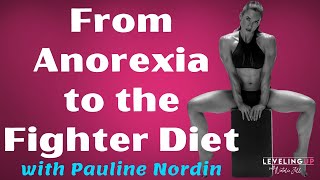
Pauline Nordin, creator of the Fighter Diet, talks about recovering from anorexia and the unhealthy weight swings that shaped her approach to fitness and nutrition. She explains how her eating disorder led her to develop a sustainable philosophy that rejects extreme restriction and focuses on building strength instead.
Hi, I'm Natalie Jill, fat loss expert turned high performance coach. When odds are stacked against us, how do we shift and create everything from nothing? How do we level up when we aren't feeling it yet or we've had a big setback? On this podcast, I'll be talking to some of the most inspiring and courageous men and women on this planet who at their worst, learned how to achieve success greater than they ever dreamed possible. Leveling up and creating everything from nothing. Pauline Norton is as fit as they come. She has a walking billboard for fitness today, but that is not where she started. Born in Sweden with a challenging self image around control, she battled anorexia and then the other extreme, unhealthy weight gain. Her pain and bookworm obsession over physique became her purpose. Today, Pauline is the creator of Fighter Diet that took the wellness industry by storm. Join in today and learn exactly how Pauline Norden leveled up and created everything from nothing. I'm so excited today because I have been dying to interview you, Pauline. Thanks for being here today. Pauline is the founder of FighterDiet.com, which, unless you're sleeping under a rock, you have definitely seen her, her face, her body, her programs. It's amazing. But I want to know, because I know that's not who you always were. You weren't always this super fit, successful woman.
Yeah, that's definitely the wrong picture people have. They think that I was born this way, that I was obviously lean, that I could eat whatever I wanted, that I kind of came out of the womb with dumbbells in my hands and was fit. You didn't. Right?
Looking at your arms, we would think that.
But then if you think about it, and I tell people, would you ever think that someone who didn't have a problem with a weight would create a diet concept for life? Because if there's no necessity, then there won't be any evolution, there won't be any product stuff. So. So my whole issue with food started when I was 8. When I was 8 years old, my mom, she divorced my dad when I was 6. That was the typical feeling, like I didn't have the love of my father, all that typical stuff. When I was 8, my mom had a boyfriend at the time and he was very overweight. And I remember I saw him laying on the couch and he had a huge bowl of popcorn and candy on his belly. It was coming up and down. It was a Coca Cola standing beside the couch. And I remember I just saw that and I linked the junk food to his fatness And I just like, I'm gonna stop eating candy at that age. Yeah. That's incredible. Well, some people would say that was a smart kid. And the other one, oh, eating disorders 101. But at 8 years old, I stopped eating candy and I started to get a little chubby by that age so that I slimmed down a little and just normal. And that kept on. I didn't eat candy until I was like 12 years old and a new stepdad came into the picture and he was very controlling. And I was one of those kids that I have a very strong drive. I know when I want to go. And I was a good kid. I did good in school except for PE and math. I can now say I can only count cash, calories and carbs. The reason why I was not good in sport, because I didn't show up, because I didn't want to take a shower with the girls, because I was embarrassed of my body. So I refused.
Why did you have an embarrassment of your body? Do you think?
I hit puberty around 8:2? Because I was very early bloomer with that. So getting pubic hairs first of all the girls is just, you know how women are too. Like girls, they look each like they look from top to toe. And I just refused. So the only time I was present in the PE was actually with the sprint because, you know, you have clothes on and clothed swimming when you swim and with clothes on. Yeah. So I was in that but nothing else. So when I was 12, then I started my first diet. I was never, I was not fat. This was my way of getting control of my life because I rebelled against my stepdad. In hindsight I see that was the whole thing.
So he was being controlling and you thought, I'm going to control my eating.
Yeah, because that's the only control my body and what's going in here. And I remember there were so many fights of, you know, he tried to put in, you know, bacon down my throat, you know, really force force feed me because I mean, he was right because I was trying to starve myself. But he did it in the wrong way. He did it. So I just got more like, you're not going to be in control of me. I got so good at hiding food. So we were sitting at the table, tons of people here. And I knew how to put, you know, whatever food it was into my sleeves, you know, to kind of get it away. And it looks like I ate. I went in at 4am in the morning and went up, I made breakfast, everyone. And then I was so, like, so smart or clever that I put, like, breadcrumbs around my mouth. So then my stepdad would say, oh, you have to, you know, you got something here. Just, oh, I didn't eat. Was just so outsmarting the whole system.
So what was your mom saying through all this? And were you super skinny? Did you get, like, anorexic or what was happening?
Well, I got down to 80 pounds. So when I was like 13, 14, and I started, like 115, like, I'm now like 117 pounds. So that was a lot of weight. And it was one day when I was standing in front of the mirror and I weighed myself and I saw, okay, 80 pounds. And I got this warning in my head like, shit, something's going on here. But it was. That didn't stop me. It was when my hair started to fall out.
So I have a question about this. I've always wondered because I've never. I want to understand a little bit more about the whole eating disorder thing and this whole. Because, like, for me and for a lot of people, if we don't eat, even if we don't want to eat, we get lightheaded, we don't feel good. You hear that? I'm going to pass out. Was that not happening?
No. And I don't understand that thing. And I think now maybe I just trained my body, but I never have any blood sugar issues. I never crashed. I never have anything. And I went for days not eating. And I was thinking, you know, I was hungry, but there was no problem. Or maybe it's just because women can burn more fat and, you know, we just survive that way.
So the eating control came because you wanted to have control.
Was it because.
Did you think you were fat? Did you think you were overweight?
No, I knew I wasn't fat. I knew I never had. When I was standing in front of the mirror, I didn't see that I was a fat person. I didn't see I wasn't chubby, nothing. I wanted to see ribs. I wanted to have, like a huge thigh gap. I was measuring everything. I had this. I wanted to have muscle. I didn't understand how to get it. So I started with these pull ups. I did 500 sit ups a day. I did 500 pull ups. The pull ups weren't real pull ups. They were like chin ups, you know?
But if you weren't eating too, how are you building muscle?
Oh, well, because still your body's gonna, you know, you can use the fuel you have in your Fat cells and it will help you a little bit. And also, you know, you see the anorexic, the training anorexic, they don't eat, they still have some muscle because you have, I mean, everyone can have an abs if you don't have any body fat. So it's not healthy at all and it's not nice looking. But yeah, you can look like you have a little muscle. So.
Okay, so when you're, you're a kid and you're going through this, you said you were 12 years old around this time, right? Were other kids teasing you? Were they, were you getting, did they like it? What was happening there?
So I was a loner in school. I was a typical double nature of being the leader of the pack because everyone wanted to be my friend, but I didn't care about having friends. So I was kind of the leader but without really caring. And at the time, I remember the girls always got touched by the guys on their breasts and so on. And I never had a problem with that. So I had a lot of respect. So there was never a problem in school. I was teased for other things. They tried to tease me by. They said that I looked like a monkey, that I was cross eyed, that I looked like a Chinese person because I had almond shaped eyes. So they really got to me that way. But it was never anything about my body that was my own. Like you said, this sounds different. Yeah, exactly. And something that just wanted, and I wanted the strong muscular body, but I didn't understand that. I actually thought that the way to get that way is to not to eat and to not eat any protein at all. So I purposely eliminated all protein I could and just ate pasta because I thought that was kind of.
The pasta diet.
Yes.
Yeah, that's all you ate, the pasta diet, the pasta.
Only I thought it was not, you know, that's how you get lean.
Okay, so you have, so you're 12, you're sort of a loner and you're in control of your body or you think you're in control of it because you're doing the spoon thing. You have a stepfather that's being forceful and mean and not. Was he teasing you like you're too skinny? Was he just making, what was he.
Doing when he knew I was training? He said I look like a man. Of course. A typical, you know, you're gonna take steroids, you know, typical. That was when I was later, like 15, 16. I started with real fitness training when I was 17. That's when I, you know, when I came home, but now I have to go back because I moved out of home when I was 15.
Okay, did your mom, what was she saying?
So my mom, I remember one time she came up to me when I was in bed and she said, I remember because I had like hidden food under my bed and it started to come fruit flies out and I forgot about it.
Because you were hiding it.
Yeah. But she came up to me and says, Pauline said, you know, you can't, you have to start eating. She said. And I was manipulating her because I kind of made her to be on my side. But some part of me now, in hindsight, I knew I was onto something because if I hadn't had this background, there was no way I would have phyto diet. My brand was helping so many people around the world now. So maybe she didn't understand. And you know, in hindsight, my stepdad was right. And actually I have not made peace with him until about a month ago.
Oh my gosh.
Yeah, that's how long it took. Because I felt that he, you know, so many psychologically abusive, said that I was free of intelligence and you know, kind of was really mean in that way. And I got so paranoid. You know, when you have to, when someone says something to you, you have to have five different ways in your brain of how to explain because you don't know really. You know, it's almost like an interrogation. Every day over and over is psychological warfare. So I was moving out of home when I was 15. I applied to a very like elite school for very. As a special student, sound like you saw something wrong, but it was with those who very like high achievers. Okay, so I went to a school, but my motivation to go there was not to, to get these fancy grades or to have to read to learn six languages and everything in English and philosophy and stuff. It was because, so I could keep on not eating on my own. That was my motivation.
Okay, so back up for one minute because I want to hear more about this, but what's coming up for me, do you think knowing what you know now and being, when you think back to being that little girl when you were not eating and you had this control thing, would you. Do you feel that most people that struggle with anorexia or eating disorders, do you think it comes from some sort of control or would you say it comes because listening to you, it had nothing to do with your body image?
Now I believe now in knowing a lot more about this, that the anorexia and all that is a mental Disorder. Disorder. Because it's been. It's not a new phenomenon. And people say that, you know, it's the social media's ideals, body ideals that make women starve themselves. Like, no, that's not true. Because if that was true, we wouldn't have any obese women, because why are they fat then if they are not falling for the pressure? So what I know that it's psychology, and it's an issue. That psychological issue with anorexia. It's more like a mental disease or something is wrong. You can have depression. You can have something with a real starving anorexia. What I had was kind of a functional or more. It wasn't a mental thing because I knew what I was doing. I knew exactly what would have been.
The right thing for your stepdad to have done or your mother to have done. Because I know somebody listening to this might have this going on with their child or somebody they care about. What would have been the right thing for them to do.
Yeah, what you shouldn't do is to force a kid to do something, because when you do that, you're just gonna create a monster, and it's gonna be, you know, you're gonna do the opposite. If you tell your kid you can't drink, what are they gonna do? Become an alcoholic? I would. If I was a parent or how I would want it, I would ask them, say, what do you want to do with this? What is your goal? And how is this gonna help you kind of have an intellectual dialogue with your kid and not treat your kid like it's a kid? Because kids are much smarter than you think. You just have to kind of put the conversation on a level that they can, you know, that they are. It's like, fair, square. And also, not when you have a stepdad coming in or it's not your. You know, you cannot take over like that or treat your step kids like they're your own inner. It's very complicated. I don't even know if I know exactly. But one thing is do not do. Don't force your kid to do something.
Don't force.
So I liked what you just brought.
Up about having an intellectual conversation with them. So, like, ask what they actually want.
What is your agenda with this? Instead of saying, you can't do this or why don't start with that? You know, Like, I did my first mistake. I remember I created my first diet plan, and I learned all about these calories in, like, a magazine. I just. Whoa. You know, calories. Reading all this, like, food of calories was amazing, and I forgot to put it away, so it was, like, on the table at home. I'm just like, oh, I'm stupid. You know, they got me. But if I had a parent, if I was a parent and I had found that I would ask, so what are you gonna do with this? Almost, like playing with it.
Curious. Yeah, just being curious.
And also, like, lead by example. Like, my stepdad, he made all this food that was way too calorie rich. And if you didn't take two servings, like two, you know, you help yourself twice, then you're offending the chef. I mean, seriously, do you want someone to gain weight? Try. You know, I was raised in, you have to clean your plate, otherwise you're not gonna get dessert. If you don't eat up this. If you feel bad for the potato, you know, if you miss one, it's gonna feel the crying. I still have that issue, you know, that, you know, I can find myself, talk to the old brand. Like, you know, it's nothing wrong with you. It's just I have. I can only have this much, you know, so I can play with it now. But. So now, in hindsight, I remember back in the day. So maybe 10 years ago, before I had learned how to communicate with people so they understand what my true agenda is. It's not about eating disorders. It's not about starving people. But I got a reputation online that they said pretty much, you know, that I'm just an anorexic or something. And it felt so. It was so wrong because I had put the destructive pattern. I changed it because that day happened, so. So I kept on starving myself until 17.
You go to this new school and you want to learn how you. Now you're excited because you get control. Now you're like, I know what question. You got my food.
Yeah. So I'm there in high school, living on my own and not eating. I have one can of heinous beans per day. That was my diet. Wow. And I spent all my other money on just clothes and stuff. Then one day.
Were you getting comp. Now I'm curious about this too, because I. Were you getting reinforcement? Like, you look great. Were you were people? Nothing.
Nothing. There was nothing. And because I was covered up, too. I wasn't, you know, I wasn't one of those who go to the beach.
Did you know you had a disorder?
I remember it was so long time ago, but I remember that I had this conundrum of, do I want to be skinny and unhappy, or do I want to be fat and unhappy.
Wow. Because you decided you were unhappy regardless.
Yeah. I'd rather want to be unhappy and skinny than happy and unfat. Wow. Because there was no middle way. And I also. I knew. I knew I had to change, but I didn't know how, so that I had a conundrum. And I remember that, you know, I didn't eat school lunch. I didn't eat anything. And then, you know, and. But the thing is that I lost the control, so I was eating way too much, and that I gained weight. And then I starved myself for five days. I never threw up and stuff, but I ate so much. I have a pig appetite. And, you know, I can eat. So I didn't even feel nauseous. Just like, all this good food and one day. So I felt like I had. I lost control. I have to do something about it. One day, I was walking by a magazine store, and that was kind of what changed my whole Life. It was February 20, 1999, and I saw a cover of Muscle fitness magazine or Flex, and it was Arnold Schwarzenegger on the COVID And I've never seen a muscular body in my whole life before. And I saw it, and I was just blown away. And just. I want that. There was no female model on the COVID There was nothing of that. I went into the store, and I remember I was looking around, like, it felt like I was going, you know, you're watching porn because all these naked bodies. But I've read it and I saw, like, oh, you have to have discipline. You can't just eat whatever you want. You have to go. Even your feelings cannot be in control of you. And all that just. It was exactly what I needed. And it was that kind of mentality that, you know, triggered me so. Right on. That I had my dreams of going to America since I was 5 years old. So that was my goal. My goal was to be a journalist. That's why I went to this school, so I can come to America and do that. But I realized, learning about Arnold, that, oh, if I become the best in bodybuilding in Sweden, I can get a green card and come to America. Wow. So I decided right there, before ever having been in the gym, that I'm gonna train hard for three years, and I'm gonna step on stage in the Swedish nationals in bodybuilding for juniors, and I'm gonna keep on until I get my pro card and then move to America. So then I went to the gym for the first time, and I told the trainer there that I said, okay, I'm gonna compete in bodybuilding. I rem at me because I was nothing, you know, like, you can't see me. And he looked at me just like you, you know, And I just remember, like, trust me, like, you know, I'm gonna show it. And so he showed me with lightweights how to do this. And I remember I asked, like, do I have to use lightweight? I can't do nothing. But it was like, in me. I wanted to speed it up. And he says, well, you know, no. So I started lift heavy right off the bat. And I was strong because I had been. I had horses since I was 4, so it was always, you know, cleaning out the stables with 23 horses and all that stuff. So I had, like an athletic mesomorph built, but of course, a little fatty, insulated from my bad diet. And I grew muscle. And since, thankfully, I wasn't as good with my diet as in starving myself, so I couldn't control it, which enabled me to build muscle because, you know, those calories came in and I couldn't build. I was hooked from the first day. The muscle pump, the feeling and how my body responded and seeing how I changed and all that. I remember back then when now, you know, I felt that I had a six pack and, you know, it was a flat belly, but that. But for me, it was this. And then they started to see it in school, like, what are you doing? You know, this training. And I couldn't stand up for what I was doing. So I ate my lunch in the restroom. I go and I shut the door. I sat on the toilet and I ate my lunch.
Why are you hiding eating your food?
I couldn't stand up for what I was doing.
Because you didn't want them to know that you were.
It was this typical that. I remember a few years ago, before, in intermittent fasting and stuff, was popular saying that I don't eat six meals a day was, you know, people were like, wait, you're not eating six meals a day. How can you do that? I was not secure enough to say that. And back then, it was the same thing. I was not secure in saying, this is what I'm doing now. I couldn't stand up for it, so I pretended nothing was going on.
Okay.
And then fast forward, I competed. You know, I went on my first and nationals and, you know, kept on.
I'm curious about the eating disorder and then the putting on the muscle, which was, you're treating one habit for another, which is a healthier habit, but you needed to have more food now. Were you still battling this food issue?
I had more that I had this huge appetite, so I tried different kinds. I was on the grapefruit diet. I was. Well, I was on the pasta only diet again, but.
So your appetite was basically overtaking your need to control and not have food.
I had no mental skills on how to do this. I knew how to not eat. I didn't know how to eat in moderation because hadad is something that all or nothing. Thinking I was all or nothing. Either no food or nothing. I was typical. You know, this one that I'm gonna do this diet and then I do it for three days and then blow it. Yeah. And I was to the extent that I put my wallet in the locker in school over the weekend, thinking that that way I can't buy any junk food.
Wow.
But then I started to steal. So I started to steal the food and. And then I worked as a blackjack dealer. And Thursday nights and Friday nights and Saturdays, the whole night shift. And I went to the gym after that in the morning, at 5am in the morning and working out. And of course that was not sustainable. So I just surrendered and I ate, you know, a whole pint of ice cream and granola and chocolate filled, you know, and I knocked out, crashed. And then, you know, so it was this up and down in way.
So it's interesting, like from what I'm hearing, you had like rigor and commitment in certain areas of your life. But then other areas were just completely blown away.
It's completely double nature of, you know, full discipline and complete chaos.
Yeah. Like I'm gonna work, I'm gonna work hard in the gym. I'm gonna do this, but I'm gonna just do this too.
So that's why too, you know that I understand what people say. That's a diet thing is. Yeah, of course. Because I work, you know, now when they see my pictures, they don't even think it's me because I, you know that I was never fat. I was thick and chubby. I was 138lbs at 52 at my heaviest. And that is borderline overweight. That is right on the border. I remember what it was. I had the fat tire on my belly. I was not lean at all, but I was strong. So I tell people that you can't confuse strong with a lot of muscle with the leaners because I had a lot of muscle, but I have this fat on top.
I'm trying to wrap my brain around this because as you're talking. So originally it's the not eating on the anorexic for control. So now you've gone this other extreme where you're putting on muscle and you can't control your eating and. But you're still feeling in control. So it's always been about this control thing, like, I'm putting on muscle, don't tell me what to eat. That's what I'm hearing.
Yeah, well, it was more that I had the happy go fat diet fat days that I call fat, as in I wasn't fat, which is chubby. Between 2002 and 2005, there were my bodybuilding days. Those were when I had an off season like everyone else, where we get fat and then we diet down for the competition.
Okay, so you're five foot two and you said you're at your heaviest.
You were 138.
138, yeah. Okay. So people listening might be like, well.
That'S not in American standards. But that, like you said too, that, that is. The picture that I could show you is like, you know, there's a layer that's huge layer of.
So you were not healthy. Regardless of what it looks like or what people think, you were not healthy. Got it.
It's not healthy to eat foul of the calories in one day and then trying to restrict the self.
Now, what was going on with your self esteem and your mind about your body? Like, what did you think about your body?
I was all about building muscle. So I wasn't unhappy. It's just. It was part of what we do. It's this off season. You. You bulk up and then it's just part of the culture of. Back in the early 2000s, it was still like the bodybuilding culture. And that was. Everyone was doing. It was natural to be fatter. What changed for me is that I always wanted to be lean. I didn't like to train and feel chubby and not look it. I didn't care about strength. I wanted to be. Look like, you know, a sculptor. Like Arnold. Yeah. And so I realized you wanted to.
Be like a bodybuilder.
I know. A real. And so then it was 2005, and I got cast to be the trainer for the biggest Lucy show. And that in America? No, in Scandinavia. Scandinavia. And it was three months in the middle of nowhere in Estonia, on a castle. And I remember that there's no way on earth that I'm gonna be on TV and feeling and not look like I'm a trainer. So I decided there just like, you know, you have this decision making that I'm gonna change, and I'm gonna clean up my act. That's when I started to play around with this volume eating that I'm into now that I understand that, you know, I have to eat until I'm satisfied. I don't really know exactly what started, but it was kind of the prototype of Fire diet back then. I remember it was throughout those three months in Estonia, because I got leaner and leaner, and they called me the pig, because every night I cleaned the whole kitchen from all the vegetables. So the chef, he had, like, a huge of this, you know, that, you know, family of 24 people. That was my dinner. But I realized, oh, wow, I eat this every night, and I have no problem with sticking to my diet. And I started to see pattern, you know, I picked up because I'm very analytical and says, okay, this is what I'm doing. This is a result. So throughout this time, I got leaner and leaner but not unhappy. I felt good. So I was onto something. At the same time, I got approved for a green card because I had applied for that. So then this is where the start of the whole journey. So when I come into America, I was an IFB fitness figure pro professional. I was competing with the girls for two seasons. And the reason for me competing was. Or like, putting show after show after show was so I could not get fat in between, because if I have something I have to show up for, then I'm not gonna overeat and get fat. It was so bad. It's, like, typical with all these competitors doing when I think, like, it's not that much fun. Like, why are you doing it for real? So I decided that I was gonna quit competing, and I was. I was terrified. I thought that now I'm gonna lose it. I'm gonna regain all weight. But there was something in me that I. That I knew that. Pauline, you have chosen this life. You have chosen to be a fitness person. You want to have this. It's not your body type. You want to do it, so you have to pay for it. Are you going to be mad at your own decisions for the rest and be bitter and grumpy and be, like, mad hangry every day? And I realized that that is not life quality. I don't want to do that. So then one day I was running on the beach, trying to kind of out train all the food I ate. It never worked. And I tried. I was running for three hours a day, and I still looked the same. And there it just came to me. And I still don't know. I'm not. You know, I am a little bit spiritual. You know, I grew up in a Christian hand. I would have to go in church every Sunday and so on, but I'm not religious. But something happened and I was. I was running there, and it just came to me like a huge epiphany. The whole fighter diet, the name fighter diet, the whole rules. It was almost like getting a whole commandment.
Well, it's also your life. You've been fighting.
Yeah. So maybe, just maybe it was just a runner's high. I don't know. But. And I just stopped. I just stopped. I never cut into a session. Like, even when my boyfriend at that time, he proposed to me, I didn't stop my session at that time. You know, I keep on running. Okay, keep saying yes. Yeah, right. Yes.
I'll catch you after the.
But I just turned around and I ran home and I wrote it out on my blog. Cause I had paulinefitness.com at that time. And just, okay, I'm onto something. And I wrote everything and just tell everyone. I said, I'm gonna put my clients on this. I'm gonna do it myself. And I start to get leaner and leaner and happier and happy because I was not starving. So the whole.
Healthy now.
Yeah. And I ate and I had this. One of the catchphrases like, prevent overeating by overeating. And that is what I'm doing.
Say it again.
Prevent overeating by overeating. And that is that you have to eat so you're full. Because if you're hungry, your drive to eat takes over. There's no way. There's no way you're gonna win because you are programmed as a human being to eat, because otherwise you're gonna die. So what are you gonna try? Willpower yourself out of it. That's what I had been trying. And willpower will die. Because let's say this. If your body's all cells think that you're dying because you're not eating, good luck winning that battle. You will never do that. So I got happier. Gained, muscle gained. Because I ate a little bit every day. Instead of the cycling, undereating with overeating got leaner the longer I did it and my clients do, and everyone loved it. And that's when I knew that I was into something that was gonna make my living. I just pulled everything down from the Internet, made it an ebook, and kind of made Fighter Diet a success. That's how it started. And, you know, so I took a destructive habit and changed it around.
I love is that you literally lived two extremes. You lived the almost pretty much anorexic at that point. Right. Super skinny control, and then the unhealthy other extreme. And then it's like this finding this middle ground, which was your passion and your calling and what I always wanted to do.
Yeah.
Wow.
And the funny thing is that people ask, what workouts did you do? What diet plan did you do? And this is why we have that in common, Natalie. Like, stop focusing much on what I did there and start focusing on my mindset, training what I did. Because that is my forte. That is what I worked on. I knew I had to change that. And, you know, my favorite book of mine that I've written is A Fat Loss by Mind Power.
Okay.
And that is like, you know, it's just like what you do, Natalie, with this. You know, how you have mindset is everything. You can't. You know, you can do the work and stuff, but you have to change from the inside first. And the fat Loss by mind Power sounds like a selling, you know, the typical. Oh, yeah, right. But you can't lose fat if you don't know how to do it. And you have the right skills. You have to outmaneuver your brain. You have to outsmart yourself. You have to have a whole list of how to actually negotiate yourself out of these kind of bad situations where you just want to say, oh, screw it. I'm gonna start over Monday. And I have perfected this skill because I know exactly what to do with myself. I have the same kind of. You know, some days I just. Oh, I wish I was just on the couch now with a pizza and Ben and Jerry's and chocolate and a good movie. That sucks. But it's great because I have food, you know, because everything is so amazing when you have food. It's because we love food. I. I love to eat. I love. People think that I don't like junk food. When people say they don't like that, it says, you're full of crap. Because everyone. We are. It's tasty. But that doesn't mean that you have to eat it because it's not good for us.
What's your philosophy around that, by the way? Because knowing that, you have the tendency to be extreme. Right. What do you allow yourself to do or not do?
I'm allowed to do whatever I want the results to be. So I eat how I want to feel tomorrow. So, for instance, if I have the cravings today, I ask Myself. So, Pauline, how do you feel tomorrow when you've eaten all that? Will you be happier? Hell, no. I will. I will feel fatter. I will feel like I shouldn't have done that. I want to see like, oh, that's a blank page in my day. So I act according to how I want to wake up. And that's when you live like that. It's very easy. It doesn't matter. It doesn't mean that I don't know how to treat myself because life is short. Or I say, actually I say life is too long to be hungry all the time. So it's very important to understand that there's one thing that is regular eating. And take away this whole thing now that, ooh, you have to treat yourself every day. You have to have this wonderful. No, not everything has to be, like I said, like an oral orgasm. Like every time you can have special occasions. Like when I. Why not have on a weekend you have something extra. There's a term in the fitness industry that I don't like that I completely say, like, I don't use it, I don't want it because it's a negative term. It cheat day, cheat meal and cheating. I don't do that. I don't cheat on myself. I can't lie to myself. I know what I did, so I don't use it. What I use instead is treat because it's a positive thing and it's a reward. Why should I give something instead? I cheat. No, I'm not cheating. I'm treating and rewarding for good behavior. That's how you do with food. I think food as a reward is great if it's done right. You know that I like to go out to a restaurant, I like to eat whatever I want, but I do so moderation. I was not able to do that years ago. It was all or nothing. This was a skill that I perfected with my physique as well. So, you know, I just wish people that what I'm trying to do with Fighter diet is like 50% mental training rather than, you know, 1%. It's if you can change your mind to understand why you're choosing to eat healthy, why you doing this? There isn't this diet problem anymore. I tell people all the time, my concept is it's not a keto diet, it's not a grain free diet. It's nothing like extreme like that. But for some reason, Fido diet has been considered be so extreme when it's like the opposite. It's very flexible. Yeah. You can eat pretty much what you want, but it's a volume game because if you are not full, you're gonna slip up and you're gonna eat.
I think the extreme concept probably comes from the way you look. You guys can't see her right now as I'm looking at her, but she is buff and jacked. But she is tiny. Yeah, she's like a tiny jacked, like.
Yeah, so.
So I think that's where it's coming from. But what's funny is you're right. It's not about like the actions and stuff. So what do you tell like when women. I have so many questions right now, but like when women look at you and they say I want to look like you, what do you tell them?
Time to start changing your diet. And I asked them what to do and they said, well, you know, I'm good with my diet. Good isn't the same as lean. Healthy food is not the same as lean. You can eat healthy and be overweight because healthy food has calories just like unhealthy food. So it's very important to not glorify. And right now we have all these weights weird fat. So people put butter in their coffee and they think because you burn fat, because you eat fat doesn't work like that.
Let me tell you, I did that for a while until I gained an extra five pounds. I was all on board until the scale went up. Yeah, I'm not a fan. In fact, if you see any Natalie Jo blogs of like the butter coffee, I don't do that anymore. I'm just being real.
I mean, it's just so stupid. I mean, but that's how I understand. Like sometimes I have to remind myself that people don't have the time. I mean I put in a lot of research. I love. I have no formal education except I have certifications. I have, you know, the typical, the nutritionist certifications, the trainer. I have no PhD, I have no master's, I have no education at all. I'm self taught and I have this life experience. Yeah, I have curious mind and I love picking people's brain and I spend my life reading so I can educate other people. And that is just my passion for it. But you know, people who don't have the time with it, maybe they're working three jobs, they have kids, they don't have time to research. So I actually write just a month ago, so relaunched my book because I realized that it's too complicated because I'm a philosopher. I love to make people Understand? But they don't want to. They just want to tell me what to do so I can get them out. And it's very hard for me to give that because I'm just. Wait, if you don't understand, how are you gonna explain to other people what you do? And then they're gonna tell you that it's not gonna work, and then you're gonna be insecure and you're gonna fall off. So I'm big on this understanding thing. And so I actually had to rebrand the whole book. Cut out tons of stuff that was. That. I had to ask. Do they really need to know this to get results? Okay. No, they don't. Will it maybe make them more confused? Yes. Take it out. And it was so hard because that was almost like my baby, you know, my Bible, that I'm just, you know.
Like, it's like now the Cliffnote version, or like the extensive research version.
What is the plan? What is the concept worth? If people think it's too complicated, I don't want to give them that excuse. I don't want to say, oh, it's too extreme. Oh, I can't do that. Bullshit. I'm gonna give it to you. So there's nothing you can say. You cannot say. You don't understand, you cannot say. You have to count too much. You cannot say anything. You can do it. That was my goal with that.
Okay, so now I wanna ask you about. Cause we were talking earlier about haters and people, like, challenging you or saying, oh, she was anorexic. She didn't know. Like, what does that do to you when you hear those things? And what's your belief around those things now?
Oh, I'm so sensitive. I get butthurt so easily. This is something that I have to work on because people think with. Yes, as a woman, you are very intimidating that way. And you have to have soft pastel colors and you have to smile with a little ball in your hand. Otherwise, you are intimidating. So I'm very sensitive. So I have to kind of toughen up myself. So that is. So people think that I'm tough, and I can take that. So it's my own medicine. You know, like, people see that and think that they can just keep on whatever they tell you, it's not gonna hurt you, affect you. And that is just one of the. You know, everyone in the industry who has a big following, they are subjected to haters who kind of crawl under your skin. And if you're one of those people who actually care about people And I'm one of them. You get hurt because you feel like what you're saying is misconstrued and that they. Whatever you say, they're gonna change around. And one thing a pet peeve of mine is that I'm from Sweden. English is not my first language. English is the language that I communicate in. So think about that first before you have a communication. So people sometimes get after me and they understood me perfectly well until I said something that they didn't like. Then they say it's the language barrier that we don't understand what you're saying, Pauline. We don't understand. And that really gets me because you cannot pick and choose. When you believe what I say, you can follow me and then give me the benefit of the doubt. If I say something, just remember where I'm coming from, my upbringing, why I'm tough. Why did I have to be tough? Do you think I had a nice life? If it was, I wouldn't be the way I am again. It's not an excuse. So I work really hard on, you know, the good thing for me is video. Because when I'm on video, I'm like, softer. People see my personality and that I'm not a bitch, that I'm not one, you know, like, stuck up, that I think that I'm so good and have abs and stuff like that. I'm not like that at all. And the funny thing is that it's a dichotomy. I care very little about bodies. I care about health. I care about happiness. I care about as an artist. I consider my body how I express myself. It's my canvas. What I do. It's not about. I never had that, oh, I need to have a six pack. I never had a female role model. I didn't have a vision board except for Arnold. And I didn't want to be Arnold for his body. It was his mindset and the way he came to America looks like. And that he took his passion and went over to America and kind of just made whole America his bitch, you know, I love that. And so that was kind of. I don't. Sometimes I wonder what I'm doing in the fitness industry. This is not where I belong.
What an incredible story and journey. And I understand everything you're saying right now because Kenzie, just by looking at you, I would imagine, especially if somebody is struggling with their own body image, they're gonna look at you. And listeners, let me just be real. She looks perfect. You look at her, she's like, perfect. So I Think. My guess is what comes up for people is their own insecurities. And then they project out on you because they want to tear down. And I don't believe that they know. They don't see your true gift in you, which is beyond your body.
My body is my weak spot. You know what? People don't know, too. First of all, I'm not a mesomorph per se. I'm like endometrial. Like, I have a slow metabolism. I have hypothyroidism. I was. I'm medicated now. But before, in 2010, I was diagnosed and I found that out myself. It was very, you know, I had all the typical symptoms of, you know, slow. Whatever I did, I couldn't lose weight. But that was also my discipline because we know now, I got lean for my shoulders. I was hypothyroid. There was no problem. So everyone has an excuse for that. I'm like, no, I did that for six years. I had hypothyroidism. I had blue lips. I was so cold. I had that heater at the expos. My hair was falling out. I was so cold. I couldn't keep my everything. My heart rate was 40 beats per minute. I was so tired. All I did, I went to the gym, trained, I worked personal training from 3am in the morning to 9pm at night. I was completely worked. I mean, I was overworked so much. But I remember I was laying on the floor just after my work. I just. I'm so tired. I didn't even. I had my boyfriend drive me to the store to buy food because I had no energy at all. And I had clients that I had to train. I just. I couldn't do it. It was like I was almost, you know, all the stars of the thing, you know, what do you call that when you have. Usually lightheaded, but not from sugar. It was just my body was going. And the way I just want to. I have to tell this story. The reason nobody, no doctor, the reason why I checked this was that I was cast for a docuser documentary or something. And they did all this blood test on me to make sure that I didn't take steroids, of course, because I'm muscle. And they saw that my liver and signs were very elevated. And I didn't know anything about that too. So I got into investigation, went to Cedar Cyanide. They thought, something is wrong with your liver. You're gonna have liver failure. They ran an mri, they had a biopsy. They couldn't find out what Was wrong with my liver. And I remember the final diagnosis. The expert that said he was one of the best in the country said, well, he was an Indian. We don't know what's wrong with your liver, but you're healthy. But something is going on. That was all. So I went home. Just scary. Yeah, scary. And I kept on monitoring this. I eliminated food and stuff and so on. So one day, I took my thyroid panel myself. I bought it out of pocket and just checked because I didn't have a health insurance, and it was my tsh, the one that is signaling, was sky high. My free valves were low. So it was like a typical clinical case. So then when I got medicated, I thought, oh, maybe it would be a little easier for me now to lose weight. No, because for some reason, even though you medicated, you still have kind of what your body is the way your body is. You're gonna have your weaknesses, your strengths and so on. I didn't come out in public that I had hypothyroidism for until, like, five years later. I became a very good patient advocate about. I came up with books, and I talked to doctors about this. I became really well educated about this. And blood work and everything going on is one of my biggest passions now and how I help other women, you know, and so it just made me feel better. Like I felt alive again, you know, I didn't sleep. I slept normal. I didn't freeze. But other than that, I just tell people who blame thyroidism just like, oh, really? I walk the talk and know exactly what it is. And even though you weren't, if you're not medicated, you cannot get fat from what you're not eating. Thyroid issue or not, you cannot get fat when you're not eating. It is impossible. They say, but I didn't. Well, I know what you did. Day seven, you ate 10,000 calories. If you break those out over seven days, that's a surplus daily. Of course you're gaining weight. So it's. One of the misconceptions about thyroid issues is that you have to be fat to have one. It's a lot of skinny people who never gain weight to have. Have a thyroid issue and so on. That was just a sidestep story, but it's part of it.
I love listening to your story, and I have a very different perception of you even hearing this. What do you want people to know about you and fight or diet?
I want them to come to fight or diet with an open mind of thinking that if you want to change your life. If you're looking for a lifestyle and you want someone to coach you to do one time change and to perfect your mindset that then will color your body and your life and your relationships and everything. Because I always tell people like, you know, you have a relationship with yourself and your food, like let's say food and fitness. You have a relationship with that you have to nurture that. You have to always work on it, otherwise it will fall apart. That's how it is. It's never gonna be on autopilot. Yes, some days you will feel like, this is great. Other days you're gonna hate it. It's just part of it. So if you're ready for hard work and if you want to change and never regain the weight, welcome to FYTO diet. But if you're not, if you just want to get fit fast, yes, you would do that with FYDA too. But I don't care about the up and down. I don't ever want to invest my time because my time is precious. And I put in so much time into each person. A lot more than regular. I know that, you know, because I consider all these. I have made it my mission, my passion to have all these women on my kids. That's how I see them around the world. So I have all my time spent on them. I kind of don't have my private life at some time I want to. But it's so important for me to help as many as possible. So they have to understand that my passion, sometimes it comes across very hard. So I'm a drill sergeant and I can, you know, I can verbally beat you up and I have to hold it back. So, for instance, I launched my challenge tomorrow and I wrote a thread because a lot of women have done it. Several, like, they've done 14 challenges in a row with me. And I wrote this. Okay, okay, let's tell the beginners what should they know about Pauline? So they know and they all read the same thing that, you know, Pauline has a good heart. She can come across very strong at times. Just know she has your best interests at heart. And for me, I say, if you doubt my real motivation with this, it's because if every success story is what generates me more business. So if you don't succeed, I did a bad job. And even though I know that it's the player that has to do its job, I take full responsibility because apparently I have not made it into you getting that epiphany that I got one day when I Was running.
That's a good coach.
Yeah.
It's like getting out of that people pleasing to see the higher.
Yeah. And also know that, you know, not all clients are going to be willing to do what you do. Yes. Not everyone can be those people that are high achievers, the ones who do change or, you know, change their life from one way to another. Not everyone is going to do that. But I try my best to inspire people to do the best they can. Because do the best you can is much better than doing nothing. Yes.
Quite a journey. Quite a journey. Okay, so there's a question I ask everybody that's on my show that I'm curious your take on this because you've had lots of ups and downs in your life. If somebody's listening to this right now and they're in their own personal rock bottom. So it might not have anything to do with eating or fat loss. Maybe it's their finances or they're trying to get their green card. Whatever it is, they're in their own possible, their own personal rock bottom, and they know they need to shift. What are three things you would tell them to do? To leveling up, to acknowledge where you.
Are on the bottom. It means that you can't go further down, so you can only climb up. That's number one. And number two is that it's basically one day at a time. You never know how long you're gonna be here. So just think about it one day. So if you can do things good in one day and not be overwhelmed by. You're gonna do this forever because that can be so much. So don't even think about the big picture because you might not even be here. So trying to make it a little more. What do you call that when you're a little bit like Fatalist? Is that fatalistic thing. And then three is that you. You have to be your best friend because if you're not your best friend, nobody else is gonna be it. And you cannot stab yourself because if you're not supporting yourself, it's like it's killing yourself. Wow. I would say those things.
So good, so good. Where can people find you? Where are you most active on social? Where is your website?
I'm on Facebook. It's Pauline Odine or Fighter Diet. And I have a group that is a Fighter Diet community. So if they just type in fight diet. But the best way is to go to fighterdiet.com where I have all my programs and I sell my supplements and books on Amazon.com fighterdiet and then I podcast no BS with Nordine with you Natalie. It's gonna go up. So yes, I love it.
Thank you so much.
Thank you so much for having me and to tell my story. You know I'm super grateful.
Thanks for leveling up with us today. Please share this episode if you found it helpful so others can join in. And don't forget to hit the that subscribe so you don't miss out on future shows. And if you would leave me a five star review. I appreciate those so much. I read all of them and it's how I know that I'm giving you information that you find valuable. And come interact with me over on Instagram @nataliejofit. I read all the direct messages and comments over there. Make it a great day. Creating everything from nothing.
Sam.










