078: How to Become a Side Hustle Millionaire with Tony Whatley
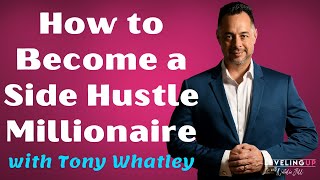
Tony Whatley built a million-dollar side business while working a corporate job. He grew up working-class, overcame limiting beliefs about money, and shares how to scale a side hustle without quitting your day job.
Hi, I'm Natalie. Jill, fat loss expert turned high performance coach. When odds are stacked against us, how do we shift and create everything from nothing? How do we level up when we aren't feeling it yet or we've had a big setback? On this podcast, I'll be talking to some of the most inspiring and courageous men and women on this planet who at their worst learned how to achieve success greater than they ever dreamed possible. Leveling up and creating everything from nothing. Tony Watley became known as the side Hustle Millionaire after his book with the same title became the number one bestseller on Amazon. But this book title, it's not just fiction, it's based on his actual story. You see, Tony, he once led a successful corporate career for over 25 years, but that is less interesting than the side business that he created with which generated millions in profit. As a side hustle. Today, Toni helps others with their startups and teaches exactly how to create everything from nothing. Today on Leveling Up, I've got Tony Whatley, known as the side Hustle Millionaire. Thank you so much for being here today, Toni. I was dying to put you on the show because you're known as the side Hustle millionaire, but that is not who you always were. I would love to know, and my audience wants to know who you were.
Before that, that prior to the side Hustle Millionaire. Well, first of all, thank you for having me on the show. I'm honored to be here and I love your energy and I can't wait to get to know your listeners. But before I was a side Hustle millionaire, I was just a small town boy that grew up outside of Houston, Texas that really just grew up with two hard working blue collar parents. My dad was in the Marines and he got out and then he worked in the chemical refineries his entire life. My mom worked in the public school system as a cafeteria lady her entire life. So I got really good values from both of them about doing things, hard work and understanding that if I needed to get something, I needed to get off my rear and go get it. And that's how they taught us. We didn't have allowance and I was a kid that was literally pushing the lawnmower around, knocking doors, asking if I could move people's yards and if they'd say no. I tried to ask if I could wash their car, just whatever I needed to do to make money and they always encouraged that. So I'm very thankful for them.
So you were, it was very, it sounds like it was a very working class Family, strong work ethic about working hard. Like an actual, like labor work, work lab.
Absolutely. And that was actually my first, I guess, few years of my very first job was McDonald's. So I was actually flipping burgers in high school. Two and a half years, basically. Yeah. 15 to 18.
So the hard work ethic came from your family. But what was the story around money with your family? Because to jump into something like where you're using the word millionaire and you're creating and making all that, that's not always a typical thing from a working class family. So what was the conversation around money as you were growing up in your family?
I think first of all, my family was like one generation out of the trailer park, so my dad was actually the first person in the family. It seemed like they had a normal home, and it was a real tiny home, a thousand square foot home with one car garage in the front. Really the lowest income neighborhood in the city. So I kind of grew up that way. But for me, the money thing was we just never had any of it. So my parents, I mean, I guess I was fortunate. They moved us to a city that had very good school systems and it was generally upper middle class and then into the lower wealthy range. So I was around people that had money and I could ride my bicycle around and do different things and see other neighborhoods with bigger homes. And I used to fantasize by all these homes that held these windows in the front, like, how do they. How's the house need so many windows? We only got one window in the front of our house, you know? And I was like, this is amazing. And I could envision myself running through those halls and just looking out of every window, wondering what the view was like. And extra cars in the driveway. Like, knowing that only two people live in a home and there's like four. Four cars in the driveway blows my mind.
Yeah.
So for me, it was. I was surrounded by it, so I was aware of it, but it wasn't from my own household. It was just from me exploring, really.
So what was your. Was there a conversation? Like a lot of kids will hear their parents say, like, we have no money. That's just not what our family's meant for. Or maybe you had parents that were saying, like, you can be anything that you want. Money is something you can create. Like, what was the messaging you got as a child?
So my mom is Japanese, so she was an immigrant. I was born in Japan on the Marine base, and then we moved back here to Houston. And honestly, when I started to look back at things. Years later, I realized it was really my mom that embedded the seed into my mind, because she believed in vision boards before we knew what they were. Because above my desk, we always had a cork board, you know, and thumbtacks. And she had always encouraged me to cut things out of magazines that I like, whether there was cars and whatever boys like. And I was always just posting things on there at a very early age. I think even back when I was, like, six or seven years old, I can always remember having a cork board and posting things above. And you probably were the same way. You probably had the same thing. Hanging things that you liked. And, you know, people call them dream boards or whatever. And. And now we're dating, we call those vision boards. And it was kind of like, really? I didn't start doing those until about 10 years ago. And I was like, oh, my God. I realized, like, I'd skipped about 20 years of my life in the middle of not doing that. And I was like, people were talking about doing vision boards. I was like, man, this sounds familiar. And I. And it was like. Like, someone smacked me in the face. Like, oh, my God, I was doing kid.
Yeah. So how interesting that your mom, like, saw that early. What was her conversation about? Would she just say, like, put these up there so you can fantasize? Or did she. Did she ever tell you, like, this is not what our family can do, but you can. I guess what I'm. Where I'm going at. Where I'm getting at is, was it your mom's belief and encouragement that you could do anything that you think might have stepped you up in that direction?
I think it had a lot to do with it. We used to sit there, and she, you know, being from another country and trying to establish herself here, I mean, she didn't even know English when she moved here. We watched Sesame street together and learned English to give you guys an idea. So it was very. It was very. She loved being here. She loves America. She converted to a citizen, and her dream being in Japan was to be a fashion designer, like, to make a seamstress and design clothes. But being a girl in Japan at her generation, the girls basically were plucked out of junior high and went to go work on the farm. So she never got that further education. She never really got to pursue her dreams. But coming to America, she realized that she had a lot more opportunities for her kids to have those dreams. Then she used to say stuff to me like, you could be the president of the United States. And I remember being Very young, saying, how much did the president make? I'd be like, no, that's not enough to get shot at. I don't want to get know shot for that kind of money. Even as a kid, I was pretty aware that she did have big dreams. And I always wanted to be a race car driver or a fighter pilot. Those were the two things that I always talked about and eventually led to my cars. I mean, we can get to that. I'm a very big on cars. I'm a car fanatic, as an understatement. So my husband would love you. Yeah, mom was totally on board. Dad just worked hard. He just kind of avoided him when he got home and you know, basically he was a hard worker and we just kind of avoided him. And honestly, he and I really didn't get along until I moved out. So we're too much alike really.
What was it about him that you didn't get along? Was he. How was he about believing in you and those things?
I don't know. I just always wanted to get his approval on things. But I always felt like I didn't let me measure up to things to sometimes and you know, I was always just trying to do things that he was interested to really get some more attention from him. And it just felt like he was more of the disciplinarian. My mom was more the empathy type, the emotional, creative side. And my dad was just a really disciplined, you know, Marine gunny sergeant, like not really showing any emotion. Just show up on time, pay your bills, do this, do things the right way. And so I love that I've got a combination of both of those. And let me give you an idea of how persistent and consistent my parents were. My mom, since she didn't get the full education that she really wanted, she was very big on education to give your listeners idea. I did not miss a single day of school from kindergarten through graduation.
Oh, wow. Yeah, I don't think many kids can say that.
I got like perfect attendance every year and I just thought that's what you did.
Do you think that was part of that militant side of your dad that you thought that's what you're supposed to do too?
Absolutely. Both of them are very disciplined on that thing. She was more of the discipline on the school. He was more disciplined on the work ethic and just showing up and doing the right thing. So I'm very consistent and I'm very driven about doing all kinds of things. And that's a direct reflection of both of them.
So when you were A kid and you'd put these visions up and you had a mom that believed in you and you were doing the people pleasing thing with your dad, which I know a lot of kids deal struggle with. There's a story around that with a lot of people and their fathers. Do you, what, what did you think you'd be when you grew up? Like when you would look at, like, did you ever think you'd be doing what you do now? Like, what was your, what did you think your future was going to look like?
Honestly, when I grew up lower middle class, I grew up in a society and around peers and teachers and parents and friends of parents, they always just told you if you can make it to six figures, you're somehow going to be successful. So that was the belief, or what I call a lie now, that if you make $100,000, you're going to be successful. Because to the middle class, the goal is to find a wife, get a steady job. I'm doing air quotes for people who can't hear, you know, listen or see if they're only listening, but we're doing air quotes, a steady job which doesn't even exist nowadays, get a house, get a new car, and hey man, you made the American dream. And they just try to sell you this really small playing, small mentality because that's the dream that they had for themselves. So I really started to deconstruct that really in my mid-30s when I started doing well in financial and I started to find that how these self limiting beliefs around money and success and what I was capable of, and it really blows my mind even today to like really help people get out of that. But hey, you know what, our relationships with money are really created when we're children.
You know, I want to dive a little bit more into that because that's really what you just said, that was the same thing I was told. And what I believe, like you go, you go to school, you go to college, you get married, you have 2.5 kids, the dog, the white picket fence, you have a six figure job and you're good and you don't create trouble. Like that's, that's the same message I got. And I think a lot of people hear that message.
I'd say the majority of this country for sure. And that's, you know, that's a, that's the life for most people and I get it. But a lot of times people really turn off their brain when they achieve that level because they think they've made it in the eyes of their peers. And when you got. When you surround yourself with a bunch of people aspiring to be average and they're telling you you made it, welcome to the club, you don't think that you can do any better, you basically just turn your brain off to opportunity. It's amazing that it's really a belief system that holds you where you're at.
And I think a lot of people listening might be in that spot right now, either striving towards that stop, that place, you know, that we call it a stop now, or maybe they're there and they're wondering why they're not so happy. And that might be what it is, that they're not. So how did you, how did you recognize that that's what was going on? And then how did you start to shift out of that?
For me, it was really the mindset came along with execution. I'd say that I've always been an entrepreneur. I touched on that. I was the kid flipping candy. I was just doing whatever I could earn bucks. And I used to have part time jobs. So even after I got my engineering degree, I paid for school myself. I was working and going to school at nighttime. It took me seven years to graduate, but I finally got an engineering job. And all of a sudden I felt like I had a part time job because I wasn't used to only working 40 hours a week. It felt like that was easy. So I was so used to working and then going to school at night. So I was really only sleeping about 5, 6 hours a night on the most. And I had this 24, 7 hustle, which I don't, you know, I don't endorse that now, but that's the life I had to go through to do what I needed to do. But for me, I just, even with an engineering job, so I had an entry level job paying me $40,000 at a time. And I was still waiting tables in the evening because I knew I could make an extra hundred bucks each night. And I was working in a performance shop for cars on Saturdays, helping sales there, Internet sales, building web pages that make me another extra hundred bucks. And I'd go wait tables that night. And on Sundays I would also wait tables on a double shift. So anytime I had open time, I would fill that by doing something productive to really get ahead. Because I was on that race to six figures. I was like, you know, I need to make six figures. I need to make six figures. I need to make six. It was only thing in my mind in my 20s and my 30s. And then I started to think about that. I was like, you know what? I'm tired of this employee mindset. I don't know how these other people are doing it. So I only have X amount of hours per day and I can't just keep up picking, picking up part time jobs. So what do I need to do? I said, you know, I need to start a company. I need to do something to really start to amplify the output versus the hours and really start to disconnect hours and dollars. That's the huge employee mindset, is a self limiting belief. And that's what I did. I started a company at age 28. I got my first LLC and it wasn't ever going to grow into what it grew into. I mean, we had fun with it. It was an online automotive community based around General Motors performance cars. So Camaros, Corvettes, Firebirds, Cadillacs, anything in the General Motors portfolio. We created a forum for people to hang out on and discuss those things on a technical level. Talk about racing. Kind of like just a group.
Yeah.
And you know, I said, you know, if this thing can make $500 a month to pay for my car note because I'd already graduated and had a brand new Firebird. It's like this $500 a month car note. If I can make that pay for that, that'd be awesome. It'd be like having a free car. So I really thought small. I didn't think big at that time.
You were like, you were hustling to like solve one problem or one thought at the moment. That's what I'm hearing. Like, like, okay, I got a checking off the list. Like, I'm going to work hard, I'm going to make six figures. And now if I want to have this, I need to make an extra this to pay for that. Like, it was literally like I said, you're saying about playing small, like you were being responsible, you were taking action, you were progressing, but you were just doing it as you needed to do it.
Yeah, exactly. And honestly, the first two years was like that. It was like, hey, you know, I'm making $1,000 a month extra, now I can buy a truck too. So I go buy a truck and then I'd have my race car. And I thought I was living the life, you know, I was almost making six figures and unburying myself out of debt and here I am like thinking really small. But then we just started really building this company out and just doing things. Massive scale, just grew and grew and grew and it became a community. Over 160,000 registered members at the time. So we had incredible ad revenue. And at the peak of it in five years, we were making about $400,000 a year profit and it was only taking about 45 minutes.
So. Okay, so wait back. So back up a few minutes because I want to, I want to make sure I'm following here and for, because I know there's a lot of questions coming up for me. So that probably for listeners right now about the house. So my, my first question is how did you create space to even work on that when you were working so many jobs and so many hours? Because like I think of a side hustle and so many people listening that want to start their own thing, but it's like, but they have the responsibilities they have. They're trying to make ends meet, they're trying to check the boxes. Like, how did you. My first question is, how did you create the space to even work on that?
Well, I'll even do it one worse actually. I started the first company coming out of a. Basically a two year depression. I'll give you an idea. The year was 2000 and that was the year my son was born. And I actually had a failed relationship with his mom. She and I were really just never in love and it just kind of happened. Unplanned pregnancy. We tried to make it work. Lived with her during the entire pregnancy and about nine months after he was born. And I was just miserable. We weren't never meant to be together here. I was broke and had just gone through a oil industry downturn, so I'd actually lost my job. So I was living off of two credit cards I had and I buried myself in about $45,000 in debt. I was unemployed for about six months from my oil and gas career, engineering career. So I was just working in restaurants and things, trying to just basically stay above water. And during that time I didn't realize I was depressed. It was just really the first time in my life I felt like my life was out of control and that I. None of this stuff was things that I thought was going to happen because like we talked about, I was, I was striving for that perfect wife, two and a half kids, white picket fence, mortgage, and none of that was happening. And it's like, here I am, I've got a son now and the bad relationship and I'm broke and it's like nothing's going right. It's like, what's going on with this? Like I'd always been a high achiever until that moment. And. And I was just going through the motions. I was waking up every day just. Just begrudgingly getting out of bed and then commuting to work and working at, you know, being these odd jobs and just hating life. And I just kind of blocked it out because I didn't realize. I didn't realize I was in a depression until a couple years later when I started.
I think a lot of people don't while they're in it. Yeah, and I remember that with mine too. So, okay, so how. That makes the question even deeper. Like, how did you even create space or even come up with this idea to work on your own thing? Not between doing things, but then also now with all that stress and being depressed and not having the finances.
Well, it all goes back to the work ethic with my parents. They basically don't quit, and you got to do what you got to do. And I'm big on just swallowing my ego and pride and just doing what I need to do. If I needed to go do some crappy jobs and, you know, if engineering people walked in and saw me waiting tables, I wouldn't care. I was just like, this is what I need to do. So don't judge. Right? So to me, the cop out is quitting or getting bankrupt or, you know, just. Just not taking accountability for the problems that you created. So for me, I'd rather just bury, unbury myself little by little out of that kind of debt. And I eventually did, obviously, but it was. It was a struggle, but that's the only thing I knew it is to put my head down and get to work.
So your first thought was get out of debt before you started the business? Or is that what you. Is that looking at that? Is that what you did and is that what you recommend to people now?
No, for me, it was just. I started to realize that I only had a finite amount of hours per day and that working somewhere was not going to get me the financial results or the goals that I needed. So that's what I started to create the company. Plus me focus on building a company. Something I had passion around was kind of like the lighthouse and the fog or it gave me something to focus on that was actually lifting my spirits, and I felt like I was being productive again rather than reporting to somebody. So if you can create something that we feel productive every day a little by little, little progress by little, you're going to feel a lot better at the end of the day than when you're Just reporting to somebody or having to show up at some place that's got hours posted on the front of the door.
Got it. So you made a decision. Basically you decided like, okay, I'm gonna shift out of this, I'm gonna work hard, put my head down, but I'm gonna build it on my own versus working for somebody. So that was the first step that you decided this?
Absolutely. When I started to figure out the financials, you know, we could get advertising revenue. I'd already started building my personal brand. It was, it wasn't like I just threw a flag in the ground and go, hey, I'm gonna start this business. I'd already been building my personal brand on these automotive communities for the pre. Probably the four years prior to that. So always been the guy that was contributing and answering everybody's questions.
But you weren't monetizing, you weren't getting paid for it yet.
Absolutely not. Because it was exactly like I was just a helpful person. I was always the one that was always a positive person trying to help people get to where they are still like that today. And honestly I had no idea that was going to lead to anything. I was just basically being a contributor instead of asking for everything. And when I decided to create the business, I had a huge following. They're like, hey, you know what, this guy's always helping us out. Let's go see what he's doing. And that's what happened. I actually teach people that now. Even with Facebook groups and Instagram and there's people out there, you and I both know built nine figure companies just by building a personal branding, being helpful and knowing that they're showing value.
What I'm hearing more in this though, and I really want to what this land for people is I'm hearing less about, I was building a personal brand as more you were being helpful. You were being helpful and adding value and being of service because I think that's what sets it apart. Because just there's a lot of people that say I'm gonna go build a personal brand. And it's very just about them. It's just about what making themselves popular. The difference is you went and were adding value and that's what grew your brand.
Absolutely. I had no idea what a personal brand was back then. I was just being helpful. I was being myself. And you know exactly where it leads to because you're the same way. It's, it's. The more we give and create value in this world, the more it comes in return. Even if we do Things. You have to do things without expectation of return.
Yes.
And I know that's a cliche, and people like, well, you know, you're still looking along ahead, and, you know, you're still thinking things will come around. Well, you know what? That's just good karma. That's just like. It materializes, like, put a lot of value out there, and things will always come back to you. That's just common sense. I mean.
Yeah, I love that you're saying this, because I don't even know that you caught that, because you said, build a personal brand, but I don't think you knew you were building a personal brand at the time. You were just adding value and being of service.
Absolutely. And that's. That's the. That's really how I've been my entire life. When I started looking back, even as a kid, I was teaching other kids how to jump their bicycles and how to do skateboard tricks. I've always been the person that, like, learns something and it gets excited about learning, and they want to teach other people that, so all the people can do it, and that's just the way I'm wired.
So how did it go? Let's see you start this business. You already have a brand about. People know who you are. They trust you because you've added value. What was the moment that you realized, well, this is an actual business, and this is actually making more than I thought? Was there a moment. Was there a change in attitude that you made? Was there a breakthrough you had around it? Like, what was that moment?
I think when we set the initial goals of making $500 a month, that only took, like, two months. And we're like, oh, well, I guess we're making 2,000amonth. And then at the end of the year, we had probably making, like, $150,000 profit after the end of the first year. And we're like, wow, this is, like a real legit business. And honestly, we didn't even have an LLC that first six months because we just thought it was a hobby. You know, it's a cool place to hang out online. And we're like, okay, now we need to do things legit. And I hired a cpa, and we started doing all the books. And actually, that was a blessing in disguise later on because I had no idea I was gonna build something to sell. I mean, but all the money that we were making, we were putting back into the company to just really create some racing events around the country to build the community. So I'm really big on Making communities. Because nowadays when I look back it's like, well, the success of that company grew because of the community around it. It was a place for everybody to hang out. They all got. There's people that have built lifelong friendships through that community. There's companies have built seven, eight, nine figure companies from that website they started in their garage. So it's amazing. These people that are in my network that I've helped create their entire livelihood and their. So yeah, community, it's all community based. And honestly, you know, I sold my company, I was 34 and made, you know, millions of dollars on the side hustle selling at 34 to a larger company. And honestly at that age I did not have enough business experience or wisdom of age. And I had a lot of self doubt after that. I was like, you know, did I just, you know, catch lightning in this jar one time? Is this like only gonna happen once in my life?
And you viewed it as an accident. Like this just happened because it wasn't your vision. It was like this just happened Exactly.
Because nowadays, honestly it's a lot easier. We got these podcasts, there's people like you and I sharing information so freely. Back then I didn't have these mentors. I think I read like think and grow rich, you know, long time ago. And There was no YouTube back then. There was no Facebook back then. It was just we built it based on common sense and principles and understanding how to scale things and just doing things legitimately which ended up having the increased evaluation. Because a lot of times people, you know, they, especially small business owners, they take too much out of the money bucket before they report it. So this discretionary income kills their valuation of their company. So when they come in there and get acquisition, acquiring, like these buyers are like, oh, you guys aren't making any money. And you're like, but I made all the side money. And they don't care because if it's not reported, it doesn't count. So that kills people. So there's people out there that will pay themselves a little less to like avoid taxes. They're trying to save 30% of their taxes, but they really cost themselves five times of a multiplier per EBITDA to get their company sold. So it's like all these things we just did, right? We just did things ethically, we just did things right way. We never wanted to take shortcuts. We grew this thing, we scaled it, we had contests to grow the membership base. We built these national racing series around the country so that people could build These small communities that would hub into ours to grow it even bigger. Because we knew if we got these people together, they would like each other even more. And boom, here's bigger community. They're telling their other friends more people are coming in. So we basically built this giant spider web of people racing cars all around the country. And honestly, the website's still around today. Even though we sold it in 2007. It's still very large.
If you were living kind of your passion at the time, you're making money more greater than you had, you're adding value, you're enjoying it, it's fun, it's a community.
Why did you sell started to plateau in the platform? The website is based around a specific engine for General Motors and they stopped making it around 2007. So that's around the time we sold it. And so we were like, you know, we're kind of gambling. We're kind of at the peak. General Motors is already going to a new platform. Maybe we should just tap out. I was looking at my career, I was looking for the executive path and these different careers I was working on. And I was making multiple six figures at the corporate level. So this side stuff was only taking about less than an hour per day of my time. So, you know, a lot of people would be like, well, why didn't you just quit and just do that? Well, it doesn't scale the same way. If I'd have worked two hours a day, it's not going to double the income because we already had the market share. We already had the biggest market share. So I understood that it wasn't going to scale beyond that. So to me it was like, it would be like, you know, beyond my below my effort if I only worked one hour a day and made that money and just not had a full time job when I could make multiple six figures at the same time. So to me, selling it, I was more focused on the career at that time and trying to get to the executive level. Didn't get there, got close a couple times. But at the end of that, I think I gave that a go for about 10 years. And I just kind of gave up on that about three years ago. I said, you know what, I'm kind of tired of chasing the corporate career. So now I'm more focused on.
So wait, I missed that part earlier. So you did all that while you were in corporate too?
Yes, that's why, that's why I'm the side hustle.
I just completely skipped over that part. Okay, so that's Craziness. So why we. Now I want to understand that, Mark. Why were you staying in corporate when you were making that much money on the side hustle? That doesn't even. Like, was that. Did that come back to, like, I'm supposed to check the boxes, I'm supposed to do this? Was that a denial? What was that?
I think it's a little bit of a sickness because if you think about it, back when I was working three jobs or going to school and working full time, I was always filling time. So to me, it was always the philosophy, and I even mentioned that in my book is try to earn the most possible in the shortest amount of time possible. So if I could go make 150 to 250 a year on a salary and then make another 400 on just a side thing, why would I quit that?
To me, it would be double down on the side thing.
Yeah, exactly. But like I said, we were already at the top of the game. We had all the market share. A lot of people tried to copy us, and they just couldn't even come close. So we. It was no way to really expand that business. It was tapped out. And that's. It is funny. So that, you know, that's where the title of the book side hustle millionaire came from. Because. Yeah, I don't know any other ones except a business partner or a couple other people had the same business types. I got bought by the same company. Like, yeah, we all became millionaires when they bought us all up. But it's unusual to hear people telling you, oh, you can make that kind of money just work in an hour a day. Because to most people, I'm sure listeners are listening. They're like, no, how's that even possible? You know?
Yeah, and that's what I'm still trying to wrap my brain around here because, like, I completely missed the part that you stayed in corporate while you were doing so. But that's all making sense now. So. Okay, so you. But you clearly realized there was a disconnect there. That. Like how you were thinking about that.
Well, that can expand on that too, because there's also the sunk cost fallacy. You're familiar with that. It's. I had busted my ass trying to pay for college, and I struggled through engineering school. I was an average student. I was not top of the. I was a C student in college because I was working. I was sleep deprived, stressed out, and broke. So those are really bad for getting.
But you were working like 100 jobs.
Yeah, exactly. Exactly. So me going through that, me graduating and feeling like I accomplished something and spent a lot of money to do so, felt like if I walked away from that, it was like kind of doing it myself a disservice. And me being a person that's not a quitter. It's like it was almost like I had to make my parents proud because I did the engineering thing and I did it on my own.
Were they not proud of this $400,000 extra you were making a year?
Absolutely. Absolutely. But I think it just, it really comes back to it because I worked in the oil and gas career for 25 years. Like I didn't just, you know, part time it and, and I started to think about it, you know, it's like who am I to walk away from, you know, multiple six figure company. That's, that's, you know, these are dream jobs for most people.
Yeah.
And these are huge dream jobs for a lot of people out there, especially where I grew up. And who am I to walk away from that? Who am I to just hang this degree on the wall and not use it anymore? Like who am I to do that? And I kind of started thinking like, well, I'd be really ungrateful if I were to leave. So there's these, they were self limiting beliefs. I know I can call myself out on that now, but that's what I really thought.
So how knowing what you know now, if this was not you, like look at somebody else is going to. For advice. They're similar, they're working in corporate. They've had this limiting belief of what they can achieve in their life. You're talking to them now and they want more. You're, you're talking to them and you're realizing they actually want more. You get them to see that. What would you tell them about a side hustle? Would you tell them to stay in corporate and keep going? What would you, what would you tell them?
That's actually, I would say that it's based on the context of who I'm talking to. So if you have a really crappy job making like 12 bucks an hour, 15 bucks an hour, or even 20 bucks an hour, let's say if you're making that range or less. Yeah. You can create a business to actually basically blow past that pretty easy. It's very easy nowadays, especially online businesses. You just got to learn from people who have done it. Take some courses, read some books, Try it, try it, try it. It's going to happen. It's going. It's very easy to get that Kind of number I think you can actually get to honestly 80 to $100,000 pretty easy nowadays with digital online businesses if you're willing to put in the work to learn what you're doing. Now when you're talking to somebody that's making 150 to 200,000, that's not too responsible to go, hey, just chase your dream. Like, you know, because that's, you know, one of the big influencers we both know is Gary Vaynerchuk. And a lot of times his videos are very generalized statements. Will he be like, ah, you know, just screw that and go do your dream. And it's like, you don't tell someone that's making six figures. Like, screw that, go make. You know, it just, it's not responsible. It's not responsible. So even in my book I kind of carry that idea where, hey, I'm going to teach you how to create a business on the side while you're working. And I like to set some trigger points on income levels. So maybe when you achieve that kind of a financial income level, it forces you into a quality audit where you go, hey, now I'm making enough money to cover all my bills and expenses. Do I decide to leave the job now and go all in on this business or not? And you kind of have to reevaluate. So a lot of times people just don't even set those assessments or look back at what they're doing. So I kind of force people to do that. The coaching clients that I work with, we set trigger limits like that and we set goals, we set believable goals at first because not everybody thinks like I can be a millionaire. It's just I didn't think that until it happened. So even, even up to the point that the company sold, I didn't believe that was possible then, you know, I get up in the morning and I look at my bank account and the wires there, I'm like, oh my gosh, this is real. So it really wasn't.
You believe that now? Like what's, what do you think now for yourself and goals? Like, do you believe that? Have you kept that limiting belief around like that? That's. That was it. What do you believe is possible for you now?
I don't believe in any limits nowadays. I think I look at billionaires now and I think that none of them thought they were going to be billionaires. I don't think any millionaires that were self made thought they would be million. It just, to me there's no really limits. I really Hope I don't find my potential because that'd be really boring.
See, I think that the trick, and this is my opinion, of course, I think the trick is the. Is the opposite. It's believing it's possible and having someone else believe that it's possible for you versus, like, not believing. Because I think, and I see this daily, and I saw it with myself, I've seen it with clients, this whole, like, I'm supposed to make this or I'm supposed to make that. And then when they bust through it, they will go back to what they were supposed to make. So, like, they might have a great year and then they like, oh, but that was an accident or a fluke. And then they keep repeating this pattern of staying at that part where they did. I've seen the breakthrough come when they. They believe that it's possible to bust through it. So I don't know. I'm curious. I'm curious about that. To me, I hear that that might still be an underlying belief in some levels that like, it's not that you can't decide to be a millionaire and become it or decide to be a billionaire and become it.
I think before anybody becomes a millionaire, they're already thinking like a millionaire because otherwise you're not going to look your way up into.
That's the key right there.
Yeah, definitely.
Like it.
You're already, you're already executing, you know, let's say like this, beyond thinking, because you're actually executing like a millionaire before you become one. That's, that's.
Yes.
You can't avoid that. There's no way around that. So if you start to think, even if you don't believe that you can become a millionaire, you'll eventually get there because you're operating on the same principles as a millionaire.
Okay, that is gold right there. And I've always said, Tony, that you can become an entirely different person, changing your thoughts and your actions. And I think that's the key right there. Because if you are in that six figure mindset, that's all you know. And then you're working to be a millionaire. Like you're. But you're all, you know is six figures, maybe it'll be an accident. I can get to a million, but I don't see that in my future. If that's what your underlying thoughts are, the second you hit that million and then have a setback, you go back to what you knew for the six figures. Like to hustle that same way. And until you start thinking differently and taking different Types of actions the way a millionaire would take. I don't know that it shifts for people.
Absolutely. The best way of or best story that I saw that was related to exactly what you're talking about was Ed Mylett. He's one of my online mentors and he talks about the thermostat. We all have an internal thermostat. And just like a thermostat that's for your air conditioner for your house. So if it's for your listeners, think about this. If you think that, hey, I'm a 80 degree person and all of a sudden you start to see 85 degree level money and you're like, wow, this is good, well you're going to start to self sabotage yourself because the subconscious level is telling you like you're above your paycheck, you need to spend some of this money or not take those opportunities. Like your subconscious is so powerful it starts to pull it back because now you also have this fear of success. That's another crazy thing. But the thermostat basically is always this correction. Most people believe that. Here's the thing, like if you're sitting here listening and you're making 20 bucks an hour, a lot of times people define their current self worth as a snapshot of what their current income is. So you go, I'm a $20 an hour person, so I can't do more. You go, maybe I can make $25 an hour someday. So you set these really low goals based on a low multiplier of where you're currently at, where someone that's making $100,000 a year, they're feeling good about themselves because their middle America societies told them that they've arrived at success and they think I am $100,000 a year person. And then they go, maybe I can make 150 someday if I become manager or vice president of the small company. And then you got people making 250 year. It's always the same thing, it's all relative. But the thing is, is that we tend to define ourselves and set these artificial glass ceilings for no reason. They don't help you to have any kind of limits. So what I want your listeners to think about is look at your boss right now. Look at your supervisor. If you've got one, look at their supervisor. Do either of those people have the lifestyle that you want?
That's a great question.
And then you know, and if they don't, then go, why am I going to commit another 5, 10 years to get that chair that they're sitting in. So I used to, I used to walk through the parking lot at these construction sites and I would see the reserve parking lot, you know, right up front where the managers park their car. And sometimes I would have a nicer car than them when I went to my companies. And I'm thinking like, hmm, so I gotta work another 10 years to get that role in between this and then I get to work another 10 years to get to that role to afford a car that I can already buy like 10 of. Like, why am I doing this again? You know? So really question yourself because a lot of times your self worth is defined by what your boss tells you you're worth, what your paycheck is, or what your parents told you that you're worth, or what you could achieve. And you start to really have this mind blown effect because the goals that you have are not really your goals, they're someone else's goals, they're not even your goals.
Such great questions to ask yourself. I love those questions. I love those. I do. Another question, just going back to when you were depressed, because that's when a lot of this was starting. How did you find the energy, the focus, the creativity when you were operating from that place of depression?
I think I used my business as an escape from all the negative things that were going in my life. So it was the only positive thing that was going on other than loving my son, of course. But I still had a lot of fears around that because we had split up. And my biggest fear, really, I stayed in that relationship too long because I was always worried about who would raise my son. Like if, if this woman were to get with somebody else, would I like that person? Would they be a terrible person? Because you always hear the stepdad stories. And that was my biggest fear. So I kind of stung, stuck around that, that relationship for probably six months too long. And I was getting more and more depressed because of that. Just wasn't happy. So me building a website, and honestly, it all worked out for the best because I'll tell you, that woman, she didn't support anything I did. She used to make fun of the stuff I was working on or tried to. I said, hey, I want to build this thing for cars. And I very distinctly remember her saying, well, you know, guys talking about cars on the Internet is stupid. It was meant to be. My business would have never happened had I stayed with that person.
Yeah. And you have your son, I would assume because of this person. So. Yep, things happen for a reason.
Exactly.
Yeah. So take Us to now. What do you, what is it that you do? You do. Now you have your book, obviously, which I feel everyone should get now so they know how to implement their side hustle. What's the name of your book?
Side Hustle Millionaire. It's a book on how to take your ideas for business and evaluate those against each other to find the best ones that's going to get you to your goals of financial or time goals. Because when I'm younger, when you're 20s and 30s, man, you know, we know it. We chased money. We go, hey, we're going to hustle. You got time when you're younger, when you get in your 40s, 50s, 60s, you start to value time more than money. You get to a comfortable level like, okay, now what? I'll make a lot of money with less time. Let me get more creative. I've got more experience now. Let me figure out how to do this. So I'm always big on setting the goals and trying to work and define the steps to get to those goals. The book really helps, really hand hold somebody who's never been in business and walks them through the entire ideation process. We start to learn about marketing strategies, business structures, what an LLC versus a corp is, why you should pick one or the other. I start to talk about social media marketing strategies. I talk about really how to get funding or get loans. Just I really want them to get to operations. All the questions you give.
Basically a step by step procedure and like very militant of you, like, here's this procedure and the checklist.
Yeah. I designed the book that the people wanted and I actually asked a bunch of entrepreneurs and aspiring entrepreneurs the beginning of the book for doing research, like, what are the main things that kept you from starting? What would you do different? I asked. That's all the data is in the book. Basically. Yeah. I wrote the book that people wanted to have because I realized that there's a few side Hustle books out there and I actually bought those as research and I read them and they would show up from Amazon. I'd be all excited because I get to read this book because I like books. Spoiler alert. I listen or read books, one a week and I'm like, oh cool, maybe these people teach me something that I haven't learned for my business. And I'd start flipping through it and honestly, it was depressing.
Yeah.
These side Hustle books are talking about, oh, if you work really hard, you can make $300 extra per month.
Yeah. And that wasn't what you wanted. Yeah.
And I'm like, What is this $300 stuff? Okay, let me look at this next book. Oh, if you do a really successful business or you go drive an Uber and that's side hustling, like you could make a thousand dollars extra per month. And I'm thinking, oh my gosh, here I am with a side hustle business.
I can make sure how to build actual wealth as a side hustle.
It's like, how are these people teaching these people to think so small? Like it's not much different effort to build something that can get big. And, and I'm thinking, you know, geez, like I've even got a side hustle type business right now with the online dropship company for high end forged wheels. I can make a thousand dollars on one email. I don't have to work a whole month doing that. So it's like, what are these people thinking?
Well, I need that side hustle that I can email, make a thousand dollars. I mean, we're have to talk more after this interview.
Online courses to get you there too, right?
So where. If somebody's listening right now is a question I ask everybody, Tony, on my show. If somebody's listening right now and they're in their own personal rock bottom struggling with their depression, maybe they've got their financial struggles that you talked about. Maybe they didn't have the supportive family that you have and they don't have people that believe in them, but they're in their own personal rock bottom, whatever that is. If you were to give them three pieces of advice that they could start implementing right now to level up and create everything for nothing, what would you tell them?
I would say the lesson that was really hard for me to learn and actually I didn't start to learn this until I was around 40. So especially people who want to be pleasers, people that like to help. You heard that? I like to always add value, always like to try to raise people up. And the inner circle of people that you surround yourself with, they have such a huge impact on you for good or worse. And people like us that like to help people, we generally like to hold on to connections even if they're toxic in our, in our lives. And we don't, we don't like to sever any kind of connections. We don't like people that dislike us. But I'll tell you that if there's people out there that are toxic, and here's the best way to identify because I want to give you a takeaway. I want everyone that's listening to look at each and every one of the people that they surround themselves with, whether it's family or friends or peers or mentors. And if that person ask yourself this real simple question. Is that person taking energy from me or are they bringing energy to me?
Oh, such a good question.
It's always a yes or no. There's no maybes. There's no maybes in that question. Does that person bring me energy? Do I feel joy? Do I look forward when I see that name flash across my screen when it's ringing? Or do I go, ah? Or when that person approaches me at work, do I like act like I'm busy? Like that's taking energy. So be aware of each person that you interact with in your life and start to make an assessment. And you need to get rid of those people that take your energy like as immediately as possible. And you don't have to be like negative to do that. You basically do whatever what everyone else does. You just make make plans and don't make time. You can just create distance with not making time with those people. Because what happens is when you surround yourself with those people taking energy, they bring you down to their or they keep you at your same level. You need to be surrounding people that can see the potential in you that you're going to encourage you that when you share your big dreams, they're like, man, that's right on. Let's go get that. Let's do this. And that's the kind of people you need to be around. And most people are not willing to get rid of these long term relationships even though they know they're costing them.
So good. This is incredible. Where can people get your book and where can they find you? Where do you want to send them? Because they're going to want more.
The best place to find me is my website. It's 365driven.com. So the number is 365driven.com. You'll find links to my book there. I also have a podcast called hey, imagine that 365 driven with the best.
Episode ever was the one I was on. Right? Yeah, you know that's actually that one.
It's gonna air. It's gonna air next week.
Yay.
Yeah, I can't wait to. You brought some values. Firebombs.
Yeah, he's got a great podcast. Subscribe to his podcast as well. Get his book. I'm going to get his book right now. I want to learn how to make this thousand dollars email happen. I'll be my new career thank you so much for being here. This was great.
Thank you Natalie. I enjoyed it and I hope your listeners, if you guys have any comments or feedback get a hold of me, you can find me online. I'm very active on Instagram and Facebook. So hey, looking forward to hearing from you.
Thank you. Thanks for leveling up with us today. Please share this episode if you found it helpful so others can join in. And don't forget to hit that subscribe so you don't miss out on future shows. And if you would leave me a five star review, I appreciate those so much. I read all of them and it's how I know that I'm giving you information that you find valuable. And come interact with me over on Instagram at nataliejillfit. I read all the direct messages and comments over there. Make it a great day. Creating everything from nothing.










