085: Making a Difference In Others Lives with Vivian Glyck
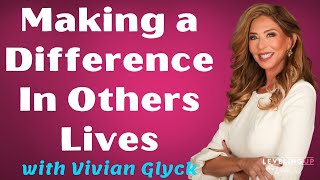
Vivian Glyck, founder of the Just Like My Child Foundation, talks about overcoming personal trauma and building education programs for vulnerable children in Africa. She explains how listeners can get involved to support the cause.
Hi, I'm Natalie Jill, fat loss expert turned high performance coach. When odds are stacked against us, how do we shift and create everything from nothing? How do we level up when we aren't feeling it yet or we've had a big setback? On this podcast, I'll be talking to some of the most inspiring and courageous men and women on this planet who at their worst learned how to achieve success greater than they ever dreamed possible. Leveling up and creating everything from nothing. Vivian Glick is not just a success story. She is an empowered change making leader. Her work, her mission, her cause, it changes many lives daily. You see, growing up with alcoholism, sexual abuse and domestic violence, Vivianne was one of those fortunate girls. She lived in the US and she had access to mentors, education support and more. But after the birth of her son, Zack, Vivian, through the experience of a mother's love for a child, Vivian woke up to a true realization that every human life matters. After learning about the horrific numbers of children dying from malaria and orphaned by the AIDS epidemic in Africa, Vivian was moved to make a difference. She founded the Just Like My Child foundation in 2006. Join in today and learn exactly how Vivian Glick turned pain into, into purpose and continually levels up to create everything from nothing. Cool. I'm so excited to talk to you. She is the founder of the Just Like My Child Foundation. Vivian, thank you so much for being here today. Thank you for being here.
Oh my gosh, this is such an honor. Thank you.
So there's a whole journey that brought you to founding this foundation. And I know that's, you know, people look at you now and you look like you've got it all together and you've got this perfect life. But there's a whole journey of what makes you you, you and how, what brought you to this point. Can you take us back? Like, who were you before all of that?
Sure. Well, my Just Like My Child foundation was really started as a result of an extreme life shift and journey that I, that I encountered. My son Zach was born in August of 2002. And after he was born, I had back to back miscarriages several years later. And during the, during all of this, I was constantly in this inquiry about what, you know, what should I do, where am I supposed to turn? And that's like something that I think all of us who are drivers and go getters, we don't, we don't just sit down, we're like, what am I supposed to do with this? You know, the answer for me just kept coming back to do the next right thing. And that for me was to find out why it was that other children around the world, as I was reading about and studying about and had a very sharp learning curve about the circumstances that children were facing around the world. And why was it that my kid got to have this incredible life when every 30 seconds in Africa where I ended up working is a child was dying of a mosquito bite, you know, or a woman was dying, 2 out of 10 women were dying in childbirth. You know, how could it be that 12 million children were orphaned by HIV? And so these questions really came out of my knowing that I wanted to have 10,000 kids instead of one more kid, which is what really happened for me as a result of that incredibly dark time of having had these back to back miscarriages where it's like, what is going on?
So wait, this is really interesting because so you have, you have a child who's fine and then you've got all these miscarriages. Now a lot of mothers would go down this whole path of just like trying to fix the miscarriage and never get to that point of I want. There's a bigger purpose for me, there's a bigger vision. What even made you aware of that? Or were you searching for that? Did something happen? What brought that into your attention and your awareness? Because it is a big issue and a big problem that not a lot of people talk about.
Yeah, well, Natalie, for me, I just fell madly, hopelessly in love with my son when he was born. And I could, I just got what the incredible honor and challenge that we have as parents, as mothers of keeping this human being alive. And that life is really so tentative. And just the thought that I would not be in a position to. That I could potentially not be in a position to ensure his health, his well being, his future, because of where I was born became unbearable to me. And so it was just this sort of juxtaposition of learning about what was going on for children around the world at the same time that I was parenting this adorable then toddler. And it was the combination. But even more so, my parents are both Holocaust survivors. They came here in the 50s and they were, you know, I always say the Holocaust never ended. You know, those of us who are the children and the grandchildren, there's always just this sort of passing down of the trauma that occurred, not only to the individual, but to the entire population and really the planet, the reverberations of, of that. And so I learned very early on to not turn my back on human suffering. Just because it wasn't happening in my front yard. So there was always this knowledge that even though I wasn't seeing it, that it didn't mean that it wasn't there because of what I had learned in terms of nobody paying, you know, the world taking so long to pay attention to what was happening during the Holocaust. And I think somehow that just got into my DNA and I was like, well, here's, here's this situation where I'm learning about what's going on with these children. And then I have the opportunity to do something because now I am not, you know, quote unquote, burdened with yet another baby here. It's like with this energy and this love, I can't put it away. How am I going to expand it?
I think it's such an amazing journey, just you even saying that. And what a shift of perspective, because I think there's so many people that struggle with having a baby or that whatever, whatever is happening with them, and they stay stuck on what's wrong. And you fully looked at, what am I meant to do? What's the blessing in this? What can I do? And you turn that around. Like, even the way you just said, instead of having one more child or another child, like, how can I help tens of thousands or, I mean, that's just incredible. Like that you even got to that point. What did that take? Was there a moment? Like you said, it's in your DNA. You had the compassion, but was there something you saw, something you heard? What really drew you to that and those children?
Oh, that's a really good question. I really do think, you know, more of my story sort of going back as a result of being the child of Holocaust survivors, et cetera. You know, my upbringing was extremely challenging. My, my father was an alcoholic. I was abused by him for many years. I witnessed domestic violence. It was very, very challenging. However, I also had the opportunity to grow up in Manhattan, in New York. My mother was, even though she was passive in many ways, was a go getter in other ways and found for us the best education available. We were able to go to the best schools. We were able to have the health care because there are safety nets in this country. We grew up on food stamps and on Medicaid. And so I think I just saw. I started to learn so much about these children in Africa in particular, for whom there was no safety net. And I couldn't imagine what that would be like. And, you know, I. There's the, that sort of parallel of, you know, the pain, pleasure, when you're, you know, when your pain exceeds your pleasure, you take action. And I think for me, there came a point where all of these, all of these, this information just started coalescing in my, in my body. And the pain of me doing nothing became greater than the pleasure of my comfort. And I remember specifically sitting on a spin bike in my gym and taking a look around at us having this wonderful time to indulge and take care of ourselves. And I could literally hear these children crying on the other side of the world. And wow, I had no idea what I was doing. But like I say now, looking back, I just did the next right thing.
Wow.
You know, that led to the next thing and the next thing and the next thing.
Why do you think people avoid what's going on in the rest of the world? Like you said, you heard these children crying on the other side of the world, and I can hear it in your voice, I mean, how passionate you are about them and how compassionate you are for them. Why do you feel that so many people choose not to learn about that or look at it or be involved in that?
I believe it's because they don't have a way to connect. If this was happening to a neighbor's child or to a school in particular in our community, it's within our periphery, you know, and we're able to really connect. And I feel as though that's the thing that I've been able to do without really even knowing that I could do that, is to connect people, to understand that these children that we're working with and having a transformational impact on now are just like their child. Right. So that's really where the name of the organization, Just Like My Child comes from. It's that ability to say, wow, what would I do if this were my child? And so I think it's just what's out of our periphery. I mean, life is, life is busy. We got a lot going on. We get self absorbed and we have the, you know, we have the luxury of being self, self obsessed.
Yeah.
And I think that, you know, it's. Once you feel it in your heart, you know, I know you're a mom and you know, once you feel it in your heart, you can, you can never let it go, you know, what wouldn't any of us do to keep our own child alive?
So true. Yeah. You mentioned that you had a rough childhood, that you had this. Domestic violence, sexual abuse, alcoholism, you had all of these things. So as you were dealing with that as a child, you mentioned you had these safety nets around you, like the good, the good education and all these other things. Do you feel that that has drawn you to the compassionate for these other kids? Like, maybe because you suffered, you had these things that you feel you had another escape and they don't. Is that part of the tie in?
Oh, definitely, definitely. I ended up having a mentor when I needed it most, very much around the same age that the girls that we work with now between 10 and 15 years old. And I think there's this story that I tell about the moment where we decided to start working much more intensely with adolescent girls because we see them as the, as the potential for really transforming the planet. At the end of the day, you know, I, you see a girl, I see the future as sort of one of our taglines and the, and I would, I remember that we were going to build a school. We had built many schools, we built hospitals, et cetera, et cetera. And you know, after a while it just sort of seemed as though we were mopping up the floor while the sink was overflowing. Because the issue was every time a girl gets forced out of school, is raped, is contracts, HIV because of gender based violence, et cetera, then we lose the potential and the opportunity. And I remember at the very beginning of this, we were working with one community and we had a facilitator who was working with the girls and she really felt as though something was going on with them. And she took them outside, away from the other adults so they wouldn't feel self conscious. And she said, you know, I'm going to explain to you what sexual abuse is. And when she did, she said, now who here has experienced this? And out of a group of about 20 girls, all under 13 years old, every single girl raised their hand.
Wow. Wow.
Yes. And when I saw that, it was like just a lightning bolt to my consciousness of knowing exactly how those girls felt and exactly how they felt. Terrified to tell anybody about what was happening to them and that they were. That they couldn't even talk amongst themselves about it. And so for sure, you know, what I experienced and then my ability to grow beyond it and to extricate myself and to sort of figure out who I was. And, you know, that always takes more time than we'd like, contributed deeply to my sense that we could do something, you know, wasn't just like, oh, this is horrible, but just that we had the opportunity to do something that could allow these girls to find their own power within themselves. So, yeah, I would say so.
So many questions coming up for me, like, for one, it's almost like it's normalized for them. Like, they think that this is. This happens, it's normal, supposed to keep it a secret. Like, there's this whole lack of that. How do you even begin to tap into changing that and letting them know that it's not normal? Like, how do you become that person that is a leader for change?
That is a great question. And that is really the. It's been 10 years of developing this. We call it now a transformational technology, a curriculum we call the Girl Power Project, which encompasses not just the girl, but the community and the teachers and the parents and the police force, et cetera. And I think where it really starts is educating everyone in a community about their own human rights. If you look at a community where this is the norm, then you can just assume that for the parents of these kids, that their norm was the same. Right? So that the mothers who ended up having these kids at 14, 15, 16 years old were also sexually abused and sexually violated. And so how do you start putting the power back into the. Into the human? You know, when our dignity is taken away at such an early age, when we are taught that subordination is the way that we're expected to behave, then, you know, rape isn't so much of this horribly violent action that we've come to know it as. It's just a girl's inability to say, this is my body. This belongs to me. You can't touch it. And I know what my rights are, and I know what the law is, and I know who you are, and I know you will go to jail if you do that. And so we've actually got a great video I'd love to share with you at some point. It's just, to whom does this belong? And it's just a song that we teach all the girls who go through the programming. And we'll have 20,000 girls through the programming by 2021. We're focused on. And it's just, to whom does this belong? And they grab all their body part. And the answer is to me, to me. And so that's really. That is the overriding chorus of all of the programming of Girl Power Project. And it's all about just. And seriously, it's valuable all over the world, even in the US for girls who get to a point where they may just want love and attention so badly that they forget who they are. And I think.
And you just hit the nail on the head with that one. I think that's how some are defining love, that's all they've known is love.
Exactly, exactly. And, and so I think, and it's been a really amazing thing to go back. I'm actually headed back to Uganda in less than two weeks. And when I used to go, I mean, I've been working there since 2006. I could guarantee you that 95% of girls in the age group that I'm talking about, 10 to 15 years old, would ra. Would rather just run away than have to look me in the eye. And because they are so they're taught to be subordinate. And now it's like it really is viral. You know, even if for the girls and the communities we're not reaching because of resources etc. We're able to just see they're empowered, you know, they know now is are.
They scared to speak up and say this is my body? Is that something you have to overcome with them? That's what's coming up for me right now is that if somebody is and I'm picturing my daughter because she's the age that you're talking about, you know, she's almost 12. And I'm thinking, would they, do they get scared if that. If it's like in their culture and they know that this is what they've known, are they scared to speak up and say this is my body?
Well, you know, we do it in such a fun kid way that they, that they can own it, you know, and we also. It's complex. As we know, teaching a human about their power and potential and educating them is complex. So this is a two year long program and one of the, one of the club sessions that we teach after the core, the first year, which is really the intense core information is a self defense course. Okay. We bring in female police officers which as you can imagine in Uganda, A, there are not so many of them and B, they're pretty fierce and C, same stuff happened to them. Yeah, they know they're, they're working with hundreds of girls and they know exactly how to talk to them in and, and work with them in order to show them how to fend off sexual violence. And by the time they leave this thing, I mean they are, they are ready to take you down if you. I love is amazing. And they're really ready to take you down if you mess with them. And for some of these girls, they're the ability to raise their voice, to shout to you, call for help is really the matter, is a matter of life and death. Because many times these Girls are traveling to fetch water after, after they get out of school. So it's late in the afternoon, it's sundown. You know, everybody knows where to prey on whom. And you know, they are. They are so much more empowered. They know to travel with a friend, to travel in numbers. They know how to shout, they know how to scream. They know how to, you know, kick someone in the groin. They know how to throw sand in someone's eye. It's. And I think, you know, just the more fierce they get, the less it's gonna happen.
I have a couple random questions that are coming up for me too, because I'm just thinking what listeners might think, and I'm wondering why the attachment to like Uganda versus helping in the United States? I know people will probably ask you that before.
What.
Why not? With so many girls here struggle with this, why choosing there? Is it because the situation's worse off or what's behind that or what's the reason with that?
Yeah, I mean, the circumstances for girls in the developing world, statistically, not to say that there aren't girls here who face similar, very similar challenges. But the numbers, the statistics are enormous. So over 50% of the girls that we work with drop, drop out of school by the time they reach sixth grade.
Wow.
Over 50%, nearly 90% of girls will have had a baby by the time they're 18.
Wow.
And for many, it's multiple births. Their ability and opportunity. Rape is the number one form of legal violation against the girl child under. Under 18 years old.
Wow.
I mean, the statistics are just off the chart. And I understand that, you know. Yes. And I wouldn't make any guess on the comparative statistics in the US but just the sheer numbers are incredible. Second of all, it costs US$100 a girl to put her through two this programming, and that includes her parents. I mean, this is complex. Like I said, changing minds is not for the faint of heart. And so it's $100, two years of programming, reaching her parents, training community legal volunteers, and how to support. And how to support the community with legal rights and the girls with legal rights. We also do a boys empowerment program along with this so that boys power girls and on and on and on. So just, I mean, the sheer numbers of it, we could never even approximate. And we're, you know, the truth is we're a small organization, but because we're able to leverage resources so efficiently there, it's really transformational.
Yeah.
Things that. One of the things that we are working towards is now we have had and We've had a major university come to the ground and study our work and gather data on a Texas A and M university. We've done our own internal monitoring and evaluation of the program and we're proving scientifically the efficacy of this project. And so our dream and our goal is to take Girl Power, Project Global.
It almost can be like a process. Kind of like you would look at like AA as a step, you know, a process I would imagine can become that. Because you've got this down.
Yeah, exactly. And so it's taken us a while to really get this. I never thought I'd call Uganda a beta, but, you know, 13 year beta. And, you know, we're really in the. In the process now of being able to take this.
Yeah.
Global and start training other organizations. And, you know, we also have got a program in the US we call the League, the League of Extraordinary Women. And our goal with that is to. Is to basically bring our supporters, our donors here into a network, a community of women who are, you know, getting the tools to empower themselves. Getting the tools to create a network and a community that lifts them up and then allows them to be in a position to go out and change the world themselves. And it's exactly what we teach girls in Uganda. Yeah, we want to empower women here to go out and take care of what's happening in their front yard.
Yeah.
Because we can't do it, but God, we can do it with. When we're banded together.
And there's a couple things coming up for me. One, this high level of service and giving and being in service and support to others, not only is that amazing and contagious to help them, but I am pretty certain it helps heal you as well. I would imagine this has helped you.
Well, it helps heal all of us. There is a large body of data now that the ultimate biohack is giving.
Yes.
You know, that your longevity, your peace of mind, your stress hormones and your relationships are massively improved. And I don't have the numbers in front of me, but there's big body of data on it. And that's, you know, that's really what I want to sing from the Hilltops is we talk about all the ways that we can improve our health. Just be in service as life transforms. So. Absolutely. And that's our dream and our vision for the League, which is now growing and building on this side. It's just, just. It's a way for us to raise money and transform women here as well and to put them in a position of being able to transform their lives as well. Just like I was able to transform mine and, and my, and my family's also. Because everyone's, you know, everyone's in the family business. Yeah, yeah.
And then something else that's coming up for me is you. You really are a strong leader. And I want people to really hear this, listening. Because there's a difference between a leader and someone that just thinks they're successful in life. And a leader is a change maker. And that's really what you are. You're making a difference in others. You're changing the world. And I think a lot of people that think that they have success or maybe they've had like business success, they're missing this part by turning a cheek and avoiding like there's this whole theme around. I'm not going to watch the news. I don't want to know what's going on in the world. It makes me upset. But that extreme, like I don't want to know what else is going on in the world. I'm just going to stay in my bubble. That's not being a change maker. That's not making a difference or being a leader. And I really want to acknowledge you for truly stepping up and being that.
Thank you. I hopefully it's been inspiring to other people to do the same. I mean, that's kind of one of the hidden things that I never imagined would. I just didn't dream of because honestly, I'm not a teacher. You know, I'm a doer. I look at all these people like you and you know, so many people that I know that are unbelievable teachers and I'm a doer and somehow that has inspired people to do as well. And it's nothing I ever dreamed of out of this because I really, really did. I'm so deeply inspired by the idea of finding ways for children to reach their potential.
And you're doing it. You now have like, you've mentioned tens of thousands of children that you're helping. It's really incredible. How can others get involved and help? How can they support and help?
Well, I am. Well, I think first of all, Visit our website justlikemychild.org we find out more about the league and how you can get involved. It's a really. We've made it a subscription model. You join the league and you are just by joining the league, you are transforming the lives of 10 girls. Every year it's a $97 a month subscription or really donation or $1,000 a year. You get to be involved in these gatherings where we bring extraordinary women together. There's always an inspirational talk and we have the time to network. And there's a quality of this that's so different, I think, than just going to a conference or going to the, you know, the next seminar. It's just that women are dying to be purposeful. They're dying to step into action. You know, like Lynn Twist says, you know, we think we're making a die living, but so many of us are making a dying because we're, you know, we're selling our soul for money instead of letting money heal us. And I think that. So I would love as many of as many people as possible to take part in the league. One of the things that we're doing.
And can they find that by the way, on the justlikemychild.org they can find how to do the league?
Yeah, it's in the dropdown under get involved, join the league. And there are other opportunities on there to do a do it yourself fundraiser. It takes just 10 seconds to set up your own fundraiser to help the. That goes directly towards our girl power project. $100 a girl. We are actually traveling to Uganda in a couple of weeks now. We're going to do a live cast from there that we're. We'd love to invite everyone to and. And really just come to Africa with us. There's another. There's. You can learn about traveling with us to Uganda. I've taken probably hundreds of donors there now with their kids, and we allow kids 13 plus to come with us. And it's been truly, truly transformational. But, you know, to your point, it's not just. Yes, of course, it's about these girls and what I've been able to see in terms of the girls that we are working with, how they are improving our world now. Like, you would never want to turn your back on that.
No, you've convinced me. I'm. I'm absolutely jumping on that website and convince me. I mean, it's. It's amazing how much we don't know what we don't know. Like, just even talking with you, like, I think I understood until I'm talking to you, I'm like, boy, I really didn't understand. And just even the name of it, just like my child, I mean, really makes it close to home because you're right, you listen to the neighbor, the friends, but we don't look at what's going on in the rest of the world. And we really are all truly connected.
And now more than Ever.
Yeah. And for 97amonth, my gosh. I mean, I think about what women listening to this are spending on themselves to feel better. Like, you know, you could skip two nail appointments and like change to someone's life. It's incredible.
But not only that, you change your own. The data so clear. And you know, I do want to say something else, Natalie, because I know that this is of importance to you as well as the mom of a daughter. And is that when I say that we brought this into the family business or, you know, just like my child is the family business, my son, who's now 16 and a half, since he was, you know, five or six or seven, has been raising money, collecting, coming with me to Africa, these kids. And I mean, like the first time that he went, he was so uncomfortable and so shy and, and, and he, it just broke him open, you know, because he never would have had that, that huge gap to jump and. And then for his bar mitzvah, he ended up raising money and giving all the money raised to build a library.
Incredible.
I'm not saying this to brag, even though I am, but it's just like what we as women can do for our kids in terms of healing them, protecting them from this onslaught of self examination and self consciousness that we just dump them into with social media and everything and we don't even know. Got a great experiment going on. Help them to find their soul through giving through service, whether it's this or something else. And you will have so much better of a handle on how to keep them clear and safe from all of the pitfalls out there. You'll arm them with it because they'll know what so incredible.
I want everyone to go to justlikemychild.org I'm totally going to go look at the league and see how I can help. And I'm actually interested in figuring out how I can get to Africa and do one of those trips because that's incredible. Wow. I do have a question for you that I ask everybody that's a guest on my show and I'm curious. Especially the work you're doing and then your own stuff that you've been through. If somebody's in their own personal rock bottom, whatever that is in their life, I mean, maybe it is where those girls are, what they're dealing with. Maybe it is they're struggling with their miscarriages or something, anything along those lines. Maybe it's a financial problem, but whatever it is, it was their personal rock bottom. If you were to give them three Pieces of advice that they can start implementing, shifting their mindset to level up their life and create everything from nothing. What would you suggest?
First of all, and I'm glad you bring this up because it's good advice for me even today, it's just be kind to yourself. Nobody beats us up better than we do.
Right.
And you know, to just have compassion. And so number one and number two is to be grateful for the monster that you're facing, you know, is to stop and look the monster of whatever your circumstances right in the eye. Because it will, it will tame it right there. Right. Like stop running from it. Turn around and look at it and go, you know, this is the present. I am in the moment. I am this head on. And you might just disarm how horrible it is if you stop running from it. Yeah. And number three, and this is really my mantra and it's my next book title, it's do the next right. You know, I was looking at your material and I think you engaged us every day also. It's just like, you know what the right thing is for you to do. As women, our intuition is so solid. And men also, you know, we know when we're listening to everybody else's channel of what they think we should be doing. And we know. I mean, let me tell you, I'm a nice Jewish girl from New York. I grew up with a mother who is, is the best thing in the world. But she's a little nervous for me, right? Yeah. For me to just say, oh, I'm going to pick up and go to Africa and I'm going to go to Uganda no matter how old I was and having a little toddler at home, that is not her channel.
Right, Right.
And it was so like out of my realm of what is, what the good girl does. And I just had to follow it. I just had to follow it and find the people who, who can hear you and support you with that and do the next right thing. Because I'll tell you, I woke up, you know, when I, the second time I had a miscarriage and I saw that fetus up on this huge screen in the doctor's office. And the doctor and I both looked at it, looked at it and at the same time we said the same thing. And that's. There's no heartbeat. And, and when I think about that moment and the next right thing I had to do and the next one and the next one and the next one, you know, we ended up in 2016 at the Obama White House with Michelle Obama as part of her Let Girls Learn initiative. Her focus on transforming the world for girls around the world, you know, was incredible honor but also like, who would have thought, right? You don't need a plan. You just need to do the next right thing and to have a community that supports you. You.
Yeah, well, Vivian, I want to thank you for being a change maker and being a true leader. I've interviewed a lot of inspirational people on the show. You really stand out as a true change maker. I mean and you really do care and it's evident. So thank you and I hope lots of you listening, go and check out that website, see how you can support, how you can help get your girls involved, get your children involved and spreading that news. Thank you so much Vivianne.
Thank you so much Natalie. Really this awesome.
Thanks for leveling up with us today. Please share this episode if you found it helpful so others can join in. And don't forget to hit that subscribe so you don't miss out on future shows. And if you would leave me a five star review. I appreciate those so much. I read all of them and it's how I know that I'm giving you information that you find valuable and come interact with me over on Instagram @nataliejofin. I read all the direct messages and comments over there. Make it a great day. Creating everything from nothing.










