110: How to Improve Your Quality of Life No Matter Your Age with Cynthia Thurlow
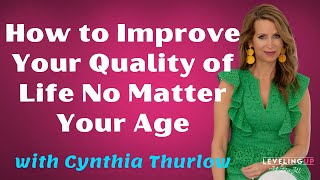
Cynthia Thurlow shares how she overcame a serious health crisis and became known for her viral TEDx talk on intermittent fasting. The conversation covers mindset shifts, surrender, and nutrition strategies for improving quality of life at any age.
Hi, I'm Natalie Jill, fat loss expert turned high performance coach. When odds are stacked against us, how do we shift and create everything from nothing? How do we level up when we aren't feeling it yet or we've had a big setback. On this podcast, I'll be talking to some of the most inspiring and courageous men and women on this planet who at their worst, learned how to achieve success greater than they ever dreamed possible. Leveling up and creating everything from nothing. Cynthia Thurlow had a significant health hiccup as she was traveling back to her home in D.C. from a romantic Hawaiian vacation with her husband. Something felt off. 48 hours later, she found herself in the ER with a ruptured appendix, inflamed colon, and terrified. A scare turned into a 13 day hospital stay with further complications. Now things got really serious when she couldn't leave her bed, she couldn't eat, she had tubes everywhere, drains coming from her abdominal. And when she was too weak to deal with anything or care about anything in her normal life, she felt hopeless. What pulled her through this? Her boys. And the visualization of seeing herself on the TEDx stage, delivering her talk. 27 days after returning home from hospitalization, she graced the TEDx stage with a talk that went viral. Join in today and learn exactly how Cynthia Thurlow leveled up and created everything from nothing. Today on Leveling Up, I am excited to chat with Cynthia Thurlow who recently had a TEDx talk that went crazy viral. And I was curious how that happened. How did she ever know that was going to happen? Was that her intention? And it's so amazing what she's accomplished and how she did that TED Talk when she did it, which was, I just learned right after she was discharged from a very dangerous health scare. So, Cynthia, thank you for being here today. I'm so excited to chat with you.
Yeah, thank you so much for having me, Natalie. It's really my pleasure.
So take me back this TED Talk, I mean first, did you ever know you were going to do a TEDx talk? Did you where the idea come from? Did you know when you were in the hospital this was coming? Where did the idea even come from? And who were you that got you to that point that you were creating this?
Yeah, so it's a great question. So last year, in 2018, my goal as an introvert was to do a TED Talk. And you know, I put all these wheels in motion, did all these applications, and I got my first TED Talk in December. And literally as soon as I accepted that One. I got a second one because you. What you want to do is have a bunch of applications out.
Okay.
And so I had to do it on a different topic. And I looked at my husband. I said, I have this really quick turnaround. I have to give them an answer really quickly about what the topic will be. And I said, I know a ton about intermittent fasting, so let's do that. And so my husband and I fast forward. It's February. I went to Hawaii with my husband. I've never been able to take a vacation with him on a business trip, ever. It's finally, my mom had retired, and so I had the ability to have her watch the kids. And I came back from this amazing relaxing vacation, and 48 hours later, I was in the emergency room and essentially fighting for my life. I was told that my appendix had ruptured, which in and of itself is not that big of a deal. But I had a constellation of complications that kept me in the hospital for 13 days. And at one point, they weren't really sure how well I was going to do, despite being a super healthy person. And one of the things that kind of kept me going during this hospitalization was thinking about my children. I was like, they're way too young to be without their mom. And then feeling profoundly focused on delivering this TED Talk that I wanted to give. I was like, I think so many people need to learn about this strategy. I think that I'm the person to deliver this talk. And so those are the two things I thought about. And when I got out the back.
Up for one minute because I got a bunch of questions popping up on my end. So first and foremost, you're on vacation for this vacation you're so excited about. Were you feeling sick on the vacation? Were there any signs? Were you feeling off? How did this come on? And how did you figure out it was your appendix?
Yeah, so I felt great on vacation. And obviously we live on the east coast, so coming back from Hawaii takes a while. Felt fine on my flights, got home, my mom was here. I was home for two days. And I woke up two days after I got home, and I had horrible back pain. And then I was nauseous and vomiting. And so I thought I had. I thought I had a stomach bug. I must have picked something up. I ate a lot of fish when I was in Hawaii. I was like, for sure I picked up stomach virus. What was concerning was the following day, I couldn't stop vomiting, and I had the worst abdominal pain I've ever had. And I Think as women, when a woman says it was worse than labor pain, that gives you some idea of how bad it was.
Yeah, I had that experience once. Yes.
Yeah. And so that was the clue that there was something seriously wrong. So we went to the emergency room, and initially I didn't look that sick, so they didn't take me very seriously. I didn't look that ill. But then they got blood work back and then did an emergent CAT scan, and that's when they realized that my appendix had ruptured and my entire length of my colonial was inflamed. So they couldn't do surgery. They were afraid to do it. They thought they would have to take my entire length of my colon. And for anyone listening who doesn't realize the full implications of what that is, I would wear a bag for the rest of my life.
Oh, my gosh.
And that was just not acceptable when.
Appendix rupture, I would imagine there's different stages of it. So, like, if you had gone earlier, would it. But would you. When it was first hurting, was that like, before it had ruptured? And now what was making you so sick was the rupture? I'm just curious how that all works. Like, what would somebody listening to know and look for?
Well, and I can tell you, like, the classic appendect, you know, appendicitis. You know, history is people will. They won't want to eat, they may be nauseous, they'll run a fever, and they usually will get pain in their right lower abdomen. That's typically how it happens for me. I never had localized pain. It was diffuse. So what they suspect was that probably when I started getting symptomatic on that Saturday evening was probably when my appendix was probably rupturing, and that by the time I had so much pain, it was because my abdomen was so inflamed. But I also think, you know, again, most women have a pretty high pain threshold. So what probably would have been perceived as a lot of pain to maybe a male may not have been perceived the same way as a woman. So, yeah, I was completely stunned. And, you know, the typical presentation that I used to see in the emergency room as a nurse with appendicitis is when they stopped having pain. That's typically when it ruptured. But they suspect that it was a constellation of things that had happened. I had so many other complications going on with that that it just explained why I had this pain that was really out of proportion to how sick I looked. So.
Wow. Okay. So now, like a typical Woman, I'm wondering, were you, while you're sick in the hospital, thinking of like the surface level stuff first, like all the stuff I have to do, like to do, or did that all go away right away? Like, I know with me, when I've had scares, I have to battle that first. Like this whole my to do list is not the right timing to be sick.
I know. I. No, it's like this isn't convenient. You know, I think initially, so the first day I didn't feel, I felt bad, but they had my pain under control. And so I was texting my team to say, hey, I need you to cancel all my appointments this week. Let you know, let. Let everyone know that I'm okay, but I'm, I'm, you know, in the hospital. And then two days later, that's when I got really sick. And so that's when everything business related just fell off the radar. Like, I baseline couldn't deal with text messages or even worrying about social media. And that was also when my husband said, you looked so sick, I couldn't stop vomiting. That was my biggest thing. I could not stop vomiting, which everyone knows is miserable.
And is that like the, Is that the stuff from the appendix coming up? Is that what that is?
Well, it was because my small bowel became obstructed. So it's almost like the domino effect, like every complication. And so I looked, I went from being tiny to looking five months pregnant. And of course I knew what that was. And so they had to put a special tube down my nose into my stomach, which helped a little bit. But I think I felt so bad by day two that I stopped worrying about everything and then I was just existing. And the only way I can describe it is all I thought about initially was water because I was so thirsty. And of course they wouldn't let you drink anything. I would beg them to give me ice chips and then I would wait for them to melt and then I would drink a bunch of water, which would make me vomit all over again. But yeah, you, you definitely get to a point where you're just not even. I just, it's like you feel like you're going to die, you feel so bad, but also just the whole concept of surrender that, yeah, I was at a point where I had to shut my brain off because I would have made myself absolutely crazy. And you just get to a point where your baseline survival mechanisms are just to rest and do nothing else. Like, I was just a blob in a bed. That's. That's All I was doing, my body was trying to conserve all the energy to stay. Stay alive. Wow.
Oh, my gosh. Okay, so then when you. So fortunately, they. You had a great care, I'm assuming, because you recovered from this. But what was going through your mind during recovery that brought you to. And brought you to this awareness of what you wanted to create in this talk, like, what came up for you and when did that. And. And I love that you just brought up surrender. I have a big theme lately that I've been talking about with surrender, because I think that if we don't put ourselves in a situation where we learn to surrender, the world has a way of doing it to us, whether it's through illness or something that happens. So I. It's like a forced thing to learn that.
Yeah. And I think for many people, you know, going through a major life crisis will really show you who you are as a person. And for me, I come from a place of. I'm an optimist. And so I was like, this sucks. I'm going to get through this. I have kids. I have to get home to. I remember on day five, I got very depressed, probably because I was starving. So think about it. I hadn't eaten for a week, and I was losing weight really quickly because my body was breaking down all my muscle to use this food. So I remember on day five, I was really sad, and I cried. And then I was like, nope, this isn't going to beat me. I'm going to get out of here. I'm going to do this talk. I want to get home. And so I finally allowed them to give me IV nutrition. And so that's when my brain started kind of firing again. And that's when I said to myself that Saturday morning was like, I'm going to get out of this hospital. I'm going to do that talk because it's so important to me. I need. Intellectually, I needed to focus on something other than, of course, being home for my children. But I was like, intellectually, I need to focus on something really positive that could really make a difference. Because I think, you know, whether people believe in the existence of God or they're very spiritual, the universe sent me this as a test. Like, how strong are you? How tough?
I believe that.
How much can you come back from? Because, you know, some people would have been devastated with what went on. And instead I just said, nope, I'm going to. Everything they need me to do, I'm going to do. If they. If I need to have another drain put in. If I have to have another complication, if I spike a fever, if I need more antibiotics, I'm going to just take it. I'm totally tough. I can do it. There are people that have dealt with worse, and I think that was a great equalizing factor. I had almost an entirely female team, which was awesome. Like, I had all female surgeons. And so they would come in, they saw me a couple times a day, and we had some really incredible conversations. And being a healthcare provider and being on the other side is really, really humbling. And I just said, I'm just so grateful. Like, this could be so worse. I'm just so grateful.
So the TED Talk, for those of you that have not heard it, for those that have not heard it, tell us about what that was.
Yeah, so it was all about intermittent fasting. And the organizers that asked me to do a female health kind of focused, so that it wouldn't be just about men or just about women, just about women. And so I wrote this really with the mindset of the population of women that I really work with that are struggling in their late 30s, early 40s, early 50s and beyond with weight gain and hopelessness and feeling badly about themselves because they aren't feeling like their normal selves. And I was like, hey, here's a strategy that doesn't cost any money, that's totally flexible, that you can integrate into your life wherever you are, you know, whether you're on vacation or at home. And so I felt like it was really important to give women hope that this was something they could do. That, as I always say, is not a pill or a potion or a powder, which, you know, there's a place for those things. But just giving people the opportunity to feel that there might be something out there that would be helpful to them. And so that was this place of love is where I really came from.
So why do you think it went viral and do you think it would have had you not been through this scare?
Well, I don't think many people knew the organizers were joking and trying to decide if they wanted me to include that. I mean, I did in the talk, mention, you know, it's not the right strategy if you've recently been hospitalized like me. But I didn't go into any specifics. I think that intermittent fasting is a hot topic. I think people are really looking for other strategies than what the norm is. People are curious about it, and I just think it was probably the right topic, right person, right time. And I know a lot of people do TED Talks because they want it to go viral or they want to receive attention. And that wasn't the reason for me doing it. It was really done because I genuinely wanted to share it. And I'm such an introvert. Like, to get up in front of all those people is, like, really scary for me. And to have done it 27 days after I got out of the hospital adds another layer of complexity.
But do you think that you did it? I mean, do you think that gave you a new level of passion and way of delivering because of that? Because, like, if you had. If this had not happened to you and you had just delivered this, my belief is that you might not have had the same mission or vision or passion behind it.
Yeah, absolutely. And I think that it's very humbling to be in a position where you've had a health scare, you've come back from it. I also wanted to demonstrate for my kids. I'm like, pardon me, shit happens. You know, stuff happens, but life goes on. And it's what you make of it and it's how you decide to come back from adversity really speaks to who you are as an individual. So, you know, on many levels, I really wanted my children to be proud of me and to be able to say, hey, my mom really had something not so great happen this year. And then, you know, I said, this whole year is about high highs and low lows. And my 11 year old actually came with me and got to watch it, which was really cool.
So tell me some lessons that you learned having that happen to you, because I think there's a lot of wisdom with women that have gone through this that can be shared with others. So I know you mentioned a few things, but I'd love to dive a little bit more into that. So, like, knowing what you know now, what happened to you, what things have you changed in your life?
What would you.
What do you look at differently? How do you approach things differently because of what happened?
Yeah, I would say, first and foremost, really creating space to spend time with.
The people that I love.
You know, I'm always actively working on that, but being more present, ensuring that my loved ones really know that they're loved, because things can change so quickly, that would be the first thing. And also, you know, I was raised Roman Catholic and I, you know, my kids have gotten a couple sacraments and we go to church on occasion, but just the connection with, you know, with friends who genuinely prayed and, you know, really were sending, you know, warm thoughts and just the power of love. And connection with the people that you're close to is undeniable because I genuinely felt so much love and support. I think that the big takeaway for me was the concept of surrender. You know, I'm a very much a highly motivated, type a go, go, go kind of person. And to have to turn my brain off and allow other people to care for me. I mean, at the most basic level, like, my husband gave me a bath or a shower every day because that made me feel a little bit better. Of course he loved that. But, you know, I think the concept.
Taking care of you or being in that role of that. Do you think that was.
I think it was a little bit of both. I tend to be kind of feisty. You know, I'm someone. I can do it myself. You know, I can like.
I'm just kidding.
Super independent, sassy. So I think for him, you know, he felt like he was helping me in some way.
I can see that the same way with that.
Yeah. And I think that, you know, the concept of allowing others just in general to do for you what you're unable to do for yourself is really humbling. And it was also, in many ways, it was wonderful to know that I had trust in these people to do what I needed to have done for me. So being a control freak, a little bit detail oriented, that was.
I love that you're talking about surrender right now, because that's been a really heavy theme for me lately. In fact, I've never had a tattoo my whole life, but I had made it clear that I'm getting a tattoo on my arm that says surrender because of the amount of lessons I've had in that mostly this year. But what's interesting is for people that don't know what that means, I think we all define it different. I'm gonna ask you how you define it in a moment. I defined it as the place of really actually being. It's not about giving up or saying, give me whatever supposed to see. It's about fully being present. It's literally about fully being present and out of your. Your immediate fight or flight and fully aware of feelings and what's around you and in the moment. And I think it's when we. When we are in the constant to do list and the hustle and the control. The big word is control, like trying to control others, trying to control ourselves. We are the opposite of surrender, and it's a complete illusion. But it's in those moments of complete surrender when you're not controlling and you are fully Present, that clarity comes, what's really important comes. That's where love lives. And I think there's a lot of awareness and there's a lot of ways to get there. I believe that some people can do it through meditation. I'm still working on it. I've had moments of that through there. Some people do it through plant medicine, medicine, no opinion there. That's what people are doing. Some people do it through life changing events, tragedies that it could bring, that sickness, illness. There's a lot of things that if you don't create it yourself, if you don't look for it in daily life, it will happen to you to get you to that point eventually.
Yeah, absolutely. And I think that's a beautiful explanation. I work with someone who's a Reiki energy person and my question to her when I left the hospital was, why did this happen? Yeah, you know, we had some really spiritual conversations from that. But for me, when I think about surrender, I think people think of the physical sense. But for me it was very much the emotional, spiritual sense because I remember very clearly when I felt so bad in the hospital and I'm looking out the window and it was snowing. Washington D.C. it's snowing and it was a very cold day in February. And I remember just looking outside the window and it was almost like a sign that it was okay to just be in that moment, to experience everything that I was feeling, that it completely where I was meant to be in time and space. And you mentioned that whole parasympathetic rest and repose side of our bodies. I was very relaxed, I wasn't vomiting, I wasn't crying. I was just very at peace. And that clarity that I had in that moment is what allowed me to intrinsically kind of tap into. Okay, this is where we're going.
Yes.
Where I am in time and space is where I'm meant to be. These are all the things I'm meant to experience. This is exactly, yeah, this is exactly where I'm supposed to be. And so I think for me, when I, when I talk about that hospitalization, sometimes it can be very emotional for me, which I think surprises people given my personality, but I keep telling them, I'm like, you know, you can take from a bad experience and for one person it might be a trauma, for another person it might be an illness. Whatever it is that we experience, you know, life gives us the opportunity to decide how we want to view that experience. And for me, I'm going to take all of the, you know, not so unpleasant things, not so pleasant things that happen and turn it around and make it more about what. What is life trying to teach me?
I love this. I love this. So how will you bring the idea of surrender back into your life? Because you know, that happened for you. It happened. Well, it happened to you, but it also happened for you to get to that place. I'm imagining that was your first true awareness of it. So how will you get that into your daily life now? Like, do you see now? Because I believe once you experience surrender, it gets easier to figure out ways to get yourself through yoga or meditation or whatever it is. Have you started implementing more of that into your life? And now do you know what you're after with that?
I mean, yes, and it's a constant, you know, it's a constant thing I have to work on. You know, even when I'm talking to my patients and saying, you know, you've got to tap into that parasympathetic, I don't care if you put your legs up the wall for five minutes, you need to kind of slow your brain down. So I've definitely started to prioritize specific things in terms of self care and really I can feel when that kind of sympathetic overdrive starts to happen in my body. And so I try to keep myself centered. Okay, what are we really working on? What are the things you intrinsically have been saying you need to be doing? What can you put into practice? What can be different next time? How can you react differently? And so for me it's all about the self care piece and then also ensuring that I'm honoring like the key priorities in my life. Like what am I putting into practice, what I'm saying I want to do? Does that mean that I say no more frequently? Does that mean that I put myself to bed earlier? Does that mean that I have to physically sit down and create space for me to meditate? Does that mean that I need to do a slow flow class? So do I need to take a bath? I mean, you know, making sure that I'm staying as connected as I can be and then holding myself accountable. Like, I think it's important to have conversations with our loved ones if they're, if you're trying to make a change or trying to make something better. Even with my husband, who I'm married to a very, very left brained engineer MBA guy, you know, telling him, I want you to hold me accountable. Like if I'm not, if I'm not doing the things that I'm saying I'M going to be doing, I want you to tell me so that I can kind of work on cultivating what we've talked about.
I love that.
So do you.
What would you tell somebody right now that's listening that. Because I know there's someone listening that's right now going, I don't have time to meditate, I don't have time for self care. I don't have time to slow down. What would you tell them?
Well, it's all about priorities. So I would say just start with five minutes. Everyone has five minutes. So decide for yourself. And I always say, give yourself a laundry list of four or five things that you can do for yourself. Even if it's, I'm going to get outside and get sunlight first thing in the morning, five or ten minutes of sunlight so that you can help reset your circadian rhythm. Or I'm going to put the legs up the wall. I find for a lot of women that's an easy thing to do. You know, everyone has five minutes.
Explain about the legs up on the wall and why that that helps.
It can help you be centered because you're literally just with your legs up the wall and it gives you time to think in time and space. You're not being distracted by electronics. You're not being distracted by a pet or a wall.
Don't put your phone with your legs.
Up on the wall away from all electronics. Yeah, exactly. No, definitely, definitely off of social media, which can be a blessing and a curse, but just forces you to be present. And I think that we're so distracted as a society that we don't recognize that we're not fully present. I mean, think about, you go out to dinner now and you see, you just froze. But they're not connected. Sorry. So that sense of connection with we.
Just froze for a minute. Say what you just. Sorry.
That's okay. So I think that we're a society that now is so largely disconnected with one another. And I was using the example of, you see families going out to dinner and isn't that great? They're all going out to dinner, they're going to share a nice meal and then everyone's staring at their phone and parents and kids are doing this. So we're so wildly distracted that it's important that we center ourselves. And sometimes the easiest way to do that is to stop moving. Stop moving and not be distracted. So the visual distraction for a lot of people is hugely beneficial. Or something as simple as sit for one meal a day and don't be on your computer, on your iPad, on your iPhone, maybe look outside and I know that you live in beautiful California. Or maybe you're looking at something beautiful outside. Or for us right now, there are trees that are. We finally have leaves on. You know, looking at something in nature, connecting to nature can be really beneficial. But those kinds of things just start with five minutes a day and then you can slowly increase it.
I love that. Okay, a couple more questions and then I want to. The question I ask everyone, but I want to ask that. I don't want to skip over this part about the talk on intermittent fasting. And I know we don't really do a lot of that on this podcast on nutrition, but I know people are asking like, why intermittent fasting? Can you talk a little bit into that? I do have just a couple of questions for you. I teach something called modified fasting, not intermittent fasting where I tell people to and I'll tell you why. My reasoning, and I'm totally open minded here on your thoughts behind it all. So I teach something called modified fasting because my thought process is a lot of women got trained in this idea of eating every few hours and it's this constant rush of insulin being added to your system. And we're not in fat burning mode then. And it's. That in itself was making people gain more, more weight, changing mood. There's a lot of issues there. So rather than. So the first thing I did with clients there is take them, take out the, all the meals a day. You know, so break that into two or three meals a day. And then I do something called modified fasting where I encourage them to take at least 12 hours off of food at night. So if their last meals at six, it's not till six in the morning. And the reason I taught that is I found it wasn't as extreme. So people were more likely to stick to that and get the benefits of taking a break. And when people ask me about intermittent fasting, I've always said if you could make that a lifestyle, amazing. But to me, eating all your food in four hours or even six hours is very challenging for people. So I would just love your thoughts on that. I'm open minded here and I would love to, to give you an opportunity to sort of to share your thoughts on it and what you teach and why.
Yeah, so I think that's a great strategy. You know, 12 hours of digestive rest. And that's really why I love the whole concept of fasting is that you're absolutely correct. When we are eating these mini meals or six mini meals during the day, which makes me absolutely crazy. We are constantly secreting insulin and insulin is a hormone that helps move sugar into our cells. But what's happened over time is we're eating out of habit and not out of hunger or because we believe, which.
Is not true, that your body's eating its muscle when you're not eating. That's what we were told for years.
Yeah, right. And so there's all this dogma that's totally outdated, that's absolutely incorrect. And I think a 12 hour fast is a great place for people to start from. It doesn't seem scary. I am not an advocate of anyone doing trying to eat 24 hours worth of calories in four hours. I personally, if I ate one meal four hours later, I'm generally not hungry. So that would not work for me. But I think what I typically will recommend is that people aim to try to hit a 16 hour fast. Maybe for a week. You're doing 12 hours and you increase it to 13, then 14, then 15 and 16. Because the benefits, we know the benefits of intermittent fasting will actually be improved upon by the longer amount of time, more digestive rest. But you also scavenge up these disease cells. This process of autophagy, which is a really cool nerdy science term, we know that it lowers your insulin levels. Insulin being lower in the body is beneficial. It's great for brain health, helps with mental clarity. Everyone likes to focus on the fat loss piece, but for many of us who are already at an ideal weight, it's not so much about the fat loss, but it is a great strategy for people who need to lose weight with improving their diet. What I find most interesting is just not eating all day long. It's how a lot of people lose a lot of weight. If you've got to lose 30, 40, 50 pounds by shortening your feeding window, you're either existing in a fed or fasted state. People will lose weight even if they don't change their diet. And so sometimes that's an easy way to get people to buy into the concept of changing their eating habits. So you're not snacking all night long and then eating breakfast at 6. Totally about being more attuned to your body. And I think for many, many people, they've lost the ability to be in tune to what their body's hunger cues really are. Because sometimes when we are stomach hurt, I definitely believe that, yeah, we're thirsty, it's not that we're really hungry and there's all sorts of strategies you can do.
Also the balance of the foods, I would imagine. I mean, like, if you're eating, if you're not balancing your protein, carbs and fats, and you're eating a high starchy carb diet, for instance, you're going to spike your insulin and you're going to be having cravings when you're not actually even really hungry. Right.
And it's interesting, I was talking to a physician the other day who battled back from like a significant obesity problem. And he's a huge advocate of low carb diets, intermittent fasting, all these strategies that most of my western medicine peers are not really fans of at this point. And what I found really interesting for him when we were talking was talking about the processed food industry and how it's completely derailed many people's ability to be able to control their hunger. And he said, you know, one of the things that's a huge takeaway for me after I spoke to him was if you can't control someone's hunger, you can't control their weight.
Oh, for sure.
And so, you know, it seems so simplistic, but it really is so critical. You know, we can do all these tricks to deal with our cravings, but if we're not dealing with the big issue, it's not going to be successful. I'm with you. Intermittent fasting, to me is just an incredible way for people to take back control of their health instead of the food taking control of them, which is what I think most people are feeling like they're really failing. And I use their term, not mine, that they're really failing in this health space because they're being taught that they need to eat many meals. They're being taught that they have to have this, you know, high grain diet. They need to eat lots of gluten, they need to eat a lot of highly inflammatory foods. And they just can't get, they can't get to a space where they're finding that they're having much success.
Yeah. And if anyone listening is defensive of that, what I always say is, if it's working for you, go for it. Like, if you are feeling great on a high gluten, high grain diet, you know, eating every two hours, I'm not trying to change you, but I would say that's not my experience with women, women that are crossing my path, like, that's not the experience. They're not coming to me going, I feel great. Like it's there. So why does it hurt to Try that. So, so I like everything you said. My only issue with intermittent fasting you already addressed would be when people think they have to have all their food in a four hour window and they're like trying to cram in 2,000 calories. I don't know of. Not necessarily healthy food because it doesn't work.
No. And it's interesting because on the online space there's a large group of people on Twitter that have, you know, similar kind of mindset about food. And the guys seem to be able to get away with a six hour feeding window or a four hour feeding window. And I laugh and I tell them like, guys, I need an eight hour window so I can have two meals so that I'm not stuffed to the gills. And I've tried a couple of times and if I go to 18, I mean occasionally 18 or 20 hours, I generally end up.
I think eight is a great comp. I think that's, I think 12. I think I would try eight. I like, I like. Yeah, I don't see myself doing a four or six.
No, no, no. And I think for the guys, maybe their metabolism because they have so much more lean muscle than women do at the same age, maybe they're able to just burn through the amount of calories. But I find most women, their big sticking points in their 40s are alcohol and the improper choice of carbohydrates. Now, I'm not anti carb at all, but sweet potato is not the same as rice. It's not the same slice of bread. And so.
And gluten free donuts don't count either.
That's not.
They're going to be higher even.
I know. It's funny, I have a woman that I'm guiding through keto diet because that's what she wants to do right now. And she sent me a bunch of recipes for this keto plan that someone had given her and I said, well, a donut is a donut is a donut. I don't care if it's a keto approved donut or a gluten free donut is still a donut. It is still cake. It's cake with a hole.
I'm not even sure how you'd make a keto donut. That sounds interesting.
No, it sounds like a big fat bomb. But yeah. So it's one of those things where I think we have to just get back to giving people like real information that works for people. Yeah. Four hour feeding window or six hour feeding window for most people is not doable. Especially women. I just don't think it's feasible.
Well, this is amazing. Okay, I have a final question for you. This is something I ask every guest, and this is if you're. If somebody's listening right now and they are in their own personal place of rock bottom, so maybe they had the health scare that you just went through, or they're in that right now listening, or it's financial, whatever it is, their own personal rock bottom that they're facing right now. If you were to give them three pieces of advice on how they can start shifting their mindset, leveling up, and creating everything from nothing, what would you tell them?
It's a great question. I think the first thing I would say is you need to have hope. Even when you're at a place of despair and your life is feeling like it's in disarray, I want you to focus on something that'll give you some hope, you know? Secondly, I want you to imagine how different your life could be in six months.
Okay.
I'm a huge advocate of, you know, always looking forward and not looking backward. And then lastly, reaching out if you need help. I think, you know, we still have a society that's largely conditioned into shaming. If we're in a position where we're feeling like we're failing or we're not in the right mindset, and acknowledging that there are lots of, you know, wonderful resources that are out there that necessarily cost money, or connecting with someone that you identify with online, reaching out to them, I think that's so, so important and critical. Just acknowledging half the battle is, I need help. I don't know which direction to go in. I'm feeling like I'm in a bad space. How can you help me? Whether that's a friend, a loved one, social media influencer, your clergy person, whoever that might be always important to be able to feel like there's still hope at the end of the day.
I love that. Cynthia, where can people find you? Where can they find your TED Talk? What do you want them to search for? To find out where, where, and where do you have a website? Social media. Where do you want them finding you?
So I'm www.chtwellness.com. i'm pretty active on Instagram and Twitter, same handle as well as Facebook, my YouTube. So I have two YouTube TEDxS. But the most. The one that's gotten the most attention is the one on intermittent fasting, which, if you put in transformational technique, Intermittent fasting, I think is the title that they gave it. And then also we've got Find you'd Inner Goddess, which is a three week program designed for women to kind of take back your inner goddess working on self esteem nutrition done in a super supportive Facebook group. It's one of my favorite classes to teach. We're actually enrolling for that right now. It starts next week. But yeah, I'm all over the place. But definitely reach out if anything that I've talked about is connected with you.
Amazing. Thank you so much. Cynthia.
Thank you.
Thanks for leveling up with us today. Please share this episode if you found it helpful so others can join in. And don't forget to hit that subscribe so you don't miss out on future shows. And if you would leave me a five star review. I appreciate those so much. I read all of them and it's how I know that I'm giving you information that you find valuable and come interact with with me over on Instagram @nataliejofit. I read all the direct messages and comments over there. Make it a great day. Creating everything from nothing.










