117: Take the Hint about Diet Soda with Kara Goldin
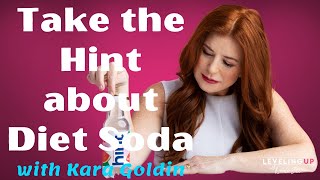
Kara Goldin, founder of Hint flavored water, talks about quitting diet soda and why artificial sweeteners are a problem. She started the company after her own addiction to diet coke nearly ruined her health, and built it into a major beverage brand without added sweeteners.
Hi, I'm Natalie Jill, fat loss expert turned high performance coach. When odds are stacked against us, how do we shift and create everything from nothing? How do we level up when we aren't feeling it yet or we've had a big setback? On this podcast, I'll be talking to some of the most inspiring and courageous men and women on this planet who at their worst learned how to achieve success greater than they ever dreamed possible. Leveling up and creating everything from nothing. If you're a diet soda drinker, you're gonna love this. Today I'm talking with Kara golden, who had a 10 to 12 diet soda addiction a day. Now, she was doing a lot of healthy things in her life, but she had no idea what that was doing to her health. When she finally figured it out, she was on a mission. Today, Kara golden is the founder and CEO of Hint. It's a lifestyle brand that produces the leading award winning unsweetened flavored water. You've probably seen her beverages and whole Foods, Target or many of the big box grocery stores. Now what's so interesting about this is Cara launched her product Hint, which has taken over the beverage industry while she was nine months pregnant with her fourth child. Unbelievable. Join in today and learn exactly how Kara golden leveled up and created everything from nothing. Today on Leveling Up. I'm talking with Kara golden and I'm so excited to talk with her today because she is going to share a story with you that I'm super passionate about myself because she's going to dive in to the diet soda issue because especially coming from a place of fat loss and nutrition, those of you that met me there originally or followed me, you know how against those things I am. And I always get the question, what's so bad about it? What's so bad about it? So I'm excited to have her on today because she's going to share her journey, what she went through and how she ended up doing, founding and creating a successful company because of her pain with this. So thank you so much for being here.
Yeah, thanks for having me. Excited to be here.
So take us back. You told me that originally you were doing all the healthy things, but you had a diet soda addiction. Talk to us about that.
Yeah, so I was a tech executive. I wasn't a soda executive or consumer products executive or even a nutritionist. And I was taking a break from tech. I have four kids now, but I actually had three kids at the time and was really thinking I was pretty healthy. And while I was taking a break from my tech life, I decided that I was really going to focus on just getting healthier. And really the key thing for me, there were three things. One, I just felt like I was tired all the time, and my skin had developed this terrible adult acne, which I didn't even have as, like, a teenager.
Okay.
And finally, weight. So for me, I had gained a lot of weight. I'm pretty small framed. I had never had a weight issue. I was a competitive gymnast, you know, all through high school, and really felt like I knew how to kind of get it together. But suddenly I fell into this, like, place where I was like, you know, why has this happened? So I went to a bunch of different doctors after, you know, starting to really work out and run again and, you know, shopping at whole foods, thinking that if I shop at whole Foods, like, everything's just gonna magically just go. And how old were you, by the.
Way, at the time when this was happening?
So I was mid-30s.
Okay, mid-30s.
And so I was. So went to a bunch of different doctors who told me a few different things, including, was I sure that I wasn't snacking on a bunch of cupcakes every day? My hormones had changed. My metabolism changes as I get older.
I'd love to tell us that, yeah.
I shouldn't have had babies so close to one another. I mean, there are all these things that I just. I don't know, it just didn't seem like a quick fix or I didn't really know with that info. And so finally I was more than one of them. Offered to give me medications to sort of lose the weight. And finally I thought, prior to actually doing any of this, maybe I should really take a closer look at what I'm putting into my body. And I remember one day thinking, like, I probably care more about what kind of oil I'm putting into my car than what I'm actually putting into my body. And that's when I was looking at probably one of my favorite people. And I joke, probably. I loved my diet Coke more than my husband or any of my young kids on some days. And the diet coke was when I was reading the ingredients one day, really trying to understand what was in the diet soda. There were over 30 ingredients, and most of them I didn't really understand. So I thought, if I just commit to only putting things into my body that I really, like, can understand without dictionary out to really figure it out, maybe that will change something. And I didn't commit to sort of, like, dropping diets. Diet Coke forever. I really said, let me just see what happens. And so two and a half weeks later. And I always tell people, like, those are really hard, two and a half weeks to lie. Like, it was, you know, I had bad headaches. I had really bad stomach aches. And, you know, it was. Kind of felt like I had the worst case of the flu that I had ever had before. And because I had been drinking probably since I was 13 years old, between 8 and 12, you know, equivalent of cans a day.
What? 8 and 12 a day?
Yeah. And sometimes it wasn't in a, you know, canned format. It's like I'd go to. I grew up in Arizona and I'd go to Circle K and, you know, fill up my fountains. Big Gulp, you know, or whatever they're called. Yeah. And so it was, you know, and sometimes I wouldn't even finish them. But I was constantly, you know, drinking this.
So what was it going like? So when you first discovered it? Because, you know, I'm thinking my mom. My mom was like a huge hooked on Diet Coke for years. I never. I have not drank soda since I was 12. Personally, me, because I just don't like it. But my mom, mom, she developed severe migraines, and it took her years to figure out it was the Diet Coke. But she was the same, like, a ton of it a day. So I'm curious, I know, from her perspective, why she did it, but what were you thinking? It was like this innocent thing because there's no calories or what was going through your mind when you were having it?
I was really dissecting everything that I was putting into my body, and I really didn't think it was the diet soda that was causing the issue. But then when I just decided to give it up for those two and a half weeks, I noticed that my pants were fitting differently. And I definitely looked. Looked in the mirror and thought I'd lost weight. But I also realized that my acne was gone and my energy levels were up and I was feeling pretty good. And I didn't change anything else on the eating side of things. But what I did notice was that when I stopped drinking the diet soda, I actually was less hungry. Yeah.
Because the cravings stopped.
Right.
Takes me back, though, to when you were drinking the diet soda before you changed things. Because I want to understand how this even happens. Like what? When you first decided, I mean, you said you were a young girl when you started, but when you were in your 20s drinking diet soda, were you thinking, it's a healthy habit, or did you always kind of know it wasn't.
Yeah, 100%. And I think, you know, I thought about this a lot, and it's. It's, you know, I probably started drinking it when I was maybe 12, 13 years old. And, you know, not to blame my mom, but I would watch my mom drink Tab and some of the other drinks that were out there.
Mom, too.
And I think, you know, I now look at, you know, the soda industry and how they target, you know, young girls like me. And again, I was an athlete. I wasn't, you know, I wasn't really focused on, you know, being super skinny or I was just focused on being healthier. So for me, the word diet was something that actually said health.
Oh, interesting.
Yeah.
So you thought diet meant health? Yeah, and I think people mistake that all the time.
I think they do, too. And I mean, frankly, I think people also mistake water all the time for being healthy when there's a lot of things that are labeled water, you know, for example, vitamin water. And it's all sweetened with either sugar or diet sweeteners. But anyway, I gave it up. And two and a half weeks later, something happened to me that was, you know, really pretty remarkable and probably wasn't normal for most people, but I lost £24 in two and a half weeks. And then over the course of six months, I mean, at this point, I wasn't going to go back to drinking diet soda. It didn't particularly even taste that great to me. And after six months, I lost £55.
And that's all you changed?
Yeah, that was it. And again, it was. You know, for me, it was also the cravings that sort of, like, went away. Like, I didn't really crave carbs anymore. I wouldn't go as far as to say that I never ate carbs like pasta or bread or anything like that. It's just not what I was craving. I was actually craving really good foods. It's really hard for me to even chew gum anymore. I felt like when I was drinking diet soda, I'd always want that sweet fix. And I never really associated these things as being totally connected. So I went back to some of the doctors that I'd seen prior to this and told them about my experience. And they were like, that's crazy. You must be doing something else. And I said, no, seriously, it's really not. I see that.
It's so fast. So for those listening that don't know this, and I'm sure, Carrie, that you totally see this now is that when you have all those artificial sweeteners, your body thinks it's getting those calories.
Totally.
It's looking for those. So you have this one calorie drink full of artificial sweeteners. Your body thinks it's getting them. It's not actually getting them. So it's constantly going to look for where, where are those calories. So you, your cravings get out of control because you're constantly looking for something to fill up those calories. So people think they're doing themselves a favor having a diet soda. It's making their matters worse.
Yeah. And so, I mean, and just to add on to what you're saying, it's not just the artificial sweeteners, because today a big marketing trick is that they're natural sweeteners. And fortunately, you know, stevia is probably the biggest one today that is, you know, marketed. And unfortunately, when the soda companies or food companies are using it, they process stevia. So it's actually not a pure leaf stevia. They're using erythritol and lots of other.
Stuff, the sugar, alcohols.
Right. To process it. So it's actually, you know, as bad, if not worse than sugar or, you know, certain forms of sugar as well as, you know, the artificial sweetener. So it's crazy.
Yeah. So explain that to me a little more because I want to dive into that because I am somebody who does still use stevia, and I don't find the cravings myself when I have stevia and things. In fact, I recently tried one of those, the new candy brand that is made with stevia. And what I noticed about is you have a few of them. And I wasn't craving anymore, so I didn't get that same thing. So tell me about your experience with that and more about that, about stevia.
Well, so again, stevia, when it's used in processed foods, whether it's a candy bar or whether it's a soda, it's got to be processed. So they're not using pure leaf stevia that you might buy at a health food store or grow in a garden. I mean, they're processing it with a lot of other things. And so you just have to be really careful about it. I mean, I actually am very sensitive now. I can pick up on. I mean, I can literally taste the difference between, you know, a pure stevia versus something that is erythritol. And again, I think, like, the challenge with erythritol is, you know, you talked about it as an alcohol and. That's right. And, you know, I've talked to a number of doctors about this, too. The challenge with erythritol in general is that, you know, a lot of people like me were throwing it in their body thinking it was actually good for you. But when you drink as much as I was drinking, I mean, it really, any type of alcohol hits your liver, whether that's a glass of wine or beer or erythritol. And so, you know, why is it that people are showing up who don't drink, for example, with problems with their liver, especially if they've been drinking a lot of diet. So it's a very dangerous thing. And I think, you know, at the end of the day, you just, you know, it's really hard to totally eliminate sleep altogether. But I think it's. You just have to be careful about, you know, what it's processed with and how much it's processed.
So I'm going to ask you more questions about your diagnosis and how you gave this up and what that's out. But I also am curious, since we got on the topic of stevia and erythritol and what that does, what do you think about monk fruit? Same thing. Or what would you say there?
You know, the more research I've seen around sweet in general from, you know, literally all over the world, I think that, look, I think the world's divided into two different types of people. People who crave sweet and people who crave salt. And I think both, in moderation is probably okay. The challenge is, is that I'm a, you know, sweet junkie, right? Like, I love sweets. I'm married to somebody who loves salt. And I think you just have to really, really be careful about it. And just because something has zero calories in it or, you know, you just have to be careful. But what the brain does when it actually reads either of those things is actually it doesn't matter how many calories are in it. It doesn't matter how many grams are in it if it's not sort of from the purest format. I mean, one doctor said to me a few years ago, something that really struck me as, you know, huh, that's really, really interesting. So when you look at, like, a typical person growing up, like, most parents are not giving, like, young kids diet sweeteners. I mean, there's exceptions, but for the most part, people are like, here, have a cookie and it has real sugar in it or whatever. By the time you hit the teenage. That seems to be the time when kids are really marketed to. Maybe they're a Little bit overweight, maybe they're doing sports or whatever, and they start to become more and more aware of calories and sort of what that does. And so your brain is actually getting those different types of sweeteners. And your brain doesn't know names. Your brain actually knows how it appears in terms of sweetness. And so when you look at, you know, diet soda, Diet Coke in particular, a Diet Coke today is 13 times sweeter than it was in the 1970s. Wow. If you're somebody like me who, you know, was drinking it in, you know, the late 70s, 80s, right, drinking regular Coke, and then suddenly I moved over to diet, diet sweeteners. Over the years, it's just been getting sweeter and sweeter and sweeter. And so I've been producing more insulin. Right. In my body. And so just going back to hints, it's, I think, on sort of another parallel path, which was really interesting. A roommate of mine from college was working at the center for Disease Control, still working at the center for Disease Control. And she was telling me she had been moved from poison control over to this new department that was studying type 2 diabetes. And I said, oh, you know, what is type 2 diabetes versus type 1 diabetes? And she was explaining to me, and this was 15 years ago, that they didn't really know much about it, but what they did know was that 2% of the population 15 years ago was showing up as having this thing called type 2 diabetes, which was very different than type 1 diabetes. But the interesting thing that she said to me was that these people claimed to be living a healthy lifestyle, were drinking and eating diet sweeteners, and didn't think that they were eating tons and tons of sugar, but they were having a challenge very similar to me with skin issues and weight issues. And I now think, although I was never diagnosed with type 2 diabetes, I now think that I was something that we talk about today as pre diabetic, pre type 2 diabetes. And when I went back to the doctors and asked them if I had this thing called type 2 diabetes, the response was, no, you definitely don't today. So it was 2% of the population 15 years ago. Today it's 40 to 45% of the population has type 2 diabetes or pre diabetes. And a majority of those people are claiming to be hooked on things like stevia and some of the other diet sweeteners that are out there. And so I think we're. We've all got our head in the sand a little bit on sort of how do we actually solve this problem if we really want to solve problems around a growing disease. Why aren't we looking at how to cut back on these sweeteners versus actually trying to trick the consumer into believing that everything is fine as low calories.
Yeah. So it's interesting because there's research either ways. Right. So doctors are going to show you research either that, yes, it's creating havoc on us, it's making us sick. And then you find all these studies, usually government studies, saying that it's safe for us. It's not a problem, it's not causing any of those things. So did you find yourself walking through those conversations when you were figuring this out on your own?
Yeah, absolutely. And I think, like, the challenge with a lot of these studies, what I've learned, and it's somewhat, you know, frustrating, and I've talked to, you know, more than a few doctors about this. But the challenge with if a doctor wants to do a study, like let's say, for example, that they're a doctor, an endocrinologist that's doing studies on, you know, pediatric diabetes, and they, you know, think that there's a lot of these kids that may be, you know, eating and drinking, you know, zero calorie or 10 calorie drinks or whatever, and they want to do a study, if they're associated with the hospital today, they need to go back to the hospital and say, I want to get the study funded. And they don't actually, they can't actually pick the people that are going to fund their studies if they're associated with the hospital. And so the hospitals are actually picking who they're actually going to. Who's going to fund studies, and so when. So unfortunately, today, if. Let's use that example again, so, you know, you get the study done and, you know, let's say that it's a.1 of 30 of the companies, 1 of 30 of the funders of studies that are associated with a hospital, decide to fund the study. And They're a type 2 diabetes pharmaceutical company. Right. Or maybe, you know, it's even worse. It's like a big soda company. And they want to be sure. Right. They want to figure this out. They're actually allowed, because they're funding a study to say that the results were inconclusive, which is crazy.
Wow.
And so I've talked to doctors about this, that they believe that there's an issue, but in many, many cases, they can't actually push it because they weren't the ones funding the study. So I would love to ultimately take this to the to Congress to say that. I mean, it's crazy when you think about public companies have to disclose lots and lots of information, but if they're funding a study, like, why shouldn't they actually have to release in 2019 the data? Yeah, right. Like, it's crazy. They're allowed to just stop it. It's inconclusive. So going back to.
I never knew this about inconclusive studies. That's really good.
And there's a lot. If you look at stevia, there's a ton of inconclusive studies about this. And, you know, and also these large public companies and, you know, pick on Pepsi and Coke have done studies on this, but they're public companies. Why don't they have to release the results?
Yeah. Interesting. It's so interesting, too, about. As a nutritionist, I've constantly. People ask me about Stevie and Monk fruit, those two things, and I'm always like. I say the same answer that you just said. The studies are inconclusive. But now, as you're explaining what that means, it's really something to look into, because just like, stevia might be the least harmless of them all right now, maybe because it's the newer. But if you really look back, I mean, I remember when those gumballs were mailed to us years ago, the aspartame, and we were told those were safe. And then Splenda, like, all. It always circles back that it's not. It creates the same problems.
Well, and, you know, it's crazy. I mean, we start our day, you know, brush. Most people start their day brushing their teeth. And, you know, most toothpaste have saccharin.
Yeah.
So we're in. And so if you're somebody who really likes sweet things, you actually, like, brush your teeth in the morning. And that's your brain, right. Your brain has started right, with the saccharin. And people are like, wow, that's crazy. I never knew toothpaste contained. No, I mean, it's nuts. And so, you know, all these things. I mean, I started the company 14 years ago, and, you know, when people say to me, like, what's it like running beverage company? I, you know, I'm always like, is that what I do? I mean, definitely. We've, you know, we're now a national company. We've, you know, grown this into, you know, really helping people get healthy. But in sort of my passion project, in my spare time, I'm really focused on trying to figure these other things out and potentially fight them. Mmm.
I love that. I love that. So, okay, so you Stopped Dietota. It didn't overnight. And you started getting hyper aware of like where else artificial sweeteners were showing up. So before I dive into like how you formed what you did now, because I think that's really super interesting. I love having the backstory on companies, like where they came from and where they came about. I do remember when my mom was going off of diet soda, the biggest issue she was having was migraines. She had gone to like every specialist that she could go to and nobody connected it to diet soda. And when she figured that out, she was blown away because just like you, she was having like 10 to 12 a day. And I know it was just overwhelming that they never asked her about that. Like, no one asked her, like, are you drinking sodas? So it was a long haul, her getting off of it. I mean, she was not overnight. She had to wean that down. How about you?
Did you go cold turkey?
What happened?
Yeah, so I went cold turkey. I stopped drinking it. I, you know, again, hadn't made a commitment to myself that I was never going to have a diet Coke again. But I wanted to see what happened. And then when I saw this dramatic change over the course of six months, I really thought, wow, this is so interesting. But I really, I had never been a water drinker. I had been, you know, I was still even in this process, forcing myself to drink water. So I wouldn't go to sleep at night unless I like lined up eight glasses of water. I don't know, I sort of read like, you must drink eight glasses of water a day. And so I would drink at least eight and I wouldn't go to sleep until I drank all that water. But one day I saw a bunch of fruit on my counter and I thought, I wonder if I just slice that up and throw it in water and see what will happen happen. And again, I was, you know, this was a little over 15 years ago at that point. I was way ahead of my time. And you know, I put that in a pitcher in the refrigerator. And the biggest problem that I found a, it helped me to drink water. But the problem I found was that after a while, like the fruit would get sort of nasty. And so I. And so I thought, I wonder if somebody could like bottle this product. And again, I was shopping at Whole Foods. I went to my local Whole Foods in San Francisco and I started talking to people stocking the shelves looking for this product, like hint that just had fruit in it and nothing else. I did stumble upon other things that were calling themselves water Vitamin water was kind of the big one. But at that point, vitamin water actually had more sugar and more calories than a can of Coke. And I remember talking to the guy that was stocking the shelves at Whole Foods about it, and he was like, well, I think it's healthy because it says vitamin.
Isn't that funny how marketing works? Like, you just slap the word vitamin and people think it's healthy.
Yeah. And water. I mean, today people think. I always talk about vitamin water. I mean, if you were giving it an, you know, whatever six year old, a vocabulary test on water, like, that wouldn't be the answer. Like, it has sugar in it. That is not the definition of water. Yet somehow they got the trademark on that.
Totally. That's like saying, like, here's a new chocolate called weight loss chocolate, but they don't go together.
Right. It's crazy. So that's. At that point I really, you know, started to think, gosh, this is an idea that is pretty cool. But I didn't believe that it wasn't already out there. Like, I believed maybe it wasn't in San Francisco and wasn't sort of in my local store. So the next year I was really searching on the east coast and, you know, in health and nutrition stores for this product that was a still water. And I have nothing against, like, carbonated waters, but a lot of carbonated waters at that time, and they've, you know, eased up on it a bit. Had sodium, a lot of sodium. So I didn't want to swap out sort of my sweet craving for too much sodium. But I really wanted something too that I'd be able to drink at least eight glasses a day of.
Because it's funny you say that, by the way, about the sodium. I had a sparkling water problem for a while. I love sparkling water. But I say a problem because I was not understanding why every time I drink sparkling water, I was more thirsty. To me, I'm like, oh, I drink more when I have sparkling water. But when you really dissect it, there is a lot of sodium in a lot of them. And that's why you're more thirsty.
Yeah. And also bubbles, like, you know, you can't. I don't know if many people have thought about this, but you can't, like, drink eight of those a day. You'll, like. Most people will, like, feel like they're gonna blow up. Right.
It doesn't feel great.
Yeah, right. Like, it's just. And so I really, again, like, I didn't have any issue with carbonation. It was just being able to drink that minimum eight a day. So I, you know, really felt like no one at this point, sort of my, you know, consumer research was, no one is doing this, and I should just develop this in my kitchen. But I knew nothing about, you know, the industry, and, you know, at the same time, I was interviewing for jobs at Google and other places. I was a tech executive. But I just became so passionate about this idea that, you know, making this one small change in my life just, like, totally changed my life. And I started to think, like, if I could actually develop a product that really helped people that was, you know, not really telling them. Like, I think, like, that's the biggest challenge that doctors probably have and maybe nutritionists have in some ways too, saying, like, okay, here's what your problem is and here's what you've got to go do about it. I mean, you're sort of at the mercy of the consumer actually going to do it. So I thought if we can actually tell people in a simple way, just like, here's a drink, it tastes really good, and you're going to end up swapping out. There's only so many things you can drink all day long and maybe swap that out, then they'll actually see that they can actually change health, right? Making that one tiny little change. And ultimately, I mean, I remember when, 14 years ago, when we were looking at this, I really thought, you know, we were talking about a national health care system and lots of stuff. I thought if we can actually just make this change, we wouldn't even be talking about a national healthcare system or, you know, about this thing called type 2 diabetes. So that was. At that point I just really decided, you know, I should just go do this. And even if nobody buys it, like, it'd be super fun just to go see if I can get it on the shelf at Whole Foods. And I did in my local Whole Foods.
Can I ask you a couple questions about that? Because I know somebody listening. First of all, it's a fascinating topic about artificial sweeteners. I can't wait for other people in my life to listen to this that think they're eating healthy, but they're still having these diet sodas or chewing gum with that.
Well, and I have to just stop, too, because it's just like a vocabulary, you know, thing that learned over time. It's. The challenge is there's very few artificial sweeteners today. They're all calling themselves natural.
Oh, I get it. That's actually very interesting because it says sweeten Naturally. And people think from that marketing that.
It'S healthy and it's the same thing. It's like, it really. At the end of the day, if you believe that, if you believe that the brain is actually reading sweet, then, you know, maybe it's a little bit better. But again, if it's been processed.
Yeah. Then, yes, I'm glad you interrupted that, because you're right. That's how the marketing has shifted. So, okay, so then my next question is, it's like a little bit of a different pivot, but I want to know this, too. Like, so you have this idea because of your own health and what's going on there and your own need, which is how a lot of great companies are formed right out of your pain and then you solving a problem. But then how did you not go to, like, the. I don't know it. How to do this. How am I going to do it? Like, getting your product in Whole Foods is a big deal. So that had to have felt overwhelming. Or did it not feel overwhelming? Like, how did you even figure out how to go about that?
You know, it's funny. I'm in the process of writing a book about sort of this whole process. For me, you know, my whole life has been about trying. You know, there's this whole concept of. I think a lot of people allow, you know, this. The word fail to sort of get them kind of messed up. Like, what if that's the case?
Then I'm very messed up. I've had lots of failures.
Right. But for me. And again, some of these trials have turned into failures, like, along the way. But I just. But I really believed that the journey of just going and trying to get it into Whole Foods was really fun. Yeah.
Like, how did you even start? Did you. I wouldn't know, have the first idea what to do? Like, did you go in and ask somebody in the store? Like, how do I. Or did you go look up corporate? Like, how did you even know what to do first?
So, you know, I had been shopping at this one Whole Foods in San Francisco, and again, like, I wasn't even, as, you know, well versed in, like, the buying office in Austin. That's where, you know, Whole Foods stuff is done. Instead, just by talking to this guy, I said, you know, I'm thinking about starting this beverage company. Can I actually get it on the shelf? And he shared with me, and I don't know if it's changed now that Whole Foods is owned by Amazon, but he shared with me that there's a Small percentage of products that they like to put on the shelf that are local products. I was really excited by him saying that. So I went home and actually told my husband, I'm really excited about this. I know what I'm gonna do, and I'm gonna start this company. And the initial name was Wawa Wawa.
Okay.
And, you know, I had been around kids for the last five years, and, you know, he kind of. He's an intellectual property lawyer. And he kind of chuckled at me and said, I think you've been hanging out with the kids for too long. And he's also from the east coast. So he said, you know, there's this large chain in Pennsylvania that's a convenience store chain called WA. And he said, if this thing really takes off, I don't think it's the best name. And so I was really frustrated by his comments. And he said, just keep talking to me about this idea. And I said, it just has a hint of flavor in it. And if we were giving people hints about how to change their life. And I said, hint. And he said, no, four letter words. You're never going to get the trademark. And so he really wasn't my favorite person at this point, because I thought, you know, he's making me work a little bit harder, and it's kind of a bummer. And so I decided that there was no better time than to tell him that I'm pregnant with our fourth child.
Oh, my gosh, that's good. That'd be nicer to you and be easier.
Yeah. And so he said, I can't believe you're starting a beverage company. I love it. Like, having a baby in six months from now, and how's this all gonna work? And so I was like, here's what.
I want to say really quick. This is really. This is. And I want list to hear this. It's never the right time to start a business.
No, totally.
Typically, the best ones came out of, like, turmoil and craziness. I think, wait on, like, the perfect plan, the perfect time, and that's not what works.
No. And that in some ways, like, set my timeline. Like, I thought, okay, you know, I've done this baby thing three times before, and so I know I'm gonna want to take a break and spend some time with him. And. And that, for me, was really, okay. I've got to get to work over the next six months. And so I had written very, very small business plan. And then I said to my husband, I'm going to Chicago. I found this Female owned bottling plant that they think that they can do it. And I need to write about $50,000 worth of checks to pay for bottles and all this. And made some money in tax. So he actually wasn't. People ask me this all the time. Like, you know, what did he say? And I said, look, he was worried because I had no experience, but he also felt like, she's made some money. And I'm not gonna argue with it.
But don't you feel like when you. Because I know this, because believe me, I've started many things, I've also failed many times. The reason I started this podcast is because of all my failures. I wanted to know how people constantly created. You know, I always feel like sometimes when you've got that passion and that fire and that determination in you and all the other stuff doesn't matter. It's like, it doesn't matter the numbers, it doesn't matter the money or someone's approval. It's like you get that fire and you're determined and you go. And that's what makes it work.
Yeah. And you bounce back, right? And it's just. And it's your journey. And I think that at that point, you know, we. Over the next six months, I mean, my husband joined me. I think he felt sorry for me more than anything. He was like, gosh, she needs help. She's pregnant. Like, you know, interesting. And. And she's also willing to write large checks off her personal bank account. I better kind of watch what's going on here.
I've been there, right?
And so actually the product ended up showing up like a couple of days before. I was having a plan C section.
Oh, my gosh.
And I remember waking up that morning on May 27, 2005, and I was going in for a plan C section at like 2 o' clock in the afternoon. And my husband's like, what do you want to do? We had a baby for the other three kids, and he thought maybe I'd say, let's go have brunch or something. And I said, no, I'd really love to see if I can go get the product on the shelf at a whole.
I love it.
You know, and he's like, you are insane. I'll go with you. I'll carry the cases in. So we brought in, walk in pregnant.
They'Re gonna listen like, hey.
And it's funny, I mean, I, you know, I did not intend on doing this, but the guy that was. That I had been talking to over the last few months, he's like, wow, you are really pregnant. Like, are you going to deliver my score right now? And I said, no, I'm going to deliver this afternoon at 2:00'. Clock. And he was like, how do you know when you're going to deliver? And I said, oh, I'm having a planned C section. And he was like, what is that? And so for the next, like 15 minutes, I'm explaining, like, why some people have planned C sections. And my husband is like holding his hand over his eyes.
That's so funny.
Oh my God. Like, only Sarah can have this conversation with a smile on her face and then say, oh, okay. So getting back to what we were talking about. Can you put my product on the shelf? And so he calls me the next day and says, so you know, my son's born that afternoon. And then the next day I'm in the hospital, my phone rings and it's the guy from Whole Foods. And I said to my husband, what's he saying? And he said, the product's gone. So 10 cases were gone.
Oh my gosh.
And so I said, give me the phone. And you know, I still didn't believe that people bought it. I said to him, like, who took the cases? Like, I really didn't think that somebody bought the cases. And he said, no, no, like I've saved your space, but you know, you guys got to get in here because I'm going to get in trouble if I keep the space open. And so we checked out of the hospital early and my husband said, you know, I'm happy to go deliver some more cases over there. And so we thought we were off to the races. And, you know, really thought, okay, we're going to be the next billion dollar company tomorrow. And you know, a lot of people I share with entrepreneurs, it's, you know, it's been a 14 year journey of, you know, frankly, not just going up against, you know, the giants that are out there, but actually figuring out, you know, how do you get shelf space, how do you get more shelf space? How do you do it without, you know, the Coke and Pepsi trucks? Today we're the largest non alcoholic beverage company in the country that doesn't have a relationship with Coke, Pepsi or Dr. Pepper, Snapple. And we, because we don't use the trucks, we don't have their money. And, you know, we've been able to do it just by being really creative. And, you know, I think that the other thing that I talk about a lot is asking the question why too. So I was never afraid to, you Know, I had a lot of experience in tech. I had no experience in CPG or beverages. But what I was totally willing to do to almost nauseam was ask people why. Why isn't that like, why do I need a Coke truck to deliver to your store? Why do I, you know, need preservatives to put in my product, which we don't have? And people generally would come up with these stock answers, but they wouldn't actually be able to define what the reason was. And so I just kept asking and that's been, you know, really, I think that the secret sauce to kind of how hint has been developed is just keep going.
That's amazing. I love this and I love. So it's so funny because people look at things and they think it's an overnight success. So I love that you just shared. It was a 14 year journey. I'm assuming that you had along the way some failures or some setbacks that were you. How did you handle those? Because, I mean, maybe you didn't, but most people I talked to, it wasn't all roses and balloons the whole time. So I'm curious, can you think of any times where you were struggling or there was setbacks or mistakes where you thought this might not work and how did you handle that?
So many. I mean, we've had so many along the way. One in particular that I think about a lot is we few years ago we got a phone call from almost eight years ago now, we got a phone call from Starbucks. And they wanted to put our product in Starbucks. And they were going to start off with 50 stores and for launch they said, we'd actually like to bump that up to 200 stores. And then called us back and they said, actually we want to put you in 11,000 stores and you guys handle that kind of volume. And I said, you know, just out of curiosity, like, what is success? And they said, what, like we're putting you in? And I said, I know, but I really want to know. Like, I want to be able to wake up every morning and look at some data and really understand that we're doing well with you guys and that it's going to work. And they said, so if you sell like one and a half bottles per store per day in Starbucks, then you're doing great. And so for 18 months, we ramped up to selling three bottles per store per day in Starbucks. I was feeling pretty good and pretty confident. And so we got a phone call from a buyer 18 months later and she said, I'm the new buyer and I wanted to meet you and I've got some news for you. And I said, great, like, what's the news? And she said, well, it's not really good news. And I said, how bad could it be? I mean, we're doing three bottles per store per day. And she said, well, we decided that we want to put sandwiches with higher margins in the case. And this is a directive from Howard Schultz. So I didn't really have a great answer.
Right.
Because it was. I looked at it, you know, it was bad news for me. I had a lot of stock in my warehouse that I had already run. I said, so when is this gonna happen? And she said, next week. And so I had committed to my board, to my investors. And so I don't cry very often, but I cry. Like that was. That was a really bad punch.
That's a big punch. And that's scary. It's like you're building your whole future on your brand and you're including that in projections, and it's very real. And then people are depending on you. Employees, I'm assuming. So how did you dig yourself? I've been there. I've been there so many times. And I just. And I still always want to know, how did you dig?
How did you do it? So I remember going home and crying and then. And then some. Something the next day. I remember waking up and thinking, so Starbucks actually bought our product. We didn't give them the product. We had a great run for 18 months. And although I don't love the outcome, what I realized is that they exposed us to places.
Gratitude around it. I love that.
Right. That we would have never been. So we, we didn't have distribution in Chicago and South Dakota and Minneapolis, like all of these places. So now I had to figure out how to find those customers because obviously people were buying our product and I had to figure out how to find those customers. And. And so Starbucks wasn't going to give me the data to actually find those customers. So strangely, about a week after I was just sitting on this information, I get this email from a former colleague of mine. Sort of another lesson learned that I share with people here at Hint is I worked with this guy at Time, one of my first jobs, and he didn't actually even work with me. I didn't work for him, he didn't work for me. He was a few years older than me and he was now working for Amazon and he was running Amazon Grocery. And so we get on the phone and he said, I remember you when you were in New York, and you were 21 years old and, you know, you worked in a different group and you just were a really hard worker. And now look at you. You're like running Hint. And again, like, I'm still coming off of this big, like, failure with Starbucks. I was like, how did you ever hear about Hint? And he said, well, I buy your product all the time at Starbucks.
Oh, wow.
I was trying to figure out, do I actually share with him that we've been kicked out of Starbucks or do I just keep it quiet? And so he said, so I've been hired to come and run Amazon Grocery, and I'd love to give you guys a shot at putting your product in Amazon Grocery. Oh, wow. And so I was like, well, we have all this BlackBerry Hint water in our warehouse, so maybe you'd like to buy some of that. And he said, sure, yeah, that's what I drink at Starbucks all the time. And so he put it in the Starbucks selection. I mean, in the Amazon selection. And, you know, we became one of the top partners in grocery. And so I think it's like, again, it's a lesson of how I look at this is, you know, and I think it's just life in general. It's like you've got to sometimes search for when the good will come. Right? But it's, you know, always say that. Right? Like, it's just. And again, I'm sure you have life lessons like that where you look back on and the world can be harsh at times.
Yeah, I have a. I literally just recently, I know I'm just meeting you today, really, but I tattooed surrender on my arm at age 48. I've never had a tattoo in my life. And I did that basically for this reason because I've had so many. It's literally why I started this podcast. I wanted to know, how do people create for massive setbacks over and over again? Because I am the queen of massive setbacks. And I have learned. What I've learned, if anything is to surrender because I can't control it. Like, if I let the one no or the one bad setback destroy me, then nothing works. And what you shared is, what I've learned, is that you have to find gratitude in that and keep moving forward. And if you surrender to that, so much changes. So I love that. It's interesting. I've done over 110 interviews on this podcast, and there's a theme. Every single person I've interviewed shares that they have not. It has not been all peaches and roses. And I want people to hear that, that if you stay focused on your vision, you can make it come to fruition. But you have to be able to weather the storms, the ups and downs, because that is very real.
It is. And it's funny because so we were doing well on Amazon for about a year. And I remember, you know, getting on a plane and going up to Seattle and meeting with him and some other people and I. And he shared with me that, you know, it was really interesting that our product, what they were seeing was that people were buying hint and they were buying other things including type 2 diabetes or type 1 diabetes monitors, gas bypass bands, things that were, you know, healthier products. And he said, versus, like the other beverage companies that we deal with, we're not really seeing that. And I said, gosh, that's so interesting. Like, that's the reason why I started this company was really like, get healthy. And I said, can I have the data to actually go back and talk to these consumers? And he's like, oh, Amazon, Jeff Bezos won't give you the data. And so I remember getting on my Southwest flight and going back to San Francisco and thinking, gosh, I've had so many situations where someone else has my data, including Whole Foods and Kroger and all the rest of these. And we're continuing to grow. And I was also thinking about our overall business in order to really scale it. I was fighting up against the slotting fees that a lot of these giants pay the large supermarkets to get on the shelf. And I thought, why don't I just start my own direct to consumer business@drinkient.com and see what happens. And I remember going to my board and my main couple of investors and saying, I want to start our own online business. And their response was like, that's crazy. You can't compete against Amazon. And I said, but just like Amazon only has five or six products, like Target only has five or six of our flavors too. So our promise to the consumer is every single thing that we do will be on our website year round. So all 26 flavors. When we launch new products, rather than waiting the buyer to accept it, we'll just launch on our site. And so that was about five years ago and today our website is 40% of our overall business.
It's amazing. What is your website? I want people to hear this.
Yeah, it's drink.com and it's, you know, like I said, it's everything that we do. We have our original still product, but we also have a carbonated we have a caffeinated and our promise to consumers in the beverage space is no sweeteners at all. So no monk fruit, no stevia, no sugar. We're just an unsweetened flavored water that uses real fruit. We use just the essences and oils of real fruit. You know, it's funny, I've talked to so many people about so many diets that are out there, whether it's Whole 30 or clean or any of the other ones. And hint is always on every one of those diets. Nothing on there. So it's great.
So awesome. Okay, I have a final question that I ask everybody. Then I'm going to go more into where people can find you and stuff. So every guest I've had on the show, I ask them this question and I'm curious how you'll answer if somebody is listening right now and they're on their own personal rock bottom. Maybe it's the health like you were dealing with before, or maybe it's a business failure or it could be relationship. Whatever is their own personal rock bottom. If you were talking to someone right now, facing their rock bottom, feeling like I don't know what to do right now, and you were to give them three pieces of advice on how they can change things and start leveling up and creating everything from nothing, what would you share with them?
I think the main thing is that you just have to start. So I actually talk a lot on Twitter about this. That again, if you can find me on Twitter @justcaragolden and I try to really get people sort of out of this space, especially on there. But I feel like people think that they've got to be so prepared and almost write a business plan for actually starting. And starting can actually. You define the beauty of starting anything is you define where that starting gate is. So starting could mean that you're just thinking about it, right? Or you're listening to this podcast or you're reading a book or you're speaking to a friend about it. It could also mean that you're calling up a, you know, cold calling a bottling company to actually go start this. Like if you just do steps that actually get you like moving in some direction, I'm really convinced that you can actually change your thinking about something. And again, you may hear a lot of no's but actually celebrate the fact that you actually started something. So good.
I love that. I love that. So having gratitude really in that and just taking any action forward. I love that.
Yeah, yeah.
So, Kara, where can people find you Obviously Your website is drinkhead.com it sounds like they can find you in Whole Foods. Where else is it sold?
Yeah. So it's, you know, nationwide. In most supermarkets, we're huge in Target. But also, as I mentioned, we're not just on drinking.com, but we're on Amazon as well. And again, most supermarkets throughout the country and lots of offices as well. And yeah, it's been.
Do you prefer people going to your website or to the retailers or. And is it same price wherever they go if people are wanting to check out?
So the consumer decides. I mean, that's sort of another philosophy about our company that I, you know, want all of our channels to be successful. And so the consumer decides where they're going to purchase our product. We don't control pricing and the only place we control pricing is on our website. So we're selling it to, you know, Target the same price that we're selling it to a Whole Foods.
Got it.
What they're ultimately going to price it at. So our, you know, goal is really, like I said, that the consumer actually figures out where they want to shop.
Yeah, you just want to get it out to them. I love this. Thank you so much. I'm guilty. I've never actually tried hint. So I get to try.
Yeah, we have to get it for you.
I just am fascinated by your marketing and your story and I'm so glad I got to know you a little better today. Thanks for leveling up with us today. Please share this episode if you found it helpful so others can join in and don't forget to hit that subscribe so you don't miss out on future shows. And if you would leave me a five star review. I appreciate the those so much. I read all of them and it's how I know that I'm giving you information that you find valuable. And come interact with me over on Instagram @nataliejill fit. I read all the direct messages and comments over there. Make it a great day. Creating everything from nothing.










