134: Developing a Positive Relationship with Suffering with Akshay Nanavati
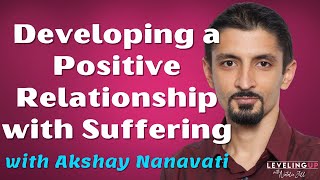
Akshay Nanavati, a veteran and author, talks about overcoming drug addiction and PTSD from serving in Iraq. He reframes trauma not as a disorder but as an opportunity for growth, and explains how to build a positive relationship with suffering itself.
Hi, I'm Natalie. Jill, fat loss expert turned high performance coach. When odds are stacked against us, how do we shift and create everything from nothing? How do we level up when we aren't feeling it yet or we've had a big setback? On this podcast, I'll be talking to some of the most inspiring and courageous men and women on this planet who at their worst, learned how to achieve success greater than they ever dreamed possible. Leveling up and creating everything from nothing. After overcoming drug addiction, PTSD from fighting the war in Iraq, depression, alcoholism that pushed him to the brink of suicide, Akshay Nanavati has since built a global business, run ultramarathons, and explored the most hostile environments on the planet, from mountains to caves to. To polar ice caps. Combining his life experience with years of research in science and spirituality, he wrote a book called the Revolutionary Science of How to Turn Fear into Health, wealth, and Happiness. About the book, the Dalai Lama said, fearvana inspires us to look beyond our own agonizing experiences and find the positive side of our lives. And all the profits from the book, well, they go to charity. Akshay is now on a mission to help our entire human family build a positive relationship to suffering in order to create a life of boundless bliss. Join in today and learn exactly how Akshay kicked PTSD to the curb and leveled up, creating everything from nothing. Today, I'm here with Akshay Nanavati. Did I pronounce it right, Akshay?
Yes, you did. Perfect.
Amazing. I'm really excited. Talk to you today. He is the author of Fear of Honor, and he is somebody who really stands for the. For developing a positive relationship with suffering. And I thought that was super interesting. I thought, how do you develop a positive relationship to suffering? And when I dove into his story, you know, that he's going to share today, but what he's been through, the ptsd, the drug addiction, fighting the war in Iraq, in Iraq, like, just the extensive stuff that he's been through, the fact that he's developed this relationship now and is sharing it with others is just super powerful. So thanks for joining me today on Leveling Up.
Thank you so much for having me. It's a real pleasure and honor to be here.
So take me back, Akshay. Before all of this, before the war, before the ptsd, who were you then?
You know, when I moved to the US at 13, young kid, I had moved four times by the age of 13 from two different cities in India, then Singapore, then Austin, Texas, and moving here, I was very lost. I was not the. Not very confident, had no clarity or purpose in terms of who I wanted to be in the world. And really just because as a result of moving so much as a young kid, I was adapting to every environment that I found myself in and trying the best I could to fit in, to make friends. So as a result, I wasn't sure who I was. And so that's why when I moved to Texas, and I don't, you know, I don't blame my friends. I take 100% responsibility today for who I am and the choices I made. But I got in with the group and I found myself getting very heavily into drugs, alcohol, and I was, I mean, the same person I am today in terms of pushing my limits. Back then it was pushing my limits through drugs.
Now. How old were you when this was happening?
I moved to Texas at 13 and I got into drugs at about 15, 16.
Whoa, that's young. I mean, looking back now, I think if I have a 12 year old daughter, that's super young.
Yeah.
How did that even happen? Was that just it, being in schools? Were you depressed? Was it you trying to fit in? What was that?
Yeah, not depressed at all. I mean, I could not have asked for a better life. My parents gave me a great life. Never really had to struggle as a kid and, you know, put me in the best schools. I kind of found myself in this group and again, I don't blame him. But like, I think if I had gotten a group of, let's say ultra runners or mountain climbers back then, I probably would have gotten to ultra running and mountaineering back then. Right. But I got into this group and I wanted to fit in and I was trying to push my limits and explore my limits that way. So me and one other guy in the group were the first two to start going into harder drugs. And Today, I mean, two of my friends are no longer alive. I lost two friends to the OD'd and I was heading down that path. I mean, I used to cut myself. I still have scars on my arm, burn myself and drive, drive over like these, these huge, these huge hills and, you know, throw knives in the air. Like sometimes I'm shocked that I made it out of that, out of that world.
What? I just got chills. You saying that. Can you. I've never. I didn't know that part about you. So explain to me about that. The cutting and the burning.
What.
What is that? What do you know about that and what causes that?
It was a couple of things, I think that got Me into it, at least speaking for myself, you know, that one was. I was constantly looking to be the most. To find the line, to keep pushing the line. So first got to get into harder drugs to keep exploring where to go further and further. This was my way of standing out in the group. I was the crazy one, right? Like, Akshay was known as the crazy one. I would do things like jump, like, jump downstairs and just roll. Like, dive, roll down them and put myself through pain. And really, what I'm looking like now, I realize that I was seeking pain. But there was no virtue in that pain. There was no beauty in that pain. There was no consciousness that was not earning that pain like I do. For example, today, I run ultramarathons. It's horribly painful, but it's a very different kind.
Do you think, from what I've learned about cutting and those types of things. Is it a way to feel? Is it. Is it. Is that what that is to like, to feel alive or to get attached?
No, totally true. It is because there's a kind of purity to pain. Like, when you're in pain, it's all consuming, you know, you don't have anywhere else to go. And in a way, it really centers you to the moment, experience of life. And. And this was like when I saw. When I was doing drugs, like, I was again doing the first one to do harder stuff. So I remember people would see me, like, I would do it in front of my friends, and they would think it's just wild and crazy. So it was like another way to stand out, to almost. In a way to get my need for significance met as well, you know? And so it was just doing whatever. But definitely, there's definitely an element of this kind of pain brings you into. Into centeredness, into the now, you know, in a way that almost nothing else can.
So it's interesting. It's almost like the drugs kind of helps you with that escape from. And I would imagine just moving those. Even moving four times as a kid before the age 13, that's gonna do that to you. And then. And then the wanting to feel something. Did your parents know what was going on? And what. What was their role in this? What were they saying about it?
They had no idea. I did get caught in. I got caught almost doing everything. I wasn't very good at hiding stuff. I got caught smoking weed in school. I got caught drinking. I've been arrested when I was 16 for lighting a microwave on fire, and I was sent to jail overnight. It was another dumb among many Dumb things I did. It was inspired by that movie Office Space Fax Machine. So we did that and I got arrested. But they didn't know the extent to how far I was going. I got caught smoking weed in school but obviously at the time I lied to my parents and told them I wasn't really doing drugs, I was just once. And they, they kind of believed me because for some I don't know how I passed the drug test. Only later on. Now obviously they know the truth because it's no longer an issue. But they did not know the extent to how far it was because it would have, I mean obviously would have put them into a pretty stressful state because I mean like I said, sometimes I wonder how I made it out. Two friends of mine did not. And it could have easily been me.
Looking back now and just thinking as a mom too and for people listening that are a parent, like what was the. What would have prevented those things? Anything that you could think of that would have prevented those.
Yeah, my parents have asked me that before because like I said, they love me. Great parents couldn't ask for better parents. And I think it's not their fault. But I think if I had to, when I answer that question to them, I say that, you know, perhaps if I had gotten into again ultra running mountain, like I had this energy that needed to be channeled, you know, even when I was in Singapore, like looking back, I remember I used to run on rocks barefoot just to test myself. Everything I did, I would compete like at playing running in sports in school or you know like playing basketball, playing anything downstairs. I would want to be the best at it. I would strive, I'd compete, I'd be willing to push myself. And I think I did not get an outlet to channel that. And you really have to under. So coming from like looking from a parent's point of view, you got to understand and I tell I shared this to parents I speak to now is that you understand every child is different, right? And if they have that, you need to channel that and channel that rapidly. And two, I think also is that a big mistake I see parents make is overprotecting their kid. Your kid has got to suffer. You have to let your kid experience adversity. And people like affluent parents I see they overprotect their kid from everything. And you think you are helping them, but you are not. You are hurting them. And my parents again know they love me. So it wasn't entirely their fault. They like they became we all do the best we can with their awareness and knowledge. But they gave me everything. And I didn't really, I didn't understand the beauty of pain until I started seeking it out for I joined the Marines and the things that I do now.
So give me an example of that real quick because I'm thinking of like my daughter and do I do that with her? Like, so if you were like when you say that like kids need to experience adversity, I get that. But like if they're being bullied at school or something, are you saying like let that happen or what? At what involvement do the parents, should they be or not be?
Yeah. You know, again, there's a fine line with a lot of this stuff. Right. So not. I wouldn't say like, let it happen, but don't like what I like an example I would like, sometimes I'll see parents will rush to, like if, let's say a student doesn't like this particular teacher. I've seen parents who will go to the school and fight and say, no, can they move to a different class? But stop that nonsense. You know, like it's. Life will punch that kid in the face at some point. Life will punch us all in the face at some point. So I'm not saying you should tolerate like horrific bullying in school. That can obviously be very damaging to the psyche and that can really cause serious long term harm. So not that, not in that way, but the kid, like, I would help the kid learn how to navigate themselves to the extent that they can take that risk and then step in when you need to. And that's, you know, there's a fine line that's really hard to say what that line is. You kind of got to figure it out. But don't jump in every time the kid suffers is what the thing is. Let them fall, let them make mistakes. Because when they're young, they have, there's room, there's a protection, like they can come back to. Parents like, you know, assuming love, loving parents, they can come back. They know they are loved, they know they have that. So let them make a little mistakes. And when you're younger, you can take those risks and that when you're older, you can't. The line for the consequences are older. Like right now when, you know, you and me, if we fail in our business, we can't put food on the table or something like that. Right. Like some of the things I've done, the consequences is death. And it could be, but I mean, again, most people hearing this are not gonna be in a war zone. Or something. So, barring extreme is that, you know, they can take little risks and they can. There's a protective zone they can come back to. So let them go through some hardship, let them go through some falls, let them learn that life will be hard because it's not a bad thing when they develop that. Like, you mean, like you said, my. My whole ethos is developing a positive relationship to struggle as well.
Wow. Okay, that's. That's great, great advice there. So. So you went through. All of. You're dealing with the drug dealing. You've got. Not drug dealing. I'm sorry, you're using drugs, you're risking your life. You've got all these things happening. How does that end up. You're in the military now.
It was the movie Black Hawk Down. Have you ever seen that movie?
Of course, yeah.
That movie was the trigger that changed my life. Watching that movie and just the movie, like, watching the courage. These two men, if you remember specifically Gary Gordon and Randy Sugart, they volunteered to go down to the ground to set up a defensive perimeter for one of their fellow soldiers, knowing that thousands of armed enemy personnel are coming their way. And they ended up dying. But they received the Medal of Honor, which is the highest award for valor in the US Military. They received the Medal of Honor posthumously for their courage. And the guy they died protecting is still alive today, Michael Durant, as a result of their actions. And just watching that, like, what kind of human beings would have that kind of courage, knowingly putting themselves in a situation of extreme risk and ultimately losing them lives, losing their lives for somebody else.
Interesting. It's almost like when I'm hearing. It's like it almost gave you purpose for what you were doing to yourself. Like, here you're being this daredevil just to do it, but now you're like, oh, I could actually do that and help somebody.
Exactly, exactly. It started to start to realize that, you know, that what, like, what was I doing? I was living a very selfish and meaningless and purposeless existence. So after watching the movie, I read the book Black Hawk down and then started reading book after book after book on military and life in combat. And not to say that, like, I'm so sort of a war junkie or condoning war, but there is this fascinating thing about the experience of war that it reveals the very worst and the very best of the human experience. The worst in that you'll see people do awful atrocities, right? Just horrible things to humanity. But you also see people sacrificing their lives, jump on grenades, and giving everything for a fellow human being and experiencing humanity at its extremes, like that was something very alluring to me. So almost overnight I just said this is it, like stop doing drugs and decided to that this is who I wanted to be. I wanted to live in a world where the good of the group mattered more than the good of the individual. Live for someone else. Separate from again, politics of wars and all those kind of things. Just in the experience of them being in the military. In the Marines, they don't care about how happy you are. Your well being does not matter. What matters is the men in the mission. And I wanted to experience that. And so yeah, almost overnight I decided to join. It took me a long time to join because I have a blood disorder. Two doctors told me that Marine Corps boot camp would kill me because of this blood disorder. Oh. So I had to get medical waivers. I'm flat footed, I have scoliosis. So I had to get a bunch of medical waivers to kind of fight my way into the Marines. I mean, here's a young kid who's like, wants to go Marine Corps infantry. It's post 9 11, right? So there. Yeah, I honestly think I wouldn't have been able to got to get in if it was kind of today's environment. But post 911 they were like, yeah, so you got.
So you get into the Marines despite having been arrested before and all the things get in there and what happens when you're in there?
In the Marines, I started to fall in love with experiencing suffering, experiencing adversity, challenging myself, pushing myself into things that were terrifying. Because Marine Corps boot camp was hard, infantry school was hard. But I not only survived, I mean, obviously I survived, but I graduated infantry school as the honored graduate of my platoon. I thrived. I mean, I wasn't the fittest person back then. I had just relatively recently come out of that whole world of drugs. So clearly I wasn't very physically fit. But mentally I thrived. I mean, I loved it. That's again, before that I had never really experienced adversity. Right. My parents gave me everything. And so now I started to find the beauty in pushing myself, exploring the true limitlessness, ultimately of the human potential and seeing how far we can go. So as a result of going in the Marines, I started finding other ways. I went mountain climbing, cave diving, skydiving, rock climbing with and without the safety of a rope. Sometimes I climb 80 foot, 80ft rock wall, 100 foot rock walls and no rope. And just challenging myself in every possible way.
You and my husband would be best friends. It's funny, my husband, he went through SEAL training, Navy SEAL training.
Oh, no way.
But he was dropped right before graduation for a skydiving incident that was unauthorized. Like literally like a week before graduation. But as you're talking, I'm like, oh, that's that. I wonder if that's a thing. Like people that go into Navy se. Marines, if that's like, they have that adrenaline need, they have that need for this pain or whatever. Because as you're describing, I'm like, you sound like. You sound like my husband.
It's very addictive. It's very addictive. And you have to be very like, I didn't have the self awareness that I do today, and it's still something I have to temper. I have to be very careful about how far I push that line into some of those dark spaces. I mean, to this day, right now, I have to, like, hold myself back because I cannot tell you how much I want to go back into conflict zones. And honestly, I would be. I would be like. I have. I like a lot of my friends and people I work with, they remind me that me going into a conflict zone today, even though I want to go, let's say, to help somebody there, it's actually an act of selfishness. Because let's say I were to die in going to some war zone like Syria or something like that. And let's say I would have did this before ever writing Fear of Honor. Every single life that I could have touched as a result of my work today would not have been touched had I gone and done something. So I might be able to help two, three people in a war zone, but I can't help thousands and even millions by doing, by sitting on a computer, building a business.
What an amazing connection and awareness to that.
It's. Yeah, it's taken a while to get there, but to me, it's a lot harder to sit on a computer, staring at a computer screen than it is going into war. But I have to realize that in some ways it's actually an act of selfishness for me to do that.
When is it too much? When is the suffering? Like, because obviously you went through a lot of, with the drugs, with the, with all this stuff, hurting yourself. And then here you're in war, seeing these just horrific things. Was it ever too much? Did you ever get depressed around it? What was happening there?
I mean, I struggled when I came back from the war for sure. And even in the war, I mean, first two months that I went out there, I really. I was hated. I struggled. My life was miserable, you know, I mean, because. For multiple reasons. But actually, even when I went out to the war, I did not. I went out there with the mentality that I wouldn't come back because you.
Were gonna die there or that I.
Was gonna die there. So, actually, when I went out, one of the reasons I was depressed was the first couple of months in the war zone was I wasn't getting into firefights regularly. I was actually angry that I was not in. And I. Admittedly, this was a naive relationship to war, but part of the reason was I was not experiencing. I mean, we'd have pop shots go off here, and there's. You know, they shot a rocket past our base. So there were little things happening. Don't get me wrong, One of the vehicles in our convoy got hit with an IED in our. In a. Sorry. In our company got hit with an ied. Thankfully, nobody was killed, but it wasn't the experience I wanted. And part of me went out there with that mentality because before I left, I actually lost a very close friend of mine to the war. Like, when we joined the unit, we were the same kind of Marine. We got very, very close brother of mine. But every time we trained, I would always beat him by, like. Like, I would beat him by a few seconds on a run or beat him by a few points on the rifle range. And so we volunteered to go to war every chance we could get. Twice the Marines told us, we're going last minute. They canceled it. And one summer, while I was off vacationing in India, he ended up finally finding a unit to go with. And he. And he was a good Marine, so he got promoted to corporal as a result. He was in a seat that was hit with an IED with an improvised explosive device, and he was killed.
Wow.
So I always had felt like I should have got. I felt like I should not have been out there vacationing in India. It was. I should have been there with him, and it should have been me that got that promotion instead of him, and it should have been me and his seat instead of him. So when I did finally go to war, I kind of went with that mentality that if somebody's gonna die, let it be me. Which is, again, admittedly naive, because you can't control that in war. But I guess it was. It was a. It was a strange place to go into a war zone with that mindset. And I had a dangerous job. Like, one of my jobs out there was to walk in Front of vehicle convoys to look for bombs before they could be used to kill me and my fellow Marines. But that was, like, no problem. I didn't care that I had that job.
Are you actually, as I'm listening to you, like, I'd be scared to death to do this. So I'm trying to understand the wiring there. Like, were you.
Are you.
Were you never scared of death? Were you never scared of pain? Were you never scared? How does that even happen? I'm trying to. I'm trying to wrap my mind around it. You know, most. Most people are very scared of those things.
Yeah, no, of course. And I am today. But admittedly, I wasn't as scared of death. I was scared in that, you know, the brain would respond with fear to certain situations out there. And, you know, when you're the challenge with the war, like Iraq, too, you're walking through the normal city. Most people are normal people wanting to take care of their lives, that don't want to hurt anybody, just take care of their families. But you never know if that person is just a family person or that person wants to kill you and your buddies. Wow, that's a hard thing to wrestle with, you know, because most of us did not want to actually kill an innocent human being. Again, separate from all politics of the war. Yeah, been in there all that. But again, on the ground there, we wanted to do some good for them. Right. Like, so it was. So you have the fear response to an intensity of that environment. But I wasn't. And again, I get that this sounds crazy, but I wasn't too scared if I were to get killed. I mean, not too long ago, I was actually rereading my journals from Iraq. And less than two months into the war, actually, I reread my journal, and it shocked me reading it. And I said something like, I hope my vehicle gets hit with a bomb with an IED today. And I was like, whoa, I can't believe I wrote that. And it was context to it in the sense, like, you know, I was like, I hope nobody else gets hurt. But I was like, I don't care if I get. You know, let's let this thing happen. And.
Interesting.
Yeah. And my mindset changed, like, into the war. I find it to sort of to find peace and joy. And it taught me a lot. It taught me that, like, you could be in the hell on earth in the. In a very adverse, you know, an environment, a very harsh environment, but you can control your attitude in response to that. So my journal from a month and a half into the war. And my journal from three months into the war, very different person. And it's like visceral. You can read the difference. When I go through my journals.
Do you feel that people that join war zones or join like you did, Marines or SEALs or more of that, do you think they are wired that way? Do you think this was unusual for you?
I think it was a little like my sort of lack of fear around death. Was I definitely unusual. It wasn't normal, I would say. I mean, there were a lot of the young kids out there who were. Who were much more scared. I mean, I know for a fact, because sometimes we did debriefs after missions and they felt a lot more fear of death than I did in certain missions. And part of that was also because of my mentality. Part of it was I had also engaged risk at a high level before going to Iraq. Like, I climbed free rock walls without rope and stuff like that. So I had a. I had a more comfort with the experience of fear. So granted, I went out there with a very different, even. Even for like a Marine infantryman, a different mentality. And today I'm a lot more scared to death. Today. I'm terrified of death because I perhaps have more value to. I feel more value to my life.
Totally. And from what? Everything. I'm listening to you as, and I'm certainly not a therapist, but as I'm listening, I'm thinking what it's coming up for me is that this need to feel like, even as a kid, like you just wanted to feel like you feel something. And if it was either the drugs or it was the cutting yourself, and then now it's being in war, like whatever you could do to feel was like something that was coming up for you. That's what it's sounding like to me.
Absolutely. No, it's a great, great assessment. And it's true. When, you know, when you're in war, you feel alive in a different way. It's a very addictive experience. It is an addictive experience, which is why. One of. One of many. One of many reasons why I struggled when I came back. I mean, when I came back, I wanted to go back out there. I was volunteering to go back to Iraq, to go to Afghanistan, to go somewhere. Send me back into that.
Why did you come back? Why did you leave?
So I spent seven months of one tour in Iraq is seven months. And at one point I wanted to go career military because I wanted to go into special operations. Like, you know, you said your husband went to Navy SEAL training. I wanted to go to the Marines version of that, which was Marine Force Recon at the time. And I couldn't go into Special Forces when I first enlisted because I wasn't a US Citizen. So I decided. So I thought I'd go in as a regular infantryman and become on a Special Forces person later. But when I came out again, I came out and went to. I finished my undergrad in senior year, and I struggled with coming to college. I mean, I was drinking hard at parties. I did not want to be there. And again, admittedly, I don't have the awareness I do now, but back then, I was much more judgmental. So, I mean, you can't blame a college student for not having the perspective you do. Right? Like, haven't been to war, but back then, I wasn't as aware, so I was just. So I struggled with college students complaining about small things compared to what you've experienced in war.
Oh, my gosh. You sound so much like my any. No matter what I bring up, my husband's like, well, you didn't have to be in the ocean freezing for. I'm like, no, I didn't want to be a Navy seal, so. But that's fine.
It changes your perspective for sure. Yeah.
He doesn't complain about anything ever. He thinks that, like, any complaint is not worth it. I love it.
I get it.
So talk to me about Post Traumatic Stress disorder. And for listeners that don't know what that is. What is that? And it sounds like that's very real, and it was very real for you. What is that?
So it hit. It hit me hard, or at least more consciously, many, many years after the war, I finished my grad school, got a good job and everything. And then it hit me hard now. And, you know, I was. I was at the time married. Not anymore. And to be very frank and vulnerable with you, I was. We were struggling physically with my wife at the time, and it wasn't a physical issue, it was a psychological issue. So she kind of said, now, let's go. Let's go figure out what's going on, and went to the therapist, and they diagnosed me with ptsd, with Post Traumatic Stress disorder. Now, as my own learning, I started to. In my own learning to heal myself when I hit a low moment. Because after this happened and I was drinking just got worse and worse and worse. I mean, I got to a point in my life that I used to drink, like, almost a liter of vodka a day. I would drink till I pass out, wake up Drink again, pass out. This would go on for five to seven days, so my body could no longer take it. And one morning after this, you know, five days of this, I literally. I woke up and just thought to myself to pick up the kitchen, Let me go to the kitchen, pick up a knife and slit my own wrist and end it all. Whoa. And that was a dark moment, as you can imagine. That was horrifying to me that I could even think that, you know, and.
You were literally just trying to block out feeling or pain of anything just by drinking. And it was so bad that even those moments. A week, you wanted to end it all.
I was running away from all my demons, couldn't face it. I felt guilty. And that's one of the elements of. So. So, yeah. Coming to your question, why. What. What happened? When I went hit that low moment, I started figuring out what I needed to do to heal myself, because obviously I was like. I mean, I realized then and there something needed to change. The fact that I was at the brink of suicide was a problem, clearly.
How did you. How did you come to that realization rather than doing it? Because there's people that they don't get. Don't get there, and they do successfully end their life. Like, what do you think interrupted that?
For me, it was initially just a shock that I could even think it. You know, just the fact that it even entered my mind was a shock to me. Like, how could you even think about ending your own life? You know, Because I mean, so much if, like, even you live in the Marines, your life is not about you. You live for someone else. You live for something. Yeah. And I believe all our lives are not just our own. We are our lives. Our stories are about somebody else. My story is not just mine. If my story helps somebody. If your story helps somebody, your story is now a part of theirs. Yes, you are part of that whole. So it. To me, I mean, like, it shocked me that I got there. And I know. I know what it's like, not just because I've been there. I've lost two junior Marines to suicide. Buddies of mine from the war, they were in the unit with me. You know, they killed themselves after the war. So when you're in that low moment, it's obviously.
That'S so common. By the way, my husband, the two will tell you he's lost, like, 10 friends to suicide from the war. That's unbelievable.
It's horrific. Yeah. The number of veterans who are taking their own life regularly. And, you know, I can relate to your husband Like, I know the numbers. I mean, they say 20 to 22 veterans a day are committing suicide. And just. But when you spit especially hard, when you can see the faces, you know, the people, young kids I served with, and they say, that's. And this is what I want to reframe in terms of how we approach post traumatic stress versus post traumatic stress disorder. To that question of yours is because we have demonized the experience of suffering. We have deemed, you know, demonized experience of war, demonized experience of stress, the experience of trauma. Today, when I tell people I'm a veteran, and there's often this, oh, like, there's often this sympathy, like, oh, poor you. And I get it, it's coming from a place of love. But it's this. It's this mentality that if you go through something hard, you're going to. If you go through war, if you go through trauma, you're going to be. You're going to come back and you're messed up in the head, you know. So when I was diagnosed with PTSD and my research to heal myself, I learned that there was a distinctive. There was a distinction between post traumatic stress and post traumatic stress disorder. Just because you have post traumatic stress, it is not indicative of disorder. Like, for example, I struggled with survivor's guilt, right? I felt guilty about coming back from the war when so many others hadn't. Why did I get. Why I didn't get shot? I didn't lose a limb. Why was I. Why did I deserve to be here? Why did I deserve to now be happy, to be alive? I struggled with loud noises. When there were loud noises, I was very jumpy, like, inevitably, right? Because my brain spent. I spent seven months in war where my brain later learned to say loud noises equals death. I also didn't like crowds because crowds in a war zone could be. Could mean death. So I was hyper vigilant to all these experiences. Now, these were experiences of post traumatic stress, but they were symptoms that then were told that I was told were post traumatic stress disorder. But there's a distinction because post traumatic stress is a normal human response to war. It's normal to come back and be jumpy. Your brain says loud noise equals death. Be jumpy, be on edge. But by attaching the word disorder to it, it changes how we reframe our relationship to stress. And that is the problem. That's what I see. That's what I struggled with myself. That's what I see with other veterans I've worked with is that they think there's something wrong with them because they have these symptoms. Yeah, there's nothing wrong with you. That's a human response to war by attaching the word. Sorry, go ahead.
No, I don't want to interrupt you. This is, this is amazing awareness. And a lot's coming up for me because I'm thinking of how many things are labeled disorder. Like I'll tell you, like for myself, I'm adhd and that's attention deficit disorder. Right. And for years I thought that was negative too, but there's so many pros to it. So that's so interesting what you're saying about. I've never heard it called post traumatic stress. It's always the disorder. So this is really eye opening for me too, that like you're right. Why do we automatically throw things into a disorder that has to be fixed like that?
Yeah. We've created this paradigm that trauma equals ptsd, trauma equals post traumatic stress disorder. And in fact, a great researcher, Dr. Martin Seligman, to really kind of hone in on this point. He went to West Point, which is that military academy, and he asked the cadets, how many of you have heard of post traumatic stress disorder? And it was something like 90 to 95% raised their hands. He then asked, how many of you have heard of post traumatic growth? And it was less than 5%. So what happens is it becomes a self fulfilling prophecy that trauma equals disorder as opposed to trauma equals growth. Right. Like reframing that mentality to say that if I suffer, if I go through hell, it's an access point to building that warrior spirit, to growth, to evolution. It just changes the mindset and it'll shift the self fulfilling prophecy so we actually can respond to our symptoms of post traumatic stress differently. When we believe there's nothing wrong with us. But we do this with everything, even mental health. Like I've worked with kids who've been labeled by a therapist with depression, right? So what they'll say is, I have depression, I am depressed. And that becomes their self identity. I have ptsd, I have depression, I have these disorders. As opposed to saying something like, you know what, My brain goes through a state of depression from time to time, or my brain is responding due to post traumatic stress, but I am not my brain and my brain is not me.
So good, you're experiencing it, but it's not you.
It's not you. This is like, I mean this is everything here. This part right here. We are not our thoughts, our feelings and our experiences. We are the thinker of our thoughts, the Feeler of our feelings and the experiencer of our experiences.
Okay, say that again. We are not our thoughts. And what else?
We are not our thoughts, our feelings, and our experiences. We are the thinker of our thoughts, the feeler of our feelings, and the experiencer of our experiences.
Okay, how did you figure all this out? Was this. Like, did this just come to you? Did you have a therapist? Like, how did you get to this?
A lot of. A lot of research, a lot of life experience, a lot of just navigating, putting myself. I was experimenting on myself through these processes as I was healing. Because I did go to a therapist. And nothing against them, they were great people, loving people. They wanted to help. But I learned that they were operating from a bad playbook. You know, they. They were saying things like, I have post traumatic stress disorder. I have. And they were. They were. They were doing things that only kind of reinforce the negative, quote unquote negativity of the experience. But the reality is, like, as an example, they would always tell me, don't feel guilty. Like, you know, shouldn't feel guilty. And I get it. Like, rationally, I get, I could have gone to war with my friend. He could have still died. I could have still come back home. Rationally, I'm not unaware of that fact. War is unpredictable. Bullets fly where they fly, right? But emotionally, it doesn't change the fact that the guilt was there. And what I came to learn through my research in neuroscience and spirituality is we don't control what first shows up in our brain anyway. So guilt is an expression of love. But we don't frame guilt as a positive emotion. Nobody hears the world guilt and think positive, right? We think of these as a bad emotion. We're told fear, stress, anxiety, guilt, anger, sadness. These are quote unquote, negative emotions. But the reality is they are no bad or good emotions. There are only emotions. And it's up to us to decide what we do with them. My guilt, bad. I learned to make it. I learned to make it work for me. So actually, what I did, and for a long time, only recently have I shifted this. And I can share more about why. But for a long time, I had a picture of my friend that I lost in the war, and it's up on my wall. And it said, this should have been you. Earn this life. Whoa.
How do you walk me through, like, what would traditional treatment be for post traumatic stress disorder? And what would the way you should be handling it on this, just looking at it as post traumatic stress. And we're going to Feel the feels and walk through it. What is the difference in how that looks?
Sure. So part of it is like when they're telling you not to feel what you feel like, don't feel guilty. That's a huge mistake. Another one, for example, and this is direct examples that my veteran friends have told me. One veteran went to a therapist and he told me, the therapist told him, when a cucumber becomes a pickle, it can never go back to being a cucumber. You are like that. Now imagine somebody telling that, like, that's ridiculous. Trauma does not, does not turn you into a pickle and make worse off. I've had so many friends, countless examples of this. A friend told me that another therapist told him that, like, now that you've been through all this trauma, it's like you're driving a broken down car. You can drive it, but the car is always going to be broken down. So what kind of paradigm does that set for you? Right? So all that stuff is extremely flawed. So fundamentally, the fundamental, the starting point of it is reframing our mentality and our approach to trauma. So like, one of the things I do, when I do talks, I'll often start with saying, with showing words like sadness, pain, suffering, fear, anxiety, adversity, struggle. How many of you think of these as positive words? You could go anywhere in the world. Nobody thinks of these as positive words. So fundamentally, the first part is reframing that. Trauma does not make you a victim, it does not make you weaker, it does not make you someone who's messed up for life. It can make you stronger, it can turn you into a warrior. And we need suffering to evolve. So at the core, it's that mindset shift. And then there's many things in terms of acknowledging the presence of what is, but not being defined by what is. So for example, Buddha, like, there's like, I call it the second dart syndrome. And recognizing this pattern, Buddha said, we are all stabbed by the two darts of suffering. The first dart is the one we do not control. So if I were to, let's say, stub my toe against a door, my toe hurts, right? That's the one I don't control. The second dart is when I say things like, why does God hate me? Why does bad things only happen to me? This door is stupid, this house is stupid, this, that. And the other thing, the inner dialogue that we go through, right? And this is the same second darts are more important when it comes to our emotional response because we do not control most of what happens in our Brain. I couldn't control the fact that my brain was jumpy with loud noises. When I came back from the war, my brain said, that's just, hey, you were in a danger zone. You better be careful of loud noises. If somebody came into my room right now with a gun, I wouldn't pause to say, I'm choosing to feel afraid. I would feel afraid. That's a normal human response to that kind of external stimuli. But yet we demonize emotions, right? So recognizing that the isness of the emotion, emotions happen, I don't control them. Neuroscience has done so many invaluable studies to show, to prove that, and so does spirituality, right? That first dart is the emotion. The second dart is the one that we got to watch out for. So as a tangible example of this, I took my wife and now ex wife rock climbing once, and we were climbing on this kind of fit for me, a fairly easy wall. She was terrified, right? Terrified. And she was just navigating the fear. We got to the top, came back down, and after the climb, she started saying things like, how come you weren't afraid? Why am I afraid? Like, why was I afraid? Like, am I weak? You know, what's wrong with me? And again, she was saying, have this inner dialogue. And we were talking through it, and she was feeling like, if I'm too afraid of this, you know, then how will I write this book? How will I do this work that I'm working? I'm navigating all this fear. And the thing is, that was the problem. Her problem wasn't fear. It was the fear of fear. It was the second dart. The only reason I did not have fear on that climb was not because I'm stronger, but because my brain had more references to say I had been a climber. This, to me, my brain said, this is not a risky thing for you. So, hey, we don't need fear. Her brain did not have those references, so she had fear. So don't judge the emotion, don't demonize the emotion, Just be with the emotion. Like a mantra I use is, be with what is, but do not become what is. And that's a really helpful mantra that guides me whenever I'm in pain, whenever emotion shows up. Be with what is, but do not become what is.
I love that. So it's so. I never understood before when somebody would say, feel the feels.
But what you're.
What I'm hearing you say is, it's just. It's just being with it, just noticing it, not trying to mask it, hide it, get Rid of it. Fix it. It's just noticing it. Like, I'm feeling stress. Okay. I'm feeling stress. Just noticing it. Kind of what you're saying, like, just notice I'm here right now.
Yes. At the starting point is just noticing it, even labeling it. Like, neuroscience has shown that when you label an emotion, it reduces activity in the emotional parts of your brain and increases activity in the parts of your brain related to focus and awareness. So you're actually not being consumed by the emotion. Most of us, when an emotion happens, we react to it as opposed to responding to it. That emotion becomes us. Right. I feel anger. I get angry as opposed to I feel anger. How am I going to choose to respond to that anger?
Sue? I'm going to throw something out there. And I'm just. I'm just connecting dots in my mind. So I'm thinking of, like, every year on my birthday, I do something that scares the heck out of me. And I started doing that a few years back because what I noticed was when I put myself in a situation of something that's super new to me, scary, it forces me to be hyper present and aware. And that's when I feel totally alive. So, okay. And I don't know. That's the only way I can explain it. But like. Like things that terrify the heck out of me, like jumping out of an airplane, like, I can remember every person that was on that plane with me. I remember what it smelled like, what it looked like. I will remember that. It's ingrained in my brain. Because you're so hyper present. So I'm wondering if there's something with that too. Because, like, when you were sharing about wanting, you know, how things made you feel truly alive, is there something about that presence that's critical in navigating there? And maybe that's too far off of what you're talking about, but that's what's coming up for me, is that there's a connection to me with fear and newness and with being alive and truly present.
Yeah, absolutely. No, I love what you said. And our brain, in many ways does crave novelty, right? It's kind of paradoxical. We crave comfort, but we also crave novelty. We're wired to seek the next thing. Like our brain releases dopamine when we're looking for the next thing. So we do crave novelty. And when we're an experience of heightened fear, that sort of quote unquote, fight or fright response, fight or flight. And I say quote unquote because there's many different responses to fear. Not just fight or flight, but, but when we're in that space, we are, we don't have, we don't have the luxury to, let's say, ponder life. Right. Our world is consumed because neurologically our brain is saying, this thing could kill us. This thing is dangerous. We better be hyper focused to survive this scenario. So there is a beauty to those experiences that puts you fully present and that, and that's why in many ways they're very addictive. And if you're not careful, you can lose yourself to that addiction as well.
Yes, that makes sense. And I think there's ways to be hyper present in life without having to put yourself at, you know, life's risk. Like just even interviewing you, like when I do interviews, I feel like I'm very present with people. There's ways to get that. So, okay, so I love this awareness. So if somebody's listening right now and they're in that conversation that they have post traumatic stress disorder or that someone they have is what, what would you tell them to start looking at things just so they can start looking at this differently?
Yeah, fundamentally starting to let go of the self identity about it. You do not have post traumatic stress disorder. Your brain has post traumatic stress. Right. Like, because again, and that's huge. It's, it's like, it sounds like a subtle shift, but that's. That honestly is like everything at that point that was for me is when I was at that verge of suicide. That was who I became. I believe that's who I was at that time. It was my self identity. I was this horrible, terrible person judging myself. Right. But it wasn't me. That's why I will never say things like I'm an alcoholic or was an alcoholic. I refuse to use that label. I'm not going to put that label on, you know, yeah, brain might have an addictive tendency, but that's not who I am. So removing that self identity and then looking differently at your experiences, reframing the experience of suffering and trauma, recognizing that trauma is inherently itself not real. Now this is going to sound controversial, but yes, we go through experiences like, okay, if we go through war. Even in my book, for example, I interviewed this woman who had been gang raped when she was 15. Horrible, horrible things happened to her. She had been raped as a child when she was six. Like terrible things. Right. These are awful experiences. They're horrible experiences that nobody should go through. But the thing is that experience, the, what really matters is our response to that experience. And when we shifted. Now she, and she recognized, she said, I would never want this anybody, I would never have, want to have gone through it. But having gone through it, she would say things like, I'm grateful that I went through it because now I know at this point, at the point she was pregnant, now she has a child, she would say that now I know that my daughter has a mother who can handle anything in life, right? So she reframed her approach to the horrific experience and saying, look, it's not this thing that turns me into a victim. It's whatever I choose it to be. So just as I said, there are no bad or good emotions. There are no bad or good experiences. There are only experiences. And yes, they may be horrific in the sense of they are life threatening, they are like, that should never happen to a human being, they're immoral, they're unjust, all those kind of things. But the badness and goodness of it is a label we assign. And when I say bad and good, I'm not talking again from an external moral point of view. I'm talking about internally how we choose to handle it. So it's important to recognize that there are no bad or good experiences. There are only experiences. And it's up to us to decide what we do with them. So reshaping our meaning to experiences now, like for example, my survivor's guild, you know, for a long time it drove me into darkness because I thought that I shouldn't be here, that I don't have a right to be alive. So I ran away. And then for then, then until recently, it, my guilt, I just changed the meaning. The guilt's not going to go away. The darkness is not going to go away. But I'm grateful, I'm grateful that I have it because I'm going to use it to earn my life, right? So shifting your meanings to experiences of life.
I'm so impressed with how you've applied this because some of the stuff you're talking about, it's not new stuff. Like we, we, we've heard other people talk about changing your thoughts and actions, you know, countless times. Thoughts and actions, choosing your words, you know, thoughts become things like all that stuff. But what's so cool is like you literally took it and applied it so thoroughly to you and had your own breakthroughs around it. And it's, it's really, really fascinating. I've never heard anyone talk about post traumatic stre way. It's, I think it's, I think there's a, it's needed to get this message out, this is really big. And it's because I see so much of the opposite of the turning to drugs to get it and then. Or even the legal drugs like the prescriptions to get. And we're never feeling the feels. And if people are being told that now they're a changed person and it's becoming their identity, I don't know what hope there is for that. I love this method and I, so I want to, I want to help people. This really can be applied to anything. This isn't just going through post traumatic stress. This is any, I would imagine I can, cancer diagnosis, anything. It's like, are you having an experience or.
Yeah, any kind of struggle, any kind of pain, you know, though the key here is not running away from that pain. One of my favorite quotes of all time, Carl Jung says there is no coming to consciousness without pain. People will do anything, no matter how absurd, to avoid confronting their own soul. And this last part is my favorite. He says one does not become enlightened by imagining figures of light, but by making the darkness consciousness. So you have to be with that pain, make that darkness conscious. That's the thing. We live in a world that teaches us to look for the easiest way out. I mean, you're into fitness, you know, right? We see things like walk 14 minutes a day and you'll get six pack abs. You know, that's not the case. Hard work. You got to be with the pain. And it's not just about the result. Where again, we're taught to say, if I get six pack abs, if I get a million dollars, if I get the dream house, the car, then I'll be happy. It's not about the result, it's about the person you become on the journey. And the person you become will change through the suffering. So you got to be with the pain, embrace the pain, become, make that darkness conscious. And you know, we were talking earlier about being with the emotion, a sort of more advanced technique that I now practice. And you have to sort of. The caveat is you got to be ready for this today. When I feel lows, because the lows haven't gone away. I still go through many low moments in my life. But what I do now is I dig deeper into the lows. So for example, I'll watch scenes from war movies like Black Hawk down or Hacksaw Ridge or Band of Brothers, knowing they will make me cry. And they do, they tear me up, they make me cry. But by immersing myself so fully in the pain, in the struggle in the guilt, in the anxiety by when I come, when I let that emotion consume me, it actually nullifies the effect of that emotion because now I'm no longer fighting against it. I've become one with it. And when you, when you knight, when you unite with that emotion, it doesn't control you anymore. You're on the same path together.
This is brilliant. And there's so much research now and I'm assuming you've diven into this about when you do not deal with these emotions, when you mask them, hide them, avoid them, then you get disease in your body from that. There's a lot linked to that.
Exactly. You got to go. You got to go deep within, you got to go into that pain, face those, those demons that you're not. That you're avoiding, you know. And as another tangible example of this to share, one of my friends came to me and she had gone through some very severe childhood trauma, right? And she would see and most therapists would say things like obviously, like, you know, this was. They would help her with that in many ways. But I said something very counterintuitive and it's going to sound horrific, but I'll give you the but I'll explain why. So I asked her, as we were talking, I asked her, what if you deserve the trauma you went through? Now that's a crazy thing to say to somebody, right? Like, what if you deserve the trauma? But I knew her at this point and she was ready to go there. You have to be ready to go into these dark spaces. But I asked this question because a part of her felt like she deserved it. A part of her felt guilty for having, for going through it. Now most people would tell her, you don't deserve it, you shouldn't feel guilty. Because obviously, right, like she doesn't deserve it. But I asked her, what if you do deserve it? Why did I tell her that? Because her mind was going there anyway. So instead of running from those, running from that pain, I invited her to go into that pain. What if you did deserve it? What does that mean about you? What does that mean about humanity? What does that mean about God? What does that mean about life? Go into those spaces, see where it shows up. And she went into a very dark way, like having to think about it that way. But after coming out for the first time in her entire life, she shared what she went through with her husband, who had been married to a turning 25 years. Never shared it before because she brought that darkness conscious. And like Carl Jung also says, until you make the unconscious conscious, it will direct your life and you will call it fate. One of my favorite quotes too, is until you make the unconscious conscious, it'll direct your life and you will call it fate. So you got to bring that stuff.
That's brilliant. I'm thinking so many things in my mind about how I can relate. That that's. That's really. That's super powerful. And as you just said that what if you deserve that trauma? I asked myself that question with stuff that I'm walking through. And I hope people listening did the same thing, because that really did show. Had changed my thought process from victim to empowered.
Yeah. You know, and yeah, you get to get to go into the spaces. And maybe if a part of you doesn't think you did, then. Then you don't have to go there. The point is just go where. Where your mind's taking you anywhere without, like, without trying to hide that. And that really means you have to be still. You gotta take that time for stillness, which we do not do in today's day and age, too. Right. We're always distracted. And sometimes even the positive things you do can be a distraction, like running or working or working out. For a long time ago, that was. I would do these things, but. But they were just another way to run away from myself.
Yeah, it's masking. It's all masking. Sleeping, taking drugs, alcohol, even things that are legal, you know, you think you're doing, it's all masking.
Yeah. So you gotta be. Take that time for stillness. I confronted it in a very intense way a few months ago. I spent seven days in pitch darkness, isolation and silence.
Whoa.
Just to be still within myself.
How many days? What?
Seven days. Pitch darkness complete. Like, can't see your hand in front of you darkness.
How did you eat and feed and go to the bathroom and all the things?
It was a place called. It's a darkness retreat. And so they bring food to you. They put. Like, in my case, they did. I did smoothies. So three times a day, they would bring a smoothie, they'd bring a little bell, put it in the hallway, and you kind of come out and get it. But even the hallway is pitch dark. And the Dubai bathroom, you're in a sitting, isolated room for darkness. Because I wanted to. I wanted to go. Really. I wanted to embrace stillness at a very extreme level, like I do every day.
That's extreme.
That's a whole other level intense.
I've thought about a silent meditation, but that's a whole nother.
Yeah, that's what I was going to do. I didn't know Darkness Retreats existed. I was actually going to go do that. Part of the reason what drew me to it is because last year I broke my sobriety when I went through a challenging divorce. And so it sent me into some darker spaces. So when I broke my sobriety, I said to myself that look, something's clearly missing. And so I realized I needed to go deeper within to find some answers. I was going to do a silent retreat, but I didn't know Darkness Retreats existed. But I kind of stumbled into the concept and the value to me of going into darkness versus, let's say just a silent retreat is that you're shutting off your visual senses so your brain can. Your consciousness has nowhere to go, right? Like you can't look at things and say, that's a tree, that's a wall. Your consciousness has nothing to latch onto. So as a result, I like to say that your soul becomes a mirror to itself. You only have one place to go, and that's within. And it's challenging.
I can't even imagine doing that for like an hour. Yeah, that is challenging. Oh my gosh, this is so helpful. Okay, there's a question I ask everyone. I'm going to ask you if somebody's listening right now and they're in their own personal rock bottom. So maybe they're in that place where they were holding that knife like you were, or it's going through the divorce like you were last year, or it's financial or physical or whatever that is to them. If you were to give them some advice on how they can start shifting out of that, what would you tell them?
Starting point one, just when you were sitting, let's say you were where I was at and you know, the verge of suicide, starting point, just sort of, okay, just accept that the isness of that experience, it's there. Don't beat yourself up. Don't judge. Release the self identity to it. Easier said than done, I get it. But release the self identity, you are not that person that you find yourself. Whatever the low you're in, that's not you. That's not who you are. That's a pattern that's been developed. It's not your self identity. Releasing the self identity to the experience, to the emotion, the thought, to the feeling. That's like fundamental, right? Like, I firmly believe there's no self defined. There's only a self to create. So understand that you are not yourself in that experience. You get to create a new self. Once you get to kind of accept the isness of that experience and just be with it as you slowly kind of get out, like, okay, you slowly, okay, this is not me. This is not who I am. Then who, Then who are? Who do I want to be instead? Okay, then you find your worthy struggle. Find a path to consume your soul. This is a big thing that I see that when people coming out of addiction. As I said, I lost friends to addiction and not just addiction. Even if you're like anywhere in life, you need purpose. We need meaning to consume us. Viktor Frankl wrote one of most powerful books of all time, Man's Search for Meaning. You need a meaning. I call it your worthy struggle. Because sometimes I don't like that term. Like, follow your passion is a good thing. But when people say follow your passion today, it conveys the idea that if you do, life will be easy and you know, sunshine and rainbows and unicorns and it will not be, it will be hard. So recognizing that the challenge is there and that's why I call it your worthy struggle. Like that struggle might not be running ultra marathons or whatever it may be, but what is your worthy struggle? Your struggle worthy of who you are and who you want to be? Start down that path and let it consume you. So you need clarity, clarity of purpose, clarity of mission. And then devote yourself relentlessly. Pursue that struggle relentlessly. Pursue it with that positive relationship to suffering. Realizing that pain is not going to go away. That like if there was one skill, that's the most important skill to develop in life, it's to develop a positive relationship to suffering. I like to say to suffer well, because if you think, I mean, think about it. If you can suffer well, it doesn't matter whether life punches you in the face or whether you're pursuing a meaningful challenge. When anything gets hard, you'll be able to smile in the face of that adversity and find bliss. Even in adversity, you realize that happiness is not the elimination of sadness. Happiness is the ability to find the gift in sadness.
That's incredible. I love this.
Yeah, the pain. There's beauty even in pain. So kind of releasing the self identity, finding your worthy struggle, committing yourself to that worthy struggle by engaging in stillness, in suffering, in systems. You know, I can talk about building systems as well, but using these things to pursue your path relentlessly.
I have a question that I should have asked earlier, but it's coming up for me right now. Yeah, help me with the difference because this is coming up in my brain. So I Know it's coming up in others with being still and being stuck in your head worrying, because they're two different things, and those are both very real when you go quiet and you go in your head and one is very detrimental. So how do you. What, Talk to me about the difference and how you navigate through that?
Yeah, no, great question. So it's kind of two different. There's two different kinds of meditation. One is where you anchor your thoughts to, let's say, your breath. So as a thought happens, you let it flow out of you, you bring it back to your breath or to maybe a guided meditation, whatever it may be. The other meditation is actually where you're being with those thoughts. So whether it be worry, anxiety, you're letting your thoughts go where they go. So an exercise, I actually learned this from an endurance cyclist friend of mine. He would sit still, staring into a wall, eyes open, staring into a wall for up to 12 hours, and then go riding for 12 hours. So, yeah, intense. So when I was in the darkness, I would do two kinds of meditation. One, you would anchor your thoughts out of it. The other one, into the context of what you're saying is it's actually sometimes of value to let that worry go and take, but be. Do it proactively. Instead of, like, hitting you and, you know, you're freaking out about life and all that kind of stuff. When it hits you, take some time and be like, okay, you know what? I'm gonna set it. Like, the first time I set a timer on my phone for 45 minutes and did this staring into a wall exercise. It was brutal. I thought the timer, My phone was broken. You know, what's going on? This feels like it's been a lifetime. So. But so allowing yourself to be with those thoughts, journaling on them, if you will, but letting them go where they go. Because if you sit still with them, eventually they will take you to some interesting places. And that's actually the value. And even the darkness. Like, I went through some fascinating places just by being still with my thoughts.
I love that you basically just gave me permission to worry. But what I heard, too, is that what most people do when they worry is they worry. And now they call their friends, their family, and everybody else and talk about their worries. And then, yeah, your friends then say, oh, that sucks. Yeah, I know someone else that happened to and this happened. And then you get like, it's not really productive. It's just validating your worry and you stay in that place. So, yeah, I'm going to try your Method, I'm going to set a timer and let myself worry in stillness and see.
Yeah, exactly. And see where it goes. Because it's okay to worry. Like, life is hard, you know. And what do people say when you go to worry? Don't worry, don't stress, don't be scared, don't think. We always say, don't feel what you feel. And that like, that sort of creates this barrier from us, from allowing ourselves to feel it, feel it. Building a business, doing what you do is hard. You're going to worry, feel it, see where it takes you, then write down and then figure then you'll start finding some answers that you won't find unless you allow yourself to be with that worry. And another really good technique after being with the worry is to turn barriers into questions. This is a really powerful technique whenever barriers and these walls and these worries come up. So turn it into a positive, future focused question. So as an example, I was working with this kid once who said, you know, I don't have money for college, right? That's a, that's a reasonable and a real worry. It's obviously a real worry. I don't have money, I go to college. But now what does that do? If you just hold on to that, I don't have money for college, I don't have money for college. It's a barrier, it's a wall. It turns you into a victim. Instead, say, okay, how can I make money for college? How can I be worthy of a scholarship? Which college would offer me a scholarship? Who can I become to find, you know, to be work to get the scholarship? And you turn it into questions. Because when you keep asking questions, your brain will look for answers. Like as another example, I used to always think I could never be an ultra runner and a successful entrepreneur, but the level that I train at and the business that I want to build, any one of these could be a 24 hour job, right? So I would always think, I can't do both, there's no way. And then as I learned these techniques, I started asking, how can I do both? How can I do both? And started finding answers. So like now, for example, unless it's an interview like this, I only schedule phone calls while I run. I started finding answers, you know, to build a business while I train or I do WhatsApp voice notes to my team while I run, you know, so I found answers by asking questions. So turning barriers into questions is a really great technique to start finding answers.
This is so good. Oh my gosh. Okay, so everyone get his book Fear of Honor. Where can they get that?
It's on Amazon and Audible, Kindle and paperback. And all the profits go to charity. Beautiful causes we are supporting. So yeah, I love that.
And then where else can people find you?
You can find me at Fearvana. So F E A R V a n a fearvana.com and I go deeper into a lot of this kind of stuff.
Amazing. And are you on social media?
Social media? Instagram @Fearvana. YouTube. Fearvana. Fearvana is my general. My social media profiles. Yep.
Thanks. Actually this is awesome.
Thank you so much for having me on the show. It was a real pleasure.
Thanks for leveling up with us today. Please share this episode if you found it helpful. Helpful so others can join in. And don't forget to hit that subscribe so you don't miss out on future shows. And if you would leave me a five star review. I appreciate those so much. I read all of them and it's how I know that I'm giving you information that you find valuable. And come interact with me over on Instagram @nataliejofit. I read all the direct messages and comments over there. Make it a great day. Creating everything from nothing.










