143: Why Our Scars are Necessary for Success with Tara Mackey
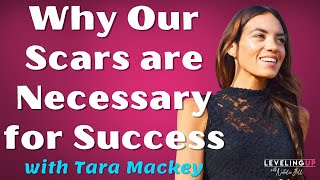
Tara Mackey, a serial entrepreneur and author, talks about being born addicted to cocaine and growing up with a drug-addicted mother. She discusses how her struggles with prescription medications and mental health diagnoses shaped her path to success and why the scars from those experiences were necessary for where she is now.
Hi, I'm Natalie Jill, fat loss expert turned high performance coach. When odds are stacked against us, how do we shift and create everything from nothing? How do we level up when we aren't feeling it yet or we've had a big setback? On this podcast, I'll be talking to some of the most inspiring and courageous men and women on this planet who at their worst, learned how to achieve success greater than they ever dreamed possible. Leveling up and creating everything from nothing. Tara Mackey. She was born addicted to cocaine. Her mom, she did cocaine through her pregnancy and even on her way to deliver her. Tara's dad, well, she never met him. He was her mom's drug dealer and he was in jail when Tara was born. Now detoxing as an infant. As scary as that sounds, it was a small struggle in comparison to what her youth and teenage years brought. She was prescribed 14 Rx drugs, she was diagnosed with multiple disorders and chronic illnesses. And she watched her mom OD on heroin several times, beginning at the age of just 5. As I interviewed Tara today, she has scars on her wrist from a suicide attempt in one of her darkest moments. Now, Tara doesn't mind this scar today. In fact, she shares it because it's part of her story today. Tara Mackey is the founder and CEO of the Organic Life, a successful holistic and sustainable living platform. And it's widely recognized as an activist with a tribe of over 1 million followers on her blog and social media. She founded the organic skincare company Genetics and is the number one best selling author of Cured by Nature and Wild Habits. Join in today and learn exactly how Tara Mackey leveled up and created everything from nothing. Today on Leveling Up, I have the accomplished Tara Mackey who she's like that true serial entrepreneur where anything she touches, she's amazing at. She is an author, she's a singer, she's a creative, super creative person and she is the founder of a skincare line. And I have always seen her on social media. We have a lot of friends in common. She's got a huge Instagram following and I wanted to know what was her story like? How did she get there? How did she get so successful? She seemed to be this overnight success, which we know is really never the case. But when I started digging with her, I learned she had quite the story, quite the path and I thought she'd be the perfect guest to have on Leveling Up. And so I'm so excited, Tara, to dive into your story and what makes you tick. Thanks for being here.
Oh my God. Thanks for having me. I'm so excited to dive into this with you today.
So, Tara, take us back, because if someone's scrolling social media and they see you, it just looks like you have this perfect life. You know, you're beautiful. You've got. You're a singer. You've got this huge following. You've got all the happy couple pictures. You got all this stuff going on. So, you know, the first thing somebody would think when they look at you is, oh, she has the perfect life. So take us back. Was that. Were you born perfect? What was going on?
Boy, Was I born perfect? No, I was. I was born on cocaine. Um.
Okay, let's dive into that. What do you mean you were born on cocaine?
I was born on cocaine. So my biological father was my mother's drug dealer, and they both lived in Queens at the time. And, you know, they. I was like a. The product of, like, a very short relationship they had with each other. My mother was 29 at the time. My biological father was 19 at the time when I was born. And they just. They literally accidentally ran into each other at a bar. And I was born nine months later. But on the way to the hospital, my biological father had been gone for weeks at a time, and my mother wasn't sure where he was. And so she took a cab to the hospital when she went into labor with me. And in the cab on the way to the hospital, she did cocaine.
Oh, my gosh.
Been doing drugs and smoking and drinking her whole entire pregnancy with me. But she had to tell the doctors, I'm on cocaine and I'm in labor. So they knocked her out and basically cut me out of her. She just has a big C section scar and doesn't remember giving birth to me at all.
Wow.
And I went through nicu, two weeks of detox as an infant, and my mother raised me as a single mother from there. My actually, my biological father went to jail the same. Same month that I was born, so I didn't really have the opportunity to meet him. And my mom had the opportunity to basically say, you know, you'll have nothing to do with her life.
Wow. So, okay, so many questions are coming up for me. So, one, how did you learn all this? Did your mom tell you this stuff from the beginning? Was this a later thing? And how is that affect? Like, was your mom doing drugs the whole time she was pregnant with you? Like, what. What information do you have? More on that?
Yeah, so that's a really good question. Actually, my mom did share all this stuff. With me when I was really young. And, you know, I hear her telling other people about it. Like, I grew up around adults. She continued to do drugs and drink and brought me to work with her and things. You know, we barely spent any time apart when I was very, very young. So she did tell me, young, a lot of things that I don't think, you know, four and five year olds should know about their upbringing or their situation. And I grew up a lot, I think, being around adults, and I thought it was normal to know that kind of information because that's what I was seeing around me Now.
Was it coming from a place of, like, remorse, like, oh, I have this, you know, issue and I can't believe I did this, or was it coming more from a place of, like, this is just what it is and this is normal? Like, what were you, what were you interpreting about all of that?
I thought it was very normal. And I think my. I think my mother's intention wasn't really that thought out. I think she would get, you know, wasted and needed someone to talk to. And I was there, you know, because I was her child and there was no one else there. I'm an only child and she's never been married. And so I think she just needed to get stuff off her chest. And I happened to be sitting on the couch.
Yeah. So when did you start realizing that this was not normal?
Probably so. She overdosed in front of me when I was six on heroin. She started doing heroin about when I was like five. And that. That took a turn. I mean, you can drink and do cocaine and relatively function, but once you start getting into really dark opiate drugs like heroin, it's very hard to hide that you have a problem. And that's what I was seeing, you know, and various forms of neglect, whether it was like leaving me in a car to go do drugs inside of a building, or whether it was like, you know, having boyfriends that did drugs around me. And when she overdosed in front of me, I was taught, actually, and I didn't realize why until later, but I was taught by her and by my grandparents that if. If anything happens to her, if I. They used to say, if you can't wake her up, call us. Don't call 911. Because I knew in school, I was learning, like, if there's an emergency, call 911. And they're like, don't call 911. And I never realized why. But the night that she overdosed, I called my grandparents instead of 911 and my grandfather came over and he. He took me out of the situation. You know, he realized she was unconscious and had OD'd. And so he called 911. And then he took me out of the situation, out of our apart. He put me in the car and he drove the car around the corner and said, you know, stay in here. Do not talk to anyone. Put your head down, like, lay in the backseat. If anyone comes over and asks anything, do not talk to anybody. Don't roll the window down. Don't do anything. And I never realized why until later, which is that, you know, if the cops showed up and I was there, I would have gone to foster care immediately. They wouldn't have had a choice.
What was your. Gosh, I'm just thinking because as a mom, I'm trying to picture my daughter at age 5 or 6 dealing with this. What were your. What were your grandparents role? Were they enabling your mom? Were they. What was in them to be trying to keep all this a secret and protect you and not saying call us first?
Well, I think they were trying to. I think they were trying to protect me more than they were trying to enable my mom. But they were. You know, my. My grandmother's still here and she's. I would say she's a pretty big. They were both pretty big enablers. You know, she's their first kid, and I think they just feel very guilty. She's had this problem for a really long time. And it's hard, I think, as the parents of an alcoholic and drug addict, to not feel like you did something along the way. And if you could just do something better next time, maybe this wouldn't be happening. And so I think they carried that around with them. You know, once. Once they did get custody of me as a result of her overdosing, which involved me having to testify against her in court. We started. I started going to alateen meetings right away, which are like alcohol anonymous meetings for alcoholics children. And they started going to al anonym meetings, which are for like the families and friends of alcoholics. And I saw when we would go into meetings together that they just like, I was really benefiting from it because I was young. But they had already dealt with her being this way since she was like 17. So I could see that was much harder for them to not take blame and responsibility than it was for me. When therapists would tell me, it's not your fault, I could be like, okay, I mean, maybe. But I think it was very hard for them to accept that it Wasn't any of their fault.
So as a kid, though, when you were seeing this, what was. Because I. Most kids, they love their parents. They. No matter what's going on, they worship their parents. They want to be like their parents.
Worships my mother. I worshiped her. I. Like, I. She could barely. She'll tell you to this day, she could barely go to the bathroom without me, like, following her in there. Like, she had not a moment of peace because I was obsessed with her.
Now, did your mom. Was she a loving mom? Aside from all of this?
She's really loving. So there. My family who raised me, my mom's side of the family is from Ireland. Like, my mom is from Ireland and came over here when she was, like, 13 years old. And I think also it's part of the reason why she started drinking so early, because she came over here as an immigrant and just felt very out of place for a long time.
Mm.
And. But she's. You know, my grandparents come from that old school. Like, children don't speak unless they're spoken to, and how dare you say anything to your elders mentality. And they're very not. I wouldn't say they're cold, but they're not warm. They're lukewarm. And my mother wanted to be, I think, a very different kind of parent than the parents that she had. And so she was very loving and affectionate and warm, and, you know, I was always her top priority. I mean, that's really strange to say in the throes of addiction, but as far as, like, with her boyfriends or whatever, like, if somebody didn't like me, they were immediately out of the picture. Or if somebody had a problem with the fact that she had a kid, like, she just would have none of it. I was really, I think, a huge. When she did get better at times, I think I was a huge inspiration for that. But also, you know, another person can't carry your wellness for you.
Yeah. So it sounds like your mom really did have the right intention. She just had an addiction problem, so she didn't know how to get. How to get around that.
Most people who have addictions are very, very good people. It's just drugs. Later learned drugs turn you into a different person.
Yeah. So your biological dad in all this, he was in jail. You never. You didn't know. Did you have any relationship with him or was it that was closed down? Never.
No, I've never met him.
Okay, so you don't know much about him or.
No, I mean, I do know more now. Because I've met or not met, but I've found out about a half sister at this point who I haven't met yet either, but she's like in contact with him. So I hear vis a vis her once, maybe once a year or something.
Okay, so this happens when you're a kid. You go live with your grandparents and then what, what transpires from there?
So I go live with my grandparents and, you know, we lived across the street from my school and church and everything. And I was like just a straight A student, huge dork. Like, did all the musicals, did all the things painting and dance and things that dorky kids do. And I really kind of fell into music and books and drawing and stuff. Has a huge. And writing is a huge escape as a kid. Huge therapy for me. And I started therapy immediately after I started living with my grandparents and did talk therapy for many years to much, much success. I mean, I went from like, barely being able to socially function as a 6 and 7 year old to like pretty, pretty well being able to socially function like a 9 and 10 year old. And then around the time that I was hitting puberty, around the age of 12, someone, I'm not sure who, suggested to my grandparents that my mom, after she had gone to a rehab center for a year and had been sober for a year, and they suggested she come move in with me and my grandparents to sort of give her a chance to be the mom she was always saying she wanted to be to me. At this point, they still have custody of me and she's like, still trying to get custody back. So they're like, here's your trial period of time. Here's your daughter. Be a mom. After about a year and a half though, my mom relapsed in front of me again while my grandparents were on vacation. And like, did you know when this.
Was happening that that's what was going on?
Immediately, Immediately. I'm very sensitive to her changes and her in general. I mean, it came from her, right? And my, my grand. My grandma specifically would always ask me like, you know, is she drunk? Is she okay? Blah, blah, blah. Like they for some reason couldn'. Even when it was very obvious. And I would be like, she's wasted. What are you talking? Like she could barely speak, like, are you really asking me this? I don't know if they were just asking me for confirmation because they were in such denial or what, but this, this time they found like a gallon of, you know, I had to. They came home from vacation, I had to tell Them, and they found, like, a gallon of vodka under her bed. And it just turned into, you know, even just getting her out of the house. This is detailed in my first book. But even just getting her out of the house for that was like, a very traumatizing shit storm just to get her off to detox facility again. And so, you know, that was broken trust. After almost two years of, you know, her living with us, plus the year she'd been in the facility getting sober. So I was devastated. And I really, you know, I didn't. I was very triggered because it's like, this is half my life now already since this has happened to me again. And it just happened again. Like, there's no. There's no guarantee of stability here, right? Like, fuck, what am I going to do? And the future for the first time and at a very young age started to look very bleak to me, and I. And, you know, still not legally having parents right now. I'm getting to a point in school and doing those kinds of things, like setting up for high school, where it's becoming, like, very obvious that I'm a ward of the court and I don't legally have parents. And, like, this issue's coming up, the doctors and stuff, and I'm just like, does anybody want to be my. You know, like, why can't somebody just be my mom? And, like, not.
But if your grandparents had custody, were they not having rights to that stuff or.
They have. You have basically all the rights as a parent. It's just legally on paper, there's certain things that you can't do. Like, when I applied for college, I had to apply as an independent student, as if I lived by myself. And I was emancipated, for instance.
Oh, wow.
So it does come up. It starts to come up as you get older. When you're a kid, it's like, maybe it comes up, but you're not involved, you know, and once you get older, you start to realize, like, well, why did you never adopt me? And it was because my mom threatened them, you know, like, I. I want to get her back someday if you ever adopt her, like, yeah, you know, whatever. So.
And when you would have conversations with your mom during this point, was it. Was it her making promises that she couldn't keep? Would she say, like, I'm gonna get clean? Or what was she telling you my.
Whole life, I'm gonna get clean and I'm gonna get you back. I'm gonna get clean, and I'm gonna get you back? You know, like, yeah, so I'm imagining.
You started having trust issues.
Of course. Of course. And her painting my grandparents out to be villainous because they wanted to take care of me, not realizing the only alternative option is foster care. Who knows who I'd be living with right now or if you'd be able to see me or any of this. Like, they're giving you all of these rights that a court would take away immediately. Like, you had a needle in your arm when I was six years old. There's no court on the face of the planet that would give you visiting rights. Like, they're doing this for your benefit and you can't see the good in any of it.
Yeah. Because in your mind, you just want to be with your mom.
Yeah. Yeah, absolutely. Absolutely. And for a long time, you know, and then I think that was the first point where I was like, I don't know what the future looks like. And so that's when my grandparents took me to a psychiatrist on top of the therapist I was already seeing. And at 12 years old, I got put on my first medication, which was a mood stabilizer called lithium.
Okay.
And I was diagnosed as bipolar for having, quote, unquote, mood swings, in which. Because it was almost like, because I was still doing well in school and doing well socially and able to show up to things and I. I didn't just have major depression constantly where I dropped out of stuff.
Yeah.
Couldn't complete everything. They were like, oh, well, you have to be bipolar because, you know, you go through these depressive episodes, but then you're manic enough to tests.
What an amazing, weird diagnosis. Like, you obvious are dealing with some real things and they go to your bipolar. Like, who wouldn't be acting bipolar with this?
Right. Or as you're. Even if you're just trying to do well in life still despite it. All right, like, isn't that a little bipolar that you can still show up and not let this affect in your life? Like, okay, I guess I get it. But also, I'm 12. So, like, what 12 year old girl isn't bipolar?
Yeah.
Real. Like, I hate to put it that way, but you're.
No, it's true. My daughter's like ecstatic one minute, crying the next, hormones.
Any other time, your hormones go through a major shift as a woman. Like, you're. That's gonna be your life. That's why that happens when you get pregnant and happens after you give birth, and it happens when you go through menopause. Like, it happens to everyone. It's normal. And so to immediately villainize it until a 12 year old. And I was told, this is a disease. This is like a disease. This is like if you have, you know, cancer and you have to take chemo for the rest of your life. That's what I was told. Like, you go on this medication, you can never come off of it.
Whoa.
So you're simultaneously not giving me the choice of whether or not to take it. Like, once you're diagnosed, they're like, this is the answer. And what are your parents going to do? Say no?
So you start taking lithium and what happens?
I start taking lithium and actually for the first time ever in my life, after probably like five or six months, my grades started slipping. Only in math and science. And I go to my psychiatrist and I'm like, what the heck? My grades in math and science are horrible. And he's like, well, lithium can actually inhibit your ability to do math and science because of the like. And he goes into the science of it. And I'm like, why was I not told? Like, why were we not?
Interesting. I wonder why it says that. That's very interesting.
Yeah, I think it like in, you know, because it's, it's slowing down your neural connections is what it's doing. That's the point of the drug, is to quote, unquote, slow your brain down. And it does that in certain areas of your brain and not others. And I suppose it's the same areas that do math and language.
Wow. Okay, so now you've got grade issues, right?
Now I've got grade issues for the first time ever. Like the worst grade I'd ever gotten on a test in my life was like a C. Nevermind. Like I'm looking at a whole grade point average that's going down like a point. And I was like panicking, you know. And so his solution to that was to switch lithium from Lamictal to Lamictal, which was very new on the market at the time. Literally, if you google it, I think I got put on it like three weeks after it got approved for bipolar disorder because it used to be used for seizures before that. And he put me on an ADD medication.
So now you got two diagnosis adhd.
Yeah.
So now you're taking Ritalin or Adderall.
Or one of those I took, it's called Metadate.
Okay.
Like one letter away from methadate. And that's how I felt on it. I'm like, you just gave somebody who was born on cocaine and has never had a stimulant since they were an Infant who had to go through detox. A stimulant to voluntarily take every single day. Yeah, like, and I've always been very thin, like, like tiny. And it was like, I'm freaking 12 years old. Ate, like 80 something pounds. Like, what are you doing?
Right?
What are you doing?
And you don't know because you're 12 and you're trusting the doctors and your grandparents and everything else.
You're paying them a lot of money. If I paid somebody $150 an hour for their time, I would do what they told me to do. Totally. Like, my grandparents did not have a lot of money. My grandma stayed at home, and I think my grandfather made, like, 40 grand a year, which in New York does not go a long way. So, you know, they were already struggling to, like, pay for this. They had to see it as the best possible care. Or else, like, what are we all doing here?
Totally. Okay, so you're taking these. Your personality, I would imagine, is changing.
Oh, my God. Well, number one. So my sole comfort in all this is writing and music and drawing. And I'm taking this ADHD medication now, which I have to take every day before school. And my. I go to audition for these shows. And in the middle of the audition, I just started, like, shaking and, like, panicked and, like, ran off stage pretty much. And it was actually my voice teacher in high school that took me aside and was like, this is not you. What is going on? You know, because I was so used to just taking the blame for everything that I was like, oh, my God, this is all my fault. Like, I didn't even think it was the medication. I didn't really know what it was. Sat me down. And she's like, this. I. You know, I saw you audition a year ago. I've seen you in, like, six different plays. Like, this is. I've never seen you choke like this. Like, this is insane. What is going on? And I would just get so nervous and so panicked that I couldn't, like, function. And she's the first person who told me, like, nothing is wrong with you. Something is wrong with that doctor. Like, why is he putting you on all these drugs? And I was like, no, they said I have to take it. Like. And she took my best friend aside in high school and talked to her about it and was like, can you talk to Tara's parents and, like, or her grandparents and, like, tell them that she doesn't need to be on this stuff because it's really hurting her?
So what did you do? How did you. What Happened from there. Did you get off this stuff? Did you?
Yeah, I stopped. I refused to take it anymore. I refused to take it. And that's actually when he finally started, switched my. My lithium telomectal. It was almost like, okay, now you're being really defiant. So we're going to switch your. We'll take you off of this, but we'll switch your bipolar medication and, like, double your dosage.
And then what happened with the ADD medicine? Did you keep taking that?
No, I just stopped taking it.
Okay.
Luckily. But then I started having really bad arthritis pains all of a sudden. Once I came off that, I started to have these, like, weird side effects of, like, being in pain constantly. So I got put on medication for arthritis, then I got put on medication for pain, then I got put on medication for depression.
Oh, my gosh. And all of this was somebody who has a genetic disposition and was born addicted to drugs.
Born addicted to drugs. Both my parents are drug addicts. People telling me, literally, doctors telling you your chances of becoming a drug addict are 100% if you ever do drugs.
And now you're getting. Basically getting prescription street drugs.
They have my name on them. They literally have my name on them. When you fulfill a prescription on a pharmacy, it has your name on it. So why would you ever think it's a drug? I mean, that's a lot of what I speak about now is like, you know, you pick these things up at a drugstore and somewhere along the way you're tricked into thinking they're medicine. They're not medicine. They're.
No. Yeah.
So.
Oh, my gosh. So you're taking at this time, bipolar medicine. You're taking medicine for the arthritis, which I'm imagining some kind of ns, strong NSAID was going to mess up your gut.
It was Vioxx, which was taken off the market for killing people.
Yep. So you're taking Vioxx. Okay. So super high levels. And then you're taking now an opiate, I'm assuming, for the pain, for. Okay, so three really serious things that are all working against and. Or with each other in weird ways. And I'm sure your personality's changing and now you're already exposed to drugs.
So.
So, so what happens then?
It'd be so funny. So true. You know, I just kind of kept taking drugs and I, you know, I went to college, but I ended up actually dropping out of three different colleges because I couldn't, like, function. I would just, like, be in pain or I wouldn't. I just felt like I wasn't really ever anywhere where I completely belonged. And I think my depression got worse and worse because I was taking these drugs and I wasn't actually seeing any of the effects from them that they tell you you're gonna see. I would take these mood stabilizing drugs. Mood stabilizing. I just did hand quotes drugs. And I would feel worse. I would take these pain medications and I would just like get nauseous. I would take anti anxiety medication and once it wore off, I would be more anxious. Like I was like, what is going. I mean something.
You're taking that also another. That's a fourth drug. So like a Xanax or something on top of it.
All right. So that I end getting prescribed those on and off too. And then by the time I was 24, I got a bunch of what I did instead of like I was in school and I got a job at Cornell and I started working there and going to school at night. And I realized after I passed all these aptitude tests and worked in healthcare and like that's what I wanted to do. I studied genetics and I did biology and just like a huge nerd. I just, I realized that like, I don't need to really go to school for this because I don't want to be. I realized very early on in working with patients one on one that I didn't want to be a doctor because that grossed me out and. But I wanted to. I knew I wanted to work in the lab and all I needed to do to do that was get all these like certifications. I'm like, I don't need to spend all this money going to school. I just need to pass all these certification tests. So I started working at Cornell and I dropped out of my last college and then I worked for an environmental, small environmental lab analyzing asbestos samples. Super glamorous job. And In January of 2011, I got a call from one of my very best friends that my. One of my other very best friends. It was like a trio of us had taken her own life. And at this time, I was on 12 different drugs already. All prescription, all prescription, all prescription. I never in my life have taken a drug that wasn't prescribed to me ever.
Did you know, taking 12 drugs that this was not normal? Or did you just think this is what happens? Like everyone does something like this.
I figured, you know, at that time, right? I've been on drugs for. I was 24, I've been on drugs for 12 years. And I just figured this is what happens over time. I'm going to need more and more drugs because more and more things are going to be wrong with me. Because, like, I'd already, you know, you, you get convinced at a young age, when you start taking drugs at a young age that something is wrong with you. And so when people keep telling you, well, now this is wrong with you, and this is wrong with you. Like, I got diagnosed with, like, I, I was on two separate drugs just for fibromyalgia. Like, I was on two or three separate drugs just for pain. And one of them was fentanyl.
Gosh. And every single thing, every drug you were taking was causing another symptom somewhere, of course.
And because I never got to take a step back, I never really saw the connection between all of that until this whole cascade of events. So my, my best friend takes her own life and she had struggled with depression and being diagnosed with bipolar as a child because of trauma and things like that. And that was not dealt with. And she was one of the smartest people I knew. And I'm like, maybe she knows something. I don't know. Like, I really started and then I got put on my 13th and 14th drugs, which were Valium and Xanax.
Holy moly. I've never met somebody on 14. I mean, that's just. You're here 24 years old on really a broken health care system to be doing that, right?
And you know what, Natalie? You have met somebody that's on 14 drugs. They just haven't told you. Because it wasn't like I was going around telling people I'm on 14 drugs. You know what I mean? If you were around me long enough, you'd realize my purse rattles like pills, you know what I mean? I have three or four or five in there. But, but like, I'm always astounded now when, at my book signings and speakings and stuff, when people come up to me and they're like, I'm on 20 prescriptions, my daughter's on 12. Or I'm like, what? Because you can't see it in people, you know what I mean?
And I. Shame on these doctors. They think that's the answer. I absolutely believe that pharmaceuticals, there's a place for it, but I don't know on what planet that would make sense.
No, and I'm not. And I'll, you know, when we get into this part of my story, you'll see I'm very not, not anti pharmaceutical drugs by any means. I'm not go. I'm not on that crusade. I know a few Wonderful, amazing people who are doctors. Kelly Brogan, for instance. Dr. Kelly Brogan, like, she's just like, hey, there's alternatives. And that's kind of my message, too, is if you. I want people to know that there's an alternative, that if you don't have to go on this at all and there's another solution and it's not going to hurt you and it's not going to cause a side effect that enables you to need another drug, like, try that first, you know, because if somebody had told my grandparents when I was 12, well, instead of doing this mood stabilizer, why don't we give her some GABA or some 5 HTC or some St. John's wort, or why don't you take her out in nature, like, once a week, you know? Yeah. Any of those things would have, I'm sure, really helped before they tried. And then I don't think they would have need to try drugs.
Yeah. So where did. Did street drugs affect you at all? Was that ever coming up for you on top of the prescriptions? Like, were you ever tempted by alcohol or other drugs because of that? Because so many times the prescription can be a gateway to those things.
You know, it's really funny. No one's ever asked me that before, but it did. It did come into play really early. The first time I drank alcohol, which I've never said on any podcast before, the first time I drank alcohol is at 14 years old. And, you know, it's not like I got into it and I, like, started drinking or anything, but it. That seemed. Now I think about it, I'm like, that is awfully young. Yeah, buddy. Because most people in my hometown knew, you know, I live with my grandparents. Like, everybody knows why I live with my grandparents. And so the fact that somebody took me to a party at 14, I was like, here, try a Mike's Hard Lemonade was like, that could have led me down, you know, a really bad path. And I'm a huge advocate for cannabis now. But I remember, like, the first time a bunch of people around me were smoking weed and passed me a joint. I was like. I was like, 13. And luckily I just passed it to the person next to me. Didn't even say anything but, like. And I avoided marijuana for so long because I associated it as an illegal drug that was going to hurt me and put me in rehab. But, yeah, like, that stuff is out there, and it scares me as like a future parent that I'm like, God, if I did that when I was 13 with everything I saw.
Yeah.
What are kids doing? You know?
So I wonder if you were able to escape the whole those prescriptions being a gateway to. Because you didn't want to turn into your mom. Because the alcohol and the marijuana or one thing. But like that heroin and that cocaine, that's so scary. That could have been a whole nother.
Totally. And I've never done like any heart. I've never done cocaine. I've never taken acid. I've never done like anything that could like fuck me up. Basically just like smoked weed. Like I've tried mushrooms and nothing happened. And I was like, okay, I guess I'm not supposed to do that, you know. But every other thing I've stayed completely away from because it's just like not worth it to me. I know what it can do to someone's life. And I've been offered cocaine. When I did, I modeled for like a few years when I was 18, into my mid-20s. And like I was offered cocaine I can't even tell you how many times. And being in the music industry too, and I was just like, no. And now knowing people use these pharmaceuticals, use Xanax and stuff to like do that, it's like.
Okay, so when did you realize that this is not working for you? This is a problem. How did you. And what was going on and where was that transition point and what did you do?
So like two months after my best friend's funeral, I also tried to take my own life. I got into just a really bad place. Like I was in a very abusive relationship with. This is all outlined in my first book with somebody who, you know, had tried to kill me that I had like a restraining order against. And just my. I was at a job that, I mean, I'm not going to be analyzing asbestos samples forever. Like maybe one or two of my co workers are great, but this is not a long term plan. And I had a lot of toxic people in my life. And I mean, clearly my best friend was depressed. I commit suicide and just brought me to this place of like, you know, I didn't, I was hopeless. And once I. Once I attempted suicide and that didn't work, you know, I realized that I have two choices really.
You know, how do you attempt suicide and it not work? I'm curious about that. Was it.
So I have scars on my left arm that will tell you the whole story. And I actually have a post about it on Instagram because I used to try to hide them for a really long time because I was ashamed of them. And Also, when they were new, it's like, I don't want People did this yesterday, you know, but. But people ask me now, am I gonna get a tattoo over them? Or whatever? And I'm like, they are the tattoo. They tell the whole story. They tell the whole story of how, you know, I fought this battle against myself, and I won.
So when you. So you slit your wrist and what happened? Did somebody find you? Did you wake up and call nine. One? What happened?
My ex actually showed. It was the craziest thing because we hadn't talked in, like, forever. And I don't know what tipped him off or whatever, but, like, he just showed up in my house, and he had a key, and he came. I remember I was in the bathroom, and he came in the bathroom, and I had, like, just done it. And I was so, like, numb and almost, like, catatonic. Like, I was just, like, waiting, you know? And he was like, oh, my God. What did you do? What did you do? And he, like, just started wrapping up my wrist, my arm, because it's, like, all down my arm. And he was like, we can't take you to the hospital because they'll put you in a psych ward and you don't have health insurance and, like, all this shit. I was like, you know, and I'm just sitting there, like, not saying anything, just staring at my arm, and I just realized, like, oh, my God. I thought this was gonna do something.
It was gonna end it all. End the pain.
Yeah. And I feel no different at all. And that's when I realized, like, I. This is not the solution. Right. The solution is, it's not that I want to end my life. It's that I want to end this life. I want to wake up and do what I want to do. Like, I want to wake up and make myself and the world better. This day and every other day. Like, the reason that I'm here is because I lacked hope, not because I'm depressed. Like, that's a story I'm telling myself.
Wow. It's super powerful.
So go for it.
Did you. So. So you have this awakening, essentially. What happens then to start realizing, okay, I really have to start changing. I have to stop these prescriptions. How did you correlate and connect those?
That was the thing. It was about finding the toxicity in my life. Right. Like, once I really. The next day, I mean, I really dove into the work immediately, and I started going, what's not working here? Like, I need to. And I started writing it down. Like, I need to start Writing down everything that's led to this point and isn't working. And by the way, when you've got scars like that on your arm or fresh wounds like that that are stinging and they hurt and you have to redress them every day, like, it's a pretty good reminder that, like, you got to get your shit together if you want to have a different life. Because I started to realize if I wanted to have a different life, like, I needed to have a different mindset, and if I needed to have a different mindset, that I needed to act differently. And if I wanted to act differently, then I had to believe in everything in a completely different way than what I had believed before. I had to find a way to look at the same situation and see it totally differently.
And that's amazing that you did that. How did you figure that out? Did somebody tell you this? Did you read it somewhere and then it was making sense? Did it just come to you?
So that initial thought, honestly, I mean, so I grew up listening to Tony Robbins and watching Oprah and stuff, so that stuff was in the back of my mind. But I hadn't read a self help book. And I can't even tell you how long, you know, I'd mostly been reading, like, science and psychology books because that's what I was doing for a living. So. But I knew really in the, in the back, back of my mind even what I had done so far, right? Even, like, how much I had accomplished from the day I was born, like, what I'm sure the doctors who delivered me thought my future was going to look like versus what it was, was already, I think, testament enough that, like, you don't have to live this story. Everyone thinks you're gonna grow up and live. And that really inspired me to start making different choices. And once I started making different choices, like, and cut. And made a commitment to cutting that toxicity out of my life. Which is when I realized, number one, that the pharmaceutical medication I was taking was the most toxic relationship in my life. It was the underscore to everything else. It had led me in the direction of relying on finding these people and these bad coping mechanisms and these bad habits. And so my intention, when I first came off all my drugs cold turkey, which I do not recommend anybody do, I could have died so many times, and I went through three years of withdrawal, which I don't recommend. Do it the right way. You only have to deal with it for a few weeks. If you do it my way, good fucking luck. But I came off the mall Cold turkey. And in my head, not knowing, number one, what I was about to face, withdrawal, symptom wise. But also, like anything else, I was like, oh, I'll just see, you know, what. What I need and what I don't need. Once I'm off all these, I'll, like, go back on some of them if I feel like I need them. Right. And once I made that decision, it became very, very clear to me who was in my life because I was taking drugs and who was in my life because I actually wanted to be around me. And it turns out, like, 99.9% of the people are around me because I was taking drugs and I had this bad mentality. And, you know, they wanted to be there too. Misery loves company. And it became very easy to kind of leave room in my life for new friends and new people and these new friends and these new people that I'd met through doing things I hadn't done in a long time. Like going to a recording studio that I hadn't visited in, like, 10 years and just walking around and saying hi to people and, like, yeah, you know, making music and asking people if anyone needs a singer for their band. Like, it led me to people that did give me books that changed the rest of my life. That was the first time I ever read the Alchemist. That was the first time I ever read the Monk who Sold His Ferrari. That was the first time I ever read Autobiography of a Yogi. And once I started letting those kinds of thoughts into my mind, books literally started falling off the shelf to help me heal naturally. Like, I carried around these books on natural healing for years, but I'd never open them because, yeah, I mean, they're not relevant to me, Right?
Totally.
And then I was, like, moving a bookshelf and, like, literally this book on natural healing felt open to a page on turmeric. And I pick it up. And of course, one of the things I am still facing after I come off all my drugs is like, I'm in a lot of pain. Like, I was taking fentanyl, by the way, plus two other painkillers, and I'm not taking anything.
And so that's all the inflammation and gut health issues I'm sure you had.
God, so many gut health issues. I started drinking a lot of kombucha and making this, like, mushroom tea I found on Amazon that was amazing and great for gut health, but I'm dealing with this pain every day, and I'm like, this is excruciating. Like, I don't know If I can go through this for the rest of my life without drugs, where was the.
Pain in the arthritis? That's where you're feeling it.
I have arthritis, like, in my back. Yeah. So it's mostly there. And because I have scoliosis, so it's just like the misshape of my spine just pushes things where they're not supposed to be. And when they flare up, it's like. It feels like everything's very. Even tighter than normal because some of it's in a tighter spot than it's supposed to be.
So how long was the journey from that realization in that moment to getting off all of the drugs?
I started coming off my drugs, like, that week, and I came off. I remember stopping the lamictal first. And then within that same week, I had stopped absolutely everything.
And did you tell your doctor you were doing this, or did you stop going?
No, no, no, no. I just stopped going. I mean, I was. At this point, I'm 24, right. I'm like. I have my own health insurance I'm not seeing. And it wasn't great. I mean, it was like state health insurance. It wasn't my job or anything. It was like Medicare. And I started, you know, just seeing, like, these random doctors in Queens who didn't give a shit about me. They weren't gonna follow up on some girl that came in from the social services office, you know what I mean? So, yeah, it wasn't a big thing to just kind of, like, stop going, okay, cool. Like another. I don't have to sit in a doctor's office again. Great. Because guess what? I've spent, like, a quarter of my life in there. And it felt like a huge relief that I could take over my own health. I don't know if I immediately started seeing it that way, but it became pretty apparent to me after a few weeks that that's what it was. And I like to tell people that I made the decision twice. So the first time I decided I'm going to come off cold turkey, and then I do, and it's. The second time. It was a few weeks later. It was when the withdrawal symptoms started getting really, really bad. And pharmaceutical withdrawal symptoms are everything from, like, nausea all day long to, like, blurry vision to, like, I'd be driving and, like, I. I'd just kind of be like, wait, where am I driving to? Like, you just get this brain fog that's like. Like, I'd look at a counter and be like, fork, fork, fork. And it would, like, take me a second to, like, figure out fork would be, like, right in front of me, but it would just. My brain wasn't, like, connecting.
Yeah.
Words that I learned with, like, objects I was seeing.
That's really. And I hope everyone listening really picks up that she. She did not recommend doing this without doctor supervision. This is just her journey and her path that. That there are doctors that can help people slowly get off things. If that's what you would choose to do.
Absolutely.
So when did you start feeling better, and what did you start learning?
So, I mean, I honestly started feeling better. Like, I don't want to say immediately, but, like, in the first month, like, you know, it's interesting because when you say feel better, like, I was throwing up, like, 10 times a day. And then it got to the point after about a year where it got worse. Like, I was throwing up, like, 15 times a day, and I couldn't, like, control it. And there were times I feel like I couldn't breathe. And I was like, I'd get through the day and be like, I don't know how I didn't die. Like, I literally. There was a point there where I wasn't breathing for, like, a minute because I was, like, throwing up so much, and I couldn't catch my breath. And keep in mind, it's like, this is just. I'm not, you know, I'm changing my diet, and I'm changing the people around me, and I, you know, put my. My. I told my job that I was going to quit, but I told them, like, I'm not going to quit tomorrow. You know, I'll find a replacement and whatever. I'll quit over time. And then I met somebody who was going to move out to California and asked if I wanted to move out with them. And this story is my book, and it's so beautiful. It just so happened to, like, a line that of the two people I reached out to on Craigslist about their place, one of them got back to me and was like, I know you. And I was like, no, you don't. I don't know anyone who lives in California. You're crazy. She was like, no, I do. We did dance together when we were five. Like, you look exactly the same. She's friends with my cousin still. She's like, I sent your cousin your picture to make sure it was that I was remembering right. And she confirmed it was you. So, like, come move into my place, because I'm moving back to New York. Cousin is helping me move into my new place in New York, and I Was like, okay, fine, universe, I'm listening. Like, I guess I'll take a road trip to California. So I did. I took a road trip out to California. And that's. I feel like, when things really started to pick up and change in a big way for me, and there was really, like, absolutely no turning back.
Wow. It's amazing. What does your. What's your relationship with your mom now, or do you have one with her?
I do have a relationship with her now. It's good. She's. She's great. We see each other, you know, when I go back home, we text a lot. She's in a good place. She's doing pretty wonderfully. She's just. I think she's just still kind of in a place of forgiving herself. I think I've forgiven her more than she's forgiven herself. And so we're working on that.
Has she been sober?
Yeah, she has. She has, yeah.
That's amazing. And do you have any desire to ever get to know your dad or. No.
No, no, no.
So what inspires you to do what you do now? Because now you're a tremendous leader and you've got a big following. What do you think inspires you to do. Do you think drew people to you and created that following?
I think in the beginning. So what inspires me is I'm here. I know, to. I love your podcast name because I really, honestly feel like I'm here to level up people's consciousness and create a path forward in the consciousness of humanity. And what was the second part of the question?
Well, I wanted. So that's what your purpose. What drives you to do that? And what do you think attracted so many people to you?
Okay. So it drives me to do it is I honestly feel like everything I've been through, like, to me, it's like, what is this all for? Unless it's for the greater good, for healing. For healing other people. Like, if I just went through this myself and I never shared it, and I think that's what draws people in, is that I've been very vulnerable in sharing a lot of these things, and I don't have to talk about any of this stuff. I mean, I technically didn't have to. Like, I got my book deal because when I moved out to California, I started my blog, and my publishing company actually reached out to me based on stuff that I had been blogging about, but I hadn't been blogging about any of this. Like, other than my family. Like, four people in my entire life knew my mom did heroin or that my grandparents had custody of me. Like, I'd actually spent a long time trying to remove myself from that narrative. And it wasn't until they talked to me on the phone after they pitched me, you know, the book deal, and we were talking on the phone about it, and they're like, well, what are you comfortable writing about? And I started to kind of tell them a little bit of what we've touched on today, and they're like, tara, you have to. To write a book about this. Like, what. Who the fuck cares about, like, kale chips when you can be writing about this? Like, write this down if you want to. Like, we're not pressuring you.
Yeah.
Like, you could do, like, a recipe book, or you could do, like, a book on why you're here and why you're doing this, and then you could do a recipe book five books down the line. You know, that's actually got a story behind it, because people need to know. And then they. My editor came to me while they were still pitching to me, and this is actually a huge part of what really inspired me to write the book. She said, we've looked into it, and number one, other than Kelly Brogan, who I mentioned previously, there's not a lot of people who write about the dark side of pharmaceutical drugs. And this was in 2014. I mean, it's a lot more headlines now. But she's like, but the thing is, we can't find a single solitary memoir on anyone who's come off all their drugs and replace them with something natural. So that's actually, like, my expertise. So, yeah, I came off of fentanyl, and I replaced it with turmeric and skullcap and ginger. And it actually worked. Like, I would take fentanyl and get nauseous and get no relief because it turns out I'm opiate intolerant, which is not surprising. And I would take a tea that had these spices in it and tasted amazing, by the way, and actually find relief, like, an hour later, not be in pain and not be in pain for the next eight or nine hours. And I was like, this is what people have to know about this. There's no way.
So, Tara, how did you discover your interest in biology? Because I know that was a big thing. And how were you able to make that, like, so much more meaning? Build a business and whole brand around biology?
Oh, right. So I started by studying psychology in college, and then I would get together with my two best friends, and one was studying biology, and the other was studying chemical Engineering. And I would hear them talk and I'd be like, I really like this stuff. And then they. They kind of caught onto that and they started giving me, like, presents for Christmas and my birthday that had to do with biology. And I was like, oh, I think I like this more than I like psych. Because there's hard answers, right? With psych, it's like, it's kind of. For me, it always seemed a little like it's always. At the end of the day, it's someone's opinion. Yeah.
It's like conceptual. It's like, yes. And it's esoteric, subjective.
Right, right. And biology to me was like, oh, my God, there's real answers to all these questions. And that really intrigues me. And the first. The first book that one of my best friends gave me was the Selfish Gene by Richard Dawkins. And it was the first science book I'd read that was kind of written the way that I write. And I was like, oh, you can write science books, like nonfiction, kind of, and really interesting. And. And I was like, just digesting all these wonderful facts about science and realized I really like this subject. I really like genetics. Like, yeah, this is my thing. So I kind of like instantly switched. And then I started studying biology with a concentration in epigenetics, which is environmental genetics. So the idea that everything that happens in your genes is based on your environment. And at the time when I started studying it, it was like. There was one documentary on it. You can find it on YouTube, actually, and Nola Gross Tyson's in it and he's like super young. Okay. It's like a 12 minute documentary about epigenetics. And I watched it and I, like, read some books and it was like sort of a new concept at the time, and I was diving into it and so that's how I got started there. And then the way that, you know, it did break my heart to have to drop out of school and. But I couldn't afford it anymore, truthfully. And then once I started getting jobs in these fields and realized I didn't really have to go to school to get the jobs, I was like, you know, why am I doing this? So, yeah, my skincare brand, genetics, is not only named after my former major so that I still get to do it. Right. But also because it's science based.
Yeah. So talk to me about that. Like, how did you. Because you were already doing so well with your books and everything you're doing. What brought you into the skincare? Because it's A whole different, whole different business really, within your business.
What brought you into that whole different business? So like every, first of all, every herb that I mention in my books pretty much that helped me tackle like psoriasis, acne, inflammation inside and outside is in my skincare. So there's that, there's that connection. So I discovered them all kind of simultaneously. And when I came off of my drugs, that included coming off of birth control. And once I did that, my skin just went nuts and I was having really bad nodular cystic acne for months and months at a time. And I'm like, there has to be some sort of solution to this. I went to the, I went to my dermatologist and she said, well, your acne is clearly hormonal. Here is minocycline, which is an anti inflammatory drug. And the scientist to me was like, how is an anti inflammatory drug going to deal with hormonal acne? If I want to deal with hormonal acne, I have my hormones. So I never filled the prescription for the minocycline because I knew I wasn't going to do anything and except build up antibodies that I building up in my body.
It's just always treating because that's what so many doctors do. They just treat like the alk, the symptom that they don't treat the cause.
Yeah, it was so crazy to me to hear that come out of her mouth. In one sense, you have hormonal acne, there's an antibiotic. I was like, as a scientist, that doesn't make any sense to me.
Yeah, it's so common though.
So common.
So the ingredients in your skincare, what makes it unique, what makes it different?
So like my Globe brightening serum, for instance, we have turmeric, we have chamomile in there, we have oils and herbs that actually brighten.
But natural, natural ingredients versus using like hydroquinone or the other stuff that are.
Right, 100% natural ingredients. No fillers, no toxins, no anything, no water, like literally no fillers. It's all organic oils and herbs. And I don't use essential oils in my face. Care my serums for your face because I feel over time it can actually be irritating. We're not really supposed to be putting essential oils on our face in any concentration. And what I also noticed is that there was no real place in the market for that. Before I started my serums, I looked through my beauty cabinets which had nothing but years and years of organic and as natural as possible makeup and skin care in it. And I turned them all around and read all the ingredients and every single one of them. The only thing they had in common is they all had essential oils. And I was like, there has to be an alternative out there for people who are sensitive to this stuff. Because I imagine that's why so many of the reviews I read on the skincare and some of the experiences I have for myself is it would work well for three months and then all of a sudden my skin would break out or have some sort of reaction and I'd be like, what is this from? I've been using the same products. I don't understand. I'm eating the exact same way. And I think it was the essential oils because once I stopped using any skincare with essential oils when I was doing the test batches for my face serums, like, my skin instantly changed overnight. The enhancement oil or breast butt lip enhancement oil is all science based. Every single ingredient does what we say that the oil does. So Zemu, for instance, is a Chinese herb that retains fat anywhere that it's applied. So if you're applying an oil that has an herb in it that retains fat anywhere it's applied, and you're applying that to your breasts and your butt and your lips every day.
Now I understand your Instagram post. I was like, why does she doing. She's putting this stuff on her butt, saying it's making it better. I didn't understand. I get it.
It does.
I might have to try this stuff. Okay.
It does. It really works. Yeah. And there's no fillers. There's no anything. And I know it's like a crazy concept, but if you really think about it, if you're massaging this oil with these active ingredients only in these places.
But let's stick to button boobs, right? Because I don't want it on your stomach.
Lips. No.
Yeah.
And I think about it like, you know, it's like manipulating any other muscle in your body, Right. Your body responds over time. If you give yourself a massage anywhere with, with our method, like, it will expand and respond. I love it.
I love it. I love so much how you turn like so much pain into purpose. It's just so. It's so brilliant and so incredible to watch because your life could have gone in such a different direction. And I just commend you for what you did and how you speak up and teach others now and share your gifts so much. I think it's amazing. I do have a question for you, and this is most of my listeners Here they listen for motivation, they listen for inspiration. They want to shift themselves up to the next level. So if somebody's listening right now, and this is most of my audience, they're going through their own personal rough time or they don't believe that they can get to the next level. Maybe it's the, maybe it's the setbacks you had years ago. Whatever that is, whatever their personal setback, whatever they're struggling with right now. If you were to give them some advice on how they can could level up and create everything from nothing, what would you tell them?
You know, that's why I wrote my second book, Wild Habits, the Wild Method. Willingness, intuition, love and discipline. You have to be willing to recognize that something that you've been doing is not working. And that's why you're in the place that you're in. You have to be willing to recognize that that's the first step or you will never move forward. You have to have the intuition to, once you recognize that, ask yourself where you want to go and what the next step is to get there. You have to have the self love then to implement what you've discovered through your intuition because that's where it all stems from. We self sabotage because we don't love ourselves enough to actually give ourselves what we deserve.
So good.
And then you have to have the discipline to get up and do that day after day after day until it becomes a natural thing for you and you don't have to think about it anymore.
Amazing. I love it. Tara, where can people get your books? Where can they find you? Where can they learn more about your skin care line?
You can get my books wherever books are sold. You can follow me at Tara Amackie and you can get my skincare line at genetics with an xorganic.com or just Google Genetics Organic. It's on Amazon and we're in Walmart.com as well.
So awesome. Thank you Tara.
Thank you so much my love.
Thanks for leveling up with us today. Please share this episode if you found it helpful so others can join in. And don't forget to hit that subscribe so you don't miss out on future shows. And if you would leave me a five star review, I appreciate those so much. I read all of them and it's how I know that I'm giving you information that you find valuable. And come interact with me over on Instagram @nataliejofit. I read all the direct messages and comments over there. Make it a great day. Creating everything from nothing.
Sam.










