163: Get Paid For Who You Are with David Wood
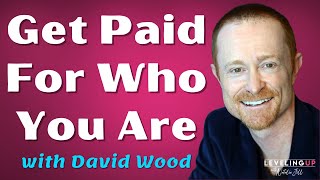
This is a YouTube video titled "163: Get Paid For Who You Are with David Wood" featuring a podcast-style interview recorded in January 2020. Natalie Jill, a fat loss expert turned high performance coach, hosts the conversation with David Wood, a former consulting actuary turned life coach. They discuss David's journey building a coaching business from scratch, overcoming severe personal setbacks including a paragliding accident and health challenges, and his philosophy on coaching, courage, and playing life "for real." The content is motivational and focuses on resilience, reinvention, and practical advice for coaches and entrepreneurs.
Hi, I'm Natalie. Jill, Fat loss expert turned high performance coach. When odds are stacked against us, how do we shift and create everything from nothing? How do we level up when we aren't feeling it yet? Or we've had a big setback? On this podcast, I'll be talking to some of the most inspiring and courageous men and women on this planet who at their worst, learned how to achieve success greater than they ever dreamed possible. Leveling up and creating everything from nothing. David Wood. He had it made, or so we thought. A former consulting actuary to Fortune 100 companies, including Sony Music, Chanel, and even Exxon, David left his cushy Park Avenue job 20 years ago to build the world's largest coaching business. And in fact, he became number one on Google for the term life coaching, serving an audience of 150,000 coaches and coaching thousands of hours in 12 countries all around the globe. Fabulous, right? Until it wasn't. You see, David was in a horrible accident. Now, he survived, but it was a full collapse of his paraglider and a severe fractured spine. This brought on depression and hard times and memories of witnessing the death of his sister at age 7. He's no stranger to anxiety and depression. Today, David has come a long way. He is truly leveled up. And he's the author of get paid for who you are. You see, David believes that tough conversations we avoid are the doorways to confidence, success and love. They become the defining moments which shape our careers, our relationships and, and our lives. Join in today and learn exactly how David Wood leveled up and created everything from nothing. David, I'm so excited to chat with you today. I've got so many questions for you and I'm going to start with. It's funny, before we started recording, I said, what would you say if I asked if somebody, you just met somebody at a party for the first time? And they said, what do you do? And your answer was so unique. You said, I help people get more out of their life. So on their deathbeds, they have no regrets. And I got chills when you said that. And that's so interesting. Where did that come from, David?
Yeah, and I include work in there as well. So life and work or career. I like grabbing the two together and where it came from. Some people specialize and I have specialized. I specialize in tough conversations, but I'm a bit more of a generalist. I want people to get. I want them to suck the juice out of the orange so that I've had a near death experience. I had a collapse in my paraglider and could have died twice. And maybe that's made me think more about if I died today, would I consider that I gave it everything. I don't want people to wait until they're on their deathbed and say, I wish I'd been more truthful. I wish I'd been more daring. I wish I'd been more caring. Let's have that conversation now and fully live so that when the time comes, you can say, I'm good. I'm ready to go. I gave it everything.
Yeah. Okay, so back up a minute. First of all, you were paralyzing, which is a total example of living in the present and taking those risks and enjoying life. But what the heck happened? That's, like, everyone's fear. I'm going to do a daredevil thing and then almost die. Like, what happened with that?
Yeah, well, I've had a few messages from the universe. Um. What? You know, I was hang gliding years ago, and I had two accidents. Crashed, and I didn't hurt myself, but it really shook me. So I gave it up for several years, went back to paragliding because I keep getting cold to the sky. And I had a big scare three years ago in Bali when my chute collapsed. Had a full collapse at 300ft, plummeted towards the earth, and managed to recover and reopen the chute at 80ft.
Oh, my gosh.
So I could have died that day. That. That was scary. You'd think that might be enough to have me give it up.
Yeah.
But in Colombia, I was doing some internal flying, and it's very turbulent, and I'd done incredible things all around the sky. Came back to land on top of the mountain, and I was a foot off the ground. I was so close, and a bubble of hot air took me, lifted me up again, and I didn't control the wing properly. Went back into a bad zone and had a partial collapse of the wing and only. Only fell from 10 or 15ft. But when you fall 10 or 15ft onto your butt, that's not good for the spine. And that's how I fractured my spine and went to hospital in an ambulance.
Oh, my gosh. So I would imagine at that moment, you're thinking, what?
Well, the initial impact there was just screaming and agony. And I do plan to publish the footage as a podcast episode because I had my GoPro on. You see my point of view as I come in and hit. I'll have to muffle the screams because it's disturbing to hear anybody screaming.
Oh, yeah.
But the few seconds after that, you can hear me on the footage say, it's okay, I know what this is, and I'm going to be fine.
Wow.
Because five years earlier, I was in a parkour accident where I fell about 6ft onto a very thin mat and I fractured my spine then. So I knew the feeling, I knew the sensation, and I could wiggle my toes. So I figured I wasn't paralyzed. And I thought I'd been through this. I'm going to be okay. So I was pretty much at peace. And I had a good day, believe it or not.
Yeah. Wow. Wow, wow, wow. Okay, so I want to back up even further because one of the reasons I really wanted to interview you is you are a total example of somebody who fully built everything from nothing in 1998. And I want to hear how that came about. But then you had this big shift and you had to really shift and rebuild everything again from nothing. So I want. I have some questions about that because a lot of listeners, they're in that spot where they think they're too old or it's too late, or their ship has sailed and. Or like, you know, can I still do that? And here you are, somebody who is. You're not in your 20s and you've done this, done this twice. So can you take us back? Like, talk to us first about what you built in the first time and how you did it from nothing.
Yeah. So I left a successful career. I was a consultant on Park Avenue to some big name companies like Ford, Exxon, Chanel. And you could say I had it made. Perhaps I was on the partner track. And I quit that and decided to go into coaching. And I had coached a couple of people for free. That was it. I had three months of training from an organization. That was it. And I had my Rolodex. So I think the first point I would make is when you think you're starting from nothing, you're probably not. You probably have something. You've got your skills, you've got your experience, you've got your schmoozing, you've got who you know. But I didn't have an email list. I didn't have an existing client base, and I was pretty lost. And the way I started was I met a guy who was coaching and he needed a practice client. And I was like, all right, practice on me. I'll pay you $25 a week.
$25 a week. Wow.
Yeah. Practice, client. And then I printed off some business cards, started carrying them around. I might have carried them for six months before I gave them to anybody. And then a singer was auditioning for my duo because I'd started a band and I was getting into entertainment and it sounded like she could use some help upgrading her life. And I said, why don't you be my practice client? I'll charge you $25 a week. So now I've got a coach and I've got a client, and he would do his first session with me and I'd take notes and then I'd go and copy that for the client. And then she'd say, what are we going to do next week? I'd say, ah, wait and see.
Trust the process.
Because I didn't know I hadn't had my second session with my coach. So I didn't know what to do. And the next thing I did was I started calling my friends. Oh, and I hired a coach. I went and got one of the most prominent coaches in Australia because that's where I was at the time. And I hired her for guidance. I figured, why try and reinvent the whole wheel when someone's done this? And she would prompt me to reach out to everybody I knew. And this was hard.
Yeah, I would imagine it would be hard.
I don't have the confidence either. But I reached out to almost everybody I could think of and I would say, I'd like to talk to you about coaching and see if it's something you could use.
Okay.
If it's not, that's fine. And I got clients out of this. And the way I got around the issue of friends and charging friends is I'd say I don't feel right charging my full rate. How about mates rates? Friends rates? I'll charge you half price and we'll do it for a couple of months and see how it goes.
Okay, so let me ask you a few questions right there. So one, like when you're. You just. You're not organized at this time, knowing exactly what you're doing, like you're having your own coaching around it. How did you know what to coach on and what to ask and how to get people into your coaching? And did you have stories coming up around like, I'm not qualified to do this or I shouldn't do it, and how did you figure out how to charge your worth? Like, how did you know what to charge or what made sense?
Great questions. Well, I got direction from the guy who was practicing on me, and I'm very good at monkey see, monkey do.
Okay.
So I got questions from him. I Can. I can replicate almost anything. So I was using that as a basis. Plus, I'd had three months of training from this other company. And then as regarding what to charge, I'm pretty sure I got that from the coach I hired. When I finally decided to lash out and pay money, she would give me some guidance. And I also. And I'm still a big believer in this, set your rate at what you want it to be, say, a year from now, when you've already got great testimonials and you've got some confidence. Set your rate at that and then discount. So I would say my rate's $400 a month, but why don't we do it for $200? Because you're a friend.
Got it. Now, how did you. Did you feel awkward reaching out to friends and telling them that you felt.
I did. And also, I want to go back to your question. I didn't answer it. About did I feel. Was it like, a fraud? Was that something like.
No, I. Not necessarily a fraud, but, like, I think a lot of people that I talk to that say they have a skill, they know they have a skill, but they don't feel qualified to coach. They feel like, okay, I don't have the experience. I'm not good enough. So what they'll end up doing is either referring to somebody else or really undervaluing themselves or not charging. There are lots of things that they do other than charge. Do what you're saying.
I had that for years. It was pretty awkward. A lot of coaching. I'd be worried, what if I don't say the right thing? What if I don't add value? It's shifted over the years. Now. I trust in my intuition and what's going to come up, and I also trust the client. I trust my ability to ask questions. And I realize I don't have to know the answer. I don't have to know how to be a successful ballerina. I can say, what do you think is the first step? And who do you know? Who does know?
Yeah. And that it's almost like you're being the guide. You're the guide of what they already know. Because I believe. I do believe everybody already has it within them. And a coach's job is to pull it out of them, not to tell them.
With me, I'd like to think it's 50. 50. I've been around for a while. I'm good at strategizing. So my clients tend to. I think they want me to give them ideas and suggest, and they'll take them and use them if they like them. And also to balance that with asking questions so that they can find their own way.
Yeah.
To do it.
Yeah. Okay, so how did you know when you're calling a friend, you know, how did you go? How did you feel confident doing that? How did you, did you have to guide a conversation? Did you ever feel like you were, you know, pulling out trickery or being too sales?
I didn't feel confident. I didn't feel confident. You know, the first call in each day is the hardest. So I found it was better for me to do 10 in a row than to do one each day because the first couple were hard. And then I got into a rhythm and one a call to go well and I'd be like, oh, this is fine. So way easier to bunch them all up.
Yeah.
But I felt unconfident a lot of the time. I think that's one of the tricks to building a business or success in anything. Are you willing to do it before you have confidence?
Because great question.
The competence. Here's what comes first. You need courage. Because you don't have confidence or competence. All you've got is courage. So you just do it and do it badly. And then over time you develop competence and you get quite good at it. And like, oh, I know how to do this. I've done 100 of these. And that's what brings the confidence when you no longer need it.
Yeah. But if you're calling a friend like you're going through your Rolodex and you're like, oh, here's Sarah, I haven't talked to her in a while. How did you, did you. Would you look at it like, okay, I'm going to call Sarah and I'm going to flip the conversation so she's interested in coaching with me or what did you do? How did you do that?
Well, I don't remember how I did it then, but what I recommend these days is to have a catch up call to honestly find out what's happening in their life. Maybe a coffee if you can. I'm very virtual. So I talk with people around the world. So I don't tend to do the physical meetings. And then you can actually ask permission to dive in. The way it was suggested to me is say something like, look, I'm a coach. I navigate by curiosity. It's natural for me to ask questions. Can I dive in here a little bit and ask you about what's going on? And if people say yes, now you've got overt Permission to ask, what's that like for you and what is your biggest challenge? Right.
Yeah.
If you don't get the permission, it's weird.
Yeah.
You're trying to coach them without permission, but with that permission you can dig in and maybe you find nothing that they could use help with or maybe something comes up and at the end of the call you might say, look, I really appreciate knowing what's happening with you. I'm interested to see if I can have an impact on that. Would you be interested in a coaching session? I wouldn't charge you for it. It'd be my gift to you. And at the end of it, if you decide you want more, we can talk about setting up ongoing coaching. And if you don't, I hope you'll be a referral source for me.
I like that. Now, did you have any limits or on like who I'm going to call or not call? Like if it was one of your best friends, I'm assuming you didn't do that or did you just go to anyone?
Well, when you. I recommend people create lists of people and come up with reasons why they want to call them. So I would have some lists, like people I just wanted to work with because I admired them and they. That was easy. Once I had a reason or if I knew someone was going through big transition, I could call and say, I know you're going through a big transition. I wanted to see if you could use some support. I'll do a one off session for you. And again, that's spiel. If it works, we can talk about sitting up more or we can leave it at that. No pressure, but I'm sure there are people like, you know, some people who are famous or people who I really admire that I might have been too scared to reach out to. That still happens today. Until a day comes when I'm feeling a little bold, maybe I've had my cup of coffee and I'm like, I'll reach out to a celebrity and say, I want to support you, I want to coach you.
I find it's human nature for most people, at least initially, with anything to be in their heads around. Can I add value? Am I good enough to do this?
Yeah. And I've now worked with hundreds of coaches and, and almost everyone had the same thing. It's universal. So I think it was Dan Sullivan, I hope I've got this name right. Who talked about the courage, competence and confidence and that was. I love how he put it because then it gave me permission to do it. Without confidence, you have to. That's the only way to get the confidence, is be willing to fumble. You can even say to people, I'm new at this. Can you just bear with me while I fumble with some of the words? I might have some silences. I want to get good at this. And then they know, oh, this person isn't polished. They're still working it out. I'm huge, A huge fan of being transparent. And so you don't have to pretend or posture or fake.
Yeah, that's great. Okay, so you. You. I'm assuming that this was the first business that you built. So in 1998, you built this whole business from scratch and let me wrap that up.
So. So I then started speaking. My coach encouraged me to go and speak for clients. So I go to, like, the local Rotary Club and salespeople with a purpose and all these lots of clubs looking for free speakers, and I started doing lots of those, and I got clients. And then I moved into Internet marketing and created digital products because I was now working with coaches. They're all like, how do I do this? I don't work with coaches anymore, generally, but how do I do it? And I was saying the same thing over and over again. So I started writing an ebook, and then CDs and then DVDs, and built this online empire. Ended up speaking on some big stages and selling training programs. And then finally I wrote a book with which Jack Canfield from Chicken Soup was kind enough to write the forward to. So that was my career until about, say, five years ago, when I started to feel super burned out. I felt done with working with coaches. I'd said everything I had to say, and I didn't want to work with people just on business issues. I wanted to bring in life issues as well so that they have zero regrets. Let's work on both at the same time. So I went to Bali and I got in the rice paddies and I let everything go. I had an email list of 150,000 people. I was number one on Google for life coaching. And I just let it drift away.
I just got total chills, Dave, because I feel like, so me included, when we get burnt out or are feeling like that, I feel called to simplify and escape. Like. And I feel within that comes the clarity. And I know from my own personal experience and a lot of people that I've worked with that that's super scary. So sometimes people ignore that call. But that is a common thread that there's this call to, oh, my gosh, I just. I feel like I'm suffocating with this. I need to simplify. I need to escape. But we say, oh, that's not responsible. So can you speak into that a little bit?
I wish I'd let go of it. Years before, I could have sold the company as well. You know, I had people interested, and I was like, no, I've got to milk it. And then I thought, I've never created a coach training program myself, so I should do that first. So I took all these detours, and I just. My heart wasn't in it. And I got to the point where I wasn't sending out information to my list anymore. I used to be creating all the time, and I'm back to creation mode now, but I lost that.
Oh, I still hear you. I've been there. I get it.
I wish I could say it was a conscious decision that I let it go, but I just let it atrophy. And I went to Bali, and I wasn't engaged and I was slowly dying, basically. And then, fortunately, I can say that now, I got kicked out of my nest. The universe required me to leave Bali in a hurry, and I'd created an income source there, and I had a little Airbnb thing going, and I had to leave, and I had to reinvent myself and look at who do I want to be now, if I can be anybody and with all my skills and experience.
Okay, back up in a minute because I've got several questions here. So, first of all, I find. Before you even got to Bali, I find that when we feel called to simplify and walk away from something, but, like, we're struggling with this, but it's not responsible or whatever it is. I find that sometimes if we ignore that, if we ignore it, things happen to us to force us into it. So, like, your business starts to fail or clients start to leave. Did that happen?
Starts to go.
Yeah. So that's my first question. So is that what happened first? Did that or did you just decide?
Yeah, I was having. Starting to have issue. A lot of issues with fatigue, which I still have. So it made it difficult to leave the house, to go to events, to feel motivated to do anything. So I was playing. I got into a video game, which I found so addictive that I. Oh, yeah.
That's another form of numbing out. Yeah.
Yeah. I don't touch it anymore because I could spend all day.
Totally. That's like me and shopping. Me and shopping online. I get it.
So you know yourself. So I don't do that. Anymore. But I just. And I wasn't happy in the Bay Area of San Francisco anymore. My relationship wasn't going that great. And I thought. I had the thought, if I had six months to live, and I think this is always a great question to ask yourself, what would I do? And I thought, I've always wanted to spend more time in Bali. I love those people. I would regret not going there. So I decided to go to Bali for two months. Then while I was there, some people would say, do you live here? And I thought, let me see what that feels like to say yes. So I started saying yes. And, you know, it felt pretty good.
Yeah.
So I ended up going home, selling all my stuff except for two suitcases. I had to let go of my pets, which was super hard. And I moved to Bali and started learning Balinese and just immersing myself in the country.
Oh, wow. Okay. So when you said so there, I'm assuming you get there, you're feeling free and learning about not being attached, and a lot of things are probably coming up for you. You then said you were creating an income there, but you got kicked out. What do you mean you got kicked out? What happened there?
Yeah, well, I knew. Everybody, I think, knows when they go to Bali that you're not supposed to get any income from any source.
Okay, I didn't know that.
Oh, there's even been talk about them raiding Internet cafes to catch people working. I don't know if that's true.
So you mean you can't get income from Bali, but you can get income from back home if you're working in Bali? Correct or no?
I hope so. I mean, I always assumed if I'm getting paid from people outside, I should be able to just work and do that. I was never challenged on that. But I rented out my villa, and I had a guest villa as part of it. So I sublet that on Airbnb, and that covered my rent.
Oh. And that's where the problem was. I see. Because you're not supposed to be doing that.
Yeah, that's illegal.
Got it. Did you know that it was illegal when you were doing it?
Yeah, I knew it, and I think everybody knows it, and so many people are doing it, we just figured, all right, it's not going to be an issue. But I was willing. I thought I was willing to face the consequences. If I was ever caught, it would involve probably deportation and a fine. And I thought, all right, if that happens, that's what I'll pay. What happened was a man showed up one Morning, flashing a badge, speaking to me in Indonesian and saying, I want to see your passport. And I thought it was some random door knock. They're just going around asking people for visas. And I said, my lawyer has it. I don't have it with me, but you can talk to him. Turns out they'd found an ad on Facebook. They wanted me to appear for questioning. And as I started to panic and do the research, I went into war mode. And I found out that deportation was very likely. A fine was likely, which could have been like, US$70,000.
Wow.
So I was scared of that. But what I was most scared of is my lawyer said that there would be some detention involved.
Okay.
And I said, what's that mean? He said, that's jail.
Oh, my gosh.
I'm like, how long are we talking about? Two days, a couple of weeks, six months. He said the magic words. He said, it depends. I wasn't up for it depends.
Yeah.
I wasn't up for negotiating a bribe from within jail. So he started trying to negotiate a bribe to have this all go away, but I didn't trust him because the lawyers apparently take a cut.
Okay.
So I spoke to another lawyer, and she said, you should leave.
Oh, wow. And quickly, before they catch you, say that you can't leave.
She said, just leave. Dismantle it. Come back in three months, everything will be fine.
Okay.
And I didn't trust that last bit, but I said to her, I could kiss you for that advice. So 11 o' clock one morning, I'm having a cup of tea and not a care in the world. 11 o' clock that night, I'm on a plane out of Bali, and I've been there for two or three years.
Wow. So no goodbyes, no anything. You're just out.
I had another pet. I had friends.
What'd you do with your pet there?
I had to find someone to take care of my pet. And I had staff who I trained to take care of me. I was actually. I had a really nice life, and then I left. And that sent me into some anxiety and depression.
Oh. I imagine.
I thought I'd handle it fine. But I tell you what, it was like, born identity, going through the airport and not knowing if I'm flagged at the airport was terrifying.
Yeah. Wow, that's crazy. So, okay, so you leave Bali, and I'm assuming you're having, at this point, like, massive conversations in your mind about, like, what you're meant to do, who you are, like, all this, all of it. Imagine, like, okay, now What?
Well, I talked to a lot of friends, and one friend was coaching me on Internet marketing, and he said, look, you know, do you really want to do this and you really want to keep going with coaches? Why don't you go back to coaching? You're a really good coach. And then he said the magic words. I mean, I needed to hear that. Anyway, when he said the magic words, he said, I'll send an email for you. This guy has a massive following. And I said, are you serious? Because don't toy with me here. He said, yeah, I'll send an email. I said, all right. I know an opportunity when it arises. That was all I needed. I think it was good advice to go back to coaching because I missed it after going into online sales and digital products. But the fact that he offered. And so this is back to my point. When you think you've got nothing, okay, you may not know someone who's got a huge email list, but you have contacts, you have people who know people.
So what's really cool, too, what's really interesting and what's coming up for me right now is I think so many times we're so scared to tell our contacts or our friends what's really going on with us. Like, we walk around in this fake, like, I have to look a certain way or everything has to be okay or we don't want to burden them. We have like all these stories, right? But when we're actually really vulnerable and shooting share with people what's going on with our lives, it's amazing what opens up, you know, and. And that's what I'm hearing. It's like you hear you're sharing with somebody what's happening and you're talking, and then they offer, let me email my list. Like, you weren't even asking that. But by you sharing, that's what's coming up. And that's. That's really, really cool.
I see two things. One is being willing to be transparent, which, as you probably see on this podcast, I am. I'm talking about a crime in Indonesia, right? And I do try overtly to speak about my health issues because I want other people to be able to benefit from whatever I'm learning and facing. So that's one thing is transparency. The other one is being willing to ask for help. And I have learned to do that. I will call even some well known prominent people and say, would you give me 20 minutes of advice? I think you're well placed to do this. And not everyone says, yes, but enough.
Yeah, but you know what's really interesting is successful, creative people love helping. They do. I don't know that there's anyone that's ever approached me with, hey, can I have 20 minutes? I need your help. Or I need a brainstorm that I would say no, that I know, that I know personally. I'm not saying, like a random person, but if I know them and they ask me that, of course I'm going to help.
Yeah. Particularly if you limit it to, say, 20 minutes and you say, I have some specific questions. People do that. Then I'm like, oh, this is not going to be awkward at all. You know, hit me like, you've done your prep, you know what you want to ask, versus I'm just lost. Help me. So, yeah, that's done really well. So that was one thing I. So then I decided I'm doing coaching now. I had to decide on a brand and a target market. And that's one thing I'd learned from all my years of working is I need to have some kind of focus. And that was not easy. I gotta tell you, that took a year to create the play for real brand. Took me a year to find something that I loved enough to hang my hat on.
Yeah.
And then it took another year to create the subspecialty of tough conversations.
I have a question before we get into that part right there, I want to back up for a minute. When you first said that, like, you were number one on Google for life coaching and this was a big part of your life and you felt called to walk away from that and go to Bali. How did you do that without worrying about disappointing past clients or people expecting your emails, like. Because I think that's a heavy thing that I didn't ask you about earlier. Like, there's a heavy fear of people pleasing and letting people down and fear of judgment, and I'm sure all that came up. How did you do that? How did you. Because I know many people listening are in a spot and I've been there before where you feel like you can't breathe in your business. Like, oh, my gosh, I'm doing all this work and I'm losing money or it's costing me and it's anxiety and it's stressful, but I can't let people down. So how did you. What did you do there?
I think it was putting my head in the sand is how I handled that. Because again, I didn't make a decision. I'm leaving this. I just. It was a slow death. I just. I just for months. Months went by and I wasn't emailing my list.
Okay, so that's not like. So you just, it's not like they were. You just stopped doing it. You just weren't ignoring people, but you weren't putting stuff out.
Yeah, and I didn't. If I had any clients at that time, I would still work with those clients.
So I got it.
Goodbye. I just stopped being interested in work. So it was a slow, slow, slow, slow death. And then when my friend said, why don't you go back to coaching? That's when I made a decision to no longer run the coach training program. That was a tricky decision, but no one was waiting for me to do the next one.
Okay, so then you spend a year now, later, figuring out your brand, your target market and rebranding, recreating yourself, and then what happens?
That's crucial. And I made probably 100 phone calls. I started dusting off my Rolodex. I was always good at keeping people's phone numbers and emails and I always kept the same program, contact program. So I went back through the whole list. I created a master list on Excel and I went through and I rated everybody like A, B, C, D in terms of potential, of alliances. And I started reaching out, saying, I want to have a catch up call. Now, you know, a lot of those call, most of those calls didn't seem to be very fruitful. Out of 100 calls, I think I had one client come out of it and he's a great client and might lead to more corporate work. But a lot of people were just glad to know what I was doing. I gave away some free sessions. So what I'm doing this last two years is really building my goodwill in the community. I got back in touch with the Transformational Leadership Council, which for our listeners who don't know, Jack Canfield from Chicken Soup and John Gray from Mars and Venus got together with a bunch of thought leaders and said, we need a place where we can recharge as family and support each other. And I was lucky enough to get into that council many years ago. And then due to health reasons, I resigned. I got back into the council because I wanted the relationships and the camaraderie to support myself. So I think this is a huge investment in laying the groundwork for the next 20 years because it hasn't led to a lot of initial clients. I can tell you what I did that's generating clients now. But in fact, you're witnessing it. You're witnessing what I'm doing. That's generating clients now, but it's a lot of investment in getting back into the game.
And I guess what you're saying when you say you're witnessing it, he's sharing. You're sharing your story. You're getting out there, you're talking, you're sharing your story. You're opening up, you're being available for more people to know who you are.
Less of sharing my story. I'm doing it here because that's the focus of this podcast. But usually more practical tips, like, how do you play for real? How do you upgrade? Why are tough conversations critical, and how do we do them? I love talking about that stuff. So this is the same guy who sent an email to his list, said to me, look, why do speaking on physical stages? Because that was what my. That was what I was going to do. He said, podcasts are great for your audience of high performers. Why don't you speak on their stages? You don't have to leave your house.
Yeah, those are fun. You get to connect with people like me.
Yeah. Oh, yeah. So that was genius. And I started doing that in January, and I think Now I've done 60 interviews.
Amazing.
And I've had some wonderful clients, like, perfect clients, who've just listened and said, something resonates. Can we do a session and feel it out? And then they're like, I want to work with you.
Yeah, I love that.
So I love that. And again, I'm using that and leveraging it because I'll take the footage from this and my assistant will look for the most powerful clips, and then we'll promote those and link to your podcast on the web. So again, I'm building goodwill, building the brand, so that the right people can find me at the right time.
That's great. I love it. So speaking of that, playing for real, you said, I love talking about playing for real. Can you speak into that? What does that mean?
Yeah. Well, this brings us back to the first question you asked me. What do I do? I've realized that play is one of my highest values. I love to play. I look very serious a lot of the time, but I love to mess with people. And when we're playing a game, we're in a flow state. Generally, it's when we forget that life is a game that we get tense and serious and upset and stressed. So let's realize that life is a game with very high stakes that can help us take it less seriously. But I don't say playing like we're just frolicking through the Fields with butterflies around a hair. Not a care in the world. I don't know if we get more than one life. I don't know. Jury's out. What if this is my last life on the planet? If this is all I get, I want to make it count. So let's play the games of life and work, but let's play them like they really matter. Let's play for real.
I love that. I love that. It's really, really good. Let me ask you, if somebody was talking to you right, listening to you right now and they're like, okay, I got it. You've got all these contacts, all these things, but I don't have time or I don't have the health or I don't have the focus to go do that. What would you tell them? Because especially since you mentioned a few times that you had a lot of health challenges. Can you speak into that?
Yeah, I struggle. I go through periods where I struggle every day. There are times when I feel like sending an email is too much. I just don't have whatever it would take. And you know, some people might call that depression. So. And not being able to go to a networking event or travel to a conference because. Because I just don't feel up to it and I need to stay close to home, I find is a. Is a huge challenge. So you may look, people listening to this podcast may see successful people and assume they had the easy path. Maybe they did, but that's not been my experience. My experience is sometimes I don't know if I'm going to make it another three months.
Wow.
And yet I seem to find a way through. And then I try everything. I've tried so many modalities and I'm still going. I'm here in Boulder, Colorado, partly because there are so many healers here and I have not given up. Although there are times I might have months where I'm not trying anything new. I'm probably trying eight different things right now to improve my energy. And this is a good day for me right now. I'm hoping to go to a Christmas party at 5:30 this afternoon. If my energy stays good, I'll at least drop in on the way home. So I'm hoping that the people listening to this can take heart and realize I go through slumps where not much happens, and then I go through some periods where I'm like, oh, hey, I got some motivation today. Or today's a good day. I want to do an article on something. I'm going to reach out and Make a phone call or, you know, that comedian, that celebrity, I'd really love to interview him for a podcast. I'm going to do it. I'm going to send the email and I zip it out and then I feel good about myself. And maybe I do nothing else the whole day, but I sent that out.
I believe that most people, most people go through life doing a to do list, checking things off, I'm supposed to, and they stay busy. So people think they're busy. They don't have time. There's this, there's this. It feels overwhelming. But I also believe when you simplify, step back. And sometimes it takes a health scare or a health crisis or not feeling well to force you to do that. But when you create that space and you have more space and you've simplified, like when you went to Bali, like right now, and even when you don't have the energy some days, that almost forces you to get laser focused on what actually really matter. And it's those small things that create those wins. Like you said, if all you did that day was make that one reach out or that one interview, but that was the right targeted laser focus to do, I think it carries people forward.
That's a good point. I'm not sure I've thought about that much before, but now hearing you say that, I'm realizing I beat up myself. Because I'm thinking, David, you know, you only did like an hour and a half of work today. But the hour and a half I did was to set up a meeting with someone to talk about a possible alliance where they send me a stream of clients.
Yeah. Or you do one podcast interview that reaches 10,000 people. Or it's those, it's what do you choose? And here. And I also want people listening to really know that. And I've experienced this with so many people I've interviewed, and that's why this is not my own idea. It's a common theme that when you create that space and slow down, whether it was forced or decision, and I believe a lot of times it happens to high performers as it's forced, illness, whatever, that's when you break through and you see it. But the less space you create on your schedule to actually work, the better your work gets. So, for instance, like blocking out, you know, I'm only going to work two hours a day might sound really, really weird to people, but if you only had two hours a day to work, what would you focus on? You'd only focus on the things that are going to move you forward.
Yeah. I had a client who's a successful entrepreneur, but he was scattered. He had shiny object syndrome, and he's thinking, I'm super productive trying to do all these things. What we did, we had him cut his hours in half. He moved to Costa Rica with his family of five, and he started having record sales months, month after month, he was cracking $100,000 in sales.
Amazing.
So you can. You don't have to wait for burnout for this. I work with a lot of executives and high performers on focus so that they stop the shiny Object syndrome.
I love it.
And they're actually working on what matters. Do the fluffy stuff later in the afternoon. Have the first two or three hours in the morning be the critical things that are going to move.
Yep. I love it. Okay, I have another question for you. And I asked this to pretty much every guest. Sometimes I forget, but most guests, I ask this, and I'm curious if somebody is listening right now. And they're in their own personal rock bottom. So maybe it's what happened to you in Bali. Maybe that's what happened to you the first time, or it's the health scare or the paragliding. But their own personal rock bottom where they're really questioning, like, what am I here for? What do I do? They're feeling stuck. If you were to give them some advice to start shifting out of that and leveling up, what would you tell them?
Firstly, I want to share some compassion. I know what it feels like to feel it's super rock bottom. And it often seems like it's going to be endless. And depression is a great example of this. When you're in it, you're feeling down. You're not thinking, oh, boy, I'm feeling down right now. I wonder how long this will last. No, you're thinking, this is forever. So one thing you can do when you're feeling like that is time. It literally set a timer and find out so that when you notice that you're feeling a bit better and your mood has shifted, you've got evidence that that was only an hour or three hours, and then it shifted.
So good. Brilliant.
So the first thing is compassion. The second thing is noticing that it probably will shift. And if you think back on your life, I hope that no matter how bad it's gotten, it has at some point gotten better. That's been my experience. I have faith that whatever I'm going through now, like three months ago, it was pretty bad. The last two weeks, it's gotten better. And I have days where I call 20 people and do amazing things. And then I might go through another phase in six months where it gets worse. That helps me to know it's not forever. And if you can't take on 20 things to improve right now, which I understand, see if you can take on baby steps. One thing I took on was a 20 minute walk each day, set my alarm, I get my dog, I go up the hill even when I don't feel like it most days. And that you just what's a baby step you can do? And then maybe later you'll add on another baby step. And like right now I've got yoga, I don't eat sugar anymore. I eat whole foods. So I change my nutrition. But that happened with baby steps. And I've got different supplements and medicines that I'm working with. And these all came one by one and I've kind of built them up so now I have a whole regimen. You don't have to do it all at once.
I love that. So good. David, where can people find you? Where do you want them to go? I know you have a five minute life assessment test. Can you talk to us a little bit about that and where to find you?
Yeah, I do. If you go to playforreal Life. So it's not dot com, it's playforreal Life. I've got a couple of invitations. You can take the life assessment in about five minutes. Really good information for your life. And if you want me to review it with you, click to see if you qualify for a free discovery session. If you do, I don't charge you for it because it's how I find the right people to work with.
Amazing.
We'll create a plan together based on your life assessment. And I'm a proud father of a baby podcast called Tough Conversations with David Wood. And if you'd like to listen to me as well as Natalie, you can subscribe at playforreal Life.
Amazing. Thank you so much, David.
My pleasure. Thanks for having me on the show.
Thanks for leveling up with us today. Please share this episode if you found it helpful so others can join in. And don't forget to hit that subscribe so you don't miss out on future shows. And if you would leave me a five star review, I appreciate those so much. I read all of them and it's how I know that I'm giving you information that you find valuable. And come interact with me over on Instagram at Natalie Jill Fit. I read all the direct messages and comments over there. Make it a great day creating everything from nothing.
Sam.










