171: Get Your Foot Off My Neck with Ola Muhammed
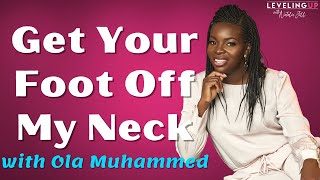
Ola Muhammed, an architect and author, talks with Natalie Jill about surviving abuse and racism, and how she built belief in herself despite a brutal upbringing. She discusses what it took to move past the weight of other people's limits.
Hi, I'm Natalie Jill, fat loss expert turned high performance coach. When odds are stacked against us, how do we shift and create everything from nothing?
How do we level up when we.
Aren'T feeling it yet or we've had a big setback? On this podcast, I'll be talking to some of the most inspiring and courageous men and women on this planet who at their worst learned how to achieve success greater than they ever dreamed possible. Leveling up and creating everything from nothing.
Ola Muhammad. Her life was set up for anything other than success. Her father died two months before she was born, forcing her young mother to move back to Nigeria. And then because of a skin condition, she was forced to leave her mom and Nigeria as a young girl to go live with an aunt she never met. She endured abuse, neglect, racism within her own race nonetheless, and had absolutely no support or love in her life, in her environment. But Ola, she had a gift. The gift of belief. She believed that she was worthy, she believed that her mom loved her, she believed in something better for herself and she believed her dad was somehow looking out for her. This belief, it served her well and it helped her to block out the noise of any negativity and naysayers. Like when she was told that her dream of becoming an architect was not suited for black women. Or like when people tried to step on her neck. On the way up the success ladder, Ola took the disbelief from others as a challenge and became a highly successful architect. Living in the most affluent neighborhood of Illinois, Ola learned that what holds people back the most from achieving their dreams is not racism, but self hate. Today, Ola is the founder and creative director of a design company and has worked with some major celebrities. NBA superstar player LeBron James, recording music artist J. Cole, Lewis Carr and David Tutera. She also travels the world inspiring women of color to stand tall and walk with integrity. Her book get yout Foot Off My Neck is an eye opening memoir exposing the disheartening discovery that bias and racism not only comes from the outside, but but from within her own race. Join in today and learn exactly how Ola Muhammad leveled up and created everything from nothing.
Today. I'm so excited to talk to Ola Muhammad. Thank you so much for being here. She just author of get your foot off your neck. Thanks for being here today Ola. I'm so excited to dive in and talk with you today.
Thank you. I'm excited too.
We were chatting a little bit before I pressed record and she brought up that first friends, people that follow her, fans, people that just people in her scope, they think, oh, you're so successful, you must have always been this. They just assume that. And what did you just say to that? Ola?
No, absolutely not. I think that, you know, when you go through the things that I went through, I'm sure everybody goes through something in their life, it becomes a catalyst, you know, to change changing, you know, or forming who you decide to be, you know. And I would say that the way I am now today has to stems from, you know, my upbringing, you know, how I was raised. I had talked to you a little bit about, you know, how it all started. You know, two months before I was born, my father died and he just, you know, he died in his sleep. He was. There was no, there was no accident. There was no. Isn't like something, you know, like crazy. It was some kind of unknown heart condition and that's what they expected, but they really don't know. But a 26 year old just died.
Oh, he was 26. Wow.
He was 26 years old. This was in the 70s. I'm a 1976 baby and my mom was 24 at the time. And you know, both of them came like most immigrants. They came to America to go to college. And the idea was just to go to college, get their education and head back to Nigeria and you know, you know, make some use of the, you know, their degree. But everything changed. What my life, my life could have probably been normal or ordinary like anybody else with a parent, you know, both parents in a household. But I see now like, you know, that probably is kind of like that catalyst. It just changed my whole life. You know, my, the way I view life and death, you know, the way my resilience to a lot of things, I think it stems from, you know, all the things that had to happen because my father passed away.
So tell me a little bit more about that because obviously as a baby you're not knowing the difference. Although I do believe you can feel mother stress and I'm sure in the womb that was, that was devastating for your mom.
Oh yeah.
What, what did you know about your dad as a kid? Like, did you understand that, that he had died? What, what were your earliest remembries of like a father?
Yeah, I honestly never really had a father. So when you've never experienced that, you don't know what you're missing. You know, you don't know. For me, my mom was my dad and my father and my mom like that, she's all I knew. So it's interesting, like Now I'm reading, you know, when I write this book and I realize how everything has affected me. You know, how not having a father figure has changed the way just everything, you know, just. But at the time when you're a kid, you don't know. You just living your life, you know. For me, that meant my mom ended up moving back to Nigeria because he, you know, he passed away and there was no family member. It was just him. That was her only family. And then in our culture, in the Nigerian culture, if you married to a Muslim person, you. They can have many men, can have many wives. So my mom married a guy and she became second wife in Nigeria. In Nigeria. Okay, she becomes a second wife. And, and he was not, he was not wonderful. You know, he never spoke to me, he didn't like me. Just a long story. And then I had the skin condition in Nigeria and I had to move back to New York.
So. So you go, how old were you when you moved to Nigeria?
I was five years old. This is 1981.
So you have a, I'm assuming a very clear memory of this happening and meeting this man and.
Mm.
And sensing that he's not accepting you or he's not.
Yeah, yeah. Cause I wasn't his own, you know, I wasn't his own. So. But typically you can live and when you're married. This is my mom's story. That's my mom's story. But you know, he would come over and visit her, you know, and he just never, I don't ever recall a conversation like, I never ever recall him actually, you know, just saying, hi, how are you doing, you know, or taking, he never took me out anywhere. There was no father, daughter relationship whatsoever. He just came and he left and that's all I remember. But the good news is, you know, I ended up having siblings from, from the results of that. So that's one good, good thing that came out of it is that, you know, I have a brother and a sister.
So Ola, what were you, what did you form about yourself? And I'm asking these questions because this is really important because you're, you're such a success now and I really want to dive into like what, what made that. How, what beliefs? I'm thinking, I'm just thinking of a five year old little girl who's being basically ignored by this man. You're not really understanding. It's not giving a good example for marriage or family structure even. What did you start believing about yourself or men or fathers in general?
I didn't Think anything because, you know, you're a five year old. What do you think? You know, I don't. I just don't have any feelings towards that. All I know is that my mom loves me. My mom is, you know, she's my everything. She's almost like a demigod. And so, in fact, when I start going through all these different things, living with different people, what helps me through and kind of gets me through, it's just that one constant thing that I know for sure. My mom loves me.
That's amazing. Yeah. So what was this skin condition that you said you developed and how. And then you went to New York? Were you separated from your mom when that was happening?
Oh, yeah. So back then, you know, we didn't have anything such thing as latex allergies.
Okay.
So I didn't know. I just knew. You figure out you had. You're allergic to rubber. You know, like, allergic to rubber. Whenever I put something on my skin and then I formed eczema and it was really bad. And in Nigeria, it's super hot and humid. It just wasn't, you know, conducive to my skin conditions. But my mom would notice that anytime we would visit, come back to the US and visit, it would clear. And so she was like, you know what? This is not working out. You know, I'm gonna have you live with my sister in New York.
And did you have any relationship with this sister in New York, your aunt before my aunt?
No, no, I did not whatsoever. I just knew that that was her, you know, blood sister, you know, same parents. And so at the age of 12 years old, I moved back to New York and moved back to the United States.
I just got chills.
Old.
I'm thinking, my daughter is 12, and I'm thinking of like sending her on a plane, basically.
Yes, yes.
Somebody that she doesn't even know.
Mm. Oh, yeah. And it just. Once again, you don't realize the kind of shitty circumstances. Circumstances you're living in until you. Until you put things in writing. It's when you put things in writing and then that kind of review, everything, that's when I realized, like, oh, my God, this was not a good. This was not good. This is not good.
Yeah, but you were handling what life dealt you. It sounds.
Yeah, yeah, Pretty much. You know, pretty much. And so I moved to New York and I'm living with her sister. Unfortunately, you know, her husband is a cheater. He's abusive. He's physically abusive. He is emotionally abusive. Now I go into this, you know, from being with my mom into this just, just terrible like abusive type of situation. And that is actually my kind of like my reference of husband and wife. This is what I think is normal.
So abusive to you, abusive to each other. What was, where was.
He was not abusive to me. He was not abusive to me, he was abusive to her. And I thought that was normal. And so now when I end up, you know, when I start dating, when I have a boyfriend and he's abusive, I don't. It doesn't register as abuse. It took for him to physically hurt me like I saw. For me to realize, oh my God, this is abuse.
Wow. Because it became your normal. Were you when this was happening when you're. I'm just in the mindset of your 12 year old girl, you know, watching all this. Were you still talking to your mom daily? Was she still giving you guidance and.
Love or what was it? You know, that time was different and I'm sure you, you can relate, you know. Well for, you know, we didn't. My mom is all the way in Nigeria. This is the time when people still write letters. When you receive letters. Okay. You can't, you don't easily, you can't easily have access to phone in Nigeria. She, the phone was landlords, her landlord's home. So there has to be a synergy that happens where I'm trying to dial in call Nigeria to talk to her. And there's so much I can say because hey, you know, the adults are there. So I can't really talk to her and say this is going on, mom. You know, I, when I was seen abused and everything, my aunt had three kids and I would be really protective of them and we would go into the room when he is, you know, beating on her, on her and I would just brace them because I was the oldest of my cousins. My cousins are kind of like my siblings because I lived with them during the formative years, you know. Yeah. So that was going on, you know when.
Yeah, this, I'm trying to imagine all of this and what you're, what you're processing, going through that and, and then I'm going to assume adding on to that you are a woman of color and you're Muslim.
So I'm assuming I'm not Muslim.
You're not Muslim. Oh, I thought you said that that was where you were. Okay.
Yeah. My, it's really interesting. My life and this is totally normal in a Nigerian society. I'm a resort. I'm a product of an interfaith relationship. My father Was Muslim, everybody. My father side with my mom, Christian. And this normal, you know, have that common denominator that we, you know, the belief in God. And it's no big deal as it is as people perceive things here in the States.
Okay, got it, got it. So when you're. You're in New York and you're in. Are you in the regular school system when this is all happening and what did you have? Friends and a support system?
It was crazy. And this was the shocker for me, and this is what I talk about extensively in the book, is that, you know, I expected, you know, I was still young at that time, but, you know, as you grow up here in the United States, you. You understand this racism, there's sexism, there's all of this stuff going on, especially me ending up being an architect, you know, which is a predominantly white male industry. But my, the disheartening part of the whole thing is that racism actually came from the home. That was the shocker, you know, like I expected from another race because, you know, they. They don't know. You know, they're not familiar with my. My kind. But what I didn't expect it from is from, you know, is just negativity towards my. From coming from my own people. When I say my own people, just, you know, the treat. My aunt, who was, you know, super mean to me, she. Because she was being abused, she was unhappy. So we got the brunt of her unhappiness, you know, my cousins and I. She was super physically abusive with us because she. Because her husband was, you know, abusive towards her and she was unhappy. And if she's unhappy, nobody is going to be happy, you know. So that was what we were going on, you know, in the home, you're not feeling safe. Can you just imagine that?
No.
And then just stepping out also and going into, you know, one of the worst schools, you know, in New York, in Brooklyn at the time. And the black, you know, kids, you know, were not as nice as, you know, even like the Italian kids or the, you know, Puerto Rican kids. The black kids would make fun of me and tease me, you know, about Africa. Like, you know, you must live in trees or, you know. Really?
Really?
Oh, yeah, you. You smell or, you know, you do monkey things. And they were actually more malicious than the people who are, you know, not, you know, that's very interesting.
And was that because you were from Nigeria? So they looked at something interesting.
Yeah, yeah. Because when you think about it back then, and they still do that, but not as much anymore. When you look at. It's what they see, it's what they perceive. What, what you see on the tv, what you see on the TV about Africa. Africa was thought of this third world country, which is actually a continent, by the way, you know, but. And so, and you would see like these kids on, you know, these infomercials where they're like flies on their mouth and they're, you know, you know, they looked diseased or something. That was their perception of Africa, where I came from. And so even though during the 80s, this is the time when coming to America came out, you know, when, you know for the first time, you're seeing Africa as this very rich and vibrant place, the black kids, you know, who were being ignorant, honestly, they didn't know any better. You know, it's whatever they saw on tv, you know, and so they were thinking, you know, you must be lower class, you are even lower. And I'm the same color, you know, I'm the same color as you. But still I was receiving bad treatment from that. So that part was very disheartening to me. It was shocking. I didn't expect that from my own race. And then you also come into the home and then you're still going, you know, getting abused or, you know, dealing with all of that. So there was just no happiness inside and outside of the home. Yeah.
So I'm picturing all of this as a little girl and I'm sure there's so many others that have experienced a similar, you know, upbringing.
Yeah. What.
But what I want to know from that, because you really rose from that. You really rose from that. And I want to get into, before we get into what you've created, what were you thinking as that little girl? Did you have a vision and a hope for more? Did you think this was all there was to life? Like, what do you remember daydreaming? Like? I think when I was a little girl, I had a very clear vision of what I wanted to be when I grew up. Like, did you have that or what were you thinking?
You know, when I was in Nigeria with my mom, I distinctively remember when I decided to go into architecture. It was something my mom had told me. I was telling her because I used to love to draw. I mean, I think everybody is born with their own, you know, talents, their own God given gifts. And definitely, for sure my creativity comes from. It's just God given for sure. It just comes naturally for me. And I remember because we had, prior to moving to Nigeria, I went from Chicago to Florida and we, I remember, you know, my mom always taking me to Sea World and Disney World. And I thought, you know what? Now that we were in Nigeria at the time, I'm going to be a cartoonist. I am going to, you know, go back to Florida where I remember because that's where all I remember as a child. And I'm, you know, I'm going to work for Disney. And my mom just kind of, you know, smiled and she took me to her old encyclopedias, you know, remember the encyclopedias? She had all of that and she brought out, you know, the Alphabet A and she turned a page to architecture and she says, you know, why don't you be an architect, you know, cartoonist? You're not, you know, she just felt like that wasn't something that would bring forth, you know, if I'm a designer, a creative, and she knew I was a creative, you know, why don't you go into architecture where you can make money? I mean, I'm sure she wasn't really thinking at the time that this is a predominantly male dominated industry. She was just thinking, I'm going to have you go into something where it's going to, you know, it's going to be profitable for you or you're going to be able to be financially, you know, independent. And so at the age of nine, I decided I was going to be an architect. And I never swayed from that. So when I moved to New York, always, always, always I was going to be an architect. And that was my goal. I was always going to be in that creative realm. When I was going through all of that, I remember one time when I was being punished for something I didn't do. And for the first time I realized, I remember crying. Usually I just kind of just take it and strike, you know, but this time I was just thinking, wow, if my father was alive, I'm sure I want to deal with this, you know, I'm sure I would not be going through this life. You know, this is too much suffrage. This is. I didn't even do anything wrong. Why am I here? Why? But I think I just, I think there are two kinds of people there. There's that one person, you know, people that they'll crumble and they'll fall apart when they're going through, you know, just a bunch of, you know, trials and tribulations. I wasn't that child. I was one of those child. And I think that it could be, it could have stemmed from, you know, just, just feeling what my mom went through and she just instilled maybe it came from the spirit of my father that I'm going to finish what he wasn't able to complete at such a young age, you know, So I think I had that innate thing that I am going to do all the things that my father never got to do.
What a gift. It's almost like this blind faith you had, which. It sounds amazing. It's a gift that you knew how much your mom loved you. And it was a gift that you could. Could create this avatar or this belief about your dad in a way that I'm imagining is what lets you sleep at night or lets you progress through.
Yeah, yeah. You know, I knew it wasn't going to be like this forever. It can't be. It can't be. You know, and like I said, when I was going through all of this stuff, I always had in the forefront of my mind that, you know, I know there's one person out there who loves me. I know there's one person that loves me. And so that. That actually helped directed me, even though she wasn't there all the time, you know, only. Even though I only saw her twice a year. She used to work for Eastern Airlines. Remember Eastern Airlines? I don't know. Yeah. Back in the 80s in Florida. And then when she moved to Nigeria, she started working for Nigerian Airways, and she worked there for about 20 something years. So every holiday, I was always back home in Nigeria to see my mom and my siblings. So, you know, that kind of helped me through that. Was always something to look forward to, that during the holidays, I'm gonna go right back home to my, you know, safe, you know, safe zone, you know.
Yeah.
So that's what I did.
So how did you. You had this vision. You had this idea. How did you create that for architecture? Like, how did you. Did you go to college? Did you. How did you. And did you have a support system around you to get yourself to that?
You know? I did not have a support system. You know, things were getting pretty bad in New York, and I called my mom. You know, one of those times is just trying to escape scheduled time to figure out how to talk to her. And I think she could hear it in my voice that I was at the verge of having some kind of nervous breakdown.
And how old were you at this time?
I was around 13, 14, I think I was probably 14. Okay. And so she talks to my stepfather's cousin who lived in Chesapeake, Virginia, and so. And tells him, you know, can you take care of her? You know, she just needs. She just has Two more years to, you know, finish high school. Can you. Can you take care of her? And so he agreed. And so I moved to Virginia, and I landed myself in Virginia. I remember distinctively, my aunt didn't want me to go because I was kind of like her free babysitter, you know, taking care of her three kids, you know, even though she was so abusive, you know, towards me. Not her, not her husband. It was her. And I said, yeah, I want to go to Virginia, thinking it's going to be great. But guess what? It's better to be with the devil, you know, than the devil, you don't know. When I moved to Virginia, what I thought would be better ended up being, like, a whole lot worse, you know? Yeah. So we left New York, moved to Virginia to be with this uncle, who he was. He was. I don't even know. Stingy is not the word. Stingy is like, we couldn't even. If you. If you peed, you can't flush the toilet, you know, he was conserving water. Yes, Conserving water. You had to do the number two before for her, you know, and he would have, you know, food in the house that was expired, and we had to eat it. You know, we had to eat it. His kids and his African American wife, you know, he was Nigerian, and he had married an African American wife. You know, whenever she knew that he was going to cook one of his, you know, majoring in food or whatever, conveniently, she would take her kids out, you know, to go eat, and they will come back and say, oh, we're not hungry. We've already ate out. You know, And I would be stuck with having to eat the canned food that was expired. But that was the life, you know, I had built up a lot of resilience from the schools, you know, the school that I went to in New York. So when I moved to Virginia, the school system was a predominantly white school. And there was a whole lot. It was kind of better now. I was this girl from New York. I was this tough girl from Brooklyn. And so nobody would mess with me because they just felt like I was mean, which I wasn't. I know I had a mean face, a mean mug on, just to. Because I had gotten used to that protective face when I lived in New York. But I wasn't mean at all. It was just my, you know, protection. Yeah. But my. My uncle was just terrible. I think that he, in his mind, felt that whatever he dished out couldn't be as bad as what I dealt with in New York. I just. I think that he looked at me as damaged goods, you know, because I was coming from Brooklyn. And so he would always find ways to put me down. You know, he would always find ways to, you know, he would say things like if I would say something, he would say, that's the dumbest thing I've ever heard in front of his kids. And to somebody who was 14, 15, you know, your self esteem can be crushed. I didn't understand why he would, you know, talk to me, talk in that way. And he, you know, he would accuse me of things that I wasn't, you know, I didn't do. He just thought I was a bad kid because I was coming from New York. And so his treatment towards me was. Was really negative. It was really bad. And once again, I just kept thinking, my mom, you know, my mom and I just. Actually, he would, you know, he was this father who would have his kids go through, you know, they were in all types of activities. He was a father for, I mean, a soccer. A soccer dad, you know, for his son. And his daughter was taking ballet. But the funny thing, you know, this is, you know, this goes back to my title about get your foot, you know, off my neck is karma is a bitch. You know, what goes around comes around. And he thought I wouldn't graduate. He was surprised when I made honor roll. You know, I was a smart kid, but I was just in a really bad, you know, bad situation. And, you know, when I stepped out, it was really weird how things changed. The kids that he thought would be better than me, you know, I ended, you know, his kids ended up being the way he thought I would end up being, you know, as the end result because his. His son ended up going to jail for, you know, I think, selling drugs or dealing something that he's still struggling till today to make ends meet. His daughter married out of wedlock and to some deadbeat, you know, whatever. So now he. She becomes a stereotypical, you know, baby mama, you know, and just. I don't even know if she finished college. At one point, you know, he talked to my mom, asking my mom to have me talk to them to try to get them on the right.
Wow.
And it's interesting. Like, you know, that's weird. You would always. Yeah. So condescending towards me when I lived with you. There was a point when he actually said he was gonna send me out because the money that I was receiving from my dead father, you know, the Social Security money I was receiving stopped coming. And so he was like, you Know, I don't, I can't take care of you anymore. And all the things like this, just a little things to just take care of myself, like getting my hair done, you know, just buying things that I needed. I couldn't do any of that because there was no money coming in. And he told my mom, you know, she has to go, you know. And then my mom came, had to fly there. At this time my mom was doing really well. She was no longer with my stepfather. So she came over to figure out what was going on. It was like, look, there's only a few months for her to graduate. You know, what's going on. At one point, at the age of 6, 16, I think was 15 or 15 or 16, she was actually considering, you know, hey, I could give you some money so that you can live on your own. Can you imagine a 15, 16 year old living on her own? You know. But that's how bad things got, you know, just to get through. But you know, I managed to get through.
So. Ola, I'm so impressed with your perseverance and your, your attitude and your mindset. Like I'm trying to dig into that because I want, I want more of that for people. Because you had everything thrown against you, setting you up to fail. Like literally everything. You know, the support system, you didn't have the love in a lot of ways. How did you keep yourself right and rise from that? Because there's a lot of people that go a very different direction from that situation.
Yeah, yeah. You know, I know I've, you know, I keep saying it over again, but honestly I think that, but you know, I wonder if it's because my father passed away. You know, I wonder if that sort of passed through in some kind of spiritual way. I just feel like I've just. The resilience is inbuilt. Like I said, there's, I think there's two kinds of people. You could be that person who cave in and you can either result to drugs, you can result to, you know, some negativity, you can go commit suicide, you can have a nervous breakdown. Like there's so many things. I think I was just really lucky, you know, I think I was really lucky and I think that, you know, just focusing on something positive. And for me the only positive thing was my mom.
So what's, what's coming up for me right now is I believe you said it was luck. I believe it was more than that. I believe it was a belief that you're worthy. That's what I'm hearing like you believed that your mom believed that in you. You believe that your dad knew that of you. And I believe that inner knowing and belief that you are worthy is what I'm picking up on. That probably carried you through.
Yeah, you know, I think you're right. I think you're probably right because when you read my book, it is a self help, you know, book to encourage, you know, women, you know, other women of, you know, creative women like myself. I want them to know that, you know, you can thrive with integrity. You can actually walk and strut with integrity. You don't have to be ruthless, you don't have to be mean. You don't need to step on next. You know, I went through a lot of adversaries throughout my life, but just things steadfast, you know, I like to. I think the best analogy is, you know, the story of the tortoise and the air and the hare. Which one?
Like about the race.
The race? Yeah, the race. And you would think, oh, yeah, for sure the rabbit is going to win because he's faster than a turtle. But that's the way, that's the way I move in life. That is the way my perspective in life. I want to be the turtle, I am the tortoise. I'm the one who just, I might move slow, but I believe that through those, that slowness, I am going through experiences that is teaching me to be better. Yeah, I'm going through obstacles and it's, there are teachable moments. I talk about that in the book, you know, all the little teachable moments and how, you know, karma comes around. What goes wrong. Just as this road, just as this world, this earth rotates, what goes around comes around. I believe that for me, my success was a slow burn. Okay. And I think that people need to feel like people especially now, the millennials and, you know, they just feel like instant gratification. Everything needs to be fast. Everything needs to be, you know, success needs to be right now. Right now. No, no, it doesn't have to be. You don't have to step on anyone's neck. You don't have to be ruthless. You don't, don't be impatient. If you are, you know, if you don't allow yourself to actually go through mistakes or go through all these trials, you won't know how to handle adversary when it comes. You won't know. The only way you're gonna know is to actually go through it. Yeah. So if you're thinking, I'm gonna be the hair and I just want to, you know, I'm gonna win. I'm gonna get ahead. Guess what? We all know how the story ends. Yeah. Yeah, we know how the story ends, Ola.
So you became an architect. And you didn't just become a normal architect, you became a very successful architect.
Did you.
When did you know you had made it? And then I want to know, like, how did you evolve it from there? Like, what made you leave that and create what you've done now?
Oh, gosh. So like I said, you know, my mom told me at nine years old, you know, you're going to be an architect. And so that was always what I was, you know, you know, focused on doing. And at the age of 18, you know, I. Well, actually not 18. At 16 is when I graduated. I. Because I was coming from Nigeria, the educational system is a little bit more, you know, higher. So they skipped me a grade. So as opposed to going to, like, the seventh grade, I went straight to the eighth grade. So I was, you know, I ended up graduating at 8, at 16, as opposed to, you know, I think most kids graduate like 17 or 18 from high school. You know, I was able to get out a little earlier. Even I got a head start. And so when I went, you know, I went to a private year university called New York Institute of Technology in New York, you know, I went back to New York after graduating in Chesapeake, Virginia, and that's when I realized that I am in a predominantly white male industry. I didn't realize, you know, I was like, I'm going to do architecture. I'm going to do architecture. But I didn't realize that now I'm going to be faced with a different kind of adversary. It's no longer abuse from the house or abuse from, you know, other people of my race. Now I'm dealing with, you know, white people who I think is telling me, oh, you're not going to. You should change your major. You should change your major. Why are you in this field? I actually had a professor tell me that he was gonna flunk me, that I should withdraw.
Wow.
Yeah.
Wow.
Yeah. Just Jewish guy, you know, I don't anymore, but I remember that he. I knew he was Jewish because he always had the cap on, you know, and he can, you know, professor. And he told me, me, I'm gonna. I'm flunk you. You should change your major.
But did he give you a reason why or. It was just his opinion.
It was just his opinion. And, you know, nowadays, I'm sure, like, you know, the kids, you know, younger, these. This Generation, I think they can fight and, you know, you can get media attention for that. But, you know, back then, you know, in the early 90s, late 80s or whatever, you know, that's not happening. You know, they have more power at that time. And so I would actually appreciate that they were forthcoming. I actually like it when people are forthcomin their bias, you know, as opposed to, you know, hiding it and catching me off guard. And I'm not realizing. I'm thinking they're for me, but I realized that they're against me. So if you don't like me, be straightforward. I appreciate that. You know, I know not to get it. So I withdraw the class, you know, knowing that he was going to flunk me. I'd rather get a W than get an F. But all he did was just. Just lit that fire. You know, I'm just one of those people that when you say no to me, that is just ammunition to.
Yeah, I think you have an actual gift that I think people take years to undo, that you have a gift that you don't need to like. I think a lot of people, and I know because I work with so many of them, they grow up with these beliefs that they're not good enough that they can't achieve. Like, they take on what their parents or the professor says and they believe it. You, it's like you don't hear it. You have this strong faith and belief that you're worthy. And you. You've stuck to what your mom's belief in you was, what you believe for yourself, what you believe your dad would have believed for you. And I believe that that served you really well. And it's amazing because it's like the example of rubber and glue. You know, it's like you're the rubber, and whatever people say, it's just going to bounce off of you. And that's a gift. And I think you're. You're very blessed to have that. I think that's probably what has served you so well in what you've created.
You know, you actually tap into a different, like a different, you know, thought here about. I have thoughts about that, but probably another long conversation, but I think that you will find this type of feeling, this type of way of thinking a lot with a lot of Nigerians, a lot of Africans, more so than African Americans. And I think that a lot of the African Americans resent that because they see that confidence in, you know, Nigerians, you know, education that we, the way we. We grew up, because we didn't deal with racism. You know, of course, every place, everywhere you go to, there's some issue. Everywhere you go, everywhere, this, there is tribalism going on, you know, in Nigeria, where, you know, one part of Nigeria, they are biased towards the other, you know, but that's a different thing over here in the United States. It's a white and black thing. Right? And so, you know, I didn't come back even at the age of 12. I came with that confidence, with that, like, I'm going to do it because this is what my mom said I should do. This is where I come from. This is what we do. But unfortunately for the African Americans that are here in the United States, this stems from slavery. Right. Where they're told from generation to generation to put their head down, to not speak up, to not have this type of, of confidence within themselves, like, I'm still going to make it. And so when they see me and I have this attitude, some of them, not all of them, but some of them kind of look at me like, oh, you think you're better than us? You know, you think you're better than us? And so now there's distressed amongst my own kind. But we are the same. Yes, we are the same. But they don't look at it that way because, yeah, no, they have been oppressed, you know, and unfortunately, from generation to generations, you have your mom teach your, your grandparents teach your mom and your mom teaches you, and it just kind of goes on and on and on. It's this systematic way of thinking that doesn't help them to thrive and kind of break loose to, to feel empowered and for them to actually know, you know, you guys are, you are, you are powerful, you do have a voice, you can make it, you can be successful, you know, and when they see that, some get intimidated, you know, by that, and it's unfortunate. So that's a different subject. But you've tapped on to that. I'm glad you sort of. You could catch that. Is because. It's because of where I'm from, you know, where I'm coming from, that mentality. This is, this is across the board. You'll find that with a lot of Nigerians.
Yeah, well, I do. I bring this up because I've done so many interviews and work with so many people on transformations in life, and I believe that that component, that upgraded mindset, that belief that you can. When is that critical difference? Because habits change, results. Absolutely. But if you don't believe that you can achieve something, it's like there's no hope. There so what I've tapped into with every interview I've done is that underlying belief. And I've become fascinated with figuring out, like, where are people getting that belief? Because you had the gift from your mom and your belief around your dad. But, you know, if you didn't have that, like, I believe you would have found it somewhere because you figured that out.
Absolutely. Absolutely. So, you know, this, you know, that feeling is what helped me get through architecture. When, you know, the professors would say, no, I remember, you know, making models with, you know, I would build models that would be at a wood shop just like the rest of the guys would be, you know, and I would build, you know, these beautiful models for the art projects, and I would take it to the design studio. And I know that I was, you know, what I did was super dope, right. I knew that it was, like, really great because not only do I love what I did, and I feel really proud of it, but, you know, the other classmates who are white male, you know, would be like, wow, this is. They can't believe this young black girl. Because I was young. This young black girl can actually put this together. But then the professor would. When they would talk about it, it would be a completely different, you know, attitude, and I wouldn't understand. I didn't understand. And I. I couldn't not believe them because when it comes to design, it's. It tends to be subjective. Right. It's not like a math where you can, you know, it's either you get it wrong or right because you get the formula right or wrong. You know, it's just not math. This is design. So in design, it could be subjective. They can always find every reason to say, this is not going to work for whatever reason, you know, But I just, you know, I made it through. And then finally, and I would say one thing. This is one thing I think that entrepreneurs should definitely hear is I figured out early on to make myself indispensable, like, making sure. I think that that's what it is. I learned a skill set that most people at that time couldn't figure out.
Yeah.
And it was because of this architect that I worked for, who was also Nigerian, and his name was Fred. And Fred had told me because he looked at me and he knew, though he could see the fire in me. And he was telling me that, you know, you're gonna go through a lot of, you know, obstacles because not only are you black, but you're a girl. And this is when I was 18 or 19. I was 19. I was 19. And he told me, and he, he says, what you need to do is you need to learn AutoCAD. You know, and AutoCAD back in the AutoCAD came in 1982, but it became such a demand in the 90s, in the early 90s, like in order to build any building now AutoCAD was it, you didn't. And unfortunately you have all these older white men who had their T squares and their drafting tables and they were so used to that. And you know how it is when there's a change in technology totally for people to change and kind of they complain and complain. It's just like when something changes on Facebook, right. You get so frustrated, like, oh my God, Harriet, you know, what is Facebook? And, but then you get used to it after a while, you know.
Right.
And so he told me, you learn it so well. You learn it so well that it's you that you will be on denied like Raymond by. Yeah. And so I took it, I took his words like religiously and I self taught myself AutoCAD. And so at the age of like 20 or 21, when all of my other, you know, classmates were working at McDonald's or working at, you know, as a, you know, a cashier somewhere at Gap or whatever, I was working for General Mother because I had a skill set that these old, you know what they call them, old boy club, you know, the golden boys, you know, they didn't, they were sort of either retiring, they knew they had no choice but to hire people who knew it. So at that point it didn't matter that was black or a woman. They had, they needed somebody who knew that skill set because it was such, it was so necessary in architecture. And so that just opened up the world for me. Now working for General Motors, now I worked for Starbucks designing their coffee shops internationally.
Incredible.
Yeah, I worked with Sears. Like I just had this experience, you know, I had, it was working and it's, there's. Nobody could touch me.
And did you believe at that time, did you feel like I've made it, I'm successful, or did you still feel you had something to prove or another step to take?
You know, I think that because, you know, I am here in the United States and because I was in a field that was predominantly male, that feeling would always be there, that I always find myself having to work or prove myself three times the amount as opposed to just one time, you know, so that would always be continuous. That's just inevitable. It's just inevitable. Okay. But I always made sure that Wherever I went, I placed myself in a position where no one could touch me, you know, and if. Yeah, so if I was gonna leave, it would be on my terms, you know, you're not gonna fire me. I would actually quit. And that's actually what happened. You know, I think I finally got to the point where it just became exhausting, and I just really. You know, I think you get older, you get in. I'm now in my 30s. I, you know, had my third child, you know, at this point, and now I am. You're more confident in yourself. You know exactly who you are, or at least you get, in a sense. You're kind of becoming, right? Kind of just becoming. And so I'm like, you know what? When I look at my whole entire life, I have always been that type of person who. I just couldn't be somebody who. I would have someone be the boss of me. I had to be my own boss. And you could tell that I write about this in a book, even from, you know, the. These three girls who were picking on me when I was in Brooklyn. And I, you know, it didn't matter that it was three against one. I still had to say something. I was just one of those kids, you know, that I had to still defend myself even if, you know, when I. Even if I was outnumbered, you know, even if I was outnumbered, even if I was the only black person, even I was the only woman, you know, I was just. I just had that thing in me, you know, and so I just. I just. Just decided that, you know what? I'm gonna just do my own thing. I'm gonna do my own thing, and I have the talents. I had it, you know, I was doing invitations on the side while working as an architect. And I started. I started my brand, started getting bigger, you know, IJo Ray Ray started getting bigger. That's the name of my company. IJo Rere started getting bigger and bigger and bigger. I was, you know, getting a lot of notary. I was now, like, featured in. On NBC, you know, Entrepreneur magazine. And I'm like, wow, you know, I can really make money off of this. I can actually stand on my two feet just doing this. I don't need to work for corporate. I love that anymore. And so in May of 2013, a year after I had my son, you know, I took that leap of faith, and I transitioned from the architectural world into the wedding and events events industry.
And she. And you're back to being what you wanted as a little girl. That creator, that person that it's Interesting. I love it. You did the architecture path and you took what you love and what you always had inside of you and expanded it. It's so creative.
Yeah, absolutely.
That's so amazing.
Yeah. And I've been doing this now, a full fledged entrepreneur since like almost like since 2013. So how many years is that now? Six.
Amazing.
Going on seven years.
Yeah, amazing. Tell us about get your foot off your neck and what inspired you to write that?
Oh, gosh, I don't know. I don't know if I'm gonna write another book again, but that's what we always say.
I said it after my first.
Really?
And then I wrote another one.
Oh, my gosh. Yeah. You know, I think I probably will write a novel, but, man, I had no idea.
You don't know what you don't know.
You don't know. You don't know. All that took to get you to write a book. I had no clue. But it was. I would tell you, it's been really therapeutical and it just made me evaluate everything in life and just have more clarity about, you know, why I am the way I am and why I think the way I think, you know, and so it is. Get your foot off my neck. I think just the title itself is powerful and it makes it. It's pretty clear what this, what this book is going to be about. And it's just about this resilient girl who became this woman here that prevailed. Regardless of bias, regardless of betrayal, regardless of, you know, eternalized racism, you know, self hate, I still prevailed anyway. And the core message that I am trying to drive is that once again, you don't need to be ruthless in order to thrive. You don't have to be, you know, you can be that tortoise, you can still do things with integrity and you will still win anyway. And, you know, yeah, you know, and the truth is stepping on next, you know, it has consequences. You have to be really careful of the people you're stepping on the next because you're trying to get ahead. You know, you on this race, you think that this is what you need to do. It has consequences. And you. I write my book and, you know, I think what makes my book different from the rest is that, you know, I'm talking from a Nigerian American perspective. There's not a lot of Nigerian American authors out there. You know, I'm not just a black, you know, woman author, you know, I am a Nigerian. And I want to talk about, you know, the cultural clashes between my own people. You know, I Want them to understand that we are all one.
Yes.
You know, I, so I talk about that and I just want them to, to, to learn from, you know, from my mistakes so that they don't make those same mistakes as well, you know.
So Ola, there's, you know, I've done a lot of interviews and I, there's commonalities I see with people that persevere and I just wanted to acknowledge you because the things that really come out loud and clear for me and I don't know if anyone's shared these with you, but I mentioned one of them. But the five things that are really standing out to me of what why you're a success and why you've overcome and become so phenomenal. I mean you've always been phenomenal. But one is your belief in self that maybe stem from your dad and your mom, but you disbelief in yourself, a deep sense of gratitude. It's literally like every single thing you mentioned that happened to you, you've turned it into how it happened for you. And your gratitude around that, your patience and then you have an all around faith and knowing that things will work out and that goes back to that belief. Yeah, very authentic. So I just want to acknowledge you for that.
Oh my gosh. Thank you.
Those five things are really shining through. And anyone listening that's like, what's the formula for success? I mean those are the five things really coming up loud and clear for me around you.
Thank you. Thank you so much. You know, I had a friend of mine who I was talking to and I was telling, you know, her that, you know, I'm writing this book, I really want to empower other women like myself. And she says, you know Ola, I've always admired you, you are a thought leader. And I was shocked. I couldn't believe that someone would think of me in that light, you know. And I had to think about that for a second and you know, I didn't, you know, it makes you feel good, you know, when someone says that. But I felt this huge amount of responsibility that, you know, if someone is looking at me this way, I'm sure there are other people who are looking at me the same way and I need to follow suit. I need to, you know, I need to walk that walk. I need to continue, you know, I don't want to drop the ball. I don't want to disappoint people who look at me and think I'm a thought leader. You know, I want to continue to empower other women. You know, I Want to. I want them to walk with an integrity, you know, I want them to. I want to be able to help, you know, other women and just, you know, just kind of empower them. I want to inspire and empower women.
And I believe that you are. I believe that you are.
Thank you.
I do have a final question before I ask you where people can find you. If someone's listening right now and they're in their own personal rock bottom or hardship, so maybe they're in that abusive relationship or they're feeling like they don't have, you know, they're not safe at home, or they're not supported in any way. If you were to give them any piece of advice on what they could do to start shifting out of that and creating everything for nothing, what would you tell them?
You know, when you're a kid, you don't know what to do. You know, you're sort of like at the mer mercy of, you know, the grownups that are there. So there isn't much you can do but to just kind of like, you know, keep it, you know, pray about it. I think that I believe in the power of writing things down.
Okay.
You know, I believe that when you write things down, you manifest your. Your life plans, like what you desire, you know, like, it manifests itself when you write things down. So I would say for anybody who's dealing with them, if they're you young, you sort of at the mercy of the adults, you really can't do much, you know, but just stay steadfast in prayer, knowing that, you know, it's not gonna always be this way. Not. It cannot be always this way. There's, you know, just like, seasons, there's always gonna be a fall, a winter, spring, you know, summer, you know, that we go through seasons, you know, but an adult, you know, I think having a plan, right, Just and simply just writing it down. Everything that I've written down in my life has manifested itself. Yes. It's just I am such a believer of writing things down.
Do you write it down as if, like, I hope this will happen, or you do you write it down as if it already happened?
I write it down as I want it to happen. This is what I want. Yes. I'm designing it, you know, and I'm a designer, you know, I write it down. And I remember when I was wanted to, I opened a venue. I had a venue a couple of years back. And I remember three years prior, I had talked about it, and I wrote it down. I want to have this interchangeable space that I can convert and I can have events there. And three years later. So it's not like immediate. Right. But three years later I opened up a venue, a beautiful loft, 2,000 square feet. I designed it from floor to ceiling, everything from floor to ceiling. And I had it for four good years, you know. And I decided to let it go only because I realized I don't enjoy managing and dealing with logistics. Owning a space, I just love to design, you know, that's my strong suit. But writing things down, I think that's the one thing. And it's actually proven you can. They can Google it. There's all these stats, you know, about writing things down. You know, you're more, you know, shorted like at your make it happen.
That's amazing.
Yeah.
Where can people find you? Ola, obviously your book is called get your foot off your neck. So we all make sure we get her book. Where can we find the book?
Book is coming out on Amazon on my birthday, February 29th. Anna Leap year on Amazon. Get your foot off my neck. And you can find me on Instagram under olamorinmohamed, which is my full name. Or you can also follow me on get your foot off my neck. That's literally the title of my book. I have an Instagram page for that as well. And they can sign up so they can see all the updates about my book. I'm soon going to reveal the COVID and all the process that went into the designing of the COVID Of course.
You are.
So stressful. But yes, thank you so much. This was just so enjoyable. I really loved speaking with you today.
Thank you.
Yeah, thank you.
Thanks for leveling up with us today. Please share this episode if you found it helpful so others can join in. And don't forget to hit that subscribe so you don't miss out on future shows. And if you would leave me a five star review. I appreciate those so much. I read all of them and it's how I know that I'm giving you information that you find valuable and. And come interact with me over on Instagram @nataliejofit. I read all the direct messages and comments over there. Make it a great day. Creating everything from nothing.










