174: Shifting Into Your Purpose with Anthony Trucks
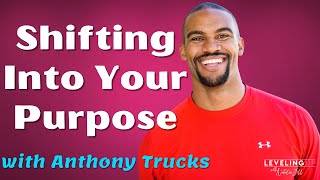
Anthony Trucks, a former NFL player and American Ninja Warrior contestant, talks about growing up in foster care and how he turned that pain into purpose. He and host Natalie Jill discuss identity, resilience, and what it takes to transform adversity into fuel for change.
Hi, I'm Natalie Jill, fat loss expert turned high performance coach. When odds are stacked against us, how do we shift and create everything from nothing? How do we level up when we aren't feeling it yet or we've had a big setback? On this podcast, I'll be talking to some of the most inspiring and courageous men and women on this planet who at their worst, learned how to achieve success greater than they ever dreamed possible. Leveling up and creating everything from nothing. At age 3, Anthony Trucks was given by his birth mom, the only mom he knew, to foster care. He was scared, confused, and forced into a very unfamiliar world at just the toddler age of three. Now, Anthony spent the majority of his life fighting to find out exactly who he is and what he's meant to do while he's here. Thanks to a super loving foster family that came into his life at age 6 and ultimately ended up adopting him later, he was able to pursue his passion, the NFL. Now, Anthony rocked football, but still battled and then overcame countless challenges to, as he says, make shift happen. Anthony went to be NBC's American Ninja Warrior. And now a serial entrepreneur with one serious superpower, the the power to know his identity and navigate life's shifts, good and bad, with grace and optimism. To make success his second nature. Today, Anthony has turned his pain into purpose and helped so many. Join in today and learn exactly how Anthony Trucks leveled up and created everything from nothing. Today I'm excited to talk to Anthony Trucks. Now, his claim to fame is sort of former NFL Ninja Warrior. He's got the resume of all the things, but what he does today is he helps people operate at their highest level to elevate their life, their business, all the things. And I was excited to dive in and talking today because I know Anthony, you were not born with a single silver spoon in your mouth. You weren't born with all of these things working for you. Tell us who you were and who you what you were coming from.
Yeah, I come from crazy, all crazy stories, right? There's always that background, and I wouldn't say mine's better or worse, but I grew up in foster care. My mom gave away at three to a system that was like really bad back in the day. It's called a paycheck system. So as long as I didn't die, people got a paycheck. So I'd be starved and tortured and beaten. Some really crazy things.
Do you remember that happening? I know at age three, you're so young, but do you remember what do you remember about That I remember the.
Day I was given away. I remember being in the house and being called from the front room, my mom, like handing my hand to this woman and getting in that car the very first time at three. I could tell you the layout of the house right now. Wow, super weird. And I was told because I did therapy, you know, when I was younger, as a kid, it was because it was just a very traumatic experience and it just got seared into the brain.
So all of it as that three year old, remembering back to that, like, did you, I mean, were you remembering being scared? Were you remember being questioning what was, what was going through your mind? Very scary back.
Very scary. Because you don't know what's going on. I mean, anytime you're unaware or unclear or something's odd, we get scared. Even as adults now, if it's like, if it's odd, like, am I safe? And so even as a kid, the only problem as a kid, you can't verbalize or communicate. You just, you can cry or you can yell, but you don't know. And so, and it's even worse is like the person you trust, your own mom, right? The only person is the one doing it. So like, who do you run to? And then you're placed with people who don't treat you well and you can't talk to them. It's a very, very weird sense of complete lack of stability or sense of security anywhere.
Gosh. So talk to me about that because I would imagine that could really put your life in a lot of different directions. I would imagine that what you go through in the foster care could set you up to really not be winning in life. Or it could set you up to view it as stuff that happened for you and in your case, you've really thrived. But tell me what that was like and how you didn't go down that spiral or maybe you did for some time.
Oh, I had my ups and downs. We're all human. You know what's interesting is that statistically, if you look at America, any prison in America, 75% of the inmates are former foster kids.
I didn't know that. 75%.
75% former foster kids. And they look at homeless population. 50% of the homeless population have spent time in foster care.
Wow.
Nuts. So statistically, I'm not supposed to be doing very well in life. And so thankfully, what it was, at six years old, I got put into a family, which is my family now. Unique thing is only a black person in an all white family. So I Have some weird identity issues. And if you ever notice, my identity has always been this one thing I've been navigating, which is really the base of work I do, which is people who don't quite yet grasp identity. So it's nothing I lead with, we'll call it. But operating what it is, our identity helps us operate. So fast forward, I go through a bunch of turmoil in this family. I was in the system still for another eight more years of not knowing where I was going to go to sleep at night, because you can always be picked up and taken to a new house, literally in the blink of an eye in the foster care system. So, 14, got adopted. I was in this new family and got a chance to play football, which was this thing that nobody else cared about as much as me, but it was the first chance I get to do something that I wanted to do, could never play before.
So wait, sit back a minute. You said at age 6, you got put into a family that's now your family that you recognize. Are those the ones that adopted you later?
Yes. Eight years later, fifth home. Yeah, they finally adopted me.
What was it about them? What was special about them that made them. It sounds like maybe they cared. What was the. What was the. What was the difference there?
You know, I had a mom who loved me like crazy. She loved me past the sense of logic, to be honest. And it wasn't like that I wanted to be there. It's just like I wanted to be there, and they wanted me there. Essentially, it was just a kind of a duality there. And so you're in this place where for the first time, like, I'm not. My first foster dad in that house. Used to beat me as a drunk. Used to beat my mom crazy. But eventually she remarried and, you know, had a different dad, and life got better. And so really what it was was we were really, really poor, like, legitimately. Like, I used to get clothes out of, you know, garbage bags that we got from Goodwill's donations that were sold.
Is that the first home at age three or the one.
No, this is the current home.
The current home.
Okay.
The age six. Got it.
Yeah. Yeah. Steven. Then, like, we didn't have much. I've grown up in weird poverty, like, all my life, and just in different houses, they get different variations of weird poverty. It's the odd part. Gave you a whole different perspective, though. But they loved me, man. That was the thing they loved. And when you.
Was that the first time you sensed that love? Is that the first time that you Knew that.
Yeah, really was. And it was scary. That's the scary part about it, which is the same for life of it now as all of us is. When you have something so good that you're not used to, you're afraid of it being taken or being removed. And so the better it got, it was almost worse in my head. The logic said, you don't want to get better because what if it goes, you're gonna lose all this even more amazing stuff. So I fought it for a while.
Wow. It's really. I think I'm definitely shocked that even hearing some of the statistics, I feel super naive that. And if I'm shocked about it, I think a lot of people probably are, that we don't know that about the foster care system and how that. Especially if it's. If you're saying 75% of inmates and 50% of homeless came from foster care, obviously it's a broken system.
Yeah, it's been broken for a lot of years. But there's. I mean, it's crazy because the source of it, like, where's the root? And really the root is like, better parents, what it is, but nobody. And even now that we'll take that away. It's like the system in of itself. It's like there's not enough good people. They need homes. There's group home. It's just. There's a lot of people doing some good things, but it's just. It's kind of like, you know, trying to empty the ocean with a cup.
So what was it that made this one family that was. That was loving and unique? What made them switch over from fostering to choosing to adopt? And were you unique in that, or did they do that with other children?
No, I think they had one foster kid before me. That's what I was told. And I think it was just something my mom wanted to do. She wanted to foster. And then I think there was a decision at some point prior to me being adopted that I would be adopted. But my biological mom was still in the picture and was not letting it happen. She's very weird. She's got some mental things going on. So she at one point used to blame them for why I was in foster care, even though they had no idea who I was years before, like she was.
So your biological mom, your birth mom had given you up in the foster care, but she was still in the picture. So you were still seeing her. So that must have been very confusing as a kid.
He was interesting. Says what's called parental rights Why I couldn't play sports. And she's supposed to come see me, but she never would come see me. So we had these visitations in town called Martinez and I had three siblings, still do, obviously. And we would all go. They had different dad. I had the only one. The same with my one dad. They had the same dad, all three of them. So visitations would be a lot of me sitting there watching them play with their dad. My mom.
Oh, wow.
And then she wouldn't show up for months and months and years. And every single time she would call at the end of the night and say, hey, Anthony, sorry I couldn't make it. Make up some crazy story about she started apple when she was in space nuts things. And she'd say, wait by the window, pack a bag, I'm gonna pick you up at 8 o'. Clock. And the 8 o' clock would be there, I'd be sitting with a bag and you know, by 9:30 I'm crying myself to sleep. And every night that this happened, I would wet the bed up until like 13, 14 years old.
How did your, how did your mom, now who was your foster mom at the time, help you through that? Or what was what. What did she do to help?
Comedy was always a good thing in our household, man. It was always like. She like, wasn't a comedian but always just, you know, made jokes out of it or she was always just there as an arm. Obviously I wasn't a kid that she babied, right? She's. I was still one of the kids, still got in trouble, right. But in these moments, she. She showed up as the mom I needed and it took a while to finally let her love me. Weird thing is, even in these situations, the reason I want to go with my real mom is like, that's the thing you want. But even as adults we don't realize sometimes the person you want is not the person you need and situation not realizing it.
But now how has that affected you? And I want to get into how you got into the NFL and all that. I'm going to come back to that, but I have so many questions right here. How does that. How do you get through life with that? Because I would imagine you kind of. Our parents are the ones that we're supposed to be depending on. That's supposed to be the unconditional love. So when you're being tested with that, with obviously your biological mom, it sounds like she has some mental illness too. You're trying to navigate that and just be loved by her. How does that affect you in life every way.
I mean, every which way it does. The unfortunate thing is it's like programming for us, but we're not aware of the programming being in place. We're running this weird program that has a crappy output. That's why so many people end up in these bad places who've come from my experience. I guess the best way to say it is that at some point in time, whether it's my mom or just me going through different levels of life, I became aware of the programming and then I chose to make adjustments. So it's not that I'm.
That's really, really, really advanced of you. So. Because I do believe that unconditional, that subconscious programming plays a big role in our life. How did you become aware of it? Did somebody tell it to you? Were you in a class? Like, where? How did that get to you? Was it religion? What?
No, you know what? It was, it was. It was. I was in a class, but not a class. I was in the English class. 15 years old. I'd gone through some craziness, you know, in terms of that. My mom had been diagnosed with Ms. We were doing a lot in the family.
You're adoptive mom, your mom, your family now. Okay.
Yeah, football wise. Like, I hadn't done very well. But I love this thing. We all try something and we suck at it. We run away from it, even though we still love it. And so this girl's in class and she's talking to somebody else, and she says, this girl, hey. Well. And she has no idea I'm listening, by the way. I'm just like, sleeping in the back of the class. Checked out, about to fail at a class. She says, well, the reason I'm so bad is because I'm in foster care. And it wasn't that. It was a powerful statement in and of itself. But when you have an excuse that you're about to let run your life and you hear somebody say it out loud and you hear how stupid it sounds, it changes some things.
She was saying it about her or about you?
About herself to somebody else.
Got it. So you were able to separate from it, thinking, wow, she's using this as her victim story and weird programming. Did you decide right then that that was not going to be your victim story?
No, I went home. It stuck with me for a while. So I went home that day. I remember the whole day. I'm like, that just sounds super weird. Like, it's like I didn't want to be a bad guy all my life. Because that happened. I had no control. I went home at 15 years old, and I did that night, looked myself, my pupils, in the mirror in my room. I was like, you're going to be great aunt. And it was the moment that I started deciding how I was going to start living in a different way from a program that didn't exist. Like, it was just like, I'm going to do whatever that kind of person does.
So advanced for 15, really, you know.
It is when you're. When those systems. And I've asked these questions about our foster kids. If you meet us, we are. We are either one or two things. One, we're really, really bad criminals, but good at the same time. Like, good, bad criminals.
Like, you're a smart criminal.
Because what happens is at a young age, my brain comes on just to survival and security. And I'm analyzing people. And so, like, I did brain scans with Dr. Amen at one point. Like, two.
I did that. I did that, too.
Yeah. So there's a point where you do, like, the facial recognition and, like, the emotional gauging of different faces.
Yeah.
I scored like, a nine out of ten, as opposed to, like, most people are, like, between four and, like, six. He says a nine is. It's not very normal at all. And he attributes it to, as a kid, having to look at people and determine, is this person going to beat me, starve me, hurt me? And I just started understanding people's perspectives. And so, like, there are assets to it. There's tools, but there's ways that I'm able to just do things differently, surely because of the craziness I experienced.
That's so incredible. Do you know much about your biological dad?
I do. I found him when I was 21. There's a football behind me. So fast forward to college. I ended up getting to college and scholarship holding, the journey in and of itself. But then my high school sweetheart went to college with me, and my real mom and my grandma moved like, two hours north of me in Oregon. I went to Eugene, Oregon College and University of Oregon. Anyway, so I begged my grandma to get my dad's real name because the birth certificate says a different name, which makes sense. My mom's white birth certificate had a white guy's name, o', Byrne, but I'm black. I'm like, it's something off. So my grandma finally.
So your birth mom was white, too. So your birth mom and your family that raised you as white. Okay, I'm going to ask you about that in a minute. Okay, good. Yeah. A Lot of stuff happening. Okay.
I got a lot of crazy and then found my dad. His last name is ASAI Bavol. He lived in Merida, Georgia. My first collegiate start after I won the position to start my sophomore year took place in Mississippi State. And so I went to Mississippi State, played my first collegiate starts on national television, got a game ball and met my dad on the same day.
Wow. Now what? Did your dad know you had. Did he know about you?
When I first talk to him, he had no idea. He's like, I had no idea you existed. I'm so sorry. Fast forward nine years before he passed away at like 50ish. He told me, hey, I just had. I have to let you know, I did know the entire time. Whoa.
Wow. I guess it was just so painful for him what he had let happen.
He had to create a story tells end days, man. He buried it till his final days.
Now, was your dad, was your biological dad a smart man? Was he athletic? I wonder. I'm just trying to figure out where you got some of this.
Yeah, I don't know. He's a first generation Nigerian. I am. He's straight from Nigeria. He was a shorter guy. He wasn't an athlete. Although my siblings, I have two other half siblings, they were athletes, Georgia Tech and another small school for football. My other brother. And yeah, no, just not athletes. And he doesn't. I mean, I look kind of like him, but you can tell I'm mixed with him. But looking at me, you wouldn't think I'm half.
Yeah, yeah. What did that do to you? Finding out that that was kind of built on a lie. Like here you finally form this relationship, you're thinking, okay, I get it, he didn't know about me. But now he's telling me he did. What did that do to your identity?
You know, it's interesting at this time, I found out it was a lot going on in my life at the moment. I got my wife, I'd been with three kids, had an affair, divorced. You know, my. I dealt with my biological mom years before. My. My adoptive mom had passed away in 2014. So a lot of weird things going on, and I had to find a lot of depth of self to figure out how to forgive and not damage relationships. And so one of the things I realized was everybody, unfortunately, in life is trying to do the best that they can. I say unfortunately because for us, it's unfortunate. He didn't choose to run away because he didn't love me, he didn't know me. He chose because he thought it would be the best thing for him in the moment. Just like my mom thought it was the best thing to give me away or my wife thought it was the best thing, and they did these things for them. And unfortunately, it affected me. So at the moment, I was like, man, if I go into his shoes and the heart that he has to deal with that, there's a sense of, like, pity for the weight that carried on his life his entire time. So I didn't have. And you desire to stack on more weight and just kind of like, all right, man, I'm glad you told me. I appreciate that you let that off. And, like, I'm not gonna let you go into your deathbed having to feel like, I hate you. And I don't. I don't hate them. It just sucks. But it's not like it's their fault. But it's also not their fault. It's weird.
Anthony, you seem so wise. Like, this is, like, what you've concluded from what you been through in this early part of your life. Like, that could have destroyed you. You could have been a drug addict. You could have been the criminal. You could have been the homeless person. There could have been so much that went wrong. But you seem so wise. What do you attribute that to?
I always want the next moments of my life to be great ones at this point in my life. These things happen in life, and I think people never stop and look at them. They just operate out of them as opposed to understand them. So I've always tried to figure out, like, why is this going on? And so when I say I want the next moments of my life to be great, if I take something from this moment and just let it run on its own path, it's like a car running downhill with no E brake. And what happens? We start damaging everything else down the hill. We start taking out other cars, other people. You know, we start, you know, damaging different stuff. And so for me, it's like, I want that next month to be great. The only way the next one's great is if I figure out this moment and navigate this one so it doesn't trickle into that one. And so for me, like, now I look at life as. Like, these things happen. And, yes, some people do some crazy, heinous things, but if I want my life to be good, I can't. I can't be holding on to these things that don't make the next level of my life good. So it's just a perception and a perspective to make a real active Choice of how I'm going to live the next moments.
Were you ever tempted to go into the numbing out mode? Like, were you ever tempted to turn to drugs or alcohol and tell me about that?
So whenever. I mean, so I got the NFL. I tore my shoulder playing with the Steelers against the Eagles. Come home, high school sweetheart, we're married, have a kid already. We had a kid at 20 years old. The same month and year that I had met my dad ahead, I was a dad. And then I get to this point where I'm running this gym. Now, granted, I lost my career in the NFL, so I had no idea who I was. Massive identity crisis. I'm trying to figure out a way to build Anthony back up. So I pour everything into a gym. My degrees in kinesiology, and then I'm now neglecting my wife. We have now two more kids. And what ends up happening is, fast forward nine months into my gym, I'm gone. 6:00am to 10:00pm My wife has no husband, and she has two kids, twins. She's going crazy. I'm making excuses. I got to be here and provide for the family. But, I mean, I'm in provide for the family. I'm, like, going broke over there. So it's a point where I'm on a trip in Hawaii for, like, some maybe timeshare. We had, like, a final. My wife's having an affair. And then the whole life fell apart. Because now what happens, I have a culmination of a lot of stuff hitting the bottoms. So what it is, is I have, I call it identity gaps. A gap between who I want to be and who I am at the moment. And who I was at a moment was a guy who now lost his identity in football. His gym was failing, his marriage had fallen apart, the family fell apart. Because I felt like I was doing to my kids what was done to me, like, dad anymore. And I'm out of shape. I'm in the worst shape of my life, but I own a gym, right? It's just odd. And so I literally was. I was just. For, like, probably a good two months, I was in a haze dealing with this, like, my wife and having to go to a gym and be happy when I had no happy to give. So I'm pulling from nowhere to get to my clients, and so I'm just drained beyond drain. I went to this. This UFC fight on a Saturday night one time, and I'm watching this fight with my buddies, and I was told that I walk in, sit in the chair for three hours I didn't speak, didn't talk, didn't move, stared the screen, then got up and walked out. On the way out, my best friend follows me out and he says, man, there's something off. And I don't know if you grasp this or what's going on. He's like, but, dude, this is your reality. And it was some simple words that just landed on my chest like a sledgehammer. And the thing is, the brain can't always distinguish between emotional and physical pain. And so I felt a pain. I could not stop tears, couldn't stop rolling. I started the car, drove off, and I sent a text to my friends and family. And I said, please tell my kids who their father was.
Wow.
Only that I could think of. And I went out looking for rat poison. Now, granted, it's like, you know, 10 o' clock at night. So thankfully no stores were open. I ended up parking a car and, like, the pain, the wave of it kind of went past, and I kind of got my head back and whole long journey from there. But, like, yeah, I've been to those bottoms.
You were in the darkness. You were in that total darkness.
Complete gap between who I wanted to be and who I was at the moment.
So, Anthony. But you didn't turn to drugs. And I guess that's where I keep. Because I've heard similar stories to you so many times. And it turned into an addict. Why did that. How did you surpass that? How did that not happen?
I think there's two parts of it. One is I don't like the taste of beer. When I was in college, I might have got drunk like four or five times. Like, alcohol. It's weird to me, and I absolutely hate not being in control of my brain.
Wow.
I have a desire to, like, when I can't think or focus, it drives me crazy. So I didn't turn to drugs because I would have lost control. And I don't. I don't like that.
What a gift that you really were able to escape that. Because that could have gone down that road really fast. And no one. It's like, no one would have blamed you. Like, it would have made sense.
Yeah, yeah, yeah. People. I mean, there's a point in time when I did, like, I would go home in the middle of the day and have, like, three or four beers. Just, like, have a blue moon. I was like. But, like, I didn't really like it. It was just like, I could throw a whole bunch of orange juice in it. I was like, I'll just do this. But I was, like, I could. I was still functional enough to go to work, you know, and train clients in the evening and be, like. Be healthy. I just drank four beers.
Yeah.
So it was a different world. But then the drug thing, never. It never was. It actually scares me. So. Because my degrees in kinesiology, I have an understanding of, like, the chemicals in a process. And for me, it's like, I don't want to mess the chemicals in my brain up and mess up Anthony. And I still have these kids. I love. Like, I love my kids to death. Like, I didn't. Even though it's all happened, there's this. This weird thought of, like, my wife and I got divorced, and, you know, there was. You know, people were partying, hanging out and doing our things on our separate things. Right. But I was actually. The two of us. The one was more stable in terms of, like, I didn't party and have, you know, people at the house and get drunk. Like, I wanted my kids to still have, like, a solid parent because I did not want them to experience anything remotely close to what I had growing up.
Yeah, no, I get that. I get that. Talk to me about the identity of being a black male, but having a biological white mom and then being raised in a family that's white. Like, what did. How did. What did you identify as, and how did that play a role in your life?
Well, you know, what's interesting is we identify as what people would identify us as. So I was a black kid. You know, I just. And I did have some weird aspects because not only was I not the blood in that family. Right. And they didn't treat me differently, but you still had that thought.
Yeah.
Also, like, you go places. I was in an area that wasn't very diverse at the time. Like, I go to restaurant, and there's eight of us. Like, table for seven. Like, no little black kids with us. You know, it's like. So you have this sense of not belonging. And there's also a skewed perspective of how society views a lot of the. In my head right now of how the society views, like, racial stuff. I don't have the same, I guess, inset connotations that are negative towards the white community or towards the black community or whatever it is. So I get into conversations, and I didn't have growing up a massive issue because I just dealt with it. My mom was really good at making it funny and inclusive. It wasn't this thing where I felt bad. I felt comfortable at home no matter what somebody else Said, like, they said that, like, it still felt good at home. But then as I enter the world now, there are different conversations I just won't have publicly because people don't get what I'm thinking yet and seen as a certain way. And then. Not that the viewpoints are good or bad anyway, but it's like, I have perspectives that people like, I've never thought of it that way, and they have to determine whether or not they're okay with it. So I have.
It's almost like they assume that you're one way, but that you know, or you're with them or whatever, but you're like, wait, that's not who I am.
I'm not with anybody. I'm just. I'm just. I'm literally Ant. It's weird, but I get a lot of people from the black community say, hey, Antman, why don't you be more outspoken and, you know, big on the black community and lead? And it's like, I'd love to, but at the end of the day, I've reached some amazing places. Do you think that you'd like to be in some of the place I'm at, on TV or speaking or coaching, whatever? I do. Like, yeah. Well, you got to realize that there's a possibility that the reason you're not there is because of how you're forcing this in. I get to where I'm at because I'm trying to be just a smart person. No, I agree. Institutionalized racism stuff existed, and that's fine. Like, not that it's fine, but what am I going to do about it now, except for just, I want to win. I might have to play harder than that, kid. Let's do it.
Yeah.
So that's partly sports and a whole different. But it's just ways that I view certain things that take place that I wish people would realize that the solution isn't to complain. The solution is to work.
That's really. That's really insightful there. What. Talk to me about NFL. How did that. Did you.
Did you.
You said you always liked football. Did you know you were gonna go for NFL? Was that. How did you. How did that even happen?
You know, it was. I never had a thought. I've always. Everything for me is a bonus round, man. When I was a kid, I never. I was like, I just want to eat food, you know, and I just want to play sports. And I didn't even think about going to college till, like, my senior year of college. I didn't think about NFL until Like my senior year in the NFL, right? It wasn't, I thought what it always was was me just trying to find out, hey, what's the next cool thing I can do? And I literally look at it like as bonus rounds. Like, you ever played Mario? Or like the hedgehog? So you won the round. Everything feels good. It's like, now go be free and then find more rings or open more mushroom boxes, right? So at this level of my life, I'm like, man, I was able to do some really cool stuff, but, like, I'm in the bonus rounds now. Like, what else can I create? Can I do? Can I open? Who else can I bring as player number two along this journey? They can experience some cool stuff. You know, it's like I have a different view. And what NFL taught me was NFL stands for not for long. You may have this dream that you get to and it's not gonna last for long, so you better squeeze every drip drop out of it. And when you do have that thing end. Life didn't end. I think identity wise, I look at it like people as trees and what we create and produce. It's like we have the fruit of the tree. We have this amazing job, and it's marriage or had the NFL identity. And when the fruit falls off the tree and shrivels and dies, we believe we're the fruit and we shriveled and died. So we tuck away. I did that when I drove off that night. But I never got to the point of realizing later on until, like recent years, a few years ago that, like, I'm the tree. I made that fruit. Yeah, the fruit fell off. But if I water the roots and I provide more nutrients, I can produce more fruit.
Yeah.
And when people get that kind of just like, just the realization of, like, oh, wow, yeah. If I lost a job, well, I got the job in the first place. Can I get another job like that or a better job? And so my perspective is action oriented of like, I don't want to sit there and be the dead fruit, because the dead fruit can't do anything. I want to be the tree.
Yeah. And you're definitely you. It seems like from day one, you've not been somebody to take on victim mentality. So you, you really operate from responsible and what you can create and how you can put a spin on things. That's what I'm hearing a lot of.
Well, it has to, you know, and don't get me wrong, I did have the moments where I was helpless. And I think what happens when we Think we have no control. We feel helpless, and helpless sucks. Helpless is why we think ourselves into holes. Because if I think for my relationship, if I assume that no matter what I do in a relationship, I'm always gonna get cheated on again. Why give effort in a relationship? It's the point. So I had to have a realization at one point of, like, all right, my wife made a crappy decision, but it took two people to get her to a point where she felt she had to make a decision. So within this area of helplessness, I found, like, oh, damn, I did have some power. I had some control. And it comes with pain. Like, the true power that will change your life. It comes with some pain of acceptance, of, like, I wasn't the greatest. And so for me, it's like, when I realized that there's areas that I do have control when I felt helpless, I can now have hope where I didn't have it before.
Makes sense. How do you. Okay, so knowing that, like. And I'm going to transition in a minute to, like, what you do now and how that even how that came about. Oh, actually, I want to ask you about Ninja Warrior 2, but how. But you being successful right now, like, in the top percent of what people would consider successful and looking so grounded and everything. How do you parent your kids knowing that, like, you got to where you are because of all the things that you went through, because they have a very different life than you? Do you ever have that conversation? And how do we. Talk to me about that.
Were you in my house this morning? It's the daily conversation. I just had this conversation with my best friend, like, 30 minutes ago. The unique thing is I want my kids to be able to not have the same struggles as I had yet. They need the right struggles. They can have the same success I've had. And too many people think that if I give them these things and they're going to be happy and they'll appreciate it, and they don't appreciate it. Appreciation comes from sacrifice. And so, like, perfect example, my son three weeks ago, went a trip to Idaho to run a track meet with his high school. And we sent him up there, paid everything, and then he'd get there, and, like, he got scared, and he was a little bit, but, you know, buckle down. And so you end up, like, not even doing the last race. Found a way to make himself look bad, to get out of his coach, like, hey, don't do it. But then the coaches now think he's the kid that when it's hard, he Quits. When he's scared, he quits. So when he came home, I was like, bro, what are you. What's going on? I've never dealt with this in my life. Like, I don't even know what it's like to not just go hard. And so I'm having to learn how to navigate the conversations of how do I want somebody to want something that I want for them, and it's not possible.
Yeah, we can't, because we can't control them.
Can't. You can't. And if you want for somebody more than they want for themselves, you cause. You cause a wedge to just get driven in, and it causes this disparity. And so what I've been trying to do is have conversations of like, hey, what do you want? Okay, I want this. Okay, let's connect the dots. Based on how you're operating. How do you think you're going to get there? If you do this, you get scared of something and you run. So if the test is hard, you run. If the girl you know doesn't like you, you run from the relationship, you argue, you run. Or if the job is, you know, somebody else gets the job, you run. You're never going to get this place. You're talking about the life that you live right now. You will not live 10 years from now if you don't learn these lessons. And so I can't want it for you. But if you want that, here is how you got to operate. You cannot do what you just did. So a lot of it's me having logical conversations with my kids about connecting dots to where they say they want to go because they want that, you want that. Here's what it takes to get that.
Wow. And then I would imagine you just even the monetary stuff, like how, like, you had such a lack as a kid, and so you had a different appreciation, and here you're super successful, so you provide more for your kids. How do you navigate through that?
They don't get any. I tell them, I got a nice house, I got your clothes. I got some shoes that don't fit me. Like, I got all this stuff.
You still raise them that way. You raise them that way all the time.
Like, my wife, the other day, we were eating at a restaurant, and my wife wanted to taste my son's, like, noodles and, like, playing around. He coughed on it. She goes, okay, give me your wallet. Took his wallet. She's like, all right, that's my 10 bucks you paid for your meal. Like, you got to grasp, like, you can't because she uses a punk. And you got to grasp that money's not free. And the things that we have around here, just because you don't work from but get them, you got to write. That's just a short lived window of your life. And so monetary, like if they break something, lose something. I make them work around the house. The amount of actual hours it takes.
To get that, I might need to borrow. I think I need to borrow you to compare it. My daughter, I'm not very good at this. Yeah.
You know what it is? Because we don't like to have contention in a bad relationship.
Well, I think it's hard because when you don't come from a lot or when you've struggled, I can speak for myself. When I've gone through struggle, it's like this tendency to want to give for my daughter. So she doesn't have a struggle. But I realize that that can hurt her. Helping you can't.
You can't rob kids that are hardship. I've realized that for me, one of the strengths of me is like they say, a smooth sea makes not a skilled sailor. So the hardships of life made me stronger and that's why I'm able to succeed. So I need my kids to understand what the rough seas are like. If they spend their life as this boat which is supposed to be in the water, if they spend it inside of the harbor, when they're cast out to go into the ocean, they're going to capsize and sink.
Yeah.
So I need them to understand, even if I let them out a little bit of the little thing here. Go figure this out right here. They got to figure out the rough waters a little bit. Because what's happening problematically I think for all society is when kids are younger and they're not met with, I don't know, problems or dissatisfaction or are feeling like they failed, well, there's no responsibility now. I'm not having to pay bills, provide for the family, nothing. But if I get through life somehow and then I get to a later on point and deal with a problem that's just as big, I have way more responsibility and there's much more setback. So I need to have my kids learn early on how to navigate hardship so later on when they run into it, they don't break their life.
Yeah, that makes sense. Okay, talk to me about Ninja Warrior. How did that come about and what was that like?
My wife, she's crazy. We moved to. We got back together because we were divorced for three years and Got back together out of.
That's an unusual situation.
Yeah. Yeah. It doesn't usually happen, man. We. She grew, I grew. Custody battles, craziness. A lot of craziness. But we're in. My marriage is incredibly ridiculous, amazing right now.
I love my marriage.
And so we got back together. We moved to Costa Rica. In Costa Rica, we were there for, like, three weeks. And then someone started kidnapping the kids from a private school. So we came.
Wait, wait, what? Somebody tried to kidnap the kids?
Yeah. I was headed to a speech to speak at Brennan Burchard's HPA in San Diego, and I get in the plane, and my son says, hey, dad, did you send a taxi to pick us up? I was like, no. He's like, well, there's two guys out here trying to pick us up. He's 12 years old.
Gosh.
Yeah. I'm like, no. So we come to find out, like, my youngest goes down. There's a rope in the back seat. Like, a bunch of weird stuff. So what? Yeah. I'm glad I didn't get in the plane. So I shot home. We moved back home within nine hours.
That is the crazy. I've never heard anything like that. That's so crazy.
Yeah, I got a lot of weird stories in my life, man. It's nuts. And so anyways, we come home, and we're living in an apartment because we're trying to find a house. We moved to apartment because we were, like, for a good week and a half, just going, like, sleep on people's floors. Like, we got to get. We can't keep doing. We're looking to buy a house. But, like, it wasn't working. So we ended up just getting an apartment. My wife fills this document out online for a ninja warrior, and she's like, hey, I got 80% of this done, but it needs a video. Can you film it, send it off? I was like, all right, I'll film it and send it off. So I sent it off, and then I get a call, like, two months later, having no idea what it was, like, hey, you're on the next season. I'm like, what? Like, Ninja Warrior? I'm like, what is that? I thought it was Wipeout. So I go on and check it out. I'm like, all right, I'm £240. I have 30 days to prepare. I've never been on an apparatus in my life. I've even seen one. And so I was like, all right, I got 30 days. So I went to this local gym, happened to be around. I spent like, seven hours practicing because I was 240 pounds, and, like, it's hard to hang from your hands.
Yeah.
So I go and I prepare, I cut some weight, and I learn, and then I go and my very first time on the apparatus on the show, I get through, hit a buzzer. So I'm the first former NFL athlete to hit a buzzer on American Ninja Warrior now.
Holy moly. That's an experience. That is.
Yeah. It's crazy. It was pretty cool, man. They didn't expect me to do it.
Yeah. That's unbelievable. You've got a very colorful life. That's for darn sure.
A lot of craziness in here. You got all of it yet? There's a whole lot.
Oh, gosh. Okay. So how did you go from that to what you do now?
You know what? I. So I live. This is like, I was kind of in a transition, so I'm living through a situation where I have the gym falling apart, marriage falls apart. I try to come back and figure out what I'm supposed to do with my life. And I had that moment where my mom passed away, and I'm in the room with her, and. And just. You get to that moment of like, what is all this supposed to be? Yeah, I just want to. What is this? And at the same time, I happened across in my consulting work, someone introduced me to the work of Brendon Burchard. And so I have this thought of, like, okay, I'm being taught and shown, like, you can take your life and share it to give some insight to people. And my mom passes, and I'm like, what can I do to, like, live on? And, well, she unconditionally loved me. Crazy little kid that she just loved. I was like, what if I unconditionally love on the world through something I've experienced, which is a lot of different shifts of my identity and navigating hardship and still coming out not just on top of, like, way on top of. And so what I did is I kind of went into this world and I sat in a seat. And then over the years, when I got asked to volunteer, got to know Brendan, got to work with him, create a product together, and then now I'm part of his mastermind. I'm in a phenomenal group of humans as a cohort of mastermind. And so the work became me looking to teach people how to get to that level of just operating at a higher tier, because everyone wants to level up their life in business, let's be honest. That's why we work, we want more and more and more. Nothing wrong with more. But the problem is you're not understanding why you keep hitting those walls. And why do I keep trying this thing? It doesn't work. Or I keep buying this product and I don't get the result I'm looking for. And like, I have all these different tools and these different, you know, it's like. But it's not working. And what I found was it's not the, it's not the tool or technique. We have too many of those nowadays. There's way, way too many. It's the person using those. And you might think it's mindset part of it, but what it boils down to really is there's people I know phenomenal mindsets. Go read the secret. I'm amazing, but I'm still broke.
I've done so many interviews and I've worked with so many clients. And I'll tell you the number one variable in what makes somebody successful and happy. Successful and happy. I put them together because there's a lot of successful and not happy is intention. And the intention has to be bigger than yourself.
It's a big piece of it, I find.
So what you just said about love and loving on others, I think that's. It's not spoken about enough. I think people here, I've got to help others, but it's still very selfish.
And about them, it's not driven the right way. I agree.
And I see that commonality with anyone that's successful and happy and fulfilled, that they've got that right intention, that it's not about just them, it's about making the world better, it's about helping others. It's truly not about just the monetary side. Monetary side reflects.
It does. I think they start out in scarcity mode of I want to do it because it looks cool. And so because you're doing it as scarcity, you have to focus on you to pay your bills. Therefore, it's hard to focus on somebody else when you're focused on your bank account. And so, like, I don't like when people get in this work and they're still trying to run the race. Like, I need you to cross the finish line before you turn around and tell somebody else how to get there faster. So that's kind of where that is. But for me, it all boils down like the identity stuff is in order to get the level of success, to apply the tools, techniques or make your own tools and techniques just out of sheer will. It's like you have to shift multiple things, beliefs, mindset, thoughts, actions, habits, character, and pride. And a lot of us are trying to shift one of those. I want to shift my habits, and I focus on that, neglect everything else. Then I want to shift my mindset, but I'm not doing it. It's all these little things you're trying to figure out, and it's like, a lot. So it's like, what's the core root? That is, like, Anthony's expertise. How do I go in? And all of them are good. When I want to shift them, it's like I just. I shift the core of who I am at the identity level. And it's not a change, because change is heavy. But one degree, like a little minute shift, will change everything in your life. How you perceive, how you react, how you act. And so in my work, what I do is I teach people how to architect and then activate their ideal identity in the world. And when you do that, everything just seems to flow. Like, you get to what I call effortless effort. And, like, success is like your second nature. I just win like you. I'm sure somebody could put something in front of you right now, and, like, you may be given less tools and less opportunity. You'll kill it. Right. Just because it's just who you are to do it. But somebody else says, you're so amazing. It's like, no, I'm just a regular person. I just invested the time to develop this identity that I kill it. And so if you can teach someone and show them how to do that as an opportunity to change the world.
Do you believe everybody can be that?
Yes. Their own version of it? Hell, yeah. Hmm.
What would you say to the person that's struggling around that? Because I think there's a lot of people that get stuck on what's my purpose. Nothing's working. They're really stuck in that. What would you tell them?
Yeah. So you always have this thing. It's going to be what you perceive you will create. Like, if I perceive that I can't do it, eventually it's going to be the truth. You're going to make that story, right? The one thing I've always noticed in my life is what you create creates you creation of itself. If I create this thing, along the journey of creation, I become the person that does that thing. So a lot of people step up and say, well, I'm not that. I don't have that. I'm not. I know you're not. You haven't shown yourself you could do that. You don't have an identity around that. You don't. You don't protect those actions within your ego. So what happens is I'm not creating or I'm not creating with abundant, like, just joy. I'm not creating at a big level. And it's because you don't believe you're that yet. So because you don't create, you never create that self. So what I work with people to do is go in and say, let's, let's find out. We're going to create to where if you were to create that, you could say, I'm that. So if I was like, say I'm the person that creates water bottles. I have no idea to make a water bottle. But if I went in and I started creating it after my 10,000 water bottle, I'm a water bottle maker, right?
Yeah. Because you change your thoughts, your actions and your habits. You become. You literally change your identity.
You did, because you kept creating in the face of hardship. Because every time we step into that arena, we're met with the fact that we suck at it. So, like, if I. And what I do is I don't want to go back to a place that exposes me to what I'm not good at. It hurts.
Yeah.
Like, yeah, it. Maybe it's a 10 of pain right now, but next time you go in, it's a nine, and then it's an eight and it's a seven, it's a six. But when it gets to zero, it doesn't go to zero. It turns to joy. Because what I wasn't good at, I now get to have pride and joy when I do it. Because I am good. I can share it. And now I can help more people with it. If that's the run you want to go. But the fear is the initial part of it starts there. It goes backwards. Then it flips up to like, oh, my gosh, in the beginning, I wasn't that guy. But dang it, look at how amazing I am making water bottles. I'm so happy.
Yeah.
Different people.
So good. Anthony, if someone's listening right now and they're in their own personal rock bottom, so maybe they're struggling with their whole life story or they just found out their wife's having an affair or their business, whatever that is to them. If you were to give them some advice right now on how they could start shifting out of that and leveling up, what would you tell them?
The first thing is to realize you need to make a shift, because most people will try to accept that it's somebody else's fault or that they're not. Just accept that you got to do it. It's kind of like a car. You ever driven a stick shift car?
Yes, terribly. But I've done it.
You know, like when you're in first gear, you press the gas. Like, eventually the car is bouncing and like, I can't go any faster. I know that well, yeah, they're stuck in that first gear. They're given gas or given effort, but they haven't got to the point of shifting up. When you shift up, you give less energy, but the car accelerates. And so a lot of people, if you're in that place, just realize you're stuck in first gear. And until you realize you have to shift, you'll be stuck there. But when you realize and accept, like, I gotta shift, it doesn't mean you're changing yourself. It's just changing your perceptions, your reactions, your actions. It's little minute things that trickle into so much more. And it gives you an opportunity and permission to be better. Until you do that, you never give yourself permission to be better. You just accept what you have as the end result, and that's a sucky place to be.
So good. How do people coach with you or how do they learn more? Cause you got some good stuff here.
Oh, yeah. And the thing is, is there more than ideas? I'm a football guy, so everything's structured curriculum and I. Yeah.
So how do people work with you and what do you do? Do you have, like, programs? Do they coach one on one? How does this. How does it work?
I don't do much one on one coaching now, except for people who sign up for like a year, like executives. But typically there's three levels. So my schematic, we go through C, then shift, then sustain.
Okay. Seed, shift and sustain.
See? Like visual.
Oh, C. Okay, got it.
Yeah. And so what happens is in the first. And then we work in groups or we do like, cohorts or we have a mastermind. But it works in a progressive order where I first need you to unpack and see everything. Like, get that power back that comes with a pain. Yeah, we got to see what's going on so we can really know what to work on. Because too many people go to the shift phase without seeing what to shift. Right?
Yeah, yeah. So true. You're right. You have like a light bulb moment on just some random thing, and they could go with that.
Yeah, that's what I should be working on. Let me work on that. And the shift phase is it's four months of we do the actual intensive work to shift your identity. And it's not just thoughts or curriculum. We actually pull out. I have a GPS planner and I take everything we talk about and we make it like legitimate daily actionable processes. Because actions was in suffering. It's not ideas and thoughts. And I feel like doing this. It's like, are you every Tuesday doing that thing consistently used into your life? I love that because we're talking about what you create creates you. I got to teach you how to create. And then after that, now we're in a place where people are like, holy crap. What I thought was a 10 of my potential, it's like that was a 2. I could do more mastermind level. And I help people achieve the next level whatever their heart desires. Because my big thing at the end of the day, it's like I want to have you operate a high level, but really I want you to reach your full potential. Like I don't know what mine is and I'm always seeking that and that's what fires me up. And I love about life, so I love to help other people find what their true potential is.
So good. So I love this. So you have. So is it like, where do people go to look, look up your stuff or start with you? Like, where do you want people to start if they want to learn more?
Anthonytrux.com it's very simple. It's all there, all of me. I love it.
Thank you so much, Anthony. This was so helpful today. I love this.
Yeah. Very welcome. Very, very welcome.
Thanks for leveling up with us today. Please share this episode if you you found it helpful so others can join in. And don't forget to hit that subscribe so you don't miss out on future shows. And if you would leave me a five star review. I appreciate those so much. I read all of them and it's how I know that I'm giving you information that you find valuable. And come interact with me over on Instagram at Natalie Jill Fit. I read all the direct messages and comments over there. Make it a great day. Creating everything from nothing.










