195: The Needed Conversation to Stop Racism with D'Andre Evans
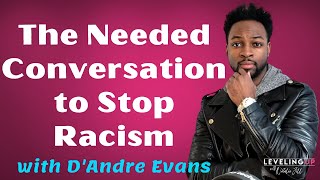
This is a YouTube video titled "195: The Needed Conversation to Stop Racism with D'Andre Evans" created in June 2020. It features a podcast-style conversation hosted by Natalie Jill, a fat loss expert turned high performance coach, with guest DeAndre Evans. They discuss deeply important and sensitive topics around racism, systemic oppression, white privilege, police brutality, and the Black Lives Matter movement. The dialogue is candid and educational, aiming to foster understanding and promote meaningful conversations about race and social justice in America during a time of civil unrest.
Hi, I'm Natalie Jill, fat loss expert turned high performance coach. When odds are stacked against us, how do we shift and create everything from nothing? How do we level up when we aren't feeling it yet or we've had a big setback? On this podcast, I'll be talking to some of the most inspiring and courageous men and women on this planet who at their worst, learned how to achieve success greater than they ever dreamed possible. Leveling up and creating everything from nothing. Just a few weeks ago, we were missing our friends connection with others. We were counting the days until we could hug each other again. Now we're in a literal war as a country with our friends and in many cases, in our own families. I asked the other day on a social media post, what is the answer to all of this? And no one actually answered yet in the comments. The fighting, the blaming, the not listening, continued. Today I've got my friend, DeAndre Evans. Both me and DeAndre's intention for this interview was very pure and specific. Have a real conversation, friend to friend. Drop the judgment, ask and listen. We believe that those are the necessary conversations that we need to all start having and listening to if we want change to happen. Since not everyone is having these conversations, we're sharing our conversation publicly. I hope you will listen to the full conversation with an open mind and an open heart. Hi everyone. Today I'm with my friend DeAndre and I. I'm so excited to talk to him today, but first of all, I want to let you know how we met. We met because our podcast has the same name. So I'm leveling up. He's level up daily and he reached. He said that he had seen that we had the same podcast. We connected. He interviewed me once. We then did a double live together. I really resonated with him, connected with him, liked him. We became friends in the social media space and with everything going on in the world right now, I thought, who can I ask? So many questions. I have too, and feel safe asking them too because I know his intentions are so pure and he really does want to change the world and help. So he's here today to talk with us. So thank you so much for being here, DeAndre. I appreciate it.
Thank you. Thank you for allowing this moment to happen and creating a space of dialogue so we can talk and address things that's going on currently.
Yeah, I appreciate you so much because as we were talking offline before I started recording, I was saying, there's a lot of people and I'll speak in my Friend group especially that we feel like we have so much to learn. We want to do the right thing, we want to understand, we want to change, we want to get better. But we keep feeling like we're doing it wrong. Like we're doing it wrong. We're doing it wrong and we're taking it. Me included. I'll own myself as in we're being shamed or attacked and it's been scary for us. So I really appreciate that you're so open to having a conversation. I sent him a list of things like, hey, I want to ask you all these things. Can I ask you these safely? Can you educate me and us? And he said yes. So thank you.
Absolutely. Not a problem. More than happy.
So before we get started on that, can you tell me more like how are you actually doing through everything going on? And if you're listening to this later, by the way, we are in the middle of literally a civil war right now. This is. I never thought I would see this in our lifetime. This is just absolutely unbelievable. My 13 year old daughter said to me that she actually likes being witnessing of this because she said it's changing our world right now and she wants to be a part of that. So how are you actually doing during this?
Honestly overall? I know we talked a little bit before but yeah, I'm overwhelmed. You know, I can't lie about that. I'm tired for sure. I have my spurts where I try to make myself happy in a sense of seeing the good out of it all. But you know, it's just a lot to take in. It's a lot to take in across the board. I think a lot of people are feeling that no matter the race, but it's refreshing to the sense of being able to finally get people to witness and see what you've been going through, you know, for so long. And a lot of people just never really believed you to a certain extent. Yeah, that's tough.
I think there's a lot of us so naive to it and I'll say me included. I was sharing with a friend last night that I have a lot of friends of different ethnicities. I have a lot of black friends, but I could maybe name five that I actually knew. Stories of childhood and stories of pain and what they went through. And I consider myself pretty open. I have discussions with a lot of people, but I was even unaware of the level. Why do you think that is that there's such a huge unawareness?
Just the lack of education, you know, the lack of knowledge and what's what's being spread. Like when we go to school, when you're raised, you know, you go to history class and you're exposed to history and what's going on in the past and prior events. It is not really told in its full. In truth. You know, it's divided. It's a half of a half. Right. So when people are, you know, in school and they're learning, you know, you don't really receive that true education. You're like, indoctrinate into it. You know, it's like a set of core beliefs that people want you to believe. And, you know, when you're going through the motion of things and when, let's say, for example, you're in a history class and history pops up where say, okay, slavery comes around, and everyone is already tense. When slavery comes around and you're in.
The school, I felt myself just. Even when you said the word, like, it's. It's programmed.
It's tough because it's like, well, we have some idea, speaking generally to most people who don't know fully the backstory of everything, you know, that obviously it wasn't right, it wasn't wrong, and white people enslaved blacks, blah, blah, blah, blah, blah. Right? That's just the forefront. That's just the starting point. But it's not really told in its entirety where, you know, there are stories. There are stories that is not told. That's the part that's tough because that's what a lot of people are missing. So the half of the truth. So when we were taken from Africa, you know, they also took more than that just in us. It took crops from Africa and brought them over here to grow because they wanted them. Right. But those crops honestly took away the nutrients that was needed in the soil over there, which caused black people over there to not have as much resource, nutrients, the food that they need, the opportunity to grow.
Wow.
So information like that.
Never heard this before. Like, this is so powerful that you. Thank you for sharing this. Like, I. I never knew that or heard that or considered it.
And it's just, you know, one of. One of hundreds of things, you know, that's. That's going on that's not really told. And I know we're probably gonna get a lot, a lot more into it during the time. And I'm honestly just say I'm gonna do my best.
Yeah, you're. Well, you're already helping me. I mean, just even that I didn't even know. Okay, I'm gonna. I'm just gonna I'm gonna ask you a lot of questions, and I'm. I want. I feel the need I have to keep apologizing and I'm gonna just. I'm so sorry in advance because I really do feel ignorant asking some of this. But I'm thinking if I don't know these things and there's other people that don't, and that's why I want to do this, it's really important. If we're going to get to a place of neutrality and love and get, you know, resolve things, then we have to understand first. So. Okay, so my first question, because you brought up slavery, this comes up a lot where I'll hear somebody say, but that was years ago. That wasn't you. Help me with that one. What. What is the answer to somebody thinking that or coming back with that, like, but slavery was in, like you mentioned in the past. Help us with that.
Yeah, but it's like to anything, you can't just write off the past of the history and try to say, well, it doesn't matter now, because that was the case, you would write off half of what's going on in prior events in the future. You say, this didn't happen. When we're experiencing it now, you know, you still acknowledge it. Right. So you can't necessarily, you know, throw to the side because it happened years ago, though our ancestors, I personally wasn't there, obviously, but my ancestors were. And that, that oppression, that systematic oppression that was created is really passed down through generation after generation. That's where the conflict and the anger and the worry comes in. Because so many people try to write you off so quick and not really want to know the backstory and information behind it.
And that information is everything. You're right, because that affected how your mom was or how your grandmother was. It goes down on how they're raising you and everything, everything.
It comes down absolutely across the board, 100%. And so when people say things like that, that just means that they're not really willing to inform themselves, willing to educate themselves on what's going on, to really find out the truth. Because anybody can go to Google honestly and type in slavery and you're going to get only so much. You're not going to get the truth. But if you were to look up the cornerstone speech, I'm going to start giving out homework, too, as we're speaking along.
Okay. I love it. Please do.
Yeah, there were.
And I'm holding this because I'm going to make sure I'm not. I'm taking Notes and I don't want to miss anything. So.
Yeah, so the cornerstone speech that was a tough time during, it was back in 1861 and it was written by a guy named Alexander Stevens. And in that speech it was basically stated that in the eyes of the law, white people are responded and received as equal, but when it comes to blacks, they are not. That dated back to 1861. That's hundreds and hundreds of years ago. People don't know about that. It was a problem a long time ago. You know, it's been a problem. So now that, you know, we're in this time where thank God, you know, for technology because without it, people still wouldn't believe us. They would still say, I'm blind to. I don't see it. I don't, I can't. You can't relate. But now that we have camera phones and obviously, I'm pretty sure you witness hundreds of thousands of memes and videos now on social media, streaming everywhere. Obviously everybody in the United States across the globe has seen the killing and the murder of George Floyd from a cop who took advantage, took advantage of him. So, you know, when you start to display the truth, it's not always going to be received because it's hard to. You've been lied to for so long.
And you know, as you're saying this, I'm thinking back to being in school and history and you're right. I think we tend to, we kind of put it as it was so long ago, this is so this is in the past and we sweep it under the rug versus actually talking it through and feeling like, I wish things could be almost more experiential. Like you actually have to feel it like, and go deeper. And I think that might make a difference.
Exactly. Because statistics all the time, and I'm pretty sure people probably brought it up to you say, well, X amount of people kill these amount of people. Blacks kill blacks, white kills whites is certain. Like, listen, you can't compare that to a personal experience.
Sure.
Even if you talk numbers, the numbers will never make sense and add up across the board because ultimately, just to speak truth, large majority of the population is white. Over 76%, 13% African Americans and by numbers they say is roughly around 423 white people have been killed by police officers. If we're going to keep along the same task that's causing all of this Right now, about 223people are killed. Black people are killed by police brutality. And they say, well, if you were to take that same average at the same rate, blacks would be killed by a percentage of about 8.9. But that's not the case. We're being killed by 24%. And the reason for it is because police brutality, you know, the systematic oppression is so much more to it. And people say, well, that still doesn't explain the number for whites. Yes, it does, because there are more whites in America across the world. So therefore, there will be more whites killed based off the numbers, if you want to play it that way.
Yeah. Just like we went through with the COVID numbers recently. Yeah, yeah.
So it just shines light on it.
I have. So, my gosh, I have so many questions. I hope I don't take up, like, literally your whole day every time you say something. I have another question. Okay. I'm going to. I'm going to try and stay sort of in order, but I would love my audience listening to understand more what it was like for you growing up as a black male. Can you give us some insight on that? Because I think that's another thing that people sweep under the rug, like, oh, well, that only happens to some people or the bad ones or that. But I do personally see and understand that that profiling is very real. So can you talk to us and explain what that's like growing up as a black male in a world that's predominantly white, like you said, in a country that's predominantly white.
Absolutely. And to be honest, it's lonely, you know, and like you said, we in a world where it's a lot of diverse people, but us as black men in this case, and black women, is lonely, you know, and when you're. You've been suppressed for so long and oppressed for so long, year after year, you kind of lose hope, you know, you're trapped. And people say, well, you can go get a job. No, we really can't. It's hard because people are judging you based on your skin, they're judging you based on your name. They're judging you based on where you live, your zip code. So many factors, right. And for me, growing up personally, I grew up in the inner city of Detroit. In the beginning, grew up in Detroit with a single mother. She took care of me and my sister. It was a lot of drugs, a lot of violence, a lot of crime there, just like most other cities do have. But for us, to a certain extent, I was exposed to racism super early. And it's even crazy to me to even say this out loud because I really haven't told too many is the fact that I pretty much received all forms of racism by the time I was seven. And during that time, for me, it was tough because I didn't understand. I'm like, mom, why do people look at me this way? Why is it that people follow me around the store and I'm just getting candy? Like, what am I doing wrong? Did I say something wrong? Or is it what I'm wearing? You know, like, what is it? And it was hard for her to even explain, you know, to a young kid, like, racism exists, but a lot of people don't want to acknowledge it, and it's tough. So, you know, to that extent, I never personally ran into an encounter where I was brutally abused by police. So I will put out. Put that out there. A lot of some people are. Some people aren't. For me, obvious. Thank God that I wasn't, because I don't know what would have happened.
But were you scared of police? Did you grow up thinking they were there to protect us, or were you scared?
Talk.
Because I grew up and this is white privilege. And we're going to get into that topic of what, what? Cause I know I used to get really triggered by the term white privilege. And we're going to talk about that in a minute. But what I grew up thinking, they're here to save me and protect me. You grew up thinking, I'm scared of them. Could you speak a little bit into that? Because that's a very. That's a big difference right there.
And a perfect example would be the case similar to George Floyd, you know, cases like Breonna Taylor, you know, Sandra Bland, all these people that lost their lives. That's why we are scared. That's why we are fearful. It because we're like, that can happen to us. That can be my brother, that can be my uncle, that can be, you know, my father, whoever. And so when you witness this so much, whether it's displayed on tv, whether it's displayed on social media, wherever, it's overwhelming, it's tiring. It's like, man, what do I do? Do I stay in a house? I can't stay in the house. Even though it's COVID 19, it's still racism on TV, and we depict it and we don't really have control of our narrative. So when you. When you are in front of a cop, and for me personally, I know a lot of other blacks out there too, we're fearful to the extent that. Why is it that when a cop pulls us over, the first thing we do is, oh, shit, don't say anything. Put your hands up. I'm fearful. My palms are sweating, My heart is beating, my voice is cracking. Why is that? And it's what's been displayed over and over. If you keep seeing something happen over and over, nine times out of 10, you begin to believe that. Like, that, wow, that's. That's gonna happen to me. So you try to do everything you can to even avoid it. We not looking, obviously, to cause fucking trouble. Excuse my language. And I don't wanna know.
You can cuss. It's a cussing show. You can cuss.
I don't want to, you know, put that level of negative energy out there, in a sense, but it's tough, man. It's tough. And for me, like, I had cops abuse their power right in front of me to friends that I love and did them wrong because they looked like somebody that they were trying to arrest and capture. It wasn't even them, but they made an example, quote, unquote, out of my friends in front of me, saying, don't let this be you.
So did your mom. I'm just trying to imagine growing up, how did you have to learn these things? Like, did your mom have conversations with you? Like, my mom had conversations. If you're in trouble, go to the police. Does your mom have conversations? If you have an encounter with the police? This is how you manage it all the time.
It's like a rulebook. It's like a rule book. And still to this day. Don't say anything. Sit up straight.
Wow.
Put your hands up. Don't move. Don't talk unless spoken to. Like, it's so many things. And it's like, what do I do?
Yeah, I can't look at it, because.
If I look at them wrong, it's a problem.
Yeah, I get it. So. And I. When I hear this, it's like, it's make a lot of making sense. Like, when people are like, all cops aren't bad. You're not saying all cops are bad. You're just saying there are some bad cops. Like, and this is scary for us. And this is a real. It's a concern, okay? While we're on the top, you don't.
Know who's good or who was bad. So you play it the way you play it and what she taught. You know, my mom did the best she can. So to answer that fully, my mom did the best she can. And it's sad because, like, like you said, the police are to protect and service. And when something goes wrong, if my mom is sick let's say, for example, or my sister gets injured in a car accident, whatever. Like the police supposed to come, but it's like, do I even want to call the police?
Right.
Why am I even having these type of thoughts? You know?
Yeah, yeah, I, that's. And you're. That. Okay, so while we're on that topic, because I'm jumping around, I got so many questions. Can we address what white privilege means? Because that triggers a lot of people. But right now, this is an example, if I'm understanding it correctly, because I did not, I did not believe in white privilege. I was like, what do you mean? I'm, I'm not. Just because I'm white doesn't mean I'm rich or just. And I don't believe white privilege means you're rich. White privilege is just by having white skin. And I want to get your definition in a second that you have privilege. Like, we're not profiled. We don't have to worry about that.
Exactly.
Is that what it is? Okay.
That's exactly what it is.
Okay. Because I see that very clearly now. And even my husband and I have challenging discussions around it because I see it because he's blonde hair, blue eyed. And I'm like, you're the, you don't get it because you're the definition of white privilege. He's like, but I don't have this. I don't. I'm like, it's not about what you have just by being born. Blonde hair, blue eyes. You are privileged because you don't have people profiling you. And then he'll, he'll go into the whole. And you would love my husband. I'm not trying to make him. But I have, I was bullied for this. I'm like, it's not about that. This is not what we're talking about. We're not saying you haven't had hardship. We're not saying you haven't had this. Literally. You all listening? And I didn't understand this until this year, so this is new for me too. But just by us being born with white skin, we don't have that fear.
And again, I'm going to reiterate for those who missed it again, go to the cornerstone speech. That statement whiter is equal in the eyes of the law, blacks are not. That right there pretty sums it up, you know.
Yeah.
So just as soon as I'm born, I'm considered a threat to most. As long as I'm born, I'm considered a thug, a gangster, a criminal, you know, like, it's horrible. And that's what I'm saying. Like, we don't have the ability to even direct our narratives. We really don't. And it's hard too. And we're just now getting to a point where people are exposed to it and it's tiring, right? For a few days, it's been a week, right? It's been about a week's time we can have. And everything's happened and people are like, I'm beat, I'm tired.
Imagine DeAndre lovingly called me out because I had, I had spoken up three times on social media. And I put a lot of thought into my intentions before I post. Like, really think. What do I stand for? What do I want to share? And when I felt misunderstood and got attacked in a lot of, from a lot of different people, whites, blacks, I mean, just different directions, I messaged him and I said, I need to take a few days off social media. I need to process, I need to think. And he was so kind to me that he told me on the call today, he basically said, that's white privilege right there. We don't get time off.
Exactly.
Like for you, but we don't get time off from this.
We don't.
You're right.
Every day I wake up, I can't change my skin. I can't take this off.
You can't take time off and say, I'm just gonna take time to pause.
Tomorrow. I'm gonna dress up as a white police officer and everything's gonna be great. I don't get to do that. We don't get to do that.
And you're right. A valid point. And I. And I got it. And fortunately I even got it before you had to say it to me because I was back online today. I got it. It came to me.
Man. You know, But I commend you for just being open to learn and educate and just have this, like, conversation is needed. It's tough, but it's needed. I'm not necessarily 100% comfortable, but it's needed. I have to do it because you're.
Helping me a lot and you're helping. I know you're helping people listening, you know, it's not. So my next question is, okay. And again, they're so out of order. But there's. I have so many things I want to ask you. Okay. Why? And I realized to stop doing this because I'm a story based person. I always want to share my story and like, what. What happened to me? Why is that? So Offensive when people do that, when they say, I understand I was bullied as a kid, or I understand I was picked on for this.
Well, when you say, I understand, and if you can parent, you can't, because we're all different automatically. That's just a given. You're white, I'm black. You can't necessarily compare that. I mean, it just goes as clear as that. But when people do it, they try to basically wave off the truth. You know, they don't really want to learn what. What your story is, your backstory. Like, if you didn't open up about, you know, your scenario and how you grew up, I wouldn't have known, but I wouldn't necessarily have judged you. But it would have been easier to say, I understand, but I wouldn't really fully understood if you didn't tell me the detail. You know, the details. Being willing to listen. A lot of people don't want to listen. They want to. They just want to talk and share their opinion, say whatever. So, you know, it's hard to even, you know, understand if you're not willing to listen.
Yeah, that makes sense. Okay. So if you're. If you're somebody doing that right now, this is a time to listen and to not. It's not about us. It's not about us. And again, no one's saying that we didn't have problems as a kid or we didn't have this, but that's not what this is about right now.
Right.
Can you speak? This is. This is a big one, a big question right now. This is, like, probably the biggest controversial one on social media, at least right now. Okay. And I understand it, but I'm going to. I'm going to ask it so you can help explain it. Can you speak into black lives mattering why it's so important and why it's so offensive when someone says all lives matter in response to that?
Absolutely not. I know a lot.
I know that's a big question. I'm so sorry. That's a big one. And. But I think it might come better from you first and then I add to it. Okay.
Yeah. I'm gonna just make this super simple. I'm not even gonna get again, too political. I'm not an activist. I'm not an organizer or anything like that, but I like to keep it straight and direct. When we say black lives matter and you say all lives matter, that's basically like a protest to our protest. Right. So we're not saying only black lives matter. We didn't say that. You know, we understand that. So I'm gonna break it down in an example that some people may get just in case. That's still unclear for some. Let's say, for example, you go, we must save the sea turtles. That doesn't mean fuck all the other fish in the sea. Okay? That's not what we're saying. The reason why we're trying to save the sea turtles is because they are in danger. We are endangered. We are dying off at a rapid rate. The numbers I gave earlier was a prime example. I mean, just look at the news. You see it all over. That's why we're outside right now. And it's tough. And it's tough. So when people say all lives matter, listen, if that two quick examples make sense, I don't know what to tell you, but it's not to differentiate and separate people and divide and say I'm the only one that matters. No, that's not the case. That's not the case at all.
I get that. I understand it. I mean, I want to add to it a little bit because I had a. Have a big lesson around this too, because I think I was that person that would have said that too. But thinking I was being inclusive, meaning well, but not understanding. It's almost the analogies I've been hearing lately are. It's almost like if you have breast cancer and you're at a breast cancer meeting and someone runs in and says, but all cancers matter. It's like, but that's. That we never said they didn't. But that's not where we're focused right now. We're making a change here. This is what we need to bring to the attention. This is what's important. So that is an important message that I get. And I also want to. To differentiate. There is a movement for Black Lives Matter, which is an organization, but saying Black Lives Matter is also a statement. They don't have to mix. It doesn't mean you're aligned with one or the other. It's just that this is an important topic right now, that Black Lives Matter, that they are important, that they do have names, that this is important. That's why I see a lot going around. Name her. Name him.
Exactly. And it's important that we put those names out there so people know, you know, like I said, the George Floyd's, the Tamir Rice, the Trayvon Martins, the Ahmaud Arbery's, everyone. Like, if you look at all of their cases and scenarios, it should be no reason why they're not alive. Today, you know, only thing you had to do was like, I'm already detained, George Floyd. I'm already detained. I'm in handcuffs, and there's three of you on me. Wow.
No excuse. No excuse for that.
Exactly. You know, I'm all jogging. We're jogging in the neighborhood. I can't jog now. These are, like, fears that people are starting to, like, have, because it's like, well, what can I do? How can I live? How can I thrive? How can I prosper? If every time I'm trying to live my life to any extent, I got an opportunity of not making it back home, like, chances may be slim. I don't know.
What do you think the answer is? Because I'm struggling with. Because I. What is the answer? What is the right answer? Because I see sometimes some very extreme answers, like when I see things, and this is another sensitive one, but about defunding the police, to me, that. That gets scary. Like, I'm. Does that mean we don't have any police? Or what is it? What does that mean? And is that the answer? Or what is the answer?
See, we're in the process of understanding what the answers will be. We have a lot of ideas, and it's going to take everybody on board to make this thing work. But, you know, to that extent, I know you've probably heard that defunded the police. I don't necessarily believe that would be the best option or route to go. Now. There are, in my opinion, better procedures that may work, maybe in terms of. And I'm gonna give an example. When you go to Detroit, if you're here, you know, we have black cops here in Detroit, right? In certain parts, throughout. In suburb areas, there are white cops. In certain areas, there are Mexicans, Arabic, there's Latino. There's diverse diversity exposed. But when you have white cops coming to a black neighborhood that's never been there, that don't understand the language, if you will, that don't really, you know, get the narrative and how things are being depicted here and how tough it is and what's going on, really, then it's easy to pull out your gun and say, I think he was. I think he was reaching for something. No, he was grabbing a candy bar, dude. Like, relax. You know, like, it's hard to do that. So I believe maybe, you know, constructing where police patrol their community, where they're from, may be an option, because then you start to be more relatable or maybe divide up the police force where it's diverse and say, have one White male cop come, and one black male cop go, right?
I like that. That's actually interesting. Yeah, I hadn't heard that idea. That's great, right?
You go into community and let's say, for example, someone is driving fast or whatever, and they're super nervous. They're a black guy in a black neighborhood, and he's like, oh, shit, the cops behind me. He's already feeling all those emotions that I explained. He's nervous, frantic. And when the cop goes over, he says, license, registration, like he's addressing what he should be as a cop, but as in the black guy's mind. He's. He's nervous, he's frantic, he's shaking. And if he moves too quick and the white guy pulls for his gun, say, you're moving too fast. Slow down. He's like, I'm just reaching for my wallet. Then as a white cop, you should say, okay, maybe I should relax. Hey, John. Hey, Tim. Whoever your patrol officer is with you, come talk to him. Because I think I need him to calm down, but he's super nervous and he's moving a little bit too much for me. Can that help defuse the situation? Maybe if I come over and say this is save. It was me. Hey, hey, what's going on, man? Hey, we understand you ran a red light, okay? You're driving way past speed limit, all right? We don't want any trouble. We don't want to, you know, cause harm to you. Just relax. You get licensed registration. That will be a nice potential option to present to. To the world to have where people are much more comfortable and at ease. Because when you're not at ease, you tend to do things because you're. You're afraid. You don't know what to do. You don't.
That makes sense.
Especially when you. Like I said, you keep seeing things that happen over and over, and two white cops come, you like, oh, it's. It's over. I might.
Yeah, I. I would imagine that. How scary that would feel right now. Like, I don't.
You know. So, yeah. These conversations and, you know, like I say, I don't necessarily believe that might be the way to go. To defund them.
Yeah.
More centralized within Taking the. If it's the tax dollars for sure. You know, giving it to the community based itself to help fund the police in that community and divide it up amongst that. Maybe not give it to.
Let me follow that. So give it the. Oh, so give the funds to the community to help fund it. So the community is in charge of what's happening. So they're a part of what's happening Right.
Throughout that. The police department versus just having state.
Well, that's an interesting perspective there. See? Thank you for explaining that also, because what happens is people automatically assume they want to defund the police, and that's what scares some people into this extreme. Right. The way you just explained it makes sense to me.
Yeah.
So thank you for that.
Yeah. I believe that might be, you know, a great option to explore collectively. Look into that and see what that may be like. But, I mean, other procedures, there's other things that's been addressed and been, you know, brought up over time. But like I said, we're learning as we go. This is all new for a lot of people.
Totally.
Like, overall, this is shocking to me. I'm happy, excited, but also I'm sad and scared because us as millennials, you know, based over the last a week and a half, we've raised an enormous amount of awareness.
Yeah, you're on, like, you're literally megaphone to the world right now. Like, and you're like, wait a minute. And it's not. It's not that it's your job to educate, hate everybody either. But, like, I can. That's why I appreciate you even doing this. Can we talk a minute about all these companies sending emails, about how they're like, I don't. I don't love that. I'll tell you why. Because it's like, now you have to go prove that you're not, you know, this or whatever it. Like, when I started seeing that, I thought, this is interesting. Like, why haven't we been diverse all along? Why haven't we. I will stay fully in with me. I know I am. So. I had no. I didn't need to send an email. I'm like, I'm not sending an email because I know that I'm inclusive. I know that I am. What do you think about all this? About all these emails going out and all these statements of what we're doing as a company and all of that?
Yeah.
I mean, do you like it or do you. Is it triggering you? I'm curious how that feels.
It's not necessarily a trigger, but it's like, why now? You know? Like, you know, and for a lot of people that say, I didn't necessarily know, you knew to some degree that things were different. To some degree. Because even if you look back, when people are getting hired into jobs, you have to have a quote, unquote, certain amount of minorities working for you. Why is that.
And why is it that we had to, like, the. Have to. I don't love. Like, you should just want to.
Exactly. So it was like, come on. And now it's trying to play like the little victim. Like, no, we're here to support. Been supporting, like, a little too long, too.
Too little, too late in a way.
In many different ways. And, you know, there are people speaking out from celebrities to athletes to companies, you know, saying what they're saying. And it's like, come on. You know, we definitely could have passed this hurdle a long time ago if you were brave enough to say what you're saving now in terms of trying to get on this bandwagon, whether you want to ride this wave or not, because you're trying to save face for this company. But ultimately, we know we can figure this out. We feel the energy. We can tell what's real, you know?
You can tell. Yeah, I would think. I guess my. I've talked to some people that have really struggled with this, and your advice might be different than mine, but my advice, just always tell the truth. Just. You just have to just. Just tell the truth. No matter where you are or whatever's happening, that's the best. Because if you try to go and cover something or fix something, that always. That just creates more. Just tell the truth and then do better. That's. That's my stance on things. When in doubt, tell the truth. Okay, I have another. Another big question. A lot of people trying to be politically correct on what to say. Do you say black person? Do you say African American? Do you say bipoc? Is that what it is? Do you say person of color? I just learned, and I'm so embarrassed that I'm even saying this. I told you this on text. I just learned. And my daughter's Hispanic. I should have known this, that people of color are anyone that's Asian, Hispanic, or Black. I did not know that. I literally. I'm mortified that I didn't know that. So what are we supposed to say?
Great, Great question. I know we talked about it, too, and I'm glad we talking about it now. So people don't know, especially moving forward. People of color, obviously, yes. Us as blacks are considered a person of color. Latinos, Mexicans, absolutely. But it's usually referred to in reference to those who are Latinos, Asians, Mexicans in that sense. But right now, in this moment, you know, in the topic of Black Lives Matter, it's very important that you say black people. Right. Because black people are the ones suffering. Right? Now at the hands of police brutality, which is the whole cause and start of this started back in 2013. In terms of the name being brought up due to Trayvon Martin's case, Right, with the incident with his hood.
Yes, yes.
That's where the term in the name came up. It came from three. Three African American women. I can't remember all the names, but that's the purpose and the meaning behind it. Right? So when you say people of color, you're talking outside of, in this term right now. Black, white, black people.
And it's specifically black people that get profiled. So that's why it's important to say that, too. Okay, what about the term African American? Because that used to be the PC thing to say, and now it's not. So what, Is that still acceptable, or should we not be saying that at all?
Yeah, I think. I think for most people, I'm not sure exactly. I haven't heard that one, but that's annoying to me. But. But that's what we're labeled as in terms of, you go get a job, you know, say white Hispanic.
Because it asks that Caucaid. We're Caucasian, and it's funny, we would never say, hey, my Caucasian friend, you know?
So I think it's just another underlying thin, thin description that people have a hard time differentiating. But that's what we are, African Americans. That's what we're labeled as. That's what we've been labeled as, you know, so that. That'd be the safe haven for most social moving forward. Anybody say person of color, you know, during this time, you know, you want to say black.
I understand.
Black lives matter.
Okay, so here's another one for you. So just a few weeks ago, we were all in the COVID situation. We were on lockdown. We were feeling lonely, missing our friends, missing connection. We couldn't wait to hug everyone again. And that's sort of gone away. And we're fighting amongst friends. A lot of fighting amongst friends. What, in your opinion, should be happening right now with friends? What should we be asking each other questions? Like what? I'm just curious your take on what we should be doing.
Absolutely. What we should be doing is what we're doing right now, having an open discussion, okay? Talking about the difficult things, right? Like if you got a cry, cry that shit out. If your voice cracks, that's okay. Take a moment, take a deep breath, and get it out. It's important. I just recently posted a video, if anybody want to check it out on my Instagram. That There was a young white girl by the name of Haley, okay? And her parents were pretty much going after her in this video for standing up for racism in terms of black lives matter. Her parents could not get this concept. It was very difficult. And she's explaining to them the same thing I'm explaining to you about, you know, systematic oppression. You know, why black lives matter. You know, people, they try to throw the numbers at her and. And she's like, no, you're being. You're being ignorant. You're not willing to listen. They told her to shut up, be quiet, and cut off the tv. While her father labeled black people during this video as animals, as ghetto thugs. And it's hurtful.
Yeah. And how hard for her, too. Like, she's really trying to understand and make a difference and then to get judged.
Exactly.
But it's by your parents nonetheless. Like, that would be tough, right?
Absolutely. And I commend her for her effort. I really, really do. Because that's what we need. We need that bravery. We need that courage. We need more young people stepping up, more whites, you know, sitting down amongst each other having these tough conversations that people like to hide away from. You know, they see it, but they turn the channel. You know, they see it or they flip the page of the book. You know, they say they walk away, but we need to sit down. You know, like I said, we were able to come together and do this. This is important. It's not just about us. And I think some people miss, you know, it does. The story doesn't start and end with us. It doesn't. It's like generations to come. You have a child, daughter. People have kids. What are they seeing? What are they learning? What do you want them to know? Yeah, because this is a part of history. You're a part of it. What side are you gonna be on? You know, did you help? Did you try to educate? Did you try to sit down and listen? Did you take notes? Did you ask the right, proper questions? You know, were you core in your approach? You know, are you. Are you protesting? Are you donating? Are you giving back? Are you bringing awareness? Like, how can you contribute? Figure out how you can contribute. And those are some forms that I listed that you can help but use. Use your gift, you know, have a gift. Use your talent. You know, get creative. We get creative in anything else.
Yeah.
Like, we came up with fucking Pokemon.
Totally.
With Sour Patch Kids, you know?
Yeah.
Now, like, there's no limit to the creativity on how you can bring awareness to the scenario. So people can learn.
So I love. Okay, this is what I love about you right now, is that you actually stand in the power. Power of what you teach and believe and what you. How you work. You. You live the work. And like, you. You didn't even hesitate when I said, hey, can you help me out? Can I ask you. You didn't even hesitate. You said, I will help you. And I love that about you. I think it's incredible, and I hope. I wish more people would step up like that. And I love what you said about the creativity, because this is the other thing. And this was. I'm full disclosure. I was super triggered by this. I had my own friends telling me what I should be doing, and I don't believe in that either. I think people should think for themselves, and I think you should take a stand. But you've got to do it within your talent, your strength. Like, right. I love interviewing. I love having conversations, and that's what I'm committed to doing more of. I didn't want somebody telling me, you have to go post this or this. You know, that didn't feel good to me. That felt attacked. So I want to point that out on this interview as well, too, because if we come from a place of truly wanting our intention to come to fruition, then we need to be flexible and kind and approach and talk to people with love. We really do. And. Because as soon as you go to attack somebody and tell someone how they should be doing it, it shuts them down.
Absolutely. And we all feel that. We all been there. Because you get, you know, rebellious. Like, don't tell me what to do.
Yes.
But, you know, I hope people accountable because. Because we all know right from wrong. You know, we all know. Yes. From now. So you know how to make a decision, know what's happening. You witnessed everything that's happened. What. What decision are you gonna make to help promote the correct narrative versus what's being depicted? Because, like I said, we don't have control over our nerves as black people. We don't have that control based on what you see on media, the news and movies, TV shows, you know, we're depicted a certain way. So when that's spread all over you know, the world, globally, people have a certain image of you, and we're fighting that image. Refine the image hard, and you can see it took. It took the fucking Justice League to form together. You know, it took white allies, it took blacks, took the LBG community. You know, it's a K pop stand. It took everybody to find and finally find a solution of convicting four police officers. Four police officers who committed murder on a guy who couldn't breathe, who yelled out, I can't breathe. Numerous times, not just once. He didn't say it low. Everyone heard it.
Everyone heard it for almost nine minutes. Yeah, exactly.
For almost nine minutes. Everyone heard that. Right? It took all of us to come together to raise awareness, just to get some justice.
Yeah. And I, like, I love what you said about the media too, DeAndre, because. Okay, think about it. We're doing an interview right now, and I don't think we're gonna have much to edit on here. Like, if anything, we might click Clean up the beginning of the end or whatever for the podcast. But, like, think about it. Somebody could take what we're doing right now and take parts of our clips and edit it together to make any message they wanted. And that's what happens a lot of times in the media. You get the highlight reels and pulling out what you wanted to say. When we were talking about slavery, my gosh, like, what could someone pull from that? I'm just saying that that's dangerous, and that's what media does sometimes.
Absolutely. It's always been that way since the beginning. You know, they. They want a message to be directed for people to see so you know what place you're in. You know, they want you to know that, oh, you have white privilege here. Oh, you're. You're. You're just a servant here, or you're just a busboy here. Or, like, they try to depict and frame it, and when you see it so much, like I said, you begin to believe, like, why am I. You know, you start to question. Start to question, get angry, and you find out why. And this is a funny little scenario, but why. Why is it that black people get killed in the movie first every time? And I'm pretty sure you may have heard that or seen that or laughed about it, but it's like, you can count on your hand just a few movies on when a black person made it through the movie if it wasn't already blacked on, you know? And so for us, you know, when you see that, it's like, man, like, damn, can we make it to the end of the movie? Because we're not even making it in real life, really. It's just the movie. And that's just one small glimpse of how we. How we see things and what's being viewed and what's being portrayed about us, and it's just not right. You know, it's just not right.
Wow. Wow, wow, wow. Okay, I have another. Another big one. This is another big one. And I think I'm done with the big ones. Can we talk about protesting versus rioting? Because they're very different things, and I don't like when people lump in into the same thing. Can we talk about that?
Definitely. Definitely. So right now, obviously, everyone is seeing everything on the news, on their phone, social media. There are three different groups out there right now, right? You have those who are protesting, you have those who are rioting, and you have those who are looting.
Okay?
Those who are protesting are doing it peacefully, not causing any harm. They're walking with signs. They're chanting. That's a peaceful protest. They're doing everything right based on what's supposed to be a peaceful protest, which I. In my opinion, I don't know what's the right or wrong way to protest. I didn't know there was a rule book on it. And if so, no one really explained that. But in us to stand up for what we believe in, we're not trying to wreak havoc. We're not trying to break stuff and cause chaos. We're not looking for revenge as protesters. But there are people out there. Writers were looking for chaos, looking to break, looking to destroy, looking to leverage off this opportunity and connect the dots to Black Lives Matter. To say, see what people are doing? See, this is what black people do. That's what's being painted. There was a video of two people, a young lady, two young ladies had on, like, scarves. It was this all in black, and they had spray paint, and it was on the side of a building. Two white ladies spray paint on the side of a building. Black Lives Matter. Some people will see that and say, what the fuck are you doing? That's not right. Right. Of course that's not right, because that's not what we stand for. And we're not necessarily the ones doing that. But we are amongst the majority that is out there that are black. And so they claim that black people are the ones, you know, fucking shit up, burning buildings, rioting, polluting, doing all this other stuff. But it's not necessarily us. Now, I'm not gonna say 100% it's not us. But I can tell you for a strong, vast majority, it is not. It's people from the outside, people who are not necessarily from certain cities and states. Like, I know down in Atlanta, you know, people protesting. There are people that are not necessarily from Atlanta coming to Atlanta, whether they're driving or not. And Looking to simply wreak havoc again, looking to cause that tension. You know, they're anarchists out here. They're looking to cause problems. There are people that are out here disguised as, you know, a protester, but really, as soon as you turn your back, they're spray painting, they're throwing bricks, they're breaking glass. You know, they're, you know, antagonizing the police. You know, they're chanting things opposite of what's going on. Then you have the looters. You have looters out there who are just obviously looking to get jewelry, looking to get cash, whatever, looking to get clothes. They're just taking advantage of what the rioters are doing. But all in all, when people see that on the TV screen, when people see that on social media, they're basically saying, see, this is exactly why blacks are where they. That's exactly the narrative that they paint.
Yeah. And that's just not the truth.
Yeah, it's not. It's really not. It's really not. And it's heartbreaking and it's sad because for so many years, you know, going back to Martin Luther King, right? And I see this. This meme going around so often as Martin Luther King, he's sitting there protesting peacefully, quote, unquote, peacefully. And right below the image, there's the comparison of what's going on now. People rioting, but there's two groups of black people. Peaceful protests at the top, angry, quote, unquote, black people at the bottom. Right? But that's not really true. You know, people say, yo, you should protest peacefully like Dot and Martin Luther King did. But did you not know that? Yes, he did that peacefully. But five minutes later, if you show the bottom half of that picture, because people like to crop it, it's actually people getting bitten by dogs, getting water hose down, getting. Getting shot at, getting views tackled, trampled. You don't witness that. And some people say, yeah, you should still protest peacefully. Well, we tried that fucking option already, and that's where it got us. It got us beaten up. It got us bitten by dogs. We tried every option. We sent them letters to the government, sent in letters to the state. We voiced our opinion. We asked for help. We did that repeatedly. And when you keep yelling and you keep yelling and you're not heard, you know, you scream. And when you're screaming and you're not hurt, you're gonna throw something. Yeah, right. And just like a little kid, when a kid is throwing a tantrum and they're upset, right? And you're looking at, hey, stop, stop throwing this tantrum. And they're like, I'm hungry, I'm hungry. And you're like, well, you don't have to throw stuff. Well, it's like, feed me. We're hungry for change, starving for change.
Yeah.
It's been happening so long and we tired. But we're trying to do this the right way. And there's been images where, you know, there are, there are people out there, blacks, whites amongst all that are again, protesting in the right way. I saw a group in an image where there was a line of black men protecting a cop, a white cop at that.
Yeah, I've seen a lot of that. Yeah, I've seen a lot of that.
Looking to cause any harm. They wasn't looking to beat up that. But the narrative would have been different if that picture wouldn't have been caught.
Totally.
Police officer. So that, that acknowledges. Shows that, listen, again, we're not trying to recap. We're not looking for special treatment. We're not, we're looking for a level playing field.
Yeah.
Equality, justice, freedom. That's. That's what we're asking. That's all we're asking.
Yeah. At which. And you deserve. That's not a fair, that's not an unfair request. So, yeah, this, I hope this has inspired more conversations and I thank anyone that's listening right now because thank you for even being open minded and listening because it's going to take these types of conversations. If we're going to make a difference, it's going to take us not just taking the narrative from media from either side. And we need to start using our own minds and understand. I always say seek first to understand and then form your own conviction around things. But unless you're having those tough conversations, unless you're listening to these conversations, we're not going to ever get there. I don't believe we will.
Exactly.
Everyone keeps saying we want to go back to normal, want to go back to how it was. Like, I don't. This is going to be a new this. This is not. There's no going back on this. These tough conversations need to happen so we can get to a better place. And I think there's something even better for us all, I really do. But we've got to have these conversations first.
Absolutely. Absolutely. And everyone out there, you know, under the sound of our voice right now, listen, just taking what we're saying, educate yourself, take time to have conversations like Natalie and I are doing. White, black, Hispanic, Mexican, it doesn't matter. Across the Board. Everybody needs to understand what's going on here. We need to open up our mouths, you know, and be vocal to the full extent. You know, there's no definite answers today for tomorrow. Yeah, right. No definite answers today for tomorrow. But when we expand as people, you know, and our relationships change, you know, when you're ready for change, that's when we will expand. You know, you have to want it. You have to want change, guys. And again, homework wise, check out Cornerstone Speech. I also say, you know, visit YouTube, you know, check out Jane Elliott. If you don't know who Elliot is, definitely check her out. She will explain things. Very clear.
Jane Elliot. Okay.
I'm writing a title, Jane Elliot across the Board on what's going on, why we are experiencing the way we're experiencing. And again, she's a white woman, you know, so she's speaking from her experience of being with Martin Luther King as well. What happened then? So what's happening now? And she breaks it down.
Thank you for taking a stand and for living the actual work that you talk about and for being open and willing to talk with me. I'm fortunate that you came to my life. And so, and I thank you.
Absolutely. Thank you. And I appreciate you for again taking this time out and inviting me on your platform to share this knowledge and information, educated and informed, so we can grow and we can see a better future for everybody.
Thank you. Thanks for leveling up with us today. Please share this episode if you found it helpful so others can join in. And don't forget to hit that subscribe so you don't miss out on future shows. And if you would leave me a five star review. I appreciate those so much. I read all of them and it's how I know that I'm giving you information that you find valuable. And come interact with me over on Instagram @nataliejofit. I read all the direct messages and comments over there. Make it a great day. Creating everything from nothing sa.










