205: How to Utilize Strategic Problem Solving with the Founder of MoxieLash Val
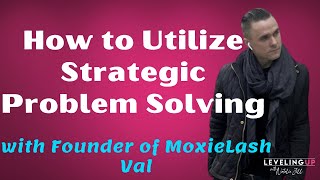
This is a YouTube video titled "205: How to Utilize Strategic Problem Solving with the Founder of MoxieLash Val" created in August 2020. It features a conversational podcast-style interview between Natalie Jill, a fat loss expert and lifestyle coach, and Val Yakovichik, the founder of MoxieLash. The discussion covers Val's journey from professional poker player to entrepreneur, the strategic problem-solving approach he used to build his magnetic eyelash company, and insights into leadership, product development, and business growth. Natalie Jill hosts and actively engages in the conversation, providing context and commentary throughout.
Hi, I'm Natalie Jill, fat loss expert turned lifestyle and high performance coach. When odds are stacked against us, how do we shift and create everything from nothing? How do we level up when we aren't feeling it yet or have had a big setback? And how do we adjust quickly when life throws us major curveballs? On this podcast, I do what I do best. Taking complicated information that is relevant to us now and breaking it down simply with actionable steps you can implement to level up your own life. I also regularly interview some of the most inspiring and courageous men and women on the planet who, at their worst, learn how to achieve success greater than they ever dreamed possible. Leveling up, creating everything from nothing. If you are new here, I encourage you to go back and listen from episode one for the full transformative experience. Val Yakovichik is the founder of Moxiella, the magnetic eyelash company that has taken off. You may have seen me talking about them on social media or you may have seen some of their ads. And I wanted to know, how did this company start and why is it such a huge success? And how did they come up with this idea? I recently met Val, the founder, and I was so intrigued. You see, Val played video games as a kid. He became a professional poker player for 13 years. And then at age 28, he realized that he missed engaging and creative collaborating. So he decided right then that he wanted to start an actual business. The problem, though, he had no idea how to start or run a business. But he did have something unique, a commitment to figuring things out. Join in today and learn exactly how Val and Moxielash leveled up and created everything from nothing. All right, y', all, today I'm here with Val Yakov Chick, and I cannot wait for this conversation. It's taken a while to track him down. If you have followed me all on Instagram or Facebook, you've seen me talk about those moxie lashes that I'm obsessed with, that I love, and I share them all the time. And I had to know, like, where did these even come from? Who's the person that created this? How did he start the company from nothing? So thanks so much for being here today, Val. I'm dying to chat with you.
Happy to be here.
So, Val, take us back, because I just learned right before we started the call that this was not something. As a little kid, you were like, I'm gonna create a magnetic eyelash company. In fact, you were a professional poker player for years, starting at age 16. Is that correct?
Yes, that's accurate.
Okay, so take us back. I want. I need the whole story. Like, how did you get into that? Let's start with that. How do you become a professional poker player?
Good question. So I started playing poker after I was really engaged. When I was a kid. I was really into video games. And there's a couple that I used to play quite frequently, Counter Strike being one of them. There's another game called Commander and conquer, red alert 2. And I also used to do a lot of graphic design. I used to be on DeviantArt, if some of you remember that website. And so I would spend a lot of time, kind of in my lonesome, working on graphics. I used to create winamp skins. And then I got into kind of competitive video game playing. So I was playing Red Alert two, essentially six, seven, eight hours a day, as much as I could before and after school and on the weekends. And so When I was 16, I had a friend, his name's Frank. He introduced me to online poker. And it took him a while. He kept. He kept sending me a message and saying, like, hey, I think you should. I think you should really, like, check this out. It's called Texas hold'. Em. It's really fun. And I was always resistant to kind of new things back then because I liked what I liked. I liked my video games. And so I kept kind of putting him off, and he kept engaging me in it. So eventually I started. And the day I started, essentially, I never put it back down until I was 28 years old. So I played poker every single day of my life. And around 17 or 18, I got good enough to actually make it profitable. And so I started making money. And that was kind of the early beginning.
Okay, I've got a lot of questions starting back with the video games, because a lot of kids want to get into video games, and parents are super against it, or they. And I've heard both sides of it. Like, a lot of kids. Parents will think, this is not good for kids. This is distracting. But I've heard that it really helps kids become good entrepreneurs and get their creativity going. And what was your family like with you with this video game obsession initially? Were they for it, against it? Were you hiding it?
That's an interesting question. So my parents were okay with me playing video games and spending a lot of time on the computer. I've been sitting on the computer since I was about 10 years old. AOL chat rooms and all kinds of things like that. And so they were good with that. When I started playing poker, my dad wasn't too happy about it. And he was very resistant to that. He viewed it as gambling and he really didn't want me playing. And so it was always kind of like a tug and pull with him. Me always kind of trying to explain, hey look, this is something that's really fun. It's not gambling. It's predictable. There's a way to game, to win this game and there's a way to really get ahead, right? It's a game of skill rather than a game of luck and chance. And so it took me, honestly it took me about 13, 14 years to convince him of that. And that wasn't until after I had retired from poker. I stopped playing when I was 28 years old that I was able to kind of show him like, hey, look, these are my results over the course of the last 12 years. And here's a business I started and I had the opportunity and the resources to start as a result of poker, which kind of gave him that, that, that perspective. But it took, it took showing him the very long term results to get him to the other side.
So Val, I have a question about that because there's a lot of people that they gamble for a living or that's their thing. Where does it get dangerous for people like some people have, they'll say gambling addiction or it's a problem like what do you think separated you from falling down into the dark side of gambling versus being smart with it and making money to be able to start something else?
So I, the big distinction I think is with, with poker, it's, it's, it's a community and you're not playing against the casino, you're playing against other people. Anytime you're playing in a win lose environment where you're competing against other players, there's a skill element to it, right? It's like a game of chess. Now of course, there's a lot more volatility in poker than chess and chess is a lot more predictable. With poker you can do everything right and you can still lose. That's the big difference. But if you play on a long enough timetable and you are more skilled than your opponents, then you're able to extract kind of that profitability over a longer time period. So the bigger distinction between gambling and professional poker is being able to show up every day with a fresh mindset. No matter what happened the day before, no matter what happened the week before, no matter how much money you've lost, you're able to approach the game as a student and realize that there's nothing personal going on here and it is just a game. And that your ability to manage your emotional state is directly reflected in your ability to be a profitable player over a long period of time.
Wow. What you just said gave me chills because I feel like that is actually key for a good business owner too. All those things like a business owner, a good business owner has to show up every day with a fresh mindset, not let, not take things personal, not let what happened last week, last night affect them moving forward. And, and you have to manage your emotional state too. So that's interesting. You learn that through poker, which is, I'm assuming gonna plays a role in running a business as well now.
100%. Yeah. Your, your ability to manage your emotions is, in my perspective, directly reflected in, in, in, in, in the success of your business.
Is that something you had to learn or did you, how did you learn to manage your emotions? I don't think people are born knowing how to do that.
Poker is kind of a good training ground for that because as you're playing poker, it's a very high, low experience. Meaning that as you're playing, you're going to experience lots of highs, actually very few highs. But the highs that you experience are just incredibly potent and a whole lot of lows. And so as a poker player, you have to find a middle ground where you're able to experience the joy of winning, but you also don't get necessarily too excited about it. And you're able to manage yourself when you hit a downswing. You're able to manage your emotions and understand and kind of keep your eye on the long term and the end goal, which is over an extended period of time, you're going to have a win rate and you're going to have an hourly. And so that might average to something like 70, 80, 90, $100 an hour. And as long as you understand that you might be down thousands of dollars or you might be up thousands of dollars, but your long term win rate is always averaged out. And so, and your long term win rate is heavily predicated upon your ability to manage your emotion when you're losing a lot of money. So if you're able to cultivate that awareness within yourself and you're able to carry that through, through your, through your negative states, through a lot of training, right? There's many in the first five years and then it always pop back up. Even into my later years of playing poker, there's a lot of times where I completely lost my mind and there's a couple days where I Lost an incredible lot of money, and it was very, very painful. And I think those days gave me a perspective that managing yourself and not essentially blowing up, if you will, in those moments. Because if you blow up and you lose your ability to walk away, which is the best thing that you can do in that space, you can potentially lose it all, and you can lose years of effort. And so if you cultivate that responsibility and accountability, knowing that in that space where you aren't, you know, when you're not locked in, if you're able to walk away, that's one of the. That's one of the key skills that a poker player can have, is knowing when to walk away. Hardest, hardest skill to cultivate. One of the most important.
Wow, it sounds like I need some poker training, because I definitely do not have that emotional skill down the not reacting and being able to walk away. Okay, so you were doing really well at it. You mastered it. You were cranking. I mean, as you said, you did it for 13 years. Why, at 28, did you decide to walk away from it and change into something else?
I had been interested in starting a business since my early 20s, and I always thought about it, and I did have a couple of trial runs, maybe, you know, a couple, couple. I wanted to start a. Out of all things up in any business, which is a Russian food.
What business? Sorry, it cut out.
It's a Pimeni business. So Pimini are these Russian dumplings? And I wanted to. I think they're the most incredibly delicious little dumplings ever. And I wanted to see if I could. So it's a Russian food. I wanted to bring it to the US And I wanted to see mania in every single retail store, every single grocery store in the US that was my vision. And I went about three weeks deep into that vision, and then I just dumped it. And then I tried to start a vaping company. I went a couple months into that.
For, like, tobacco or for marijuana or whatever.
Yeah, it was like nicotine vaping. Yeah. So then I dumped that idea. There's a couple of other things that I thought about doing. When I was 28, I moved to San Diego, and I wanted to start business, and I wanted to once and for all start a business and not walk away from the failure of it, because I noticed that poker was my safety net, and it was a bridge that I was unwilling to burn. And so I would start on various ventures here and there, and when they failed, I always had this thing to go back to that I know that I knew would Work. And so it was an easy kind of excuse out of all the inevitable failure that one must go through when they're starting a business. And so when I moved to San Diego, I made a commitment to myself that I would never go back to poker and that I would go through whatever it took to start an actual business.
Wow. And you didn't have any experience or knowledge about how to run a business before. You'd only done what you had done with poker, correct?
Yeah, that's right.
So how did you even start to learn? Like, and how did you figure out where to start focusing on that? Like, did some. Did you have a mentor? Did you read a book? You attend a course? Did somebody teach you? How did you even know where to start?
So I didn't know where to start. And that in and of itself was a starting point. So I like to look at it as. So there's the unknown unknowns. And I wanted to place myself in unknown scenarios so I can discover the unknowns that. Why they're in, if you will. So I started to do things that I wasn't familiar with. Moving to San Diego was one of them. Reading various kinds of business books was a second one. Going out to various networking events, you know, starting conversations with people that I normally wouldn't start conversations with and looking for answers basically everywhere. Everywhere that I could. And I think it was the commitment to figure something out no matter what. Right. That allowed for me to start opening various new doors.
And so you said the commitment to figuring it out, that was like. So it sounds to me like you had a very, like, just innately, very inquisitive mind. Like, curious. Is that true? And that you. And then just that commitment. That's. I love hearing that because that tells me that really, anyone with that commitment and inquisitive mind could do something, can create something.
It was. It was the same approach that I had taken to poker. If you have to figure something out, no matter what, you're going to figure it out. If there's no alternative, then this is something that you have to figure out. When I was playing poker, there wasn't an alternative to winning. I had to figure out how to win, because if I didn't figure out how to win, then I have to go and figure out how to win somewhere else. And so I think that was a very similar approach that I'd taken to business that, you know, I cut poker out and there's no other things that I could do. So I had to learn how to val.
That's a Powerful awareness and skill. And I don't believe a lot of people know to do that. They give up too soon. They don't decide that they're going to figure things out. I think a lot of people fall into more of a victim mentality mindset. I'm curious how. I'm going to take you back a little further. How were you, you as a student, were you, when you were in school, were you a good student? Were you not a good student? Were you, was that how you approached schoolwork or were you like, if I wasn't interested, I wasn't going to figure it out. I'm curious how you were as a student.
School never interested me. I like the social component of it. I was a bit of a rebellion growing up. And I didn't like going to school. I didn't like waking up early and I didn't like doing my homework.
I get it. I'm with you. I didn't either.
Yeah. School isn't for me.
Yeah. Yeah. So see, for those of you listening, parents that are upset about your kids not doing well in school, I'm just gonna say it. Like, I've done 190 interviews here and I would say only 10 of the 190 were good students. It's amazing how that equates. There's a lot of, and this is not a fact, this is just who I've had on my podcast, massive success stories weren't necessarily the best students because. And I. And I think part of that forces people to figure out life. They have to figure something out because they're not getting the wins in school.
Right. That makes sense.
Okay, so, so now Val, how did we get into Moxielash? How does a dude even get into magnet? Like, I just was trying to figure it out. Like when, when I first found out owner of Moxie Lash was Val, I assumed it was a girl. So that was the first thing. My own stereotype. So how does this even happen?
I started Moxielash by using a simple direct response method that I'd learned from my friend Teraz. And I was essentially running an ad to a landing page and an order page as a simple one page website. I tested over 30 different products and it took me about six months to find a winner.
Ah, so. So it wasn't that necessarily the product was leading initially. It was more this idea that I'm going to use a direct response approach and I'm going to test different products.
That's right. Yeah. I had an inclination that I wanted to be in the beauty space. So most of the products I was testing were beauty products.
Got it. And was it driven more because, like, you had, like, did you want to help people with beauty or did you. Was it more like, okay, this is a way to create consistent income?
I was more interested in building up the business.
The business aspect. Okay.
Yeah. So that, that, that was. That was the most kind of interesting component to me.
Got it. So you tried a number of different products, and this one happened to be the one that was piquing interest from people.
Right. So. So I tested a lot of different products to figure out what worked and what didn't work and eventually landed on Magnetic Eyelashes. And by the time I got to Magnetic Eyelashes, I discovered enough about the process to understand that this was a product that was going to work. So I had a lot of failed attempts with various products. And when I got to Magnetic Eyelashes, it's like, oh, that is going to work. Like, I had finally. I knew it before I even started.
Why do you think that one is the one that works? I rave about boxy lashes. I think it's an incredible concept. So I can see many reasons. I'm curious why you think it works. Like, why do you think women have, like, gravitated towards loving these so much?
So just to be clear, we were traditionally a magnetic eyelash company that sandwiched the lashes, your real lash, together.
Okay. I didn't like that kind. I tried that kind before. I didn't like it. But what you've done now is incredible. Yeah, right.
So. So, so that didn't work. We were the first to market Magnetic Eyeliner, which was a solution to the original problem of Magnetic Eyelashes. But d your question. The reason why I knew it was going to work is because it was a problem solution product, and problem solution products are the way to go through essentially online advertising. If you're able to show a good before and after, you're able to have a. A viable product for. For testing. You know, you can't. You can't. So a product like a lipstick has been commoditized. You can't innovate it too much. You can't have a problem solution. Right. At some point, maybe, I guess you.
Could like people lipstick on your teeth. Like, like if you add something like a way to not have lipstick on your teeth. So problems can be simple, I would imagine. But if it's a universal problem.
Mm. Right. I mean, the point I was making is that, you know, a lipstick has been commoditized. It was a solution maybe 100 years ago. So it Was easy to say like, oh, here's a lipstick, you know, here's an alternative to non lipstick.
Right, okay.
But nowadays, here's an alternative to lipstick like are you gonna create a magnetic lipstick?
Yeah, that would be weird. That would be weird. I love this Val, because I, you know, on in the business side of things, I'm always telling people if you have a problem, if you can identify a problem that people have and you have a solution, that's all that's needed. It doesn't have to be a massive world problem. It's just a problem. And what's. For those of you that don't know about eyelashes, the problems that I saw with traditional is one, most people can't put false lashes on themselves. The glue is messy, it looks funny. It doesn't. It just makes a big mess and it doesn't look good. The next thing is a lot of people do eyelash extensions. But it's time consuming, it can be expensive. Not everyone has access to that. And especially with the virus right now, I mean everything was shut down around that. So that's a higher maintenance thing. And then the third thing is just the, from what I see, especially with my market is the anti aging. When you have bigger eyelids or when you have more eyelashes on, your eyes look bigger, which make your face look younger. So lots of different problems that you solved there with those for sure. Lots of different ones. So why do you think this has become so successful? What would you, what do you think if you were to sum it up like, okay, this is why my company has become this successful. Because it's really done tremendous right now. It's really doing incredible. What do you think the reasoning is?
I think the reason behind Moxie Lash growth is there's a number of different variables. So first of all, we were the first problem solution.
Yeah, no, I'm just curious like, so I think, I think the problem solution thing, I guess what I'm looking for. You're so humble to this, but I feel like you don't give yourself enough credit sometimes. So where do you think? Why do you think? I think that Val is amazing and I think what you created is incredible. So I'm curious, like what in the personality, like what do you think you as a leader have created this major company so successful. Let's go with that. Like how do you manage with your company? Or how do you. Is it like are you hiring well? Are you looking for the best talent? Are you open minded? Are you talking to consumer? Those things?
So from a personal standpoint, I think vision is incredibly helpful. Understanding the grand scheme, understanding the ultimate objective and goal in business makes it a lot easier to take the necessary steps to actually get there. And so I like to say that I say this to our team all the time. I like creating the bigger vision and then working our way backwards to fill in the steps to get to that ultimate vision. So building a vision, I think is the first step to, the first kind of the number one reason behind our success.
I think that's incredible. You just said that, and I love that you said that because I think there's way too many people operating from circumstance or past versus and comparison versus vision and focusing on what it is that they want to create.
Yeah, that's incredible. This. No.
Yeah, go ahead.
Yeah, so. So, so the second reason I think is product. I think without product, you can't get enough people excited about what you're creating. Having a kind of motivational component or having good leadership, that's great. Learning how to be a good leader, that's really important. Learning how to manage people, learning how to motivate people, learning how to appreciate people, those are all really good things. But if you don't have a product that people are excited about, then, then, then it's a, it's a, it's a very challenging thing to, to, you know, rally a team of, of lieutenants and troopers, you know, people that are going to be super excited about what you're creating. Because, you know, even just in this conversation, you know, one of the reasons why we're having this conversation is because you love the product so much. Right. So I do have to, I didn't have to sell you the product. It was, it was something that you were, you know, you had an interest in. You tried it, you loved it, and here we are.
Yeah, I think that's. Gosh, you just hit on so many things. And so the three takeaways I just got from that is lead with vision first. Have your vision super committed to that. You also, you didn't say this part, but I'm going to said it earlier and I'm going to include it here. You said commitment to figuring it out. And I think that obsessive commitment to it's going to get figured out is definitely what's made you strong. And then you said having an amazing product is definitely key. If moxielash was not amazing, if it sucked, you would lose people. Right. So it's having that amazing product, which you do now. I'm curious about that fourth thing you said. You said lead Motivate and appreciate people. Do you personally step in and do that or have you had to learn to hire the right people to do that?
A mixture of both. I've certainly had to learn how to manage and lead and is still something that, that I'm constantly learning and adjusting and you know, I have a team of advisors that I always kind of tap into for feedback and insights on better leadership.
Well, the lead motivate and appreciate. I think you're incredible and I'll say, you know what I like about what I've noticed about you is you are not afraid to get in the trenches. Like you had a conversation with me direct. Like what do you like about moxie lashes? What's worked? What, what do you think? What is your audience saying about them? Like you cared. It wasn't like just hand things off. You actually care and you want to know what the feedback is?
100%. Yeah. I think that you know, we have a pretty significant team now. Maybe not like super large relative to huge organizations, but having started from zero people who haven't started from myself to having built to 35 to 50 person team that we're at now. I found that going in to as you call it, the trenches and dealing with things where problems emerge in the business, going in there as a. I haven't had like formal CEO training or I haven't worked for a large organization. I really don't even know what that's like. I know is how to build things from scratch because that's something that I had to do. And so that's having that mindset of going in and if something is not working, the way I look at it is as if I was just starting the business from scratch. So I go into each department and I look at it and I say what's wrong here? And what efficiencies can we create create. And I really don't separate myself from the people that I work with. I make myself available to everybody in the business and we're essentially like we are equals. Right. And so I don't hold myself above or below anybody and I think that there's something to learn from every single person and I think with that mindset it makes things easier. So you can. So yeah, I'm very hands on with the business in the areas that I think it's having problems.
Well, this is incredible. I can't wait to see how. I mean moxielash is already doing incredible. I know it's going to grow even more. I can't wait to see what's next and how far you take this. For those of you listening, if you are a female, you have to go try Moxielash. I'm not kidding. These are the best thing ever. And you can use Natalie 10 and you actually get a little savings on it. And if you're a dude listening to this, go get them for your wife or your girlfriend because they're fun and they're amazing. And if you if you've been on my social media, you've seen me and my husband creating some fun videos around this, but I think it's a great product. And Val, thank you so much for sharing today how this even came about and how you created it.
For sure. Thank you Natalie for having me.
Thank you for taking the time out of your day to listen in as my guest today. If you found this episode valuable, please share it with friends and on social media media. I don't advertise this show so I rely on word of mouth and reviews to get it out in the world. The biggest thank you that you can give me is Leaving me a review. And a nice one, I hope. By the way, this is how others find these episodes. If you do leave me a review, be sure to message me@supportnataliejill fitness.com with a screenshot of your review because I would love to send you a free digital download of my DSR Journal as a a thank you. And please don't forget to connect with me on social media at Natalie Jill Fit on Instagram and Facebook.










