211: Dropped: 13 Days Before Navy SEAL Graduation - The Lessons That Took Two Decades To Get with...
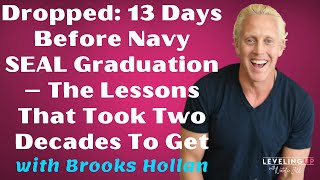
This is a YouTube video titled "211: Dropped: 13 Days Before Navy SEAL Graduation - The Lessons That Took Two Decades To Get with..." featuring an in-depth podcast conversation hosted by Natalie Jill with her husband Brooks Holland. The discussion, recorded before August 31, 2020, explores Brooks's personal journey from being a top-level swimmer and Naval Academy graduate to his experience in Navy SEAL training, the challenges he faced including being dropped shortly before graduation, and his long path of self-awareness and personal development. The content focuses on themes of resilience, identity, overcoming setbacks, and the importance of internal growth, with both Natalie Jill and Brooks sharing insights and reflections on their personal and professional lives.
Hi, I'm Natalie Jill, fat loss expert turned lifestyle and high performance coach. When odds are stacked against us, how do we shift and create everything from nothing? How do we level up when we aren't feeling it yet or have had a big setback? And how do we adjust quickly when life throws us major curveballs? On this podcast, I do what I do best. Taking complicated information that is relevant to us now and breaking it down simply with actionable steps, steps you can implement to level up your own life. I also regularly interview some of the most inspiring and courageous men and women on the planet who at their worst, learn how to achieve success greater than they ever dreamed possible. Leveling up, creating everything from nothing. If you are new here, I encourage you to go back and listen from episode one for the full transformative experience. Today on Leveling Up, I've got a special guest. He might actually be my favorite person in the world, my husband, Brooks Holland. And let me tell you all, it's taken me the entire length of this podcast to get my husband on this podcast. He's done everyone else's podcast but mine, but I'm so excited today to interview him about his journey, his story. I think he is the epitome of somebody who has leveled up and created everything from nothing. And I think you're going to be very interested in his story today and how it ties into what you know about me and even this podcast. So, Brooks, thanks for being here today.
Thanks for having me.
Okay, on a scale from 1 to 10, how excited are you for your wife to interview you?
I will say I'm a 9.8.
Oh, that's. That's pretty good. I'll take a 9.8. That's good.
And some of my friends will know why.
Oh, okay, good. Okay. 9.8.
Yeah.
Thanks, babe. All right, so let's. I want to take people back because what my husband does today is I call him the Massive Interrupter. He is a massive interrupter, especially of entrepreneurs who have been. Been stuck. They're not fully sharing their gifts to the world yet. He has been the win behind and underneath the wings of many entrepreneurs, several that you actually know that have been hugely successful. He was the quiet one behind them. He was that silent coach behind them. And. And now he really has taken us coaching a lot more public. He helps countless individuals get unstuck, step into their gifts, and find their unique power. And he's got a very powerful story himself as to what made him step into that and why it took him so long to step out of the shadows and into the light. So, Brooks, I'm gonna jump right into these stories. Are you okay with that?
You know them.
Well, let's. I want to hear them from you, though. So take us back. So take us back to who you were as a kid. We'll start with that.
So as a kid, I mean, I was like, you know, I was just like most kids. And it all changed when I was six years old. And we're in Tallahassee, Florida. It's the summertime. It's, you know, 95 degrees out, 95% humidity, and we didn't have a pool. But I had a friend that was, you know, over to play, you know, six years old, and after, they were like, hey, we're going to swim practice. And I was like, dude, a pool sounds amazing because it's so hot out. So I go to swim practice. Guess what we did?
Swam.
No, there was no lane ropes.
Okay.
We played sharks and minnows. Like, apparently, like, the first day that I went to swim practice was basically like game day at swim practice. So then they're like, hey, do you want to go to swim practice the next day? I was like, of course. Like, that was amazing. Show up there. There's lane lines. It was completely different, but I just. I enjoyed it. So that's really. That's how it all started at age six.
What? Started at age six.
That's how I started swimming.
Started swimming. And where did swimming bring you? Because you had to play the journey with swimming.
Yeah. So I started. Then I was in my first swim meet two weeks later, and I won the 25 breaststroke. And I think that kind of. That was kind of all she wrote. And then I was all in. And then by the time I was 10, I was the state record holder in the breaststroke event. I was ranked fourth in the country. I was working with Don Gambrell, who was my. The first Olympic coach that I worked with. He was the head coach, the 84 Olympic team. And, you know, my life was swimming.
So as a kid, not like most kids. I mean, it's still a small percentage of kids that really become athletes. What did you learn about being an athlete and athlete mentality?
What.
What was the theme that you grabbed from that, and how did that help you as a kid?
It's funny. I just. I don't know. I just. I just had this internal drive. I mean, there was always. It was all me, you know, there was. Of course, there was the days where, like, I don't want to go to swim practice. My parents Were like, you're going to swim practice. But there was just something about it. I mean, and that's, you know, every time the Olympics come around, you know, there's always that segment that wants to complain about the gymnast or this or that or they're pushed too hard. I was like, that was the life I had. And, you know, everybody that was doing it with, we chose that. Like, yeah, our parents were there. They were super supportive. And there's. There's always the day where you're tired and sore and you'd like, you'd much rather watch cartoons than go to swim practice. They're like, no, you're going to practice. But for, by and large, you know, the people at that level, like, we wanted to do it. I mean, that's, that's. I mean, I was in a pool, you know, four to five hours a day by the time I was seven.
Yeah.
And that was. And it was just. There was the camaraderie. There was. You know, you've got ownership. Like, there's a lot of really positive things that come from it.
It's funny even, you know, co parenting with. With Brooks, because my stepdaughter is his stepdaughter, my daughter is his stepdaughter.
He.
I watched this conversation about you being raised as an athlete, how he'll get frustrated with, like, my daughter losing herself on YouTube or TV. He'll be like, I didn't have time for that as a kid. Like, you didn't have time to get lost in distractions.
Well, yeah, that was the thing. I mean, my days were busy. I mean, I eat, slept, swam, studied. I mean, that was it. And I guess in a way, it was good. Like, I didn't have time to get in trouble. You know, kids that come home from school or whatever and just have. I could see how hard, in a way that would be, you know, because it's. I mean, I was up usually at 4:30, 4, 45. I was, you know, in the pool at 5:25, 5:30. Then I go to school after school. I was back to practice. I wasn't getting home till 8, 8:30 at night. And then I had to be up again the next morning. And it didn't. Didn't leave a whole lot of time to. To get in trouble or.
So you were the good kid. I mean, you were the good kid. You were the good student. You were state champion with swimming. Where did swimming take you? And what. Why did you not keep swimming?
Swimming? I. I mean, at the time, again, I graduated the Naval Academy in 98. I mean, at the time, pretty much, you know, college was kind of it for swimming. I mean, there was really nothing professional. There wasn't, you know, you know, there really wasn't much after that. I mean, you could, yeah, you could swim masters and things like that. But I would say it was really, you know, once we had the Internet, boom, then you had like the Michael Phelps. And then all of a sudden there was just, you know, there was a lot more attention. There was definitely some plays for people to get, some endorsement deals, things like that. But I mean, back in the 90s, you know, it was like, you know, I swam. I swam in high school. I swam at the Naval Academy, that's where. Oh, and also in high school, I worked with Michael Phelps's coach, Bobby Bowman, for about three and a half years. You know, the Naval academy qualify for NCAA's Olympic trials. And then it was like I was off into the military. But there wasn't professional swimming or anything like that.
What does that do psychologically? Like, you work your whole life as you know it, up through, you know, to college, through college as a skill which you master. You. You become amazing at it. You're always. Can get even better, but this is your skill. And knowing like, okay, this is kind of the end of the line here. What, what does that do to somebody? What does that do to you?
It's tough because it become. And that's the, you know, as I've gotten much older, that's kind of what I, you know, what I realized. And I've had conversations with other athletes. You know, when it's like you go from that, it becomes your identity. I mean, when you're doing, you know, everything that you're doing every day revolves around this sport, whether it's swimming, football, doesn't matter what it is. So, I mean, I can see it with these guys, especially guys that played in the pros, whether it's football, baseball. It's like, this is all they've done since their kids. And then it ends and it's like, especially they had the spotlight. They had all these things. And it's like, you know, yeah, there's a. There's a transition there. And this was, I mean, again, this is a much lower level. But from the time I was six till I was 21, I was in a pool five plus hours a day or the dry land, training or everything associated with that.
But it's interesting because this is something that not a lot of people talk about, like you. You str. Athletes. It's Being an athlete's hard work. And you were not an average athlete, you were an exceptional one. So like you just said, you work towards that and then all of a sudden it becomes like invisible. So I would imagine that has to create issues with adults, if that's all you knew as being an athlete.
Yeah. So my plan, I had a really good plan. I was like, I'm going to trade in my swimming hat and then I'm going to, you know, upon graduating the Naval Academy, I was going to head out to Coronado to go be a Navy seal. So I was like, okay. Like I'm, you know, I'm a high level top swimmer. Well, I'm going to trade that identity in for, you know. Yeah, Brooks the badass Navy SEAL makes sense. Like, you know, it's elite, you know, it's the best. 80% of people don't make it through. Like, there's the team, the camaraderie, you know, the mental toughness, a lot of the similarities. You know, I'm like, you know, this is. Yeah, these are things that I thrive with.
Sounds like an amazing plan. So what happened?
It was a great plan. And then, you know, hell, SEAL training. If you go straight through, which only about 20% of the people make it through. Straight through. There's also an element of luck to that. Just because there's injuries, a lot of people that make it through, you get rolled back. It's just, it's, it's tough on your body and there's an element of luck to some of the, you know, to some degree with some of the activities like rock portage. I mean, a big wave comes in and you're trying to land this 200 pound inflatable boat on the rocks and you get a big wave. I mean, we've had where like the entire boat got thrown, the people just got thrown like popcorn onto rocks. Like, I don't care how big of a, you know, stud you are, you know, water's heavy, rocks and everything like that. You know, there was one, the entire boat crew got rolled back. They all got injured. You know, they got rolled back, so they just didn't make it straight through.
When you say rolled back, what does that mean?
You just about every six weeks a new BUDS class starts. And so, you know, there's stress fractures. I mean, there's any countless number of injuries that people have. So if somebody gets injured, then, you know, they'll get rolled back. So they'll take that six weeks. Sometimes they'll get double rolled depending on how bad it is. You know. Cause I'll have to medically screen to come back in. But it's like, all right, you got injured. You know, take six weeks and you're on limited duty so you can rest and heal to get back into training. So there's a lot of that going through the program.
So you're in SEAL training, which is super hard to get into to begin with. It's like the elite of the elite and you are learning. I have to be badass, I have to be tough. I'm gonna, this is my plan. And then what happens?
So even on that, like after, you know, Hell Week is probably the thing that most people know. Cause you're, you know, from Sunday till Friday, you're awake and moving. I think we got an hour and 15 minutes sleep the whole week. We got 45 minutes on Wednesday and another 30 minutes.
By the way, Brooks reminds me of this anytime I've ever said I'm tired. He says, well, let me tell you, yes, you're right.
I, My wife usually cracks that at about somewhere between 7:45 and 8:30pm I'm tired. I'm like, you just slept 10 hours.
Let me tell you about Hell Week. Carry on.
She's much, she is much more powerful than you, she gives herself credit for.
But I wouldn't have gone through Hell Week in the Navy Naval Academy. I mean, Navy Seals training. That wouldn't have happened, but.
Yeah, but long. So after, you know, made it through Hell Week and then a week after Hell Week, I spent eight days in the hospital with this really bad cellulitis on my, you know, my ankle. It spread to my knee and we had a couple guys, because there's, because basically during Hell Week you're, you know, you're wet, tired and moving for an entire week. And you're in and out of the bay, the ocean and again with Tijuana and you know, water, like you get, you know, we had quite a few people that got weird infections. There was like a necro fasciitis. There was like a flesh eating disease. Anyway, so yeah, I got to, I was on crazy. I was getting an hour and 15 minutes of IV antibiotics every four hours for a week. Like I was in the hospital and it was spreading. I was getting seen by like health and infectious diseases. I mean, my ankle was the size of a football and it was like a temper. It was, my ankle was like a tempur pedic football where you like squeeze into it and it just stays. You get that pitting edema. So yeah, so it was spreading while I was in the hospital. So they had to, you know, bring in some crazy antibiotics and stuff to get that push back down so I'd have surgery and you know, so then I got rolled back then. And then I got to the end of SEAL training, you know, something happened. I got rolled back to the beginning of third phase and then at the end I got dropped.
So you get through all this in SEAL training, you're about, you're so close to graduating, it's like it's right there in sight and you make a decision to do what?
Oh, in the incident? Yeah, Oh, I mean I got a, I got a safety violation that was, you know, and that was what was used. I got administratively dropped from training 13 days till graduation.
Can you explain that though? So what, because you got, you got, you are about to graduate and you're.
Yeah.
You're not knowing that there's going to be a drop.
Yeah, I had no idea.
So what happened that you got dropped.
While we were doing stuff and it was, I mean there's safety violations and I got a safety violation. But then that was what was used to, you know. Then I was administratively dropped from training 13 days till graduation.
What came up when that happened? Like, I can't even imagine what that would have felt like.
So I did what I guess at the time I was I 21, 22 and you know, everything in my life I'd set out to accomplish and then this didn't happen. So the only thing I knew at that time was let's go get wasted and like, okay, I'm not proud, but like that. I mean, so the guys, you know, you know, especially with everything that I'd been through and to get that close to the end. So, yeah, I mean, I'll never forget that.
You know, is there any like fighting or, or trying to get it back when they make a decision like hey, we're dropping you because of a safety violation or whatever it is any is there, can you even fight it? Is that or what happens?
Not so much as an officer. You know, for buds, as an officer, it's a one shot deal. I mean there's guys like through the enlisted ranks, they went to boot camp. I mean there's, I mean there was guys in my class that had been to BUDS two, three, four times, you know, until they get through. But for officers, it's pretty much a one shot deal. And also just my personality, I mean there's probably, you know, maybe something I could have done, but I'm not really one to you know, raise any more flags. Like, I just, you know, I really valued the community. And if, you know, as hard as it was, part of me is like, well, this isn't meant to be. So there's some other plan, but I'm not one to go. Like.
So what's interesting is I look at you now. I mean, I'm married to you. I've been with you for. And I've been with you for 10 years. And I look at you as somebody who is really good at figuring out block. So, like, if something's. You don't hold things down. So, like, if something's bothering you or building up in you, you address it. But I know when I first met you, that necessarily wasn't. Wasn't the case. So, like, you used to get super sensitive to, like, if we talked about Navy seals or whatever, it was like this. This trigger topic. What was that? And how do you think you. You dealt with it then versus what you. What you know now and would have dealt with, how you would have dealt with it?
One of the things that I always say is life is an awareness game. And it really took me call it 20 years to really grasp and understand and get the lesson from that.
What do you think the lesson was?
I mean, it's really pretty. It's. It's really pretty simple. Like, the lesson is like, you have to know yourself. I didn't know who I was. And so for me, it was, you know, in a sense, putting this external thing, like, okay, because, I mean, at the root of it, there's a. There's. And I think there's three core things that I think pretty much everybody can relate to on some level. You know, not worthy, not good enough, not lovable. You know, some more than others are all combination of all three. So then there's this, all right, I was elite swimmer. All right? So something external that was going to make me, quote, unquote, be enough. Something external that was going to make me worthy. Look, I've got this, you know, this says that I'm worthy. This says that I'm a badass. This says, you know, something external of myself.
So other than just saying, Brooks Holland, I'm. I'm these things. I'm going to be a Navy SEAL or I'm going to be a swimmer, you know?
You know, and I think it's common, like, we. We are ourselves, but then we have to have this resume.
Yeah.
You know, I went to this school. You know, I did this thing. I make this much money. I have this title and it's, it's all over. Yeah, you know, oh, I'm an investment banker. Oh, I'm an accountant, I'm an engineer, I'm a doctor, I'm a lawyer, like, and it's in it. All these things are fine. It's just the place that they're from. And the thing is, if you don't know yourself and you're expecting these external things to provide your worth, your value, that's the trap.
Do you think that holds a lot of people back?
I think it does. And I think that, you know, we're all victim to something. And so it's like, you know, there's people that have financial success, but it's at the expense of love. And so they hide behind their financial sex. There's people, you know, somebody did for a while too, is like, you know, I've got my friends, but at the expense of family because as you know, I didn't go home to see my family for almost 18 years. And so we can have certain. And there's the people, like, they've got tons of love, they're a love, love, love, and they have no money. And so it's really getting back to who you are and really going within to figure out these other pieces.
Yeah. And gosh, you've done such a great job at that. But help listeners understand too, because I've seen the whole journey, but listeners aren't aware of it. How did this show up? The stuff you hadn't dealt with in your 30s and your early 40s, like, how did that show up and affect who you were and how you viewed yourself?
Yeah, so after, I mean, like I said, everything in life that ever set out to accomplish, I had accomplished Naval academy, swimming, this, that high levels, high level teams, all that stuff got dropped from SEAL training and it sent me literally in this 20 year tailspin. And I guess where I first started having an awareness to it was really in my mid-30s because I would repeat this, I started noticing a pattern of I would get to the end of something, but I couldn't finish anything. And it was sort of. And then it kind of dawned on me. I was like, wait, that's what happened. So I got to the end of SEAL training that didn't go my way. So it's like anytime I would get towards the end of something, it was like there was a glass ceiling there, I'd kind of tail off and oh, I'm going to go do something else. And so I started seeing this and all of a sudden, wait, it was in my. And it got to the point where, you know, I was in my mid-30s, I was $32,000 in credit card debt. I had less than $5,000 to my name and every account in the world. And that was including, you know, things I'd put in retirement, you know, military retirement. Everything I owned in the world was in a 10 by 10 storage unit. And I was sleeping on an air mattress at a buddy's house that was getting foreclosed on. And it was at that moment that's. That's what I talk about, that victim. I had to stop blaming. I had to take. I had to take full responsibility for everything. I couldn't blame, you know, my dad. I couldn't blame the military. I couldn't blame this boss or that boss or this situation or that situation. And, you know, so it was taking that level of responsibility. And then even since that, in the years, again, life is an awareness game, really. Having an awareness to what really taking, you know, radical responsibility is.
And how did you make that first step? Because by the way, y', all, Brooks is the one who introduced me to personal development stuff. Like I was the, I was the anti personal development for. It was funny. People will turn to me now and say, oh, you're so into personal development. I was not at the time. And anyone listening, that's anti personal development, by the way. I'm just going to throw this out there. You probably need it the most. Because that was me and Brooks. But Brooks, how did you. Because that's, I'm assuming around that time is when you started stepping into more personal development.
Yeah. And it was just. We keep wanting to make everything external. It's like, well, I'll be happy when everything external is fixed. Once those people, that president, that politician, everything is projected outwards. And all those things really, they're just a reflection of what we have going on internally. That was a big thing because I used to. I realized how it was, you know, if, you know, if all these people would do something different, then I would be okay. But let's be honest, there's absolutely zero freedom in that. And that's absolutely impossible if you think that, quote, unquote, the world is going to change.
Yeah.
To make you, you know, feel better.
So even though you started recognizing that and you started doing work on yourself, it was still showing up in other areas of your life. Like in business with us, when we did it together. Can you speak a little bit into that? Like how you viewed stuff then and then, how you look back on that now?
Yeah. And that's. I mean, again, this. Because this is one of my core tenants, that life is an awareness game. And so, you know, if the car in front of you slams on their brakes, but they don't have. But their brake lights are out, what's probably going to happen?
You're going to slam into them because.
You'Re not aware that they're slowing down.
Totally.
And so, really, life is this journey. It's not a destination. It's not like climbing Everest, putting your flag like, oh, I'm aware. Like, I'm. I'm. Quote, unquote, I'm fixed. Like, everything is good when you get to this point, it's constant. Yes. You might get rid of some of these, you know, heal some of these major things, but we're constantly refining our awareness. We're constantly. You know, it's the little things that as we move through life, you know, we keep healing from within. And then. And a good way to know that is anytime that we're triggered, it's never. Whatever it is, it's never the crazy person at Target or the politician or the person commenting on Facebook, anytime, something like that. It's just. It's just a. It's just a clue that, hey, there's something still inside of me that I get to keep working on.
Yeah. So Brooks and I started my business together. Natalie, Jill, fitness business together. I had started initially on my own. Brooks came in, stepped in, made it a lot better, and we worked together at it to grow it. And then you decided you wanted out. But I would love for you to share kind of your perspective on what happened then and then now your awareness around that now.
Yeah, there was. I mean, there was a lot. I mean, there was. There was a lot of success. And then. And I think that was. Let me just run. So basically, when we would go through SEAL training, I mean, it was that. And then we'd go out Friday nights for dinner. All the guys, we'd say, look, we're not talking about work, and we would just completely shelve it. And so it's like, I knew that I could work hard and all that stuff. And where that came in with the business from my perspective is just there wasn't an off switch, There wasn't a pause switch. And I was, you know, And I was, you know, behind the scenes doing a lot of work. So Natalie is like, we worked together as a great team because she would have ideas and I would execute, and it was great because I got to stay in hiding. I got to stay behind the scenes. And it was like, you know, if she was generating stuff, because I'm not the quick start, I'm not the go, go, go get stuff done kind of person. But as she would generate stuff, like, I could clean it up, make it better, and go out. So we had a really good system there for a while. And I think it was really, like, 2015, and we had such a huge year. And I remember very clearly because we were down in Hawaii, and we were down in Hawaii at the Ritz Carlton for a week, and first class. And you're like, hey, I just want to take a month off. And I was like, awesome. We've worked really hard. We just came off doing. I think we did $2.1 million. We were good. I was just like, cool. And it wasn't like, hey, let's just fold up and quit life. But, like, all I want to do is like, let's just not have our foot mashed on the accelerator. And then it was like, you said that. I was so excited. Cause we were going to take a month off, just spend some time together. It wasn't just going to be work, work, work. And then there was a phone call, and then there was. You were going to speak on a stage in six weeks, and this whole thing had to be created. And it was just like, you know, off again. And that's what. And the thing is, I didn't have enough awareness at the time, so.
Interesting. So from your perspective, knowing what you know now, what were you. What was your belief and blame then and how do you look at it now? Like, how. What could have gone differently?
Yeah, because that was the thing. I was still external, like, So I think it was, like, to blame, you know, I was blaming you.
Yeah.
Like, if she could just slow down, like, we could just enjoy this. And so, again, you know, it was. Everything was, you know, external. If Natalie would do this. So if you find yourself, like, everything will be fine. When your partner, your spouse, or whoever it is, once they fix whatever it is, it's probably a good sign that you got to start with yourself first.
You know, it's so funny looking back on that now, because I remember that exact time and what. It's interesting how much work we've done to kind of come back to this place, to even talk about it, because in Brooks's mind, I'm go, go, go, go, go. There's no off switch. I'm not getting, you know, validated for what I'm doing, or this is coming from you. Like, I'm Doing all this work. I want to take a break now. So you were blaming me, in my mind, because my personal development work to. To be done was to feel safe and to feel secure. So if you look at it from that perspective, if neither one of us were doing work on ourselves, of course we're going to blame each other. You're blaming me that I'm go, go, go.
And you're like, why can't you keep up?
Yeah, why can't you keep up? But we both had our own work to do and it was, it took you realizing that you're powerful and that you can own a voice and all these things and the work you had to do. And then I had to learn that I can be safe without go, go, go.
Right. And it really, I mean, like you said, like, it took me taking the lead and stepping into leadership to work on myself first, and then, you know, that kind of set the tone to start, you know, for you to start looking at it.
So I will, I. I know Brooks is a powerful coach because he coached like the most complicated person and that's me. So for me to have been able to take a step back and dig deep, deep and get out of that and like work on internal things to change, that took a powerful coach. That's why I call you the, the massive interrupter, because that's what you do.
Yeah.
Yeah. So looking back now in the LA, like you said, tales been for 20 years, is it. Do you find yourself looking back at different things where you had blame and now having this new awareness, like, oh, if I had seen it that way or what?
Yeah, I do that with like literally every situation is one of the things is, you know, we like to apply judgment, you know, good or bad, but really it's just, they're just lessons. And the thing is, is to look for the gift or the bless or look for the gift or the blessing in every situation, you know, and sometimes it can be tough. It's not going to be, you know, it might not be crystal clear, you know, at first, but one thing you can always go to, if whatever it was that you went through. I've worked with some people that have had some, you know, intense, crazy things that have happened to them, abuse, things like that. And if you're still alive today, then there is a gift and a blessing that's there.
Yeah.
And the thing is, and the thing is, is once you see that and get to the other side of it and that's, you know, they're two sides to the same coin. And so, you know, people that have felt what's the opposite of unworthiness, worthy worthiness, and they're two heads to the same coin. It's the other side of it. So if you've felt and experienced intense unworthiness, there's intense worthiness on the other side. You're just not aware to it yet.
You always have said, and it always stands out to me, that the lesson will repeat itself until you get the lesson.
You will repeat the pattern until you get the lesson. And this in the. And the interesting thing about this is, if you really take it, it actually goes on for generations.
Explain what you mean by that. Give me an example of that.
It means, like, the patterns, you know, the things that we realize that we have to interrupt. If we really look back, our parents were doing the same thing, and our grandparents. And I've coached a lot of people where they weren't aware to it until they saw it in their kids.
Yeah, that. Me included. I just shared that with you.
Right. But I've had multiple, you know, multiple people that, you know, it was the, you know, because a lot of times that's the thing when you have the unworthy, like, you'll do anything for anybody else. You know, I mean, and we've talked about this. Like, one of the biggest ideas is, mom, like so many women, they have a kid, what do they do? Not all cases, but a lot. Like, the kid comes first and they take a back seat. And the thing is, you can never take a back seat in your own life.
Yeah.
And so you always have to be for that. So. But that's what happens is, is people will do anything for their kids. And so a lot of times, like, it's seeing their pattern showing up in their kids. Yeah, that's that. Oh, my God. And that's a lot of times is, you know, that's what it took. The repeating of the pattern to get the lesson, to get the awareness. And so a lot of times that's why a lot of these things are hard for people, because they're not just interrupting it for themselves, they're interrupting it for, you know, the generations.
Yeah, I. I fully believe that. And I. I just had one recently where I saw something showing up at my daughter, and I went into a deep sadness about it. Like, what. What am I? Until I figured out where that was coming from. And like, wow, that is a pattern repeating from my parents and from their parents. And. And I saw that link.
And a lot of times that's the thing. And just for, you know, Spouses, partners. A lot of times that you just have to be patient. Like, that's one of the things that, you know, I've really had to learn. You can't, you know, you can't say it louder for people sometimes. Like, you just, you know. And that's the thing. As you do the work on yourself, it gives you a sense of patience and a sense of calm, so you can be there to support somebody because you can't always, you know, you can't force it a lot of times.
So I have a bunch of questions now, and this will be interesting asking my own husband this, but what would you say? Okay, so taking back to, like, 2015 with us, because we, Brooks and I almost didn't make it. We almost. We had definite times where we almost ended. We almost got a divorce, and then because. But then we did the work and came back to things. If somebody's there listening right now, like, they're in that mode of it's my spouse's fault or whatever, what advice do you give them?
To start, you have to turn that lens inward first. And it doesn't mean it necessarily. But, you know, one of my coaches said, they're like, look, you can divorce her. They're like, you can leave her. And they're like, and you're going to repeat the pattern until you get the lesson. And so. And that's. That really landed. That really landed with me. And. Because a lot of times what we're doing is it's. It's things that internally we don't like about ourselves, that we're, you know, we're projecting that onto our partner. It's being mirrored back.
It's true.
And so, you know, just. I'm sure we'll talk about here in a little bit, but just as far as. For me, you know, coming out of hiding, because that was the thing. It's like, you do all this work, but it's like, you know, there's these triggers. I had the awareness that just every time. So I come up, I go and turn. I'm like, yep, that's. That's the button that's pressing. That's why I'm feeling triggered.
Yeah. So let's talk about that. Because that's what you help people do now. You take them out of the darkness and into the light. Explain what that means.
Like.
Like for you. Like, how did. How have. Give us an example of how you've done that yourself.
Well, that was kind of this. You know, I was always. I mean, it used to say on Facebook, That I was the invisible half at Natalie Jill Fitness. Like that's the title that I had on there. But that just speaks to how I thought of myself. You know, it didn't matter that, you know, that there was two of us and I helped create two multiple seven figure businesses. It didn't matter because I didn't have the belief sets, I didn't have any of the things there to match it.
Interesting too that you said because that, that wasn't my words to you. But.
You know, but that's, you know, that's the other side. That's these, these stories and things that we've, you know, that we've had since we're kids.
Yeah. So how have you. Was it? I'm assuming. Well, actually, I know it wasn't, but share for with listeners. It, it's not comfortable coming out of that.
It's never comfortable. You know, everybody talks about the comfort zone. You know, in the comfort zone, it's not getting up 20 minutes earlier or eating a kale salad. While, you know, those things might be uncomfortable. The comfort zone, it's interrupting these, you know, usually decades long patterns of being in a place, you know, and it's, and this is the thing that people really don't understand. It's going to feel like you're in physical danger. You know, like I've worked, you know, I mean, myself included, but I've worked with Navy SEALs, Special Forces, combat pilots, and they would rather be in a combat situation where they're getting shot at than stick their arm out, press down their thumb and do a video that the world's gonna see.
Wow.
And a lot of people, I know people like you be like, that doesn't make any sense. Like you're, you're in the comfort of your own home. You're just putting your arm out and pressing your thumb, like doing a video. Right. But if that's where your fear is of being seen.
Yeah.
You know, and like for the whole world to see that, like, that's gonna feel. Whereas like the other thing, it's like, dude, I got 20 years experience, I've got training people shoot. I mean, it's like, that's comfortable to me.
Yeah.
Whereas this is massively uncomfortable.
Yeah. And I, I did not get that before. I get that now because I, I would get so frustrated. Like, I'd be like, what do you mean? Like, why can't you just be on camera, do live? Like that's. Because that's natural to me. But then I went to jump out of an airplane and I. You were laughing at how scared I was.
Well, there's some airplane, but I even do something simpler. Like when it's, you know, things where you've had to like sit there without your phone and be quiet for 45 minutes. Like that is, you know, almost like torture for some people because there's. We all have these, I mean, again, we have these same core wounds. Just you and I stayed safe in 180 degree opposite ways.
Yeah.
I let the perfectionism, the procrastination, the research, the imposter syndrome, the knowing more, you know, I let my not good enough, not worthy keep me in hiding. Is. Whereas people on the other side, you know, they take massive action and they're constantly getting, you know, external validation and oh, you're so good accolades, this, that or the other, you know, that that confirms that they're worthy. But the trap there is, is they can't stop.
Yeah.
They can't take a vacation because oh my God, like to go away for a week, like, I'm not gonna get this, that validation for a week. And then when they slow down, they gotta deal with that thing underneath the surface. So it's just way easy, especially today's society. Like you can stay constantly connected.
Yeah.
You know, there's always, you know, you could, you got social media, podcasts, tv, like you can literally from the time you stay up, stay quote unquote busy until you go to sleep.
Yeah.
And so there's just some like, same core wounds, just two opposite ways of, of managing it.
Yeah. Interesting. Yeah.
And that's why you see so many, you know, really, you know, trying to do the meditation, trying to, you know, trying to be present, you know, trying to find those things. And the thing is the root of that, it's still, it's, it's doing that healing, you know, and knowing who oneself is and being okay with it.
So how does one start? Because you've done so much work over the years and like, if someone's listening, they're like, okay, I hear you. And I. And I want to fix this. I want to get out of this, I want to change it. Where do they start?
So another thing that I always say is it's, it's simple, but it's not easy. And you know, if I had a dollar for every time I said I already know that or something like that, you know, I would be a gajillionaire. But the thing is, I wasn't doing any of the things. But I have, you know, over the years and the people I've worked with, you know, I've created a process that I take people through, and now I've called that. It's my program into the light. And the first step there, because we can't get anything accomplished when we're still in a victim state. And there's degrees to that victim state, but it doesn't matter. Like, we can't be in a victim state. And so the first step is to figure out what's the story that we're being victim to, you know, and that could be. You could be crazy successful at what you're at. You could have made a quarter of a million dollars for the last 20 years. But if that's still your story that, like, I'm a whatever and I make 250k a year, like, you can have a very comfortable lifestyle, those things. But if that's the story that you're victim to when there's so much more that you could be doing, or it's also, you start listening to your soul. You start. You start having these knowings, like, you know, that you're meant for more. But, yeah, at some point, we're victim. There's some story that we're victim to.
Yeah. So when you work with somebody, you help them figure out that story. Because I'm. Most people don't even know they're carrying this story.
Yeah. Because again, it goes. That's like life is an awareness game. And so we bring the awareness and we got it. First thing with. The very first thing we have to do is interrupt the victim story.
Okay.
Because we can't do anything from a place of victim because the only thing a victim does is enroll and attract other victims.
Yeah, that's true.
Because that's. That's the most powerful thing.
Yeah.
And we see that. I mean, it's perfect timing right now. We've seen it with, you know, Corona. We're seeing it. We have an election come up, you know, and these things, what they do is. And again, I grew up in a news family. I used to be one of those people. They would get so, you know, triggered and there was so much emotion. Understand it. But really, it's. It's, you know, the level of emotion and trigger you have around a politician or something like that. It's really just an indicator for the amount of work that you need to go do on yourself. It does. It's not gonna say you may or may not, like somebody's policy or whatever. But the thing is, is as you heal, it won't have that visceral reaction. Inside of you.
You know what's funny? So you guys don't know this about my husband, but my husband was like, my whole family would talk about my husband's feelings on politics or whatever. And I'll say in the last two years, he doesn't talk at all. It doesn't even come up. Like, it doesn't even phase you. Like, you could, I could tell you that something that would have sent you into a total tizzy a couple years ago, and you don't even. Doesn't even phase you now.
Yeah. And it's, it doesn't mean that I don't care. It's just like, you know, I have my opinions, but that's like, that's the freedom. Yeah, the freedom is, is, you know, I mean, again, at this time, you can't go on social media and not see somebody posting something, you know, but the freedom is, is when you don't get that, that triggered feeling or where you feel like you have to, like, pound out some comment and people arguing. It's just, I mean, it's, it's, it's literally, it's all just a distraction.
I've also seen how you show up with me differently. Like, when you see me in a, in a, in my stuff, you used to get mad at me. It would be, it would be an argument. But you totally. You've handled me different with that.
Well, because I had to handle myself. Because even when you were in a tizzy, like, I was in my own tizzy, but it was just easier to put it on you because again, like, it was still. Yeah, it was, it was, it was the awareness of, like, I still have more to do.
Yeah. And by the way, we're certainly not perfect at this. We definitely make our mistakes. But I always say it's gotten a lot better because I see how he shows up to something and I show up differently. Like, it, it, it. They do play off each other.
And that was the biggest thing I realized. Like, I had, I had to take the lead, you know, because for years I was like, in it again. It was just. I didn't know better. So I would reach out to other people for help, which I know come back to you as like I was, you know, talking about you or whatever. But it's really just like I needed help, but I didn't know, you know, hoping again, something external, somebody else could help. But then, you know, I had some really powerful coaches and mentors that I worked with, and really seeing. It's like, you know, it has to start with You. And so, you know, as doing that, like you said, like, you could notice a difference.
Yeah.
And the thing is, is when you work on yourself, people are going to notice.
Yes.
And they're going to, you know, there's going to be a level of curiosity. There's going to be. They're going to feel the energy shift. They're going to feel the patience, they're going to feel the love. They're going to feel all those things.
So what showed up on the other side for me is my big thing with needing to feel safe. Like, that started happening, so then that made me want to drive less forward. That makes sense.
Right. And again, it really. Did anything really change with safety? No, but you, like, you started to feel safe with who you are also.
Because you were showing up different, too.
Right.
All of it.
But it was also. But it was also your level of awareness because. And that was the. The other ironic thing, like, as a guy that went to the Naval Academy, went through SEAL training, you know, when she's like, I don't feel safe, I'm like, are you kidding me? Like. Like, look at where we live. Look at, like, you know, the things we've created. You're safe. But, yeah, it was. It was an internal level of safety. And that's also where you get to look back, you know? You know, because we can logically know stuff and say, hey, where do we get that story? Where did it start that I felt unsafe? And a lot of times, you know, we can trace those things back to, you know, something in childhood, and we gave something meaning, and then, like, they can.
You know, which is interesting. Had we gotten a divorce when all this was. We were sort of seeing all this, you would have repeated the pattern with someone else. And I would have repeated my story of not feeling safe, because here I'd be divorced.
Because you got to be right about it. Yeah, look, see, I'm not safe. I mean, because that's. But, I mean. And that's the. I didn't have an awareness to it, but I. Because you said that even when we were dating a lot.
Yeah. It's interesting, exactly what you said about patterns repeating until you get the lesson. I. I see that and feel that so strongly now, and I hope people listening can start to see if something's not working in your life. Where are you blaming. Where are you looking externally at that and where are you avoiding looking at yourself?
Yeah.
Wow. So what I love now is Brooks does a lot of things. He's an. He's an amazing entrepreneur, and he helps me tremendously with what I do still. And he is my most powerful coach. But he also is now coaching individuals and he's got a wait list for people for individual coaching. But he is doing a group program. Can you talk about that a little bit?
Yeah. So my group program is called into the Light. And it's for, I mean, really just that people that have been in some sort of hiding and it doesn't just have to be the, you know, perfectionism, procrastination, haven't taken any action. You know, it's. Where's the areas that you haven't stepped into the light in your life? Like where, where's the stories that you're still being victim to and you're still in hiding? You know, again, I'll use the example of like with my family, I didn't go home to see my family for, you know, almost 18 years, which he.
Has now, by the way.
Yeah. And again, so, you know, I drove 5,832 miles, showed up unannounced, knocked on the door and spent three and a half days with my family. And so, you know, it wasn't like, I mean, I left there, I call them thousand pound invisible anchors. You know, those are the things that, you know, the, the emotional weights, the internal weights that people can't see. But those things that were lugging around all the time.
Yeah.
So in that case it wasn't, you know, not everything is a financial benefit, but if you're, you know, when you're honest with yourself and you look at these things like, where are these relationships? Like, what does that cost me over the years? What is the, you know, fighting with a sister, a brother or a parent or, you know, what is that costing you? And a lot of times it's like once you release those thousand pound anchors, once you clear those things, everything else in your life will change.
How do people find out about Insta Light? How do they see if they're a candidate for this? How do they participate in the coaching program?
They can, you know, through social media, especially on Facebook. I've got a bunch of Facebook lives and, you know, content there. They can see if it resonates and then, you know, just shoot me a message or an email.
You can also send an email to Support Natalie Jill Fitness.com and I'll make sure it forwards to him. SupportNatalieJill Fitness.com Yep, they can do that as well. Thank you, Brooksie.
Thank you.
Thank you for taking the time out of your day to listen in as my guest today if you found this episode valuable, please share it with friends and on social media. I don't advertise this show, so I rely on word of mouth and reviews to get it out in the world. The biggest thank you that you can give me is leaving me a review and a nice one. I hope. By the way, this is how others find these episodes. If you do leave me a review, be sure to message me me@supportnataliejill fitness.com with a screenshot of your review because I would love to send you a free digital download of my DSR journal as a thank you. And please don't forget to connect with me on social media at Natalie Jill Fit on Instagram and Facebook.










