222: Birth Of A Snack Food Brand… The Story of PeaTos with Nick Desai
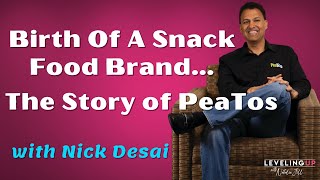
This is a YouTube video titled "222: Birth Of A Snack Food Brand… The Story of PeaTos with Nick Desai" featuring a podcast-style interview recorded in November 2020. Natalie Jill, a fat loss expert and lifestyle coach, hosts the conversation with Nick Desai, Chairman and CEO of Snack It Forward. They discuss the origin, vision, and growth of PeaTos, a plant-based snack brand aiming to offer a healthier alternative to traditional junk food. The dialogue covers Nick's entrepreneurial journey, the challenges of creating a better snack, and the concept of a "bridge food" between junk and unprocessed foods to impact health positively.
Hi, I'm Natalie Jill, fat loss expert turned lifestyle and high performance coach. When odds are stacked against us, how do we shift and create everything from nothing? How do we level up when we aren't feeling it yet or have had a big setback? And how do we adjust quickly when life throws us major curveballs? On this podcast, I do what I do best. Taking complicated information that is relevant to us now and breaking it down simply with with actionable steps you can implement to level up your own life. I also regularly interview some of the most inspiring and courageous men and women on the planet who at their worst, learn how to achieve success greater than they ever dreamed possible. Leveling up, creating everything from nothing. If you are new here, I encourage you to go back and listen from episode one for the full transformative experience. I've got some crazy statistics for you before we start this podcast. Did you know that there are 92,000 Cheetos eat in a second and that cheetos is a $1.7 billion business and that 48% of Americans have eaten one in the last year? I had no idea. And that the mother company Frito lay is a $4.5 billion business and that it takes up 60% of the snacking market share? I had no idea. Well, Nick Desai, Chairman and CEO of Snack It Forward, has a vision for junk food without the junk and he's creating a massive and impactful disruption in the junk food industry. You see, Nick believes there should be a bridge option between junk and totally unprocessed natural foods. And he's willing to risk everything to make an impact on the obesity and health epidemic while being honest with who they are today. On Leveling Up, I can't wait for you to meet Nick Desai. He's been the chairman and CEO of Snack It Forward since 2013. Now Snack It Forward, a better for you snacking company with a focus on plant based snacks, boasts a portfolio of beloved brands including World Peas, Sunkist Snacks, the World Peas and their whole mission is to help mainstream America eat better by creating junk food tasting snacks with more substance. Now in 2018, World Peas launched PitoS. It's a crunchy puff snack that is a new twist on American classic with 4 grams of plant protein and 3 grams of fiber per every serving. So this is typically found in the produce section. Are currently available in over 4,000 stores nationwide, including every store under the Kroger banner as well as Vons, Pavilions and Albertsons. So I wanted to know exactly how Nick Desai and Pedos Leveled up, creating this massive interruption and how they did it. So join in today. You're going to love meeting Nick and hearing his story today on Leveling Up. I've got the founder of pito's Nick Desai. And I can't wait for this conversation today because you all know if you've been listening to Leveling up for quite some time, that when I love a brand or I love a product, I get really curious, like, how did this idea come about and how did you make this company come to fruition? So I'm so grateful, Nick, that you're here today sharing with us. Thank you so much for being on Leveling Up.
Thank you, Natalie. It's really exciting to be here and I'm really thankful that you're giving us this opportunity to talk about our story.
Yeah, yeah. So I'm going to dive. I have so many questions for you, but I want to share with the audience something that they probably don't know. Nick actually reached out to me because his wife was following me and had done some of my programs. And when he first reached out and sent me pitos to try, I was like an absolute no. I said, this doesn't fit in my brand. I don't want to do it. I had all these reasons why. You guys know, if you don't know. I have a best selling book called Unprocessed yous Diet. So right away I was like, no, no, no. And he said, let me talk to. I want you to understand my vision. And I instantly liked and connected with Nick when he explained his vision. It's so incredible. I'm going to get into that today because what he's doing is making a true impact on health and on our world and on kids. So, yes, I have so many questions for you, Nick. So thanks for being persistent with me. First of all.
Well, thank you and thank you. It was actually exciting to be able to have you have an open mind and I really appreciated that.
Yeah. So Nick, take us back because you weren't. You never set out to be in the food business. That wasn't who you were initially. I know you were a lawyer, an investment banker. You were in the entertainment. Tell us a little bit about that. Like who were you before Pito's?
So after growing up in Orange County, I started my career as a lawyer at the MGM Studios. I did a JD MBA from Loyola Marymount and then I went to. My first job was with the MGM Studios. I had a dream of joining the entertainment business, you know, and coming from the business and legal background. I thought that the ideal way would be to, you know, go in as a lawyer or go in as, you know. And eventually I actually was thinking about producing films and TV shows. So my first experience in was working for mgm. And during that timeframe, I was a lawyer. I quickly realized that I didn't like the law aspect of it, but I did love the entrepreneurial aspect of it. The biggest thing that I did learn from the entertainment business was, was about storytelling and about the importance of storytelling. And I learned there was a former talent agent who had become my boss. And he had this great quote. It was the best movie is the one that no one has seen. And the best screenplay is the one no one has read. And it taught me a lot about human nature. Right. Like how our imagination always makes things bigger than reality. And there's nothing more powerful than what your mind conjures up something to be. Usually reality, unfortunately, often disappoints us. But that taught me a lot about the power of storytelling, which then, when I moved into now, then moved in. Use my finance background, because I remember the MBA and the law degree, I used my finance background to move into the investment banking world. And that was like a perfect blend. Because most investment bankers are trained to be very analytical, very numbers oriented. And I had the benefit of understanding how important the story was. And that's what made me really good. That's what actually separated me from the pack.
Yeah.
Because everyone I always tell people, look, the numbers are the same no matter who offers them up. You could be a good banker or a bad banker. You could be a big firm or a small firm. At the end of the day, the company's numbers are the numbers. And the numbers they say don't lie, but they also don't tell a story. The story is something that's bigger than the numbers. Right. The story is, how did you get here? What do you really want to do? Where are you headed? And why is this important? And by the way, why should I believe in you to make this happen? You know, and those are the things that I think, at the end of the day, separate, like a good investment from a bad one. An investment that people will pay more for versus less for. And that was really a key element for me.
Gosh, that's so amazing that you just said that. Like, so many light bulb moments for me right now. I mean, it's even just like how you ended up on the phone with me was your storytelling ability, like, let me tell her my story. And if I think about like connections and businesses that do well, we typically know their story. Like we know their journey, we know the story and it makes us root for them or want to support or want to be part of.
Exactly, exactly. And I think that people want to support important missions. And especially in this country, which I love about this country so much, is we love to support the underdog, you know, and we like the underdog. And I like that.
Yeah. So, okay, so how did you end up in food business then? Because like, that's a whole different world. Like, you could have gone into more storytelling stuff. You were investment baking, you were doing, well, all these things. Like where does it even go that you come up with this idea like, I'm going to create a food company?
Yeah. My story was never one where like, you know, there's people who are like, oh my God, Since I was 18, I knew I wanted to be this, you know, and then they're like working at it and working at it. That's one type of story. Right. You hear a lot. For me, it was never that way. Like I didn't know what I wanted to do exactly. In fact, I never really knew, you know, it was always like my journey was just kind of continue on, you know, like, yeah, one path will lead to another, would lead to another. So the entertainment business led to the investment banking, the investment banking led to private equity. Because I wanted to actually start owning something instead of, you know, of being a middleman between other people's businesses. And when I, when I went and moved into private equity, the first company I bought was actually a software company. And I was doing turnarounds, like distressed companies. And so that was a great experience because you're really learning about how things, you know, businesses that are broken, that need to get fixed and so you're really rolling up your sleeves and becoming hands on. And so I did that with the software company and I did it with another company that was in the technology space. It was making like, you know, those little components that go into sound systems and stuff like that. And then a third company that was again, technology related, so nothing to do with food at all. Right. But the fourth company I came across was a company here in Southern California that was in the snack food space and it was doing nuts and trail mix type products. It was nearby, you know, so I wanted something that was nearby because I wanted. I'm from Southern California, I love this area. I didn't want to move out of this area. It was like the perfect size. It was a little bit distressed, which is What I like, because I was looking for companies that I could acquire and kind of fix and take in a new direction. And the food industry had always fascinated me because, first of all, I like the food industry because it's something that everyone gets passionate about who doesn't eat. Right? So like. Like now, like, when you talk to people about what I do, it's like everyone has an opinion. And I actually love that, you know, as opposed to before, when I was in the software and technology world, like, people's eyes would glaze over when I said what I did, you know?
Yeah. It's more interesting. Like, everyone. You're right. Everyone has an opinion when it comes to food.
Exactly. So. So it's something that's near and dear to everyone's heart, and I like that. But specifically, I had certain ideas around snacking, and those were. Those were ideas that had developed based on my own personal experience of my travels outside the US When I was growing up. I was born in the U.S. but my parents are from India originally. And so I had traveled to India, which, by the way, is on the other side of the world. So when you travel to India, you kind of end up traveling everywhere else, too, because even to get there, you have to stop in either Europe or in the Middle east or whatever. So I ended up traveling a lot. And through that, I was exposed to a lot of different cultures, and particularly the Indian culture because my extended family lived there. And here in the US I was like, an avid consumer of what I would call salty, crunchy fried stuff. That's how they call it. And that's like Doritos, Cheetos, Funyuns. Right. Those kind of crunchy snacks. I was never a sweet lover. Like, I was the kind of. I was the guy that, like, after dinner, I didn't want to eat cake. I wanted to eat Doritos.
Okay.
So when I traveled to India, I was exposed to the Indian world of salty, crunchy fried snacks. And it was then that I kind of discovered this whole other type of food product that actually fulfilled a similar need as the ones that I, you know, as the types of snacks that I had here at home. And I'm always one of those people that likes to go into the root of something. Like, I think telling a story. The key in telling a story is to understand the behind. The behind. Right. The what?
Yeah, the why, the real.
Yeah. And the true underlying motivators of human behavior. Right. Not the one you see on the surface, but the one way behind that. And so when I looked at These snacks, I was like, wait a minute. One could say that this snack here in India and this snack, this Dorito here in the US Are two very different items. They look different. They have different. Slightly different textures. But one could also say they're actually fulfilling a very similar human need. And that got articulated well for me in a book that I had read by a Harvard professor called Salt, Sugar, Fat. And it was a book about how these three ingredients are so genetically hardwired into our psyche. You know, these three classes of ingredient classes, let's call them. And so the human desire for salty, for sweet, and for oily, like fatty. Right. These are very basic human traits that are hardwired into us. And if you look at a lot of the different food products around the world, you can marvel at how different they are, but then you can also marvel at how similar they are, because you can lump them into one of those categories. In India, these snacks that I was having was satisfying the need for salty, fatty, Salty, fatty crunch and Doritos is the same exact thing. It satisfies the need for a salty, fatty crunch. So it actually taught me about how similar people are in that way, but.
They use a different base. And that was interesting that you said that, because I would like. If you think about most junk food here, like, in the salty category, it's like corn. Corn based, for the most part. Correct.
Exactly. Yeah, exactly. Corn or potato base. So those are the two big ones, but corn is the number one. Yes.
And what is it in India?
In India, it's peas and lentils, which is. Yeah, they use, like, peas and lentils, which sounds so different. But again, when you. When you. When you fry them and put salt on them or seasonings on them, you again, get a very similar overall experience of this crunchy, fried, fatty thing. And to me, it was like the same. Like, the satisfaction I would get from here from eating Doritos or Cheetos was the same satisfaction I would get there from eating the local Indian snacks. And that was the insight that really led me to the place that we are today, which is. Wait a minute. If I, who was brought up in the United States and consider myself an American and have pretty much American tastes, because that's where I've been born and brought up, but still enjoy these other things so much, I felt like there's other people who would also.
Yeah, well, you were right. I mean, clearly you were right. So what's interesting. So when he first sent me the product, when I looked at the ingredients, they weren't there. Was nothing bad about the ingredients. In fact, there was things I did like in the ingredients. I liked that there was more fiber. I liked there was more protein. What I didn't like is this. It was a processed food. And for me, I'm always teaching unprocessed diet. But this is what Nick said to me that really got me. And I don't even know if you remember that you had said these exact things to me, Nick. But this is really. This was so key to me. You said, I think it would be amazing if kids would put down the Cheetos and eat a carrot. But that's not likely. Most kids don't want to just grab a carrot. So if there could be a bridge food that could get them more protein and fiber and get them thinking along the healthier lines, wouldn't that be amazing? And that was my first, like, aha. Yeah, good point. And then he also said these two statistics that were crazy to me, and correct me if I'm wrong on the statistics, but you said, if I remember correctly, you said that there's 97,000 Cheetos eat in a second, which is just like, disgusting to me. And you also said that even though Whole Foods makes up like 6% of grocery stores, I believe you said Walmart makes up like 35%. Is that correct that you said that?
Oh, yeah. Slightly off, but yes. So there's 92,000 Cheetos eaten every second.
Okay.
And 48% of Americans have had a Cheeto in the last 12 months.
40%.
48%.
48. Wow. I'm writing this down.
And in terms of Whole foods, they sell 3% of the country's groceries, whereas Walmart sells 32% percent to almost 10 times more.
Okay, so I half listened. I got most. I got it kind of right. You said 3% in. It is at Whole Food. And how many Walmart was it? How many percent?
Walmart is 32%.
32%. Okay, so, so what I took away from that was like, wow. Okay, so, yes, I teach on processed food, and I am a licensed master sports nutritionist, and I teach fat loss and healthy eating. However, am I doing a disservice by not looking at this bridge? And I. It really was eye opening to me to say, of course we want perfection eating, but that's not possible. Like, we don't. Perfection eating is very difficult. So, like, where is this bridge? And I love that gap and that explanation and the story involved there.
Well, the important thing here for me, Natalie, is that to me, commerce is very important. Right. Because we, I always talk about the, like, it's good storytelling. That's why I get learned in the entertainment business. Also, good storytelling is a blend of art and commerce. It's the difference between like a Steven Spielberg movie and like arthouse flick. Right. Like you could say, oh, I want this perfect arty thing. But the chances are that very low people will actually consume that. And that applies not just for movies, but like in food or any other thing. And if very few people consume it, then it really won't make that big a difference in society. I think commerce is important because commerce is how things get out there and more people interact with that thing. And if you look at like, let's look at a lot of businesses who have important and good successful missions. I mean, you talked about Whole Foods a second ago and we're like, okay, well Whole Foods is trying to help the world by people eating better. Right. But guess what? When you walk into Whole Foods and I'm sure you've been in many, you know that they have a pizza bar, right? In Whole Foods. Why does Whole Foods have a pizza bar? I mean, pizza is not one of the most healthy, most unhealthy foods. So why does it even bother? Right. They could have not, they could have kept that out. But they understood that at the end of the day, people eat pizza.
Yeah.
And if they don't offer it, Costco does just have this. They have hot dogs.
So why not make a healthier version?
Exactly.
Which is a bridge. Yeah. You really enlightened me to this. And I think this has been missing in the marketplace. Like there's like these extreme, you know, either or. But I don't think there's a lot of people talking about that bridge. And you are.
And I love that we're the only self proclaimed junk food out there. We literally call ourselves junk food without the junk.
Yeah.
You know, and that's why we want to be very. That's the other big thing for me is let's be very honest about who we are. We are not as good as eating unprocessed foods. We are not as good as eating fruits and vegetables. By no means. Right. All we are is better than eating Cheetos and Doritos. That's all we are saying to be. But we know the country is eating a ton of these Cheetos and Doritos, so. And a lot more frankly than the fresh foods. Right. So if we, if we make an impact there, if we can take away share from Cheetos and Doritos and Replace it with pitos, we will have made a big difference.
Yeah. And your ingredients are a world of difference. When you look at a Cheetos ingredient versus what you've created, they are. It's very different. It's like that's a whole nother level. So. Yeah, so. And what's interesting is kids do like the taste. I mean, my own daughter was approved. My husband. Okay. My husband approving that's because my husband was a Cheetos person. How can you eat this? So. And they taste the same. And same with that. I don't eat Cheetos or I haven't had funions or Cheetos since I was a kid. But I retasted. And they do. They taste. Yours actually tastes better to me, maybe because I have a more. I like natural food better anyway. But to me, they tasted better. To my daughter, they taste the same.
It's so funny you say that, because that's a great case study in how the taste buds operate. One of the guys that joined our team early on was a guy named Carlos Barroso. And Carlos was a former head of global R and D for Frito Lay. So this guy was like, you know, and he taught us a lot about the science behind how these kind of products are made and engineered. Right. And also, again, going back into, like, even the sensory experience, the visual experience, and how the taste buds, human taste buds evolve. And what it is about the taste buds is that our taste buds are not a static thing. Sometimes people say, oh, I like this, and I don't like this. But a lot of our tastes and preferences are those that have been developed because of what we had early in childhood or what we didn't have. And it turns out that if you lock someone in a room, and obviously you couldn't do this experiment, but if you did, theoretically, at least it should work. If you lock someone in a room and feed them boiled peas for five years straight, when they come out of that room, they're actually going to crave boiled peas because they've accustomed. So the human taste buds evolve to what we're feeding it, not the other way around.
That makes sense.
You were born with this predisposition for certain things. They actually, you know, get. Get used to certain things, and then you end up liking them. And that's why your mom is always telling you, like, oh, just try it. Have a little. Right?
Yeah.
Growing up. Because she knows that after years and years of saying, have a little, you're going to become an adult. Who wants that thing?
So one thing that's also cool about your food. When, okay, so when I, when I talk about nutrition, like, I typically will steer people away, for example, from refined sugar. Because when you have sugar, you get an insulin spike, you end up craving more, you eat more, more. So a lot of foods will tend to do that. So when you look at a general snack food that starts starchy carb base, right, you'll tend to eat like a whole bag. Like, you can't stop. And a lot of that is that reason. Like you just can't stop with yours, though you do stop. And the reason is because of the fiber and the protein, which you're satiated. There's. You're filled up quicker. So what I also love about it is it really does fit into the category of helping people get healthier for eating less too. If you think about it like a cup of yours is you're going to eat the cup Cheetos, you end up being the whole bag.
There's two things in ours that make that difference that you just described. And keep in mind that most of those brands are engineered to design, to want you to keep coming back for more, because that's what they want to do. They want you to keep coming back for more. Right. But in our product, there's two things. One is again, the use of the peas instead of the corn, which, like you said, adds a protein fiber element which fills you quicker. So that's one of the reasons you eat less. And then the second big thing is we're using only natural components in the seasoning, whereas they're using artificial components. Those artificial components are better suited to trick your brain into eating more. So we don't have the benefit of doing that, which of course means we might not sell as much, but still we don't, you know, that's a trade off we're willing to make, you know.
You know, it's funny, one of the questions I originally asked Nick when you first were talking with me, I said, when I first said no, and I said, let me know if you come out with like a three ingredient one. Like peas, water. I said, like peas, salt, coconut oil. I think it's something. But what I'm learning now, what I'm really seeing is that the same thing you said, it's not going to be the same satisfaction, which is the less likely you're going to get your kids to say, that tastes like cardboard then. And that's the problem. So, yeah, moms, if you want to be perfect, do that. That's amazing. And there's this bridge work to do for your husbands and your kids or for you even when you're like, you want the snacky food, you want that real thing.
But. Exactly. And that's. That's what you just said. This last comment is super important in the sense that, like, so many of us are not like, you know, we don't have just one rule. Like, it's not like, okay, I'll never eat. You know, you know, I'll always only eat unprocessed foods. That's a very rare percentage of population.
Yeah. And even me, who has the book, Nick, I'm 95%. I'm not.
There you go.
Yeah.
Right. So. So every once in a while, even you're. You might make an exception or cheat.
Or what do, like, Reese's Peanut Butter cups are my friend. Like, I'm not gonna. That will happen. So sometimes.
So if you're going to do that, if you're going to. When you were going to cheat, then cheat with pitos. That's always.
Yeah, yeah, it's true. No, I love your vision. I love. So how has this been getting this out into the marketplace and like, did you surprise yourself with how successful this became so quickly?
Oh, my God. It's been like an incredible journey. It's both been, by the way, exhilarating and surprising in how well it's gone, but also surprising how hard it's been, you know, like, both, if that makes any sense.
Well, what makes it. What makes it. This is. I would love to kind of understand them mind of someone who, like you, that creates this. Like, what was the hard part? Was it getting the initial vision out there? What makes it the hard part?
Well, at different points in the, in the journey, different things are hard. Right. Like, the very first portion of it was, can we make this product? Can we truly even make a Cheeto like or Dorito like or a Funyun like product using peas instead of corn? Is this. Is this technically possible? And also, you know, using the artificial components, can we make it have a sensory, visual and taste experience that will get people close enough to feel like they're having junk food? So that was a part of. That was the first question. Second question, once we tackle that was, yes, it's possible. And that took a year and a half of R and D, by the way, after we figured it was possible. The second question was, can we make it at a scale and at a cost that's reasonable because many times in life something is possible, but if it's only commercially viable, if you can do it in a reasonable cost. Right. Otherwise, like, if I'm selling Pito's bag for $20 a bag, like, no one's going to buy it.
Yeah.
So can we make it in a commercially viable way where we can scale it? So that was the second question, so that we had to answer by finding the right partners, the right manufacturing partners, and things like that. Once we answer that, then my third question was, will we find retailers and distribution partners who want to carry this product? Because we can't. Like when we. The way that, you know, groceries are sold to us as consumers in the US is through, you know, grocery stores like a Kroger or a Safeway or Amazon now, like online. So we needed those kind of partners who would want to carry the product. It turned out that the very first customer we ever had was Kroger. And Kroger is the second biggest retailer in the country. Literally overnight, we went from almost being in no stores anywhere to being in 2,000 stores across the country.
Wow. How did you get that, Nick? Was that you yourself? Like, was it a pr. How did you do that?
Well, it was two things. My old belief is always, first, create an amazing product that's gonna blow people away. And second, don't be bashful about getting it out there. So literally, what we did, and this is where, like, you know, we always learn these things. Growing up, we were taught to do these things, and we sometimes over complicate things for ourselves. And I think people get in their own way a lot. All I did, I didn't have a great broker. I didn't have some incredible contacts. All we did was we said to ourselves, look, once we made the product, we got a list of the top 100 retail buyers for our category in the country, right? And these days, lists are rarely available everywhere. And we sent them samples unsolicited. We literally just sent them to like, Kroger and Publix and Walmart and everyone, right to these samples. And I'm a bit naive at times, but I think that naivete sometimes helps me because everyone's like, what? You did what? No, no, that's not. No one's going to respond to that. These buyers are busy, blah, blah, blah, right? And sure enough, two weeks went by and no one did respond. And I'm like, oh, maybe they were right. This is not going to work. The third week, my head of sales runs into my office and he's like, nick, you're never going to believe this. He's like, I just got off the phone with a Broker who works with Kroger, and he's like one of the produce buyers at Kroger, got one of the samples of our product, which, by the way, didn't even go to them. It went to the floral department, which.
Oh, my gosh.
Who tried it and then brought it over to her, saying, you got to try these. And she called this broker, said, can you track this company down? And they called my sales guy, and three weeks later, we're meeting Kroger.
That's so cool.
And five months later, we're launched nationally.
So what's coming up for me around this is a couple of things. One, it sounds like you fully acted as if you had to act like the company that wasn't all the stores and not listen to people that said, that's not possible. There's better way. You almost had to act as if that. And the other thing that's coming up for me is I believe when you're onto something that helps the greater good, things work out in your favor, too. Like, you truly had a product that helps the. You had a solid vision for it. It wasn't just about helping yourself. It helped the greater good.
Absolutely. And I always tell people, think big. That's the other big thing I learned from my dad, actually, is think big, right? At the end of the day, we have very limited years on this earth, and. And you can think small or thinking big, and both are just as much work. By the way, thinking small is not easier than thinking big, it turns out. Right? So so many people would say, oh, well, first I'm going to go give. Put this product in my local neighborhood store, and then I'm going to do it to 10 stores, and then I'm going to do it to these small group of stores here instead. We went after the biggest retailers in the country, and we got one. Now, granted, you have to have the right kind of product. You have to have the right kind of vision. The reason Kroger got excited about it was because of the same thing I told you that day, which is I said to them, look, at the end of the day, cheetos is a $1.7 billion business. There are countries that have less resources than Cheetos. The Cheetos brand, you know, seriously, like, it's that big. Like, the combined sales of Cheetos, Doritos, Funyuns, and Fritos in the US Are four and a half billion dollars.
That's crazy.
Yeah, it's bigger than the entire natural snack.
I mean, you could solve world hunger with that. There's so much you could do with that. Four and a half billion dollars. And it's going to. This junky food. It's crazy.
And so. And so I said. I said. I said, that's what Kroger got. Kroger said, as I'm like, this is a massive market and we are going to disrupt it. We're going to change the way it's been done, because only by the way it's been monopolized. That's the other thing. It's not like. It's like there's a bunch of different people doing a bunch of different ideas. There has been one company that has dominated snacking in the United States for the last 50 years, and people don't realize that. And this company, which is Frito Lay, which is owned by PepsiCo, has almost 65% market share in salty snacks, which is unheard of, by the way. That effectively means they control it. Like, when you walk down that snack aisle, it is all Frito Lay brands. Right? And I talk to friends of mine who work at these big retailers, and they tell me some of them. One told me who was at one of the biggest retailers in the country. He said that 90% of the snacks, salty snacks that flow through their system, are Frito Lay brands. 90%. Wow. That's really. One company's controlling it. All right?
And if you think about the ingredients and they're contributing to obesity, you know, contributing to all kinds of diseases, like, there's so much wrong with that that that's not even. Like, that's crazy that there's that much money going into that.
Yeah. I mean, look, they do a good job. And these are amazing. Like, I always said, like, a Cheeto might be the best snack ever engineered on this earth. Like, it's a taste bomb in your mouth. Like how, you know, you can't design something.
But best according to what? Best according to their marketing and the taste, but not according to health or doing a greater good for people.
No, no, I mean, I meant best according to, like, the sensory experience of. Of your. Of your, like, primal, call it, taste buds. Right?
Yeah.
But remember, this taste will always win over health, unfortunately. And that's another reason why we have adopted the strategy that we have, because in the end of the day, we're all. Most often we're going to weaken to our taste buds, even though we don't want to. And if that wasn't the case, Natalie, then why would diets fail? Why would anyone even need to worry? Like, it's not like in the US we don't have enough fresh foods to buy. It's not like you go down to your local Kroger, and it's not like there's not enough apples or bananas or unprocessed food to buy. But yet, why do people intentionally choose these unprocessed foods?
Yeah. Well, they're also, like you said earlier, they're engineered to prey on our weaknesses. Really. It's going to trigger all of that in our bodies and our minds and our cravings and all the things. So it's just. I love that your product doesn't do that.
But it works, right? It works. And it works because our human. We're as humans are hardwired to allow it to work.
Totally.
And so we said to ourselves, look, instead of fighting the issue by pretending like this is not going, like, we're like, you know, a lot of people are trying to solve the junk food problem by either regulating it out of existence, oh, let's ban all junk food. Right. Or saying, oh, don't eat junk food. Eat, you know, these kale chips or these healthier snacks instead. Right. And what we're saying is, let's fight fire with fire. We're gonna fight junk food with better junk food. That's it.
You know, I love your vision. That's why I'm sold on your vision. Because, like, I've been doing the opposite. I mean, I'm guilty. I mean, I've helped a lot of people, but I'm also realizing how many more people I could help with having a bridge with that. Because where am I? Because it is hard for people. And I get it, like, when they're so used to eating a certain way to go to completely clean, unprocessed. So there is that bridge category. And I love that you're. That you're. If we want. If we really want to make an impact on health and the obesity epidemic, we have to focus on that bridge. We have to.
Thank you. I really.
Yeah, I think it's great what you're doing. So what's next for Pedos? Because you're growing fast and you're. And I know you had that big break with Kroger and now you're in more stores. I know you announced that you're going to be getting into even more. So what's next for Pitos?
Well, the two big things. There's three big things coming up. One is we're launching a Sam's Club nationally in November.
Incredible.
In two weeks. So that's a big launch coming up. Here. The second thing is we are going to be launching a new product format come next year. It was actually supposed to launch this year, but because of the pandemic, obviously things got a little bit delayed. But it's gonna be one of our most exciting product launches ever. So. And I won't tell you exactly. I can't tell you yet what it is, but I can hint at it. So obviously, we did the Cheetos first. We did the Funyuns ring next. So just imagine what we're going after.
Doritos or something like that is what I'm guessing Doritos or Pringles. I don't know. Okay.
I can't confirm or deny, but go.
After Reese's Peanut Butter Cups next. I'm just kidding. I know you're not doing the sugar.
Isn't there that company Justin's, that does that or.
Yeah, it doesn't taste the same. I love Justin's, too, but they taste like different products to me. There's something about a Reese's Peanut Butter cup right now, and they're terrible for you. Yeah, yeah, I'm on a lookout for that one. Like, what's going to. What could actually replace that, too?
So maybe we'll try sweet stuff after.
Yeah, well, yeah, and there's a. There's a company. Have you seen that company, Smart Sweets? They've gone after, like, the gummy bear thing. They're doing a great job there. So, yeah, there's some. So I love these bridge foods and I love what you're doing, and I love the vision. I have a few, like, just entrepreneurial questions would be helpful for the audience to know, too. Like, do you think, like, were you raised an entrepreneur? Like, were your parents encouraging of that? Or were you just, like, this creative kid that kind of like. I guess I'm going. Getting at. Can anyone become an entrepreneur?
Look, there's no. There's no the beauty of being entrepreneurs. There's no. There's no, like, you know, requirement. There's no qualification. There's no. You don't need any particular education. Right. Or even particular background. And some of the best entrepreneurs are the ones that don't have any of those fancy backgrounds. I will say, though, that there are certain qualities and traits that are important, I think, or at least very helpful. And the second thing is, I think if you've been around that environment all your life, like, as a child, it will help you a lot. And so for me, that came from. My parents were entrepreneurs, my grandparents were entrepreneurs on both sides of the Family. Both my grandparents were entrepreneurs. So you could say it came from a long line of entrepreneurship. Right?
Yeah.
It just kind of flowed in the blood. Right. Which I think. I think is. I think helps a lot. But I think some of the quality. One of the most important. I think two of the most important qualities I would say in being an entrepreneur. One is you have to be comfortable with not having the answers with the unknown. I like to say, because entrepreneurship is kind of like going into a jungle where there's no paved road and you don't know which direction to go in, and yet you need to just keep going.
Yeah. Yeah. That's how I would describe it. That's exactly how I'd describe it.
It really scary at times. And then the second big thing I think, is a second actually flows into what I just said. The first thing is keep going. Like, you have to have a relentless. Kind of like, you will be knocked down, you will be slapped around. You will be told you're an idiot. You will fail more than you will succeed. You will. I always tell people. It's funny because people think like, oh, you're so successful. I'm like, really? Because I mostly fail. Literally, almost everything. Almost everything I like I said would happen. It never happens in the amount of time I thought it would happen, and it never happens the way I thought it would happen. But I just keep going. That's part of my.
So how do you do that, Nick? And this is. I'm curious, your answer here, because failures wear on people. How do you let that fuel you and keep going versus letting that take over and say, you know what? Maybe I should stop.
Don't get me. Don't think for a second that I haven't had many moments of when I thought to myself, I need to stop. Like I think every entrepreneur does. And it's like that old saying, courage is not the absence of fear, it's the ability to keep going in the face of fear. Right. If you have no fear, I'd be worried. You probably. You could be a sociopath. Like, people need fear. So I've had many, many times and moments when I want to quit. But at the end of the day, I guess the way I'm wired, it's like, I can't do it. I can't look at myself in the mirror and know that that's what I did. I feel like there's certain things that I have to give this world, and one of them is that the fact that I just. I won't quit. You know, I love That I love that and I want to teach. By the way, having kids has actually made it more, like, a little bit even easier to keep with that mantra, because I think to myself, you know what, If I fail at the business and if I fail at everything else, at least I'll have left teaching my kids that they need to be persistent, you know, like, that's all I leave with. And that's pretty power. Like, I have four kids, so I'm like, that's. That's pretty good. You know, so good. Happy with that.
So good. And also, one thing that I noticed you do extremely well, which a lot of entrepreneurs do not take this on in a. In a great way. And I think they would be more successful if they did is the no. When you hear a no, it seems to empower you and you. Because when I. And I'll just my own personal experience, when I've said no to people, if they keep repeating back the same thing to me, that just annoys me. It doesn't, like, sway me. But, like, your no turned into it just because you were like, let me share my vision. Like, you're so, like. It's like almost like it fires you up when someone says no.
I mean, you nailed it to a T, right? I couldn't say. And. And not only that, but I always tell. Like, I even tell my kids, I'm like, guys, the worst thing in the world is not to get a no. The worst thing in the world is to be ignored. I always tell people that's. That's my bigger fear. Like, I. Like when you don't even engage with me. That's what I'm like, oh, I can't even get you to respond. Yeah, that gets right. But. But once I hear a no. To me, that's just a pathway to a yes. Like that. That. That was like. Like, I could. I have retailers telling me no every day. That's what they do. They say no. And I've converted all of them, you.
Know, so I also gave you my reasons for no. So it gave you, like, you're like, yes, this is. I got her.
Yeah, but, but. But a no, no, no, you know, is not a bad thing. Again, you know, it's. And look, you're not going to convert everyone, and you don't even want to convert everyone. It's not like you need to convert everyone. You can't get obsessed about. It's not just. It's not like, just a game like, oh, I gotta convert this person. Because they said, you know, no. But when you gave me your reasons. I knew that there was something we should talk about that I was like 90% sure you would respond to because you had the right intentions and you're doing something out of your heart and you're doing something amazing, I think, for people. And I knew, and you want to help people, so I knew, and I want to help people, so I knew that, like, if we talked, we would get aligned because we both. We may come at it from different perspectives, but we have the same goal here.
Yeah. And it's. It's really good because the times that I have shared about pedos, a lot of people are excited and want to try them. I've had a few people send back, like, kind of like tearing apart things or whatever, and I. But I don't. It doesn't even faze me now because I'm so clear on your vision and that's what you want. Like, it doesn't feel phony to me because I'm so clear on the vision of it that it makes so much sense to me that that doesn't phase me.
Yeah. And I have to learn that the hard way, too. It's hard sometimes. Like, social media nowadays is really, you know, it's like there's a people out there who are like. I don't know if you want to call them haters or whatever, but there's just people out there who are like, you know. Well, like. Like we had, you know, pedos in. You know, we had people who were like, taking the name pedos and finding meanings of it in other languages and saying, oh, why are you naming your brand this? Because I mean, this language, you know, and stuff like that. And so, like, who are these people?
Yeah, why? So crazy. So crazy. Well, I love what you're doing. You all, if you have not heard of or seen tried pitos yet, definitely grab them. You can grab them at the stores. They're apparently going to be in Sam's club. They're at Kroger's. But you also. He said that you can get them on Amazon. You can go to their website@pitos.com and if you go there, actually, there's a discount. You can use Natalie 10 and save on them. My personal favorite flavor. And my husband's, by the way, Nick is the one you said is the least popular, which is so funny to me. Like, I'm obsessed with the ranch ones. I love the ranch ones, but all of them are. My daughter loved the onion ones, like the Funyuns, and then the cheese ones taste just Like Cheetos to me. I mean, like to everybody.
The top selling items are the onion rings and then the cheese.
What about the fiery ones? Do those sell really well?
Those are like a neck and neck. So those are the top three. Like the fiery and the cheese are like neck and neck with each other. Petos.com is honestly like the fastest growing right now in terms of our channels, especially because of the pandemic. People just love the fact that they can just get it.
Totally.
And we have these subscriptions. In fact, we're selling a ton of subscriptions now where you.
Oh, that's great.
You can get a continued discount.
Get them regular. You guys try the onion ones too. Like one of the things, I don't know if you saw my. I did a post about it, Nick, where I made a salad and like when you want the crunchy thing in your salad instead of croutons, I chopped up or smushed up the onion ones. Like fried onion ones. It's so good in a salad. Really good.
They're actually doing a recipe for the Sam's Club launch. We're partnering with another group and they're doing a recipe for green bean casserole with like.
That's great. Instead of like the fried. I know exactly what you're talking about. I love it. I love your vision. I hope everyone goes out and tries pitos and I hope you sell and grow and create lots of them because I love your whole vision. So thanks so much for being here today, Nick. Thank you.
Thank you, Natalie. I really appreciate the time and the opportunity to chat a little bit about our story and I love what you're doing and thank you for that.
Thank you. Thank you for taking the time out of your day to listen in as my guest today. If you found this episode valuable, please share it with friends and on social media. I don't advertise this show, so I rely on word of mouth and reviews to get it out in the world. The biggest thank you that you can give me is leaving me a review and a nice one. I hope. By the way, this is how others find these episodes. If you do leave me a review, be sure to message me@supportnataliejill fitness.com with a screenshot of your review because I would love to send you a free digital download of my DSR journal as a thank you. And please don't forget to connect with me on social media at Natalie Jill Fit on Instagram and Facebook.
Sam.










