223: Forgiving the Unforgivable with Ashley Hann
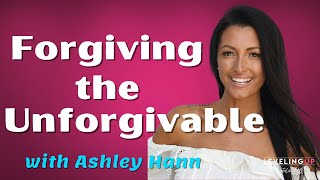
This is a YouTube video titled "223: Forgiving the Unforgivable with Ashley Hann" published in November 2020. It features a deep and personal podcast-style conversation hosted by Natalie Jill with guest Ashley Hann, an online brand strategist and women's coach. The discussion covers Ashley's experiences with bullying, self-image struggles, emotional healing, betrayal by close relationships, and her journey toward self-acceptance and empowerment. Natalie Jill guides the conversation, exploring themes of resilience, forgiveness, and personal growth, making it a motivational and transformative dialogue.
Hi, I'm Natalie Jill, fat loss expert turned lifestyle and high performance coach. When odds are stacked against us, how do we shift and create everything from nothing? How do we level up when we aren't feeling it yet or have had a big setback? And how do we adjust quickly when life throws us major curveballs? On this podcast, I do what I do best. Taking complicated information that is relevant to us now and breaking it down simply with actionable steps. Steps you can implement to level up your own life. I also regularly interview some of the most inspiring and courageous men and women on the planet who at their worst, learn how to achieve success greater than they ever dreamed possible. Leveling up, creating everything from nothing. If you are new here, I encourage you to go back and listen from episode one for the full transformative experience. Bullied in school for being the ugly duckling, Ashley Han was led to severe anxiety and the need for perfection. After diving into deep internal work, she learned that the need for external validation was not the way that she wanted to live. After breaking through that, she faced the ultimate betrayal. She learned her best friend was now dating the man she had just ended a relationship with. Knowing that the only way out of the pain she was experiencing was through, she committed to going deeper into that pain to understand where it was all coming from. Through the work she healed, she forgave, and she stepped into her power in a major way. Today, Ashley is a branding and marketing strategist, bestselling author and speaker and a mission driven entrepreneur who helps coach other women into their powerful place. Join in today and learn exactly how Ashley Hand leveled up and created everything from nothing. Today on Leveling Up. I'm here with my friend Ashley Han and she today is an online brand strategist and women's coach. And if you were to meet her for the first time right now, you would think, oh, oh my gosh. Who is this drop dead supermodel? Like she looks like this drop dead gorgeous supermodel and you would just think that she's had this easy life, honestly because of our looks. I know that sounds really funny to some people, but a lot of you will get that. But she really is that pretty from the inside out too. But people tend to judge. So I was really wanting to have this conversation with her because she's been through a lot in her life and how she showed up, how she's handled it has really shaped her and made her such a powerful brand strategist and a powerful women's coach. So, so I can't wait to dive into her story today. Thank you so much, Ashley, for being here.
Oh, thank you. I'm so, so excited. This is going to be a fun episode.
So, Ashley, take us back because I want to start with looks, which might sound very surface level to people, but it's really one of those obvious things because you truly do look like a movie star. And I know you've heard this before, like, you are gorgeous on the outside. And what's funny is you said to me that you grew up an ugly duckling. Tell me more about that.
Yeah. Well, first off, thank you. You're so sweet. I just love you. So. Yes. No one would ever expect this. And this is why it's so important to really dig deep with people and ask people questions before we make judgments about them. Growing up, I was a, quote unquote, an ugly duckling. So I was made fun of and bullied a lot based on my appearance. So I had a lot of. Well, first off, I was super awkward looking because I was super, super skinny. And when I say skinny, I mean, I was called Toothpick. I was called parallel lines. People wouldn't call me by my name. They would just say, hey, skinny. I would get prank phone calls to my house saying, hey, Ashley, you know, burger king just opened up around the corner. You should grab yourself a burger or maybe six. Ha ha. And then, like, hang up on me. I was put on this nasty junior high. I don't know if you. If anyone here know, remembers Zanga. It was like a fad, like MySpace. And there was a gossip blog that was created for my junior high school. And there was a whole post just about Ashley. She's anorexic, she's bulimic, you know, eat a pizza, for Christ's sake. Like, all this stuff. And I remember just reading it and like, really, really, I had no. I had no confidence. I was super insecure. And it really wasn't until I started blossoming my last year of high school. So up until then, I was awkward looking. I was wearing kids jeans and kids clothes until all the way until my last year of high school.
Like, what does that do to you as a teenager, a preteen? Because I know a lot of kids go through that awkward stage, but what does it do to you being bullied? And I know some people listening were bullied for opposite reasons, like they were overweight or something different. But talk to me about the psychology of, like, what happens when that's happening in your life.
Yeah. And so it just goes to show you that one way or the other, whether they're bullying you for being overweight or underweight, it's still creating the same effect. And that effect for me was I felt like I couldn't face anyone. I couldn't face life. I would eat lunch in the girls bathroom stall just so that I didn't have to face that rejection. And I didn't have any. It's so funny, when I. When my mom heard me talk about this on a podcast for the first time, she was like, I had no idea. Why didn't you talk to me? I had no idea you were going through that. My dad, same thing. I had no idea you were going through that. And I didn't feel. I never. I never spoke to them. I would just come home crying. Every day, I would come home crying. There was parts where I would. I was suicidal in the late latter half of junior high school and in beginning of high school where I used to cut my wrists and I mean, I was in a very dark place throughout my preteen and teenage years for sure.
Gosh, you know, you're so lucky thinking that there was no social media then, because I would imagine that would have just exacerbated all that.
Yeah, that's why it's so important. Like, you know how there's contrast to everything. There's light and dark to everything. Social media, a lot of people will hound on it. Well, what I say is, yes, darkness exists. It's even more important than to be the light. You know, to make content, create content like this so that we can overpower the other crap that's out there. And that's why I love seeing lightworkers like you and other people in our circle that are out there creating and sharing tools for young, you know, the youth that are on these social platforms to learn how to deal with this stuff.
So when you were a kid and you had this happening, what did you think of yourself? Like, did you look at yourself going, what's wrong with me? Or did you think, I don't see what they're saying? Like, what did that. What story did that create about who you were?
Oh, man, girl, I used to look in the mirror and I hated who I saw. I remember going to the mirror and taking my thighs and pressing my thighs out, imagining what it would look like. You know, when you press from the back, it kind of. It makes them. So I would do that and just hold them there and just like, maybe if I hold them here, hold my hands here long enough and press my thighs out, that'll. They'll Just stay. You know, I would do that with my arms, because my arms, they used to call me spaghetti arms, noodle arms. So I used to pick myself apart in the mirror sometimes. I. There was days I just spoke about this in my recent podcast episode is I used to cut school on the days where I was really feeling insecure about my looks and my appearance.
When you said that you were suicidal and used to cut, you cut your wrist, like, cutting. Like that is what you used to do. Or cut your wrist, like you tried to kill yourself.
So, you know what's interesting is when I was cutting my wrist, I remember. So I'm really queasy. Like, I have to this day, I am. You. You. You show me a paper cut and I'm getting lightheaded. I'm like, I need to sit down. I'm always been that way. So I remember the times where I would try to cut myself, and when I started doing it and I started bleeding, I would pass out. I passed out more times than I can count. Like, when I started my period, I passed out. Like, I just have a very weak stomach. But, yeah, like, when I was doing that, I would say it was half for attention. Like, I wanted my. I did want my parents to almost know how much pain I was going through, but I was too scared to tell them. But then the other part was I really. I was miserable. I didn't feel accepted. I felt like. I felt just like a, you know, a mess, and I didn't feel happy. I was sad all the time.
Yeah. When you said that you started to blossom towards the end of high school, did you know that? Or, like, how did you start viewing yourself then? Because, like, where I'm going with this is sometimes if people are overweight their whole life, even when they're super fit and healthy, they still look at themselves as overweight. And did you go through that, like, where externally people are noticing you, but you were not feeling that way? Like, it wasn't catching up?
Oh, yeah, totally. There's actually a word for that. There's. It's called mirror something or image. Image dysmorphia, something like that? Yeah, yeah. Images morphia. That's what it is. Yes, 100%. I remember when it was so distorted. My view versus what other people would tell me. I remember the first time that a guy, like, said I was hot, and I was like, me. What? No. Huh? Did you just call me hot? And then when I had a boyfriend who then commented on my butt, and I was like, ashley, you have a butt. And I was, by the way, another nickname I was called was Bony Butt. So. And so when he said that, I was like, what? Wait, really? And it was like, I could not see. Took a while for me to actually see what he saw. And still to this day, sometimes it like, creeps back up on. Very interesting. Because you're used to a certain perception of yourself.
So what's interesting, and I've heard this from other friends too, is when you are pretty on the outside, people are also mean about that. Have you experienced that? Like, talk to me a little bit about that. Because this is such. It's such a strange thing. Like you're bullied for not looking a certain way. And then if you go to the extreme and you look great, you're bullied for that.
Okay, perfect example. Remember when I said I was put on that gossip when I was in junior high school? Fast forward. I'm in college and I'm now considered, quote unquote, hot, right? The guy's guys on crushes on me. And I finally felt my first. I'll never forget the first moment I actually felt acceptance based on my looks. And we can talk about that. But I was then put on. Have you ever heard of the dirty thedirty.com? okay, you probably don't want to check it out, but maybe some listeners have heard of it. It's a very popular gossip site.
Okay.
I was put on there for. For being. Oh, you know, she. She's, you know, a tan, tan, you know, anorexic. Blah, blah, like, same stuff.
Gosh. And it was like, me, people are.
So fake and big, you know? Fake and big. Yeah, you know, wannabe, you know, like, I don't remember honestly the stuff, but I remember reading it and I bawled my eyes out. It was like. It was like deja vu. Yeah, it was the same feeling that I felt when I was. I remember that in junior high school. And then fast forward.
Yeah.
When I finally feel like, okay, finally I feel like I have like some confidence in my appearance. Then bam.
Wow.
Hit again.
So listeners think about this. Like, why are we as humans so mean? Why are we so judgmental and mean? It's almost like unless you're just plain, just average in the middle. Like people. People probably judge for that actually too. So I don't. But it's like, why are we all so mean to each other? It's like we're all just trying to get through life, right? And it's interesting, like you're. You're bullied for being a Certain way you work hard or you don't work hard, and then you all of a sudden start looking away that you think is accepted, and then you're bullied for that.
Mm. That goes to show you, though, that's what I learned through all of this. Yeah. Is people judge, period. I mean, I resisted. I don't know about you, but I tried to put, oh, no, people aren't going to judge you. I had that self. I tried to do that self talk where it's like, oh, people aren't going to judge you. Like, you can't just assume people are going to judge you. That didn't help me. Because what we resist persists. And it was happening. People judge. It's a fact of life. As you just said, people do it. Now it's up to us how we want to interpret that judgment and how we want to relate to that judgment. So the interesting thing is when people are judging based off of looks, it is such a surface. Surface judgment.
Yes.
And so when you were actually beyond. When you grounded. Which, by the way, I wasn't. I had a surface worth, as you might call it. Like, I put all my worth in my surface because that was when I finally felt acceptance was because of my look. That finally happened. I finally felt accepted. I had a girl come up to me and say, hey, you're pretty. We should be friends. Like, oh, got it. Because I'm pretty, I get friends. Right. So placing all that value then, in something that's so surface. The most temporary aspect of ourselves. The most temporary.
Yeah.
So when we're placing all that value. Yeah. We're not rooted or grounded. So imagine a tree that's not rooted or grounded. It's just sitting on the top of the surface of the ground. If a wind. Gust of wind comes, that tree falls over. That's how I was. Because I was placing all my value in the surface. Yeah. So.
And there's such a danger in that too, because everybody's going to age. Looks change. They all. They. It is the most temporary thing. So if you're gorgeous for 10 years of your life, it's like, that is not a permanent thing. So it's interesting that you. That you connect to that. So talk to me about relationships. Did every relationship feel surface level to you then? Like, you couldn't trust with that or like, what was your friendships like?
Oh, yeah, because I, uh. Like I said, I only felt acceptance because of my looks. I felt like my personality and who I actually was wasn't actually good enough. And so what I would try to do is I was a copycat. I would just try to copy and be a chameleon and try to fit in by being someone and something that I wasn't. As you can imagine, that was exhausting. It was depleting. I felt at the end of the day like crap. And I didn't know why, because I didn't have the. The tools or emotional intelligence back then. To know how that took a toll on me.
Well, you were totally. Everything was based on external validation.
Yep. 100%. Yes. External validation all the way. And so then when I. So I literally was looking outside me for all of this approval and guess what? The whole time I rejected myself. I didn't accept myself. I was trying to. The fact. The simple fact that I was trying to be someone else shows that I wasn't accepting myself. Therefore, how can I ever expect someone else to accept who I really was? So I was attracting all these people who were in alignment with the fake me, not the real me.
Oh my gosh. I can totally relate to that as a whole nother conversation that we can have. Yeah, yeah, that's. That's. I can completely relate to that. So, okay, so when did you get this awareness that this was an issue?
The issue of placing all my value in my surface?
Yeah, like when did the light bulb kind of go like, okay, this is. I've got to build something else.
So you and I both went through a very similar. We went through the same training. Exact same training. And so that training me. Just want you to imagine I walk into that training and I am insecure. Okay. I pick myself apart in the mirror. I pick myself. My. I don't. I'm being all this stuff. Right. But at the time I didn't remember. I did not know I was being fake.
Right. That's what I want everyone to really hear right now. It's so funny because when you look at somebody that's like this gorgeous, like you think they're all perfect and gorgeous, there is an underlying, usually deep rooted. This what you're talking about?
Yep, yep, exactly. And so I get there and there is a feedback process. The feedback I got was you're fake surface, superficial and holier than thou.
Wow.
Holier than thou. And I. And those were the ones that like really. Oh. And stuck up. So. Which is similar to holier than thou. So stuck up, holier than thou. Those things I crazy part is that that was my feedback. Yet I didn't feel holier than anyone. I felt like I had to prove myself right. Which is Interesting. Because remember, we're walking projections. So because we don't feel good enough about ourselves, we're making people who don't, who are coming into contact with us not feel good enough to talk to us. You see what I'm saying? Because we're projecting that onto them. And so that's why people. I wasn't, I remember I would go to bars and I was like, I felt like I looked good. No guys would approach me. Why? Because I was unapproachable. You see what I'm saying? I was projecting the fact that I was scared of them not approaching me, so then they wouldn't approach me.
So you're projecting that. And what you're probably making up in your head before you have this awareness is that I don't look good enough. Or it goes back to the old thing. And I see that cycle with people. So like you're thinking, you don't have this awareness that you're not approachable. There's this wall in front of you. Any of that, that people aren't comfortable talking to you. Instead it's like, I just don't look good enough. Which puts you in a loop of what do I need to do to have a better outside appearance.
Yes. You nailed it. You nailed it on the head. Exactly. That is exactly what happened.
So, my gosh, what. So for people listening, I have so many more things I want to ask you, but what is the answer to that? Like, because there's somebody listening that either they're struggling with, with that or their kid is like. I mean, and you guys, if you're rolling your eyes, please don't roll your eyes at this. And because this is actually like a real thing, because there's no difference between being bullied or having insecurities around being overweight or being not attractive or being pretty or any. It's all the same thing. It's all the same bucket. It really is.
Yep. Yeah, it absolutely is. And so when, when you first off, I just want to say we can't fix or change something until we're aware of it. Right? So we can't fix something that we don't know exists. So that's always the first step. That awareness piece is huge. I was unaware, so there's no way I could have. Thank goodness. I mean, I'm so grateful that I was, that I went into that training because otherwise I would have just been walking around unconscious and creating the same self filling prophecy. So first thing is awareness. And there's, there's, as you know, right now, which I'm so excited about is there's so many, there's so much opportunity for that to create awareness. So many. You know what I mean? And that's the beautiful part about where we are right now as a society as a whole. And when you. There's two big things for me that helped me along my journey. The first one is, which I alluded to earlier, was accepted accepting judgment. So accepting the fact that judgment is going to happen, like accepting that is just fact. It's just fact. Right? Yep. And, and, and really taking, I actually would take, I would write down the judgments that I was scared to get or the judgments that I got. And then I would ask myself, which is, this is Byron Katie's work. Can I know with 100% certainty that that's 100% true about me? Right. So I would ask myself that and I would really start to question these judgments and were they true about me? And a lot of times the reason why they affect us so much is because we are scared that they're true about us.
Yeah.
You know what I'm saying? Which is something wouldn't affect you at all. If someone walked up to me and I say this analogy a lot is like, called me a blue frog. I'd be like, okay, I don't, I'm not scared.
It would phase you. But they say something that's already an insecurity and you're like, wow, that hurt. Or that you want to get defensive.
Exactly. So then it's, it's something to look at. So I started to look at exactly that. I started to look at those triggers. When people would say things about me that really triggered me, I would look at that, that exact thing and I would challenge it myself. And I would look at myself and I would ask myself, is that actually true about me? Am I scared? That's true about me. And then what can I, moving forward, how can I accept and love this part about me? Right. So for example, another thing that I got a lot, and this doesn't have to do with looks or appearance, but self righteousness was a feedback that I got. So when someone first called me that, well, of course I was self righteous. I was like, yeah, me. No, like, what are you talking about? I was pissed. I didn't even hear anything the rest of the night. I like didn't hear anything else. I just only heard that. And then, so when I got back again, if we look at triggers as opportunities to go within and heal, then I went in and I, later on that night, I Went and I journaled about it. And it was really powerful for me to actually look at. Okay, well, I was obviously scared that that's true about me. And so how can I shift that? And that was a very powerful thing. And the second thing I was going to say is that I did. That's really powerful is I actually did this rewiring process where I wrote out all of these limiting beliefs about myself, which some of them are judgments, right. That people have placed. But they're my limiting beliefs and stories. And I did a rewiring process of first figuring out where the source is of that belief, like where it came from and which a lot of them came from mom, for me. And the second thing was I actually create it once I realized that that wasn't from me. Since when we identify the source, we're able to separate ourselves from it. It's okay. I am not this thing. This thing was created from this experience or this, you know, event. Right. And so then you can separate yourself from it and say, hey, I'm not that thing. That was just a thing that happened in my life that had me believe I am this thing. And then I created a new belief and I started repeating those new belief mantras all the time.
Like turned your, what I call false assumed truths into better affirmations. So you, like, you rewired it to a newer affirmation that you started training yourself with. I love that and I love the step of where did the source come from? Because then you have power over it. Because you can then separate it from you.
Yes, 100%. It's one of my most powerful practices that I still do to this day, so.
Good. So you had this a big awareness. Now I'm going to move this story along a little bit because I know something else about you that I really want to dive into for a minute. So as you're figuring out this new version of you and it's not fake anymore because now you're wanting deeper connections, you go through a bigger transformation in your life because you and I don't want to put words in your mouth, but you now have like a really solid best friend. You've got a new relationship, you have a boyfriend. You talk to us about that. What happened there, that completely shook you up.
Yeah. So to be clear too, the relate both relationships, the friendship. I had a best friend for six years and my. This is my ex boyfriend. So my boyfriend at the time, I. Both of those relationships were established and created before I did that work.
Interesting. So they. They met you in that other Ashley zone.
Yeah. That's when they met me. Yeah.
Okay.
And actually the really interesting pieces. So that friendship, we did go deep together. Of course, we. I had some of the deepest, most profound moments with her. However, we had probably more than half of our friendship was. Was like we were being surfaced together. Yeah. You know, we were seeking external validation together.
You know, gosh, I can so relate to that, Ashley, because I have. My friends now are completely different than they were five years ago. Like, I have a completely different group. I few friends from like 20 years ago that have still maintained, but I have this whole. And when those friendships are falling apart, five years ago I didn't understand it. Now I'm grateful they did because I love what's in my life now. So that's interesting that you just brought that up.
Yeah. And when I wanted to. I want to say really quickly about that is. And ladies, listening. When you become, I say, magnetically confident. Magnetic. What happens is you become polarizing. When you're so rooted and grounded in who you are, AKA competent. When you're so grounded, rooted and confident in who you truly are, what your values are, then you actually repel the people who aren't in alignment with that or you. And you attract the ones, you become super attractive to the ones that are. So a lot of us are afraid to be our true selves because we're worried that people won't like us. Well, I'll say this. There is going to be people who won't like you, period. And. And there's going to be people who are so attracted to you because you're finally freaking being your authentic self.
That's so good.
Yeah, yeah, yeah.
Being your authentic self is not just telling a story. It's like truly stepping into that, which is so cool. Okay, so talk to me about what that was. Like you had a boyfriend and this ex boyfriend now, but. And a best friend that were kind of with you through this whole transformation. So, so what did that create?
Like, did.
Were they going through that with you at the same time?
Yeah. So she was in it with me. She was in the whole. She did the whole. It was a four month long training and she did the whole thing with me. He ended up doing it after I did. And what was interesting is as you know, when you go through something, something so deep and profound, you literally, first off the first half, you're raw. You're literally stripped raw. Okay. All those barriers you're holding up, they've been. I'm talking explosion, blown apart. Everything you Thought was true. Everything you thought was true. Shattered. Okay. So I was going through that. While I'm best friends with her, while I'm dating him, I'm having a metamorphosis of self during that time. And there were things I remember that came up. And this is interesting. I bet there's some listeners who can relate to this. When you love someone so much and you care about them so much, we can make excuses for them. We can vouch for them. We can. Even though we see something that you're like, wait a minute, that's not quite right. We can actually. Because we love them so much, we're like, oh, no, but it's because of this. Like, no, like, it's because of this. Right. And I was in that place because while I was having this metamorphosis of self and redefining my values and my worth and all these things, there were some major red flags that came up with both of them. I ignored them. And that was a big. That was a huge lesson for me.
And you say red flags, red flags. And in what.
So you want me to be specific?
Well, just, like, what. I'm curious because I know where. I know where this is going. So where it's like, where this was devastating for you. But when you say red flags, red flags in how they should be being friends with you or what, what do you mean by that? I guess just more general.
So, for example, I. I. Integrity is a big. Is a core value of my integrity. And there were some moments where both. Separately, though. Separately. Were completely out of integrity. And I knew about it and I overlooked it. And that's one example of one that I remember was a major red flag for me. Certain things that they each did separately and. But I let it go, and I just kind of was like, whatever, and I brushed it off. And that is a core value of mine. So I was actually betraying myself by brushing off and doing it.
And I think we do that a lot with relationships.
And then when we.
We're upset that a relationship dissolved later, if we look back, there usually was things like that.
Indicators. Yeah.
Yes. Indicators.
Yeah.
So. So what happened here? Because I know you ended up breaking up, and then you said. You always said I had a double breakup. Can you speak a little bit into that? And what that create.
Yeah. So it was very, very tough time in my life. This is. This was the. I would say the hardest breakup that I had to go grow through was not with him. It was with her. And the reason why is because she started seeing him behind my back. So my best friend at the time started seeing my ex boyfriend behind my back for about two months and didn't tell me. And you know, I had, I was living with this man, I thought, I thought he could have been my forever man at the time.
And she knew this. She knew that you thought that about him?
Yeah. Oh, I mean, she. I mean, she was in the relationship with me. You know how it is ladies, right? You have a. I'm talking sister.
Yes.
And you tell. I mean, every time that he, you know, hurt my feelings or I was in. I was in my, you know, rackets, I would go to her. She was always the one. I would go to her house, cry on her shoulder, you know, have whole, like lay in her bed all night, cuddle with her. Like, you know, she was the one picking up the pieces whenever I was shattered from the relationship. And it was a very toxic relationship that I was in. So when we. When I finally had the courage to separate from him, almost immediately after she started seeing him, but I didn't know about it and it was behind my back. And then she finally told me, like I said, two months later. And I was in shock.
Yeah.
You know, I was. I remember, I remember just sitting there. She told me over the phone she wouldn't meet me in person. And I remember just sitting there and I had. I couldn't even. There was no work. My throat chakra was just blocked. Shock.
Oh, I. Ashley, how do you even get over something like that? How do you get past something like that? Because I'm just sitting here listening to you and like imagining what that would feel like. And I mean, how do you get on from. From something like that?
Oh, man, it's been a freaking process. And I'll tell you, I actually, I'm in a mastermind group right now and the ladies were talking about this and I was sharing with them how I did it because some of them are going through that. More women than we know go through this. Yeah. And. Yeah. And so what you must. Here's the biggest thing that I learned, and I knew this concept. I just applied it in a whole different way. Remember when I said before, what we resist, persist.
Yes.
So I needed to accept, because I. That, you know what the shock factor is? The shock factor is. Wait a minute. No, it can't be. It can't be. It can't be. It can't be. Right? So you're almost in this like denial and you feel like you don't want to accept it. Right. So I was in That I was in that for a while. Like, I was in that for a while. And also anger and rage. I mean, when I. When I finally stood up from getting off the phone with her. Yeah, I took. I took the mirror, I mean, the picture frame of us next to me, and I slammed on the ground. It shattered in pieces. And I just let out a primal scream, like loud. And here's, here's how I. The process I went through to heal this. And it was no small feat, I'll tell you that. A, I needed to let myself cry. When I needed to cry, I had to let it out. I had to. Whenever I would try to stuff it in, it was. It would eat at me and it would eat at me and then I would explode. So I learned that. Hi, Ashley. When you miss her, when you start to. Whether it's whatever it is that emotion that you're feeling, let it out, cry if it's anger. I started boxing. I started boxing because that helped me. I remember when I was punching, it helped me so much with letting out the anger that I felt towards her and that feeling of being, quote, unquote betrayed.
And then I was. Sorry, I don't want to interrupt, but I'm just curious about this. I think when we go through pain and hurt, especially a breakup, whatever breakup with a boyfriend or friend, it's natural tendency to want to vent about it to others and like complain and vent and get people like on your side, validating. And I know you really didn't do that. You were really great about not making. I mean, you had your had moments of human being a human, but you weren't out there like making a big sense seen about that. Was that something challenging for you? Because I really respected that with you.
Yeah. Here's what I'll say about that is I did feel a lot of anger towards her. Luckily though, I had done a lot of work up until that point and I went through that. Like I said that four month training and I knew that I needed to be a stand for what I wanted to say. See, and I know that at the end of the day, if I were to go out and bash her. And bash her, that would actually hurt me.
Yeah. And you didn't at all. I thought that was. I was really impressed with that. You didn't. Okay, so you did that. So the crying, when you felt it, the boxing and then what was the next.
Yeah, and then I needed to, I needed to face her, not actually her. Okay, I want to be clear. So I put myself in a training Room. And she, she. I'm putting quotations. Was standing in front of me. It really. What someone was standing in for her. It wasn't really her. And that was. Oh, man. I was shaking. I was shaking. And I felt first so much anger and I stiff. I felt like frozen. And there was a guidance happening, you know, so voice was happening and guiding me through it as I was looking this woman in the face who was standing in for her. And at the end of it, I had a choice. I had a choice to hug her or had a choice to walk away. Oh, I'm getting chills all over my body as I say this. And I chose to hug her.
Wow.
And in that moment, I remember I was hugging her and I would just start bawling. It was this magnificent release.
Wow.
I needed to forgive her. And most of all, like, what people need to understand about forgiveness, that this shifted everything for me, guys. What I needed to learn that forgiveness is not about the other person. It's my freedom. If I refuse to forgive this person or I'm not letting myself forgive them, then I'm harboring the resentment that lives in my body. I'm the one dealing with that every day. So when I finally forgave her, I remember this feeling of like. Like this just freedom and liberation from this inside toxicity that I was dealing with on a day to day. And that that was the liberating, defining moment for me. And then I wrote her a letter once. I finally. I knew by the way, I knew that eventually I was going to write her a letter. I'm a letter writer. That's my favorite way to communicate.
Sure.
Get my thoughts out on paper. And I. But I told myself I would not write to her when I was feeling emotional or reactive. I had to wait until I finally had forgiven her and felt grounded and in a place of love. It had to be a love letter.
Okay.
Had to be a love letter. And I did that and I wrote her a love letter. And that again was like the final piece that I just. And I had no expectation. I just, I wrote it to write something from my heart to hers.
It's amazing.
And that was it. And it was so powerful.
Do you feel free from all of this now? Like, if you like how when you look at them now, what. What do you harbor? Is it just neutral? Do you still have hate? Do you have love for them? Like what. What do you feel now?
No. Yeah. So it's. That's a really good question. It took me so long to get to this point. Like, I Want to be clear. Like, it really took me a while to. Until I could look at their stuff and not feel that, like this sting. Yeah. Right.
Yeah.
And so now I. So I feel like it was all so divine. And I look at them and I see they are so. They're just great for each other. And I'm not saying that in a way of like, oh, yeah, they deserve each other. I'm saying that as in, truly, they are great for each other and I'm happy for them.
You see it from a very different perspective now.
Yeah. If I was invited to their wedding, if that happened, I would go, wow. Here's the thing, though. Our friendship ended. What is that? Two years? Three years? Two or three years ago. Okay. So I'm telling you, it's taken a long time to get to this point. It has. But I'm genuinely at this place now where I feel peace. The only thing that does come up from time to time I'll be completely vulnerable and honest is I do effing miss her sometimes. I miss the friendship we shared and being able to. I don't have that woman yet. I want to be clear. And something I'm really calling in this year, upcoming year, is I am calling in a best friend because I do miss that and what I shared with her, that bond.
That's amazing. I love hearing you talk about this because it's like you don't miss the relationship with the guy you miss. The friendship is the one that you really miss. It's so interesting. Wow. It's really powerful. And I definitely. I commend you for how you handle that and how much you've grown from that and how you've really.
You.
You almost look at it as a blessing now. Like you've learned so much and grown so much because of that.
So much, so much. I've completely redefined my values and my friendship vision.
Yeah. That's incredible. Okay, so how do you go from all this stuff you've been through, like you've been through so many different things, so many different journeys, like, to now you're actually like helping others with their story and their brand and their. Like, how does that even transition into that? How did that.
Yeah. Pain to purpose. So same reason why I wrote my book was once I had done that four month training, I had all these amazing, like, crazy breakthroughs. I was like, I need to share my story and I need to share these tools and lessons I've learned along the way. And what's your book called, Ashley? What's your book Magnetic confidence. And it's on Amazon. If you just type that, it's the first. It should be the first result that pops up. And so same thing now. So it's so funny. As I evolve, of course, my coaching and what I focus on evolves. And so I've had different iterations of what I coach and what I really specialize in with women. But it really lights my soul on fire to be able to speak to someone, to a woman who was where I was, who felt that lack of confidence, Confidence, that insecurity. As we talked about the very beginning of the episode and having them break through and in full love and acceptance of themselves, there's no. I mean, there's no greater feeling to me than being able to walk a woman through that so they can get to the other side. It's. It's the most transformative thing to witness. I love it. Yeah.
So it's interesting. It's almost like these things had to happen to you so they could happen for you to be able to create these things 100%.
I'm so grateful. I'm so grateful for it. Because if I. If. If none of those things happened, happened for me, I would not have a way to relate to. I couldn't. I couldn't say, oh, I get it. I. By the way, we didn't talk about this, but I. I was diagnosed with severe anxiety disorder as well.
So during all of that happening, or when was that?
That was when I was in high, junior high, high school time. So I.
How did you cope with that when that happened?
Well, in high school and college, I was popping meds, so I was just taking anxiety medication all the time type of thing. Yeah, I don't even remember what it was called, to be honest, because I haven't since. It's been, what, five years now? So I haven't popped a single. So I don't remember what it was called, but yeah, but anyway, so I'm able to speak to women. For example, anxiety is a big one because I had really severe social anxiety. Remember, I was teased and taunted, so I ate lunch, the bathroom. So I had tons of anxiety. So I'm able to speak to these women that have that anxiety and lack of confidence. And, you know, and I'm able to relate to them. They feel like, oh, this woman understands me, and they see me as who I am today, and they're like, if she can do it, so can I.
Totally.
I want to be that light for them.
That's so amazing. I love this whole transition and I love that people look at you now and say, wow, if she did it, I can. I can. Versus the old Ashley, which you didn't even realize you were putting them off. It's like. It's just like all this stuff kind of had to happen to let you step into what you've done now and what you're helping others with right now. It's really such an incredible story. I love that. Wow. So, so much and so much hope for people.
What?
I have a few more questions for you. Like, what if you could talk to the girl.
Two different girls.
If you could talk to the girl that was being bullied in school, what would you want her to know right now?
I would say, sweetheart, right now more than ever, what matters is how you view yourself, how you accept yourself. Please, please look in the mirror and see the gift that you are and know that all these words and all these rocks that are thrown at you right now will have no power over you in the future. And it will actually become your platform. So trust, trust, trust and love yourself above everything else.
So good. And then what would you tell that girl on the phone with your best friend at the time that wanted to shatter the picture and just felt so enraged? What would you tell her?
I would say, you have a beautiful garden, Ashley, and sometimes there are weeds that need to be picked from your beautiful garden so that it can blossom and grow to. To what it is today. And so I would say, let go. Accept what happened for what it is, and trust that once you do accept it and are able to finally close that door, there will be another door that opens. Have faith.
And spoiler alert. She's in a very happy relationship now. She's got a great business and new friends. So you. Yeah, things are working right now.
Yeah. Yeah. And I'm in such a beautiful relationship with such an. A conscious, amazing man who really is my king. And it's so cool because, like, right now, for example, I'm in Tulum, and so is he. We've decided, and this is so cool to have the relationship we do that. There's like this trust there where we both need soul retreats. I just did very deep work a couple of days ago, just so you know. So I did some inner child work, and it was very profound. I almost lost my voice. Everything else. And so I am on a soul retreat, and so is he. So I'm staying in a tree house in Tulum.
I love it.
So magical here. And he's staying on an oceanfront tent. Oh, wow. Yeah. And so he's over there and I'm over here. We're spending the four nights just so I can be with myself and hold that space for myself. As you know, when you do that work and you're in the action, the popcorn pops afterwards. Right. All this stuff pops up. The breakthroughs start. Happen afterwards. Especially if. If you're an analyzer like me, a lot of it happens after the. Because you're, like, in your head during the moment. Right.
So good. And you are. And you met in Bali, didn't you? Did you tell me that you met in Bali?
Yeah.
Were you both working on yourselves separately in Bali and that's how you met?
We've been both. Yeah. He's been. What's so crazy is when I met him is he was. He was also on his spiritual journey. So he was crazy enough. And he'll share this. We're actually gonna make a podcast at some point to share all this stuff. He was calling in his queen, so he was doing the work to call in his queen and doing a lot of. A lot of deep work around that. But, yeah, we met in Bali. We were actually both speaking at an event, so he was the keynote speaker and I was one of the panelists. And so that's where we met.
Great. I love that. I love that. All right, Ashley, where can people find you? Because I know that they're going to want to learn from more. They're going to want to know all the things about you. Where are you most active on social and where can they find you?
Instagram, for sure. That's where I hang out. It's ashley.h a n n ashleyhan and my website, ashleyhand.com. nice and easy. I also have a podcast like you do. It's called the Ashley Hand Show. Yep. Easy stuff she does.
You do beautiful branding and marketing work. I watched you build my friend Jenna's new website, so she does great work with that too.
Yeah. Oh, my gosh. That's going to be launching soon, so I'm really excited. Yeah.
Thank you so much, Ashley. Everyone go check her out. And if you liked this podcast, please share it. Get this inspiration out to other people and tag both Ashley and I so we can see you that you enjoyed it. Thanks, Ashley, so much.
Thank you.
Thank you for taking the time out of your day to listen in as my guest today. If you found this episode valuable, please share it with friends and on social media. I don't advertise this show, so I rely on word of mouth and reviews to get it out in the world. The biggest thank you that you can give me is leaving me a review. And a nice one. I hope. By the way, this is how others find these episodes. If you do leave me a review, be sure to Message me@supportataliejofitness.com with a screenshot of each your review because I would love to send you a free digital download of my DSR journal as a thank you. And please don't forget to connect with me on social media at Natalie Jill Fit on Instagram and Facebook.










