225: Pivot & Go: How to Redefine Your Success with David Nurse
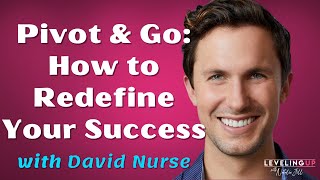
David Nurse, a former pro basketball player turned life coach, talks about pivoting from his NBA dreams to coaching and speaking. He shares how to bounce back from setbacks, build confidence through mentorship, and redefine what success actually means for you.
Hi, I'm Natalie Jill, fat loss expert turned lifestyle and high performance coach. When odds are stacked against us, how do we shift and create everything from nothing? How do we level up when we aren't feeling it yet or have had a big setback? And how do we adjust quickly when life throws us major curveballs? On this podcast, I do what I do best. Taking complicated information that is relevant to us now and breaking it down simply with actionable steps. Steps you can implement to level up your own life. I also regularly interview some of the most inspiring and courageous men and women on the planet who at their worst, learn how to achieve success greater than they ever dreamed possible. Leveling up, creating everything from nothing. If you are new here, I encourage you to go back and listen from episode one for the full transformative experience. Growing up, David Nurse wanted to play basketball. It was his vision. It was his calling. It was all he wanted to do to play in the NBA. When he finally made it at 6 foot 2, by the way, most NBA players are 6 foot 7 and taller. It became his identity. He had finally made it. But when he was cut unexpectedly, he was lost and depressed. He had no clue what else to do with himself. His mom told him that when one door closes, a bigger and better one would open. And when he finally listened, everything changed. David decided in that moment to become the best NBA coach in the business. Join in today and learn exactly how David Nurse, now an MBA life optimization coach, best selling author, and worldwide motivational speaker, leveled up and created everything from nothing.
Today I'm talking with David Nourse. He's an mba life optimization coach, an author, a speaker, and I am excited to dive into a story because he wanted to be an NBA player. That was his original goal. That was his dream, and it didn't happen for him. So we're talking to him today about pivoting, about taking your pain and turning it into purpose. So thank you so much for being here, David.
Well, thank you. It's a pleasure and an honor to be on. And yeah, I definitely had a huge pivot in my life and literally, like you said, I wanted to be an NBA player. I poured every ounce into my childhood, into my life, and played in the NBA. Now, I grew up in the middle of nowhere, cornfields of Iowa, this small town, and I'm not very tall or very athletic. I never once dunked a basketball. So my parents probably should have said, you know, David, play golf or tennis, something like that. But they were really supportive and I just loved basketball. So I poured every ounce I had into it and I got to play college basketball. Literally grinded and gritted my way to be able to get there. And I'm here putting in these two a days in this extra film study and I'm, you know, and then I get to play professionally overseas. Which it sounds cool to say you're playing professional basketball in Europe, but it was more like the Will Ferrell semi pro movie where they cared more about drinking beers at halftime than they did the actual game. But then here's me putting in all this work like I'm still playing in the NBA. I'm playing in the NBA. I didn't have a backup plan. Like I probably should have had a backup plan. No backup plan.
Well, back up just a little bit, David. So you want to be a basketball player as a kid and you're saying I'm not very tall. I don't have what it takes. But you're, how were your parents around that? Were they like trying to talk you out of it or were they just like, yeah, you could do whatever you want or what? What was happening with that? Because like if I said I want to be a basketball player, my parents would have laughed at me. So I'm just wondering what they said to you.
No. So they supported me. I think they saw more of like the things that I would take away from playing basketball with the team. And basketball is one of the best sports be able to work out individually and how to work and cumulate with a team. So I think they like, he'll use these skills that he learns later on in life. Now they never said, David, you'll never make the NBA. But I don't think they ever said, David, you will make the NBA. They just supported me wholeheartedly.
When you say not very tall, what does that mean? Like, are you six?
I'm six foot two. So maybe in normal life it's tall, but in basketball world it's like a midget.
Yeah. What is basketball world tall? Like how tall do you need to be? We've got a lot of females listening, so I just want to make sure we're, we're telling them too. What does that mean?
7, 6, 8. Really? Average height and then giant status. Giant status? Yeah, absolutely. I've got in my wedding. So I've been training NBA players for a long time. We could dive into that. In my wedding I had four seven footers players that I've trained. Really? Yeah, we had an amazing lineup in my, in my wedding a year and a half ago.
Oh my gosh. Okay, so you, you're playing professionally, but you're not like fully made it there. You like kind of found a workaround and made it so. So you were playing professionally though. When did you realize, okay, maybe this is not my career path? What happened?
Yeah, so I got cut from that second division team in Northern Spain, the Basque region. That joke of a team. So I get cut from this team. So not only are my hopes and dreams of playing in the NBA so far away, this joke of a team cuts me. So I'm turned upside down, face rubbed in the dirt. I'm feeling bad for myself. I'm back in Kansas City, living on my parents recliner chair for five months, literally just licking my wounds. And my mom would always say these motivational and inspirational things and it kind of be like, yeah, whatever mom. In one ear, out the other ear. And she said one that just stuck with me that day. I was, I was sitting there on the couch doing dishes and she said, david, when one door closes, four open in an entire beachfront patio overlooking the ocean. Oh, it hit me. Yeah, I was like, I thought it was one door, one door. But it triggered in me that all this I had been putting into playing in the NBA, all this film study, this extra work, all these detail that I've been playing in the NBA was actually to coach and to teach and to show others how they could reach the NBA. These taller players, these more God given ability type of players. So that was when I realized, hey, this wasn't all for loss. All these 23 years of my life was not lost. It was actually setting me up or something far greater than I even imagined.
Well, that's such a pivotal breakthrough. And I, and I do believe that most people that go through a massive setback, if they embrace it, if they go through the feeling of it, they don't try to numb it out, deny it, like even if you start that way, but you really feel it. I think most people break through and get to the other side and realize their pain can be their purpose. So I'm wondering about that place in between now. So like if you could take us back. Because you made it sound like, you know, my mom said this and then this happened, but I'm sure that it wasn't as smooth as that. So talk to me about the conversation that was going on in your head. Because a lot of people listening are in that conversation now. Like when they first cut you, like, what did that feel like? And what did you make up about yourself when that happened and how long did it take for you to, like, pivot into this different mindset.
That's such a good question. And it stung. It hurt. I mean, think about. Everything that you wanted in your life is not just taken away from you, but you're laughed at. Literally, I was laughed at. Like, basketball was my identity, and that's where I really struggled for those five months, is this is my identity. But yet people aren't. Aren't giving me validation. They're not letting me know that I can actually do this. And I spent my whole life pouring into this. So it was kind of just like a big slap in the face and then an uppercut punch to the chin.
Yeah. So what did you do to get through that? Like, were you. I mean, were you at home crying every night or did you turn to alcohol? Were you, like. Or were you just in denial, like, what was actually happening?
You know what? It was kind of in denial, and it was more of like, okay, I'm just gonna wait for something to come. Something will come. I'll just take this. And I was really close, honestly, to taking just a commercial real estate job. I had a friend who gave me a great opportunity, and he was like, you'll make good money. But I didn't. I wasn't passionate about it. I had no juice. When I woke up about commercial real estate, it was all basketball. So that. That triggered me. So I felt like it was hard. Like, I called it, when I work with players, when I work with CEOs, called being in the pit. And the pit is a spot where nobody wants to be. And we go through this level, this square, this development square, where we have this just blind confidence. And like, me trying to play in the NBA just, oh, yeah, so good, I'm going to play in the NBA, but then we're going to get hit with something, and that's when you fall into the pit. And now this is what determines, like you said, pain and purpose. Your purpose through the pain. This is what determines how you come out of it, how you embrace the pit. Now, if. If you embrace the pit is like, all right, I'm going to enjoy this time. I'm going to enjoy this suck, because I know I want to produce something so much more.
Yeah.
And now, at the time, I didn't realize that, but if you can, that's where. If you're struggling at home right now, know that, hey, that's okay. I'm in the pit. Life goes through seasons. You are daily preparing yourself for an opportunity to come. You don't know when that opportunity is Going to come. But it will come. Yeah, but only if you prepare for that daily.
So there's another thing that was probably layered onto this that I. Because. And I'm saying this because I'm married to an ex athlete and I've interviewed a lot of athletes that. When you're a professional athlete, and I'm assuming this is the case with you, you've got people looking over your workouts, your diet, you've got structure, you've got regimen, you've got all these. You've got people helping you with your body. Like, you've got basically structure to your day. Kind of like when you were in school. Like, there's structure to your day. And when you're eating on point and you're working out and all those things, you also have. It's like a mental outlet for being sad or being in your feelings or whatever else. So I kind of feel like it's a double whammy when you're. You go. When you leave being a professional athlete, like, there's an identity breakdown there because like you said, that's all you knew it was who you were. Did you just stop playing basketball when this happened? Like, you went from, I'm assuming, practicing all the time to just stopping. Did you have any outlet for yourself there?
Yeah. So here's what happened. So when I heard that term, that quote that my mom said about the doors open and realizing that I was made to coach, that became my journey, that became my passion, my mission, and I made it. I was going to become the best NBA shooting coach there was. Like, that's the only thing I could do when I was playing anyway. So I was like, okay, I'm good at it. Why don't I just teach it? So I searched out who the best NBA shooting coach was. And I think this is really important for people. Somebody in your field, where you want to get to, where your dream is, has been there before. It's not going to be something new. You can copy, you can imitate, you can go on their blueprint. That's one of my steps of seven steps to unshakeable. Confidence is confidence through comparison and comparison in a good way. So I compared myself to this guy, Chip England for the San Antonio Spurs. He was the best shooting coach. I hand wrote him a letter, I called him, I emailed him. I traveled out to Las Vegas just to be able to get the opportunity to. To meet him. And he saw all that I was putting in, and he appreciated that. He kind of took me under his wing and helped me along the way. But it would have never happened if I didn't search him out and actually put in the effort to go meet with this guy.
Now, what did that look like to search? Because I think some people, I think mentors are huge. Coaches are huge. But I'm assuming you didn't do the fail method, which is. The fail method is because I've gotten these messages and I've seen people messaging their mentors like this, hi, I want to be you, and can you please. Can I pick your brain over coffee? Or can I mentor under you? Which is such a turn off. It feels like a taker, which doesn't work. Y' all. Don't do that. Don't send a message like that. Nobody wants to be have, wants, taker. What did you do? How did you get him into your radar?
That's such a good point. I get messages like that all the time.
It's, yeah, can I pick your brain?
No, no. Time is the most valuable thing. I can't just give you my time. So you genuinely pour into them in something that they need. I literally said, hey, if you need a rebounder, because every shooting coach needs someone to go run down the basketballs, not say a word, and get it back to him. So I was like, if you need a rebounder, I'll come help you. If there's any players that I can help you get. I had some relationships with players, so I was going to use those relationships to help this guy improve. So I was figuring out how I could pour into Chip and how I could help him instead of. I didn't ask anything. I never said, hey, I want to be you, or, hey, can you get me a job in the NBA? Like, no, no, don't say that. I was into the mindset. I'm going to give, give, give, give, I would expect in return. And that's when it all comes back. It's hard to do because we all want something now, but if you tell a lot of people this in their 20s, even in their early 30s, don't even worry about making money. Pour into your passion. Just give. Do it for free. And I'll tell you, I've done more NBA workouts for free than, like, even humanly possible. I'll just give and give and pour so good. And it all ends up coming back in the end. But you have to have that.
I love that. I love that you just spoke into that, and I love that you do that. And adding on to that, I'm going to. I know you're going to agree with this. Now don't ask the person, what do you need? Because that's also taking. Like, study them and come up with what? Like, hey, I could do this for you, or let me help you with that. Like, you do that groundwork to think. Because that also feels like taking. When someone's like, well, I just want to intern with you. What do I need? What do you need? Like, now I got to think about what I need. Like, I don't know.
Totally agree. And I get so many people asking me how they can get into the mba, and they're like, oh, I'll work hard. I'll work. Everybody's going to work hard and say that, what is your niche? What do you want the absolute best at? And when you go into any meeting, anything you do with somebody, you should know everything about them, and you should.
Have studied them up.
You should. How you can add value to the life.
So when you went helping Chip because you studied him, you looked at what, how can I serve him? How can I help? What happened in return then?
So he basically showed me his blueprint. He told me how he and how he started coaching players individually. It's kind of funny because back in his day, he'd have to watch these VHS tapes. So he'd tape every game, and he'd watch it. He's like, well, now you can just go online and watch it. When I was. When I was coming up and he told me, he gave me great advice. He's like, I was working for myself, but I had my sister, who had a different last name, be my business manager because I never wanted to deal with money with NBA players. So I made my sister my business manager. Nobody knew, so he kind of just showed me the framework of how to do it. And then he'd always check in, and it would kind of be like a month or every couple months, he'd check in to see how I was doing. Just kind of helping me, guide me along that path.
So good. I love that. So when you watch what he was doing, how did you then find your niche? Because I'm assuming you took his actions, but how did you then know, like, okay, this is my angle, or this is where I want to market myself or where I really feel I can add value. Talk to me about how you figured that out, because I think some people feel like they have to have that all figured out ahead of time. And it sounds like you really didn't. You knew you wanted to go in that direction, but you were figuring that out as you went, yeah, exactly.
And I used my strength. So my God given ability in playing basketball was to be able to shoot the basketball and you have to be able to shoot to score. I wasn't very athletic, but I could shoot. So I was like, okay, I'm really good at this. I know how to do this. I taught it to myself, I can teach it to others. So I was like, and that's a niche, that's a specific thing to do. So I not only did this with players I was working with individually, I went another step. I self created these basketballs from China with this stripe down the middle so you could see the rotation on the shot. I had them sent to the Oakland Seaport. I got in my car in Kansas city and drove 29 hours, go pick those things up, put them in my trunk. And I spent the next five years just living out of my car, sleeping in well lit Walmart parking lots, doing basketball camps, just working on my craft. Literally like doing one a day with seventh grade girls teams who didn't matter just to be able to do it. And then it was then I went overseas and started doing it internationally. And that's all of that. Building myself up in this craft of what I knew my strength was is what led to five years later to an opportunity to coach in the NBA.
Okay, so how did you go then from this to what you're doing right now? Because what you're doing right now is even pivoted more.
Yes. So this is a great story and this is the, this is one of the most exciting things that I love to talk about because I had my dream job, Natalie. I got an email when I was in Australia running these camps that said Brooklyn Nets shooting coach. And I thought it was Spanish. But the next week I'm in Brooklyn as the shooting coach and I transformed their players from 29th in the NBA to second in three point percentage. My specific, the shooting coach. So I had all this press and media like this hot up and coming coach. I was 27, probably way too early than I actually was ready for, which is a whole nother thing. We could talk about knowing that hey, you're going to burn out. If you're not, if you haven't built the foundation, you're going to burn out. But so I'm 27 coaching in Brooklyn. We have this great end of the season, but a new head coach comes in at the end of the season and when that happens in the NBA, usually the whole staff is out and they change staffs and I'm here Thinking I'm in the NBA. This is my life, this is my dream job. I'm going to be here for my whole career. Boom, door shut, slammed in my face. I'm out of the NBA. No offers come my way. And that's the door closing and four more opening. The beach from patio overlooking the ocean. I'm literally talking to you right now. Overlooking the Marina del Rey in California ocean. So it's came true. And I've been able to now I work with players individually on players that want to improve and want to come to me instead of me just telling players on a team what to do. So it's even more. I've developed these great relationships with NBA players. Like I said, seven players were in my wedding and a half ago. I get to write this book. I get to speak to companies, speak all over the world. Like I would have never I met my amazing, amazing, way better half wife by being able to do that. I would have never had that, any of those opportunities if I was still in the NBA.
I think there's so many gifts that come from step backs always. Especially when we're willing to surrender and let go and look at that next step you mentioned. A couple things I want to ask you more about. You said if you haven't built a foundation, you will burn out. Can you explain what you mean by that?
Yes. So everybody wants the insta fame, the quick fame. But if you get that, beware because you haven't built any type of foundation to be able to sustain that. So that's why I tell people my favorite quote is it takes 10 years to become an overnight success. And I'll tell you a quick story with that. My uncle is the head coach for the Toronto Raptors and excuse me, they won the NBA championship last year. It was his first year of being an NBA head coach. So everybody looked at it like, oh, he just struck lightning in a bottle. He got so lucky. No, he's been coaching as a head coach for 27 years in countries you don't even know, play basketball, popping popcorn at halftime, taping players ankles before the game. Like he has been a head coach for 27 years before he got his opportunity. And that's what everybody sees. But to his credit, he lived in the mindset that he was an NBA champion head coach every single day. When he was 22 years old, he put a picture of himself up on the fridge holding an NBA trophy. So he was going to live in that mindset of didn't matter where he was, whether he was in England or Belgium or all these crazy places. He was going to be that NBA head coach. He knew that he could be. He got his opportunity 27 years later and he struck it. 27 years to success. Anything you don't build a foundation with is going to crumble.
That's so good. That's so good. The other thing that's coming up for me is the coaching. I've always, when I first looked at coaches like a sports coach or a voice coach or just a swim coach, okay. I used to think that meant like they're just helping with their swim stroke. If they're a swim coach or if they are a voice coach. They're just, they're helping you with your voice or like your basketball coach, you're helping them with their throw or whatever you call it, basketball or your whatever, hike, pitch, I don't know, dunk, you're helping them with that. But what I've learned talking to so many various coaches is that really it's the mindset piece that is the most important part. And I really had a pivot on this. My myself watching my daughter with her voice coach because I started realizing she was getting better at singing. Not just from her correcting how she was singing, he was, she was getting better from him talking to her future self, to teaching her how to work the crowd. Like just different things about believing in herself. So I want. And you've mentioned that a few times about that. So could you speak into that as a solid coach?
Absolutely. Mindset is literally everything and it's pretty vague term where people say just how you develop your mindset. But really like players or your daughter, anybody to be able to perform at their highest level has to be able to feel confident in themselves, self confidence. And we have 50,000 self talk thoughts per day flowing through our head. 80% of those on average are negative. So think about that. That's 40,000 negative self talk thoughts going through your mind. Now how do you pivot that to look at that as the positive? How do you step on the floor? How do you step. And you're singing, you're playing piano, whatever. At your absolute best. And this is where you live, in the person that you know you can be. I call it the highlight reel. So I have a seven steps guide to confidence that goes through how you can develop your unshakable confidence not just based on your results, but based on everything that you put into it, the whole process that you put into it and understanding that you have this gift inside of you and you will be able to perform it and. But you can't beat yourself. We are our biggest defenders. So one tool that I really love and I think this will be really helpful for your listeners that I give to my NBA players and everybody I work with is because I'm big on giving tools. I know there's a lot of people that say the whys and all that, but give me some actual actionable hows, how to actually do it. So use your hands. So everybody listening to this, you can look at your hands. So when you wake up in the morning, the first thing I want you to do is look at those hands and see the calluses, see the grooves. Everything that they've been through, you're going to get through, no matter what, how difficult the situation, the circumstances is, you've been through everything so far, you're going to get through it today. That's confidence right there in everything that you have done. Now at some point early in the morning, you're probably going to walk by a mirror to brush your teeth, to go to the shower. Now that mirror is what I call the foggy mirror. So self doubt, these 40,000 self talk thoughts creep into mind. The imposter syndrome. It fogs up the mirror. Now we have the opportunity to the superhero power of choice every morning where we can take our hands and just wipe it away. Make it a motion of wiping away the fog, clearing that fog, that self doubt, to live in our true self awareness confidence. So our hands are confident hands, they wipe away the self doubt. And now throughout your day, like we talked about earlier, pouring in, giving to others, every room you enter, look at your hands and say the word serve. This will put your mindset in the frame of mind that you're going to serve everybody in that room. So it takes a lot of pressure off yourself. You know, it's not about you and it's about how you can serve others. And these hands, these hands are encouraging hands. I send out three text messages or video messages a day every morning just to be. Maybe I haven't talked to them for a while. Just encourage them to motivate them and just think, I'm thinking about you. I can't even tell you how impactful that's been, the responses that I've got from that. And that's the hands, the encouraging hands.
So good.
There was a player, there was a player in the NBA who was my favorite player. This is the guy who I imitated. I tried to be like and he was a lot better than me, but he was 6:2 and not very athletic. So that's why I resonated with him. His name is Steve Nash, and he was the best teammate anybody ever had. He gave 239 high fives a game. Like they keep those kind of stats in the NBA. He was encouraging everybody, picking everybody up. So I tell people, you can use these hands even in this time, that we don't get to see each other as much. You can give these zoom high fives, be the one who encourages everybody else, and it becomes infectious. And it just. I mean, it's just fun to be around that person. It's fun to be that person. But these hands, we can live in this and use these tools every single day.
So good. Okay, so from listening to you and asking you all these questions, I kind of. I took away like seven main things. And I just wanted to run these by you kind of as a takeaway because I think this is truly what you've done. You've worked from the vision. That's number one. And I say work from the vision because I hear in you what I hear in my daughter. My daughter's 13 and she's constantly talking about when she wins her grammy, when she's on stage, when she's invited to speak here, what she's gonna wear. Like, she literally works from the vision. Like, it's happening. Like, she will be a singer. Like, she's been doing that since she was 4 years old. Like, she talks from the vision. And I heard you say that very clearly in here about working from the vision. Get a mentor.
Can I talk about that? Yeah, that's really important. And I call it the big crazy out of this world dream goals. Like, okay, I have a picture of myself, my face cut out, put on there, speaking. Just sold out auditorium. I have my book at number one New York Times best selling list.
So good.
That's who I am going to be. Not who everybody else says I'm going to be, not who the world labels me as. But if you live in that, I call it speaking it into existence.
Like, I love that. Speak it into existence. Speak it into existence.
Yep. When I decided to go from basketball coach to being more of an author, a motivational speaker, like, I just decided, hey, I'm going to tell everybody I'm an author, I'm writing a book. And now at the time, people would never think that they'd be like, oh, David, nurse. Yeah, basketball. He's basketball. That's his identity. But I started telling everybody, I'm writing a book. I'm going to be an Author. I'm going to be a best selling author. And then everybody started to be like, hey, how's the book coming? How's it going? And it was just, I spoke it into existence.
So powerful. Okay, next thing you said get a mentor. So we talked a lot about that. But get a mentor, but not like call them and say, can I pick your brain or will you be my mentor? Do not do that. Do not do that. Listen, if you're skipping and not listening to this whole podcast, go back and listen to make sure you're clear on what to do with that. Third thing is, you said give to others, serve. Think of a place of service. How can I serve others? How can I serve others? Constantly, like, how can I serve? And the best businesses, by the way, the best coaches, they do lead with service, they lead with service. They give more than they are asking for and it comes back tenfold. You said act as if. So we kind of talk about that with work from the vision, but also acting as if taking the actions you would need to take if you are already in that future self. So acting like that person that you want to become. Confidence. We talked a lot about confidence and making sure that that's key in there, belief in yourself. I said seven, but seven. I wrote vision. We already covered that. So six. Six. Did I miss anything?
Yeah. I'll give you the seventh one in this round altogether. It's what I call relentless consistency. So all of these things are great and everything that we talk about in self improvement and it's great. But if you do it one day, okay, but you have to do it day after day after day after day. It's what I call the 1% steps. And that's why I built this book Pivot and go on 29 days, 28. To make a habit is a generally accepted number. And I love habits. I love that book Atomic Habits and James Clear. But I want to make it a lifestyle. Like on day 29, it's your choice to make all those habits. You can make it a lifestyle, make it a rhythm, like that song that you love. You know when you hear your song, you're just in this groove and this rhythm, your life can absolutely be like that. And that's the relentless consistency. How are you going to show up every single day? Sure, you're going to fall off the horse two, three days, but do you get back on? Because there is no straight line to success. It's always up and down and all over the place. People don't understand that. Like, okay, I got all these things. I hear all these things, and I'm listening to these podcasts, I'm reading these books. But there's a big disconnect between actually knowing and doing. And now you can apply. You can apply day after day after day. And there is no more powerful tool than the compounding effect, too. When you see momentum in success and you see momentum and it builds momentum, it compounds and compounds. And then you get to the point where you're living in this just ultimate self awareness, confidence.
You know what's fascinating, David? And for everyone listening, I've done a hundred or two, sorry, 230 interviews on this podcast. 230. And I would say about 220 of them have had some version of this formula. Like, this is not rocket science. These steps are the things that everyone does to shift out of their breakdown, to shift out of their humble beginning, to shift out of their failure. It's the same steps, like I've heard the same, same method over and over. Everyone has their own names for it and process and how they do it, but it's the same stuff. So for those of you listening, like, it's not that hard. I mean, it might feel overwhelming and scary, but if you just do these things, that is acting as if your body will start catching up, your bank account will catch up. It's just doing these things.
Yeah, that's so beautifully said. And it's what people have to realize, that even if, like, you pour us all into doing things for yourself, you're going to want more. You're going to want to hit that next rung in the ladder. You're going to be Steve Jobs on your deathbed and you're going to be miserable. Like, if you only do things for yourself, you're never going to find that sense of just true joy and just calmness in your life. But if you do it for others, if you serve for others, if you detach yourself of any kind of monetary status that's going to happen, or Instafane, Instagram, whatever it is, and you pour into others, you're not only going to reach a higher level than you even imagined, but you'll enjoy the journey along the way.
So good. Okay, David, where can people get your book? Where can they find more?
Yeah, so you get the book anywhere. Books, Live, Amazon. My website, davidnurse.com it's on Audible. I'm a big audiobook listener, so it's out on audio.
Pivot and go. Pivot and go.
Yep, you can follow me on social media. David. Nurse, NBA On Instagram and Twitter. My podcast, the Pivot and Go Podcast and. Yeah. Or you can come out here in LA and we can smash some good food together.
I like that. I'm going to challenge people to actually get the real book. Let me tell you why. Because I love listening to. And I listen to podcasts. I have a podcast. I love audio. But I read something recently, and it totally resonated with me, and it said that the only activity that we still do that we are fully present in, the only activity that we can do that we're fully present in is reading. Because think about it. You can't multitask while you're reading. You cannot. Where when we listen to things, we're walking, we're talking to somebody else, we're doing other things. And when you are fully present, that's when you truly learn. That's when the change happens. So I'm going to encourage people to go get the actual book, to physically read it and highlight and all the things. If you want things to stick and change to happen.
That's. Natalie, that's such a great point. And pivot and go. And I'm not trying to just plug this here. The main thing of it is the action steps, the blueprint action steps at the end of each chapter, like, literally showing you each day is a different mindset pivot, and it shows you how to apply it in your day. So the audiobook, you can listen to it, but you could actually use this as a notebook in a blueprint tool.
Plus, selfishly, like, my last two books are recipe books. And, like, I can't tell you how people got the audio. And then they messaged me like, where's the recipes? Well, it's a recipe book. Go get the recipe book. I'm like, I was laughing at that. So that was funny to me that they've made an audio of my book, even, because it's a recipe book.
Well, I got to get that book, and I want to. I want you to give me cooking lessons.
Awesome. I love it.
Yesterday, now this. Next year, I'm gonna. I'm have to do something to even up.
Yeah, I've got two of them. I got two of them in stores, so there are lots of yummy recipes in there. All right, thank you so much for being here. David, any final words for listeners?
Yeah. First of all, thank you. Thank you for everything. The. Just the inspiration that you are to so many people and the opportunity to come on here. But I would just say, like, I mean, kind of what we've been back bouncing back and forth with like you have a gift inside of you. Everybody has a God given gift or ability now we are the ones that keep it back. We suppress it. If we decide to let it out be fully, you understand that it's not going to happen overnight. Every day is a preparation for an opportunity to come. The opportunity might come in a box, a different type of wrap box than you imagine, but it's going to be far greater on God's timing, far greater than you could even imagine. And that gives you a lot of peace and joy to be able to live in and do it all while serving others through it.
I love it. Thank you so much for being here today.
Absolutely. Thank you.
Thank you for taking the time out of your day to listen in as my guest today. If you found this episode valuable, please share it with friends and on social media. I don't advertise this show so I rely on word of mouth and reviews.
To get it out in the world.
The biggest thank you that you can give me is leaving me a review and a nice one, I hope.
By the way, this is the how.
Others find these episodes. If you do leave me a review, be sure to message me@supportataliejill fitness.com with a screenshot of your review because I would love to send you a free digital download of my DSR journal as a thank you. And please don't forget to connect with me on social media at Natalie Jill Fit on Instagram and Facebook.
Sam.










