226: How to Build an Enviable Booty and the Brilliant Mind Behind GLUTE LAB with Bret Contreras
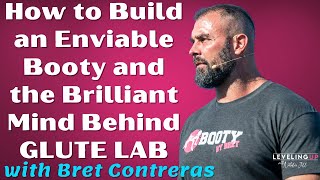
Bret Contreras, founder of Glute Lab, talks with Natalie Jill about the science of building glute muscles, functional fitness benefits, and nutrition for muscle growth. He explains his journey into glute training and shares insights on branding in the fitness industry.
Hi, I'm Natalie Jill, fat loss expert turned lifestyle and high performance coach. When odds are stacked against us, how do we shift and create everything from nothing? How do we level up when we aren't feeling it yet or have had a big setback? And how do we adjust quickly when life throws us major curveballs? On this podcast, I do what I do best. Taking complicated information that is relevant to us now and breaking it down simply with actionable steps. Steps you can implement to level up your own life. I also regularly interview some of the most inspiring and courageous men and women on the planet who at their worst, learn how to achieve success greater than they ever dreamed possible. Leveling up, creating everything from nothing. If you are new here, I encourage you to go back and listen from episode one for the full transformative experience. Rhett Contreras is widely considered the booty building glute expert. He builds backsides and he's the founder of the ever successful Glute Lab chain. He found his niche in that backside building and his knowledge coupled with his direct marketing know how truly works and his timing was perfect. In the era of J. Lo, Shakira and the Kardashians, everyone seems to be fascinated with that backside. But how did a guy get so dialed in with this niche? Brett was always inventing and growing up when he was obsessed with glute science as a teenager and a young adult. He says it's 60% genetics, but the rest can be built with hard work, the right foods and the right training. And he's got that formula and science dialed in. Join in today and learn exactly how Brett Contreras found his niche in the business of glute building.
Today on leveling up, I've got a very different topic. I am talking with the booty expert. Yes, the booty expert, Brett Contreras. I was drawn to him because of my search for building my backside, which is all of the rage today, which I'm going to talk about in a minute because when I was in my 20s, it was never about the booty. It was about breasts. It was about all the women were getting breast implants. It was a very different thing. But in my research I found an awesome trainer that's was helping me a lot. And we started using this incredible equipment and I thought, where is this stuff from? It's so unique. And that brought me to your page. Brett Contreras Paige, who founded Glute Lab and I saw quickly I started reading about him and how he became this booty expert. This man became the booty expert. So thanks so much for being here today, Brett. I'm so excited to dive in. I have so many questions for you.
Hey, thanks for having me. And I'm excited to do a unique podcast without the same questions, you know.
Yeah, yeah. Well, I'm going to have some questions about glutes. I'm not going to lie, because we're all curious about that. First, I want to go back to kind of your journey and your story. Like, how does a dude. How does a guy become the booty expert that all the women want to go work with?
You know, it's so funny. Looking back, I was always interested in glutes. Like, more interested than anyone ever known. In fact, When I was 19 years old, my cousin Brian, I was training him at the time, and he was getting so strong, we called him the Tank. And like Christmas, he buys me this book. It was something like the ultimate guide to butt leg development. And I still have it. And I looked through. I was so. I was like, this is amazing. Thank you. But why did you buy it for me? He goes, because I've never met someone so obsessed with the glutes. I'm 44 years old right now. So that was when I was 19. So that was what, 25 years ago. I was being told I'm obsessed with the glutes. And now I've never. You know, my enthusiasm for learning about glutes has not diminished one bit since then. I'm still just as gung ho and all these unanswered questions, but along the way, it's like, the reason why I became so interested in glutes is because I had none. I had no butt. And if you just have a nice butt, you can. I mean, I always say this. Genetics are like 60% of everything, you know, because I train some women who just don't have to do much and their butts are perfect. And then I have other women who do everything I tell them to do, and they don't change much. It's a hard pill to swallow, but it's the same for every muscle. And just in general, like, people think, oh, if I worked out four hours a day, I could be a bodybuilder. No, you can't. They have the best genetics in the world, and they train the hardest and eat the best. And, you know, so, like, for me, I was able to build my glutes, but it took. You got to look. I had to learn. Like, I had to study them and read up on them, and eventually I started developing my own methods but initially, everything I read, like in the bodybuilding magazines back then, we didn't have the Internet. When I was like, the Internet started coming to be around that time when I was around like 19ish. But before then I wanted to build glutes. You couldn't really find much articles on it because still in the bodybuilding world, it's weird. You have don't talk about glutes. Male bodybuilders, it's just like, think about it, they talk about traps and everything. They talk about all three delt heads, biceps, triceps, arm day, pecs, lats, abs, quads, everything except this missing. It's weird. It's almost like it's like some thing or something. I don't get it. Because they just don't talk about glutes. You never have a glute day. You have leg day. You say, I'm hitting quads and hamstrings. It's not I'm hitting glutes today or I'm hitting quads, hams and glutes. It's always just, I'm hitting quads. What do you do for quads? What do you do for hams? Now the steroid using bodybuilders, their glutes get big just by they use steroids and then they do things for legs like squats and stiff leg deadlifts and their glutes get bigger. But that strategy doesn't work for most people. Like, if you just try to do squats and stiff leg deadlifts, you tend to get big quads, big hamstrings. But your glutes get bigger, but they're not maximum. And that's what the people who find me, they might want, you know, they might want to focus on glutes more than anything. It's like I have a lot of clients who have me write programs from there. Like, I just want glutes.
Yeah, it's so interesting too, because I really feel with women especially, and I'm 49 as a recording this and I. So in my 20s and 30s, it was all about this different body type. It was about being as thin as you could be and big boobs. And that was like the age of the breast implants.
The Victoria's Secret models was what everyone wanted to look like. And no one wanted to be jacked and no one thick. If you said you're thick, that would have been the biggest insult. If you said your butt was getting bigger, that would be like, oh, my God, I got. And now it's changed so much. And I love it. This body acceptance movement. I love it because now it's like cool to have.
Totally is. And it's interesting because like the Kardashians and like I think that a lot of that brought attention to it. So what's interesting, Brett, is so I've always, I've been in the fitness space for years and I was great with abs and everything else and I never paid attention to my butt. I always thought, okay, I just assumed I had one until my 13 year old was like, mom, your butt's. I was like, what do you mean I have a flat butt. Like it's my third. Because she's so conditioned from, you know, the Internet, social media, whatever. Seeing that that's accepted. But what's interesting, I have so many questions for you about this because one I'm wanting to know like how this became this obsession with women all of a sudden butts, but then also from a structural, from a functional fitness training. I believe the reason I had a disc rupture in my lower back is because I didn't have strong glutes. So I think for health reasons and functional fitness, it's actually really critical.
I totally agree. So to address your first thing, like how it came to be because I feel like it's like 33% of it is me. 33% just changing fads and 33% like the Kardashian. Well, probably more than 50%, then maybe 25%. 25%. But it was the. Alright, so it's like I think J. Lo was probably the first. Yeah, really. And J. Lo and like Shakira and they have these nice butts that they wiggle around while they're dancing and stuff. And then, and then the Kardashians came around and it was like, whoa. You know, so that them being so popular, people wanted big butts. But that alone doesn't drive the. This glute thing. It's also like, hey guys, you can build it. Before, like it was. So I have this, what I call the rule of thirds. It was a really popular post I made. I should post it again. But I wrote about it in my book Glute Lab. It's one third of your exercises for glutes should be vertical in nature. Meaning the weight is like on your back or in your hands. You're doing and you're standing, you're doing squats, lunges, Good mornings, stiff leg deadlifts, deadlifts, step ups, Bulgarian split squats. All those exercises are vertical and they're hardest when they're at the bottom. And they work your glutes in a stretch position. They create a lot of muscle damage. You tend to get sore from those exercises. Then another third should be horizontal in nature. These are your exercises. These weren't around back in the day because I invented hip thrusts. People did bodyweight glute bridges. They do things like Jane Fonda type workouts, but not with weight. So these are your barbell hip thrusts, your glute bridges, your single leg hip thrusts, your back extensions, your reverse hypers, your quadruped hip extensions, things like that, pull throughs. They're where the load, the vector of the load is coming from front to back. And those work your glutes hardest at the lockout. At the lockout is where glute activation happens to be the highest for glutes. It's not the same in other muscles.
And for people listening, because a lot of people don't know what that means when you say lockout. Like squeezing at the top or finishing the move.
Exactly. Yep. And so those, those build the glutes probably through, you know, they work different regions and they work different. Like the vertical work the lower glutes better. The horizontal work the upper and lower glutes. And then the other third should be lateral or rotary in nature. Meaning all the abduction stuff you see wearing the bands, doing cable, standing hip abduction, seated hip abduction, machine, like donkey kicks.
Would that fall into that, that type of movement horizontal?
Because you kick back. That's hip extension. These are abduction.
You go outwards, sideways. Okay.
Going sideways. So this rule of thirds is really cool because that then the abduction develops the upper glutes better, the glute medius and the upper division of the gluteus maximus. So when you do that, when you train that way, you will develop the entire glute. And you'll also end up doing a lot more volume for glutes than if you just did like squats one day, four sets of squats and then four sets of stiff leg deadlifts. And that's all you do for glutes is eight sets a week. That's how the bodybuilders were. Now you have a lot of. My Girls are doing 36 sets a week for glutes. But you can recover from it because there's so much variety. And only 12 of those sets are really damaging. The other 24 are not. The abduction don't beat you up. It's like penalty all you might call it. They don't get you too sore. You can recover from it. But back in the day, it was like when I was like 20 years old. If you typed in how should I train my glutes or something, you couldn't find them.
There was nothing. And for women it was how to get a smaller butt. I remember that it was totally how to get a smaller butt.
It was like, do these Jane Fonda type exercise, the aerobics. But back then it was like just squat and do lunges and maybe stiff leg does. That's it. They'd say the donkey kick machines are stupid. Seated abduction machines don't work. Bands weren't around then. Hip thrusts weren't invented yet. Glute bridge, no one did. Weighted. So changed a lot. If you look at the way people train, pecs, lats, delts, biceps, triceps, quads, hamstrings, nothing's changed in the last couple of decades. But glute training has been totally, totally changed. And I believe I'm the main source of that because I came up with.
Almost all the methods I know I could not believe. I didn't know that. When I started digging, I was like, this is so impressive. So I've got a lot of questions about you, about how you claim that space and how you come up with it and how you brand it, because it's incredible. But before I ask about those, I do have some questions that I know, especially some of the women listening want to know like, one, is it ever too late to build glutes? Like, is there, is age ever a variable? Can you build them in your 50s?
So here's what I'll say about that because the textbook answered by personal trainers and strength coaches, like, yes, you can build muscle at any age. And that is true. Like even there's studies looking at 90 year olds who start lifting weights, they build muscle, but they've never trained before. So, like, if you've been training like me, I've been training since I was 15 years old, training properly since probably like 20. And I'm 44. So I've been training hard for 25 years. So it's like, am I going to grow my glutes a lot more after training hard as hell for 25 years? No. Eventually it gets to the point where I'll probably start losing. I don't know what age that'll happen. Hopefully not until I'm like 60 or something. But it depends on how hard and how properly you've been training. But if you've never worked out before and you start training in your 50s, hell yeah, you can build glutes. I'VE done it with so many different clients. I've trained 60 year olds, built their glutes. I've even trained a 7 year old who built glutes. People were like, wow, your glutes are changing.
So that makes so someone like me who's worked out her whole life but maybe. But never really focused on glutes. Someone like me could grow it then, is what you're saying. Because if we've never actually pushed it.
If I trained you six months, you'd look totally.
Yeah, that's awesome.
When you focus on them and prioritize them and you're with a coach that understands progressive overload. It's funny, when I train people, I'm not like yelling at them the whole time. It's most of the time I'm having them rest, but I push them really hard on their sets. But then we rest three minutes, you know? Yeah, it's like a lot of resting. But then when you do your sets, I'm pushing hard, but we have a goal in mind. It's like, hey, you know, I might write a new program every four weeks. But it's like for those four weeks, I want you beating what you did on week one, Week three, I want you beating what you did on week two and week four. And then we switch. But it's the same, but different concept because there's this muscle confusion that got popular with P90X and it's like that threw people off. It's misleading. You need to switch it up, but not that much. So it's like we're always doing squats, we're always doing hip thrusts, we're always doing single leg stuff and hinging and stuff and abducting. But you switch up the stance width, you switch up the bar placement, you switch up the rep range, things like that. You don't have to totally divert. It doesn't have to be drastically different. It's like we're always doing variations of the movement patterns.
So talk to me about the functional aspect of glutes and I'll tell you just a little background on mine because my audience knows my story. I have completely healthy disc, except for between L5s1, I had degeneration and I had a complete rupture where I needed emergency surgery. And to me, when that happened, it was a shock to me because I thought, I have a strong core, I'm fit. Like, how in the world. Now I'm clear in my mind that had I had stronger glutes, that wouldn't have happened. But I want to hear from your perspective because you're the expert on this.
So there's this kind of back and forth, like kind of disconnect between pain researchers and the strength coaches. They hate it when we say, like when I say the glutes are the secret to low back, like, you know, getting rid of low back pain or something. They get mad at that because that can cause a nocebo effect where if you don't have big glutes, you can be like, oh my God, I don't have big glutes, I'm going to hurt my back. And then you can actually hurt your back because you think you should. A lot of pain has to do with the brain, but you're talking about actual injury. Disc degeneration. Here's the problem with disc degeneration. People don't know this about me, but I have studied the discs. My first journal article I ever published was called to crunch or not to Crunch. And I reviewed the research, but I probably read 400 studies on disc physiology, biomechanics. You start degenerating when you're two years old. There's evidence of degeneration. It's like when you're 90, all your discs are degenerated. It should be called aging. The reason why this is so important to me is when I was 15 years old, I got in this really bad car accident. I was limping around, my back hurts so bad. The doctor comes to me and he gives me an MRI and he said, oh my God, you have the spine of a 90 year old. You have the worst disc degeneration I've ever seen. In my. At your age, you have the spine of a nine year old. You should probably never play sports or lift weights and tell that to a 15 year old. I was like, I was just. My world was shattered and I thought, I legit thought that at age 25 I'd probably be in a wheelchair. And I was so depressed I was limping around. And then about six years later, I remember I was 21 years old and I had just learned deadlifts and we didn't have, again, we didn't have the Internet. So I would just like my friend and I learned it. If you would have had a video on us, it would have been a YouTube video fail. Like our form was so bad, we just completely rounded. We did not hinge properly, keep an arch. We would just bend over and pick the bar up. But within my first few months, I could do 405 pounds for six reps. And I remember my buddy I was like, james, I don't think we're doing this right. I feel this all in my low back. He goes, I know. I don't think we are either. But we have no one. We're at the college gym. But it dawned on me. I am so strong at these. I actually have a strong back. And my, you know, now it's all these years later. I wish I could go in and get an MRI and compare it to. Sure, how I tracked down that MRI from when I was 15. But bottom line, everyone has disc degeneration. 25% of people have a herniated disc and they don't even know it. They don't have pain, they're asymptomatic, so we need to stop. The other thing is people that are like, I just need to let you know I have a herniated disc. And I'm like, when did you find that out? And they're like, you know, like six years ago. And I'm like, well, it's probably not herniated anymore. You're in a state of flux. So you can type into Google. If you type in a Google search, PubMed spontaneous regression of Disc Herniation, you'll get all these case reports, these case studies of, look, we imaged this guy and he had a big time disc herniation. And then six months later we imaged him again. There's no evidence of that. I'm sure microscopically there's evidence because bone heals back stronger, but soft tissue heals back weaker, biomechanically inferior, but still they can't detect it on the image. Meaning they're in a state of flux. You can improve upon them. My back, I don't have back issues anymore and I can deadlift £635. So what happened with you? Here's the thing. It's like, because people come to me, I have so many of my clients, like my glute squat, I could just go, Amanda, Krisanna, they all had hyperextension related back pain. When they first came to me, they were like hyperextending, totally flexion related back pain or hyperextension related. And they would, they would be like, oh, my back's hurting. And I taught them not to hyperextend or I taught them not to round in a deadlift and then their back pain goes away. It's funny because they're after the very first session with me, their back pain never resurfaced.
That's amazing. I've had two surgeries from that rupture and I'LL tell you because I train with Brianna, who's a student of yours. And what's so is she's literally right there with me when I'm doing these glute exercises. And I had to put my ego aside from what I know. But I watch the little tweaks she does on me and I'm like, wow, it totally bypasses my back. I'm like, well, no wonder my back's been hurting. And I had all this because I was always using it the wrong way. I wasn't activating my glutes right.
So that's what the research shows, that people who have, like, back pain tend to have stronger backs. You know, you've straight. You lift with your. I don't like the term you lift with your back. But you. When you do hip extension, it's coupled with lumb. Spinal flexion extension. You don't keep a rigid torso. Bend mostly at the hips and lift up. You will round everything and kind of come up with it. That's just how people tend to. You go pick something off the ground. You don't tend to have a neutral spine. You tend to just bend over, pick it up. So the problem is, is it strengthening the glutes or is it learning proper form or both? It's like you remove the insults, like if you're keeping a neutral spine. So a lot of it's like proper glute training takes care of it on two ends. Number one, you strengthen the glutes. And research shows when you strengthen a muscle, you use it more. So it's like if you don't have much glutes, you're not going to use them that much when you lift. But if you have big glutes, you're going to. It'll even alter your form a little bit and you'll end up taking advantage of that strength. But also you remove the things that can damage the discs. Like when you're lifting under heavy load and you round your back, you have compressive forces on the spine because the muscles are clamping down and they're compressing the discs and then you flex it. It's like pushing on a jelly donut, pushing on one end of it and the jelly will migrate to the opposite side. That's how you get disc herniations. You get, you know, you get posterior lateral disc herniations, meaning the back and to the side because the spine is in the way. You get those disc herniations to this, like, back inside of the discs because of the constant flexion under under load. So when you quit doing that, you don't have the damage to the discs. So it's very important to learn proper form. These movements. And there's some movements that are like, I always tell my, I have the simplest recipe for back pain clients. They come to me, oh my God, my back's hurting, this is hurting. And I go, okay, you're going to do hip thrust, but it's all high reps, pauses, high rep pause, hip thrusters with pristine form. You use the knee band, the glute loop. Put the glute loop on, use the barbell. Start out with 105 pounds, because that's what I have a 15 pound barbell. My bars are 15 pounds, the light load. And then I have them in the corner. I'm like start and do a set of 15 with a three second pause. And then if you want to add weight, if it's easy, add weight. You'll do four sets of that. Their glutes are on fire and they're not using heavy load. Then I give them a single leg movement, like a Bulgarian split squat or a step up or lunge. They're not putting any pressure on their back. It's all just their legs, single leg movement and it's body weight or light dumbbells. And then they do maybe back extensions off the 45 degree hyper if they feel good. And then they finish off with abduction. Their glutes are on fire and their back feels fine.
It's amazing. I love that.
Then people do that for like two weeks and then their back pain goes away. And then we go back to using load, everything's fine.
And this is not talked enough about with back pain. I mean, so many people are suffering with back pain and this is like the last thing that people are bringing up for them.
No. And I feel like I could help all of them. And it's like, yeah, yeah, yeah. With chronic pain, it's more complex that you've created like, you know, central sensitization. And it's like, it's a, it's like if you light a match and like the fire alarm goes off and sprinklers go everywhere, it's irrational. It's because of like fear. Really complex. I follow the guys who know this stuff really well. With chronic pain it's different. But with like acute things, like lifters are always tweaking certain things. Like at this stage of the game, there's never a week that goes by where everything feels good on me. So my shoulder, my low back, my hips, my Knees. Something feels a little off, and I've got to work around it. That's why you need to know a lot to know how to work around things. If you push through it, it just makes it worse.
So it's not just appearance, it's functional. That's critical for the booty. But I also want to ask about the trend and the theme in cosmetic surgery for it, because there's a lot of women going to Mexico, going wherever, getting bbl, which is Brazilian butt lift, which, believe me, sometimes when I'm training and doing intense workouts, I'm like, that would be easier. But can you talk to me about that? What does that do for women? And does that weaken things? Because now they think they have a strong backside. What is your opinion on that? Do you have one?
So, well, there's like, butt injections, which I've heard really bad things about, where, like, implants were, like, butt implants, where it's like, they. I've seen videos where it's like, move around. It's terrible. Way more popular is what you said, the BBL surgery. And that's just fat transfer. You have to, like, gain weight and then take the fat out and then inject it into your butt. And I don't know how long it lasts, like, if you have to keep redoing it or what. But here's the problem. You're not gonna. I mean, I've asked a couple of girls in my gym, like, did you get a bbl? Hell, no. What girl's gonna admit it?
Because it's right. That's a big deal.
Is that the right word? Faux pas? Like, you don't talk about Taboo. Taboo. You don't talk about.
Yeah, it's not accepted. Like, breast implants got 20 years ago, yet it's like, people aren't talking about it. Like, oh, I did a BBL last weekend. It's not like that right now.
Yeah, you're not allowed to talk about it. So I do think it's like, I. You know, I hear it's on the rise, and I wish people would use that as a last resort rather than like, oh, like, try and train the right way first before you resort to that surgery. But anyway, I don't think it impairs. I don't know. You know, it's funny because I've read so much research over the years, and it's like, in the elderly or, like, sedentary, you have fat infiltration into the muscle. I don't know where that fat does the fat go into the where does it go?
And.
Yeah, but I, I think that they can still be strong and everything. And I don't know if you can tell through palpation too, because I've had a couple of clients where I'm like feeling and I'm like, okay, it feels normal, but then why would it feel differently? It's just fat. Like, of course it feels normal.
You know, that's funny.
I don't know. I think there's not enough research on. I don't know if there's any studies on function. If it, if it affects function. Theoretically it would, but they don't. I don't think it like gives them this false sense of security or anything like that. They know that it's fat and they need to still build the muscle.
Jury's out on that one then. So what about.
This is important? I have one client who, who used to train with me and she did have a BBL surgery, but her glutes got so much better while training with me. So they grew so much. It's like they were good. They were good to begin with, but you can still grow the hell out of them through proper training too.
That is amazing. Ok, though, can women or men, either one. Can they build their glutes through bodyweight training or do they have to add resistance training to it and heavy weights?
So I would say, like Most muscles, like, OK, you could @ least maintain, like if I. I'm lucky. I own my own gym and everywhere I go I have a garage. Like, I just moved to Vegas. I have this badass garage gym so I never have to train with body weight. I started building my first garage gym at 24. That was 20 years ago. I've had garage gyms for 20 years. But if I had to say I could only just do push ups and dips and sliding like flies, with body weight, I could maintain my pec size. I could probably even build them because I don't focus so much on pecs. Most of the muscles, I would say glutes would be the one muscle that would be the hardest because it's so much easier with weight. But you would have to do a lot of. The one thing is, if you have a partner, if you have someone you can thrust, especially women, that's the weight.
Then that would be weight.
We're talking about quarantine. That's what I tell people. Thrust someone. If you had me to sit on your lap, I weigh 240 pounds. It would be hard for you to get me for 10, you know, totally barbell. So I tell people, get a partner to thrust. But if you don't have a partner, yeah, you can just. You have to just do body weight. You gotta start, you gotta do single leg hip thrusts, single hip thrust with a pause. You know, elevate the back and the foot so you go deeper. You gotta. You know what if you progress to, you can bust out pistols like a champ. Pistol squats, those are hard to do. Most people can't do pistols. So it's like you said. All right, I'm going to be quarantined for the next three months. I'm going to be. My goal is to be able to do 10 pistol squats. And you can't do one right now. But you work every day at pistols. Single leg hip thrusts and all these extra range, sideline hip abductions, side lying, hip raises, frog pumps. I made all these up. You do all those exercises, I guarantee you you're going to at least maintain. But even no matter how hard you train, you could possibly grow them. And I've had a lot of good feedback from my Booty by Brett program. It's like the girls who were quarantined, but they had a program and they worked hard at it.
Yeah, you completely schooled me on this because I'm. Body weight is what I've always taught and done. Like, all my DVDs are body weight. Everything I did. Now my body weight's intense. I do chin ups, pull ups. I do like stuff that's intense. However, I don't have the booty that I want. I don't have the butt muscle. So I'm being schooled that. No, I've had to add weights. I am relearning and retraining because I have not been able to grow it with body weight. I've been able to be toned but not grow. Talk to me about food with muscle growth, because a lot of women don't understand this, that you do have to eat to help you grow the muscle, too. Can you talk a little bit about that?
You have so many anecdotes. Like, my niece, my own niece, she comes to me, she's working out hard, and about one month in, I'm like, okay, something seems off. You're not gaining as quickly as I thought you would. How much protein are you eating? You know? And she's like, I don't know. And I'm like, well, let's write down what you ate today and yesterday. Okay, I think you're having about 60 grams of protein a day. I want you to have Ideally, like, you know, you weigh like 120. I'd like you to have 120 grams, but let's just aim for 100 right now. Eat the same way you are. But I'm going to give you this. I'm going to go to 711 after your workout and buy a 40 gram protein muscle milk. And you're drinking it before you leave here. And she'd have to guzzle this before she left. Her progress just, it was like exponential. The next month her glutes just blew up because she was finally getting the optimal amount of protein. But you're not just talking about protein. You mean calories too?
Carbs too. I think women stay away from carbs so much, but we need that to grow muscle too.
But it's hard because it's like when you first start working out, everyone has a little bit of fat. What drives them to start working. You don't start working out if you're shredded. You're like, cool, I don't even need to lift and I'm shredded.
Yeah.
What is you to start working out is when you start noticing like, oh, I have this fat wherever you store it. You know, I have this saddlebags or. With men it tends to be the low abs and love handles. With women it tends to be the inner thighs. The, the back of the butt used.
To be our butt, which is, that's what's so funny. It used to be like, our butts are fat. Let's work out. It's so funny.
Let's like diet down and starve ourselves and get rid of that fat. But then you're just like, you have this lean physique, but you don't have the butt muscles you want. So the best way to get the body you want is to eat properly for your goals and then utilize progressive overload so that you build shape. So it's like, let's say hypothetically speaking, someone's, you know, a woman who she didn't like go crazy and overeat. She only weighs 140. Say she's like 5 5. But she is a lot. She doesn't have much muscle. She's a high percentage of body fat. Say she's 27% body fat. Okay, let's say 30%. So that makes it nice and easy. Well, okay, what she should do, because she would think she would look at herself and look at all this fat and be like, I need to lose £20 and then I'll look the way I want. But if she just starved herself into cardio you end up losing. Probably half the weight is fat, half the weight as muscle. And then you're just still a little skinny fat for your liking. You still have. You're like, damn, I got down to 120. I like the way I look, but I don't have the shape that I want. I still have some fat. So if instead you ate a lot of protein and then worked out hard, utilizing progressive overload, then you'd get down to the 120, but you'd have more muscle, you'd have more shape, you'd be leaner. And I have a lot of clients that come to me. They weigh like 130 and they look decent. They're just not like, you know, they're not in shape, good shape, but they look decent. And then I train them for a whole year. They keep their calories the same the whole year long. I just make sure they're getting around a gram per pound of body weight per day. Then the end of the year comes around, they're like, holy shit, Brett, look at this. I weigh 130. I haven't changed in weight. But look at this, look at my pants. I tried on my pants from last year. Look at this. And there's like a four inch gap. Wow, that's there. And then they're like, my whole body has changed around. That's called recomping. Recomping means you stay similar weight. You're just increasing muscle mass while simultaneously decreasing fat mass. So the skill weight doesn't change, but your physique changes dramatically of more shape, less and less body fat percentage. But there does come a point. Yeah. Where once you get pretty lean and like, then you can like, once you get to where you're like, okay, I like the way I look. I look pretty good. My body fat is a reasonable level. Now I'm going to start upping my. Because your protein always stays the same, pretty much. You know, now I want to start upping my carbs. Now you have a little more carbs and your workouts are more intense. You have more energy to fuel your workouts. And then sometimes that's when girls progress. Glute progress really takes off is when they do start eating more. I mean, I can tell like my client Allegra, so many of them, it's like she's like, I'm eating so much right now and it just keeps going to my booty.
You're like, good problem.
She did stay at like, you know, 120 for like, you know, a year. And then now she's at. She's gotten up to 127, but her calories are high. A lot higher than she used to be. But yeah, fuels these amazing workouts. But she is strong. You gotta be strong. So it's like, I like this saying, like, you know, feed the muscles, burn the fat. Like, you gotta. And I always get in this where I'm trying to lose weight and I'm like, okay, I'm not going to eat breakfast. And then I try and work out and my workout sucks. Yeah, I don't. Some people can train fast just fine. But I. You got to do whatever you. You got to focus on your workout. Treat it like it's a mini competition. Like, do what needs to be done to have the best workout. And if that means eating breakfast, that means eating two meals before you go in. Do that. And then just later on, take care of the calories or adjust them because I'm with you.
I can't do the fasted thing and my workout will suffer. Okay.
I want to intense. You got to be setting PRs and going up over time.
You know, I want to switch into a different version of this topic because one thing that you've done so incredibly well. First of all, you're an amazing expert when it comes to building and nutrition and all of that. But you're also an expert, a huge expert on sales, branding, and marketing, whether you know it or not. Like what I love when I looked at your Instagram and I have private clients that I help with sales, branding, and marketing, so I geek out on this stuff. But you have some clear messaging. Such conviction, such authority in your messaging. And I believe that's why your social media grows. I believe that's why you attract clients. I believe that's why you're known as the expert. You claimed that space. Can you talk a little bit about that? Because I believe that's more than just knowing you're knowledgeable. Like, you're pretty brilliant when it comes to that.
So. All right. Before I was in fitness, I was a high school math teacher for six years.
I would have never guessed that. Very random.
In Scottsdale. And I remember, like pacing around. Like, the end of the day would come and I'd just be pacing around. I'm like, God, I feel like I'm talented. Like, I created a block course for the district that was like kinesiology and weights so they'd learn all about the science and then they do weights. I was a math teacher, but I proposed that to the district. I got it. Passed. And I taught it at the alternative school. I just was always like, I'm very lazy in some ways, but that drives. And I'm very frustrated. I get so frustrated with things. Like, I'm like, this could be. This thermostat is so stupid. I should go into making thermostats because I could feel it because I have common sense. Like this iPhone. Why can't you mark my text messages unread so I know to respond? Everything? Like, they can't figure that out. I get so frustrated. But that's what. What drives innovation. Complacent people don't invent. Frustrated people invent every time. Driving at night because I'm a night owl. I'm like, why the hell am I stopped at a red light waiting for 60 seconds when there's no one around? A flashing red? I thought about that when I was, like, 16 years old. But I'm impatient. I'm lazy in some ways, but it drives innovation. So I'm always inventing. I'm always thinking of things. The reason I thought up the hip thrust is like, you know, I'm like, I like this glute bridge exercise, but I can do 100 reps. How can I load it? And I was watching a UFC fight, and I'm like, there needs to be an exercise for helping that bridging to help us. But I'm always thinking of innovation, But I was never. I never cared about the money. So I was used to making 30 grand a year as a teacher. Yeah, 34 grand my last year or something like that was like, that's with a master's plus 24 extra credits. And I'm like, it's so funny because back then I was like, God, I feel like I deserve to make six figures now. Six figures is nothing to me. But anyway, when I first left teaching my first year, that was during the housing market collapse, mind you.
2008. Yeah, 2007.
Ish. That era. So I built this gym, Lifts in Scottsdale, and Lifts was awesome. I still am friends with some of the clients. It was such a good gym. But I remember, like, my third month, I made, I think, $5,500 in one month. And I was like, I'm on my way to make six figures. I did this scorcher, and I partnered up with inventors and investors, and I thought everything was good. And then the housing market collapsed, and I'm like, okay, what else can I be doing? I've always been good at, like, I never know what the hell I'm even Now what am I going to be doing in two years? I never know. Lately I'm like, should I do this reality show? I've been having some interest in people wanting to do a reality show. Should I do this, should I do that? I have no idea. But one thing about me is I'm always plugging away. I'm always getting more education, getting more certifications, learning new skills. Now I want to crank on YouTube. So I'm always trying to learn more. Well, back then, when I. When the housing market collapsed, I'm like, okay, everything went under. My investors pulled out a scorcher. My whole plaza shut down with lists. So I'm like, back to the drawing boards. Well, what can I be doing to advance my career? Everyone told me, you should be blogging. You should be going on News Channel 3. You're smarter than that guy Chris. Whatever, back in the day. And I'm like, how do you. I don't know how you even do that. I don't have a PR person. I don't have anything like that. So what I did is I just said, you know what? I'm gonna write an ebook. This was 28. I'm gonna write an ebook, and I'm start blogging. And I'll just have the link to the ebook in the corner. So if people like my stuff, they'll buy my ebook. And it's funny because my stepdad at the time was like, why don't you get an effing job? No one's gonna buy your stupid ebook. Well, I made eight grand the first month, and then three grand a month for, like. I finally pulled it off for sale, but for eight years, I made three grand a month. I never plugged it once on social media.
And was the ebook about building glutes?
Yeah. And it's funny because I just. This is a story of my career is never knowing what the hell I'm doing but doing it anyway. It's like I start up a podcast. I don't know how to podcast. I did five episodes. It was great. And then I stopped. I started my own research review with my buddy. We had the worst. It was so ugly. But I'm like, let's just launch it. We'll get better over time. But it doesn't have to be perfect. I remember designing my own website, like back when it was Brett contreras.WordPress.com or whatever. It was like, I just pulled my own banner. And it sucked. But you just gotta start. So when I wrote that ebook, I wrote it on Microsoft Word. Microsoft didn't convert to PDFs back then, so I had to find something online that converts it to a PDF. And it's like, I have a very.
Similar ebook story, and mine started in the same year, too. But I'll tell you, the reason yours worked and the reason mine worked is because we were both answering one problem that was not trying to appeal to everybody. It was like one specific thing. Like, you were very clear on, I'm helping you build glutes. And I didn't even see the ebook. But I'm assuming that's what you were answering, a problem.
Yeah. And I'm like, who's not going to buy this? When I made the picture of the COVID bunch of exercises, I took in my gym lifts that they've never seen before. Anyone who's slightly interested, who wants to be a better personal trainer, they're going to buy this book. And anyway, back then, I'd have all these experts telling me, like, brett, you need to do this, you need to do that. You're leaving so much money on the table. You're great, you're smart, but you're not a good businessman. And I'm like, I'm killing it right now. My methods are being every country. I go to Spain, I go to Barcelona, I go to Sydney, I go to Norway. Anywhere I go, they're doing hip thrusts. I used to walk up to be like, you know, I invented this exercise. No one believes me. And I'm like, look me up. I invent this. You want some pointers? And people would be like, no, you didn't.
And then, because they're thinking of, like, a glute bridge and not knowing the difference too, or they're assuming, but. So it's forever.
It's this loaded barbell. Hip thrust.
Yeah.
Yeah. No one did it before 2006, right?
You came up with that. You came up with hip thrust, which is.
But my goal back then was to just spread my methods globally because, like, get your methods popping around the world, the money's bound to come. I didn't care about the Irma. They would. All my colleagues would write me and be like, brett, this should be way. You could split this ebook up and make way more money or you should do this. And I'm like, I'm trying to give away my information for free and just barely make a living because I'm not used to much. I've never been. I'm very frugal. I don't need a lot, and I still don't want to need A lot. Because, you know, I think the housing market crashed. And then this pandemic recently makes you realize there's not much security. Stuff can be taken away in a heartbeat.
Totally.
I don't want. I don't get massages. I don't pamper myself. I don't. I recently, like, gave my house to my mom, and I slept on the couch for two months before I moved to Vegas because I want to sleep on the couch. I want to be. I don't want to need lavish things. I still have my $6,000 truck.
That's awesome. I love that. But you don't have a small following. I mean, first of all, as I'm talking to him, he's got a million people following him on Instagram. And when you. If you scroll his Instagram page and I'll put the link in the show notes, but you'll see his messaging is so direct and clear. And I have a lot of people that. Listen, Brett. That are younger entrepreneurs or they're starting out and they're figuring out, like, how do I attract somebody? And I'm always telling them, focus on a niche. Like, focus on one problem you can solve and take ownership of that. Get clear with that messaging, because you go to your page and you know exactly what you stand for.
That's what I created this niche. You know, I was the first glute expert. I guess there are a couple of people, but they wouldn't have, like, novel methods. But I created the whole, I'm the glute guy, you know, all this stuff. And now there's, like, a ton of people out there. It's funny. It always pisses me off when they say, like, I'm the booty expert. I'm like, you haven't published one thing. You've never. All your methods are mine. You're not the glute expert. Just call yourself a glute expert. Don't say V. They're all glute coaches. I created this whole niche. But anyway, back to my income. It was like my first year when my gym closed down. I think I made 30 grand. Or. No, I think I made 55 grand. Okay, 70. Then it was 85, then it was 100. It's just kept going up every single year. So now it's like I make more money than I ever could have dreamed of. So I never got to where I'm spending a fortune. I just now help everyone out. I've been able to.
You've also never made it about focusing on money. And I think people do that wrong, too. They focus so much on just, how do I get rich? And they're missing the whole idea of helping and solving and coming back with, you know, an actual solution for me.
Like my. You mentioned my equipment. Like, I just came out with my Nordic ham curl just a couple of days ago. And I'm like, I'm so proud of it because it's so much more affordable. These other ones, mine's $400. Those other ones are 5, 6, $800.
Let's talk about your equipment for a minute, because you've got. You had this bench. Is it called a glute bench? It was like this foam bench that Bri had. And I'm like, where do I find this thing? And of course, you were like, backordered when I went on your website, but. But you come up with such simple, great solutions. Like, I was like, how did no one think of this before?
Well, I have a really good team. And it's funny because these people don't have, like, they don't care about being mentioned on social media. But basically I went to. It's funny the way things work out. I went to Sydney with my buddy Alan Aragon to do. To speak at Filex, this huge convention. And at the social gathering, I met this guy Matt. And he was just always around and he just tell. He just liked being around me and Alan. And now he's my CEO. And when I brought him aboard, see, before him I had a WordPress site, you know, and I had. Everything was WooCommerce based. And then I had all these plugins and they were conflicting. And I would. Twice a week, my website would go down. You know, it's the worst nightmare. So I had him come along and he moved my shots sites to Shopify. We've had barely anything since then. But he just. You can't do it all. You need a T. You need a team. So it's funny, I think he was making 10% back then. We just said, look, I'll just give you 10% of sales. And I think it's first. I don't even know what I paid him the first month. I probably paid him like 500 bucks. And but now he's. Now he's killing it. Well deserved because he works his butt off. And then when I got my PhD, I had to do an experiment on the twins. I did this twin experiment and they're like, you should meet my dad. He invented power block dumbbells. And I'm like, oh, wow.
Yeah.
So then I teamed up with him and his son. And they do such a good job. But a lot of it's like they have their own ideas. The glute bench was their idea. But, like, I'll come to them and I'll be like, I have this idea and then they prototype it for me. They send it, like whenever something comes out to market, I thought of it the year one year prior. Takes a year to get everything ready and then get them made from China. But anyway, my whole goal was to make products that work well, that work for women that are five feet tall. Because no one considers the five foot tall woman.
Yeah. And that's me. I'm five foot two. And your glute bench. I'm going to. I just, as I pulled it up as I was talking to you, I'm like, okay, now it's back so I can order it.
It's all these things. I just, I'm very proud of them. And it's like a lot of them. A lot of the times it's like I see something else. But I just love that I have a team that can make like, how many, how many people out there have a team that they can be like, I want to make, totally get help. So I'm in a very good position. I've got an awesome team. It's funny, my team right now, depending on whether. Because they're not. They don't work for me. They're just. I partner with them. But I only have five people working for me. But we work 365 days a year, all five of us. We don't have a day off. We'll work Christmas. My sister does my customer service. I've got Jamie and Kevin as my assistants. Together, the five of us work 365 days a year. And I think we did. Look, we'll do more than 10 million in sales this year.
That's incredible. Incredible.
Never underestimate the impact of a team.
Yeah. And never underestimate the power of people wanting a booty. Because that is so timely right now. And you're doing great things and I love that. I love that I got to know you a little bit better now. And as you all are listening, it's not just about appearance for that. So he's really wanting to help people. And I can speak for myself that just developing those muscles is changing my relationship with my back. So it's important. Gosh. Well, thank you. Where can people find you? Where are you most active on social media? Instagram. Is that your main place?
Always Instagram. I want to Start youtubing more. But right now, it's just like, I quit Facebook, I quit Twitter, I quit YouTube. I quit blogging. I quit sending out newsletters for the most part. And I just do Instagram. It's funny. My twin brother convinced me to do Instagram. I was like, joel, that's stupid. It's like, you can't monetize that. And he's like, trust me, it's the wave of the future. I'm like, how? You can't link out. He's like, just trust me, it's the wave of the future. And I just dove in because Facebook changed their algorithms back totally years ago. And I was like, this is even fun. I'm going to just dive into Instagram and put all my energy into God. Did it pay off?
Yeah. So follow him on Instagram, get his book and check out his equipment. And thank you so much, Brett. This has been awesome. Thank you.
You're welcome. Thanks for asking some good questions. I appreciate it.
Thank you for taking the time out of your day to listen in as my guest today. If you found this episode valuable, please share it with friends and on social media. I don't advertise this show, so I rely on word of mouth and reviews to get it out in the world. The biggest thank you that you can give me is leaving me a review. And a nice one.
I hope.
By the way, this is how others find these episodes. If you do leave me a review, be sure to message me@sub supportataliejillfitness.com with a screenshot of your review because I would love to send you a free digital download of my DSR journal as a thank you. And please don't forget to connect with me on social media at Natalie Jill Fit on Instagram and Facebook.










