229: How Equinox was Born with Lavinia Errico
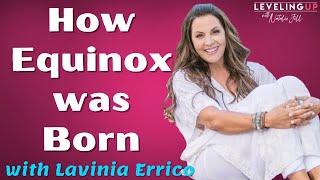
Lavinia Errico, founder of Equinox Fitness Clubs, talks with Natalie Jill about building the brand from the ground up. She shares how Equinox grew from a single location into a major fitness chain and the wellness philosophy that shaped the company's approach to fitness and lifestyle.
Hi, I'm Natalie Jill, fat loss expert turned lifestyle and high performance coach. When odds are stacked against us, how do we shift and create everything from nothing? How do we level up when we aren't feeling it yet or have had a big setback? And how do we adjust quickly when life throws us major curveballs? On this podcast, I do what I do best. Taking complicated information that is relevant to us now and breaking it down simply with actionable steps. Steps you can implement to level up your own life. I also regularly interview some of the most inspiring and courageous men and women on the planet who at their worst, learn how to achieve success greater than they ever dreamed possible. Leveling up, creating everything from nothing. If you are new here, I encourage you to go back and listen from episode one for the full transformative experience. How does a mega successful health club chain like Equinox start? Not the way you may think. Lavinia Erico, the visionary behind Equinox Fitness Clubs. Join us today to share how this mega gym was born from the ground up. Today I've got my new friend, Lavinia Erico. Did I pronounce your name right? I was nervous about that one.
Yes.
Yay. I just met her at a girls weekend recently and we were talking, talking, connecting about all kinds of things in life and so somehow then realized. She didn't tell me. I realized from some other girls that she actually was the mind, the founder behind Equinox, the huge gym that we all know of. We've seen them all around. It's amazing. I had so many questions for her. I don't know the story yet, so you're going to be hearing the real conversation about this. So thank you so much for being here, Lavinia. I can't wait to dive into this topic.
Sure. I'm so happy to be here. Thanks, Natalie. I mean, I have to tell you, I love what you guys do.
Thank you.
What you're doing and that you've carved out a niche for yourself and that you just keep adding layers and layers of depth and transformation for your community. It's beautiful.
Thank you so much. Thank you. Well, I'm inspired by you and I love that we were connecting on girly things, just life, everything in general. And I had no idea that that's what you had done. So. And then figuring that out and knowing how much I'm a lover of fitness and workouts and exercise and of course, a huge fan of Equinox, I was dying to have the whole story. So take us back. First of, were you like how did that happen? Who were you before that even happened?
So, first of all, I would say I come from a big Italian family. My mom had five kids in two and a half years because there's two sets of twins. And she said that we all came out of the womb moving. Like, we were definitely, by nature, kids that love to move. And, you know, we would climb and we would play, and we just were not the kind of kids that you would just sit in front of a TV and keep us busy. Like, in a minute, we were literally. We had this divider in our kitchen in our living room, and we were like little monkeys just climbing up and down, jumping off the top onto the couches. And she was just always like, oh, my God, my kids never stop moving. So I have to say, kudos to her. She actually embraced it and always figured out ways to keep us active. So I think, you know, because I really believe in your heart, there's your nature and your nurture. And I feel like, you know, she was such an amazing mom because she nurtured our nature. And, you know, when you're, as a parent, when you nature someone's. When you nurture their nature, look, you end up like, you're constantly feeding their passion, feeding what they're so passionate about. So it kind of like anyone that knew us when we were young, that was kind of in the journey. When we finally created Equinox, it made sense. Like, this was a family that. We had a huge universal gym in our basement in high school. We had big mats. I had an area to dance. Our backyard was like a huge recreational park practically. You know, my mom was not. Even though I do believe, like, in her heart, she would have loved her house to have been, like, perfectly manicured in the landscaping. But it was like, my kids need a place to really play and go. So I really believe that that foundation started at a young age, like, just again, embracing who we were and that we love to move and. Sure. And she. I started dance school, you know, at 5 years old, and the next thing I know, I was in a professional group by 13 years old, dancing. And, you know, and my mom was, like, there to make sure I got to practice on time and, you know, make sure. Even then I started taking. Going into the city and dancing in New York City, because we only live, like, 20 minutes from Manhattan. Sure. So my mom was driving me into the city three times a week to take dance classes there. And it was just a big part of our entire childhood, being active and.
Fit and the importance of athletics. And movement.
Exactly. And also, thankfully, my mom was this amazing cook, so nothing really ever came out of a can. Nothing ever came out. You know, like, I remember the first time she made, like, something out of a box, and we were all like, oh, my God.
And that's funny because I think you're pretty. We're pretty close in age. And I. You know, I think back to, like, when. When I was growing up, two things were happening. One, there were not a lot of gyms anyways. There was, like. I remember there was, like, Holiday Spa. That was the one that was the big. The big one that was everywhere. And then. And then it was also the age of new, like, TV dinners, microwave starting box food. So processed foods were becoming a thing. So, like, my mom thought we were being healthy by making Hamburger Helper or by making macaroni and cheese from the box, like. Or the frozen meat. I remember all the frozen meals, frozen vegetables, frozen everything. So that's pretty interesting that your mom, like, didn't. Wasn't into that. She was looking at the more natural.
Well, yeah, I remember coming home and being like, mom, all my friends eat TV dinners.
Yeah. That was the thing.
I'll never forget it. A Swanson's TV dinner. And my mom bought it for us. And I remember the six of us sitting there eating it. And I mean, we had these looks on our face like, how could people like this meal? I mean, it was like, grimmest look of like. But my mom was just like. I was like, never again.
But she was health conscious, and she was instilling that on you. And you had already had. You had those healthy taste buds.
My mom was just way ahead of her time. Like, there wasn't. There wasn't. She was. I hated shopping with her, to be honest, because she read every single label.
Yeah.
I would be like, mom, like, let's go, hurry. She just was that woman.
And then. That's amazing. Yeah. That's so funny because, like, I thought. I thought I hated fish until I was, like, 30 years old, because my mom would make, like, fish sticks. That's the only fish I knew.
That's so funny, right? No, I mean, I feel like I was. We were so blessed as a family, that, number one, she loved to cook. You know, I mean, granted, it was horrible when she would go grocery shopping with six kids because her station wagon would be filled with food, and we were the ones that had to keep bringing it in.
More exercise.
It was just. But yeah, and she taught us. I mean, also, all of us cook.
Yeah.
All of the Siblings, including my brothers, like, are good cooks. Like, sometimes my brother Danny will send me pictures of himself cooking for the family. You know, it's just like, it was part of our culture. It was part of our. Yeah, like, such a big part of our family culture was movement, was, you know, food healthy, really good food.
So where did the gym idea come from? Like, how did you. And because this is not just like a small gym, like, you built, like a huge legacy here, right?
So, first of all, I'll tell you. We, like I said, we were all very active. And then when I was in college, I was at usc and I was starting. I was a dance and theater major and I was starting to, you know, gain a little bit of weight. You know, like, all of a sudden you're putting on a few pounds. And I was like, you know, I just. So then I started. I'll never forget, a girlfriend of mine took me to the Jane Fonda Workout Studio on Robertson Boulevard, and she takes me to Jane Fonda. But because I was a dancer, I actually could. I went in there, I took three classes, and I memorized the entire class. Dancing, you understand, Chord?
Yeah.
So I literally had my friend, I'll never forget my college friend, Jerry Leeds. I said, will you make me tapes? So he was making me tapes with the Go Go's and all this music. And I literally put together a class. I sent out flyers. I went and handed out flyers to all the sororities. I went and I got this little atrium. I spoke to, literally, I think it was the maintenance man. And I said, is there any way I can do a class in here? And he was like, sure. And I have my little boombox. And I literally did this class. And it was donation only. And I think the first time I had 10 people. And then every week before I knew it, there was another 10 and another 10 and another 10. And before I knew it, I had this class of regularly on Tuesdays and Thursdays from 4:30 to 6. It was an hour and a half class. And it just kept growing and growing and growing. And again, I would walk out, I had a little box, and everybody would throw in like five to ten dollars. And I walk out of there. And as a college student making a lot of money, it was like. I mean, I was pinching myself because the truth is, I would have done it for free.
Totally.
I loved and I loved doing it. And I would do that class out, full out. Like, it was just.
But now you're making hundreds of dollars on donation. Having fun, doing something fun. That you loved.
Exactly. So that was, you know, that was the beginning. That was the beginning of me connecting to my passion. And it was really interesting because it was one of the areas where I was the most confident.
Yeah.
I remember an acting teacher, John Blankenship, said, came and watched one of my classes once. He said, I wish, Lavinia, you had that level of confidence in your acting.
Whoa.
Because when you start teaching, you are just confident and comfortable and. And, I mean, I just remember thinking, I can't explain it.
Yeah. That was your type of performance that you were. You were thriving in because you were in it. Yeah.
Even though I must tell you, I don't think by any means I was the best teacher. Like, I don't think I was, but I was a great motivator. Like, I was just, like, I had this way where I could just motivate the crowd. As far as teaching. No. I think there are 1,000 other people so much better than I was as a teacher. But I loved it. And I think my passion and my love for movement was, like, right there.
But don't you think, like, people, like, it would be interesting if I were to ask, like, students from your class, they probably did think you were the best teacher, because people remember the experience, not the structure. So they. They know. They. And I find that when a teacher or a leader or motivator has that, like, superpower in their conviction, and they're so in that conviction and that certainty and that. That then people have such a great experience with them.
Right. For sure. So, anyway, so then I graduated college. I stayed in LA for a couple of years, you know, dabbling in different things. I was actually dancing a lot. The Rockettes had come to la. I auditioned. I got to be a Rockette.
Oh, wow. Just a little thing like that. I like how you just brush that over. Yep.
At a young age, I was able to, like, kind of say, okay, got my part of my bucket list.
So cool.
Other, you know, the fame was shooting at that time, and I was able to, you know, dance on there and do some little work on that TV show, which was fun. And then it was time to, like, go, all right, am I going to stay out here, probably meet a man, get married and live out here, or am I going to, like, go back to New York and be, you know, closer with my family? That was really important in my heart. And I decided to go back. I was like, you know what? I think I'm ready. I loved it here. And then it was like, I get back to New York. City. And honestly, the by far LA was much ahead of New York in the fitness world. Okay, step back to New York. And I'm like, wow, there's like, really nothing great here. There were a couple great studios. Molly Fox, who I just adore, and she remains an icon. She had her studio, which was great. And then there was a Jeff Martin studio, which was great. And then they were like these big gyms, like a lot of neon, like the Holiday Spa.
Do you remember that one?
Was that.
Yeah.
In that genre, which just like, it was like vibeless. It didn't have, like, you know, and then they were like the Gold Gym or the World Gym. Yeah, Bodybuilder, bodybuilding. So I found myself going to those places. Like, I was going to take class at Jeff Martin Studio. And that was fun. It was like, kind of gritty and, you know, dirty, sexy, lots of. And then I was going to World's Gym to get a little power. And we were living on the Upper west side, excuse me, my brothers and I. And we just kept complaining at first, like, somebody needs to open a gym. Like, why? What is it? Like, this area needs a gym so bad. This area needs a gym. And at the time I started working then, I was in cosmetics. I started kind of like sort of an executive trajectory with Cosmere. And I was moving really quickly, realizing that sales, marketing, pr, all that stuff, like, was resonating with me. And I was doing well and kept getting promoted. And then, you know, I was working out usually twice a day. I will. I had a tendency in my 20s to be a little obsessive, so I'd work out.
I did, too. I can't even believe I used to work out twice a day. Like, that was normal. And I. It's so funny.
I go and I would take a class in the morning. Yeah, I'd go to work. And then I would go from work to the gym, and that's when I would do my lifting.
And I also didn't. I used to think it was like my social life. I used to think, what would I do if I wasn't going to the gym? Like, I didn't know what I would do. This is pre kids, obviously, and pre.
Like, a lot of things, same way. And also because at the time, people will go into, like, half hours and drinking. And I was never a drinker. Like, I never enjoyed that environment. There was something about that that just. I mean, once in a while, maybe I would go with my girlfriend. Nine times out of ten, I wasn't even drinking. I was Whatever. And then the whole thing, like, I was too obsessed with calories and eating healthy. It was like, I am not going to drink. And my body, I feel really blessed that I didn't have that. That connection to that. So for me, the gym, it was that or nothing. Like, if I didn't go. Yeah. Or a date. And I don't know. I enjoyed going to the gym. I enjoyed being with people. But the gyms, like I said, were not, like, they weren't that.
Yeah.
So after us all complaining and my brothers were in. They were. They were, like, entrepreneurial. They had a bunch of different businesses going. They had just started also a construction business, and they were just. Yeah, these. They were two young guys moving and shaking and doing deals, and it was great. But our. Where we came together was like, we all loved working out. So they were figuring out my one brother was a runner, and then he'd go to this other dingy gym in the basement, and my other brother would go there and, you know, do weights. Plus, my twin also loved to do aerobics, which was, you know, here was this big, kind of burly guy in great shape, but he would go in and do aerobic classes. He was probably one of, like, three guys in the class, but he loved it because he loved the music and he loved the vibe and he just loved to move. He was actually a great dancer. He could disco really well. Anyway, so after we complained a little bit and was like, da, da, da. Then when my brothers were in construction, one of the people that owned the tile company said, hey, you know, you guys are workout people. I own a building. And they. There was a gym in it, and they put a lot of money into this gym, and now they're out of business. You guys maybe want to take over that lease? So they go up there and they look at it, and again, it's outside of the city, and I'm doing my cosmetic stuff, and one thing leads to another, and they're thinking about it. And so we just sort of. They talked to me about it, and we kind of, like, we were like, you know what? Let's give it a shot. And we all kept our day jobs. So, I mean, in the beginning.
Yeah. You didn't know it was going to be what it was going to be.
No, we had no idea. And then a year later, we opened. Or that we did that. We did that for about a year. And then we. And then.
Was it called Equinox when you first opened that?
No, that gym was called Westchester Health and Fitness.
Okay.
And Then we go in. Now we're finding a place. And we finally found one, actually, that was very close to where we lived in Upper west side of Manhattan. And then we found that space. And. And so that was our first equinox. And again, it was literally 7,000 square feet. It was very small. Like, we didn't. We. We were, you know, like, we weren't saying, oh, my God, we're going to build some national brand. Like, we were just sort of, you know, we were trying to fill a niche of something we even personally wanted.
Yeah, that makes sense. It was a problem that you had that you had a solution for. You wanted to fil.
And it was like. And then what we realized was. And again, we wanted it to be. To have all the elements that we wanted. Like, we wanted a place that wasn't like, neon lights. Like, you walked in and you actually look pretty. In this place. You're not. And it's clean. Impeccably clean. And styled, really, you know, styled well so that it kind of fit where. Where you wanted to hang out at.
Yeah, it was super modern. When I. The first time I went into it, I was like. That's what I noticed. It was, like, modern. It was great lighting. It felt like it was someplace you want to hang out.
Exactly. It's not like, oh, I just want to get the hell out of here as quickly as I can. We wanted it to be a place where, you know, where, like, you want to be part of this community.
Yeah.
And that's really what I think we did so well. And I think it really was. Is that we were. There were three of us. We were brother and sister, so we already had that feeling of family.
Yeah.
Every time people started coming in and we became friends with them, it was almost like, oh, I'm part of the family. I know the family. Like, and even when people were working with us, it was like, I don't know. It always had that essence and that of family, and I think that is really what made Equinox. You've just felt the heart. Like, it was always hard. And I think it was because we were family, and there was love, and there was. And there was also love for what we were doing. Like, we were so passionate. Again, like, we were born to move.
So how did it go from, like. Okay, there's so many questions I have. Like, first of all, you're doing this with two siblings, which could. That could have created all kinds of issues, and it sounds like it didn't, but how did you then go from Westchester you know, health and fitness to like, oh, we have a bigger vision for this. And then how did that even happen? Like, whose idea was that first? Was it just something you were growing so fast? Like, how did that happen?
You know, I think it was a lot of different things. Like, I think it was number one when we opened. We were already profitable by the time we opened. You know, it's just because we've created something that so many people wanted, you know, I mean, and before you know it, people were literally, you know, JFK was coming up on his rollerblades from downtown. All of a sudden, it was just like, Madonna was there and Demi Moore was there. Just like this. Like, you were just like, oh, my God.
Like, like, you weren't even. That wasn't even your vision. It just started happening.
I mean, that wasn't our vision. We were thinking like a little. Little community.
Just what did you do when you. When you're having these celebrities come in? Like, what did that create? And was that weird for other people?
You know, I think New Yorkers are different than people in la. Like, okay, you know, I don't know why. And especially then, you know, so much of the energy in New York is, like, it's about finance and the stock market. And, you know, it's just. It's very much in that. It's not so much. I mean, I think today it's a little different. But in those days, it wasn't a issue. Like, nobody was, like, weirded out because, you know, these celebrities were there. Like, you didn't feel that.
Even though they left them alone, and.
They really left them alone. Even though the gym was small, like, in the beginning, it was only 7,000 square feet. And then before we know it, we added in. We. I mean, we just kept adding. I mean, at 76th street, we were in, like, three different buildings so much, you know, and it was a little bit of. I think it was a little bit of the right energy, the right branding, like, the right offering. Like, we were so clear that we wanted a place where you could have it all. You could have amazing group fitness classes like, that were sexy and sweaty and people moving and dancing and. And, you know, I think was also for my love for dance, because I wanted those classes to have that dancing. And at the time, gyms didn't really have that. Gyms had more like calisthenics and high impact.
It was like, more the high. Because I remember, like, Holiday Spa, it had, like, the circuit with the neon and the classes. And then there was the bodybuilding Gyms that were bodybuilder. So you had this, like, you saw this niche. I always tell people in branding that it's not about having like the world problem solved, it's just a problem. It could be a small problem, a big problem, a problem that you have that you figured out a solution for. And that's exactly what you did. You saw a unique problem that was bugging you and your siblings, and you created a solution for that. And because of that, other people felt that and who were experiencing that same problem found yours is solution. That's what it sounds like.
Yeah. And then we just kept. And then really we just kept solving solutions that would occur. Like for instance, at one point we realized, like, oh, my God, like they're really. There's no amazing trainers coming in because at the time you didn't have to be certified there wasn't. It just. It was. It wasn't a real business yet. Being a person trainer when we opened up was definitely not. Like, people weren't happy and proud to say, I'm a fitness professional. People would look at you like, yeah, right. You just hadn't figured out anything else. So, you know, and I really believe that Equinox changed that. So what we realized was, well, first of all, I think there were two things, and this really came from my brother Danny. Like, he was so the finance. And I think that's another thing is that, you know, we each had our different lanes that we were number one good at. Like, my brother Danny was amazing at, like, raising the money and the real estate. And that's not easy because real estate has its own thing. And then on top of it, yes, he was interested in the fitness. And my brother Vita was and still remains amazing at, like, he's a developer and he builds the most beautiful spaces and developments. And so we love that and the attention for detail of the fitness. And he was great at that. And of course, he also loved to move and the fitness end of it. For me, it was like, I've always been about moving, connecting people, communities, you know, creating. And I guess wellness has always been, even though we didn't use that word then, has always been a part of my heart, you know, like, at 12 years old, I was doing my like, first detox.
Totally. Yeah. And your mom had a huge influence on that too, because of her healthy.
At 12 years old.
Like, I know, like, who does that?
I found interesting. Most people would have thought, like, what is she doing?
That's so funny.
So I just had that. That was my natural joy.
So.
It just, you know, there was that magic with the three of us being able to do what we love to do, you know. So then before you know it, we were like, you know what? Why should it just be the wealthy people personal training? So we, you know, created a three tier training here so that you could come in at $60 or 60, I don't remember if we started at 60. Might have been less than your $45 a session, or you could come in at $70 a session.
And was that based on the quality of the trainer or how long they were working out or what was that?
And that made us create the Equinox Fitness Training Institute. So that's what I'm saying, like we just like what people don't realize that in the like 11 or 12 years that we had Equinox, we built about nine different brands inside that.
Wow.
And we created the Equinox Fitness Training Institute, which is, which was a program that young, the people would come through and we would certify you so that by the time and then you had to have a certain amount of hours in with clients, you had to work with a diversified group of clients and then you would go from level one to level two or level, from level three to top tier trainer. And usually the trajectory on that to get to a top tier trainer, it took a couple years. We really had a lot of integrity on the amount of hours you put in, the amount of training that you had. Because we really looked at, which was so different than the way the world looked at it. Certainly at the time we looked as trainers, as we thought of you as like guys, you are preventative medicine. Like you, what you, you mean you.
Gave them more meaning to their job? You gave them bigger purpose and vision.
Gave them bigger purpose. We actually validated that this is a real professional career.
So. Good.
Because it's what we believed. We really believed that preventative medicine is fitness, is nutrition movement. You know, So I mean, so you.
It'S, it's amazing how many problems you solved for people. Like, like you think about it and that's, this is the thing, a lot of entrepreneurs are listening and they're always looking for like that big, huge problem to solve. But what you did is you found like a small problem. You were having found a solution. And then you kept listening like, where else can I serve? Where else can I serve? And you kept all these other things that no one would have presented as major problems were problems like I think about my own self in the fat loss and fitness world. Like I don't 20 years ago, I wouldn't have done it because of the reputation it had. You're right. It's like, but you're, you saw that that's an issue. And you're like, wow. But a trainer really can change someone's life. So you gave them different meaning and purpose, which drew more trainers to you too. Now it became this elite thing. Like, I want to be certified. I want to work there. I want to, you know, you created this culture.
Yeah. And I, and I really believe, we, we, we were the trailblazers for the people like you, the people who are smart to say, I want to be a trainer. Instead, it was like nobody felt good about that.
It was like a side job. It was a side thing before it.
Was a side job or it was the person who was lost. It was for that college athlete that didn't really take.
And y', all, when I was in college, like, to teach aerobics, like, if you. We would get paid like $15 a class. It was like, not, this was not, not a way to make a living.
Right. So I really believe that we legitimize that. Like, so that was like another thing. And then I went through a situation where it was about, about a year into owning Equinox and we were working. I mean, to say that we were working like dogs. I mean, we were working 24 7. And because that's what it takes, like, I don't care what anybody says. You better be prepared while you're building. Definitely building. And I'm sorry, but it's. Building is a 10 year situation.
I always say it's like you have to get obsessive over whatever you're building. And people don't like that. But it's true. Like, anything that you're successful at, you've got to have a point of getting obsessive about it.
For sure. There's no doubt about it that you are definitely. There is no work life balance. Yes. Yeah.
It becomes your world.
And hopefully you love it that much and you're so passionate about it that you want to do it.
It just feels good.
Like you're energized. Actually, that's. I do a lot. I talk about, I help young entrepreneurs to find their lane. And I say, you know, when you're in your lane, when you are working those kind of crazy hours and you are actually feeling energized.
Yeah, totally. I get it.
Then it's like, dang, girl, you're in your lane because, yes, you're in it. You're going you're generating. You're generating. You're just on fire. Like, we were definitely, by far. We were in our lane and. But I woke up one Sunday morning, actually. My sister was sleeping on my house. She was at my apartment on my couch. And I jumped out of bed. It was a Sunday. And I looked at the clock and I landed flat on my face. Bam. Passed out. I come. She hears this huge thump.
Wow.
Runs into the room and she's like, lavin. I'm like, what happened? She's like, I don't know. I just hurt them. I literally am so disoriented, I end up breaking my cheekbone. I end up going to the hospital just because I didn't know what happened. They put me through a litany of tests. And it was interesting because I had just had a full physical for a life insurance policy. And it was interesting because the doctor who did it is like, I don't think I've ever seen somebody with cholesterol like this. My HDL was very high and my ldl, which is the bad one, was very low. And. And it was like my body fat was something like 14%. My resting heart rate was like 55. Like I had all this peak athlete. And now she's ending up a month later on the floor. So, you know, the doctor said it must be stress. Like you're working. And I'm like, yeah, but I work out two hours a day. Yeah, I'm dancing it out, I'm lifting it out.
You're eating well, you're doing all the things.
How could this be? And that was my aha moment that you could be incredibly fit and incredibly unhealthy.
Yeah, it's true.
That was my journey of taking the next. I took about a year and a half to really understand if I am not healthy. And I was what looked like the epitome of health. I would walk in any room, people would be like, dang, she's, she's healthy. I mean, I just looked like the epitome of health.
Totally.
So I went on that self discovery of what does it really mean to be healthy? And at the end of that, I came to this place of in order to be healthy, you have to be spiritually healthy, mentally healthy, emotionally healthy and physically healthy. And with that, we created the Equinox Wellness Center.
I love it.
And that really is what I am going to say. That was the train that took off and made Equinox bigger in the concept.
So amazing. I just got chills. It is so incredible how you just kept Getting guided by your own. Whatever you were experiencing and whatever small, large, whatever turmoil you were feeling, you kept creating and walking into that. And it's so epic because it's such the key. Anyone I've interviewed that's been successful at whatever they've created, that has been the case. But I watched so many people struggle with what about finding the thing or trying to copy or do something. But if they would just listen internally to what they're walking through and experiencing and solving, they could create that. And that's exactly what you're saying you did.
And that's what we did in like every single area. So then to create the wellness center. And again. And then at that point, like, it's like you're getting a mixed thing. I'm literally almost getting hate mail. Like in the suggestion boxes, people are writing, oh my God, Lavinia, I can't believe you're involved in this quackery because, oh my gosh. No, it's crazy. But you have to realize it was 1990 by that the launch of that was around 1997.
It was still kind of new. It was like the new. Yeah.
One of the reasons I wanted to do this was when I went for acupuncture. I literally went to Chinatown and I went into the basement of a Chinese restaurant. I mean, when I tell you, like, I literally, you know, in New York, when you walk down the street, they have those things that you open up to get to the basement. George. I had to go downstairs. I get it and get it. And that's when I was like, somebody needs to bring this out to the world.
It was not nor it was totally considered woo woo then. And I mean, I was laughing at my 13 year old that ate sushi. And I'm like, we did not eat sushi when I was in high school. Like, that was not a thing. Like, that was weird. That was woo woo. Like, how much has changed? You know, but you're right, because now there's a wellness center or somebody trying to be a wellness center on every block. It seems like lately.
I want to tell you this other story I love to tell. When we were sitting there with the team kind of coming up with the name, we knew it was going to be Equinox something, but. And we're sitting there and we have the whiteboard going and who we are, what we're doing and what we're not. You know, we were kind of like going through all these exercises and then it's like, ok, what? Like, what do we do? And of Course, we were coming up with like, Equinox Longevity Center, Equinox Anti Aging Center, Equinox. And nothing like these names. Nothing was hitting me. Like, and then one of the people on the team said, well, what is the opposite of illness? Because if you come here, then you will probably won't get ill. And somebody was like, wellness. And we're like, this is the truth. And I was like, is that even a word? Wow. Where to God? 1997. And this is like a huge advertising company is in there. We're not talking, like, just a little team of, like, young people. We had. We had the big guns.
So you got. It might have been that might have been how that word even got started or how if.
If we weren't the ones that generated that word. There was. It still was not percolating.
It wasn't mainstream. People didn't know use that word in language.
Like, I'm telling you, we were like, is wellness a word? Like wellness. Wellness. And then it was like. And I remember sitting with it for a while. I'm like, I like it. Like, I like it. I mean, who would have thought that now it's wild category. It has its own category in every magazine.
So when was the moment that you and your siblings were like, okay, this is big. This is bigger than we imagined. Now we want to, like, fully expand because now you're everywhere. Like, when do you remember that moment when that happened?
Well, you know, again, we were just opening up one club a year. So we were doing that. We were self funding. You know, when we sold our business, we basically owned our business 100%. There was no debt on our company.
Amazing. That's also extremely impressive. Like, you made, like you said, if I heard you correctly, when you first opened that initial one, you said you were profitable when you even opened.
Right.
Which is super unusual for business too. Like, that's incredible, right?
We were definitely. And we again, we were selling memberships. And we were. I mean, I remember having to tell, like, my brother would say, levin, we have the tile coming in. It's literally coming in off the boat from Italy. We have to have $25,000 by Monday. And I go in, I say to the salespeople, okay, guys, I love it. I mean, it was that, like. And it was funny because at the time, this is where it's like, everything connects. I took my cosmetic experience, which was basically to take the concept of freelancers, and you would put the freelancers out with little cards. And then I took my salespeople and I put them out on the street.
Yeah.
And of course, I had all beautiful girls working for me. Like, beauty sells. Beauty brings in women, brings in men. And people thought I was crazy. Like, you're putting them out on the street, but it works. But you know what? It was like, I thought, well, this is what we did in cosmetics. We put them out in the middle of the store, and they brought people and, let's try it. And it worked. I mean, it was like. It just worked. So it was that simple. Girls, you gotta sell. We need 25 of these so that.
We can pay for that tile. I love it.
I mean, it was just. It was. When I look back at it now, it's like, I had to.
So you would sell, like, $25,000 memberships, basically for the year.
Yeah.
And then that paid for your tile. So good.
So it was like. And when I even look back, I think, God, I can't believe, like, people would just give us the money.
But they were investing in the vision for themselves. And this. I get it. I would have done it because I'm looking at, like, they saw what you were seeing. They saw that vision. That's so cool. So, okay, so when did you realize, like, okay, now we're doing one a year, like, again.
And then we just kept solving problems. Right. Like, we were even realizing, like, my sisters did the clothing, and one of my sisters, they both went to fashion school, but one was more of a designer. I mean, when I tell you my sister, because she would sit there and watch these people trying on their leotards or their, you know, their legs.
The thong leotards over the leggings, but even the leggings.
And she'd be like, man, these are these. She would literally call the people and say, let me redo your patterns. Wow. Because these fit like a disease. But because she was a designer, she could redo. And she's like, I'm sitting here watching people trying on. I know the way these patterns need to be adjusted. It. You know, so it was just like we were making changes in so many areas. It was, like, crazy. And then it was like we creating a vitamin company, and people thought, again, nobody was doing vitamins then.
Yeah.
And so we created a whole equal. A men's line, a woman's line, a weight loss line, a hair and skin line.
So smart.
You know, we were just kept on doing. And then a medispa. I think we were the first mini spa.
Yeah. It's so funny listening to you say all this, because you're right. Like, this is all normal. Now. But you guys were, like, cutting edge with this. You started it.
But I was crazy. Like, I remember people saying, why would someone come to Equinox to go and get, like, laser and stuff? Like, they thought I was nuts. Like, but they really did think that I was, like, crazy. And then a regular spa. And, like, we just kept going. And then it came to a point where, you know, I mean, I can't speak for my brothers. I can only speak for myself. I mean, obviously, they might have a different view on this, but it got to a point where as long as I was creating, I mean, that's what I'm happy doing. Yeah, I'm just like, I am all about moving forward, you know, changing the conversation, keep on creating new things. And then it gets to a point where it's like, now you have all these different businesses, and you have all these clubs, and now it turns into, like, what felt to me like, to be very corporate. Meaning it was so, like, all of our meetings weren't about generative things. It was, like, very P and L. And it, you know, just. I don't know. And I started getting a little bit, like, I was, like, feeling like I was getting hives.
Yeah.
That is just not what I was meant to do. Like, I think an entrepreneur or a founder, you have to also know when it's time to pass the. Potentially to the person who went to Wharton Business School and wants to be that type of CEO.
Yes.
No. There is no part of me that would want to do that.
Yeah.
Like, I'm great at building the car.
Totally. I love that. I get it. I like that, too. So. But it's like, that next level, it's like, not.
But it got to the point when it started getting like that and the meetings, to me, I'd walk. I was noticing when I was leaving was, like, feeling heavy. I wasn't.
Yeah. It was no longer lighting you up and charging you. Like you said at the beginning. It was now, like, feeling like a job.
You know what? It was, like, 11 years, 12 years in. I mean, it was like, that's a lot. That's a long time. When you're talking 24 7, girl. Like, we're not talking. We're talking completely immersed, completely engaged, like, moving and shaking. There were times when it's like, you can't. You can't cash your paycheck because there's no money, because we have to pay our people, and we're. And we're building. Like, when you're living like that, it was like, you get To a point where you start getting like. And then again, that part wasn't the part. It was the part where the meetings just started to get so much about. Like, you're just. It's all operations. It's all like, that to me, is not me there.
I can't stand that it's so important. But I'm the same way. I don't like that.
So.
Okay, so how did you. How did you find, like, you know.
We started to get people that were interested and, like, people started to come to us really about. Or like, would you guys be interested in selling? And we went through it early.
And how many locations did you have when this was. These conversations were starting.
I mean, even, like, it's weird. I remember the first time, I almost want to say, like, I think we had three.
Okay.
An exercise with a big real estate company at the time. And basically, it wasn't the right deal. Yeah, it was way too soon. Like, we hadn't even begun to do. Totally do. So we kind of passed on that. But it was nice to know, you.
Know, that it was sellable.
Yeah, it was sellable. People are interested, you know, you're like, okay, that was great. Then we just kept staying in that. And then I think at some point, like I said we had. And right up until the end, I was actually working on creating an adventure travel company because I had this whole thing about, now that you're fit, what are you gonna do with it? Because, like, make your life more expansive, make your life more full. And, like, you know, so we were already dabbling in. We were hosting snowboarding trips and rock climbing trips and biking trips. So right up until the end, I was working on creating, like, this whole adventure travel leg. And that I know comes because I had interest in that.
Yeah. And it sounds like you really love the building and the chase and, like, you love the problem and, like, what's the solution? And I'm going to build and chase it. And then you're like, okay, now on to the next.
And so. And then. Yeah, so that. At that point, it was like things were starting to get. That. Get you. I don't know. I really can't tell you exactly how, but, you know, my brother Danny took care of the finance end of it. So I guess people were starting to talk to him in the finance world. And it was like, wow, Danny, this is amazing. You know, and we had a saying, everything's for sale for the right price.
Yes, of course.
So that was kind of the thing. It wasn't like we were Going to sell it on a fire sale. We could. You know, we were.
Yeah, you just. When the right thing struck you, you were going to make a move.
And so we started getting in it and we started exploring it. And you know what? There was a deal to be made that was amazing and worked out that we could do exactly the way we wanted to do it. We kind of understood how we wanted to do that. We didn't want to start working for someone. Like, it wasn't going to be like, okay, we're going to sell it, and then for five years we're going to have to run it. No, like, we were either going to sell it and basically walk away or. Or we were gonna. And you know what? It just. It all came. Came to.
And so when you sold it, what did that feel? Okay, I have so many questions. Aside from the money, because you obviously make money. It's a win. Did you go through a mourning period of like, whoa, this is my baby, and now I don't have it? And what did you do with that? Were you still involved at all?
So I'll tell you what happened. Which. And you know what, Natalie? I had already been on a spiritual journey, as I told you. I mean, I think I was on a spiritual journey young, you know, and then you get caught up in your life and you get caught up in creating, creating, creating, doing, doing, doing. Being definitely this unstoppable doing machine and loving all the accolades that came with the doing and being noticed and getting, you know, getting praises for it. So that becomes like, what drives you, right? And then all of a sudden, I had that crash happen when I told you. And then I went on the inside journey. Definitely. Did Journey work on myself. Did some inner child work. Just did some. A deep dive into self. I had a really an amazing team of people around me, like a couple of different spiritual teachers that I was working with. And I thought. I really thought. Like, I kind of. I. I felt good. Like, I thought I was in it. I thought I was good. We sell the company, and it was a tough year. Like, definitely a tough year. And it's funny because I'm remembering we sold the election year when it was between Bush and Al Gore.
Okay.
And we were supposed to close, like, in October. And we didn't close because in October, because they kept saying the bank was like, you know what we want to wait to after the election. I mean, who would ever think?
Yeah.
And then it was like, if Bush doesn't get in, they were not buying.
Wow.
I mean, it was like What?
Yeah.
And because I was definitely in conflict.
That's crazy.
I thought, like, Al Gore and all of his work on saving the planet was definitely, like, pulling my heartstrings. And this is when he was really in there talking about global warming and what's happening. So me, of course, was like, it's all about Al Gore. But it was like, we're sitting in this place where the banks are basically tallying.
Wow.
That if Bush does not get in, you guys, we're not buying. You are certainly not the amount of money. And then, of course, it's the election, and they don't even have. They don't even have a no for another 11 days or whatever it was, because they had to redo the count in Florida. So we didn't even know on election day or the day after. So it was like, I was thinking about this with this crazy election now, like, where we were when things were, like, really at attorney. So then we did sell in December of that year, after all that happened. And then we had a nice, big, fancy Christmas. I'm sure. I'm sure the gifts were a little bit glitzier than. Because. And then we all went on vacation, and that's kind of what we did. And at the time, I had a house in Playa del Carmen, Mexico. So, you know, me, my son, his dad, and then my brother Vito and his family also had a place there. So we all kind of vacationed together. Everybody else went on their vacations. And we come back January 3. I take my son to school on January 4. I drop him off in the playground, and I'm walking out. And, Natalie, I never thought about that moment when I realized for the first time in my life ever, I had absolutely nowhere to go.
Wow. So pivot moment. Yep.
I had never. And usually I am so, like, my mind is that person that plans like, okay, what am I going to do then? When am I going to do then? But, you know, it was. Everything had happened so fast. Like, yeah, I had to go clean out my offices. I had to do that.
And you're celebrating at the holidays, and.
You'Re like, the holidays. Buying gifts, you know, all this stuff going on, vacation planning that, you know, and now all of a sudden, I'm walking out of the playground, and I just. Normally I have the driver waiting for me to basically pick me up from. He would take me, and then I go to, like, five different clubs before to the corporate offices. I mean, I was so, like.
You were regimented on, like, what, Everything you had to do?
Yes. Regimented, robotic. And where I'm going to go, I'm going to go to that club. I'm going to talk to this person. I'm going to go, like. And I just walking out and I was just like, I. I went. I walked back to my, you know, house, and I remember sitting there and I walk in and. And I had livin help. And she looks at me and she's like, are you okay living? And I'm like, yeah. She goes, you're white. I'm like, max. Like, what am I gonna do with my life?
Oh, wow.
Like, it was as if this feeling that came over me. It was as if, like, my whole being was like a baby.
It's like a kid.
And you know what it felt like. It didn't feel like I sold my business at that moment. It felt as if somebody had, like, ripped it out of me.
Yeah. I would imagine that's how parents feel when their kids leave the nest. Like, that's like, you had birthed this thing and you had worked so hard. Now it's just gone.
It's, you know, and it's like, it goes from one day to the next. Like, it was just like, I hadn't thought about that. And I literally went into this, like, really dark side. I have. You know, I have to be honest. It was like I kept waiting, you know, prior to it, especially the whole year when we're working with the forensic accountants and you're working with this and you're working with that, and you have this moment that you think, like, once I have more money, that I'll never have to worry about the rest of my life. Like, and then my son will be set. Life is set. Like, you think you've created that American dream. And you know what? I've worked it. I've earned it. It wasn't like I married well in divorce. Like, dang. Well, I was on the fighting line for this. Like, I was. My hands are dirty. I have calluses on my hands for it. I have. You know, I've done it. Like, I just would have thought that I would have. I thought every day Natalie was going to feel like fourth of July. Like, you know that feeling on fourth of July when it's like, everything's great. The fireworks are this totally. I just thought every day was going to be like that. I really thought that, like, this water that I'm drinking was going to actually taste a little sweeter, a little different, because I never had to worry about that again. Like, I. And it was the polar opposite it was just like I had a whole community that was pulled away from me. You know, I realized that like all the people you built it with, like all the health and beauty editors at the time, that you're, you know, you're running there, you're doing this, you're having lunch with that one, you're at this one, you're at the opening of that. Like all of a sudden you went from being the it girl to like, nothing.
Like you're not even, you're not. Not only is it not your baby anymore, but like it's not. You're not a decision maker. You're not. You don't have the saying it.
Honestly, it was like I lost my.
Identity because people were going to you, like, she's a decision maker, she's this, she's that. And now it's like it was like.
She'S a decision maker. The woman is like, I was the person that was coming up with new ideas. So, I mean, there were so many areas that I was involved in, you know, and I had a big non compete that I could barely, you know, breathe for five years. And it was interesting because right on the heels of that, my brother started doing a hotel. They were doing the James Hotel with another very dear friend of ours. And they were, they were trying to get me involved with them. Come on, living, you'll do this with us. Whatever part of it you want, you'll do with us. And thank God, I already had like spiritual teachers working with and they were like, do you not have enough money? And I'm like, of course I have enough money. But I'm a person that just creates. Like, this is what I'm great at. Why shouldn't I give my gifts to everything? Lavinia, there's a reason you're going through what you're going through. Don't get distracted by doing that.
Yeah, because you didn't get to feel that experience then feel it.
Feel what you're feeling. Like there's some traumas inside of you that's. And I feel so blessed that I listened that I was willing to do the work that I was willing to not. And then, you know, I would say, look, like six months later the phone did start ringing. Like, you know, but it was usually people that wanted me to help them build fitness brands, which I couldn't because I did have a non compete. You know, I got a call from somebody, a big celebrity was doing one in South America. And I could have done that one because I just couldn't do it in The United States. And I could have helped create that chain. But again, like, I. Thankfully, I had this team of healers and therapists, stuff that were just like, you're not ready.
Wow. It's such a great that you had that interruption, because I get it. Because otherwise you would have kept going on that chase again, and you would have. Who knows where that would have led you.
You just, you know, it's like you start understanding. You know, it's interesting because I speak a lot at entrepreneur schools and a lot of different programs, and I'll say to the. To the people, like, how many people here are overachievers? And they all raise their hand, and how many people here always set super high, you know, and how many people here, you know, whatever. And they're all raising their hands and yeah, I'm that on that. How many people, you know? And I say, well, those are definitely traits of successful entrepreneurs. I say, and then psychologists will tell us that those are also traits of very insecure people.
So true. So true. Yes.
And you know, when you get that, when you start to understand that, fully understand that, that so often being overly competitive and overly, like a high, high achiever, those are clearly things that sometimes that we just don't feel that we're good enough without having to prove our worth to have to be better than everybody else.
It's so funny. That's so funny that you say, I said to my husband yesterday morning, we were actually having this exact conversation. I said, I've done so much work the last few years to understand why I have that chase, that adhd. Like, why, what is that? Because I'm always adhd, like, onto the next idea, onto the next create, create, create. And I said, done so much work. So I understand it now. So I was telling him, I feel almost lazy now because I don't want to chase. I have to fight this. Like, I get an idea chase, and I'm like, Then I think through it and I say no to it. I don't go to the chase all of a sudden. And I said, I'm having an identity crisis with, like, is that. Am I lazy? Am I? So I have that conversation sometimes. So it's interesting that you're bringing that up right now because I think this is a really common theme with super achievers, that they. They feel if they're not chasing, there's something wrong with them.
Well, if they're not chasing, because it's so much of our identity. So much of our identity is our successes. Like, oh, my God, I have that success and that success and that success and that. And you know, it's like. But that's not our real, true identity. That's not our soul identity. That's not our authenticity. Nothing on the outside is our soul identity.
You're right.
And we live in a world, and especially now with social media, we live in a world where everybody thinks the outside stuff is their identity. How many followers I have, where I went to college, where my kid went to college, where I live, the zip code, the car I drive, the handbag I like, you know, how many businesses, how much money I made, like, dang. But that has nothing to do with our soul identity. That has nothing to do with our heart. That has nothing to do with real joy and happiness. That's not where joy and happiness lives.
You're right.
And until we're ready to make that real shift and be able to connect the two, I mean, look, there's a reason why as a country so many people are on antidepressants. There was a reason as a country why 8 year old nows are going on to anti anxiety pills. Like there is a reason. And it is because we are turning at 8 into pretzels to fit into what society, what our parents think is successful. Dang. Like, we need, like that has to shift.
Yeah. Do you think that you are joyful and happy now because you use those words? Like, do you find that?
I do. I know that my life is. I look at my life and I'm like, I have an amazing life. I have a beautiful life. And I want you to know, like, I definitely have some huge challenges in my life. It isn't like my life is perfect just because I have money. My life is not perfect. I mean, I think that is one of the things that I think Covid was also here to teach us on some level that you know, what financial security is not, it can't change. Like Covid is not going to the people with financial security, like, they're not, it's not like they're not going to get it. You know, And I think there's a little bit of a lesson there for people to start realizing that, you know, happiness and security lives within our heart, it lives within our soul and it's how we really do. It's like you have to be able to replace fear with faith.
Yeah.
And yes, we have to be fearless. Like, I don't know one successful entrepreneur that has not had the courage to just face their fear and go, dang, I'm jumping. You know, because that is Part of what we do, but we have to be able to do that in all parts of our life. And what I found for me is when I could really, really replace fear with faith. That was when my life started becoming more joyful. That was when, by nature, I was definitely a little bit of a worry wart. I tend to be like, over worried about things. I mean, honestly, I feel like I didn't even have a second child because of the fact that I was, you know, in my younger years, I worried too much. Like, oh my God, I got it worrying, like when he had a temperature, when he had diarrhea, when I. It wasn't normal. It was like, exacerbated for me the level. And I thought, like, time, like, I don't want to feel that much love for another human being. It was. It overwhelmed me to love something else that much. So I think when you start doing the deep dive work on yourself and you start dealing with some of your traumas and your triggers that always happen in, you know, kind of like your first 10 years of life, like with your family of origin, and you start, you know, doing that and letting that go, and you stop realizing that so much of what you do comes from that place of not feeling enough, not feeling good enough, having shame.
It's a worthiness conversation.
It's definitely a worthiness. And when you. When you can like, get. Pop that and get rid of that, what is that?
What is that? Help, Lavinia. Like, what if somebody's listening? I've done a lot of deep work too, so I get what you're saying, but there's somebody listening. I'm sure that's like, where do I start with that? Like, they. Maybe they're in that chase. What would you say to them? Like, what is some of the deep work that you've done? Is it therapy? Is it? What is it?
Yes. I mean, look, I've done. I started with more of a spiritual therapist where, you know, it was through meditation and sound and things like that. But I think to just. I mean, I'm a huge advocate of deep journaling. I do think that, like, to ask yourself, like, what am I afraid of? Like, and really, like, go down and like, what am I afraid of? And, like, be able to go down to what those deep fears. I mean, usually for people, it's. It's somehow related to some form of abandonment.
Yeah.
And to just kind of go to that place and feel that and understand.
That, or being liked as a big common, like, people pleasing. I find that's a Very common one, fitting in, being liked.
And then you know, go into like, what am I, where are my resentments? What am I really resenting? Like, you know, and then really go down to the people. Like, first of all, nobody's gonna see that, you know, and really see who is it that's really like, where are you resentful of your, your mom because of the. Definitely your dad. Like you almost have to get, you have to go through that. Like I always say, like every breakdown there's an opportunity for a breakthrough.
Totally.
I love breakdowns. When somebody's in breakdown, I'm like, oh my God, this is amazing. Because then you know that if you do the work that you're going to have a breakthrough. Meaning you'll have, you'll have a new lens, you'll see things differently, you'll have more clarity, you'll be able to see where you were actually shooting yourself in the foot.
So good.
Have the breakdown. You can't really have the breakthrough. The breakthroughs don't come when life is good.
Totally.
Life is good. You're on a roll, you're moving, you're shaking, you're making money. Everybody's healthy, everybody's happy. Your kids are getting into schools that they want, they're getting in programs they want. Oh yeah, let me go do some deep work on myself right now. Like it just doesn't friggin happen that way. Like it has to be like something shit hit the fan. Yeah, yeah, hit the fan, the money, whatever. Divorce, sickness, something death, this, that, some deep thing that happens that makes you stop and go, bam. I need to take some breaths and go in, you know.
So what are you doing now? Now you sold that. You've done the deep work, you've learn so much about yourself. What do you do now?
So you know, Natalie, I am definitely a person that kind of. I've learned to have great patience and that was not always a virtue for me. I was definitely that girl, that person that like would go flying out of the cannon and then go. So right now I'm just kind of sitting, I sit. Been sitting still a little bit, even though I've, I've had things happening. So I'd say five years ago I started to get invited to speak at events and I'm sure, you know, like there's all these salons and summits and different things. So I started with that and then before I knew it, I had a, an amazing speak, an agency, a couple agencies that were, that have been, you know, I've been working with so I've been very fortunate to build a nice speaking which by the way, I love doing, I love having these conversations and then everyone else has different platforms and you know, and then I was sort of in a place where I guess I would say about five years ago when I was noticing social media happening like at a speed of light and I'm watching all these people going on to social media talking about stuff and I thought, wow, like I know so many healers, so many teachers, so many life coaches, so many even fitness people that have been doing this for so many years and really are experts. And what I call an expert is somebody that has like those 10,000 hours in know, not just the person who goes and does the eight month, you know, all of a sudden I'm the expert. And because they can build a lot of followers, all of a sudden they become an expert. Like that, that actually at the time, like literally when I would see that, I would get this visceral response as if somebody was like taking their nails on a chalkboard. I would be like, oh, this just bothers me because I know, because I personally have been in the journey and I know that if I didn't have that right person that knows what they're really doing because they worked with people for so many years through breakdowns and breakthroughs and family breakdowns and ways when, you know, like to really take you on a purposeful trajectory of real transformation, not just buzzwords and mantras and look in the mirro bullshit, you know, but.
Like really totally, I get it.
So that was when I was like, you know what? I want to create a platform that will do that, that will actually have people that are on that. I am basically saying, I know these people, they have the goods. They are not, they may not have, you know, a half a million followers. Actually most of the people that I'm work with don't even, they're not even on Instagram. They're not, they don't even have a friggin website. Yeah, they do what they do. They work with people from 8 o' clock in the morning until 11 o' clock at night.
It's not all, it's not all show. It's a legit stuff. It's like legit.
Like sometimes I'm like, all right guys, you got to get, you know, this is 2020, we got it. Like move the needle a little bit. But they're so like, they're so passionate about what they do, which is getting people results. They're not passionate about doing the other Stuff. So anyway, so then that's kind of the lane in which I enjoy working. And that's a lane in which I'm. I like playing in. It's with those people. Now I understand that where I'm going is now it's like hybrid, like so hybriding the two. Like, so I do have that group people, but then that there is people that I'm looking at and I'm like, okay, these people have figured out the social media thing like somebody like you. But they have the goods. Like, they've done the work. They, they're doing it. They're not just, it's not all show. They're, they're, they're on. They were able to do both at the same time because, you know, five years ago I was not finding that totally. Five years ago, that's not what I was finding. I was finding the people that were just amazing at doing that and they would do these, you know, weekend life coaching courses and call themselves a lady.
Yeah, I know, I've seen that. Yeah.
So now it's bridging that, you know, being able to kind of bridge that, have those conversations, help people. You know, I'm. Look for me, love. I just love people. You know, I really, I just love people and I love heart. You know, like, I refer to myself as a spiritual entrepreneur. And when people say, what does that really mean, Lavinia? So this is very simple. It means that I connect you with your passion. And most people, it's about passion and plan of action. Okay, that was what, you know, I'm not. I'm about passion, compassion and plan of action. I love that it's just an extra step. And that compassion starts with compassion for yourself. It's connecting to your authentic truth. And it's about compassion for other people. And everything I do, it has to be a win. Win.
Yeah, I love that.
Just be like, oh, we win and you don't like you. Well, I think when I collaborate, I have compassion that we're all going to benefit here. Now, it doesn't mean it's down the middle. It doesn't mean that we do this and everybody makes the same amount of money. But it's not about money. It's about. But we all benefit. And then I know that's the compassion part where you haven't always seen that in business. In business, it's kind of like it can get, it can get a bit dicey in that. And I, you know, for me, it's like, I like working with people who have, they have clarity in who they are. They have clarity on their integrity. They really are about collaboration. They really understand that, you know, you have to do your inner work to not go into a meeting and be all about the eye. I, I, I, I, I. As soon as somebody is too much, I, there's too much ego. So, like, when you can walk into that room and. And you've already done the deep work, so it's not about me. It's about, like, how can we create magic? Like, where is the magic? Where can we create? And I believe that magic is with people. Like, that's why I love collaboration, because I'm clear that I have this idea, and then this is a little bit of the spice that I want to put on it. But then you have an idea with your spice, and then this person has an idea, and I didn't think about that, but once they share their idea that they've generated, then all of a sudden it's like, my idea even got bigger. And then before you know it, it's like, dang, this is unbelievable, what we were able to create, because it was a generative with all of us. Everyone', brilliance, everyone's heart, everyone's level of creativity. Like, that's. That's the energy, the vibration, the frequency that I love creating at. And I feel so blessed that I've been able to do that in a lot of different brands. Some of the brands I love so much I invest in. It's like, okay, you know what? This is sparking. This is working. I'm going to put a couple hundred thousand dollars into this as well, you know, or I'll go on a board at first, and then I'll see it and I'll be like, you know what? I love where this is going. I'm going to invest. So it's definitely been. It's definitely more organic. I'm definitely the person that loves that organic way of life. It's purposeful in that I get to a point where I'm like, all right, like, we need a plan of action here. Like, I'm very clear that you do have to know where you're going. And sometimes, though, you have to be able to flow with that person before you plant that plan of action. Because I can't tell you how many times I thought that this person and I were gonna make magic together. And then maybe two months in, I'm realizing, oh, boy.
Yeah, I've been there. I have definitely been there. I've definitely been there. Well, Lavinia, this was super. I loved everything about this and I love your whole journey and your story and so much about you. I'm so glad I met you and I. And thank you for taking the time to do this. Where can people find you? Like if they want to tune in, if they want to learn more, where should they go?
Well, first of all, on fate, we do this amazing show every week which actually I would love to work out you coming on. It's called conversations with my people.
Okay.
Really about that. Like my people bringing forth and it, it, it's really, I love, I love the way where it's going. It's really. We're filling up your toolbox and where.
Do they find this?
That's on Inside out.
Okay.
Inside out by Lavinia Erico. Inside out on Facebook. You can also go on to laviniaerico.com and on the website and there's a lot of really good information with some. So many amazing people. So I'm so excited. I'm really good. Thank you so much.
Thank you so much. Thank you. Thank you for taking the time out of your day to listen in as my guest today. If you found this episode valuable, please share it with friends and on social media. I don't advertise this show, so I rely on word of mouth and reviews to get it out in the world. The biggest thank you that you can give me is leaving me a review and a nice one. I hope, by the way, this is how others find these episodes. If you do leave me a review, be sure to Message me@supportnataliejillfitness.com with a screenshot of your review because I would love to send you a free digital download of my DSR journal as a thank you. And please don't forget to connect with me on social media at Natalie Jill Fit on Instagram and Facebook.
Sam.










