230: NFL Dream to Social Media Entrepreneur with Brock Johnson
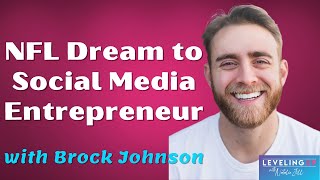
This is a YouTube video titled "230: NFL Dream to Social Media Entrepreneur with Brock Johnson" published on December 28, 2020. The content is a podcast-style interview featuring Natalie Jill and Brock Johnson, a former college athlete who transitioned from pursuing an NFL career to becoming a successful social media entrepreneur. They discuss Brock's journey from football to entrepreneurship, his social media marketing strategies across platforms like Snapchat, Instagram, and TikTok, and practical advice for building a brand and business online. Natalie Jill hosts and actively participates in the conversation, providing insights and engaging with Brock throughout the episode.
Hi, I'm Natalie Jill, fat loss expert turned lifestyle and high performance coach. When odds are stacked against us, how do we shift and create everything from nothing? How do we level up when we.
Aren'T feeling it yet or have had a big setback?
And how do we adjust quickly when life throws us major curveballs? On this podcast, I do what I do best. Taking complicated information that is relevant to us now and breaking it down simply with actionable steps you can implement to level up your own life. I also regularly interview some of the most inspiring and courageous men and women on the planet who at their worst, learn how to achieve success greater than they ever dreamed possible. Leveling up, creating everything from nothing. If you are new here, I encourage you to go back and listen from episode one for the full transformative experience. What happens when your identity comes from a family of successful quarterbacks and you decide to forego a scholarship in pursuit of entrepreneurship?
I've got a great story for you today.
Today I want you to meet Brock Johnson. He's a 23 year old former college athlete with a passion for helping others grow their brands using social media, his specialty now short form video on Instagram and online storytelling. After less than two years in business, Brock reached a six figure income as a college student. Today Brock is the co host of Build you'd try podcast. He's an instructor of multiple online courses. He's a viral TikTok creator and an Instagram marketing expert. Grab a notepad and paper for this episode as Brock is going to give valuable tips on how to grow your own social media. I can't wait for you to meet Brock today and learn exactly how he leveled up creating everything from nothing.
Today I'm here at Brock Johnson, one of my very good friends sons. And I've been dying to interview you, Brock. I'm so excited. Thanks for being here today with me.
Yeah, thank you so much for having me. I'm excited to be here.
I say one of my very good friends sons because you know I'm gonna ask questions about what it was being right, like being raised by your crazy mom. I say crazy mom because most of the people listen to my podcast do know that I'm friends with her. His mom is Chalene Johnson and she's got this whole personality of her own and I sent pictures of you to your mom many times and said is this really a son or is this you acting as a son?
Same person 100%. Like growing up we were super close, but without a doubt we are very, very similar personality wise. And the way we present ourselves online, very, very similar.
So funny. You're just a dude version of her. A dude version of her. But there's so many questions that I want to ask you because you. And when I met you, actually, you were in high school and football was your whole. Was your whole jam. I mean, that's where you were moving towards. You came from a family of successful quarterbacks. That was sort of your identity. Can we start there? I want to talk about that because. Is that what you thought you would be doing right now?
Oh, without a doubt. I love that you use the word identity like that's exactly what it was up until probably about two years ago. My identity, my self worth, all of that was very much tied into being a football player and being a quarterback. And that's very much the world I was raised in. My uncle played in the NFL. My grandpa is the second winningest coach in the history of the state of California. My dad played in the NFL and played in Canada. So I was raised in this kind of football royalty family. And I was always around NFL quarterbacks and elite college quarterbacks. And so that was the path that I thought I was on. And I did end up getting a scholarship and playing college football. And it was always my dream to play in the NFL. And of course I would have loved that. Getting paid millions of dollars to play professional football, that's a great thing to strive for. But that didn't happen for me. And it was really, I think, about two years ago, I was sitting in therapy and my therapist asked me, what happens if you don't play in the NFL? What happens if you don't make that? And I was kind of dumbfounded. Like, I didn't have an answer for her. I had never thought about not ending up there, never, like actually achieving that goal. And it was a real wake up call for me. And it was the beginning, that day was really the beginning of disentangling myself from feeling so much of my identity and who I was tied to my sport and my position.
Now, when you were saying you were sitting in therapy dealing with this, why did you already know you weren't going to the NFL or was this just coming up as a possibility because you still were at a point, you were young enough, so strong enough that you could have still gone for that?
Oh, absolutely. Yeah. No, this was. I was in therapy for different reasons. And she just asked me, like, it was kind of. It was actually one of our first sessions. And I was kind of just telling her my dreams and my Life and who I was. And she just asked me, you know, what happens if that doesn't happen? And that was, you know, a real, real wake up call for me.
It was your first time considering it that that might not be.
First time even thinking that that was a possibility or asking myself that question.
Because everything you did up until that point was, that's what my plan is. I'm going to go there.
Absolutely. And very much up until that point, pretty much everything had gone according to plan.
So what about that conversation you got? You start thinking about that, but what about that conversation then really took you out of that path for that? Or were you not fully out of that path at that point? Were you just trying it on?
Absolutely. I think I still wasn't out of that path. I was still very much, even throughout the rest of my college career, that was still the goal and that was still the path that I, that I wanted to be on and that I think that I was on being a college football player. I think more what changed was my recognition that I would be okay, my life would go on, I could still be successful even if I didn't end up playing in the, in the NFL.
Now I've, I've interviewed a lot of athletes, Brock and especially pro athletes, and they, there's a commonality and that I don't hear with you. And I'm wondering if this was different with you, where they had this family expectation too. Now I know your family had this legacy of it, but were they expecting you? Were you worried they would be disappointed? Did that play a role at all?
Yeah, you know, actually I think that that was something that was self imposed. There wasn't an expressed expectation, we expect you to be great, we expect you to play in the NFL, anything like that. But just being raised in the family that I was raised in, there was a lot of outside societal pressures. Like I remember being in second grade and one of my friends coming up to me and they were like, oh, so are you going to be Mission Viejo, which is the town we're from? Are you going to be Mission's quarterback when you're in high school? And like I was in second grade at that point, I was like in my second year of even playing football and already there was this like expectation from even just my friends and the people around me in the town, like, oh, this is the path you're going on. This is what we expect of you. So there was never like an explicit pressure put on me. There was a lot from just the world. I was in and also I put a lot of pressure on myself from a really young age.
Okay, now, before we get into sort of the pivot and how you ended up in entrepreneurship, and not only in entrepreneurship, but so successful in it so young, I want to know, what did you think of entrepreneurship growing up? Because you clearly were raised in it. And I think some kids get anti. You know, they see it and they're anti, but you embraced it. I'm curious about that. Like, what you thought of it.
Yeah, so I think that my parents, absolutely super entrepreneurial growing up, owned, started, sold tons of businesses, but I think they did a really good job of never forcing my sister or myself to do anything entrepreneurship related. They never even sat us down and, like, gave us lessons or, you know, pulled out a whiteboard and broke things down for us or explained terms. It was very much monkey see, monkey do. So we got to kind of like see them live their life, set the example, lead. And we also got to see the things that our parents could do that maybe other parents couldn't. We got to see how, you know, because of entrepreneurship, our parents could be home and pick us up from school and take us to practice and be at every sports game while maybe another parent, one of our friend's parents, maybe had to work or had to miss practice or had to miss a game. And so we got to see those things from a really young age. And so I think my sister and I both would attest to this, that entrepreneurship and owning our own business was something that we very much, especially from an early age, myself gravitated towards and wanted to have that freedom that my parents had and that responsibility too, that they had.
Now, what about. And I think about this because I have a 13 year old who was constantly annoyed at me, you know, being on social media or. Did you ever feel that or did you love it?
Yeah. So this is, this is the interesting thing, I think that's a little bit different is like social media wasn't super prevalent until I was pretty much in high school. Like, Instagram started when I was in like 8th grade, my freshman year of high school. It wasn't like, you know, this big thing that everyone had and everyone had a smartphone. I mean, I remember when the first iPhone came out. But with that being said, I did have to grow up with my mom being on TV and my friends being like, hey, my mom does your mom's workouts, or going through the airport and have someone coming up to my mom. So I did grow up with that. And it was a little Strange. Every time someone would say something like that, I wouldn't really know what to say. I'd be like, thanks. I think that definitely took some getting used to. But.
So it's not like you thought it was cool. It was just one of those weird things you had in your family.
One of those weird things I had in my family. And also, I didn't know much different, but, you know, I knew it was a little weird.
Yeah. Okay. Okay, got it. So when did you. So talk to me about how you ended up niching into, like, where you are? Because right now you started on Snapchat and then you sort of moved to Instagram, and then you accidentally went viral on TikTok, and then you turn this into how can I help other people with it? I'm curious about that path. Like, did you start Snapchat just for fun or tell me the journey there?
Yeah, so it's actually a super fun journey. My freshman year of college, I went to school across the country on the East Coast. I'm from California. And so the only real way to, like, stay connected with my parents at that time was either to be constantly texting them and sending them pictures all day, which was super cumbersome and annoying, or I could teach them how to use Snapchat. So I taught them how to use Snapchat.
Your parents?
Yeah, I taught Brett and Chalene how to use Snapchat so we could quickly send, like, pictures and videos back and forth and kind of like stay up to date on each other's lives, you know, without having to text each other.
Okay.
Then a few months later, my mom came out to visit me, and I was at Georgetown University. She came out to visit me and she's. And I kind of expressed to her that I was feeling this guilt that I wanted to create some financial freedom for myself. I didn't just want to rely on her and my dad, you know, paying for my tuition, paying for my housing, paying for all my food and my groceries and my trips to the movies with my friends. I wanted to kind of, like, financially cut the umbilical cord.
Wait, hold the mic right now, because that's. I have not heard another kid say that. And that's incredible. Like, where did that come from? Because I would. I will pay you money to get my daughter to say that. How did that even come up? That's incredible that you even were thinking that.
Yeah, I think that I was very much self aware. I've always been very self aware, even as a young child. But I got to college and Especially on the football team and at a very prestigious school like that. And then you're so you're surrounded by these elite, very wealthy kids and very like the smartest, highest academic. But then also you're with the football team who. A lot of the kids got into the school. Maybe they're from a lower income area or they got into the school because of their athletic talents. So that dichotomy really bothered me. And I was kind of, you know, torn in the middle where I came from. Definitely a privileged background with my family, but I was on the football team and I was a football player. So I saw, like, a lot of my teammates struggling to, you know, put food on the table and not being able to go down the street and get, you know, lunch out or go to the movies with me or things like that. So I wanted to be able to still maintain my same style of life and not have to sacrifice or live eating just top ramen. But also, I knew that I didn't want to just rely on my parents to live that way.
I just love that you had that awareness. You do that. Because I think it could have gone very opposite too, where you're like, well, my parents are successful. They love me. They're giving me, you know, you could have gone this very different direction. So I just think that's so empowering that you even were thinking ahead like that and saying that. I'm sure your mom was so excited to have that conversation with you when you brought that up.
Oh, yeah, absolutely. And, like, luckily, because I had learned so much from them growing up, and I had always been, I put in air quotes, an entrepreneur. I'd always tried to, like, start little businesses growing up. This was my first time starting a real business. So I remember my mom and I, we stayed up till like 2am just brainstorming how can I help people and where is there a need for people to be helped? And it was at that time that I was like, well, hey, like, I just taught you guys how to use Snapchat. Snapchat people might not remember, but it was super popular and trending at that time. It was as newsworthy as TikTok is now. If we think, you know, TikTok is dominating the headlines. Snapchat was back in 2016, and I recognized that there was the big stigma. The big scare around Snapchat was how dangerous it was and the disappearing messages and predators online and things like that. So I thought, hey, what if I taught other parents how to use Snapchat? Because in doing so, if These other parents knew how to use Snapchat, they would be better equipped to keep their kids safe and know what's going on and have those conversations with their kids.
I love what you just said there because I've told so many entrepreneurs that are starting entrepreneurs when they're stuck on what they're gonna do, I would say find a, that other people have that you figured out how to solve and that's really what you did. Like you found a problem, not how do I just use Snapchat, but how do I use it for the parents whose kids are going down this dangerous road here. So that was key right there. So this is where you were brainstorming until 2 in the morning. Like, what is this problem? What am I going to figure out here?
Exactly, exactly. Brainstorming also slash playing around me and my mom having fun on Snapchat, messing around. But that was what I settled in on and I eventually, within the next couple of weeks, I created a course on how to use Snapchat for parents. But then football season hit and I kind of put all that on pause, focused on football after the football season. So in about November or December of that year is when I launched and I started promoting it and I started just sharing it on my Instagram, which was very, very small at the time. And my mom helped me a little bit promoted on her social media. And I got a couple hundred students into that first course. But then. Go ahead.
Well, I was going to say before because I know what some people are thinking. Well, he had a mom that had a platform, but I want to share. There's many times that somebody with a platform will share somebody's program or concept or profile, but if they haven't done the work and created an awesome solution, it's not going to sell. So yes, you had a little bit of a leg up without help, but you still had that incredible idea of a program and stuff on the back end to make that go.
Absolutely. And I absolutely acknowledge, like I had the leg up. I had the benefit of having a mom with like half a million followers. But, and like you said, I think a big testament to the quality of that initial course was how many moms shared it with other moms and how many parents were sharing it in their Facebook groups and things like that. But very quickly there, within about six months, I realized that I had taught all of these parents, all these adults how to use a brand new social media. And they were in this world of okay, I can grow my business on Instagram, I can grow my business on Facebook, YouTube. Now there's this new untapped gold mine of Snapchat. And Snapchat marketing was kind of, you know, born around that time. So I transitioned that original course from teaching parents how to use Snapchat to then teaching business owners, small business owners, how to market using Snapchat and how to grow their platform and their influence using Snapchat.
So when you did that, Brock, because I didn't see that program. I mean, I remember you doing it, but I wasn't in it. Did you. Was that like a pivot or an expansion? So did you like still have it marketing to now two different groups of people, like parents and you can do this, or did you completely pivot into that?
They were two separate. So when I created the business version, it was pretty, pretty much entirely unique. There was a few of the same kind of characteristics that you had to learn to use the platform, but then took out all the lessons that were focused on parents and what your kids might be doing that's risky and changing that to more business and marketing side of things. So it was a total pivot, a total rebrand. And I really, for the most part, stopped marketing the parent side of things and how to help parents keep their kids safe. And also at that time, I wasn't necessarily that into that. I wasn't very passionate. I once was about helping parents keep their kids safe, and I was a lot more passionate, especially because I was kind of in this first round of entrepreneurship. I was really passionate about teaching other people to do what I had just done.
What was price point on these and.
How did you decide that they were relatively inexpensive? My first course, the Snapchat for Parents course, was around $27. And I think that ended up. I tested a bunch of different prices, but the sweet spot was around 37, I think, was what I ended up on. And then the business course, that one, I think was about $57. It had some more lessons to it also because it was teaching something that might, in people's eyes, bring back more value. Like they're actually going to make money from this course. That one I charged a little bit more. So 57, but all of them, I would say that's pretty inexpensive for the amount of value they were getting.
Yeah. So I have a question about that, because there's definitely some wannabe or already entrepreneurs listening to this and. And there. And I know what comes up when you're creating a first program is the amount of time it's taking you for research. You're filming it you're creating it, you're having it edited, you're building a landing page, whatever. There's costs associated. So that 2737-57 is scary for some people. They're thinking, well, gosh, I'm going to be operating in the red or it's going to cost more. Can you just talk to us through that process there? Because did you have that story in your mind? Were you worried about that?
My thought is always, and this is still the same thought that I have today. I would much rather over deliver. I'd much rather under promise and over deliver. I'd much rather promise all of these things. And then they show up in the course and they get so much more. So that was my thought back then. I always wanted to feel. This is something that I kind of tell myself. I want it to feel like my clients or my students are stealing from me. Like, I'm like, wow, I should be charging triple. I should add an extra zero to the end of this. But I just always wanted to over deliver for my students. And also I had a big thought there with that first course that I just wanted to get students. I didn't have very many people who were followers. I didn't have anyone who know, like, and trust. Not very many people knew, liked or trusted me at that point. So I wanted to build that credibility and get a lot of people in the door and then allow them to kind of take the journey with me as I begin to grow and introduce more expensive products.
So you were leading with service and value. You weren't necessarily worried about making money at this point, like you just wanted to when you were pricing it. I'm assuming that was more to cover the cost, cost or to whatever. And then the extra bonus was that you would make money on this.
Exactly.
Okay. I think that's super smart because I hear way too many people starting with something that's several hundred dollars or several thousand and then they're upset because. But what you're saying makes total sense to me. Okay, so Snapchat's working. You're growing a brand, you're getting your name for yourself. What happens then on TikTok?
Yeah, so what happens actually first, before TikTok was Instagram, released Instagram stories. Bye bye Snapchat. A ton of influencers, celebrities. I think the first one was Kylie Jenner. We're like, we're leaving Snapchat, we're going to Instagram stories. So I basically took a minor pivot and just changed from Snapchat Stories marketing to Instagram Stories marketing. And that was kind of the birth of my Instagram marketing platform. And it was very, very similar to what I was doing on Snapchat. Then what happened in 2019 was I saw that there was this new app called TikTok. It was gaining popularity, and from what I saw at that time, it was mostly dancing and hilarious videos. And I love dancing. Like, growing up with the mom I did, I've always been around music. I've always been able to keep a beat. And, like, my mom and I have always danced. So we got on TikTok and just kind of, like, watched a couple of videos, and I was like, what if I just create one? So I created one or two, and whatever they did, okay. And then one day after one of my spring football practices, I got a group of my players, my friends, together in the locker room, and I was like, hey, guys, let's make a TikTok. And they're like, what the heck is TikTok? And I said, just. Just do this. I showed them, like, basically, we're gonna put our hands together. We're kind of move our hips back and forth. And one of my other teammates film it, posted that. And the next day, it was like, 3 million views. To this day, it's my most. It's my most viewed video. It's close to 8 million views at this point. And actually, TikTok reached out to me in January because they wanted to put that video in their super bowl ad. Couldn't. And I won't get into that whole story because it was an NCAA thing, but I still think it was really cool that TikTok wanted that video in their super bowl ad. And from that, my TikTok following really blew up. And I was, by the end of the next day, like, over 200,000 followers. Now I'm over 300,000. And I've had plenty of other videos go viral, some even, like, I had one two weeks ago that is at 7 million views. So I've had quite a few that have just skyrocketed.
I think I'm literally on TikTok just for you. Your videos, you're the only person that I look at on TikTok. They're so funny. If you're not on TikTok yet, you have to watch Brock's videos. It's just pure comedy. And he's so funny and talented. So, okay, so Instagram is. You kind of pivoted Snapchat to Instagram now. Did you get rid of your Snapchat program while this was happening? Did you change the name or you just started adding on?
I did both for a while. For about a year or so, I did both. I did the Snapchat and I did the Instagram thing because there were still a decent amount of people on Snapchat and I thought that you could still be successful there. But then, interestingly enough, I took another break from business for football. I took about six months off of all social media. I didn't post a thing, I didn't send out an email. I basically did nothing for my business for six months because I really wanted to, like, honor that time in my life and recognize that one day, like it is now, my football career is going to be over. And I wanted to enjoy that time and, like, be present. So I paused all social media, I paused all business, and when I came back six months later, I realized that, you know, Snapchat, while I'm a believer that no social media is dead for all intensive purposes, Snapchat was dying at that point. So I just pivoted and only focused on Instagram at that point.
Talk to me about taking that break because I want to know, that was great that you did that. But share with me that because so many people will say, hey, I'm taking a break from social media. Tell me your thoughts on that and why you didn't make an announcement and what did you learn from that full break.
I think that a lot of people feel stressed out or overwhelmed, so they say they're taking a break, they turn off Instagram for a day, and then they're back a day later because they're craving that dopamine hit. So what I will say is if you want to take a break from social media and put your mental health first or prioritize whatever season of life you're in, go for it, but commit to it. So, like, when I committed to that break from my business and my social media, I deleted all the apps off my phone. I didn't check them. Like, I literally had no clue what was going on for six months. And everyone advised me not to do this. My mom's like, I don't think this is a good idea. You know, I didn't tell her beforehand because I knew what she was going to say. And from a business perspective, it probably wasn't the best idea because it was a six month period where my email list didn't grow, my follower count didn't grow. But for me as a human being, for my soul, it was a super beneficial period.
Did people message you? Where did you go Are you okay? Was it not that big of a, of a deal yet? They didn't notice so many questions.
So I, I actually started this habit when I was in high school. When I was in my high school football seasons, I would sign off of social media for the football season. And part of that was just to avoid any like negative press or anything like that. When I was in college, I did the same thing. So I literally posted a picture of myself with my signature over top of it to kind of do the whole sign off thing. And I did make a post saying, like, I'm signing off for the next six months, like there's no way to reach me. I'm going to prioritize this. And I explained it. So if anyone did come to my account, they were wondering they would have to check out that most recent post. So I did receive hundreds of messages in the time that I was gone. But I think most people understood why I was going and where I was going.
Yeah, I think it's powerful that you did that. It's, it's. Would you do that again? Knowing what, you know, like, would that, would that happen again? If you're focusing on something new or a new project?
I think I could see myself doing that. I think that it depends on like what season I'm in. Maybe like if I'm a season where I'm starting a family or moving into, you know, maybe there's some tough, unforeseen event in my future, something like that. I could see myself taking a break, but taking a six month complete hiatus like I did. I doubt something like that I would do again.
Talk to you about the addiction factor because I think me included, most of us get addicted to it. It's an addiction. It's part of our routine. Checking it, posting on it. Did you feel that and was that hard pulling yourself away from it when you did that? And how do you, how have you changed how you use social media after you took that break?
Yeah, great question. I think that social media is designed right to be addictive. I think if anyone has watched the Social Dilemma, they know how scary that addiction can be. So now on a practical level, I like to, on the weekends try to do very, very limited business posting. I might just like post a few things on my stories, just kind of showing people what I'm doing. Or sometimes I'll do completely Screen Free Day. So there's this thing that was created by the guys who did the minimalist documentary on Netflix. They call it Screen Free Saturdays where they don't use Laptops, they don't use phones. They even try to not use like GPS in their car. Try to do totally screen free on Saturdays. And so that's a nice way to kind of weekly, you know, detox yourself from social media. I also try to not go on social media or my phone for the first like hour of my day. Things like that can be really beneficial and helpful. So that's really what I've changed since then. But like, absolutely. I recognize it's something that I deal with. It's something I think we all deal with is that addictiveness of social media and the craving to want to like, keep checking in on it.
Now your specialty, what you teach entrepreneurs with. And I can't wait to see where you're gonna, where you're gonna take this and evolve. But you so much is Instagram. You've got an Instagram membership. You've, you are crushing it there. But you've also, because you've gone viral on TikTok and you've got such a following there. Why haven't you? Or maybe you want to have, why not create a TikTok program?
I actually did, when I first went viral, like that first week, I was like, I'm gonna create a course. Like, I have to monetize this somehow. The entrepreneur in me was like, I have 200,000 followers. I can't let it go to waste. So I did create a super quick course and it was literally a $7 course. It was called Teach TikTok and it was just like three lessons long. Teaching people how to use TikTok, some tips for going viral, and maybe some other like general best practices videos. That was primarily just to start collecting emails, to start growing my list. I recognized that, you know, I had this huge platform now I might as well use it in some way. But then for a long period of time, and I think it happened again around football season, I wasn't on TikTok as much. I was really focusing more on Instagram. I saw that a lot more of my Instagram followers were becoming customers. But now, you know, in the last, really, in the last two months or so, I've recognized I've kind of woken up and been like, I have this huge following. I shouldn't let it go to waste on TikTok. So I've started being more active on TikTok and trying to engage that audience more again. And I plan to in 2021, start to actually monetize on TikTok and produce more valuable content for them rather than just dancing Videos and stuff like that.
Have you, you're such an entrepreneur and you're into creating and helping other entrepreneurs. Have you looked into doing anything for yourself? And why or why haven't you done it where you're working with brand deals where, like they're sponsoring you to do a TikTok video or have you done that?
I've done a few, I've done a few brand sponsored TikToks, a few musicians and a few different companies have done sponsored TikToks with me. Not a ton, not a ton of brand deals at all on TikTok or on Instagram. Actually get probably more partnerships on Instagram. I'm a big fan and believer of the affiliate marketing side of things. I personally, and I tell my followers this and they know this about me. I only recommend stuff that I absolutely know, like and trust that I've been using for a long time, that I've vetted that I'm like, okay, this is something that I feel comfortable putting my stamp of approval on. So I do a fair amount of that on Instagram, not very much on Snapchat right now. And that's really just to keep like the authentic side of things so that my followers know, hey, if I'm sharing this with you, you can trust me that this is a valuable thing. This is worth your dollar. And also because they know that actually my conversions are higher and my sales are higher. And a lot of times brands who reach out to me, I'll be like, listen, you could pay me a couple hundred dollars to a post, but if you give me an affiliate code and I get a commission and my followers get a discount, I promise you I can get you way more sales, way more conversions. It's way more appealing for them because it's an equal exchange.
I love that. That's great. Do you think, Brock, that anyone can build on social media now or do you think it's too late for anybody?
I think it's absolutely possible. I think that Instagram is a really, really great place to grow. And TikTok, if you have zero followers, that as well. Still, even if people are like, oh, it's late to the game, it went viral in 2019 and everyone got on it in 2020. Now we're moving into 2021. Can you still go viral on TikTok? You absolutely can still go viral and build a platform on TikTok. You can still grow a following on Instagram and I think really just about any social media, you can still, you know, build this platform for yourself.
Can you help us with. So I'd love to get your take for listeners on what maybe a couple things on what people do wrong and what they do right on social media. And obviously I want everyone to go do your Instagram, your, your Instagram program. What is it called again?
Brock, what's your Insta Club Hub?
Insta Club Hub. And we're going to share exactly how you can join Insta Club Hub too. I'll put that in or if you want to tell them right now too. And I'll also put it in the show notes after. How do they, how do people join Insta Club Hub, by the way?
Sure, absolutely. So Insta Club Hub, you can just vis visit instaclubhub.com and it's less than a dollar a day. It is a monthly membership, so it's $27 a month. With that you get. I think we're up to over 80 pre recorded Instagram lessons now, plus two live trainings a month with my mom, Chalene and I. We do two live trainings a month, plus there's a Q and A section because everyone has like those little questions that are plaguing their account. So you can ask your little questions and then we respond to those and you can see everyone else's questions as well. So it's kind of like the one stop shop for not just like how to use Instagram, but actually how to transition followers to customers.
That's amazing. Okay, so give us a little bird's eye view because I know people want like the black and white bullet sale.
Yeah.
Like what do people do wrong and what do they do right? Because you see this all day long.
Yeah, absolutely. I think that something that a lot of people do wrong is just trying to sell too early. Trying to focus on selling and growing their customer base and building how many students are in their courses and things like that. Well, I think that early on the most important thing you can do is just serve, serve, serve your audience and produce shareable content. What I mean by that is, Natalie, if I see one of your posts on Instagram and it's about like you and your family, I might like it. I might be like, oh, that's cute, you know, good family values, double tap. But that's the end of it. And that doesn't matter very much for the Instagram algorithm. But if I see a post that you make that's super entertaining or super educational or I feel like I've really been served by it, I'll share that post. And so Whether you're on YouTube or Instagram or Twitter or TikTok, the best kind of engagement is a share. Because a share is me saying, natalie, I like this post so much that I'm going to share it with my audience. I'm going to make sure that more people see that. And so no matter what social media you're on, algorithms want to see that, algorithms want to see, hey, Natalie's post is so good that everyone is sharing it, and that means more and more people are going to see it. So you should be trying to produce shareable content on social media rather than just trying to sell. That's a huge thing that I see a lot of people missing the mark on. And in order to produce this really shareable content, this content that really serves your audience, it's important to first and foremost put yourself in a niche. Pick your niche. And I like to say pick your niche. Because when people hear this term niche, especially for entrepreneurs and multilevel marketers, they hear the word niche and they think, like, it's this mystical thing out in the universe that's gonna strike you one day. And it's like, oh, I found it. I discovered my niche. It's like lost in the jungle somewhere. But really, you just pick your niche. It's a lot less like a secret hidden gem in the jungle and a lot more like picking the car from the used car lot. Like, you just pick the one you want. You pick your niche, whoever you want to serve, and however you want to serve them, however you feel best called to serve someone, and you focus in on that niche. So, I mean, to go back to my original story, my niche originally was Snapchat helping parents. That was the group of people helping parents use Snapchat and really use it to help keep their kids safe. And then from there, it was helping small business owners. So that was the group of people helping them grow on Snapchat. Then it transitioned helping small business owners grow on Instagram. So always from day one, I've been very intentional with picking a niche and staying within that niche. And when you pick a niche and you stay within it, it's so much easier to come up with what to post and to create your content and to serve your audience and to actually create those really valuable shareable posts.
So good. I think that's so intelligent, so, so smart. I myself, and I'm curious your feedback on here. If you agree or you don't agree. I'm open to feedback, too. I find on my own social media, the things that get the most sales attention Followers, whatever is either if it's disruptive, so disrupting something people are already thinking, or making fun of myself with something relatable. Those are like the two things. So if I post a picture of my dog and it's funny because I remember one day I actually posted a picture of me and flops, and your next post was like, don't post a picture of your dog or something like that. But you're right. Like, if it's something just fun and it's great, I get likes and whatever, but it doesn't do anything. It's not adding value. So I find disruption and making fun of myself are those kind of the two things that you see work for you or talk to us more about that?
Yeah, those absolutely are. What's working right now. Instagram especially very much has this stigma around it that everything has to be like perfect and photoshopped and pretty and you have to use the same little filter that worked in 2017, 2018, but that just isn't working anymore. And that should be good news for anyone listening. Like, you don't have to live this perfect, pretty, photoshopped life. People want the disruption. If you're taking the same selfie in the same mirror with the same lighting and the same filter day after day, it's boring. Like, no one wants to see that. But if you're constantly posting different kinds of content, and that doesn't mean, you know, bouncing from niche to niche and topic to topic, but just your photos are different from post to post. What you're covering looks different from post to post. Having that disruption in there. A perfect example of that is using Instagram reels. Like, those are such a great way to grow your Instagram platform. And they're disruptive. They're not what we're used to seeing. We're not used to seeing a little 15 second looping, funny video on Instagram. So they're disruptive. Absolutely.
I learned reels from you, Brock. Any reel that I have, you get full credit for any of my reels that have done well. Because I literally listened to your tips on Instagram stories and I from that got my tips. And what really made sense to me, being an ADHD personality myself, is that our attention spans are shrinking. Everybody's. And what I love about reels is that it loops. It's funny, you have to read, you have to go fast and then it does keep repeating. So I think for anyone new to Instagram or starting reels is such a great, fun place to start and anyone could do it Makes you a professional video editor, like, off the bat.
Oh, yeah. No, it's absolutely. It teaches you video editing. It helps put you on camera. And the reach from Instagram reels right now, which not to get too into the whole insight lingo of Instagram, but reach is basically just like how many people your post reaches.
Yes.
Reels are reaching so many people who don't follow you because Instagram, it's their new thing. It's the popular thing. They're trying to promote reels. So if you post an Instagram reel, your likelihood of gaining followers and reaching new people is exponentially increased.
Absolutely true. You know, it's funny about reels. They switched something with Instagram where, because everything was always so, like, focused. So on Instagram reels, what you'll notice people notice on their posts is they get less like. So they think. They think they're not doing as well. But when you actually go into insights, and I'm saying this because a lot of people don't realize this, when you go into your insights or click on your real tab, you actually can see the reach of people. And it's crazy different from igtv, from Stories, from Grid, Posts, from all of it. It's a whole different level.
Yeah, exactly. And it's like, also like what we're used to. We've been on Instagram. It's existed since 2010. So that's 10 years of people learning. If I see a post, I double tap. That's how you engage. Reels are only like three or four months old. So we as a society, as people who use Instagram, we're just not used to, hey, I see a reel, I'm going to double tap. We're not totally used to that, but what we are doing is we are watching them. A lot of people are liking. And the number of people liking reels is definitely increasing quite a bit recently. And bottom line, there's just a great way to reach new people and really grow your account.
Okay, so, Brock, talk to you. I'm going to pivot a little bit into some other things because you're a total entrepreneur. You're also doing a podcast. You've also got a podcast build you'd tribe. Do you monetize that or do you use that to help people start to know you, like you, trust you to go into these other programs? Talk to me about that. And I'm just curious about your overall strategy. This will help people understand that mindset too.
Absolutely. So Build you'd Tribe is the podcast that I co Host with my mom. We do two episodes a week, a quick one on Tuesdays and a more in depth one on Thursdays. And Build you'd tribe is 100% for the entrepreneur. It's helping you build your tribe, build your following your email list, all of that stuff. Not just social media. We, for the most part on Build you'd tribe, we don't do any outside advertisements. We don't really let people sponsor. We're very, very picky and selective with the brands we work with. What we do use Build you'd tribe for, though, is promoting our own thing. So we will use Build you'd Tribe episodes as ways to insert ads for the insta club hub or to insert an advertisement for our big marketing academy called the marketing impact academy. So we'll use it to promote our own stuff. And we like to be really reserved and selective with the ads that we do run. On Build you'd Tribe for the most part, though, it's just trying to serve our audience and blow them away with how much value they're getting for free.
Okay, I'm gonna ask another question that I know people. I'm just in the mind the mindset of what people are thinking and asking. Yeah, what you do so much for free. You do so much inexpensive, you add so much value come from such a level of service. I think, how do some people, how would they live like that? Because you obviously are making money now and I'm assuming it wasn't from day one that you were profitable. What do you tell people about that? Because you're absolutely on the right path with add service, add value, give, give, give. But some people, they're like, well, what am I going to do now? I'm going in the red or I'm behind. Do you have any advice there?
I think that it's really challenging if you're starting your business from a purpose. Like your why your driving focus factor is I need to make money like, I need to. I don't have enough. There's a scarcity mindset there. I don't have enough. I need to make money. I can't be in the red. I can't be in the negative. I need to be profitable. Because then at what point do you feel comfortable enough? If you have that scarcity mindset, at what point does the switch flip and you're like, okay, now I've got enough. Now I suddenly have this enough mindset or an abundance mindset. Now I have enough. Now I can actually start serving. Now I have enough money. When have we ever heard anyone in history be like, you know, I think I'm satisfied. I didn't have enough, but now I'm good. So now I'm going to start serving. So I think it's really just the approach that you take and recognizing that if you take this service focused approach, it might be a little bit slower at first. It might be a month or a year or a couple years of slow growth, of challenging times, of difficult seasons. But if you keep that focus of serving first and adding value first and over delivering, three years later, your audience eats up everything you post they are craving. I get direct messages on a daily basis on Instagram from people like Brock. You give, this is like an exact quote. Brock, you give us so much value on Instagram. What can we purchase from you? What can we buy? My audience is asking to buy things from me. Do you have any courses? Do you have any one on one coaching? Do you have more that you can offer people literally asking to become customers?
So good. And you know, your mom actually helped me out this conversation too because I had a story in my mind that everything I do needs to be profitable from day one. And I've learned, and I coach entrepreneurs too to have several streams of income. So you've got different buckets that it comes from. And I was going through my own struggle in my mind, like what if two things are not profitable? Like how long is that? Okay. And, and what I've learned, and you're saying this too, is that most people are not profitable day one. Most people are not profitable day one. So it is coming at it with that strong mindset that I'm, this is my long term plan. This is what's happening. I'm going to give, give, give. You can watch that bottom line and not get in a crazy hole. But knowing that that comes later. So it's good to know that that's, that's something. So what's next for you? Where do you see yourself going? Where do you want to build and focus on next, do you think?
Yeah. So right now in the season that I'm currently in, I'm really enjoying starting to work with my mom more as we do this insta club hub together. And I'm also taking on a much larger role in her larger academy that's called the Marketing Impact Academy. I referenced it earlier and it's like a total marketing academy. Like it's dozens and dozens and dozens of lessons and it's more than just social media or even more than just marketing. It's really like how to start, grow, launch your business. So I'm taking on a much larger role in that side of things. And I'm really excited in the future, hopefully like long term, big picture, to just start to spread the idea of teaching entrepreneurship and showing people that it's possible and living the life that you want to live, showing them that all these things are possible. I think especially in my generation and younger generations, entrepreneurship is becoming a lot more accepted, like running and starting your own business, it's becoming a lot more understood. But the best practices and the techniques and the actual teaching of how to do it, that's still where we're lacking and it's far from being taught in school. So long term, I would love to really educate my generation and the future generations on how to, how to do this whole entrepreneurship thing and maybe big picture, one day it's integrated into school's curriculum.
Okay, one more question because there's a lot of parents listening. How do we all make sure our kids have the same relationship with us that you have with your mom? Yeah, seriously though, have you always been as close with your mom?
My mom and I have always been super close. Growing up, she was like always the person to go to if I was stressed out or anxious. She was the person who I would sit and talk to. And my dad and I had a great relationship, but we didn't have that kind of relationship. And in the same way, my sister kind of had the flip flop, she had that relationship with my dad. And I think the thing that my parents really did well is they really supported us, they really empowered us and they allowed us to come to them. They didn't sit us down and make a ton of rules and tell us what we could and couldn't do and force us to do things or learn certain things. They allowed us to try different things and try to run a business and play every sport and fail but really learn from those things. And then they were kind of just open door policy. We could always come in and talk to them when we needed something.
So good, so good, Brock. This was so helpful. I learned a lot here today. Everybody go join Insta Club Hub. Join Insta Club Hub. We'll put a link in the bio too, so you can get more. And at least you make sure you follow Brock on Instagram and TikTok because he's. First of all, he's hysterical. He's so funny. His TikTok will have you rolling. Just, you could spend, you could spend 30 minutes going back through all his TikToks you will die laughing. It is so funny. And then I get so many. Like I said, I've gotten so many tips from you on Instagram and I have a pretty big Instagram account. But just your tweaks have changed so much for me and changed my reach. You're so good at what you do.
So thank you for what you do. That really means a lot. Thank you so much. I appreciate it.
Thank you so much for being here today. Brock.
Thank you for taking the time out of your day to listen in as my guest today. If you found this episode valuable, please share it with friends and on social media. I don't advertise this show so I rely on word of mouth and reviews.
To get it out in the world.
The biggest thank you that you can give me is leaving me a review and a nice one.
I hope.
By the way, this is how others find these episodes. If you do leave me a review, be sure to Message me@supportataliejillfitness.com with a screenshot of your review because I would love to send you a free digital download of my DSR journal as a thank you. And please don't forget to connect with me on social media. Natalie Jill Fit on Instagram and Facebook.
Sam.










