231: How "Eating Smarter" Can Transform Your Life with Shawn Stevenson
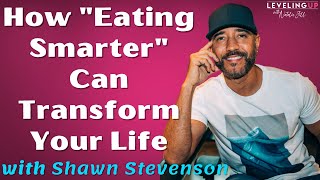
This is a YouTube video titled "231: How 'Eating Smarter' Can Transform Your Life with Shawn Stevenson" created in January 2021. It features a conversational podcast-style interview between Natalie Jill, a fat loss expert and lifestyle coach, and Shawn Stevenson, a health expert and author. They discuss topics including health, nutrition, the effectiveness of masks during the pandemic, chronic diseases, and the importance of critical thinking and science literacy in health decisions. The conversation is detailed and covers both personal experiences and scientific perspectives.
Hi, I'm Natalie Jill, fat loss expert turned lifestyle and high performance coach. When odds are stacked against us, how do we shift and create everything from nothing? How do we level up when we aren't feeling it yet or have had a big setback? And how do we adjust quickly when life throws us major curveballs? On this podcast, I do what I do best. Taking complicated information that is relevant to us now and breaking it down simply with actionable steps. Steps you can implement to level up your own life. I also regularly interview some of the most inspiring and courageous men and women on the planet who at their worst, learn how to achieve success greater than they ever dreamed possible. Leveling up, creating everything from nothing. If you are new here, I encourage you to go back and listen from episode one for the full transformative experience today. Meet Shawn Stevenson, AKA the Model Health show, who is featured as a number one health podcast in the US with millions of listeners and downloads each year. He was one of my first guests early on, but he is my first guest to repeat and have a second appearance. I really wanted to have this discussion with him because you see, he shared his original story last year on my podcast. If you haven't listened to that, by the way, you might want to check that one out as well. I'm going to be linking it in the show notes, but I interviewed him again today because his new book, Eat Smarter is so timely for what's happening in our world right now. Sean's vision is to take folks behind the scenes and teach them not just how their metabolism actually works, but more importantly, how food impacts our lives in so many areas emotionally, quality of our sleep, our immunity, and even our cognitive behaviors. Join in today and learn exactly how Eat Smarter and Shawn Stevenson levels us up.
Today.
I've got my friend, Shawn Stevenson. Shawn, you are my first and only your special, my first and only repeat guest because I love you so much.
Let's go. I love it.
I have been dying to talk with you and bring you back into my audience because one, you've got a new fabulous book which I haven't been able to put down called Eat Smarter. But you're like my go to account that I'll go look at your Instagram constantly. Like what's Sean saying? What's he saying? Especially with everything going on in our world right now.
Yeah. You know, I'm grateful to be a resource. You know, I had no intention on this being the topic of the discussion right now, of course, you know, but the world is very different. Yeah. And I just want to always bring people back to what's really based on reality. Science, logic, these terms that are being thrown around. But right now, some of the science isn't very scientific.
Yeah, I want to talk about that because. Okay, first of all, I was just telling Sean before we started recording, I am very vanilla. Like, I stay in my lane. Like, I will speak up when it comes to fat loss and workouts and nutrition and even people making excuses like, that's. I will go head to head. But when it comes to anything, like world events, I tend to stay in my lane and stay very vanilla because. And I don't know what that's about with me, but I do stay very vanilla. Like, don't anger people. But I admire you because what you stay makes so much sense. And I'm always there, like, rooting you on. And I'm secretly. Well, not secretly. I'm sharing it now with everyone. But I'm like, why can't I speak up like that? But talk to me about that. Like, because do you have that fear ever? Like, I shouldn't say anything or I should be vanilla?
Yeah. So this really boils down for me. You know, I've been in this space for 19 years and, you know, 10 years a clinician, research scientist, all that good stuff. But I've also, you know, I wouldn't even be in this field if it didn't suck so bad. You know, if the field of health in this country wasn't so bad, I wouldn't be doing this. It's just there's so much information and so many paradigms that folks are bought into that just don't support health. And so for me, it really starts with that premise. So, number one, I think it's always important for us to know because being a part of this audience, this community, we really want to be our best. We just want to perform at our best. We want to be the best version of ourselves. We hear that term going around, but what does that really mean? A big part of that is having a real strong sense of logic in the face of. Because our minds tend to wander off and to get caught into things, we're very primarily programmed to be inundated with fear. And so I think it's always important to start with a fundamental understanding of what we're dealing with so we could take it out. So, number one, first and foremost, I'm in this field and continue to bring this point to the audiences that I get to talk to. That our number one killer in the United States for years has been heart Disease for years. Number two has been.
That's how my dad died. That's how my dad died at age 49.
Yeah, same with my grandfather. And that's another big reason I'm in this field. You know, multiple open heart surgeries. Number two, cancer. And it continues to be that way. The third leading cause of death in the United States is something called iatrogenesis or medical error or physician created death.
What is that called, Shawn, what did you say that was called?
It's iatrogenesis or iatrogenic death. So iatra meaning physician, genesis meaning created. But our physicians, literally the best people in the world in their respective fields. The top cardiologist, the top gastroenterologist, the top neuroscientists. These are all my friends. These are wonderful people who are doing work in this space. But the system itself is not checked right now. And I think a lot of folks need to know that just so we can talk about it and we can fix it. And on top of that, and this is really important, is for us to realize, like, the way that the things, the way that the system has been going thus far has not been working. On top of that. So even if it wasn't the third leading cause of death, which, and by the way, if anybody wants to go check that out, anything I ever say, please just triple check me. It's Johns Hopkins really did a great study because in coding, and I know people, you know, wonderful people who've been working in coding for decades and coding of deaths, it's hard to find when it's physician related or related to medical error because there aren't specific codes for that. You know, so it's just really, the system is very strange. But here's the big point I want to make. Everything has been getting worse, even though it's a $4 trillion a year entity. $4 trillion, Natalie. Like $1 trillion. That's 999,000 999 billions plus another for good measure, times four. It's so much money, and yet everything keeps getting worse. You know, heart disease, cancer, diabetes, Alzheimer's, obesity. Nothing is getting fixed because the model itself is fundamentally flawed. It's based on pharmacology and it's based on the treatment of symptoms and not removing the cause of the symptoms. And so when we're fully invested in this system fixing our problems, we have a problem with ourselves, and we need to just talk about it and check ourselves, because ultimately it's the work that you do, it's the folks that are listening and being Empowered in basic principles about health and about cognitive function. And these are the things that should be taught to our children. You know, I just shared on Instagram, you know, an episode I had my little son, my youngest son on, and he's been given the perspective of, like, he has a certain level of empowerment to take care of his own health and wellbeing and our incredible resources and coaches and physicians, these are all supportive factors, but we also all have to have a modicum of fundamental understanding about how our bodies work.
Yeah. You know, it's so. I feel like it's this deep secret that so many people in health and fitness and wellness, it's almost like we have to keep it because people get so triggered and offended. Even suggestion that doctors are just looking at symptoms or that pharmaceutical industry is out there. Like, I feel like we're always walking on eggshells around it. Like, we have to not anger people because someone's going to be super offended. But I need this medication, and I don't believe that all medications are terrible. I think there is a need for some. But. But I do think we already have muted ourselves. We've been muting ourselves for years, like, not wanting to offend. And I feel like it just completely escalated this year with the pandemic.
Yeah. So this go. This is answering your question, really, and why I do this. You know, the things that I've been through, I think it just conditions you to not be afraid. I mean, not to say that I don't have fear, but in this, it's just like, I've been through so much worse than this of people not, you know, having a negative opinion towards me. I've never seen it really before, to be honest. Like, in the past, you know, 19 years, I haven't really had people coming into the Internet, so anybody's liable to say anything. But with this, I have seen a little bit of that, but it's such a small percentage. But the human brain, we tend to look for the problem. We're hardwired to do that. It's a survival mechanism. We want to be accepted by the tribe. We want to be on the lookout for any problem because it might mean our survival. And so I get that. But at the same time, man, I've been through so much worse. And my job, I just feel it's a deep, driving fire inside of me to make sure that people know all aspects of the story, because, again, what tends to happen right now. And I just had a conversation with renowned cell biologist Dr. Bruce Lipton. The term epigenetics that a lot of people have heard by now. He pushed that into popular culture. And him sharing with me how, and this is something of course we've talked about, but just when there's so much fear, every time you turn on the computer or you turn on the Internet, you turn on the television, you know, there's a death toll ticker and what that does to our psychology. And I can see it, I could see it in the community, I could see it in children. You know, we're creating a generation of children who are afraid of other people. You know, we're creating a generation of children who, you know, don't realize that their body has some capacity to be healthy and to protect itself from novel things. You know, like we need some balance here, you know, so for me, the reason that I, you know, really stood up just to say something and to just keep pointing people back to the other side of the data, because it exists. Yeah, I've been really bringing up, okay, we have this randomized controlled trial, gold standard saying this thing, everybody should know this, but instead we're looking at this comparative study or an observational study that doesn't hold as much weight and it's built on mass. Like it's inherent, it has massive biases. So I'm just wanting us to look at all sides.
Totally. You had a post the other day about, I think it was you, you had a post, maybe it was recently stood out that about if you're going to look at the science, look at all the science. Was that you that had that? Yeah, because people are quoting. Well, I believe in science, but like then look at all the science. Don't just select and pick what fits the narrative.
So this is another important aspect. And you know, I'm so glad that you asked this question because I don't really get to talk about this, you know, when I go into the research and my wife was just talking with me about it yesterday. We all have our biases, we all have our cognitive biases and the way that we believe the world to be. And so when I'm going into the data and just in the last year I've read over a thousand peer reviewed studies, which is not normal human behavior.
Sure. No, it's not.
But it's just there's glad you do, but there's a passion there, you know, and also I have a big drive to make science fun and cool and interactive because that's what changed my life and really saved my life, you know, because we all should know this stuff because it doesn't have to be complicated, but our academia tends to over complicate things and speak to other academics. So I was just talking with my wife about this. So I'm going into the study. I'm realizing before I look at it that I have a bias. How. And I'm asking myself, how am I wrong? Let me find how I'm wrong in this. Let me find a way that this other perspective is true and holds some weight. Now, this doesn't mean that I lie to myself and I make myself believe something that is dangerous or I make myself believe something that is outwardly true because I'm trying to fight my biases, because my biases tend to be pretty damn good, you know, and it just. The track record speaks for itself. I have a bias towards doing things. As soon as humans get away from things that make us human, I have a big red flag that comes up. Yeah, that's a bias. It shouldn't be that way necessarily, but I have to still check that bias because innovation can possibly. There is a possibility that innovation could trump nature. It's possible.
Yeah.
It's not very likely. And so as soon as I hear that, okay, one of our, you know, one of our modus operandi or restrictions is going to be, okay, let's stop going outside. Yeah, immediately a red flag is going to come up because just like, okay, what do my genes expect me to do? What are my genes? What are our genes as a community expect us to do as humans? And then I'll go from there, you know, so. But I'll realize, okay, I have this bias now also let me find out how this can be beneficial. And so I'm bringing all of that perspective together for folks. But most people are able to assimilate and digest that and have healthy conversations. But because of that little percentage, and actually it's pretty, it's pretty big overall, but just what I'm exposed to. It's difficult to have these conversations because of our biases and our fear. Especially when you have somebody who is very prestigious, who's telling you that this is the way it is, this is going to kill you, this is going to kill your grandmother. That's called a nocebo effect. And so that literally affects, it's like a negative injunction that affects your cellular out picturing or your genetic expression, you know, at a very deep level. This is what I was talking with Bruce Lipton about. We control our biology, our minds. As soon as I have that perception that I am going to die if I don't stay in my house. That amount of fear, it literally, it turns on your sympathetic nervous system and just keeps it running. And we were designed, we were evolved to have like breaks from that shit.
Totally.
We'd have times of stress and then we'd recover. Now everybody's really operating with this low grade stress and we're seeing the results of it too. You know, like every when you're chronically in fear. All of our health metrics, everything is just getting worse and worse and worse right now. Everything. And I went back and looked at the data on that. Our consumption of processed food is skyrocketed. Our levels of lethargy and inactivity skyrocketed. Erratic sleep patterns, elevated stress. We are far less healthy as a result of the things that we've done. So I just want to talk about, like, is that appropriate? Like, could we have done things in a way that supports our health and also takes preventative protective measures too?
You know, it's so many things that I want to bring up right now, but what's coming up for me is how in my own personal life, just people I know, it's really interesting to me, the people that were in the most fear of getting the virus, the most fear, the most angry about people not wearing masks, the most whatever, they all got it and got super sick. And then anyone I know that was like, not that they believed it wasn't real. People believe it's real, but like, I'm not going to get it. They have not gotten it. Like, they went about their life, they haven't gotten it. So that right there tells me a little bit of a mind body connection right there. But what's also so intriguing is like you, Sean put out a video months ago when masks were first being mandated. And he didn't say, I'm against mask. He didn't say that. He didn't say the virus isn't real. He didn't say any of that. He just said, I want you all to look at the science about mask. And he even spoke about which ones actually would help with some prevention and which ones were just honestly making things worse. And it was such an informative video with studies. And again, he didn't say no to mask. He didn't say no to the virus. He just said, I want you all to look at this. And what was so intriguing to me is how many people didn't watch the video and just attacked you. Like, you're part of the problem. You're killing us. And I was like, they're not even Watching this video that you put like your heart and soul and studies and everything into, how did that make you feel? Sean?
Yeah, Natalie, thank you for asking this. You know, I honestly, I didn't have. I didn't think it would be controversial, you know, at all because I'm just doing what I've always done. I was actually doing the thing that is hard for a lot of folks. I went and just looked at the data and put it together in a way that can make us feel empowered and also just a level of education around it.
It was super informative. I loved it.
So, you know, and the thing was it was also 50 peer reviewed prestigious studies that nobody. It just seems like it just.
You never once said no to math. You didn't say any of that that people were making up.
I let the evidence speak for itself. And again, however, I do have a bias, which is like, wow. Because I went into it, my intention starting off just to share this is I wanted to find out how, what are the best methods of utilizing masks to help to prevent viral spread without venturing into the ridiculous. That was my concern because I was starting to see people, you know, driving around in their cars by themselves with their mask on.
I still see that, you know, like.
So I was just like, I don't want anybody to hurt themselves, to protect themselves. So that was my intention. And so I was looking, I was going to find out, okay, what are the best masks? What are like, those were my intentions. And then once I went to data, I was just, I could not believe how much evidence we already had. That's not being talked about totally. Because in the inception, this stuff that you know about me as well, I always go back to the beginning, like, what's the history of this thing? And I went and actually looked at the very best data, like massive meta analysis that have been done just looking at the data over the years. The original inception of face mask was to literally what the premise is today, which is to prevent other people from getting infected by you. And it was used in hospital settings and it was the inception of the surgical mask because it was used in surgery. And so anybody can go and look these studies up as well. One of is the Journal of Hospital Infections, very prestigious journal and they did a meta analysis and we looked at the data and does wearing a mask actually help to prevent infections in this surgical setting? And over and over and over again, the very thing it was invented for was found not to be effective whether the physicians wore a mask or didn't wear a mask. So let's start there. Let's talk about that. It's already been found to not be effective for what it was intended to be effective for. Can we talk about it? But then it ventured into the big thing today that's become a part of our lexicon is aerosols and droplets. Aerosols and droplets. That's biggie. That's the big transmissive component. And so now we've got dynamic. And by the way, I've been the people who made the dynamic photography that you could see. I know those guys. We email, we talk. All right, so you see it, you're just like, see, you know, the mask holds in the, you know, but that's not showing you viruses. It's just the full on belief that viruses are contained in these aerosols and droplets. End of story. When the reality is if you have an infection, if you have this particular virus, it's all over your body. It's all over. It's in your hair, it's in your teeth, it's in your beard, it's all over you. It's everywhere.
Yeah.
That's how reality works. And the funny thing is, even if you. One of the most fascinating parts that come from all of this is for me really to take a deep dive, you know, in communication and talking with top virologists and epidemiologists and just looking at how pervasive viruses are and really seeing that we don't know anything, Natalie. We know nothing. The top virologist knows less than a fraction of a percent about all the viruses and how they operate. And right now, each and every one of us, we have over 400 trillion viruses in and on our bodies right now that we know about. That's. It's absolutely crazy. And the craziest part is many of them, not the majority, but many of them are opportunistic or pathogenic that can kill you. They can kill you with stuff that you already are carrying when your immune system is compromised.
Yes. So I want to get into the conversation about immune system because I have no issue with people with the mask or social distancing or all the things that people want to do if they want to do all that. I get that. It's. But there is, there are certain things not being talked about with immunity that could help everybody. That could help everyone. And I want to get to that conversation. But one thing I wanted to share with you is you said we don't know enough about viruses. What's interesting is my daughter's 13 and she's being homeschooled this year for eighth grade. But last year in seventh grade, they learned all about viruses. So it's funny, when all this was coming out, she's like, mom, this isn't making sense. What we learned in science was. And it was so funny that I'm hearing a seventh grader explain to me how a virus works and how it. And it's like we've ignored all that. We've ignored all that. Like you said, it's everywhere. It's. The virus will win. We can't stop it with a mask or with these. With these rules right now.
Oh, Natalie, I have to share this because, you know, so as I mentioned, I started there at the inception point, but then there was also very good studies, you know, randomized controlled trials, again, gold standard, you know, published in the bmj. One of them. And what they found was they actually looked at the setting in the hospitals and had some folks to wear a mask. Had folks to wear a cotton mask. I'm sorry, a cloth mask or surgical mask or no mask in some instances or control group, you know, they can wear no mask or they have no barometer on what they do wearing a mask. And so after compiling all the data, and it's right there in the study, you know, the BMJ and again, very prestigious journal, and they had no idea that this would happen, but they found that cloth mask in particular had a radically higher incidence of contracting viral infections for folks wearing cloth masks. And after they compiled the data, they found that surgical masks were found to not be effective. This was the exact language used in the study. And cloth masks, even less effective. And so what's less effective than not effective? And what it was really pointing to and what the researchers went on is if folks actually dig into the data that the microclimate created by a cloth mask made it so that it became far more permeable to virus particles going in and out of the mask. So even the timing of wearing a mask matters. Like, these are all things we should talk about. Like, why is it not effective? Let's talk about it. Because the data exists and now today. So that was months and months and months ago. And because we have these biases. Well, what about this? Or what about that? What about COVID 19 tested mask? Well, the CDC just published a study, and it's just affirming what I've been saying since the beginning, because what they found, they took a random collection of folks with confirmed cases of COVID 19, a random selection of these folks, and they found that over 70% of them always wore their mask. Over 70% of the people always wore their mask. All right, this was a randomized controlled trial, and it was like 3 or 4% of them never wore their mask. All right, this is not saying the mask made it worse. It's just that we need to talk about this because the mask isn't the final frontier. And even now, I know some people might feel, well, it does something, it does something, maybe it doesn't. And maybe we have things that are even more effective that we need to be talking about. And this is what you were pointing to earlier, Natalie, which is, you know, basic seventh grade education in how does our body interact with viruses? And I think, most importantly, I think that we've had this very. Because of the way that our medical system is built, this very strong leniency when we're in fear to completely look to somebody else to tell us what to do and what's true. And the truth is, 99.999% of people have no idea how this virus or any virus actually works. None.
Totally.
They're listening to what they deem to be the expert who's built their, again, their premise on a very narrow perspective about what viruses are like. You can actually stop a virus with a piece of fabric, which, again, if we're talking about droplets and aerosols, yes, there is a modicum of benefit there. But the most important thing is to understand that viruses are everywhere. And this mask has not been effective at stopping the spread of this virus. And the sooner we can get there, the sooner we could have more dynamic and important conversations about what can actually help.
By the way, I want to point out the same people giving us advice right now about the virus are the same people that told us that food pyramid that was backwards was the way to live and eat for years. It was also the same people telling us that eating fat made us fat. So there's a lot of things that we look back now and laugh at, like what? Why did we remember the food pyramid with all the bread on the bottom and all that? Like, what the heck? We've seen that happen. So it's just, for me, it's about critical thinking. I'm not saying that that is wrong. All the information is wrong. But just having critical thinking and knowing just because someone's saying something doesn't mean it is the black and white answer. And the critical thinking. That being said, like, for me personally, and I'm curious about you with the mask thing, I'm not that person going to a Store not wearing one and arguing. I'm not gonna do that. I will put it on and go in the store. I'm respectful, I do all that. But the second I walk out of the store and I'm outside, it's off. Like I don'. I'm not wearing it because I want fresh air and I want that. But I got it. I'm following the laws and I'm wondering what do you do that and what type of mask do you like? What do you think is the less of evils with that when you're wearing a mask?
Yeah, you know, of course this is a challenging time, but I've done the same thing. And even if I go out my door today, it's the same as it's been since, you know, April.
Yeah.
Nine out of ten people have their mask on outside just in my, you know, this Los Angeles area that I'm in. You know, it's not like. But the media frames it differently, unfortunately, that the spread of the virus is these super spreader events. People aren't wearing their mask. Again, randomized controlled trial. Looking at the people with confirmed cases of COVID 70% of them always wore their mask. And then if you add in the layer of people who often wore their masks, so almost always that was 85% of the folks. We have to talk about this because the thing that we believe is our biggest intervention has not been successful. And I said this from the beginning, that this was going to be the case because they're found to be not effective. But unfortunately, this is another conversation that we need to have as a community is the difference in science, which I mentioned this a little bit earlier. There's a very big difference between a randomized controlled trial and observational studies. What most folks have been hearing and promoting and even many of my colleagues who I love, and I'm not going to stop loving them because they're, you know, they bought into a certain perspective because they're just not doing their homework the right way, which is like coming into it without like knowing you have a bias. So, you know, I know the, I'm talking to the guys on the TV with their own shows, all those guys, and they're like, if we just wear a mask, we could save 250,000 lives. You know, there's, they're. But these are based on theoretical models and observational studies. And so folks might be like, well, countries like Japan, they wear masks and they. That's a correlation. This is not a randomized controlled trial. You can name 10, 20 other factors that could be the causative agent in reducing their risk of viral infections. That's not how science goes. That's not what we're supposed to be doing with the randomized controlled trial. We're looking at a specific intervention and a specific outcome. These studies exist in relationships to this topic, but these are not the ones that are highlighted on any of these news reports and the task force coming out. But that's why I'm standing up. That's why I'm saying we have to have a better conversation about this. Because this is not even just a conversation of logic. This is a conversation that is looking at the ignorance of science. And last thing I got to share this too, is when we're talking about theoretical models, that literally means it's a theory. It is a theory. And these theories, if you go and read the studies, they're based on the movement of aerosols and droplets and the underlying assumption that masks are effective, even though the randomized controlled trials that we have have shown them to not be effective. So the underlying model itself, the model is only as good as its underlying assumption. And so that's the science that's getting shared a lot. You know, and unfortunately, again, I want, I want them to be effective. I want them to ask, so what am I been, what have I been doing? For me, understanding, especially, you know, with cloth masks, I think the biggest takeaway for folks today is that the longer the mask is worn, the more dangerous it becomes.
Because especially when you leave it in your car in between and it's all dirty. That's what people are thinking.
It's like a microclimate, a micro habitat. It's crazy created. You know, what's so funny is that one of the studies that I highlighted, you know, in the, in the, in the film that I put together, they gave the nurse practitioners and physicians, they gave them a bunch of different masks and they also instructed them to make sure they're washing their masks regularly. But still, because of the hours, like they had to wear them for hours at a time, they still, it still had the same level of effectiveness of folks in the control group, all right, who, some of them didn't wear a mask. Some of them had, they didn't have strict parameters around them wear masks. They were intermittent where they might go see a high risk patient and then take the mask off afterwards. But consistently wearing the mask for hours on end led to higher rates of infection. And we need to talk about this because again, if you go back to my underlying cognitive bias that I Do have humans, like the way that we're designed, you know, like what happens when we cover our mouth and our nose.
Yeah.
What's going to take place that inherently is going to create some kind of microclimate or microhabitat on your face because you are constantly breathing and breathing out viruses and fungi and bacteria and it's just creating this web of potential problems. So the number one thing I think for folks with this is just as often as you can keep the mask off. If you can get something that is clean and or you know, a new something that's new and or I think again the most important part of the conversation that has not been talked about or what are the things that are clinically proven to keep us safe when faced with a viral infection.
Yep. Okay, so I want to get into that now, but I want a little thing, I must say, because it's been eating me up. If you're driving by yourself with your mask on, please like take the thing you're by yourself in your bubble, like I don't get it, I don't get it. What is that about? I can't even try to understand it.
I just saw one of my neighbors. Okay. I just saw him. This was, I'm sorry, It wasn't just. This was when our last, we had our last over 100 plus day here in LA. So this was a few weeks back. I saw him walk from his door to his car with a full on gas mask, head to toe covering like pants, long sleeve everything and gloves to go from his door to his car. And he doesn't have a chronic disease.
Wow.
Okay. But. And I just let him be. I let him be. Who is. I say hi. You know, we have our little chat, chats, you know, chit chat, small talk. But he's afraid. And for me it's just like are you hurting yourself in order to save yourself?
I understand that you need to have.
A level of, of just basic logic so that we can take care of ourselves without going too far.
Totally, totally. I know my mom is super scared. She's in her 70s and so she's, you know, for Thanksgiving she didn't want to, nobody pushed her. I understand she's in her thing but to me it makes me sad in a lot of ways because I'm like, what is that creating like to not like now you're not going to be around your family like, like I don't know where some of these people, they're at the ends of their lives, you know, and it's like what is this crazy creating and is that outweighing? So just a lot of questions to be. A lot of questions there. All right. I want to shift gears into food because you started writing this before we even knew that 2020 was going in this direction. Like, you started writing this now. Sean had written a book called Sleep Smarter, which really taught a lot about sleep, and it was incredible. I loved, love, love that book. And so I was excited when you were doing this. One thing I've always loved about Shawn is we are super aligned on nutrition. He goes a whole nother level than me. Like, I teach unprocessed natural food, but he's like, let's add superfoods to that. He's like, goes a whole other level. So anything that Sean teaches, I'm fully supportive of. I always love your new research, but how interesting that you were writing this before, knowing that this was going to be the key for so many people.
Yeah, you know, I. I just can't see this as being an accident in the timing, you know, and just for folks that are listening, you know, to just check in with yourself and feel, is there any kind of, you know, resistance that might come up with some of these ideas? It is very counter culture and the popular narrative, you know, and that's okay. And I think it's important to know, like, I'm not just some guy out here, you know, this book is going to be in every Target store across the country, but not just in the book section. Target is featuring this as part of a 2021 wellness initiative. And this is something that I really intended on long ago, when I first started writing. The book about two years ago, is to create a wellness initiative in our country, you know, because today it just blows my mind. I used to work at Target.
Oh, I love that story. This is so great.
But go on Target, you know, pushing the carts. And now, you know, my book is going to be featured there. But this is speaking to the quality of the content of the book itself, because big idea nutrition books like this are not highlighted in Target stores Middle America. This is speaking to. I love the statement that there's nothing more powerful than an idea whose time has come. And this is the time for this to really come out and to help make a shift, because right now in the United States, over 200,000 every single year. Okay. I just wanted. I want everybody to really get this today. I really want folks to get this, because it's hard for us to rationalize these numbers here in the United States right now, right at this Very moment. There's over 135 million people who have type 2 diabetes or pre diabetes.
What's that number, Shawn? Say that again.
135 million Americans have diabetes or pre diabetes right now.
And you're talking the type 2 or that's diet induced.
Yes, yes. So type 1 diabetes, that's only accounting for less than 5% of the cases.
Yes. And type 2 is almost always diet induced.
Yes. And we've, again, we've seen this in my clinical practice. Great success by like folks coming in, they're on metformin, they're on insulin, whatever it is, helping them to get educated. Like, here's your beta cells in your pancreas. This is what they do. Here's what, you know, just walking them through and getting them educated on what's happening in their bodies. You know, again, even with this virus situation, folks don't even know, what does it mean? This is a hyper inflammatory triggering lung specific. You know, it has a tropism or a focus with the lungs creating inflammation, but the inflammation is created by your body in reaction to the presence of the virus. So what happens if somebody's pre inflamed with the condition, with the chronic disease, which most of these chronic diseases we're dealing with are hyper inflammatory diseases, heart disease, obesity. There's. There's a absolutely insane amount of inflammation that's happening within a fat cell metabolic syndrome.
Huge with, with COVID deaths even.
Oh my God. Listen. One of the best studies that came out recently found that only 12% of the United States population is metabolically healthy. Wow. Un freaking believable. And nobody's talking about this. When we looked at, you know, when I went and looked at the data from the cdc and I was just again, at the head of this, I was talking about this when we had the data coming out of Italy right now. If we see the death certificates for these souls that we've turned into numbers ticking on a television, which is so wildly inappropriate for these folks who've lost their lives. 94% of these folks had an average of 2.6 chronic diseases and or comorbidities. All right, it's unbelievable. I'm sorry, 2.6 chronic diseases. And if we're looking at the comorbidities, additional cause of death, we see so many other factors coming in. You know, so the top three being type 2 diabetes, hypertension and obesity. All right, there are over 200 million people in the United States right now. 200 million who are obese or overweight. And this is what I Come from this. I come from a family with chronic diseases and obesity. This is what I come from. I know this doesn't have to be.
I do, too. I have the same family exactly.
This is why we connect. Like, I know this doesn't have to be our lot in life, but I also come from a family in conditions where I didn't know that it mattered. I didn't know that food meant anything. It's just like, you know, I didn't know the difference between a fish stick and, like, wild caught salmon. Like, I didn't know it.
I know. I thought I hated fish because I grew up on, like, fish sticks. Like, I didn't. I didn't know there was. Actually. I never had fresh fish. I just had, like, the fried fish sticks. And I was like, ooh, gross. Now, I know I like fish, but. Okay, Sean, so my question to you right now is then one, can anybody at any time turn this around? I want to know that because there's a lot of people listening and they're going, okay, I'm hearing you. I get it. But, gosh, I am that person. I'm overweight. I have hypertension. I have type 2. Is it too late for me? So 1. Can they. Can they turn it around at any time? I know my thoughts. I want to get your thoughts. And also, is there talk to. Speaking to the few, because there's always the exception. Like, well, I knew a person who is totally healthy and da, da, da, da. And they got this. So I want to talk about that too.
Yeah, that's. Again with the media framing. Those are the stories that you hear. You know, somebody that's, quote, perfectly healthy and you don't hear about all the. It's just as if it's an excuse given, you know, and we could have saved so many more people if we really were focused on the right thing, you know, which is we are. We are the sickest nation in the history of humanity. Self inflicted. Self inflicted. And you know, one other piece of that statistic is also, over 115 million people are regularly sleep deprived. Over 60% of Americans have some form, some form of heart disease. Right now, we're just a ticking time bomb. We're ticking time bomb. And now this has brought forth an opportunity for us to do something about it, to really focus on bringing ourselves more resilient, you know, because again, just pointing back, to answer your question, when I said 94% of the folks who lost their lives, this is from the CDC, all right? An average of 2.6. So that means 6% of people were considered to be perfectly healthy. Right. Even that. Again, these are opportunistic situations, opportunistic viruses and organisms. I can get very sick if I'm not abiding by the basic laws of the human body. You know, I can be sleep deprived or I can be hyper stressed, or I can be lacking in key nutrients that control what my immune system is doing. All of these things can make me susceptible to dying. You don't know how healthy. Just because somebody doesn't have a diagnosis of a disease doesn't mean they're perfectly healthy, especially in our world today. And that's unfortunate because this is part of the conversation that's left out and shifting gears and really focusing on what can we do, you know, because there's so much that we can do to make us more resilient as a species. And last thing, Natalie, I just went and looked at the day to day again, top epidemiologists in the world. Like, these are all my friends and colleagues. The human body is so resilient, it's unbelievable. Like we just don't get it right now. As it stands today. Matter of fact, I'll pull it up right here. I got it right here on my phone. As it stands today, 62.8 million cases. 62.8 million confirmed cases of COVID 19. All right, 1.46 million folks have lost their lives. We're not talking about the 60 plus million people who are.
Okay, we're not. You're right.
There's not a survival ticker. We're not talking about like how did. They didn't have a vaccine. They didn't get some. It wasn't like their immune system did the thing that it's designed to do. All right, now this is not to say we don't have a problem. We absolutely do. We definitely do. But it's our focus. Like it's as if our immune system doesn't exist anymore. It's as if we're not capable of getting better. And to answer that question, can we get better? Can we? See, I'm one of those people. I got into this space, I had a diagnosed incurable spinal condition, incurable bone degeneration condition. I broke my hip while running when I was 15 years old, just running at track practice. And my hip broke because my bones were so brittle. My disc in between the vertebrae, my spine were so degenerated. My physician said I had the spine of an 80 year old man when I was just 20. All right. I was able to completely reverse that condition and to do. Go on to do like so much in my life that they told me was not possible. What changed? Literally, these are the things that we're talking about today. And everybody, you know, the work of Dr. David Sinclair out of Harvard. You know, these are, you know, my friends. He's pointing to the same thing, but we just need the evidence to tell us what we already know. I had turned on programs, these accelerated aging programs in my body that made it so that I was looking at it, you know, looking at my scans and a very much older person, something changed to reverse that, reverse that condition and make it look like, oh, he's a much younger person. And the people that became my first clients before I opened up my nutritional practice, these were people at my university campus, you know, professors, students, faculty who saw me. They saw it wasn't just a person who lost weight. I looked like somebody who was radically healthy, you know, and they were attracted to that because they saw me before. I looked like a damn ghost, you know, like looking at those old pictures of me. What changed? What changed? All of my inputs changed. We. If you are alive right now and breathing, there is so much potential for things to improve. But the premise starts with the belief that it is possible.
Yes, yes. So good. You know, it is interesting when everything first started coming out with COVID I think you probably thought like I thought, I think anyone in the health and wellness thought. I thought, wow, now is the time people are going to be so open to losing the weight, to getting healthy, to fixing their immunity, to fixing their gut health. I thought that's where everything was going. Boy, was I wrong. I never in my wildest dreams thought we would go this far backwards when we're not even talking about it. And it's like, it's almost like the people that are fit and healthy and talk about it are being shamed. Like, that's what I see. It's like all of a sudden gyms are closed, you couldn't go to the beach. You can't be outside if you are healthy and wanting fresh air. You now a killer. Like, it was like, who? I never in my wildest dreams thought it was going to flip like that. That was crazy to me. And I. And I know it will go back the other direction, but I couldn't even believe that that's what's happening. So for those listening right now that want to start, like, what do you tell them first?
Like what?
They have to believe it. I get it. And they decide, but what do they start with?
All Right. This is a great question and thank you for sharing that because you said it too. Like, you see, there's a window of opportunity. That's why when I created that film, I didn't think that it'd be controversial. Yeah, just talking about just helping that we have in the evidence and you know, peer reviewed studies and also pointing us back to what we can do, what we've got that's proven to make us better. And you know, it's, it's so amazing because like you said, you thought this was an opportunity. And now I think we all need to realize this point here that I'm about to share. That every single message that we saw over the past few months, to stay away from others, to wear a mask, that's fine, but it could have been coupled with the message to say, listen, your health is more important than ever. Right now we've got 90 peer reviewed studies showing that if you simply go for a short walk, you can boost your immune parameters that are most noted right now in our data to kill SARS CoV2 infected cells. So this was out of Appalachia State University. This particular study I'm thinking about right now, Appalachian State University researchers found that simply going for a short walk, the FDA fast track a drug to target our natural killer cells because they were found to be so effective at killing infected SARS CoV2 infected cells. We have natural killer cells that our body can produce or they can be suppressed. Simply going for a short walk, 20, 30 minutes has a immediate boost in the proliferation activity, production of our natural killer cells. And these are cells that. This is just one aspect. What we were told in the beginning was there's no innate immunity to this novel, this new virus. Even if that's true, there's an entire other aspect of our immune system, the adaptive immune system that makes us the humans that we are today. And here's a little fun fact. Our adaptive immune system, our immune system itself is developed from viruses. The very root of the development of the human immune system came from a virus. And then it was viruses facing off against other viruses to develop the immune system, the highly complex system that we have today. And again we're getting into this pendulum swing where we're swinging so far to the other side. We've already done this with bacteria and we went too far with our fear of germs. We went from the miasmatic theory of disease, that bad air caus to the germ theory. We went so hard trying to kill the stuff that we can't see. That we've damaged our microbiomes. Today, it is a massive epidemic right now. And it's not just the gut problems. It's what's related to Alzheimer's, it's what's related to thyroid disease. All these things that are rooted in the gut and the damage that we've done. 80% of the antibiotics that are produced in the United States are not even for humans. They're for cattle. And you know what, why it's so much used in cattle? Number one. Of course, we're giving them an abnormal diet so they get sick. But researchers discovered this is an Eat Smarter. One of the best, like most fascinating studies that I don't want people to wash over this. They found that the antibiotic supplementation for these for the cattle helped them to gain weight faster. It helped them to get fat faster, to produce more milk and more meat by giving them antibiotics. Hmm. Now again, not only does this create a susceptibility when we're trying to kill all the microbes that make us up. Again, I mentioned, we already have. We have over 400 trillion viruses in and of themselves. You know, bacteria, same thing. Trillions of bacteria and fungi and archaea. You know, there's so many different dynamics of these microbes. We need them to survive. And now we get hyper focused on trying to kill everything. We're literally killing the things that make us up. And it doesn't differentiate. It doesn't differentiate. Food does. Food has. Certain foods have selective tropism or like, for example, I'll give guys one thing, and this is in, you know, working with William Lee out of Harvard as well. And he's the founder of the angiogenesis society. Right. So angiogenesis is the process of blood vessels, cancer cells developing their channel to get nutrition so they can grow. Right, Angiogenesis. But he shared with me, and this was a long time ago, fat cells do the same thing. They have angiogenesis. They have their own blood supply to get them fed and to keep them growing. And there are certain foods we know now have selective anti angiogenesis properties. Food does this thing, it has intelligence that can literally go and eliminate the blood supply to cancer cells or eliminate the blood supply or the nutrient supply to fat cells so they could stop growing rapidly. Right. So and this is all. And one of those foods, by the way, is turmeric, which again, people might hear this like, turmeric curcumin. I'm going to really give you the signs. So you're just like, oh, okay, blow your mind. And so that you actually take advantage of it, you know, because this stuff is the funniest part about this. Again, this goes back to my initial cognitive bias. I have this very. I have a cognitive bias towards things that have been used for thousands of years, you know, that have been around for centuries. And then we go and we have research today to affirm what our ancestors already told us, you know, and it's like, for me, it's kind of funny when I do this. It's just like, yeah, we knew that already. You know, like a big thing today is, you know, regardless of the diet that people talk about, there's a pretty coherent thing about, you know, everybody should eat plenty of green leafy vegetables. But why? Why does it matter? Well, now we've got some really cool data that found that. So this is in the most prestigious. There's journals for everything, by the way. This is the one focused on hunger. You know, if we're looking at slashing the rates of obesity, which is, again, this is our top three susceptibility to this infectious disease we're dealing with is obesity. We have to talk about it.
Yes, but it's so offensive. People don't want to talk about it because we're offending. It's like offensive. But that. It's legit, though.
Yeah, yeah, you just said it. You know, when we see these commercials again, telling us to stay away from people 6ft. If it was only coupled with. We need to get our citizens healthier. Here's your. Do your 10 a day, your 10 minute walk a day, your 10 and your seven, maybe your seven hours of sleep or your 10 and your seven and your five, you know, your five servings of green leafy vegetables. Here's why.
But, Sean, do you think that we. Why, I'm curious your opinion on this. Why is that such a thing that's not talked about. Is it because of the offensive thing?
It never was, Natalie. That's the thing. We had. We were operating on hope. It has never been.
We have to take the reins and.
Do this because that's why I don't give a shit and I'm not afraid is because it never has been the focus. And it's. I was giving the benefit of the doubt that it's gonna shift.
Me too.
It's not gonna shift unless we make it shift. And that's why I'm here right now. That's why I'm alive. That's why we're here to do this. Because if we don't, we've got. We're really at a fork in the road as humanity. We're the sickest nation in the history.
Of the world, and we enable it because we act like it's okay.
And we've never, like, there's never been a focus on these things. It's always a side note when I go on and I do the major media show, people aren't tuning into the news to see that I'm just, like, showing up with some little health segment. They're getting inundated and seeing multiple commercials for their drugs on the commercial breaks. And they're getting inundated with fear. What war is going on? Who. You know, this political office, that this person lied. That person. All of this fear and dissonance and the health has always been a little side note. And also going back to, you know, I love this dude. Top gastroenterologist, really, in the United States. He shared with me. He went to school for 16 years to be at the level that he's at with his practice. 16 years. He studies organs that focus on the digestion and assimilation and elimination of food. That's his focus. Sixteen years of school. But guess how much time he was required to have that he took in understanding food?
How much?
Two fucking weeks.
Oh, my gosh.
It doesn't make sense. The very premise of the system is not focused on the thing that matters. Your food makes your gastrointestinal tract. Your food makes your intestinal lumen. Your food makes your heart. If you're a cardiologist, your heart is made of the things that you eat. Your heart is made of the things you eat. How is it possible that you have two weeks of education on nutrition? And plus, they share with me. It wasn't just about some of the glorious nature of food, but it was more like, here's what to do if your patient has a very rare B9 deficiency kind of thing? It wasn't even. This wasn't rooted in logic and health.
I had a conversation. My uncle's an oncologist, and I had a conversation with him years ago about the same thing. Like, he said, they don't learn nutrition. That wasn't a topic. And he'd say things like, but we can't dispute it. But they don't. It's like they don't learn about it. Why? Why is that not. And then I guess I should need to stop asking. I keep saying why? Like, I want to know, why does the government not talk about it? Why is this not. But if I'm hearing you correctly, they're not going to so we just need to speak up.
Yeah. I said this from the very beginning. Like, this is our opportunity to have this, this message. Because we know that our greatest susceptibility is sickness.
Yes.
But this system has never dealt with our sickness. And unfortunately, again, these are some of the best and brightest, some of the best people who get into medicine to save lives. However, if you teach a very smart person the wrong thing, they become world class at doing the wrong thing.
Totally.
So my man before, he made a big shift. And the reason that, you know, we're really good friends today is that he made a shift in his perspective and understand how important food was. He's like, food is going into this organ that I treat. I kind of need to know how it works. And there's a revolution that's. That's happening, but we've got to fan the flames. And I've said this for a long time, maybe I shouldn't have said this, but I was like, it's probably gonna get worse before it gets better, you know, because I don't think that we really realize how bad it is. And we also don't realize how susceptible our minds are to programming that doesn't serve us. You know, like, you can see it now. You can absolutely see it.
Yeah.
If we're not able to have a healthy dialogue and to question things and to immediately assume that some quote expert has the answers and they have it all figured out and just because they have, whatever. Accolades. I don't give a shit about your accolades.
Me either.
I care about you being able to help people. Because the accolades mean nothing as far as getting results, especially again, in a very sick system. And this is the last thing I'm going to say about this. Last year alone, and this has been a consistent thing, there was over 4 million. Sorry, 4 trillion. Big slip there. $4 trillion invested into United States, United States medical system. $4 trillion. It is so unbelievable. And people can go look this up. They can just go to Google and type in $1 trillion wasted in healthcare.
Wow.
This great study was done. It found that a trillion of those dollars were wasted just on fraudulent issues, on poor care, on clerical. The clerical side is one of the biggest messes in the United States healthcare system that makes just is siphoning money. A trillion dollars could be. That is one thing. It could provide healthy access to food or community wellness programs. That is so much freaking money. We don't understand how much a trillion dollars is. But 4 trillion going into a system that is the third leading cause of death in and of itself. And we're not getting the results. This is the time to call it out. To say, like, wait a minute, what we've been doing hasn't been working.
Yeah.
And I think we get caught up in the, in the glamour of it all. You got these TV shows, you know, Grey's Anatomy, you know, get a rubber band and, you know, some tax gonna save his life. Our system is phenomenal for emergency care. It is phenomenal. Like, if somebody's injured, don't give them turmeric. If their arms hanging off, patch that shit up. However, amazing at emergency medicine, absolutely horrendous at chronic diseases that are actually the thing that's killing us by the millions every year. Horrendous. Not even close because we're trying to treat a symptom with the drug. We're trying to treat the symptoms of high blood pressure with the drug. We're trying to treat a symptom of high blood sugar with a drug that then has its own side effects in and of itself.
Here's what I want listeners to think about. Regardless of what you believe, whether you want to believe everything in media, whether you want to listen to whatever you're listening to, what does it hurt? What does it hurt to add in foods that help with better gut health, Getting rid of inflammation, getting you to a great healthy weight. What does it hurt to add that in? Like, there's nothing negative about losing that excess fat. There's nothing negative about getting a healthy gut. There's nothing negative. So why not embrace adding this? And you could still be a fan of pharmaceuticals and anything else, but why not add this in?
Yeah. And everything has its place. That's the beautiful part about it. But I think unfortunately we've become hyper focused on this very vanilla approach to things.
Yes. You know, so Sean, everyone's going to download the book because everyone go. Or download by everyone go get the book. Eat smarter. For sure. But they promising to get it right. Everyone get it, get it, get it, get it. And if you were to tell them, like, what's the most important? Like, if they're going to. They're waiting for their book to come. They're waiting for it to come. What is like the most important things you want them to know from this? What are the takeaways? What's the main things?
Awesome. So in addressing, I think a big part of our issue today is, and I mentioned this earlier, with the study coming out, finding that only 12% of United States citizens are metabolically healthy. We've got to get our Citizens better. We've got to improve the function of our metabolism. And metabolism, we tend to think that's just related to fat loss, but it's really how everything is happening in your body, you know, and to get a very powerful education in that. And that's what I do. This is the first time in book form I'm taking people through the process of, like, how does it work? Like, where does fat go? How does it. How does the quote get burned?
I learned in your book that we breathe it out. I didn't know that. That's crazy.
The majority of fat that you lose actually you breathe it out. I had no idea.
I'm going to be like, now get it out faster.
So that's, you know, that's like the end point, you know, so it's not like. But another little fun fact is about a third of the fat that we lose happens while we're sleeping, you know, so just to put that in perspective, too, because also, of course, we're breathing, but that's the end product.
It's like your. His first chapter, by the way. You have a whole education about fat, brown fat, different types of fat, how we get rid of it. I like, like stuff I did not know. Awesome.
Thank you. And this is such a cool thing and a cool opportunity because everyday folks are going to get this information. We even have this new. A lot of folks for the first time are going to hear about beige fat.
The first time I heard about was.
So cool because the beige fat can become white adipose tissue or white fat storage fats, what we're trying to get rid of. Or it can actually become brown fat, which is a type of body fat that burns fat. And we go through what those are, and then throughout the book, we layer in what are some things that we can do to actually help our beige fats to become a little bit tanner, you know, become brown fat cells. And the foods that can do that, by the way, I'll just throw it out there. Coffee. All right. Funny enough.
Okay.
So there was this really cool randomized trial. No, I'm sorry, not. Oh, for this one, they actually use an fmri.
Oh, okay.
They looked at what happened when folks would drink coffee on a scan, and they found that the parts of the body that have. That are well noted to have the most brown adipose tissue, which. Brown adipose tissue just for folks. I know a lot of people have heard about it, but I want to take it a step further. So brown adipose tissue is a type of fat that burns fat. The Reason that it's brown is it's so dense in mitochondria. And mitochondria are actually the endpoint of your triglycerides, or the contents of fat cells to actually get burned for fuel. The mitochondria, that's the energy power plant that's doing that job. So it's so dense in the actual machinery that does the process of burning fat. So that's why it's brown. So they had folks that drink coffee and found that the brown fat parts of the body where brown fat is predominant just lit up like, you know, like a Christmas tree. And they also found that it actually helps to nudge beige fat cells that could become white fat store cells into being brown fat cells. Now, does this mean to start guzzling coffee?
No.
This is what's different about Eat Smarter. We provide the science, but we also provide perspective, you know, so, because it's not just coffee that can do that. And also, what are all the potential downsides with coffee? You know, let's talk about it. The pesticides and herbicides and popping hot, you know, piping hot.
Also the caffeine. The caffeine could, for some people. Caffeine could create issues for some people.
That's right. That's right. And so I go back to my bias, which is like, okay, have people been having this for a long time? Centuries, Thousands of years? Caffeine, the receptor sites in the human body that really, caffeine really works together with the human body to present these results. And a little bit can be beneficial. And as a matter of fact, it has a really remarkable impact on our metabolism. And so one of the studies that I cited found that there was about an 11% increase in the metabolic rate with the consumption of caffeine. All right, just, you know, 200 milligrams, so not that much, you know, cup of coffee, large cup. Now, on the other side, there's a U shaped curve of benefits. So once you go past that, you know, ideal amount, then you start to have problems which you can have issues with your adrenals, with your thyroid, your gastrointestinal tract. It's not that it's a free for all with coffee and these other things, but then what about some other sources of caffeine we don't talk much about? Like, super popular today is green tea. Green tea has caffeine, but it also has L theanine, which balances out the caffeine response that usually targets your nervous system. It's kind of like a buffer. And as a little hack Too folks have know they've had caffeine a little bit too late in the day. If you take a little bit of an L theanine supplement, it's a little hack. I don't like to throw hacks out very often, but it really does help to kind of deactivate sympathetic.
The caffeine I have has L theanine. I have that to balance that out. But also, did we, did we talk about that MTHFR gene before you and I. Did you. Do you have that? I have that gene. Do you have that gene? Yeah, I think 25% of the population has it. What was interesting for me with, I don't want to get too off topic, but with caffeine is I was wondering why I wouldn't feel like other people did with caffeine. And then when I learned about the gene I have the MTHFR and that I had a methylation problem changing to methylated vitamins. Fix that. And now, now I know what people like about caffeine because it reacts different in me because we. If you don't, if you have a methylation problem, you'll have different reactions to some things.
Yes. This is so good. And this is why I love talking with you. And I love the, you know, the experimentation that you do too. You know, like you try to figure stuff out. And this goes back, this is the underlying premise of the entire book, is that we have not really been educated on the fact that we are so unique, our metabolism is so unique. There's never been a person in human history with the same metabolism totally, or will be after, or there's never even next week, your metabolism is going to be different than it is today. It's a dynamic, constantly changing entity. And when we get caught up in these very kind of rote, like very boxed in paradigms with nutrition, with changing our body composition, like the calorie, for example, calories are a unit of measurement, just like a meter is a unit of measurement of distance. But the meter, if I go and measure my office or I go outside and measure the street, that meter is going to stay the same. The calorie impact, if we're measuring the calories, it completely ignores the dynamics or the complexity of human digestion. It totally ignores that. And so that calorie is inherently going to affect your metabolism different than the next person or even potentially yourself 20 years ago or yourself in two years. You know, we have to take all of this into consideration. And one of the things we really go into, and one of my favorite parts of the book is through the history of the calorie itself. Where was the inception point? Because when it was discovered for food, it wasn't. People weren't looking for food. It was used in engineering and physics, and when it made its way into the food system, this was thanks in large part due to Dr. Lulu Hunt Peters. This was the first time and she had a massive bestseller focused on calories around. This is the early 1900s. Two million copies sold. That's basically like everybody and their mother had a copy of this book. This was the beginning of the shift of looking at food instead of being this dynamic, multifaceted thing that impacts all your neurotransmitters and your hormones and your genes instead of all of that. This was the indoctrination of looking at food in terms of numbers. She said, we will no longer consume a slice of bread. You'll consume 100 calories of bread. You'll no longer consume a slice of pie. You'll consume 350 calories of pieces. And she maintained that if a woman her height simply had a diet of 1200 calories, she will be able to keep her weight in check for a lifetime. Not to mention she battled with her weight constantly to the day she died. But it was just this belief that this thing was supposed to happen. And she also began the initiation of tying morality to food. All right, again, everybody and their mother had this book and tying words like sin and punishment, and it's a character defect if you're struggling with your diet and your weight. All right, so these ideas came from somewhere and they've damaged so many lives. And now we're going to take our power back finally and understand how this stuff works. Because there are a myriad of things, and we go through them with all the signs on the things that actually control what calories do in your body. That is where our focus should be, because it's not. Not only is it empowering, but it frees us to become much better.
So good. So good. Okay, everyone run out. Get this book. You can get it on Amazon. You can get it. It's going to be on target. You can get it anywhere, anywhere books are sold. Look for this book. And then if this resonates with you, two things. Huge favor, because I do this podcast for free. I don't even know if you know that, Sean. I don't even have advertisers on my podcast right now. It's the one thing I do just as a give. And I love bringing on amazing guests like you and sharing. I what would mean the world to me and Sean so more people can find this is Leave a review Share Share on social Tag us both so we can see. But even more important on his book, you get it. Leave a review for that so we can see that you found it. It's how other people find this information. As you know, it's very hard to get this information out right now. There's a whole narrative going on that is not even involving immunity and getting healthy and losing the weight. And we want more people to hear this. So please do that for us. And I thank you so much for being here today. Sean. Thank you.
It's my pleasure. Anytime. Natalie, thank you.
Thank you for taking the time out of your day to listen in as my guest today. If you found this episode valuable, please share it with friends and on social media. I don't advertise this show, so I rely on word of mouth and reviews to get it out in the world. The biggest thank you that you can give me is leaving me a review and a nice one, I hope. By the way, this is how others find these episodes. If you do leave me a review, be sure to Message me@supportnataliejillfitness.com with a screenshot of your review because I would love to send you a free digital download of my DSR journal as a thank you. And please don't forget to connect with me on social media at Natalie Jill Fitz on Instagram and Facebook.










