233: Shame Around Money to $15 Million Annually with Adi Arezzini Founder of Teami Blends
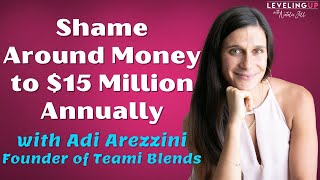
Adi Arezzini, founder of Teami Blends, talks with Natalie Jill about building her wellness brand to $15 million annually. She shares how health issues sparked the business, her military background, and the role influencer marketing played in scaling from shame around money to running a successful company.
Hi, I'm Natalie Jill, fat loss expert turned lifestyle and high performance coach. When odds are stacked against us, how do we shift and create everything from nothing? How do we level up when we aren't feeling it yet or have had a big setback? And how do we adjust quickly when life throws us major curveballs? On this podcast, I do what I do best, taking complicated information that is relevant to us now and breaking it down simply with actionable steps you can implement to level up your own life. I also regularly interview some of the most inspiring and courageous men and women on the planet who at their worst, learn how to achieve success greater than they ever dreamed possible. Leveling Up, Creating Everything from Nothing if.
You are new here, I encourage you.
To go back and listen from episode one for the full transformative experience. Raised by a single mom, AD's earliest memory of money and hardship was just at the age of nine. She remembers specifically asking her dad to borrow $10 and feeling shame with his response. From that young age on, Ad felt like it was her personal responsibility to feed herself and her mom. She took odd creative jobs doing whatever she could as a kid, as a pre teen, and then at the age of just 19, she decided to join the Army.
Why?
Because as she explains it, it gave her a break for the first time in her life. At that age 19, she wouldn't have to worry or figure out how to clothe or feed herself. After the military meals gave Adi horrible digestion issues, she went on a search for what she could eat, drink, or do to alleviate that pain. After solving her own health issues, Adi started Timi in 2013 and and it has been helping people live happier, healthier lifestyles ever since. Today, Adi Arizini is the female Founder and CEO of Teemi Blends, a lifestyle brand that creates wellness and skincare products inspired by the health benefits of tea. What's extra unique about her business? Her business does over $15 million annually and Adee, she's just 29 years old. Join in today and learn exactly how Adi Arizini leveled up Creating everything Nothing Today.
I cannot wait to dive into this conversation with Adi Arizini. She okay, first of all, she's 29 years old going on 30, but she created a business that does $15 million a year in revenue. It's unbelievable. And she was not born with a silver spoon in her mouth. Nothing was handed to her. She's got a great story, a great journey, and I have so many questions on how she did it. So thank you so much for being here today I can't wait to talk to you.
I am excited to be here, Natalie.
So take us back. Because you weren't born with that silver spoon. Nobody handed you anything.
Who were you?
Like, let's go back to being a kid. Who were you as a kid?
All right. Taking it way back. You know, I would say around the age of nine is when things started to become more clear for me, that I needed to work for myself even at that age, and to make my own money. I would say I was raised by a single mom, and things were not easy. Not a white picket fence growing up. And I knew that if I wanted new clothes, if I wanted anything that was above, you know, the regular, you know, you need to feed your children and everything like that, then I would have to go get it for myself. And it actually occurred because I went to my dad once, and I remember putting my hand out and asking for $10 to go to the movies, because my friends were going to the movies. I was nine years old, and he took out that $10 bill out of his wallet, but it almost was like he spit on it. Almost like it was so difficult for him to hand me over that $10 bill that I didn't really like being the one with the handout. I didn't like to be that. I felt gross for me, it felt gross for me to see how he was treating me, and also that I had to be on the asking side. So that's my, like, the realization at 9 years old, and that's a powerful.
Realization at 9, because I think a lot of kids, even if their parents are struggling, their parents hide it from them sometimes, you know, they're just giving it to them or not. They don't tell them about the struggle.
Totally. And it wasn't like. I just felt like he didn't want to give me that money for whatever reason. And it wasn't even. It was just kind of a gross feeling that I really didn't enjoy. And so at the age of nine, I got a job paying me $2 an hour babysitting for a woman, a woman that had just given birth. And so the baby was really young and she was working, and I would just show up at her office and just literally play with the baby while she was doing emails or doing work. And I will never forget, my first paycheck was $24. That's 12 hours of work. And I remember going to a Bank of America and cashing it. I don't even know how I cashed it because, like, I was nine I have no idea how this even happened, but I cashed the check and across the street from this bank of America was a Stein Mart. And that's an old school, like, not even a cool, hip kind of store. But I went there and I bought myself a pair of jeans for $24. And that was the first piece of clothing that I had owned that wasn't from Walmart. Wow. And that was huge. So if that gives you any type of insight to who I was growing up, that kind of led me down the path of whatever it is that I want, I need to work. And I really enjoyed it. It wasn't out of, you know, misery. I was like, I like being productive. I liked making my own money. I liked having that. The cash dollar bills that I would, like, put in an envelope. And, you know, throughout middle school and high school, things just became more apparent like, okay, you really need to take care of yourself. Okay, you want a car at 16? Okay, you need to. And my first car was a red 1995 Dodge Neon that I had gotten off of Craigslist. So I knew that I had.
What was your mom telling you about money as a kid? Like, did you. Was she encouraging you, getting creative and finding ways? Did she tell you stories that money was hard? What was the story that your mom as a single mom was telling you about money?
Very encouraging. She believed I could do whatever it is that I wanted to do. And very encouraging. Making the fact that working was not a bad thing. I feel like sometimes when people work, it's almost. There's even the opposite where parents can tell children, you don't need to work. Like, just be a kid, just be a kid. You don't need to work. And she put a lot of emphasis on being productive and being like, making your own money is amazing. And it's incredible because, you know, she was in a scenario where we had become come to a new country and things were a little bit different. And she was really, really positive about making your own money because she had, you know, through her divorce, seen the effect that it can create if you're not responsible for yourself. Yeah, 100%.
So then what happened? I know when you were around 14 or 15, you had some, some changes and you ended up having to take care of your mom.
Yeah, it was, you know, we were, we were in it together, you know, I would say, but I definitely wasn't going to school thinking about what I was wearing or the boys that I would talk to at school or even necessarily my grades. I was pretty laser focused. Around getting good grades, getting out of high school as quickly as I can. And then I was a nanny nights and weekends for a family that I had worked for for four years. And with that money, I was able to buy groceries for me, and my mom would split them. I was able to save up to get a car when I was 16. And it was just. I knew that none of my friends had those worries on their shoulders. And I actually don't even recall speaking to them about it. I don't remember because it was so unreal. It was so unreal. And throughout my life, like, my pressures or my responsibilities were so different than of my peers that I just didn't even mention that my. I almost was just like, people were on summer break and I was working.
Yeah.
But I would come out of that summer break with a couple thousand dollars, and they would come. Come with nothing. So did you.
Was your attitude around that resentful, or did you feel proud? Like, what was like, I'm just picturing my own daughter. Cause she's 13. Okay. If all of a sudden she was the one that had to be responsible to earn money and pay for groceries, I feel like she'd be resentful. She would be annoyed. She'd be taught what was going on through your mind as that teenager. Were you proud to help? Were you excited? Were you embarrassed? I'm curious. Of what that mind.
Yeah, definitely resentful at the end of it. I wouldn't say all the entire time, but, you know, you look at other kids and you're like, other kids don't have to do this, or other kids are not in this scenario. And it took me years, probably until Maybe I was 22, 23, 24, until I was able to be okay with my journey and okay with my story and know that everybody has their own story. But definitely from the age of maybe 17 to 24, you know, I felt like it was. I didn't own it. Like, I own it now. And I was very much like, man, I was not given a good foundation. And I felt resentful about that, but wasn't resentful enough not to do it. So there's people that are resentful that are like, yeah, I'm just gonna go and do drugs, or I'm just gonna go and, like, say F you to my parents. It wasn't that I knew that I had to do it, and I was responsible enough to just buck up and do it, and this is my responsibility. I'm not going to fail. But I definitely was. It Was a lot of emotional stress that I think I only really worked through and became okay with after I became a little bit more successful later on.
Where was your dad in the picture? It sounds like you had a relationship with him when you were nine.
Was he in the picture?
Was he helping with child support? What was your relationship with your dad?
Relationship between my dad and I almost, I would say non existent. I haven't actually spoken to him since I was 17 years old. That's when I cut ties with him. So it's been what, 12 years now. And he's, you know, just, he's an okay guy. He just wasn't good for us and he, he had different mindsets about things than we did. And I would say the best thing that's ever happened is, is completely disconnecting from him and it just being me and my mom from then on.
Wow. Okay. So then you pivot into something you guys can't. A lot of you can't see her right now. I'm recording on video right now. But where this is airing, a lot of places will be audio. But she's girly girl. She's got pink shirt on, she's got long hair, she's girly. And you made a sidetrack into the military. So talk to us about that because you would never hear me say I'm sidetracking into the military. So what made you join the military and what was that like?
Yeah, best thing I ever did, by the way. And I was 19 years old at the time and I was working at a postcard company and I was making $11 an hour and I remember I was paying for my own rent, my own car, my own car, insurance, food, gas, water, everything. And I was living like an adult at 19 and I felt burnt out and I felt burnt out at 19 and I was like, this isn't right. Like if I'm losing my momentum at 19 and I feel like I'm so stressed at 19, I need, I need to figure something out and I need to do something different. And I had just broken up with my long term boyfriend at the time and I decided to do something completely different and join the military because I felt like that could give me some more cultured experience. Something that's not just going to work a 9 to 5 every day. There was no idea of where it would lead me, but just I wanted to change my environment and go somewhere completely different.
One of the things she said to me before we started recording that was actually so interesting to me is that you said that you felt almost like you got a break being in the military because things were taken care of for you.
Yeah, it was the first time that I could be myself without other worries. It was the first time that I could not worry about rent or not worry about food or not worry about clothes because I'm wearing the uniform every day and I needed that. And I know that it sounds silly, but the army gave me a two year break, even though I worked hard and it was not easy. I mean, when I was doing my four month military fitness bootcamp, I was like, why did I join fitness? What did I do? Like, I have a comfortable life with my own apartment. Now I'm in a room with 20 girls. Like, what am I doing? And I definitely, I would say once a month had those, like, why did I, why did I, how did I get here?
It's that, like, listening to you, it's almost like you lived this whole entire life of 40 years before you were 19. It's. You had all these experiences that. So you get out of the military and where does your business come from? Where did the idea come from? Did you have any in your wildest imagination know it would be as successful as it is now?
Had no idea. I, it's literally. I'll tell you how it started. Basically toward the last year of my military service, I started having really bad digestive issues. And that was due to the food that you're being fed in the military.
Right.
It's not fresh, it's not organic. They're not using coconut oil while they're cooking. This is, you know, to some degree, prison food. It's food that's made for 2,000, 3,000 people on your base in the masses, two to three times a day. How can they make that healthy? Right? They do their best, but my stomach was just so sensitive to these ingredients, to these foods, and it just built up over time and my digestion just stopped functioning, which means that I wasn't going to the bathroom, like at all, like once a week. And since you're in the new, the wellness space, you understand the important function of the gut and the digestion is to retain the nutrients that your body needs and get rid of the rest. But if it's not getting rid of the rest, who's keeping it? You are. And over time, that can show up differently for different people. You might have sleep problems where I had gut health issues, or someone might have acne and someone else might have something else. But what it was for me is I looked like I was five Months pregnant at all times, very uncomfortable, and just couldn't wear anything but, like, tights. I couldn't wear tight dresses. I couldn't wear jeans. Everything was uncomfortable for me, which just felt weird. I became addicted to coffee because coffee was the only way I could go to the bathroom.
Yeah, I would move. My husband says that same thing about military. He went through SEAL training, and he was in the Navy, and he says that, like, it was like years of constipation, basically. And you're eating tons of gluten and dairy and just whatever, all the preservatives. So you're eating all these things that. That make it so you're not moving things. And if you don't, if you're constipated, you're not moving things through, you're going to have issues.
Exactly. Then he knows what I'm talking about. And I tried. When I got out of the military, I tried everything. I, you know, I was cooking for myself. Things did get better, but I was in the wellness space, too. My job in the army was a fitness instructor for combat soldiers. So I should be the epitome of wellness and fitness. But underlying it all, under my uniform, I feel like garbage. I just feel really bad. And just even as a woman, I felt very unattractive to the boyfriend that I had at that time. You don't really want to be touched when you don't feel good in your own skin.
Totally.
And so I tried everything. And that's what led me to, you know, to research through different books, how to cleanse the gut, how to cleanse the colon, what is the effects on these things? And a lot of them led toward specific tea ingredients, which I started researching, went to the. My local Whole Foods, and I bought every tea on the shelf that said kidney cleanse, colon cleanse, liver cleanse, detox, everything that I could find. They were all around $5 to $8. And I drank them all, and nothing happened. I didn't feel any. Anything occur. It was almost just like a nice green tea that I was drinking. And I was like, this doesn't make any sense. All these doctors, all these holistic nutritionists say that this is supposed to help really detox my gut, and it's not doing anything. And then I started researching, and it had to do with the quality of the ingredients. And that's when I started really making my own detox program to solve my own problem, which is basically the conception and birth of my brand, teami Blends.
Okay, so you know what I love about this? So I t. I have clients that I do branding a business with and most people come to me with like, they have an idea that's going to make lots of money and they want to know how to get out there. But what I'm always telling people is exactly what you just said. If you have solved a problem first yourself, you now have something to share that becomes a solution to people. And that's what works. That's the formula that works. It's. That sounds oversimplified, but it's true. I think when people do the opposite, they just chase money or they're like, I heard this will do that. That's not their real story and that's why it doesn't work. So what you just said really is the epitome of what I think works in businesses. You solved a problem yourself, you now have a story that resonates. You were doing it for you and now you can help other people.
Absolutely. And that really, it comes through so genuinely because you can really speak to that problem. That's your truth. And yeah, it's your. It's. You don't even have to try to think of like marketing hooks because you're speaking about yourself. You're the customer. Yeah. So we created this detox program, me and my business partner, who came from a background of tea manufacturing. So I partnered up with an amazing guy who's like my brother, we own the business fully together and came up with this formula, this 30 day program that worked wonders for me. I had no idea how much waste buildup I had until I did this program. Now I was 23 years old, out of the military, living in my mom's house, sharing a car with her. I was a personal trainer and a spin instructor at the time. That's what I did for money. And here we come out with this detox program idea. Now it's like, what's our way to market? What are we going to, how are we going to get this out there? And we bought 100 units. We made or manufactured 100 units. They're in my bedroom in a blue bin that I got from Walmart. I've got envelopes, I've got a thermal label printer. I've got all these things, you know, and I'm literally in my mom's house. And we took to Instagram. That's where we went. Now Instagram, six and a half, seven years ago was vastly different than it is today. There was none of the features that there are today. The algorithm was basic and easy to use and very open and all that it really took was getting on there and doing some of these, you know, methods or marketing tactics that we did back in the day.
What was going through your mind when you were doing that? Because that's scary. Like, here you are, you're not financially in a great position. You're living, like you said, with your mom. You're right out of the military. You've. All you've known your whole life is hustle, work.
How was.
Was that scary? Like, here you're investing your own savings, your money in 100 units. You have no idea how you're going to get these to people. How are you comfortable taking that risk? I think a lot of people stop there. They're scared. They're like, I don't want to go in the red. I don't want to be at a loss. Like, did that enter your mind or did you know you were going to move this product?
I had no idea if I would move the product, but I looked at it like, what do I have to lose? Because $100 worth of product and the time that I spent researching, the time that we spent, me and my business partner, he's a web designer, so he built the website and I wrote the copy. And all that time is just my time. And I'm 23. My time is not valuable. Nobody knows who I am and I don't have. I didn't go to college. So for me it was almost like, let's just see what happens. I didn't invest millions of dollars, or even I would say that the initial investment might have been $5,000. That was the initial scary, though.
Especially when you don't have anything. You're not. You're weren't leading with abundance.
It was. But I have to admit, on the flip side, I had no debt. I had no debt. I had. I had $5,000 in my bank account of savings. I've also, I've always worked and I've always had money. So even when I got out of the military and my friends were in the negative because they blew all their money, literally just going to clubs and buying clothes and doing things. I was working on the weekends out of the military, and I was saving money and I was very frugal. So I knew that even if I had to just be a personal trainer and live with my mom for another five years, I've always been able because I've been doing it since I was 9, make money. So I know that it sounds scary, but at the time, I felt like I had nothing to Lose. And that's actually the first couple years of the business where you don't have anything to lose for. The easiest it's now, it's almost. It's way harder to keep a business going than it is to start a business. I just would like to share that because people think that. I know the beginning is hard, but the maintenance and the growth is harder.
Yes.
Oh, my God, I'm going to lose everything. You know, I think it takes a.
Certain skill set to get to six figures. It takes another skill set to get to seven, and then it's a whole nother skill set to get to 8. And I also believe that you have to evolve and change. And what people don't realize, you and I were talking about this before, is just because you have a business that makes eight figures doesn't mean you're making eight figures. Probably actually the opposite, because you're learning a different skill set. You've got a bigger team, your expenses grow. So it's just a different skill set. It doesn't mean you're all of a sudden rolling a dough.
Absolutely not. Usually, as you grow your company, you make less money. Like, we made more. I made more money than the company. As it grows, depending on what type of business you're running, you can stay small or you can expand and make less profit. So I've definitely gone through that year over learning. I'm learning, you know, I'm 29 years old. I have so much to learn in front of me.
Okay, so when did you know that? Wow, this is really actually a business. I'm onto something. Like, take me through that. Like, I'm imagining initially you had some sales. It was like, kind of hit or miss. Like, when was the moment you're like, holy cow, this is going in the right direction. This is an actual business.
You know, probably in month two or month three, which for certain people, they would say, oh, my God, that's so fast. That's so wonderful. But the first month that we launched, which was April of 20, 2014, we made $5,000 in revenue and sales. And then the second month, we made 20,000.
Wow.
And that's when I was. I was like, what? I was like. And think about this. I was packing all the orders myself. I was doing all the customer service and all the marketing, and I was like, what is going on? So the Instagram algorithm at the time, the Google SEO algorithms were so simple and so open. They were just very simplified, and it was easy for your product to be found. That is not the situation Today and probably around month three, I decided, okay, I figured out a couple of things here. How do I build on this momentum? And the main thing for me was how do I get people to find out about my products? I don't have a lot of marketing budget. I don't have. I can't go to Whole Foods and sell my products there. So we were definitely like, okay, E Commerce. And the thing that I went to was influencer marketing. So I've been doing influencer marketing for seven years, and it is the core part of my brand. I would say the most to our core, who we are, because that's how people find out about us. And back in the day, Instagram algorithm was in chronological order. So when, when people would post, people would see if people followed you and you posted about Teeny, they would see where they would see it more than they see it today.
So for some, okay, so I, I clearly know what influencer marketing is. I partnered with brands before, and I'm very public with my audience when I'm partnering with a brand that I love or use. But a lot of people listening don't understand what influencer marketing means. Can you explain what that means? How do you find your influencers and what makes that effective or not effective? Because there's a lot of people listening that have never thought of influencer marketing. Maybe they want to be an influencer marketer or maybe they want to use them for their own business.
Absolutely. So taking it back seven years ago, I personally am not a celebrity. I'm not an influencer. And even now I have like 30,000 followers. They're all like teamy customers. I'm not out there trying to be an influencer. That's not really my game. My game is how do I grow my business. That's my main game. And I knew that I needed to use other people's influence to get my product known and that I wasn't trying to be a celebrity myself. So that was the first thing that I knew. And what I did is I started reaching out to these micro influencers people between 5,000 and 80,000 followers. And I was emailing them, I was DMing them. And I tried all different types. I tried food accounts, I tried yoga accounts. And at the time, I just had an Excel spreadsheet of the account that I had contacted the accounts that agreed to be ambassadors. And you have to control the process from the beginning to the end, from the making the relationship to the convincing them to use your products, to them agreeing about the commission that they would make to promote your brand, sending them the product and nudging them and following up and making sure that they do what you asked, which is, let's say, post on their feed or post on their stories. And I, through that learning process, I became very good on how do I manage the process from start to finish to make sure that I'm not just sending out free products and that nothing ever happens with them. And then through tracking of discount codes and working with these influencers, I would see which types of influencers worked and which didn't. And through that I realized, okay, wow, this has real power. People in specific industries, they have real influence because they're giving recommendations from their own personal lives. And we've just been building that. Once I figured it out, we built a software internally in my company and now we have 10 girls that they manage influencers 40 hours a week. And we have a micro influencer team. And we have a macro influencer and celebrity team. And that's what their job is every single day, is to close deals with accounts, send them products, follow up, give them guidelines, have them post it, and do this in a, in a big way, in a scalable way.
So for those of you listening that don't know micro influencers, at least in my mind, and Adi, correct me if this is, you view it differently. Micro influencers are people that have a decent following, like anywhere like 5 to 20,000 people following them. A macro is like celebrity level or even if they're not a celebrity, but they're on Instagram and they have hundreds of thousands of people, that's more of a macro. Now do you, with your influencers, do you kind of like customize approaches or do you offer like an affiliate commission or do you do fixed rates? And what, and how does somebody, like, if somebody wanted to be an influencer for you, could they do that? How did they do that?
Yeah, absolutely. So we have the micro influencer team, which is based off of commission and that's like based off of the sales that they make. And then with the macro influencers, we have a fixed rate that we offer depending on who they are and what their value is. And we have our own way of really looking to see if that person is influential or not. Just because you have a million followers doesn't mean you're going to make any sales. And that's where people get really scared to do influencer marketing because at the end of the day, you're gambling you're having some girl on Instagram tell you, yeah, pay me $1,000. And you're like, wait a second, is she going to make $1,000 in sales? I'd rather use this budget to do Facebook ads because you can control. And so through the last seven years, we've been able to create a system that decreases our risk because we know how to look at accounts and see if they're actually influential. Let's take you for a second. Like, you can see through the comments of your. Of your posts and the way that you do stories, and you can see how you're communicating with your audience, that people are asking questions, they're interested in what you're saying. And there's just certain things that we look at have nothing to do with number of followers or number of comments or engagement rate. We are looking really at the person.
Totally. I think a reason for those listening that want to get into influencer marketing or want to use influencers. I believe the reason that I get the deals that I do has nothing to do with my number of following. It has to do with what you said. And I'll tell you that I've actually won deals over people that have a much greater following. Because what I'll tell brands is look at the insights, look at who is actually following people. There's some people that have a much larger following than me. But for instance, most of their followers are men or not in that buying demographic where, like, I know, majority of my following is women, 40s and 50s. Like, I know that. And they're. I have a very small male following, less than 10%. And that makes a difference. So it's not really the comments or even the likes or the shares. It's who's actually following and are they buying. And sometimes the buyers aren't the ones making comments and things like that. So it's just something to look at. And if you're interested in influencer marketing, starting to look at that amongst your own following and how you would add value to a company.
Okay.
No, I've never. I've actually never tried your tea. The reason I'm interviewing you is because one of my best friends is like, you have to interview her. This is so cool. So I started learning about your company with this. But I think people do see ads for tea and they don't. They don't. They're assuming it's gimmicky or whatever. And that's a big reason I wanted to get your story. Can you speak into that a little bit? Because you can see why some people would think, oh, is this gimmicky? Is This a quick fix. Can you talk a little bit about why this is actually something that's so helpful to people and because I believe that's why it's done so well.
Absolutely. So with our. We're not a tea brand. We are a lifestyle brand that's helping our customers live happier, healthier lives through the use of wellness and skincare products that are using tea that have tea in them. Because tea is an ancient remedy for so many things, whether it's hair or skin or gut health, it just has so many benefits. Now, speaking to the detox program itself. Now, this program particularly targets the colon and what I told you guys in the beginning, which is the waste buildup and the digestive system not functioning. So there is a tea that you drink in the morning that helps really raise your energy naturally. It helps suppress cravings. It's amazing. And then a tea that you drink at night, and this tea, it targets gut health and it targets digestion and it targets your colon. And the combination of those two teas for 30 days, especially if you are combining that with healthy eating, which you don't have to. There's a lot of people, most people that use our programs are beginners. They're not fitness experts or vegans or nutritionists. They're like, I'm just getting started. What do I do? And we'll see so many different results. I mean, if you go check out the thousands of reviews on our website, and by the way, we help over 500,000 people every year use our products. Over 500,000 people every single year buy teami products. It might not be the detox, but it might be our skin care or our green superfood powder, whatever it may be. I think that a lot of people don't understand how going to the bathroom is part of their health. And one of the things I talk about all the time is like, be honest. How many times are you going to the bathroom a day? How many times are you pooping? What's going on with your digestion? And because we're so open about that and we target that, it really does resonate with people. Regarding the gimmicky stuff, I think that you're referring to years past of competitor companies that were like, be skinny, drink this tea. Or. Yeah. Or like Australian models that are perfect looking and posing with this tee. That was the industry. It was like that before, but none of those people exist today. And why don't they? It's because they were not actually passionate about helping people. They were just in it to make Money. And they're not there anymore. Like, where are they? All the. You know, all the posts by celebrities on these products. Why is teami the only one left standing?
You know what? You're right. You're right. Because I never really thought about that. But, like, I used to get DMs all the time from various tea companies. Like, and I just ignore them all because there were so many. But I don't see that anymore. I see yours. I think most of those have gone away.
Yeah. And they just were in it because it was trendy at the time and they weren't really trying to help people. I call them faceless brands. You couldn't find where the business was. Who were the owners? Usually they were mentioned, like, overweight men. I'm not kidding. Like, I know some of these owners, and they're, like, living in foreign countries. Totally. And they don't. They're just making products that they think are cool, whether they're gummies or these type. These types of trendy products that you see. So Timi and I realized that early on, and in 2017, we started creating skincare because I felt like, okay, we really need. One of the things that we created were these tumblers that you can drink your tea on the go. And that really branded us and set us apart. There are so many things that set us apart. We actually gave health advice and wellness advice. We actually made recipes and things that had nothing to do with our products. And then we branched out into skincare and branched out even into wellness to really make sure that our customers knew who we were and didn't. Never had that question of, like, can I trust this brand? Is this gimmicky? Who are these people? Which is also another reason why influencer marketing has worked so well for us, because we have over 100 products, and when we work with an influencer, we don't just work with them on one product. We can really make a lifestyle and a natural, healthy lifestyle out of it. So good.
I love this. What's next? What's your vision now? Because when you started, you didn't have a business plan. You didn't have this vision. You just had a solution for yourself, and you started sharing and it started growing. I'm assuming now you've got a more specific vision dialed in, like, what is next?
What do you see?
What do you want with Timmy?
Very good questions. You know, everything changes so quickly in the digital marketing space. Things that worked yesterday don't work today. Your numbers go up, your numbers go down. So definitely figuring out more of those marketing strategies in 2021 is top of list. But as far as the products and what we are doing, I'd love to be in Target stores. We are currently in all Ulta beauty retailers and we're in target.com but getting our product into Target doors would be amazing. I mean the fact that I'm 29 and that we have a female founded brand, privately owned with no investment capital and we're in Ulta, that was a game changer for us.
So great.
So great.
I'm so impressed with you. I'm so impressed. You're the first person I've interviewed that's literally 29 years old that has created something like this. And I but I love so much how authentic and how you truly created it from your own problem solution. And I think that's the missing link for so many people. They're not actually. Because I find that with clients I'm always going back and digging like we're trying to create the story or dig for it versus the way that it should be is you've solved a problem now let's share that. That is the only way I see that makes a slam dunk success.
Totally. And what happens with that when you do that is when they try your first product and they love it, you will have obsessed fans. Like there are teeny customers that own every single one of our products. Like I don't even know what they're doing but they own all the teeny products because you create trust with people. And it might be the slower route and it might take longer to build your business that way, but I think that it's worth it. I think that that's the difference between building a brand and building an Amazon store or drop ship business is people find some sort of connection. So to answer your question, where I see things going next, more wellness powders. We created our wellness line this year. More natural skin care. And just adding more value to my customers and seeing ourselves in Target. Target would be an amazing addition to I really see us in Target. So I would really love to be in Target. But I would really. When people, I want more people to know about Timi and when they think about Timmy, they think about a 360 natural solution for their, for their lifestyle and that they can trust it. They're like, because it's amazing. People are like, wow, I need to do a detox. So they come to Timmy, let's just say. And then they trust us and they form some sort of relationship with us and then they see Us post on Instagram about our green tea detox mask. They're probably more inclined to purchase that from a brand they are already inside of than to go and Google best mask for acne. Yeah, we're just offering, we're just able to help them in their different points of their life. We could launch a new product. Let's say it's a vanilla protein powder. Like, oh, I needed one. So we're just offering that solution to them. So just continuing to be that for people and continue to inspire and give free recipes and inspire people to live a healthy lifestyle and. And even the people that are just starting out and have no idea what to do.
So good. I love your journey. I love your story. Where do people. Because now I've got to try your tea. I've not tried products and now I'm convinced. And it's funny because I usually do this the opposite. Usually I'm like, because I love a product, I want to know the story. This was different. And now like I'm convinced. I've got to try it. So that's amazing. Where do people listening, if they just want to go, they want to go try. Where do they go? And how does somebody who's listening, that's maybe a micro influencer. If they want to help promote, what do they do? Can they reach out? How do they do that?
Absolutely. So you can find us on Instagram at Teeny Blends, which is T E A M I B L E N D S. You can go to our website, which is teenyblends.com you can go order. You can always DM us. We have full time real people answering DMS and comments all day, every day except their job. That's what they do.
Yeah.
If you want to contact me, you can always DM me at D arazini. And we're all very responsive.
So generous of you to be responsive like that. And listen, you all don't just send them and say, don't send them a message saying, hey, check out my profile. Sell yourself. Because that's how she knows. That's how they know you know how to communicate. So if you do reach out about being an influencer there, make sure you are adding value and sharing how you would add value. That's my little quick tip because there's nothing that pet peeves me more than people that don't add value. Value. And they just like say like, hey, check out my profile. That doesn't do anything.
Yeah, it's gotten so spammy these days. And that's what makes it different, as if you're a real influencer. You already know not to do that.
Yes, exactly.
I love it.
Well, thank you so much for your time. I love your journey and congratulations on such a successful business.
Thank you so much. Natalie.
Thank you for taking the time out of your day to listen in as my guest today. If you found this episode valuable, please share it with friends and on social media. I don't advertise this show, so I rely on word of mouth and reviews.
To get it out in the world.
The biggest thank you that you can give me is Leaving me a review. And a nice one.
I hope.
By the way, this is how others find these episodes. If you do leave me a review, be sure to message me@supportataliejo fitness.com with a screenshot of your review because I I would love to send you a free digital download of my DSR journal as a thank you. And please don't forget to connect with me on social media at Natalie Jill Fit on Instagram and Facebook.










