235: From Poverty and Abuse to Wealth Philosopher and Advocate with Jennifer Love
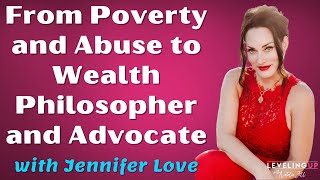
Jennifer Love, a money therapist and CEO of the Living Wealthy Institute, talks about growing up in poverty and abuse, struggling with bulimia, and building wealth through a chocolate company. She shares how healing from trauma led her to help others transform their relationship with money.
Hi, I'm Natalie Jill, fat loss expert turned lifestyle and high performance coach. When odds are stacked against us, how do we shift and create everything from nothing? How do we level up when we aren't feeling it yet or have had a big setback? And how do we adjust quickly when life throws us major curveballs? On this podcast, I do what I do best. Taking complicated information that is relevant to us now and breaking it down simply with actionable steps. Steps you can implement to level up your own life. I also regularly interview some of the most inspiring and courageous men and women on the planet who at their worst, learn how to achieve success greater than they ever dreamed possible. Leveling up, Creating Everything from Nothing if you are new here, I encourage you to go back and listen from episode one for the full transformative experience. Jennifer loves memory of her parents Was one of them fighting over money and her dad walking out on her family. She was the young age of three when that happened. It was then that Jennifer made up her mind that it was her responsibility to take care of her mom. A burden no child, let alone a toddler, should ever believe. Her life spiraled into many unexpected setbacks. Her mom would have an accident leaving her disabled. She would then remarry a man that Jennifer would desperately want to view as a father or only to have him inappropriately fall in love with her and break up the family. And then Jennifer would grasp for control in any way that she could. Becoming bulimic for over a decade after being diagnosed with chronic ptsd, she would finally begin her healing journey. Today, Jennifer is a highly sought after money therapist, wealth philosopher, advocate for emotion and co founder of nibmore, the mega chocolate company. She's currently the visionary CEO of the Living Wealthy Institute. Join in today and learn exactly how Jennifer Love has leveled up, creating everything from nothing. Today on leveling Up, I've got Jennifer Love who I met recently and I was so intrigued by her story because first of all, she's a money therapist. I didn't even know there was such a thing as a money therapist. And then to add interest to that, she also is the founder of nibmore.
Nib.
Nimmore is a wholesale chocolate company that is in Whole Foods and Costco and all over the place. And I'm like okay, the two things that everyone wants more of, chocolate and money. How are you in that and what the heck is a money therapist and how did you become that? So I had so many questions for her. She's ultra successful successful. She's also incredible to talk to so thank you so much for being here today, Jennifer.
My pleasure. Yeah, thanks for the invite.
So Jennifer, first of all, take us back. Like, how do you become a money therapist? What is a money therapist?
Well, you know, I think I, I'm going to start by answering that question and going back in time to the story of the little three year old. Me and I was standing in the hallway. We were in Oklahoma City. My brother, younger brother, was in his bedroom sleeping and my parents were in their bedroom with the door shut and they were fighting and I could hear the screaming and I could hear my dad punching holes the walls. And I'm standing there and I'm like, what's, what's happening? What's going on? My father comes out, leaves through the hallway and walks out of our life. My mom is sitting there on the bed and she's crying and I crawl, I go up to her, I crawl up on the bed and I see the cut up credit cards, you know, sitting next to her on the bed. And that was the day that I watched and witnessed my mom become financially disempowered. She didn't have the tools, the resources, you know, the know how to move beyond that.
But at age 3, wow, that's like you're just starting to form, really form thoughts and opinions. You, do you remember your dad? Were you close with him? And what were you, what was, what were you thinking? Do you remember what you were thinking at that time?
Well, I remember being afraid at that time. I do, I have a lot of memories. You know, unfortunately they're not all awesome, but it's part of what's made me who I am, that the resilience that I have today, you know, I really made that mean that somehow I was supposed to take care of mom, that, that somehow I needed to save her. And it was part of me becoming a hero and putting the weight of the world on my own shoulders because I didn't want to burden mom with more pain. I didn't want to burden her with, with more trauma. Um, and I also was pretending that I wasn't angry, that I wasn't angry with my father for leaving the way that he did. You know, we went from being incredibly rich to. That was the day we became like we began living in poverty.
What did your, what do you remember about that time other than making that decision? And you remember that visual of the credit cards and your dad leaving? That. What, did he say anything to you when he was leaving? What was your, what does your mom say about it? What was her Story about it.
Yeah. So it wasn't a lot that we were talking about because dad, you know, he. He left. He was gone. I. I mean, I didn't see him again till age of 19.
Wow.
And mom. Mom was my mom. She's such a sweetheart, you know, she's such a sensitive human being. She was in a car accident when she was 13, lost a brother, had some brain damage that was undiagnosed, I believe. And, you know, she just didn't really know how to cope with it all. And now ultimately, my grandparents kind of stepped in and began to support and take care of us during that time. So she didn't know what to say. She didn't have the skills to really.
And you. So it's interesting. It sounds like you sort of sensed that as a kid, so you didn't really ask questions.
That's right. Yeah, that's exactly right. The thing that I really learned about myself in all that is that I love deeply, I care a lot. But there's a downside to caring, you know, by trying to become a hero, a rescuer, but that I also learned that I'm a fighter and I'm a survivor and that I'm a lover with a heck of a lot of a huge dose of tenacity. But I also learned that seeking validation and love outside of myself was not where it was at, and that I have great capacity to build and create things in my life, including a bunch of companies over the years. Right?
Yeah. So what did looking like poverty start to look like for you, or what? When you said you came, you had money, you remembered that on some level, and then all of a sudden you were in poverty. What was. Define what that meant for you?
Well, we went to Mom. You know, mom was a mom, so she didn't have a job, and she went to. You know, she went literally from having access to lots of things to. There was no money because it was taken. So grandparents kind of stepped in. And then mom got a job as a legal secretary at Hughes Aircraft in California. We moved from Oklahoma to California then. And, you know, she. She was doing the best she could as a single mom with, you know, two kiddos and. And we lived in what we called the ant house. At one point. We lived in the rat house. We kind of. We kind of look back and laugh.
Now because they had ants and they had rats. Is that what you're.
That's right. Yeah. You know, there were lots of rats running around in the. The attic of one. The first place that we moved into In California, and this is in the Los Angeles area. And so, you know, we can look back fondly and kind of laugh about this stuff. But yeah, there. There was a really big difference in lifestyle that we had to shift into.
How you said you had a sibling. How old was your sibling when all this was happening?
So my brother is 13 months younger than I am.
Oh, so your mom really had her hands full here.
She did. She definitely.
Two kids under three. Wow. Okay, so tell me more about this. Like, what. What was this like growing up? What happened? Did things get worse? Did they get better? What. What continued?
Well, I'd love to tell you that it all started to get better from there, but, you know, my mom was in. So, you know, we kind of moved. I was like three and a half, four years old at that point, from Oklahoma to California, and mom got the job. And, you know, we're kind of figuring out life now in California in a new way. And mom got into another car accident. Right. So she's in one at 13. Lost her brother, now she's in one. I'm eight years old. And it left her disabled. And it was really at that point that she then began to emotionally check out. I think she just had kind of. She just had. Had too much trauma at that point, you know, and what we know about trauma in the brain now, like, there. People with trauma are even more sensitive to physical pain as well as just external situations. So mom just kind of. She had enough and began to. Began to check out at that point. At the age of 10, she married a man that I now refer to as the dark ages of living with him because, you know, I really leaned into him as this father, was so yearning for the father figure and as most girls do, and unfortunately, he fell in love with me. So we went. We started out age 10. Well, no, it didn't start out at age 10. It kind of age 10 to 12. I mean, he would. My mom was married to him for six years, so 10 to 12, it was kind of like, you know, these daughter, dad or daddy figure.
He was a father figure.
Okay, that's right. And then. And then from like, you know, 13 on, there started to be this inappropriate behavior. Right. Inappropriate touching. And then he. The daddy daughter dates turned into. When we were on the dates, he wanted to pretend that I was his girlfriend or his wife. And so, you know, I. It all kind of started slowly happening. That like this little slow pressure cooker of like, all this stuff. And, you know, I'm. I'm pretending and hiding through this that, like, I didn't know how to use my voice.
And I would imagine at, like, 13, 14, you probably didn't even put together that it's wrong. And then I did it. You're like, wait a minute.
Yeah.
I'm thinking of my own daughter at 13. Like, she'd almost, oh, let's pretend. Let's play. Whatever. And then it's like, wait a minute. Something's not right here.
That's right. Yeah. I didn't know at first. I started actually feeling emotionally uncomfortable. Right. So he would want to hold my hands, but I would be putting my hands in my pockets. I started doing all kinds of extracurricular activities at school because I just didn't want to come home.
I didn't want to be creepy.
Right.
And you feel like. I would imagine you feel torn as a young girl, like, you don't want to disrespect your father. At the same time, you're like, something's not right here. This is off. This doesn't feel good.
So there was that. That was happening. But then there was also this such deep, long yearning for my actual father.
Yeah, you need.
It was out of the picture that, you know, there. There. I wouldn't have been able to articulate this then. But now I'm looking back, you know, it was like I was getting some attention, and it was almost this sense of, like, well, any kind of attention is better than none. So I wasn't using my voice to actually speak out about. I was feeling uncomfortable or to say no or, you know, any of it.
So did he do anything to you?
Physically touching me inappropriately. Right. That might be the definition of molestation. There was no raping involved. Right. That didn't happen, but the lines were crossed well beyond what they should have been.
Yeah, totally got it. You still felt violated. Yeah. Did your mom know any of this? Did you tell her any of this?
Natalie, that's when shit hit the fan.
Oh, gosh.
Yeah. Yeah. I mean, I went away, so I. Most people don't know about this. Me, I trained. I was singing somewhat professionally through high school and was studying in music. And that was kind of the life and trajectory I was on for a long time. And so I was traveling the summer I was 16 years old with this choir, and it was. I was able to get some perspective that summer about what was happening and how uncomfortable I was, and started talking to the choir director about what was happening. And she's like, you've got to go talk to your mom. I was so afraid to go Talk to my mom. So instead I went to my brother, and my brother's 15 at this point, and I tell him what's going on. And he's pissed. He's just, like, so upset. We both make a pact. We're like, you know what? If Mom's not gonna go, we're going to drop out of high school. We're going to move to Mountain Home, Arkansas, where my grandparents had retired. We're going to get jobs, and we're going to support each other. That was the pact my brother and I made. And so I did. I went and talked to mom. She had told me that he had confronted her and said that he had had dreams about having sex with me. And, you know, so we were at this breaking point as a family. Like, so she packed us up and we left. We moved. But you know what I carried forward.
Good for your mom, though, to say, do that.
Because for sure, 100%. But, you know, from that, I also was bringing along the story of somehow I broke up a family, I broke up a marriage. My mother never dated after that. She hasn't been in a relationship since. Right. And so. And so I was carrying all the shame that I had done something wrong, but. But I didn't know what it was. I didn't know what I did wrong. Right.
Got it. So, yeah, that I can imagine. Gosh, so much weight on the world. Well, first of all, kudos to your mom for doing that right part, because a lot of mothers wouldn't have done that. You know, I hear stories over and over where they want to believe the spouse or the, you know, whichever. So good job there. But, yes, that's horrible that you then took that on as your own shame. Like, I did this. Did your mom think you did or did she not? Was that just your own story?
No, this was my own story. Not at all. This was nothing coming from her whatsoever. I mean, I just was not processing what was happening for me. Right. There wasn't an environment for me to process any of this. Mom didn't have the tools or capacity for that. I wasn't seeing, you know, a therapist. Like, none of that was being. It was all just being packed in and all the stories were building up. Right. But what I did learn about that along the way is that that shame monster is also our friend. Because when we look at the shame that we're carrying around in our life, we can actually. It's like a gateway to our freedom. Because the shame, when we are actually able to process it and put it down and See what's underneath all of that. When we can name it, when we can own it, when we can surrender it, it sets us free. How do you do that?
How did you do that?
Oh man. I'm gonna move it. I'm gonna move us along. As part of the story here in how I did that part of it. I mean some of it was began unhealthily, but it was part of the journey to getting to where I am now today and you know, fast forward in my life, you know, here I am, I'm going to grad school and I went for two decades to study human development and behavior. And no wonder, it's no surprise that, that that's what happened. But I was feeling like at this point that my life was so out of control. Right. That I was not lovable, that I. There was something wrong, that I was, I had done something wrong. I was carrying all the shame around and underneath it I was feeling incredibly alone and very overwhelmed. And yet I'm pretending like I have it all together. So front facing in the business world, I'm acting like everything's fine, like big old big, big smile on my face, but underneath it I'm just a hot mess. So I started dating someone and we ended up dating for a couple of years. But I remember him making notions to me that, you know, if you just lost 20 pounds, you'd be perfect. And you know, I looked great. Let me, let me just get real. I was fine, right. I was like, you know, five nine and like 150 and you know, big bone. I was totally fine. But this is the, some of the image that I was taking on from, from a society level. But now in this relationship with this man who's telling me something about my body. Well, I remember we're in this restaurant and I eaten too much food and you know the. How uncomfortable your stomach gets.
Yeah.
When you just overeat.
Oh yeah, I've been there many times.
Yeah, we all have, we all have. But I remember going to the bathroom and I was so uncomfortable and I just wanted the discomfort to be gone. And so I purged for the first time. I was 21 years old. And the relief that I experienced from that purge was it felt like I had some sense of control in my life, like I could do something to control all that. Felt like it was spinning and out of control, you know, but the impact on me of that, I mean, can imagine I was blaming for 10 years, a decade of my life, 21 of 31. Yeah. But underneath a secret.
This Is a secret.
Oh, my God. I was so good at hiding it.
And did you. Did you lose a lot of. Bulimics don't actually lose the weight. They don't actually get super skin. Did you have that happen?
I maybe lost 5ish pounds, maybe 10 at the, like, height of being bulimic, but it wasn't anything.
It's not a weight loss thing, it seems like.
It's not a weight loss plan. No, it's coping. It was an emotional way of cutting in a certain sense. It was a way of trying to find some sense of control in a world that felt traumatized. And the impact on me, you know, all of the history of the trauma that I've experienced. And, you know, everyone has their own story with trauma, right? But I ended up being diagnosed with cpsd, and that's chronic version of ptsd. And, you know, I was carrying then forward the story of I'm not good enough. Right. But it was through the. Through the bulimia. Ten years in, where I'm again in another bathroom and I'm purging, and I can hear my higher self coming out and just asking because I'm, you know, you know, in the middle of that, I'm beating myself up. I'm telling myself I'm not good enough. I'm telling myself how horrible I am. I'm telling myself, you know, all these horrible things as I'm purging. And it was this final moment where I heard my higher self say, jennifer, if this is your best friend, how would you be treating her? And I really paused then. And I was like, whoa. Because I was that. My higher self said, would you be beating her up like this? And I was like, no. Well, what would you be doing? My higher self asked. And I said I'd be rubbing her back, I'd be holding her hair, I'd be telling her I love her, we're going to get her help, and tomorrow's going to be a better day, and I'm here for her. And so it was the day that I began to become my own best friend. It was that I found that compassion was my gateway to joy within myself.
Wow. Stop. Did you stop the bulimia after that moment, or what does that look like?
It took me about three months. Yeah. Because it was. So while I was doing the internal and emotional and psychological work, my physical behavioral programming took some time to shift.
So no one knew you were struggling with bulimia while you were struggling with it?
No, I was really good at hiding it. I had. I Had someone once kind of catch me, and I made them swear not to tell anyone. And I finally. Before this experience where I'm becoming my own best friend with my higher self, I did end up confronting my family and sharing that I was struggling with this, but I didn't want to talk about it.
Yeah. Yeah. Like, I have it under control.
I have this issue, but I don't want to talk about it.
And I'm figuring it out. Yeah, I know.
Figuring it out. I'm fine.
Wow.
Yeah.
Yeah. That's intense. Ten years. And to Matt. You're lucky you didn't mess up other parts of your health with that.
You know, I really am. I thank God every day that my body, my voice, my. My teeth are okay.
Yeah.
Yeah. I'm blessed that way. And there was a part of me I was always going and doing things, but, yeah, I'm blessed that way. Thank goodness for that.
Wow. So lots of stuff. It sounds. So was the bulimia, the turning when. When you had that moment, your higher self, and you decided you're going to be your own best friend and get help, was that the turning point to start healing everything?
Yes, it was. Yeah. It really, really was. It was like my higher self really dropped in. You know, I had such a deep longing for love. Yeah. And I had been placing all of my value outside of myself, as though if my father loved me, then I was acceptable. I was a value. I was important. Right. If I. If I could save mom, then I was valuable. Then I was okay, then it was important, then you know, all these things. Right. But I was in the process giving the keys to my power to other people to tell me whether or not I'm okay. And I had to recognize that I had to begin to reclaim my keys to my own power, that all the love I need is right here inside of me. And. And that everything I could possibly ever need is right here inside of me.
You know, it's interesting. Almost every person that I have interviewed about. And a lot of people have trauma. A lot of people have different types of trauma. And everyone I've interviewed about trauma, they get to that same point where they realize they have to love themselves.
Yeah.
And until they truly, actually love themselves, it seems like things don't change.
Yeah. Yeah.
We work so hard to avoid that.
Like, we weren't well, because. Because our. Our wounded self creates an ally with our protective self. Right. And that protective self, man, she. She's sophisticated, and she is, like, got the sword out, and she's building up all that scar Tissue and all the different aspects of ourself. Right. And she does not want that little one to be hurt anymore. So it's almost like this self loving act, yet it's doing it in an unwholesome way that's creating scar tissue that's actually blocking us, creating upper limits. Right. And it's, it's blocking us from access to freedom in ourself, but also financial freedom. Yeah. In our life.
Oh, what a journey. What a journey. Okay, so now take me from how you go from bulimic, wounded, realizing all this, falling in love with yourself, to building a chocolate company. Like, how does that even. Where does that go? How did that happen? And I got questions about the money side of this.
Yeah. Yeah. And you know, so I had been an advisor and a therapist for years before that and had all the training in that and that was what I was doing behind the scenes. Right. The thing that we, we do is the thing we need the most. Yeah. And. And so I knew that I had to change. I knew that I had to do. I had to figure out a new relationship with food. And unlike drugs or alcohol, you don't get to stop eating. You have to eat. And so I was good at the business thing and I wasn't so great at the loving myself thing. So I leveraged the thing that I was good at, which was business, to help me overcome what was broken in my life. And. And so I went to Australia for a couple months studying what they were doing with nutrition and food there because they were one of the healthiest countries back then. And I wanted to know why. I enrolled in a nutrition certification program, became a certified health coach with zero intention of doing that, but just wanted to learn. I was so thirsty. And I had just come off of starting a wellness center with a natural doctor. So all of this was like percolating at this time. It was at that point nutrition program that I met who ended up becoming a business partner and friend. And it was through that that we, we started Nipmore. We had gone to a chocolate party together and fell in love. I've always been a chocolate lover. I remember standing at who isn't a.
Chocolate lover as well.
I know, I know, I know. I get it. And I remember in an undergrad, standing at the Milton Hershey Museum and reading about his story and reading about how he had gone bankrupt like nine times trying to be a candy maker. And I was so in awe, inspired, never thinking I was going to start a chocolate company.
Yeah.
But fast forward all those years later and the same tenacity that Milton Hershey had, I found myself finding within myself building a chocolate company to overcome the very thing that I was struggling with the most, which was my relationship with food. And so I was using food, which, you know, dark chocolate helps, especially 80% or above, helps to increase the dopamine, serotonin in our brain. Well, what we've discovered through research is that those who have addictions, those who struggle with eating disorders, they tend to have lower levels of serotonin and dopamine in their brain. So I'm turning to the thing that's actually going to help me on the physical level, while also using the gift that I have of building business, creating to help me leverage and launch into a new momentum.
Did you have any idea that it would become as big as it did?
I had no idea. Yeah, we were two chicks in a kitchen making chocolate back then. Yeah, we were making it all by hand. Heather was my business partner. She was in the kitchen making it. And I was out handling the fundraising and the sales and kind of all that side of the business. And we started in 2009 in the middle of a recession when no banks.
Were lending money, but everyone needed chocolate then to feel better.
We sure did. And so I think, because we niched down some, started out as a raw chocolate company. We niched, and we had such tenacity, and we were just so willing to go all in. And I was like, this was. Like, this was not optional for me. This was me and symbolic of me actually healing myself. And that wasn't optional.
You know, I say sometimes that the way we become really good at things is by getting obsessive. And people tend to get scared of that. Like, well, I don't want to get obsessive about it, but it's true. When you think about it, I don't know anyone that's created anything amazing that didn't obsess over it.
You know, I was so committed, and I still am today. I'm so committed to. To my own freedom, to my. Whether that's in the bank account or, you know, within myself, that I just will not stop. Sure, I'll pause, I'll rest. I have power pauses. But I'm not gonna stop because I know that that's possible for me. I know that's possible for my clients.
So why do you think your chocolate? Because there's a lot of raw chocolate. There's a lot of chocolate companies. What made yours special? Like, how did you get in those stores? Those are big stores you got in yeah, well, that wasn't like the side, you know, Dr. Bob down the street.
No, no, no. I mean, we had. We had a clear vision. We actually, I remember in the early days, we. We went and we went. We bought every chocolate on the shelf back then. We lined it up. We're looking at the packaging, you know, like, just figuring out all the different nuances and how we wanted to niche and be different. But it was. It was pounding the pavement. I mean, we were willing to get gritty in those early days. You know, I was walking into stores in New York City and I was introducing myself. Hi, I'm Jennifer Love. This is no more chocolate. I love to put some chocolate in your stores, you know, and I just start the conversation and start building those relationships from the ground. And then I. We launched from the stage at the nutrition program months later, and at that point, I had already landed our first account, which was Fairway in New York City for all those New York City folks who love Fairway. And I'll never forget meeting with that buyer, that first meeting. And I was just like, what do I need to do?
Yeah, what do I need to do.
To make this happen? So I was like, I'm going to show up. I'm personally, as a founder of this company, I'm going to show up and need demos in your store.
Yeah, yeah, but that's what it takes. I mean, you listen to, like, Sarah Blakely's story about Spanx. I mean, she was. What she was doing, she was going to store. She, like, had her friends go to all the stores and request it. She went and literally walked into the stores and sold it to customers herself. Like, that's right. Founders of big companies do it themselves.
That's right. That's where you start. That's where that's. That's.
I mean, that's creating so missing, Jennifer, because so many people, they have an idea and then they're like, then it gets lazy. It's like, well, I have an idea. Why is anyone buying it? But they're not doing that. That grunt work or getting obsessive or getting gritty.
Like you said, it's like birthing a baby. You know, you don't just set it aside and expect someone else to take care of it.
Yeah, well, some people do, but it doesn't work. It doesn't work out so well. Work out so well.
It just won't work out so well. So, yeah, you've got to put your heart and your soul into it.
Yeah. Okay, so chocolate company takes off and you you still own that, you still have that. But you're not, are you not. Are you running it still somebody else running?
No, we've got, yeah, we've got an executive team we hired about six or seven years ago now that is running the company.
Okay. So you do still have say in some things. Are you part of it or what's your role with that?
Yeah, I'm a shareholder at this point.
Yeah.
A brand ambassador shareholder.
But you're not going in the stores pound of the payment right now. You don't need to now you put in your dues, you put in your time there.
I did.
Okay, so then you've got time on your hands, you've earned money, you've proven yourself a success and then you completely pivot into money therapy. How does that happen?
Yeah, I think this is really coming full circle to, you know, the three year old me watching mom disempowered. Right. Financially and never wanting another woman leader to ever have to experience that in themselves. Right. And so also having witnessed for myself in my own journey of having to do the work to remove what I call the scar tissue.
Okay.
You know, in myself, like my spiritual, my, my emotional, my mental, my physical scar tissue, all the things that were blocking me from being financially free inside myself, but also outside myself. And I was like, you know what, I want to help other people do this too.
Yeah.
This is, this is, this feels like my calling in life. And that's when I, that's when I started the Living Wealthy Institute and started.
What does that mean? The Living Wealthy Institute.
Yeah. So living wealthy to me is this, I think it's our natural state of being. It's the state of being alive and being free and being whole and making financial decisions from a place of empowered, truthful self from being, you know, being a good steward of money. Let me, let me back up for a moment and just share an example. You know, this year I've been working with a leader. She's taken over her family business. Six years ago it was at 10 million. She took it as 573 million in that six year period of time. Right. So she created the wealth for her family. Impressive. Very impressive. Very well. Right. But she also bankrupted herself in the process because the end of last year she decided she, she was so spent that she had to take a full year sabbatical. And we've been, I've been working with her in this and looking at like what's going on inside of all this. Why does she still feel indebted to her family, the very family that she made wealthy. Right. Why is it that she doesn't feel deserving of all of the money that, that she has, that she's built and created? And what's blocking her from actually caring for herself and not normalizing the suffering of her own self to the point where she's impeding her own financial well being and her own life or her ability to even date, for example. And so really unpacking all of that, that to me is why I do this work. The living wealthy model, it's taking people through this process of identifying that scar.
Tissue, which is super incredible. And I think that's super niche down. And there's of course a need for that. What would you tell? Because there's definitely listeners right now. They're like, that's amazing. But I, in my lifetime can't imagine I never see $10 million or they, they are like, I'm, I don't even know how I get to a million. How do I even get to like six figures? Like what would you tell that person? Because I think that lack mentality or I don't have that much. That is so common and it's so prevalent.
Yeah.
And what do we do? Because this is the thing so many gurus out there will say, well, you have to be in the mindset of gratitude and you have to just assume that you have it. But it's very hard when you don't, when you're feeling like. And some people really, they have a great income, but they're, they don't feel that they have anything, you know, like they, they might be making six figures but it's this constant struggle. Like, so what would you tell that person?
You know, I'm going to, I'm going to give something really tangible here. And that is a decision making filter. And the decision making filter is your values. One of the decision making filters is your values. And let me give you an example on this personally. So several years ago I started a financial literacy company for women leaders. I was in the first year, we weren't even doing $100,000 in revenue yet at this point. Okay. And I went to a big sponsor. I wanted over $100,000 sponsorship for a year long sponsorship. I had never done sponsorships before. And here I am not knowing if this company is really going to work. And it didn't really work that great. It's okay. Not all companies work out. But I was like, you know what, I'm going to go see if I can get the sponsor for all of our events and for access to some financial software for our clients and the members of this program. And so I set out, I found myself sitting in Silicon Valley with great potential sponsor and I'm really listening, I'm asking all these great questions and I leave the meeting, I put a great pitch deck together, they come back and they say, great, yeah, let's do it, but we want to do a 90 day trial. And I was like, now my values, one of my values is have her back. And I knew that if I built this company into our year long programming, not only was I doing my team a disservice, but I was potentially saying, dangling out a little teaser for our clients and then and potentially putting them at risk of saying, oh no, I've got to take this big, you know, asset away from you in the middle of our program year. And that didn't feel to me like having any of their backs. And so I went to the financial sponsor and I said, hey, listen, I can't do this because of these reasons. I'd love to do this work for all the reasons that I think, you know, we're going to be great and we're going to get you a lot of exposure, blah, blah, blah. And I was willing to walk away from over $100,000 and my company was barely doing $100,000 at that point. Right. And so for me it was using my values. They ended up saying, no problem. Right. Let's just break this up into quarterly payments. But if I hadn't used my values to help me make a decision, I would have been putting not only clients at risk and team at risk, I would have been putting my reputation on the line. I wasn't willing to do that. Right. So tangibly, I think we have to begin to use our values as part of our decision making filters as we're looking at how we're operating in the world with our money. Yeah, we need to be in filling states. Yeah. It's really ultimately about what's happening inside of me. Right. Our value is not outside of us. Our value is inside of us. It's about how am I being in the doing. It's about, you know, how am I feeling about myself and what are the stories that I'm living under, you know, in the darkness around that I haven't processed yet, that I need to free myself up. So I'm not afraid to shine, so I'm not afraid to be visible so that I'm not living under the umbrella of shame in my life. But it's Also about understanding what our values are and aligning to those values and using them operationally.
So if I hear you correctly, all this makes sense to me. But if I'm hearing you correctly, I would imagine too that there'd be stages of this. Like if somebody really can't pay their bills, like the way your mom was at that time, you'd have to make a few decisions to get stuff in. Like she decided to move to California from Oklahoma. You have to make some reasonable decisions, I would imagine. So you can feel safe first, I would guess, and then it's that next level, I would assume for sure.
Well, I think one of the first things is, and this isn't going to be something that's necessarily going to land well for anyone who hears it, but it's accepting what is.
Yeah, right.
It's. It's getting to this place of just saying, actually this is where I'm at. And, and that's okay. It's. I don't like it, it's uncomfortable. And I don't want to perpetuate this in my life. But if we, if we don't actually get to this place of acceptance within ourself and what is happening around us, then we aren't in a position to be able to make shifts.
You know what, that's such a great point because I think a lot of people actually get very stuck on comparison to what was or what should be or what someone else has. Versus like, this is my current situation.
This is my current situation. I'm going to accept myself. Not only going, not only am I going to accept myself, I'm going to love myself exactly as I am. And that level of self acceptance and self love moves us into a place of possibility. Right. Where things that we couldn't see that we weren't believing or we didn't know were possible begin to show up. That we. It's almost like our eyes, there's this like veil, the shield that comes off our eyes and we can see a whole nother world.
Yeah.
That exists when we actually powerful and love ourselves there in that space.
Yeah. Gosh, I can relate to that. So fully. Several years ago, my business was doing really well and it had, it had tanked. I had had like, like a lot of business owners do. It was like, took it for granted, like I was doing amazing. And then it tanked. And I've shared this story publicly before, but when it had tanked, I had a lot of stories about what was, what's. Yeah, I went into that, that mode of feeling Sorry for myself in comparison. And I remember being asked to join this mastermind and everyone in that mastermind earned a certain living. And I said to the person that was asking, I said, I don't, I don't make that right now. That's not me. And he said, but you did it before, so you're always in that category. And that was such a huge thing to say that to me because I got myself out of self beat up that point. And instead of looking at what I was a failure around or what wasn't working, it was like, okay, wow, if you've done it once, you can do it again. Or if you've done it, like, it just changed my perspective and it was in that one conversation, changed my whole perspective and had me attracting more.
Yeah, that's a powerful state of being. What I call that is a fail forward container. Actually giving ourselves permission to be the scientists in our business and in our life that we actually expect. There's room for failure. There's room, and it's not even failure. Right. When we look at it from that lens, it no longer is failure. It becomes research, it becomes experimentation. Right. We can replace the word failure with, I'm just experimenting. Oh, that didn't work. Okay, let me try this. You know, my. One of my grandfathers was one of the first scientists in the United States work on penicillin. I can only imagine if they're like, you know what? It just didn't work out. It's too bad, huh? You know, like, oh my gosh, you know, like, we've got to become the scientists in our businesses and in our life because there's always a way, you know, to get there. It may not be the path that we thought. We may not be able to go right through it. We might have to go around or under, over. You know, we might have to choose another path altogether, but there's always a way to get there. It's so it's not a matter of.
If, but I love what you just said. That's so. I hope everyone is really hearing that. It's just, you've got to first accept your current situation and drop the comparison. And the envy and what was and the self beat up and say, okay, this is my situation now. Blank slate, let's start over. Like, what am I dealing with?
Over and over and over and keep pushing the reset button until, wow, you figured it out.
Well, this is powerful. And now you're taking it a whole nother level. You're starting. You've got a podcast that Just started.
Called Nature of Money. I'm so excited.
Nature of Money, which you must subscribe to that if you've liked some stuff that she's talking about today because that podcast or I'm such a fan of podcast, Jennifer. It's like, where else can you get these, this free access to, you know, conversations and these ways to change your thoughts?
Yes, yeah, yeah. The nature of Money. I'm. I'm looking at how the principles of nature have so much to teach us in our relationship with money. Right. All the lessons, but also, you know, my research and my own stories and bringing in other folks who I'm loving talking to. So this first season, we've got some pretty fun stuff lined up. Thanks for everyone who's coming over. Make sure to give us a nice little rating there too.
Yeah, awesome. So Nature of Money, you can also. Where can. Okay, so you can find her chocolate in stores everywhere, right? Whole Foods, Costco. Am I missing. Where else is it?
Well, if you go to nibmore.com you can look at the store locator on our website.
Awesome. And then for. What's your website for as a money therapist?
Yes, you can go to jenniferlove.com I've got some fun resources. If you want to have a discovery session with me, feel free to fill that out. I'm happy to get on a call and have a conversation. Or you can find me on Instagram at the Jennifer Love.
I love it. Thank you so much, Jennifer.
Yeah.
Thank you for taking the time out of your day to listen in as my guest today. If you found this episode back valuable, please share it with friends and on social media. I don't advertise this show, so I rely on word of mouth and reviews to get it out in the world. The biggest thank you that you can give me is leaving me a review and a nice one. I hope, by the way, this is how others find these episodes. If you do leave me a review, be sure to message me@supportnataliejill fitness.com with a screenshot of your review because I would love to send you a free digital download of my DSR journal as a thank you. And please don't forget to connect with me on social media at Natalie Jillfit on Instagram and Facebook.










