238: Mindset Needed to Overcome Anything with John David Reynolds III
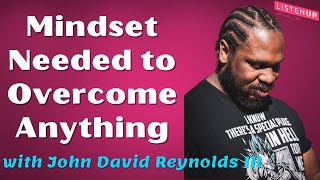
John David Reynolds III, a strength coach and former athlete, survived a severe car accident and rebuilt his life through visualization and mental resilience. He talks about his recovery, the mindset shifts that got him through, and how his mother shaped his ability to overcome adversity.
Hi, I'm Natalie Jill, fat loss expert turned lifestyle and high performance coach. Welcome to Listen up the podcast. On this podcast, I do what I do best. Taking complicated information that is relevant to us now and breaking it down simply with actionable steps you can implement to level up your life. I also regularly interview some of the most inspiring and courageous men and women on the planet who at their worst, learned how to achieve success greater than anything they ever, ever dreamed possible. Creating everything from nothing. If you are new here, I encourage you to go back and listen from episode one, when this podcast was previously called Leveling up for the Full Transformative Experience. Today I'm interviewing a new friend of mine, John Reynolds, and I actually met him on the clubhouse app. I was in a clubhouse room talking about podcasts and how to get yourself on good podcasts, and I was hosting the room with some of my friends and he popped on and he asked some good questions. But then he shared a bit of his story. And when I heard his story, I was glued to the app. Like, how do I talk to this guy? I need to know more. We reached out separate to each other on Instagram. He sent me a video that I could not believe. Only had 30 views because his story is amazing. So I am so excited to have John Reynolds here today. Today, he's a strength coach and he helps people get strong from the inside out. But two years ago, his accident that almost killed him is crazy time. So we're going to dive right into that story. First of all, thanks so much for being here today, John.
Thank you for having me. I'm excited.
So, John, you were always physically fit. You were a boxer. You said you did mixed martial arts. You were a strength coach. But then tell me what happened in April 2018.
Yeah, I was. So what happened was I went to the Bay, I went to San Francisco area and I was coming back, I was coming back really late and I just started to doze off. And the next thing you know, I wake up, open my eyes, and I'm looking at a tree. Boom. I hit the tree. And yeah, pretty much I felt my. I looked down and like, I couldn't feel my legs and all I saw was like I saw an engine block where my legs used to be and blood everywhere.
So when you were driving, John, before, this is just crazy, but when people get dozed, like they feel dozed, like they're dozing off when they're driving, usually they'll pull over or they'll stop. Was there no time for that or what happened? Do you remember in those moments?
Yeah, actually, I remember the entire incident. So this is the craziest part, you know, like, I started to feel myself fall asleep. And I remember there's a small little post office where you first went. And, like, that was the moment I realized I was dozing off. And like, in my mind, I can tell you right now, I thought I pulled right there and I stopped and I just went to sleep.
Whoa.
That's what I thought. So when I woke up looking at this tree, I had no idea.
Oh, my gosh. So, okay, I have to ask. Were you under the influence? Were you just tired? What was going on that you were that tired driving?
I was just tired. My days, generally, my first clients are early in the morning at the time, and so I was driving almost. I had an hour commute between from my house to the gym. I trained my first client, and that would be around. And I get to the gym right, 7am so that meant I had to leave my house around 6, but probably around 5:30 just to make sure I missed traffic and everything else. And then like that day, I went. I went to the Bay. I went to visit my girlfriend, have this, like, you know, be cute boyfriend thing. And it was in my mind, I was like, I have plenty of time. I'm fully awake. I was. I was on top of the world. I actually had just competed three days ago, so. And I had an amazing meet. I had an amazing competition. Like, I was. That week, I was on top of the world.
Wow. Okay, so you. Wait, so you wake up, you remember this happening. You hit it. You don't remember hitting the tree, but you wake up and you've crashed into the tree. And what, you see this engine here where your legs are supposed to be? And are you in pain? What's going through your thought? Were there already ambulances or what happened?
So I'm. I live in a very. I live in a very rural area. And it's like. So, like, while I'm sitting there, the first thing I see is I look down, my phone is broken. And all of a sudden I hear this guy yelling at me. And I look over and luckily this guy was actually just leaving his mom's house. He runs over and he says, hey, man, this is really bad. And I'm like, yeah, this sucks. And he kind of giggles at me, and I kind of giggle. And then I say, hey, can I use your phone? I called my girlfriend, I called my friend, and I let them know that was an accident. But then the funny thing is, they both Saved the text message. Both people I called on the text message, they'll say, hey, I was in a car accident. It's cool. I'm okay. I'll talk to you later. I'm waiting on this ambulance right now.
Were you in shock? I think you must have been in shock.
Probably to some degree. I had to be in shock because, like, I had a full pool of blood in my floor. And so, like, I'm sitting there, and I'm, like, looking at the guy, and I'm like, okay. So me and this guy sitting there, we're talking. I tell him about my competition, and we're talking about different things. The ambulance shows up. No. The fire department shows up. Like, it's a really small community. So I actually know the fireman. And me and him are sitting there and we're talking.
And I'm assuming they're just trying to distract you at this point. They don't see that. They realize you don't know how bad it is.
So I was, like, sitting there, and I'm looking and, like. So my dashboard is facing that direction.
Oh, my gosh.
And my steering wheel is facing that direction, and it's embedded into my chest right here. Oh. So had I not been 295 pounds, I would have been dead.
Wow. Wow.
And so he's looking at me, and, well, they can't. They actually can't get me out. And they. They're sitting up there trying to come up with different ways to get me out. And I say, well, I can lift this up. It's like. But I can't feel my legs. Can somebody grab my legs for me?
Whoa.
He looks at me and he says, you sure? And so I start pushing it, and then I start to move it, and you can hear the metal, like, in glass, start to fall over the place. And he. I say, yeah, I can do it. Just if somebody can grab my legs. And he goes, all right, I'm going to hold you up. And because of what they were gonna do was roll the dash, which is this process. And he was like, it might take us a while because they had to go around the tree to actually do it. And he was like, it may take. And I was like, I don't have that much time. I was like, I can lift this up if we could get. If somebody could grab my legs. So they take the jaws of life and cut. Now they have to cut off the back door. They cover my head, Cut the back door off, and they break the seat. I go to pick up the dashboard and I lift it up off of me. Mark is firefighter that's next to me. He's, like, cuddled up and holding my upper body as the seat. So I'm lifting it up, and then, like, another guy slides the. And then Mark lifts me up, and they slide the blue most uncomfortable gurney thing ever underneath my butt, and we slide off.
It sounds like that wasn't the uncomfortable. You just finally were feeling the pain. It sounds like that's what it is. It's not the gurney. You just were in shock, and now you're like, oh, my gosh, what's wrong with my legs? Yeah.
No, no, no. So, no, no. This is the part that's gonna get you. I look down, and so now I can see my leg is, like, mangled, right? Oh, gosh. And, like, I'm looking at it, and I go. And I look him square in the face. I look at my leg, I look at the gurney, I look at him, and I say, this is the most uncomfortable thing I've ever sat on. We're laughing. And they carry me to the ambulance. And I have on this red deadpool shirts. I have a large T shirt collection. My clients buy me T shirts all the time. Like, any graphic tees, goofy tees. As you can see, I'm wearing this silly one. And, like, I. When I go into the ambulance, she's like, I'm gonna cut your shirt off. And I'm like, no, you're not.
You're totally in shock at this point. You're not even thinking about.
I'm like, you're not cutting my shirt off. And she's like, well, they're gonna cut off in the hospital. Well, if I'm awake when I get to the hospital, we'll get my shirt off. But they're not cutting it either.
Oh, my gosh.
And so the highway patrolman at this point is trying to shove a breathalyzer in my face, and I snatch it out of his hand. I'm like, no. It's like, I'll do it. And that's that. I breathe into it. Once it comes up negative, he gives me another one. I breathe into it again. So obviously I'm not drunk. He gives me this little citation ticket, and I say, leave me alone.
They give you a citation ticket in the middle of all this?
Yeah, it's like a little form thing. It was like a little card. I still have it somewhere.
That just feels so weird, like you're literally mangled. They had Jaws of Life, and they're giving you a citation ticket. Right then that doesn't even make sense.
Yeah, I like. I, like, read it, and I just kind of, like, threw it to the side.
Yeah. I mean, I get the breathalyzer. I understand they have to do that. But the citation thing could have waited.
Yeah. I was like, whatever. And then so we go to the. So when I go to the hospital, that was a whole nother argument because they wanted to send me to another hospital 45 minutes the other direction.
Oh, my gosh.
And I'm like. And the doctor is telling me I specialize in bracing and stabilizing limbs. I'm like, oh, so do you want me to get up and walk to your office? How do we do this? Like, I've, like, they had already. Because they had put me under, they had knocked me out, and they had just pretty much dressed all of my wounds and kind of, like, just said everything.
Yep.
And at this point, I didn't have any rods or pieces hanging out of me. Now he tells me that. He's like, I'm worried about doing it. Cause, like, it's a lot of damage. And I'm like, dude, I don't want to go 45 minutes the other direction. And so we have this discussion over and over again. Then finally he does that operation on me.
Did they do an X ray? I'm wondering, like, did they already know, like, what was broken, what wasn't broken, or where were they right then at that point?
So this part's gonna. Is crazy to me because at that point, they actually did not know what was wrong with my left leg. It just looked. I had, like, metal stuck in it. But you couldn't. There were no bones or anything that they could actually tell.
Okay.
But my right leg, the bone was split in half, like, vertically. So it actually had opened up, like.
Your whole leg or like, the top part. Okay. Gosh.
Like, the whole. The bone is hanging out and it's splitting the two like a van.
But, John, were you in excruciating pain or still. Not yet.
Yeah, it hurt. But, like, one, I have a really high pain tolerance.
Okay.
Two, I was just like, whatever. And then they started drugging me.
Okay.
And I'm like, yeah, whatever.
They probably put morphine in there. And now you didn't. You just.
Yeah, like, now I really don't care.
Yeah, I get it. Okay. Okay.
And so we go. So. Cause, like, to be honest, I really. Until my second surgery, my second operation, I really didn't have, like, super mass amounts of pain.
Okay.
When they started correcting stuff, pain started to Become overwhelming.
Okay, got it.
But at the time, it was more like. Honestly, what it felt like more so Was like my legs were on fire. Like I was set on fire. That's what it really felt like. So it was like a constant burning sensation. And so it was an interesting experience from that point. So after. So the first operation, I flatlined because they didn't realize, like I said, they didn't understand what was wrong with the left leg. Well, what happened to the left leg was because of the dashboard had embedded itself into my hip. It cut circulation off to my leg.
Oh, wow.
And so I had compartment syndrome in my left leg. And because I was so muscular, they couldn't tell the difference between muscle and then the blood pooling that had occurred.
Wow. What's compartment syndrome mean for people that don't know? I don't know what that means.
So what compartment syndrome is, it's kind of like, say you have, like, think about one of your biggest veins, and then you clamp one in, and then you clamp the other, and you force all the blood to stay in one spot to, like, make a big pool.
Of blood in that massive blood clot almost.
Right. And so they have to. So, like, they have to actually. In order to relieve it, they actually have to cut it open to let it bleed out.
Oh, okay.
So in the middle of the operation to try to fix my leg and save my one leg, they found out they may have to cut off the other leg. And so I was pronounced dead for a little bit. My doctor, Dr. Wolfson, was able to, like, level everything out.
So they literally pronounced you dead and then turn that around. How does that work?
Yeah. So the operation started off as, like. Cause it was already gonna be really extensive. And what ended up happening was, like, after, like, I guess, like, 10, 12 hours of surgery. Now, mind you, this accident took place at, like, midnight. By the time I'm in my operation, my girlfriend had come from the Bay Area up to Yuba City area, Marysville, to see me. Well, I was in surgery. I had already been in surgery for a while. And so, like, I. Like, the first operation was, like, 12 to 14 hours. So in the midst of that, that was when I flatlined. And they had to try to figure out what they could do in order because they didn't understand why I stopped. My heart stopped beating, and they figured out that. Then all of a sudden, the doctor goes, wait, look. And they looked at my other leg, and the other leg was the cause of the issue. And then. So when they. They. When they Relieved the bleed they got. They were able to get my heart to go again.
Okay, I have a couple questions, because I've interviewed people before that said that same kind of thing, that they flatlined or like, they were pronounced dead or when. But they've all had this experience, and I'm wondering if you did, too. And I don't know what your religious beliefs are, what you believe, but did you see a light? Did you feel like you were leaving your body? Did. Happened. Do you remember consciously deciding not to leave?
Like, anything everybody's got. Everybody laughs at me when I answer this question. Okay, so for me, I was at the gym.
That's where you're mentally went.
That was where I was at when I woke up from that operation. I was intubated, and I woke up trying to figure out where I was because I for a fact, knew I was at the gym training.
Maybe that's your heaven, John. Maybe that's your heaven. Maybe you left to the gym.
And so I, like, yeah. And, like, that's what they did. I pit something. All right? But that's what, like. So they gave me a sheet of paper, and, like, I was writing, and that was my note. I was like, how did I get here? I was at the gym.
Wow.
That was what I remembered. And. And it was. It was so bizarre because, like, I could literally tell you the work that I was doing, the sets, everything.
That's amazing. Maybe that's your. Maybe that's your afterlife. Maybe it's a gym.
Yeah, I'm going back to the gym.
But you didn't remember having, like, a spiritual experience of, like, I want to. I don't want to die. I want to live. Like, none of that came up for you?
Nope.
So just. It was like you were dreaming, basically. You just went someplace else, and now you're here. Okay, so that was surgery one, and you mentioned you had a lot of surgeries, and at one point, they wanted to cut off. They wanted to amputate your legs. Tell us about that and what happened.
So between one and the first surgeries, they thought they would have to remove the legs because they didn't understand if they could save the veins in my left leg and then the right leg, because of the damage was so extensive, my leg actually broke all the way up. Like, everything up to my. What is it? The. I can't even think of it right now. Let's just say everything up to my knee, and then even up into my upper thigh. All those muscles were damaged. All the muscles, all the bones were damaged. In some way. And they didn't understand if they could actually repair any of it to be functional. So for my left leg, they thought it would have to go. For my right leg, they thought they'd have to cut it off at the thigh. And so what ends up happening is I actually have metal pieces and parts all the way up to my knee. Now, you asked me earlier, like, about. So they actually can't MRI my right leg anymore. We do X rays, and then the only way they can actually look to see what's left of ligaments and tendons is if I allow them to cut it open, because they don't even know what was left. They just did what they could to with the pieces of bone and fragment that was left in there to get it to operate.
Actually. Did you have a conversation with them about amputation?
No, I didn't actually. So my girlfriend had that conversation for me. They asked. They had a couple of. It was a back and forth, and she showed them a video of me squatting. She showed me a video of me competing and doing the things that I do. And by this time, I think about 10. About 5 or 10 of my clients had actually been at the hospital at this point. And they all spoke up to who I was and what I'd do. And so the doctor said, okay, let's try to keep his legs then.
Wow.
And then we'll see what he can do with them after.
Got it. It's interesting. They were gonna go to amputation until she changed the vision of who you were and they went to a different story. You know, I certainly was not in an accident any stretch of the imagination close to what you're talking about, But I had a similar experience when I tore my bicep and I was getting distal bicep tear repair. The doctor was telling me about the 50% odds of it not being fixed and that I was going to limit all this movement. And then as soon as I told him what I do for a living and who I am, all of a sudden, his odds changed. It was so interesting. So that was an experiment, as if, like, we almost have to tell the surgeon or the doctor the vision of who we are so they can see a higher potential option.
Yeah, my doctor, so my orthopedic that worked on me, he actually was an Olympic boxing coach, and he actually is very in tune with very competitive people. And so that actually made the next three surgeries very interesting because each one of them was, how much pain could I take? And how much was I willing to actually Push forward.
Wow.
And so each conversation was, how can we get me to have as much function as possible out of my legs?
John, did you ever have a moment of, I can't come back from this? Did you ever believe that this accident was going to do it in for you? Or was it your power of belief that got you through it? I'm curious your mindset around all this.
So ironically, third operation, I actually can. I can chronicle this whole thing because I spent a lot of time in my head. But after the third operation, I had made up my mind I was gonna compete again. I had got this magazine and Marie brought me this magazine inside of the magazine. It was Andrei Milanichev. He was, at the time, he was the. He was the powerlifter, the best power lifter in the world. He had the all time total, which means he lifted the most weights. When you accumulate squat, bench and deadlift, it was like over 2,500 pounds. But his workouts were very. They're very similar to mine. They're boring, they're consistent. Just do these things consistently and then add a little more weight. And I was like looking at it and I was like, that's all I got to do. I just got to. I have to get to where I can put a bar on my back. If I get to where I can put a bar on my back, then I can get to where I can do one rep with just the bar. If I can get to one rep with just the bar, I can get to one plate, then I could get to two. And so I laid in bed thinking about getting to that one plate. And that's what I did. I tell everybody I probably did a million squats in my mind that entire time during rehab.
Now, John, did you know much about visualization before that? Because there's a lot of studies, like with Joe Dispenza or like about that mindset of visualizing. Did you ever use that in your athlete, you know, ways, or is this something you just lived new? How did you learn to do that?
I've been visualizing since probably high school. When I started wrestling, it was always something that I did. I always wanted to plan what was going to happen. How did I want it to look? How do I want this movement to look? How did I want this first step to look? And with each thought, my thought process was, all right, how do I get. I want to make one rep, how do I get to one rep? And so all the things that went into that one rep was first, I have to be able to Stand up out of this bed, you know, and so I visualized that, and then each time it was, hey, okay, when can I do this? I would always ask. I would ask the doctors, I would ask somebody else, hey, when do you think I could do this? And they'd be like, you're not going to do that. And they're like, no, no, no, no, that's not what I asked you. Like, I just need to know, give me some little piece and I can go forward.
Oh, I believe that is everything. I believe that when we can see for ourselves a different outcome, everything changes. And if we don't see a different opportunity for ourselves, we start listening to what other outside sources tell us. I believe that vision with everything, when you are focused on forward vision, like what you want to create, I believe that's what starts getting us focused on creating different actions and getting different results. So I'm a huge fan of vision. Do you use that with your clients now?
Yes. One of my primary things is because I help people get ready for national shows in bodybuilding and in powerlifting, and one of the things that I always tell them to do is I want you to think about the first attempt that you have in power lifting. I want you to think about that first time you step on stage. That first step, the first one. What do you want the judges to feel? What do you want the audience to feel when you walk out there? I want you to visualize that feeling. I want you to visualize radiating that feeling to people and making it express all the hard work you just put into that one moment.
John, where did you learn that? Did you. Was it a coach? Was it a parent? Like, did you have a good role model? Like, where did you learn that skill?
So honestly, that came from my mom.
Wow.
My mom would. My mom. First of all, my mom's six foot tall, and my mom was always super strong. And, like. I mean, physically, like, she competed. She was. She played competitive softball even while pregnant with my third. With my sister, which was her third pregnancy. But in her mind, she would always tell us, if you want that, put that in your head and then go get it. And then make sure everybody knows.
I love that about your mom. What a gift.
She's like, you make sure everybody knows exactly who you are that moment you make that decision.
What an incredible gift that you had from her with that. Incredible. I think a lot of kids face parents doing the opposite, you know, like telling them what's wrong with them or why they can't have something or why they won't amount to something. And I think that that was a huge gift that your mom gave you because what that did is it took any victim mentality away from you, and it gave you the knowledge that you can focus on what you want.
Yeah. It's funny that you said that because, like, in my mom's head, like, if I got bullied in school, she'd be like, she'd look at me and she'd say, okay, and what are you gonna do tomorrow?
Love that. Love your mom. Because that could have been a very different conversation. Yeah. Because I interview and question people all the time, and it's so critical what our parents say to us. Because if you've got a parent saying the opposite, that creates the opposite. Like, and I see it all the time, somebody that's raised by a mom or a dad or both or neither, and they're told you're not going to amount to anything. And then that's what they start believing. But you have one role model, a parent, a sibling, a coach, a teacher that says, I believe you can be whatever you set your mind to and you can focus on it changes everything.
Absolutely. I strongly believe that. Every time I, like. So when I actually, for a while, I was coaching high school wrestling, and when I was doing that, I would always, like, all my kids, they look at me and they all saw me as this big, imposing figure. You know, I was like. But when I wrestled in high school, I was like, I was 160 pounds, and I'm like, each thing I was like, I wanted to be 280 pounds. Like, in my mind, I thought I was bigger. You know, I wanted to be the big. I wanted to be the massive cartoon character. I wanted to look like the action.
Figure when people tell you. And I know you see this in life everywhere you have to because you live on the same planet I live on. When people tell you why their excuse is stopping them, what does that do to you? What does that make you think? What do you want to say to them?
The first thing that comes out of my mind when somebody tells me about the excuse stopping them is always, no, you just decided that that was the reason that you can't.
Yes. Yeah.
Because the only thing, that only thing that said that it was impossible is you. Impossible is an opinion. And sometimes if that's your opinion, if that's your opinion of you, then you've decided that you are cool with being mediocre. You are cool with staying right where you are because of what you want, means that you have to Be uncomfortable. And you're not comfortable being uncomfortable. Getting better.
Yes. Oh, so good, John. And that's why you are doing what you do now and why you kicked butt through your accident and why you're thriving now and why your clients are so lucky to have you. That's everything. You know, I tell clients all the time, you're not going to enroll me in your victim story. I tell them this because people will tell me all their ailments, all their diagnosis, all their. I'm like, if by me saying, you're right, that sucks. You're not getting better, you're not gonna get better. It doesn't. It doesn't. We're not a good coach to say that.
We agree with you.
No, we gotta. Because you don't get better from that. You stay stuck and comfortable.
That's another thing. So since we were talking about my mom, my mom always used to tell me, like, no matter what sport I played, no matter what I did, well, I would say, don't go out there and embarrass me. And it was like she was like. For most people, they're thinking, like, what do you mean, like. Well, for my mom, it really meant that you went out there, you tried your best, no matter what. So she always tell this story. My first wrestling match, it was just this kid named Kevin Davis. I was this skinny little dude. I was all over body. I was all thighs. My upper body was like tweet. But Kevin Davis was like this thick, muscular X factor X figure, like this just massive thing of muscles. He was a senior. I was a freshman. He was about that wide. He finished second in state last year, all this stuff. And we go out there. Ref blows the whistle. Kevin shoots under me, picks me up. He carries me on his shoulder around the thing, puts me down in the center of the ring, rampant. That was the match. That was the first time my mom saw me wrestle.
Oh, my gosh. And what did your mom say?
Do you know what she said?
Yeah. What did she say?
She looks me square in the face and she says, I was so afraid for you.
The truth comes out.
And she goes. She said, but you went in there, you did it.
Oh, I love your mom. Oh, she sounds amazing. Is your mom still alive today? Is she still with us?
Yeah, actually. Yep.
She sounds amazing.
She still calls me to check up on me to make sure I'm trying to pick up something heavy.
I love that. Okay, I've got a couple. Just quick more questions for you. So I recently changed the name of my podcast. It used to be called leveling up. But I changed it to listen up because I think every guest I featured really has some incredible points to make about that people need to hear. If you were. If you had just like a quick platform to say listen up, and everyone is listening to you right now, what do you want them to know for them?
Okay, so that's actually first of all. Yeah, I've actually listened to like the past five or six of your podcasts. So I was thinking about it. What would I say for when you asked me this? And for me, the answer is this. Listen up. That person, that little kid that's inside of you, it had a dream. It wanted something. And whatever it wanted you. You are the adult now responsible for making sure that little kid inside of you gets the dream to come true.
Mm. So good. So good. John, where can people find you? Because people need to know you. I mean, you. I can't. I don't like that Your video has 30 views because your story is incredible. You need to be on stages. You're so motivational. I love your journey. I love your gift. I love that you're here teaching and sharing this and your clients are so lucky. How do people find you and learn more?
So my socials are jdreynolds3 the number three. And then for my website, you actually can find me on john davidreynolds3thedigit.com. And that's also my YouTube channel. So look me up. Yeah, I'll be there.
And I'm gonna link that video that you sent me into your show notes. Cause it was so good. Everyone, everyone watch it and share it. It's so inspirational. Thank you so much, John.
Thank you. I appreciate being here.
You're awesome. I want more people to know you. I want more people to know you. Thank you for taking the time out of your day to listen in as my guest today. If you found this episode valuable, please share it with friends and on social media. I don't ask advertise this show, so I rely on word of mouth and reviews to get it out in the world. The biggest thank you that you can give me is leaving me a review. And a nice one. I hope, by the way, this is how others find these episodes. If you do leave me a review, be sure to message me@supportnataliejill fitness.com with a screenshot of your review because I would love to send you a free digital download of my DSR journal as a thank you and thank you. Please don't forget to connect with me on social media at Natalie Jill fit on Instagram and Facebook.










